Improve Your Service Request Management

Select a process
Choose a process to continue working in your connected workspace.
Optimize Service Request Management in BMC Helix ITSM
Service request processes often suffer from bottlenecks and inconsistent resolution times. Our platform helps you precisely identify deviations and areas for improvement. This enables you to enhance overall efficiency, meet service level agreements, and significantly boost customer satisfaction.
Download our pre-configured data template and address common challenges to reach your efficiency goals. Follow our six-step improvement plan and consult the Data Template Guide to transform your operations.
Show detailed description
Why Optimize Service Request Management in BMC Helix ITSM?
Service Request Management (SRM) is a critical function for any organization, serving as the primary interface between users and IT services. When service requests are handled efficiently, it directly contributes to user satisfaction, operational stability, and overall business productivity. However, in complex environments like BMC Helix ITSM, managing service requests can become a significant challenge. Hidden bottlenecks, inconsistent processing times, and deviations from standard procedures often lead to frustrated users, missed service level agreements (SLAs), and increased operational costs. You might find your teams spending excessive time on rework, chasing information, or dealing with escalations, all of which detract from strategic initiatives.
Optimizing your Service Request Management process isn't just about speed, it's about delivering consistent, high-quality service. It's about ensuring every request, from a simple password reset to a complex software installation, follows the most efficient path to resolution. Failing to address these inefficiencies can erode trust, impact employee productivity, and ultimately hinder your organization's ability to respond quickly to changing business needs. Understanding the true flow of your service requests within BMC Helix ITSM is the first step toward significant improvements.
How Process Mining Illuminates Your Service Request Workflows
Process mining offers a powerful, data-driven approach to understanding the actual journey of your service requests, not just the designed or documented process. By extracting event data from your BMC Helix ITSM system, specifically from forms like SRM:Request, SRM:Task, and SRM:Entry, process mining reconstructs the complete end-to-end flow of every service request. It treats each unique Service Request ID as a case, allowing you to trace its lifecycle from initial submission to final closure.
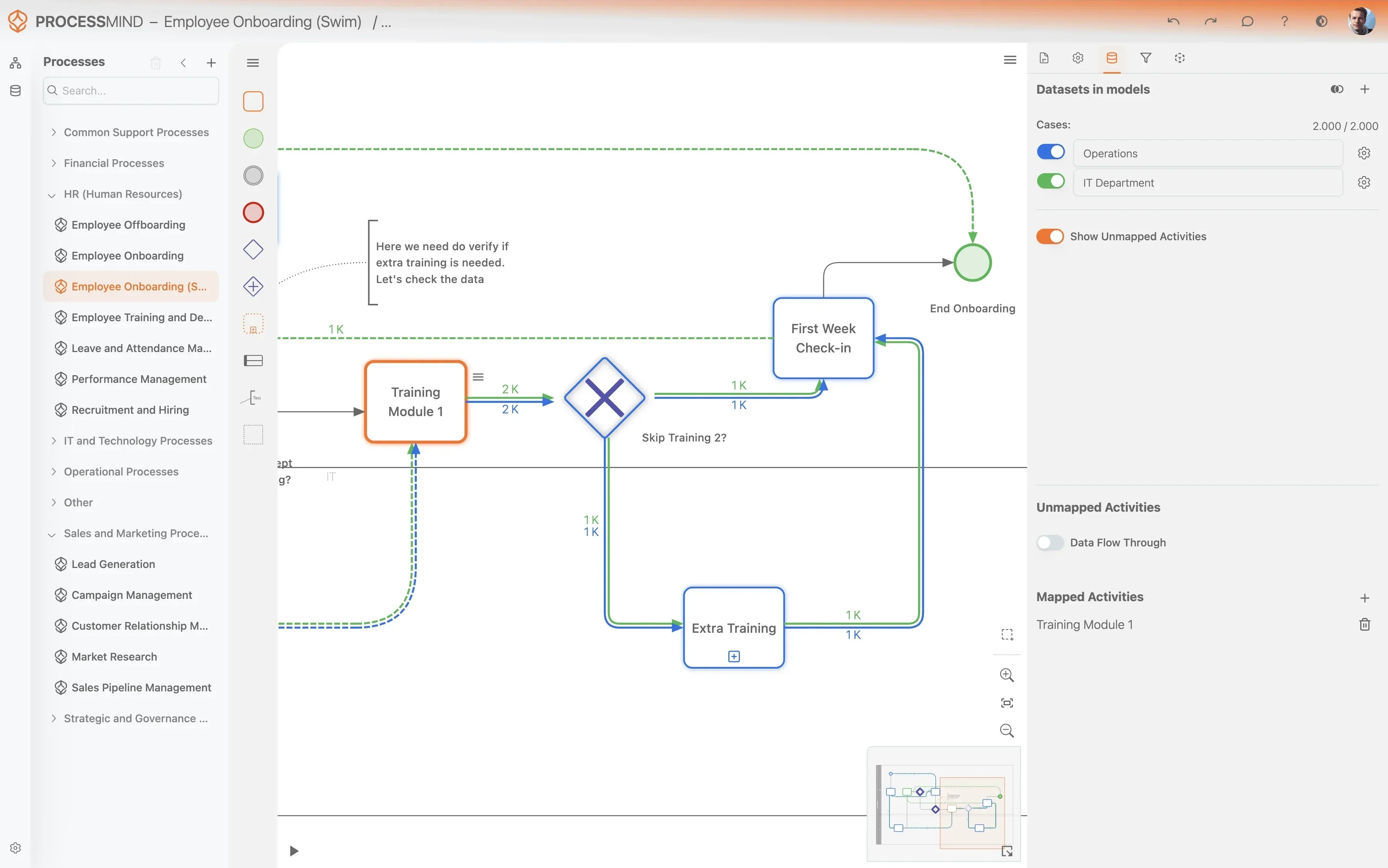
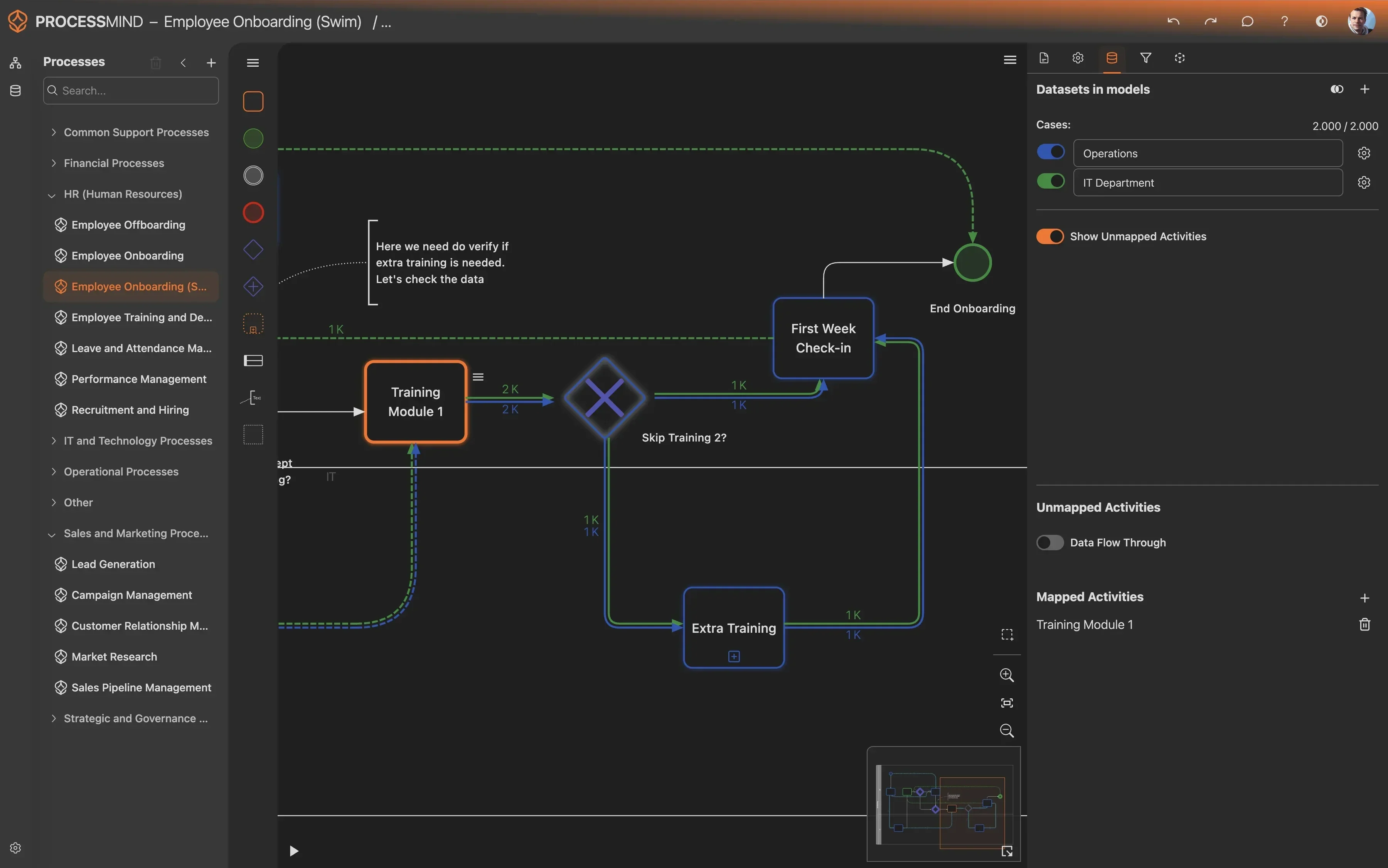
This analytical perspective reveals how activities like “Service Request Created,” “Service Request Triaged,” “Service Request Assigned to Agent,” “Information Requested from Requestor,” and “Service Request Resolved” truly unfold. You gain an objective visualization of all process variants, helping you identify exactly where requests get stuck, where rework occurs, and where the most significant delays happen. For example, you can see if certain request types consistently involve external vendor engagement that slows down resolution, or if a particular team has a higher rate of information requests from users, indicating potential gaps in initial submission data.
Key Improvement Areas Identified Through Process Mining
With process mining, you can uncover specific areas within your BMC Helix ITSM Service Request Management that are ripe for process optimization. Typical discoveries include:
- Bottleneck Identification: Pinpoint specific activities, agents, or queues where service requests spend disproportionately long periods, causing delays in your overall cycle time. This could be a specific approval step or a handover between departments.
- Rework Loops: Visualize instances where requests are repeatedly bounced back and forth between teams or reopened after initial resolution, indicating underlying quality or process design issues.
- SLA Compliance Gaps: Directly correlate process deviations with SLA breaches, understanding the root causes of why requests fail to meet their target resolution times.
- Variant Analysis: Discover frequently occurring, but inefficient, process paths that deviate from the intended “happy path,” helping you standardize and streamline operations.
- Resource Allocation: Identify overloaded teams or underutilized agents by analyzing workload distribution and throughput, enabling better resource planning.
- Automation Opportunities: Pinpoint repetitive manual tasks that consume significant time and could be automated to speed up processing and reduce human error.
Expected Outcomes: Measurable Benefits for Your Organization
By leveraging process mining to analyze your Service Request Management in BMC Helix ITSM, you can expect tangible and measurable improvements across your service delivery operations:
- Reduced Cycle Time: Significantly decrease the average time it takes to resolve service requests, leading to faster service delivery.
- Improved SLA Adherence: Boost your success rate in meeting service level agreements by proactively addressing process issues that cause delays.
- Enhanced Customer Satisfaction: Provide a more consistent and efficient service experience, leading to higher satisfaction among your users and customers.
- Lower Operational Costs: Minimize rework, optimize resource utilization, and identify automation opportunities to reduce the cost per service request.
- Increased Process Compliance: Ensure that service requests are processed according to defined standards and regulatory requirements, reducing risks.
- Data-Driven Decision Making: Move beyond assumptions and make informed decisions about process changes based on concrete, factual data from your BMC Helix ITSM system.
Getting Started with Service Request Management Optimization
Embarking on the journey to improve Service Request Management might seem daunting, but with a structured approach and the power of process mining, it becomes clear and achievable. This guide provides the framework to start your analysis within BMC Helix ITSM, helping you leverage your existing data to uncover inefficiencies and drive meaningful change. You don't need prior process mining expertise to begin transforming your service delivery. By focusing on your Service Request ID as the case identifier and analyzing the comprehensive event log, you will gain the insights needed to implement targeted process improvements and achieve swift, consistent resolutions. Start today to unlock the full potential of your Service Request Management process.
The 6-Step Improvement Path for Service Request Management
Download Data Template
What to do
Access and download the pre-configured data extraction template, designed specifically for BMC Helix ITSM's Service Request Management process.
Why it matters
Using the correct template ensures your data is structured properly, making it ready for accurate and efficient analysis without manual reformatting.
Expected outcome
A ready-to-use Excel template tailored for your BMC Helix ITSM Service Request data.
Export Your SRM Data
What to do
Extract 3-6 months of historical Service Request data from BMC Helix ITSM, populating the downloaded template with your real-world process information.
Why it matters
Historical data provides a rich foundation for identifying recurring issues and understanding the true performance of your Service Request Management process.
Expected outcome
A completed data template filled with comprehensive historical Service Request data from BMC Helix ITSM.
Upload Your Dataset
What to do
Securely upload your populated data template to ProcessMind. Our system automatically processes your BMC Helix ITSM Service Request data for analysis.
Why it matters
Rapid, secure data ingestion means you spend less time on setup and more time gaining insights, kickstarting your improvement journey efficiently.
Expected outcome
Your Service Request Management data successfully loaded and ready for process mining analysis in ProcessMind.
Analyze Your SRM Process
What to do
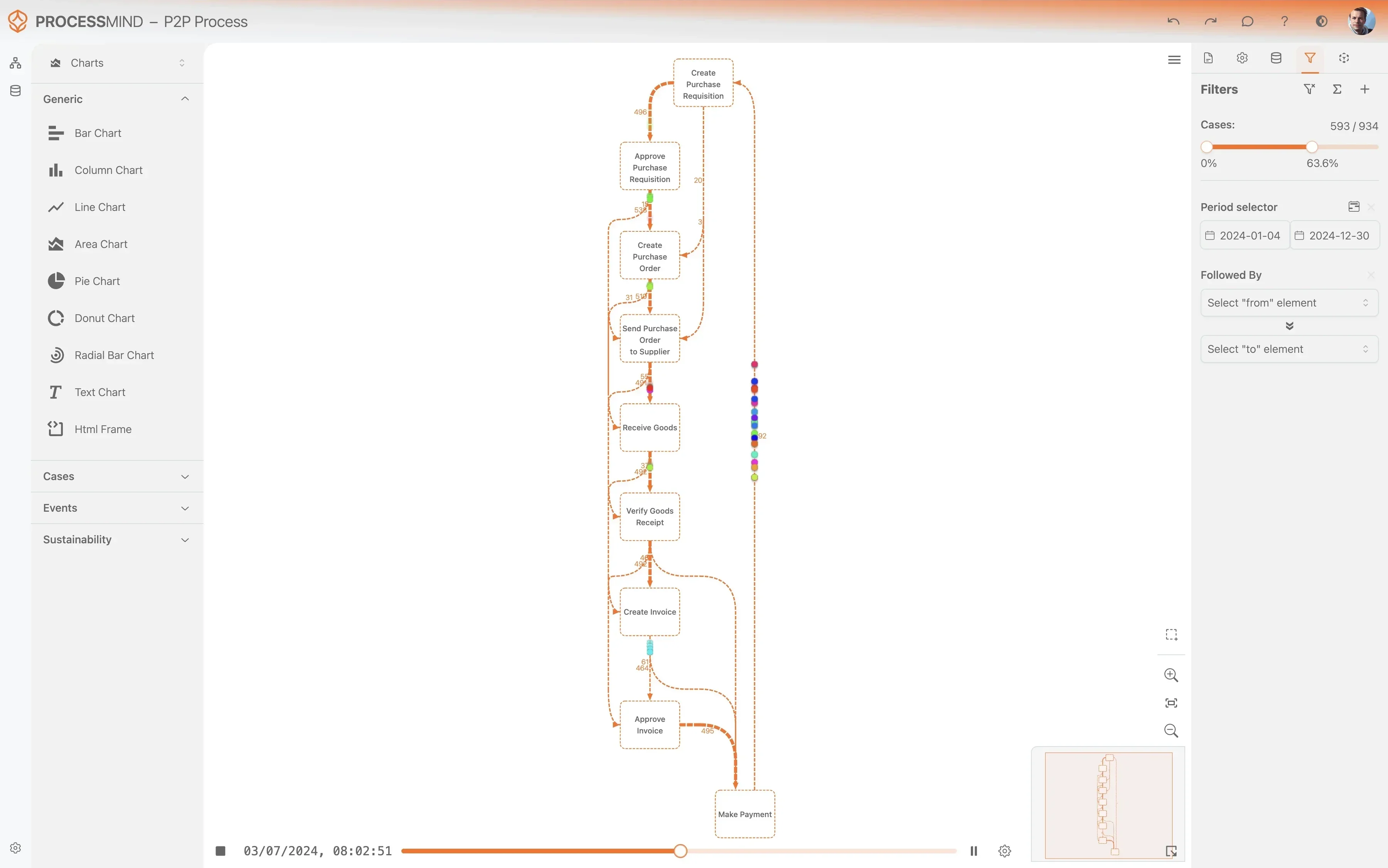
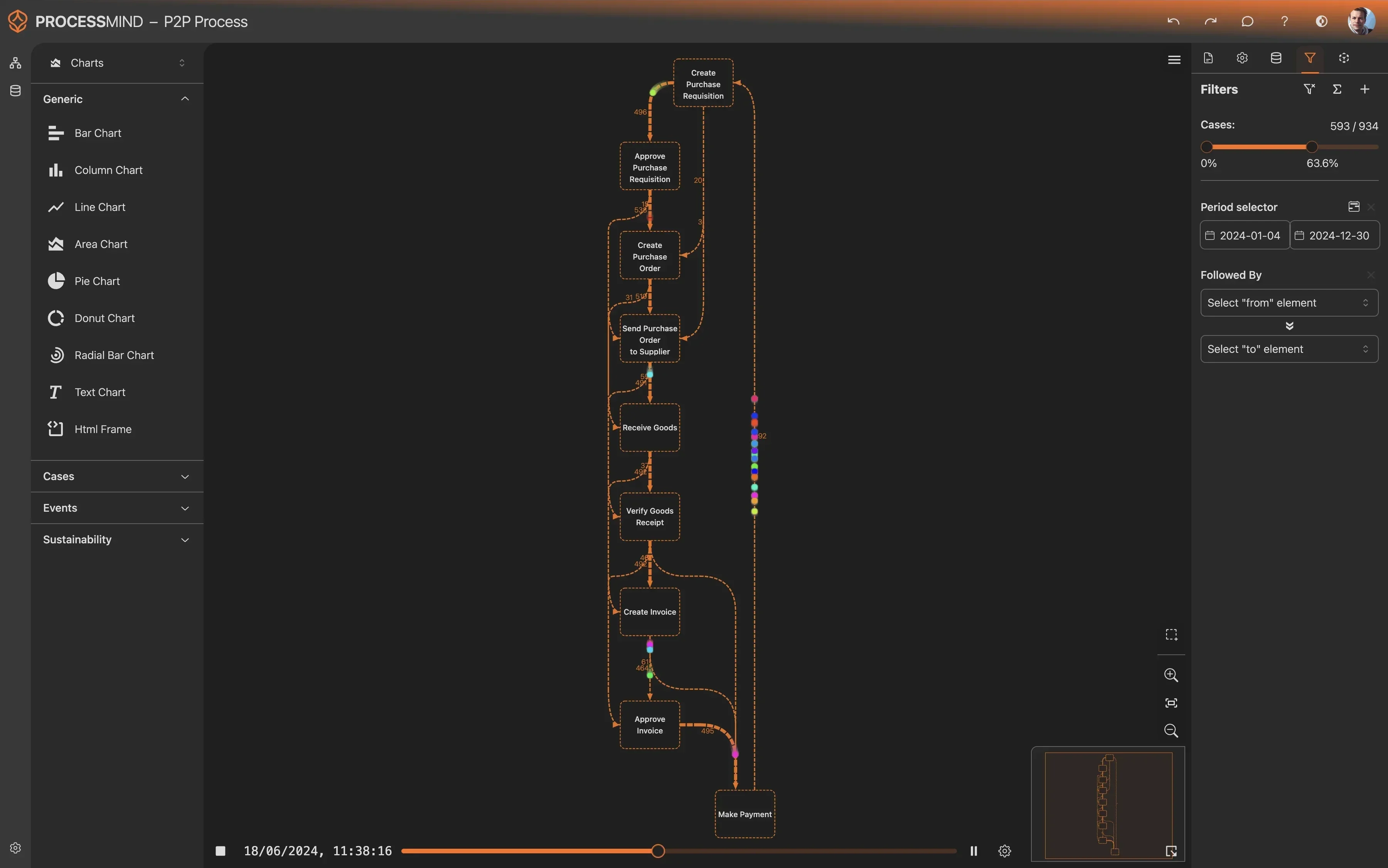
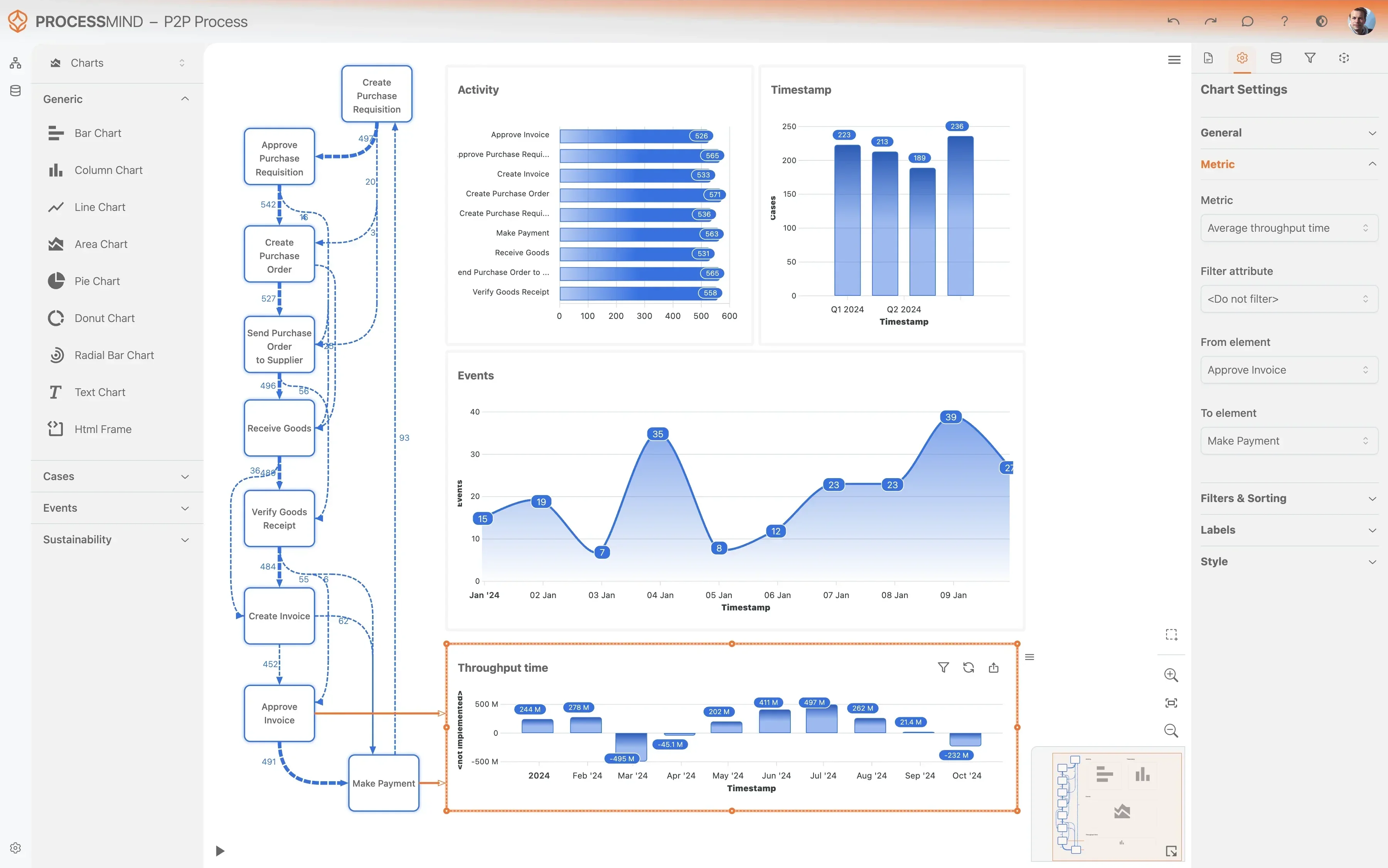
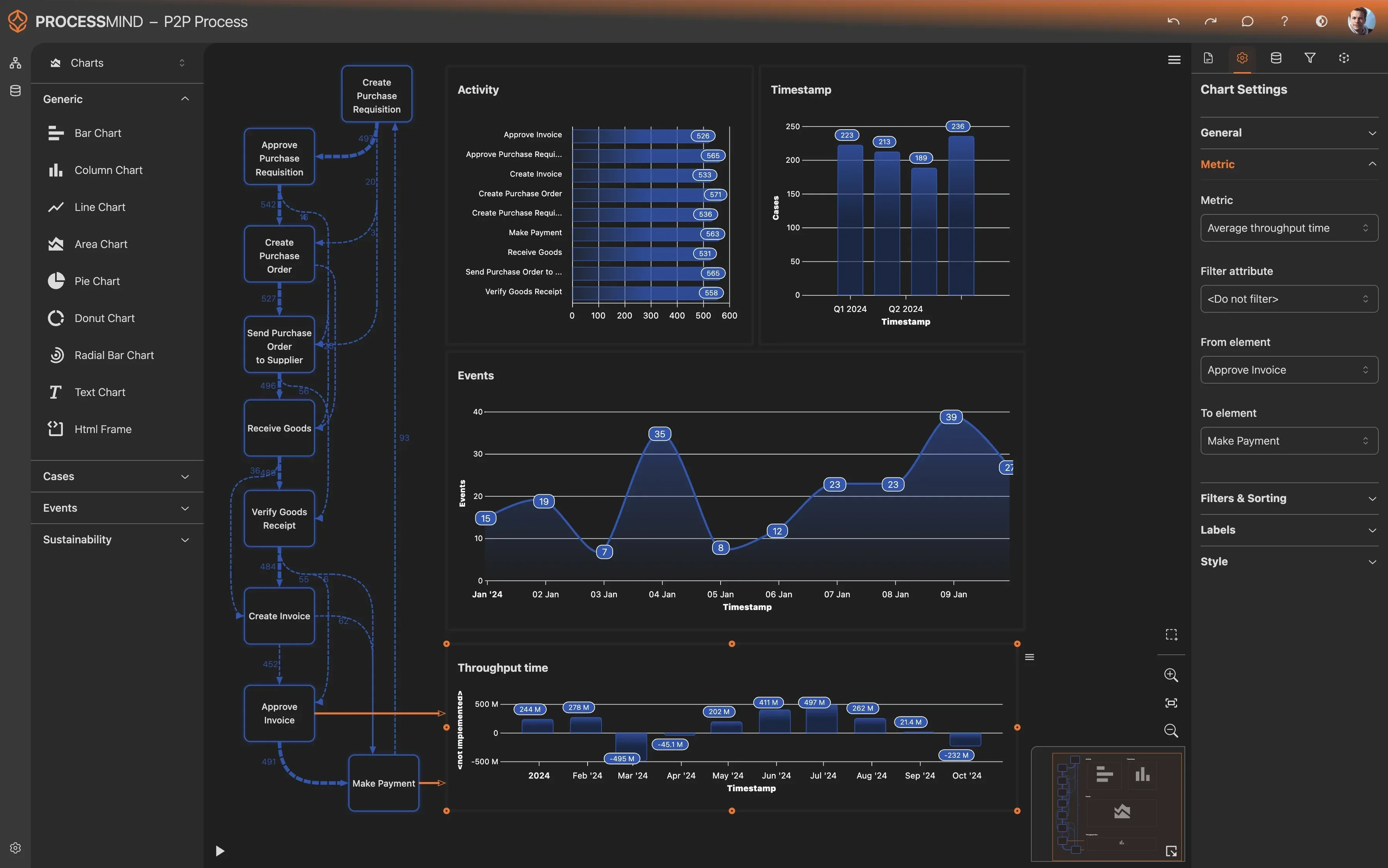
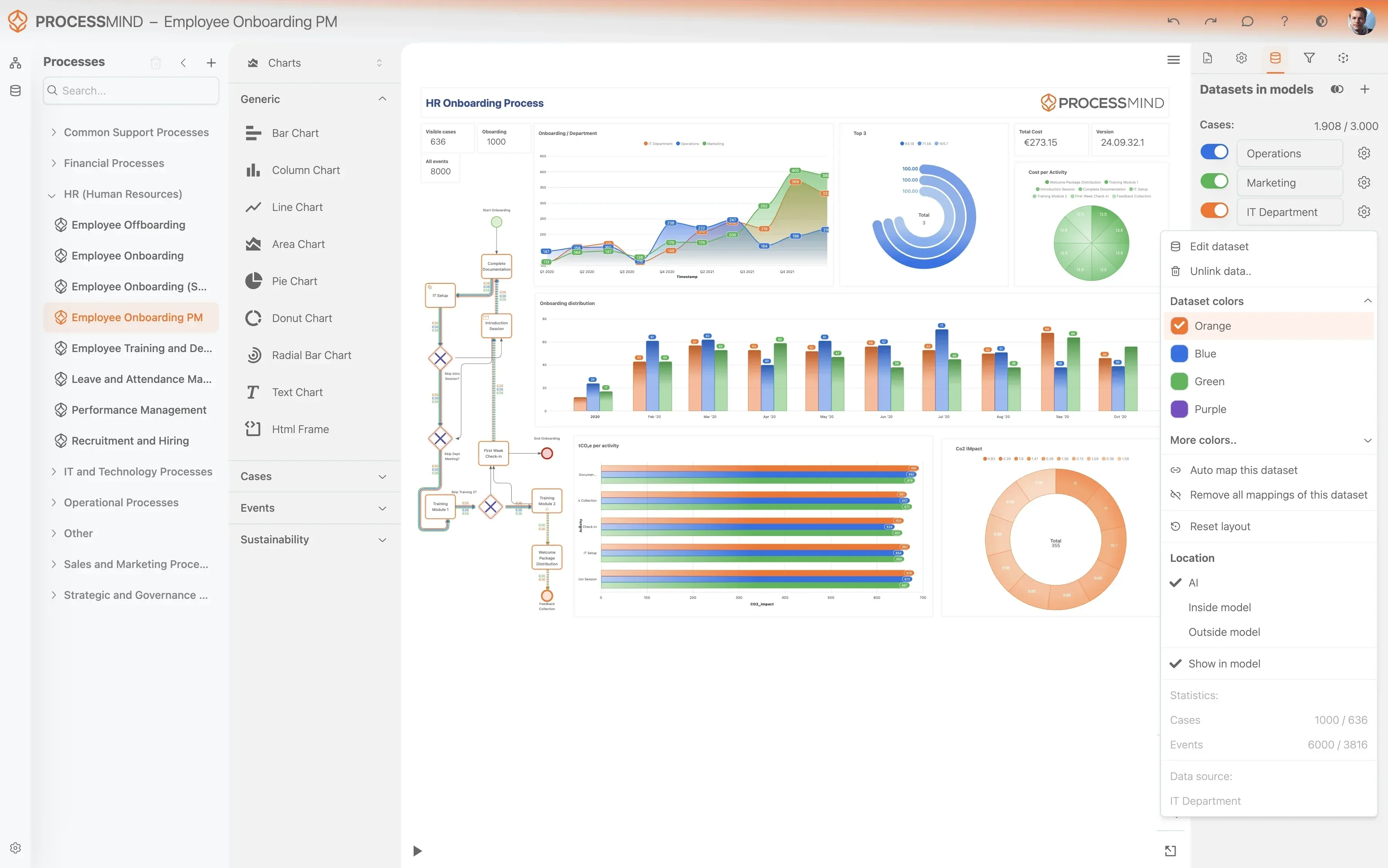
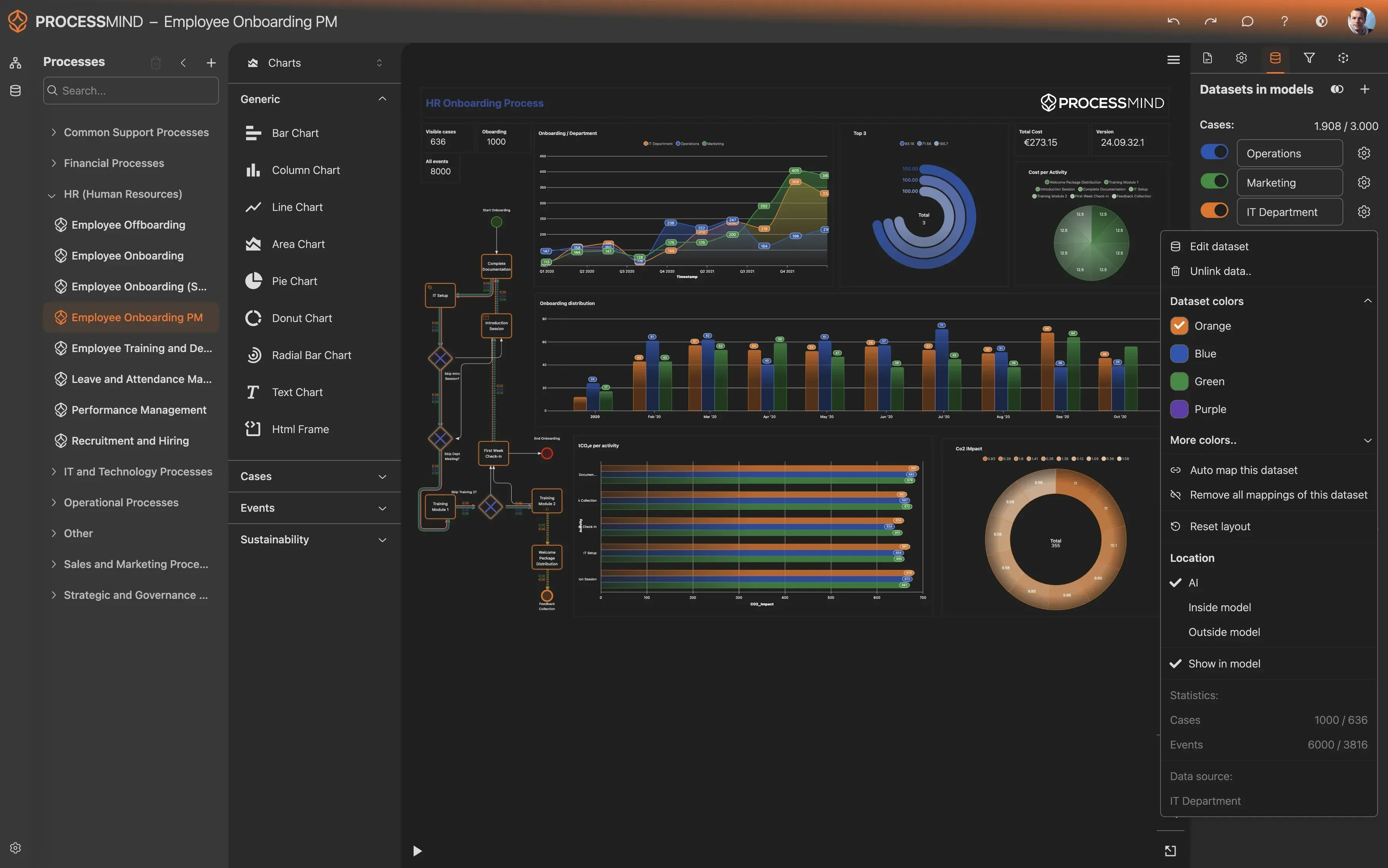
Explore the auto-generated dashboards and interactive process maps. Leverage AI-driven insights to uncover bottlenecks and compliance gaps in your Service Request flow.
Why it matters
Gain a clear, visual understanding of your end-to-end Service Request process. Identify root causes of delays and inefficiencies affecting resolution times.
Expected outcome
A deep understanding of your Service Request Management process performance, with clear insights into optimization areas.
Implement Changes
What to do
Prioritize the identified improvement opportunities, such as streamlining specific approval steps or optimizing agent assignments within BMC Helix ITSM.
Why it matters
Translating insights into action directly leads to a more efficient and compliant Service Request Management process, improving user satisfaction.
Expected outcome
A set of actionable improvements implemented within your BMC Helix ITSM Service Request Management workflows.
Monitor Performance
What to do
Periodically re-upload fresh data from BMC Helix ITSM to track the impact of your changes. Monitor key performance indicators over time.
Why it matters
Continuous monitoring ensures that improvements are sustained and allows for agile adjustments, fostering a culture of ongoing process excellence.
Expected outcome
Clear evidence of KPI improvements in Service Request processing, validating your optimization efforts and ensuring sustained efficiency.
TYPICAL OUTCOMES
Achieving Excellence in Service Request Management
These outcomes illustrate the transformative impact of process mining on Service Request Management. By leveraging data from BMC Helix ITSM and analyzing Service Request IDs, organizations gain clear insights into inefficiencies and areas for improvement.
Average reduction in end-to-end time
Process mining identifies and removes delays, streamlining the service request lifecycle from creation to resolution. This leads to quicker service delivery and happier customers.
Increase in requests meeting service levels
By identifying root causes of SLA breaches, organizations can proactively address bottlenecks and process deviations, ensuring more requests are resolved within agreed-upon times.
Decrease in repeated process steps
Uncover instances where requests re-enter previous stages or require repeated execution due to errors or incomplete information, drastically cutting down on wasted effort and costs.
Reduction in critical activity idle time
Pinpoint and resolve specific bottlenecks, such as excessive waiting before critical activities, to accelerate request progression and improve overall process flow.
Increased adherence to mandatory steps
Ensure all service requests follow required steps, like internal reviews, before resolution, safeguarding against non-compliance and reducing regulatory risks.
Results vary based on organizational structure, process maturity, and data quality. The figures presented reflect common improvements observed in similar process mining initiatives.
Recommended Data
FAQs
Frequently asked questions
Process mining helps you visualize the actual flow of your service requests, not just the designed process. It identifies deviations, bottlenecks, and reworks, enabling data-driven decisions to optimize efficiency and compliance within BMC Helix ITSM. This leads to faster resolution times and better service quality.
Process mining can pinpoint issues like excessive resolution times, frequent SLA breaches, and high reassignments. It also uncovers inefficient routing, suboptimal resource allocation, and inconsistent handling practices, all common problems in Service Request Management within BMC Helix ITSM.
The core data required is the event log, which includes a case identifier, activity, and timestamp for each event. For Service Request Management, this means the Service Request ID, the specific action taken, and when it occurred. Additional attributes like agent, department, and request type enhance the analysis.
Data can typically be extracted from BMC Helix ITSM using standard reporting tools, database queries, or API integrations. The goal is to obtain event logs in a structured format, usually CSV or a database table, containing the necessary case ID, activity, and timestamp information.
You can expect reduced request resolution times, improved SLA adherence, and minimized rework. Process mining insights also lead to optimized routing, standardized processes, and better agent resource utilization, directly impacting operational costs and regulatory compliance.
The initial setup, including data extraction and model generation, can often be completed within a few weeks, depending on data availability and complexity. First insights, revealing major bottlenecks and deviations, usually emerge rapidly after the initial data load.
Beyond access to the BMC Helix ITSM database or APIs for data extraction, the main technical requirement is a process mining software platform. This platform will handle the ingestion, analysis, and visualization of the event log data. Cloud-based solutions often simplify infrastructure needs.
Yes, process mining is excellent for compliance. It provides an objective view of every executed step, making it easy to detect deviations from prescribed procedures or regulatory requirements. This transparency helps ensure that all service requests adhere to established guidelines and mandates.
Unlock Efficiency: Optimize Service Request Management Today
Hit 70% automation, eliminate slow fulfillment, and delight users.
No credit card required, get started in minutes.