Improve Your Recruitment & Talent Acquisition

Select a process
Choose a process to continue working in your connected workspace.
Optimize Recruitment and Talent Acquisition in Oracle HCM Recruiting
Recruitment processes can encounter hidden bottlenecks and inefficiencies. Our platform helps you identify exactly where delays occur, ensuring compliance and enhancing the candidate experience. Discover how to streamline talent acquisition, reduce time-to-hire, and improve hire quality efficiently.
Download our pre-configured data template and address common challenges to reach your efficiency goals. Follow our six-step improvement plan and consult the Data Template Guide to transform your operations.
Show detailed description
The Imperative for Optimized Recruitment & Talent Acquisition
In today's competitive talent landscape, a streamlined Recruitment & Talent Acquisition process is not just an advantage, it is a necessity. Organizations relying on Oracle HCM Recruiting need to ensure their hiring pipeline is efficient, compliant, and delivers a superior candidate experience. Inefficiencies in recruitment directly impact your business through increased costs, extended time-to-hire, loss of top talent to competitors, and potential compliance risks. Without a clear, data-driven understanding of your process, identifying the root causes of delays and underperformance remains a significant challenge. This often leads to missed hiring targets, frustrated candidates and hiring managers, and an overall drain on resources.
Leveraging Process Mining for Recruitment Excellence
Process mining offers a revolutionary approach to understanding and improving your Recruitment & Talent Acquisition operations within Oracle HCM Recruiting. By analyzing the complete journey of every job application, from its creation to a candidate being hired or rejected, process mining provides an end-to-end visualization of your actual process flow. It extracts event data from your Oracle HCM Recruiting system, mapping out every activity and transition. This allows you to pinpoint exact bottlenecks, deviations from standard hiring procedures, and critical areas where applications get stuck. You gain an objective, data-backed view of how your recruitment process truly operates, rather than how it is theoretically designed. This includes visibility into average time spent at each stage, the most common paths taken by successful candidates, and variations across different departments or job roles. Imagine precisely identifying why one department takes twice as long to schedule first interviews or why a specific recruiter consistently has longer offer acceptance times. Process mining makes these insights actionable.
Key Areas for Process Improvement
Applying process mining to your Oracle HCM Recruiting data uncovers concrete opportunities for improvement:
- Bottleneck Identification and Resolution: Quickly see where applications spend the most time waiting, such as prolonged hiring manager approvals, delays in background check initiation, or extended offer negotiation periods. This visibility empowers you to address the specific choke points that slow down your entire process.
- Cycle Time Reduction: Analyze the end-to-end time-to-hire and individual stage durations. Identify opportunities to accelerate the process, for example, by streamlining interview scheduling or reducing feedback submission delays. This is crucial for attracting and securing top talent.
- Enhanced Compliance and Consistency: Visualize all process deviations. If certain applications bypass required screening steps or if offers are extended outside of established approval workflows, process mining highlights these inconsistencies, helping you enforce compliance with internal policies and external regulations.
- Optimized Candidate Experience: By identifying stages with high candidate dropout rates or excessively long wait times, you can proactively improve the candidate journey, ensuring a positive experience that enhances your employer brand and reduces candidate abandonment.
- Resource Allocation and Performance Insights: Understand how different recruiters, hiring managers, or departments perform regarding efficiency and adherence to process, enabling targeted training or resource reallocation.
Measurable Outcomes of Process Optimization
By embracing process mining for your Recruitment & Talent Acquisition in Oracle HCM Recruiting, you can expect significant, measurable benefits:
- Reduced Time-to-Hire: Accelerate your recruitment cycle, bringing critical talent onboard faster.
- Lower Recruitment Costs: Minimize operational inefficiencies and reduce the need for costly expedited hiring measures.
- Improved Quality of Hires: By ensuring a smoother, more effective process, you can attract and secure better-matched candidates.
- Enhanced Compliance: Systematically identify and rectify process deviations, strengthening your adherence to policies and regulations.
- Superior Candidate and Hiring Manager Experience: Create a more responsive and transparent hiring process for all stakeholders.
Beginning Your Journey to Recruitment Excellence
Unlock the full potential of your Oracle HCM Recruiting investment. This process mining approach provides the clarity and insights you need to move beyond assumptions and make data-driven decisions that genuinely transform your talent acquisition strategy. Start analyzing your recruitment data today and pave the way for a more efficient, compliant, and candidate-centric hiring process.
The 6-Step Improvement Path for Recruitment & Talent Acquisition
Download the Template
What to do
Access the pre-built Excel template specifically designed for Recruitment & Talent Acquisition data. This ensures your data aligns with the required structure for analysis.
Why it matters
Using the correct template ensures data consistency and prepares your historical recruitment data for seamless ingestion into the ProcessMind platform.
Expected outcome
A structured Excel template, ready to be populated with your Oracle HCM Recruiting data.
Export Your Oracle HCM Data
What to do
Extract 3-6 months of historical recruitment data from Oracle HCM Recruiting, including job requisitions, candidate applications, interview stages, and offer details. Populate the downloaded template with this real-world information.
Why it matters
Analyzing a comprehensive historical dataset provides a true representation of your current recruitment process, revealing trends and areas for improvement. You'll gain insights into your actual process performance.
Expected outcome
A completed template, filled with 3-6 months of accurate Recruitment & Talent Acquisition data.
Upload Your Dataset
What to do
Securely upload your completed template, containing your Oracle HCM Recruiting data, to the ProcessMind platform. The system will automatically begin processing your information.
Why it matters
This step initiates the powerful analytical capabilities of ProcessMind, transforming raw data into visual process maps and actionable insights without manual configuration.
Expected outcome
Your recruitment data securely uploaded and undergoing automatic analysis within ProcessMind.
Analyze Your Process
What to do
Explore the auto-generated dashboards and process maps that visualize your Recruitment & Talent Acquisition flow. Leverage AI-driven recommendations to pinpoint bottlenecks and inefficiencies.
Why it matters
Gain deep, data-backed understanding of your recruitment funnel, identify where applications get stuck, and discover hidden rework or compliance issues, leading to informed decisions.
Expected outcome
Clear visualization of your recruitment process, identifying bottlenecks, non-compliance, and areas for optimization.
Implement Improvements
What to do
Based on the insights and AI recommendations from ProcessMind, prioritize and implement changes within your Oracle HCM Recruiting workflows to address identified inefficiencies.
Why it matters
Translate data-driven insights into tangible actions, streamlining your hiring process, reducing time-to-hire, and improving the overall candidate and recruiter experience.
Expected outcome
Actionable changes implemented in your Oracle HCM Recruiting process, targeting specific areas for enhancement.
Monitor Your Process
What to do
Periodically export updated recruitment data from Oracle HCM Recruiting and re-upload it to ProcessMind. This allows for continuous tracking of improvements and new insights.
Why it matters
Sustain your gains and ensure ongoing efficiency by continuously monitoring performance. Adapt to changes, measure the impact of your improvements, and foster a culture of continuous optimization.
Expected outcome
Continuous measurement of KPI improvements in recruitment efficiency and compliance over time.
WHAT YOU WILL GET
Revolutionize Oracle HCM Recruitment Discoveries
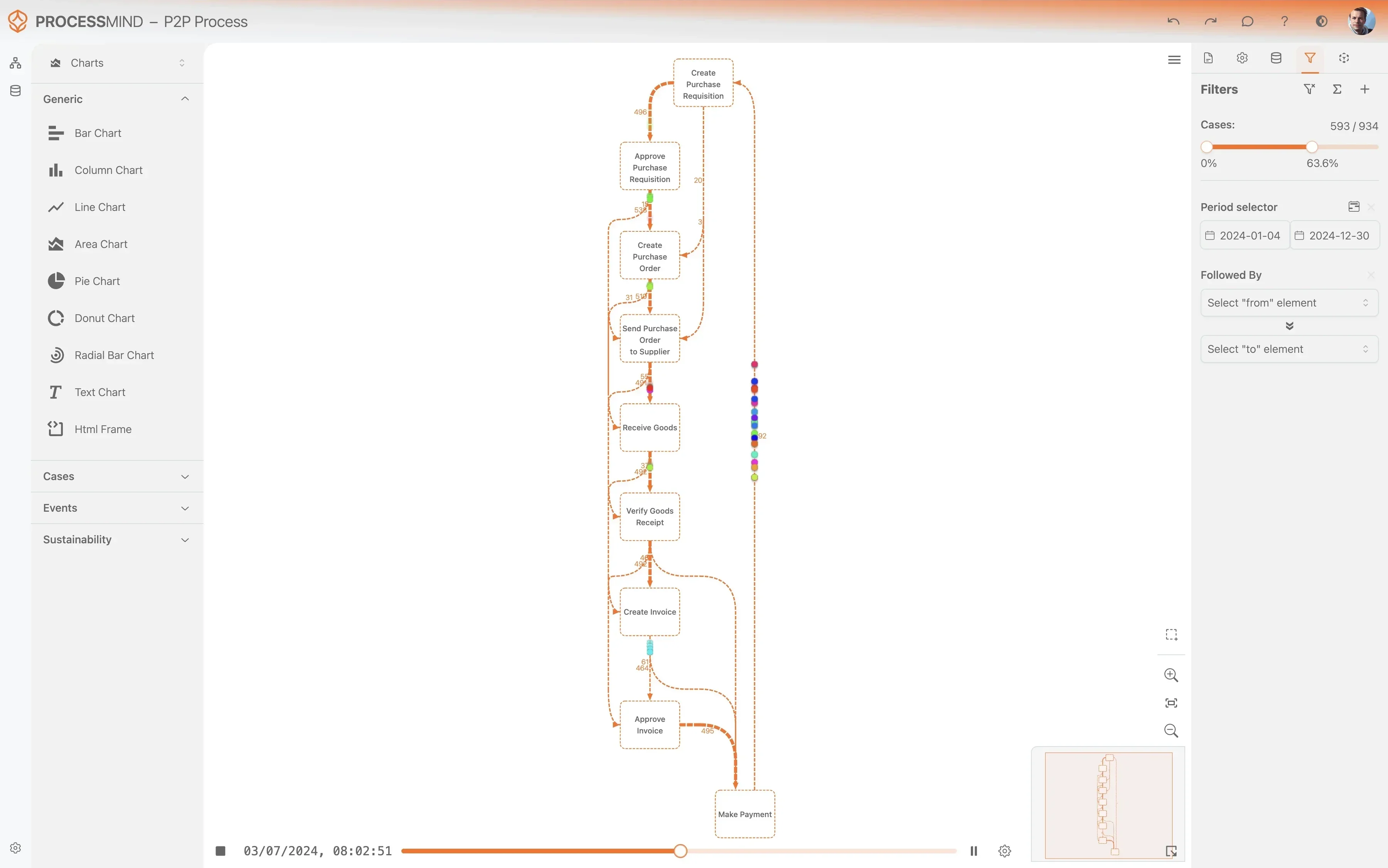
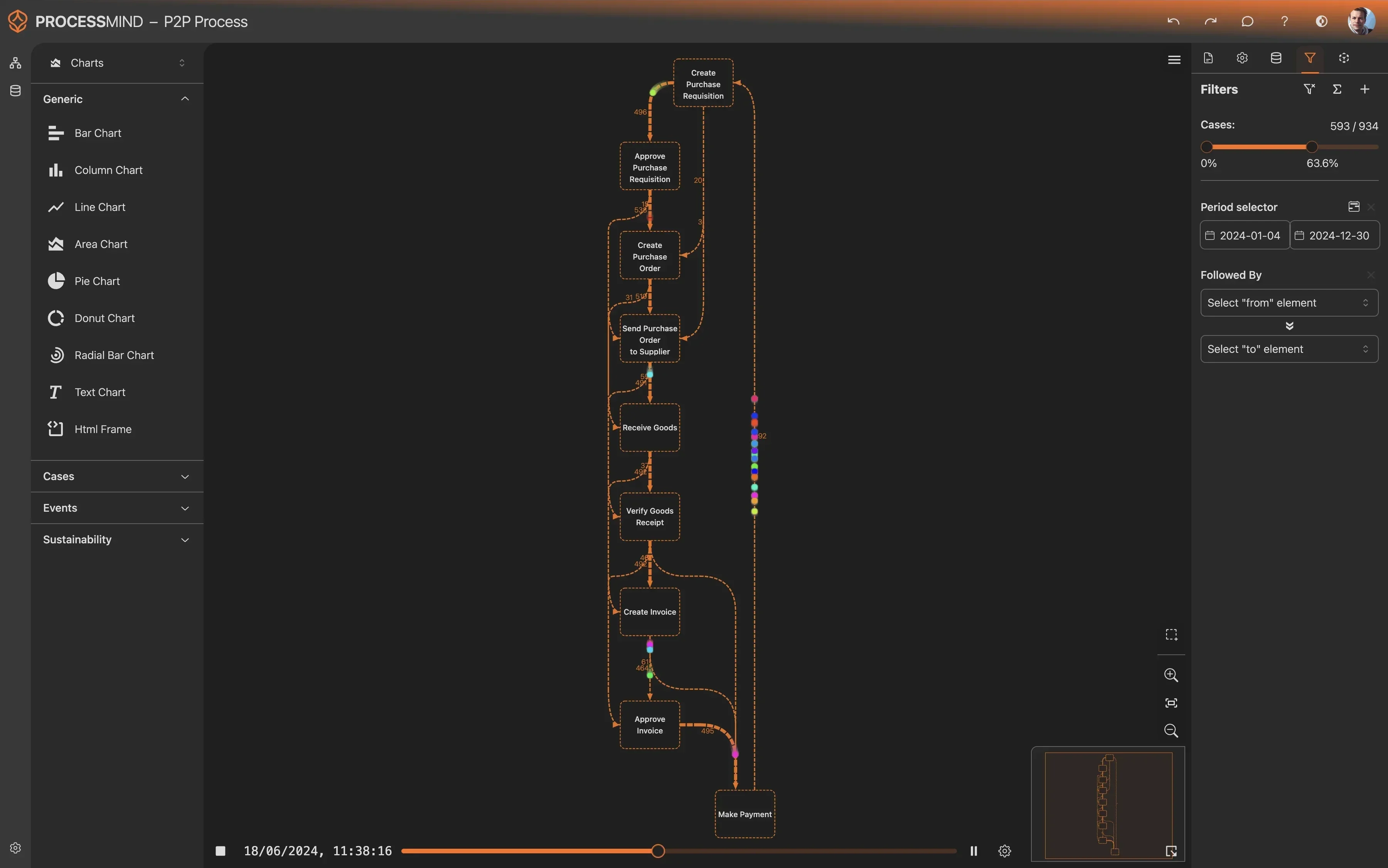
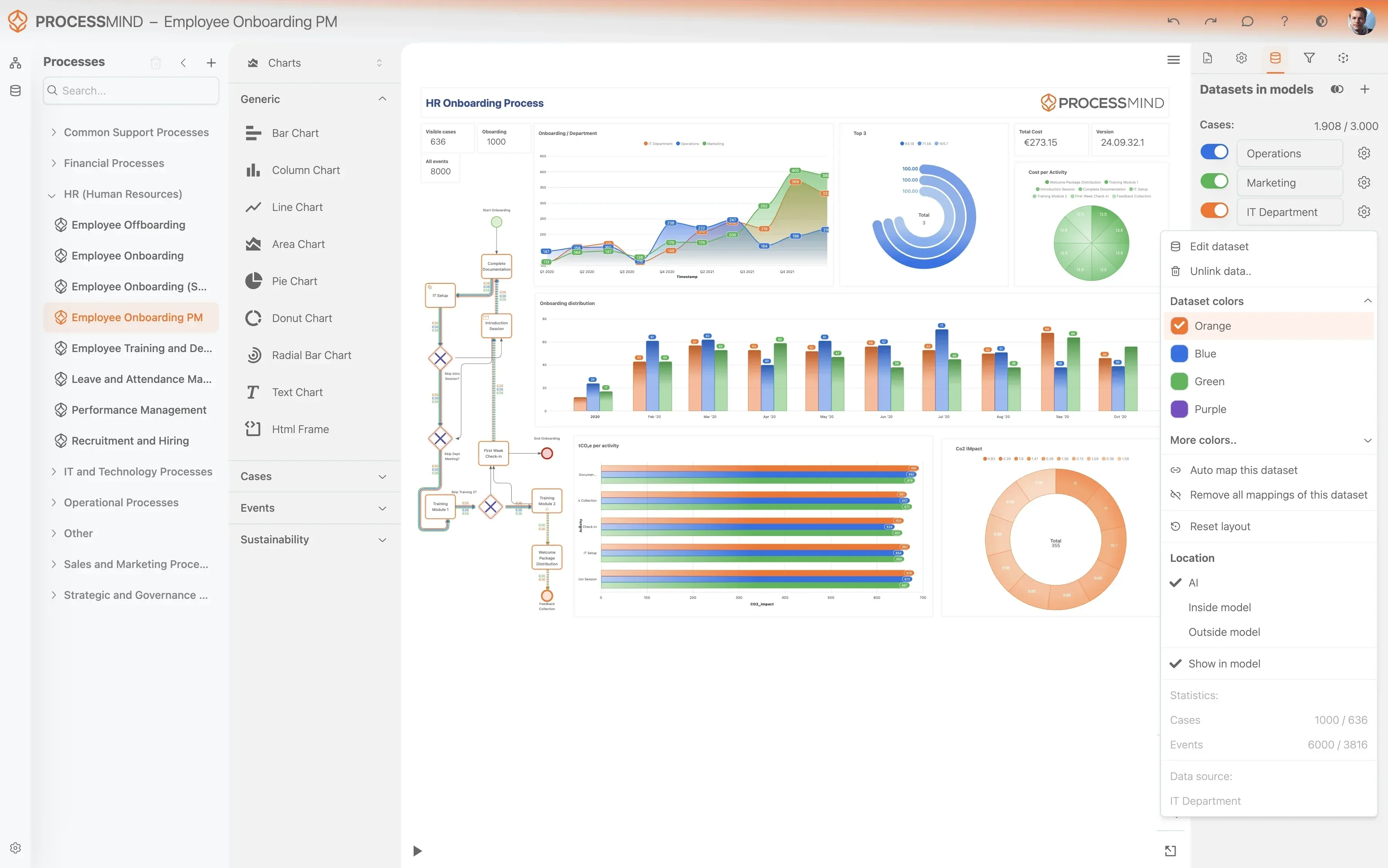
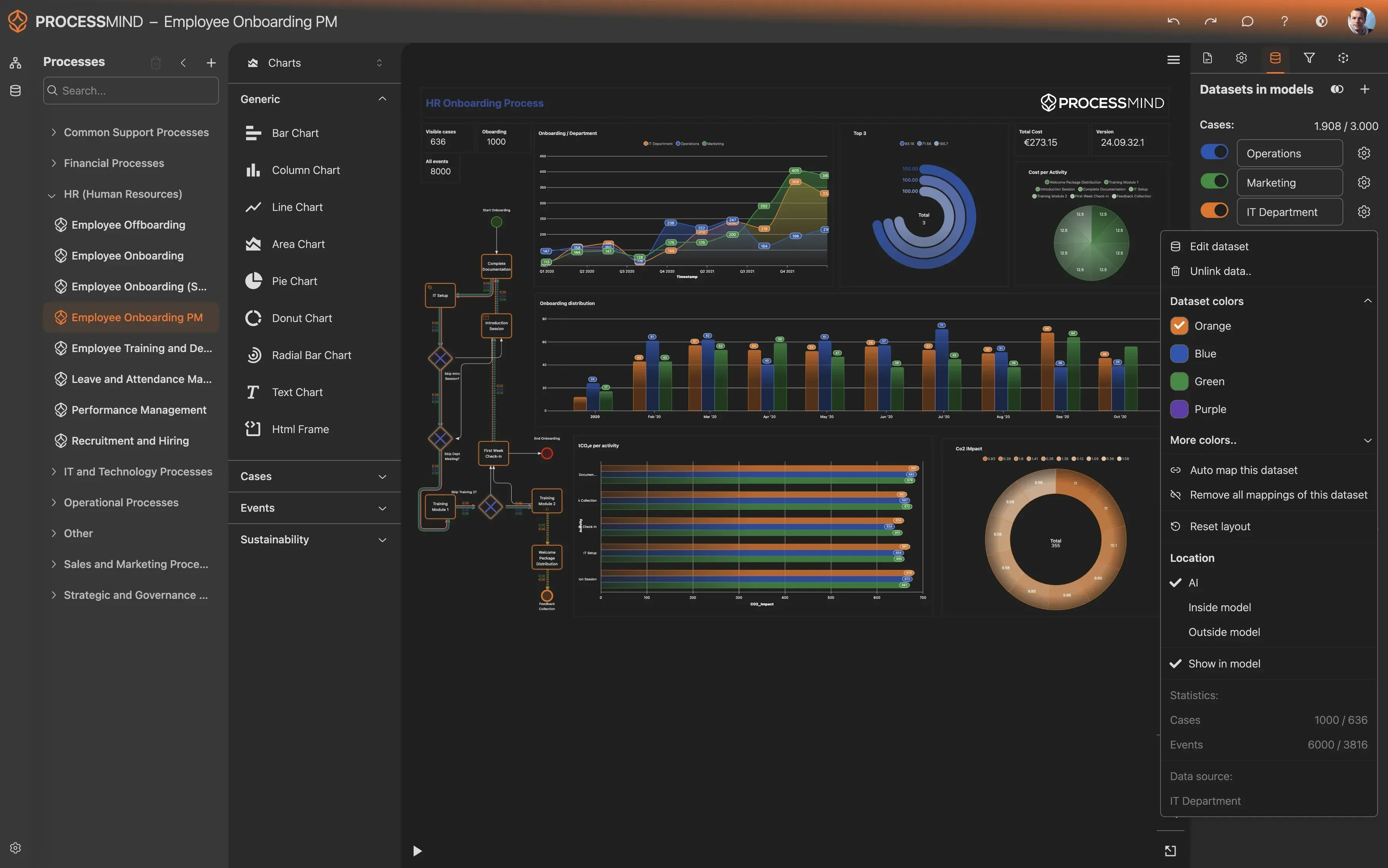
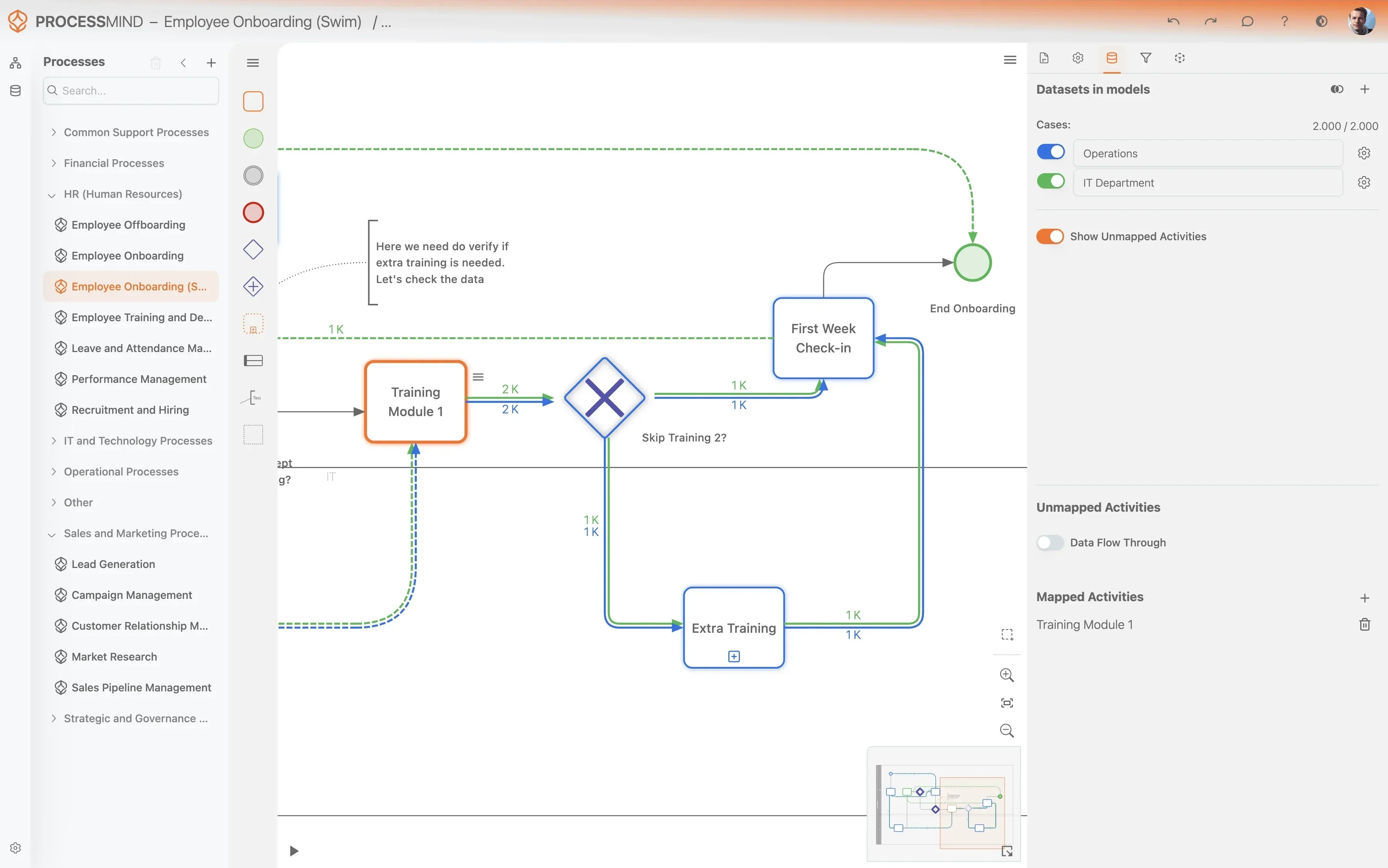
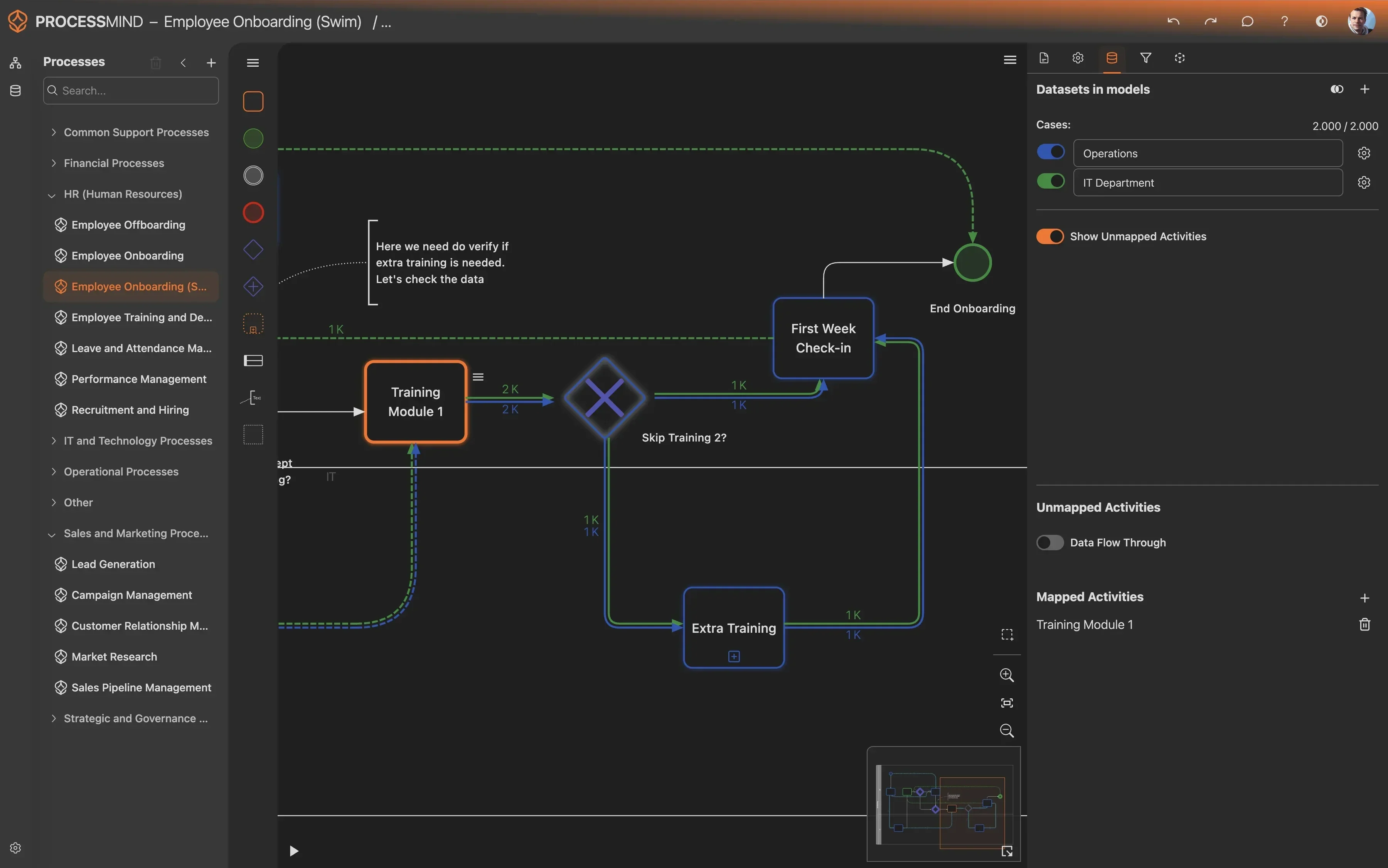
- Visualize actual recruitment journeys
- Identify exact hiring process delays
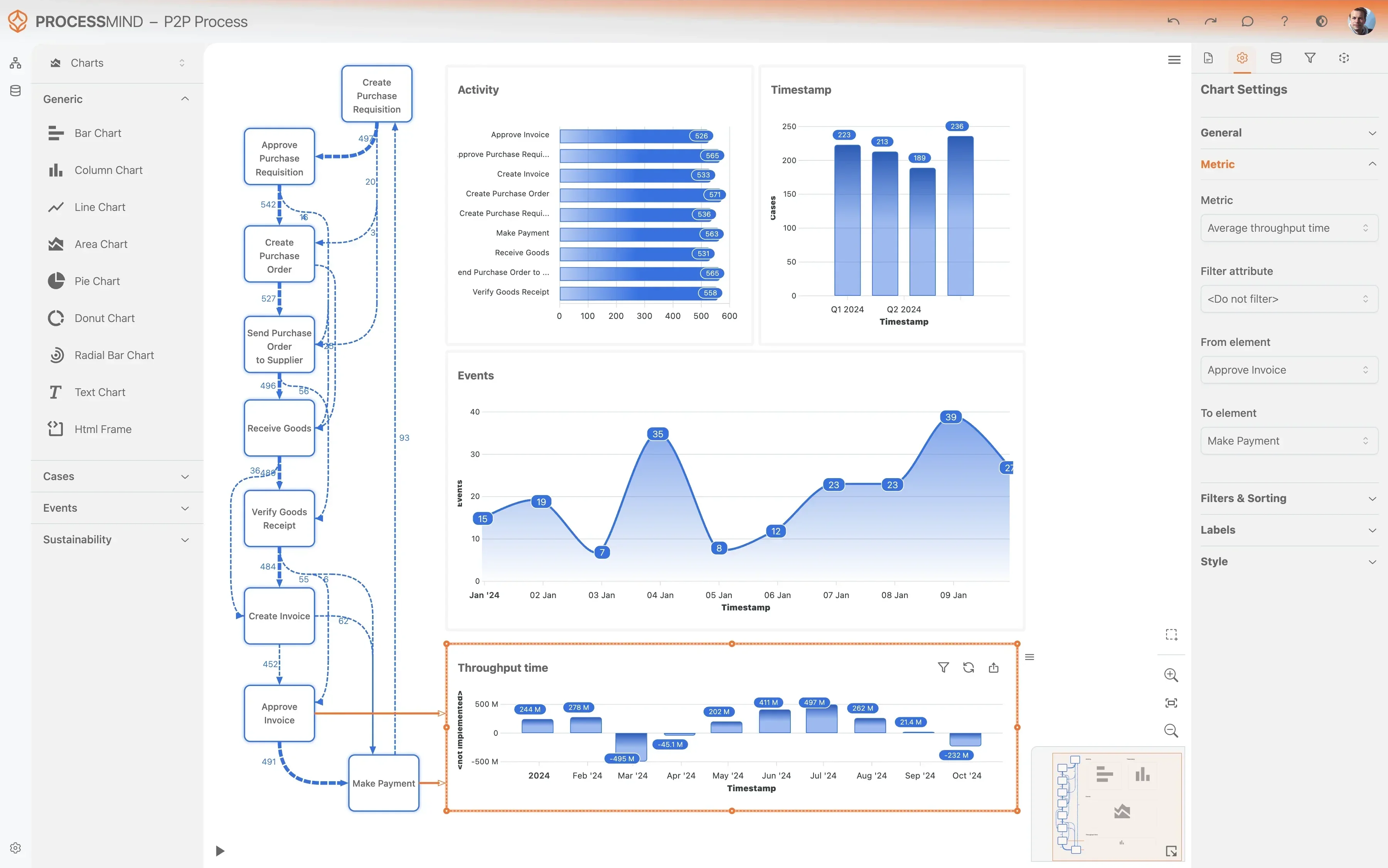
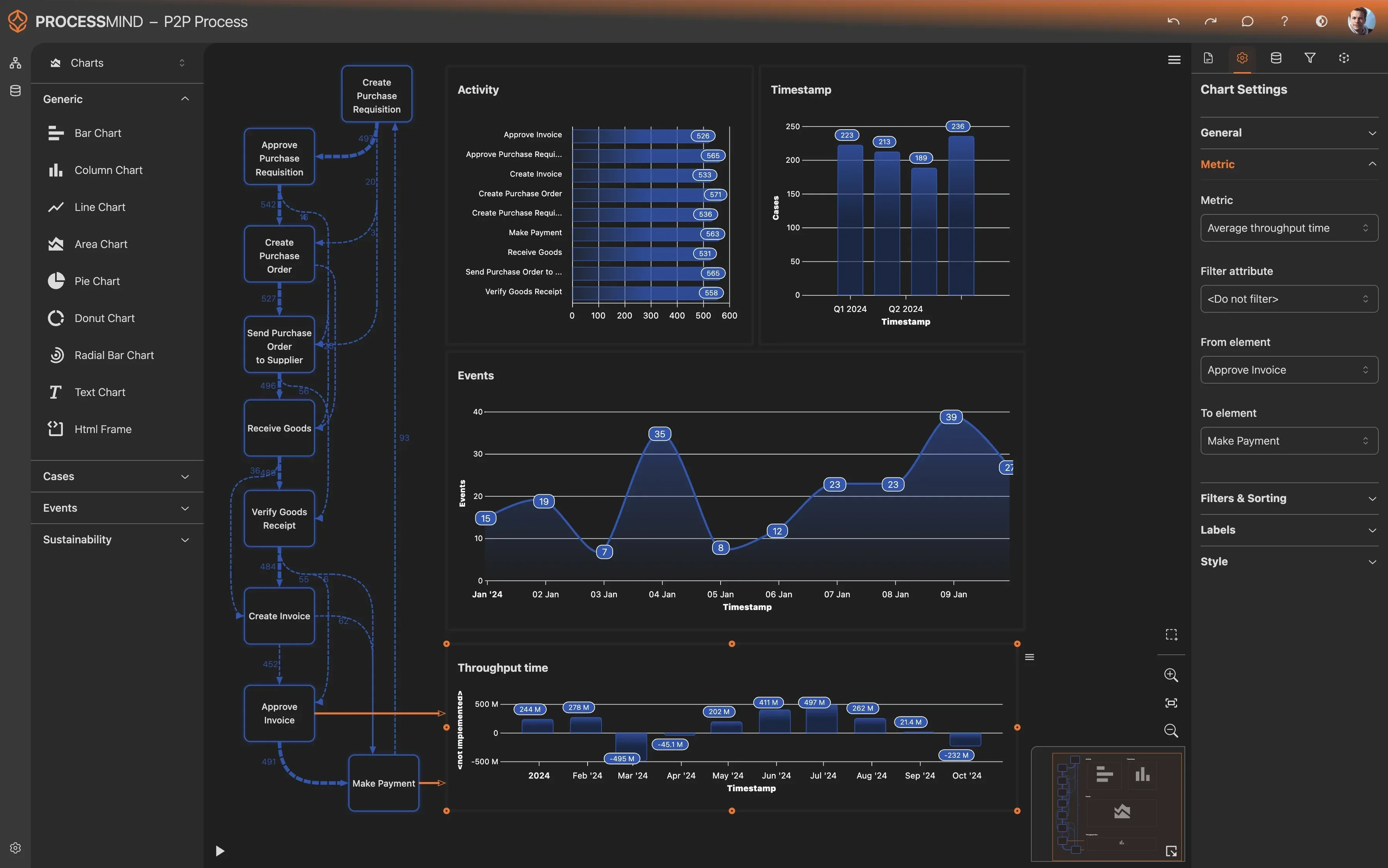
- Streamline candidate experience paths
- Enhance time-to-hire & candidate quality
TYPICAL OUTCOMES
Achieve Recruitment Transformation
These outcomes represent the tangible benefits of optimizing your Recruitment & Talent Acquisition processes using process mining with Oracle HCM Recruiting data. By identifying and eliminating bottlenecks, organizations can significantly enhance efficiency and candidate experience.
Average reduction in recruitment cycle
Identify and remove bottlenecks in your recruitment process, significantly reducing the average time from application to hire. This leads to securing top talent faster and improving candidate experience.
Increase in application to offer acceptance rate
Pinpoint stages where candidates drop off, enabling targeted interventions to improve the candidate journey. This results in more completed applications and accepted offers.
Adherence to mandatory process steps
Automatically monitor every recruitment case against predefined compliance rules and mandatory steps. Achieve 100% adherence to internal policies and regulatory requirements.
Decrease in repeated application screenings
Identify and eliminate repetitive or unnecessary manual activities, such as rescreening applications, to streamline operations. This frees up recruiter time for higher-value tasks.
Reduction in post-interview decision time
Accelerate the critical period between candidate interviews and the extension of job offers. Optimize decision-making and approval workflows to secure talent more rapidly.
Higher rate of candidates accepting offers
Understand the factors influencing offer acceptance rates and optimize your offer extension process. This leads to more successful hires from your talent pool.
Results vary based on process complexity, data quality, and specific organizational goals. These figures represent typical improvements observed across various implementations.
Recommended Data
FAQs
Frequently asked questions
Process mining for Recruitment & Talent Acquisition utilizes your Oracle HCM Recruiting data to create an objective, X-ray view of your actual hiring process. It visually reconstructs every step, from application submission to offer acceptance, helping you identify deviations, bottlenecks, and inefficiencies. This deep insight reveals how your process truly operates, rather than how you assume it does.
Process mining extracts event log data directly from your Oracle HCM Recruiting system. This typically involves identifying the job application as the 'case identifier', distinct activities within the recruitment workflow, and precise timestamps for each activity. By analyzing these structured event logs, the process mining tool can accurately map out the entire candidate journey and uncover process variations.
Process mining can pinpoint various common issues, such as excessively long time-to-hire cycles, frequent candidate drop-offs at specific stages, and inconsistent compliance in hiring stages. It helps visualize bottlenecks in interview scheduling, suboptimal recruiter workload distribution, and delays in offer approval, providing clear evidence for targeted improvements. You can also identify inefficiencies in candidate source performance and manual reworks.
To begin, you primarily need an event log containing a Case ID, an Activity name, and a Timestamp for each event. For recruitment, the Case ID would be the 'Job Application' or 'Candidate ID', the Activity would be each distinct step in the hiring workflow, and the Timestamp would mark when each activity occurred. Additional attributes like 'Recruiter Name', 'Job Role', or 'Candidate Source' can enrich the analysis significantly.
Initial data extraction and model creation can often be completed within a few weeks, depending on data availability and complexity. Once the model is built, you can immediately start uncovering bottlenecks and process deviations, providing actionable insights almost instantly. Continuous monitoring then allows for ongoing optimization and tracking of improvement initiatives.
Yes, absolutely. By visualizing the actual paths candidates take and identifying where delays occur, process mining directly supports reducing time-to-hire. It also highlights stages with high candidate drop-off rates, allowing you to investigate the root causes and implement targeted changes to increase candidate completion. The goal is to make your process smoother and more efficient for everyone involved.
The primary technical requirement is secure access to your Oracle HCM Recruiting database or relevant data exports, often via standard ETL processes or APIs. A process mining platform is then used to ingest and analyze this data. Technical expertise in data extraction and a basic understanding of your Oracle HCM data schema are beneficial for setup.
Process mining is scalable and beneficial for organizations of all sizes. While larger organizations may have more complex processes and data volumes, even smaller teams with a defined recruitment process can gain significant value. The core benefit, uncovering inefficiencies and improving process flow, applies universally regardless of team size.
Optimize Your Recruitment & Talent Acquisition Today
Reduce cycle time by 30% and elevate your candidate experience.
No credit card required. Set up in minutes.