Improve Your Contract Management

Select a process
Choose a process to continue working in your connected workspace.
Optimize Agiloft Contract Management for Faster Cycles
Contract management processes often hide inefficiencies such as delays in reviews, approvals, and compliance. Our platform helps you pinpoint exact bottlenecks across your entire contract lifecycle, from initial drafting to final renewal. Discover how to streamline operations, reduce cycle times, and enhance governance by identifying key optimization opportunities.
Download our pre-configured data template and address common challenges to reach your efficiency goals. Follow our six-step improvement plan and consult the Data Template Guide to transform your operations.
Show detailed description
Why Optimizing Agiloft Contract Management is Crucial
Contract management is the backbone of any organization's commercial relationships, yet it's often fraught with hidden inefficiencies. In a sophisticated platform like Agiloft, while automation tools are plentiful, the actual end-to-end process can still harbor bottlenecks, rework loops, and compliance risks that erode value and slow business operations. Delays in contract drafting, protracted negotiation cycles, or missed renewal opportunities directly impact revenue, increase operational costs, and expose your organization to unnecessary legal and financial vulnerabilities. Understanding the true flow of your contracts, beyond the intended design, is essential for maintaining agility and competitive advantage. Optimizing your Agiloft Contract Management process is not just about efficiency, it's about safeguarding your business interests, improving stakeholder relations, and ensuring consistent compliance in a dynamic regulatory landscape.
How Process Mining Illuminates Your Agiloft Contract Lifecycle
Process mining offers an unparalleled, data-driven lens into the actual journey of every contract within your Agiloft system. Instead of relying on assumptions or anecdotal evidence, it reconstructs the complete contract lifecycle from system event logs, revealing how contracts actually move through your organization. For Agiloft Contract Management, this means precisely mapping every step from the initial contract request to execution, obligation monitoring, and eventual renewal or termination. You gain a visual, interactive process map that highlights common paths, identifies deviations from standard procedures, and uncovers unexpected rework. This objective view allows you to pinpoint exactly where contracts get stuck, who is involved in the delays, and which specific activities contribute most to extended cycle times. By understanding these real-world process variations, you can make informed decisions to streamline operations, reduce human error, and ensure your Agiloft platform is utilized to its full potential.
Pinpointing Key Improvement Areas in Contract Management
With process mining, you can specifically target and improve critical areas of your Agiloft Contract Management process. You'll gain clarity on:
- Review and Approval Bottlenecks: Identify the exact stages, departments, or individuals consistently causing delays in internal or legal reviews, allowing you to reallocate resources or refine approval workflows.
- Negotiation Inefficiencies: Visualize negotiation cycles, including the number of redlines and revisions, to understand where negotiations become protracted and how to expedite them.
- Compliance Gaps: Detect instances where mandatory steps, such as specific compliance checks or disclosures, are bypassed or delayed, ensuring stricter adherence to regulatory requirements and internal policies.
- Automated vs. Manual Tasks: Distinguish between tasks that are efficiently automated within Agiloft and those that still rely on manual intervention, uncovering opportunities for further automation to reduce human effort and errors.
- Post-Execution Process: Analyze the efficiency of post-execution activities like obligation monitoring, amendment requests, and renewal processes to ensure continuous contract value realization.
Realizing Measurable Outcomes for Your Agiloft Contracts
The insights gained from process mining translate into tangible, measurable improvements for your Agiloft Contract Management. You can expect to:
- Reduce Contract Cycle Times: Significantly shorten the time from request to execution, leading to faster revenue generation and stronger business partnerships.
- Lower Operational Costs: Minimize the time and resources spent on managing contracts, freeing up your legal, procurement, and sales teams for more strategic work.
- Enhance Compliance and Reduce Risk: Ensure all contractual obligations are met and regulatory requirements are adhered to, mitigating legal and financial exposure.
- Improve Contract Value: Optimize negotiation strategies and ensure timely renewals or amendments, maximizing the value derived from each agreement.
- Boost Stakeholder Satisfaction: Provide faster turnaround times and greater transparency, improving relationships with internal departments and external counterparties.
Getting Started with Agiloft Contract Process Optimization
Embarking on your journey to optimize Contract Management in Agiloft with process mining doesn't require specialized data science expertise. By leveraging the power of data-driven insights, you can transform your contract lifecycle from a potential source of friction into a streamlined, efficient, and compliant operation. Start uncovering the true performance of your contracts today and make data-informed decisions that drive your business forward.
The 6-Step Improvement Path for Contract Management
Download the Template
What to do
Get the Excel template specifically designed for Contract Management process data. This template provides the structure needed to organize your Agiloft contract data effectively.
Why it matters
Using the correct template ensures your data is uniformly structured, allowing for accurate and consistent analysis, which is crucial for identifying actionable insights.
Expected outcome
A pre-formatted Excel template tailored for Agiloft contract management data, ready for population.
Export Your Agiloft Data
What to do
Extract 3-6 months of historical contract management data from your Agiloft system. Populate the downloaded template with relevant Contract ID, activities, timestamps, and attributes.
Why it matters
Comprehensive historical data provides a realistic view of your contract lifecycle, enabling the identification of recurring patterns, bottlenecks, and areas for compliance improvement.
Expected outcome
A populated data template containing several months of real contract management activity and attribute data from Agiloft.
Upload Your Dataset
What to do
Upload your completed Agiloft contract management data template to the analysis platform. The system will securely process your data and prepare it for analysis.
Why it matters
A secure and efficient upload process ensures your data privacy while rapidly making it available for sophisticated process mining analysis without manual setup.
Expected outcome
Your Agiloft contract management data successfully uploaded and ready for automated process discovery and analysis.
Analyze Your Contract Process
What to do
Explore the auto-generated dashboards and insights, visualizing your Agiloft contract process flow. Leverage AI-driven recommendations to pinpoint specific bottlenecks and compliance gaps.
Why it matters
Visualizing your actual Agiloft contract workflows helps uncover hidden inefficiencies, deviations from standard procedures, and opportunities to accelerate cycle times and reduce risk.
Expected outcome
A clear understanding of your contract management process flow, identified bottlenecks, and data-backed improvement recommendations.
Implement Improvements
What to do
Prioritize and implement the identified improvement opportunities within your Agiloft configurations or operational procedures. Focus on streamlining reviews and approvals.
Why it matters
Taking targeted action based on insights will directly address inefficiencies, reduce contract cycle times, enhance compliance, and lower operational costs.
Expected outcome
Actionable changes implemented in your Agiloft contract management process, targeting identified bottlenecks and inefficiencies.
Monitor Your Progress
What to do
Periodically re-upload new Agiloft contract data to track the impact of your changes. Continuously monitor key performance indicators related to contract cycle times and compliance.
Why it matters
Continuous monitoring ensures sustained process improvements and allows for proactive adjustments, maintaining optimal contract management efficiency and compliance over time.
Expected outcome
Ongoing visibility into contract management performance trends and measurable improvements in efficiency and compliance within Agiloft.
WHAT YOU WILL GET
Visualize Your Agiloft Contract Cycles, Find Savings
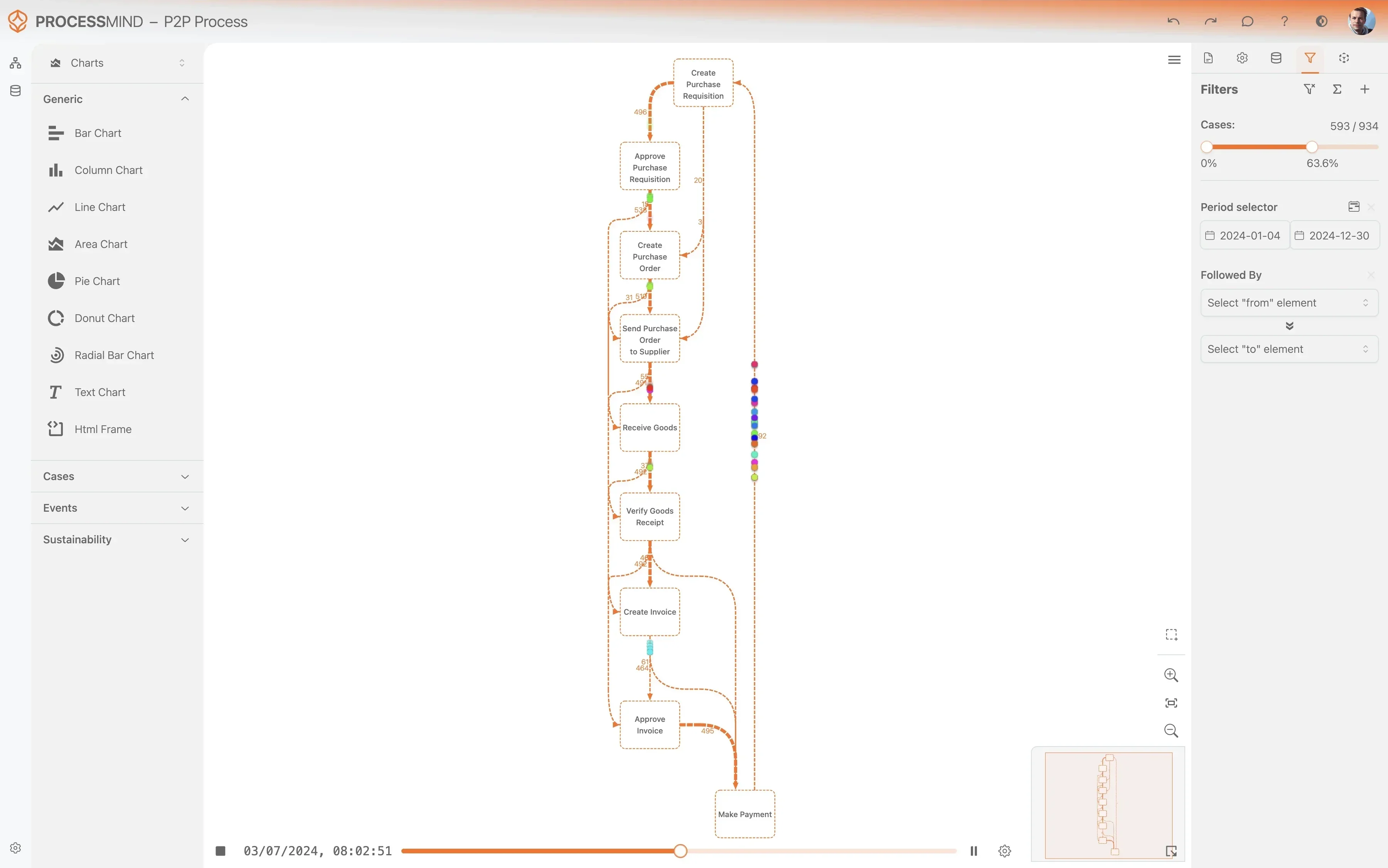
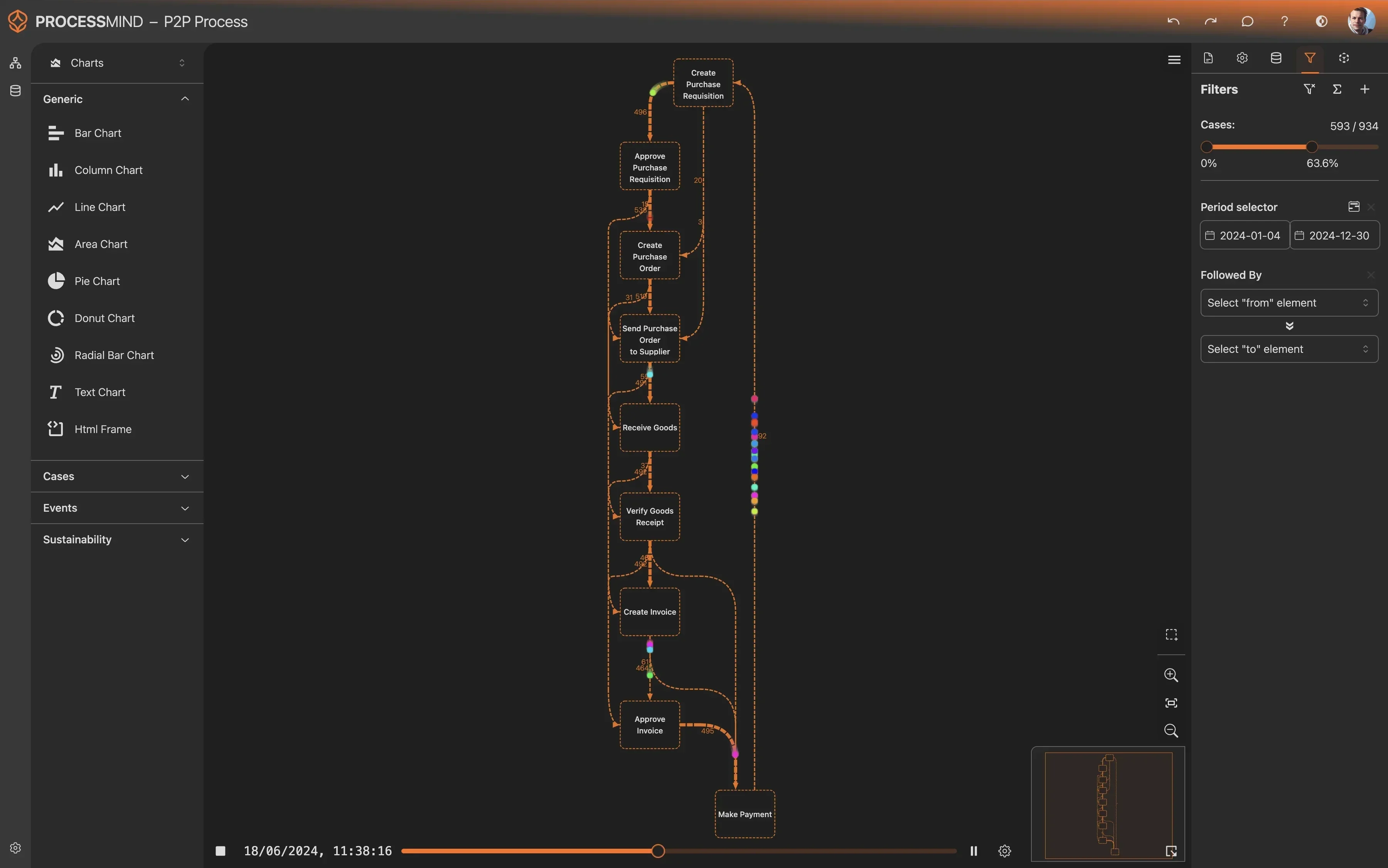
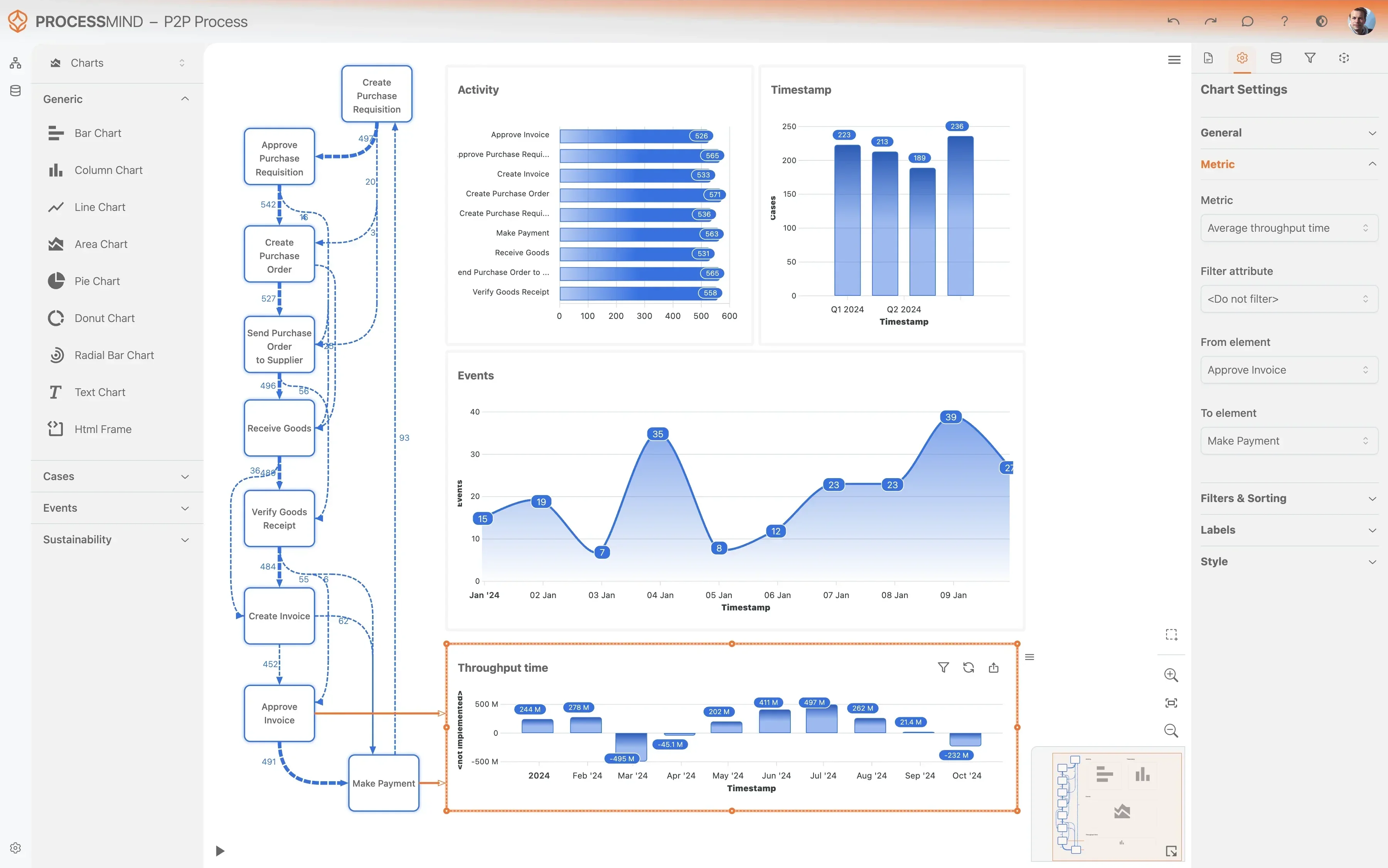
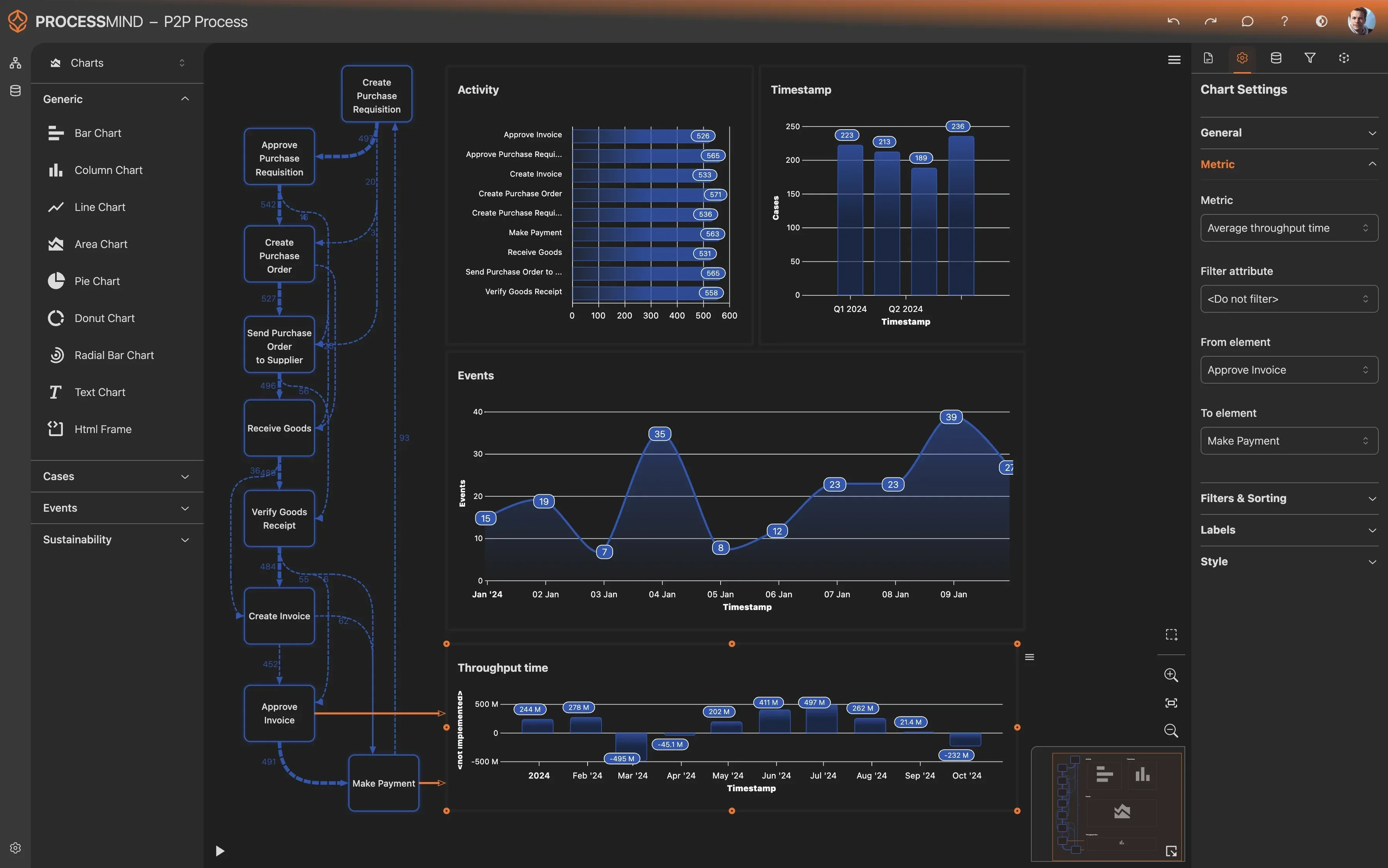
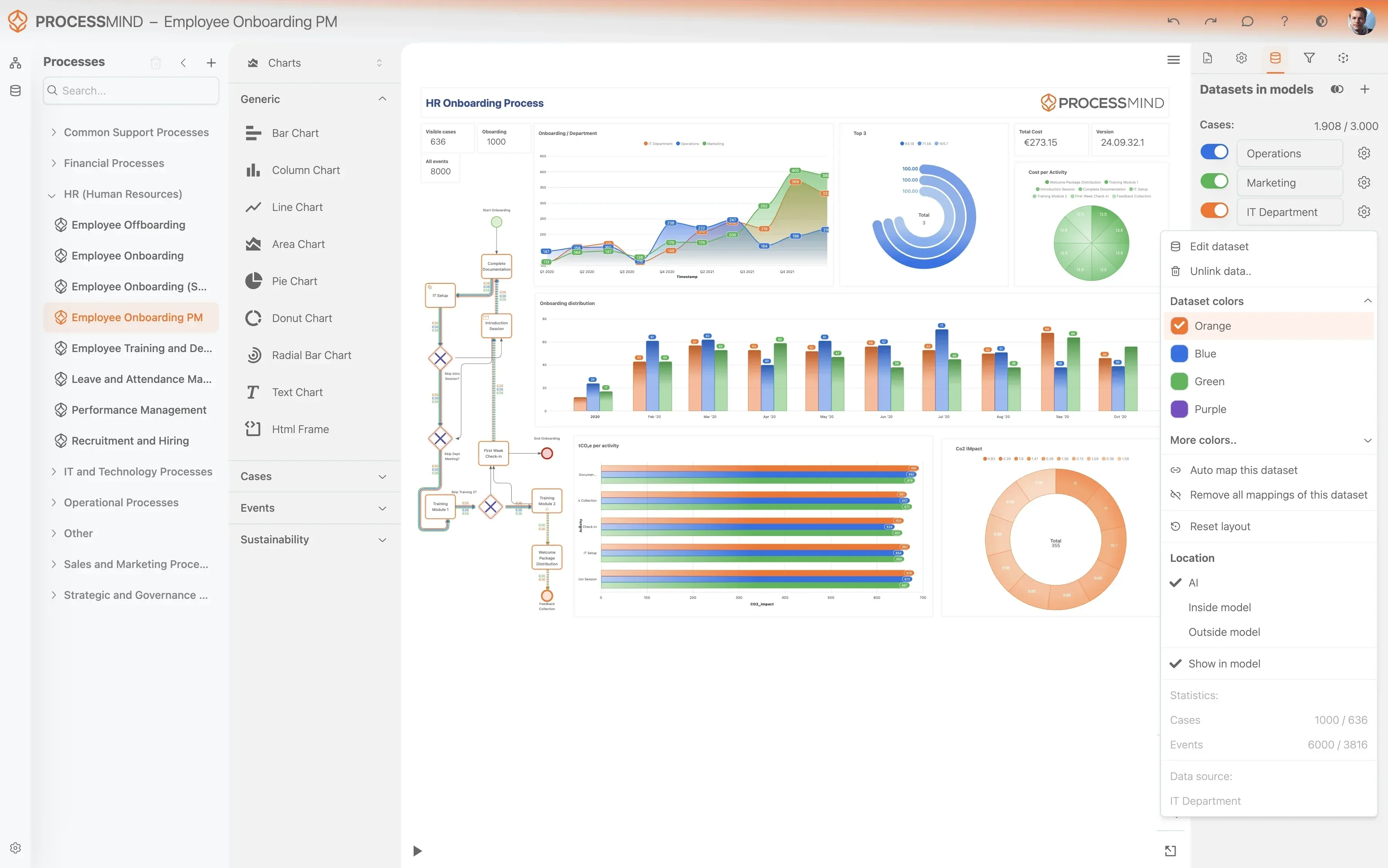
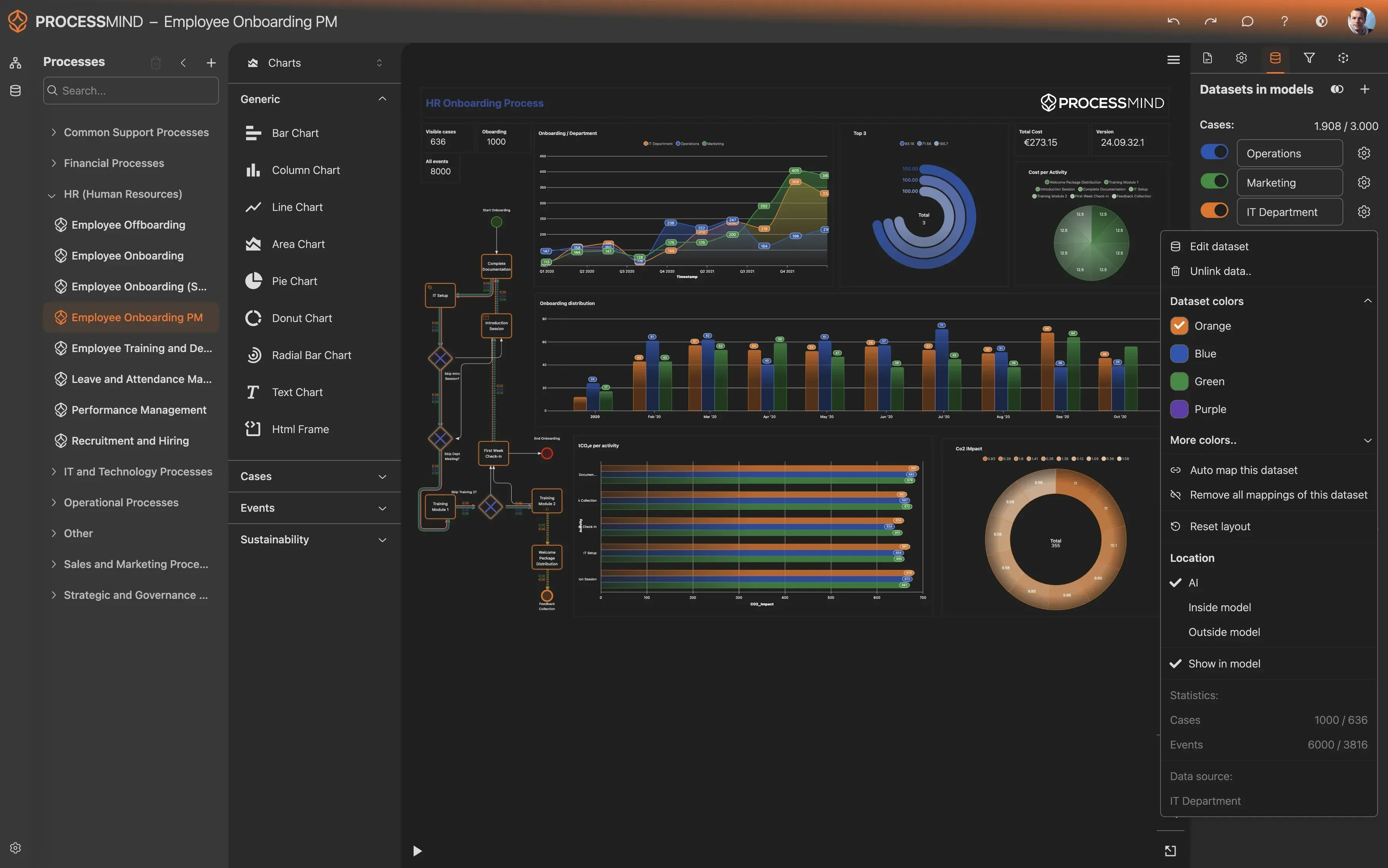
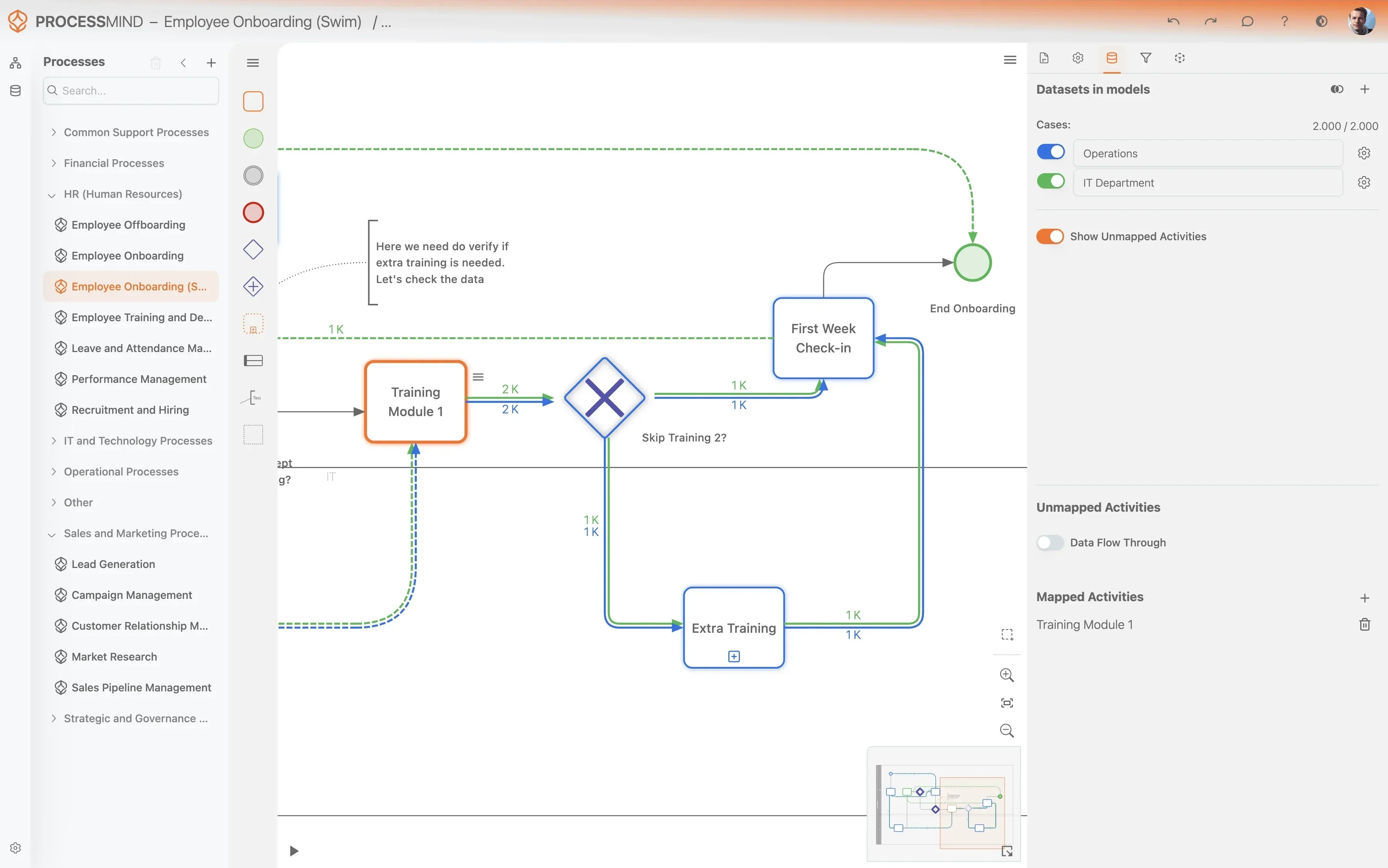
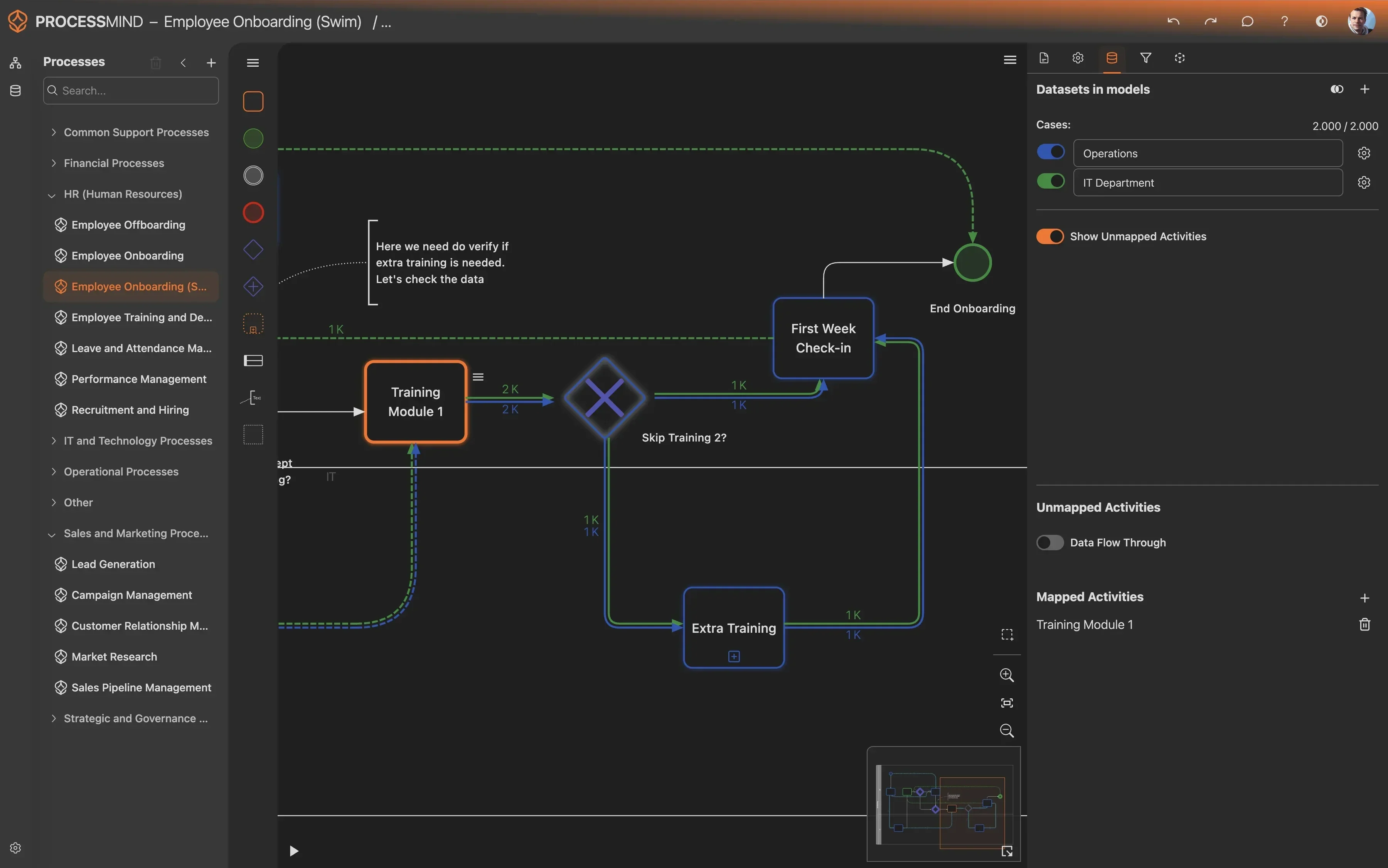
- Visualize end-to-end Agiloft contract flow
- Identify specific review and approval bottlenecks
- Pinpoint compliance risks and deviations
- Optimize cycle times from drafting to renewal
TYPICAL OUTCOMES
Elevating Contract Management Performance
Our process mining solution for Agiloft Contract Management pinpoints inefficiencies and compliance gaps, revealing opportunities to streamline workflows and mitigate risks. The outcomes presented here illustrate common improvements realized by organizations leveraging data-driven insights.
Reduced approval cycle time
Streamline review and approval workflows to reduce the total time it takes for a contract to get approved, leading to quicker deal closures.
Improved adherence to policies
Ensure contracts adhere to all predefined compliance steps and regulatory requirements, minimizing risks and avoiding potential penalties.
Decreased redline frequency
Identify root causes of excessive contract redlines and rework, leading to more standardized drafting and faster first-pass approvals.
Optimized negotiation phase duration
Pinpoint bottlenecks in the negotiation phase and implement data-driven improvements to significantly reduce the time spent in back-and-forth discussions.
Increased on-time action rate
Proactively manage contract expiration and renewal dates, ensuring critical actions are taken on time and avoiding costly lapses or renewals.
Results vary based on the specifics of your contract management process, existing Agiloft configuration, and data quality. These figures represent typical improvements observed across various implementations.
Recommended Data
FAQs
Frequently asked questions
Process mining visualizes the actual contract lifecycle, revealing bottlenecks in reviews and approvals, inconsistent compliance practices, and variations in cycle times. It helps identify root causes for delays, such as excessive redlines or inefficient resource allocation. This data-driven insight allows organizations to pinpoint exact areas for process optimization.
Process mining provides a transparent view of every step a contract takes, allowing you to compare actual process execution against defined compliance rules. It highlights deviations from standard operating procedures and identifies instances where compliance steps were missed or circumvented. This enables proactive measures to ensure consistent adherence to regulatory and internal policies.
Yes, by mapping the precise flow of contract approvals, process mining identifies specific steps or decision points that cause delays. It can highlight recurring rework loops, identify overloaded approvers, and quantify the impact of different negotiation paths. This information empowers teams to redesign workflows and allocate resources more effectively, significantly reducing overall cycle times.
For effective process mining, you primarily need event logs from Agiloft. This includes the Contract ID as the case identifier, activity names such as "Contract Drafted," "Review Initiated," "Approved," and timestamps for each activity. Additionally, relevant attributes like department, contract type, or approver can enrich the analysis.
Initial insights can often be gained within a few weeks of successful data extraction and ingestion into a process mining tool. The initial phase focuses on discovering the "as-is" process, identifying major deviations, and quantifying obvious bottlenecks. Deeper analysis and actionable recommendations typically follow within 1-3 months.
Data can typically be extracted from Agiloft using its reporting features, custom queries, or direct database access if permitted. The goal is to obtain a flat table where each row represents an event, including the Contract ID, activity name, and timestamp. Depending on your Agiloft configuration, this might involve combining data from several tables.
Not at all. Process mining offers value to any organization seeking to optimize their contract management, regardless of size or complexity. While large organizations might have more data, even smaller teams can gain significant insights into bottlenecks and inefficiencies in their contract workflows. The core benefit is understanding actual process execution, which applies universally.
You can expect tangible improvements such as a reduction in contract approval cycle times, improved adherence to compliance standards, and increased visibility into contract status. Process mining helps reduce manual effort, minimize errors, and optimize resource allocation. Ultimately, this leads to more efficient and reliable contract lifecycle management.
Beyond the ability to extract event log data, the main technical requirement is access to a process mining platform, either cloud-based or on-premise. No specific Agiloft-side technical integrations are typically needed, as process mining tools work by ingesting extracted data. Standard IT infrastructure for data handling and security should be in place.
Optimize Agiloft Contract Management, Reduce Cycle Time Now
Pinpoint inefficiencies and reduce your contract cycle time by 30%.
No credit card required. Start your free trial today.