Improve Your Patient Journey

Select a process
Choose a process to continue working in your connected workspace.
Optimize the Patient Journey in athenahealth
Complex patient journeys often lead to bottlenecks and inefficiencies, impacting care delivery. Our platform helps pinpoint critical delays and streamline care coordination effectively. Discover how to transform operations and achieve superior outcomes by optimizing every step of the patient experience. This enhances overall patient satisfaction.
Download our pre-configured data template and address common challenges to reach your efficiency goals. Follow our six-step improvement plan and consult the Data Template Guide to transform your operations.
Show detailed description
Why Optimizing Your Patient Journey Matters
The Patient Journey is the lifeblood of healthcare delivery, encompassing every interaction a patient has with your services, from initial contact to follow-up care. In complex systems like athenahealth, managing this journey efficiently is paramount. Inefficiencies within the Patient Journey can lead to increased operational costs, extended wait times, reduced patient satisfaction, and even compromised clinical outcomes. Delays in diagnosis, bottlenecks in treatment pathways, or uncoordinated discharge processes not only strain your resources but also negatively impact the patient experience. Understanding and optimizing this end-to-end process is critical for healthcare providers aiming to deliver high-quality, patient-centered care while maintaining financial sustainability. Effective Patient Journey optimization means faster treatment, better resource utilization, and ultimately, a healthier patient population. It’s not just about treating illness, it's about perfecting the entire care continuum that your athenahealth system helps manage.
How Process Mining Unlocks Patient Journey Insights in athenahealth
Traditional methods often struggle to provide a complete, unbiased view of the Patient Journey. This is where process mining excels. By analyzing event data automatically logged within your athenahealth system, process mining reconstructs the actual patient flow, rather than relying on theoretical models. It illuminates every step a patient takes, from “Patient Registered” to “Patient Discharged,” revealing all variations, deviations, and rework loops that occur in practice. This capability is invaluable for identifying hidden bottlenecks, understanding the true cycle time of various stages, and pinpointing where resources are over or underutilized. Process mining can answer critical questions like: "What is the average Patient Journey cycle time for specific diagnoses?" or "Where do patients experience the longest waiting times between a 'Diagnostic Test Ordered' and 'Diagnostic Test Performed' in athenahealth?" This level of detailed, data-driven insight empowers you to move beyond assumptions and make informed decisions to improve your Patient Journey.
Key Improvement Areas for Your Patient Journey
Leveraging process mining on your athenahealth data opens up several key areas for significant improvement within the Patient Journey:
- Streamlining Admissions and Triage: Identify delays and inefficiencies in patient registration, initial assessment, and triage processes, ensuring a smoother start to the patient's care. This can drastically reduce initial waiting times and improve the first impression.
- Optimizing Diagnostic and Treatment Pathways: Uncover variations and rework in diagnostic testing and treatment plan development. By standardizing best practices, you can reduce diagnostic cycle time and ensure patients receive timely, appropriate care.
- Enhancing Care Coordination and Transfers: Analyze transitions between departments, consultations with specialists, and transfers to different wards. Process mining helps identify communication breakdowns or logistical hurdles that prolong a patient's stay or complicate their journey.
- Improving Discharge Planning and Follow-up: Pinpoint delays in discharge planning initiation and execution, as well as inefficiencies in scheduling follow-up appointments. Faster, more coordinated discharge processes can reduce average length of stay and decrease readmission rates.
- Resource Allocation and Utilization: Gain insights into how resources, such as specific clinicians, equipment, or departments, are utilized across different patient journeys, enabling more efficient scheduling and allocation.
Expected Outcomes of Optimizing Your Patient Journey
By applying process optimization techniques informed by process mining, you can expect a range of measurable benefits for your healthcare organization:
- Reduced Patient Journey Cycle Time: Significantly decrease the total time from a patient's initial contact to their complete recovery and follow-up, leading to faster access to care.
- Enhanced Patient Satisfaction: Improve the overall patient experience through shorter wait times, clearer communication, and more coordinated care delivery.
- Increased Operational Efficiency: Lower operational costs by optimizing resource utilization, reducing rework, and eliminating unnecessary steps in the Patient Journey.
- Improved Clinical Outcomes: Standardize care pathways and ensure adherence to best practices, leading to more consistent and effective patient care.
- Better Regulatory Compliance: Ensure that patient care processes adhere to all relevant healthcare regulations and internal protocols, minimizing risks.
- Decreased Readmission Rates: By optimizing discharge planning and follow-up, you can contribute to better post-discharge care and reduce preventable readmissions.
Getting Started with Patient Journey Optimization
Embarking on the journey to optimize your Patient Journey in athenahealth might seem daunting, but with the right approach, it's highly achievable. Our comprehensive guidance provides a structured path to leverage the power of process mining, even if you're new to the field. You'll gain practical, actionable insights to identify critical bottlenecks, streamline your workflows, and ultimately transform your healthcare operations for superior patient outcomes. Begin your process optimization efforts today and unlock the full potential of your athenahealth data.
The 6-Step Improvement Path for Patient Journey
Download the Template
What to do
Get the pre-built Excel template designed for patient journey data. This template ensures your data from athenahealth is structured correctly for analysis.
Why it matters
Having a standardized data structure is crucial for accurate process analysis, preventing errors and ensuring consistency across all patient episodes.
Expected outcome
A ready-to-use data template specifically formatted for your athenahealth patient journey information.
Export Your Data
What to do
Extract 3-6 months of historical patient episode data from athenahealth. Utilize athenahealth's reporting tools to pull relevant activities and attributes into the downloaded template.
Why it matters
Accessing comprehensive historical data allows for a deep dive into past patient flows, revealing recurring patterns and areas ripe for improvement.
Expected outcome
A populated data template containing a significant historical record of your patient journeys from athenahealth.
Upload Your Dataset
What to do
Securely upload your completed data template, filled with athenahealth patient journey information, to the ProcessMind platform for automated processing.
Why it matters
A seamless upload initiates the powerful analytical capabilities, transforming raw data into actionable insights without manual interpretation or complex setup.
Expected outcome
Your athenahealth patient journey data is successfully processed and ready for immediate visualization and analysis within ProcessMind.
Analyze Your Process
What to do
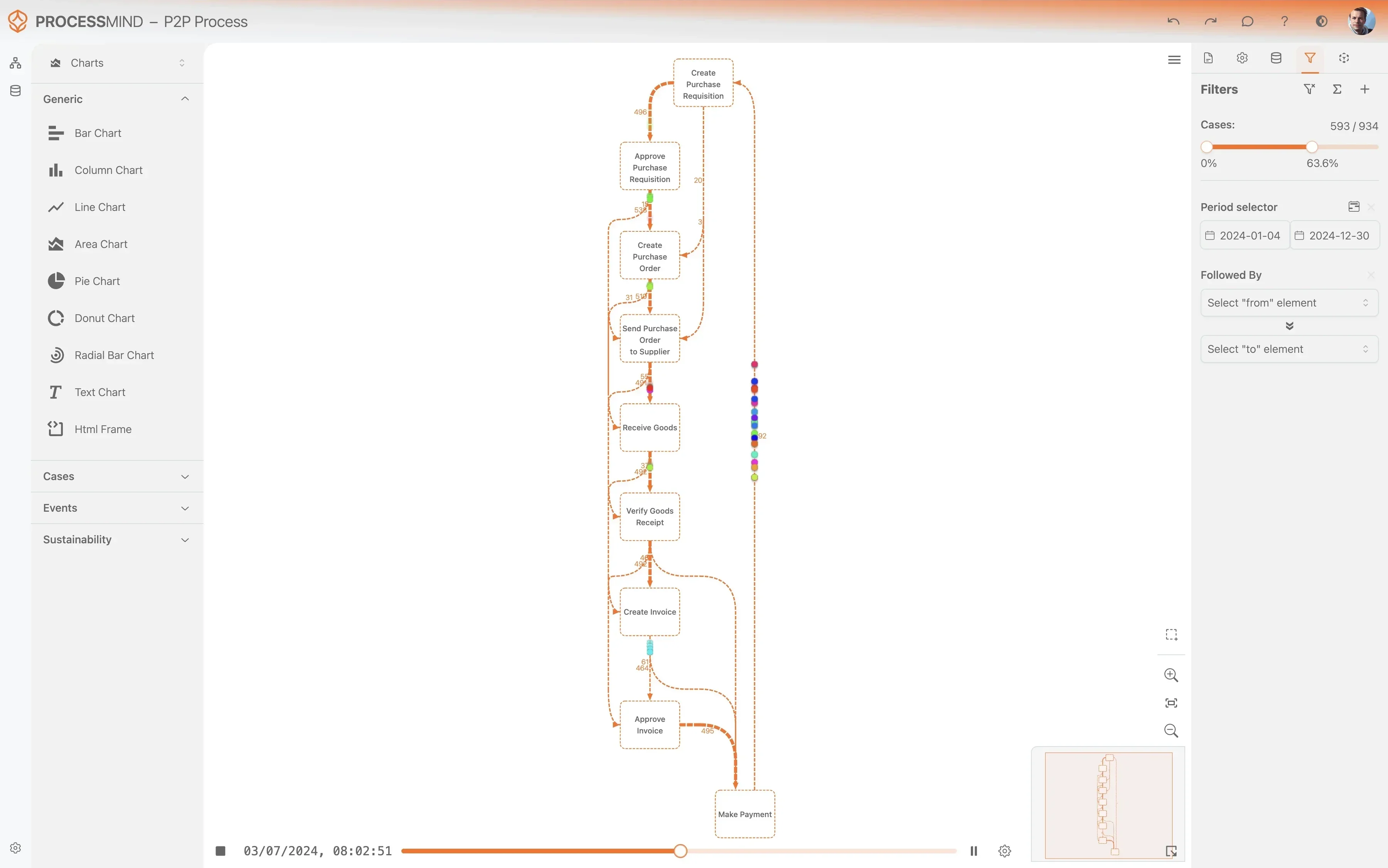
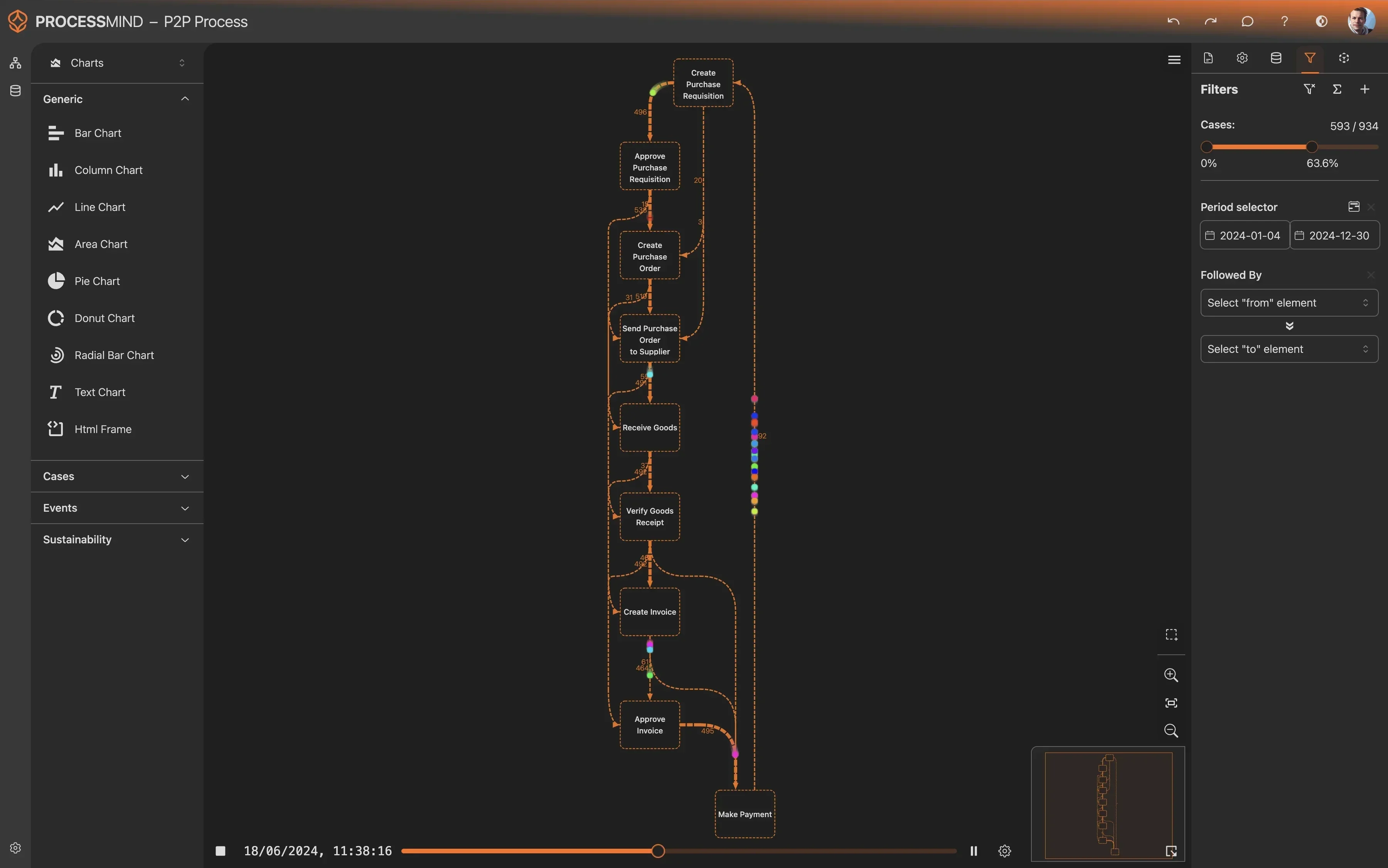
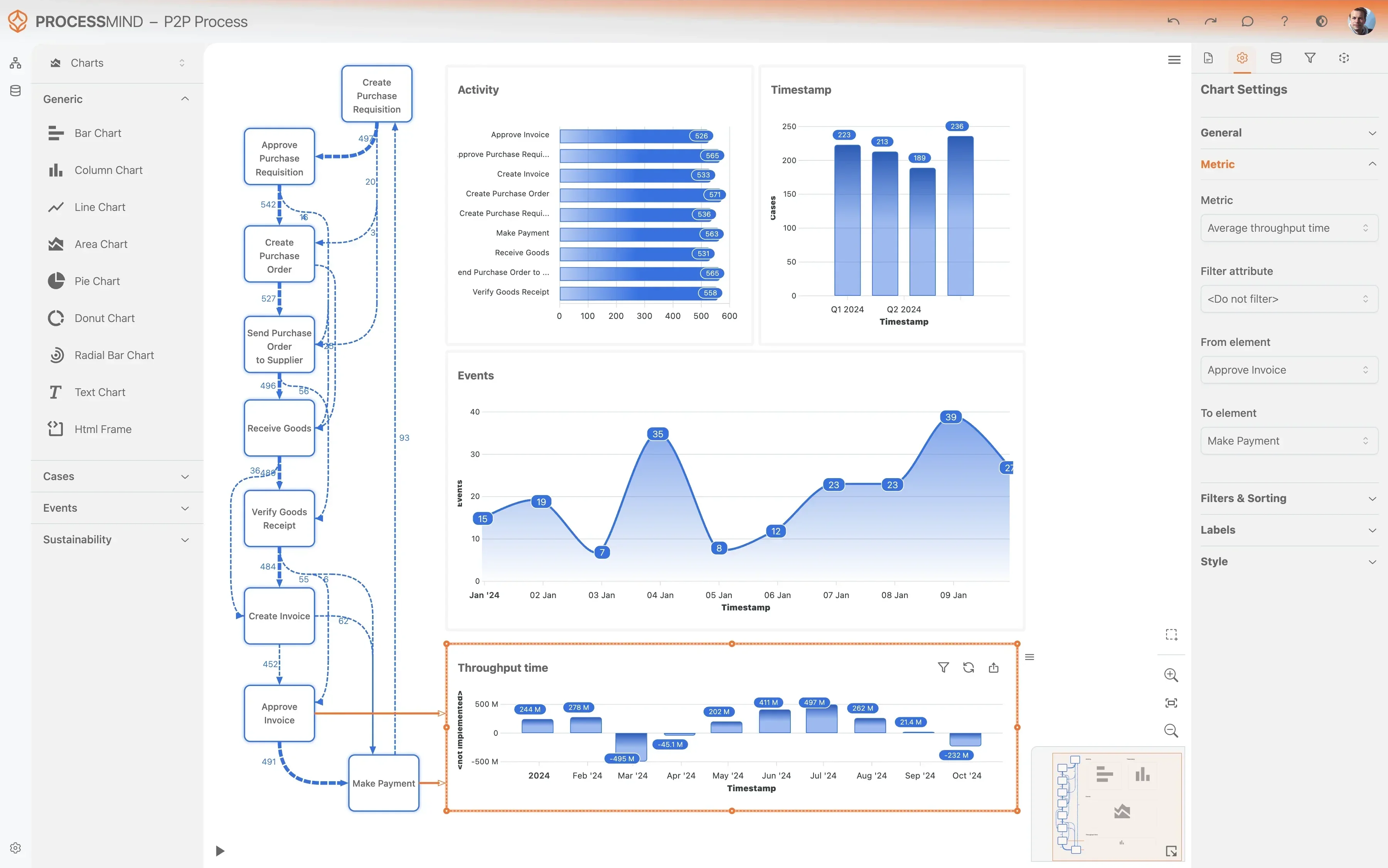
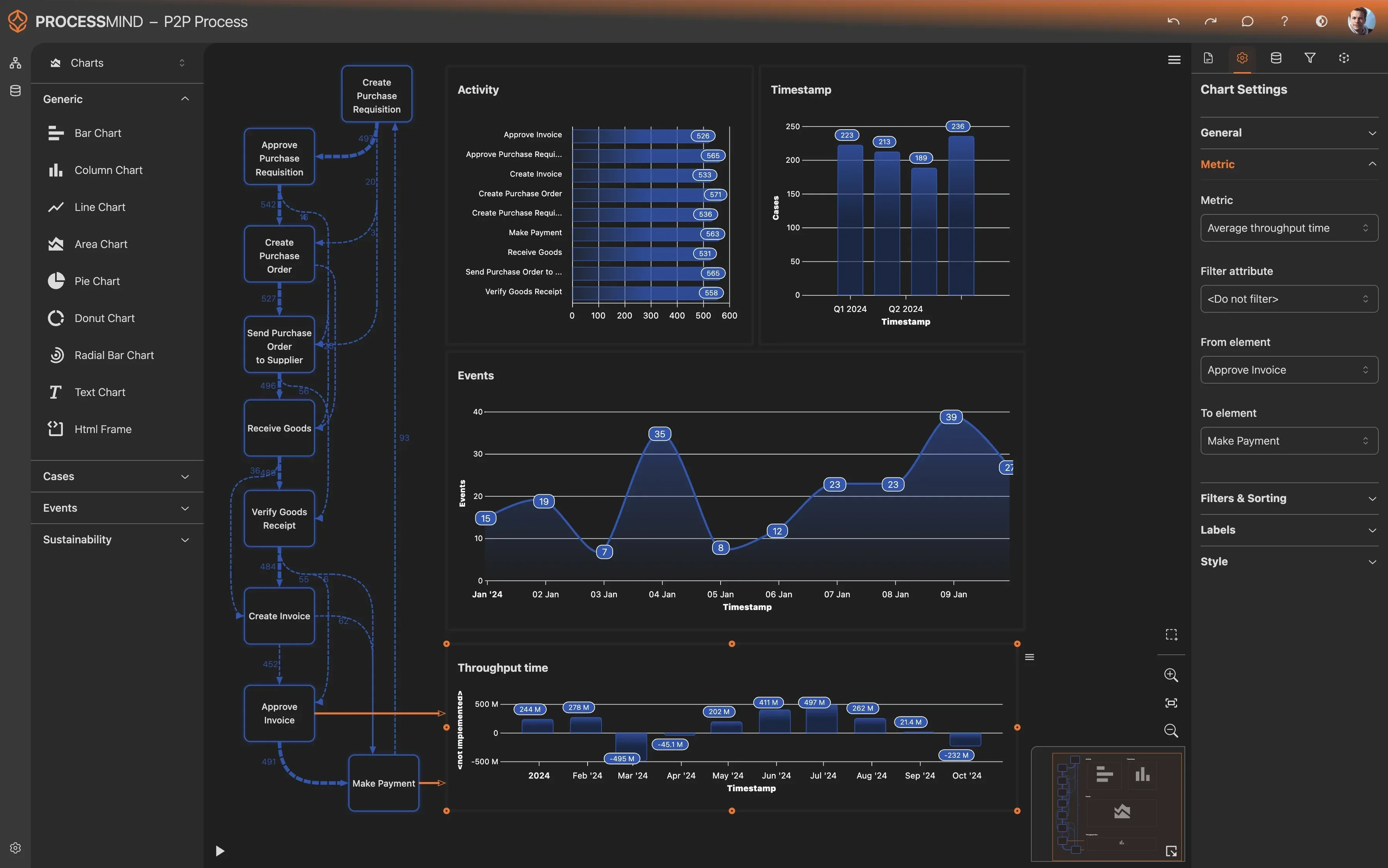
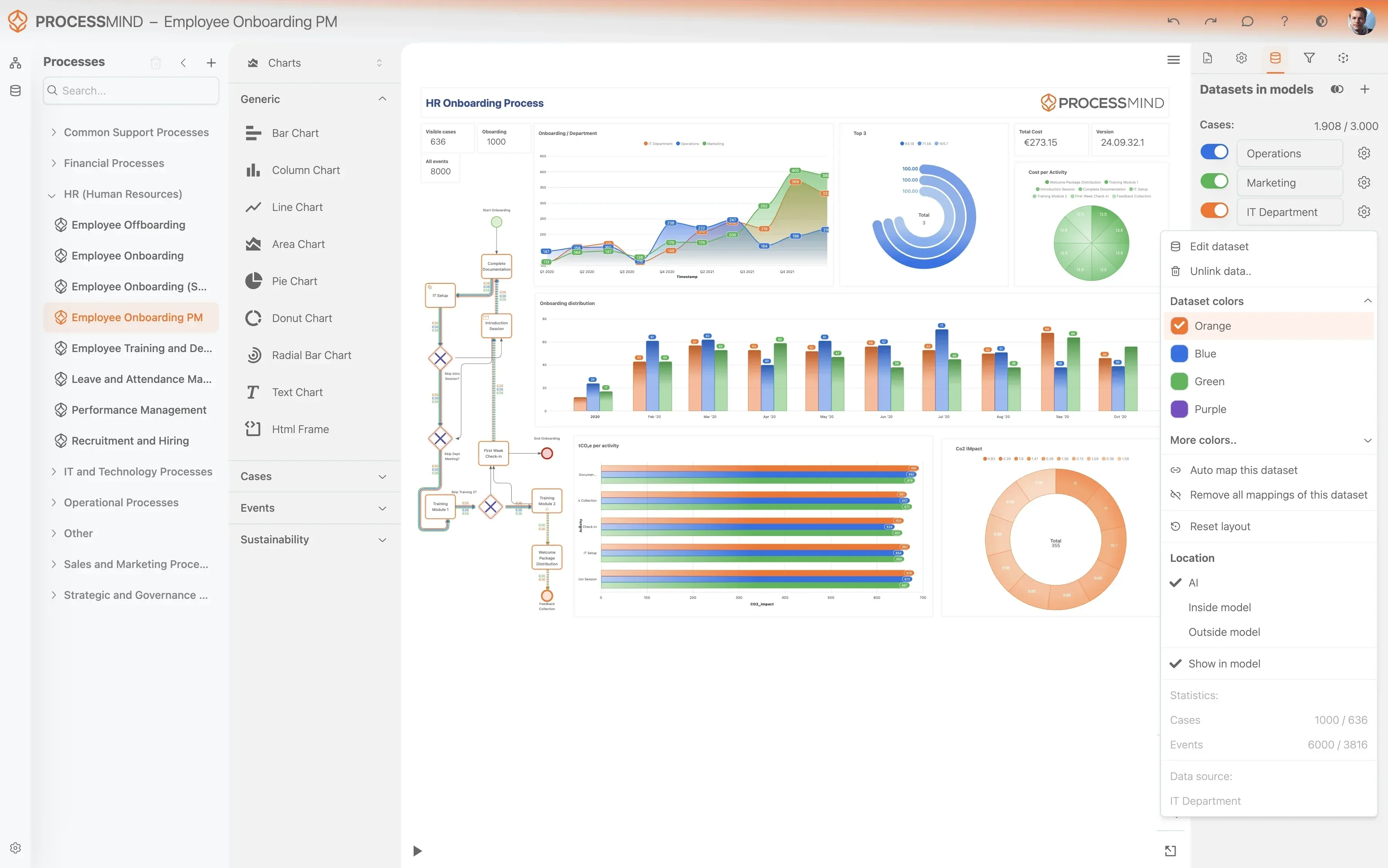
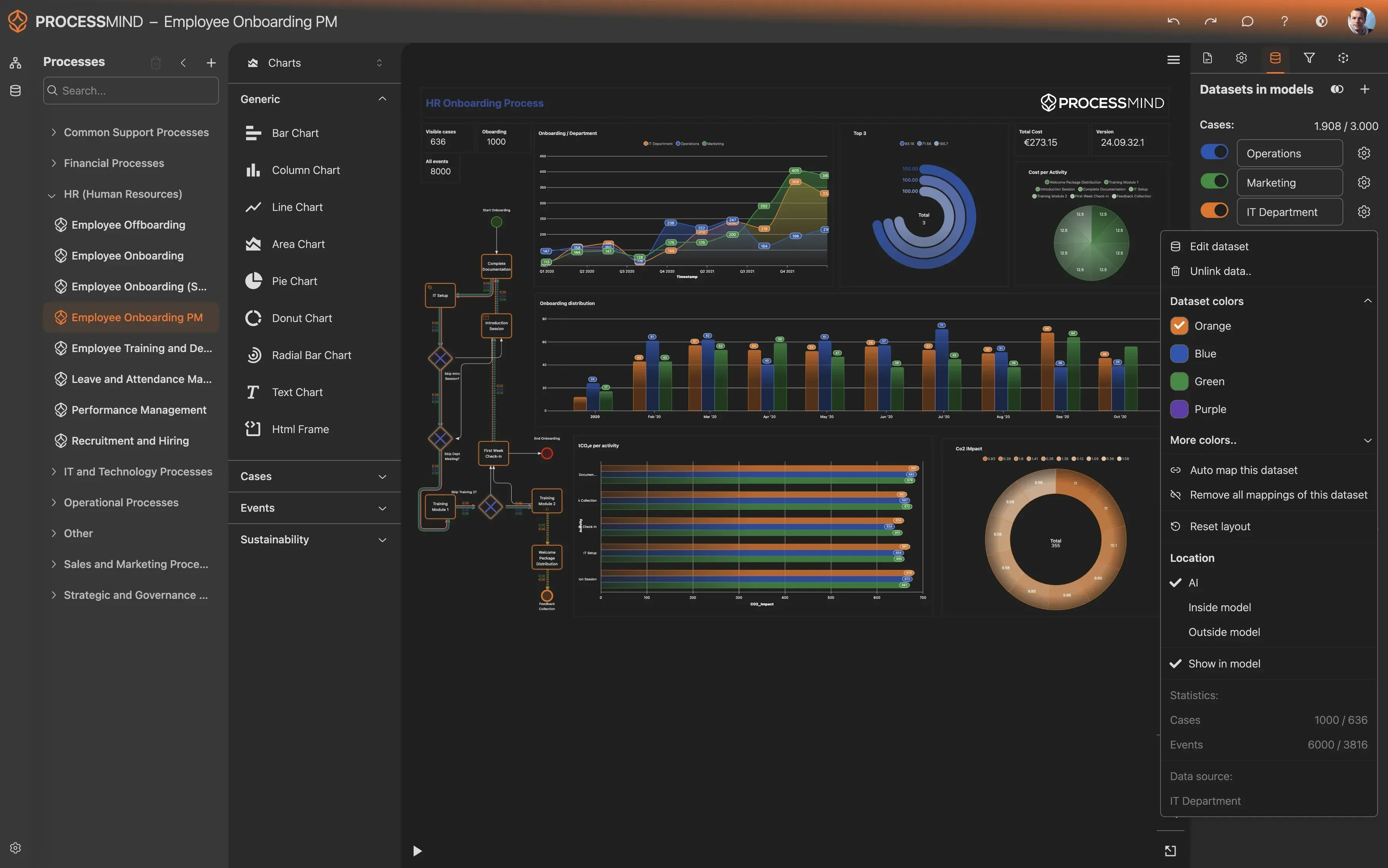
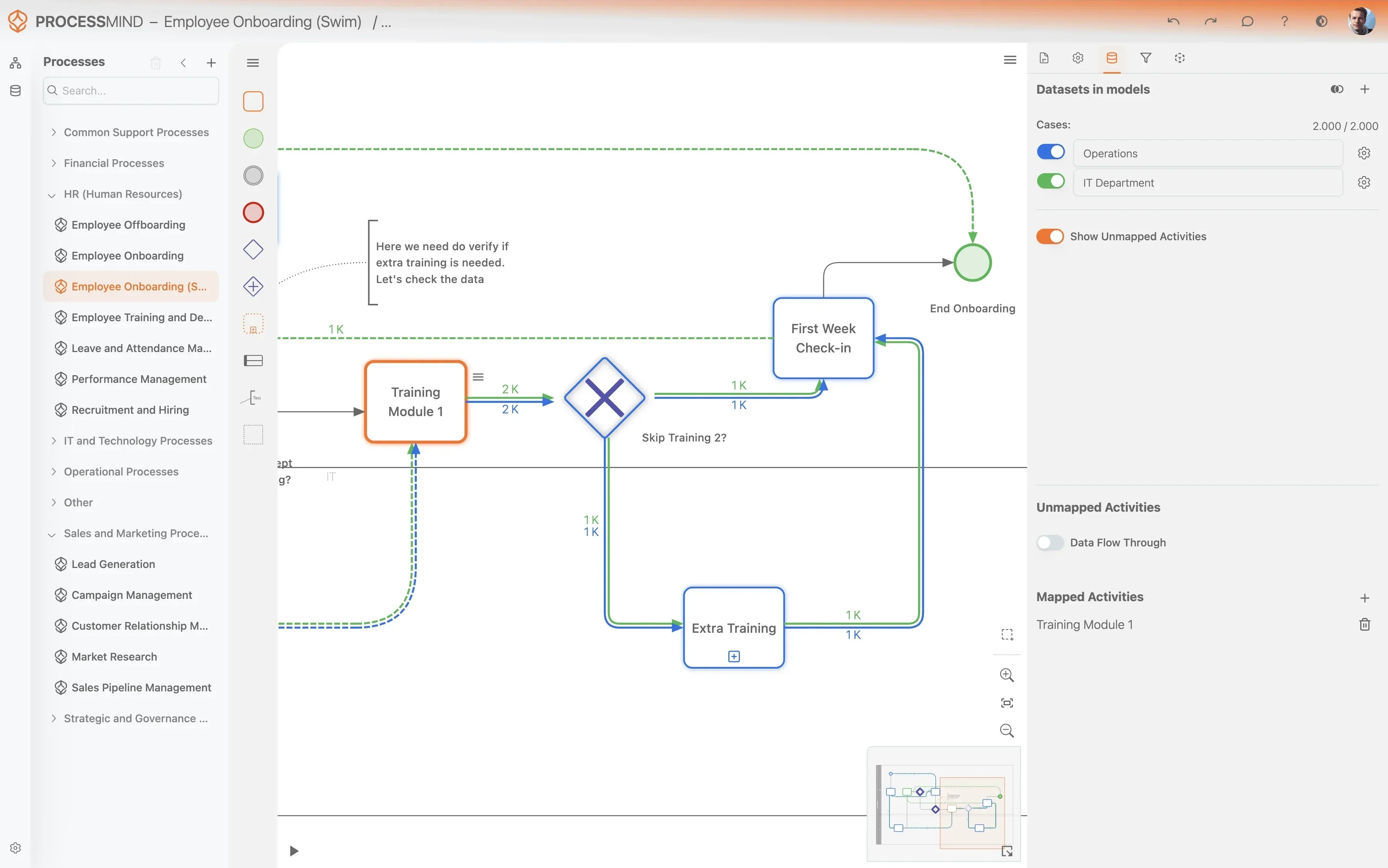
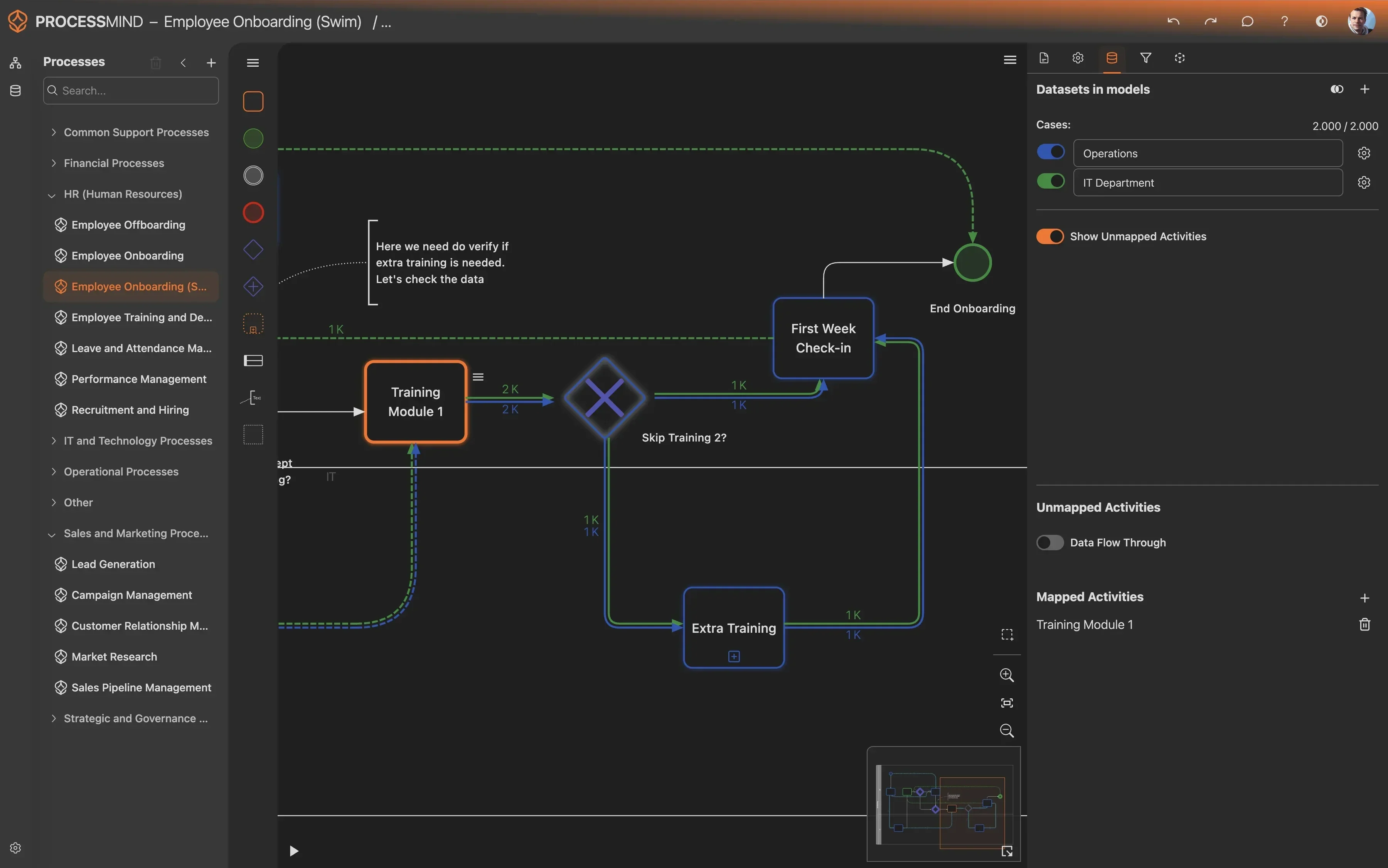
Explore the auto-generated dashboards, process maps, and performance metrics. Leverage AI-driven recommendations to pinpoint bottlenecks and non-compliant patient pathways.
Why it matters
Visualizing the actual patient journey uncovers hidden inefficiencies, variations, and compliance risks, providing clarity on where to focus improvement efforts.
Expected outcome
A clear understanding of your patient journey's current state, including bottlenecks, compliance issues, and actionable insights for optimization.
Implement Improvements
What to do
Prioritize the identified improvement opportunities, such as streamlining patient transfers or optimizing diagnostic test scheduling, and integrate them into your athenahealth workflows.
Why it matters
Acting on these insights directly translates to enhanced patient experience, reduced wait times, and improved resource allocation within your healthcare system.
Expected outcome
Concrete actions initiated to optimize patient flow, reduce operational costs, and improve overall patient satisfaction within athenahealth.
Monitor Your Process
What to do
Periodically re-upload updated patient journey data from athenahealth to track the impact of implemented changes and ensure continuous process health.
Why it matters
Ongoing monitoring provides objective evidence of improvement, allowing for sustained efficiency gains and proactive identification of new deviations or bottlenecks.
Expected outcome
Verified improvements in key performance indicators for your patient journey, with a system in place for continuous optimization and compliance.
TYPICAL OUTCOMES
Elevating Patient Care and Operational Efficiency
The outcomes presented here illustrate the transformative impact of optimizing patient journeys. By applying process mining to athenahealth data, organizations gain clear insights to streamline processes, enhance patient satisfaction, and improve resource utilization.
Average cycle time reduction
Patients experience significantly shorter waits from initial registration to final discharge, improving satisfaction and overall hospital flow.
Increase in guideline conformance
Ensure critical treatment steps are followed consistently, reducing unexplained variations and improving patient safety and care quality.
Reduction in preventable readmissions
By optimizing discharge planning and post-discharge care, hospitals see a notable decrease in patients returning within 30 days.
Shorter test lead times
Rapid identification of delays in diagnostic pathways ensures patients receive test results and subsequent critical treatment much sooner.
Improved department efficiency
Gain granular insights into resource bottlenecks and underutilization across departments, leading to more efficient staffing and equipment allocation.
Actual results vary based on the specific complexities of your patient journeys and the completeness of your athenahealth data. These figures represent typical improvements observed across various implementations.
Recommended Data
FAQs
Frequently asked questions
Process mining visualizes the actual flow of your patient journey data directly from athenahealth, revealing bottlenecks, inefficiencies, and compliance gaps. It provides an objective view of how patients move through your system, highlighting areas for optimization. By analyzing event logs, you can identify root causes of delays and variations in care pathways.
To perform process mining for the Patient Journey, you will typically need event log data from athenahealth. This includes a case identifier, such as Patient Episode, an activity or event name, and a timestamp for each event. Additional attributes like resource, cost, or patient demographics can enrich the analysis.
Data extraction from athenahealth typically involves utilizing its reporting capabilities, APIs, or direct database access, depending on your system's configuration and security protocols. Our experts can guide you through the secure and efficient extraction methods. We focus on ensuring data integrity and completeness for accurate process analysis.
You can expect to reduce patient waiting times, streamline patient transfers and handoffs, and accelerate diagnostic testing and results. Process mining also helps standardize treatment pathways, optimize resource utilization, and strengthen clinical protocol compliance. These improvements lead to better patient experiences and operational efficiency.
Yes, process mining is highly effective in identifying deviations from established clinical protocols and uncovering the root causes of patient readmissions. By visualizing actual patient pathways, it highlights non-compliant steps and areas where interventions can prevent readmissions. This leads to improved care quality and stronger compliance.
Initial insights can often be gained within a few weeks of successful data extraction and model creation, depending on data quality and project scope. A comprehensive analysis and actionable recommendations typically take two to three months. The continuous monitoring phase provides ongoing optimization opportunities.
Beyond your athenahealth system, you will need a process mining software platform to ingest and analyze the extracted event log data. While some platforms offer connectors, data often needs to be prepared into a standard event log format. Basic data engineering skills may be beneficial for initial setup.
Process mining integrates at the data level, not directly into the athenahealth application, meaning it's less about system integration and more about data ingestion. The main task is extracting relevant event logs from athenahealth, which is a common practice for analytics. It does not disrupt your current clinical workflows.
Process mining effectively addresses common problems like excessive patient waiting times, inefficient patient transfers, and delays in diagnostic testing. It also reveals suboptimal discharge planning, unexplained variations in treatment pathways, and inefficient resource utilization. By making the unseen visible, it helps pinpoint exact pain points.
Optimize Your Patient Journey Now, Eliminate Bottlenecks
Pinpoint inefficiencies in athenahealth and reduce patient journey cycle time by 30%.
No credit card required. Start optimizing today.