Improve Your Record to Report - Period Close & Reconciliation

Select a process
Choose a process to continue working in your connected workspace.
Optimize SAP ECC Period Close for Faster, More Accurate Reporting
This platform helps you uncover hidden inefficiencies and bottlenecks that slow down your processes. Easily pinpoint where delays occur and identify areas for improvement. Our tools enable you to streamline activities, reduce cycle times, and enhance overall operational accuracy.
Download our pre-configured data template and address common challenges to reach your efficiency goals. Follow our six-step improvement plan and consult the Data Template Guide to transform your operations.
Show detailed description
Why Optimize Your Record to Report - Period Close & Reconciliation in SAP ECC?
The Record to Report, R2R, process, particularly the Period Close & Reconciliation cycle, is a cornerstone of financial operations. In SAP ECC environments, this intricate process, involving activities from data collection to financial statement generation, often faces significant challenges. Without clear visibility into actual process execution, organizations struggle with extended close cycles, late financial reports, and increased operational costs. Manual reconciliation steps, unforeseen delays in approving adjustments, and difficulty tracking intercompany transactions can lead to bottlenecks, impacting overall financial accuracy and compliance. A slow or error-prone period close can hinder strategic decision-making and expose your organization to audit risks. Optimizing this critical process is not just about speed, it is about enhancing the integrity and reliability of your financial reporting.
How Process Mining Unlocks R2R Efficiency in SAP ECC
Process mining offers a revolutionary approach to understanding and improving your Record to Report - Period Close & Reconciliation process within SAP ECC. Instead of relying on assumptions or anecdotal evidence, process mining directly analyzes event logs from your SAP ECC FI-GL module, drawing data from key tables like BKPF, BSEG, GLT0, FAGLFLEXA, SKA1, and SKB1. By reconstructing the complete end-to-end journey of each financial period, you gain an objective, data-driven view of how your period close truly operates.
This technology allows you to:
- Visualize the Real Process Flow: See precisely how activities, such as "Source Data Collected," "Transactions Posted," "Intercompany Reconciliation Performed," and "Adjusting Journal Entries Posted," are executed, revealing hidden deviations from the ideal process.
- Identify Critical Bottlenecks: Pinpoint specific steps or user groups causing delays in the "Reconciliation Reviewed & Approved" or "Trial Balance Prepared" stages, which significantly impact your financial close cycle time.
- Quantify Rework and Exceptions: Understand where reconciliation efforts are repeated or where numerous adjustments are needed, indicating underlying data quality or process issues.
- Analyze Cycle Times: Measure the precise duration of each activity and the overall financial close for every period, allowing you to benchmark and target specific areas for improvement.
By leveraging these insights, you can move beyond guesswork and make informed decisions to improve Record to Report - Period Close & Reconciliation.
Key Improvement Areas in SAP ECC Period Close
Applying process mining to your SAP ECC Period Close & Reconciliation reveals actionable opportunities for process optimization. Typical improvement areas include:
- Accelerating Reconciliation: Identify accounts or reconciliation categories, Reconciliation Category, that consistently cause delays or require multiple review cycles. Streamline these by automating data validation or clarifying approval workflows.
- Optimizing Journal Entry Management: Analyze the flow of "Adjusting Journal Entries Posted," uncovering excessive approval steps or delays from specific departments, Department, or users, Responsible User. This helps to reduce the overall time taken to finalize entries.
- Enhancing Intercompany Processes: Gain clarity on the efficiency of "Intercompany Reconciliation Performed." Discover where reconciliation discrepancies frequently arise and address root causes to prevent future delays.
- Reducing Manual Efforts: Identify manual workarounds or repetitive tasks that can be automated, particularly in areas like "Source Data Collected" or "Financial Statements Generated," freeing up valuable finance team resources.
- Improving Data Quality: Frequent adjusting entries often signal underlying data quality issues. Process mining helps trace these back to their origin, enabling proactive measures to prevent errors.
Focusing on these areas will directly contribute to a more efficient and accurate financial close process.
Realizing Tangible Benefits: Outcomes of R2R Process Optimization
By systematically analyzing and improving your Record to Report - Period Close & Reconciliation process using process mining in SAP ECC, your organization can achieve significant, measurable benefits:
- Reduced Financial Close Cycle Time: Achieve a faster close, enabling quicker access to critical financial insights and improving responsiveness to market changes.
- Enhanced Accuracy and Reliability: Minimize errors and the need for post-close adjustments, leading to more trustworthy financial statements and improved audit readiness.
- Improved Compliance: Ensure strict adherence to accounting standards and regulatory requirements by identifying and rectifying process deviations.
- Lower Operational Costs: Reduce the manual effort and overtime associated with the period close, optimizing resource allocation and saving costs.
- Greater Transparency: Gain a comprehensive, end-to-end view of the process, fostering accountability and enabling continuous improvement.
These outcomes collectively strengthen your financial control environment and provide a solid foundation for strategic growth.
Starting Your Journey to a Streamlined Period Close
Embracing process mining for your Record to Report - Period Close & Reconciliation in SAP ECC is a straightforward path to significant improvement. This approach empowers you to see your financial closing process as it truly happens, quickly identify areas for enhancement, and implement targeted changes with confidence. You do not need deep technical expertise to start uncovering valuable insights and begin your journey toward a more efficient, accurate, and compliant financial close. Discover how to reduce Record to Report - Period Close & Reconciliation cycle time and elevate your financial operations today.
The 6-Step Improvement Path for Record to Report - Period Close & Reconciliation
Get Data Template
What to do
Download the pre-configured Excel data template designed specifically for SAP ECC Record to Report Period Close & Reconciliation data extraction.
Why it matters
Using the correct template ensures your data is structured for accurate analysis, avoiding manual rework and accelerating the setup process.
Expected outcome
A structured Excel template ready to receive your SAP ECC financial period close data.
Extract SAP ECC Data
What to do
Extract 3-6 months of historical financial period close data from SAP ECC, focusing on tables like BKPF, BSEG, GLT0, FAGLFLEXA. Populate the downloaded template.
Why it matters
Comprehensive historical data provides a robust foundation for uncovering process variations, identifying recurring delays, and understanding root causes of inefficiencies.
Expected outcome
A populated Excel template containing relevant historical data for your Record to Report process.
Upload Your Dataset
What to do
Upload your completed Record to Report data template to ProcessMind. The system will securely process your data for immediate analysis.
Why it matters
Secure and swift data ingestion is crucial for quickly transforming raw data into actionable insights, enabling rapid commencement of process analysis.
Expected outcome
Your Record to Report data securely processed and ready for analysis within ProcessMind.
Analyze Period Close Flow
What to do
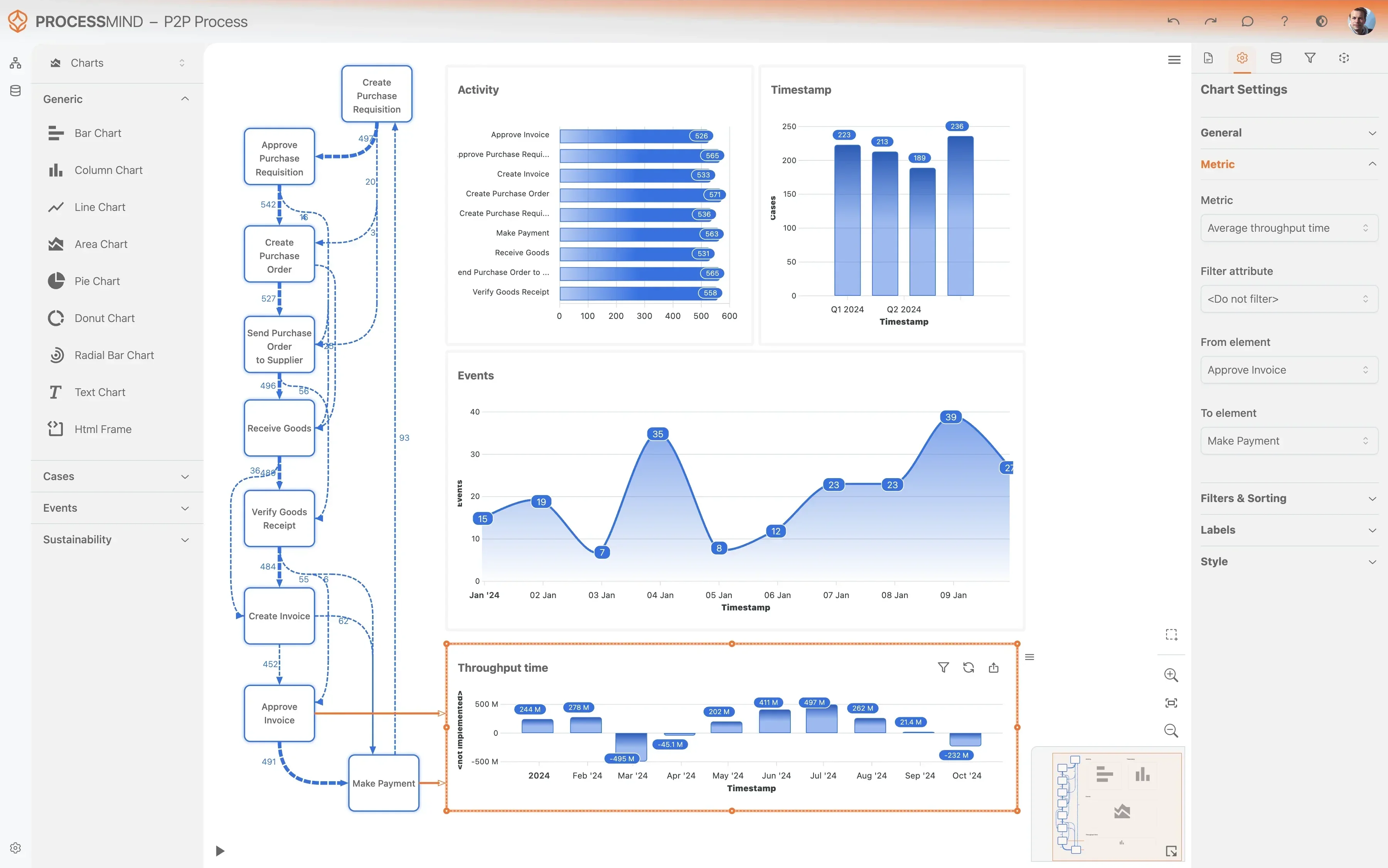
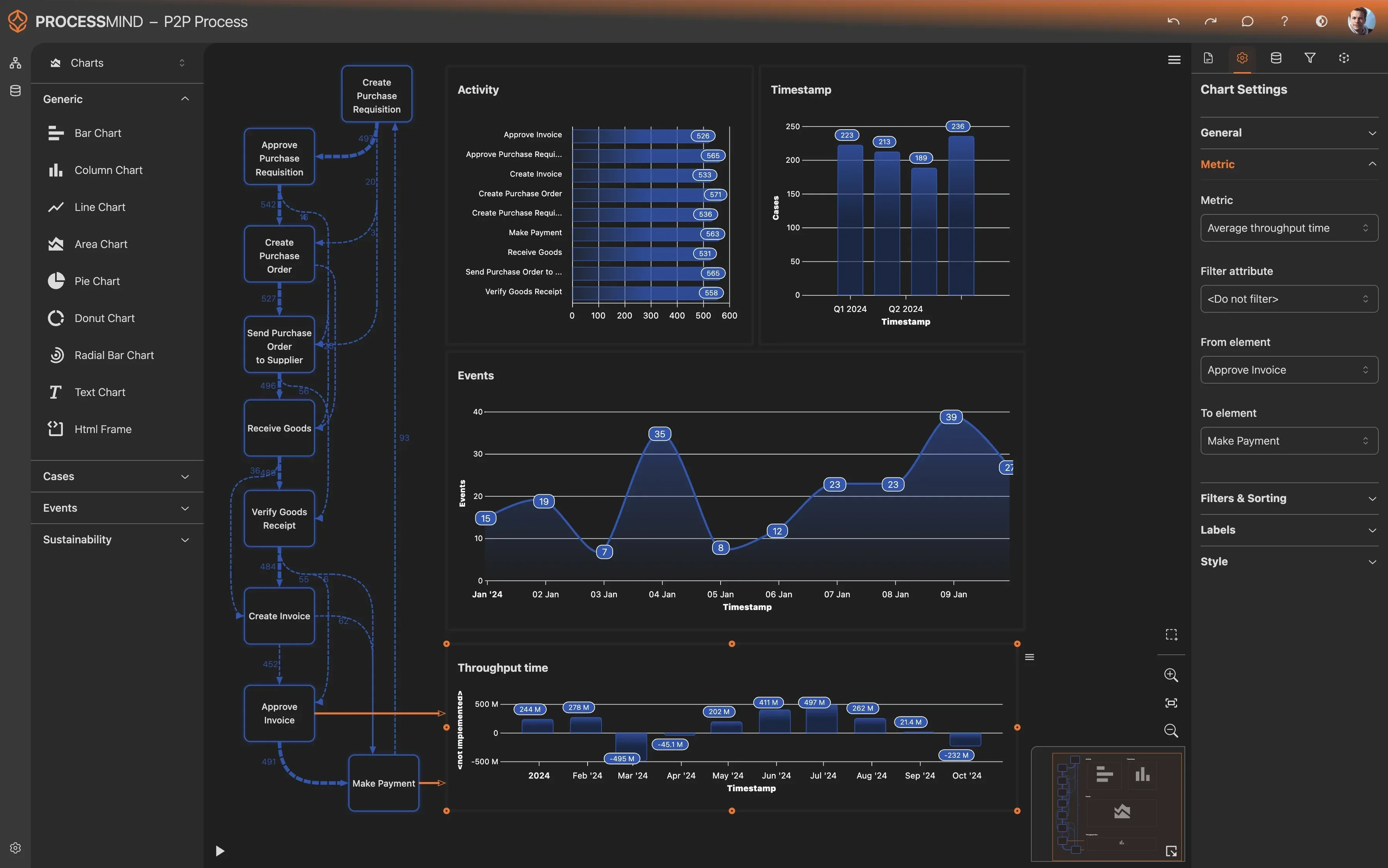
Explore auto-generated dashboards and visual process maps to identify bottlenecks, compliance gaps, and deviations in your Period Close & Reconciliation activities.
Why it matters
Visualizing the actual process flow helps pinpoint inefficiencies and areas of non-compliance, allowing for targeted intervention to improve speed and accuracy.
Expected outcome
Clear insights into your Period Close process, including bottlenecks, compliance issues, and optimization opportunities.
Implement Optimizations
What to do
Prioritize and implement the identified process improvement opportunities, such as standardizing reconciliation steps or automating data collection in SAP ECC.
Why it matters
Translating insights into action leads to tangible improvements, reducing cycle times, enhancing data accuracy, and improving resource utilization for period close.
Expected outcome
Initiated changes within your Record to Report process, addressing identified inefficiencies and improving compliance.
Monitor & Sustain Gains
What to do
Periodically re-upload updated SAP ECC data to ProcessMind to continuously track process performance, measure KPI improvements, and ensure sustained optimization.
Why it matters
Ongoing monitoring ensures improvements are sustained, new issues are promptly detected, and the Period Close & Reconciliation process remains efficient and compliant.
Expected outcome
A continuously optimized and high-performing Record to Report process, with measurable improvements over time.
WHAT YOU WILL GET
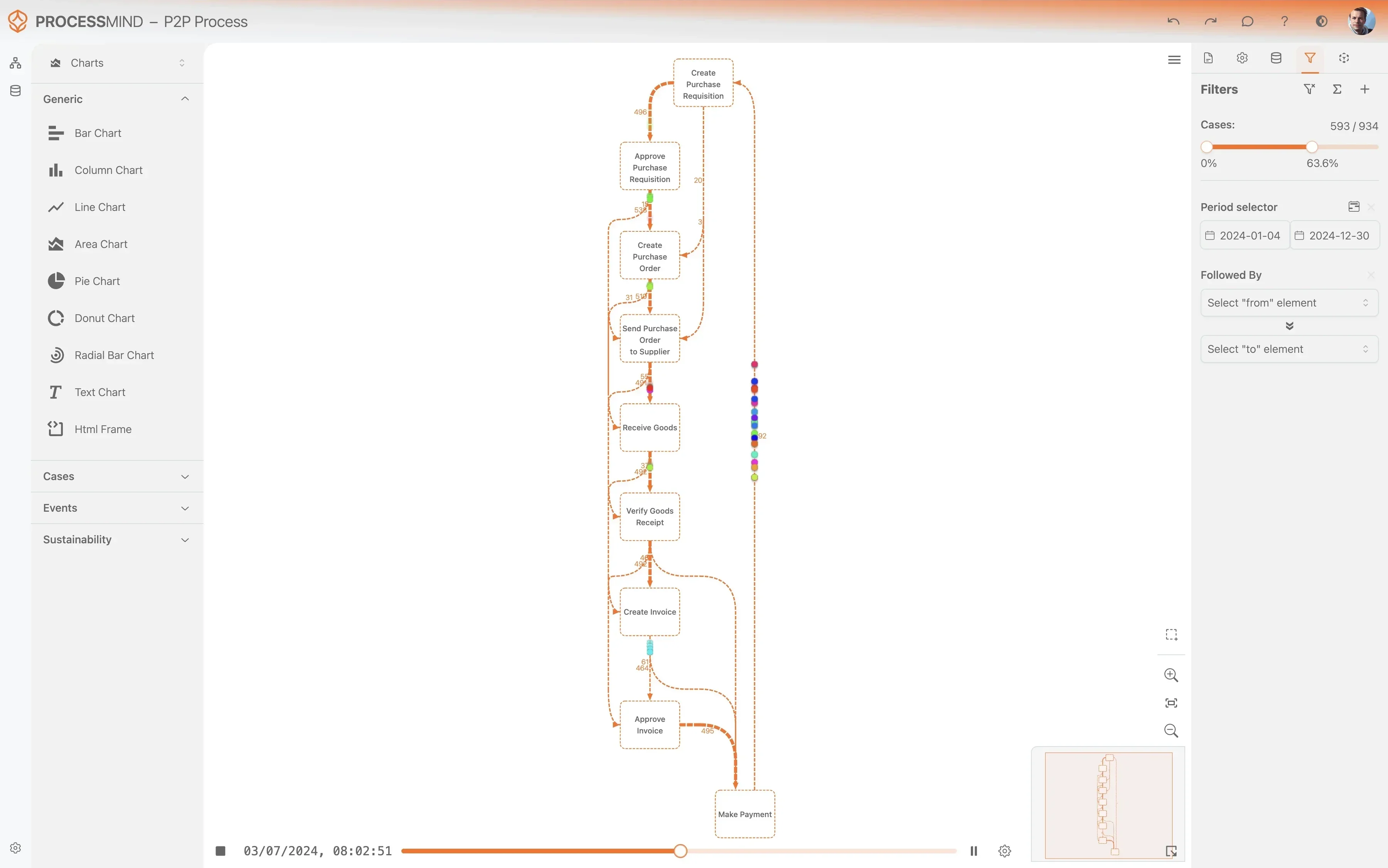
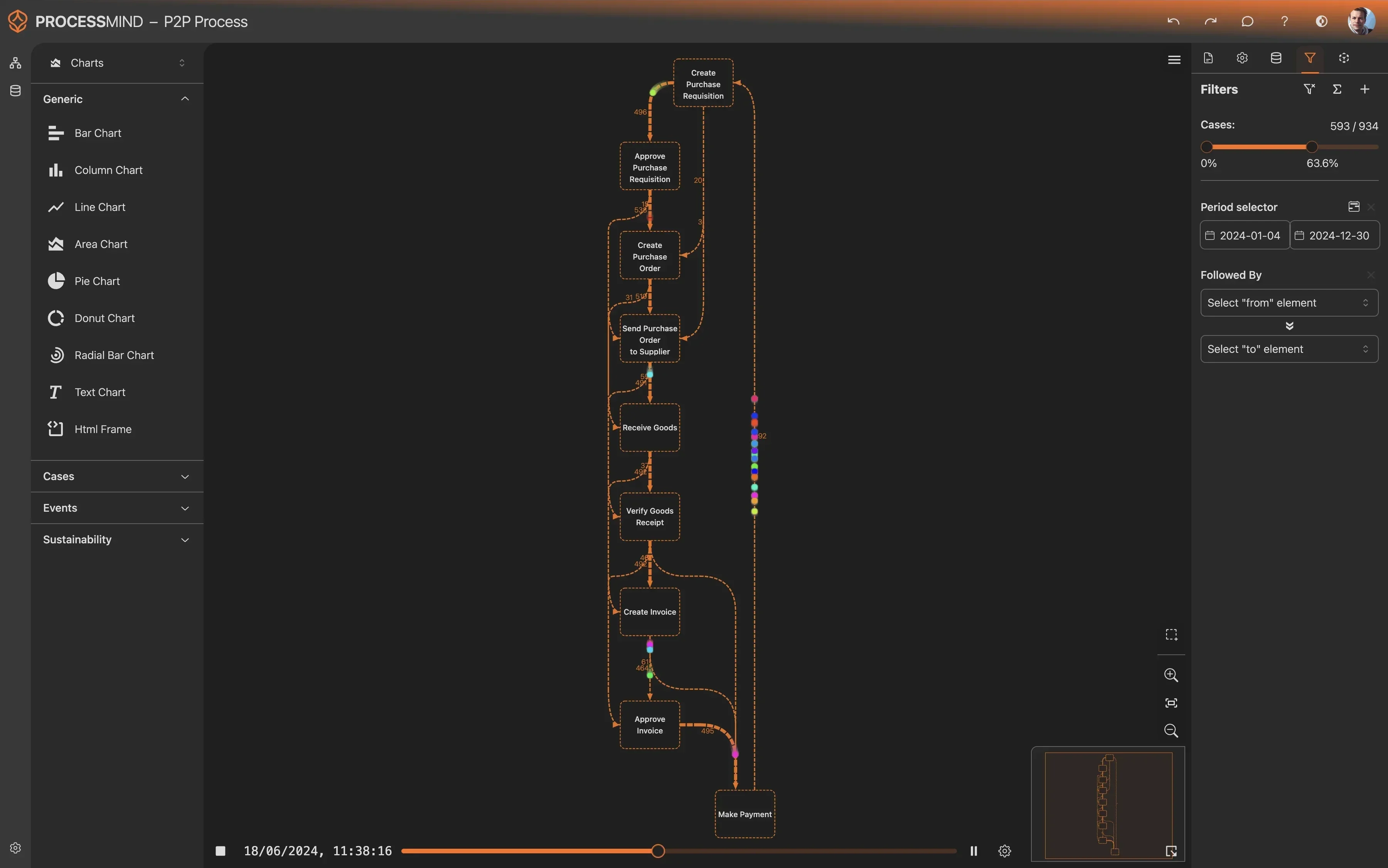
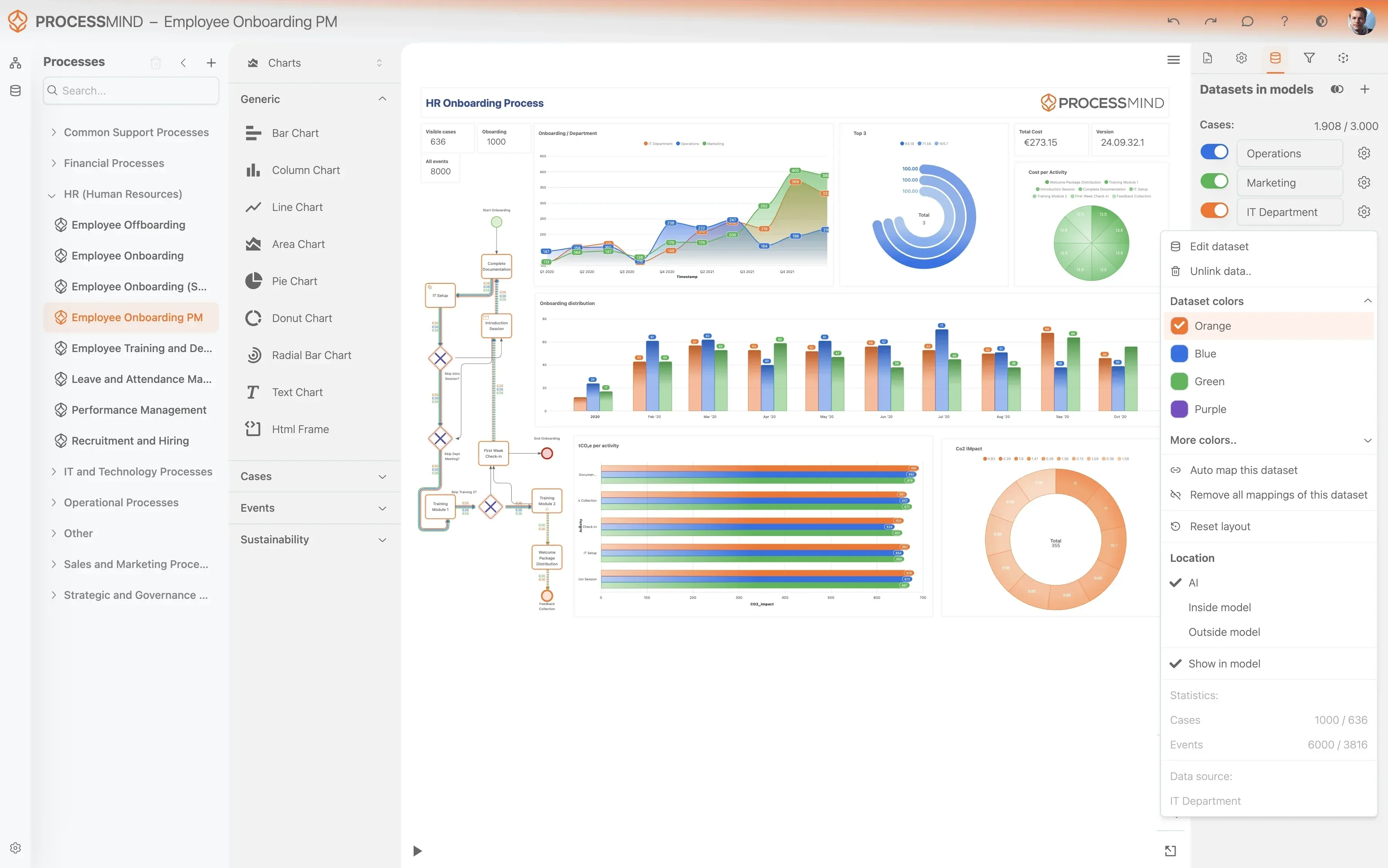
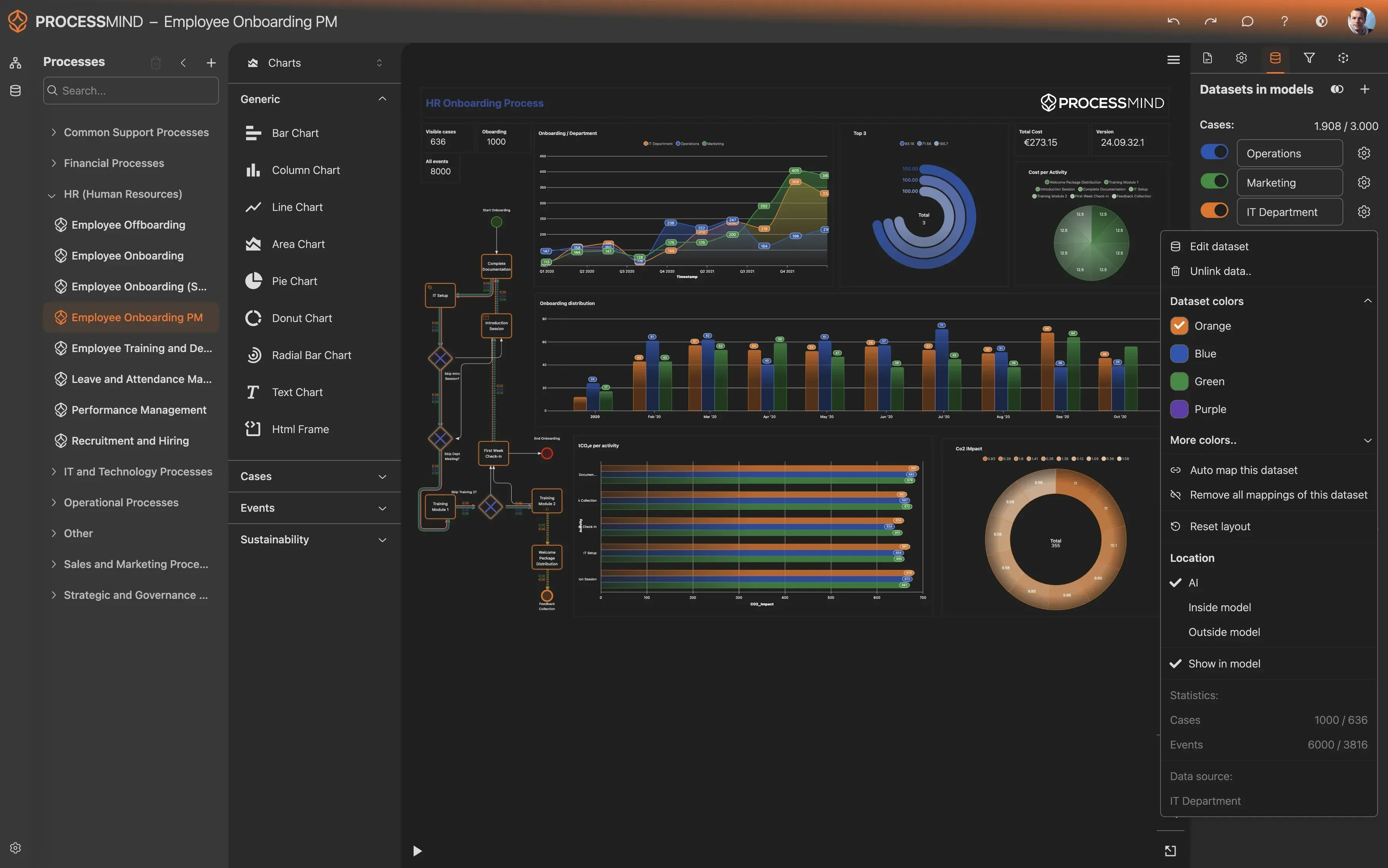
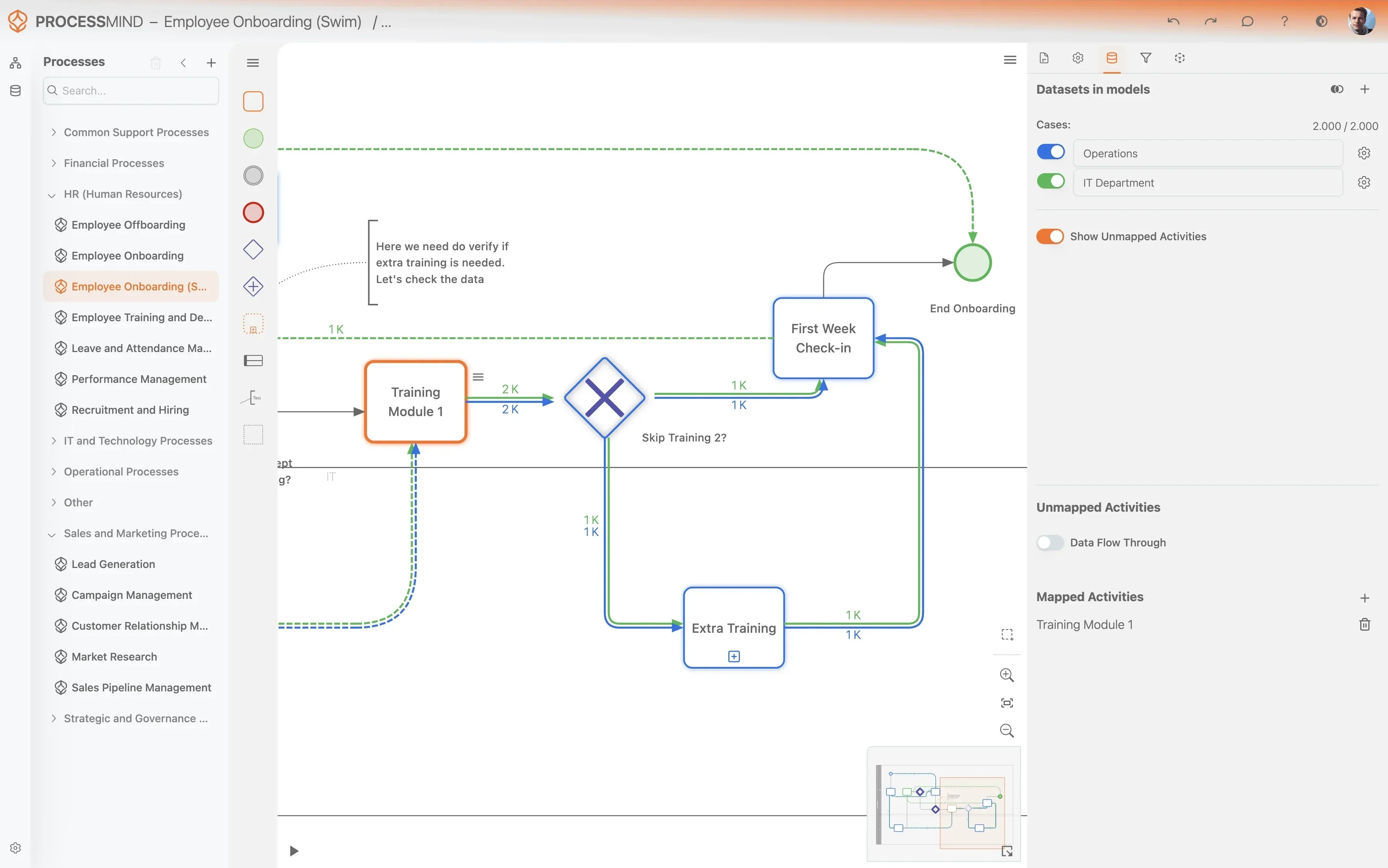
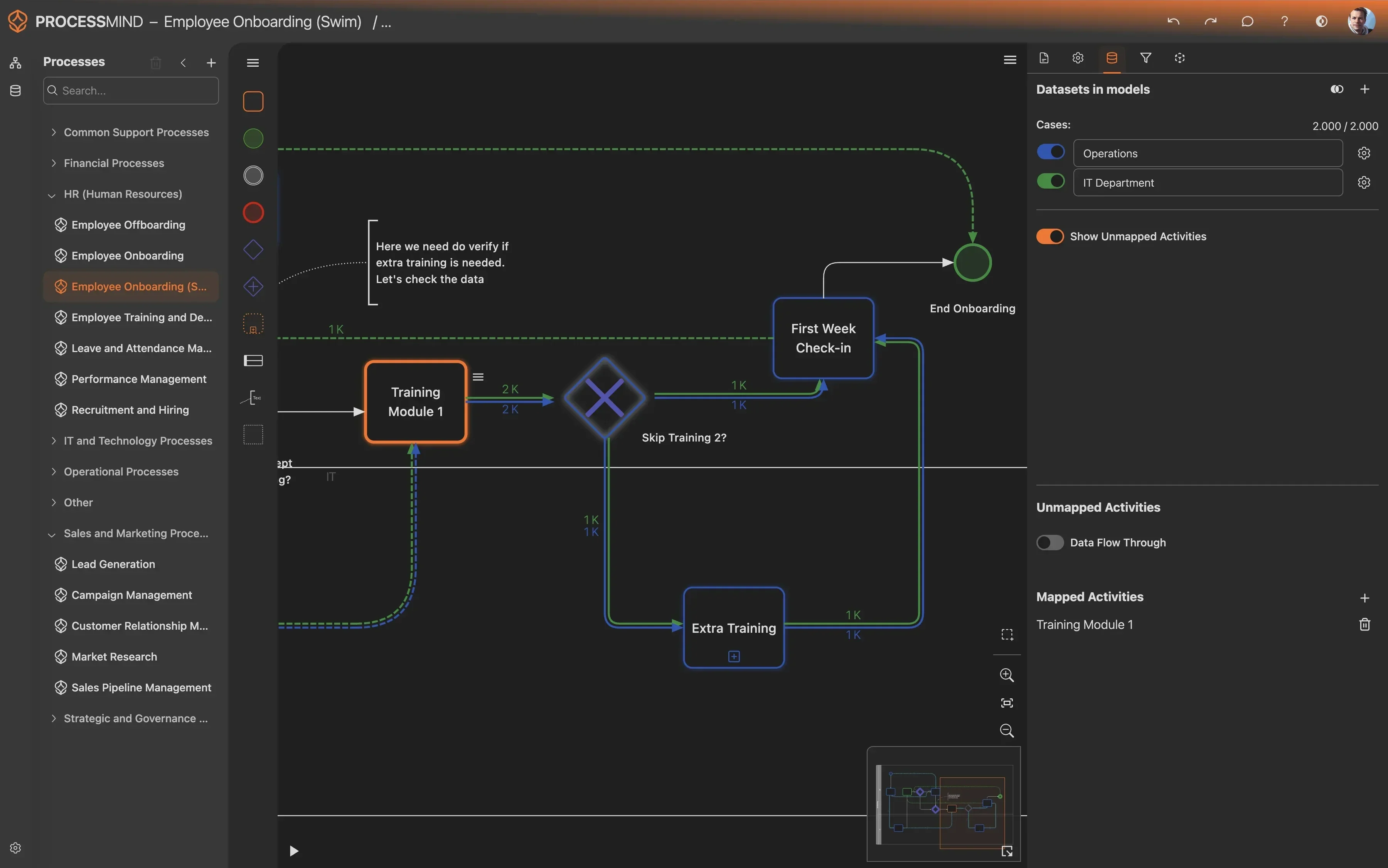
See the Real-Time Flow of Your Period Close
- Visualize actual period close process flows
- Pinpoint bottlenecks in reconciliation tasks
- Improve data accuracy for financial reports
- Accelerate financial statement generation
TYPICAL OUTCOMES
Streamlined Period Close, Measurable Gains
These outcomes illustrate the tangible benefits organizations can realize by optimizing their Record to Report, Period Close, and Reconciliation processes with process mining. By identifying and eliminating bottlenecks within SAP ECC, companies achieve greater efficiency and accuracy in their financial operations.
Reduction in end-to-end time
Streamline your Record to Report process to complete financial periods significantly faster, enabling quicker insights and decision-making.
Decrease in manual adjustments
Reduce the number of costly and time-consuming adjusting entries by identifying root causes of errors, enhancing financial data quality.
Lower instances of re-execution
Minimize the need for re-executing reconciliations by pinpointing process gaps and improving approval workflows, leading to more accurate first-pass completion.
Adherence to standard procedures
Improve adherence to standard period close procedures, reducing deviations and strengthening internal controls for better audit readiness and compliance.
Better real-time progress tracking
Gain real-time insight into the progress of your period close activities, allowing proactive management of bottlenecks and ensuring on-time financial reporting.
Results vary based on process complexity, data quality, and specific organizational goals. The figures presented reflect common improvements observed in similar implementations.
Recommended Data
FAQs
Frequently asked questions
Process mining uses event log data from your SAP ECC system to visualize the actual end-to-end flow of your Record to Report - Period Close & Reconciliation process. It identifies deviations, bottlenecks, and rework, showing exactly where inefficiencies occur. This data-driven approach helps you understand how your process truly runs versus how it is designed to run.
By analyzing event logs, process mining pinpoints the exact activities causing delays and bottlenecks in your period close. It reveals rework loops and non-standard steps that prolong the cycle. This insight allows you to prioritize specific areas for improvement, such as optimizing account reconciliation or reducing adjusting entries.
You primarily need event log data related to financial postings, account reconciliations, journal entries, and task completion from your SAP ECC system. This includes transaction codes, user IDs, timestamps, and relevant document numbers. The key is to extract detailed activity logs that capture the sequence and timing of events within the period close.
Initial data extraction and setup can typically be completed within a few weeks, depending on data availability and system access. Once the data is loaded and models are built, you can often see initial process insights and identify major bottlenecks within the first 4-6 weeks. Comprehensive analysis and optimization initiatives follow this discovery phase.
Yes, process mining can highlight deviations from standard operating procedures and segregation of duties. It visualizes all process variants, making it easy to spot non-compliant steps or unauthorized actions. This capability strengthens your internal controls and reduces compliance risk exposures.
The primary technical requirement is access to your SAP ECC system to extract relevant event log data, typically through standard reporting tools or direct database queries. You will also need a process mining platform, which can be cloud-based or on-premise, to ingest and analyze this data. Minimal impact on your operational SAP system is usually ensured through secure data connectors.
For account reconciliation, process mining reveals bottlenecks, rework loops, and where reconciliation items get stuck. For intercompany processes, it maps the actual flow of transactions across entities, identifying delays, unmatched entries, and manual interventions. This clarity enables targeted improvements to streamline both areas.
You can expect significant improvements such as reducing period close cycle time by 10-20%, minimizing adjusting entries by 20-30%, and decreasing reconciliation rework. It also leads to better workload distribution, accelerated financial statement approvals, and enhanced real-time visibility into close progress.
Optimize Record to Report Close, Reduce Cycle Time Now
Eliminate bottlenecks and cut your Record to Report close cycle by 30%.
No credit card required. Start your 14-day free trial.