Improve Your Employee Onboarding

Select a process
Choose a process to continue working in your connected workspace.
Optimize Workday Employee Onboarding
Employee onboarding processes often face delays, compliance risks, and inefficient workflows. Our platform helps you pinpoint exact bottlenecks and guides you through practical improvements. Streamline your new hire journey, boost satisfaction, and ensure compliance for a smoother start in your organization.
Download our pre-configured data template and address common challenges to reach your efficiency goals. Follow our six-step improvement plan and consult the Data Template Guide to transform your operations.
Show detailed description
Why Optimizing Employee Onboarding in Workday is Essential
Effective Employee Onboarding is far more than just paperwork; it is the foundation of a new hire's success and long-term retention. A streamlined onboarding process ensures new employees quickly become productive, engaged members of your team, contributing to overall business growth. Conversely, an inefficient or convoluted onboarding experience can lead to delayed productivity, early employee attrition, compliance risks, and increased administrative costs. While Workday Onboarding provides robust tools for managing tasks and new hire journeys, the actual execution and flow of these processes often contain hidden inefficiencies that can only be uncovered through deep analysis. Understanding and optimizing your Employee Onboarding in Workday is not just about HR efficiency, it is about securing your investment in new talent and fostering a positive workplace culture from day one.
How Process Mining Illuminates Your Workday Onboarding Process
Process mining offers a powerful, data-driven approach to truly understand your Employee Onboarding journey. By extracting event logs from your Workday system, it reconstructs the complete, end-to-end path each new hire takes, from the moment an offer is accepted to their full integration. This visual representation reveals the actual process flows, not just the intended ones. You can clearly see where activities, such as "Background Check Initiated," "IT Account Provisioning Initiated," or "Equipment Ordered," truly begin, how long they take, and what follows them. This perspective is crucial for identifying process variations, unexpected reworks, and, most importantly, the exact bottlenecks that hinder a smooth new hire experience. Process mining helps answer critical questions like, "Why does IT setup take longer for certain departments?" or "Are mandatory trainings always completed before the 30-day check-in?" This granular insight is precisely how you can reduce Employee Onboarding cycle time and enhance efficiency.
Key Improvement Areas Discovered Through Data-Driven Analysis
Analyzing your Workday Onboarding process with process mining often uncovers several common areas for improvement:
- Pinpointing Bottlenecks: Identify specific activities or sequences of tasks that consistently cause delays, for example, a lag between "Pre-employment Paperwork Completed" and "HR Profile Created." This allows you to target your process optimization efforts precisely.
- Uncovering Process Deviations: Discover instances where the actual process diverges from the standard, intended path. These deviations might be inefficient workarounds or indicate a lack of adherence to best practices, potentially impacting compliance.
- Optimizing Hand-offs: Evaluate the efficiency of transitions between different teams, such as HR to IT or IT to Facilities. Delays in these critical hand-offs are frequently major contributors to extended onboarding cycle times.
- Ensuring Compliance and Consistency: Verify that all mandatory steps, like background checks, specific training assignments, or crucial document submissions, are completed within required timeframes for every new hire, ensuring full compliance across the organization.
- Identifying Automation Opportunities: Data can highlight repetitive manual tasks that are ripe for automation within Workday, freeing up HR and other team members for more strategic work.
Expected Outcomes of a Streamlined Onboarding Experience
By leveraging process mining to optimize your Employee Onboarding process in Workday, you can achieve several significant, measurable benefits:
- Reduced Employee Onboarding Cycle Time: Drastically cut down the time it takes for a new hire to become fully operational, leading to faster contribution and return on investment.
- Enhanced New Hire Satisfaction: A seamless and organized onboarding experience significantly improves a new employee's initial perception of the company, boosting engagement and morale from their very first day.
- Improved HR Efficiency: Streamline HR and administrative tasks, reducing the workload on your HR and hiring teams, allowing them to focus on strategic talent initiatives rather than manual process chasing.
- Strengthened Compliance: Guarantee that all necessary legal, regulatory, and company policy requirements are met consistently for every new hire, minimizing risks and ensuring a standardized experience.
- Better Resource Allocation: Gain clarity on where resources are being utilized in the onboarding process, enabling more effective planning and deployment of staff and tools.
Getting Started with Your Employee Onboarding Process Optimization
Ready to transform your Employee Onboarding process? This guide empowers you to begin your journey of discovery and improvement. By applying process mining techniques to your Workday data, you can uncover the inefficiencies, address the bottlenecks, and ultimately create a superior onboarding experience for every new employee. Take the first step towards a more efficient, compliant, and welcoming start for your talent.
The 6-Step Improvement Path for Employee Onboarding
Download the Template
What to do
Get the Excel template specifically designed for Employee Onboarding process data. This template ensures you capture all necessary information for effective analysis.
Why it matters
Using the right data structure from the start prevents rework and ensures accurate process modeling. It streamlines data preparation for optimal insights.
Expected outcome
An empty, pre-formatted Excel template tailored for your Workday Onboarding process data.
Export Your Workday Data
What to do
Extract 3-6 months of historical onboarding activity data from Workday Onboarding. Populate the downloaded Excel template with this real-world operational data.
Why it matters
Comprehensive historical data provides a true picture of your current process performance. This allows for accurate identification of recurring issues and improvement areas.
Expected outcome
A completed Excel template populated with your historical Workday Onboarding process data, ready for analysis.
Upload Your Dataset
What to do
Securely upload your filled Workday Onboarding data template to ProcessMind. The system will automatically process and prepare your data for analysis.
Why it matters
A seamless upload initiates the automated analysis process, quickly transforming raw data into actionable insights without manual intervention.
Expected outcome
Your Workday Onboarding data successfully uploaded and ready for exploration within the ProcessMind platform.
Analyze Your Onboarding Process
What to do
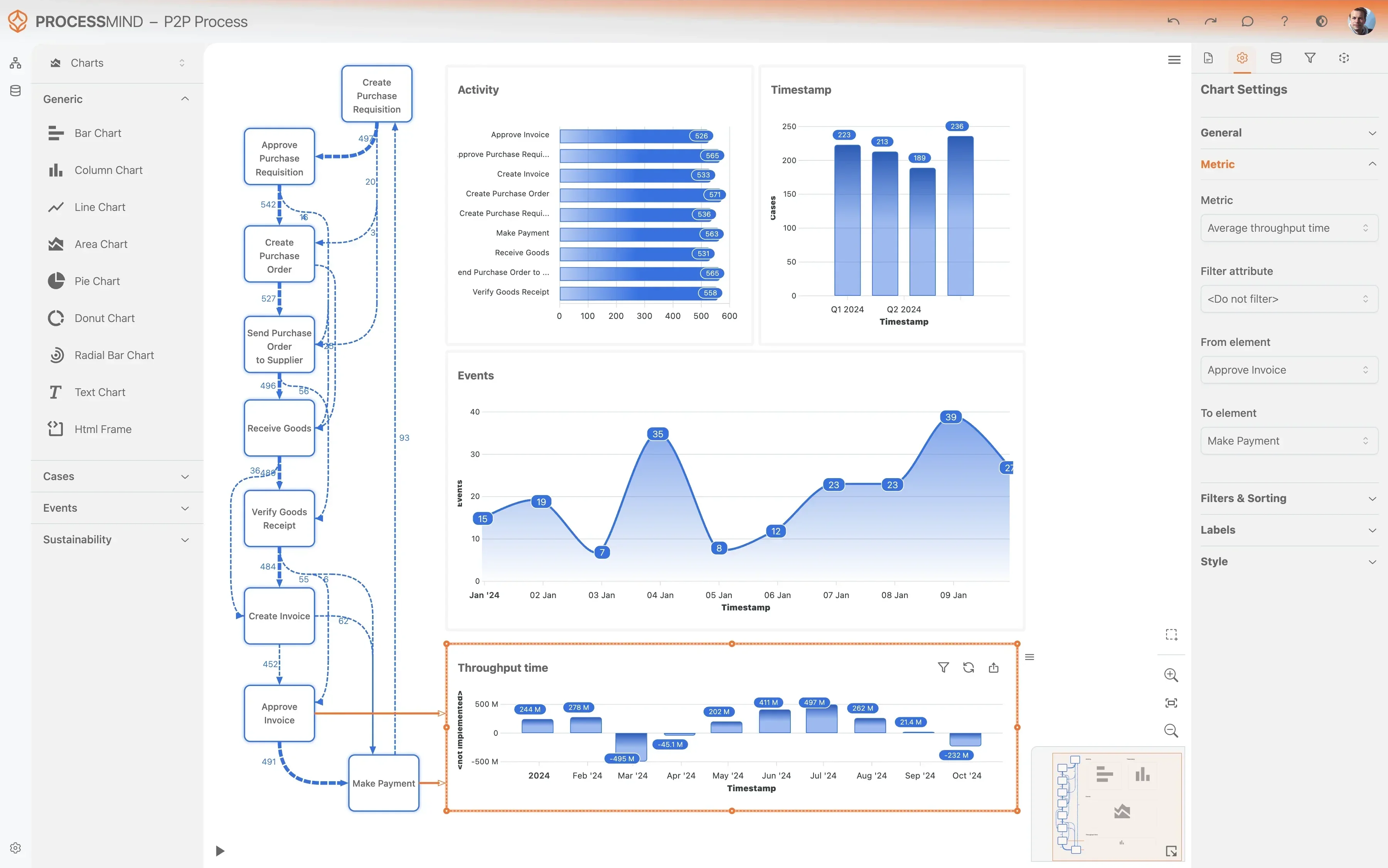
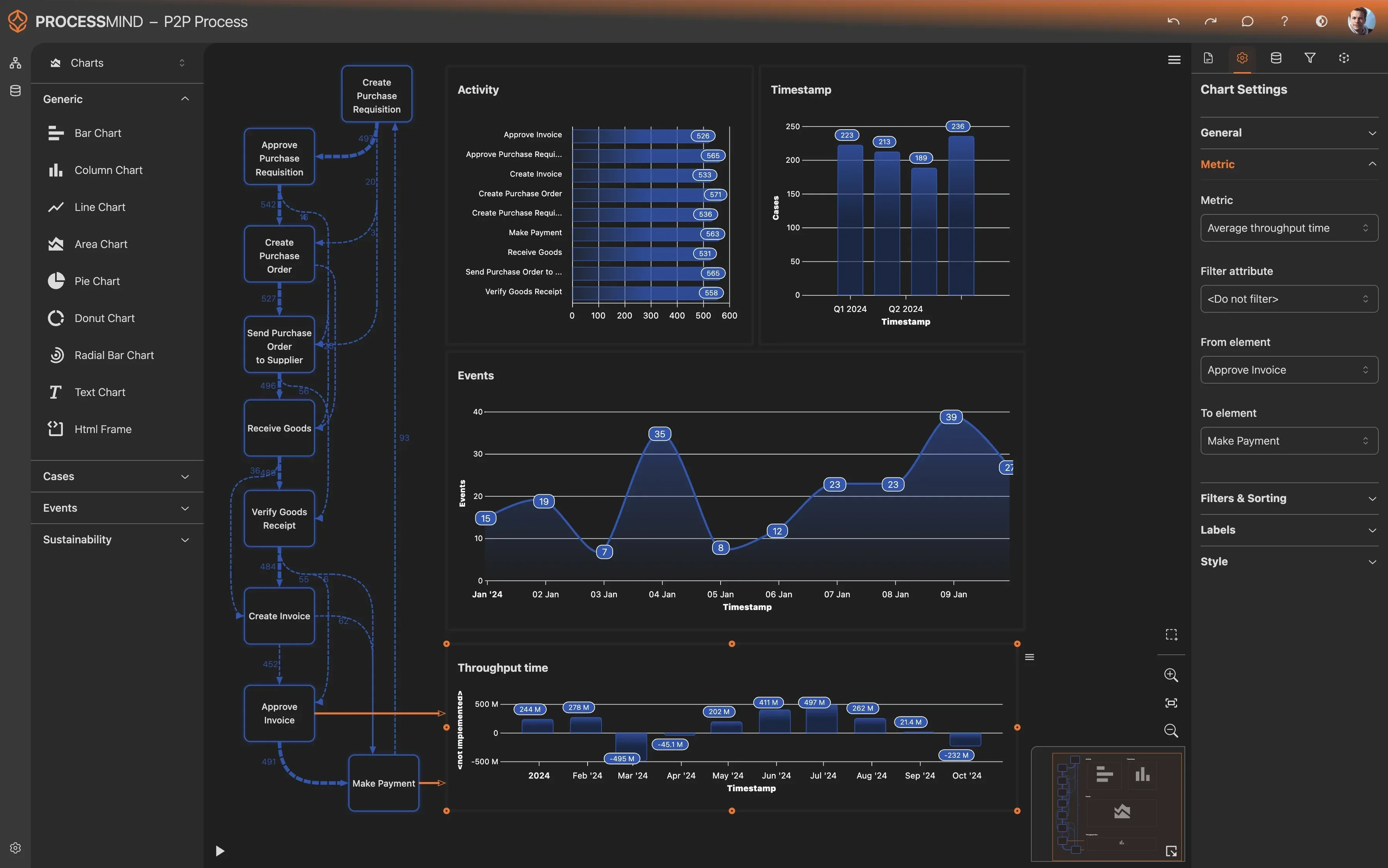
Explore the auto-generated dashboards and visual process maps in ProcessMind. Leverage AI-driven recommendations to pinpoint bottlenecks and deviations in your onboarding flow.
Why it matters
Visualizing the actual process flow reveals hidden inefficiencies and compliance gaps. AI insights accelerate problem identification, guiding you to critical improvement areas.
Expected outcome
A clear understanding of your Workday Onboarding process, identified bottlenecks, and prioritized improvement opportunities.
Implement Changes
What to do
Based on ProcessMind's insights, implement targeted changes within your Workday Onboarding configurations and related HR procedures. Prioritize high-impact opportunities.
Why it matters
Acting on data-driven insights ensures that your efforts directly address root causes, leading to measurable improvements in efficiency, compliance, and new hire experience.
Expected outcome
Optimized Workday Onboarding workflows and HR practices, designed to reduce cycle times and enhance new hire satisfaction.
Monitor Performance
What to do
Periodically re-upload fresh Workday Onboarding data to ProcessMind. Continuously track key performance indicators to assess the impact of your implemented changes.
Why it matters
Ongoing monitoring validates the success of your improvements and identifies new areas for optimization, fostering a culture of continuous process excellence.
Expected outcome
Sustained improvement in Workday Onboarding efficiency, demonstrable KPI enhancements, and a proactive approach to process management.
WHAT YOU WILL GET
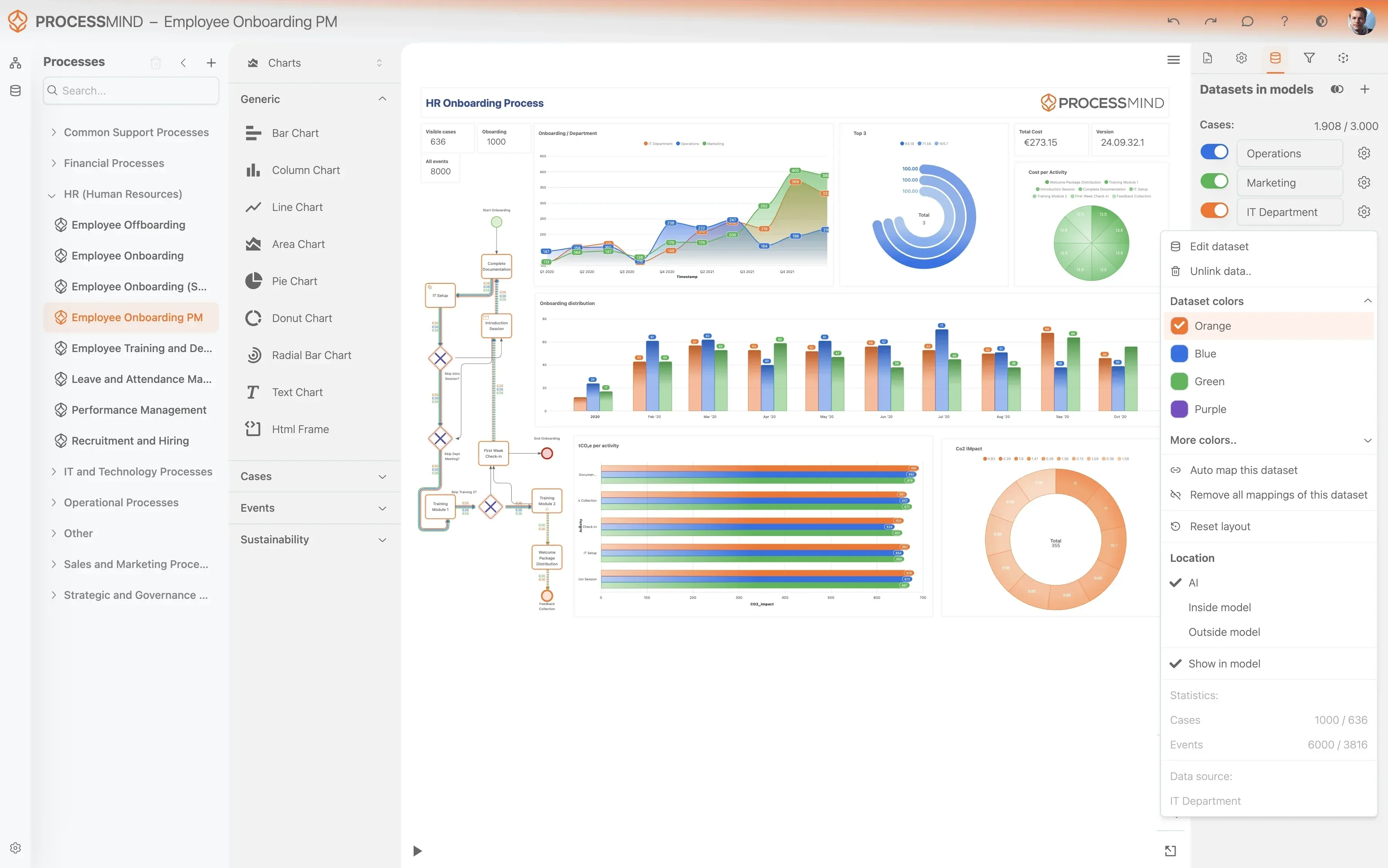
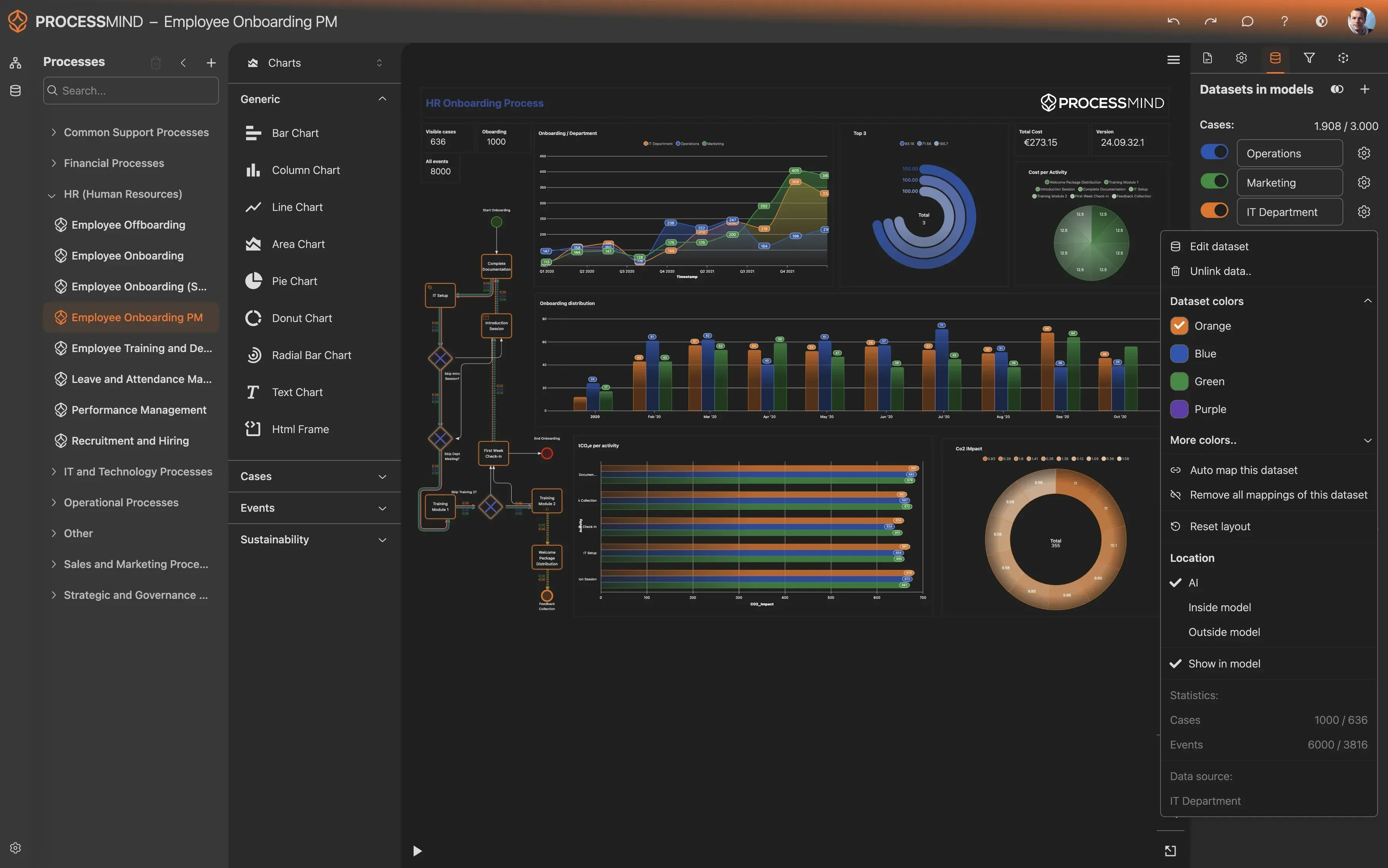
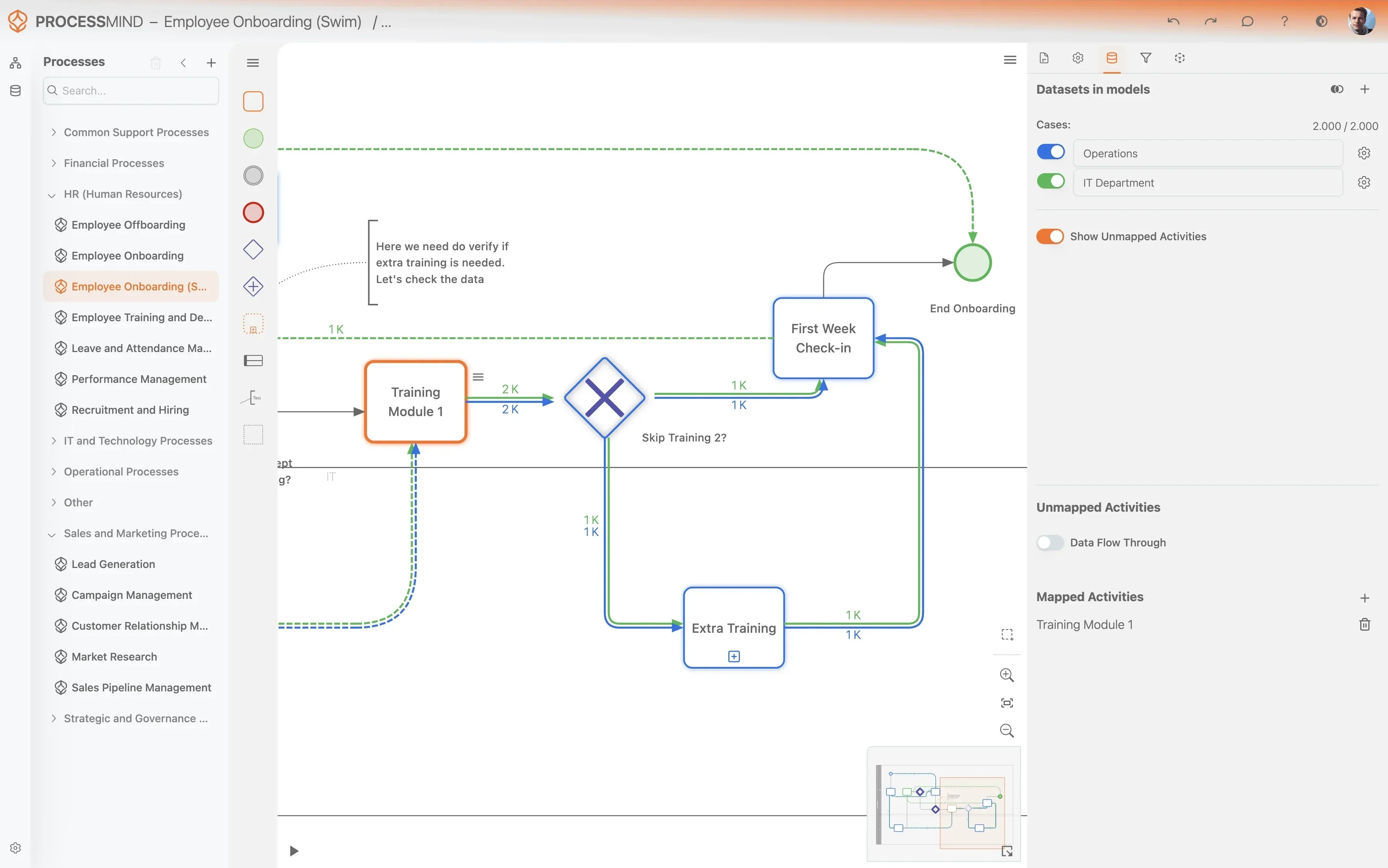
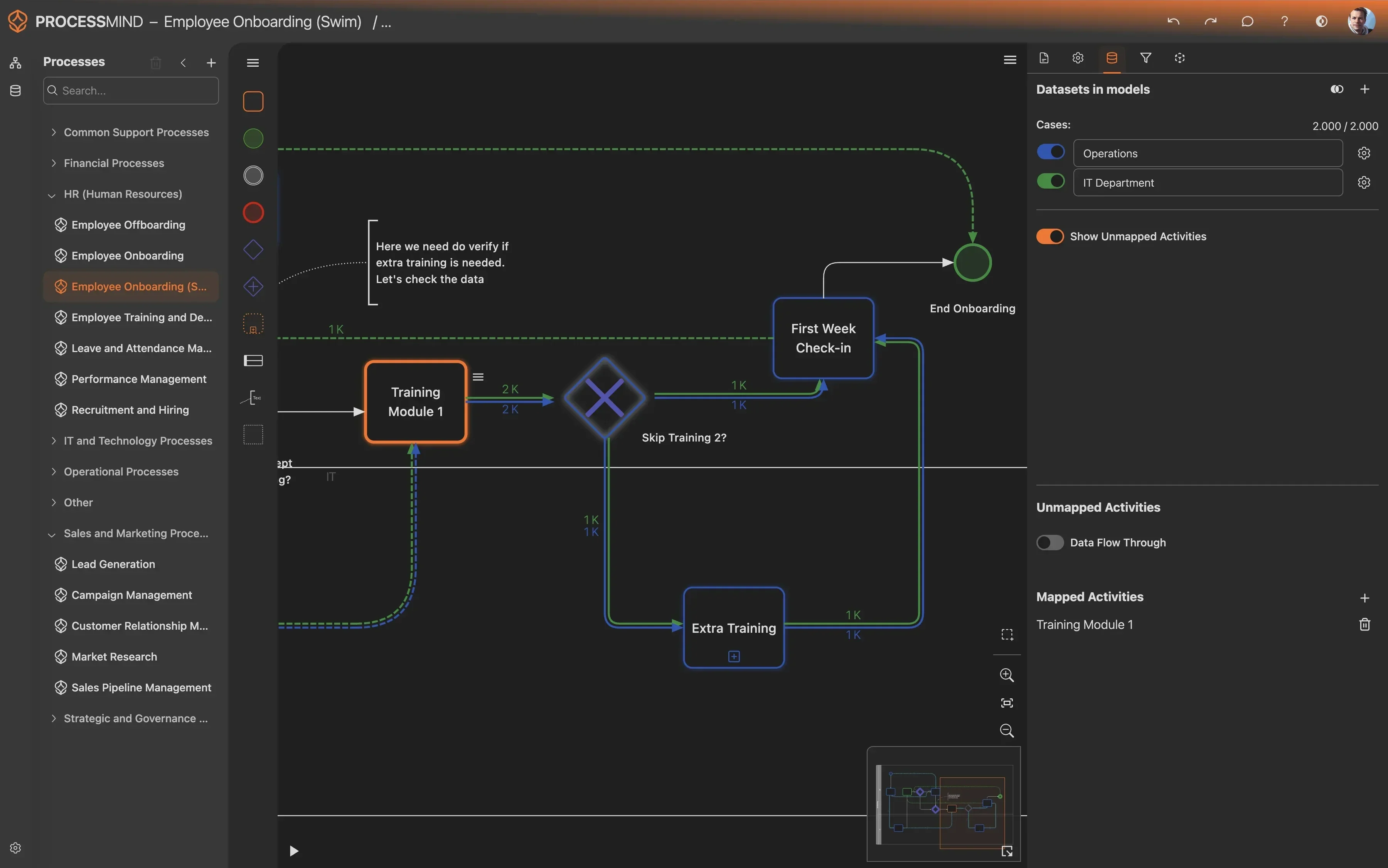
Discover Your Employee Onboarding's Actual Flow
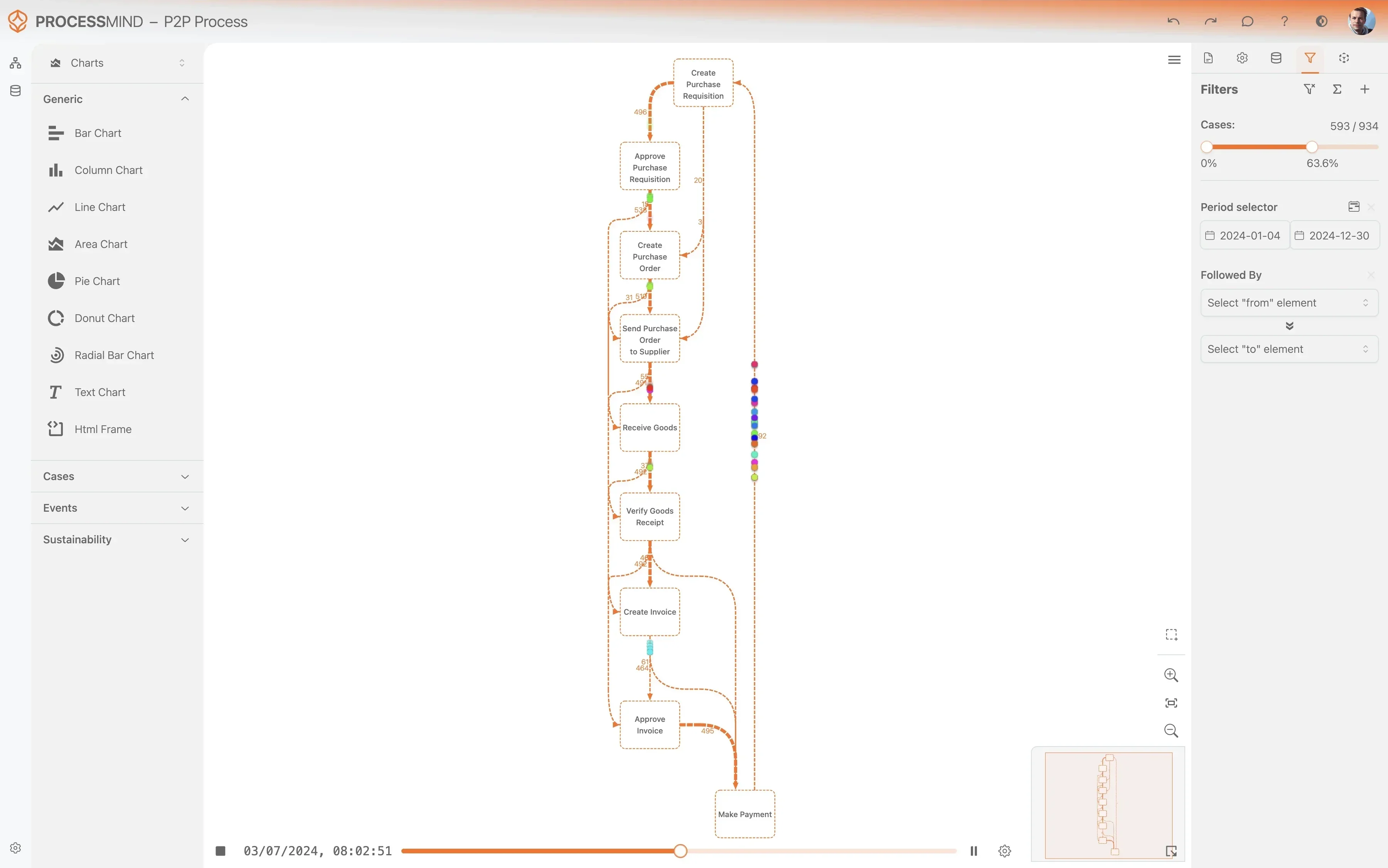
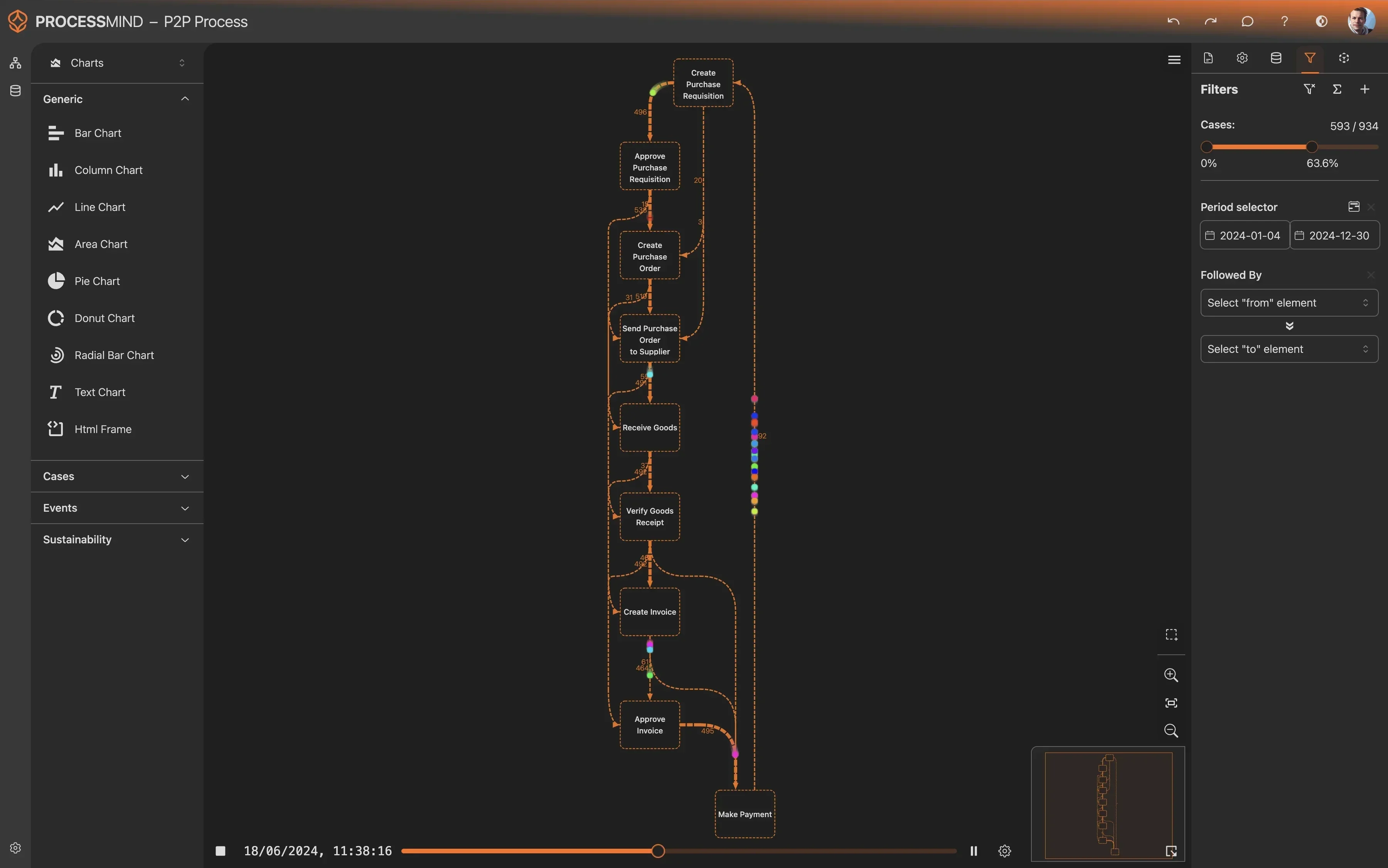
- Visualize Workday onboarding's true path
- Pinpoint exact onboarding delays
- Identify compliance risks in Workday
- Boost new hire satisfaction and speed
TYPICAL OUTCOMES
Achieve Excellence in Employee Onboarding
These outcomes illustrate the tangible benefits organizations can realize by applying process mining to their Employee Onboarding workflows. We leverage insights from Workday Onboarding data to identify bottlenecks and inefficiencies, driving measurable improvements.
Reduction in end-to-end time
Accelerate the entire new hire journey from offer acceptance to the 30-day check-in, ensuring new employees become productive sooner. This improves overall efficiency and reduces administrative burden.
Essential IT and workspace setup
Streamline the delivery of IT accounts, equipment, and workspace setup, ensuring new hires have everything they need to start working efficiently from day one. This enhances the first-day experience.
Mandatory tasks completed on time
Guarantee that all critical mandatory tasks, like background checks and paperwork, are completed by their due dates. This mitigates compliance risks and ensures regulatory adherence for every new hire.
Fewer errors in HR profile creation
Drastically cut down on the frequency of corrections and re-entry steps for HR profile data. This saves HR staff valuable time and improves data accuracy, reducing downstream issues.
Essential resources ready on time
Ensure a high percentage of new hires have all essential IT accounts, equipment, and workspaces prepared before their official start date. This guarantees productivity from day one and boosts new hire satisfaction.
Average time for mandatory modules
Shorten the average time it takes for new hires to complete all mandatory training modules. This gets employees job-ready faster and ensures critical knowledge acquisition, accelerating time-to-productivity.
Results vary based on the specific complexities of your onboarding process, the maturity of your Workday Onboarding implementation, and data quality. These figures represent typical improvements observed across various organizations leveraging process mining for similar processes.
Recommended Data
FAQs
Frequently asked questions
Process mining identifies bottlenecks, compliance gaps, and variations in your Workday Onboarding process. It pinpoints where delays occur, such as in essential resource provisioning or mandatory task completion, allowing for targeted improvements. This helps standardize new hire experiences and reduce excessive manual effort.
Process mining uses event logs from Workday Onboarding, where each event has an Onboarding Case ID, an activity, and a timestamp. By analyzing these sequences, it reconstructs the actual process flow from start to finish. This data-driven approach reveals deviations from the ideal path and uncovers areas for optimization and automation.
You will primarily need event logs containing a case identifier, an activity name, and a timestamp for each step in the onboarding process. For Workday, this means identifying relevant tables and fields related to Onboarding Cases, task statuses, and completion times. Additional attributes like department or new hire type can enrich the analysis.
You can expect significant improvements like a 25% reduction in onboarding cycle time and 30% faster essential resource provisioning. Process mining helps achieve 100% compliance for mandatory tasks and identifies opportunities to automate manual steps. Ultimately, this leads to a smoother new hire experience and better retention.
Initial setup, including data extraction and model configuration, can often be completed within 4-6 weeks, depending on data accessibility and complexity. The time primarily depends on how easily event logs can be extracted and transformed into a process mining-ready format. Once data is flowing, insights can be generated rapidly.
Yes, process mining excels at identifying frequently occurring manual activities and reworks within your onboarding workflow. By visualizing the actual process, it highlights specific steps that are prone to human error or inefficiency, making them prime candidates for automation. This helps prioritize where to implement robotic process automation, RPA, or other digital solutions.
Process mining benefits organizations of all sizes looking to optimize their processes. Even smaller companies with fewer new hires can gain valuable insights into their onboarding efficiency, compliance, and employee experience. The key is having sufficient event data, not necessarily a large volume of cases.
Key technical requirements include access to Workday's reporting or API capabilities for data extraction, a data storage solution, and a process mining platform. You'll also need expertise in data transformation to convert raw Workday logs into the required event log format. IT collaboration is crucial for secure data handling and integration.
Process mining visualizes every path taken in your onboarding process, clearly showing deviations from compliant workflows. It can flag cases where mandatory tasks, such as background checks or policy acknowledgments, are skipped or delayed. This proactive identification allows you to address compliance gaps before they become critical issues.
Transform Employee Onboarding, Get Started Free Today
Achieve 95% compliance and a seamless new hire experience.
No credit card required. Setup in minutes.