Improve Your Record to Report - Period Close & Reconciliation

Select a process
Choose a process to continue working in your connected workspace.
Optimize Period Close and Reconciliation in Dynamics 365
Period close and reconciliation processes can often lead to delays and compliance risks. Our platform helps you precisely identify bottlenecks within your Record to Report process, from initial data collection to final approvals. Analyze your financial close cycle times and optimize resource allocation to accelerate reporting and enhance accuracy, without needing deep technical expertise.
Download our pre-configured data template and address common challenges to reach your efficiency goals. Follow our six-step improvement plan and consult the Data Template Guide to transform your operations.
Show detailed description
Why Optimizing Record to Report - Period Close & Reconciliation is Essential
The Record to Report, R2R, Period Close & Reconciliation process is a critical foundation for any organization's financial health and strategic decision-making. In the context of Microsoft Dynamics 365 Finance, managing this process efficiently means ensuring accurate financial statements, meeting regulatory deadlines, and providing timely insights to leadership. However, the inherent complexity, numerous interdependencies, and often manual steps involved in data collection, transaction posting, accruals, intercompany eliminations, and account reconciliations can lead to significant bottlenecks. These inefficiencies can delay your financial close, increase the risk of errors, and make compliance with stringent reporting standards, like IFRS or GAAP, a continuous challenge. The cost of an inefficient close extends beyond just time, impacting audit fees, resource strain, and the ability to make data-driven business decisions promptly.
How Process Mining Unlocks R2R Efficiency in Microsoft Dynamics 365
Process mining offers a powerful, data-driven approach to demystifying the Record to Report - Period Close & Reconciliation process within Microsoft Dynamics 365. By analyzing event logs generated by your system, process mining constructs an objective, end-to-end view of every activity and decision point across your financial reporting cycle. This is particularly valuable for complex processes like period close, where activities span multiple users, departments, and potentially external systems. You gain clear visibility into the actual flow from 'Period Close Initiated' through 'Financial Statements Approved' and 'Period Close Completed'.
Instead of relying on subjective accounts or static process diagrams, process mining reveals how your processes truly operate. It precisely identifies where delays occur, highlighting specific steps, such as 'Intercompany Reconciliation Performed' or 'Balance Sheet Account Reconciliation Started', that consistently act as bottlenecks. You can analyze cycle times for individual activities and the entire close process, uncovering variations and non-compliant paths that deviate from your intended design. This capability is crucial for understanding the root causes of rework, late adjustments, or extended review and approval stages, enabling you to target improvements effectively.
Key Improvement Areas for Your Period Close
Leveraging process mining for your Record to Report - Period Close & Reconciliation in Microsoft Dynamics 365 can pinpoint several critical areas for optimization:
- Accelerating Reconciliation Processes: Identify specific GL accounts or reconciliation categories that consistently cause delays. Understand why 'Balance Sheet Account Reconciliation Started' might take significantly longer for certain entities or GL accounts. This helps streamline reconciliation workflows and reduce backlogs.
- Optimizing Journal Entry Management: Analyze the timing and volume of 'Adjusting Journal Entries Posted'. Discover if certain types of adjustments are repeatedly made late in the close cycle, indicating potential issues in upstream processes or data quality within Dynamics 365.
- Streamlining Approval Workflows: Gain insights into the review and approval stages, from 'Reconciliation Reviewed & Approved' to 'Financial Statements Approved'. Identify bottlenecks in handoffs between responsible users or departments and areas where approval cycles are unnecessarily extended.
- Enhancing Compliance and Control: Uncover deviations from standard operating procedures or policies, such as activities performed out of sequence or by unauthorized users. This ensures greater adherence to financial controls and audit requirements.
- Reducing Manual Efforts: Pinpoint activities that are frequently repeated or involve excessive manual intervention, leading to opportunities for automation or process redesign within Dynamics 365.
Expected Outcomes of R2R Process Optimization
The insights gained from process mining directly translate into tangible benefits for your organization. By addressing the identified bottlenecks and inefficiencies in your Record to Report - Period Close & Reconciliation process, you can expect:
- Faster Financial Close Cycle Times: Significantly reduce the number of days required to complete your financial close, enabling quicker access to critical financial data.
- Improved Accuracy and Quality: Minimize errors, reduce the need for last-minute adjustments, and enhance the overall accuracy of your financial statements.
- Lower Operational Costs: Decrease the manual effort, overtime, and resources expended on the close process, leading to substantial cost savings.
- Enhanced Compliance and Audit Readiness: Ensure consistent adherence to internal policies and external regulations, simplifying audits and reducing compliance risks.
- Better Resource Allocation: Optimize staffing and workload distribution by understanding where and why delays occur, leading to a more efficient use of your finance team's expertise.
- Greater Financial Transparency: Provide leadership with timely, reliable financial information for more informed strategic planning and decision-making.
Getting Started with Record to Report Process Mining
Embarking on the journey to improve your Record to Report - Period Close & Reconciliation process in Microsoft Dynamics 365 doesn't require extensive process mining expertise. This solution is designed to guide you through the analysis, providing clear, actionable insights without the need for complex data modeling or specialized technical skills. Begin your process optimization journey today and transform your financial close from a recurring challenge into a streamlined, efficient operation.
The 6-Step Improvement Path for Record to Report - Period Close & Reconciliation
Download the Template
What to do
Obtain the pre-built Excel template specifically designed for Record to Report Period Close & Reconciliation process data from Microsoft Dynamics 365.
Why it matters
A standardized template guarantees data consistency and accuracy, simplifying the subsequent analysis and avoiding common data preparation errors.
Expected outcome
You will have the correct Excel template, ready to be populated with your financial period close data.
Export Your Data
What to do
Extract 3-6 months of historical financial close data, including LedgerPeriod and FinancialClose activities, from Microsoft Dynamics 365 and populate the template.
Why it matters
Comprehensive historical data provides a robust foundation for identifying recurring bottlenecks and understanding process variations across multiple closing cycles.
Expected outcome
Your Excel template will be filled with accurate, relevant historical data covering several financial close periods.
Upload Your Dataset
What to do
Securely upload your completed Excel template to ProcessMind. The system will automatically initiate the analysis of your Record to Report Period Close data.
Why it matters
A streamlined upload process ensures quick access to powerful process mining capabilities, allowing you to move swiftly from data collection to insights.
Expected outcome
Your Period Close & Reconciliation dataset will be securely processed, and analysis will begin automatically.
Analyze Your Process
What to do
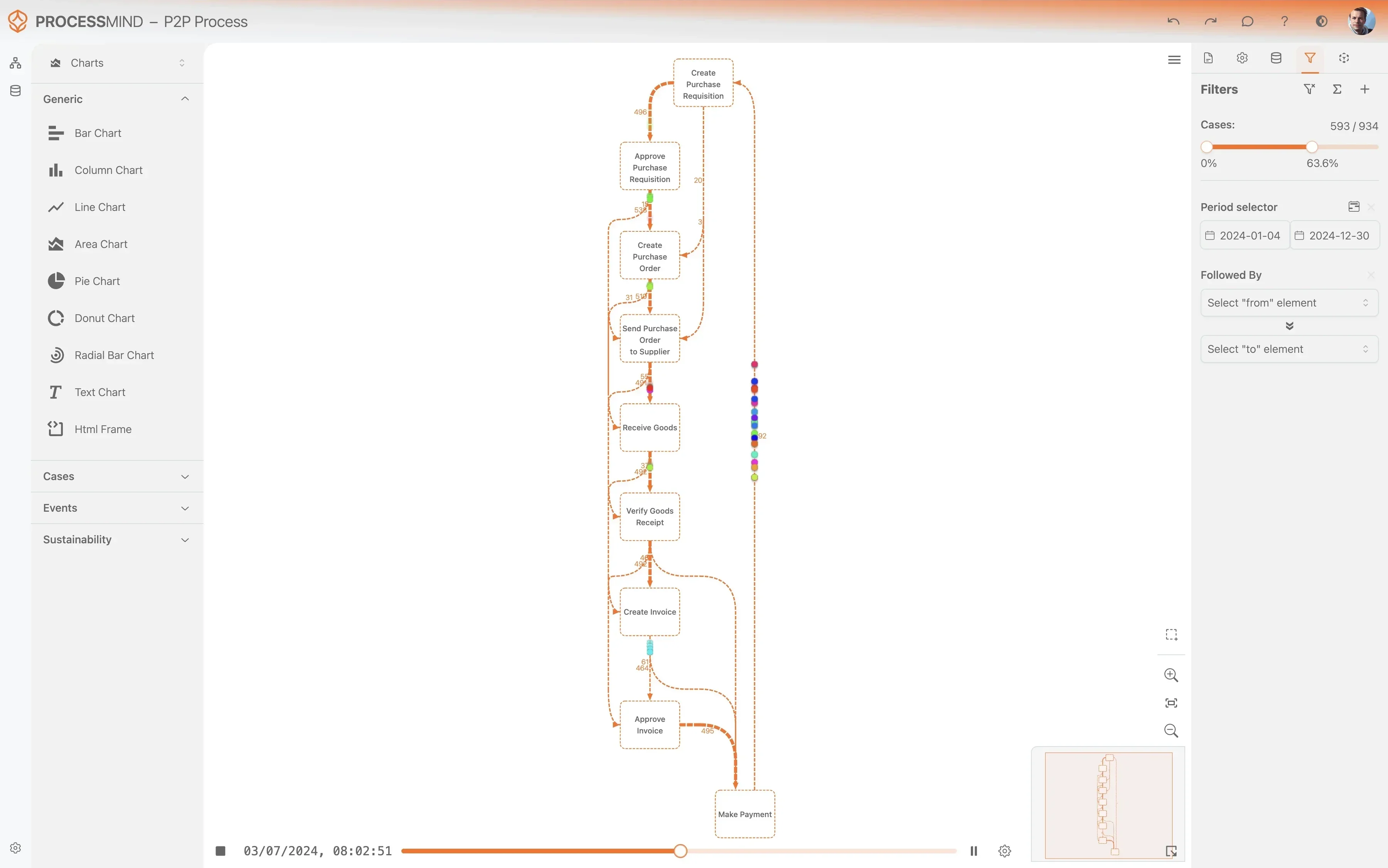
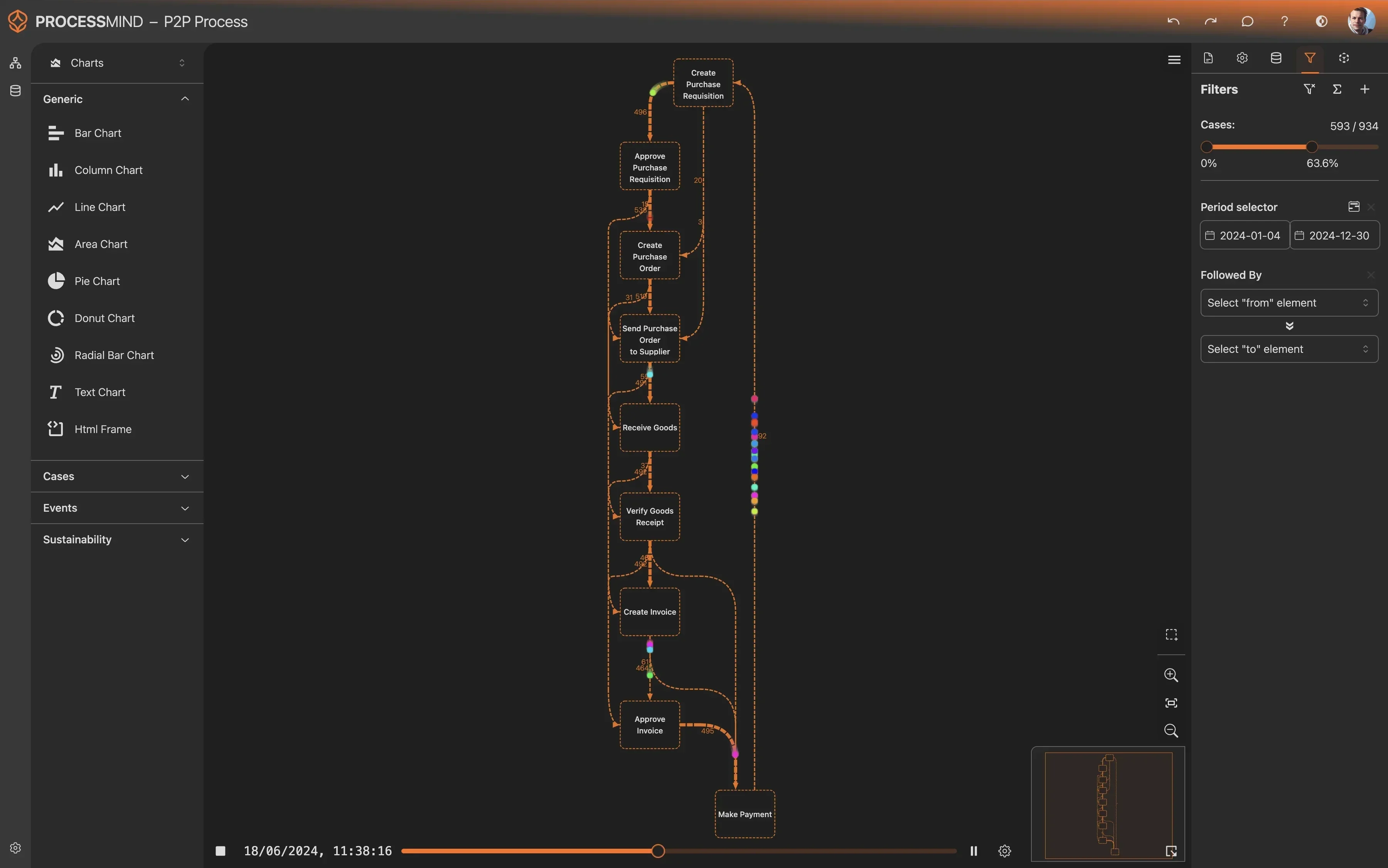
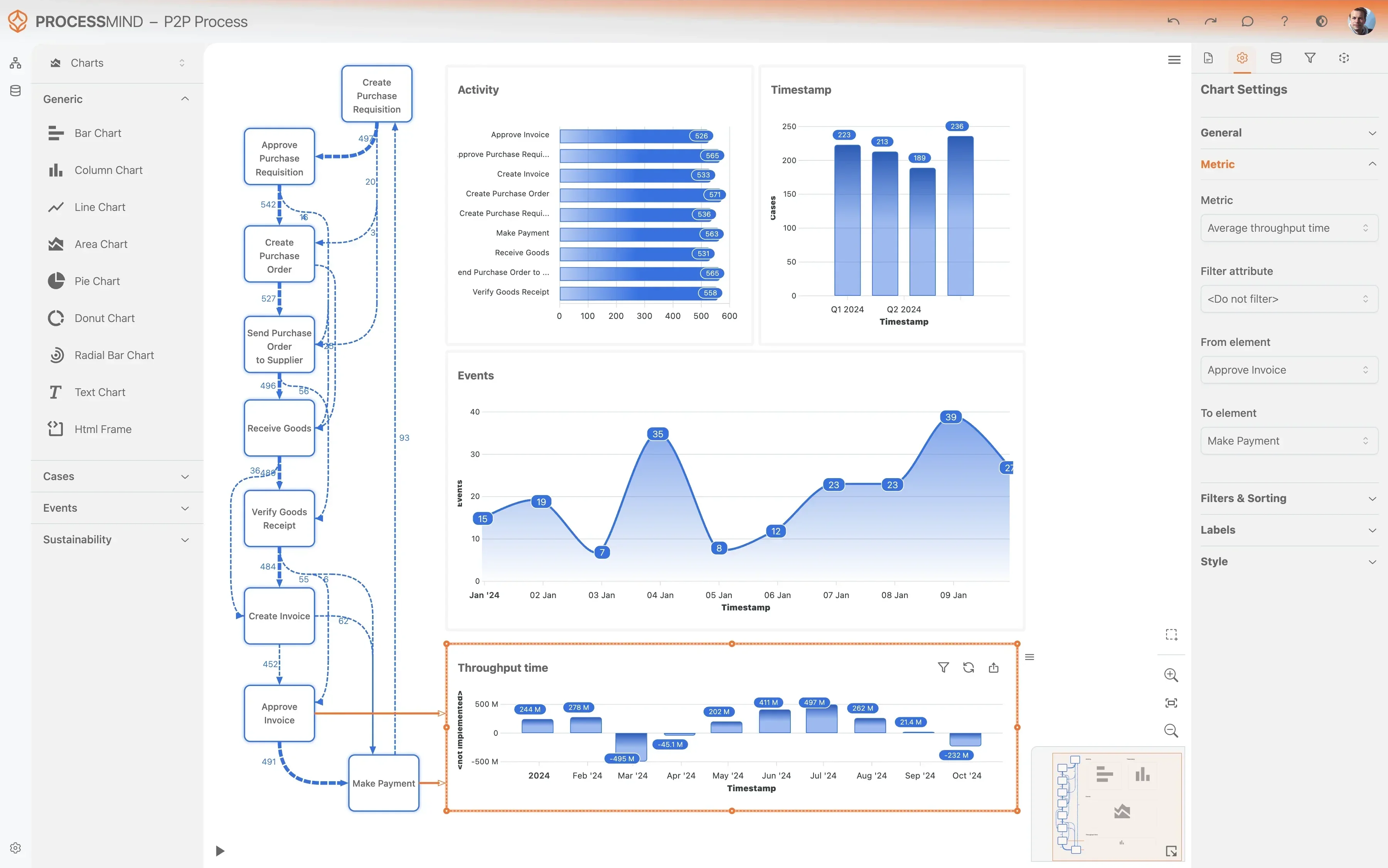
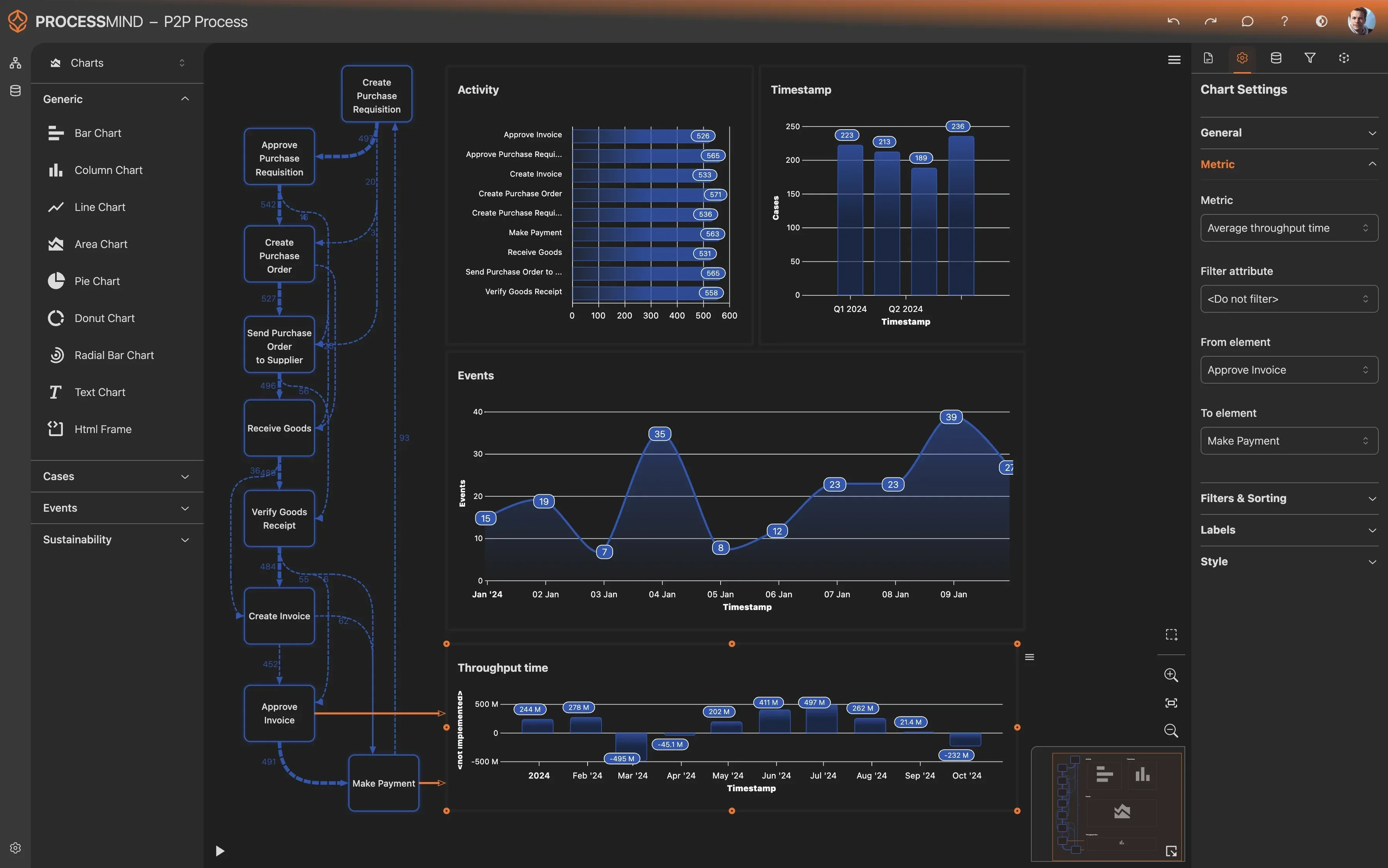
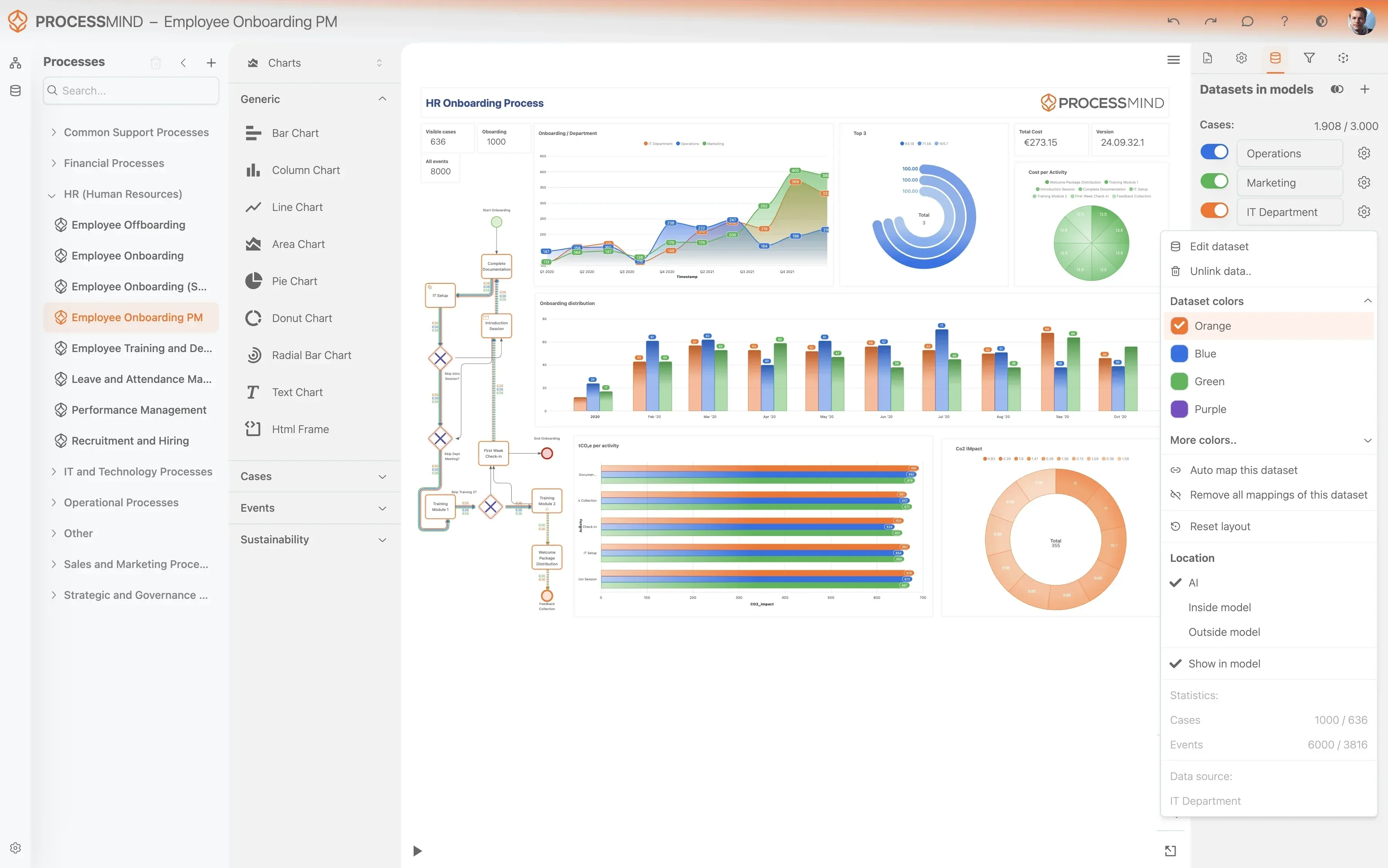
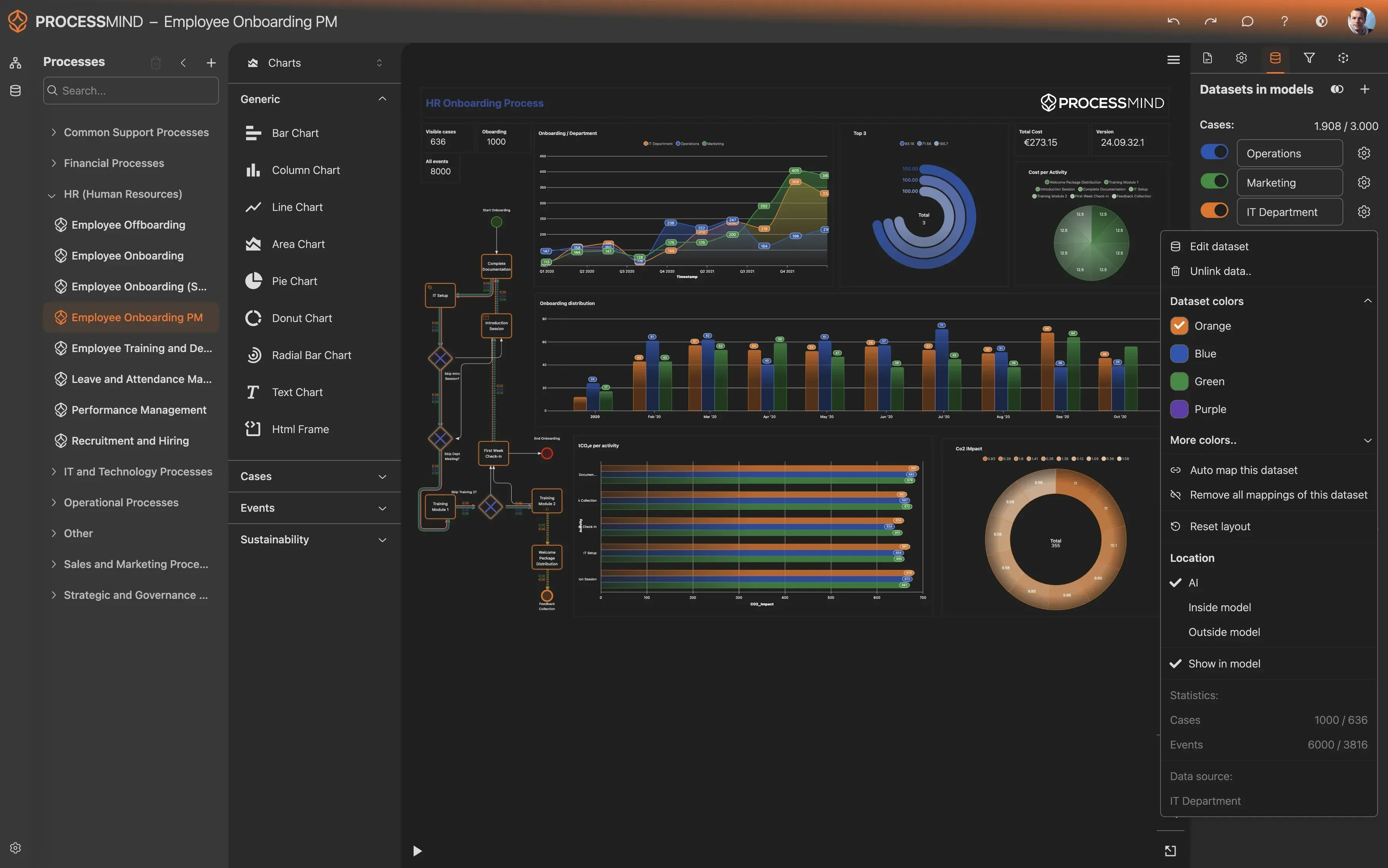
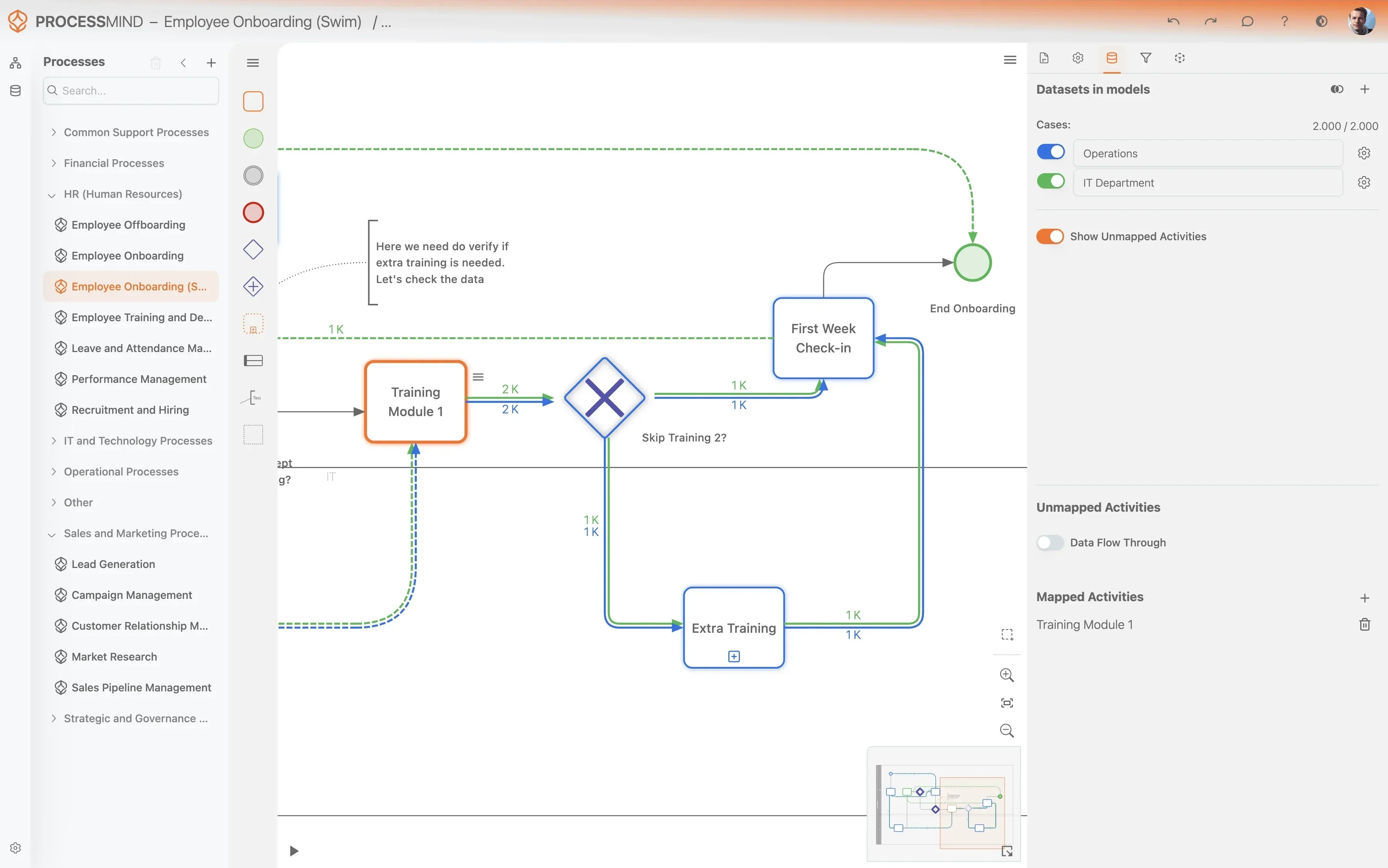
Explore the auto-generated dashboards, process maps, and AI-driven recommendations to pinpoint inefficiencies and compliance gaps within your Period Close & Reconciliation in D365.
Why it matters
Visualizing the actual process flow reveals hidden delays, rework loops, and non-standard activities, providing clear targets for optimization.
Expected outcome
You will have a clear understanding of your current process performance, identifying key areas for improvement.
Implement Improvements
What to do
Prioritize and apply the identified optimization opportunities, such as standardizing reconciliation steps or automating data collection, within your Microsoft Dynamics 365 environment.
Why it matters
Acting on data-driven insights leads to tangible improvements in cycle time, accuracy, and resource utilization, directly impacting your financial reporting.
Expected outcome
Specific process changes will be implemented in your Period Close & Reconciliation workflow, targeting the discovered inefficiencies.
Monitor Your Process
What to do
Periodically re-export and re-upload updated Period Close & Reconciliation data from Microsoft Dynamics 365 to ProcessMind to continuously track progress.
Why it matters
Continuous monitoring ensures that implemented changes are effective and sustained, allowing for agile adjustments and ongoing process excellence.
Expected outcome
You will have ongoing visibility into your process performance, confirming the value of your improvements and ensuring sustained efficiency gains.
TYPICAL OUTCOMES
Achieving Excellence in Period Close & Reconciliation
These outcomes illustrate the measurable efficiencies and improvements organizations typically achieve by optimizing their Record to Report, Period Close, and Reconciliation processes. Process mining, combined with Microsoft Dynamics 365 data, enables the identification and resolution of bottlenecks, leading to faster, more accurate financial reporting.
Average cycle time reduction
Reduce the overall time taken to complete the financial period close process, enabling quicker financial reporting and decision-making.
Approval time reduction
Expedite the review and approval of account reconciliations, ensuring balances are verified faster and with fewer delays.
Decrease in necessary adjustments
Minimize the need for corrective journal entries after the close, improving data accuracy and reducing costly rework efforts.
Adherence to standard workflows
Increase the percentage of financial closes that consistently follow defined standard operating procedures, improving consistency and audit readiness.
Real-time process insights
Gain real-time insights into period close progress and bottlenecks, enabling proactive management and informed decision-making throughout the cycle.
Results vary based on process complexity and data quality. These figures represent typical improvements observed across implementations.
Recommended Data
FAQs
Frequently asked questions
Process mining analyzes event logs from your Microsoft Dynamics 365 system to visualize the actual Period Close & Reconciliation process. It identifies bottlenecks, deviations from standard procedures, and areas causing delays or non-compliance. This helps pinpoint exactly where inefficiencies occur and how they impact your financial reporting.
By analyzing timestamps and activity sequences from your Dynamics 365 data, process mining tools reconstruct the end-to-end journey of each financial period close. It highlights activities with long durations or frequent reworks, revealing critical bottlenecks and their root causes within reconciliation and approval steps. This granular visibility helps prioritize improvement efforts.
You typically need event log data that includes a case identifier, an activity name, and a timestamp for each action. For Period Close, the financial period can serve as the case ID, along with relevant activities like journal entries, reconciliations, and approvals, and their corresponding execution times. Access to specific tables containing transaction and audit history is crucial.
Initial setup, including data extraction and model configuration, can often be completed within a few weeks, depending on data availability and complexity. The first insights can usually be generated shortly after data ingestion. Continuous analysis provides ongoing optimization opportunities and measurable improvements.
You can expect to accelerate your financial period close cycle, reduce post-close adjusting entries, and streamline account reconciliation approvals. Process mining also enhances real-time visibility and helps standardize period close workflows, ultimately reducing operational costs and improving compliance. These benefits contribute to a more efficient and accurate financial close.
Yes, process mining can audit actual process execution against predefined compliance rules and standard operating procedures. It automatically identifies deviations, ensuring all required steps are followed and approvals are obtained, thereby strengthening your financial reporting compliance posture. This reduces the risk of non-compliance and audit findings.
Data extraction can vary based on your specific Dynamics 365 setup and relevant tables. However, Dynamics 365 offers various integration tools and APIs that simplify access to transaction and audit log data. Working with your IT team or a process mining specialist can facilitate this step efficiently.
Process mining implicitly highlights data quality issues by revealing inconsistencies or missing events in the process flow. For instance, if reconciliation steps are skipped or incorrectly recorded, the tool will visualize these anomalies, prompting investigation and improvement of data capture practices. This leads to more reliable and accurate financial data.
No, process mining is a non-invasive analytical technique. It operates on historical data extracted from your Dynamics 365 system without interfering with live operations. Implementation focuses on data analysis and insight generation, not direct system changes, ensuring business continuity during the process.
Absolutely. By analyzing who performs which activities and the associated durations, process mining can highlight uneven workload distribution and identify individuals or teams that are consistently overloaded or underutilized. This data supports more balanced resource allocation, improved efficiency, and reduced stress during peak periods.
Accelerate Your Record to Report Period Close & Reconciliation
Reduce cycle time by 30% and boost accuracy for faster financial closes.
No credit card required, start optimizing today.