Improve Your Accounts Payable Invoice Processing
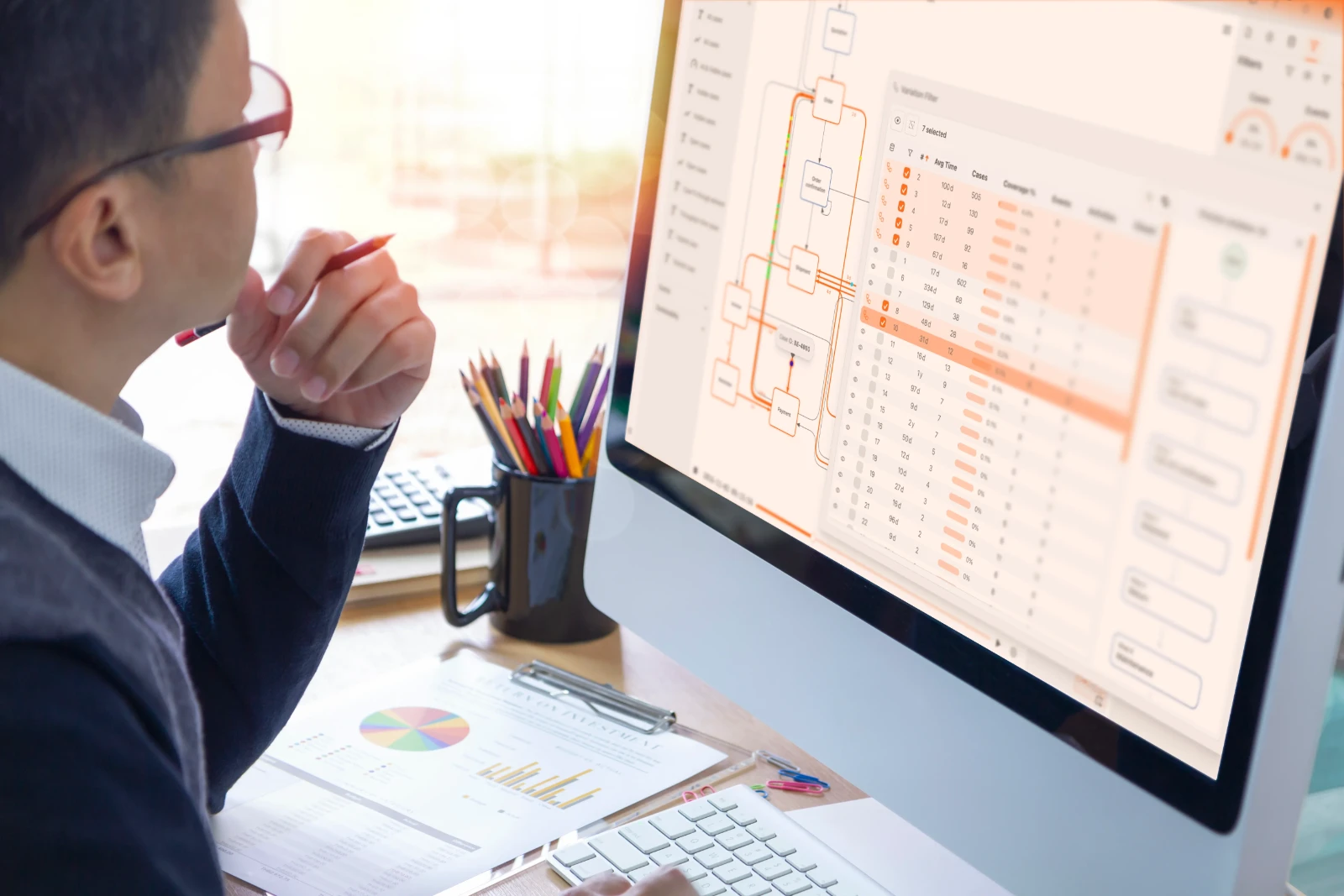
Optimize Accounts Payable in Oracle Fusion for Faster Payments
Accounts Payable invoice processing can be complex, often leading to payment delays and potential compliance risks. Our platform helps you precisely identify bottlenecks and inefficiencies within your workflows. Discover how to streamline operations, reduce errors, and ensure timely payments by uncovering hidden insights in your process data.
Download our pre-configured data template and address common challenges to reach your efficiency goals. Follow our six-step improvement plan and consult the Data Template Guide to transform your operations.
Show detailed description
Why Optimize Accounts Payable Invoice Processing in Oracle Fusion?
Accounts Payable (AP) Invoice Processing is a critical function that directly impacts an organization's financial health, cash flow, and supplier relationships. Within a robust enterprise resource planning (ERP) system like Oracle Fusion Financials, the process often involves numerous steps, multiple stakeholders, and complex matching rules. While Oracle Fusion provides powerful capabilities, the sheer volume of invoices, coupled with variations in vendor agreements, PO matching requirements, and internal approval hierarchies, can introduce significant inefficiencies.
Inefficient Accounts Payable Invoice Processing can manifest as costly problems: late payment penalties erode profitability, missed opportunities for early payment discounts leave money on the table, and excessive manual effort drives up operational costs. Furthermore, prolonged processing times can strain supplier relationships, potentially leading to less favorable terms or even supply chain disruptions. The complexity also increases the risk of non-compliance with internal policies or external regulations. Understanding and optimizing this intricate process, especially when managed within Oracle Fusion Financials, is not just about cost reduction; it's a strategic imperative for financial agility and operational excellence.
How Process Mining Illuminates Your Oracle Fusion AP Flow
Process mining offers an unparalleled lens into the actual execution of your Accounts Payable Invoice Processing. Instead of relying on assumptions or documented ideal processes, process mining extracts granular event data directly from your Oracle Fusion Financials system – tracking every step an invoice takes from "Invoice Received" to "Payment Cleared." This data-driven approach reconstructs the complete, end-to-end journey for each individual invoice, providing a comprehensive view of the lifecycle.
By treating each invoice as a 'case identifier,' process mining visualizes the exact sequence of activities, including "Invoice Data Captured," "Invoice Validated," "Purchase Order Matched," "Goods Receipt Matched," and crucial decision points like "Discrepancy Resolved" or "Invoice Approved." This granular visibility allows you to:
- Uncover Hidden Bottlenecks: Pinpoint precisely where invoices spend excessive time, whether it's awaiting approval, stuck in a discrepancy resolution loop, or delayed during matching processes.
- Identify Process Deviations: See where the process deviates from the intended path, revealing rework, unauthorized steps, or unnecessary hand-offs that contribute to delays and costs.
- Analyze Cycle Time Variations: Understand why some invoices are processed faster than others, based on factors like vendor, invoice type, amount, or even the assigned approver, leveraging attributes like Invoice Number, Invoice Date, Approver, and Payment Status.
- Enhance Compliance: Monitor adherence to payment terms and internal policies by comparing actual process flows and timings against defined rules. For example, ensuring that payments are executed within the specified due dates for each vendor.
This analytical power, applied directly to your Oracle Fusion Financials data, empowers you to move beyond anecdotal evidence and make informed decisions on how to improve Accounts Payable Invoice Processing.
Key Improvement Areas Revealed by Process Mining
Through the insights gained from process mining your Oracle Fusion AP data, several high-impact improvement areas typically emerge:
- Streamlining Exception Handling: Process mining frequently highlights that a significant portion of delays and costs stem from handling exceptions. Identifying common reasons for invoice rejections, repeated discrepancy resolutions, or manual adjustments helps in implementing proactive measures to reduce these occurrences. For instance, if "Discrepancy Resolved" is a frequent and lengthy activity, it points to issues in PO creation or goods receipt. You can learn how to reduce Accounts Payable Invoice Processing cycle time by addressing these exception paths.
- Optimizing Approval Workflows: By analyzing the "Invoice Routed for Approval" and "Invoice Approved" activities, you can detect bottlenecks caused by specific approvers, multi-level approval complexities, or inefficient routing rules. This data helps redesign approval matrices for faster turnaround.
- Enhancing Matching Efficiency: For invoices requiring "Purchase Order Matched" and "Goods Receipt Matched," process mining can reveal why matching often fails or requires manual intervention, leading to delays. Understanding these root causes allows for improvements in data quality, vendor communication, or system configuration.
- Automating Repetitive Tasks: Identifying frequent, consistent paths within the invoice processing journey can highlight opportunities for robotic process automation (RPA) or enhanced system configurations within Oracle Fusion to accelerate mundane tasks.
Measurable Outcomes and Benefits
Implementing process optimization strategies based on process mining insights in your Oracle Fusion Financials Accounts Payable will yield tangible, measurable benefits:
- Significant Reduction in Cycle Time: Drastically decrease the time it takes for an invoice to move from receipt to final payment, translating into fewer late payments and more opportunities to capture early payment discounts.
- Lower Operational Costs: Reduce the manual effort, rework, and exception handling overhead, leading to substantial savings in labor costs associated with Accounts Payable Invoice Processing.
- Improved Cash Flow Management: Gain greater predictability and control over outgoing payments, optimizing working capital.
- Enhanced Compliance and Reduced Risk: Proactively identify and address non-compliant activities or breaches of payment terms, mitigating financial and reputational risks.
- Stronger Supplier Relationships: Timely and accurate payments foster trust and improve relationships with your vendors, potentially leading to better negotiation terms and reliable service.
Getting Started with AP Process Optimization
Optimizing your Accounts Payable Invoice Processing within Oracle Fusion Financials doesn't require a deep dive into complex technical configurations. By leveraging your existing Oracle Fusion data, process mining tools can quickly provide actionable insights. This data-driven approach simplifies the identification of bottlenecks and inefficiencies, empowering you to make targeted improvements. Embracing process optimization is the key to transforming your AP function from a cost center into a strategic asset, ensuring financial efficiency and robust compliance.
The 6-Step Improvement Path for Accounts Payable Invoice Processing
Download the Template
What to do
Access the tailored Excel template designed for Accounts Payable Invoice Processing data. This template ensures your data from Oracle Fusion Financials is structured correctly for analysis.
Why it matters
Using the right structure from the start prevents rework and ensures accurate data interpretation, laying a solid foundation for your process analysis.
Expected outcome
A ready-to-use data template specific to AP Invoice Processing in Oracle Fusion Financials.
Export Your AP Data
What to do
Extract 3-6 months of historical invoice processing data directly from your Oracle Fusion Financials system. Populate the downloaded template with this real-world operational data.
Why it matters
Leveraging historical data reveals recurring patterns and hidden inefficiencies, providing a true picture of your current Accounts Payable performance.
Expected outcome
A comprehensive dataset of your AP invoice processing activities, ready for in-depth analysis.
Upload Your Data
What to do
Securely upload your populated Accounts Payable dataset to ProcessMind. The platform will automatically begin processing your data for insights.
Why it matters
Effortless upload ensures your data is quickly transformed into actionable insights, minimizing manual effort and speeding up time to value.
Expected outcome
Your AP invoice data securely processed and ready for visualization and analysis within ProcessMind.
Analyze Your AP Process
What to do
Explore auto-generated dashboards and interactive process maps to visualize your Accounts Payable flow. Leverage AI-driven recommendations to pinpoint bottlenecks.
Why it matters
Gain deep visibility into your invoice processing performance, identify compliance issues, and uncover root causes of delays and inefficiencies.
Expected outcome
Clear understanding of your AP process flow, key bottlenecks, compliance deviations, and improvement opportunities.
Implement AP Improvements
What to do
Based on the insights, prioritize and implement changes in your Oracle Fusion Financials setup or operational procedures for invoice processing.
Why it matters
Translate analysis into tangible actions to reduce manual work, streamline approvals, and ensure faster invoice payments, directly impacting costs and supplier relations.
Expected outcome
Strategic changes implemented in your AP process, leading to improved efficiency and reduced processing costs.
Monitor AP Performance
What to do
Periodically re-upload updated Accounts Payable data from Oracle Fusion Financials to track the impact of your improvements and ensure sustained efficiency.
Why it matters
Continuous monitoring ensures that improvements hold, new issues are promptly identified, and your AP process remains optimized for maximum value.
Expected outcome
Ongoing visibility into AP process health, measurable KPI improvements, and a culture of continuous optimization.
WHAT YOU WILL GET
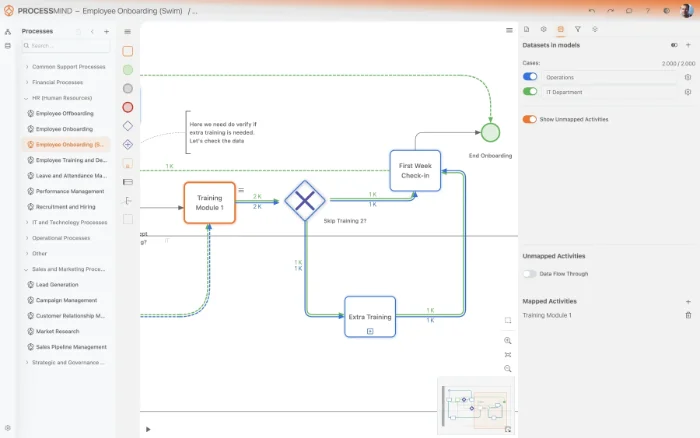
Uncover AP Bottlenecks for Faster Oracle Payments
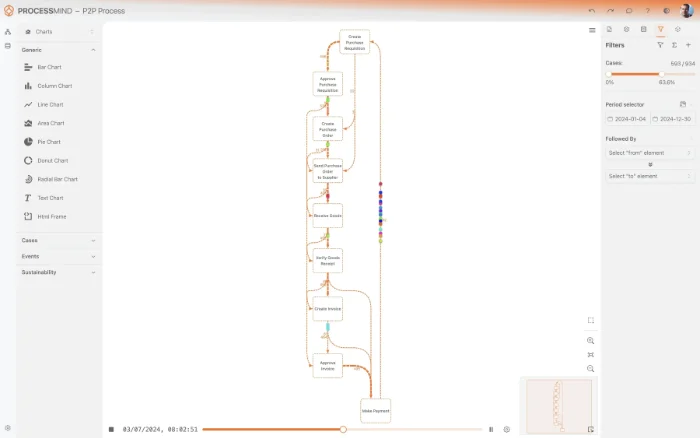
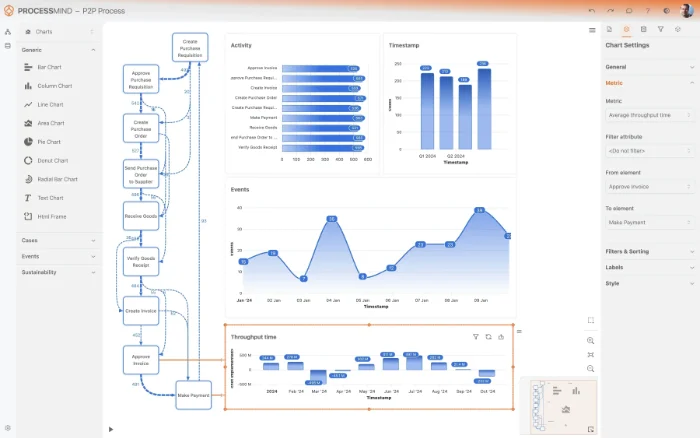
- Visualize end-to-end AP invoice workflow
- Pinpoint exact process bottlenecks and delays
- Identify compliance risks in Oracle Fusion
- Optimize for quicker payments and cost savings
TYPICAL OUTCOMES
Transform Your Accounts Payable Efficiency
These outcomes showcase the tangible benefits organizations commonly achieve by applying process mining to optimize their Accounts Payable invoice processing within Oracle Fusion Financials, revealing hidden inefficiencies and streamlining operations.
Average reduction in approval time
Accelerate invoice processing by identifying and removing bottlenecks in the approval workflow, leading to quicker payments and improved vendor relations.
Eliminate erroneous invoice payments
Prevent costly duplicate payments by detecting anomalies and enforcing controls within the invoice processing workflow, safeguarding financial resources.
Increase early payment discount realization
Improve cash flow and save money by identifying opportunities to pay invoices early and capture available discounts that were previously missed.
Reduced 3-way matching failures
Minimize manual interventions and rework by improving the accuracy of 3-way matching, ensuring invoices align with purchase orders and goods receipts.
Lower rate of invoice adjustments
Drastically reduce the time and effort spent on manual adjustments and rework by identifying root causes of errors and process deviations.
Ensure adherence to payment policies
Automatically monitor and enforce payment policy rules, ensuring all invoices are processed and paid according to internal guidelines and regulations.
Results vary based on process complexity, existing system configurations, and data quality. These figures represent typical improvements observed across implementations.
Recommended Data
FAQs
Frequently asked questions
Process mining visualizes the actual flow of your AP invoices, identifying bottlenecks like slow approvals or rework loops. It can uncover deviations from standard processes, pinpoint root causes for delays, and highlight compliance risks within Oracle Fusion.
You'll typically need event logs related to invoice creation, approval, matching, and payment, including timestamps and activity details. Key tables from Oracle Fusion Financials like AP_INVOICES_ALL, AP_APPROVAL_HISTORY, and AP_PAYMENT_SCHEDULES_ALL are commonly used.
Process mining helps reduce invoice approval cycle times, minimizes duplicate payments, and maximizes early payment discounts. It enhances 3-way matching accuracy and ensures adherence to payment policies, leading to significant cost savings and improved cash flow.
After data extraction and initial preparation, first insights can often be generated within a few weeks. The initial phase focuses on visualizing the process and identifying major deviations or bottlenecks, providing a quick understanding of improvement areas.
Yes, by mapping every step and variant of your AP process, process mining clearly exposes where delays occur in approvals and why duplicate payments happen. It provides data-driven evidence to pinpoint the exact teams, users, or process steps causing these inefficiencies, enabling targeted improvements.
Data can be extracted using standard Oracle Fusion reporting tools, SQL queries against the underlying database, or through integration layers. The goal is to obtain a complete event log with case IDs (e.g., Invoice ID), activity names, and precise timestamps.
While process mining platforms are cloud-based or on-premise solutions, they generally integrate with existing IT landscapes. You typically don't need to alter your Oracle Fusion Financials system directly, as the process primarily involves data extraction and analysis in a separate tool.
Traditional BI focuses on "what happened" through predefined reports and dashboards, often showing aggregate metrics. Process mining, however, analyzes event logs to reveal "how it happened" by reconstructing the actual end-to-end process flow and its variants, identifying unseen bottlenecks and deviations.
Cut AP Invoice Processing Costs by 60%: Start Now
Automate AP Invoice Processing and reduce errors to achieve 60% cost savings.
No credit card required • Setup in minutes