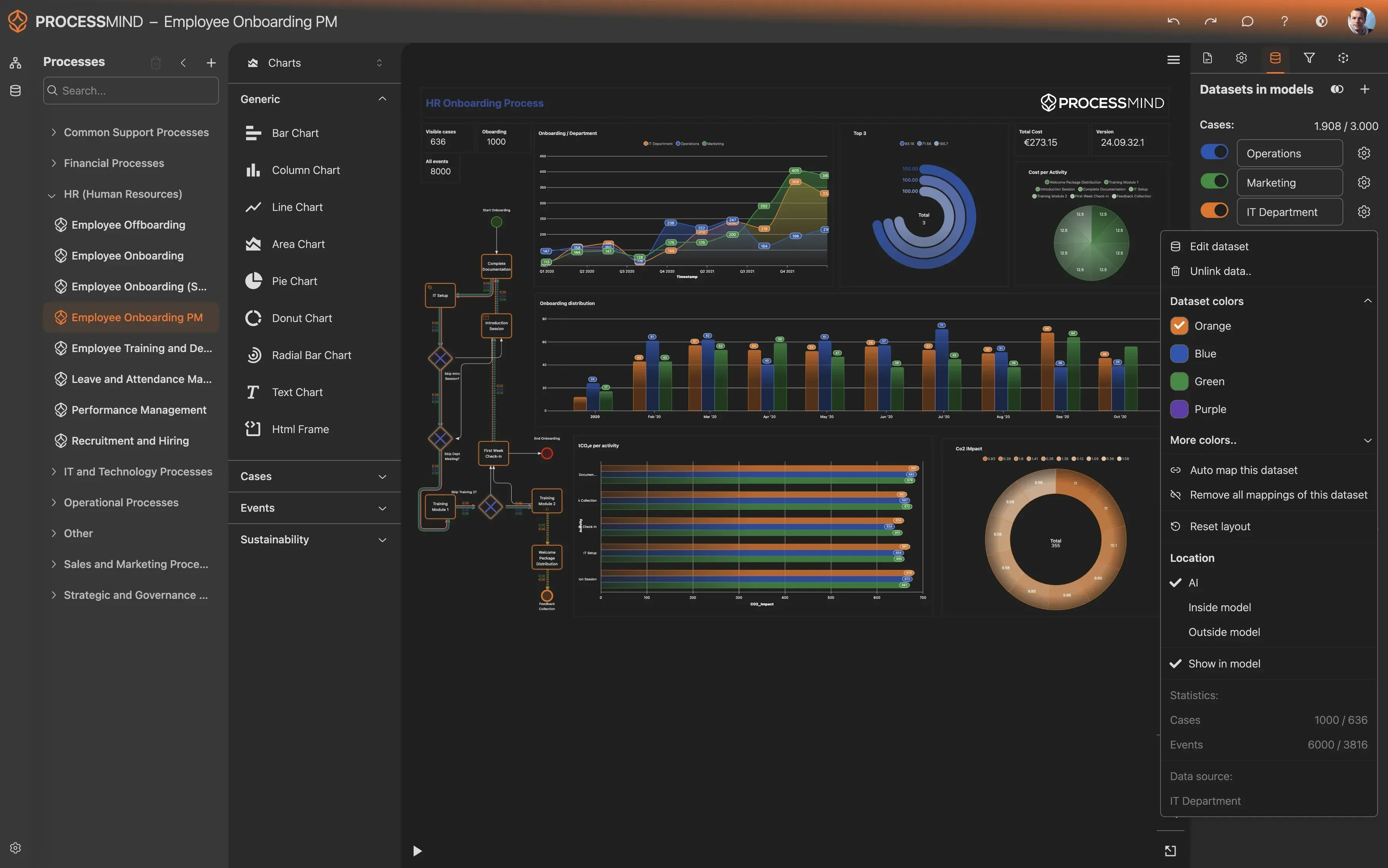
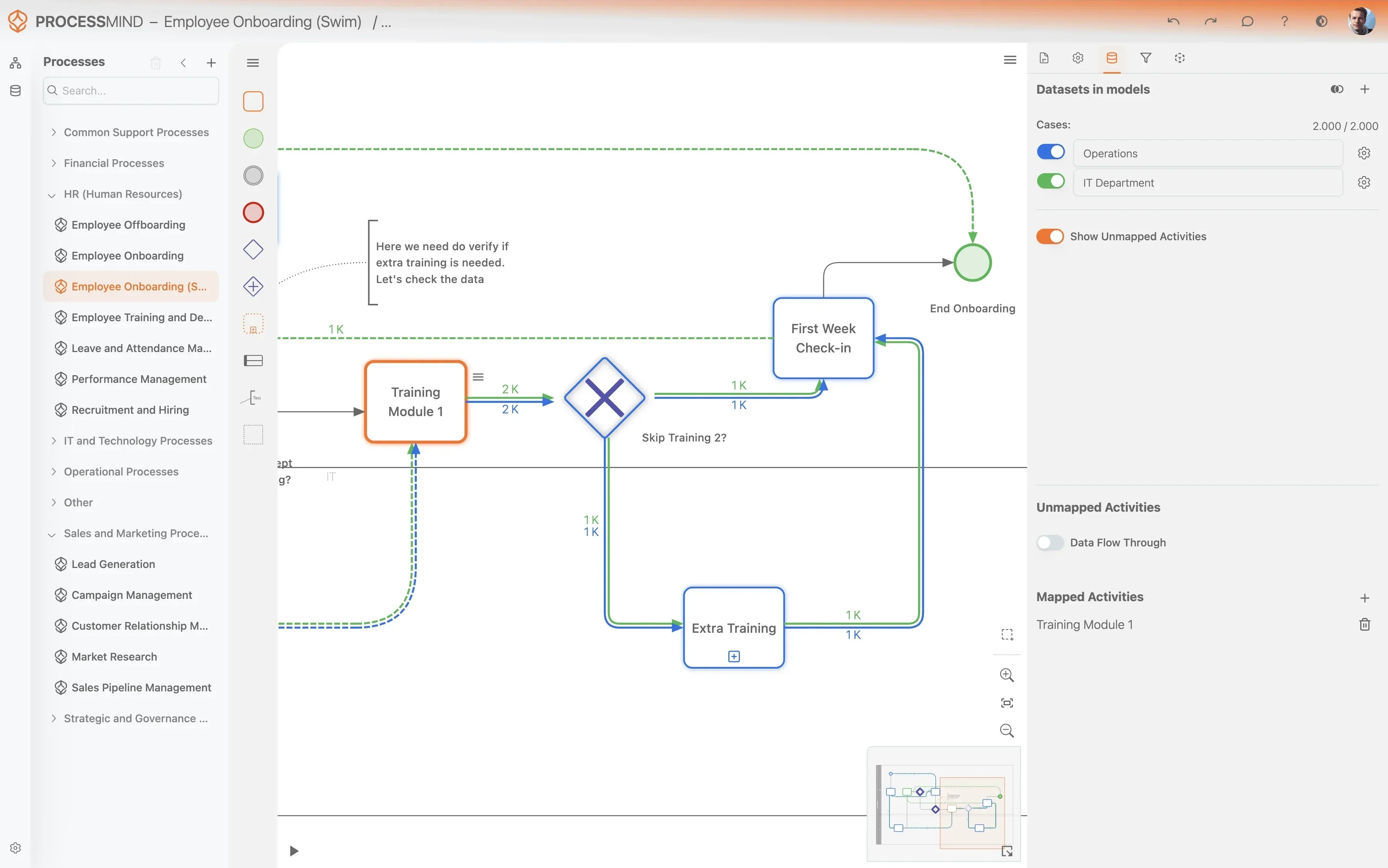
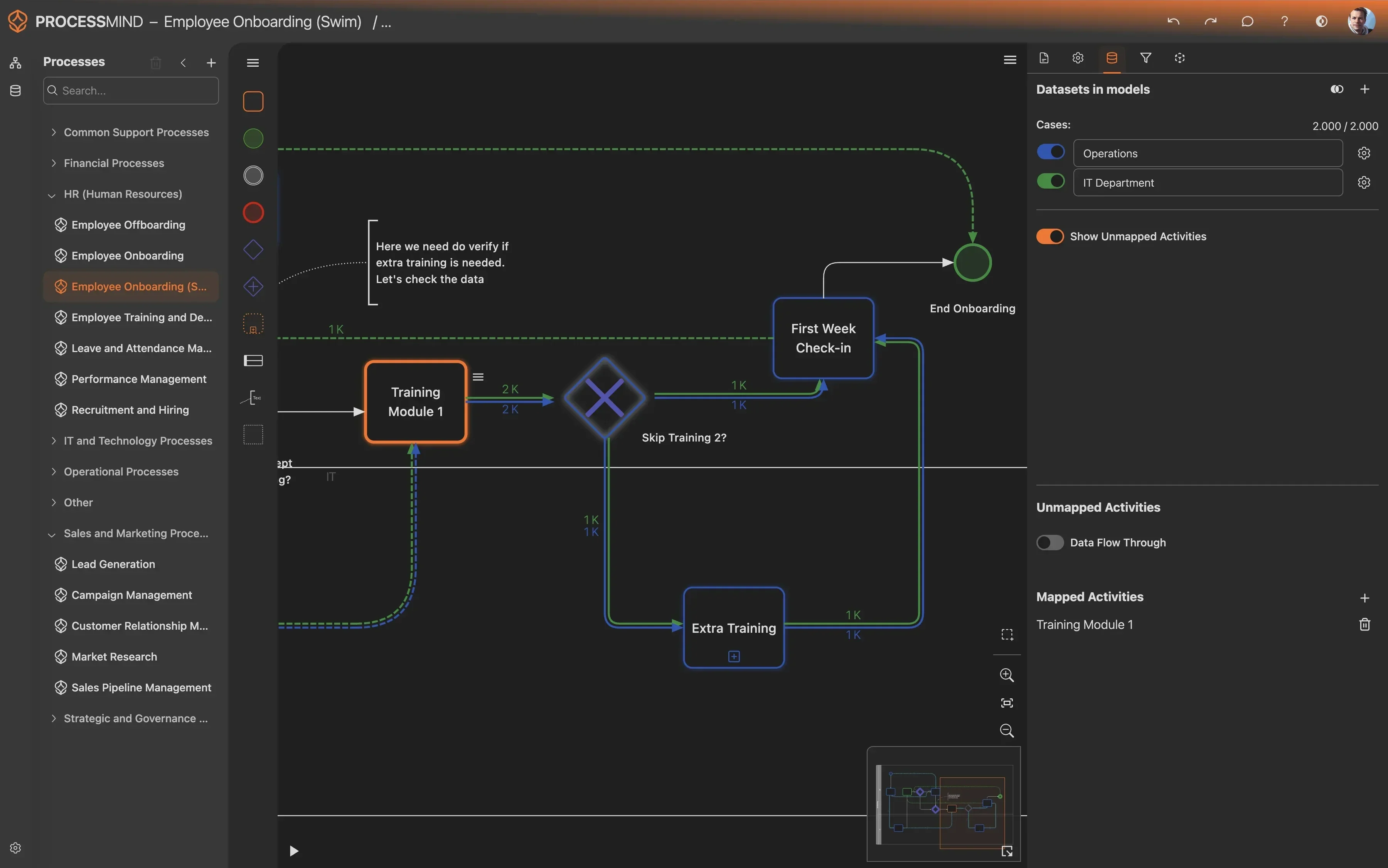
Improve Your Purchase to Pay - Invoice Processing

Unlock efficiency in SAP ECC invoice processing with our 6-step guide.
Improve Your Purchase to Pay - Invoice Processing

Optimize Invoice Processing in SAP ECC for Efficiency Gains

Invoice processing can often lead to delays and compliance issues. Our platform helps you identify exact inefficiencies, from initial data entry to final payment execution. Discover opportunities to streamline your workflows, reduce manual effort, and ensure timely vendor payments.

Download our pre-configured data template and address common challenges to reach your efficiency goals. Follow our six-step improvement plan and consult the Data Template Guide to transform your operations.

Show detailed description

Why Optimize Purchase to Pay - Invoice Processing in SAP ECC?

Efficient Purchase to Pay - Invoice Processing is a cornerstone of sound financial management and strong vendor relationships. In complex ERP environments like SAP ECC, invoice processing often involves multiple manual steps, varied approval hierarchies, and integration with various modules like FI-GL. This complexity can inadvertently lead to significant bottlenecks, extended cycle times, and increased operational costs. Organizations frequently face challenges such as delayed invoice approvals, discrepancies in matching invoices to purchase orders and goods receipts, and non-compliance with internal policies or regulatory requirements.

The cost of inefficient invoice processing extends beyond direct labor. It includes missed early payment discounts, late payment penalties, increased inquiry handling from vendors, and even strained supplier relationships, all of which negatively impact working capital and cash flow. Optimizing this critical process in SAP ECC is not just about speed, it's about accuracy, compliance, and strategic financial control. By understanding the true journey of each invoice, you can unlock substantial savings and improve your overall Purchase to Pay performance.

How Process Mining Illuminates Your SAP ECC Invoice Workflows

Process mining offers a powerful, data-driven approach to truly understand how your Purchase to Pay - Invoice Processing unfolds within SAP ECC. Instead of relying on assumptions or anecdotal evidence, process mining extracts event log data directly from your SAP ECC system, specifically leveraging tables like BKPF, BSEG, GLT0, FAGLFLEXA, SKA1, and SKB1. This data is then used to automatically reconstruct and visualize the actual process flow, revealing every step an invoice takes from receipt to final payment.

This perspective allows you to move beyond standard reporting and gain deep insights into process variations, rework loops, and critical bottlenecks that may be hidden in your system. You can identify exactly where invoices get stuck, who is involved in delays, and which process variants lead to the longest cycle times. Process mining provides an objective, end-to-end view, enabling you to pinpoint inefficiencies and compliance deviations with unprecedented clarity, offering a clear path on how to improve Purchase to Pay - Invoice Processing.

Key Improvement Areas in Purchase to Pay - Invoice Processing

Analyzing your SAP ECC invoice processing with process mining typically uncovers several key areas ripe for optimization:

  • Invoice Data Capture and Entry: Identify delays or errors originating from the initial capture of invoice data. Understanding where manual efforts are concentrated can highlight opportunities for automation or better integration.
  • Matching and Discrepancy Resolution: Pinpoint the most common reasons for mismatches between invoices, purchase orders, and goods receipts. Analyze the cycle time for resolving these discrepancies and identify ways to streamline this crucial step.
  • Approval Workflow Bottlenecks: Visualize the full approval hierarchy and identify specific individuals, departments, or approval steps that consistently cause delays. This helps in re-evaluating approval limits, routing rules, or training needs.
  • Payment Block Management: Understand the frequency and duration of payment blocks. Analyze the root causes for blocks being set and the efficiency of their release process to ensure timely payments.
  • Compliance and Rework Identification: Detect deviations from standard operating procedures or compliance rules. Identify instances of rework, manual interventions, or unauthorized process steps that inflate costs and introduce risks.

Expected Measurable Outcomes

Implementing improvements identified through process mining in your SAP ECC Purchase to Pay - Invoice Processing can lead to significant and measurable benefits:

  • Reduced Invoice Processing Cycle Time: Dramatically cut down the time from invoice receipt to final payment, often by 30% or more, allowing for faster closing cycles.
  • Lower Processing Costs: Minimize manual effort, reduce rework, and eliminate inefficiencies, leading to substantial cost savings per invoice processed.
  • Enhanced Compliance and Risk Mitigation: Ensure greater adherence to internal controls and regulatory requirements, reducing audit risks and financial penalties.
  • Improved Vendor Relationships: Foster stronger relationships by ensuring timely payments and reducing disputes, potentially securing better terms.
  • Optimized Working Capital: Maximize early payment discounts and improve cash flow management, directly impacting your organization's financial health.
  • Increased Process Transparency: Gain complete visibility into your invoice processing performance, enabling continuous monitoring and improvement.

Getting Started with Your P2P Invoice Processing Optimization

Embarking on the journey to optimize your Purchase to Pay - Invoice Processing in SAP ECC doesn't have to be complex. By leveraging this process mining perspective, you gain the necessary tools and insights to conduct a thorough analysis. You can start by connecting your SAP ECC data and applying this specialized process mining template to quickly visualize your current state, identify critical bottlenecks, and discover actionable opportunities on how to reduce Purchase to Pay - Invoice Processing cycle time. Begin transforming your invoice workflows today, driving efficiency and compliance across your entire Purchase to Pay process.

Purchase to Pay - Invoice Processing invoice verification AP team 3-way matching invoice approval payment terms vendor payments accounts payable compliance management

Common Problems & Challenges

Identify which challenges are impacting you

Delays in invoice approval workflows often lead to late payments, damaging vendor relationships and potentially incurring late fees. These bottlenecks tie up working capital and create inefficiencies throughout the Purchase to Pay process. ProcessMind analyzes approval activities and identifies specific approvers or steps causing delays, allowing for targeted workflow optimization in SAP ECC.

Discrepancies between invoices and purchase orders, such as quantity or price variations, trigger manual interventions and rework. This consumes significant AP team time, prolongs processing cycles, and introduces risks of incorrect payments within the SAP ECC system. ProcessMind visualizes where and why matching discrepancies occur in Purchase to Pay - Invoice Processing, highlighting root causes like incorrect PO creation or goods receipt issues.

Relying on manual input for invoice data capture increases the likelihood of human errors, leading to incorrect postings, reconciliation issues, and subsequent manual corrections. These errors impact financial accuracy and necessitate time-consuming rework for the accounts payable team in SAP ECC. ProcessMind identifies where and how frequently data capture errors manifest, pinpointing specific entry points or user groups that require training or automation within the Purchase to Pay process.

Deviations from defined company policies or regulatory requirements in invoice processing can expose the organization to financial penalties, audits, and reputational damage. Ensuring every step, from receipt to payment, adheres to standards is crucial in SAP ECC environments. ProcessMind detects process steps that bypass approval stages or violate segregation of duties, providing a clear audit trail and insights to enforce compliance within Purchase to Pay - Invoice Processing.

Invoices held by payment blocks, whether due to discrepancies or other reasons, often remain unaddressed for extended periods. This results in missed payment deadlines, strained vendor relationships, and potential late payment penalties, impacting cash flow management in SAP ECC. ProcessMind tracks the lifecycle of payment blocks, identifying common reasons for their application, who is responsible for their release, and the average time taken, enabling faster resolution in the Purchase to Pay process.

Without a clear, comprehensive view of the entire invoice processing journey, it is difficult to identify true bottlenecks, understand resource allocation, or measure overall efficiency. This lack of transparency hinders data-driven decision-making and optimization efforts within SAP ECC. ProcessMind reconstructs the complete, actual Purchase to Pay - Invoice Processing flow, revealing all variants and deviations, providing granular insights into every step an invoice takes from receipt to payment.

Excessive manual handling, multiple rework loops, and prolonged cycle times contribute significantly to the cost of processing each invoice. These hidden costs erode profitability and indicate underlying inefficiencies in the accounts payable function within SAP ECC. ProcessMind quantifies the cost impact of various process deviations and manual steps within Purchase to Pay - Invoice Processing, pinpointing areas for automation and streamlining to reduce operational expenses.

When invoices are not processed promptly, organizations often miss out on valuable cash discounts offered by vendors for early payment. This represents a direct loss of potential savings and negatively impacts working capital management, particularly in SAP ECC environments. ProcessMind highlights invoices that fail to meet early payment terms and identifies the specific process delays, such as approval bottlenecks or matching issues, that prevent their timely payment within Purchase to Pay.

Variances in how payment terms are applied or adhered to across different vendors or transactions can lead to inconsistent payment behavior, risking unfavorable vendor relations or suboptimal cash flow. Ensuring standardization is key for efficient financial operations in SAP ECC. ProcessMind reveals discrepancies in payment scheduling based on defined terms, identifying instances where payments are made too early or too late, and the reasons behind these deviations within Purchase to Pay.

Uneven distribution of tasks or bottlenecks at specific processing steps can lead to certain team members being overloaded while others are underutilized. This imbalance impacts employee productivity and overall departmental efficiency within the SAP ECC accounts payable team. ProcessMind analyzes activity durations and resource assignments, identifying where workload imbalances occur and suggesting opportunities to optimize resource allocation in Purchase to Pay - Invoice Processing.

Invoices often undergo numerous manual interventions, from initial data validation to multiple approval rounds or error corrections. Each manual touch adds to processing time and cost, increasing the potential for errors and reducing automation potential within SAP ECC. ProcessMind maps out all manual activities and rework loops, quantifying their frequency and impact, thereby identifying prime candidates for automation and process simplification in Purchase to Pay - Invoice Processing.

When delays occur in invoice processing, it's often challenging to pinpoint the exact reason or responsible party without extensive manual investigation across various systems and logs. This lack of clear root cause analysis prevents effective problem-solving and continuous improvement in SAP ECC. ProcessMind precisely isolates the activities and attributes preceding a delay, providing data-backed evidence for the underlying causes of slow invoice processing in the Purchase to Pay cycle.

Typical Goals

Define what success looks like

This goal aims to shorten the duration from an invoice's arrival to its final approval, which directly impacts vendor payment timeliness and working capital. Slow approvals can lead to missed cash discounts and strained vendor relationships, increasing operational costs. Achieving this means invoices move through the Purchase to Pay - Invoice Processing workflow in SAP ECC much faster, reducing overall cycle time and improving efficiency. Reducing approval cycle time by 30% could significantly boost cash flow and vendor satisfaction.ProcessMind identifies bottlenecks and prolonged waiting times within the approval process by visualizing every step an invoice takes. It highlights specific approvers or stages causing delays, allowing for targeted process adjustments, workflow reconfigurations, or automation opportunities. By comparing actual approval paths against ideal models, ProcessMind helps implement best practices and monitor the impact of changes, leading to measurable improvements.

Manual data entry is a significant source of errors, leading to rework, delayed payments, and increased processing costs in Purchase to Pay - Invoice Processing. Achieving this goal means that invoices are processed with higher accuracy from the start, minimizing the need for corrections and reconciliations. This not only speeds up the process but also enhances data quality within SAP ECC, improving financial reporting and compliance. Reducing manual errors by 80% frees up AP team resources for more strategic tasks.ProcessMind visualizes all rework loops and error-correction activities caused by incorrect invoice data capture. It pinpoints exactly where errors originate in the process flow and identifies patterns, such as specific vendors or invoice types, that frequently trigger these issues. With this insight, organizations can implement preventative measures like automated data extraction tools, stricter validation rules, or targeted training, thereby streamlining the process and boosting accuracy.

Missing cash discount opportunities represents a direct financial loss for the organization. This goal focuses on ensuring that eligible invoices are paid within their discount window, thereby maximizing cost savings. Achieving a higher capture rate means better management of working capital and an immediate positive impact on the bottom line. Increasing the cash discount capture rate to 95% across all eligible invoices processed in SAP ECC directly translates into significant savings annually.ProcessMind meticulously tracks the full lifecycle of each invoice, from receipt to payment, identifying instances where payment was made after the cash discount expiry. It highlights the specific delays in the Purchase to Pay - Invoice Processing workflow that contribute to these missed opportunities, such as approval bottlenecks or payment block lingering. By visualizing these patterns, ProcessMind helps optimize workflows and payment scheduling to ensure timely payments and capitalize on available discounts.

Compliance with internal policies and external regulations is crucial in invoice processing to avoid financial penalties, audits, and reputational damage. This goal ensures that every invoice processed in SAP ECC adheres strictly to defined rules and legal requirements, from data capture to payment execution. Achieving full compliance provides peace of mind, strengthens governance, and protects the organization from potential risks. Maintaining 100% adherence to all regulatory and internal guidelines mitigates financial and operational risks.ProcessMind offers robust conformance checking capabilities, allowing organizations to compare the actual Purchase to Pay - Invoice Processing flow against predefined compliance models and rules. It automatically flags any deviations, unauthorized steps, or missing approvals, providing a clear view of where and how compliance gaps occur. This detailed analysis enables proactive corrective actions and continuous monitoring to maintain a fully compliant process.

Frequent discrepancies between invoices and purchase orders (PO) are a major cause of rework, manual intervention, and payment delays in Purchase to Pay - Invoice Processing. This goal aims to reduce the occurrence of such mismatches, leading to a smoother, faster 3-way matching process. Achieving this improves the efficiency of accounts payable operations and strengthens data integrity within SAP ECC. Reducing invoice-PO matching discrepancies by 50% significantly cuts down on manual interventions and rework.ProcessMind analyzes the invoice processing flow to identify where and why matching discrepancies frequently occur, such as issues with goods receipts, PO changes, or data entry errors. It visualizes the frequency and impact of these mismatches on the overall process, revealing common patterns and root causes. This insight allows for targeted improvements in PO creation, goods receipt processes, or automated matching logic, streamlining the entire verification step.

Payment blocks can significantly delay vendor payments, negatively impacting vendor relationships and potentially leading to late payment fees. This goal focuses on rapidly identifying and resolving the underlying causes of these blocks. Achieving quicker resolution means more timely payments, improved cash flow predictability, and better vendor relations. Reducing the average time a payment block remains active by 40% improves vendor goodwill and operational efficiency.ProcessMind precisely tracks the duration and frequency of payment blocks within the Purchase to Pay - Invoice Processing cycle in SAP ECC. It not only identifies which invoices are blocked but also provides insights into the reasons for the blocks and the typical time it takes to resolve them. By analyzing the pathways leading to and from payment blocks, ProcessMind helps uncover inefficient resolution workflows and bottlenecks, enabling faster intervention and process optimization.

High processing costs per invoice erode profitability and indicate inefficiencies within the accounts payable department. This goal aims to identify and eliminate cost drivers, such as excessive manual effort, rework, and prolonged cycle times. Achieving a lower per-invoice cost signifies a more streamlined and efficient Purchase to Pay - Invoice Processing operation. Cutting the cost of processing each invoice by 20% directly impacts the organization’s operational budget and improves financial health.ProcessMind provides a comprehensive view of all activities, resources, and delays associated with each invoice, allowing for an accurate calculation of processing costs. It highlights cost-intensive process variants, unnecessary steps, or frequent rework loops that inflate expenses. By pinpointing these inefficient areas in SAP ECC, ProcessMind supports data-driven decisions to automate tasks, eliminate redundant activities, and optimize resource allocation for significant cost reductions.

Inconsistent application of payment terms across vendors or invoices can lead to financial unpredictability, missed discount opportunities, and vendor disputes. This goal focuses on enforcing uniform policies for payment terms, ensuring fair and consistent treatment for all suppliers. Achieving standardization improves financial forecasting, strengthens vendor relationships, and optimizes working capital management. Ensuring 98% consistent application of payment terms brings clarity and efficiency to financial operations.ProcessMind analyzes every payment event in the Purchase to Pay - Invoice Processing cycle, comparing actual payment dates and discount utilization against the stipulated payment terms. It identifies deviations where terms are not consistently applied, revealing patterns of exceptions or manual overrides. This visibility enables organizations to enforce standard operating procedures within SAP ECC, leading to greater consistency, predictability, and improved vendor trust.

An imbalanced workload among Accounts Payable (AP) team members can lead to bottlenecks, employee burnout, and inefficiencies in invoice processing. This goal aims to distribute tasks more evenly, ensuring that resources are utilized effectively and no single individual or team is overwhelmed. Achieving optimized workload distribution enhances team productivity, reduces processing delays, and improves overall job satisfaction. Balancing the workload of the AP team to within 10% deviation improves throughput and reduces stress.ProcessMind offers resource analysis capabilities, visualizing how tasks are distributed and processed across different AP team members. It identifies individuals or groups that are consistently overloaded or underutilized, as well as those who frequently contribute to processing delays. By mapping these insights to the Purchase to Pay - Invoice Processing flow, ProcessMind enables organizations to reallocate tasks, streamline workflows, and ensure a more equitable and efficient distribution of work within SAP ECC.

Many invoice processing tasks are repetitive and manual, consuming valuable time and resources while also being prone to human error. This goal focuses on identifying these tasks and automating them using robotic process automation (RPA) or other digital tools. Achieving higher automation frees up AP personnel for more complex, value-added activities, significantly boosting efficiency and accuracy. Automating 30% of high-volume, repetitive tasks reduces human effort and accelerates the Purchase to Pay - Invoice Processing cycle.ProcessMind excels at mapping out every single step in the Purchase to Pay - Invoice Processing journey, highlighting frequent, low-value, and rules-based activities performed manually within SAP ECC. It identifies prime candidates for automation by analyzing activity frequency, duration, and associated costs. With ProcessMind’s insights, organizations can pinpoint exactly where automation will yield the greatest return, transitioning from manual effort to efficient, automated processes.

Delays in invoice processing often stem from complex, interconnected issues that are difficult to identify and resolve without clear visibility. This goal focuses on systematically uncovering the precise reasons behind extended processing times, allowing for targeted and effective interventions. Achieving this means moving beyond symptom management to addressing the core problems, leading to sustainable improvements in efficiency and speed. Systematically identifying and resolving the top 3 root causes of delays improves overall process predictability.ProcessMind provides comprehensive process transparency by meticulously mapping every event and activity in the Purchase to Pay - Invoice Processing flow. It not only shows where delays occur but also allows for deep-dive analysis into the specific attributes and conditions associated with those delays, such as particular approvers, invoice types, or system issues within SAP ECC. This granular insight enables organizations to move from assumptions to data-driven conclusions about the true root causes of inefficiencies.

The 6-Step Improvement Path for P2P Invoice Processing in SAP ECC

1

Download the Template

What to do

Get the Excel template designed for your Purchase to Pay, Invoice Processing data. This template ensures your data is structured correctly for optimal analysis.

Why it matters

A standardized data structure is crucial for accurate process mapping and discovering improvement opportunities without data inconsistencies.

Expected outcome

An empty Excel template tailored for your SAP ECC Invoice Processing data.

WHAT YOU WILL GET

Uncover Real P2P Invoice Processing Truths

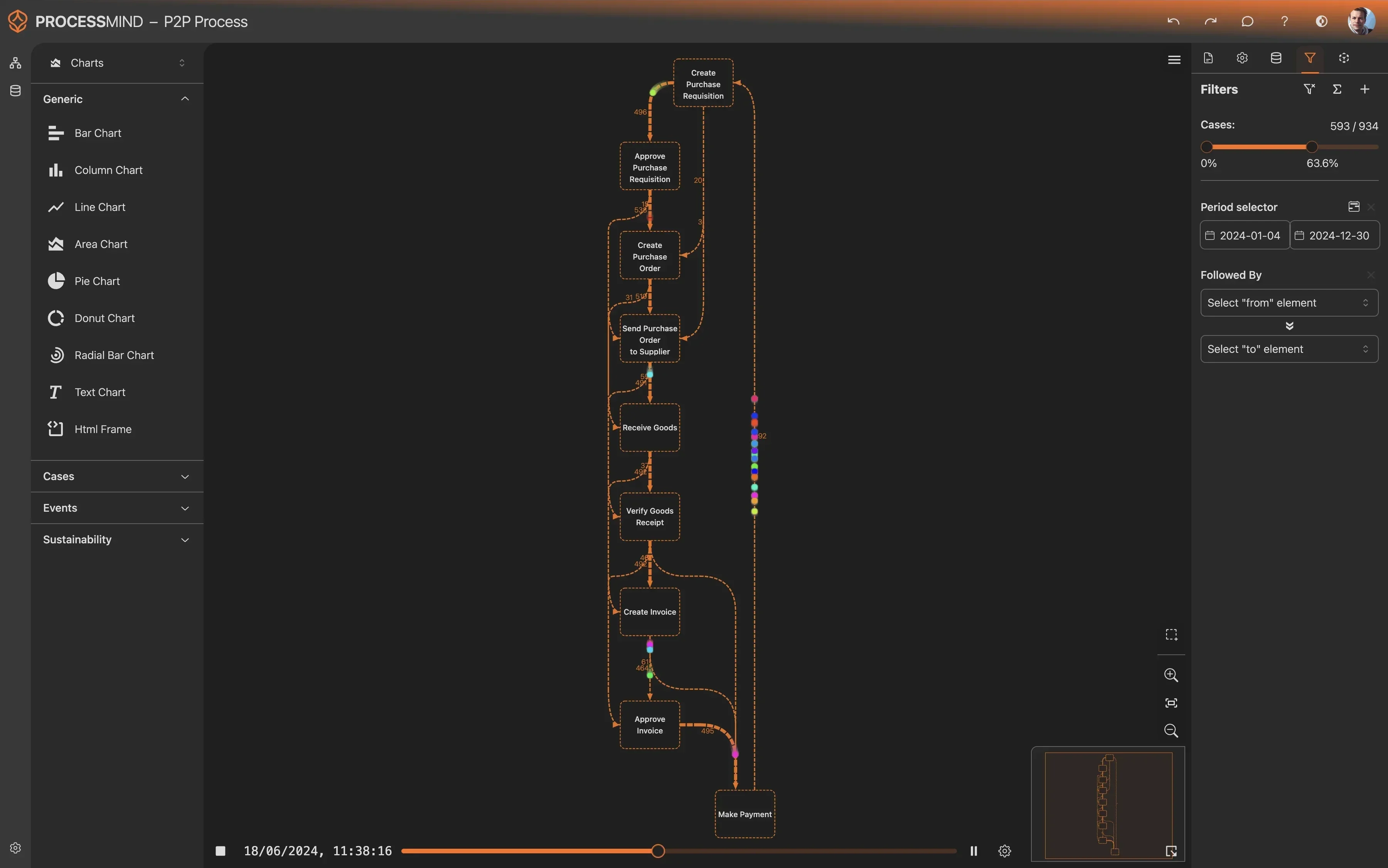
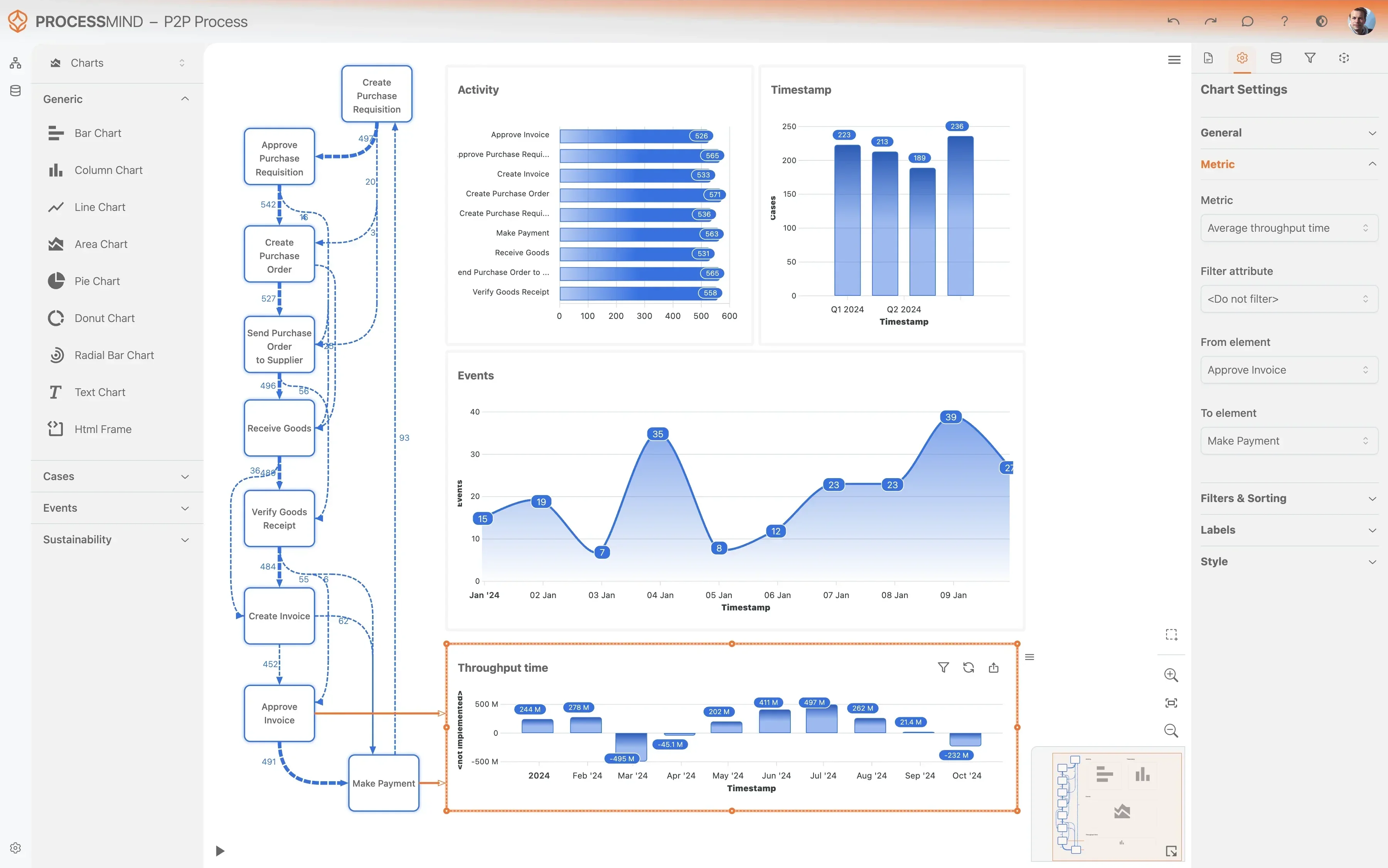
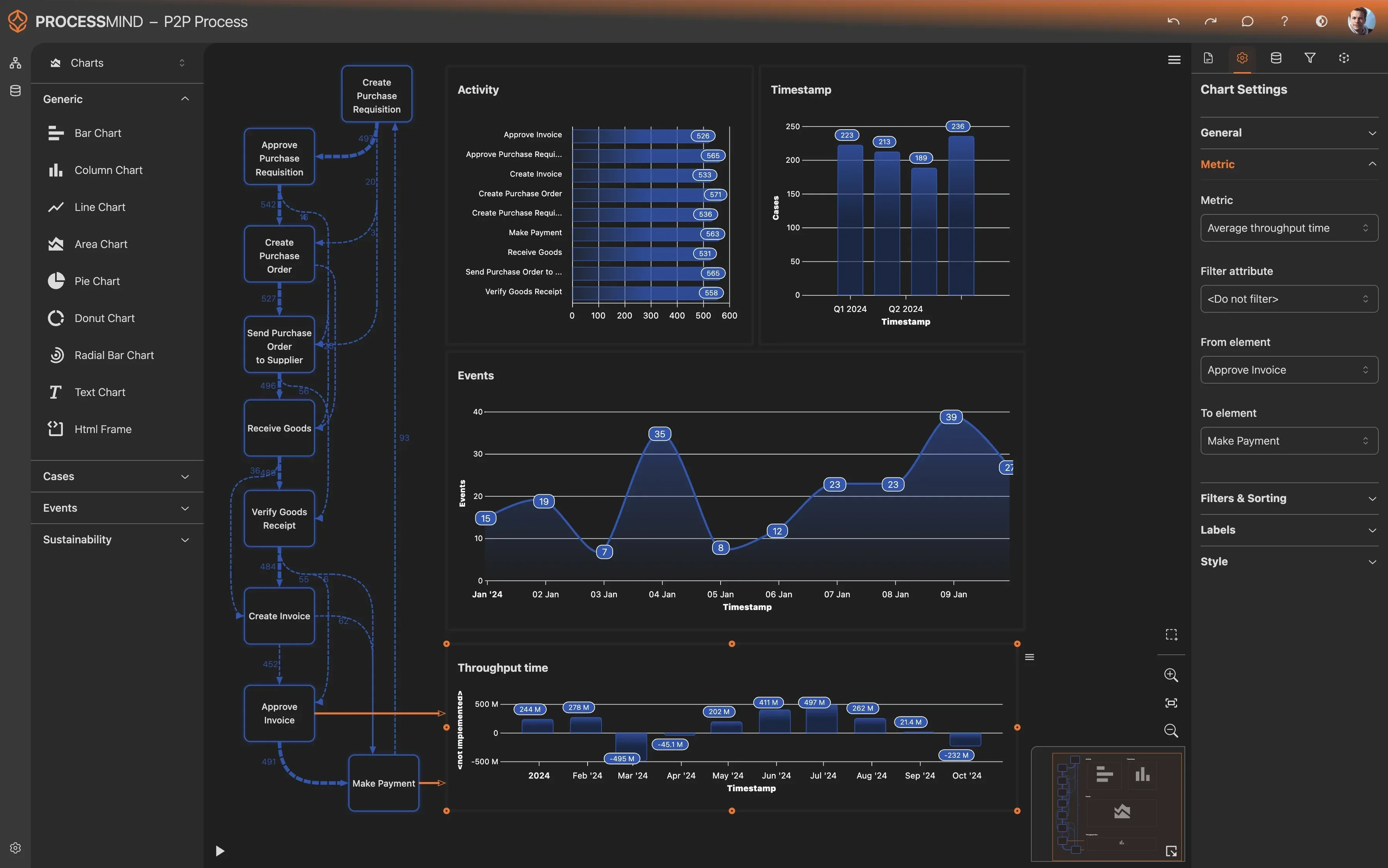
ProcessMind reveals the complete journey of every invoice, from creation to payment. Visualize hidden delays, compliance risks, and opportunities to streamline your Purchase to Pay cycle for maximum efficiency.
  • Pinpoint invoice processing bottlenecks
  • Identify compliance risks and deviations
  • Reduce manual effort in invoice handling
  • Ensure timely vendor payments consistently
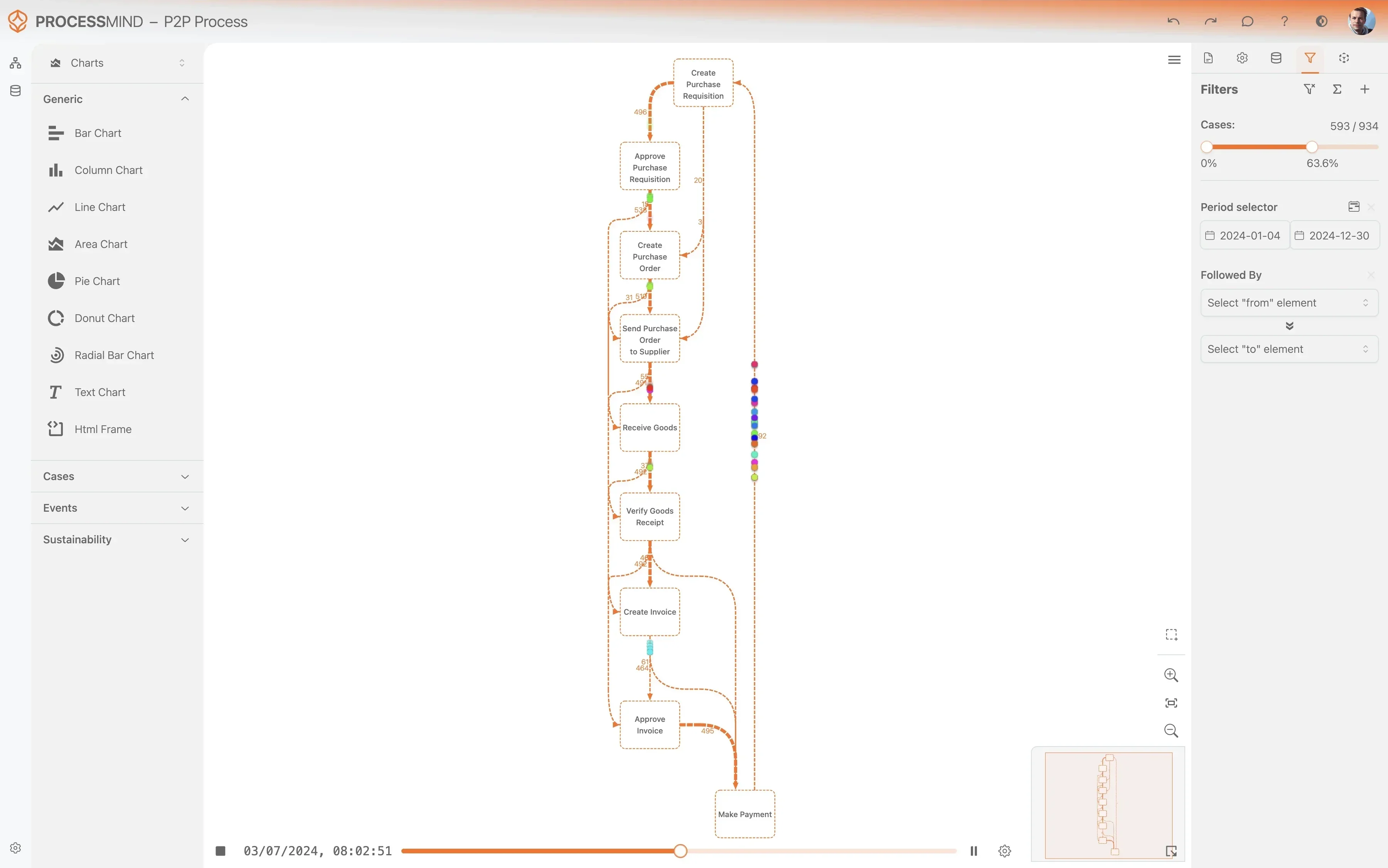
Discover your actual process flow
Identify bottlenecks and delays
Analyze process variants
Design your optimized process

TYPICAL OUTCOMES

Achieving Real-World Impact in Invoice Processing

These outcomes illustrate the tangible efficiency gains and cost reductions observed when optimizing Purchase to Pay invoice processing workflows. By leveraging process mining, organizations identify and eliminate bottlenecks, leading to faster processing times and improved compliance within systems like SAP ECC.

0 %
Faster Invoice Approvals

Average reduction in approval time

Streamline approval workflows by identifying and eliminating bottlenecks, ensuring invoices are approved much faster. This leads to quicker payments and improved vendor relationships.

0 %
Higher Cash Discount Rate

Improvement in discount utilization

Improve the rate at which eligible cash discounts are captured by optimizing payment timing and resolving processing delays proactively. This directly contributes to significant financial savings.

0 %
Reduced Rework

Decrease in manual discrepancy handling

Minimize the need for manual intervention due to matching discrepancies or data errors. Process mining reveals root causes, enabling automated corrections and significant efficiency gains.

0 %
Reduced Compliance Gaps

Decrease in policy deviations

Identify and eliminate instances where invoice processing deviates from company policies or regulatory standards. This strengthens internal controls and reduces audit risks.

0 days
Faster Block Resolution

Quicker resolution of payment blocks

Accelerate the resolution of payment blocks by identifying common causes and streamlining resolution workflows. This ensures timely payments and enhances vendor satisfaction.

0 %
Automated Processing

Reduction in manual activities per invoice

Identify and automate repetitive, high-volume manual tasks in invoice processing, freeing up AP staff for more strategic work. This significantly boosts efficiency and accuracy.

Results vary based on process complexity and data quality. These figures represent typical improvements observed across implementations.

FAQs

Frequently asked questions

Process mining visualizes the actual flow of your invoices in SAP ECC, revealing bottlenecks, rework loops, and compliance deviations. It identifies where approvals slow down, why payment blocks occur, and opportunities to streamline the entire process. This provides a clear, data-driven view of operational inefficiencies. Ultimately, it helps you understand the true performance of your P2P invoice cycle.

You typically need event logs related to your invoices, including invoice number, activity description, timestamp, and the user who performed each activity. This data is usually found in tables like BKPF, BSEG, RBKP, RSEG, along with change document tables such as CDHDR and CDPOS. These tables provide the necessary information to reconstruct the invoice processing journey.

Process mining can expose slow approval cycles, frequent invoice-PO mismatches, and manual data entry errors that lead to rework. It also highlights missed cash discount opportunities, inconsistent application of payment terms, and imbalanced workload distribution within your AP team. Furthermore, it helps pinpoint the root causes of payment blocks and delays.

You can expect to significantly reduce invoice approval cycle times, minimize manual errors, and increase cash discount capture rates. Process mining helps accelerate payment block resolution and lowers per-invoice processing costs by identifying and eliminating inefficiencies. This leads to a more compliant and cost-effective invoice processing workflow.

Extracting data from SAP ECC requires knowledge of relevant tables and their data structures specific to your P2P process. While it can be done with standard SAP tools, leveraging pre-built connectors or engaging an experienced data engineer can simplify and accelerate the process. This approach helps ensure data quality and completeness for accurate analysis.

No, process mining goes significantly beyond standard reporting by visualizing the actual end-to-end process flow, not just aggregated metrics. It discovers hidden variations, rework loops, and non-conformance that traditional reports cannot identify. This provides a dynamic, interactive model of your operations, offering deep insights into root causes of inefficiencies.

Key requirements include secure access to your SAP ECC system, an understanding of its data model for relevant P2P tables, and a process mining software platform. No direct modifications to your SAP system are typically needed, as the process primarily involves read-only data extraction. Basic IT infrastructure for data processing may also be required.

Initial data extraction and process model creation can typically take a few weeks, depending on data availability and complexity. Once the setup is complete, actionable insights can emerge rapidly, often within days of the first analysis. This allows for quick identification of improvement areas and immediate opportunities to optimize your invoice processing.

Optimize Your Purchase to Pay Invoice Processing Today

Pinpoint inefficiencies and reduce invoice cycle time by 30%.

Start Your Free Trial

No credit card required. Setup in minutes.