Improve Your Purchase to Pay - Requisition

Streamline SAP Ariba requisitions with our 6-step guide
Improve Your Purchase to Pay - Requisition

Optimize Your Purchase Requisition Process in SAP Ariba

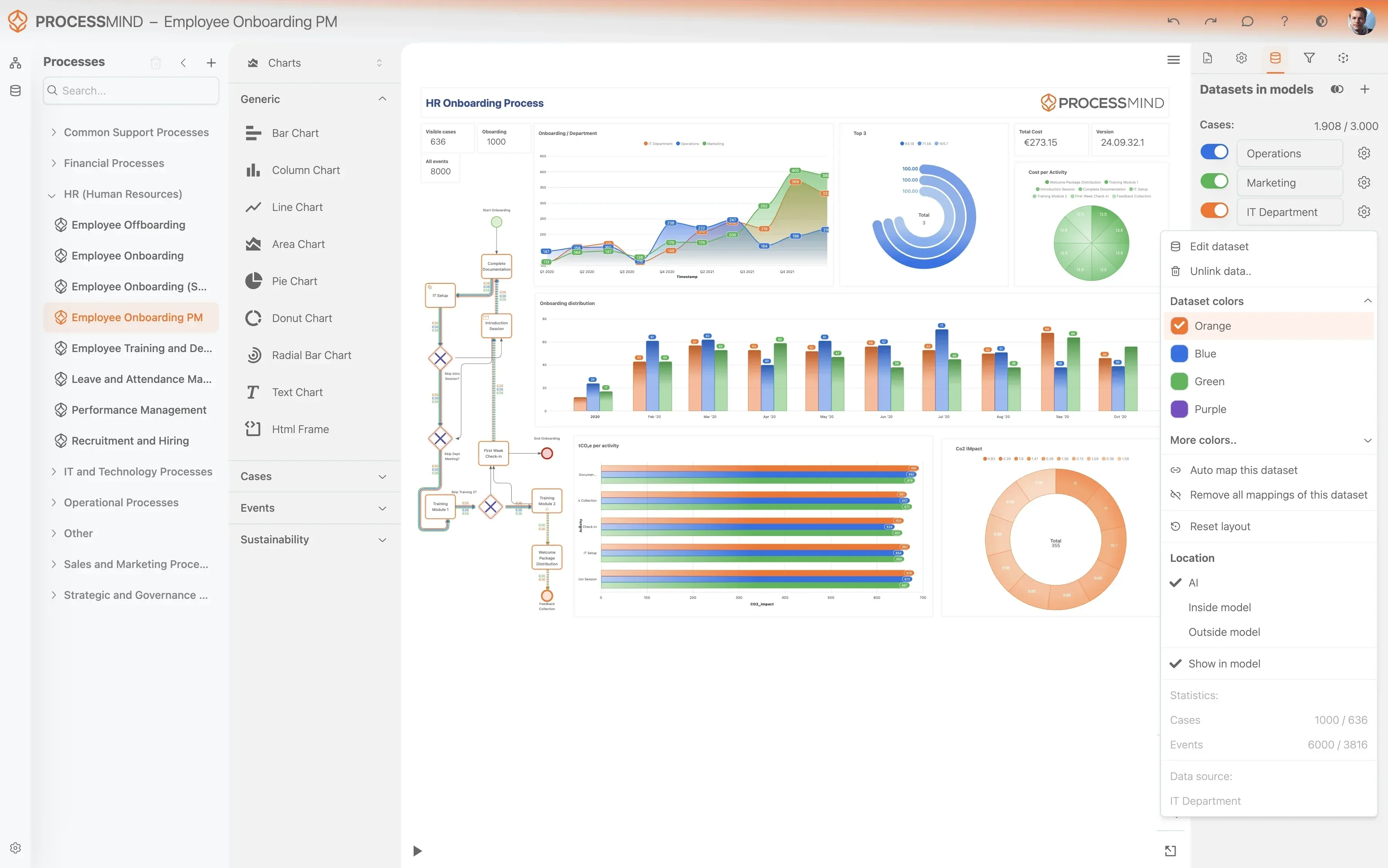
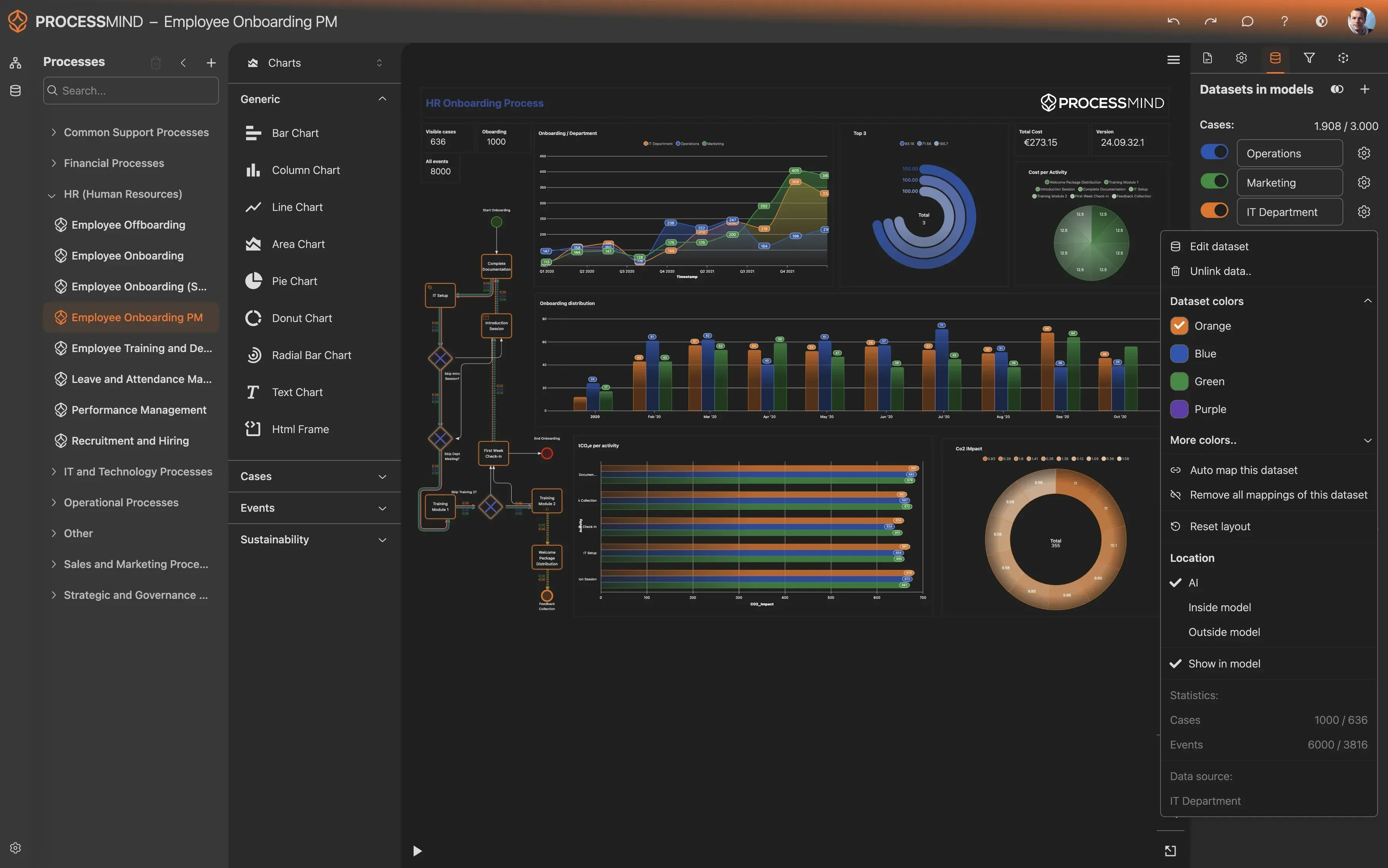
Slow requisition approvals can significantly impact your procurement process and lead to missed opportunities. Our platform helps you pinpoint exact inefficiencies, from initial request creation to final approval. Discover how to enhance compliance and accelerate your entire Purchase to Pay cycle, transforming your requisition process.

Download our pre-configured data template and address common challenges to reach your efficiency goals. Follow our six-step improvement plan and consult the Data Template Guide to transform your operations.

Show detailed description

Why Optimize Your Purchase Requisition Process?

The Purchase to Pay process begins with a requisition, and any inefficiencies here can ripple throughout your entire procurement cycle, leading to significant delays and increased costs. In the complex environment of SAP Ariba, while the system provides robust capabilities, the actual user behavior and workflow execution can introduce bottlenecks. A slow or non-compliant requisition process directly impacts your organization's ability to acquire necessary goods and services in a timely manner, affecting project timelines, operational efficiency, and even supplier relationships. The hidden costs of an inefficient requisition process include prolonged approval cycles, increased manual rework, missed savings opportunities, and potential compliance breaches that could expose your business to risk.

Optimizing your Purchase to Pay - Requisition process in SAP Ariba is not just about making things faster, it's about ensuring that every request for goods or services is handled with maximum efficiency, transparency, and adherence to company policies from the moment it's created until it results in an approved purchase order. Understanding the true flow, rather than the theoretical one, is the first step towards achieving this critical process optimization.

How Process Mining Unlocks Requisition Efficiency

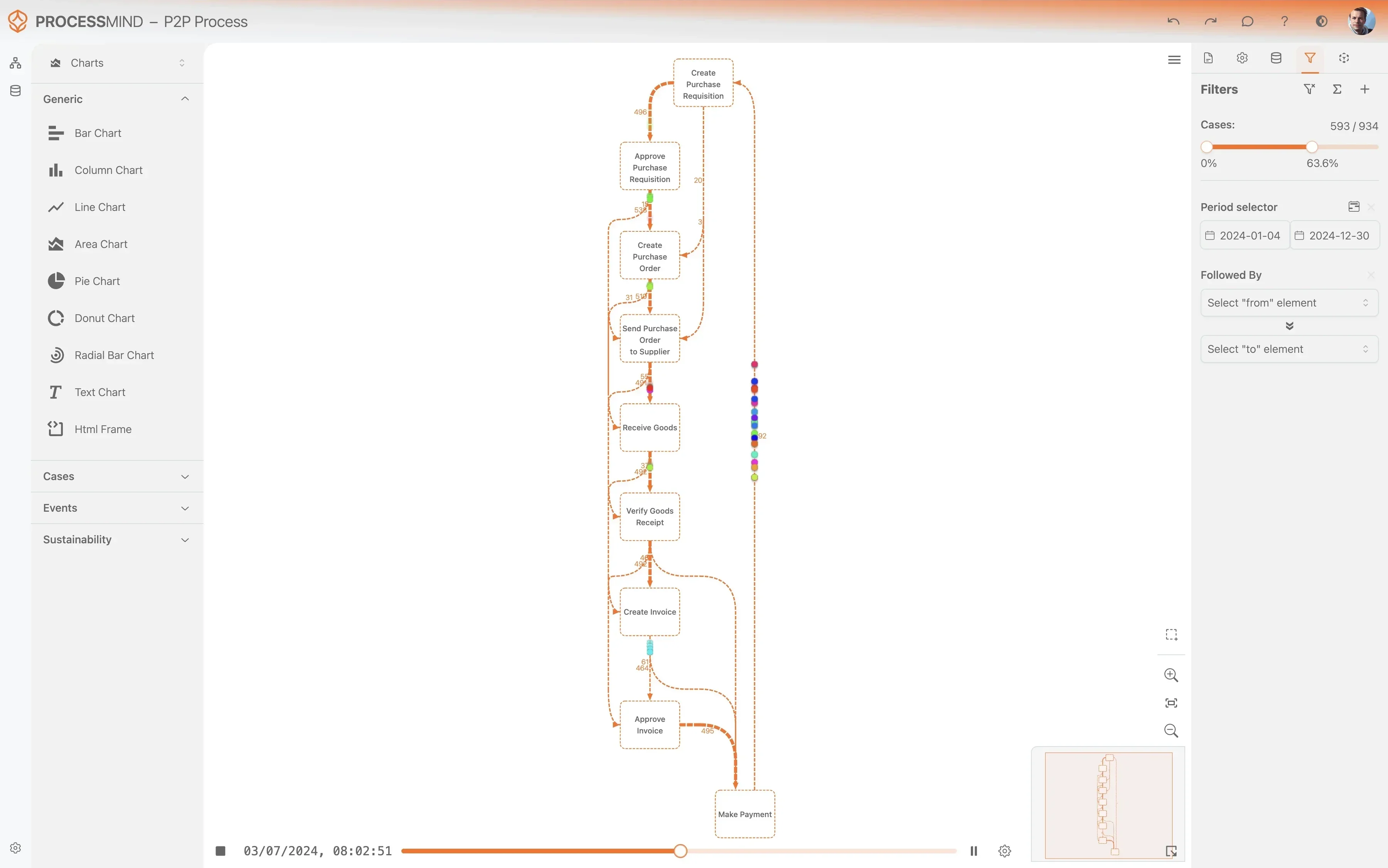
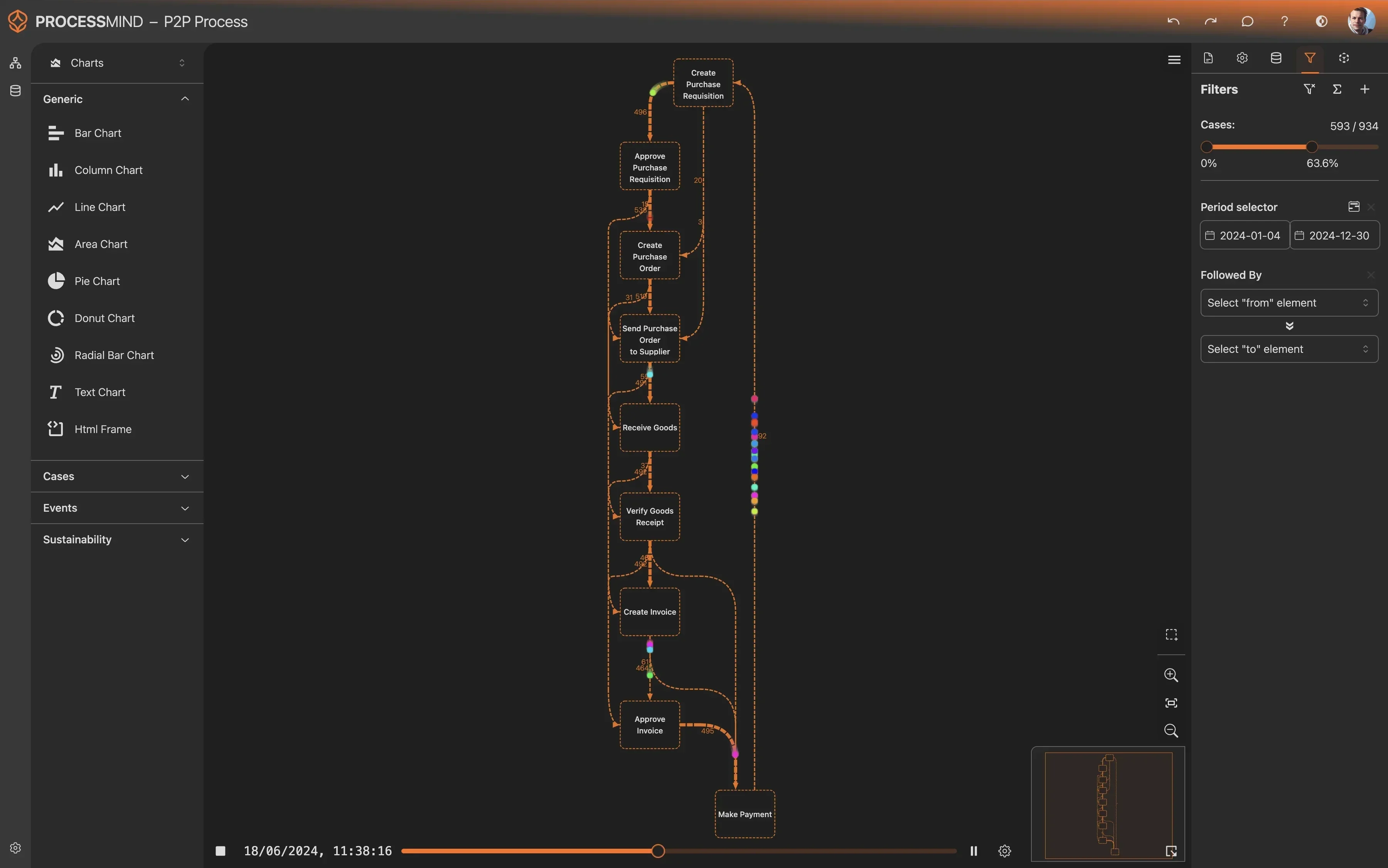
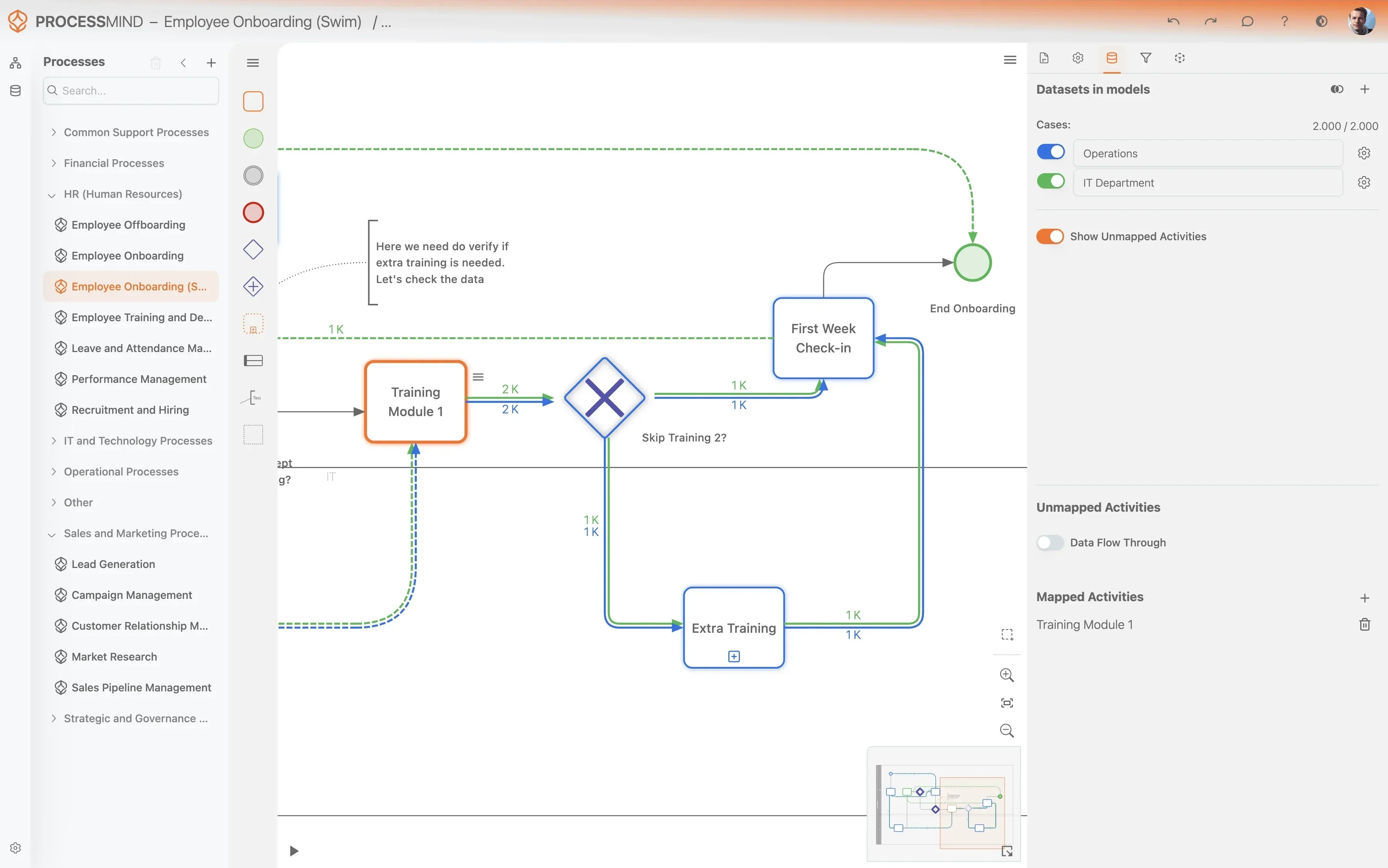
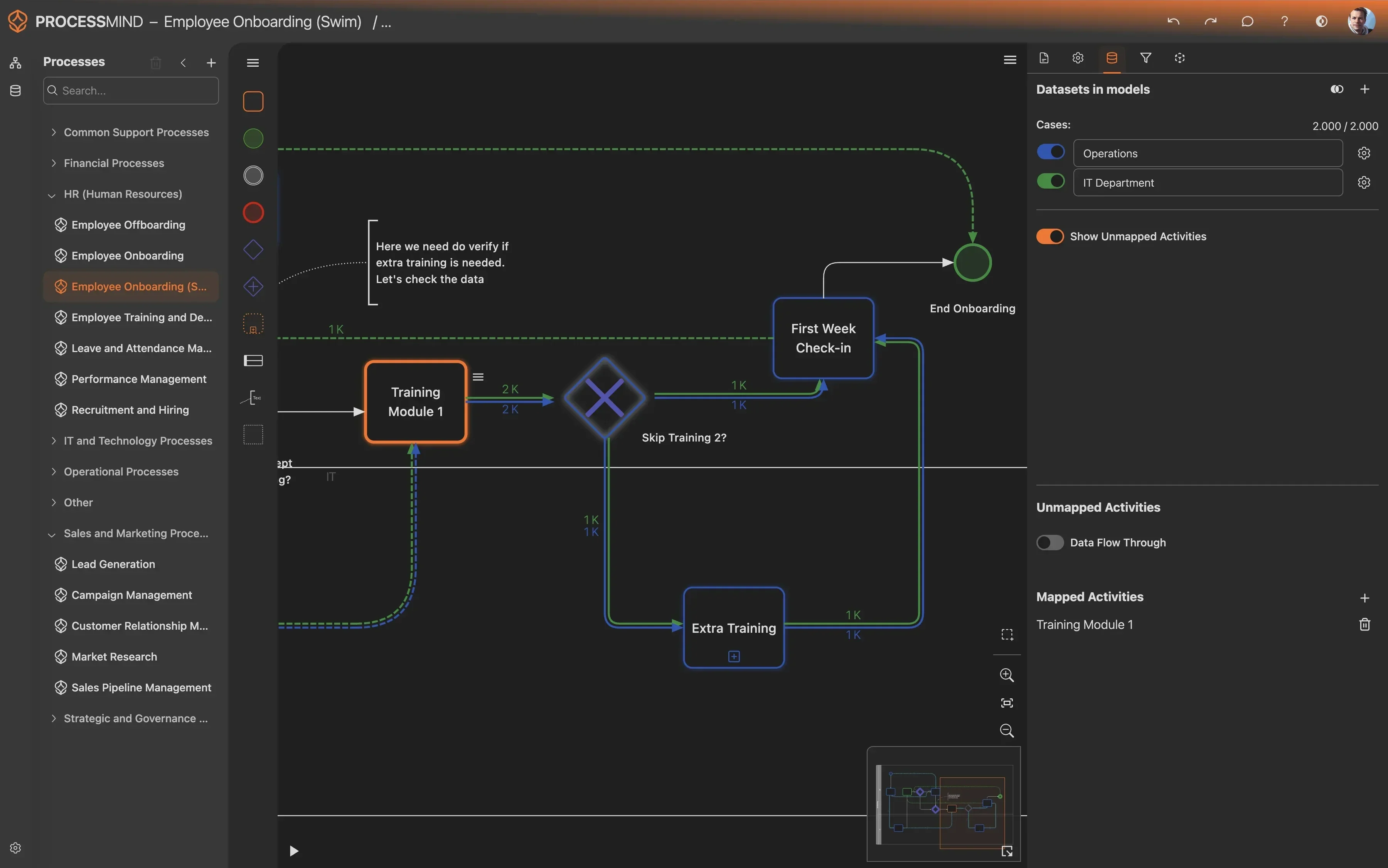
Process mining offers a powerful, data-driven approach to deconstruct and analyze your Purchase to Pay - Requisition journey within SAP Ariba. Instead of relying on assumptions or anecdotal evidence, process mining uses event logs from your SAP Ariba system to reconstruct the actual sequence of activities for every single purchase requisition. This allows you to visualize the complete end-to-end flow, uncovering all process variations, deviations, and hidden loops that traditional analysis methods often miss.

With process mining, you can specifically:

  • Pinpoint Exact Bottlenecks: Identify precisely where requisitions get stuck, whether it's a specific approval step, a particular department, or certain types of requests. This goes beyond knowing there's a delay, it tells you why and where within your SAP Ariba workflow.
  • Discover Hidden Process Variations: Uncover how requisitions are actually processed versus how they are designed to be processed. This includes identifying unauthorized shortcuts, unnecessary steps, or frequent amendments that add no value but consume time.
  • Analyze Approval Workflows: Gain deep insights into your multi-level approval processes. See which approvers cause delays, which approval paths are most efficient, and where redesign could streamline the flow without compromising control.
  • Assess Compliance: Verify that all requisitions adhere to your organization's purchasing policies, identifying instances of non-compliance, such as
Purchase to Pay - Requisition Requisition Management P2P Requisition Approval Workflow Procurement Efficiency Compliance Management Purchasing Department Lead Time Reduction

Common Problems & Challenges

Identify which challenges are impacting you

Prolonged approval cycles for purchase requisitions can significantly delay the start of critical procurement activities, impacting project timelines and potentially increasing operational costs. This leads to missed deadlines, inefficient resource allocation, and a slower response to business needs within your Purchase to Pay - Requisition process.
ProcessMind analyzes your SAP Ariba event logs to pinpoint exactly where requisitions are spending too much time, identifying specific approval steps, departments, or individual approvers acting as bottlenecks. By visualizing the actual flow, it uncovers deviations from expected approval times, allowing you to streamline workflows.

A high volume of amendments or rejections followed by resubmissions for purchase requisitions indicates inefficiencies and potential errors upstream in the creation or initial review phases. This constant rework consumes valuable time for both requesters and approvers, leading to frustration and extended lead times in your SAP Ariba Purchase to Pay - Requisition process.
ProcessMind traces the entire lifecycle of each requisition, highlighting those that undergo multiple amendments or rejections before final approval. It identifies the common reasons for these changes, such as incorrect data entry, unclear requirements, or policy misunderstandings, enabling targeted training and process adjustments.

Deviations from defined purchasing policies and approval matrix rules expose your organization to compliance risks, potential financial irregularities, and audit failures. When requisitions bypass required approval steps or go through unauthorized paths, it undermines governance in your SAP Ariba Purchase to Pay - Requisition process.
ProcessMind automatically compares actual requisition approval paths against predefined rules and ideal workflows. It visualizes all deviations, showing exactly where and when non-compliant activities occur, allowing you to enforce policies, improve internal controls, and ensure adherence to purchasing guidelines.

Specific stages, departments, or individuals often become choke points in the requisition approval process, causing backlogs and hindering the smooth flow of procurement. Identifying these critical bottlenecks is challenging without clear visibility into the end-to-end journey of each requisition in SAP Ariba.
ProcessMind uses your Purchase to Pay - Requisition data to map the true process flow, exposing where requisitions accumulate and identifying the exact steps or resources causing delays. This actionable insight allows you to reallocate resources, redesign workflows, or introduce automation to eliminate these bottlenecks.

Excessive manual intervention in creating and managing purchase requisitions can lead to increased human error, reduced efficiency, and higher operational costs. This often stems from complex forms, insufficient system integration, or a lack of user-friendly interfaces in your SAP Ariba Purchase to Pay - Requisition process.
ProcessMind quantifies the manual touchpoints within your requisition process by analyzing activity sequences and user interactions. It highlights areas where data re-entry, multiple system accesses, or unnecessary human checks are prevalent, guiding efforts to streamline form design and automate repetitive tasks.

Lack of real-time insight into the status and progress of purchase requisitions leaves stakeholders in the dark, leading to frequent inquiries, frustrated users, and an inability to accurately forecast procurement timelines. This obscures the efficiency of your SAP Ariba Purchase to Pay - Requisition flow.
ProcessMind provides a comprehensive, visual overview of every requisition's journey from creation to approval, showing its current status and identifying where it is in the workflow. This enhanced transparency empowers requesters and managers, reducing manual follow-ups and improving communication.

Delays in processing purchase requisitions can result in hidden costs such as expedited shipping fees for urgent items, missed early payment discounts, increased inventory holding costs due to delayed orders, and lost business opportunities. These financial impacts are often difficult to quantify in your Purchase to Pay - Requisition cycle.
ProcessMind correlates process lead times with financial data to reveal the monetary impact of inefficiencies in your SAP Ariba requisition process. By identifying the root causes of delays, it helps you understand where cost savings can be achieved through faster processing, better planning, and improved negotiation leverage.

An imbalanced distribution of approval tasks among approvers can lead to certain individuals or teams becoming overwhelmed, creating backlogs and significant delays for requisitions awaiting their review. This uneven workload impairs the overall efficiency of the Purchase to Pay - Requisition process in SAP Ariba.
ProcessMind analyzes approver activity logs to identify workload distribution imbalances and their impact on requisition processing times. It highlights approvers with disproportionately high volumes or those who consistently cause delays, informing decisions for workload rebalancing or workflow automation.

A consistently high rate of purchase requisition rejections indicates underlying issues such as unclear purchasing policies, inadequate training for requesters, incorrect item catalog usage, or misaligned departmental needs. This leads to wasted effort, extended procurement cycles, and frustrated internal customers.
ProcessMind identifies patterns in rejected requisitions, correlating rejections with specific requesters, departments, requisition types, or approval steps. By understanding common rejection reasons and their origins, you can implement targeted improvements, improve requisition quality, and reduce rework in SAP Ariba.

When requisitions marked as 'urgent' fail to receive expedited processing, it can severely impact time-sensitive projects, lead to production stoppages, or necessitate costly last-minute workarounds. This highlights a disconnect between urgency indicators and actual process execution in SAP Ariba's P2P Requisition flow.
ProcessMind tracks the lifecycle of urgent requisitions, comparing their actual lead times against standard or expedited benchmarks. It identifies specific points where urgent requests get stuck, revealing whether delays are due to workflow design, resource availability, or adherence to priority protocols, allowing for targeted intervention.

Workflows that include redundant or non-value-adding approval steps add unnecessary complexity and time to the requisition process, increasing operational costs without contributing to better outcomes. These superfluous steps prolong the cycle time of your SAP Ariba Purchase to Pay - Requisition process.
ProcessMind maps out all executed paths, revealing deviations where requisitions undergo more approval steps than necessary or loop back through prior stages. It helps identify opportunities to simplify the workflow, eliminate redundant checks, and optimize the number of approval touchpoints for efficiency.

Typical Goals

Define what success looks like

This goal aims to significantly shorten the time it takes for a purchase requisition to move from submission to final approval. Faster approvals in SAP Ariba lead to quicker procurement cycles, ensuring that critical goods and services are acquired promptly, reducing project delays, and improving operational responsiveness across the organization.ProcessMind uncovers all approval workflows and identifies where requisitions get stuck, for how long, and why. By analyzing activity durations and resource allocation within the Purchase to Pay - Requisition process, it highlights specific bottlenecks and inefficient steps, providing data-driven insights to streamline approval stages and achieve targeted time reductions.

Reducing the frequency with which purchase requisitions are amended after initial submission is crucial for efficiency. Each amendment, whether in SAP Ariba or via other channels, adds rework, extends the overall cycle time, and consumes valuable resources from both requesters and approvers. Achieving this goal improves data accuracy and accelerates the entire Purchase to Pay - Requisition flow.ProcessMind visually maps every path a requisition takes, including all amendment loops. It quantifies amendment occurrences, identifies common triggers for changes, and reveals stages where information is frequently incomplete or incorrect. These insights enable targeted training, form redesign, or workflow adjustments to prevent unnecessary revisions.

This goal focuses on verifying that the Purchase to Pay - Requisition process strictly adheres to internal purchasing policies and external regulations. Non-compliant requisitions in SAP Ariba can lead to financial risks, audits, maverick spending, and reputational damage. Achieving high compliance ensures accountability and strengthens financial control.ProcessMind provides a comprehensive overview of actual requisition paths versus predefined compliance rules. It automatically flags deviations, unauthorized approvals, or skipped steps within the Purchase to Pay - Requisition process, quantifying non-compliance instances. This visibility allows organizations to identify root causes and enforce policy adherence effectively.

Streamlining and simplifying the routes a purchase requisition takes through its approval stages is vital for efficiency. Complex or redundant approval paths in SAP Ariba introduce unnecessary delays and increase the potential for errors. Optimizing these paths ensures requisitions are reviewed by the right people at the right time, enhancing overall process flow.ProcessMind automatically discovers and visualizes all actual approval paths for requisitions, comparing them against designed workflows. It pinpoints sub-optimal routing, identify bottlenecks caused by specific approvers or departments, and highlights unnecessary steps or loops. This analysis enables data-driven redesign of approval matrices for the Purchase to Pay - Requisition process.

Aiming to reduce the manual effort involved in initiating purchase requisitions means automating repetitive or data-intensive activities. Manual creation in SAP Ariba is prone to errors and takes significant time away from more strategic tasks. Increased automation frees up resources, improves data quality, and accelerates the initial phase of procurement.ProcessMind quantifies the manual effort and time spent on various requisition creation activities. It identifies frequent data entries, recurring patterns, and common information gaps that could be addressed through system integrations or automated form pre-population. This insight provides clear targets for automation initiatives within the Purchase to Pay - Requisition process.

Improving the ability to track the real-time status and location of any purchase requisition throughout its lifecycle is essential for proactive management. Limited visibility in SAP Ariba leads to constant inquiries, missed deadlines, and an inability to predict procurement outcomes. Greater transparency empowers stakeholders and improves decision-making.ProcessMind provides an end-to-end view of every purchase requisition journey, showing its current state, elapsed time at each step, and who is responsible. It delivers clear, real-time insights into the Purchase to Pay - Requisition process, allowing users to instantly identify where a requisition is and what action is pending, without manual tracking.

This goal aims to reduce the overall operational expenses associated with creating, processing, and approving purchase requisitions. High processing costs in SAP Ariba stem from inefficiencies, rework, extended cycle times, and excessive manual intervention. Achieving cost reduction directly impacts the bottom line and improves financial performance.ProcessMind quantifies the cost impact of various process variations and bottlenecks within the Purchase to Pay - Requisition process. By identifying activities with high resource consumption, frequent reworks, or prolonged delays, it highlights specific areas where cost-saving measures, such as automation or process simplification, can be most effective.

Ensuring an even distribution of approval tasks among relevant personnel prevents bottlenecks and burnout. Uneven workloads can lead to delays for requisitions assigned to overloaded approvers in SAP Ariba, while others remain underutilized. Balancing this workload ensures consistent processing times and maintains operational flow.ProcessMind analyzes the workload distribution among all approvers involved in the Purchase to Pay - Requisition process. It identifies individuals or groups with consistently high or low approval volumes and average processing times. This data enables organizations to re-allocate responsibilities, reconfigure approval matrices, or implement load-balancing strategies to optimize resource utilization.

Reducing the percentage of purchase requisitions that are rejected after submission indicates improvements in initial data quality, adherence to policies, and clarity of requirements. High rejection rates in SAP Ariba lead to wasted effort, frustration, and significant delays in obtaining necessary goods and services. Lowering this rate boosts efficiency and requester satisfaction.ProcessMind identifies the common reasons and stages where requisitions are rejected, whether due to incorrect information, policy violations, or budget issues. By analyzing the attributes of rejected Purchase to Pay - Requisition cases, it helps pinpoint systemic issues or training needs for requesters and approvers, allowing for targeted preventive actions.

Ensuring that urgent purchase requisitions are identified and processed with expedited pathways is critical for business continuity and critical needs. Delays in urgent requests, even within SAP Ariba's standard workflows, can have significant negative impacts, from production halts to missed business opportunities. This goal prioritizes critical procurement.ProcessMind visualizes and quantifies the actual lead times for requisitions marked as urgent, comparing them against standard or target times. It highlights where urgent Purchase to Pay - Requisition cases deviate from expected fast-track processes, identifies specific delays, and suggests workflow adjustments or dedicated resources to ensure priority handling.

This goal focuses on identifying and removing redundant or non-value-adding activities from the purchase requisition process. Extra steps in SAP Ariba extend cycle times, increase operational costs, and add complexity without contributing to the final outcome. Streamlining the process enhances efficiency and user experience.ProcessMind provides a comprehensive discovery of all actual process variations, clearly showing activities that occur but do not contribute to a compliant and efficient requisition approval. By visualizing common deviations and non-standard paths in the Purchase to Pay - Requisition process, it enables data-driven decisions to simplify and standardize workflows.

The 6-Step Improvement Path for Purchase Requisition

1

Download the Template

What to do

Get the Excel template designed for Purchase Requisition data. This ensures your data will be in the correct structure for analysis.

Why it matters

Using the right template prevents data quality issues and simplifies subsequent analysis, setting a strong foundation for improvement.

Expected outcome

A ready-to-fill Excel template specific to SAP Ariba Purchase Requisition data.

WHAT YOU WILL GET

Uncover Hidden Insights in Your SAP Ariba Requisition Process

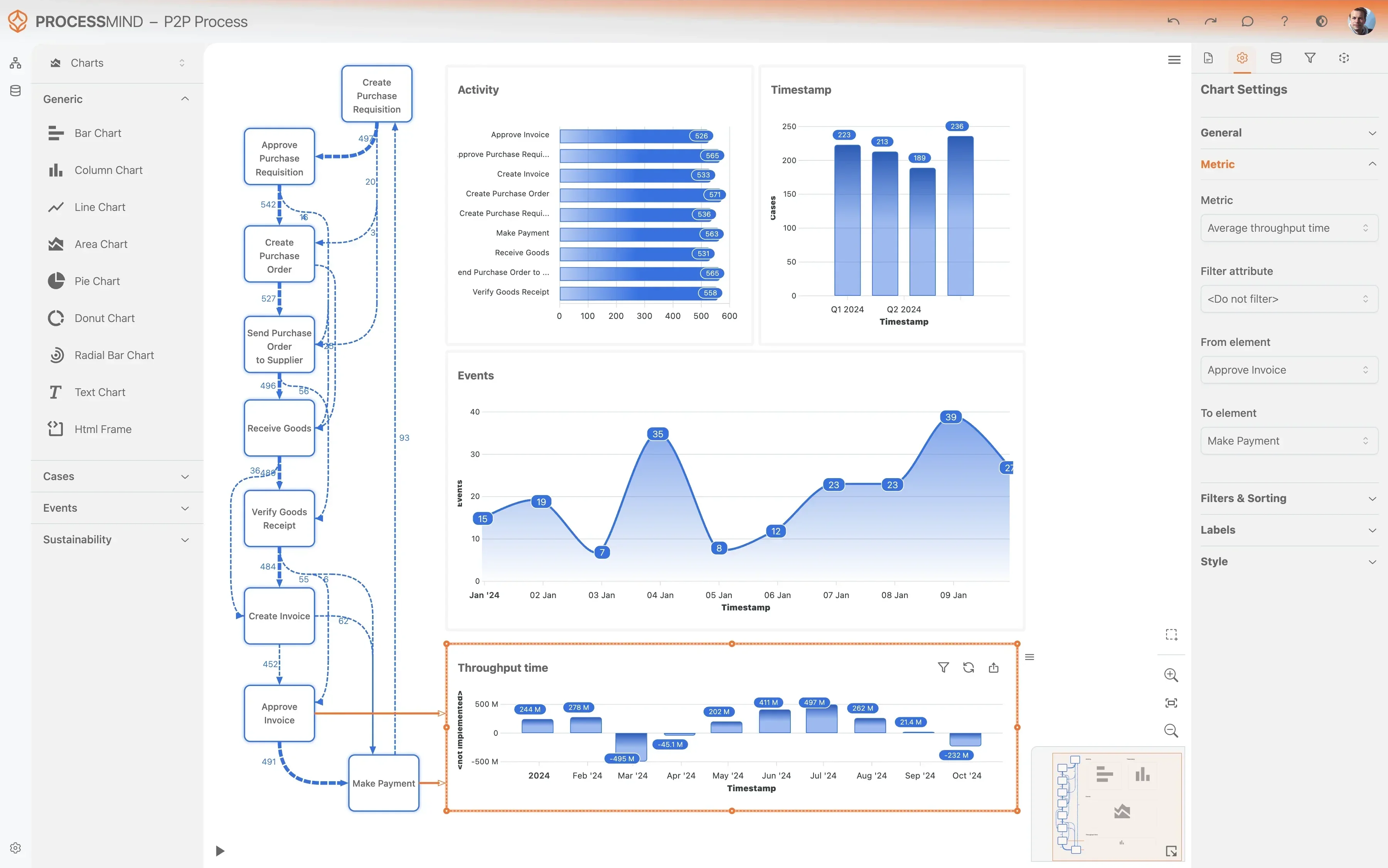
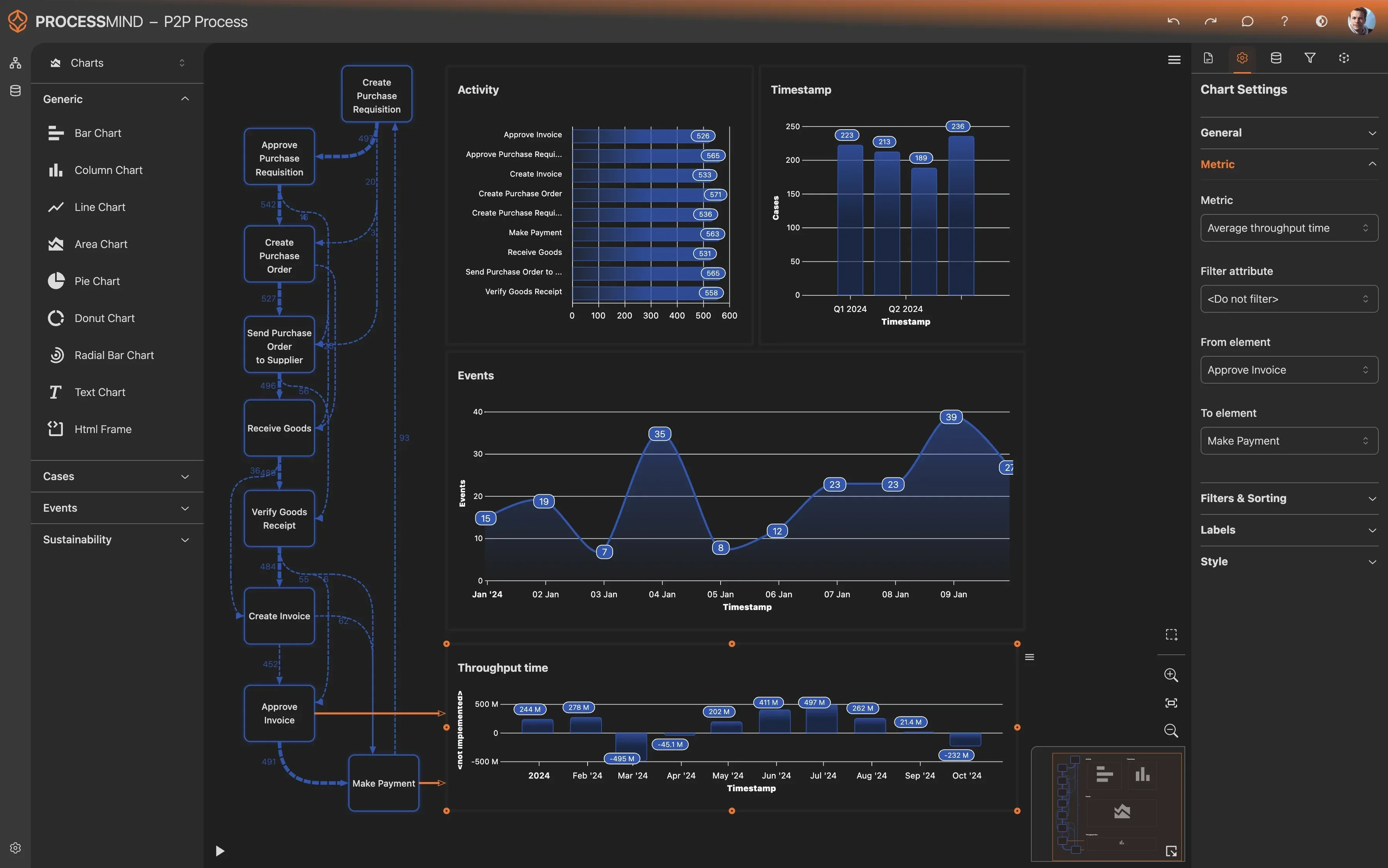
ProcessMind reveals the true journey of every requisition, from creation to approval, providing clear visualizations of delays and deviations to optimize your Purchase to Pay.
  • Identify exact requisition bottlenecks
  • Ensure SAP Ariba requisition compliance
  • Accelerate Purchase to Pay cycle times
  • Visualize all requisition approval steps
Discover your actual process flow
Identify bottlenecks and delays
Analyze process variants
Design your optimized process

TYPICAL OUTCOMES

What Organizations Achieve with Requisition Process Mining

These outcomes represent the measurable benefits organizations typically realize by leveraging process mining to analyze their Purchase to Pay requisition process data, particularly from SAP Ariba. By identifying inefficiencies and bottlenecks using Purchase Requisition ID as the case identifier, businesses can optimize their workflows.

0 %
Faster Approval Cycles

Average reduction in approval time

By identifying and eliminating bottlenecks in the approval workflow, organizations can significantly speed up how quickly requisitions are processed and approved, leading to faster procurement.

0 %
Enhanced Policy Compliance

Increase in compliant requisitions

Process mining helps ensure requisitions follow predefined approval paths and policy rules, reducing compliance risks and ensuring adherence to internal purchasing guidelines.

0 %
Reduced Requisition Rework

Decrease in amendment frequency

Minimize the number of requisitions requiring amendments or rejections by identifying root causes of rework, leading to smoother processing, less manual effort, and fewer delays.

0 %
Lower Processing Costs

Reduction in overall requisition costs

Eliminate unnecessary steps, reduce rework, and streamline the entire approval process to significantly cut down on the operational expenses associated with managing requisitions.

0 %
Streamlined Approval Paths

Fewer non-value adding steps

Identify and remove redundant or non-standard approval steps that prolong the requisition cycle, making the process more efficient, transparent, and easier for users.

Results vary based on process complexity and data quality. These figures represent typical improvements observed across implementations.

FAQs

Frequently asked questions

Process mining identifies actual process flows, pinpoints bottlenecks, and uncovers hidden inefficiencies in your Purchase to Pay, P2P, Requisition process within SAP Ariba. It visualizes every step, helping you understand where delays, rework, or non-compliant activities occur. This deeper insight allows for data-driven decisions to streamline your operations.

To perform process mining for SAP Ariba Requisitions, you primarily need an event log dataset. This log should include a unique case identifier, typically the Purchase Requisition ID, an activity name for each step, and a precise timestamp for when each activity occurred. Additional data, such as resource information or cost data, can enhance the analysis.

You can expect significant improvements in areas like reduced requisition approval times, minimized rework due to amendments, and increased policy compliance. Initial insights into process deviations and bottlenecks can often be identified within weeks of data ingestion. Full optimization and measurable impact, such as a 15% cost reduction or 30% time reduction, develop over a few months as improvements are implemented.

Process mining analyzes the timestamps and sequences of activities in your requisition process to map out actual paths taken. It can precisely measure dwell times between steps, highlight frequent loops indicating rework, and identify deviations from standard approval paths that cause delays. This allows you to pinpoint the exact stages and actors contributing to inefficiencies.

Yes, process mining is highly effective at identifying non-compliant requisition approvals and policy deviations. By comparing the actual process execution against predefined rules and ideal process models, it can automatically flag instances where requisitions bypassed required steps or were approved by unauthorized personnel. This ensures that 95% requisition policy compliance is achievable.

Process mining tools are designed to provide actionable insights for both technical and business stakeholders. While data extraction and initial setup may involve technical expertise, the visualizations and analysis dashboards are intuitive. This allows procurement managers, process owners, and compliance officers to easily understand bottlenecks and drive improvements without deep technical knowledge.

The primary technical prerequisite is secure access to your SAP Ariba data to extract the necessary event logs. This typically involves using SAP Ariba's reporting or integration capabilities, such as APIs or data exports. You will also need a process mining software platform to ingest and analyze this data.

An event log is a structured collection of data detailing every step, or "event", taken for each individual Purchase Requisition ID within SAP Ariba. It is crucial because it acts as the raw material for process mining, allowing the software to reconstruct and visualize the entire end-to-end journey of every requisition. Without an accurate event log, process mining cannot function.

Standard SAP Ariba reporting typically provides predefined metrics and aggregates based on anticipated data structures. Process mining, conversely, discovers the actual, as-is process flows directly from event data, revealing all variations and deviations, not just the expected ones. This allows it to uncover hidden inefficiencies and non-compliance that traditional reports might miss.

By analyzing event logs, process mining can track how long requisitions spend with individual approvers and identify specific approval paths that frequently lead to delays. This allows you to visualize workload distribution, pinpoint overloaded approvers, and uncover bottlenecks in the approval hierarchy. Such insights enable targeted adjustments to balance workload and accelerate urgent requisition processing.

Stop Delays: Optimize Your Purchase to Pay Requisition Process

Pinpoint SAP Ariba inefficiencies and reduce cycle time by 30%.

Start Your Free Trial

No credit card required, setup is quick and easy.