Improve Your Credit Management & Collections

Select a process
Choose a process to continue working in your connected workspace.
Optimize HighRadius Credit and Collections for Faster Cash Flow
Ineffective credit and collections processes can lead to significant delays in payment and increased outstanding debt. Our platform helps you pinpoint critical process bottlenecks and identify variations that hinder efficiency. By analyzing key activities, you can implement targeted improvements to accelerate cash flow and optimize operational performance.
Download our pre-configured data template and address common challenges to reach your efficiency goals. Follow our six-step improvement plan and consult the Data Template Guide to transform your operations.
Show detailed description
Why Optimize Your HighRadius Credit Management & Collections Process?
Effectively managing credit and collections is foundational to your organization's financial health. Inefficient processes within Credit Management & Collections can lead to substantial financial drain, impacting everything from cash flow and liquidity to bad debt reserves and customer satisfaction. Even with advanced systems like HighRadius Autonomous Receivables, inherent process inefficiencies, manual workarounds, and compliance gaps can persist below the surface, eroding the benefits of your technology investment. Delayed payments tie up working capital, increase Days Sales Outstanding (DSO), and necessitate more intensive, costly collection efforts. Furthermore, a disjointed credit-to-cash cycle can strain customer relationships, particularly when dunning procedures are inconsistent or misapplied. Understanding the true operational flow is the first step toward significant financial and operational improvements.
How Process Mining Enhances HighRadius Credit & Collections
Process mining offers a unique, data-driven lens to analyze the actual performance of your Credit Management & Collections within HighRadius. By leveraging your HighRadius data, specifically focusing on the invoice number as the case identifier, process mining reconstructs the complete, end-to-end journey of every single invoice. From the initial credit limit request and approval, through invoice generation, customer notification, payment due dates, and any subsequent collection activities, including overdue reminders, dunning procedures, collection calls, payment receipt, and dispute resolution, every step is mapped. This comprehensive perspective reveals exactly how your processes actually run, not just how they are designed to run. You can pinpoint specific bottlenecks, such as prolonged credit approval times or delays between invoice generation and its delivery to the customer. It allows you to analyze the effectiveness of your dunning strategies, identifying whether reminders are sent timely and if they lead to prompt payments. By visualizing every path an invoice takes, process mining empowers you to make informed decisions for process optimization.
Key Improvement Areas Identified Through Process Mining
Applying process mining to your Credit Management & Collections in HighRadius uncovers crucial areas for improvement:
- Credit Approval Cycle Time: Identify where credit limit requests stall and understand the root causes of delays in approving credit, which can impact sales cycles.
- Invoice-to-Payment Efficiency: Analyze the time taken from invoice generation and sending to actual payment receipt, highlighting gaps that extend the credit-to-cash cycle.
- Dunning Effectiveness: Evaluate if overdue reminders and dunning procedures are initiated promptly and if they consistently lead to payment. Discover if certain dunning levels are less effective or if specific customer segments respond differently.
- Collection Strategy Optimization: Understand which collection activities, such as specific call scripts or email sequences, are most successful for different types of overdue invoices or customer profiles. This enables you to refine and automate your collection strategies in HighRadius.
- Dispute Resolution: Map the lifecycle of disputes, from registration to resolution, to identify bottlenecks that prolong resolution times, preventing prompt settlement of invoices.
- Cash Application Accuracy & Speed: Monitor the efficiency of payment posting and reconciliation after payment is received, ensuring timely and accurate cash application.
- Automation Opportunities: Pinpoint repetitive, manual tasks that can be automated within HighRadius or integrated systems, freeing up your team for more strategic activities.
Expected Outcomes of Process Optimization
By leveraging process mining for your HighRadius Credit Management & Collections, you can expect significant, measurable benefits:
- Reduced Days Sales Outstanding (DSO): Streamlining the credit-to-cash cycle directly contributes to a lower DSO, freeing up working capital faster.
- Improved Cash Flow: Accelerating collections and reducing payment delays enhances liquidity and strengthens your financial position.
- Lower Operational Costs: By identifying and eliminating manual inefficiencies and bottlenecks, you can optimize resource allocation and reduce the cost of collections.
- Reduced Bad Debt: Proactive credit assessment and effective, timely dunning and collection efforts minimize the risk of invoices turning into bad debt.
- Enhanced Customer Relationships: Consistent and transparent credit and collections processes lead to better customer experiences and fewer disputes.
- Increased Compliance: Ensure your organization consistently adheres to internal credit policies and external regulations.
- Faster Credit Approval: Optimize the initial stages to support sales and customer onboarding efficiently.
Getting Started with Credit Management & Collections Process Mining
Embarking on the journey to optimize your Credit Management & Collections process in HighRadius begins with understanding your current state. Process mining provides the clarity needed to transform raw data into actionable insights, enabling you to identify precisely how to improve Credit Management & Collections and reduce Credit Management & Collections cycle time. By adopting this data-driven approach, you empower your teams to implement targeted process improvements, leading to tangible financial gains and operational excellence. Unlock the full potential of your HighRadius investment and ensure your credit-to-cash cycle is as efficient and effective as possible.
The 6-Step Improvement Path for Credit Management & Collections
Download the Template
What to do
Obtain the specialized Excel template designed for Credit Management & Collections data. This ensures your HighRadius data is structured correctly for analysis.
Why it matters
A standardized template streamlines data preparation, reducing errors and ensuring that all critical credit-to-cash metrics are captured accurately.
Expected outcome
A ready-to-fill Excel template optimized for HighRadius Credit Management data.
Export Your HighRadius Data
What to do
Extract 3-6 months of historical Credit Management & Collections data from your HighRadius system. Populate the downloaded template with this real-world operational data.
Why it matters
Using recent historical data provides a comprehensive view of past performance, revealing trends and specific bottlenecks in your credit processes.
Expected outcome
A populated template containing your Credit Management & Collections data, ready for analysis.
Upload Your Dataset
What to do
Securely upload your completed HighRadius data template to the ProcessMind platform. The system will automatically begin processing your dataset for analysis.
Why it matters
A secure and efficient upload initiates the automated analysis phase, ensuring your data is quickly transformed into actionable insights without manual effort.
Expected outcome
Your HighRadius data securely uploaded and undergoing initial automated process analysis.
Analyze Your Process
What to do
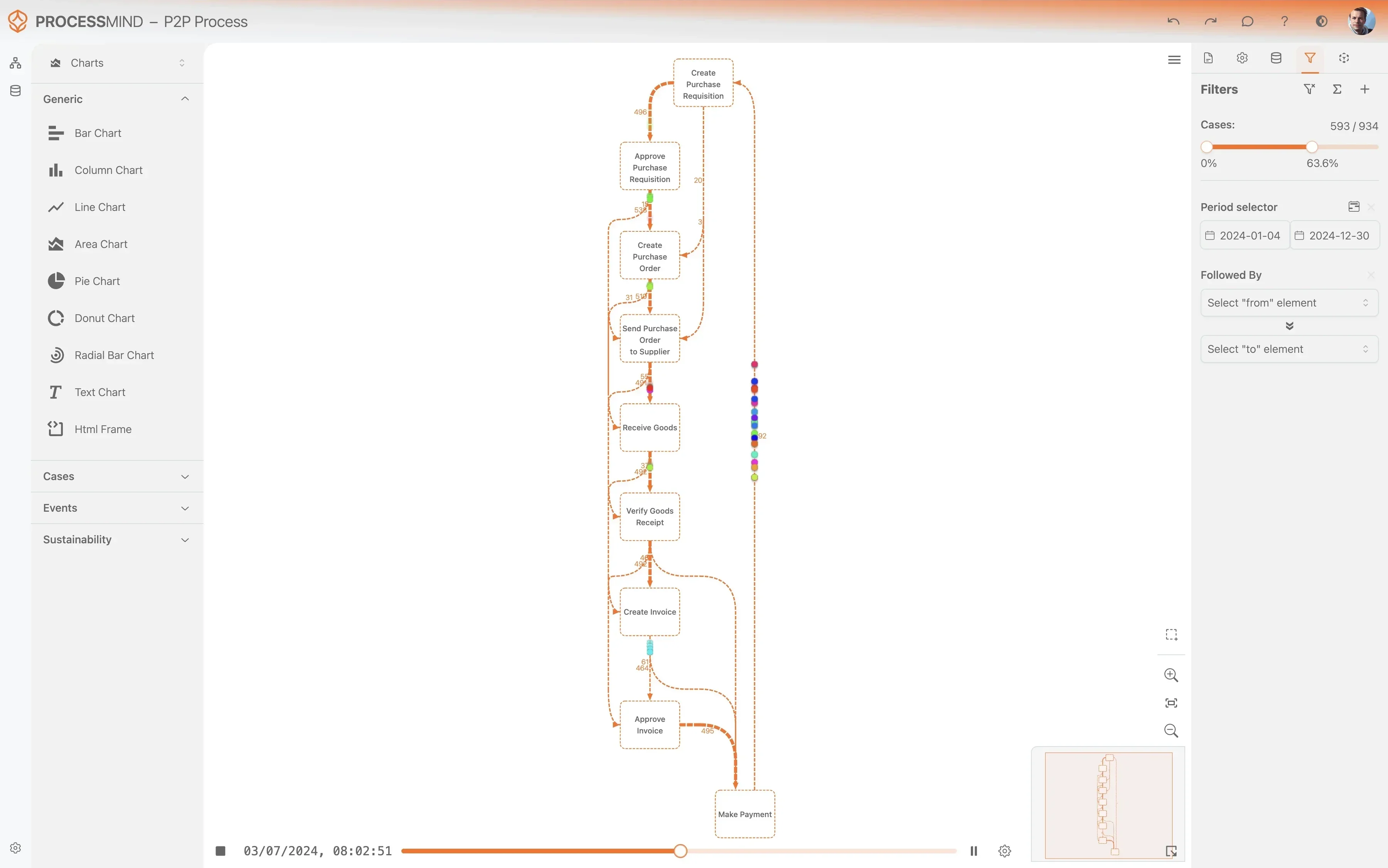
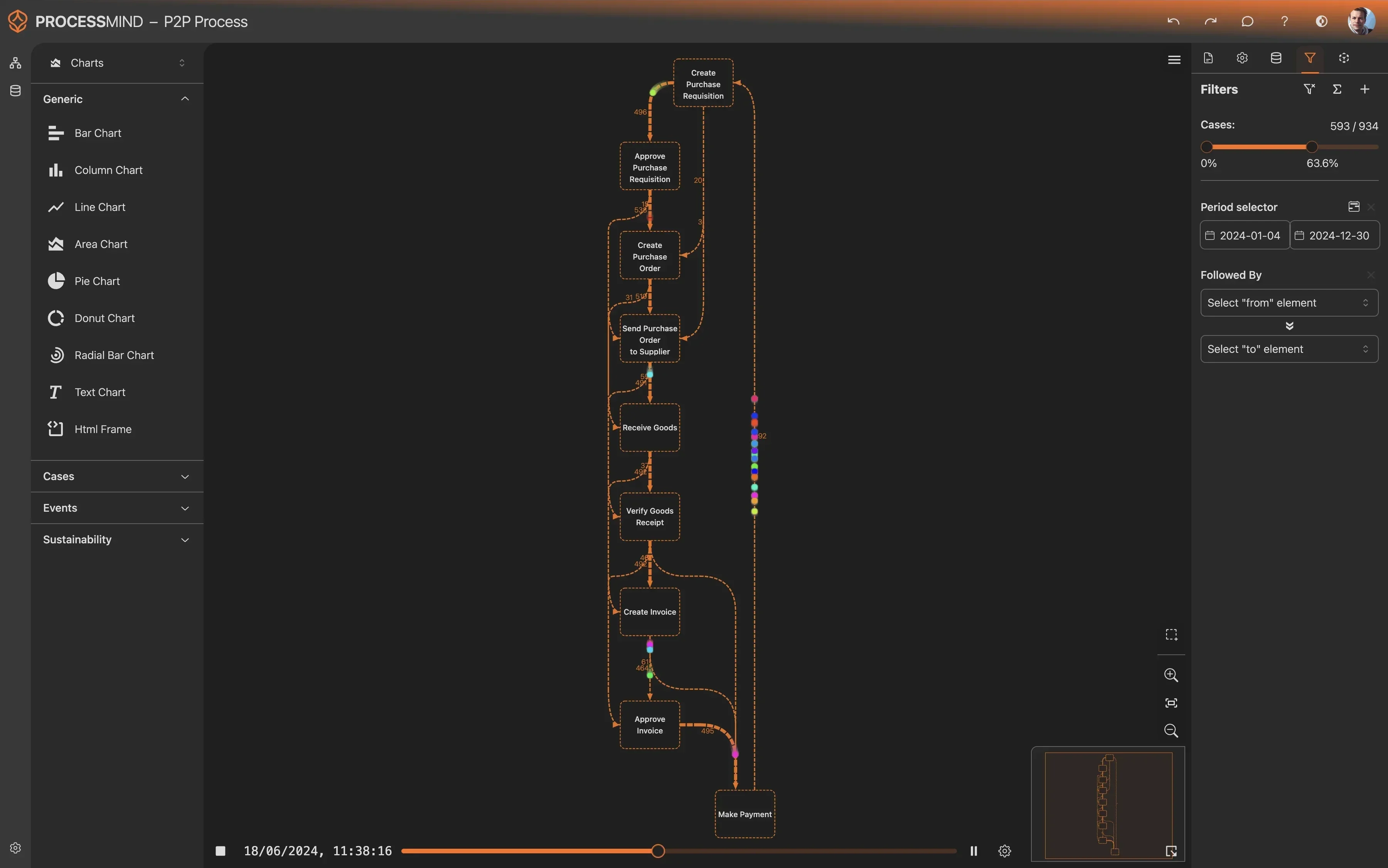
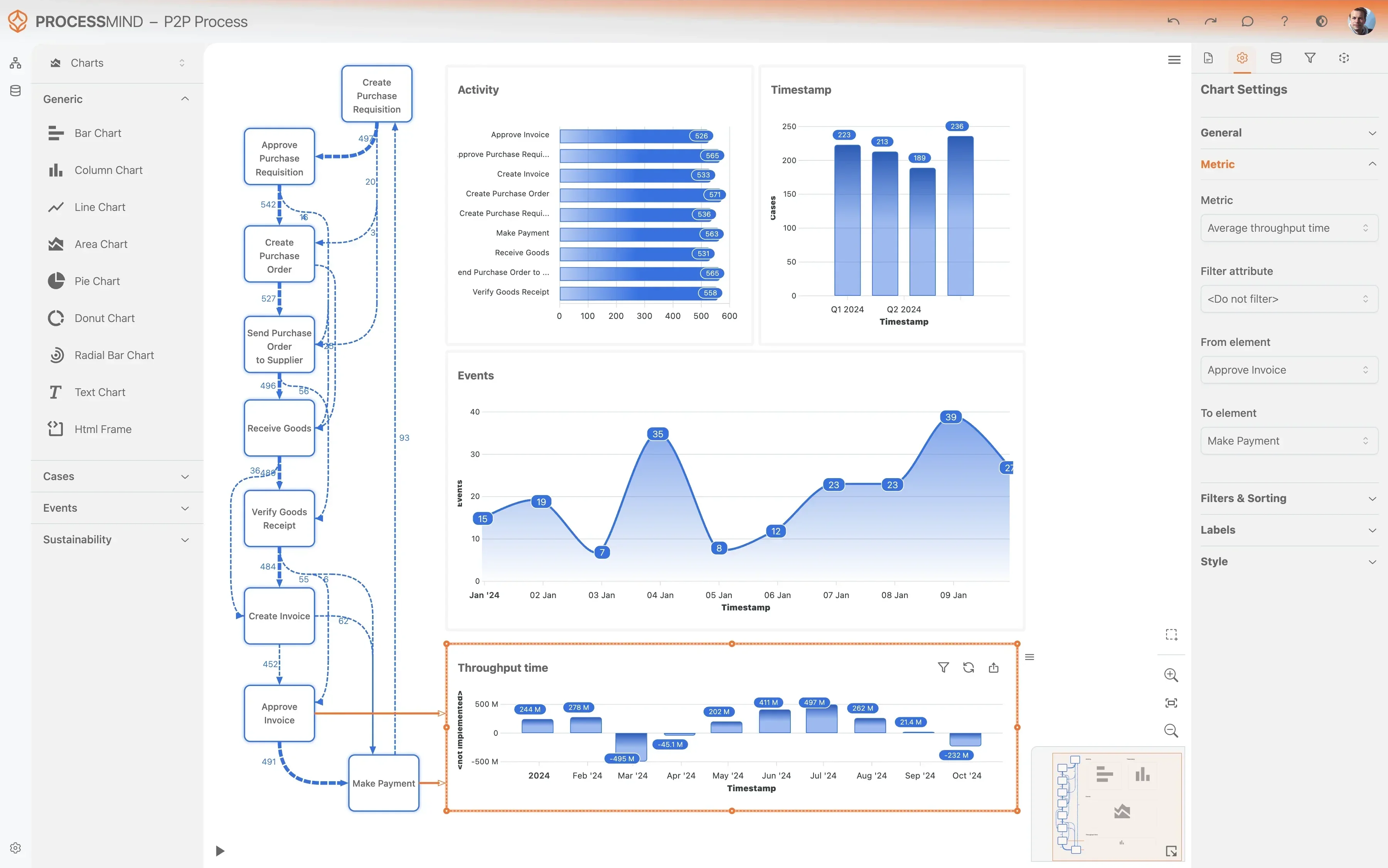
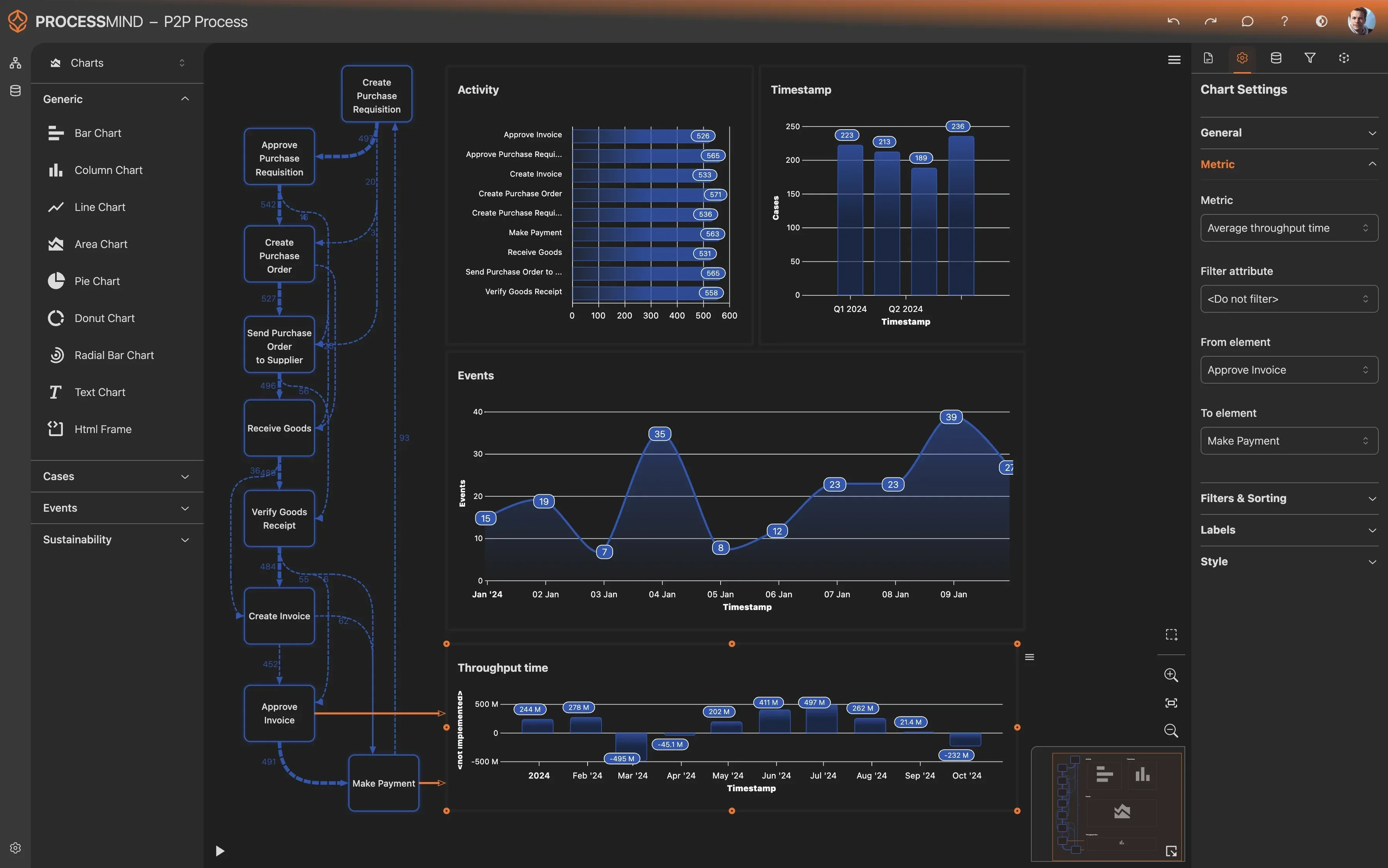
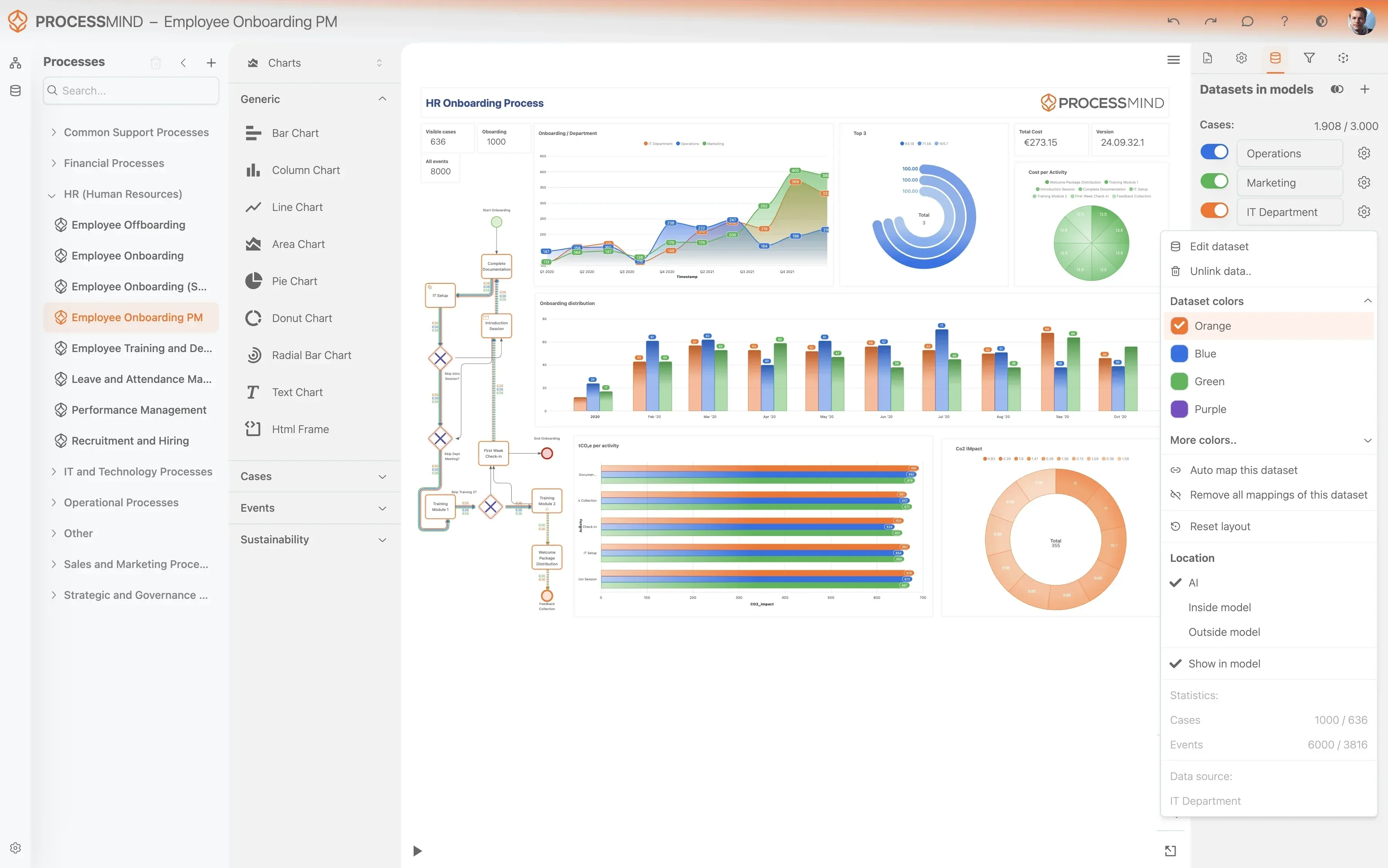
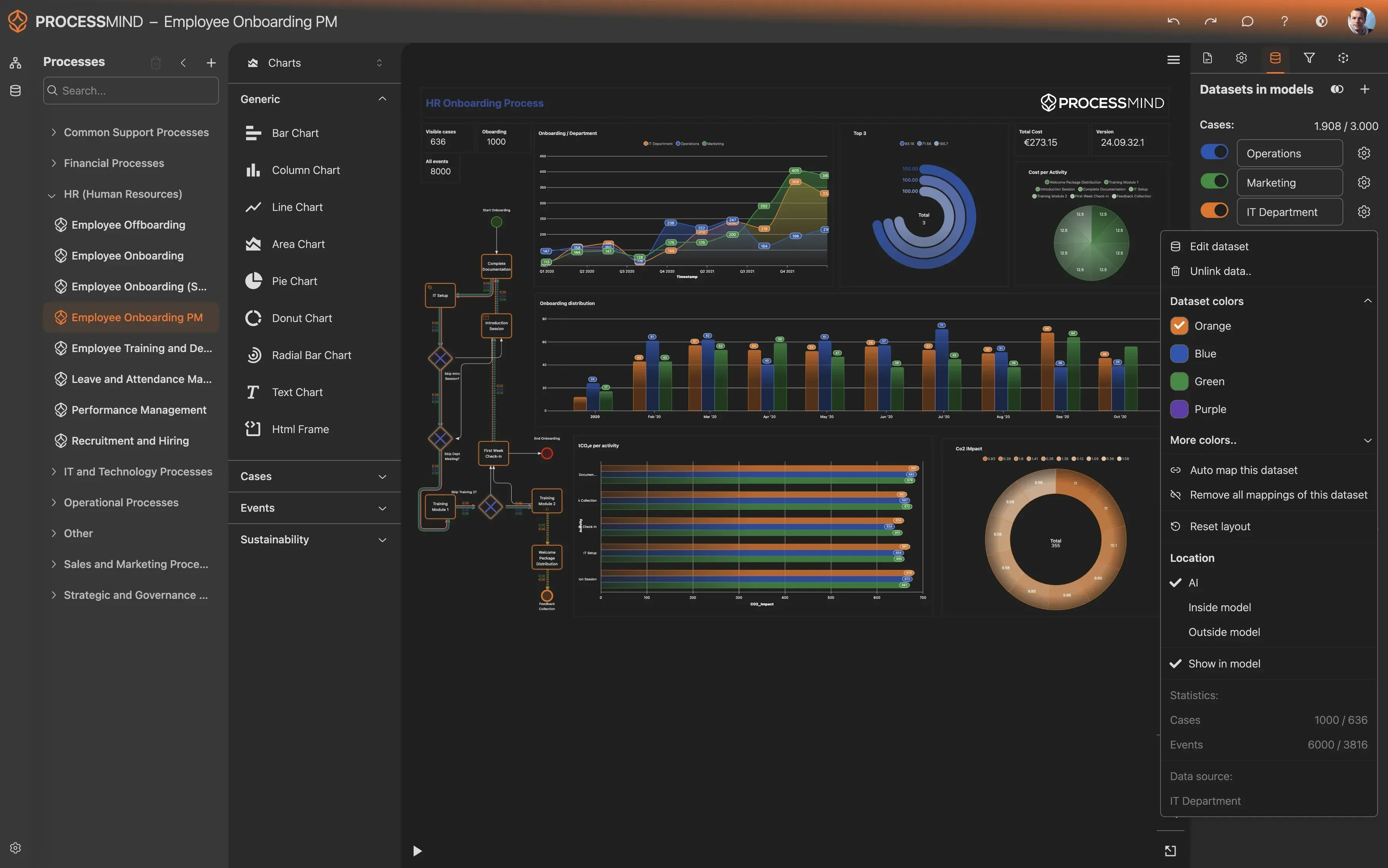
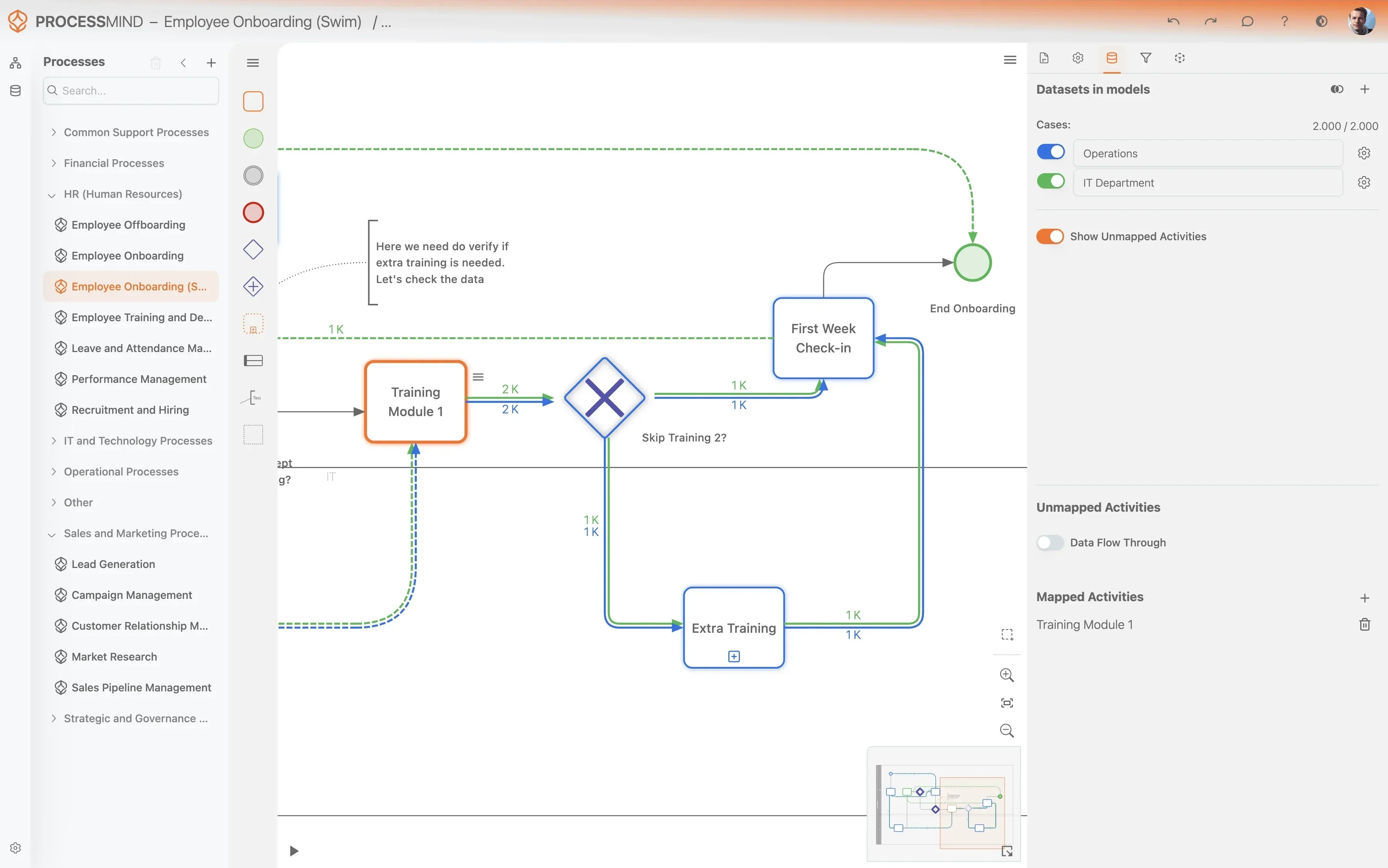
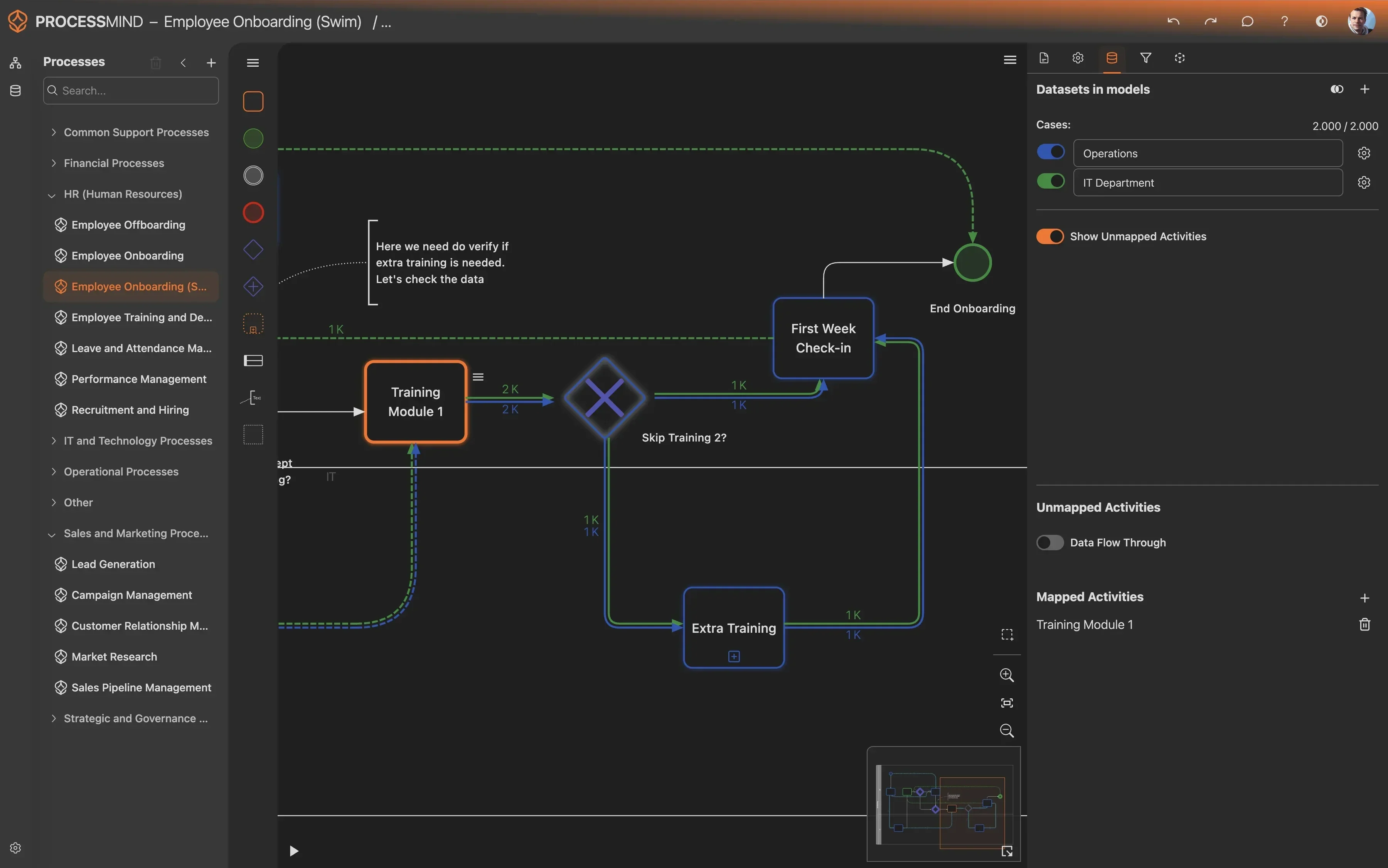
Explore the automatically generated dashboards and process maps for your Credit Management & Collections process. Leverage AI-driven insights to pinpoint inefficiencies.
Why it matters
Visualizing your end-to-end credit-to-cash process helps identify compliance gaps, slow-downs, and areas where HighRadius workflows can be optimized.
Expected outcome
Clear insights into process variations, bottlenecks, and compliance issues within your Credit Management & Collections.
Implement Improvements
What to do
Based on identified opportunities, prioritize and implement changes in your HighRadius configurations or operational procedures. Take action on the insights gained.
Why it matters
Implementing targeted improvements, such as optimizing dunning strategies or credit limit approvals, directly leads to reduced DSO and lower bad debt.
Expected outcome
Optimized Credit Management & Collections processes resulting in tangible operational enhancements and cost savings.
Monitor Your Process
What to do
Periodically re-upload updated HighRadius data to track the impact of your implemented changes. Continuously measure KPI improvements over time.
Why it matters
Ongoing monitoring ensures sustained process health, allowing you to adapt to new challenges and continuously refine your Credit Management & Collections strategies.
Expected outcome
Demonstrable improvements in key performance indicators like DSO, collection rates, and overall process efficiency.
TYPICAL OUTCOMES
Real-World Results Achieved
Process mining for Credit Management & Collections, using Invoice Number as the case identifier, reveals critical insights into payment delays and collection inefficiencies. Organizations leverage these insights to optimize workflows, reduce DSO, and improve cash flow.
Average reduction in credit decision time
Streamline your credit assessment process to reduce bottlenecks and speed up the approval cycle, leading to faster sales and improved customer satisfaction.
Average reduction in cash conversion cycle
Optimize your collections strategies and invoice processing to significantly decrease the time it takes to convert sales into cash, improving overall liquidity.
Increase in successful overdue payments
Pinpoint and optimize underperforming dunning strategies to ensure collection efforts convert more overdue accounts into settled invoices, directly impacting cash flow.
Average time reduction for dispute handling
Identify and eliminate inefficiencies in your dispute resolution process, accelerating the settlement of contested invoices and preventing payment delays.
Decrease in unrecoverable debt volume
Improve credit assessment accuracy and strengthen collection processes to significantly lower the volume of invoices that ultimately result in financial loss.
Greater efficiency in routine activities
Automate repetitive collection activities like sending reminders, freeing up your team to focus on complex cases and improving overall operational efficiency.
Actual results vary based on the specifics of an organization's credit management process, data quality, and the scope of implementation. The figures presented illustrate common benefits experienced by HighRadius users.
Recommended Data
FAQs
Frequently asked questions
Process mining analyzes event logs from HighRadius to visualize the actual flow of your credit management and collections. It can identify deviations from standard processes, pinpoint bottlenecks like slow credit limit approvals, and reveal inefficiencies in your dunning strategies. This helps you understand where and why delays occur, leading to better decision-making.
To perform process mining, you primarily need event log data related to your Credit Management & Collections activities. This includes details like invoice numbers as the case identifier, activity names, timestamps for each activity, and the user or system performing the action. Additional attributes like credit limits, dispute reasons, or payment terms can enrich the analysis.
You can expect to see improvements in several key areas, such as accelerated credit limit approval cycles and optimized dunning strategy effectiveness. Process mining helps reduce invoice dispute resolution times, minimize manual effort in collections, and enhance the accuracy of credit limit decisions. Ultimately, this leads to lower operational costs and better cash flow.
No, process mining does not replace your HighRadius system or existing credit policies. Instead, it complements them by providing a data-driven, objective view of how your processes actually operate within HighRadius. It highlights areas for improvement, allowing you to refine your current strategies and system configurations, rather than replacing them.
Yes, process mining can effectively identify the root causes behind a high volume of invoice write-offs. By tracing the paths of written-off invoices, it can reveal if the issue stems from poor initial credit decisions, ineffective dunning sequences, prolonged dispute resolution, or other process breakdowns. This insight enables targeted interventions to minimize future write-offs.
Data extraction from HighRadius typically involves querying relevant tables or using reporting functionalities to obtain the event log. Depending on HighRadius's capabilities, this might be done via direct database access, API integrations, or export features for historical transaction data. The goal is to collect all events associated with each invoice, from credit approval to payment posting or write-off.
Initial data extraction and model setup can typically be completed within a few weeks, depending on data availability and complexity. Once the model is established, initial insights often emerge quickly, revealing immediate bottlenecks and compliance issues. Continuous monitoring allows for ongoing optimization and sustained performance improvements.
While the process mining tools handle much of the analytical complexity, some technical understanding of data structures and basic SQL knowledge can be beneficial for data extraction. Familiarity with your HighRadius system's data model is also helpful. Many process mining platforms offer user-friendly interfaces, reducing the need for deep technical expertise in analysis.
Start Optimizing Your Credit Management & Collections
Eliminate bottlenecks, reduce cycle time by 30%, and boost efficiency.
No credit card required, start in minutes.