Improve Your Customer Service

Select a process
Choose a process to continue working in your connected workspace.
Optimize Your Customer Service Process
ProcessMind helps you pinpoint inefficiencies in your customer service process. Easily identify bottlenecks, uncover reworks, and reduce unnecessary steps that slow down resolution times. Understand where delays occur and how to streamline operations to enhance customer satisfaction. Our platform offers clear insights, regardless of your source system, enabling data-driven improvements.
Download our pre-configured data template and address common challenges to reach your efficiency goals. Follow our six-step improvement plan and consult the Data Template Guide to transform your operations.
Show detailed description
Optimize Your Customer Service Process for Excellence with process mining, a powerful analytical approach that illuminates the complete journey of every service request within your system. From the initial customer contact, through every interaction, transfer, and escalation, to its final resolution, ProcessMind provides unprecedented visibility. You'll discover the actual process flows and compare them directly against your intended or ideal pathways, instantly identifying deviations, workarounds, and hidden complexities. This deep dive uncovers critical insights into agent activities, system interactions, and customer touchpoints that traditional reporting simply cannot provide. Gain a transparent, data-driven picture of your team's real-world operations, ensuring that no part of the service journey remains hidden and empowering you to understand exactly how service requests are handled from start to finish.
The customer service landscape is fraught with common, often invisible, challenges that erode efficiency and impact customer satisfaction. Are your service requests suffering from unexpected delays, leading to frustrated customers and increased churn? Do agents frequently perform rework, navigate convoluted paths to resolve issues, or repeatedly transfer calls because of incomplete information? Is your team consistently meeting service level agreements, or are there hidden compliance risks within your resolution processes that could lead to financial penalties or reputational damage? These are system-agnostic challenges that can plague any customer service operation, regardless of your specific ERP, CRM, or source system. Without a comprehensive, end-to-end view of the process, identifying the root causes of these inefficiencies, such as persistent bottlenecks, suboptimal resource allocation, inconsistent procedures, or knowledge gaps, becomes a daunting and often impossible task. Traditional reporting and dashboards only show static snapshots; they fail to illustrate the dynamic sequence of events and interdependencies that truly define your process. Process mining cuts through this complexity, offering a dynamic, data-driven lens into these critical areas that impact your bottom line and customer loyalty.
ProcessMind transforms your ability to tackle these pervasive challenges head-on, empowering you to move beyond assumptions to data-backed decisions. By analyzing event logs from your customer service system, we empower you to pinpoint exactly where friction occurs, whether it's excessive transfers between departments, delays in escalating complex issues, recurring service requests due to incomplete initial resolutions, or unnecessary steps in the approval process. The benefits of this clarity are profound and tangible: achieve higher first-contact resolution rates, significantly reduce average handling times, and boost overall agent productivity by identifying and streamlining inefficient workflows. Beyond efficiency, ProcessMind helps ensure strict compliance with internal policies and external regulations, mitigating potential risks and strengthening governance. Ultimately, you'll elevate customer satisfaction by delivering faster, more consistent, and higher quality service, which directly translates into increased customer loyalty and advocacy. All of this is achieved while optimizing resource allocation and reducing operational costs within your existing infrastructure, ensuring you get the most out of your current investments. Gain clear, actionable insights into how your team truly operates, enabling a culture of continuous improvement across your entire service organization.
Embarking on this journey to optimize your customer service process is remarkably straightforward and accessible with ProcessMind. Our platform is designed to be welcoming and inclusive of all systems, ensuring that any organization, regardless of its technological landscape, can benefit. Simply connect your source system, whether it's your CRM, ticketing system, ERP, or any other platform capturing service request events. You do not need to overhaul your current IT stack; ProcessMind integrates seamlessly. We provide a clear, easy-to-follow data template that outlines the minimal data requirements, ensuring a quick, secure, and seamless setup. Within days, you can move from raw data to a comprehensive visualization of your entire customer service landscape, immediately discovering opportunities for optimization and making data-backed decisions that drive operational excellence. Don't let hidden inefficiencies erode customer trust and operational profitability any longer; leverage ProcessMind to transform your service operations today and deliver unparalleled customer experiences.
The 6-Step Path to Customer Service Excellence
Connect & Discover
What to do
Gather event log data from your customer service system, ensuring all relevant activities and case identifiers are included to build a comprehensive process view.
Why it matters
A complete and accurate dataset is foundational for process mining, allowing you to see the actual path of service requests and uncover hidden inefficiencies.
Expected outcome
A unified, granular view of all customer service interactions and their flow, ready for analysis.
Map Your Process
What to do
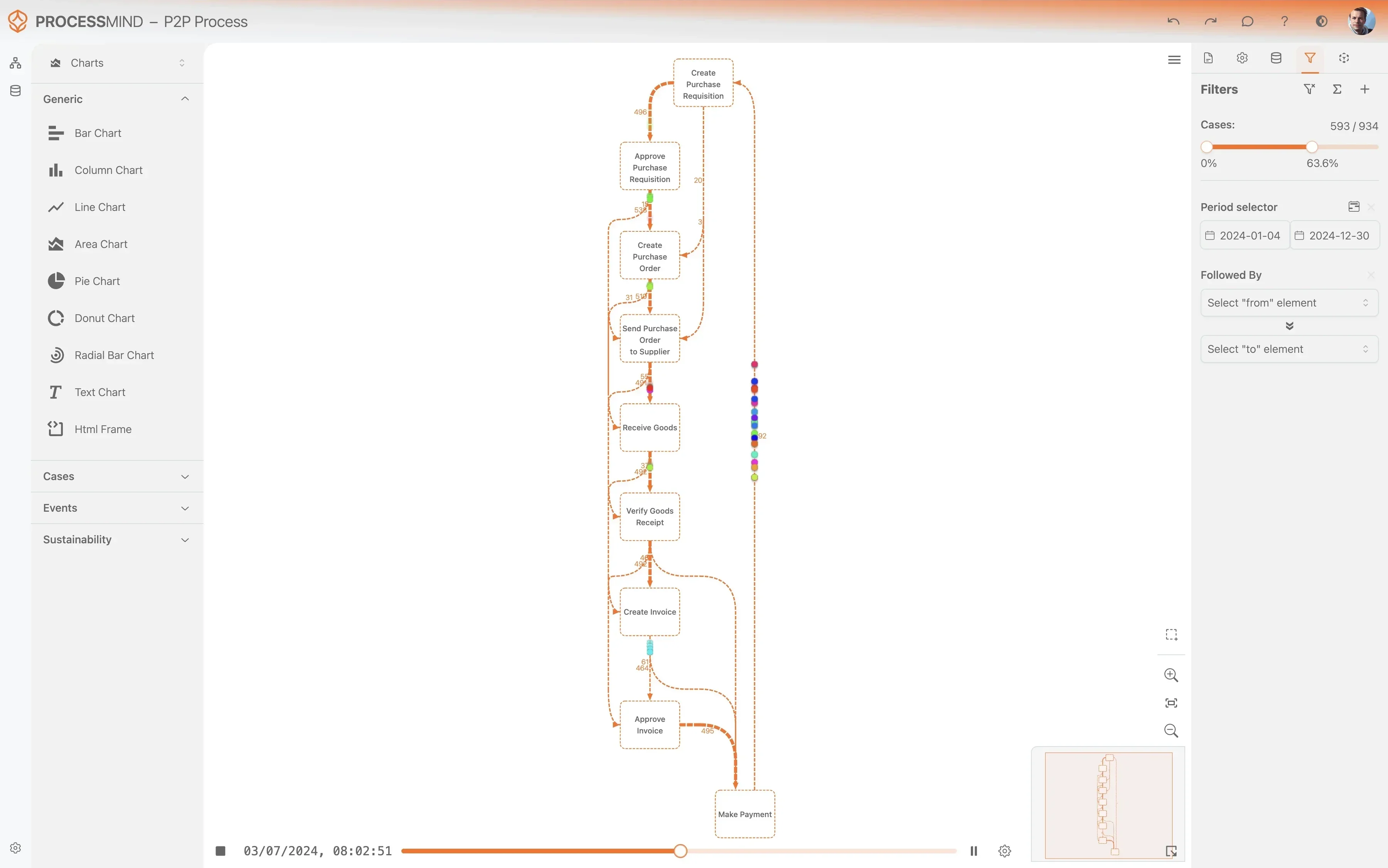
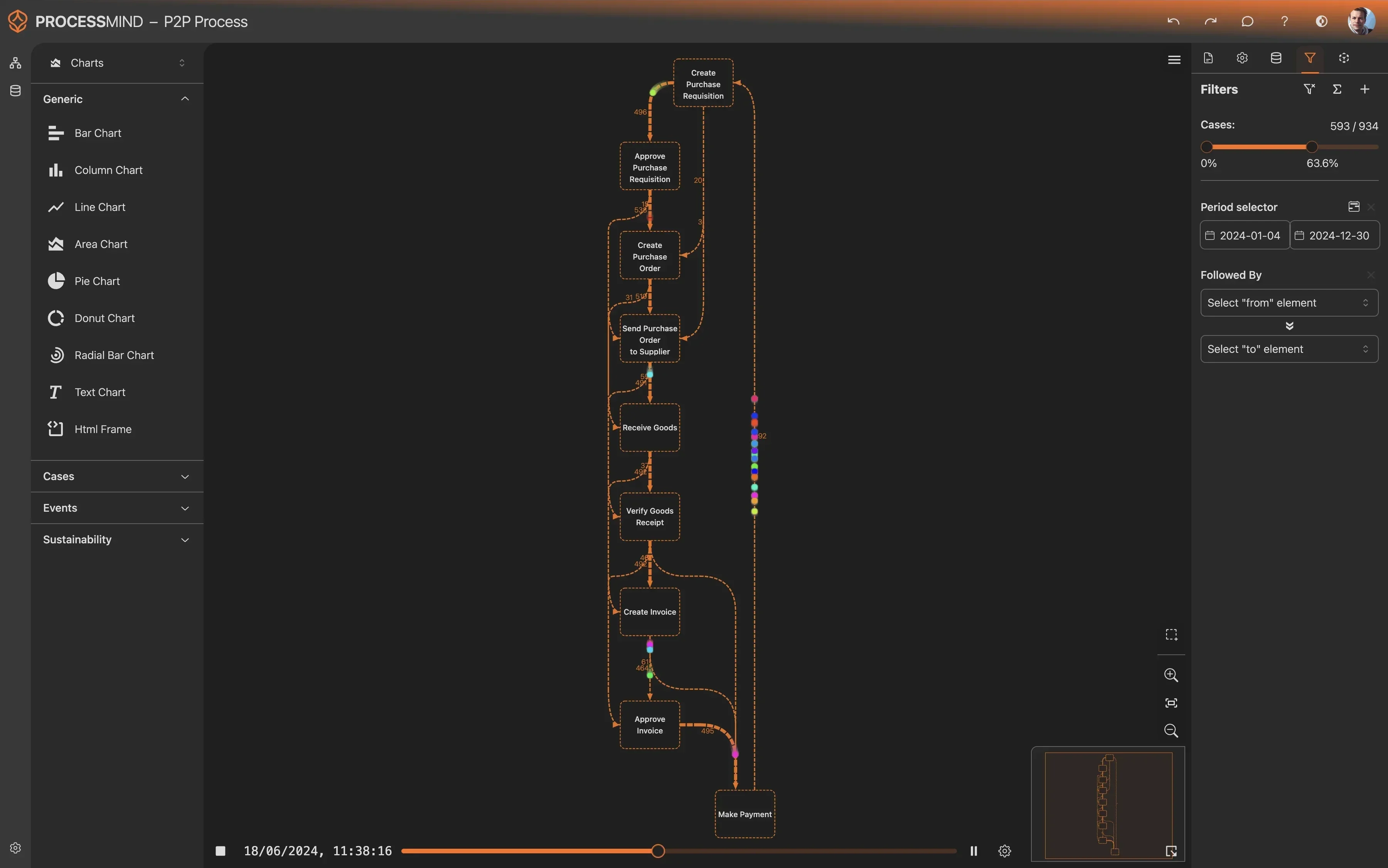
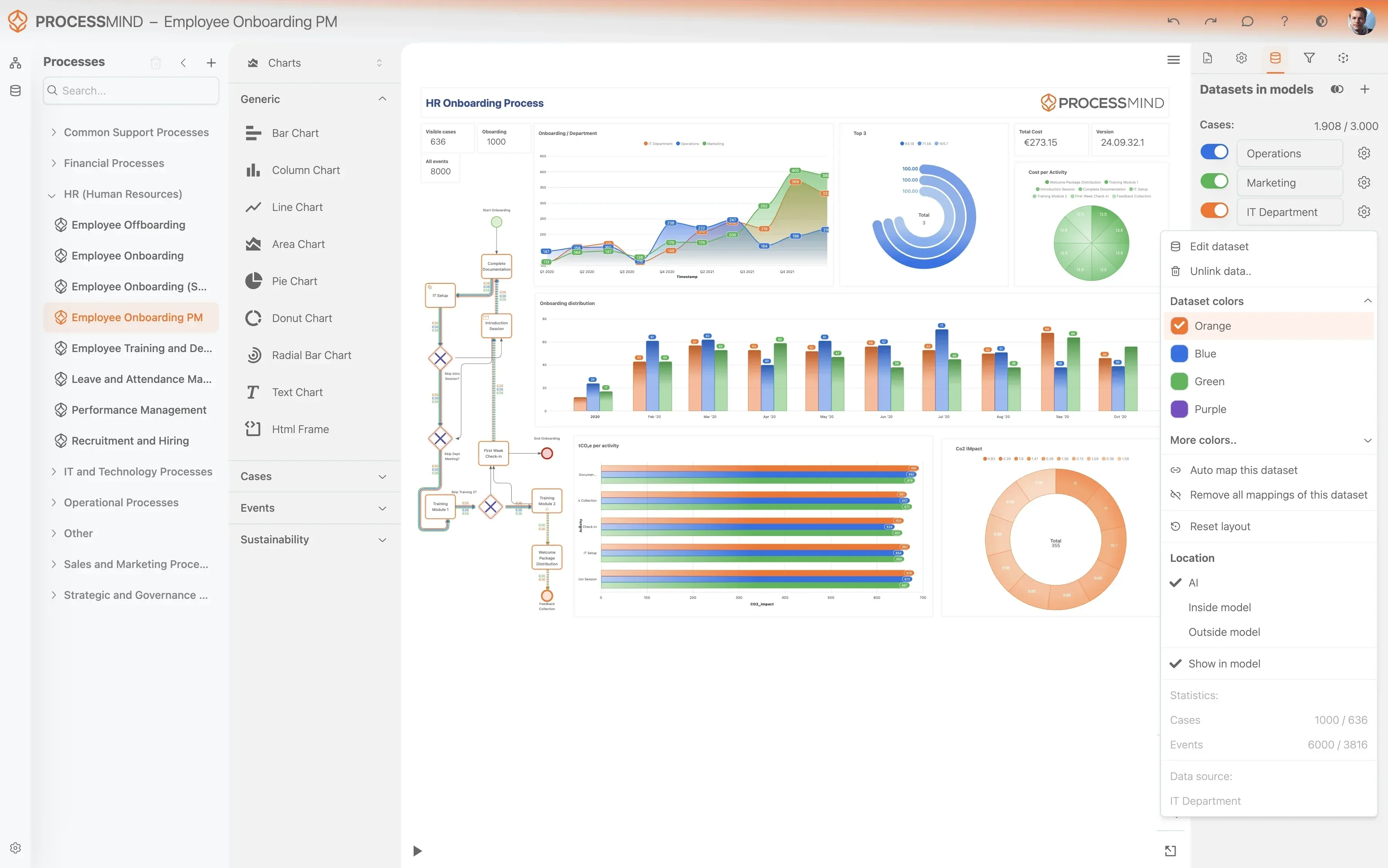
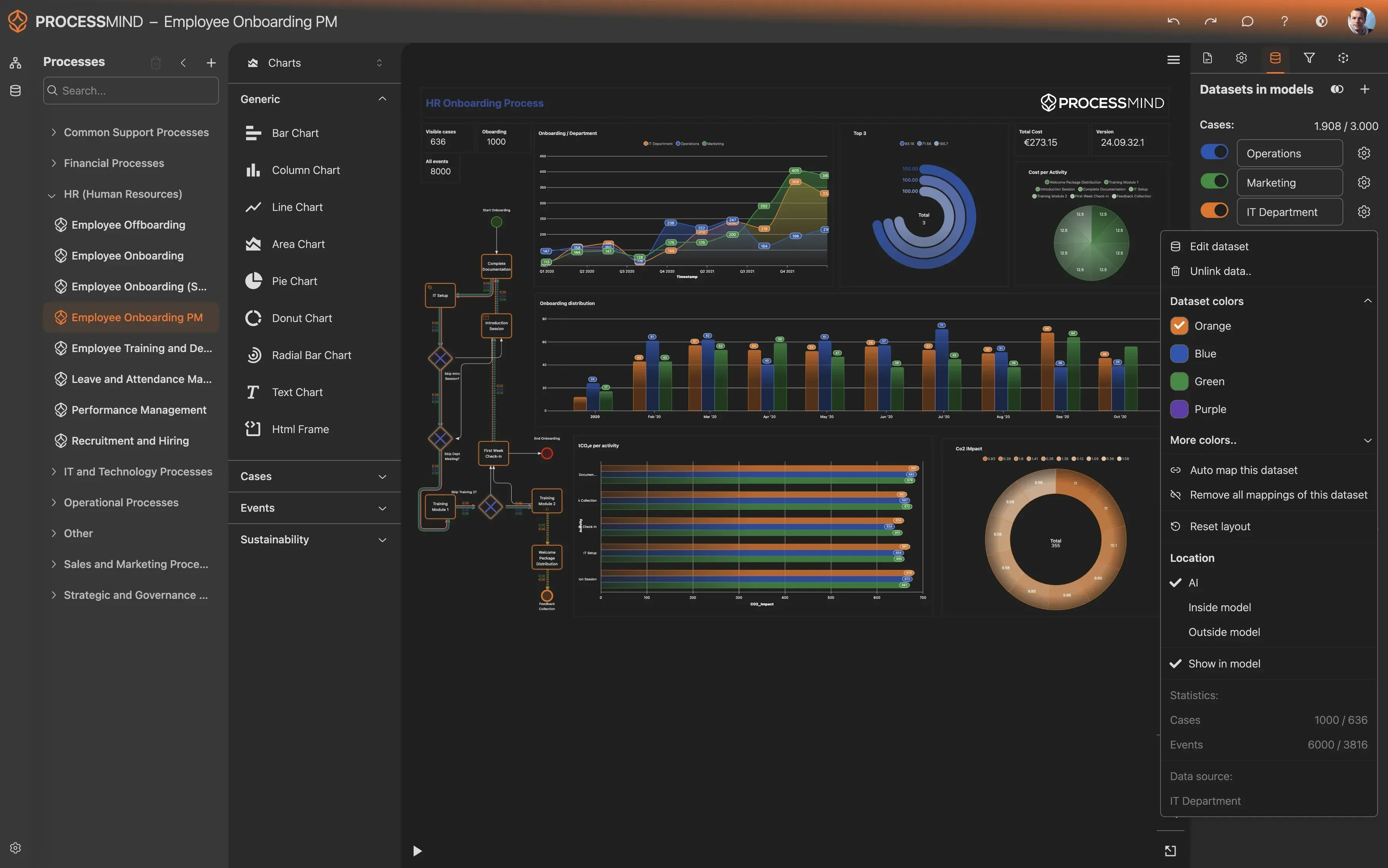
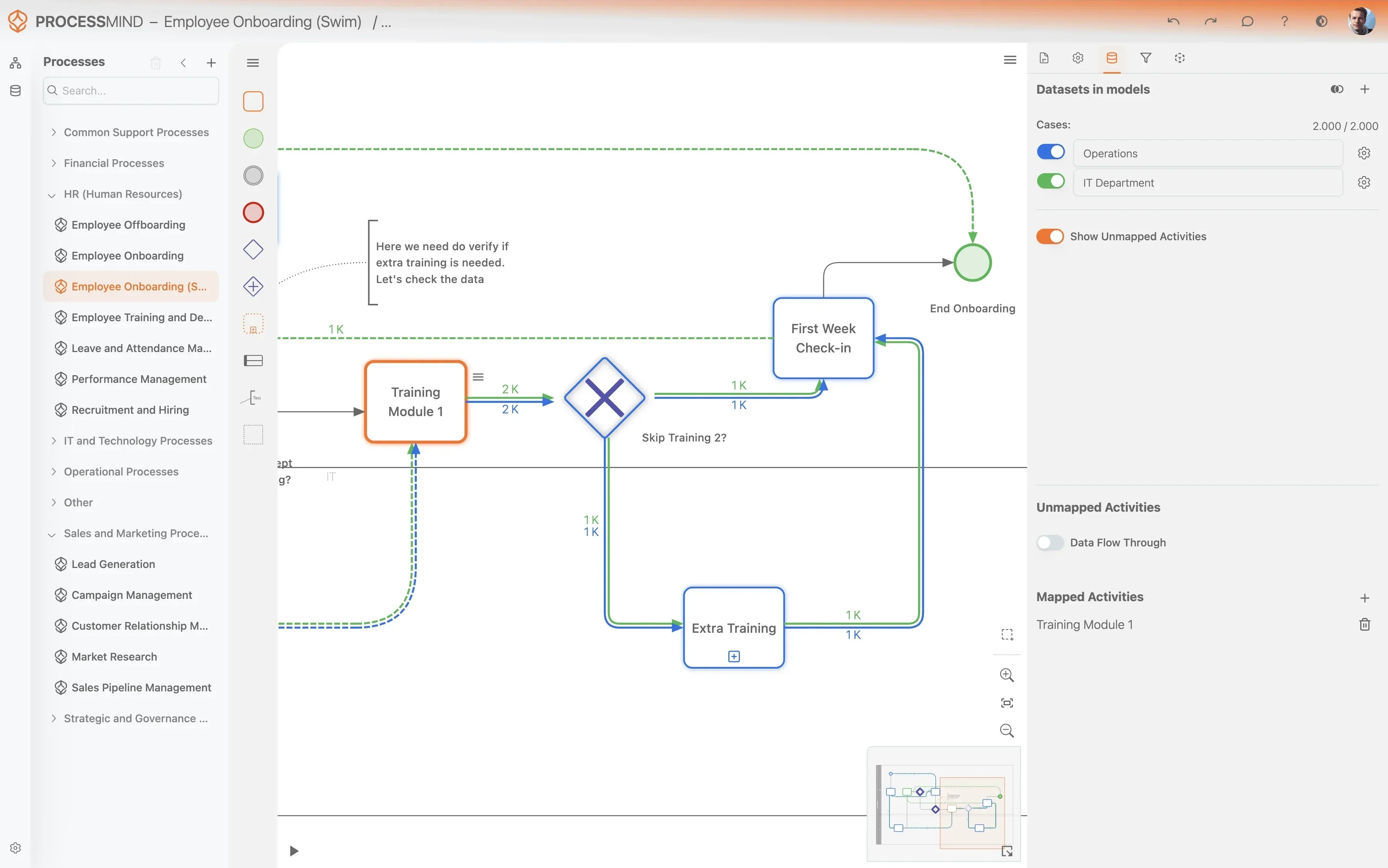
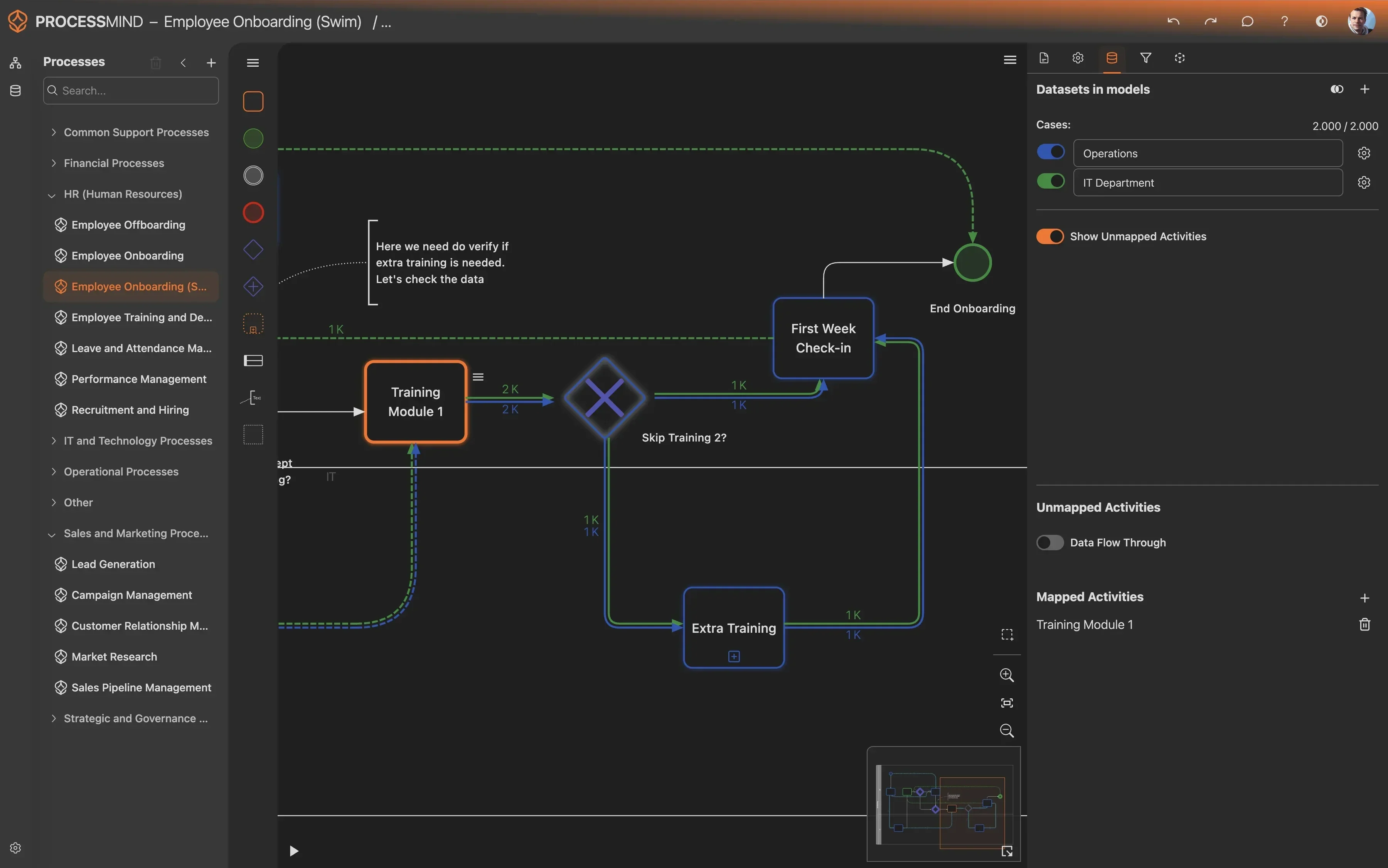
Visualize the end-to-end journey of your service requests using the connected data, identifying all variations, reworks, and parallel activities within your system.
Why it matters
Understanding the current process as it truly happens, not just as it's documented, reveals deviations from the ideal path and areas for immediate focus.
Expected outcome
A clear, data-driven visual representation of your customer service process flow and its common variants.
Identify Bottlenecks
What to do
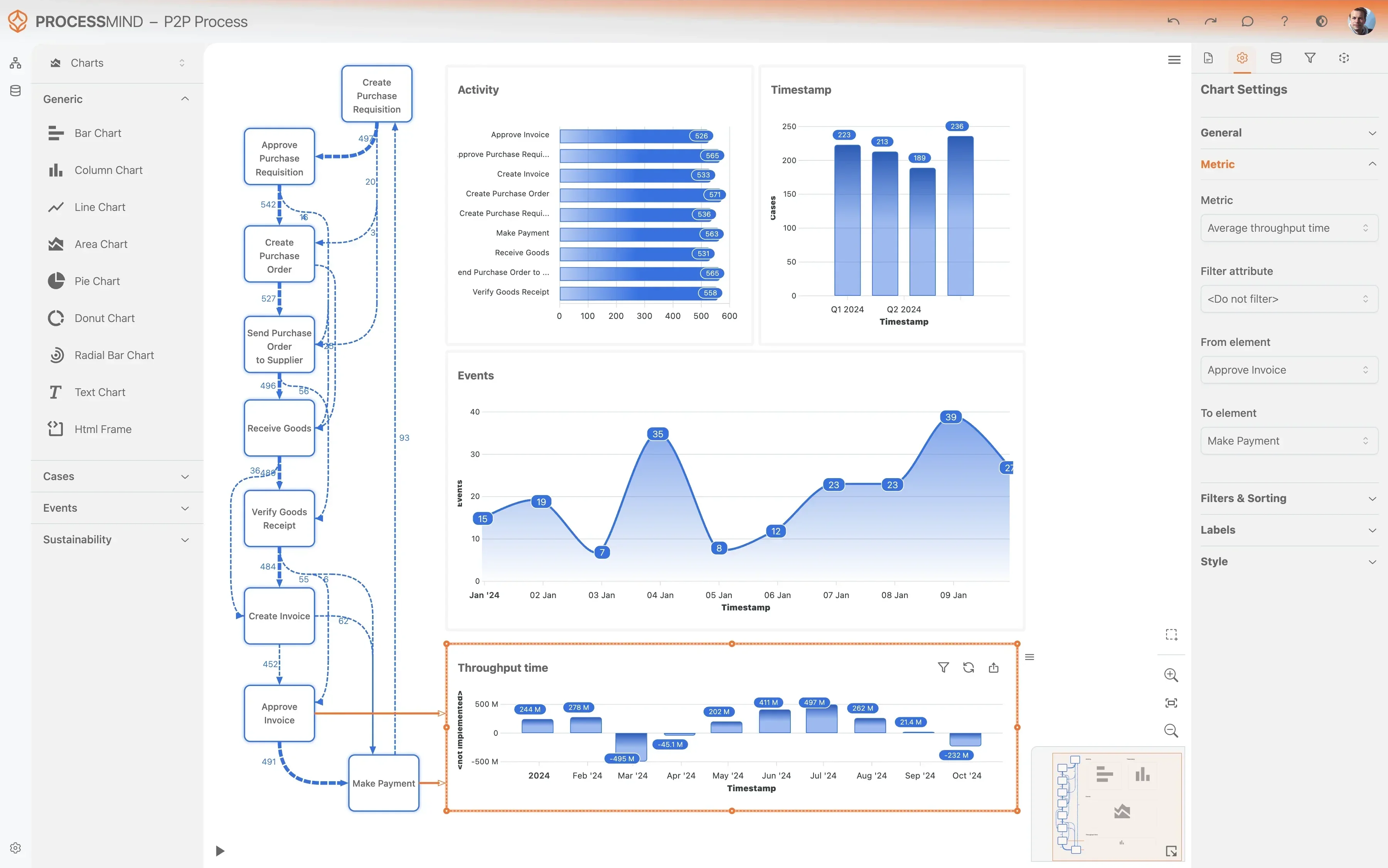
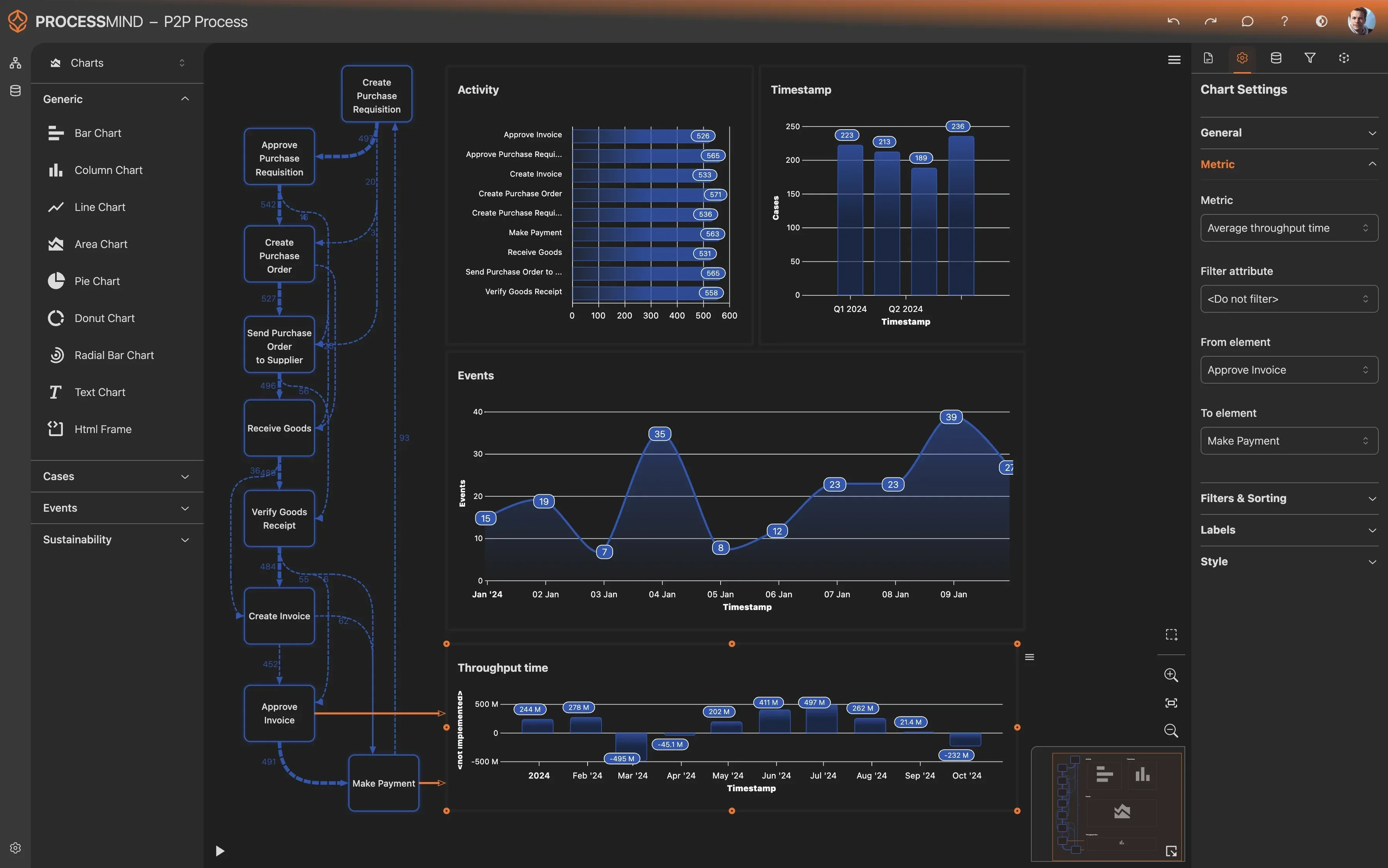
Analyze the mapped process for areas with high wait times, frequent reworks, or unexpected loops, pinpointing specific activities or transitions causing delays.
Why it matters
Locating bottlenecks directly leads to improved service request resolution times, boosting customer satisfaction and operational efficiency.
Expected outcome
Quantifiable identification of critical process slowdowns and problematic paths impacting service delivery.
Analyze Root Causes
What to do
Investigate the underlying factors contributing to the identified bottlenecks, drilling down into attributes like agent groups, request types, or customer segments.
Why it matters
Understanding the "why" behind process issues enables targeted, effective solutions rather than merely addressing symptoms, ensuring lasting improvements.
Expected outcome
A clear understanding of the specific conditions and factors driving inefficiencies and delays in your service process.
Design Improvements
What to do
Based on root cause analysis, formulate concrete recommendations for process changes, such as automating repetitive tasks or reallocating resources, and simulate their impact.
Why it matters
Proactive design of optimized processes ensures that changes are data-backed and likely to yield the desired improvements, minimizing trial and error.
Expected outcome
A set of validated, actionable strategies and proposed process modifications to enhance customer service efficiency.
Monitor & Iterate
What to do
Implement the designed improvements and continuously track key performance indicators to assess their effectiveness, making further adjustments as needed.
Why it matters
Ongoing monitoring ensures that improvements are sustained and allows for agile adaptation to new challenges, fostering a culture of continuous optimization.
Expected outcome
Sustained process performance improvements, with a framework for ongoing optimization and adaptation in your customer service operations.
TYPICAL OUTCOMES
Achieve Excellence in Customer Service
By precisely analyzing every step of the service request lifecycle, our process mining solution delivers actionable insights that significantly improve key customer service metrics, fostering greater efficiency and customer satisfaction.
Average reduction in service request resolution time
By pinpointing and eliminating process bottlenecks, organizations significantly reduce the time required to resolve customer issues, leading to quicker service delivery and enhanced customer satisfaction. This also frees up agent capacity.
Increase in meeting service level agreements
Process mining reveals deviations causing SLA breaches, allowing businesses to implement targeted changes. This ensures more requests are resolved within agreed-upon times, building customer trust and avoiding penalties.
Increase in issues resolved on first interaction
By understanding the root causes of repeated contacts, organizations can empower agents to resolve issues during the initial interaction. This boosts efficiency, reduces customer effort, and improves overall customer experience.
Decrease in internal transfers and escalations
Identifying patterns that lead to unnecessary escalations and agent handoffs allows for process optimization and better agent empowerment. This streamlines the customer journey, reduces operational costs, and provides more consistent service.
Decrease in cases requiring additional work
Process analysis helps uncover the reasons why service requests are reopened or require rework, enabling businesses to implement lasting solutions. This reduces redundant work for agents and provides customers with definitive answers the first time.
While specific results vary based on process complexity, data quality, and organizational context, these figures reflect the typical improvements observed across various customer service implementations.
Recommended Data
For customized data recommendations, choose your specific process.
FAQs
Frequently asked questions
Process mining analyzes your service request data to visualize the actual flow of work within your customer service operations. It helps identify bottlenecks, common deviations from standard procedures, and areas contributing to excessive resolution times or frequent re-opened requests. This insight allows you to pinpoint inefficiencies and understand their root causes.
You primarily need event logs that include a case identifier, activity names, and corresponding timestamps for each step in a service request's lifecycle. For customer service, this translates to service request IDs, status changes, agent assignments, escalations, and their exact times. Additional attributes, such as agent name, customer segment, or request category, can enrich the analysis.
Data extraction methods vary depending on your source system, often involving APIs, reporting features, or direct database access. The goal is to collect the necessary case, activity, and timestamp information in a structured format, typically a CSV or similar file. Many process mining tools also offer pre-built connectors to common business systems.
Initial insights can often be generated within a few weeks after data extraction and preparation are complete. The timeframe depends on data complexity and cleanliness. However, continuous monitoring and deeper analysis provide ongoing optimization opportunities over time.
You can expect to see improvements in key metrics like reduced service request resolution times, decreased request re-opening rates, and enhanced first-contact resolution. Process mining also helps improve Service Level Agreement (SLA) compliance, standardize agent performance, and optimize communication channel usage. These improvements lead to increased customer satisfaction and operational efficiency.
No, process mining is a non-invasive analytical method. It works by analyzing historical data exported from your systems, so it does not interfere with live operations or agent workflows. The analysis happens independently, providing insights without impacting service delivery.
While basic data extraction skills and an understanding of your system's data structure are beneficial, modern process mining tools are designed for business users. Many platforms offer user-friendly interfaces and automated data connectors, minimizing the need for deep technical expertise. Specialized support may be required for complex data integration scenarios or advanced analytics.
Process mining analyzes timestamped event data to map the actual flow of every service request. By visualizing frequent deviations, loops, and delays, it highlights exactly where bottlenecks occur and identifies repeated steps or rework. This data-driven approach reveals efficiency gaps unseen in standard reports.
Elevate Your Customer Service Excellence Now
Uncover bottlenecks, improve agent efficiency, and delight customers.
No credit card required, get started in minutes.