Improve Your Software Development Lifecycle

Select a process
Choose a process to continue working in your connected workspace.
Improve Software Delivery with SDLC Process Mining
ProcessMind helps you uncover hidden bottlenecks and inefficiencies within your software development lifecycle. Identify rework loops, delays in handoffs, and resource contention that slow down your delivery. Gain clear insights into cycle times and identify areas for significant improvement across your entire system.
Download our pre-configured data template and address common challenges to reach your efficiency goals. Follow our six-step improvement plan and consult the Data Template Guide to transform your operations.
Show detailed description
Unlock the full potential of your Software Development Lifecycle, SDLC, by enhancing your software delivery process. Process mining for your SDLC reveals the true, actual flow of your development items, from their initial conception through to final deployment. Beyond theoretical models, our platform uncovers the precise sequence of activities, hidden delays, unexpected reworks, and potential compliance gaps that exist across your current system. By analyzing the complete journey of each development item, from its inception to release, you gain an unparalleled, objective understanding of how work truly progresses, highlighting where value is created and where inefficiencies accumulate.
Modern software development often grapples with a myriad of challenges, regardless of the tools or methodologies employed. Common obstacles include unpredictable delivery times, escalating costs due to rework, poor visibility into cross-functional handoffs, and difficulties in identifying the root causes of bottlenecks. Teams frequently face issues with resource allocation, unplanned work disrupting sprints, and the arduous task of ensuring consistent compliance with internal policies or external regulations. These challenges are universal, affecting organizations operating with various project management systems, source control platforms, and deployment pipelines. Without a clear, data-driven view of the process, these issues remain persistent, hindering agility and impacting your ability to deliver high-quality software efficiently.
Analyzing your SDLC process with ProcessMind provides the critical insights needed to overcome these pervasive challenges. Our platform transforms raw event data from your source system, capturing every step a development item takes, into a comprehensive visual map of your process. This allows you to precisely identify where delays occur, pinpoint the exact activities causing rework loops, and understand the impact of variations in your workflow. By leveraging these data-driven discoveries, you can optimize your development workflows, accelerate delivery cycles, significantly reduce operational costs, and improve overall software quality. ProcessMind empowers your teams with objective facts, fostering better collaboration and enabling targeted improvements that drive measurable business outcomes.
Getting started with ProcessMind is straightforward and designed for rapid value realization. To begin, you simply need to extract your event data, focusing on three core elements for each activity related to a development item: the case identifier, which is the unique Development Item ID, the activity name performed, and the timestamp when that activity occurred. This standard event log format allows ProcessMind to reconstruct your entire SDLC process accurately, regardless of your underlying systems. For guidance and ease of integration, we provide a comprehensive data template that outlines the required format, ensuring a smooth and efficient setup to start uncovering your SDLC's true potential.
The 6-Step Path to Optimize Your Software Development Lifecycle
Connect & Discover Data
What to do
Ingest event data from your development tools and systems. Ensure all relevant activities, timestamps, and case identifiers are included for a complete view.
Why it matters
A comprehensive and accurate dataset is the foundation for any meaningful process analysis, revealing the true path of development items.
Expected outcome
A complete event log representing the end-to-end software development lifecycle within your system.
Map Your Process
What to do
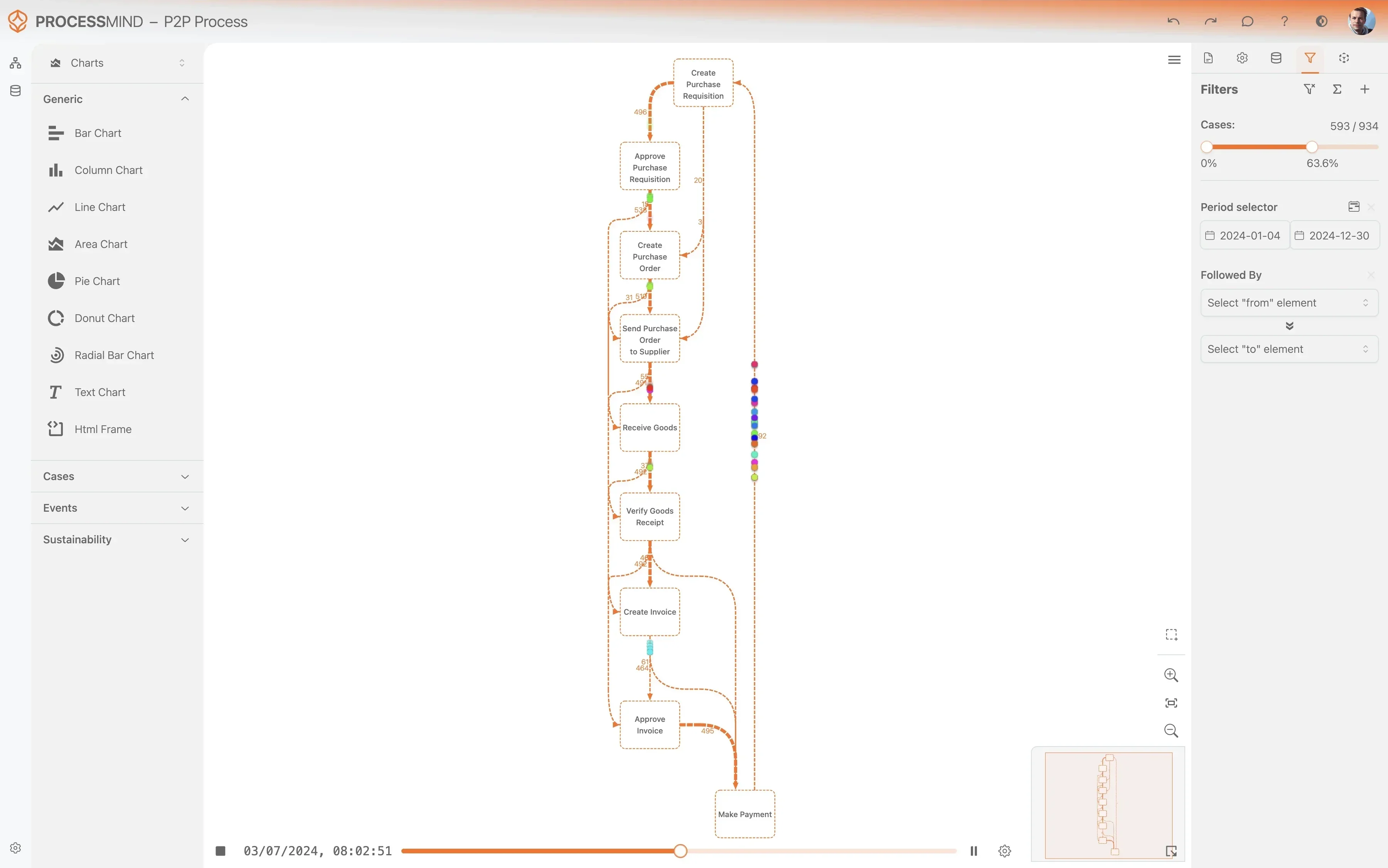
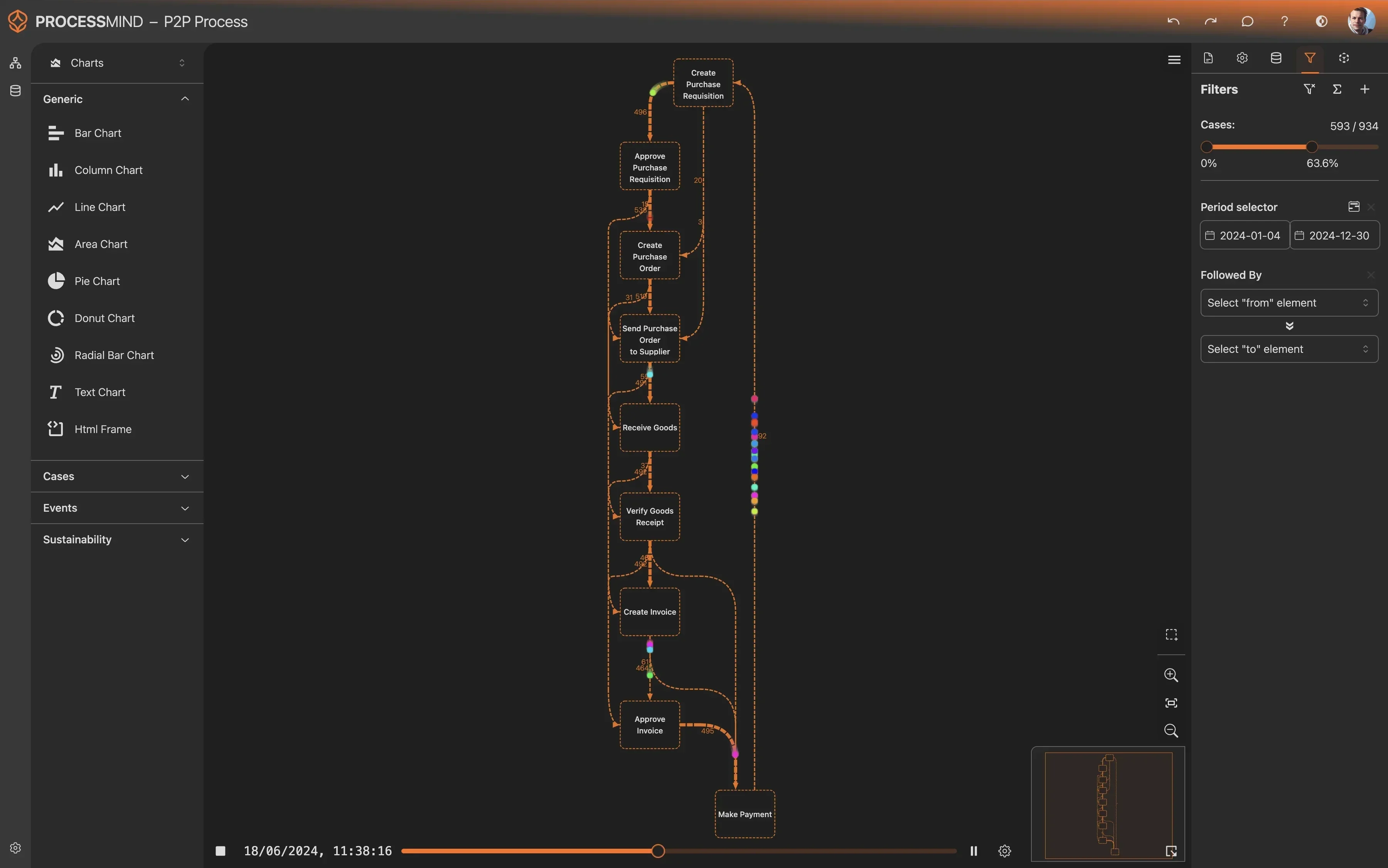
Visualize the actual flow of development items through all stages, from requirements to deployment. Identify all variants and common paths.
Why it matters
Understanding the 'as-is' process uncovers hidden complexities and deviations from expected workflows, crucial for effective improvement.
Expected outcome
A visual process map showing all activities, paths, and their frequencies for your development items.
Identify Bottlenecks
What to do
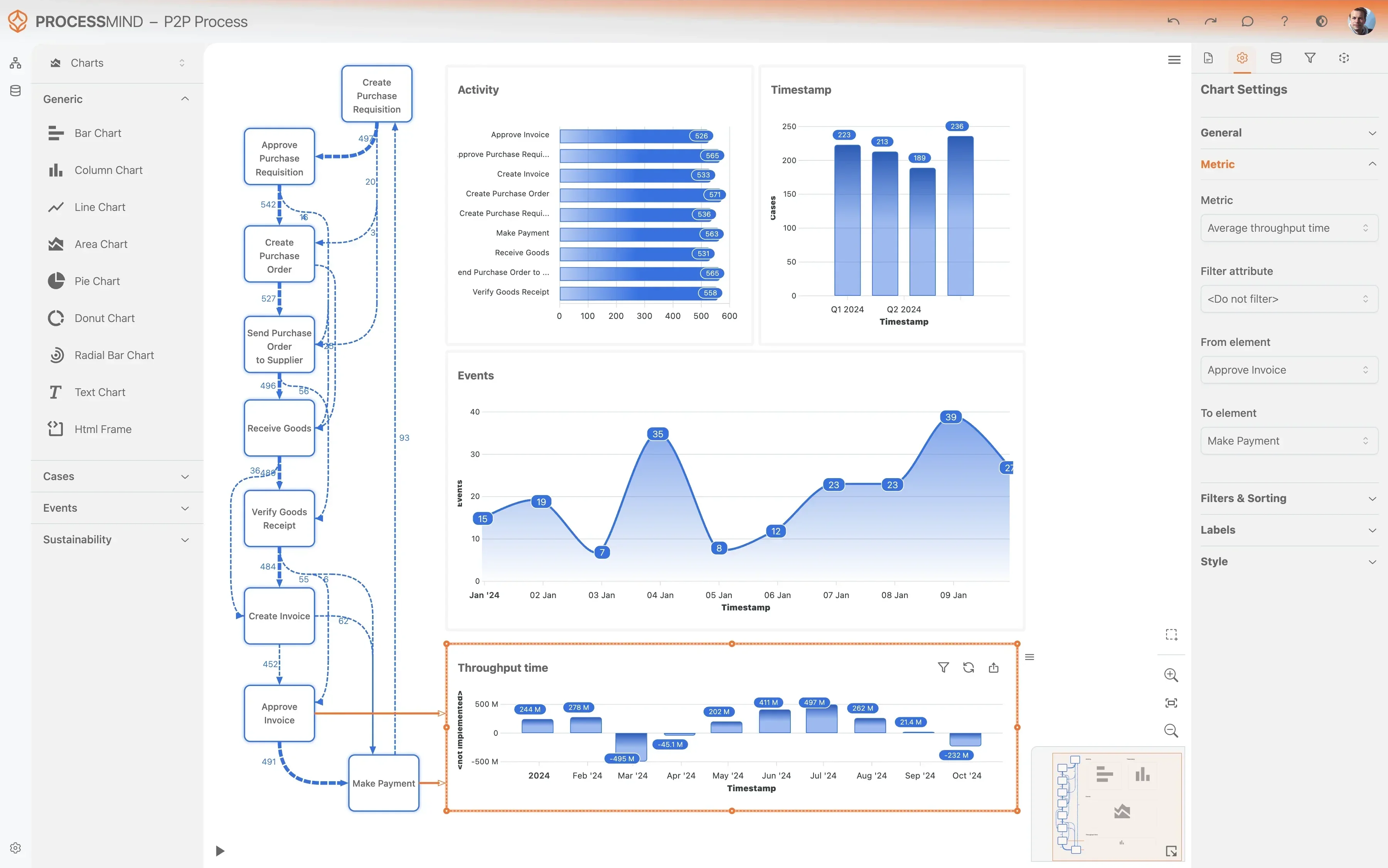
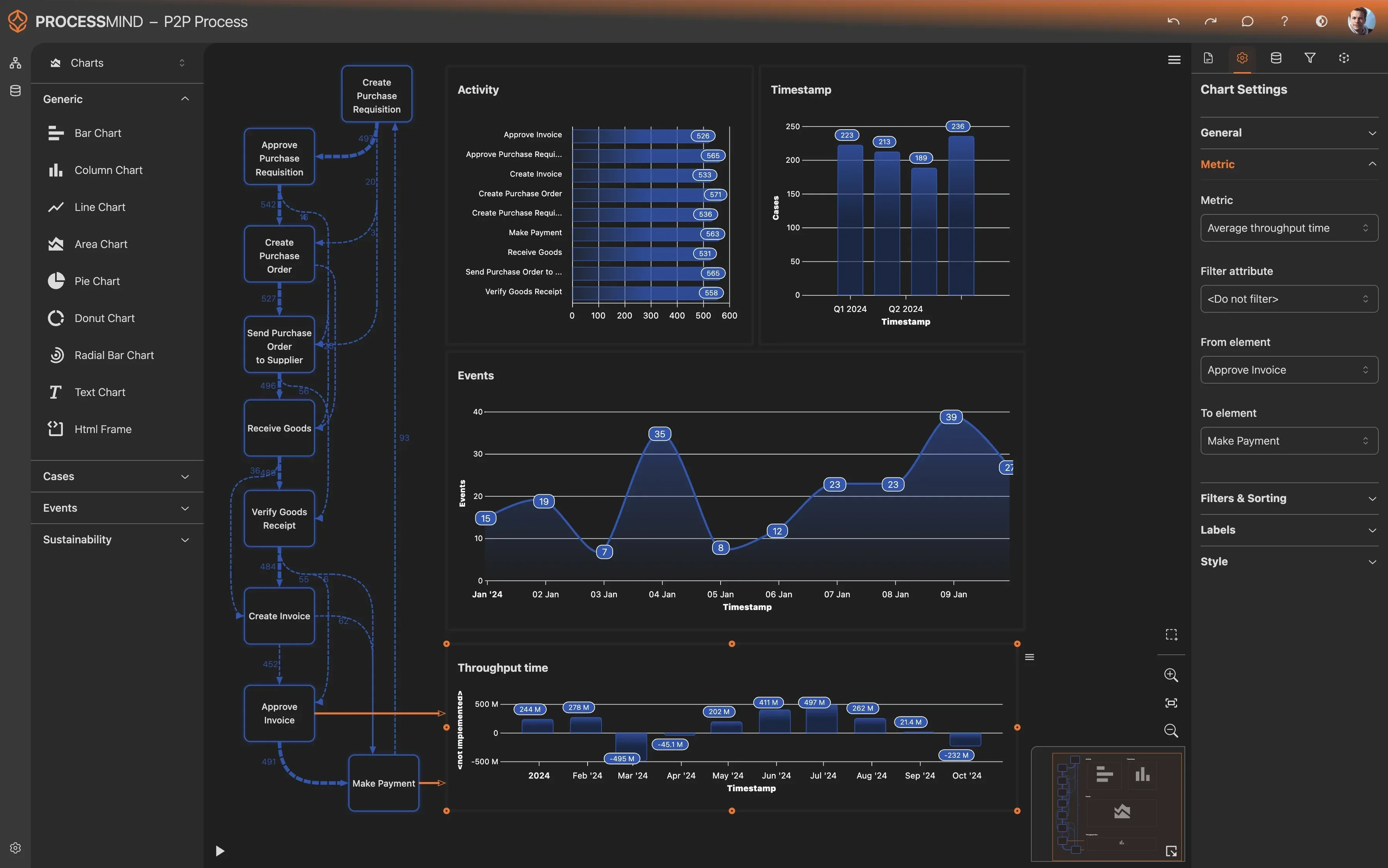
Analyze the process map and performance metrics to pinpoint specific activities or transitions where significant delays or rework occur.
Why it matters
Locating bottlenecks is critical for improving efficiency and accelerating development cycles, preventing items from getting stuck.
Expected outcome
A clear list of choke points, rework loops, and long-running activities impacting your development throughput.
Analyze Root Causes
What to do
Deep dive into identified bottlenecks and deviations to understand the underlying reasons. Use filtering and attribute analysis on your data.
Why it matters
Addressing symptoms without understanding root causes leads to temporary fixes. This step ensures sustainable improvements by targeting the source of issues.
Expected outcome
Clear understanding of underlying causes for process delays and rework in your SDLC.
Design Improvements
What to do
Based on root cause analysis, propose concrete process changes, automation opportunities, or resource reallocations to resolve identified issues.
Why it matters
Structuring targeted improvements ensures that changes are data-driven and directly address inefficiencies, leading to measurable benefits.
Expected outcome
A detailed plan of actionable initiatives, including automation and revised workflows, to optimize your SDLC.
Monitor & Iterate
What to do
Implement your planned changes and continuously track key performance indicators to assess their impact. Adjust as needed for ongoing optimization.
Why it matters
Process improvement is an ongoing journey. Continuous monitoring ensures that changes are effective and allows for adaptation to new challenges.
Expected outcome
Sustained process efficiency, continuous improvement, and the ability to quickly adapt your SDLC to evolving needs.
WHAT YOU WILL GET
Uncover SDLC Truths and Boost Software Delivery
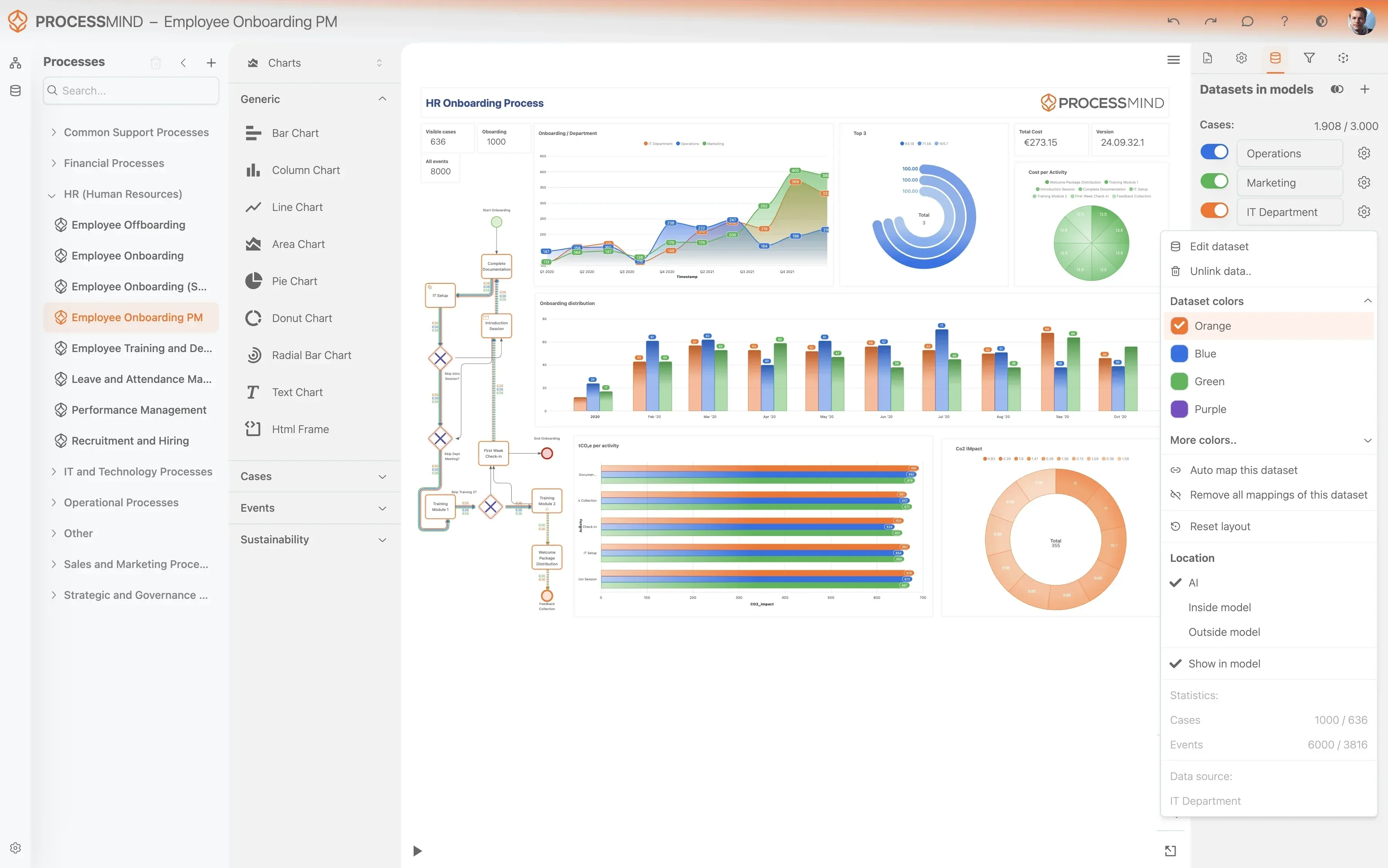
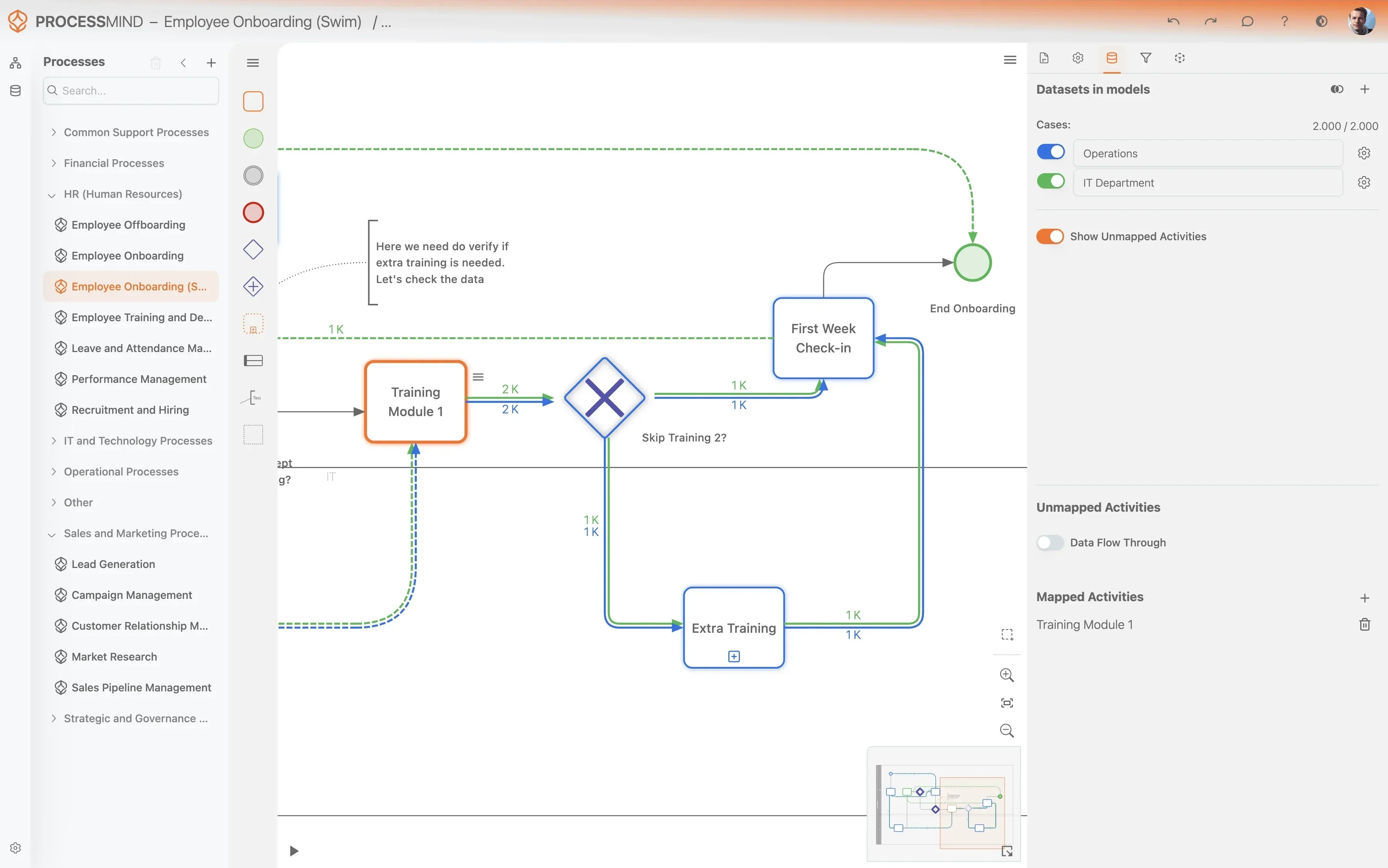
- Visualize end-to-end SDLC process flows
- Pinpoint development bottlenecks swiftly
- Optimize resource allocation effectively
- Accelerate software time-to-market
TYPICAL OUTCOMES
Tangible Benefits in Software Development
These outcomes highlight the significant improvements organizations typically experience by applying process mining to their Software Development Lifecycle. By revealing hidden inefficiencies and bottlenecks, teams can streamline workflows and accelerate delivery.
Average reduction in end-to-end cycle time
By identifying and eliminating delays from idea inception to deployment, organizations can significantly accelerate software delivery, getting features to market quicker.
Decrease in efforts spent on redoing work
Process mining identifies the root causes of rework, such as unclear requirements or insufficient testing, leading to higher quality releases and more efficient use of resources.
Increase in adherence to standard workflows
Gain clear visibility into deviations from standard processes and bypassed quality checks, ensuring all development items meet required standards and best practices before release.
Reduction in delays between key stages
Identify and eliminate bottlenecks and delays that occur during handoffs between different teams and stages, such as development to testing, significantly speeding up the overall release process.
Better forecasting of delivery timelines
By understanding and reducing variations in the release process, organizations can forecast deployment timelines more accurately, improving stakeholder confidence and strategic planning.
Results vary based on the specific development processes, team structure, and data quality. The figures presented here illustrate typical improvements observed across various software development implementations.
Recommended Data
For customized data recommendations, choose your specific process.
FAQs
Frequently asked questions
Process mining analyzes event data from your SDLC platform to visualize actual workflows. It identifies bottlenecks, rework loops, and deviations from planned processes, providing data-driven insights to optimize efficiency, reduce cycle times, and improve delivery predictability.
You primarily need event logs detailing activities within your development items. This includes a unique Case Identifier, such as a Development Item ID, an Activity Name, like "Code Review Started" or "Testing Completed", and a Timestamp for each event. Additional attributes, such as the assigned resource or item status, can provide richer insights.
You can expect a clearer understanding of your actual development workflows, leading to reduced development cycle times, fewer reworks, and improved quality gate compliance. It also helps optimize resource allocation, enhance release predictability, and achieve end-to-end process visibility.
No, process mining is largely non-invasive. It primarily uses historical event data from your existing SDLC system without interfering with live operations or requiring changes to development processes during the analysis phase. The analysis happens independently, providing insights without disruption.
Initial insights can often be generated within a few days to a few weeks, depending on data availability, volume, and complexity of your SDLC. A complete analysis and development of improvement strategies may take longer, typically 4-8 weeks, for deeper actionable recommendations.
Data can typically be extracted using APIs, direct database queries, or built-in reporting features of your SDLC platform. This raw data is then transformed into an event log format, usually CSV or JSON, suitable for process mining tools. The goal is to collect event data in a structured format.
A basic understanding of your SDLC system's data structures and APIs is helpful for initial data extraction. Familiarity with data preparation and the fundamentals of process mining tools will be beneficial for successful analysis and interpretation. Many modern tools offer user-friendly interfaces for business users.
Absolutely. Process mining visualizes the actual paths and durations of work items, making it very effective at pinpointing where delays occur and identifying critical bottlenecks. It also precisely shows how often rework is initiated, allowing for targeted interventions to streamline handoffs, reduce waiting times, and cut down on unnecessary repetitions.
Yes, process mining creates an undeniable digital twin of your actual development process, highlighting any deviations from mandated procedures. This provides clear evidence for auditors and helps ensure consistent adherence to regulatory requirements and internal policies. It significantly strengthens your audit readiness.
Optimize Your SDLC Now, Boost Software Delivery
Connects to your tools, start seeing valuable insights in days.
No credit card required, get started in minutes.