Improve Your Payroll Processing

Select a process
Choose a process to continue working in your connected workspace.
Optimize Payroll Processing in Oracle HCM Cloud Payroll
Our process mining platform uncovers hidden bottlenecks and manual workarounds that slow down your compensation cycles. We help you visualize every step of the workflow to identify recurring errors and delays in your approval chains. By analyzing your actual process flow, you can pinpoint specific areas where automation or training will drive the most value.
Download our pre-configured data template and address common challenges to reach your efficiency goals. Follow our six-step improvement plan and consult the Data Template Guide to transform your operations.
Show detailed description
The Strategic Importance of Payroll Optimization
Payroll Processing is far more than a routine administrative task, as it represents one of the most significant financial and operational commitments an organization makes to its workforce. Within the complex ecosystem of Oracle HCM Cloud Payroll, the process involves a delicate balance of data accuracy, regulatory compliance, and timely execution. When inefficiencies creep into this cycle, the consequences extend beyond mere administrative delays. Errors in calculation or delays in disbursement can lead to decreased employee morale, costly financial penalties, and a significant drain on HR resources spent on manual corrections. By focusing on process optimization, organizations can transform payroll from a back-office necessity into a streamlined, strategic function that supports global scalability and financial predictability.
How Process Mining Visualizes the Payroll Journey
Oracle HCM Cloud Payroll generates a vast amount of digital footprints for every transaction. Process mining technology leverages these logs to create a transparent, end-to-end visualization of the actual payroll lifecycle. Unlike traditional reporting, which provides a snapshot of current status, process mining reveals the sequence of events and the duration between them. You can see exactly how a Payroll Record moves from initial data collection to final tax filing. This visibility allows you to compare your intended process model against reality. For instance, you might discover that while the standard procedure dictates a linear path, many records are frequently looped back for data corrections, indicating an upstream issue with time-tracking or benefit data integration. By surfacing these hidden paths, process mining provides the objective evidence needed to prioritize your improvement efforts.
Identifying and Resolving Processing Bottlenecks
One of the primary challenges in managing payroll is identifying the specific stages where the flow stagnates. Within Oracle HCM Cloud, bottlenecks often occur during the audit and preview phases. If your payroll specialists spend an inordinate amount of time on the Payroll Result Previewed activity or dealing with Audit Exception Flagged events, it suggests that the pre-calculation data is often incomplete or inaccurate. Process mining helps you drill down into these specific activities to find the root cause. It might reveal that a particular pay group or geographic region consistently triggers more exceptions, requiring manual intervention. By addressing these localized bottlenecks, perhaps through better training or automated data validation rules within Oracle HCM, you can significantly reduce the overall cycle time and move closer to a zero-touch payroll environment.
Driving Excellence in Compliance and Accuracy
Compliance is a non-negotiable aspect of payroll. Every organization must adhere to complex tax laws and labor regulations that vary by jurisdiction. Process mining ensures that every step required for compliance is followed consistently. By analyzing the flow of activities such as Taxes Calculated and Tax Filing Completed, you can verify that no steps were bypassed and that all approvals were obtained in the correct sequence. Furthermore, reducing the volume of manual adjustments is a key driver of accuracy. Process mining highlights the frequency of the Data Correction Performed activity, allowing you to investigate why automated calculations are being overridden. Minimizing these manual touches not only reduces the risk of human error but also ensures a more robust audit trail for internal and external stakeholders.
Realizing Measurable Business Outcomes
Successful optimization of Payroll Processing in Oracle HCM Cloud Payroll leads to quantifiable improvements across several key performance indicators. First, you will likely see a dramatic reduction in the total cycle time from payroll initialization to payment execution, allowing for more flexibility in the processing window. Second, the cost per payroll transaction decreases as manual interventions and rework are minimized. Finally, employee satisfaction improves as a direct result of increased payment accuracy and the consistent availability of pay slips. These measurable gains provide a clear return on investment for your process improvement initiatives, demonstrating the value of a data-driven approach to payroll management.
Getting Started with Continuous Improvement
Optimizing your payroll process is not a one-time project but a journey of continuous improvement. Using the insights provided by process mining, you can set baseline metrics for your current operations and track the impact of every change you implement. Whether you are looking to refine your approval workflows, improve the integration of third-party incentive data, or simply gain better visibility into your global payroll operations, the path forward starts with understanding your current state. By embracing this transparency and focusing on the areas of greatest friction, you can build a faster, more accurate, and more resilient payroll function within your Oracle HCM environment.
The 6-Step Improvement Path for Payroll Processing
Download the Template
What to do
Obtain the specialized Excel template designed for Oracle HCM Cloud Payroll data structures and cycle requirements.
Why it matters
Using a standardized format ensures your pay cycle data aligns perfectly with analysis requirements for faster insights.
Expected outcome
A ready to use template for your payroll data.
Export Your Data
What to do
Use Oracle HCM Extracts or BI Publisher to pull three to six months of payroll history into the provided Excel template.
Why it matters
Historical data reveals hidden patterns in calculation errors and highlights where manual interventions frequently occur.
Expected outcome
A populated dataset reflecting your actual payroll flow.
Upload Your Dataset
What to do
Securely upload your completed template into ProcessMind to trigger the automated mapping and visualization of your process.
Why it matters
Centralizing your data allows the platform to build a digital twin of your payroll cycle from initialization to disbursement.
Expected outcome
Your payroll process visualized as a interactive flow map.
Analyze Your Process
What to do
Use AI dashboards to pinpoint bottlenecks in tax calculations and identify deviations from standard compliance protocols.
Why it matters
Understanding the root causes of payment delays or manual adjustments helps you focus on high impact fixes.
Expected outcome
Clear list of process inefficiencies and compliance gaps.
Implement Improvements
What to do
Apply changes in Oracle HCM Cloud, such as streamlining approval workflows or automating recurring data corrections.
Why it matters
Taking action on findings reduces processing costs, improves accuracy, and ensures timely payments for all employees.
Expected outcome
Optimized payroll configurations and faster cycle times.
Monitor Your Process
What to do
Periodically refresh your data in ProcessMind to track the impact of changes on KPIs like SLA compliance and error rates.
Why it matters
Continuous monitoring ensures that improvements are sustained and that new bottlenecks do not emerge in your global payroll.
Expected outcome
Quantifiable gains in payroll efficiency and accuracy.
YOUR PAYROLL INSIGHTS
Visualize Your Entire Oracle Payroll Lifecycle
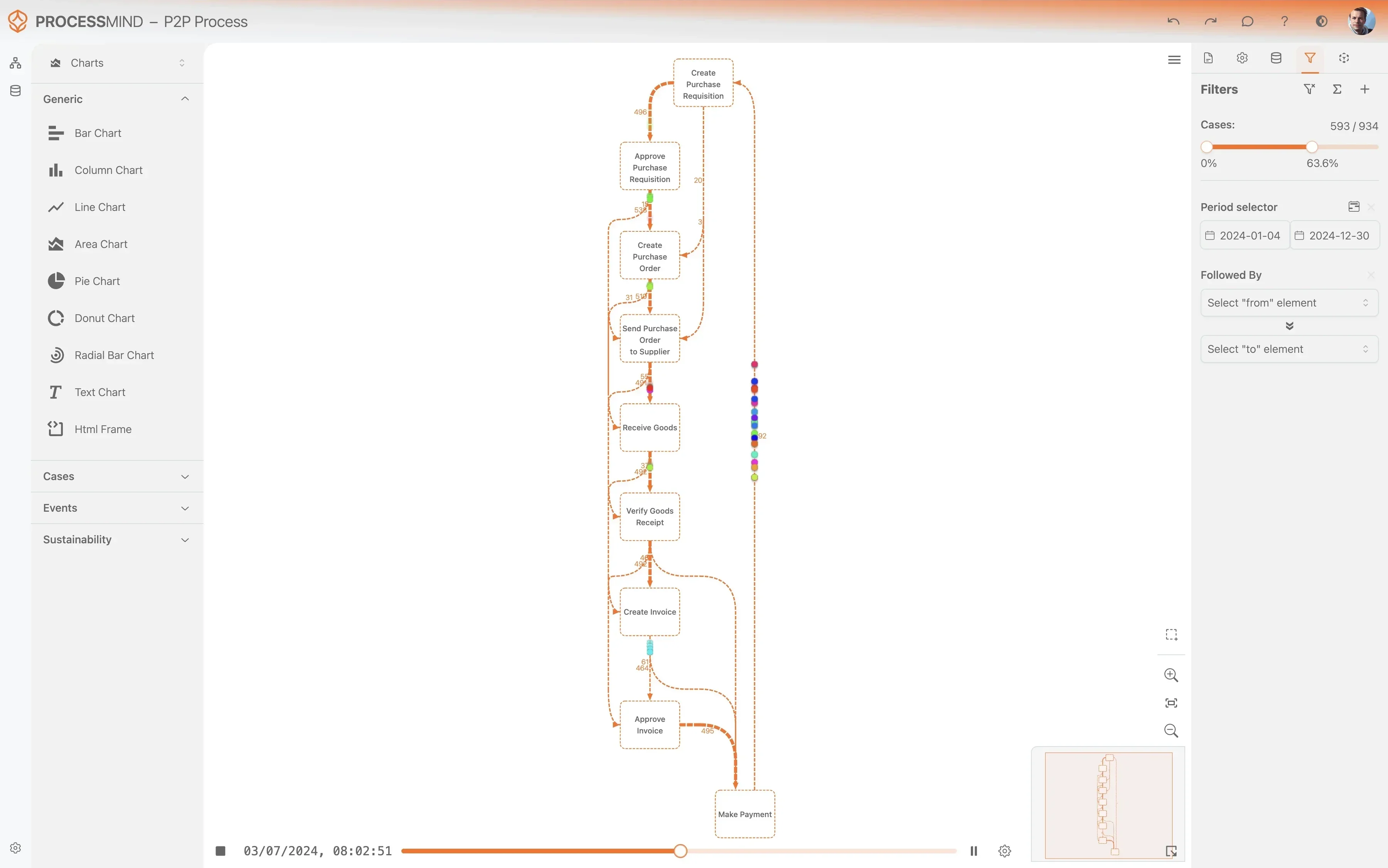
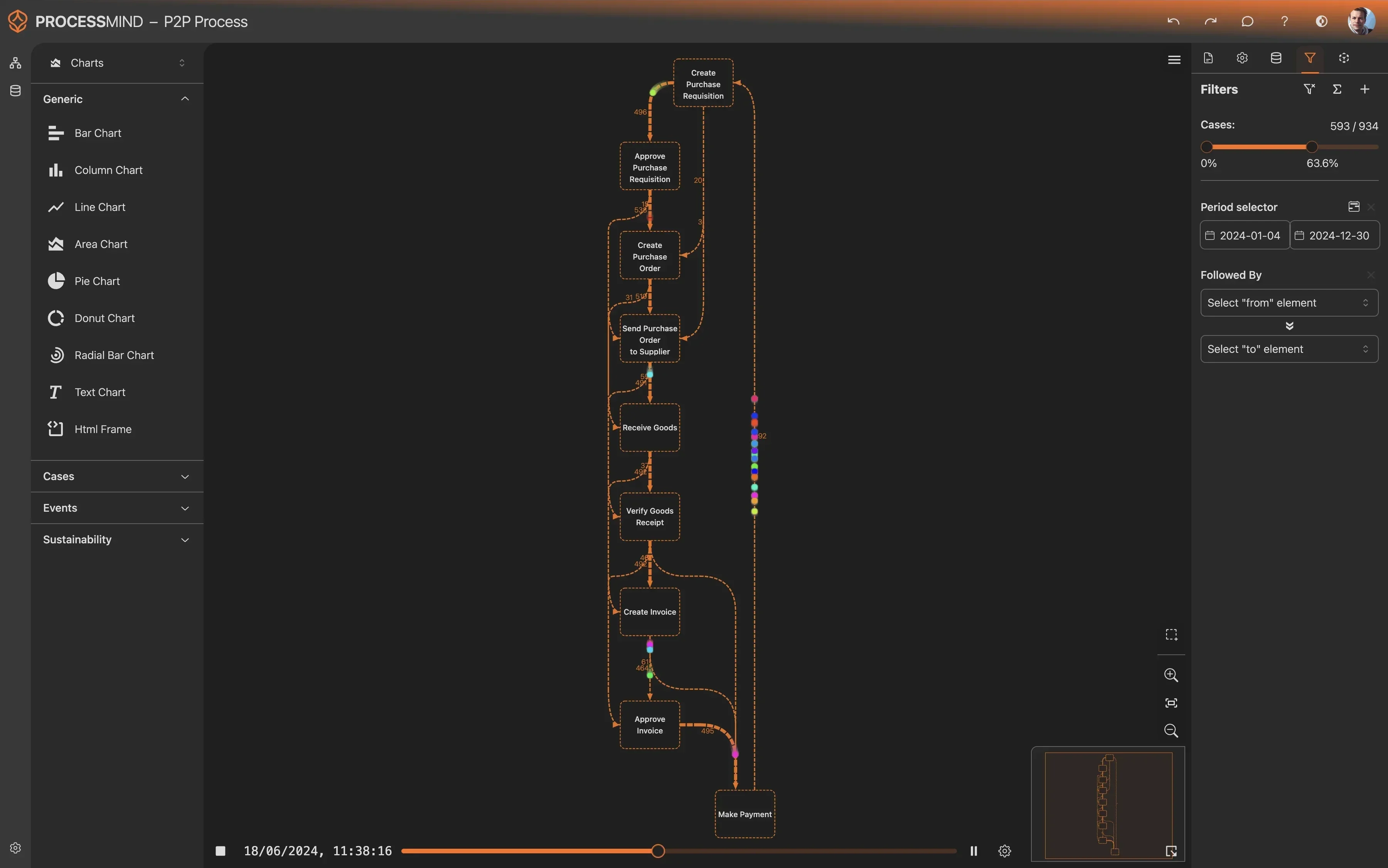
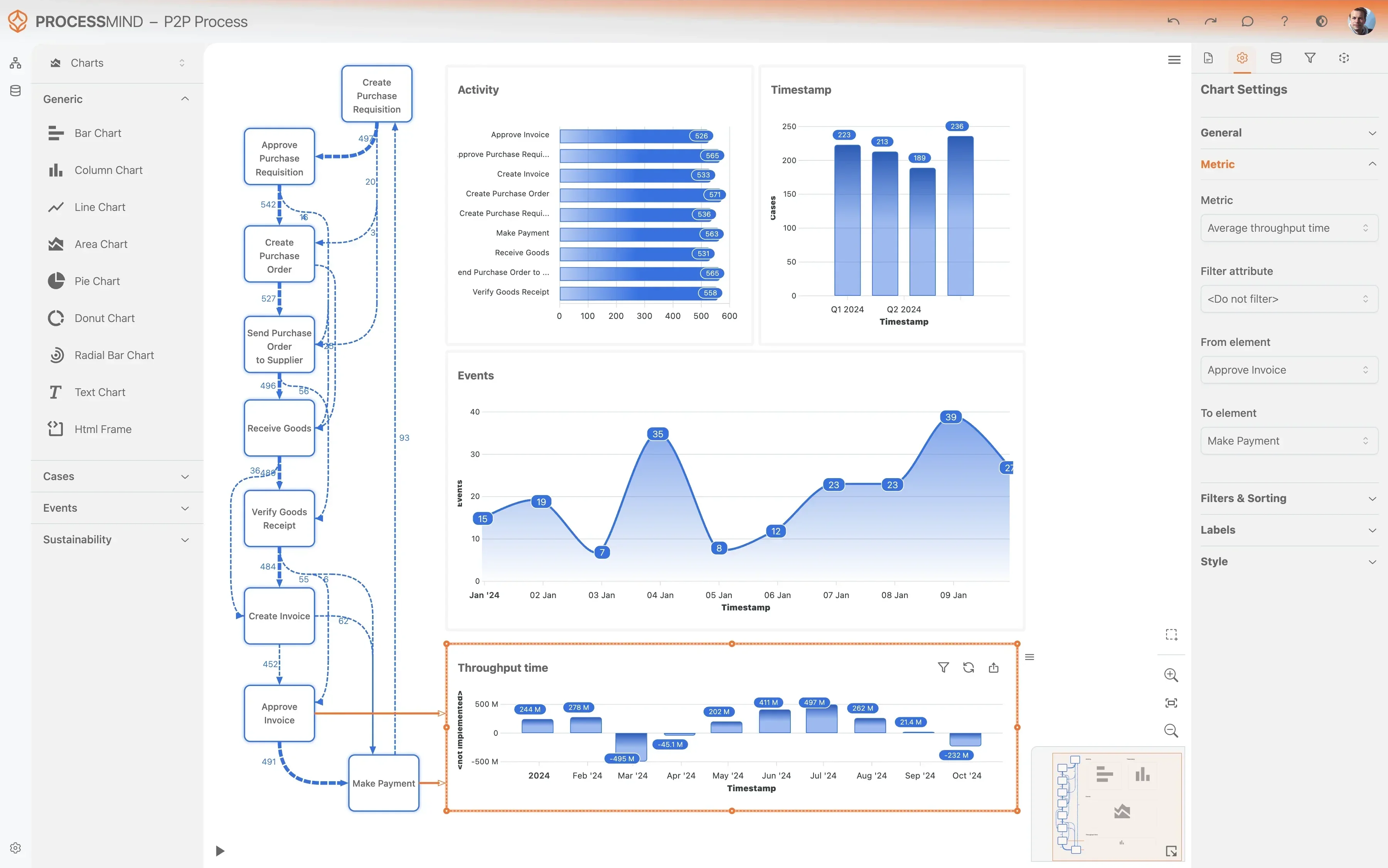
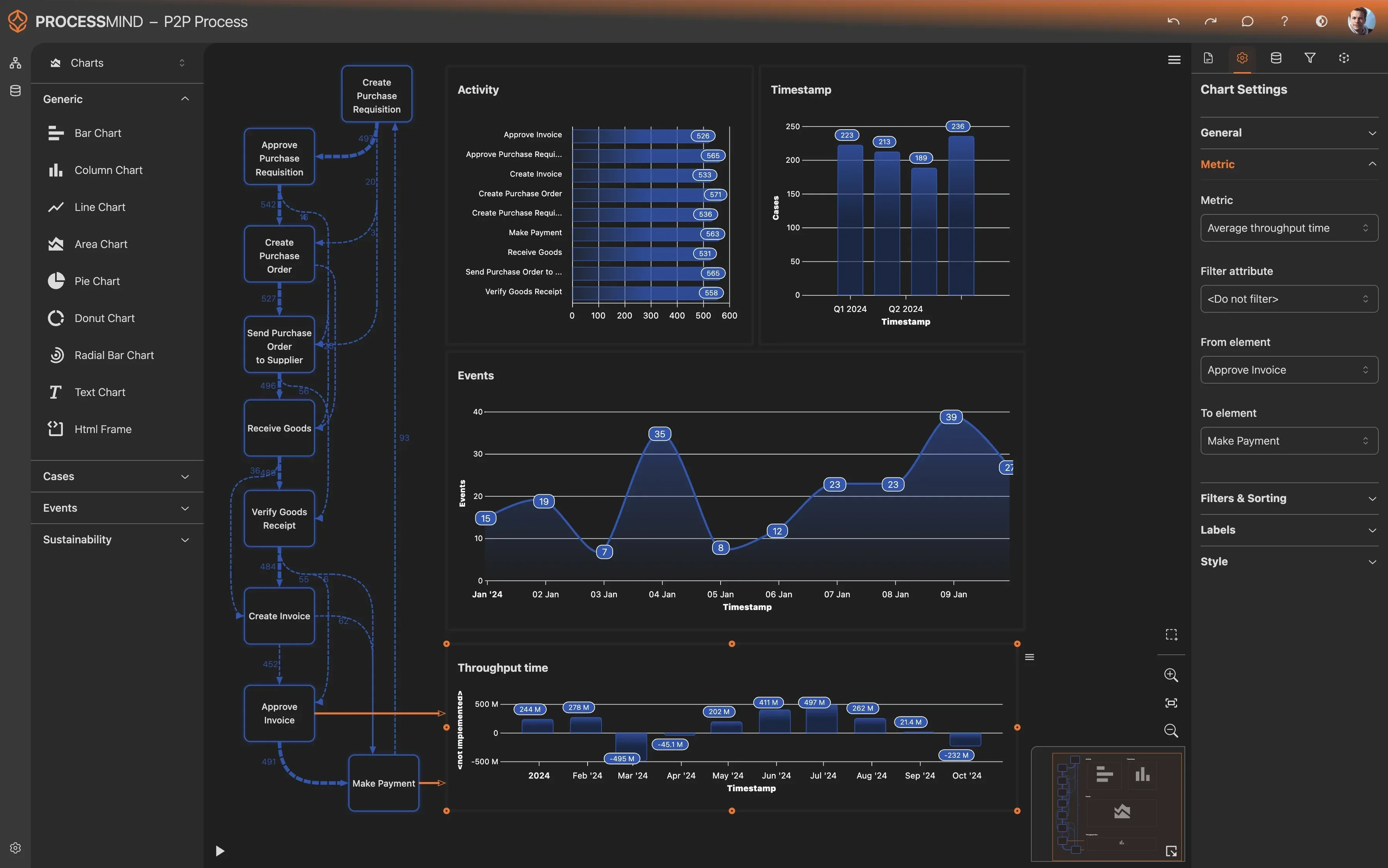
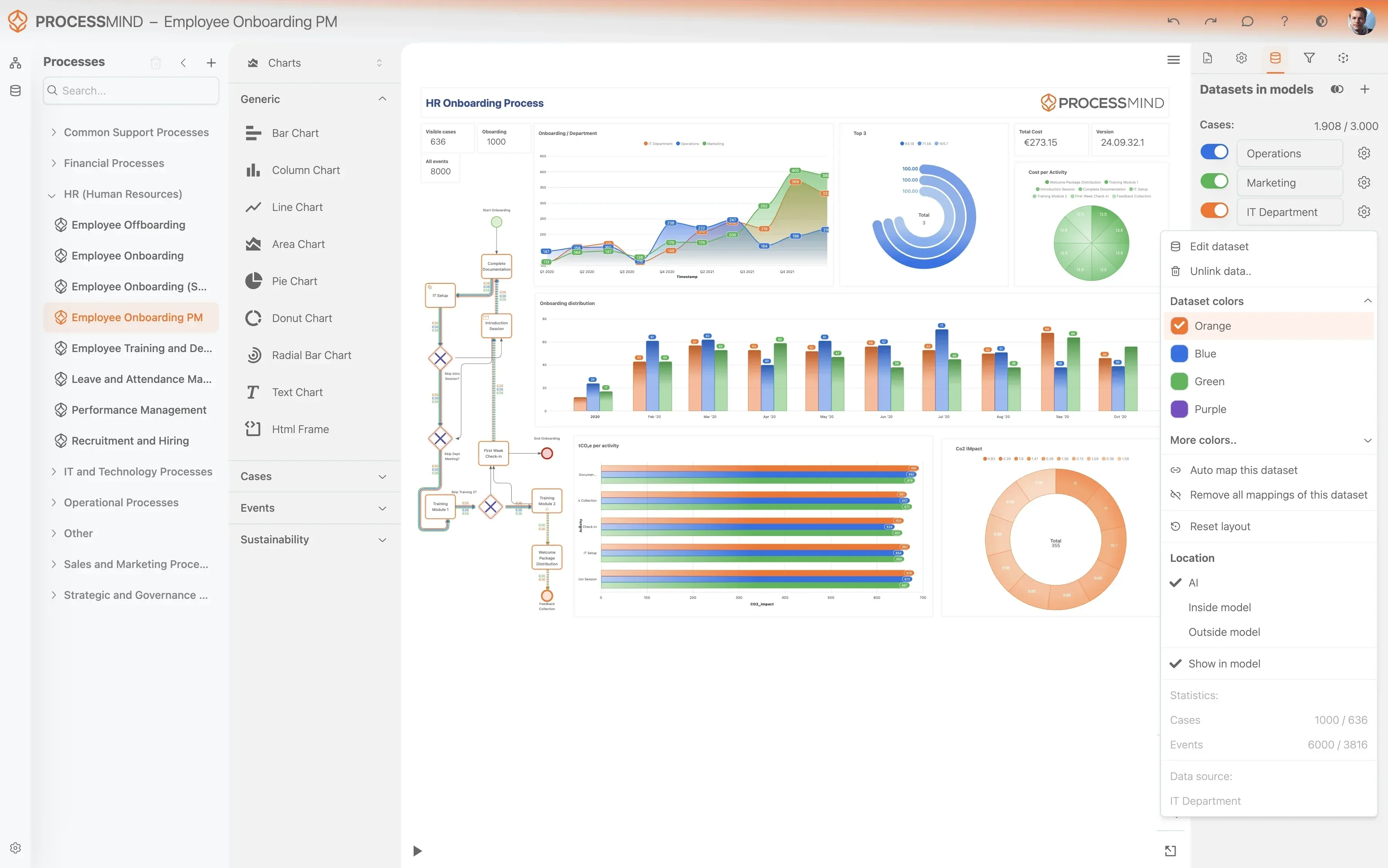
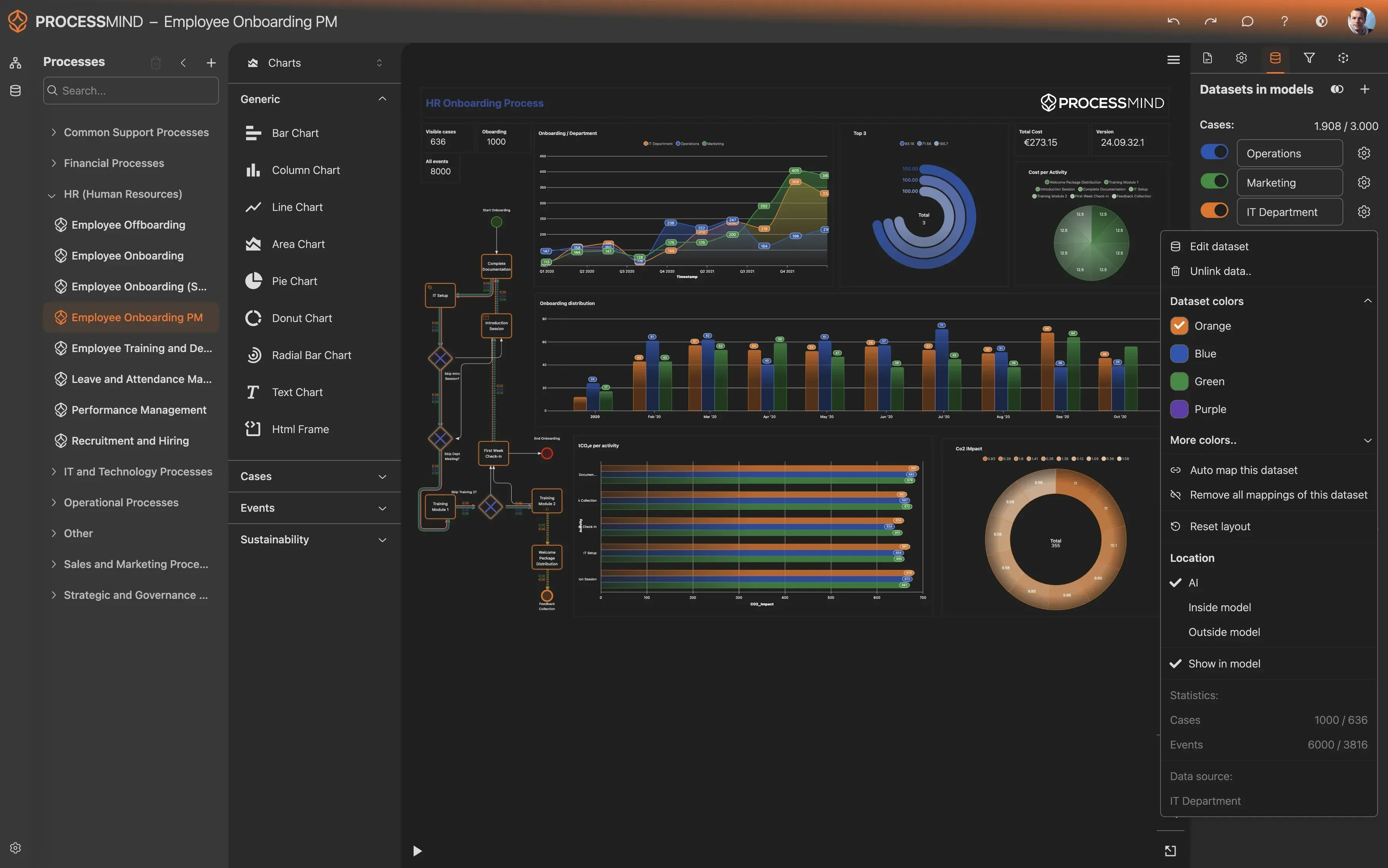
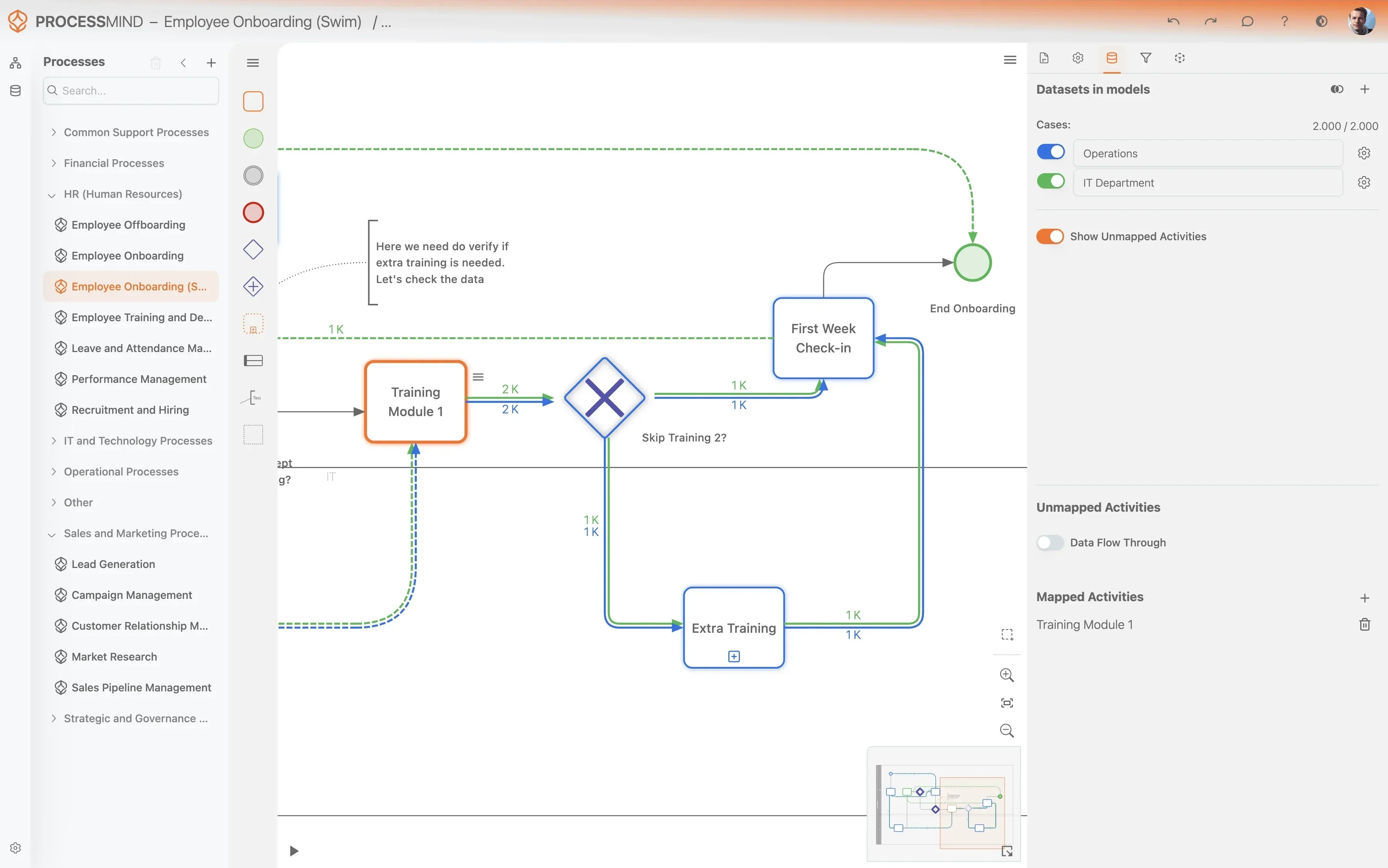
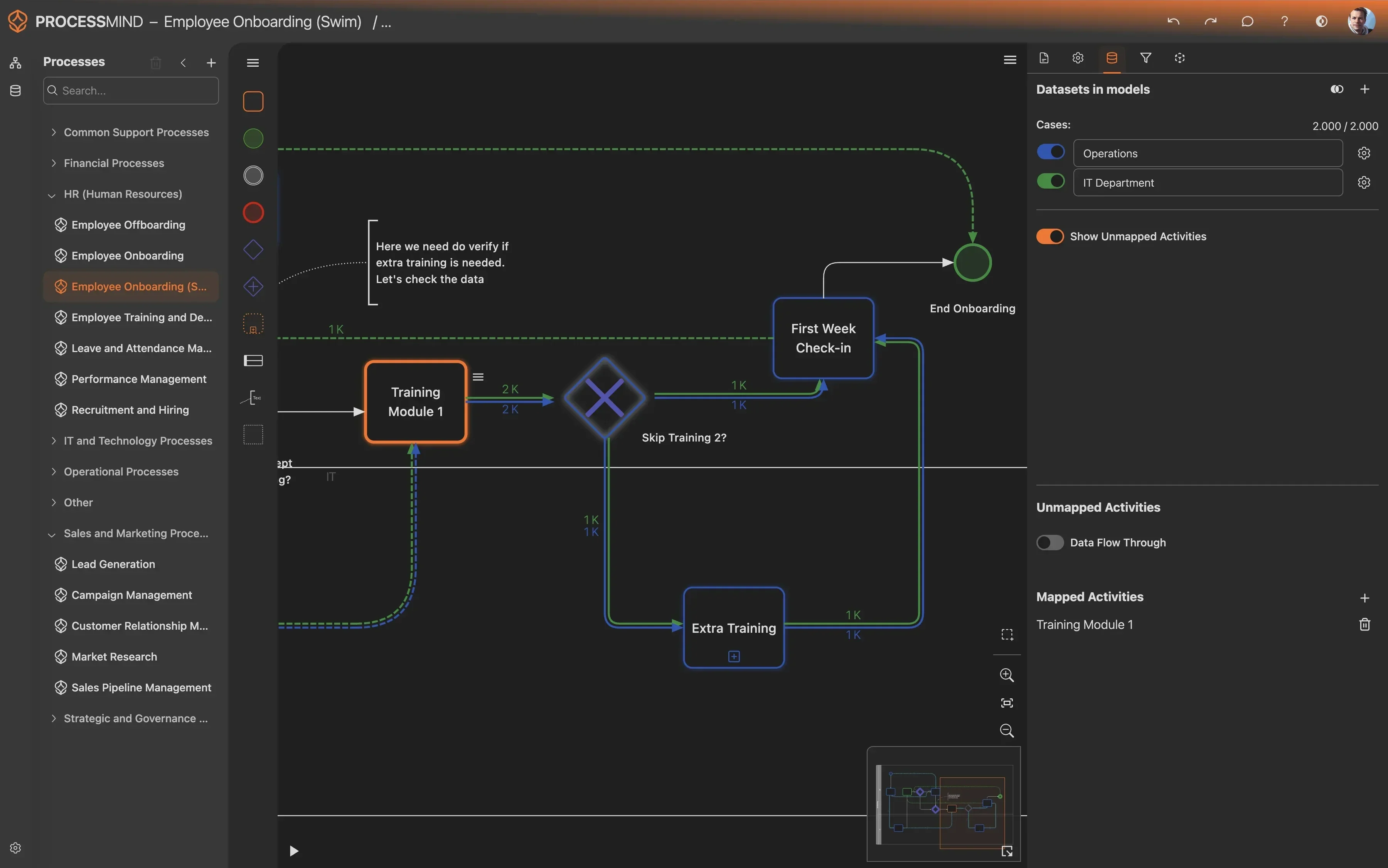
- Visualize complete payroll process flows
- Identify manual correction bottlenecks
- Pinpoint delays in approval sequences
- Compare cycle times across departments
PROVEN OUTCOMES
Maximizing Oracle HCM Payroll Efficiency
Organizations leverage process mining to streamline their payroll records, pinpointing specific inefficiencies that cause delays and manual errors during the payroll cycle. By analyzing the end-to-end flow within Oracle HCM Cloud, teams can implement data-driven improvements that reduce operational costs and enhance accuracy.
Reduction in manual corrections
By identifying the root causes of calculation errors and data entry failures, organizations minimize manual intervention and reduce rework during the final payroll run.
Shortened timesheet workflows
Streamlining the process from submission to approval ensures that the payroll schedule begins on time, preventing bottlenecks that often delay financial disbursements.
Meeting processing deadlines
Enhanced visibility into the end to end flow allows teams to consistently hit regulatory and internal deadlines, ensuring that all payroll records are executed on schedule.
Optimized result validation
Improving initial data quality reduces the number of payroll result previews required before final approval, significantly accelerating the path to payment execution.
Rapid digital publishing
Automating the steps following bank file generation ensures that employees receive their digital documentation immediately after payment, improving overall satisfaction.
Faster exception resolution
Standardizing communication between specialists and data owners reduces the time spent resolving audit flags, preventing delays in complex pay groups.
Results vary based on process complexity and data quality. These figures represent typical improvements observed across various Oracle HCM Cloud Payroll implementations.
Recommended Data
FAQs
Frequently asked questions
It is a data-driven technique that uses event logs from Oracle HCM Cloud to visualize the end to end payroll cycle. By mapping every step from timesheet entry to pay slip publishing, it identifies hidden bottlenecks and compliance risks that traditional reports might miss.
Data is extracted using the Oracle HCM Cloud API or through the Oracle BI Publisher tool to pull audit logs and transaction history. We specifically look for timestamps associated with payroll records, status changes, and approval actions to reconstruct the process flow accurately.
Initial process maps and bottleneck identification can typically be achieved within two to four weeks once the data connection is established. This timeframe includes the data cleaning phase and the initial mapping of your specific payroll configurations and pay groups.
Yes, by identifying the specific data errors or missing approvals that trigger manual corrections, you can address root causes earlier in the cycle. Reducing these iterations leads to a more streamlined process and ensures bank transfer files are generated on time.
Process mining complements traditional reporting by showing how work actually flows between steps rather than just providing static totals. While reports tell you that a delay occurred, process mining shows you where and why the delay happened within the sequence of events.
Data security is a priority, and we use anonymization techniques to mask personally identifiable information before analysis begins. The focus is on the movement of the payroll record through the system rather than individual salary details or private employee information.
The system tracks the time elapsed between the submission of a timesheet and its final approval in Oracle HCM. By highlighting specific pay groups or departments where delays are frequent, management can intervene to standardize processing times across the organization.
You will need access to the Oracle HCM Cloud environment with permissions to export data or connect via API. Additionally, a clear understanding of your organizational payroll calendar and custom status codes is helpful for accurately mapping the process stages.
Optimize Your Payroll Processing in Oracle HCM Today
Reduce payroll cycle time by 30% and eliminate bottlenecks.
No credit card required. Setup in minutes.