Improve Your Hire to Retire - Employee Lifecycle

Optimize Hire to Retire in Oracle HCM Onboarding for Enhanced Employee Journeys
Managing the employee lifecycle can be complex, often leading to delays and compliance risks. Our platform helps you pinpoint exact inefficiencies across onboarding, career progression, and offboarding. Discover practical ways to enhance employee experience and operational efficiency.
Download our pre-configured data template and address common challenges to reach your efficiency goals. Follow our six-step improvement plan and consult the Data Template Guide to transform your operations.
Show detailed description
Why Optimize Your Hire to Retire Employee Lifecycle?
The employee lifecycle, from initial recruitment to final departure, represents a significant investment and a critical success factor for any organization. Managing the Hire to Retire - Employee Lifecycle effectively is not just an HR function, it is a strategic business imperative. Inefficiencies in this comprehensive process can lead to substantial financial losses, including increased recruitment costs, lost productivity, compliance penalties, and high employee turnover. Each delay, manual hand-off, or deviation from the standard path within your HR operations, particularly when leveraging systems like Oracle HCM Onboarding, can accumulate, impacting both the employee experience and your bottom line. Optimizing this lifecycle ensures you are not only attracting and retaining top talent but also maximizing their potential and ensuring a smooth, compliant exit when the time comes. Understanding the true flow of this process is the first step toward significant improvements and creating a world-class employee journey.
Unlocking Insights with Process Mining for Hire to Retire
Process mining offers a powerful, data-driven approach to understanding and improving your Hire to Retire - Employee Lifecycle within Oracle HCM Onboarding and other integrated systems. Instead of relying on assumptions or anecdotal evidence, process mining analyzes actual event log data, providing an objective, x-ray view of how your processes truly execute. By using each Employee ID as a unique case identifier, you can trace the complete journey of every employee, from the moment a Job Requisition is Created to Offboarding Tasks Completed. This capability allows you to pinpoint exact bottlenecks, understand the root causes of long cycle times, and identify process deviations that hinder efficiency. For instance, you can easily visualize where Offer Acceptance often gets delayed, or how long it truly takes from Background Check Initiated to Employee Onboarded, giving you concrete data to drive your process optimization efforts. You can answer critical questions such as, "How to improve Hire to Retire - Employee Lifecycle cycle time?" and identify variations between departments or managers.
Key Improvement Areas in the Employee Journey
Leveraging process mining on your Hire to Retire - Employee Lifecycle data, especially from Oracle HCM Onboarding, reveals specific areas ripe for improvement:
- Onboarding Efficiency: Accelerate the time it takes for new hires to become fully productive by identifying delays in payroll setup, training assignment, or system access provisioning. Streamline the initial stages managed by Oracle HCM Onboarding to create a superior new hire experience.
- Career Progression and Development: Uncover bottlenecks in promotion approvals, role change initiations, or training program completion. Ensure employees are progressing effectively through their careers.
- Performance Management: Optimize the timing and consistency of performance reviews, ensuring timely feedback and development opportunities are provided.
- Compliance and Risk Mitigation: Automatically detect instances where critical compliance steps, such as background checks or policy acknowledgments, are bypassed or delayed, reducing organizational risk.
- Offboarding Process: Streamline the exit process, ensuring all tasks, from exit interviews to system access revocation, are completed efficiently and compliantly, protecting intellectual property and facilitating knowledge transfer.
Tangible Outcomes of Hire to Retire Process Optimization
Optimizing your Hire to Retire - Employee Lifecycle through process mining delivers a range of measurable benefits:
- Reduced Cycle Times: Significantly decrease the average time from candidate sourcing to employee onboarding, and from termination initiation to offboarding completion. This directly addresses the challenge of "how to reduce Hire to Retire - Employee Lifecycle cycle time".
- Cost Savings: Lower recruitment costs, reduce administrative overhead associated with manual tasks and rework, and minimize penalties from compliance gaps.
- Enhanced Employee Experience: A smoother, more transparent employee journey leads to higher satisfaction, better engagement, and improved talent retention.
- Improved Compliance: Ensure all regulatory requirements and internal policies are met consistently across the entire employee lifecycle, minimizing legal and financial risks.
- Data-Driven Decision Making: Empower HR and operational leaders with actionable insights to make informed decisions for continuous process improvement.
Getting Started with Your Hire to Retire Analysis
Understanding and enhancing your Hire to Retire - Employee Lifecycle in Oracle HCM Onboarding does not require a deep technical background. With the right tools and approach, you can quickly gain a comprehensive, data-driven perspective on your current processes. By applying process mining, you are not just analyzing data, you are unlocking the true potential of your workforce and driving strategic value across your organization. Begin your journey toward data-driven process optimization today and transform how you manage your most valuable asset, your people.
The 6-Step Improvement Path for Hire to Retire - Employee Lifecycle
Download the Template
What to do
Obtain the specialized Excel template designed for Hire to Retire, ensuring it aligns with common data points from Oracle HCM Onboarding for seamless integration.
Why it matters
Starting with the correct data structure prevents common data quality issues and accelerates your analysis, setting a strong foundation for accurate insights.
Expected outcome
A pre-formatted Excel template ready for populating with your Oracle HCM Onboarding data.
Export Your Data
What to do
Extract 3-6 months of historical employee lifecycle data from Oracle HCM Onboarding, focusing on activities like onboarding, promotions, and offboarding. Populate the downloaded template.
Why it matters
Using recent, comprehensive data provides a realistic view of your current process performance, allowing you to identify critical areas for improvement within the employee journey.
Expected outcome
Your Hire to Retire data from Oracle HCM Onboarding, organized and ready in the template.
Upload Your Dataset
What to do
Securely upload your completed Excel template containing the Hire to Retire data to the ProcessMind platform. The system will then automatically process your information.
Why it matters
This step initiates the automated analysis process, quickly transforming raw data into actionable insights without manual processing, saving time and resources.
Expected outcome
Your Hire to Retire process data successfully uploaded and undergoing automated analysis.
Analyze Your Process
What to do
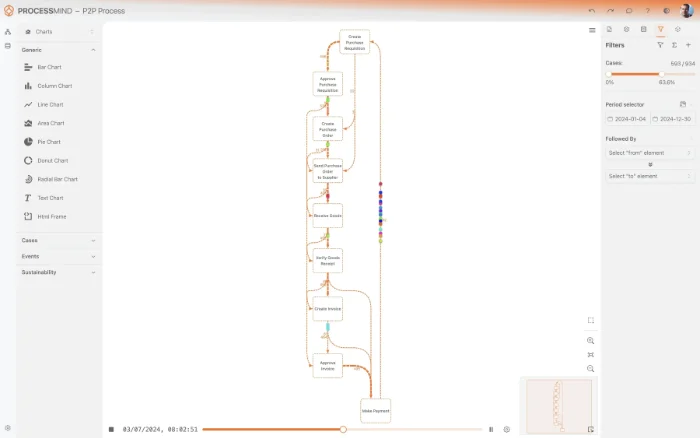
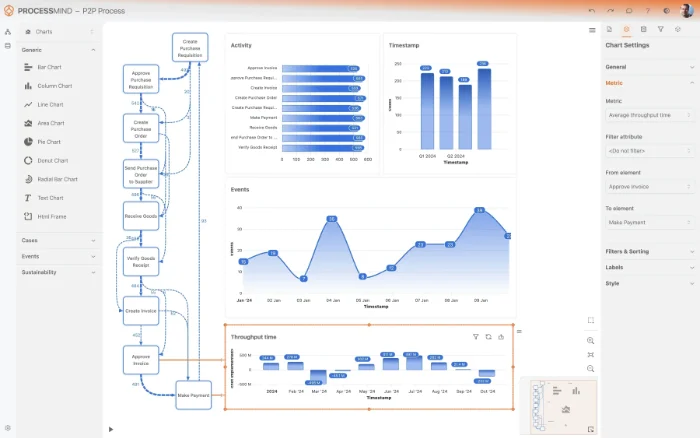
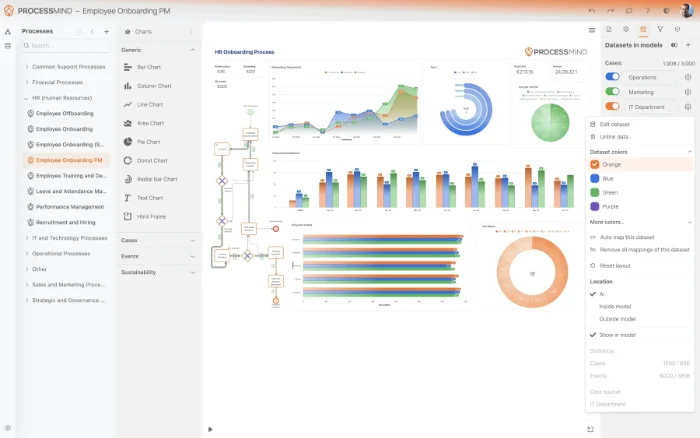
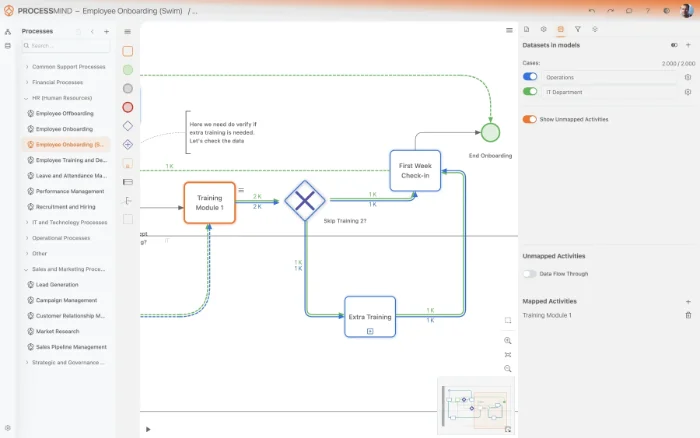
Explore the auto-generated dashboards and visual process maps for your Hire to Retire journey. Leverage AI-driven recommendations to pinpoint inefficiencies and bottlenecks.
Why it matters
Understanding the actual flow of your employee lifecycle, rather than assumed paths, reveals hidden delays, compliance risks, and opportunities for a better employee experience.
Expected outcome
A clear, visual understanding of your Hire to Retire process and prioritized, AI-driven improvement recommendations.
Implement Improvements
What to do
Prioritize the identified improvement opportunities in your Oracle HCM Onboarding process, such as streamlining onboarding tasks or automating routine HR actions. Take decisive action on these insights.
Why it matters
Translating insights into action directly addresses process inefficiencies, leading to tangible benefits like faster onboarding, reduced administrative burden, and improved employee satisfaction.
Expected outcome
Concrete changes implemented within your Oracle HCM Onboarding system based on data-driven insights.
Monitor Your Process
What to do
Periodically re-upload updated Hire to Retire data from Oracle HCM Onboarding to track the impact of your implemented changes. Continuously measure key performance indicators.
Why it matters
Ongoing monitoring ensures that improvements are sustained, new issues are quickly detected, and your Hire to Retire process consistently delivers optimal efficiency and employee experience.
Expected outcome
Continuous oversight of your Hire to Retire process, with measurable improvements in KPIs and ongoing optimization.
WHAT YOU WILL GET
Unlock Oracle HCM Onboarding's Hidden Process Truths
- See your actual Hire to Retire process flow
- Pinpoint onboarding delays and compliance risks
- Enhance employee experience across the lifecycle
- Boost operational efficiency in Oracle HCM
TYPICAL OUTCOMES
Achieve Tangible Improvements in Your Employee Lifecycle
These outcomes illustrate the measurable benefits organizations typically gain by optimizing their Hire to Retire, Employee Lifecycle processes. By leveraging process mining on Oracle HCM Onboarding data, businesses can pinpoint bottlenecks and streamline operations, leading to significant efficiencies.
Average reduction in cycle time
Streamline new hire journeys, reducing the time from offer acceptance to full productivity.
Improvement in policy adherence
Ensure HR processes meet regulatory standards and internal policies, reducing compliance risks.
Decrease in process variations
Uncover and eliminate unnecessary process deviations, creating a consistent and efficient new hire experience.
Shorter lead times for clearances
Accelerate critical pre-employment checks, minimizing delays in new hire start dates.
Quicker completion of exit tasks
Optimize the employee departure process, ensuring timely completion of all offboarding activities.
Increased rate of timely payroll activation
Guarantee that new hires receive accurate and timely first payments by eliminating payroll setup delays.
Results vary based on process complexity, data quality, and organizational context. These figures represent typical improvements observed across various implementations.
Recommended Data
FAQs
Frequently asked questions
Process mining visualizes the actual flow of your H2R process, uncovering bottlenecks, deviations, and rework loops. It identifies specific areas where onboarding delays occur, compliance risks emerge, or employee experiences become inconsistent within Oracle HCM. This helps you pinpoint exactly where to focus your improvement efforts.
Process mining analyzes event logs from Oracle HCM Onboarding to show the exact paths new hires take and where they get stuck. It quantifies the duration of each step and identifies variations that lead to delays or inconsistent experiences. This data-driven insight helps you target root causes for faster, more standardized onboarding.
We primarily need event logs detailing activities, timestamps, and case identifiers, such as employee ID. This includes data from various H2R stages, like application submission, background checks, training assignments, payroll setup, and offboarding events. Extracting this structured data from your Oracle HCM system is crucial for a comprehensive analysis.
The main technical requirement is access to your Oracle HCM Onboarding database or an API to extract event log data. We also need a secure way to transfer this data to the process mining platform. No extensive IT infrastructure changes are typically required on your end, as most platforms are cloud-based.
Initial insights and a clear visualization of your H2R process can often be generated within a few weeks after data extraction and ingestion. Identifying significant bottlenecks and potential optimization areas usually follows within the first month. The speed depends on data availability and the complexity of the process being analyzed.
Yes, process mining can highlight instances where process steps deviate from defined compliance protocols or regulatory requirements. It can automatically detect missing approvals, skipped mandatory training, or delayed actions that could lead to compliance risks. This helps ensure your H2R process adheres to established policies.
No, process mining is a non-invasive analytical technique. It works by analyzing historical data extracted from your Oracle HCM system, so it does not interfere with live operations or require changes to your current workflows. The analysis happens in parallel, providing insights without disruption.
The first step is typically a discovery call to understand your specific H2R challenges and data landscape within Oracle HCM Onboarding. This helps us define the scope, identify key data sources, and outline a tailored approach for data extraction and initial analysis.
Start Optimizing Your Hire to Retire Lifecycle Today
Achieve 30% faster Hire to Retire cycles and boost employee experience.
No credit card required. Setup in minutes.