Improve Your Hire to Retire - Position Management

Your 6-step guide to optimizing Position Management in D365 HR.
Improve Your Hire to Retire - Position Management

Optimize Position Management in Dynamics 365 HR for Efficiency

Position management processes often encounter inefficiencies and compliance concerns. Our platform helps you pinpoint bottlenecks that slow down your processes, allowing you to optimize resource allocation. This ensures your staffing structures are accurate and operational efficiency is maximized.

Download our pre-configured data template and address common challenges to reach your efficiency goals. Follow our six-step improvement plan and consult the Data Template Guide to transform your operations.

Show detailed description

Why Optimize Hire to Retire - Position Management?

Effective Position Management is a cornerstone of a well-functioning human resources department, especially within comprehensive systems like Microsoft Dynamics 365 Human Resources. It’s more than just administrative work; it directly impacts your organization’s ability to attract and retain talent, manage budgets, and maintain an accurate organizational structure. When the Hire to Retire - Position Management process is inefficient, it can lead to significant issues. Delays in approving and creating new positions can slow down critical hiring initiatives, leaving essential roles unfilled and impacting productivity. Budget overruns can occur if positions are not managed transparently, and a lack of clear process adherence can expose your organization to compliance risks. Understanding the complete lifecycle of a position, from its initial request to its eventual closure, is vital for operational excellence and strategic workforce planning.

How Process Mining Illuminates Position Management

Process mining offers a powerful, data-driven approach to dissecting your Hire to Retire - Position Management process. Instead of relying on manual audits or anecdotal evidence, it uses actual event logs from Microsoft Dynamics 365 Human Resources to reconstruct the entire process flow. This “X-ray vision” allows you to visualize every step a position takes, identify precisely where the process deviates from the ideal path, and measure the true cycle time of each activity. For example, you can pinpoint the exact duration it takes for a “Position Request Approved by Manager” to move to “Position Request Approved by HR,” or analyze the efficiency of “Position Created in HR System.” By revealing these hidden bottlenecks and inefficiencies, process mining provides the actionable insights necessary to understand the real root causes of delays, compliance gaps, and resource drain within your position management lifecycle. It is the ultimate tool for understanding how to improve Hire to Retire - Position Management.

Key Improvement Areas in Position Management

Applying process mining to your Hire to Retire - Position Management process in Microsoft Dynamics 365 Human Resources will highlight several critical areas for improvement:

  • Streamlining Approval Workflows: You can identify unnecessarily long approval chains, pinpoint specific approvers or departments that introduce delays, and uncover instances where parallel approvals could replace sequential ones. This directly impacts the cycle time for new position creation.
  • Enhancing Data Accuracy and Timeliness: Discover where discrepancies arise when position attributes are modified or where positions are activated or deactivated without proper oversight. Ensuring accurate and timely data entry for activities like “Position Created in HR System” is crucial for maintaining an up-to-date organizational chart.
  • Strengthening Compliance and Governance: Process mining helps you identify instances where critical compliance steps, such as “Position Reviewed for Compliance,” are bypassed or delayed. This ensures all regulatory and internal policy requirements are consistently met.
  • Optimizing Resource Allocation: By understanding the actual time positions spend in various states, such as “Position Frozen/Suspended” or “Position Deactivated,” you gain insights into resource utilization and can make more informed staffing decisions.
  • Reducing Rework: Identify common patterns of rework, for example, frequent “Position Attributes Modified” events shortly after initial creation, indicating potential issues with initial request clarity or data input accuracy.

These detailed insights empower you to make targeted improvements, transforming your Hire to Retire - Position Management process from a potential bottleneck into a strategic enabler.

Expected Outcomes and Measurable Benefits

Optimizing your Hire to Retire - Position Management process through process mining yields significant, measurable benefits across your organization:

  • Increased Efficiency: Expect a substantial reduction in the overall cycle time for creating, modifying, and closing positions. This translates to faster staffing, quicker responses to organizational changes, and reduced administrative burden.
  • Cost Savings: By streamlining workflows and automating manual steps, you can significantly lower operational costs associated with position management. Optimized resource allocation further contributes to budgetary efficiency.
  • Enhanced Compliance: Achieve consistent adherence to internal policies and external regulations, reducing the risk of penalties and improving your audit readiness. Every “Position Reviewed for Compliance” step becomes transparent and verifiable.
  • Improved Data Quality: Maintain a highly accurate and reliable representation of your organizational structure within Microsoft Dynamics 365 Human Resources, which is foundational for all other HR functions and strategic decision-making.
  • Greater Organizational Agility: With a more efficient and responsive position management process, your organization can adapt more quickly to market demands and strategic shifts, ensuring your staffing structure always supports your business goals. These outcomes demonstrate how to reduce Hire to Retire - Position Management cycle time effectively.

Getting Started with Position Management Process Analysis

Embarking on the journey to optimize your Hire to Retire - Position Management process within Microsoft Dynamics 365 Human Resources is straightforward with the right tools. By leveraging process mining, you can quickly move from assumptions to data-driven insights. Begin by analyzing your current process flows to uncover inefficiencies and opportunities for improvement. The rich data available in your HR system is a goldmine waiting to be explored, providing you with the clarity needed to make impactful changes and achieve superior operational outcomes.

Hire to Retire - Position Management HR Position Management Workforce Planning Organizational Management HR Compliance Staffing Efficiency HR Process Optimization Resource Allocation Human Resources Cycle Time Reduction

Common Problems & Challenges

Identify which challenges are impacting you

Delays in manager, HR, and budget approvals for new or modified positions significantly prolong the staffing process. This extends time-to-hire and can impede critical project starts, leading to lost productivity and potential revenue impact.ProcessMind identifies where approval workflows stall within Hire to Retire - Position Management in Microsoft Dynamics 365 Human Resources. By visualizing actual paths and bottlenecks, organizations can pinpoint the exact stages and users causing delays, enabling targeted process improvements.

Positions often undergo multiple attribute modifications after initial creation, indicating either unclear initial requirements or reactive organizational shifts. This constant churn creates administrative overhead, data inconsistencies, and uncertainty in workforce planning.ProcessMind analyzes the sequence and frequency of Position Attributes Modified activities in Hire to Retire - Position Management. This reveals patterns of rework and identifies root causes, such as inadequate initial definition or lack of clear guidelines within Microsoft Dynamics 365 Human Resources.

Positions may be created, modified, or reclassified without proper compliance checks or all required approvals, exposing the organization to regulatory non-compliance or internal policy violations. Such oversights can lead to audits, penalties, or reputational damage.ProcessMind uncovers deviations from standard compliance workflows for position management within Microsoft Dynamics 365 Human Resources. It highlights instances where Position Reviewed for Compliance activities are skipped or incomplete, ensuring adherence to established Hire to Retire protocols.

Significant delays occur between budget approval for a position and its actual creation in the HR system, hindering recruitment efforts. This gap impacts the organization's ability to swiftly adapt to staffing needs and fill critical roles.ProcessMind visualizes the flow from Position Budget Approved to Position Created in HR System within Hire to Retire - Position Management. It identifies specific handover points and tasks within Microsoft Dynamics 365 Human Resources that cause hold-ups, enabling process streamlining.

Positions remain frozen, suspended, or inactive for extended periods without clear reasons or subsequent action. This ties up budget, skews workforce planning data, and represents inefficient resource allocation, impacting the bottom line.ProcessMind tracks the lifecycle of positions, highlighting those with prolonged Position Frozen/Suspended or Position Deactivated statuses in Hire to Retire - Position Management. It reveals where inactive positions persist unnecessarily, allowing for better resource utilization within Microsoft Dynamics 365 Human Resources.

Without a clear view of the entire position management journey, it is challenging to understand actual process flows, identify hidden delays, or assess overall efficiency. This lack of transparency leads to reactive management and missed optimization opportunities.ProcessMind provides a comprehensive, end-to-end visualization of every event related to a Position ID in Hire to Retire - Position Management. It maps actual process paths, revealing true cycle times and variations, offering unparalleled insight into Microsoft Dynamics 365 Human Resources operations.

Discrepancies or inaccuracies in position attributes, such as department, cost center, or location, often lead to errors in reporting, budgeting, and workforce planning. These data quality issues can propagate throughout connected HR systems and downstream processes.ProcessMind analyzes attribute changes and inconsistencies across the Hire to Retire - Position Management process within Microsoft Dynamics 365 Human Resources. It pinpoints where and why data quality issues arise, enabling proactive measures to ensure data integrity from the source.

Frequent reclassification of positions points to potential issues in initial job design, organizational structure stability, or reactive changes. Each reclassification incurs administrative costs and can create confusion regarding roles and responsibilities.ProcessMind maps the frequency and triggers of Position Reclassified activities within Hire to Retire - Position Management. It helps identify patterns that may indicate a need for clearer job family definitions or more stable organizational planning within Microsoft Dynamics 365 Human Resources.

Even after all approvals, a lag exists before positions are officially activated and ready for recruitment. This delay directly impacts time-to-fill metrics and can cause talent acquisition teams to miss out on qualified candidates.ProcessMind tracks the time elapsed between Position Budget Approved or Position Created in HR System and Position Activated events in Hire to Retire - Position Management. This analysis highlights specific bottlenecks in the final activation steps within Microsoft Dynamics 365 Human Resources.

Errors in initial position request submission or subsequent approval steps often necessitate manual corrections, re-submissions, or repeated attribute modifications. This rework wastes valuable HR time and resources, increasing operational costs.ProcessMind identifies "rework loops" and deviations in the Hire to Retire - Position Management process within Microsoft Dynamics 365 Human Resources. It visualizes cases where Position Attributes Modified activities occur unexpectedly early or repeatedly, pointing to upstream errors and inefficiencies.

Without clear, up-to-date information on actual position status and usage, organizations struggle to make informed decisions about workforce planning and resource allocation. This leads to suboptimal staffing and potential overspending.ProcessMind provides real-time insights into the actual state and movement of positions throughout the Hire to Retire - Position Management process. By revealing actual utilization patterns, it empowers better, data-driven resource allocation decisions within Microsoft Dynamics 365 Human Resources.

Typical Goals

Define what success looks like

This goal aims to significantly cut down the time it takes for new or modified positions to be approved across all stakeholders. Achieving this means faster staffing, reduced time-to-fill, and a more agile response to organizational needs within Hire to Retire - Position Management, directly impacting productivity and operational efficiency in Microsoft Dynamics 365 Human Resources. It translates to considerable cost savings from reduced vacancy periods and quicker project initiation.
ProcessMind analyzes the actual workflows for position approvals, identifying specific bottlenecks, redundant steps, or handover delays. By visualizing each stage of the approval process and comparing it against target durations, ProcessMind enables data-driven decisions to streamline the process, optimize resource allocation, and measure the impact of changes on cycle time reduction.

The objective here is to remove any impediments that delay the initial creation of new positions, ensuring a smooth and efficient start to the Hire to Retire - Position Management lifecycle. This directly supports faster workforce expansion and ensures that critical roles are established without unnecessary waiting periods, improving the overall responsiveness of HR operations in Microsoft Dynamics 365 Human Resources and enhancing organizational agility.
ProcessMind provides a comprehensive view of the position creation process, from initiation to completion, highlighting exactly where delays occur. It uncovers variations in the process that lead to bottlenecks, identifies non-standard paths, and quantifies the impact of each bottleneck, allowing for targeted interventions to optimize the position creation workflow.

This goal focuses on ensuring that all position-related data, such as title, department, cost center, and status, is accurate, uniform, and up-to-date across Microsoft Dynamics 365 Human Resources. High data consistency is crucial for reliable reporting, accurate workforce planning, and maintaining compliance with internal policies and external regulations, preventing errors and rework in Hire to Retire - Position Management.
ProcessMind can identify instances of inconsistent data by analyzing event logs related to Position Attributes Modified activities, revealing patterns of data changes and their root causes. By mapping the process of data entry and updates, it highlights points where manual errors or system integrations lead to discrepancies, providing insights to standardize data governance and improve data quality.

Achieving this goal means gaining a complete and transparent view of every stage a position goes through, from its request and creation to its activation, modification, and eventual closure within the Hire to Retire - Position Management process. Enhanced visibility empowers HR and management to proactively monitor position statuses, predict staffing needs, and make informed decisions, significantly improving strategic workforce planning in Microsoft Dynamics 365 Human Resources.
ProcessMind automatically reconstructs the end-to-end journey of each position based on event data, providing an interactive visual process map. It allows users to track current statuses, identify stagnant positions, and understand the paths positions typically take, revealing deviations from the ideal flow and offering a clear, data-driven understanding of the entire lifecycle.

This goal aims to significantly reduce the time from a position's approval to its official activation, making it available for hiring. A faster activation process directly contributes to quicker hiring cycles, minimizes the impact of vacancies, and ensures that the organization can deploy its workforce efficiently, ultimately reducing operational costs and enhancing the effectiveness of Hire to Retire - Position Management in Microsoft Dynamics 365 Human Resources.
ProcessMind analyzes the sequential activities leading to position activation, identifying delays and dependencies that prolong the process. It helps uncover why certain positions take longer to activate, whether due to pending approvals, data entry issues, or other administrative hurdles, allowing organizations to streamline these steps and achieve faster activation.

The objective here is to minimize the amount of effort and resources spent on correcting errors or redoing tasks within the Hire to Retire - Position Management process. Reducing rework leads to substantial cost savings, improves operational efficiency, and enhances the overall quality and accuracy of position data and management activities in Microsoft Dynamics 365 Human Resources. It frees up HR staff to focus on more strategic initiatives.
ProcessMind maps out all process flows, including those with deviations and loops indicative of rework. It can pinpoint specific activities or decision points where errors frequently occur, quantify their impact, and identify the root causes, such as incorrect data entry or insufficient approvals, allowing for targeted process improvements to eliminate rework.

This goal is about guaranteeing that all position management activities, from creation to deactivation, strictly follow established organizational policies and regulatory requirements. Ensuring compliance mitigates legal and financial risks, maintains organizational integrity, and builds trust, which is critical for effective Hire to Retire - Position Management in Microsoft Dynamics 365 Human Resources. It helps avoid penalties and reputational damage.
ProcessMind compares the actual paths taken by positions against predefined compliance models or ideal processes. It highlights any deviations, unauthorized steps, or missing approvals that could indicate a compliance breach, allowing HR to proactively identify and address non-compliant behaviors or process gaps to ensure policy adherence.

The aim is to identify and address stale, inactive, or underutilized positions to ensure that the organizational structure is efficient, current, and aligned with strategic goals. Optimizing position utilization frees up budget, clarifies reporting structures, and allows for more effective resource allocation within Hire to Retire - Position Management, contributing to a leaner and more responsive organization in Microsoft Dynamics 365 Human Resources.
ProcessMind can reveal positions that remain in 'Frozen/Suspended' or 'Deactivated' states for extended periods, or those with very infrequent activity. By analyzing the entire lifecycle, it identifies patterns of dormancy or underutilization, providing the data needed to make informed decisions about consolidating, updating, or eliminating these positions.

This goal seeks to reduce the frequency and number of changes made to a position's core attributes after its creation. Frequent changes can indicate instability in organizational design, lead to administrative overhead, and create potential data discrepancies. Minimizing these changes promotes stability, reduces administrative burden, and improves data reliability for Hire to Retire - Position Management in Microsoft Dynamics 365 Human Resources.
ProcessMind tracks all events related to 'Position Attributes Modified,' identifying which attributes are changed most often, by whom, and at what stage of the lifecycle. This analysis helps uncover the root causes of frequent modifications, such as unclear initial definitions or inefficient change request processes, enabling targeted improvements to stabilize position data.

This goal aims to make the process of reclassifying positions more efficient, transparent, and less prone to delays or errors. Streamlining reclassification ensures that positions accurately reflect current responsibilities and organizational needs in a timely manner, reducing administrative burden and improving the accuracy of workforce data in Hire to Retire - Position Management within Microsoft Dynamics 365 Human Resources.
ProcessMind maps the full journey of a position reclassification, from initial request to final approval and update. It helps identify lengthy approval queues, bottlenecks, and non-standard steps that complicate the process. By visualizing these flows, ProcessMind provides insights to simplify the reclassification workflow and reduce overall cycle time.

This goal focuses on leveraging process data to gain deeper understanding into how positions are managed and where resources are allocated, enabling more strategic and effective workforce planning. Better insights allow for optimal deployment of human capital, identification of staffing gaps or overlaps, and more informed decision-making across the Hire to Retire - Position Management lifecycle in Microsoft Dynamics 365 Human Resources.
ProcessMind analyzes the entire position management process, providing a data-driven view of position creation, activation, and deactivation patterns. It helps identify trends in department staffing, cost center assignments, and position types, offering critical insights into resource movements and potential areas for reallocation or optimization based on actual process execution.

The 6-Step Improvement Path for Position Management

1

Download the Template

What to do

Access and download the pre-built Excel template, specifically designed for Hire to Retire - Position Management data from Microsoft Dynamics 365 Human Resources.

Why it matters

A standardized template ensures you collect all necessary position-related data in the correct format, streamlining the analysis process.

Expected outcome

A ready-to-use Excel template with the optimal structure for your Position Management data.

WHAT YOU WILL GET

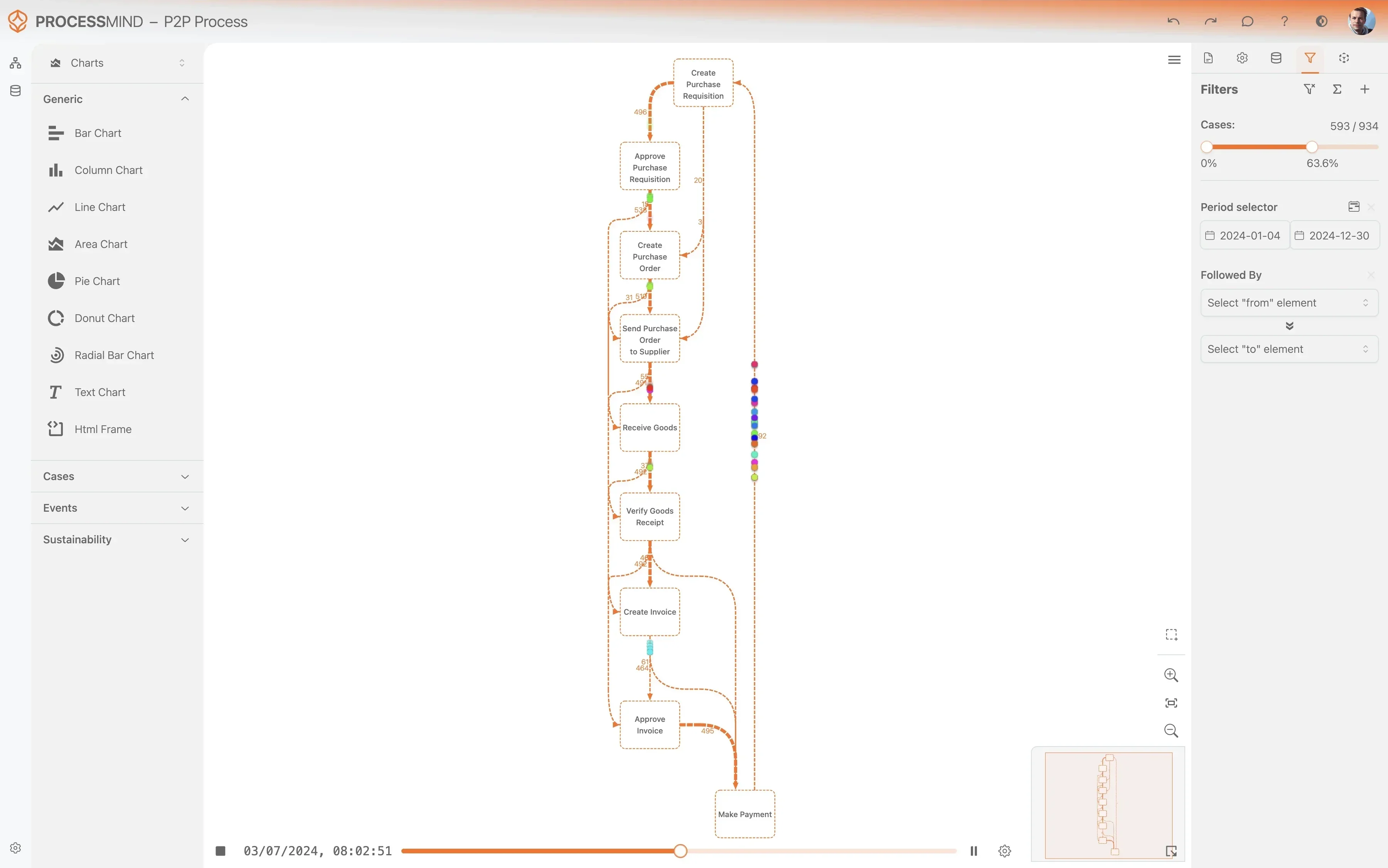
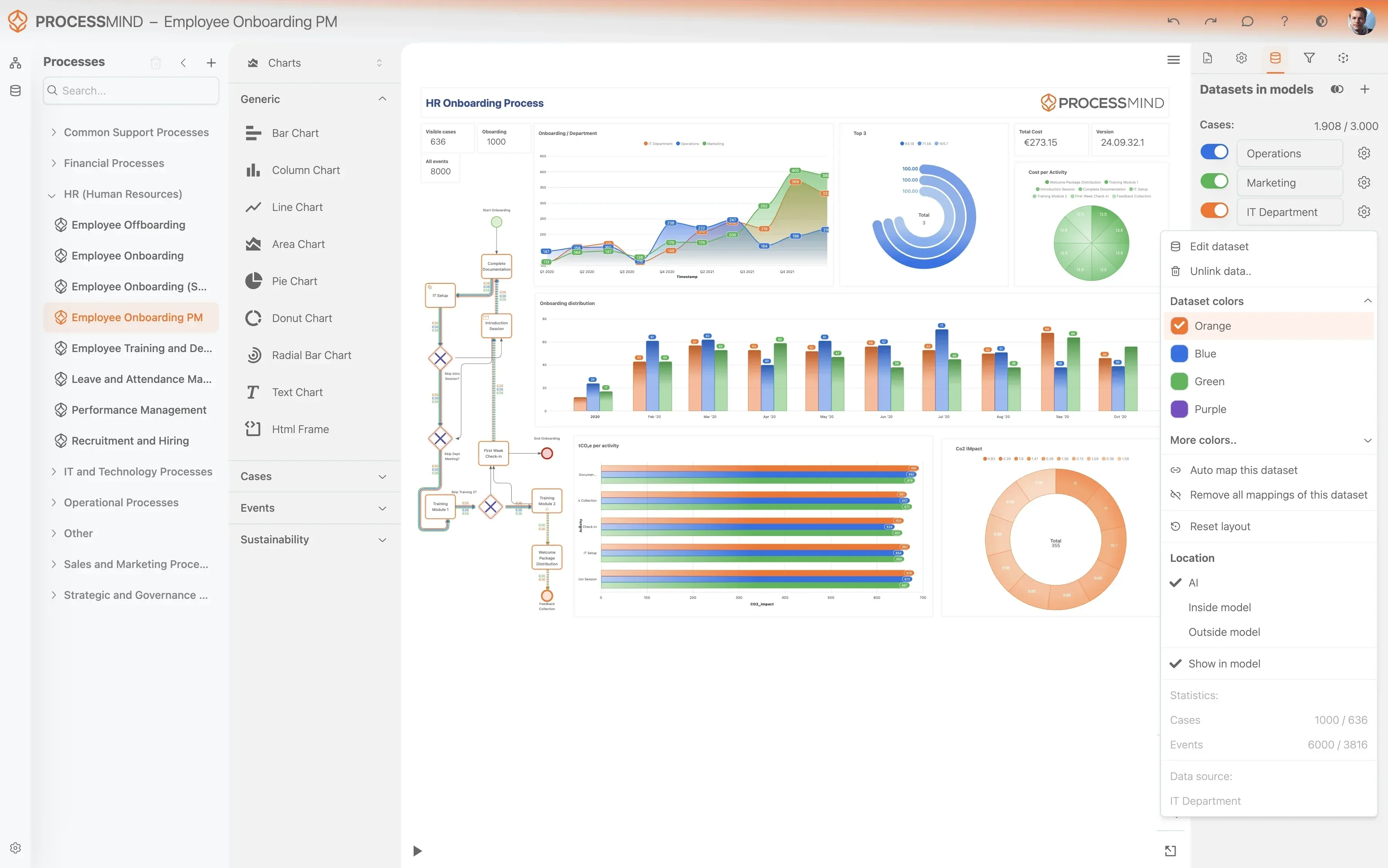
Uncover Hidden Delays in D365 HR Position Management

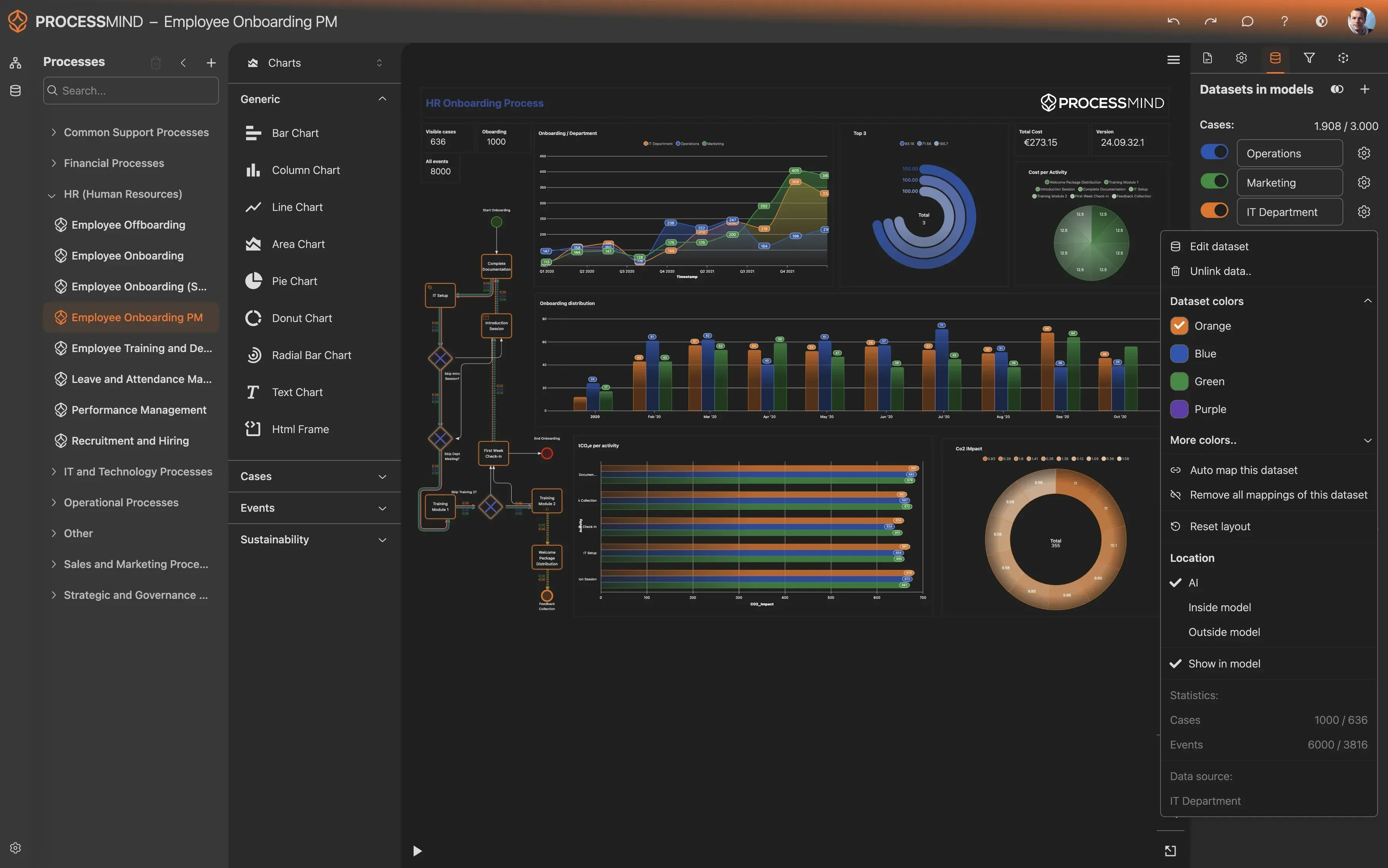
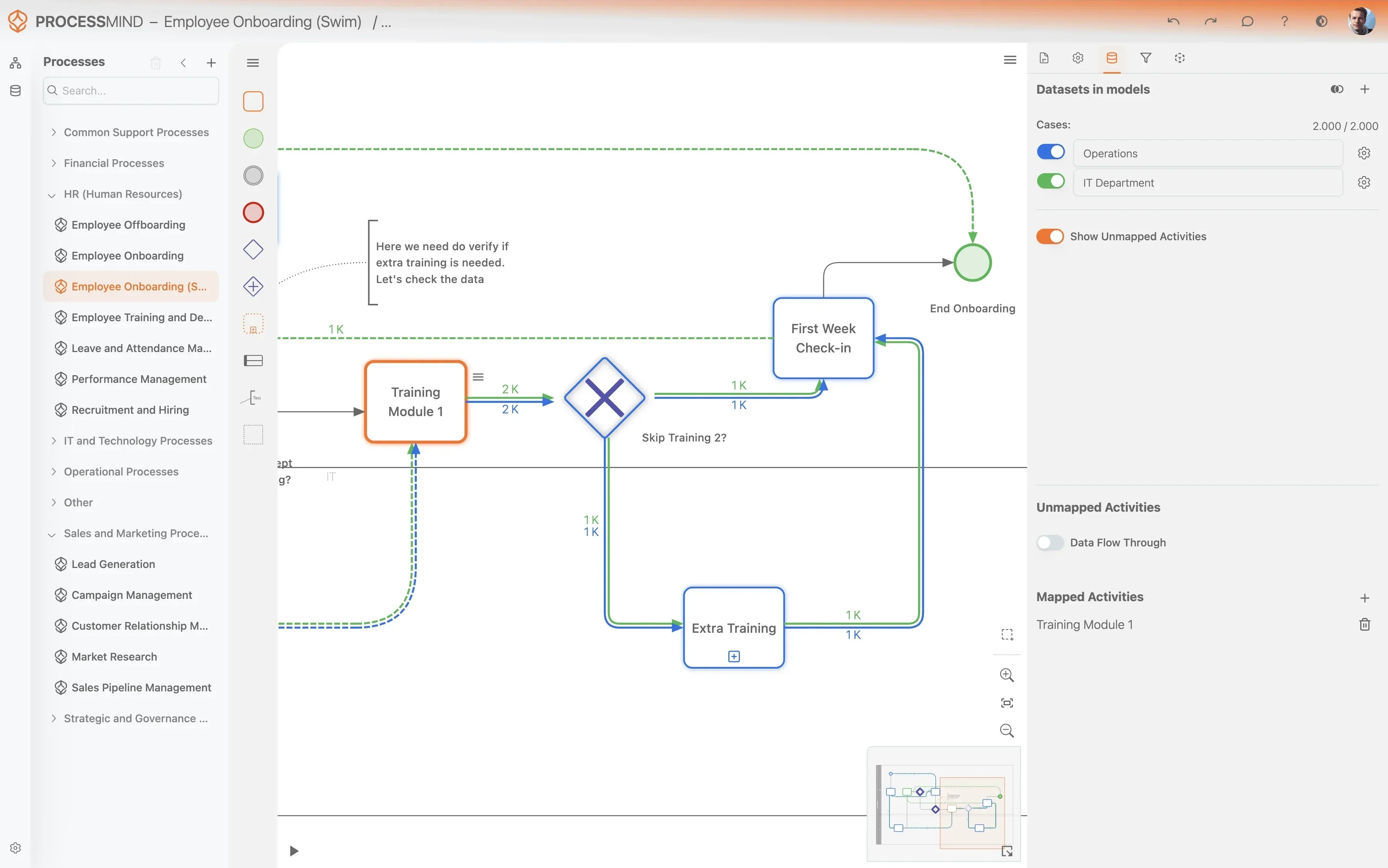
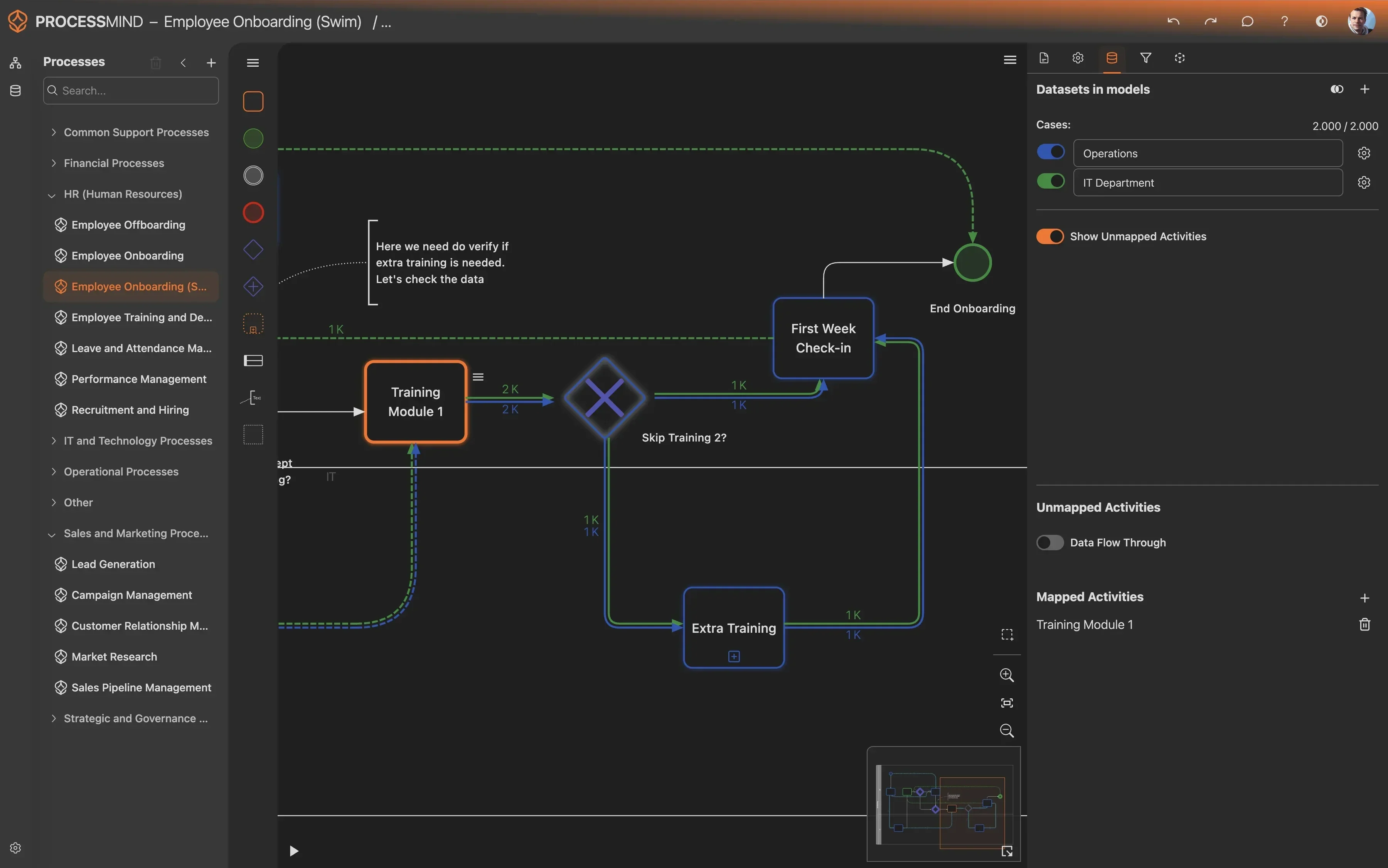
ProcessMind visualizes your actual D365 HR position management workflows. You'll gain clear insights into inefficiencies and compliance risks, enabling data-driven optimization.
  • Visualize D365 HR position management flow
  • Pinpoint workflow bottlenecks and delays
  • Ensure compliance in position creation
  • Optimize resource allocation decisions
Discover your actual process flow
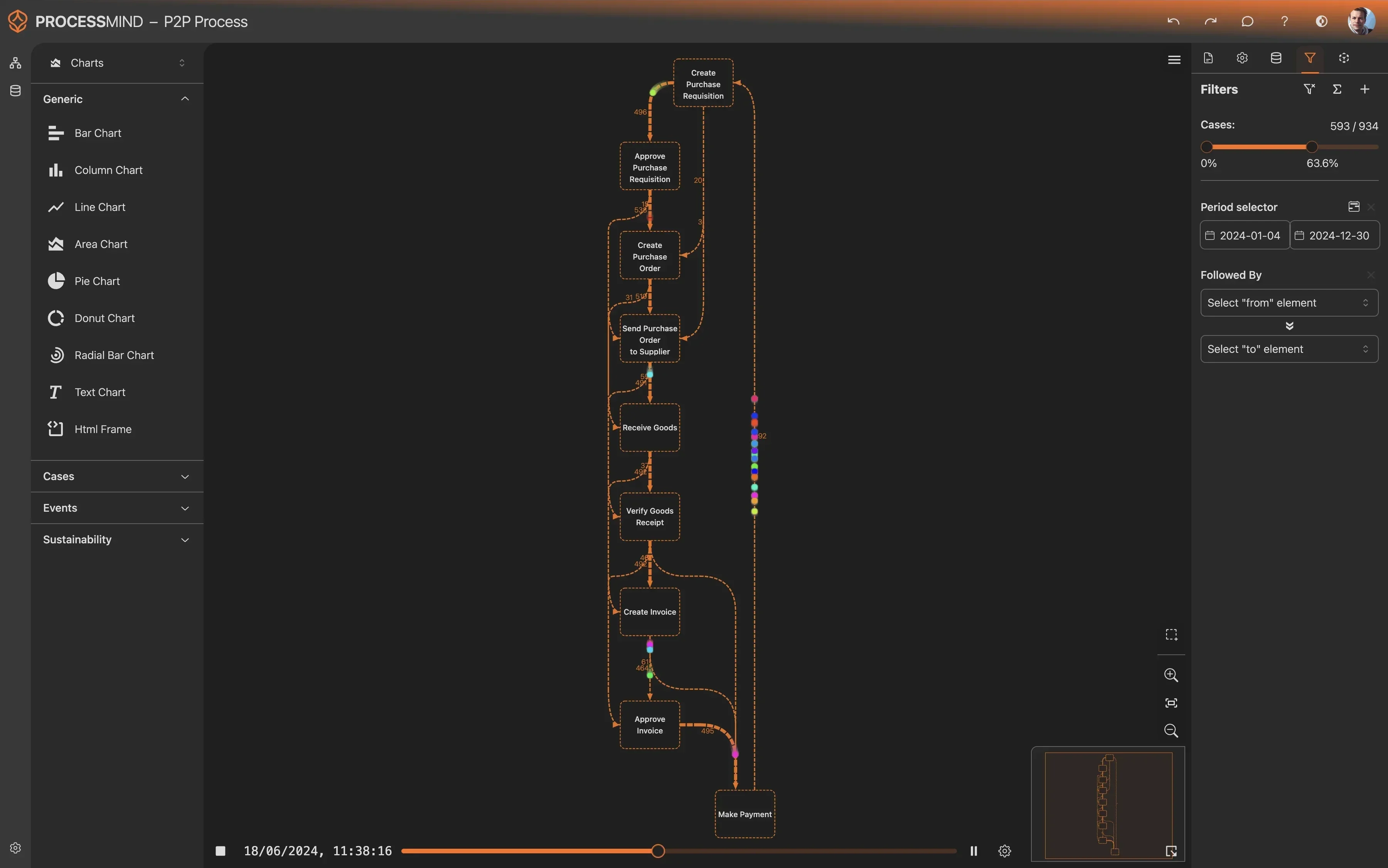
Identify bottlenecks and delays
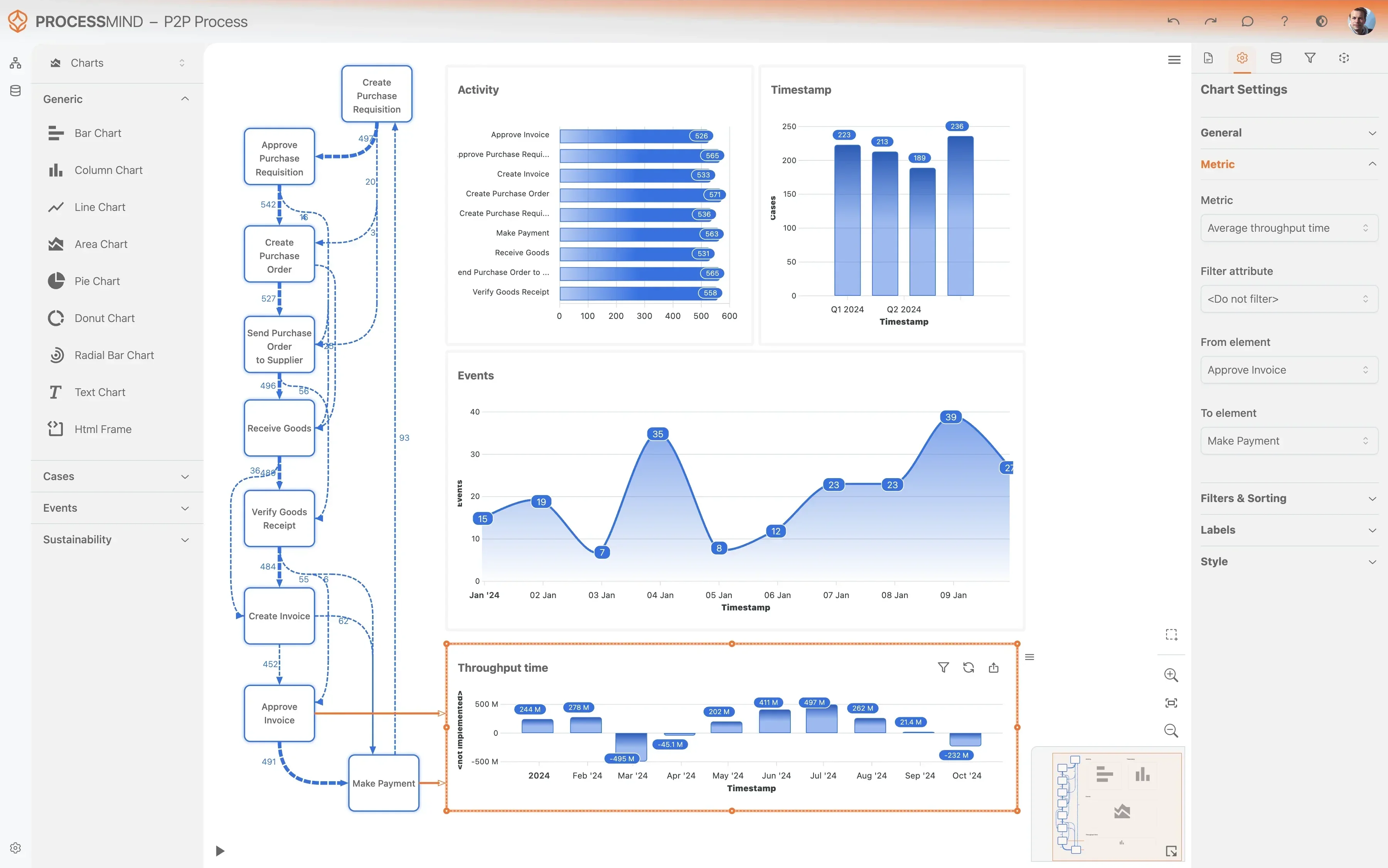
Analyze process variants
Design your optimized process

TYPICAL OUTCOMES

Realizing Efficiency in Position Management

These outcomes showcase the measurable improvements organizations typically achieve by optimizing their Hire to Retire - Position Management process in Microsoft Dynamics 365 Human Resources. Process mining uncovers inefficiencies and bottlenecks, enabling targeted improvements that streamline operations and enhance strategic workforce planning.

0 %
Faster Position Approvals

Reduced average approval time

Process mining identifies bottlenecks in position approval workflows, leading to a significant reduction in cycle time. This enables quicker staffing decisions and workforce agility.

0 %
Improved Data Consistency

Higher first-pass data quality

By identifying common data entry errors and missing information, organizations can achieve higher first-pass data quality for new positions. This reduces downstream issues and improves reporting accuracy.

0 %
Reduced Rework Costs

Fewer position creation errors

Pinpoint the root causes of rework in position creation and modification, drastically cutting down on time and resources spent correcting errors. This boosts operational efficiency and reduces costs.

0 %
Enhanced Compliance Adherence

Greater policy conformity

Ensure all position management processes strictly follow internal policies and external regulations by monitoring compliance adherence in real-time. This minimizes risk and ensures audit readiness.

0 %
Accelerated Position Activation

Faster time to hiring readiness

Shorten the duration from position creation to activation, making roles available for recruitment more quickly. This supports talent acquisition and reduces time-to-fill for critical roles.

Results vary based on process complexity, organizational structure, and data quality. These figures represent typical improvements observed across various implementations of process mining for Position Management.

FAQs

Frequently asked questions

Process mining analyzes event logs from Microsoft Dynamics 365 Human Resources to visualize the actual flow of your position management processes. It helps identify bottlenecks in approvals, inconsistencies in data, and areas of rework. By revealing these hidden inefficiencies, you can streamline operations, reduce cycle times, and ensure better compliance.

You will need event log data related to position creation, modification, approval, and activation. Key data points include Position ID, activity timestamps, activity names, and the user responsible for each action. Ensuring the presence of a unique case identifier, Position ID, is crucial for accurate process reconstruction.

You can expect to uncover root causes for slow approvals, identify non-compliant process variations, and gain full visibility into the position lifecycle. This leads to quantifiable improvements like reduced position approval cycle times, fewer position creation bottlenecks, and enhanced data consistency. Ultimately, process mining helps optimize resource allocation and accelerate position activation.

Basic technical requirements include access to your Microsoft Dynamics 365 Human Resources database or its analytical data store, typically via a secure connection. You will also need a process mining platform, which can be cloud-based or on-premises. No deep technical expertise within your HR team is usually needed, as the platform handles complex data processing.

Data is typically extracted via standard integration methods or database replication, ensuring minimal impact on live system performance. This often involves connecting to the underlying data lake or using APIs to pull historical event logs. The process is designed to be read-only and non-intrusive to your daily HR operations.

The timeline can vary depending on data volume and complexity, but initial setup and data ingestion usually take a few days to a few weeks. Within 4-6 weeks, most organizations can generate their first process models and uncover key bottlenecks. Deeper analysis and iterative improvements continue as the project progresses.

Yes, process mining can precisely map all changes to position attributes and reclassification paths. It reveals where, when, and by whom these changes occur, highlighting root causes like unclear initial requirements or inefficient review stages. This visibility empowers you to implement targeted interventions to minimize rework and stabilize position data.

Absolutely. Process mining compares your actual process execution against predefined compliance rules and ideal process models. It can automatically detect deviations, unauthorized steps, or missing approvals that could lead to compliance violations. This proactive identification helps you mitigate risks before they become significant issues.

Optimize Hire to Retire Position Management Instantly

Reduce your process cycle time by 30% and eliminate bottlenecks.

Start Your Free Trial

No credit card required. Setup in minutes.