Improve Your Credit Management & Collections

Select a process
Choose a process to continue working in your connected workspace.
Streamline Credit Management and Collections to Improve Cash Flow
ProcessMind helps you identify bottlenecks and inefficiencies within your credit management and collections process. Discover opportunities to reduce Days Sales Outstanding, improve cash flow, and ensure consistent adherence to company policies. Our platform reveals hidden delays, manual workarounds, and compliance risks that impact your financial health.
Download our pre-configured data template and address common challenges to reach your efficiency goals. Follow our six-step improvement plan and consult the Data Template Guide to transform your operations.
Show detailed description
ProcessMind revolutionizes your understanding of the entire Credit Management & Collections process by offering an unparalleled, end-to-end analytical view. From the moment a credit request is initiated, through order processing, invoice generation, various dunning cycles, dispute resolution workflows, cash application, and even potential write-offs, our platform meticulously uncovers every executed step. This deep dive reveals hidden inefficiencies, costly bottlenecks, and critical compliance gaps that may be silently draining your organization's resources and impacting your bottom line. We analyze the complete operational journey, providing a holistic understanding of how processes truly flow within your organization. ProcessMind allows you to look beyond aggregated reports, identifying the precise root causes of delays, rework, and inconsistencies, regardless of which underlying ERP, accounting software, or financial system your transactional data originates from. Our objective is to provide absolute clarity and actionable, data-driven insights, empowering you to make informed, strategic decisions to significantly optimize this critical financial function.
Organizations frequently grapple with a myriad of complex challenges within their Credit Management & Collections processes. These often include persistently high Days Sales Outstanding (DSO), directly impacting working capital and restricting vital cash flow. Ineffective or inconsistent dunning strategies can lead to prolonged payment delays, an increase in uncollectible debt, and ultimately, higher write-offs. Furthermore, reliance on manual interventions and fragmented operations across siloed departments can introduce unnecessary rework, errors, and significant operational costs. A lack of transparent visibility into the lifecycle of dispute resolution can further prolong outstanding invoices, frustrating customers and diverting valuable internal resources from more strategic tasks. Moreover, ensuring consistent adherence to both internal policies and external regulatory compliance can be a constant battle, with deviations potentially leading to substantial financial penalties or irreparable reputational damage. These pervasive challenges, irrespective of the specific tools or systems your team employs, collectively hinder your ability to accurately predict and manage cash flow, severely impacting your overall financial health and operational agility.
Leveraging ProcessMind's capabilities to analyze your Credit Management & Collections process delivers tangible, measurable benefits designed to profoundly improve your financial performance and operational efficiency. By precisely identifying and then eliminating process bottlenecks and root causes of delays, you can drastically reduce your DSO, accelerating cash conversion cycles and substantially boosting your working capital availability. Our comprehensive insights enable you to fine-tune and optimize dunning strategies, ensuring timely, effective follow-ups and significantly reducing the likelihood of bad debt and write-offs. We help streamline your entire dispute resolution process, dramatically cutting down resolution times and enhancing customer satisfaction by addressing issues proactively and efficiently. Furthermore, by pinpointing deviations from established compliance standards, ProcessMind empowers you to enforce best practices, mitigate risks, and ensure regulatory adherence. You will gain the unprecedented ability to accurately forecast cash flow, make robust, data-driven decisions on credit limits, and ultimately transform your collections function from a reactive cost center into a proactive, strategic contributor to overall profitability and sustained business growth.
Embarking on your journey to optimize Credit Management & Collections with ProcessMind is designed to be straightforward and universally compatible with your existing infrastructure. We fully understand that your organization utilizes a unique, often complex, combination of systems to manage various aspects of financial operations. To ensure a seamless integration and immediate value realization, we provide a detailed, easy-to-follow data template. This template clearly guides you through the process of extracting the necessary event log data from your system, whether it is your primary ERP, specialized accounting software, or any other source system actively involved in the credit and collections process. Our platform is meticulously built to be entirely system-agnostic, welcoming and normalizing data from diverse environments so you can focus solely on gaining powerful process insights and achieving transformative improvements. By following our clear instructions, you can quickly upload your data and begin uncovering the deep, actionable insights ProcessMind offers, fundamentally transforming your credit and collections operations for superior financial outcomes.
The 6-Step Path to Optimize Credit Management & Collections
Connect & Discover Data
What to do
Gather all relevant data from your financial and credit management systems. Ensure comprehensive data collection including invoice creation, dunning, and payment receipt.
Why it matters
A complete and accurate dataset is foundational for insightful process analysis, revealing the true end-to-end journey of credit and collections.
Expected outcome
A robust and clean dataset, ready for process mining analysis, reflecting all key activities.
Map Your Process Flow
What to do
Visualize the actual credit management and collections process by mapping all activities and their sequence from your collected data. Identify main paths.
Why it matters
Understanding the real-world process, not just the documented one, highlights how work is actually done and where inefficiencies are hidden.
Expected outcome
A clear visual representation of your credit and collections process, showing common paths and variations.
Identify Process Bottlenecks
What to do
Pinpoint specific stages or activities within your process where work piles up, delays occur, or processing times are excessively long. Use metrics.
Why it matters
Bottlenecks directly impact cash flow and customer satisfaction, delaying payments and increasing operational costs. Identifying them is key.
Expected outcome
A list of specific bottlenecks in the credit management and collections process, quantified by time metrics.
Analyze Root Causes
What to do
Investigate the underlying reasons for identified bottlenecks and deviations. Look for patterns, resource constraints, system issues, or policy non-compliance.
Why it matters
Addressing symptoms without understanding root causes leads to temporary fixes. A deep dive ensures sustainable improvements and prevents recurrence.
Expected outcome
A detailed understanding of the true causes behind process inefficiencies and delays.
Design Process Improvements
What to do
Develop concrete solutions and strategies to mitigate root causes, streamline workflows, and eliminate waste. Prioritize changes based on impact and feasibility.
Why it matters
Proactive design of improvements ensures a more efficient, compliant, and customer-friendly process, leading to faster cash conversion.
Expected outcome
A clear action plan with specific, prioritized improvement initiatives for your credit and collections process.
Monitor & Iterate
What to do
Implement the designed improvements and continuously track key performance indicators to assess their effectiveness. Be prepared to adjust and refine strategies.
Why it matters
Process improvement is an ongoing journey. Continuous monitoring ensures changes yield expected results and allows for agile adaptation.
Expected outcome
A continuously optimized credit management and collections process with measurable improvements in efficiency and effectiveness.
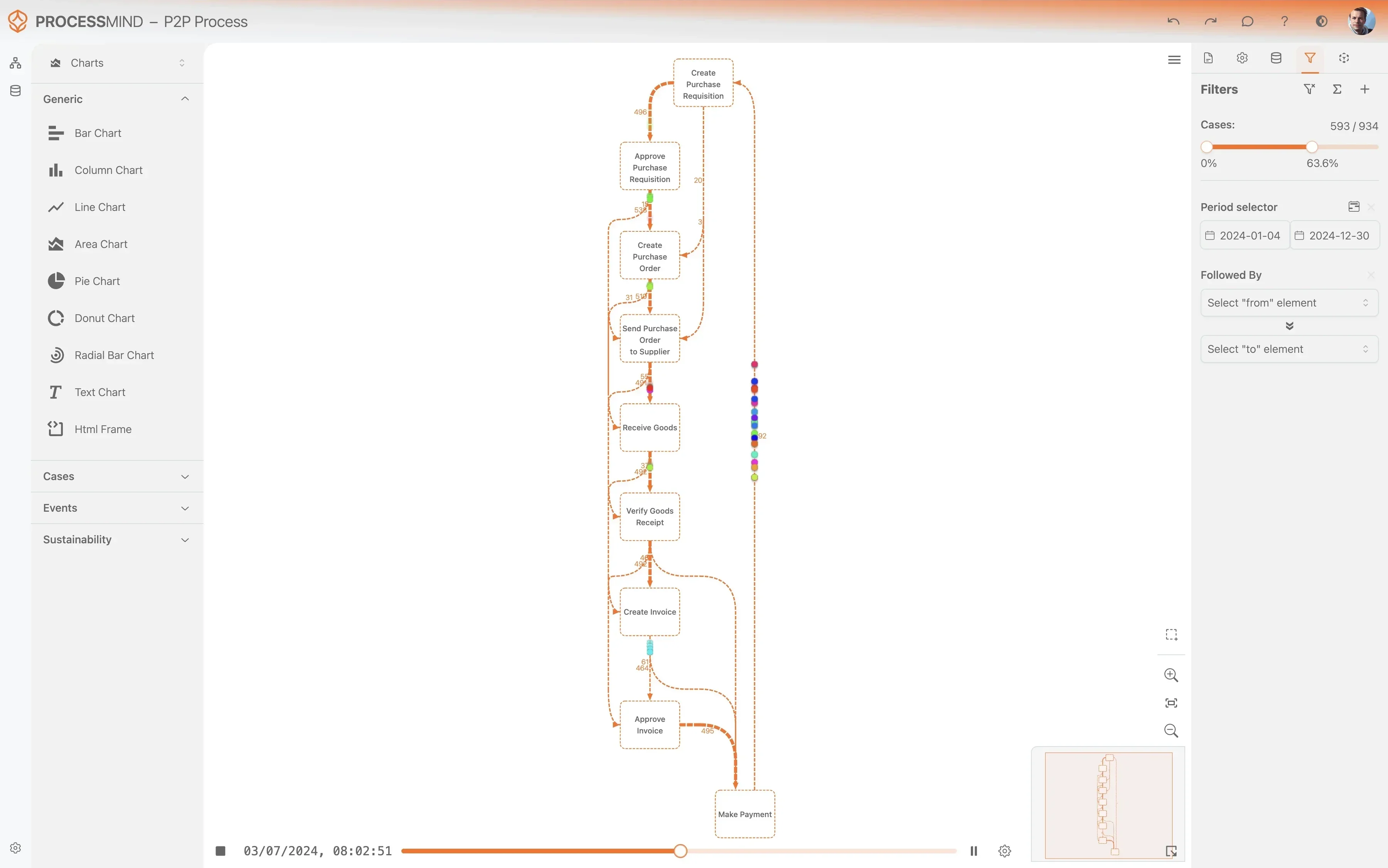
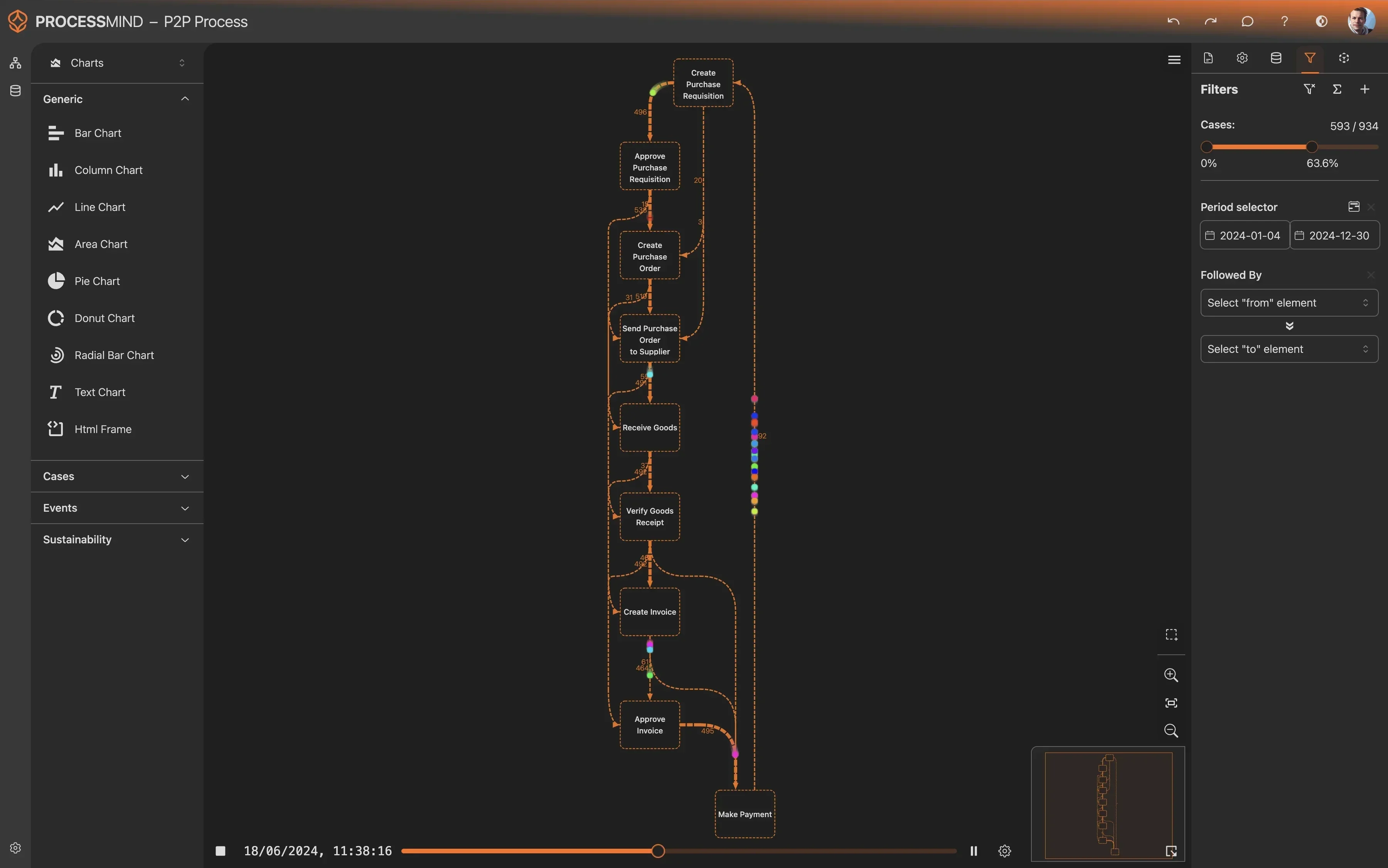
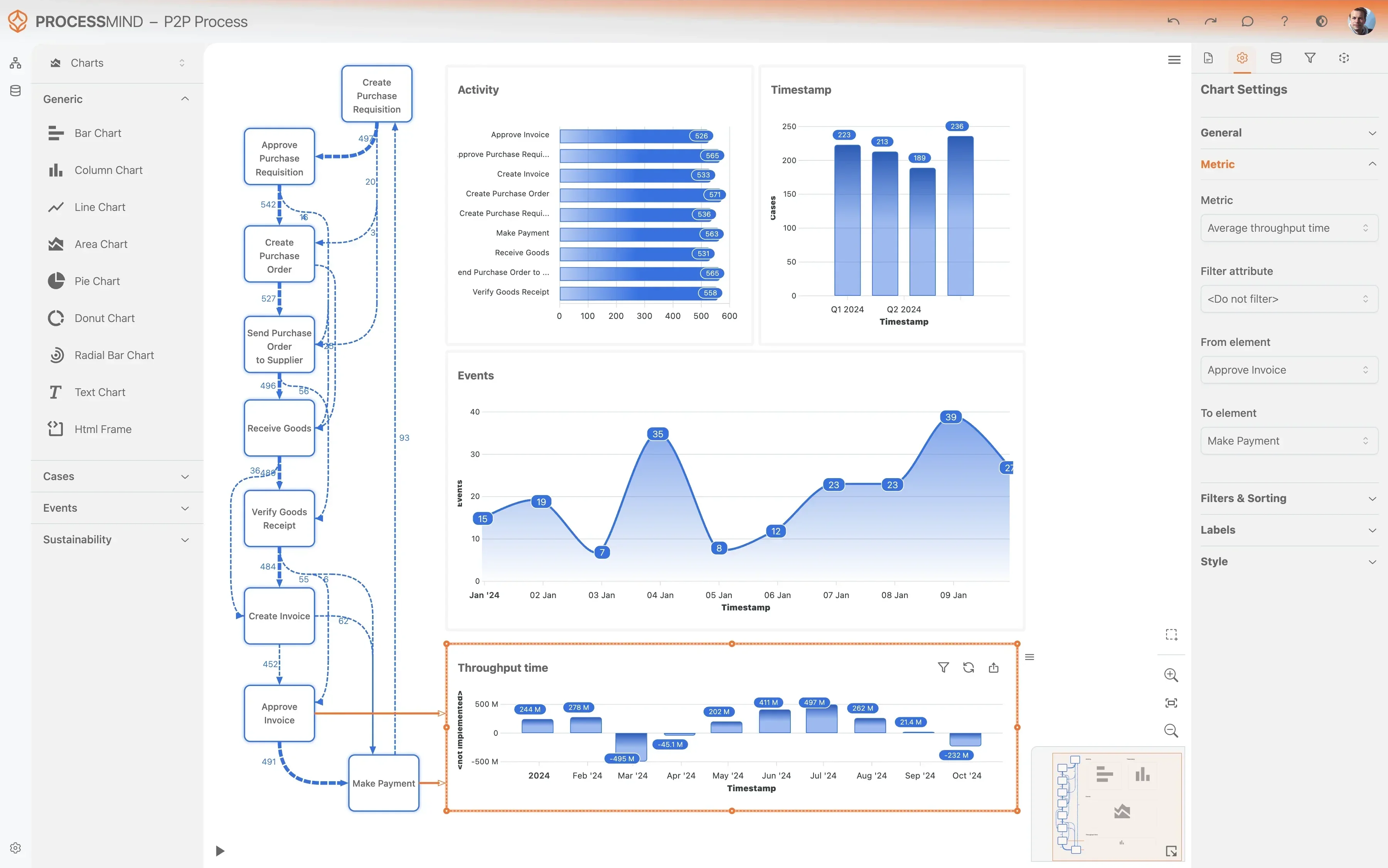
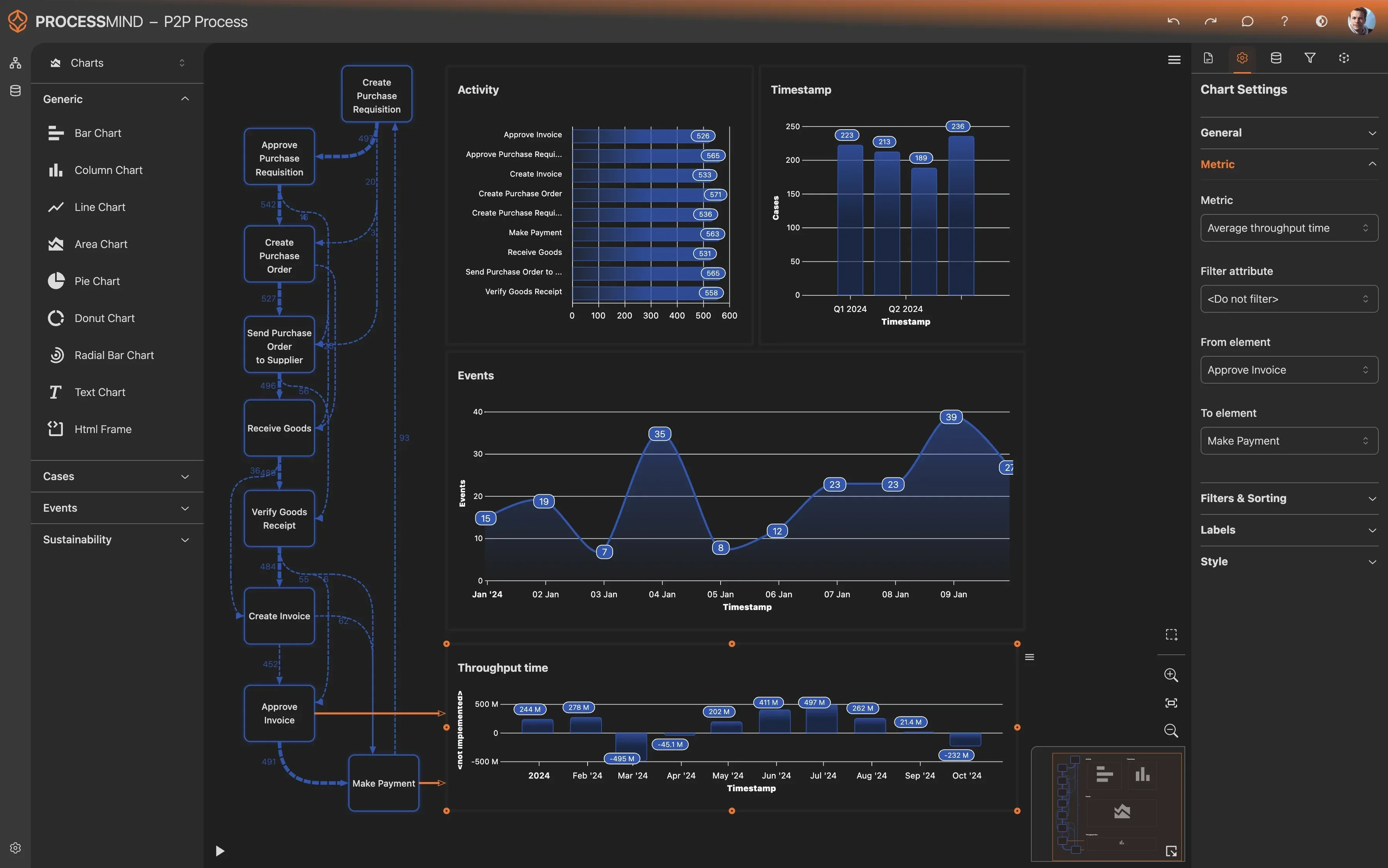
TYPICAL OUTCOMES
Measurable Improvements in Credit Management & Collections
These outcomes demonstrate the significant value organizations gain by applying process mining to their credit management and collections operations. By identifying and resolving bottlenecks, companies achieve faster payment cycles, reduced bad debt, and improved customer relations.
Average decrease in time to collect payments
By identifying and eliminating bottlenecks in the invoice-to-cash process, organizations can significantly shorten the average time it takes to collect payments, improving cash flow and working capital.
Average reduction in credit approval cycle time
Streamlining the credit assessment process by uncovering delays and inefficiencies leads to quicker approval decisions, accelerating sales cycles and improving customer onboarding.
Average reduction in invoice dispute handling time
Identifying root causes and process deviations in dispute handling allows for faster investigation and resolution of contested invoices, unblocking payments and enhancing customer satisfaction.
Higher success rate for collection efforts
Optimizing dunning strategies and identifying the most effective contact approaches helps convert more overdue accounts into settled invoices, directly boosting collections and cash flow.
Reduction in uncollectible debt
By pinpointing the factors contributing to uncollectible invoices, such as weak credit assessments or late collection actions, organizations can significantly reduce financial losses from write-offs.
Greater adherence to collection policies
Process mining reveals deviations from established collection policies and dunning procedures, enabling organizations to enforce consistent practices, mitigate risks, and ensure regulatory adherence.
Results vary based on process complexity, data quality, and the specific strategies implemented. These figures represent typical improvements observed across various implementations.
Recommended Data
For customized data recommendations, choose your specific process.
FAQs
Frequently asked questions
Process mining analyzes event logs from your source system to visualize the actual flow of your credit management and collections activities. It identifies deviations from standard processes, pinpoints bottlenecks like slow credit approvals or ineffective dunning strategies, and reveals inefficiencies. This data-driven insight helps you understand where and why delays or issues occur, leading to better decision-making and optimization.
To perform process mining, you primarily need event log data related to your Credit Management & Collections activities. This includes a case identifier, typically the invoice number, an activity name, a timestamp for each activity, and the user or system performing the action. Additional attributes like credit limits, dispute reasons, or payment terms can enrich the analysis.
You can expect to see improvements in several key areas, such as accelerated credit approval cycles, reduced Days Sales Outstanding, and optimized dunning strategy effectiveness. Process mining helps shorten invoice dispute resolution times, minimize manual effort in collections, and enhance the accuracy of credit decisions. Ultimately, this leads to lower operational costs and better cash flow.
Initial data extraction and model setup can typically be completed within a few weeks, depending on the complexity of your data and system. Once the process model is established, initial insights often emerge quickly, revealing immediate bottlenecks and compliance issues. Continuous monitoring then allows for ongoing optimization and sustained performance improvements.
No, process mining does not replace your existing system or established credit policies. Instead, it complements them by providing a data-driven, objective view of how your processes actually operate within your system. It highlights areas for improvement, allowing you to refine your current strategies and system configurations, rather than replacing them.
Data extraction typically involves querying relevant tables or using reporting functionalities from your source system to obtain the event log. Depending on your system's capabilities, this might be done via direct database access, API integrations, or export features for historical transaction data. The goal is to collect all events associated with each invoice, from credit approval to payment posting or write-off.
Yes, process mining is highly effective at identifying the root causes of high DSO or frequent invoice write-offs. By tracing the paths of problematic invoices, it can reveal if the issues stem from poor initial credit decisions, ineffective dunning sequences, prolonged dispute resolution, or other process breakdowns. This insight enables targeted interventions to improve cash flow and minimize losses.
By visualizing every step of your collections process, process mining identifies deviations from defined dunning policies and regulatory requirements. It highlights instances where actions were missed, incorrectly applied, or executed out of sequence. This provides objective evidence of compliance gaps, allowing for corrective actions, targeted training, and improved governance.
While an understanding of your system's data structures and basic data querying can be beneficial for initial data extraction, modern process mining tools are designed with intuitive interfaces. They make complex data analysis accessible to business users and process owners without deep data science expertise. Many platforms also offer training and support to facilitate effective use.
No, process mining is scalable and beneficial for organizations of all sizes that manage transactional processes like Credit Management & Collections. The value comes from uncovering inefficiencies and optimizing workflows, regardless of company scale. Smaller organizations may even see quicker implementation times and faster realization of benefits due to less data volume.
Stop Revenue Leaks: Optimize Credit & Collections Today
Works seamlessly with your existing systems. See results in days.
No credit card required. Get started fast.