Improve Your Transportation Management

Select a process
Choose a process to continue working in your connected workspace.
Improve Your Transportation Management Process
Hidden inefficiencies in your transportation processes can lead to delays and increased costs. Our platform helps you visualize and analyze your operational data, uncovering bottlenecks and deviations from your ideal flow. By examining your system's actual execution, you can identify areas for significant improvement, leading to optimized routes and faster deliveries.
Download our pre-configured data template and address common challenges to reach your efficiency goals. Follow our six-step improvement plan and consult the Data Template Guide to transform your operations.
Show detailed description
Transportation management is a critical yet often complex process, spanning everything from initial shipment planning to final delivery. While your system meticulously records each step, gaining a holistic, end-to-end understanding of how efficiently your shipments truly flow can be challenging. ProcessMind cuts through this complexity, providing a comprehensive, data-driven view of your entire transportation management process. It analyzes transactional data from any of your source systems, revealing the actual journey of every shipment. Many organizations face common, system-agnostic challenges in this domain. These include hidden bottlenecks in dispatching or routing, inefficient carrier selection, manual handoffs that introduce delays, errors in documentation, and a lack of real-time visibility into the status of goods in transit. Without a clear picture of these operational nuances, optimizing freight costs, ensuring compliance with evolving regulations, and improving delivery performance become incredibly difficult. Process mining for transportation management goes beyond standard reporting, uncovering the subtle inefficiencies and deviations that impact your bottom line and customer satisfaction, regardless of the specific transportation management system you utilize.
ProcessMind empowers you to transform these challenges into opportunities. By ingesting event logs from your ERP or other relevant source systems, our platform reconstructs the exact sequence of events for every shipment, providing an x-ray view into your operations. This unparalleled visibility allows you to pinpoint precisely where delays occur, whether it is an extended approval step, a bottleneck in load consolidation, or an unexpected hold-up in customs clearance. You can easily identify underperforming carriers, analyze the effectiveness of your route optimization strategies, and detect compliance deviations in real-time. The benefits are substantial: significantly reduced operational costs through optimized routes and carrier selection, improved on-time delivery rates leading to higher customer satisfaction, and enhanced regulatory adherence that minimizes risk. Our platform helps you move beyond reactive problem-solving, enabling proactive improvements based on empirical evidence. This deep analysis reveals not just what happened, but why it happened, offering actionable insights that drive continuous process improvement across your entire logistics network, irrespective of the particular software your teams are using day-to-day.
Getting started with ProcessMind to revolutionize your transportation management is straightforward. Our platform is designed to be welcoming and inclusive of all systems, requiring only a standardized set of event data from your current operations. To begin, you will need to identify your "Shipment" as the primary case identifier, allowing ProcessMind to track each individual shipment's journey from start to finish. We provide a clear, easy-to-follow data template to guide you in extracting and structuring this essential information from your source systems. Once your data is ingested, ProcessMind automatically visualizes your entire process, highlights compliance gaps, and surfaces critical insights within minutes. You do not need to be a data scientist to leverage its power. Start your journey towards peak transportation performance today, uncover quick wins, and establish a foundation for sustained operational excellence, all without complex integrations or vendor lock-in. Embrace the future of logistics optimization with a clear, data-driven approach that works with your existing technology landscape.
The 6-Step Improvement Path for Transportation Management
Connect & Discover Data
What to do
Ingest relevant data from your transportation management system, ERP, or other data sources. Ensure all shipment-related activities and their timestamps are captured for a comprehensive view.
Why it matters
Accessing comprehensive process data is foundational. It provides the raw material needed for accurate process reconstruction and analysis, uncovering hidden inefficiencies.
Expected outcome
A complete, accurate dataset reflecting all transportation management activities, ready for in-depth analysis.
Map Your Process Flow
What to do
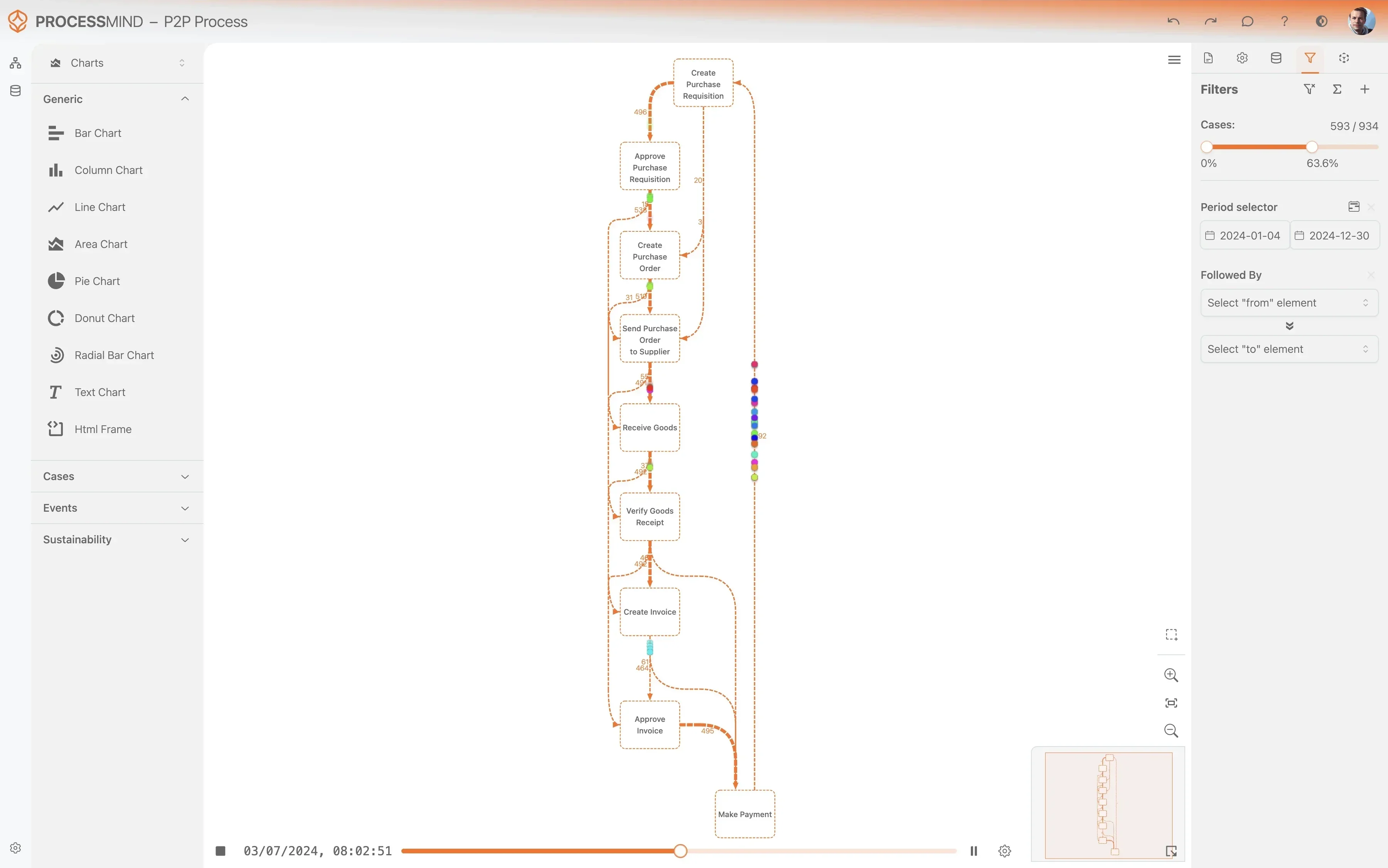
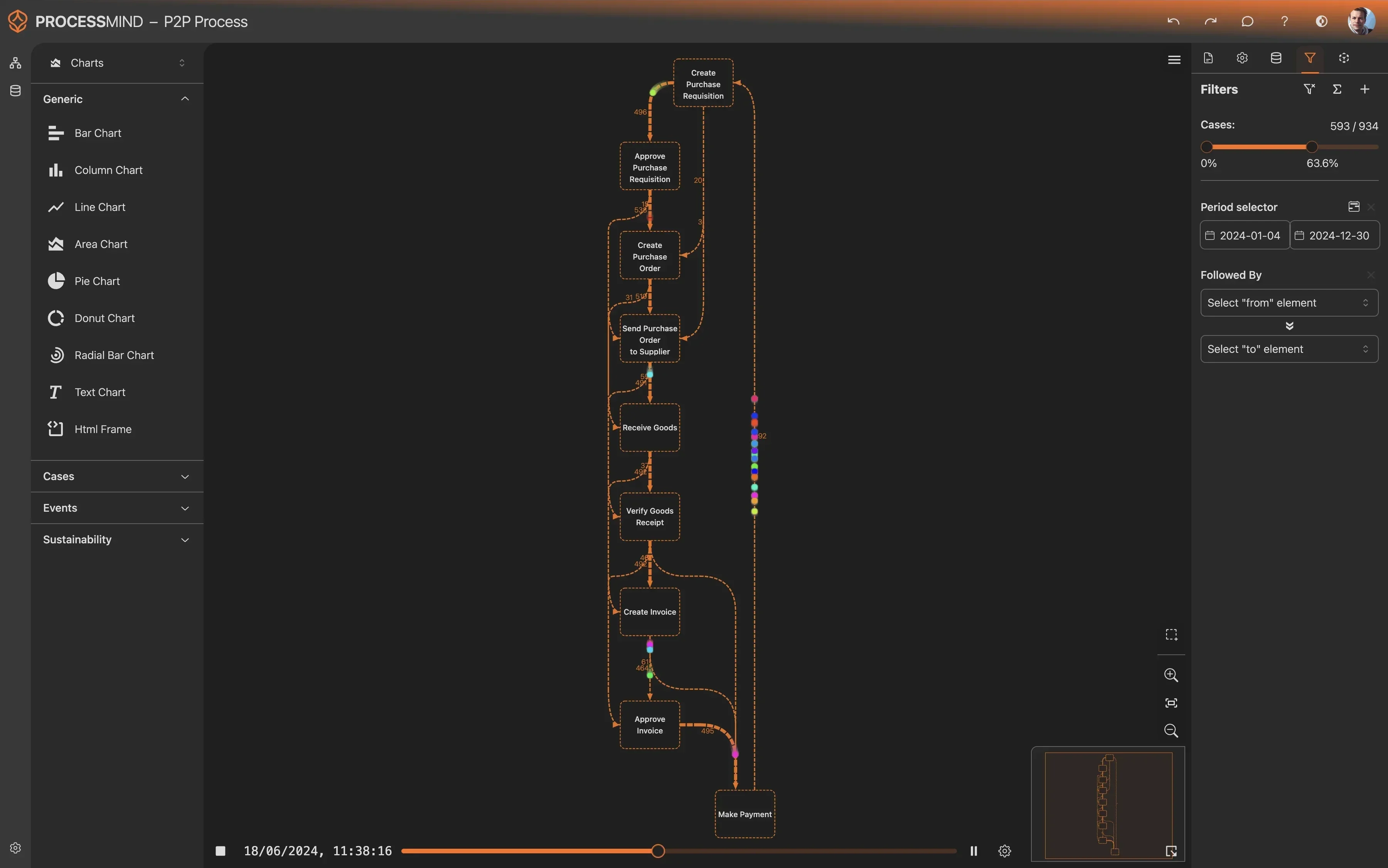
Visualize the end-to-end transportation management process using the connected data. Identify all unique paths and variations shipments take from request to delivery and confirmation.
Why it matters
A visual map demystifies complex operations, revealing the actual sequence of events, compliance deviations, and areas of process divergence not visible in your system.
Expected outcome
A clear, data-driven visual representation of your entire transportation management process, highlighting all variants.
Pinpoint Bottlenecks
What to do
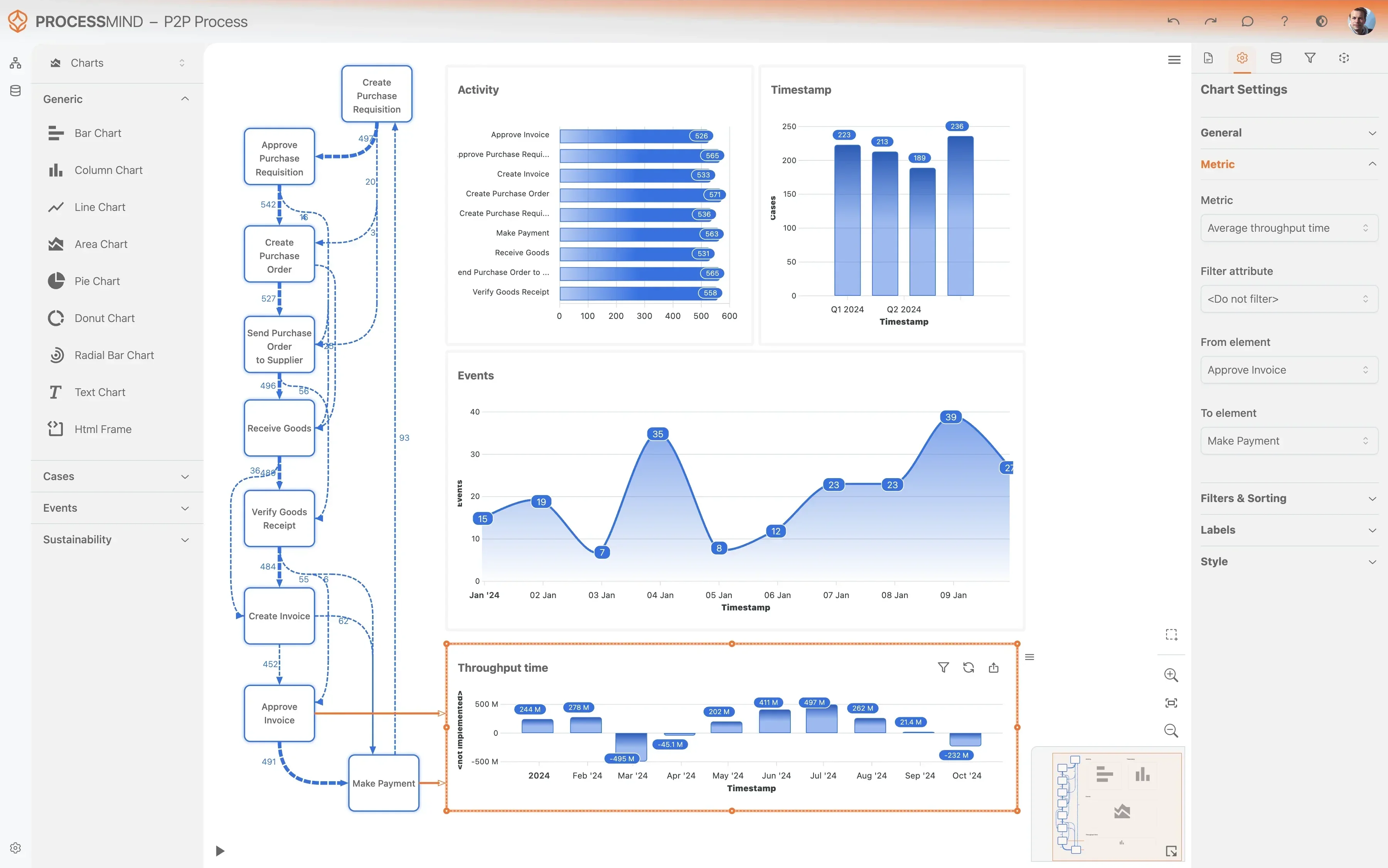
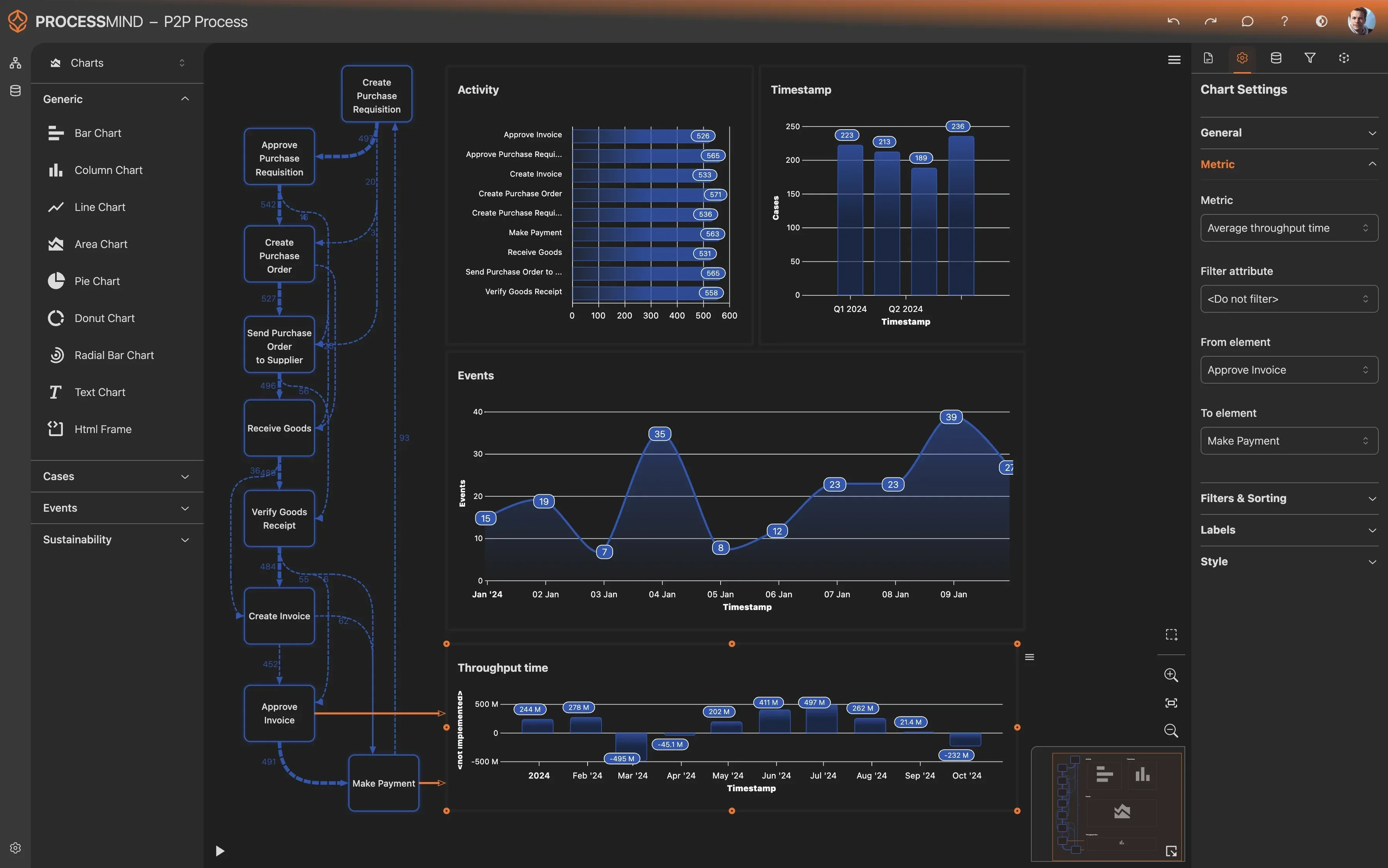
Analyze the process map to identify where shipments get stuck or experience excessive delays. Look for long wait times between activities or high rework rates affecting throughput.
Why it matters
Locating bottlenecks is crucial for targeted improvement. It highlights critical points where resource constraints or process inefficiencies directly impact lead times and costs.
Expected outcome
Specific, data-backed identification of the longest queues and most significant delays within your transportation process.
Analyze Root Causes
What to do
Deep dive into the identified bottlenecks to understand the underlying reasons for delays. Examine attribute data, resources, and specific activity sequences causing the issues.
Why it matters
Understanding the 'why' behind process problems enables effective, sustainable solutions. It moves beyond symptoms to address the core issues driving inefficiencies.
Expected outcome
A clear understanding of the exact causes of bottlenecks and deviations, supported by factual evidence from your data.
Design & Prioritize Improvements
What to do
Based on root cause analysis, design targeted process changes. Simulate potential improvements to predict their impact before implementation and prioritize efforts based on value.
Why it matters
Strategic improvement design ensures that changes are effective and deliver maximum value. Prioritization focuses resources on initiatives with the highest return on investment.
Expected outcome
A prioritized list of actionable improvement initiatives with predicted positive impacts on efficiency, cost, and service levels.
Monitor & Iterate
What to do
Implement the designed improvements and continuously monitor key performance indicators (KPIs) to track their effectiveness. Use new insights to refine and iterate on changes.
Why it matters
Continuous monitoring ensures that improvements are sustained and allows for agile adaptation. It fosters a culture of ongoing optimization and operational excellence.
Expected outcome
Sustained process improvements, measurable KPI gains, and an adaptive approach to ongoing transportation management optimization.
TYPICAL OUTCOMES
What Organizations Achieve in Transportation
These outcomes illustrate the tangible benefits organizations realize by applying process mining to their Transportation Management workflows. By analyzing Shipment case identifiers, businesses gain clear insights into operational efficiencies and bottlenecks, leading to data-driven improvements.
Improve reliability and customer trust
By identifying and resolving root causes of delays, organizations significantly improve their ability to deliver shipments on time, enhancing customer satisfaction and supply chain reliability.
Shorten time from request to booking
Streamlining the planning and booking process shortens the time from a shipment request to confirmed booking, improving operational agility and resource allocation for faster order fulfillment.
Enhance accuracy and reduce disputes
By automatically detecting and resolving discrepancies in freight bills, companies ensure accurate payments, reduce administrative overhead, and avoid costly overcharges and disputes with carriers.
Reduce cross-border dwell times
Identifying and resolving bottlenecks in the customs clearance process helps expedite cross-border shipments, significantly reducing dwell times and improving overall supply chain flow for international cargo.
Reduce freight spend through efficiency
Process mining uncovers inefficient carrier selection, routing, and mode utilization, leading to significant savings on freight expenses by optimizing spend and adherence to contractual agreements.
Minimize unplanned changes and re-planning
Reduce the number of times shipment plans are revised or rebooked after initial confirmation. This cuts down on manual effort, avoids re-planning costs, and improves overall operational stability.
Results vary based on process complexity, data quality, and specific organizational goals. These figures represent typical improvements observed across various implementations.
Recommended Data
For customized data recommendations, choose your specific process.
FAQs
Frequently asked questions
Process mining visualizes the actual, end-to-end flow of your shipments, revealing hidden bottlenecks, inefficiencies, and deviations from planned processes. It helps identify the root causes of problems like delivery delays or high costs, enabling data-driven optimization. By understanding how work truly flows, you can make targeted improvements to enhance overall operational efficiency and strategic decision-making.
To perform process mining, you primarily need event logs from your transportation management system or other source systems. This data must include a case identifier, typically the shipment ID, an activity name for each step, and a precise timestamp for when each activity occurred. Additional attributes like carrier, origin, destination, and cost can further enrich the analysis.
Initial process visualizations and high-level insights can typically be generated within a few weeks after successful data extraction and initial model setup. Deeper analysis, root cause identification, and actionable recommendations usually follow within one to three months. The timeline can vary depending on data availability, quality, and the complexity of your transportation processes.
You can expect significant improvements such as reduced delivery delays, lower transportation costs through efficiency gains, and accelerated shipment planning and booking. It also helps optimize carrier performance, streamline proof of delivery processes, and minimize costly freight billing errors and unplanned shipment rework. Ultimately, process mining leads to enhanced operational control and financial benefits.
While data expertise is beneficial, many modern process mining tools offer user-friendly interfaces designed for business users. Business analysts or process experts with a strong understanding of transportation operations can often use these tools effectively with some training. Complex analyses or model development might benefit from data scientist involvement, but it is not always a strict prerequisite.
Data extraction usually involves leveraging your source system's reporting functionalities, APIs, or direct database access. The goal is to export transaction logs or audit trails that capture the sequence and timing of events for each shipment. Collaborating with your IT team is crucial to ensure secure, efficient, and compliant data access.
Yes, process mining precisely maps out every step of your transportation process, including critical handoffs and external activities. It can highlight exactly where delays occur, quantify their frequency and impact, and help uncover their root causes. This data-driven insight enables targeted interventions to improve on-time performance and accelerate cycle times.
Absolutely, process mining is highly effective for compliance monitoring. It compares the actual execution paths of your shipments against predefined optimal or compliant process models. Any deviations from the planned routes, authorized activities, or regulatory standards are highlighted, allowing you to investigate and enforce adherence to policies.
By analyzing historical shipment data, process mining identifies inefficiencies such as suboptimal routing, excessive premium freight usage, or re-work. It also compares the actual process execution with planned charges, exposing discrepancies that lead to billing errors. This enables proactive adjustments and informed decisions to optimize costs and minimize financial losses.
Traditional business intelligence (BI) reports typically show aggregated "what" happened, providing static dashboards of key metrics. Process mining, conversely, shows the "how" by visualizing the actual end-to-end flow of each shipment and identifying all possible paths and their associated performance. It offers a dynamic, granular view of the process, revealing hidden complexities and root causes that BI alone cannot.
Achieve Peak Transportation Performance Today
Uncover hidden inefficiencies and streamline your entire logistics process.
No credit card required, setup in minutes.