Improve Your Problem Management

Select a process
Choose a process to continue working in your connected workspace.
Optimize Freshservice Problem Management with Process Mining
Our platform uncovers hidden bottlenecks and identifies where root cause investigations frequently stall. By visualizing every step, you can see exactly where delays occur and how non-standard paths impact your service delivery. This insight allows your team to streamline workflows and reduce the time spent on recurring incidents.
Download our pre-configured data template and address common challenges to reach your efficiency goals. Follow our six-step improvement plan and consult the Data Template Guide to transform your operations.
Show detailed description
The Strategic Value of Refined Problem Management
Problem Management is often the quiet engine of IT service excellence. While Incident Management focuses on speed and restoration, Problem Management focuses on quality and permanence. Within the Freshservice environment, teams can easily log and categorize tickets, but the real challenge lies in the complex handoffs between tiers and the transition from finding a temporary workaround to implementing a final, permanent fix. When this process is slow or inefficient, your organization suffers from a high volume of repeat issues that drain technical resources and frustrate end users.
Optimizing this flow is not just about closing tickets faster, it is about ensuring that every root cause analysis leads to a measurable reduction in service disruptions. By focusing on the how and why of your problem lifecycle, you can shift from a reactive firefighting mode to a proactive strategy that prevents downtime before it occurs. This transition requires a deep understanding of how information flows through Freshservice and where the investigation process tends to stall.
Transforming Freshservice Data into Visual Intelligence
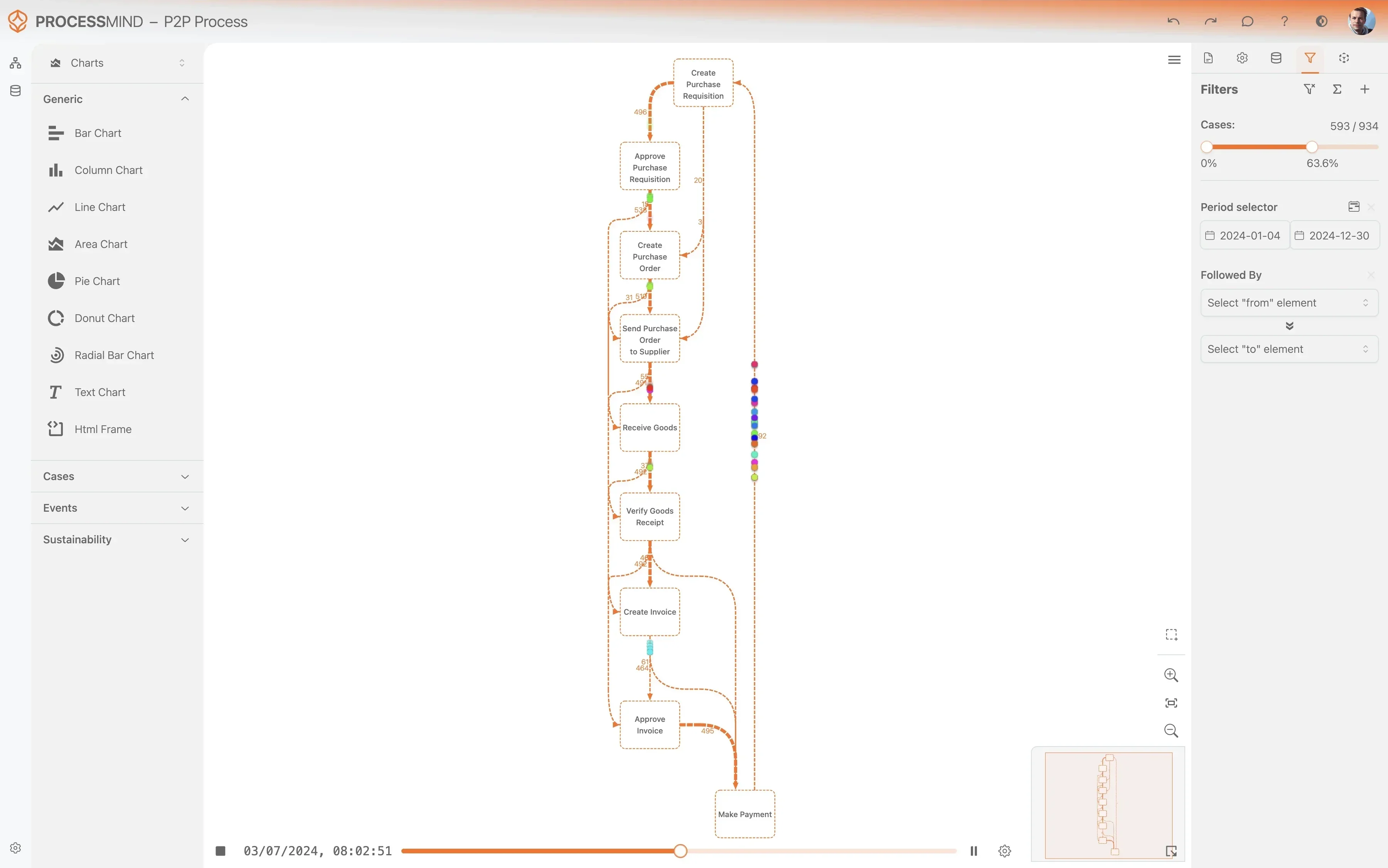
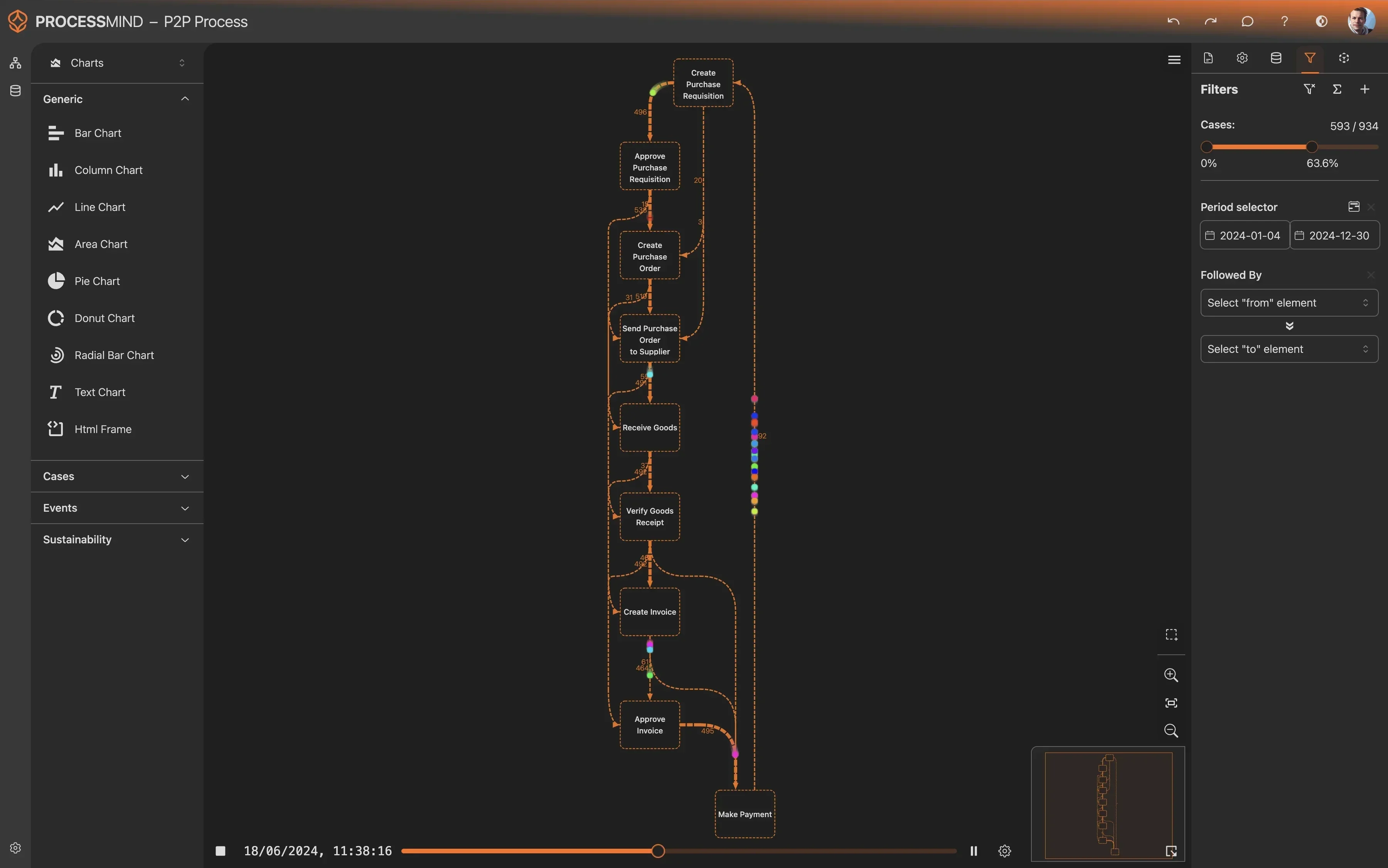
Process mining provides a unique lens into your Freshservice environment by reconstructing every individual step of a problem record. Instead of looking at static averages or simple bar charts, you see the actual paths taken by your technical teams. You can identify exactly where a record stays idle for days or where it jumps back and forth between different support groups in a classic ping-pong effect.
This visibility allows you to distinguish between complex investigations that naturally require significant time and simple administrative delays that should be eliminated. By visualizing the sequence of activities, you move from guessing about bottlenecks to having objective evidence that guides your process improvements. For example, you might discover that the time taken to move from Problem Identified to Assigned to Support Group is actually the longest part of your cycle, indicating a need for better initial triage or automation within the Freshservice platform.
Identifying Friction in the Investigation Lifecycle
One of the most common areas for improvement involves the time between identifying a workaround and commencing the full investigation. In many organizations, once the pressure of the incident is relieved by a temporary fix, the urgency to find the root cause drops. Process mining helps you see if your team is getting stuck in a workaround loop, where the same temporary fix is applied repeatedly instead of moving toward a permanent solution.
By analyzing the transition points in Freshservice, such as the gap between Workaround Published and Change Request Initiated, you can ensure that your resources are focused on high impact architectural changes rather than constant patching. Furthermore, you can identify if certain categories of problems are frequently reopened, which often suggests that the original root cause identified was incorrect or that the verification step was skipped. These insights allow you to tighten your compliance and ensure that the process is followed as designed.
Enhancing the Path to Permanent Resolution
Improving Problem Management also requires a deep look at the interaction between teams. When a problem record moves from a general support group to a specialized engineering team, the context often gets lost. You might see a pattern where records are sent back for more information multiple times, significantly increasing the total cycle time. Through process mining, you can pinpoint these loops and establish better documentation standards at the start of the investigation.
This leads to a more streamlined handoff and ensures that specialists can begin their analysis with all the necessary data from the start. Additionally, by monitoring the integration with Change Management, you can see if the proposed solutions are being implemented promptly or if they are sitting in a backlog of pending changes. Reducing this lag time is critical for maintaining the momentum of your service improvement initiatives.
Realizing a More Resilient IT Environment
The ultimate goal of optimizing your Problem Management in Freshservice is to build a more resilient IT service. When you reduce the cycle time of investigations and increase the success rate of permanent fixes, you directly lower the total cost of IT operations. Your staff spends less time on recurring fire drills and more time on innovation and infrastructure improvement.
Starting with process mining means you are choosing a data driven path to maturity. By following the digital breadcrumbs left in your Freshservice logs, you can transform your reactive IT department into a proactive center of excellence that anticipates and prevents issues before they impact the business. This approach not only improves your internal efficiency but also boosts the overall reliability of the services your business depends on every day.
6-Step Improvement Path for Problem Management
Download the Template
What to do
Download the specialized Excel template designed specifically for Freshservice Problem Management data structures.
Why it matters
Starting with a predefined structure ensures your data correctly maps to the mining engine for accurate analysis.
Expected outcome
A ready-to-use data mapping document
Export Your Data
What to do
Export three to six months of problem records and audit logs from your Freshservice instance into the template.
Why it matters
Historical data provides the necessary depth to identify recurring bottlenecks and process deviations over time.
Expected outcome
A populated dataset reflecting real process history
Upload Your Dataset
What to do
Upload your completed Excel file to ProcessMind to begin the automated transformation and process visualization.
Why it matters
Securely moving your data into the platform triggers the AI analysis to create your digital process twin.
Expected outcome
A validated process model ready for exploration
Analyze Your Process
What to do
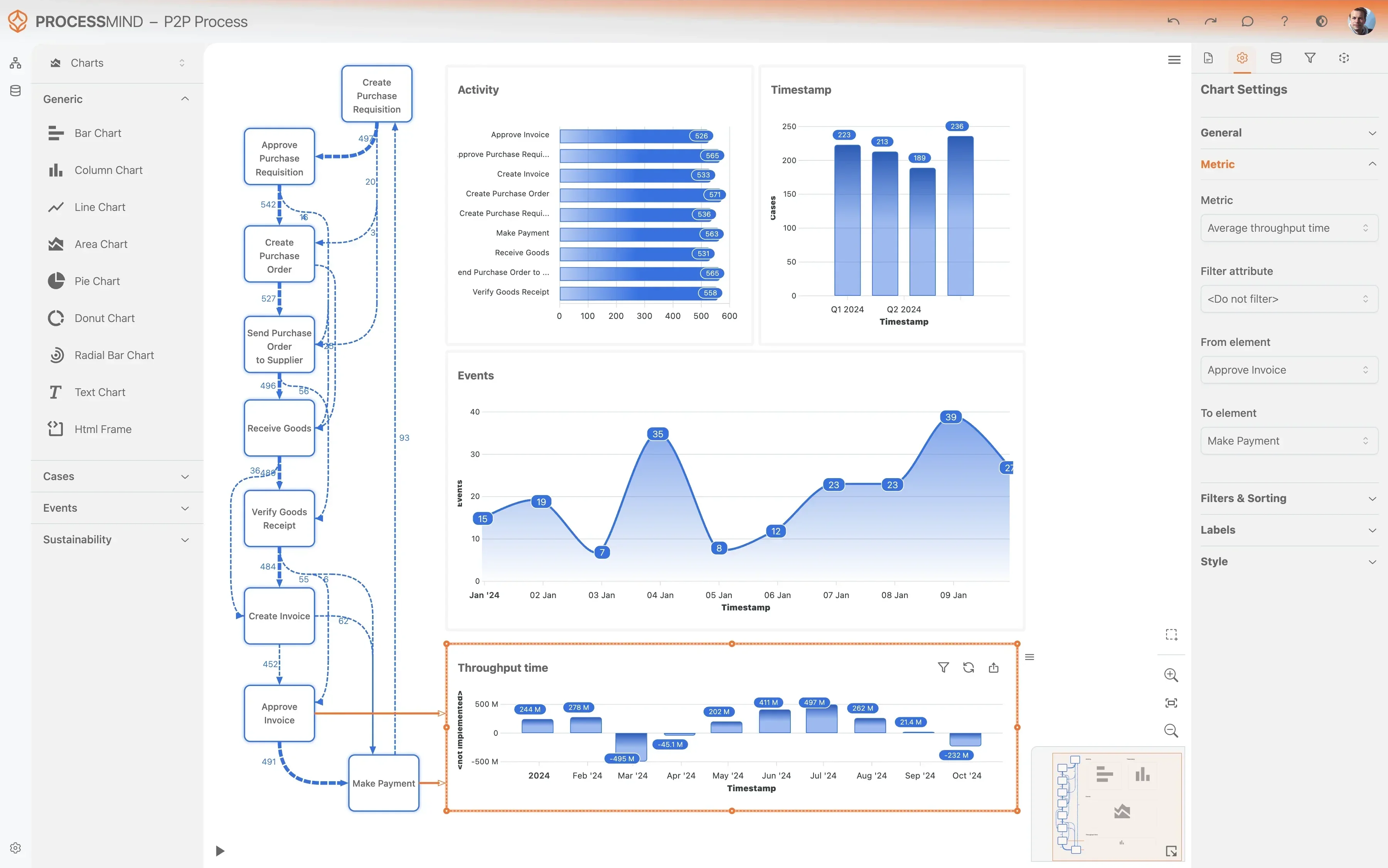
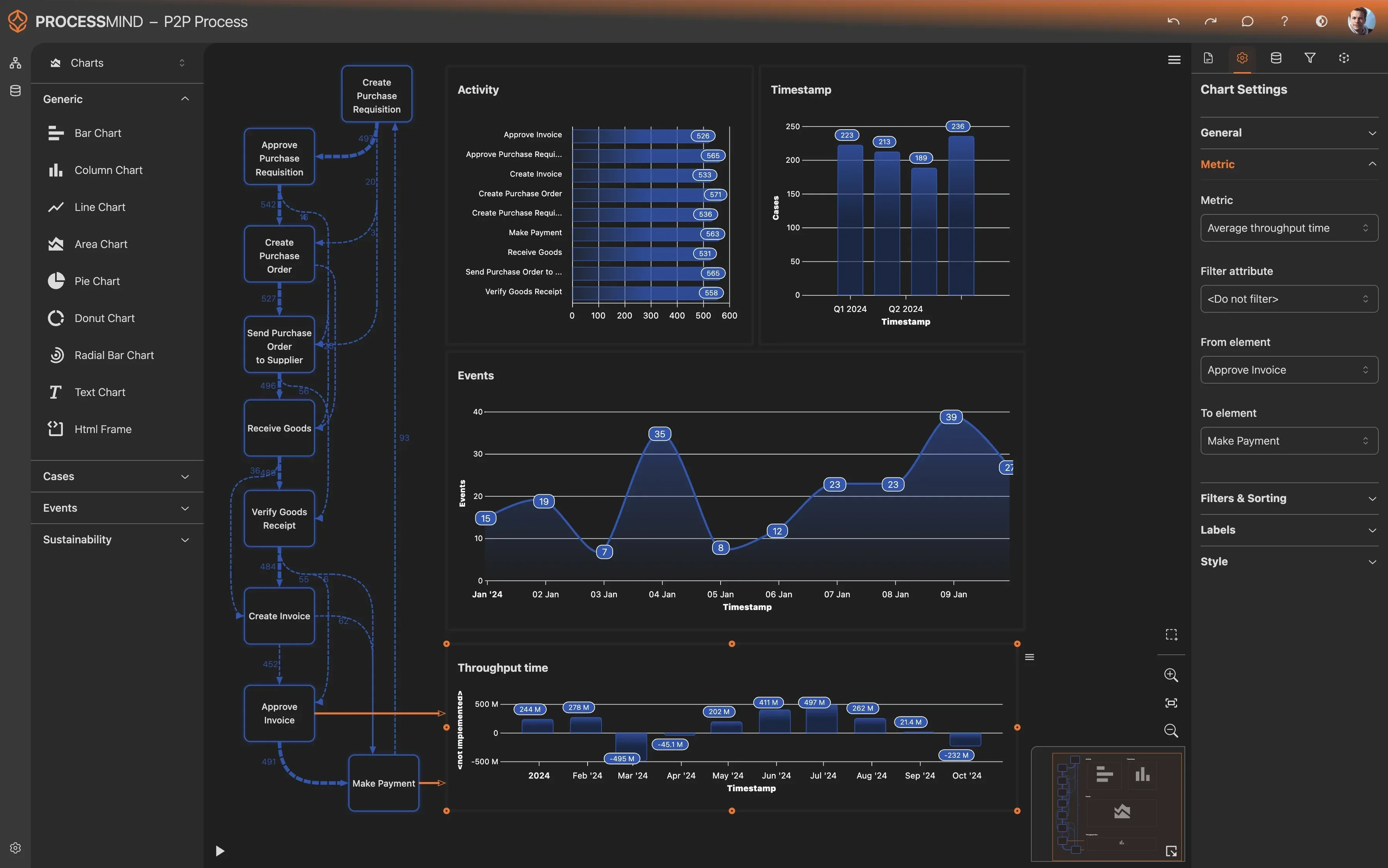
Explore automated dashboards and AI insights to find delays in root cause analysis and resolution handovers.
Why it matters
Visualizing the actual flow reveals hidden loops and compliance gaps that traditional reporting often misses.
Expected outcome
Identified bottlenecks and optimization opportunities
Implement Improvements
What to do
Prioritize and act on insights by refining assignment rules, workarounds, or resolution workflows in Freshservice.
Why it matters
Taking targeted action based on data reduces the volume of recurring incidents and improves overall service stability.
Expected outcome
Optimized workflows and improved resolution efficiency
Monitor Your Process
What to do
Periodically upload new data to ProcessMind to track the impact of your changes on key performance indicators.
Why it matters
Ongoing monitoring ensures that improvements are sustained and allows for rapid response to new process challenges.
Expected outcome
Sustainable process excellence and KPI growth
YOUR PROBLEM INSIGHTS
Master Your Freshservice Problem Management Flow
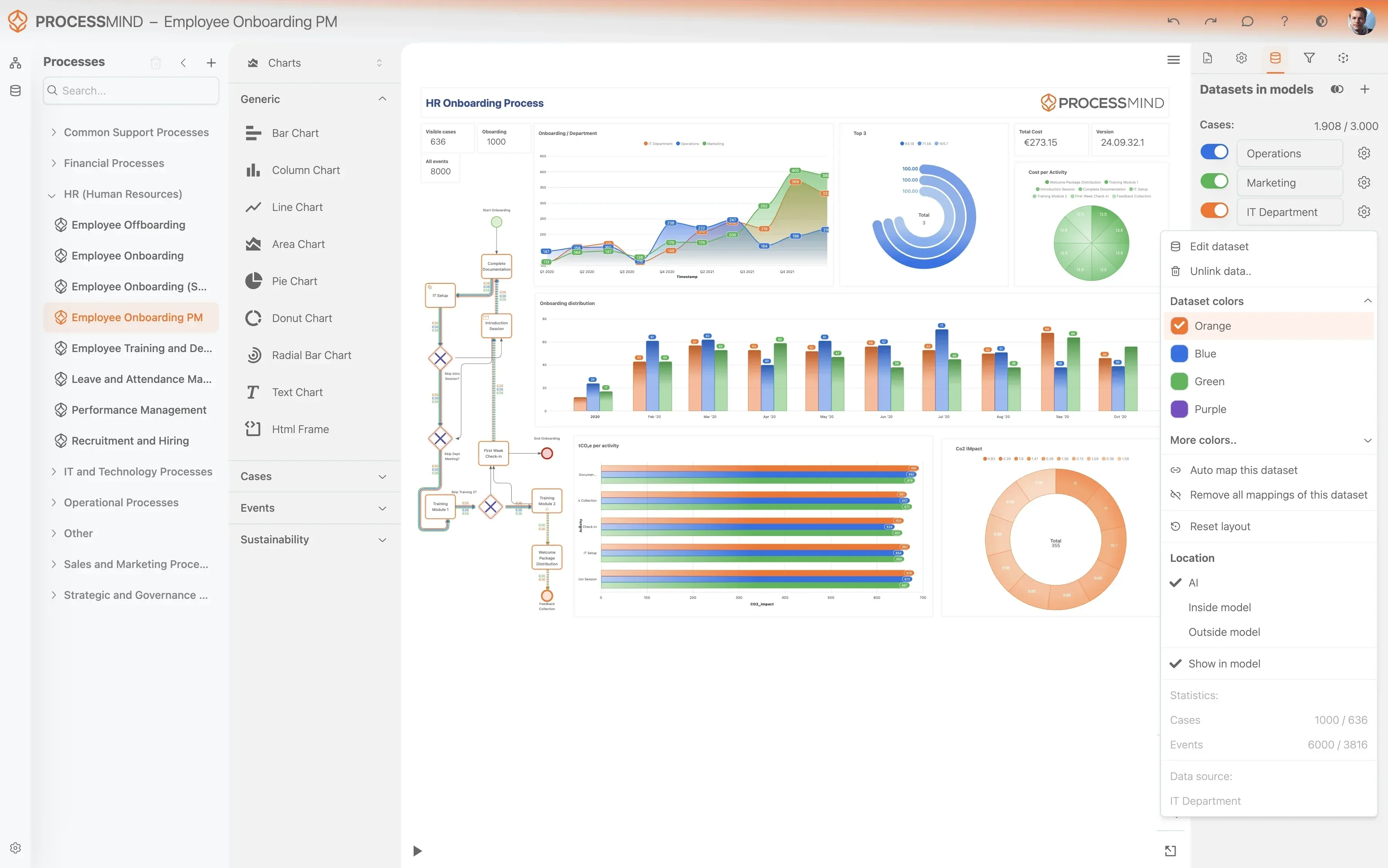
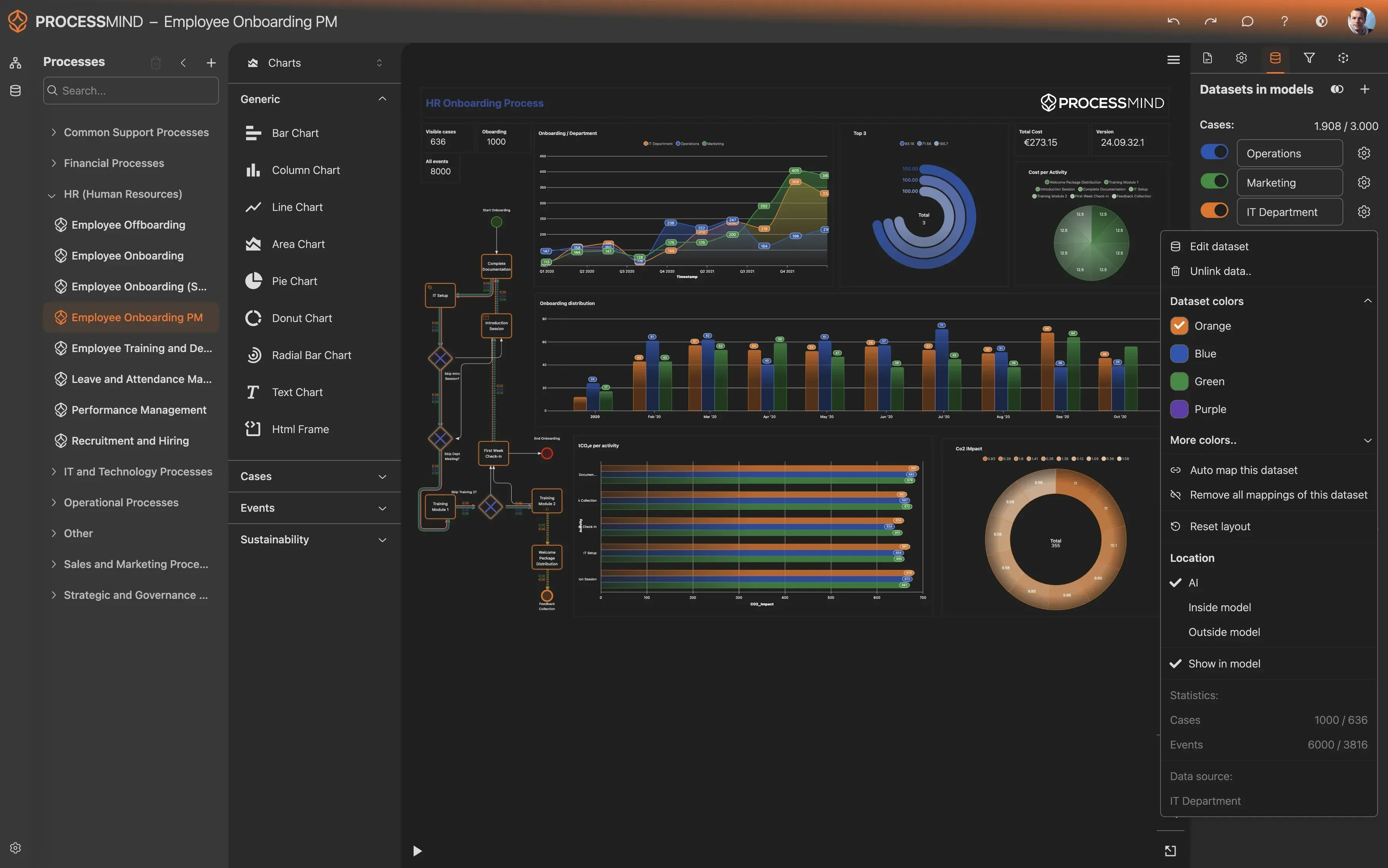
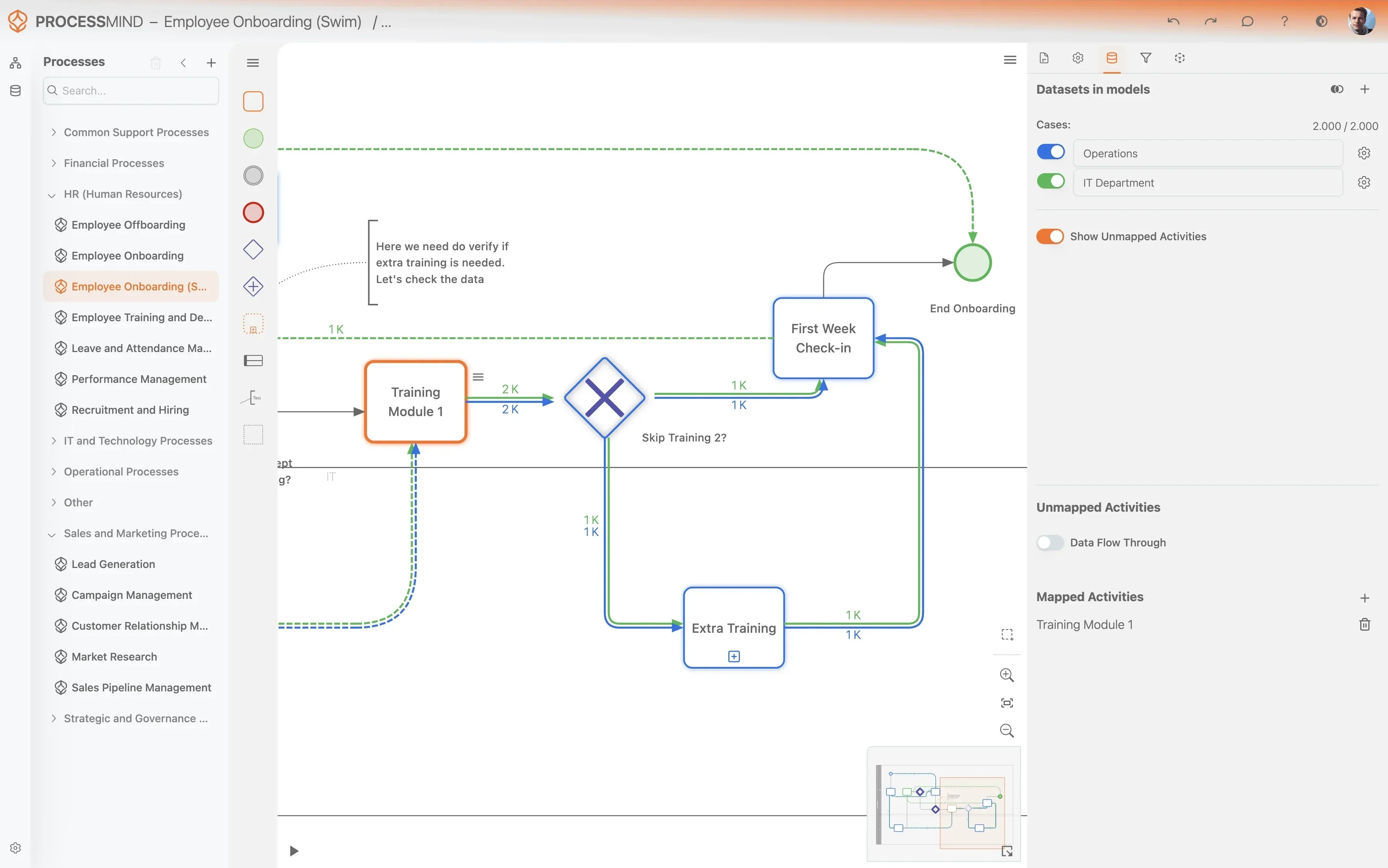
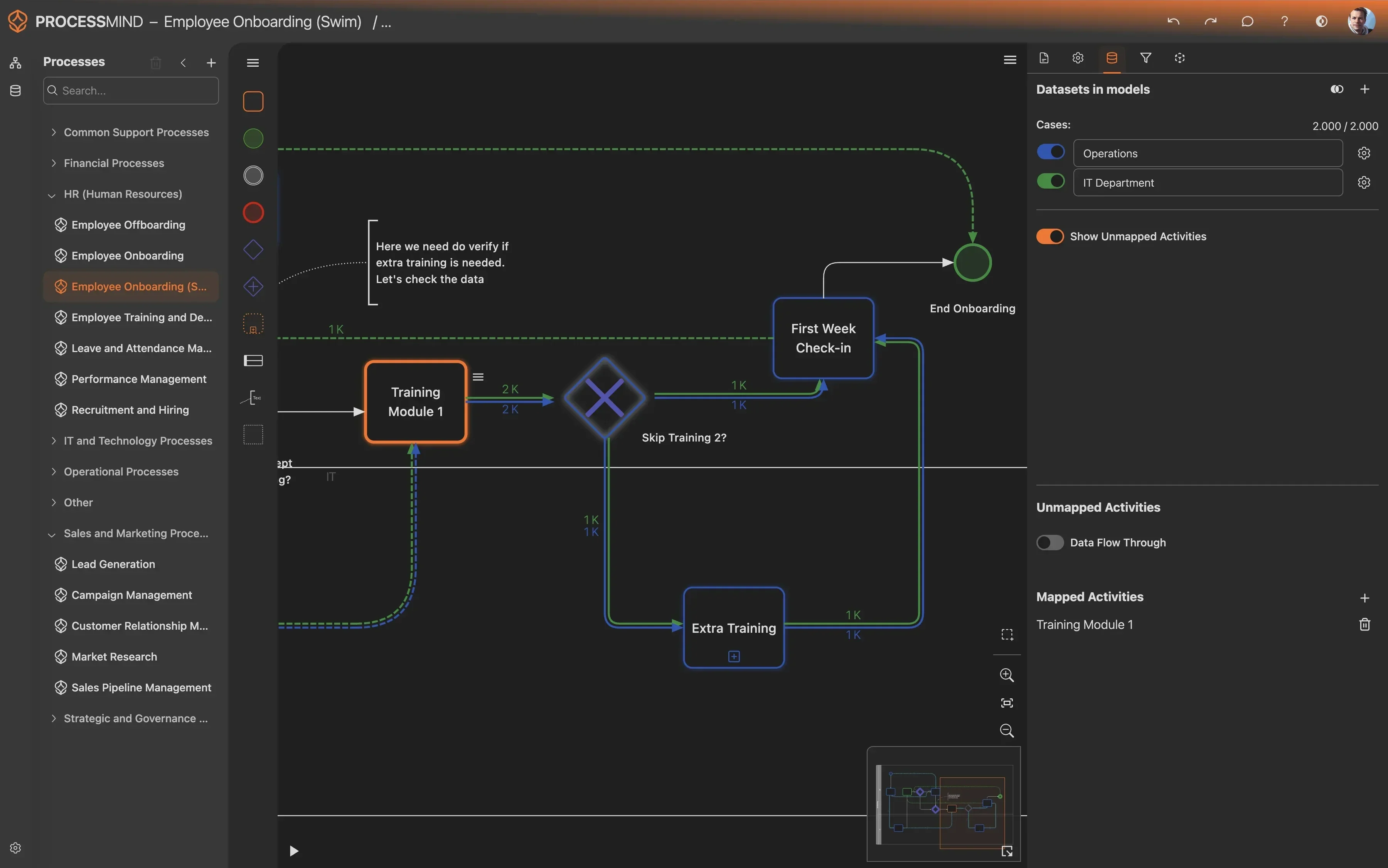
- Map your end to end RCA lifecycle visually
- Identify specific stages causing resolution delays
- Reveal hidden loops in problem investigation
- Measure the impact of workarounds on stability
PROVEN OUTCOMES
Efficiency Gains in Problem Management
Organizations leveraging process mining on Freshservice data typically identify significant bottlenecks in problem record lifecycles, leading to faster root cause analysis and reduced recurring incidents.
Reduction in RCA cycle time
Streamlining investigation steps and identifying bottlenecks in the diagnostic phase leads to significantly faster root cause identification.
Decrease in group reassignments
Eliminating unnecessary technical transfers ensures that the right experts work on problems sooner, reducing overall labor costs and delays.
On-time resolution for criticals
Real-time monitoring of high priority records ensures that critical problems are addressed within agreed timeframes, maintaining service stability.
Decrease in record rework
Improving the quality of initial investigations and permanent fixes prevents problem records from being reopened, ensuring issues are truly resolved.
Increase in post-fix reviews
Ensuring that post implementation reviews are consistently conducted helps capture lessons learned and guarantees the effectiveness of permanent fixes.
Lead time for temporary fixes
Accelerating the publication of effective workarounds minimizes business impact while long term remediation efforts are still underway.
Individual results vary depending on process maturity, team size, and data quality within Freshservice. These outcomes represent average improvements seen across enterprise implementations.
Recommended Data
FAQs
Frequently asked questions
Process mining visualizes every step of your problem management lifecycle by using existing Freshservice event logs. It highlights bottlenecks such as long investigation phases or excessive group transfers, allowing teams to identify where the process deviates from the standard workflow.
You typically need the problem record ID, activity timestamps, and the field change history from Freshservice. Key attributes like priority, category, and assigned group are also exported to provide context for deeper analysis and filtering.
Initial insights can usually be generated within a few days once the historical data is exported from Freshservice. The timeline depends on data volume and the complexity of your custom fields, but most organizations see actionable patterns in under two weeks.
No, process mining typically works through API integration or data exports rather than software installation. You simply need to provide access to the audit logs and ticket history stored within your Freshservice environment.
Yes, the analysis reveals the exact duration spent in the Root Cause Analysis phase for every record. You can then drill down to see if specific categories, priority levels, or technical teams are experiencing the most significant delays.
By mapping out every transition, the tool identifies tickets that bounce repeatedly between groups without resolution. This helps managers recognize when group ownership is unclear or when specific technical teams lack the resources to handle certain problem types.
It can track the linkage between incident tickets and their parent problem records to ensure visibility. This helps verify that workarounds are being communicated back to incident owners and that resolution steps are applied consistently across all related issues.
While historical analysis is the primary focus, many platforms offer frequent updates to monitor ongoing compliance. This allows you to see if current problem records are approaching SLA breaches before the deadline is actually missed.
Eliminate Problem Management Bottlenecks Today
Reduce your cycle time by 30 percent and stabilize IT services
No credit card required. Setup in 5 minutes.