Improve Your Accounts Payable Payment Processing

Select a process
Choose a process to continue working in your connected workspace.
Optimize Accounts Payable Payment Processing in SAP S/4HANA
Many organizations struggle with hidden bottlenecks that slow down invoice clearing and result in missed early payment discounts. Our platform helps you visualize every transaction to uncover manual rework and unnecessary approval delays. By identifying these friction points, you can streamline your operations and ensure more predictable cash management.
Download our pre-configured data template and address common challenges to reach your efficiency goals. Follow our six-step improvement plan and consult the Data Template Guide to transform your operations.
Show detailed description
The Strategic Importance of Accounts Payable Payment Processing
Accounts Payable is often perceived as a purely administrative function, yet it serves as the final gateway for capital leaving an organization. In an environment powered by SAP S/4HANA, the efficiency of this process directly impacts a company's liquidity, its credit rating, and its relationships with essential suppliers. When Accounts Payable Payment Processing is slow or fragmented, the consequences extend far beyond simple delays. Organizations may face missed early payment discounts, which can represent a significant percentage of annual spend, or late payment penalties that erode profit margins. By focusing on process optimization, finance leaders can transform AP from a transactional cost center into a strategic department that actively contributes to working capital management. Understanding how money flows through the system allows for a more disciplined approach to cash forecasting and vendor management.
Turning SAP S/4HANA Data into Actionable Insights
Process mining acts as a bridge between the complex data structures of SAP S/4HANA and the operational reality of the finance team. By extracting event logs from core tables like BKPF, BSEG, and ACDOCA, you can reconstruct the entire journey of every invoice. This transparency is vital because it reveals the as-is process rather than the intended design. While SAP provides the framework for financial records, it does not always make the friction points visible. Process mining highlights exactly where an invoice lingers, whether it is waiting in an approval queue or sitting blocked because of a minor data discrepancy. By visualizing the sequence of activities from the moment an invoice is received until the final clearing entry is posted in GLT0 or FAGLFLEXA, you gain the ability to see the process through the lens of cycle time and throughput. This data driven visibility is the first step toward meaningful process optimization.
Identifying and Eliminating Process Friction
To improve Accounts Payable Payment Processing, you must first identify the hidden bottlenecks that slow down the cycle. In many organizations, the primary source of delay is not the payment execution itself but the preparatory steps. Discrepancies between the invoice, the purchase order, and the goods receipt often trigger manual interventions that stop the clock. Process mining allows you to see how often these exceptions occur and which vendors or product categories are most frequently associated with them. Furthermore, payment blocks are frequently applied as a safety measure but are often left in place longer than necessary. By analyzing the time between a block being applied and its eventual removal, you can pinpoint inefficiencies in the resolution workflow. Streamlining these approval levels and reducing the number of touches required to get an invoice ready for payment is essential for reducing the overall cycle time. When you eliminate these manual hurdles, you free up your finance team to focus on high value activities like vendor negotiation and strategic planning.
Measuring Success through Enhanced Compliance and Efficiency
Optimizing your payment process leads to measurable improvements across several key performance indicators. The most immediate benefit is the reduction in cycle time, which allows for better capture of prompt payment discounts. Beyond direct cost savings, process mining enhances compliance by ensuring that every payment follows the established internal controls. You can easily detect deviations from standard procedures, such as payments made outside of approved terms or unauthorized changes to vendor master data. This level of oversight is crucial for maintaining audit readiness and preventing financial leakage. Additionally, a streamlined process improves vendor satisfaction. When suppliers are paid accurately and on time, they are more likely to offer better terms and prioritize your orders during supply chain disruptions. The cumulative effect of these improvements is a more resilient and agile financial operation that can adapt to changing market conditions with ease.
Getting Started with AP Process Optimization
Beginning your journey toward a more efficient Accounts Payable function does not require a complete system overhaul. By using your existing SAP S/4HANA data, you can start small by mapping your most common payment paths. Focus on identifying the high volume, low complexity invoices that can be automated, and then tackle the more complex exceptions that consume the most time. As you begin to see the patterns of friction, you can implement targeted changes to your approval workflows and vendor communication strategies. This iterative approach ensures that you achieve quick wins while building a foundation for long term digital transformation. Embracing process mining for Accounts Payable Payment Processing is not just about faster payments, it is about gaining total control over your financial commitments and driving sustained value for your organization.
Improvement Path for Accounts Payable in SAP S/4HANA
Download the AP Template
What to do
Obtain the standardized Excel template designed for SAP S/4HANA Accounts Payable data structures, including fields from BKPF and BSEG tables.
Why it matters
Starting with a pre-configured structure ensures your data mapping aligns perfectly with financial best practices and process mining requirements.
Expected outcome
A ready-to-use data mapping template for your payment processing records.
Export Historical Records
What to do
Extract 3 to 6 months of invoice and payment data from SAP S/4HANA using standard SE16N or custom reports to populate the template.
Why it matters
Using real historical data provides an accurate baseline of your current approval workflows and payment execution performance.
Expected outcome
A populated dataset reflecting your actual end-to-end payment process.
Upload to ProcessMind
What to do
Securely upload your completed Excel file to the ProcessMind platform for automated processing and visualization.
Why it matters
This triggers the AI engine to transform raw accounting entries into a clear, visual representation of your payment journey.
Expected outcome
A fully mapped digital twin of your Accounts Payable process.
Analyze Process Bottlenecks
What to do
Explore the auto-generated dashboards to identify payment blocks, approval delays, and deviations from standard SAP workflows.
Why it matters
Pinpointing specific friction points helps you understand why payments are delayed or why early payment discounts are being missed.
Expected outcome
Detailed insights into process inefficiencies and compliance gaps.
Implement Optimizations
What to do
Prioritize actions like streamlining approval levels or automating payment runs in SAP S/4HANA based on your discovery findings.
Why it matters
Targeted changes directly reduce manual effort, capture more discounts, and improve vendor relationships through timely payments.
Expected outcome
An actionable roadmap of process changes and initial implementation.
Monitor Performance Gains
What to do
Regularly re-upload fresh data to track your KPIs and verify that the changes made in SAP are delivering the expected efficiency gains.
Why it matters
Continuous monitoring ensures that improvements stick and allows you to adapt quickly to new financial requirements or vendor changes.
Expected outcome
A sustainable cycle of continuous improvement and verified ROI.
PROCESS DISCOVERIES
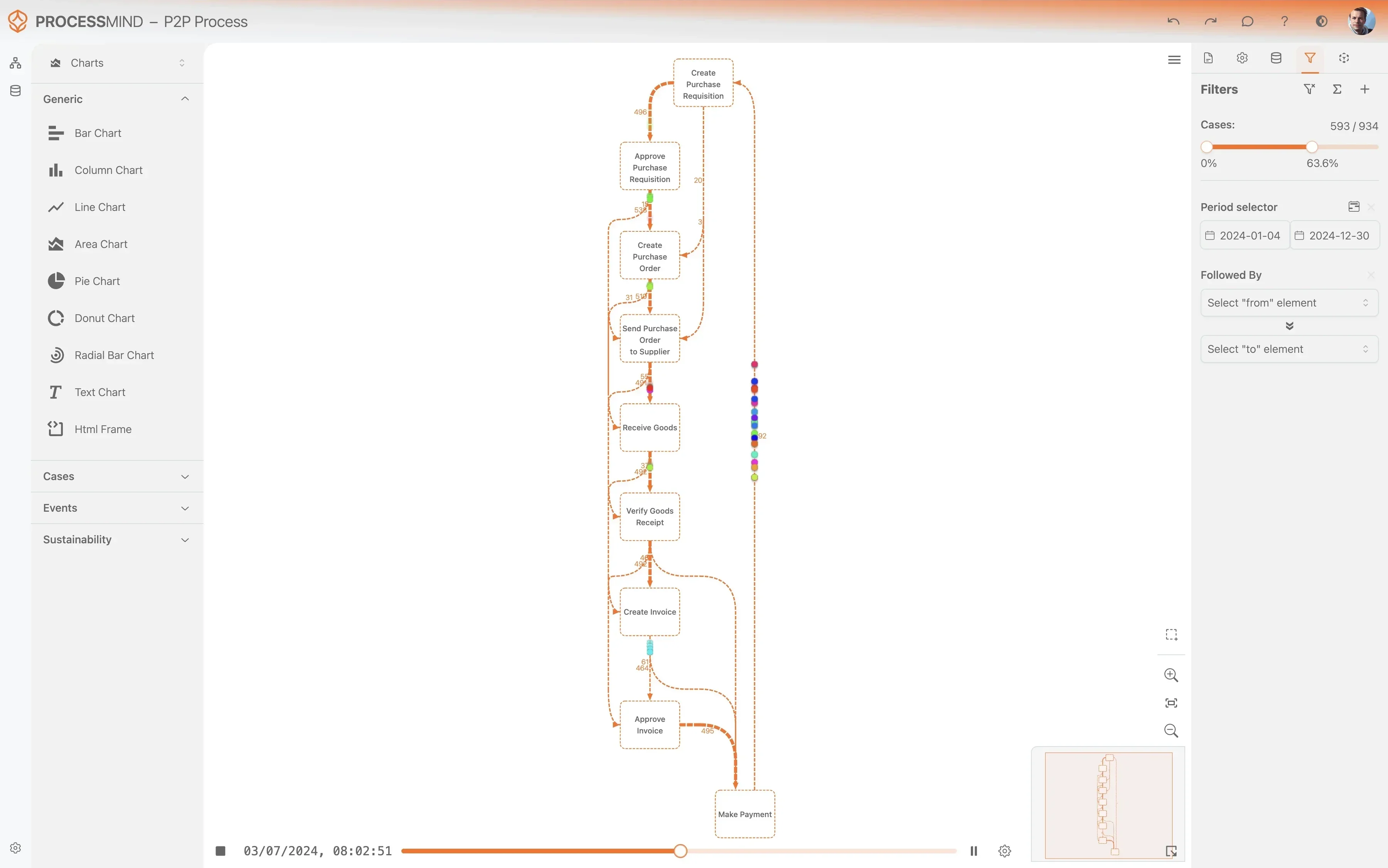
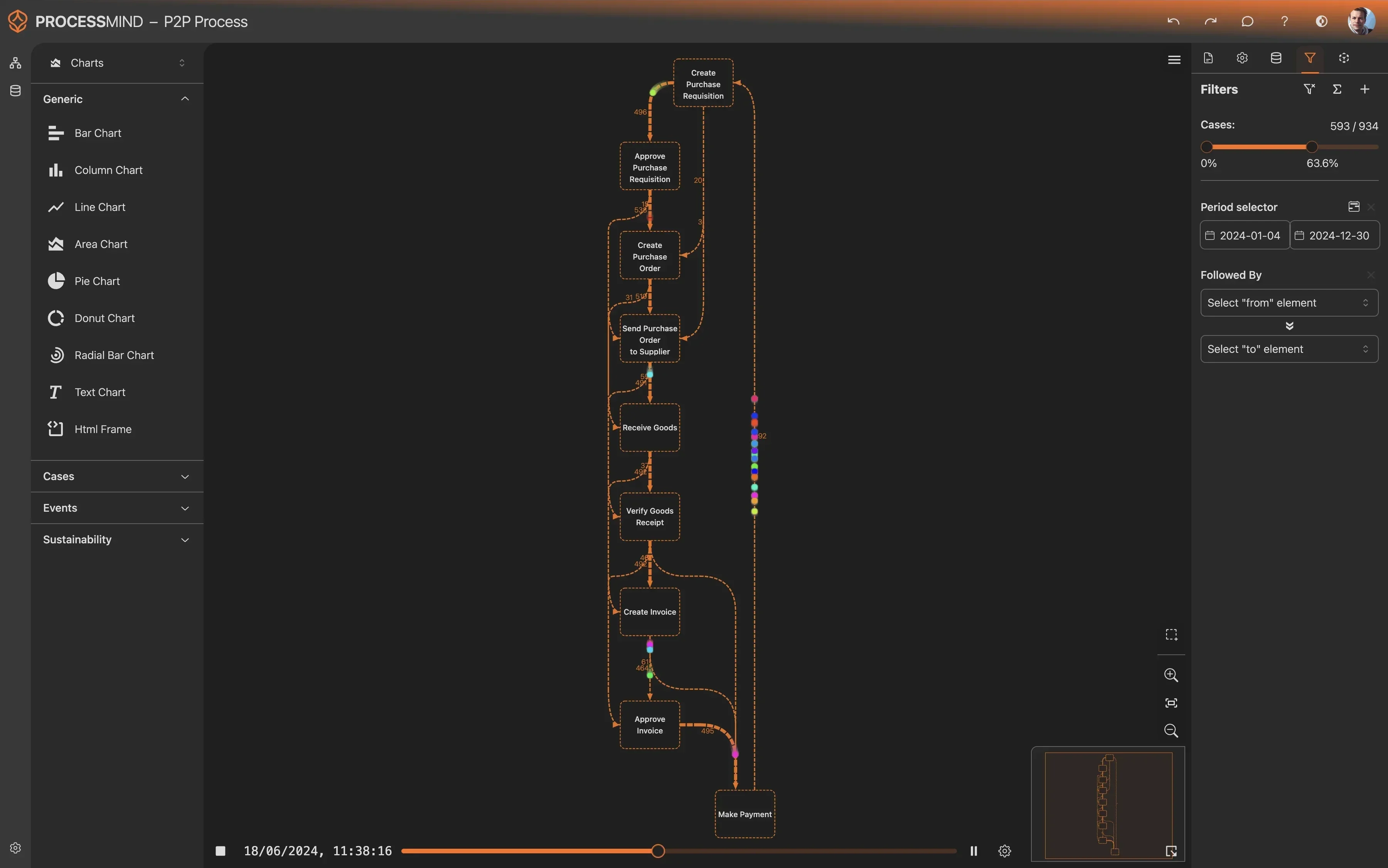
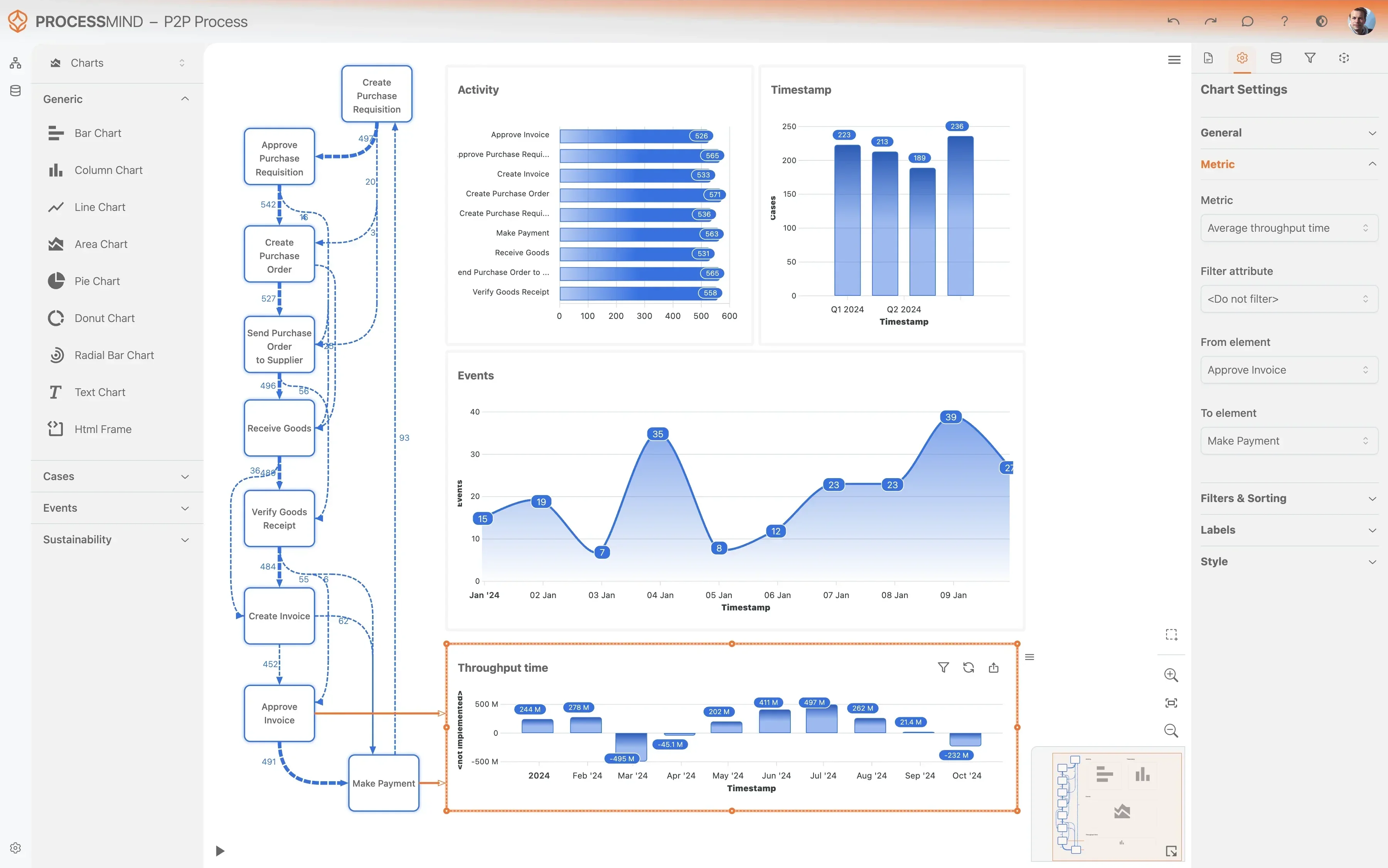
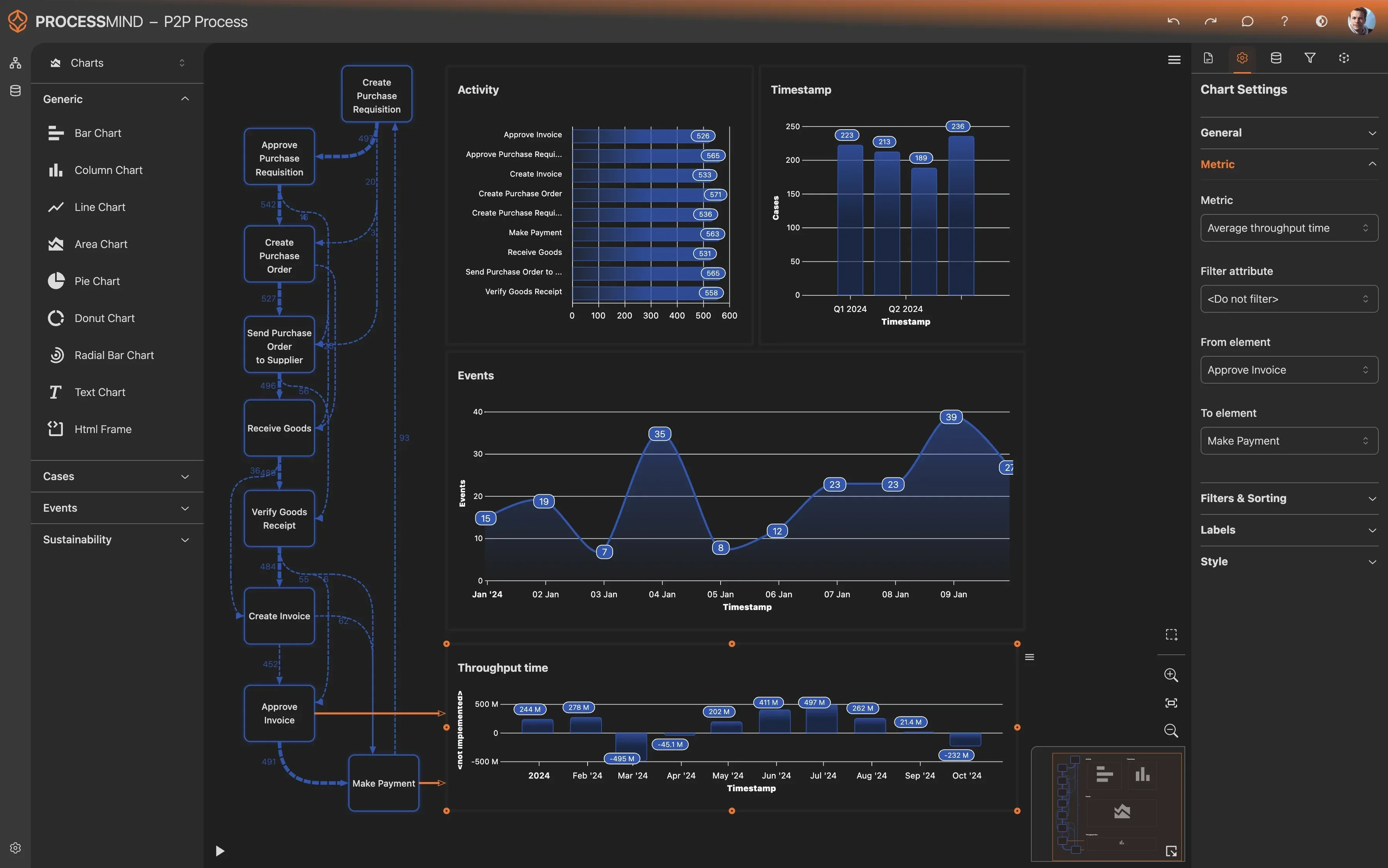
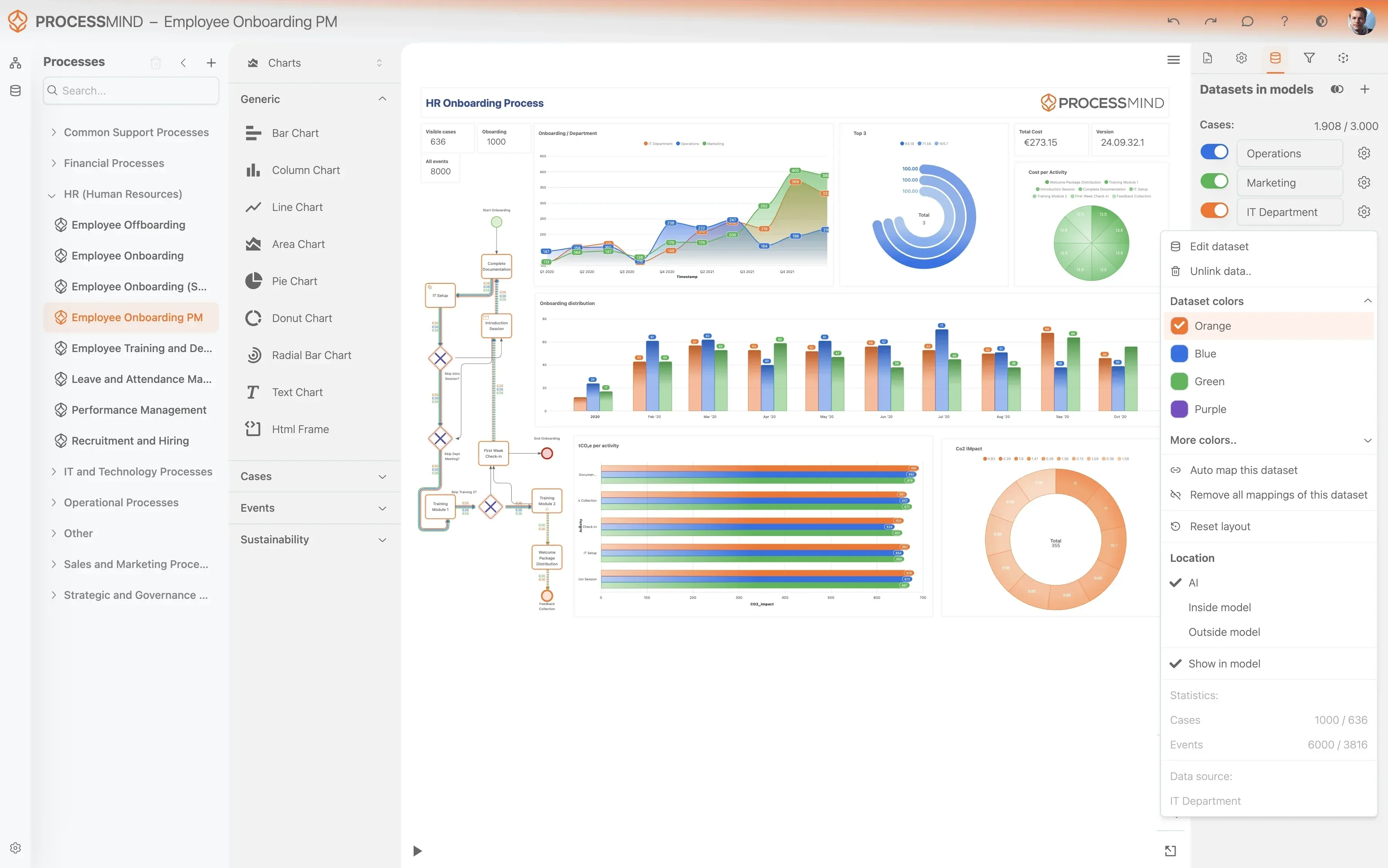
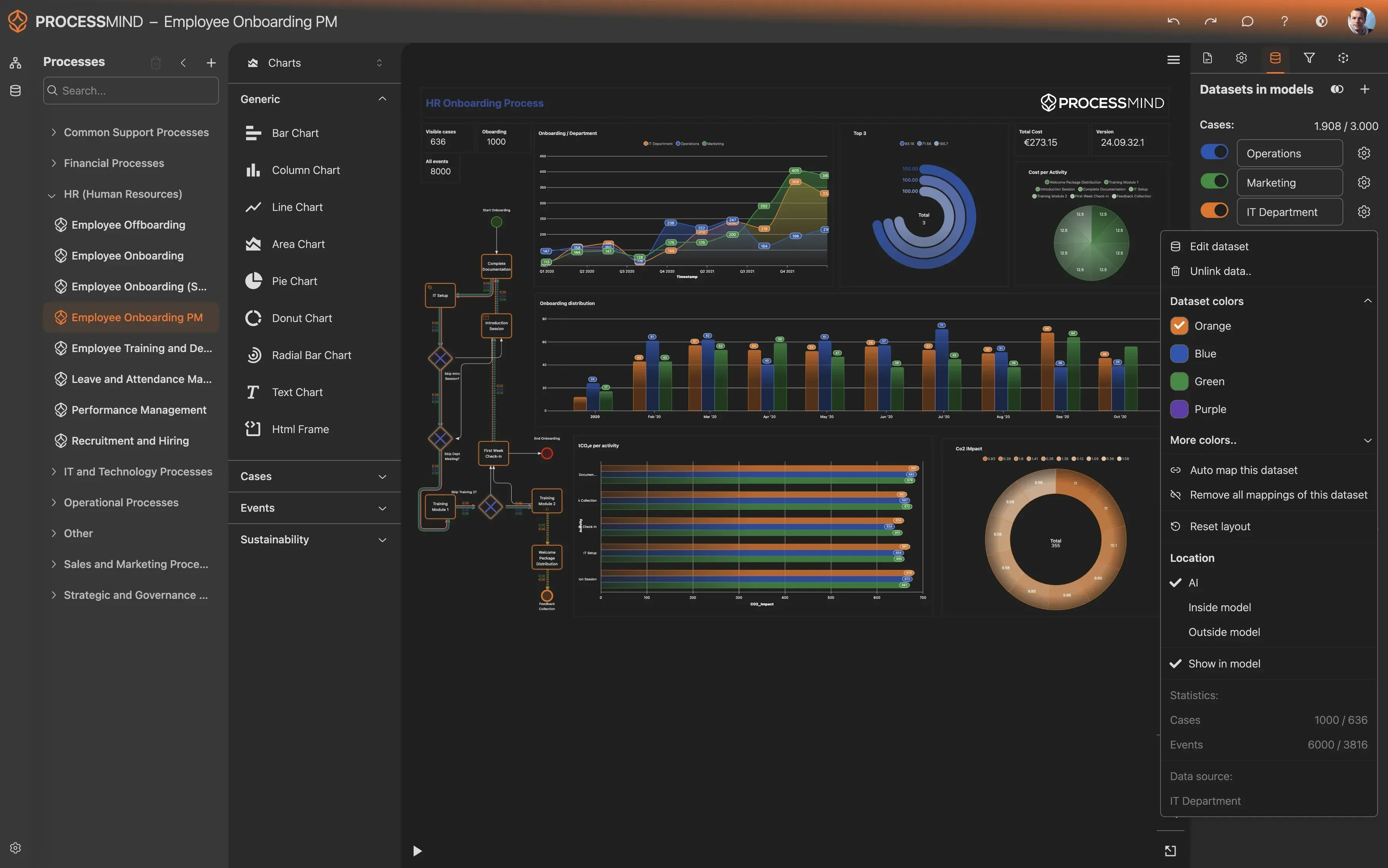
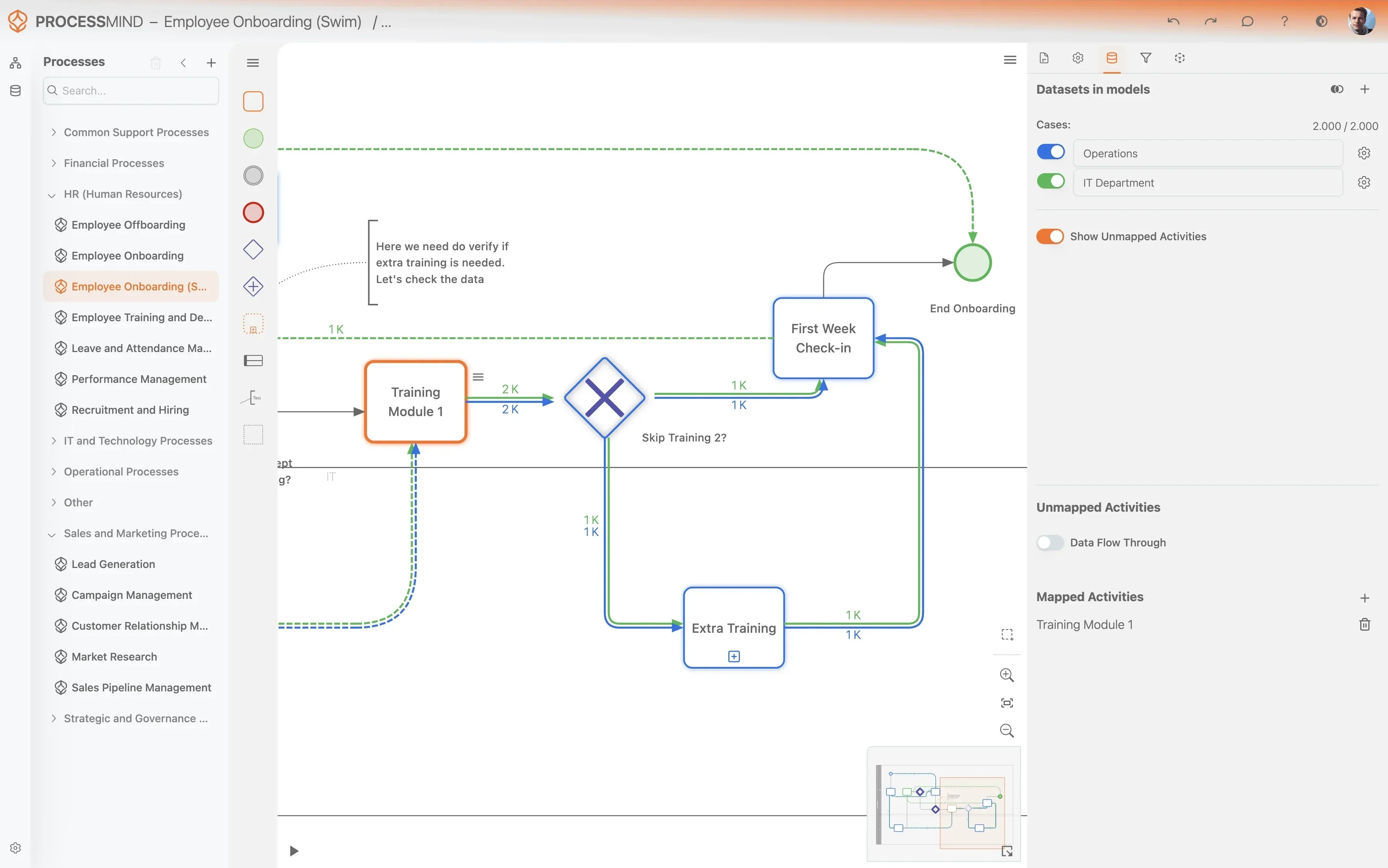
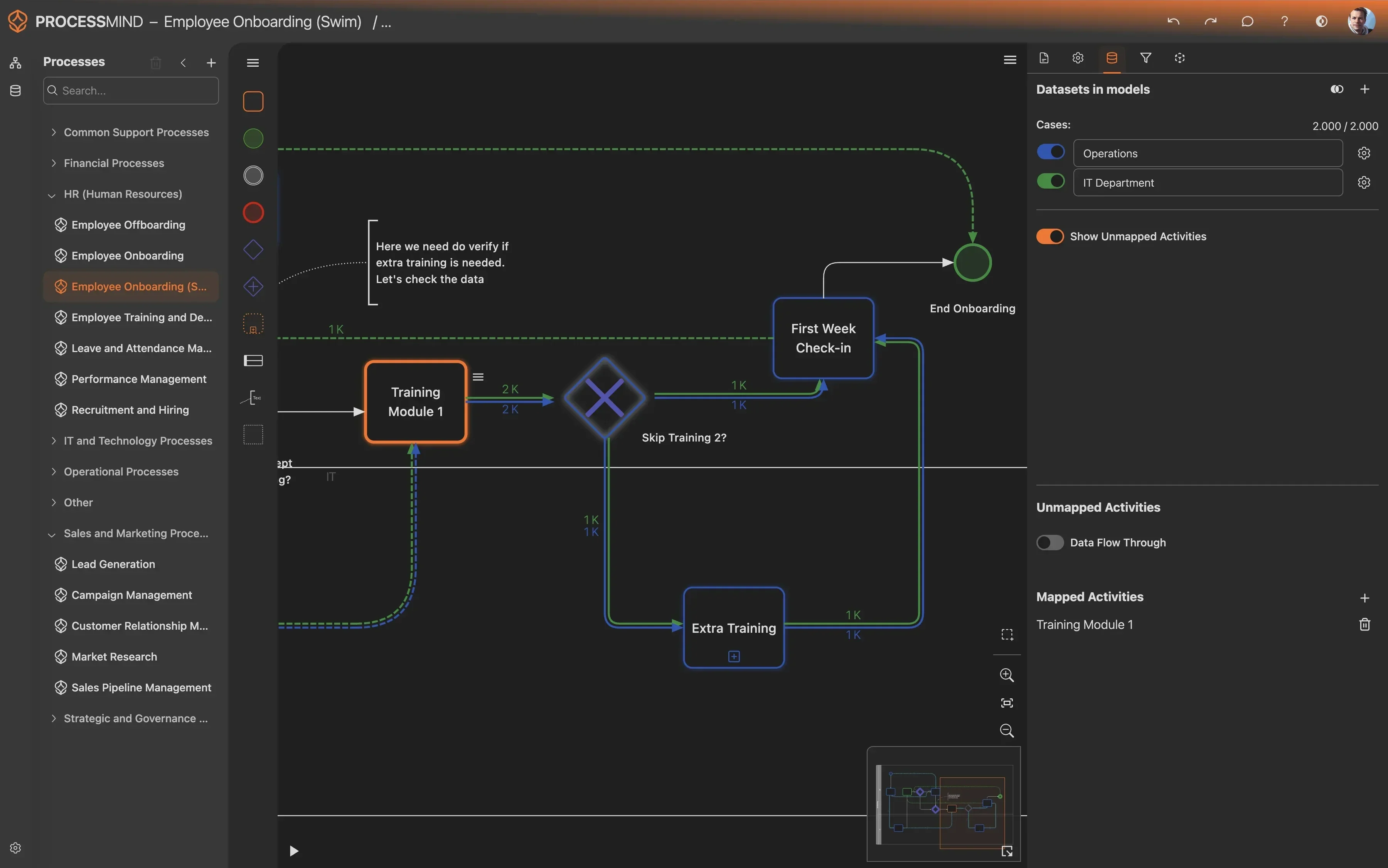
Master Your SAP AP Process with Clear Visuals
- Map every invoice step from receipt to clearing
- Pinpoint the root causes of payment blocks
- Identify manual steps that delay approvals
- Spot opportunities to capture vendor discounts
TYPICAL RESULTS
Streamlining Your Accounts Payable Workflow
By analyzing every Invoice Number transition within SAP S/4HANA, organizations can eliminate redundant manual steps and optimize payment timing. These metrics demonstrate the impact of visibility on accounts payable efficiency and vendor relationship management.
Increase in discount capture rate
By identifying and removing approval bottlenecks, organizations ensure invoices are processed within the discount windows defined in the ACDOCA table.
Reduction in end-to-end cycles
Process mining reveals hidden delays in internal routing, allowing teams to streamline the workflow from invoice receipt to final payment approval.
Increase in automation rates
Improving three way match logic and purchase order alignment helps maximize the number of invoices processed without manual intervention in SAP S/4HANA.
Efficiency gain per invoice
Eliminating manual data entry and correction activities decreases the operational cost per case and frees up the finance team for strategic tasks.
Reduction in duplicate payments
Advanced process monitoring flags duplicate entries and potential late penalties before they impact the bottom line, ensuring compliance with vendor terms.
Fewer manual payment holds
Standardizing vendor master data and resolving discrepancy patterns reduces the frequency of manual payment blocks that stall the payment run.
Results vary based on process complexity and data quality. These figures represent typical improvements observed across implementations.
Recommended Data
FAQs
Frequently asked questions
Process mining provides a transparent view of the end to end invoice lifecycle by extracting event logs directly from your SAP system. It helps teams identify hidden bottlenecks, such as excessive manual payment blocks or prolonged approval cycles, that lead to missed early payment discounts.
The analysis primarily relies on data from the BKPF and BSEG tables for accounting document headers and line items. You may also need data from the RBKP and RSEG tables for incoming invoice details to get a comprehensive view of the three way matching process.
Most organizations see significant returns by maximizing early payment discounts and eliminating late payment interest penalties. Additionally, by increasing the three way match rate and reducing manual touch points per invoice, you can lower the overall cost per transaction.
Once the data extraction from SAP is configured, initial process maps and bottleneck analyses are typically available within two to four weeks. This allows for rapid identification of high impact areas, such as duplicate payments or inefficient vendor master data updates.
Yes, process mining identifies patterns where identical invoice numbers or amounts are processed for the same vendor across different dates. By visualizing these deviations from the standard flow, teams can implement automated checks to flag potential duplicates before the final payment run.
It creates a digital footprint of every invoice transaction, making it easy to track deviations from standard procedures and internal controls. This full transparency simplifies the audit process by providing evidence of segregation of duties and adherence to approved payment terms.
Process mining highlights high volume, low complexity tasks that involve excessive manual effort, such as simple payment clearing or discrepancy resolution. By quantifying the frequency and duration of these manual steps, you can prioritize robotic process automation or SAP workflow automation for the highest return on investment.
Inconsistent or incomplete vendor data often causes downstream payment delays and manual rework. Process mining reveals how master data errors lead to matching failures, allowing you to focus on cleaning up the records that cause the most significant process disruptions.
Optimize Accounts Payable Payment Processing in SAP S/4HANA
Eliminate bottlenecks and reduce your cycle time by 30%.
No credit card required. Setup in 5 minutes.