Improve Your Claims Processing

Optimize Claims Processing in Salesforce Financial Services Cloud for Faster Resolution
This platform helps you pinpoint workflow inefficiencies that slow down your processes and impact customer satisfaction. Easily identify hidden delays and resource drains within your operations. By understanding these bottlenecks, you can streamline workflows, reduce costs, and deliver exceptional service.
Download our pre-configured data template and address common challenges to reach your efficiency goals. Follow our six-step improvement plan and consult the Data Template Guide to transform your operations.
Show detailed description
The Imperative of Optimizing Claims Processing in Salesforce Financial Services Cloud
In the competitive landscape of insurance, efficient Claims Processing is not just a goal; it's a strategic necessity. Delays and inefficiencies in your claims workflow can lead to significant financial leakage, erode customer trust, and even jeopardize regulatory compliance. Especially when operating within a sophisticated platform like Salesforce Financial Services Cloud, the complexity can often mask underlying issues. Suboptimal Claims Processing manifests as frustratingly long cycle times, increased operational costs due to manual rework and exceptions, and a tangible dip in policyholder satisfaction. Understanding the true journey of a claim, from initial submission to final resolution, is paramount to maintaining a healthy bottom line and a stellar reputation. Without clear insights into your current state, efforts to improve Claims Processing often fall short, leading to missed opportunities for substantial gains.
How Process Mining Illuminates Your Claims Workflow
Process mining offers a revolutionary approach to understanding and improving Claims Processing within Salesforce Financial Services Cloud. Instead of relying on assumptions or anecdotal evidence, process mining uses event logs from your system to reconstruct the actual end-to-end claims journey. This data-driven visualization allows you to see every step, every deviation, and every bottleneck as it truly happened. You can precisely identify where claims get stuck, which activities cause rework loops (e.g., repeated requests for
The 6-Step Improvement Path for Claims Processing
Download the Template
What to do
Get the pre-configured Excel template designed for Claims Processing data. This ensures your data from Salesforce Financial Services Cloud aligns with the required structure.
Why it matters
Using the correct template streamlines data preparation, preventing common errors and accelerating your analysis journey from the start.
Expected outcome
A structured Excel template ready to receive your claims processing data.
Export Your Data
What to do
Extract 3-6 months of historical claims processing data from your Salesforce Financial Services Cloud. Populate the downloaded template with this real-world operational data.
Why it matters
Comprehensive historical data provides a robust foundation for identifying recurring patterns, bottlenecks, and areas where claims processing can be significantly improved.
Expected outcome
A populated data template containing a valuable historical record of your claims processing activities.
Upload Your Dataset
What to do
Securely upload your completed claims processing data template to ProcessMind. Our system automatically processes and prepares your dataset for in-depth analysis.
Why it matters
This quick and secure upload initiates the powerful analytical phase, transforming raw data into actionable insights without manual setup complexities.
Expected outcome
Your claims processing data securely uploaded and ready for automated analysis.
Analyze Your Process
What to do
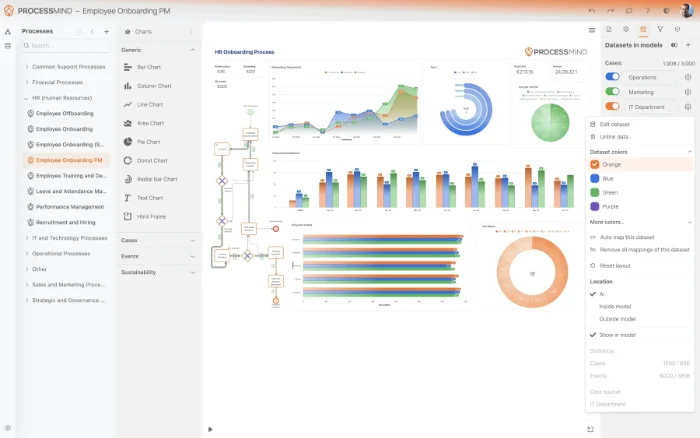
Explore auto-generated dashboards and insights specific to your claims processing workflow in Salesforce Financial Services Cloud. Leverage AI-driven recommendations to pinpoint inefficiencies.
Why it matters
Gain immediate visibility into actual process flows, compliance deviations, and cycle times, empowering you to make data-backed decisions for improvement.
Expected outcome
Clear visualizations of your claims process, identified bottlenecks, and actionable recommendations for optimization.
Implement Improvements
What to do
Prioritize and implement the identified opportunities to streamline claims processing, perhaps by configuring automation rules or re-training staff within Salesforce.
Why it matters
Taking action on insights directly translates to reduced processing times, lower operational costs, and an enhanced experience for policyholders.
Expected outcome
A refined claims processing workflow with specific changes applied to address inefficiencies and improve performance.
Monitor Your Process
What to do
Periodically re-upload updated claims data from Salesforce Financial Services Cloud to track the impact of your implemented improvements and ensure sustained efficiency.
Why it matters
Continuous monitoring validates the effectiveness of changes, allowing for further iterative optimization and ensuring long-term operational excellence.
Expected outcome
Ongoing visibility into claims processing performance, clear trends, and measurable KPI improvements over time.
WHAT YOU WILL GET
Uncover Hidden Truths in Claims Processing
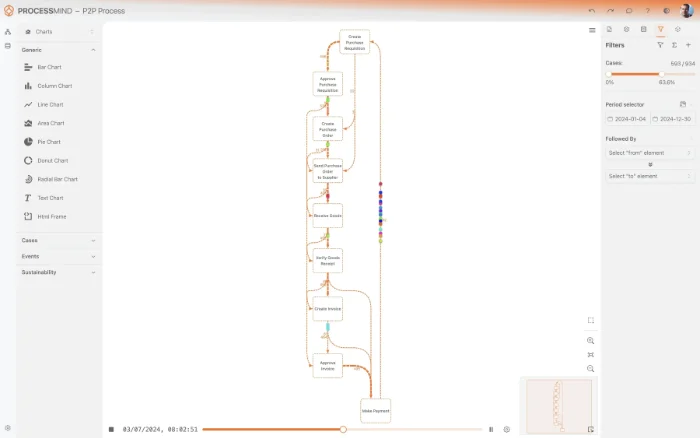
- Visualize claims process actual flow
- Pinpoint exact claims processing bottlenecks
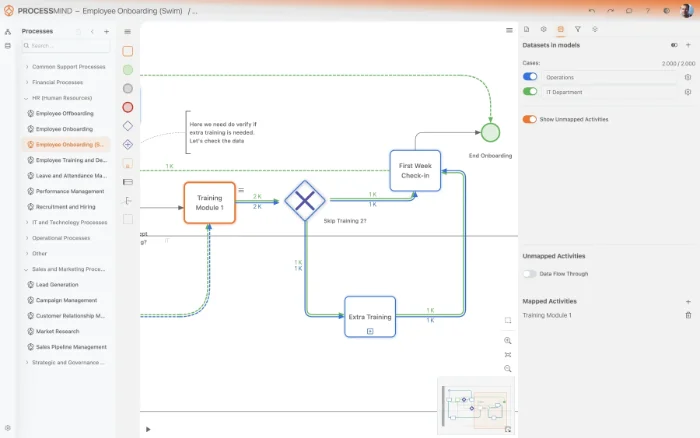
- Detect compliance gaps in claims workflows
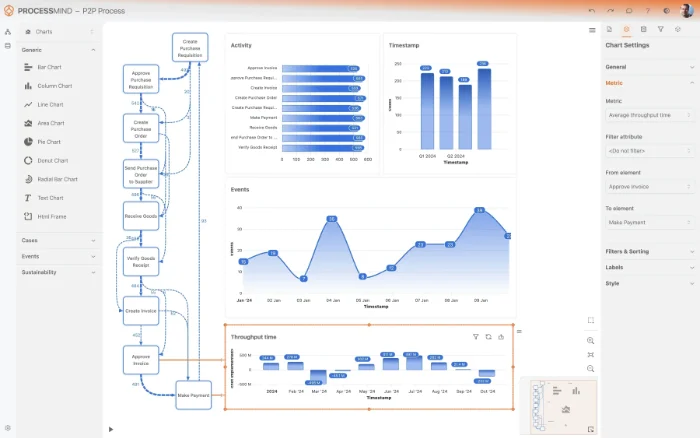
- Measure claims resolution time and cost
TYPICAL OUTCOMES
Transforming Claims Processing: Real-World Outcomes
By applying process mining to Salesforce Financial Services Cloud data for claims processing, organizations gain deep, data-driven insights into bottlenecks and inefficiencies. These insights empower targeted improvements, leading to measurable enhancements in operational performance and customer satisfaction.
Average end-to-end processing time
Streamline workflows by identifying and removing bottlenecks, significantly cutting down the time from claim submission to resolution. This enhances customer satisfaction and operational efficiency.
Decreased unnecessary processing loops
Pinpoint root causes of rework, such as missing information or incorrect data entry, and implement targeted improvements. This reduces wasted effort and processing costs.
Higher compliance with service targets
Automatically identify claims at risk of breaching SLAs and uncover the reasons behind delays. Proactive interventions ensure regulatory compliance and better service delivery.
Lower processing cost per claim
By eliminating redundant activities, automating manual steps, and reducing errors, organizations can significantly lower the overall cost associated with processing each claim.
Standardized process path adherence
Visualize deviations from the ideal process path to enforce best practices and reduce variations. This leads to more predictable outcomes and easier training.
Individual results may vary depending on the complexity of your claims processes and the quality of your Salesforce data. The figures presented illustrate common improvements realized through process optimization.
Recommended Data
FAQs
Frequently asked questions
Process mining analyzes event logs from Salesforce to map the actual claims journey. It identifies bottlenecks, rework loops, and non-compliance, helping reduce resolution times and operational costs by visualizing the true process.
We primarily need event logs detailing claim ID, activity, timestamp, and resource. This data is typically extracted via Salesforce APIs or reports, then transformed into a format suitable for process mining tools.
You can expect quantifiable improvements like reduced claim cycle times by identifying critical bottlenecks. It also helps in decreasing rework rates, ensuring SLA compliance, and lowering overall operational costs per claim.
Initial setup, including data extraction and model generation, can take a few weeks depending on data complexity. Meaningful insights often emerge within 4-6 weeks, allowing for targeted process improvements.
Yes, process mining visualizes the actual process flow, highlighting deviations and loops that extend cycle times. It can pinpoint specific activities or stages where rework frequently occurs, enabling targeted interventions to streamline operations.
You will need access to Salesforce data, typically through APIs, and a process mining software platform. No direct changes to your Salesforce instance are usually required, as the analysis is performed on extracted data.
While the underlying technology is complex, modern process mining tools are user-friendly. Most implementations benefit from collaboration between IT for data access and business users for process understanding, minimizing the need for deep technical expertise from your side.
Process mining can automatically detect instances where claims deviate from predefined paths or exceed time limits for specific activities. This helps identify non-compliant cases and highlight the reasons behind SLA breaches proactively.
End Claims Backlogs: Achieve Faster Processing Now
Achieve 70% straight-through processing and boost customer satisfaction.
No credit card required. Set up in minutes.