Improve Your Hire to Retire - Employee Lifecycle

Optimize Your Hire to Retire Employee Lifecycle in Workday Onboarding
This platform helps you pinpoint recruitment bottlenecks, onboarding delays, and compliance issues. It provides clear visibility into where employee journeys may falter. By analyzing these flows, you can streamline workflows and enhance the overall employee experience, leading to greater operational efficiency.
Download our pre-configured data template and address common challenges to reach your efficiency goals. Follow our six-step improvement plan and consult the Data Template Guide to transform your operations.
Show detailed description
Why Optimize Your Hire to Retire Employee Lifecycle?
Understanding and refining your Hire to Retire - Employee Lifecycle is paramount for any organization aiming for sustained success. This comprehensive process encompasses every stage of an employee's journey, from initial recruitment to their final departure. Inefficiencies at any point, whether in talent acquisition, the Workday Onboarding experience, performance management, or offboarding, can lead to significant operational costs, compliance risks, and a diminished employee experience. A disjointed or slow lifecycle can result in higher employee turnover, increased administrative burden, and a negative impact on overall productivity and organizational culture. Optimizing this complex process is not just about cutting costs, it is about building a foundation for a highly engaged, efficient, and compliant workforce.
How Process Mining Unlocks Workday Onboarding Efficiency
Process mining offers a powerful lens to analyze the true performance of your Hire to Retire - Employee Lifecycle, especially as it interfaces with systems like Workday Onboarding. Instead of relying on assumptions or anecdotal evidence, process mining uses event log data, which is readily available from Workday and other HR systems, to reconstruct and visualize the actual flow of your employee journeys. This objective, data-driven approach allows you to precisely identify where bottlenecks occur, pinpoint deviations from standard procedures, and discover rework loops that consume valuable time and resources. For example, you can visually trace how long it truly takes from "Offer Extended" to "Employee Onboarded" in Workday Onboarding, or identify specific departments experiencing delays in "Payroll Setup Completed." This clear visualization is crucial for how to improve Hire to Retire - Employee Lifecycle by highlighting the hidden inefficiencies that impact cycle time and employee satisfaction. By understanding these real-world process behaviors, you gain the actionable insights needed for effective process optimization.
Key Areas for Hire to Retire Improvement
Applying process mining to your Hire to Retire - Employee Lifecycle reveals several critical areas for improvement:
- Recruitment and Onboarding Delays: Identify the specific steps in the Workday Onboarding process that cause the longest delays for new hires, from background checks to initial training assignments. Reducing these onboarding cycle times significantly improves the new employee experience and accelerates time-to-productivity.
- Process Deviations and Rework: Discover instances where employees or managers bypass standard Workday workflows, leading to manual workarounds, compliance risks, and unnecessary rework. Understanding these deviations is key to standardizing processes and improving data quality.
- Performance Management Inconsistencies: Analyze the actual execution of performance review cycles, identifying delays in feedback delivery or approval processes that impact employee development and engagement.
- Inefficient Career Progression: Pinpoint bottlenecks in promotion approvals, role changes, or lateral moves, ensuring that internal mobility processes are smooth and timely.
- Offboarding Efficiency and Compliance: Evaluate the complete offboarding process, identifying any gaps or delays in tasks like exit interviews or final payroll processing, ensuring a smooth and compliant departure.
Realizing Measurable Outcomes
The power of process optimization in your Hire to Retire - Employee Lifecycle translates into tangible, measurable benefits:
- Reduced Cycle Time: Significantly decrease the time taken for critical stages, such as reducing the overall Workday Onboarding cycle time by days or even weeks. This leads to faster time-to-productivity for new hires and quicker resolution of HR requests.
- Cost Savings: Lower administrative costs by eliminating rework, reducing manual efforts, and streamlining inefficient processes. Improved talent retention also reduces recruitment costs, directly impacting your bottom line.
- Enhanced Employee Experience: A smoother, more predictable employee journey, from onboarding to offboarding, leads to higher employee satisfaction, engagement, and ultimately, better retention. This directly addresses "how to reduce Hire to Retire - Employee Lifecycle cycle time" from the employee's perspective.
- Improved Compliance and Governance: Ensure all HR processes adhere to internal policies and external regulations, mitigating risks and improving audit readiness.
- Data-Driven Decision Making: Move beyond intuition and make strategic HR decisions based on objective data, leading to continuous improvement and organizational agility.
Taking the First Step Towards Optimization
Optimizing your Hire to Retire - Employee Lifecycle with process mining is a strategic imperative for modern HR. By leveraging the data within your Workday Onboarding and other HR systems, you can gain unprecedented visibility into your operations, uncover hidden inefficiencies, and implement targeted improvements. This approach empowers your HR teams to move from reactive problem-solving to proactive process excellence, ultimately transforming the employee experience and driving business success. Embrace this opportunity to refine your processes and unlock the full potential of your workforce.
The 6-Step Improvement Path for Hire to Retire - Employee Lifecycle
Download the Template
What to do
Get the pre-configured Excel template for the Hire to Retire process, designed for compatibility with Workday Onboarding data. This ensures you start with the right data structure for analysis.
Why it matters
A standardized template ensures data consistency and accuracy, simplifying the initial setup and preventing common issues during analysis. This lays a solid foundation.
Expected outcome
A standardized Excel template tailored for Hire to Retire data from Workday Onboarding, ready for your export.
Export Your Data
What to do
Extract 3-6 months of historical Hire to Retire data from your Workday HCM and Workday Onboarding modules. Populate the downloaded template with this real employee lifecycle data.
Why it matters
Using recent, comprehensive data provides a true reflection of your current employee lifecycle processes. This allows for accurate bottleneck identification and performance assessment.
Expected outcome
A complete Excel template filled with 3-6 months of accurate, historical Hire to Retire data from Workday.
Upload Your Dataset
What to do
Securely upload your populated Excel template to ProcessMind. Our platform will automatically validate and prepare your Hire to Retire data for immediate analysis.
Why it matters
This step initiates the automated analysis process, eliminating manual data handling and ensuring your employee lifecycle data is quickly and accurately processed for insights.
Expected outcome
Your Hire to Retire dataset successfully uploaded, validated, and ready for comprehensive process mining analysis.
Analyze Your Process
What to do
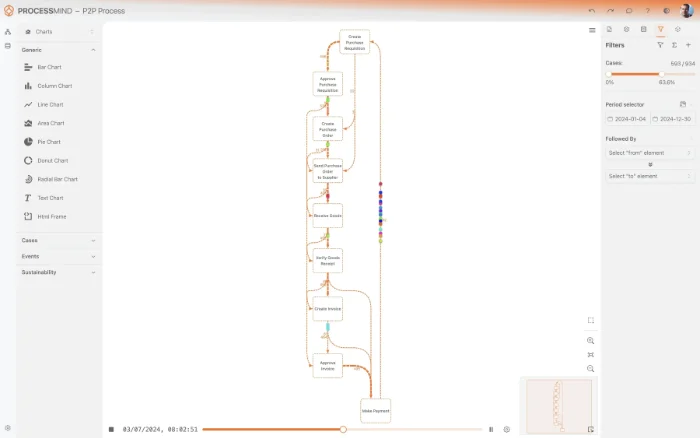
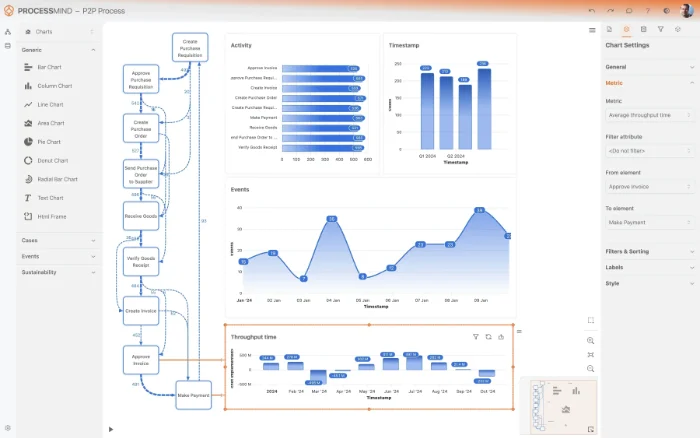
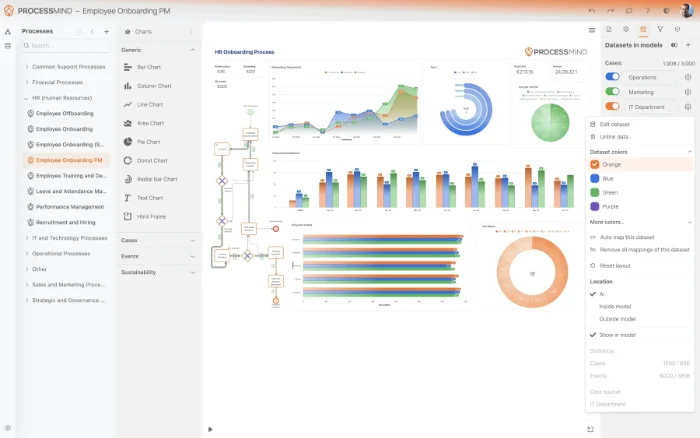
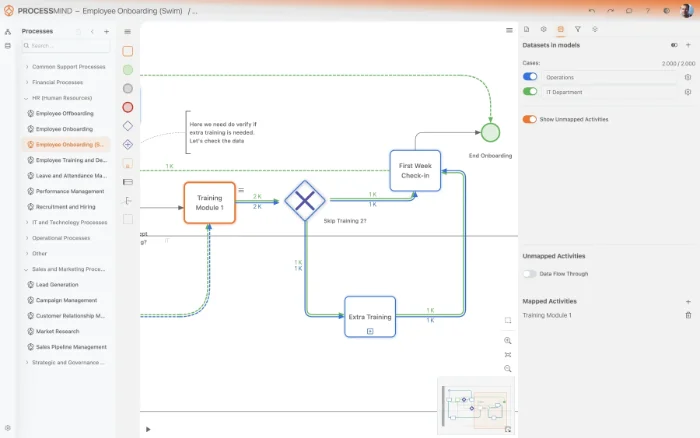
Explore interactive dashboards and visualizations revealing your Hire to Retire process flow, compliance gaps, and automation opportunities within Workday Onboarding. Leverage AI for recommendations.
Why it matters
Gain deep insights into every stage of the employee lifecycle, from hiring to offboarding, uncovering inefficiencies and areas for improvement in Workday processes.
Expected outcome
Clear visualizations of your Hire to Retire process, identifying bottlenecks, compliance risks, and improvement opportunities.
Implement Improvements
What to do
Based on the identified insights, prioritize and apply changes to your Workday Onboarding configurations and Hire to Retire workflows. Focus on optimizing employee experience.
Why it matters
Acting on data-driven recommendations ensures that your efforts are focused on the most impactful changes, leading to tangible improvements in HR efficiency and employee satisfaction.
Expected outcome
Optimized Hire to Retire processes within Workday, with tangible improvements in efficiency, compliance, and employee experience.
Monitor Your Process
What to do
Periodically re-upload updated Hire to Retire data from Workday Onboarding to ProcessMind. This allows you to track the impact of your implemented changes over time.
Why it matters
Continuous monitoring ensures that improvements are sustained and allows for proactive identification of new issues or further optimization needs, fostering ongoing process excellence.
Expected outcome
A clear understanding of the impact of your changes, with measurable KPI improvements and ongoing optimization of the employee lifecycle.
YOUR INSIGHTS
Uncover Your Hire to Retire Journey's Hidden Truths
- Visualize end-to-end Workday Onboarding flow
- Pinpoint recruitment bottlenecks and delays
- Enhance compliance and reduce HR risks
- Improve overall employee experience journey
TYPICAL OUTCOMES
Real-World Improvements in Employee Lifecycle Management
These outcomes demonstrate the tangible benefits organizations achieve by optimizing their Hire to Retire, Employee Lifecycle processes. By leveraging process intelligence, companies can identify inefficiencies and streamline operations from onboarding to offboarding.
Average reduction in new hire time
Streamline the journey from offer acceptance to full employee activation, ensuring new hires are productive sooner. Process mining identifies and eliminates delays, leading to a smoother start for everyone.
Adherence to standard onboarding flows
Ensure new hire journeys consistently follow defined best practices within Workday Onboarding. This reduces variations, errors, and ensures a predictable experience for all employees.
Elimination of redundant steps
Identify and remove unnecessary loops and re-submissions in critical processes like onboarding. This saves valuable HR and employee time, directly reducing operational costs.
Critical activity completion rate
Guarantee that all essential compliance activities, such as mandatory training or documentation, are completed on time throughout the employee lifecycle. This minimizes risk and ensures regulatory adherence.
Faster role change approvals
Accelerate the approval process for internal promotions and transfers, improving employee satisfaction and retention. Employees can move into new roles quicker, fostering career growth.
Results vary based on process complexity, data quality, and specific organizational context. The figures provided here illustrate common improvements observed across various implementations.
Recommended Data
FAQs
Frequently asked questions
Process mining analyzes event data from Workday Onboarding and other systems to map the actual journey of employees. It identifies bottlenecks, deviations from standard processes, and areas of inefficiency, like extended background checks or delayed payroll setup, helping you achieve goals like accelerating time-to-hire and enhancing compliance.
To perform process mining, you need event logs containing three key elements: a case identifier, typically the Employee ID; activity names, such as "Offer Extended" or "Background Check Initiated"; and precise timestamps for each activity. Workday reporting capabilities can often provide this historical event data.
After data extraction and initial setup, which can take a few weeks depending on data complexity, you can expect to see initial process maps and bottleneck identification within another few weeks. Actionable insights for specific improvements often emerge within 2-3 months, leading to quicker payroll setup or reduced time-to-hire.
You can expect significant improvements such as reduced time-to-hire, increased adherence to standard employee journeys, and bolstered compliance activity completion. Process mining helps eliminate redundant steps and streamlines critical functions, like internal mobility and offboarding, leading to a more efficient and compliant HR operation.
Yes, process mining is excellent for compliance monitoring. It can visualize whether mandatory steps, like specific background checks or policy acknowledgments, are completed on time and in the correct order. This helps identify gaps in critical compliance activities and ensures adherence to regulatory requirements, reducing audit risks.
Yes, absolutely. Process mining is particularly effective for complex processes, precisely because it reveals all actual process variants, including non-standard journeys and deviations that might be hidden otherwise. It helps identify why these deviations occur and their impact on efficiency and compliance, offering clear insights into areas for standardization.
The primary technical requirements include a reliable method for extracting event log data from Workday, often via APIs or custom reports, and a process mining software platform. You will also need resources for data preparation and transformation to ensure the data is in a suitable format for analysis, guaranteeing data quality is crucial.
Optimize Your Hire to Retire Employee Lifecycle Today
Gain actionable insights, reduce cycle time by 30% in Workday HR.
No credit card required. Set up in minutes.