Improve Your Inventory Management

Select a process
Choose a process to continue working in your connected workspace.
Optimize NetSuite Inventory Management for Greater Efficiency
Inventory management processes can often conceal hidden inefficiencies, leading to undesirable outcomes such as stockouts, excess inventory, and higher carrying costs. Our platform helps you to precisely identify bottlenecks throughout the entire lifecycle, from receiving goods to final dispatch. This reveals clear opportunities to streamline operations, reduce expenditures, and significantly improve fulfillment rates.
Download our pre-configured data template and address common challenges to reach your efficiency goals. Follow our six-step improvement plan and consult the Data Template Guide to transform your operations.
Show detailed description
Why Optimize Inventory Management in NetSuite?
Inventory management is the backbone of any product-based business, directly impacting profitability, customer satisfaction, and operational efficiency. In NetSuite, a robust but complex ERP system, managing inventory involves a multitude of transactions, from goods receipt and put-away to internal transfers, adjustments, and order fulfillment. Without a clear, end-to-end view of these processes, inefficiencies can easily hide within your system, leading to significant business challenges. You might experience frequent stockouts, resulting in lost sales and frustrated customers, or conversely, hold excessive inventory, tying up capital and incurring high carrying costs. Manual tracking and reactive problem-solving are often insufficient to uncover the root causes of these issues in a dynamic environment like NetSuite.
The cost of inefficient inventory management extends beyond financial losses. It can lead to warehouse bottlenecks, increased labor costs due to unnecessary movements, delays in order fulfillment, and a diminished ability to meet market demands. Understanding the true flow of your inventory, from the moment it enters your warehouse until it is consumed or shipped, is crucial for maintaining a competitive edge and ensuring sustainable growth. This is where a data-driven approach becomes indispensable.
How Process Mining Uncovers NetSuite Inventory Bottlenecks
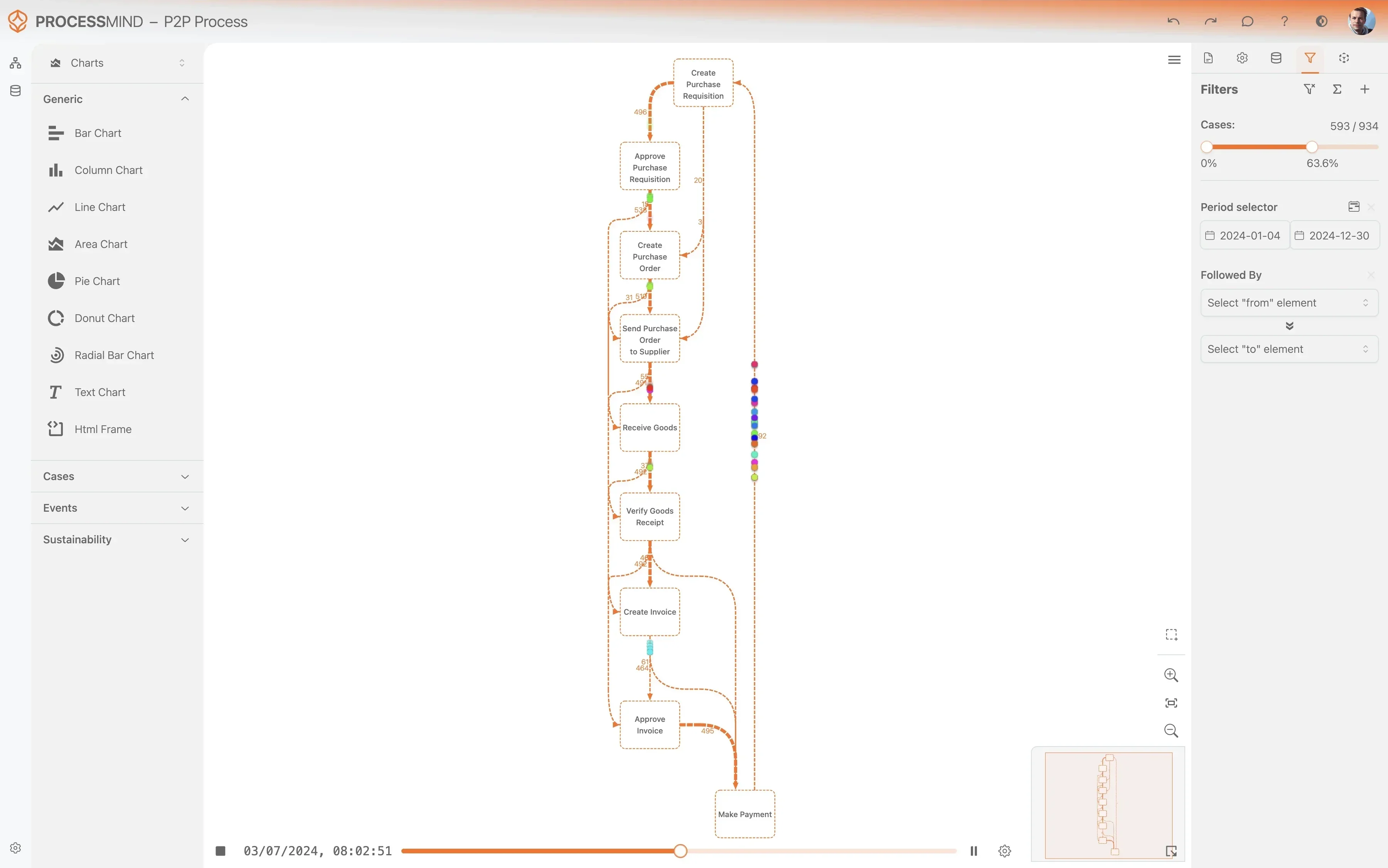
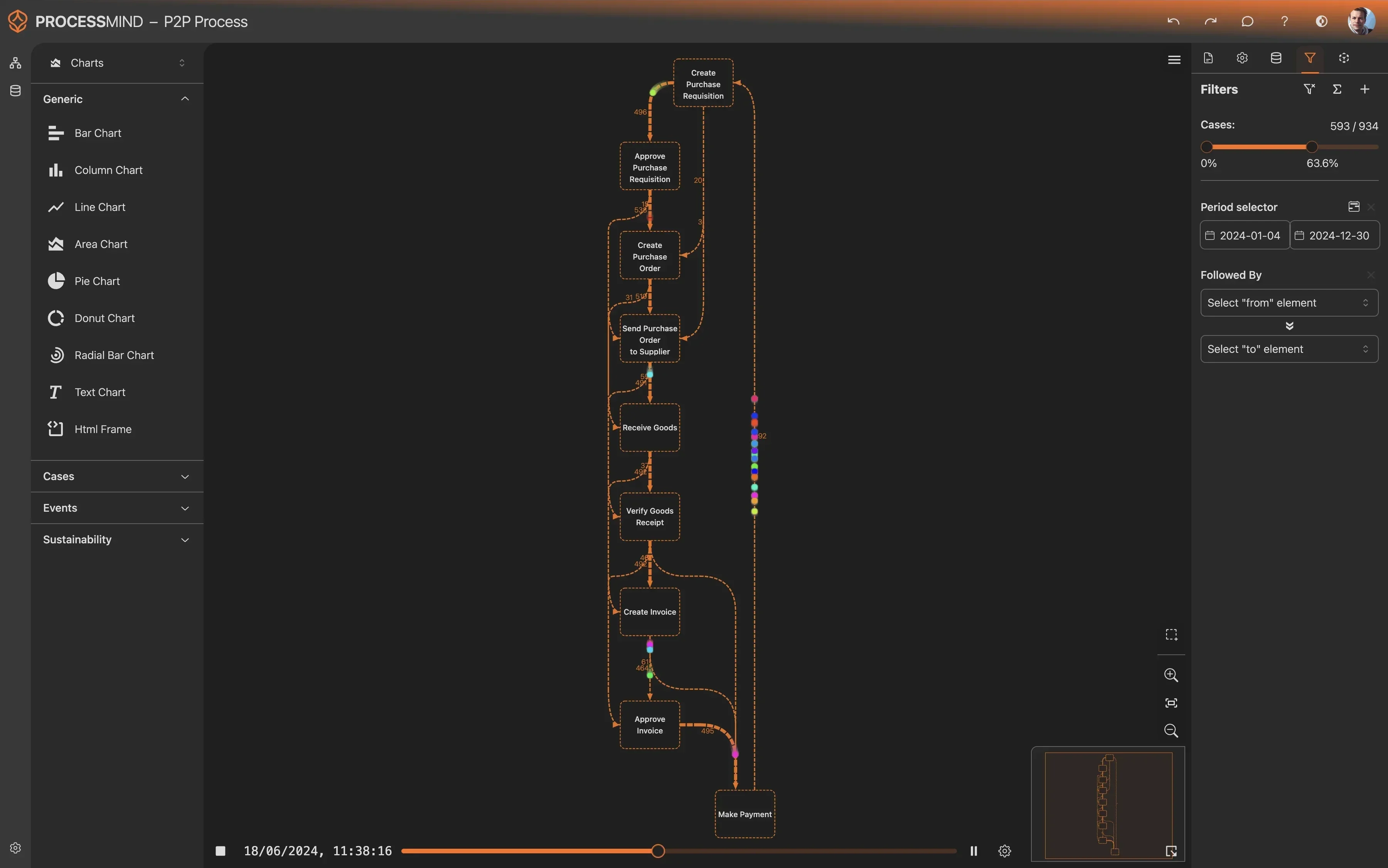
Process mining offers a powerful lens to analyze and improve your NetSuite Inventory Management. By extracting event logs from NetSuite records like InventoryItem, TransferOrder, InventoryAdjustment, and BinTransfer, process mining reconstructs the actual journey of each inventory batch or lot. This allows you to visualize every step, identify deviations from planned processes, and quantify performance metrics that were previously invisible.
For instance, you can precisely measure the cycle time from "Goods Receipt Recorded" to "Put-away Completed" for different warehouses or product categories, pinpointing delays that impact stock availability. You can uncover hidden loops, such as multiple "Stock Moved Internally" activities before an item is put away, indicating inefficient storage strategies. Process mining also highlights how often "Inventory Discrepancy Adjusted" activities occur, revealing systemic issues with inventory accuracy or counting procedures. By tracking the full lifecycle, from initial receipt through picking, packing, and "Goods Issue Recorded," you gain insights into the efficiency of your entire fulfillment process, identifying choke points that slow down delivery and inflate operational costs. This data-driven perspective moves beyond assumptions, showing you exactly where, when, and why your inventory processes are underperforming in NetSuite.
Key Improvement Areas for Your NetSuite Inventory
Applying process mining to your NetSuite Inventory Management typically reveals several high-impact areas for improvement:
- Optimize Put-Away and Storage Efficiency: Analyze the time taken for goods to move from receipt to their final storage bin. Identify the slowest routes, specific warehouse areas, or user groups contributing to delays. This helps you optimize storage layouts and put-away strategies.
- Streamline Internal Transfers: Pinpoint unnecessary stock movements or excessively long transfer cycle times between bins or warehouses. Reduce handling costs and improve stock accessibility by identifying more direct routes.
- Enhance Inventory Accuracy: Investigate the frequency and nature of "Inventory Discrepancy Adjusted" events. Understanding the root causes, whether it is counting errors, misplacements, or system discrepancies, allows you to implement targeted training or system improvements to boost accuracy.
- Accelerate Order Fulfillment: Trace the complete picking, packing, and dispatch process. Identify bottlenecks in picking initiation, completion, or packing, ensuring faster order processing and improved customer delivery times.
- Proactive Expiration and Obsolescence Management: For products with expiration dates, monitor the flow to ensure timely rotation and minimize the need for "Stock Scrapped/Disposed" activities, reducing waste and financial losses.
Expected Outcomes of NetSuite Inventory Optimization
By leveraging process mining for your NetSuite Inventory Management, you can expect significant, measurable benefits across your operations. You will achieve substantial reductions in carrying costs by optimizing stock levels and minimizing obsolescence. Cycle times for critical activities, such as goods receipt to put-away and order fulfillment, will decrease, leading to faster customer deliveries and improved service levels. Inventory accuracy will dramatically improve, reducing the need for manual adjustments and enabling more reliable forecasting. Overall warehouse operational efficiency will increase, translating to lower labor costs and better resource utilization. Ultimately, these improvements contribute to enhanced compliance with inventory policies, a more robust supply chain, and a significant boost in customer satisfaction, solidifying your competitive position.
Getting Started with Inventory Management Process Analysis
Ready to transform your NetSuite Inventory Management? Our process mining solution provides the tools to quickly connect to your NetSuite data and begin uncovering these crucial insights. With a clear, visual representation of your actual inventory processes, you can move beyond assumptions and make data-driven decisions that lead to tangible improvements. Start your journey towards a more efficient, cost-effective, and responsive inventory operation today, and turn hidden inefficiencies into opportunities for growth.
The 6-Step Improvement Path for Inventory Management
Download the Template
What to do
Get the pre-formatted Excel template designed for NetSuite Inventory Management data. This template ensures your data is structured correctly for analysis.
Why it matters
Starting with the right structure prevents data import errors and speeds up the analysis phase, ensuring accurate insights from the beginning.
Expected outcome
A standardized Excel template ready for populating with your Inventory Management data from NetSuite.
Export Your NetSuite Data
What to do
Extract 3-6 months of historical Inventory Management data from your NetSuite system. Populate the downloaded template using NetSuite's reporting or saved searches.
Why it matters
Comprehensive historical data provides a robust foundation for identifying trends, bottlenecks, and areas for efficiency gains within your inventory processes.
Expected outcome
A completed Excel template containing 3-6 months of your NetSuite Inventory Management event data.
Upload Your Inventory Data
What to do
Securely upload your filled Inventory Management data template to the ProcessMind platform. The system will then automatically begin processing your dataset.
Why it matters
This step initiates the automated analysis, transforming raw data into visual process maps and actionable insights without manual effort or complex setup.
Expected outcome
Your Inventory Management data successfully imported and ready for automated process analysis.
Analyze Your NetSuite Process
What to do
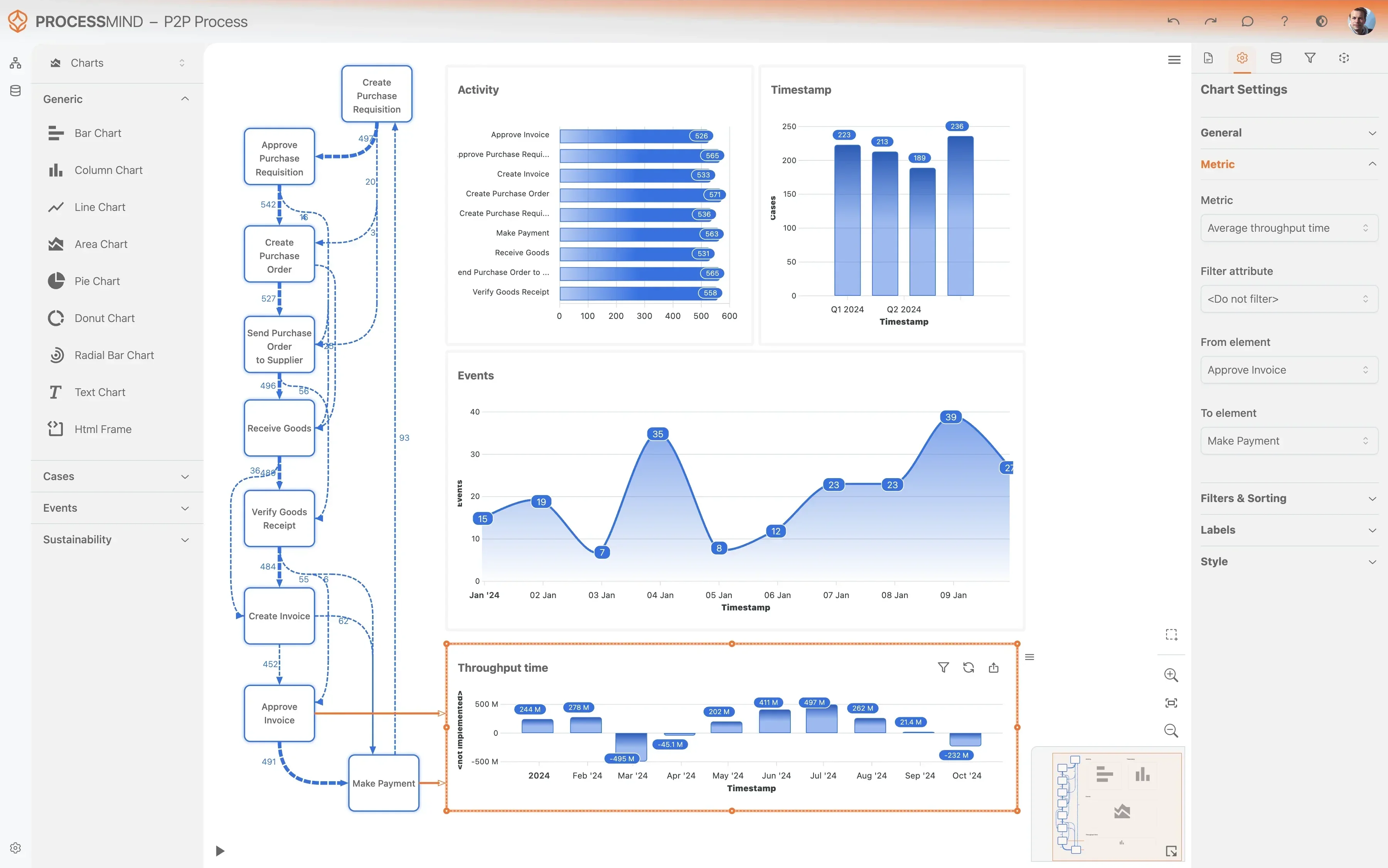
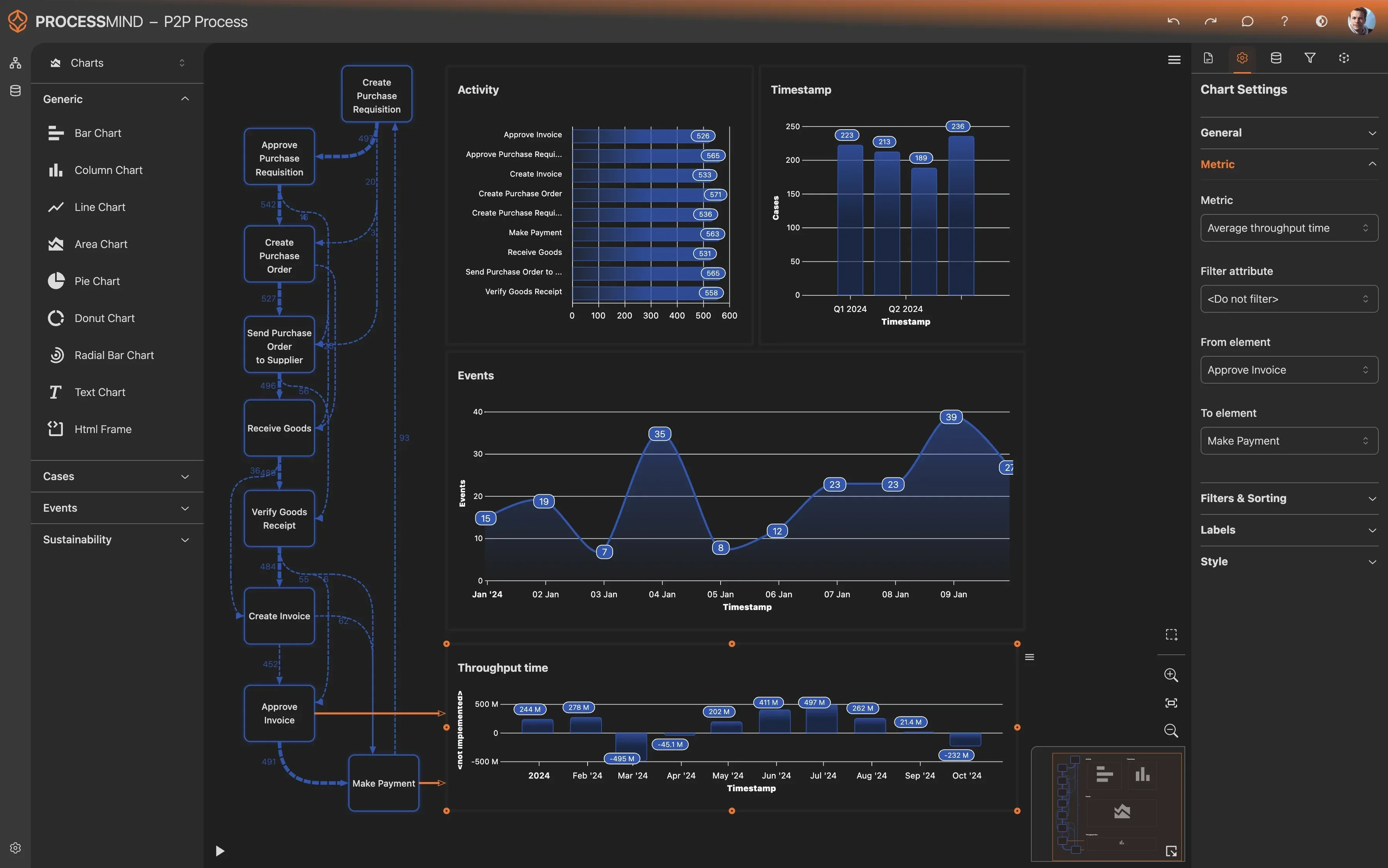
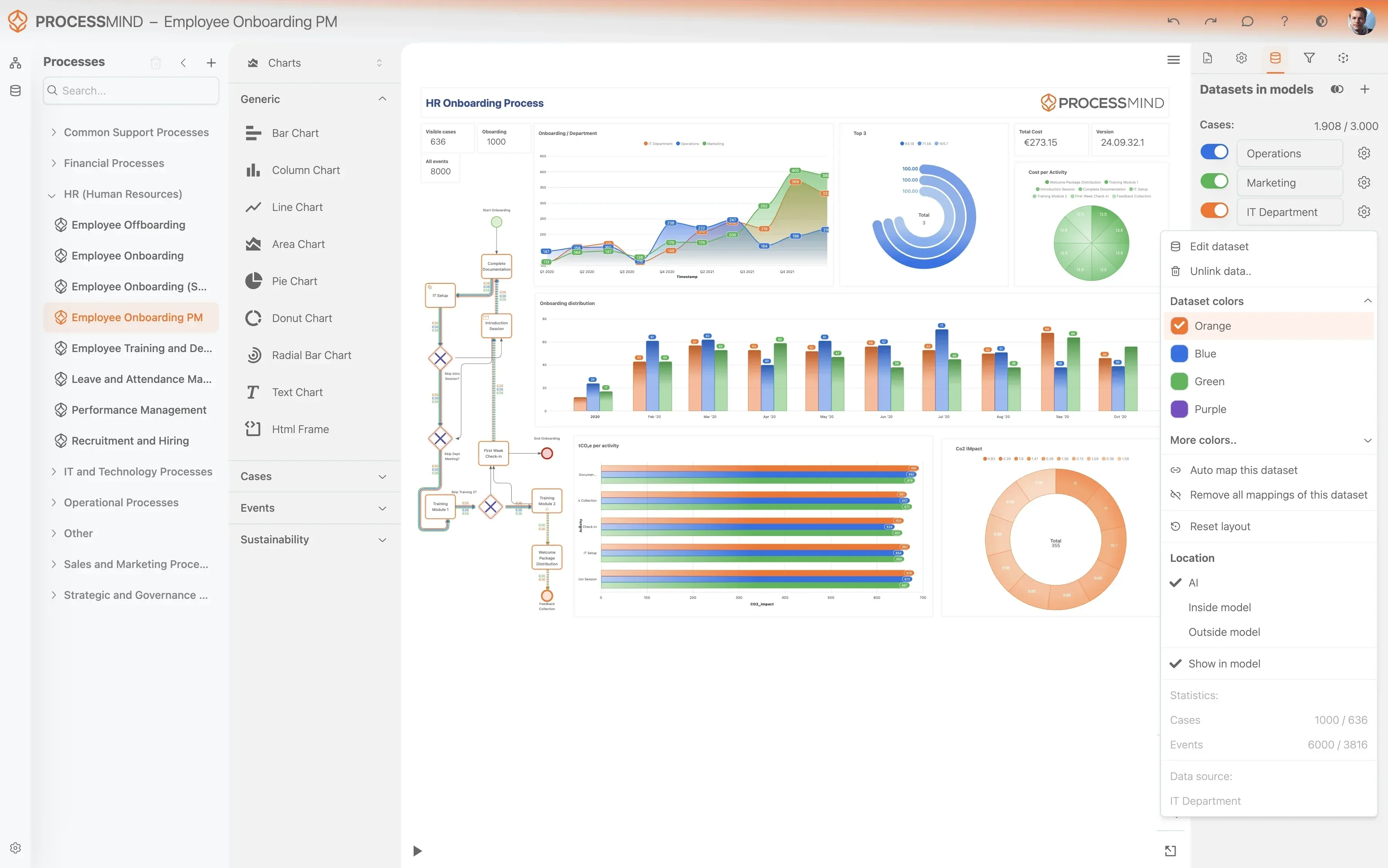
Explore the automatically generated process maps, dashboards, and key performance indicators for your NetSuite Inventory Management. Review AI-driven recommendations.
Why it matters
Gain a clear, visual understanding of your actual inventory flows, quickly pinpointing deviations, compliance issues, and major bottlenecks impacting efficiency.
Expected outcome
A comprehensive understanding of your current Inventory Management process, including inefficiencies and improvement opportunities.
Implement Optimizations
What to do
Prioritize the identified improvement opportunities, such as optimizing put-away routes or reducing inventory adjustment discrepancies in NetSuite, and implement changes.
Why it matters
Translating insights into action directly leads to tangible benefits like reduced carrying costs, minimized stockouts, and improved warehouse operational efficiency.
Expected outcome
Concrete changes to your Inventory Management processes implemented in NetSuite, targeting identified bottlenecks.
Monitor & Sustain Gains
What to do
Periodically re-upload updated Inventory Management data from NetSuite to track the impact of your implemented changes. Continuously refine processes.
Why it matters
Ongoing monitoring ensures that improvements are sustained, new inefficiencies are caught early, and your inventory processes remain optimized over time.
Expected outcome
A continuous improvement loop established, ensuring long-term optimization and measurable KPI improvements in inventory management.
TYPICAL OUTCOMES
Achieve Peak Inventory Efficiency
These outcomes demonstrate the measurable impact of optimizing NetSuite Inventory Management, driven by insights from your real process data. By identifying and resolving bottlenecks in your inventory batch/lot processes, organizations consistently realize significant operational improvements.
Avg. time from receipt to storage
Streamline warehouse operations by identifying and removing bottlenecks in your put-away process, ensuring inventory is available sooner and reducing holding times.
Decrease in manual corrections
Pinpoint root causes of inventory discrepancies and reduce the need for frequent manual adjustments, improving data accuracy and saving labor costs.
Improve order fulfillment speed
Accelerate your order fulfillment process by optimizing picking and packing sequences, leading to quicker dispatch and enhanced customer satisfaction.
Adherence to inventory procedures
Ensure inventory operations adhere to standard procedures and regulatory requirements, reducing audit risks and improving data integrity for better decision-making.
Reduce write-offs and carrying costs
Identify patterns leading to obsolete inventory, enabling proactive measures to minimize write-offs, reduce storage costs, and improve capital utilization.
Results vary based on process complexity, data quality, and specific organizational goals. The figures presented illustrate typical improvements observed across various implementations.
Recommended Data
FAQs
Frequently asked questions
Process mining uncovers the actual flow of your inventory operations in NetSuite, identifying bottlenecks, process deviations, and areas of inefficiency. It helps visualize how inventory truly moves, from receiving to shipping, highlighting where delays or errors occur.
You will typically need event logs containing a case identifier, such as the Inventory Batch or Lot number, along with activity names, timestamps, and relevant attributes. This data provides the granular details required to reconstruct the end-to-end inventory processes.
The initial setup and analysis can vary, often taking a few weeks to generate meaningful insights, depending on data availability and complexity. Once data extraction is automated, subsequent analyses are much faster, providing continuous monitoring capabilities.
Process mining helps reduce inventory discrepancies, shorten picking and packing lead times, and optimize internal stock movements. It also contributes to minimizing obsolete inventory write-offs and improving warehouse storage utilization.
Yes, process mining allows you to trace specific process paths that lead to discrepancies and adjustments. By visualizing these paths, you can pinpoint exactly where deviations from standard procedures occur and what factors contribute to them.
While a basic understanding of your NetSuite data structure is beneficial, modern process mining tools are designed for user-friendliness. They often feature intuitive interfaces that simplify data extraction, transformation, and analysis, making it accessible to business users.
Process mining can detect instances where inventory adjustments deviate from approved procedures or expected paths, even identifying adjustments made by unauthorized users. It provides clear visibility into all adjustment events, allowing for proactive fraud detection and compliance enforcement.
Optimizing these processes can lead to significantly accelerated put-away completion times, ensuring products become available faster. You can also expect shorter picking and packing cycles, directly improving order fulfillment speed and overall operational efficiency.
Not at all, process mining provides valuable insights for inventory operations of any size. By offering an objective, data-driven view of your processes, it helps identify opportunities for improvement and standardization, regardless of scale.
Transform Your NetSuite Inventory Management Now!
Pinpoint inefficiencies, boost fulfillment, and reduce cycle time by 30%.
No credit card needed. Get started in minutes.