Improve Your Software Development Lifecycle

Select a process
Choose a process to continue working in your connected workspace.
Optimize Your Software Development Lifecycle in Jira Software
Our platform helps you uncover unexpected delays, bottlenecks, and rework loops within your processes. Easily pinpoint where steps can be streamlined and improved. This allows you to accelerate delivery and enhance overall quality.
Download our pre-configured data template and address common challenges to reach your efficiency goals. Follow our six-step improvement plan and consult the Data Template Guide to transform your operations.
Show detailed description
Why Optimizing Your Software Development Lifecycle is Crucial
The Software Development Lifecycle, SDLC, is the backbone of any organization delivering software products. An efficient SDLC directly translates to faster time-to-market, higher quality software, and increased customer satisfaction. However, many organizations struggle with inefficiencies that creep into their development processes, often unnoticed until they manifest as missed deadlines, escalating costs, or frustrated development teams. These inefficiencies can stem from a myriad of factors, including unclear requirements, slow hand-offs between teams, bottlenecks in testing phases, or reworks caused by quality issues.
Failing to optimize your Software Development Lifecycle can lead to significant business impacts, from lost revenue due to delayed product launches to diminished brand reputation from buggy releases. It can also result in developer burnout, increased operational expenses, and a reduced ability to adapt to changing market demands. Understanding the true flow of your SDLC is the first step toward reclaiming control and driving meaningful improvements.
Uncovering SDLC Insights with Process Mining in Jira Software
Process mining offers an objective, data-driven approach to understand and improve your Software Development Lifecycle. By analyzing event logs from your existing systems, specifically Jira Software, process mining tools can reconstruct the actual journey of every development item. This provides an unbiased, end-to-end view, showing you precisely how work progresses, or gets stuck, from initial idea to production deployment.
Instead of relying on anecdotal evidence or manual observations, process mining automatically visualizes the entire process flow within Jira Software. It highlights the most frequent paths, but critically, it also exposes deviations from your intended workflow, identifying rework loops, unexpected detours, and silent bottlenecks. This means you can see exactly where development items spend too much time waiting, where specific activities are repeatedly performed, or where hand-offs between teams introduce delays. This comprehensive insight helps you move beyond assumptions, enabling you to pinpoint the root causes of inefficiency and make data-backed decisions to streamline your development process.
Key Areas for Software Development Process Improvement
Leveraging process mining on your Jira Software data can illuminate various areas ripe for improvement within your SDLC:
- Bottleneck Identification: Easily spot stages, such as code review, QA testing, or user acceptance testing, where development items accumulate and cause delays. Process mining can quantify the exact waiting times and reveal the specific transitions that take longer than expected.
- Rework and Rerun Analysis: Identify instances where tasks are repeatedly sent back to previous stages, for example, a ticket moving from QA back to development for fixes. Understanding the frequency and causes of these reworks is crucial for enhancing quality and reducing wasted effort.
- Cycle Time Reduction: Analyze the total time taken for development items to move through the entire process or specific phases. By understanding the true cycle time, you can set realistic expectations and target specific areas to reduce delivery times.
- Compliance and Quality Gate Enforcement: Verify adherence to your defined SDLC standards and quality gates. Process mining can highlight any skipped steps, unauthorized transitions, or deviations from the prescribed workflow, ensuring that your process integrity is maintained.
- Resource Optimization: Understand where resources are over or underutilized by analyzing activity durations and queue times, allowing for better allocation and load balancing across your development teams.
Measurable Outcomes of SDLC Process Optimization
Applying process mining to optimize your Software Development Lifecycle in Jira Software yields tangible benefits that directly impact your organization's performance:
- Accelerated Time-to-Market: By identifying and removing bottlenecks and inefficiencies, you can significantly reduce the overall cycle time of your development items, enabling faster product releases and updates.
- Enhanced Software Quality: Pinpointing and eliminating rework loops and ensuring stricter adherence to quality gates leads to fewer defects, more stable releases, and a better end-user experience.
- Reduced Development Costs: Streamlining your processes means less wasted effort, more efficient resource utilization, and fewer project overruns, ultimately lowering the cost of software development.
- Improved Predictability and Planning: With a clearer understanding of your actual process performance, you can make more accurate forecasts for project completion and resource needs, leading to more reliable delivery schedules.
- Increased Team Satisfaction: A smoother, more predictable SDLC reduces frustration for developers, testers, and project managers, fostering a more productive and positive work environment.
Start Your Journey to a Streamlined SDLC
Understanding and optimizing your Software Development Lifecycle in Jira Software is a continuous journey. By leveraging process mining, you gain a powerful lens to view your operations with unprecedented clarity. This data-driven approach empowers you to move beyond guesswork, making informed decisions that lead to a more efficient, compliant, and higher-quality development process. If you are looking for how to improve Software Development Lifecycle or how to reduce Software Development Lifecycle cycle time, this approach offers the objective insights you need. Discover how you can transform your SDLC today and unlock its full potential.
The 6-Step Improvement Path for Software Development Lifecycle
Download the Template
What to do
Get the pre-built Excel template specifically designed for analyzing the Software Development Lifecycle in Jira Software. This template guides you on structuring your historical issue data for accurate analysis.
Why it matters
A structured template ensures that all necessary data points from Jira are captured correctly, laying a solid foundation for meaningful process analysis and reliable insights.
Expected outcome
A standardized Excel template ready to be populated with your Jira Software development data, ensuring data consistency.
Export Your Data
What to do
Extract 3-6 months of historical development item data directly from your Jira Software instance, focusing on issue history, statuses, and relevant fields. Populate the downloaded template with this real-world data.
Why it matters
Using recent historical data provides a realistic snapshot of your current development processes, allowing for accurate identification of recurring bottlenecks and performance trends.
Expected outcome
A complete dataset, accurately reflecting your past software development activities within Jira, filled into the template.
Upload Your Dataset
What to do
Upload your filled Excel template to ProcessMind's secure platform. The system will automatically process and prepare your Jira Software data for detailed process mining analysis.
Why it matters
A streamlined upload process quickly transforms raw Jira data into an actionable process model, enabling rapid access to advanced analytical capabilities without manual setup.
Expected outcome
Your Jira Software development data securely uploaded and transformed into an interactive process model within ProcessMind.
Analyze Your Process
What to do
Explore auto-generated dashboards and interactive process maps to visualize your Software Development Lifecycle. Leverage AI-driven recommendations to pinpoint bottlenecks and deviations in your Jira workflows.
Why it matters
Gaining a clear, data-driven understanding of your development process reveals inefficiencies and compliance gaps, providing critical insights for targeted improvements and accelerated delivery.
Expected outcome
A comprehensive understanding of your SDLC, with identified bottlenecks, deviations, and AI-powered recommendations for optimization.
Implement Improvements
What to do
Prioritize the improvement opportunities identified in the analysis. Take concrete actions, such as refining Jira workflows, adjusting team assignments, or optimizing sprint planning based on the insights.
Why it matters
Translating insights into action directly addresses inefficiencies, leading to immediate enhancements in development speed, software quality, and resource utilization.
Expected outcome
Tangible changes implemented within your Jira Software development process, designed to resolve identified issues and improve flow.
Monitor Your Process
What to do
Periodically re-upload updated Jira Software data to track the impact of your implemented changes. Monitor key performance indicators (KPIs) to ensure sustained improvement and adapt as needed.
Why it matters
Continuous monitoring ensures that improvements are sustained and allows for proactive adjustments, fostering an agile and continuously optimizing software development culture.
Expected outcome
Ongoing visibility into your SDLC performance, with measurable KPI improvements and sustained operational excellence in Jira Software.
WHAT YOU WILL GET
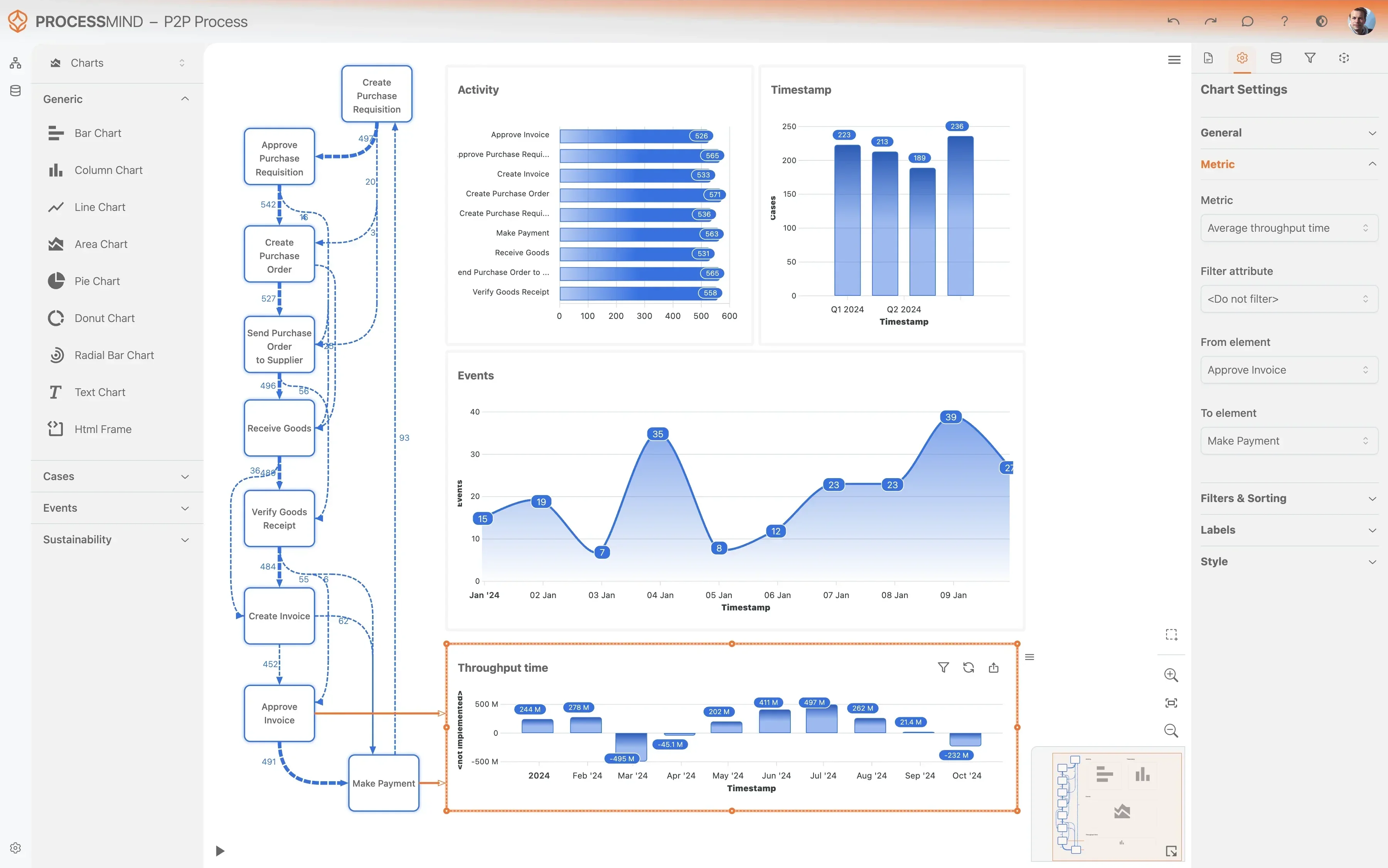
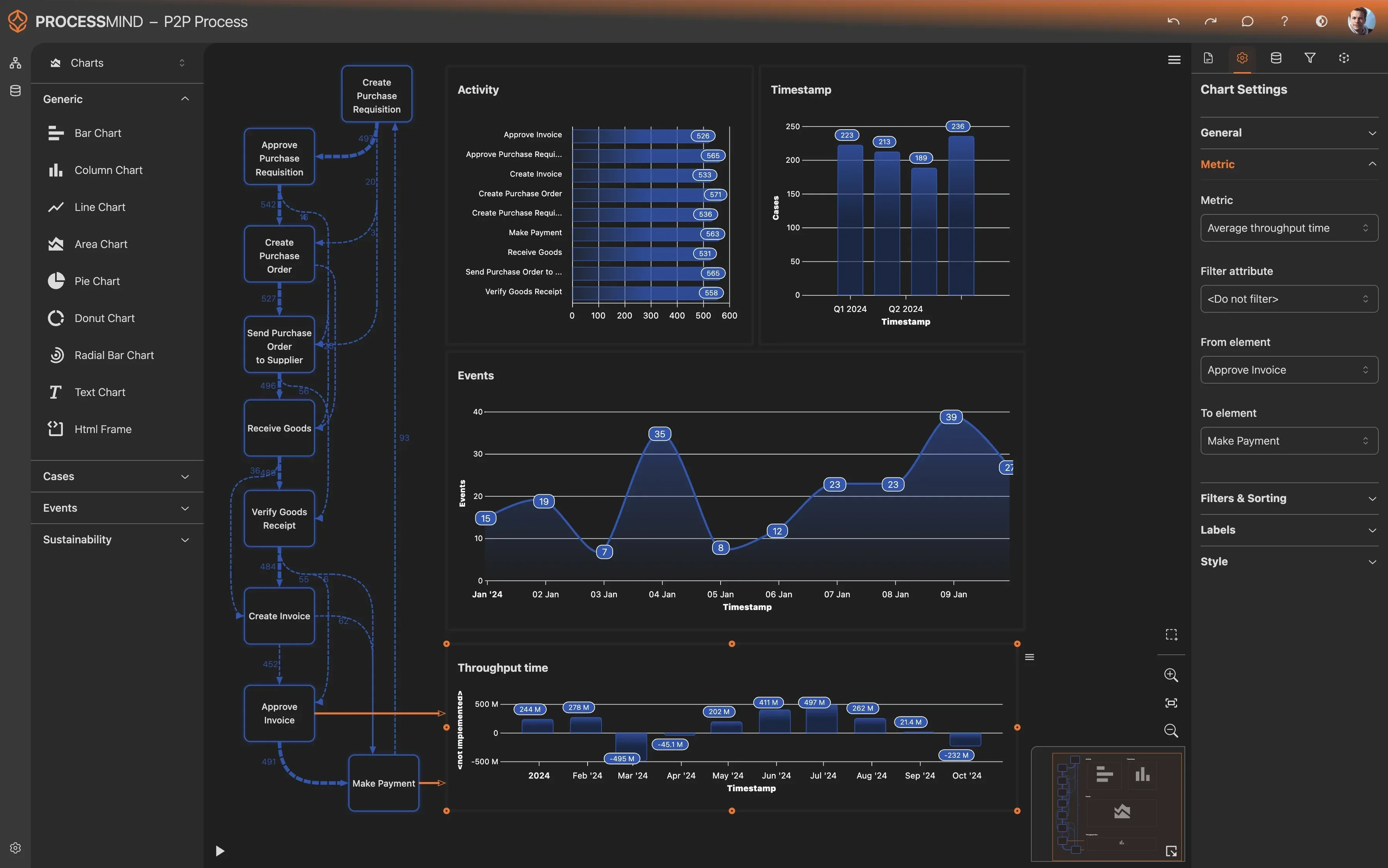
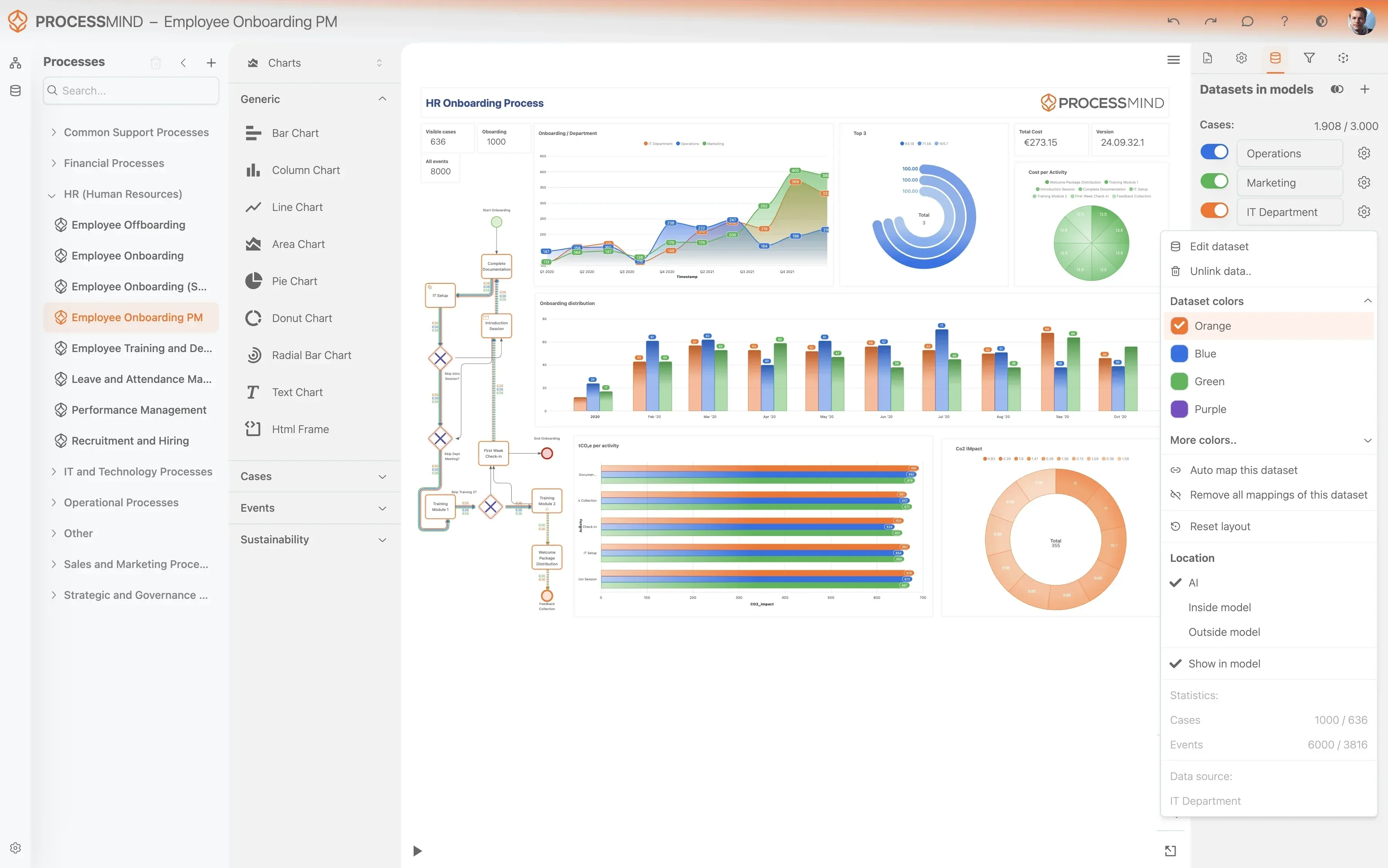
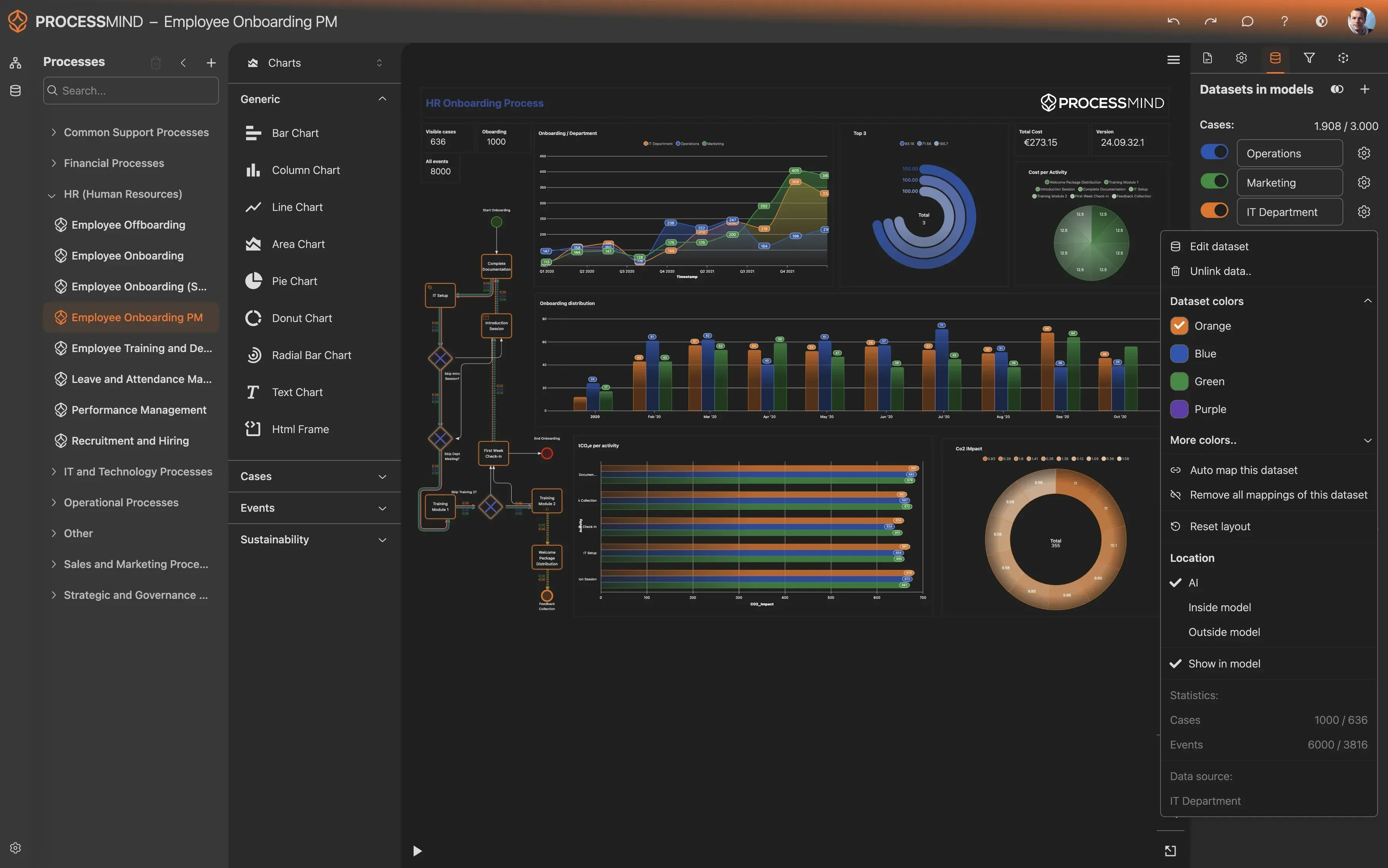
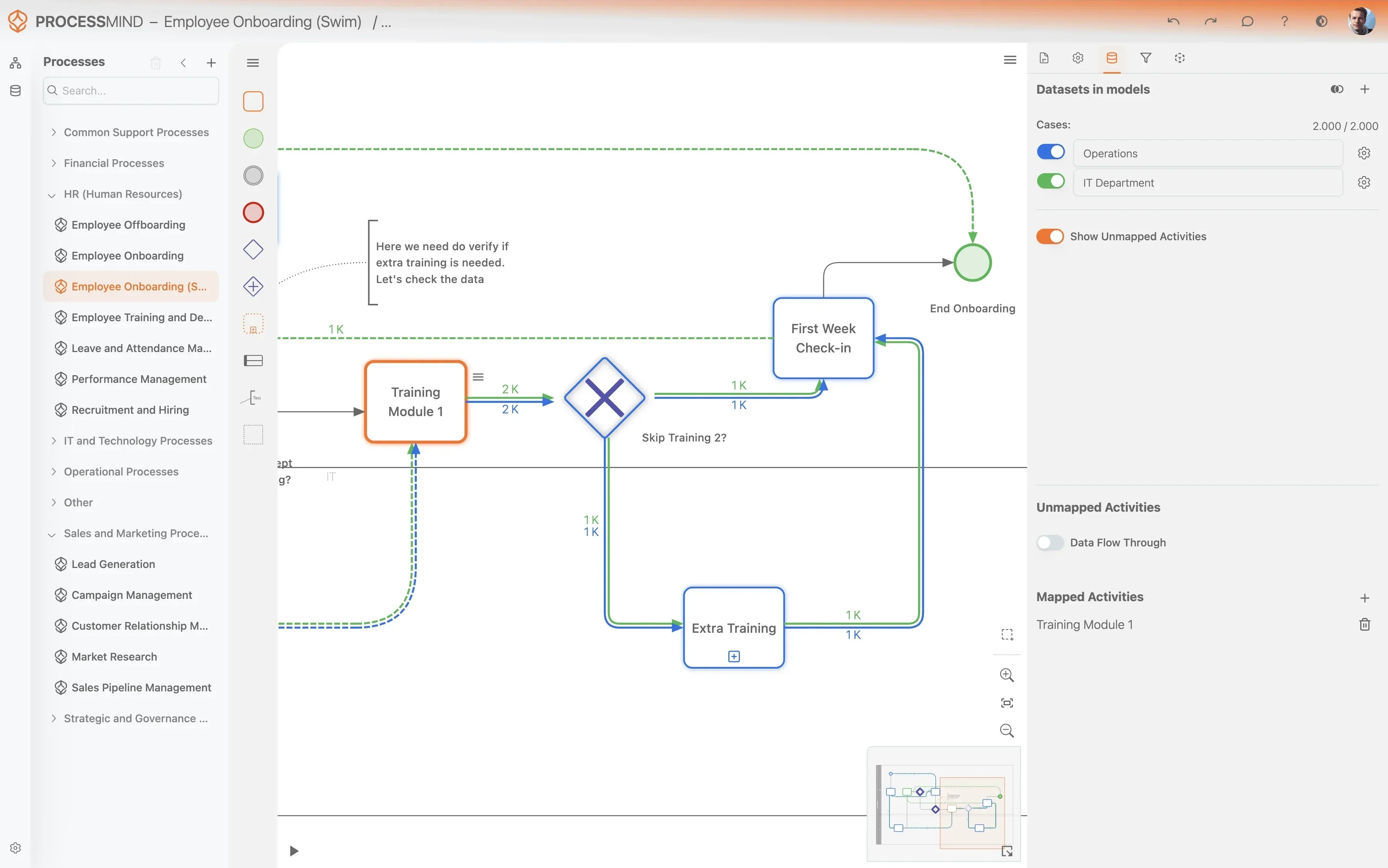
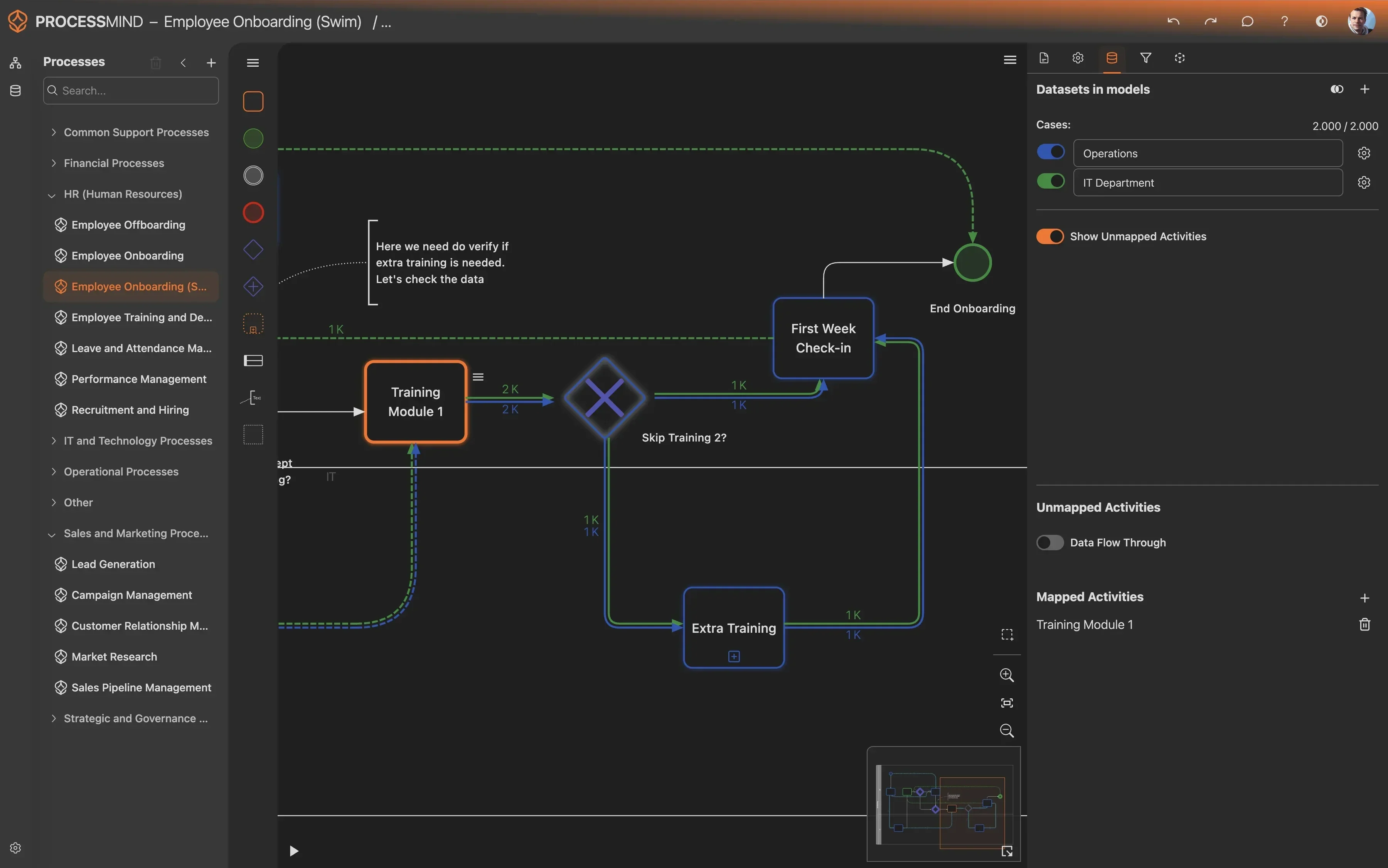
Visualize Your SDLC Journey in Jira for Faster Delivery
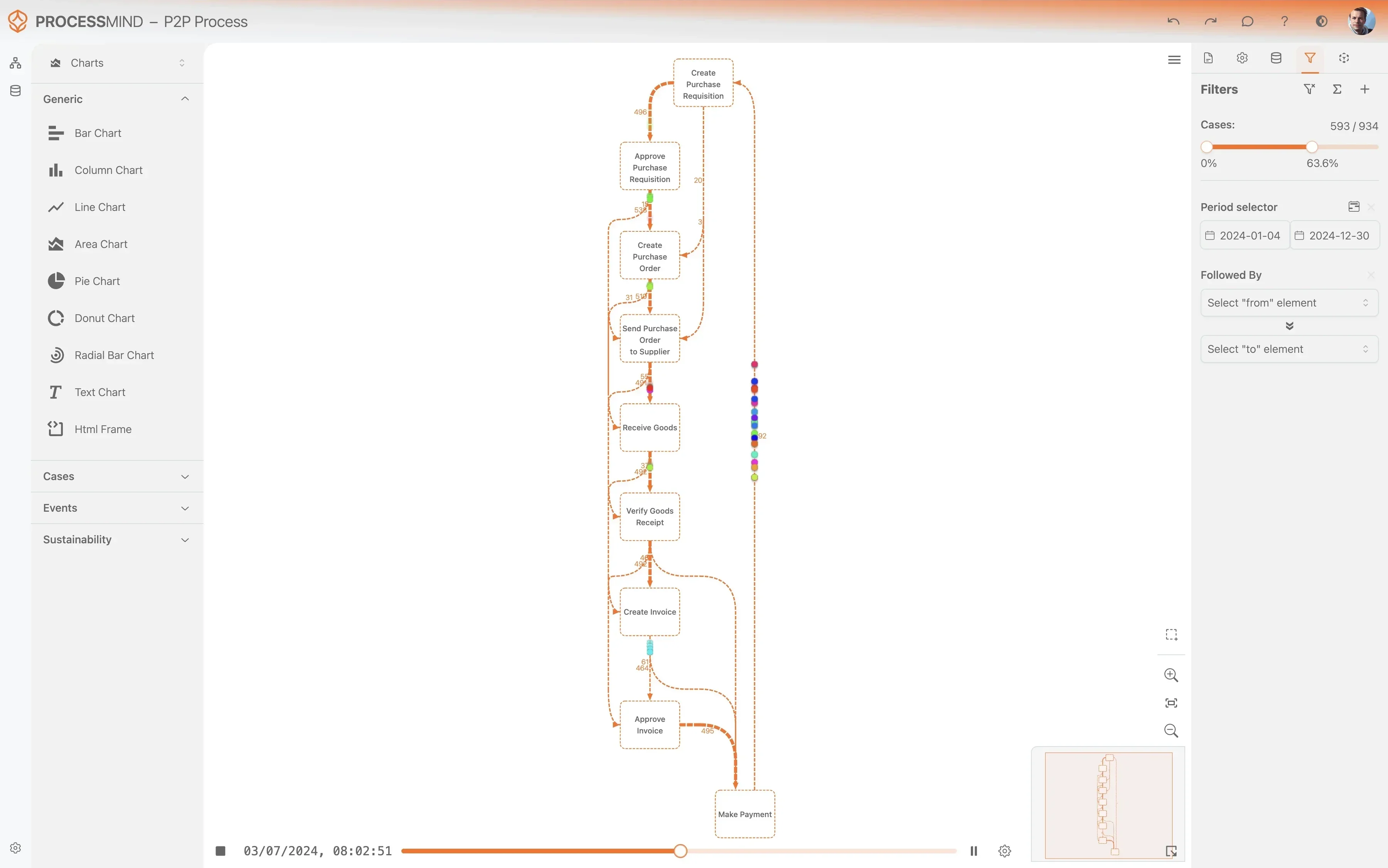
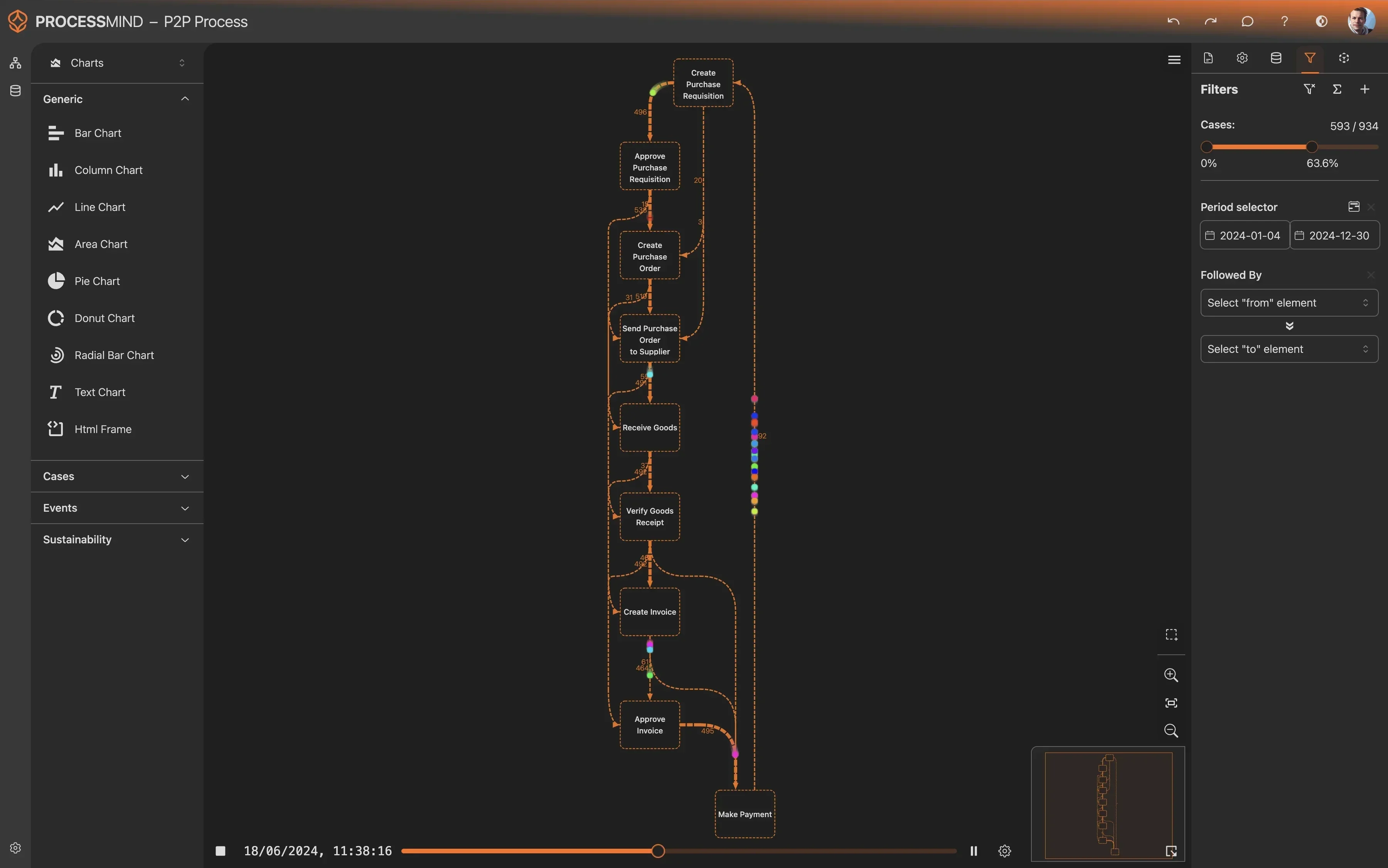
- See actual SDLC flow within Jira projects
- Pinpoint delays in development and testing
- Identify resource allocation bottlenecks
- Accelerate deployment cycles and time-to-market
TYPICAL OUTCOMES
Tangible Improvements in Software Delivery
These outcomes represent significant advancements in key performance indicators across the Software Development Lifecycle, driven by data-driven insights derived from our process mining analysis of Jira Software data.
Average reduction in end-to-end time
By pinpointing and eliminating bottlenecks in the development process, organizations can significantly accelerate the delivery of software, getting features to market quicker. This ensures a more responsive and competitive development lifecycle.
Decrease in development item re-entry
Identifying and resolving the root causes of rework, such as unclear requirements or insufficient testing, drastically cuts down wasted effort and resources. This leads to higher quality code delivered efficiently.
Improvement in mandatory quality checks
Ensuring that critical quality gates, like code reviews and full QA testing, are consistently followed reduces defects and compliance risks. This strengthens software reliability and mitigates future issues.
Boost in on-time production deployments
By understanding the true drivers of release delays, teams can improve planning and execution, consistently meeting planned delivery dates. This builds trust and allows for better strategic market positioning.
Improvement in initial QA success rate
Maximizing the number of development items that pass QA on the first attempt minimizes costly rework cycles and accelerates the overall development process. This directly contributes to a more efficient and reliable software product.
Results vary based on process complexity, organizational structure, and data quality. These figures represent typical improvements observed across various software development implementations.
Recommended Data
FAQs
Frequently asked questions
Process mining visualizes your actual SDLC process flow using data from Jira. It reveals bottlenecks, identifies rework loops, and highlights deviations from your intended process. This allows you to pinpoint exact areas for efficiency gains and faster software delivery.
You primarily need event logs from Jira. This includes the development item ID, activity names, timestamps for each activity, and the resource responsible. Ensuring a clear case identifier, like a Jira issue key, is crucial for accurate analysis.
You can expect to uncover the true path of your development items, identify stages causing excessive delays, and quantify the impact of rework. This leads to reduced development cycle times, improved on-time release delivery, and better adherence to quality gates.
Beyond your Jira instance, you will need a process mining tool capable of ingesting event log data. This typically involves a data connector for Jira, data transformation capabilities, and a platform to visualize and analyze the discovered processes.
Extracting data from Jira for process mining is generally straightforward. Most process mining tools offer connectors or templates for common systems like Jira, simplifying the initial data export. The primary effort lies in ensuring data quality and mapping fields correctly.
Traditional Jira reporting often shows aggregated metrics or status updates. Process mining, however, reconstructs the actual end-to-end flow of each development item, revealing hidden paths, compliance deviations, and the true sequence of events, which goes beyond simple reporting.
Absolutely. By visualizing all paths a development item takes, process mining precisely identifies where delays occur and how often rework is initiated. This insight enables targeted interventions to reduce cycle time by eliminating bottlenecks and significantly cutting down on rework loops.
Once the initial data extraction and modeling are complete, which can take days to a few weeks depending on complexity, actionable insights can be generated almost immediately. The first process maps will reveal critical bottlenecks and deviations, allowing for rapid decision-making.
While some technical understanding for data extraction and initial tool setup is beneficial, many modern process mining platforms offer user-friendly interfaces. Business users can often perform extensive analysis once the data model is established, reducing reliance on specialized IT teams for ongoing insights.
Optimize Your SDLC in Jira Software, Start Today!
Pinpoint inefficiencies and reduce cycle time by 30% in your SDLC.
No credit card required, start optimizing in minutes.