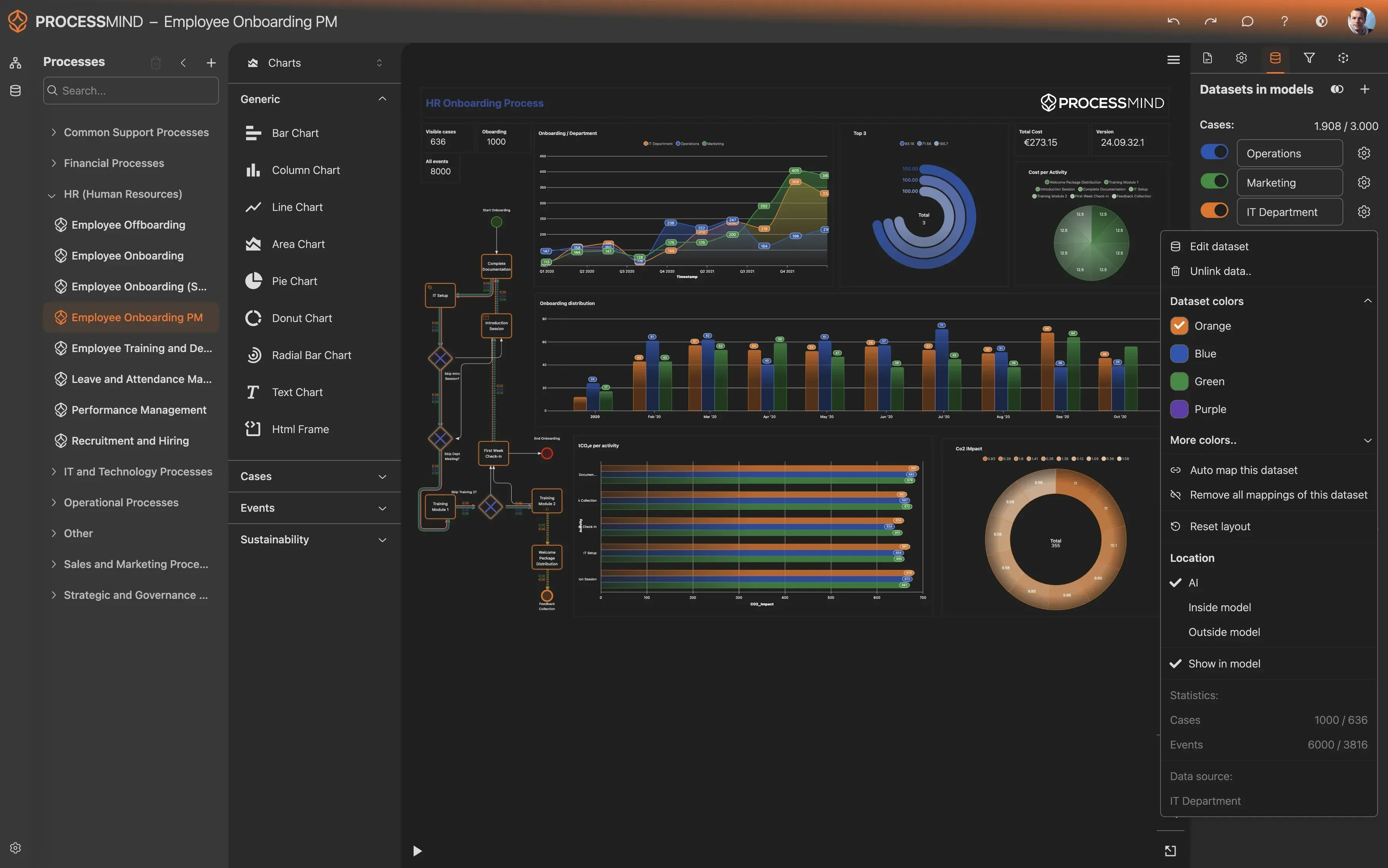
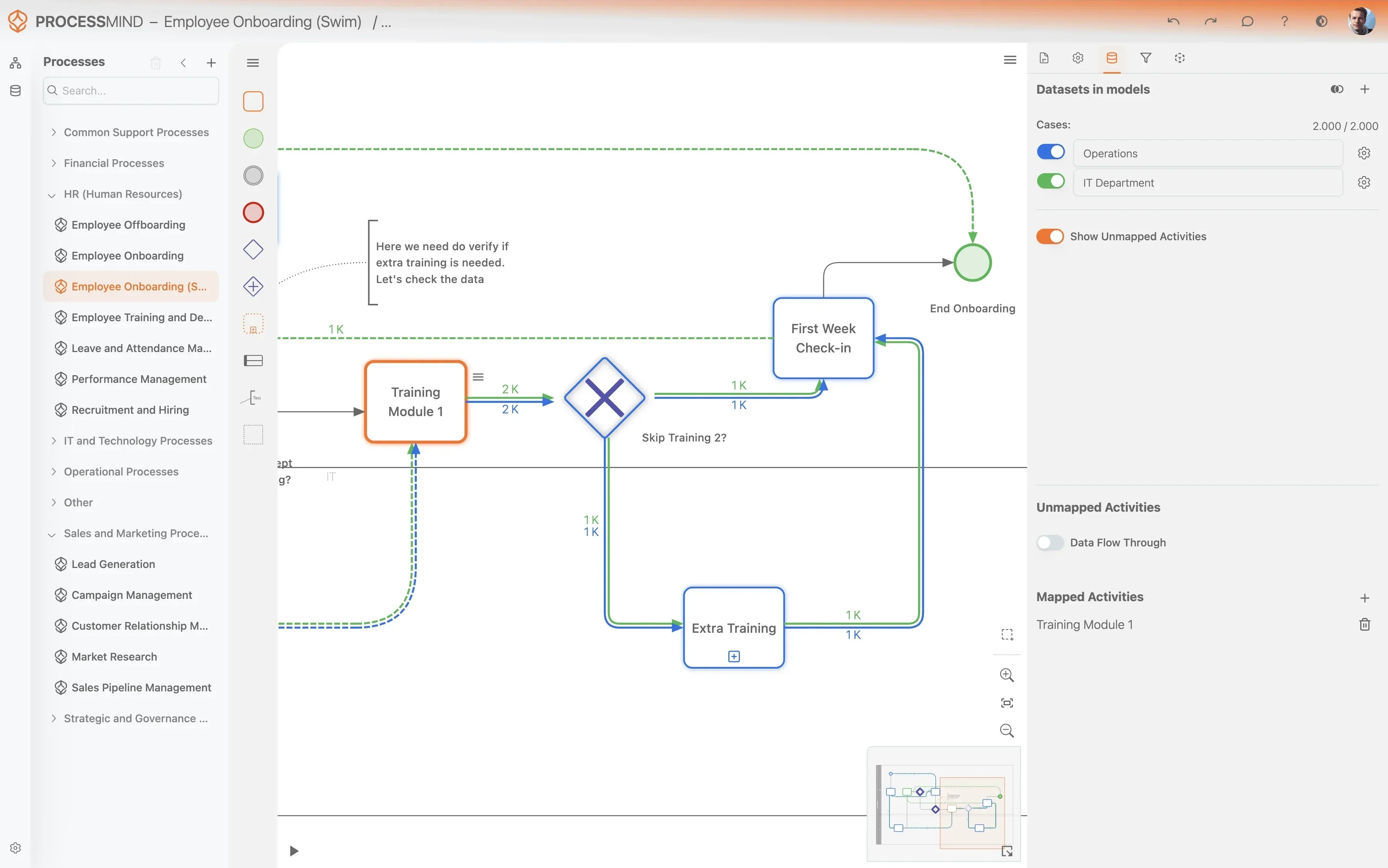
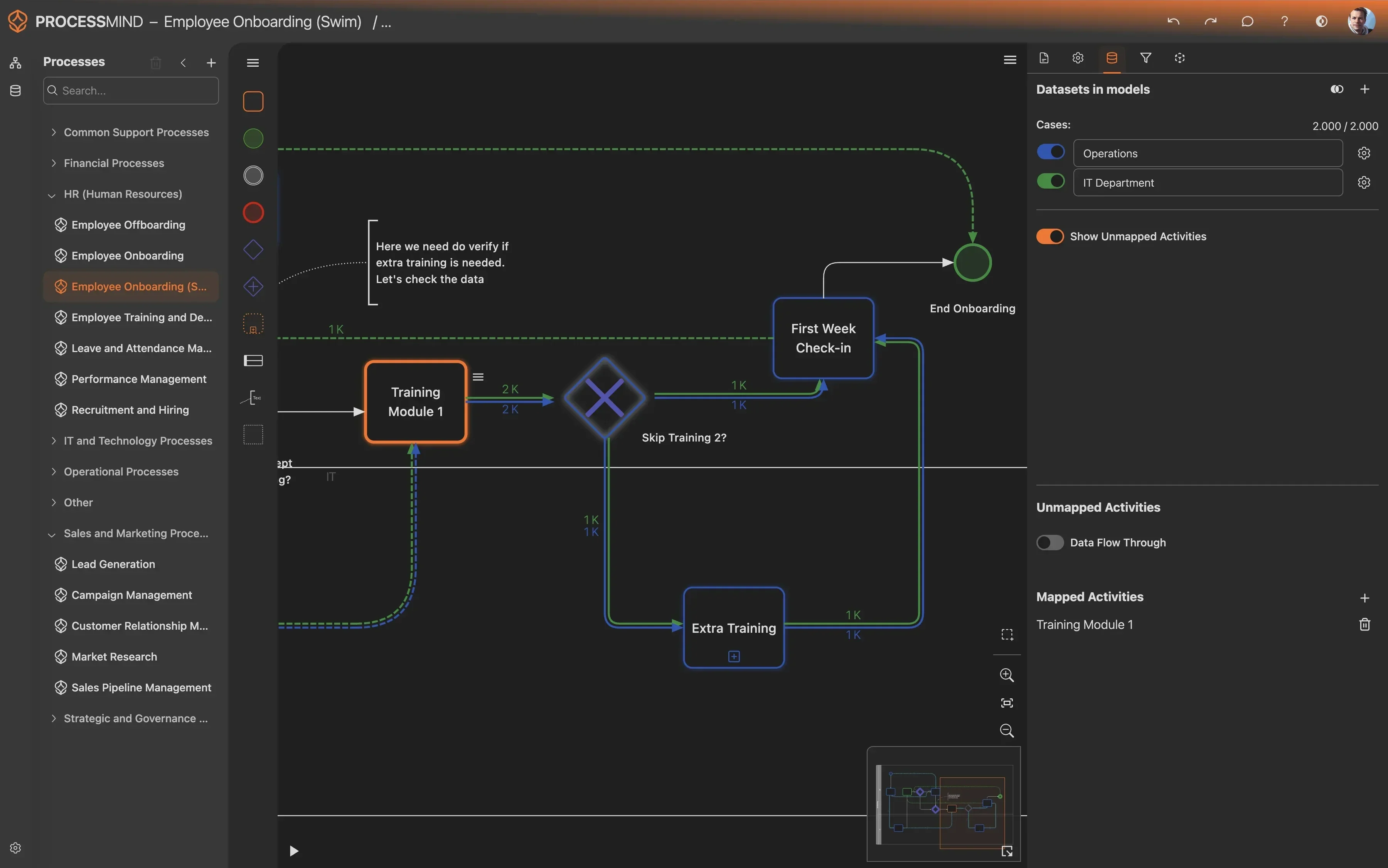
Improve Your Asset Maintenance

Streamline your workflow with this 6-step guide.
Improve Your Asset Maintenance

Optimize Your Asset Maintenance in Oracle Maintenance Cloud

Our process mining platform reveals hidden inefficiencies that disrupt your maintenance cycles. We help you identify where schedules slip and resource planning fails to meet operational demands. Use these clear insights to eliminate bottlenecks and ensure your equipment stays functional through optimized planning.

Download our pre-configured data template and address common challenges to reach your efficiency goals. Follow our six-step improvement plan and consult the Data Template Guide to transform your operations.

Show detailed description

Elevating Asset Maintenance through Data Driven Insights

In the modern industrial landscape, asset maintenance is no longer just a support function, it is a critical driver of operational stability and financial performance. When you manage complex equipment within Oracle Maintenance Cloud, every hour of unplanned downtime or every delayed work order ripples through the entire supply chain. Optimizing this process is essential because inefficiencies often hide in the handoffs between departments, such as the transition from a technical inspection to the final scheduling of specialized labor. By refining how these activities flow, organizations can transform maintenance from a reactive cost center into a proactive contributor to business value.

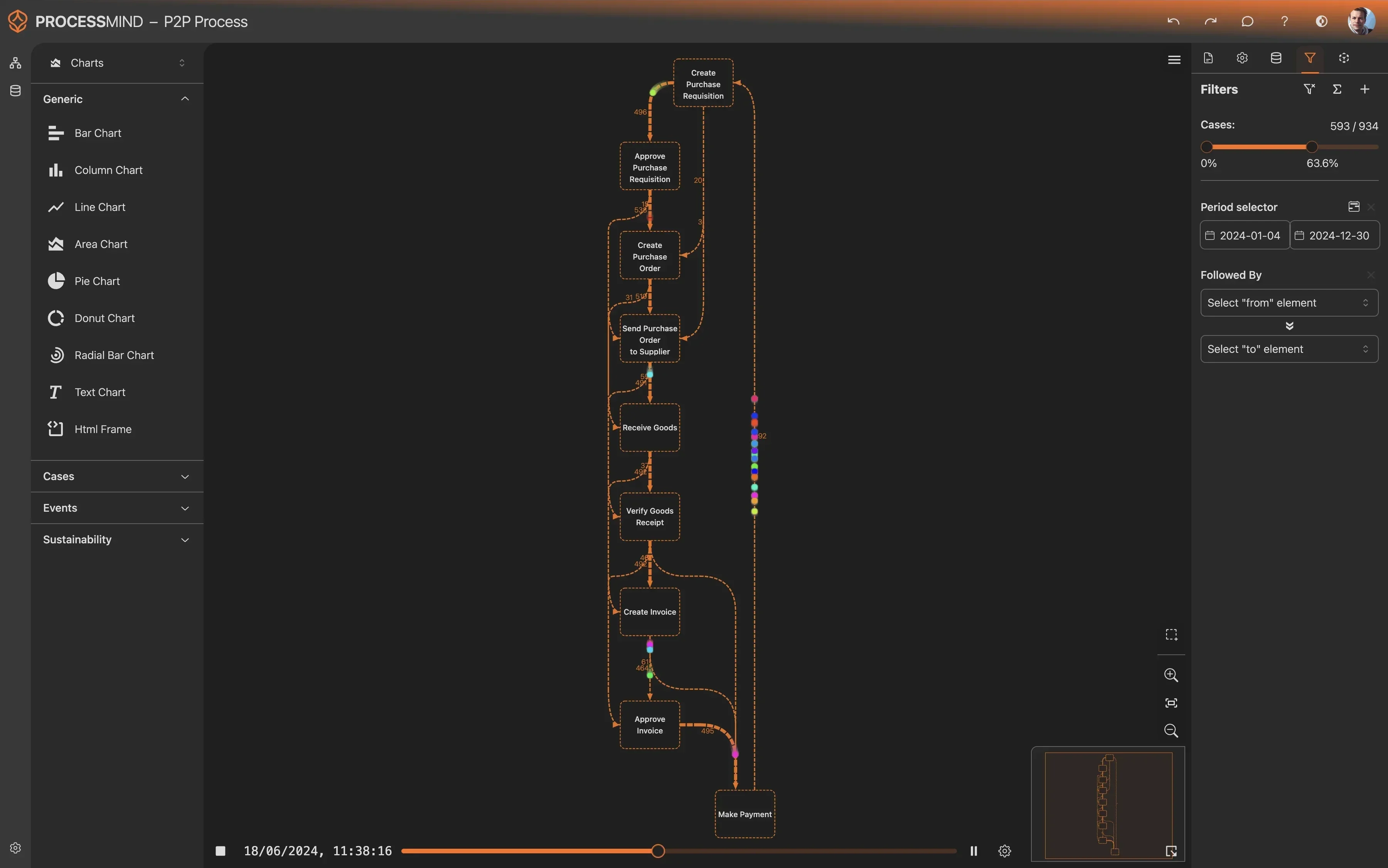
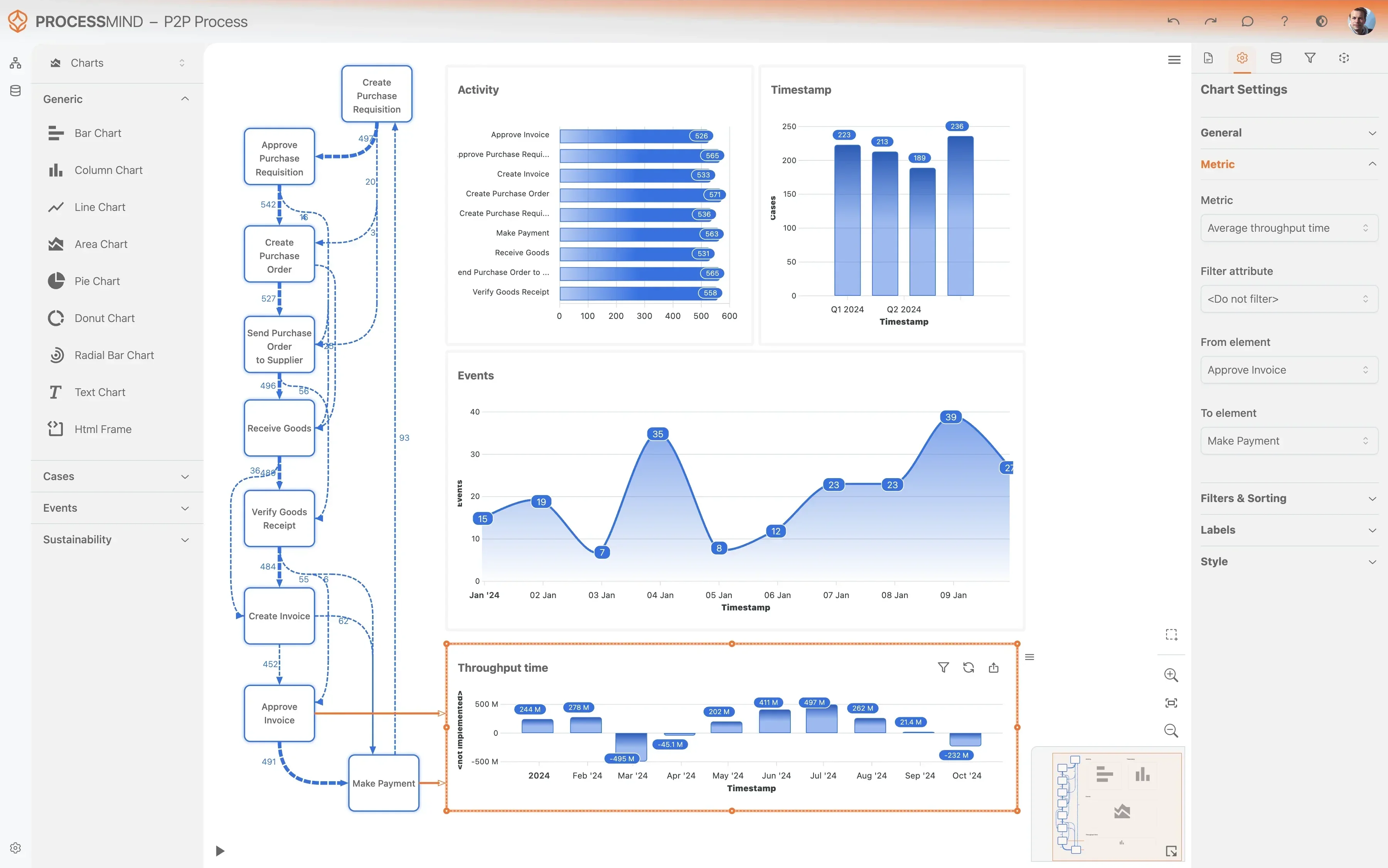
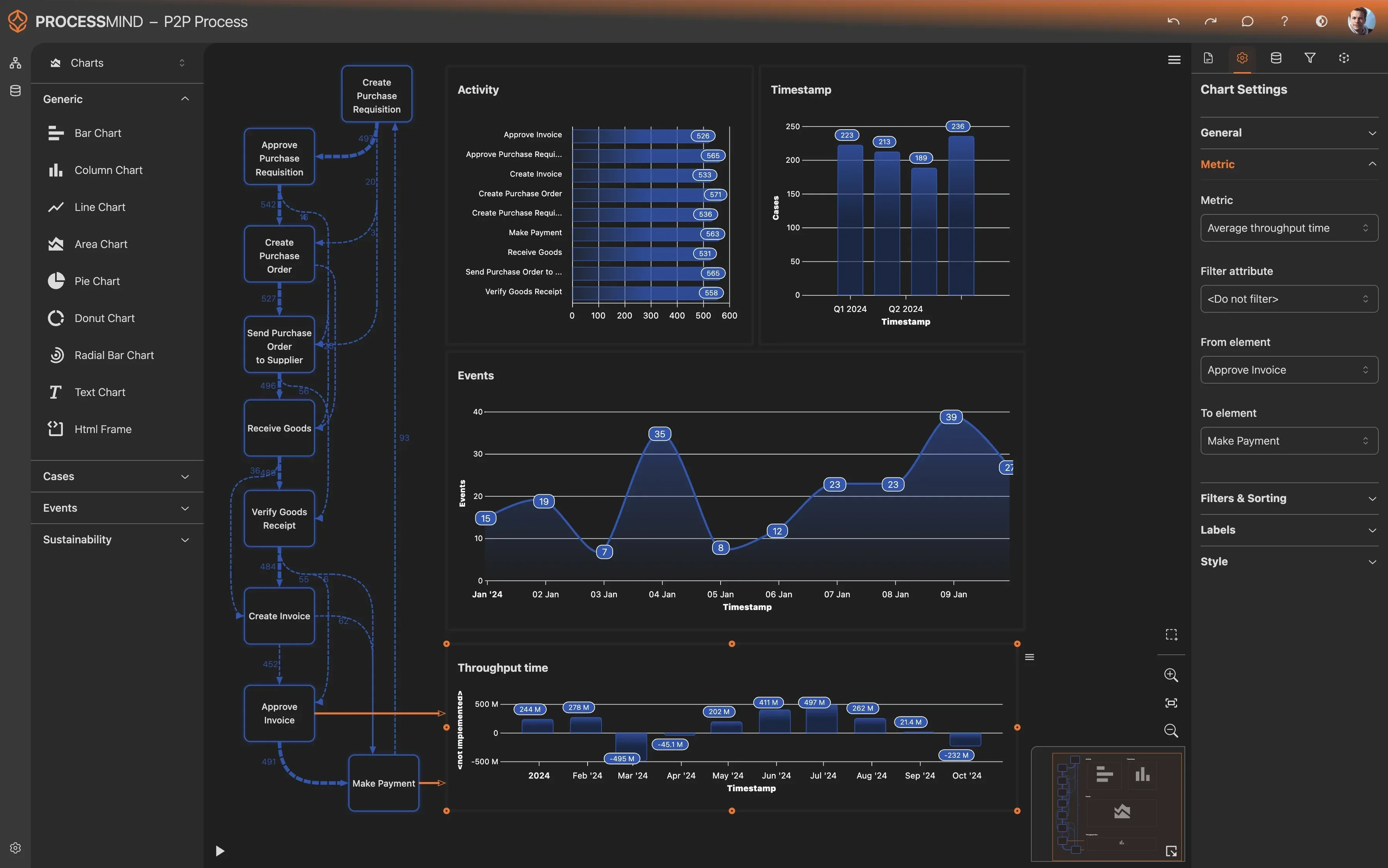
Maximizing the lifecycle of physical assets requires a deep understanding of how maintenance work is actually performed compared to how it was planned. While Oracle Maintenance Cloud provides a robust framework for managing work orders and scheduling, the sheer volume of data can obscure the underlying patterns that lead to delays. This is where process mining provides the necessary clarity, allowing you to see the real time movement of work orders across different statuses and identify where the process loses momentum.

Uncovering the Reality of Work Order Execution

Process mining works by capturing the digital footprint of every action taken within Oracle Maintenance Cloud. Each time a technician updates a work order, a parts clerk issues a material requisition, or a supervisor signs off on a task, a data point is created. By connecting these points, you gain a transparent view of the end to end maintenance lifecycle. This transparency is vital because it reveals the deviations from the standard operating procedure that frequently go unnoticed in high volume environments.

For example, you might discover that while your technical inspections are completed quickly, the work orders often sit in a pending state for several days while waiting for material availability. This visualization allows you to move beyond anecdotal evidence and focus on the factual bottlenecks that are inflating your cycle times. By seeing the process as it truly exists, you can begin to ask the right questions about why certain types of equipment require more frequent interventions or why specific teams consistently outperform others in meeting their schedules.

Identifying Hidden Bottlenecks in Resource and Material Planning

One of the most significant challenges in asset maintenance is the coordination of labor and materials. Even the most skilled technicians cannot be productive if the parts they need are not staged or if the equipment is not available for service. In many cases, the bottleneck is not the execution of the repair itself, but the administrative and logistical steps that precede it. Process mining helps you isolate these specific friction points, such as the time spent in the planning and estimating phase or the delays inherent in the financial settlement of completed work.

By analyzing the flow of work orders, you can pinpoint exactly where the synchronization between Oracle SCM modules and maintenance schedules breaks down. This insight enables you to refine your material requisition processes and adjust your resource allocation strategies to ensure that the right skills are available at the right time. The goal is to create a seamless flow where the technical execution is supported by an efficient administrative backbone, reducing the total time an asset remains offline.

Strengthening Compliance and Asset Reliability

Beyond speed and efficiency, optimizing your maintenance process is a core requirement for regulatory compliance and safety. In industries where equipment failure can have catastrophic consequences, ensuring that every maintenance task is performed according to strict standards is non negotiable. Process mining allows you to monitor compliance in real time by verifying that all required quality control testing and sign off steps are completed in the correct sequence.

If certain steps are being bypassed or if records are being updated retroactively, these patterns become immediately visible. This level of oversight ensures that your organization remains audit ready and that your maintenance records provide a truthful account of the asset history. Furthermore, by improving the consistency of your maintenance activities, you directly contribute to the long term reliability of your equipment portfolio, extending the useful life of assets and deferring expensive capital expenditures.

Initiating Your Path toward Maintenance Excellence

Improving your asset maintenance process within Oracle Maintenance Cloud is a continuous journey of refinement. It begins by acknowledging that there is always a gap between the documented process and the reality on the shop floor. By leveraging process mining to bridge this gap, you empower your maintenance managers and planners with the insights they need to make informed decisions.

Starting this journey does not require a complete overhaul of your existing systems. Instead, it involves using the data you already generate to drive incremental improvements that yield significant cumulative results. As you begin to eliminate bottlenecks and streamline your work order lifecycle, you will see a measurable impact on your maintenance costs and asset availability. This data driven approach ensures that your maintenance strategy is not based on guesswork, but on a clear understanding of your operational reality, paving the way for a more resilient and efficient organization.

Asset Maintenance work order management preventive maintenance maintenance scheduling resource utilization equipment reliability MRO supply chain

Common Problems & Challenges

Identify which challenges are impacting you

Maintenance teams often find themselves trapped in a cycle of emergency repairs, which increases operational costs and disrupts production schedules. In Oracle Maintenance Cloud, these unplanned interventions frequently bypass standard planning phases, leading to inefficient resource allocation and higher than average material shipping costs. This lack of preventive focus often results in unexpected downtime for critical assets.

ProcessMind analyzes the request source and maintenance type attributes to visualize the ratio of preventive to corrective tasks. By identifying the root causes of recurring emergency work, the platform helps managers shift toward a proactive strategy that improves equipment reliability. This transparency allows for better long-term planning and a significant reduction in the urgency premiums associated with reactive maintenance.

Maintenance schedules often collapse when technicians are assigned to multiple high-priority tasks simultaneously. Without clear visibility into labor capacity within Oracle Maintenance Cloud, work orders remain in a scheduled state for extended periods, delaying critical inspections and increasing the risk of asset failure. These delays create a compounding effect where a single missed window can disrupt the entire weekly maintenance plan.

Our platform maps the time elapsed between scheduling and work commencement, highlighting specific departments or technician groups where delays are most frequent. This transparency allows maintenance planners to rebalance workloads and ensure that labor hours are used effectively across all assets. By identifying these labor bottlenecks, organizations can justify staffing changes or optimize the timing of work assignments to improve schedule compliance.

Technical execution frequently halts because the necessary spare parts are not available when the technician arrives on site. These material requisition delays in Oracle Maintenance Cloud create a backlog of partially completed work orders, leading to cluttered workshops and prolonged asset downtime. This often leads to technicians performing temporary fixes that do not fully address the underlying issue, necessitating future rework.

ProcessMind tracks the material requisition lifecycle from submission to fulfillment, correlating it with technical task execution activities. By pinpointing exactly where procurement delays occur, organizations can optimize their MRO supply chain and ensure parts are available before work is scheduled. This integration between parts availability and scheduling reduces the time work orders spend in a waiting for material status.

Large variances in the time taken to complete technical tasks can signal inefficiencies in skill levels or tool availability. When technical inspections and repairs take significantly longer than estimated in Oracle Maintenance Cloud, the entire maintenance calendar is pushed back, causing SLA breaches for critical production equipment. This inconsistency makes it difficult for operations teams to predict when assets will return to service.

By analyzing the duration of the maintenance task execution activity across different asset categories, ProcessMind identifies outliers and slow-moving processes. This allows managers to investigate whether specific technicians need more training or if certain assets require specialized equipment to speed up repairs. Standardizing these execution times leads to more predictable maintenance windows and better overall asset availability.

Skipping quality control testing or failing to record maintenance signatures can lead to significant regulatory and safety risks. In Oracle Maintenance Cloud, if work orders are closed without following the mandatory sequence of sign-offs, the organization lacks the audit trail necessary for compliance. This can result in costly penalties and, more importantly, poses a threat to the safety of the workforce and the integrity of the equipment.

ProcessMind monitors the sequence of activities to detect work orders that bypass critical quality control or sign-off steps. This ensures that every maintenance intervention meets safety standards and that all records are accurately updated before financial settlement. By enforcing these process guardrails, organizations can maintain a high standard of compliance and reduce the risk of asset failure due to poor quality repairs.

Even after physical repairs are finished, work orders often remain open for weeks awaiting financial settlement and final closure. This administrative lag in Oracle Maintenance Cloud obscures the true cost of maintenance and prevents accurate reporting on budget utilization and asset performance. Without timely closure, data remains stagnant, making it impossible to perform accurate monthly financial reconciliations.

Our analysis identifies the bottleneck between work completion and financial settlement, revealing the cause of administrative delays. By streamlining the path from technical sign-off to record closure, organizations can gain a real-time view of their maintenance spending and asset health. This reduction in administrative lead time ensures that maintenance costs are reflected in the correct accounting period.

When the same asset requires multiple repairs within a short timeframe, it suggests that previous maintenance tasks were either ineffective or did not address the root cause. Tracking these rework loops in Oracle Maintenance Cloud is difficult without specialized analysis, leading to wasted labor and parts. This repetitive work diverts resources from other critical maintenance needs, creating a drain on the overall maintenance budget.

ProcessMind visualizes the frequency of maintenance requests for specific functional locations and assets. By identifying equipment that constantly returns to the shop for the same technical issues, teams can perform more detailed root-cause analysis and improve repair quality. Reducing rework not only saves costs but also increases the overall reliability and lifespan of the equipment portfolio.

The gap between receiving a maintenance request and generating a work order can leave critical equipment in a vulnerable state. In Oracle Maintenance Cloud, slow processing of initial requests often stems from manual triage or unclear priority levels, leading to increased response times. If a fault is reported but not documented as a work order quickly, the risk of a minor issue becoming a major failure increases significantly.

By measuring the time from request receipt to work order generation, ProcessMind highlights inefficiencies in the planning and estimation phase. This helps organizations standardize their triage process, ensuring that high-priority faults are addressed immediately. Faster conversion rates ensure that the maintenance team is always working on the most critical issues in a timely manner.

When actual labor hours and material costs consistently exceed initial estimates in Oracle Maintenance Cloud, it indicates a failure in the planning process. This inaccuracy makes it impossible to predict maintenance budgets reliably and can lead to unexpected financial overruns. Large discrepancies between estimates and actuals also suggest that the planning team may not have a clear understanding of the complexity of certain repairs.

ProcessMind compares the estimated cost and labor hours attributes against the actual resources used during the work order lifecycle. By identifying patterns in these discrepancies, planners can refine their estimation models for different asset categories and maintenance types. This leads to more accurate budgeting and better resource allocation across the maintenance department.

Highly skilled technicians are often assigned to routine maintenance tasks, while complex repairs are delayed due to resource unavailability. This lack of strategic alignment in Oracle Maintenance Cloud reduces the overall effectiveness of the maintenance department and increases the total cost of ownership for assets. It also leads to technician frustration and potential turnover when specialized skills are not used appropriately.

Our platform analyzes the assignment of technicians against asset criticality and priority levels. By identifying where specialized labor is being underutilized on low-impact tasks, managers can optimize resource scheduling to ensure the most critical work is prioritized. This ensures that the right skills are applied to the right problems, improving repair quality and equipment uptime.

Preventive maintenance is only effective when performed at the correct intervals, yet these schedules often drift in Oracle Maintenance Cloud due to competing priorities or logistical issues. Missing these windows significantly increases the likelihood of catastrophic asset failure and can void equipment warranties. Over time, consistent drift leads to a breakdown in the reliability centered maintenance strategy.

ProcessMind tracks the actual timing of maintenance tasks against their planned frequency and target dates. By highlighting where preventive cycles are slipping, the system enables managers to refocus their efforts on scheduled upkeep and protect long-term asset health. This visibility helps ensure that critical maintenance windows are never ignored for the sake of short-term production gains.

Maintenance processes often slow down when moving between the operations, planning, and procurement departments. In Oracle Maintenance Cloud, these handoff delays are often invisible, resulting in work orders that sit idle while waiting for inter-departmental approvals or information. These silos prevent a unified approach to asset management and lead to fragmented data and reporting.

ProcessMind visualizes the transitions between activities such as material requisition, resource scheduling, and technical execution. By exposing these hidden wait times, organizations can improve collaboration across teams and significantly reduce the total time equipment is out of service. Better departmental alignment leads to faster work order throughput and more efficient asset maintenance overall.

Typical Goals

Define what success looks like

Shifting from reactive to preventive maintenance reduces emergency costs and equipment downtime. By targeting a higher ratio of planned activities, organizations can better predict resource needs and improve asset longevity. ProcessMind analyzes the Oracle Maintenance Cloud work order history to identify assets prone to failure. This allows you to adjust preventive triggers and reduce emergency work orders by up to 30 percent.

Efficient scheduling ensures that your technical staff spends more time on repairs and less on administrative tasks or waiting for assignments. Optimizing labor hours directly impacts your ability to meet maintenance windows. Using process mining on Oracle Maintenance Cloud data reveals gaps where technicians are idle or overburdened. You can track actual labor hours against estimates to improve scheduling accuracy and increase overall capacity.

Reducing the time between work commencement and completion is vital for restoring operational capacity quickly. Faster execution cycles mean assets are back in production sooner, minimizing the impact of planned outages. ProcessMind maps the stages within technical execution to identify specific bottlenecks in testing or inspection. By visualizing these flows in Oracle Maintenance Cloud, you can reduce repair lead times by significant margins.

Maintenance work often stalls when spare parts are unavailable or delayed in the procurement process. Coordinating parts availability with scheduled work prevents wasted technician time and extended asset downtime. Our platform tracks the interaction between work orders and material requisitions in Oracle Maintenance Cloud. This visibility helps you identify procurement delays and synchronize supply chain activities with maintenance needs.

Safety sign off activities and quality inspections are non-negotiable in complex maintenance environments. Ensuring every work order follows the mandated compliance path protects both personnel and equipment reliability. ProcessMind provides a transparent audit trail of all compliance activities within Oracle Maintenance Cloud. You can automatically detect work orders that bypass critical safety steps, ensuring 100 percent adherence to regulatory standards.

Work orders often linger in a completed but unclosed state, which delays financial settlement and obscures true asset performance. Quick administrative closure is essential for accurate reporting and budget management. By analyzing the time from technical sign off to financial settlement in Oracle Maintenance Cloud, ProcessMind highlights where administrative bottlenecks occur. This enables teams to shorten the closure cycle and improve data accuracy.

Frequent failures shortly after a maintenance intervention indicate quality issues or underlying asset problems. Eliminating these repeat failures reduces total maintenance costs and stabilizes production output. ProcessMind identifies patterns of recurring work orders for the same asset in Oracle Maintenance Cloud. By analyzing the root causes of these failures, you can improve technical standards and reduce rework rates by 20 percent.

The time it takes to turn a reported fault into an actionable work order determines how quickly a problem is addressed. Reducing this conversion delay prevents minor issues from escalating into major failures. We analyze the lifecycle from maintenance request receipt to work order generation in Oracle Maintenance Cloud. ProcessMind helps identify triage delays, allowing you to prioritize critical requests and respond faster to urgent faults.

High variance between estimated and actual maintenance costs makes budgeting difficult and can indicate inefficient resource usage. Accurate estimates are the foundation of a predictable maintenance strategy. ProcessMind compares estimated costs against actual expenditures within Oracle Maintenance Cloud. By uncovering the causes of significant variances, you can refine your estimating models and achieve higher financial predictability.

Matching the right technician skills to the right tasks is critical for quality and safety. Ensuring that specialized tasks are handled by qualified personnel reduces errors and improves first time fix rates. Our analysis tracks technician assignments against maintenance types in Oracle Maintenance Cloud. ProcessMind helps identify where skill gaps lead to delays, allowing for better workforce planning and targeted training programs.

Letting preventive maintenance tasks drift past their due dates increases the risk of catastrophic asset failure. Consistent adherence to planned schedules is the most effective way to manage long term equipment health. ProcessMind monitors the variance between scheduled and actual start dates in Oracle Maintenance Cloud. This provides the visibility needed to keep maintenance schedules on track and avoid the accumulation of high risk backlogs.

Maintenance success depends on smooth transitions between planning, procurement, and operations. Poor communication at these touchpoints leads to delays, misunderstandings, and extended asset downtime. ProcessMind visualizes the flow of information across different functional areas within Oracle Maintenance Cloud. By identifying where handoffs fail, you can improve collaboration and ensure that resources are aligned with maintenance priorities.

The 6-Step Improvement Path for Asset Maintenance

1

Download the Template

What to do

Access and download the pre-configured Excel template tailored for Oracle Maintenance Cloud work order lifecycles and asset structures.

Why it matters

Starting with a standardized template ensures your maintenance data is structured correctly for instant process discovery and analysis.

Expected outcome

A standardized data structure ready for your maintenance records

WHAT YOU DISCOVER

Unlock Real Clarity in Your Maintenance Workflows

Gain a complete view of your Oracle Maintenance Cloud processes to see exactly where work orders stall or materials lag. ProcessMind transforms your raw data into a clear, actionable map of your actual maintenance activities.
  • Map your complete work order lifecycle
  • Spot material requisition delays instantly
  • Identify bottlenecks in labor scheduling
  • Compare actual performance against targets
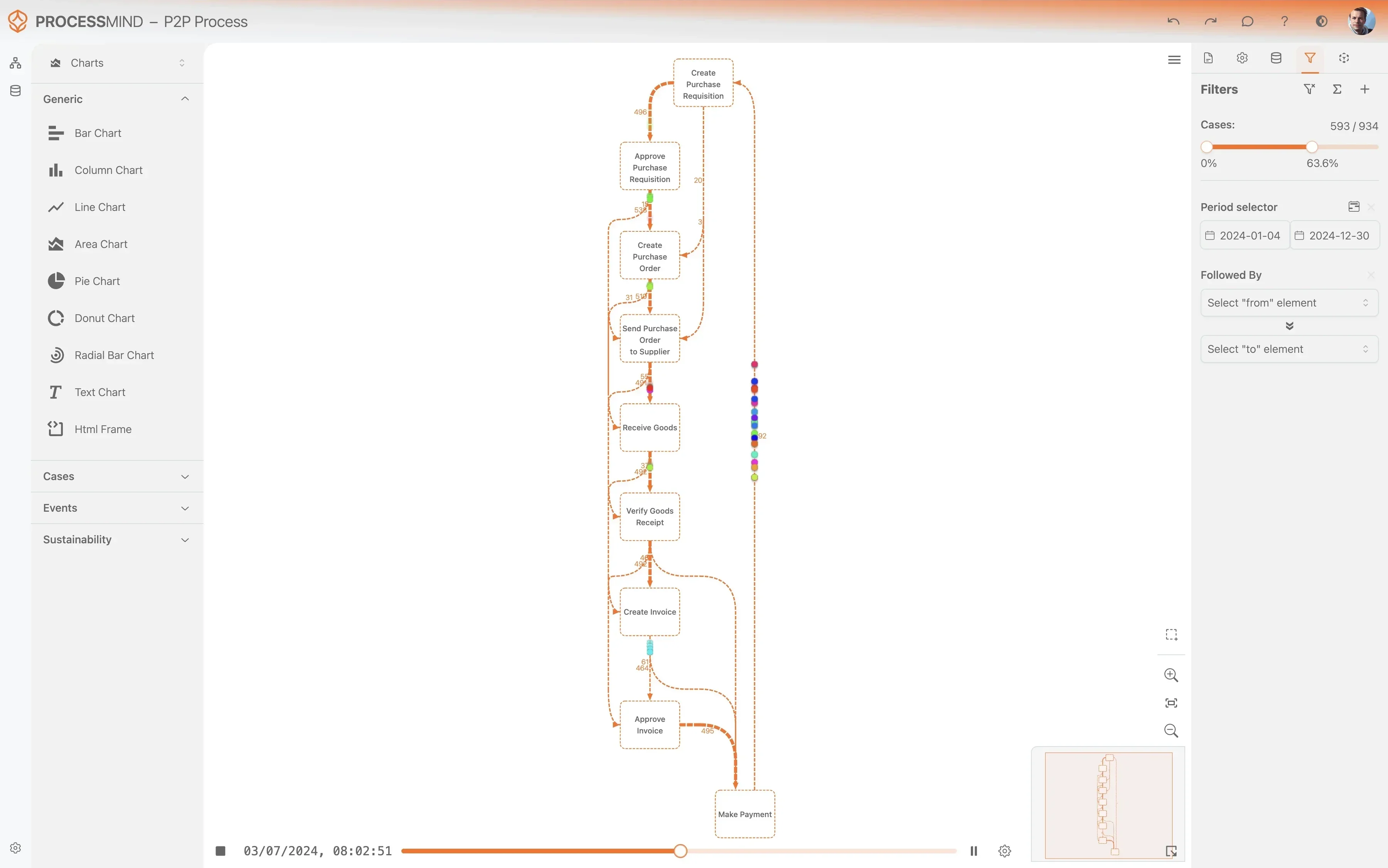
Discover your actual process flow
Identify bottlenecks and delays
Analyze process variants
Design your optimized process

TYPICAL OUTCOMES

Maximizing Asset Reliability and Operational Efficiency

By analyzing Maintenance Work Order data within Oracle Maintenance Cloud, organizations uncover hidden inefficiencies and streamline their repair cycles to reduce downtime.

0 %
Faster Work Order Conversion

Reduction in planning cycles

By identifying bottlenecks in the approval flow, organizations can rapidly turn maintenance requests into actionable work orders for technical teams.

0 %
Lower Asset Rework Rates

Decrease in repeat repairs

Eliminating the root causes of recurring failures reduces the frequency of repeat maintenance within 30 days, which preserves asset longevity.

+ 0 %
Higher Proactive Maintenance

Shift to preventive strategy

Moving away from reactive emergency fixes toward scheduled preventive maintenance improves overall asset reliability and reduces unplanned downtime.

0 %
Improved Sign-off Compliance

Increase in safety audit rates

Real-time tracking of mandatory safety and quality checks ensures that every asset meets regulatory standards before it is returned to active service.

0 days
Reduced Administrative Lag

Average time saved in closure

Streamlining documentation and record updates after work completion reduces the idle time spent in the final administrative stages of the lifecycle.

These figures represent typical improvements observed across various implementations. Actual results vary based on process complexity, data quality, and organizational maturity.

FAQs

Frequently asked questions

Process mining uses event logs from Oracle Maintenance Cloud to visualize how work orders actually flow through your organization. It helps you identify hidden bottlenecks, compliance gaps, and the root causes of maintenance delays without relying on manual interviews.

To get started, you primarily need three types of data including a unique case identifier such as the Maintenance Work Order number, activity names like Status Change or Parts Requisition, and timestamps for each event. Additional attributes like asset type, technician skill level, and material costs can further enrich the analysis to provide deeper insights into cost variance.

Most organizations see their first process maps within two to four weeks after connecting to their Oracle environment. This initial phase focuses on identifying the most frequent process paths and highlighting immediate inefficiencies, such as work orders stuck in administrative limbo.

Yes, by analyzing the history of emergency work orders and comparing them to preventive schedules, you can identify patterns that lead to equipment failure. This insight allows you to adjust your preventive maintenance strategy and resource allocation to prevent breakdowns before they occur.

It does not replace standard reporting but rather complements it by focusing on the sequences of events rather than just static snapshots. While traditional reports show you what happened, process mining shows you why it happened by illustrating the paths and loops that work orders follow.

The technology maps the specific points where work orders stall, such as waiting for material arrival or technician availability. By quantifying the exact impact of these shortages on your lead times, you can make data driven decisions about inventory levels and shift scheduling.

Data security is maintained through encrypted connections and strict access controls that mirror your existing Oracle Cloud security protocols. You can also anonymize sensitive information, such as technician names, while still retaining the ability to analyze skill based performance and resource utilization.

Process mining excels at identifying rework loops where the same asset requires multiple work orders in a short period. By examining the sequence of repairs and the specific technicians or parts involved, you can pinpoint whether the issue stems from poor part quality, training gaps, or inadequate repair procedures.

Optimize Asset Maintenance and Stop Schedule Slips Today

Reduce cycle time by 30 percent and align your resources now

Start Your Free Trial

No credit card required. Free 14 day trial.