Improve Your Accounts Payable Payment Processing

Select a process
Choose a process to continue working in your connected workspace.
Optimize Accounts Payable Payment Processing
Process mining identifies hidden bottlenecks like manual rework and payment delays directly from your source system. Use these insights to reduce friction, avoid late fees, and improve financial transparency across your operations. Our tool provides the visibility needed to transform your payment cycles into a streamlined workflow.
Download our pre-configured data template and address common challenges to reach your efficiency goals. Follow our six-step improvement plan and consult the Data Template Guide to transform your operations.
Show detailed description
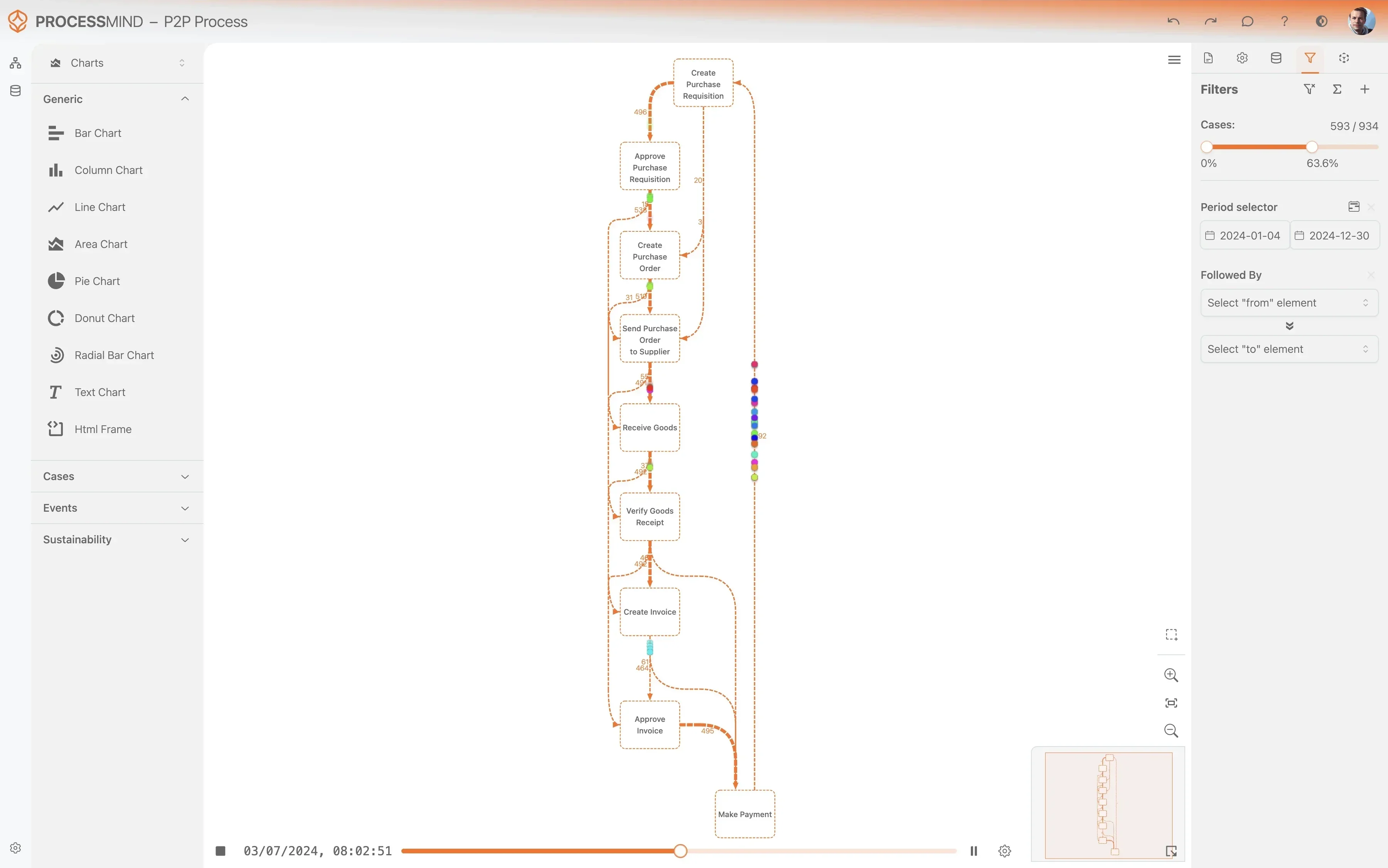
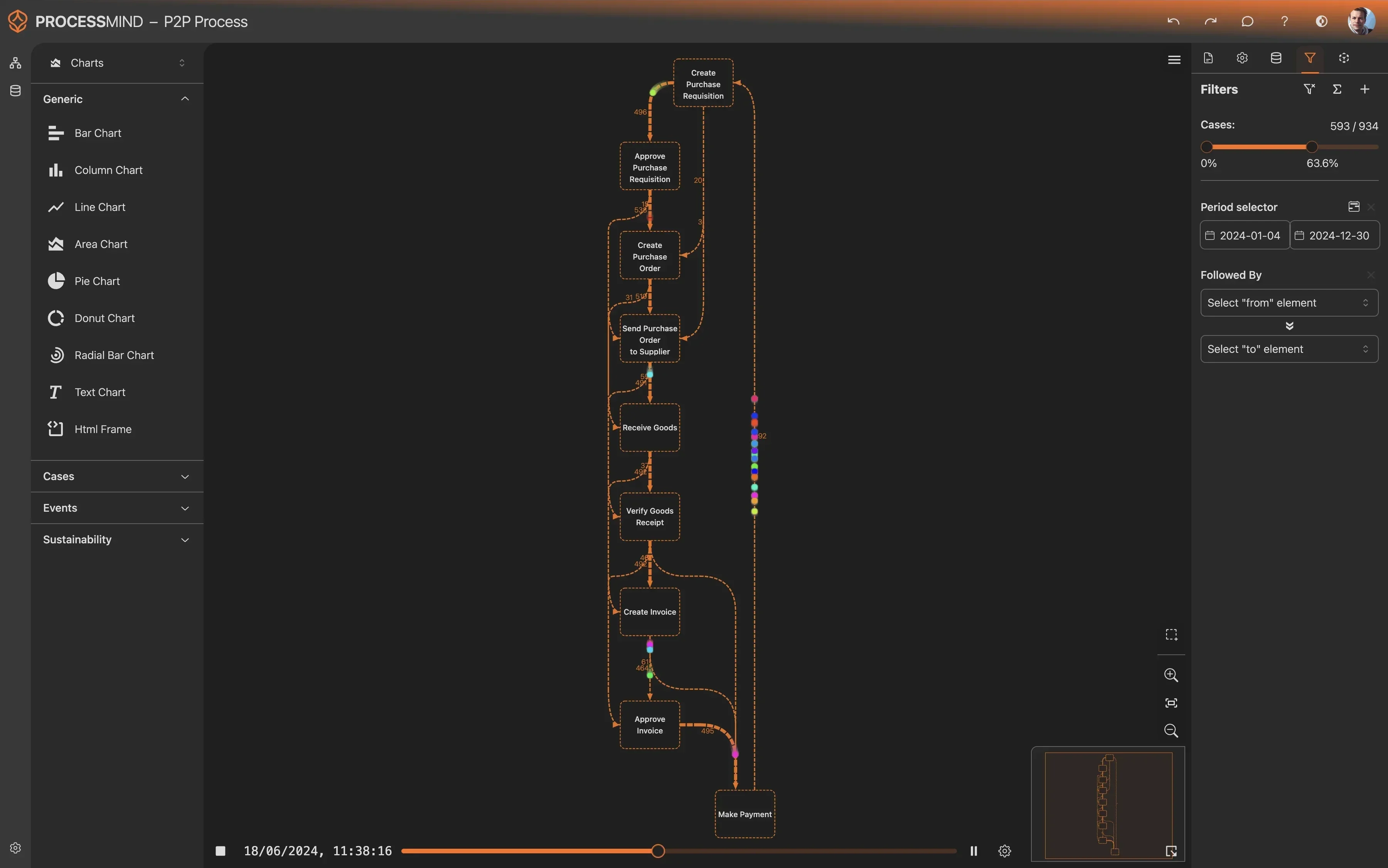
Process mining provides a transparent window into the end-to-end lifecycle of your payment processing. By mapping the journey from the initial invoice receipt to the final bank clearing, you gain visibility into how work actually flows through your finance department. This analysis uncovers the exact sequence of events for every transaction, highlighting where manual interventions occur and where automated workflows might be failing. You can visualize the variations in your process, such as deviations from the standard approval path or unexpected steps in the reconciliation phase, which allows your team to understand the reality of their operations rather than relying on theoretical models.
Many organizations struggle with fragmented data and hidden inefficiencies that slow down their payment cycles. Common challenges include high rates of duplicate payments, missed early payment discounts due to processing delays, and an over-reliance on manual data entry which increases the risk of human error. Without a unified view, it is difficult to identify why certain vendors experience consistent delays or why some regions have higher processing costs than others. These bottlenecks often stem from complex approval hierarchies or outdated validation checks within your source system, ultimately impacting your ability to manage working capital effectively and maintain trust with your global supplier base.
By leveraging ProcessMind to analyze your payment performance, you transform raw data from your ERP into actionable intelligence. The platform enables you to pinpoint the root causes of payment friction and prioritize improvements that yield the highest return on investment. You can monitor key performance indicators in real time, such as the time to clear an invoice or the percentage of on-time payments, ensuring that your team remains aligned with organizational goals. This level of insight helps in streamlining compliance audits, reducing the cost per transaction, and optimizing your cash flow by ensuring payments are made at the most advantageous time for your business.
Getting started with your analysis is a straightforward process designed to integrate seamlessly with your existing infrastructure. You begin by mapping your internal data fields to our standardized data template, which uses the Invoice Number as the primary case identifier to track the flow of events. This template guides you through the necessary data points required to build a comprehensive process map, regardless of which source system you currently use. Once your data is prepared and uploaded, you can immediately begin exploring your payment lifecycle and identifying opportunities for optimization to drive better financial outcomes across your entire enterprise.
6-Step Improvement Path for Accounts Payable Processing
Connect & Discover
What to do
Extract event logs from your ERP by linking Invoice Numbers to timestamps for activities like receipt, validation, and cleared payment.
Why it matters
Establishing data-driven visibility eliminates guesswork, allowing you to see the actual sequence of payment events instead of relying on opinions.
Expected outcome
A complete digital footprint of your end-to-end payment lifecycle.
Map Your Process
What to do
Generate a visualization of the actual invoice flow to see common paths and identify deviations where invoices bypass standard approval steps.
Why it matters
Seeing how payments are actually handled reveals hidden manual work and non-compliant paths that increase operational risk and costs.
Expected outcome
A transparent map showing the happy path and all process variations.
Identify Bottlenecks
What to do
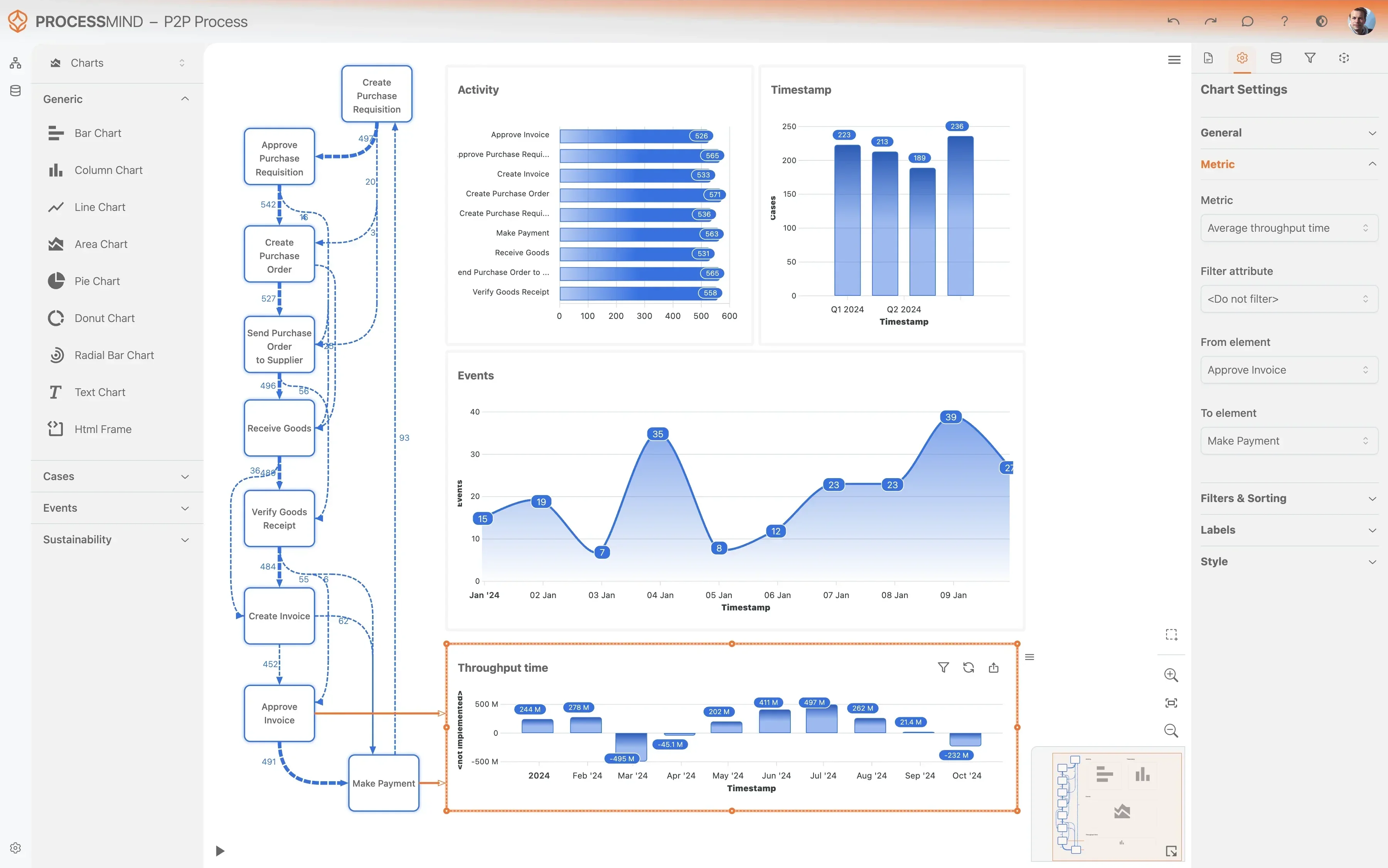
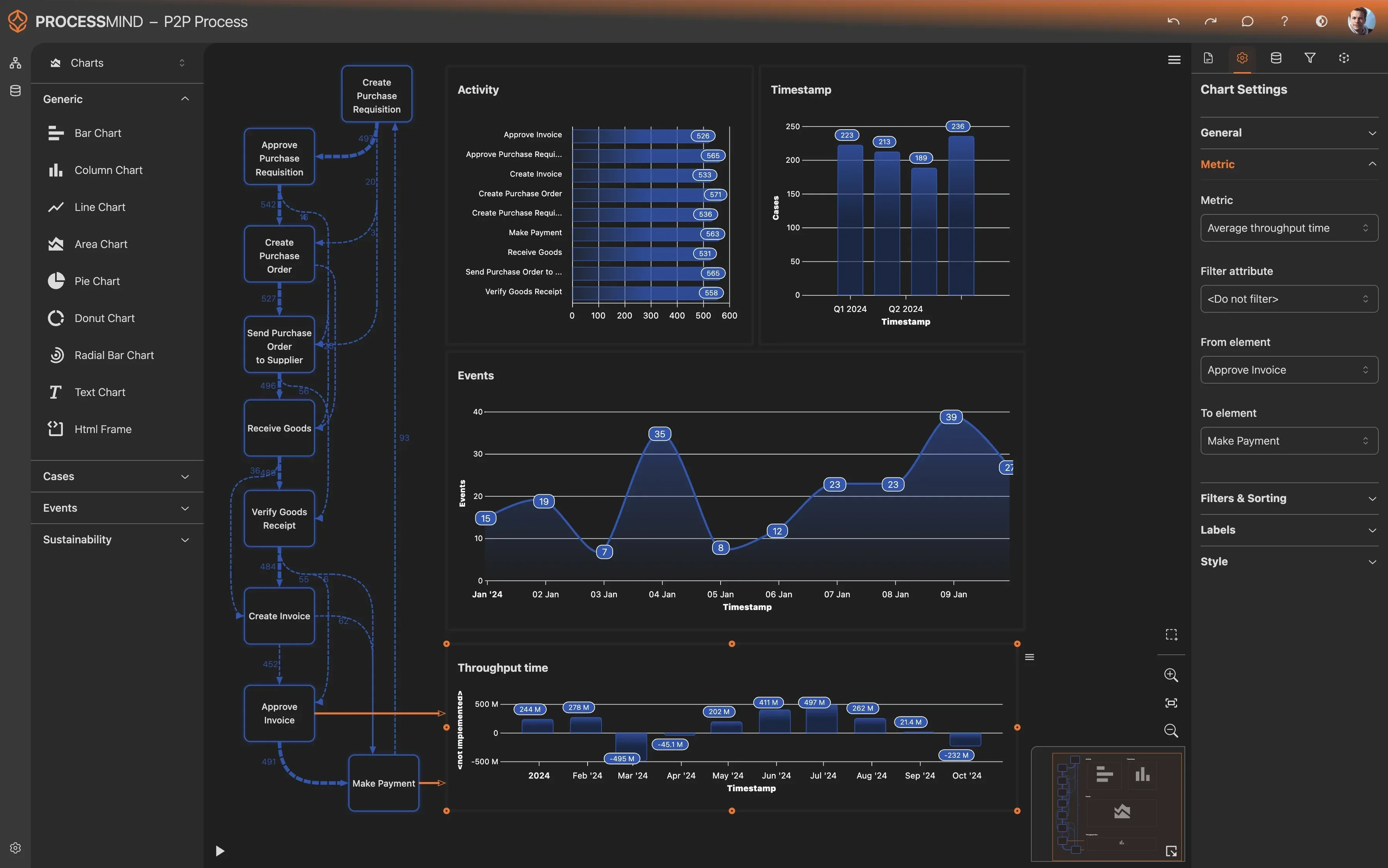
Measure the duration between steps like data extraction and approval to find stages where invoices sit idle for extended periods of time.
Why it matters
Pinpointing delays helps prioritize fixes that prevent late payment fees and enable your team to capture more early payment discounts.
Expected outcome
A prioritized list of the top three stages causing the longest delays.
Analyze Root Causes
What to do
Investigate why certain invoices require manual intervention or frequent discrepancy resolution by filtering data by vendor or department.
Why it matters
Understanding the underlying reasons for blocks and rework prevents you from implementing solutions that only address superficial symptoms.
Expected outcome
Evidence linking process friction to specific operational factors.
Design Improvements
What to do
Create targeted action plans to automate data matching, adjust approval thresholds, or implement better vendor data standards.
Why it matters
Focused improvements ensure that your resources are used effectively to reduce manual effort and shorten the payment cycle across the board.
Expected outcome
A data-driven roadmap for streamlining the accounts payable process.
Monitor & Iterate
What to do
Track key metrics like touchless rate and clearing time against your baseline to ensure that process changes deliver the expected value.
Why it matters
Continuous monitoring prevents process regression and allows you to adapt quickly to changes in volume or new business requirements.
Expected outcome
A sustainable framework for ongoing process optimization.
WHAT YOU WILL GET
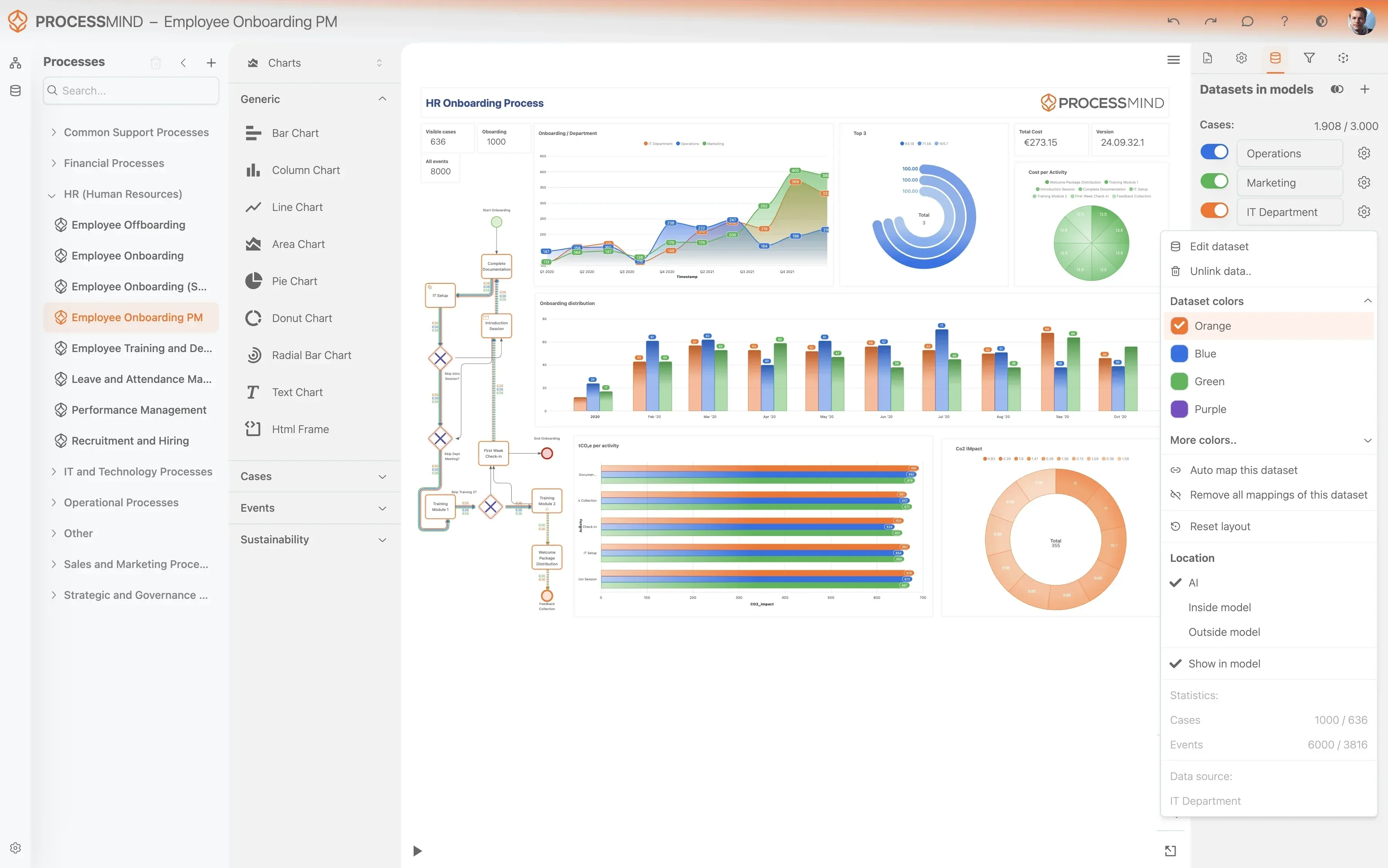
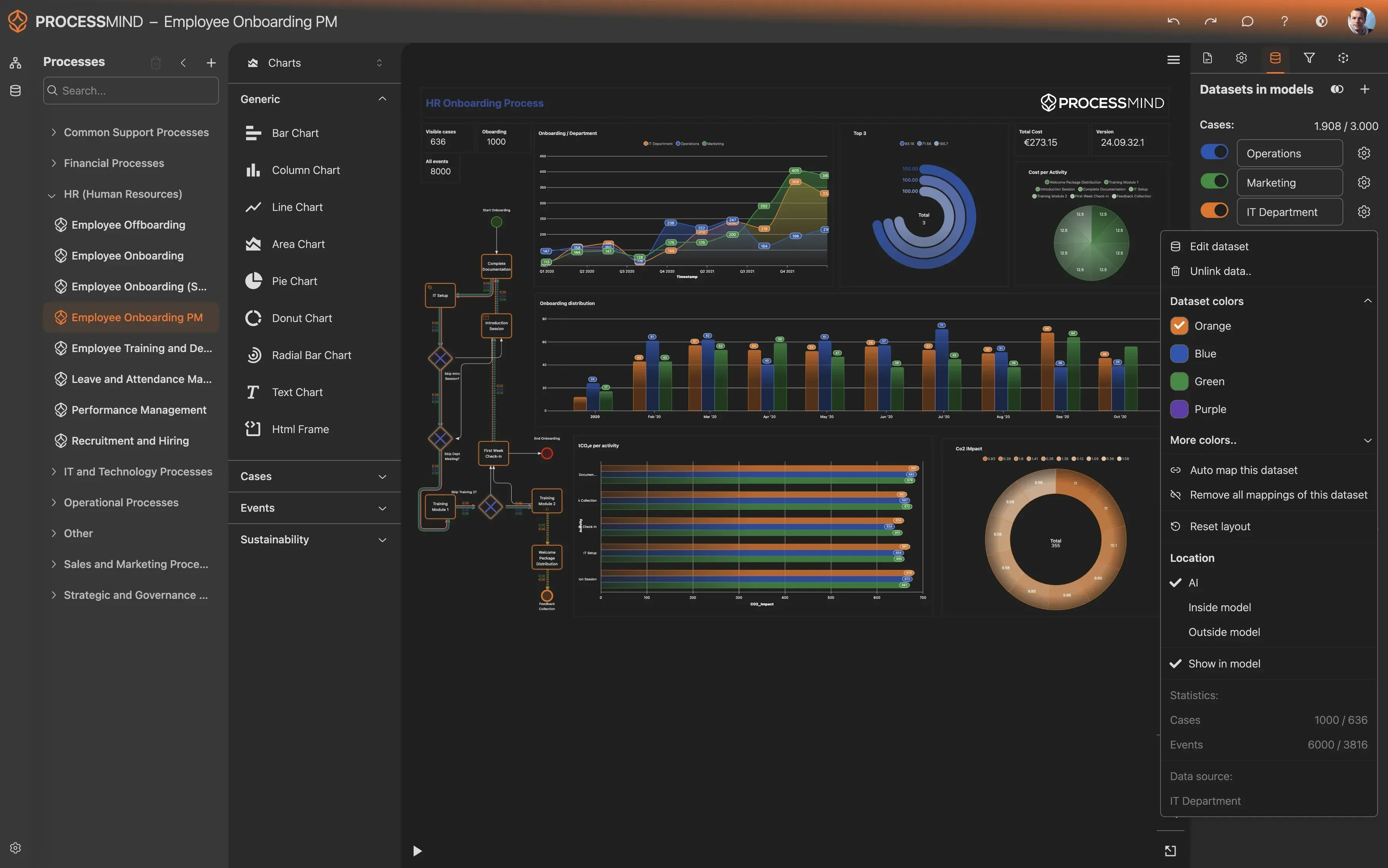
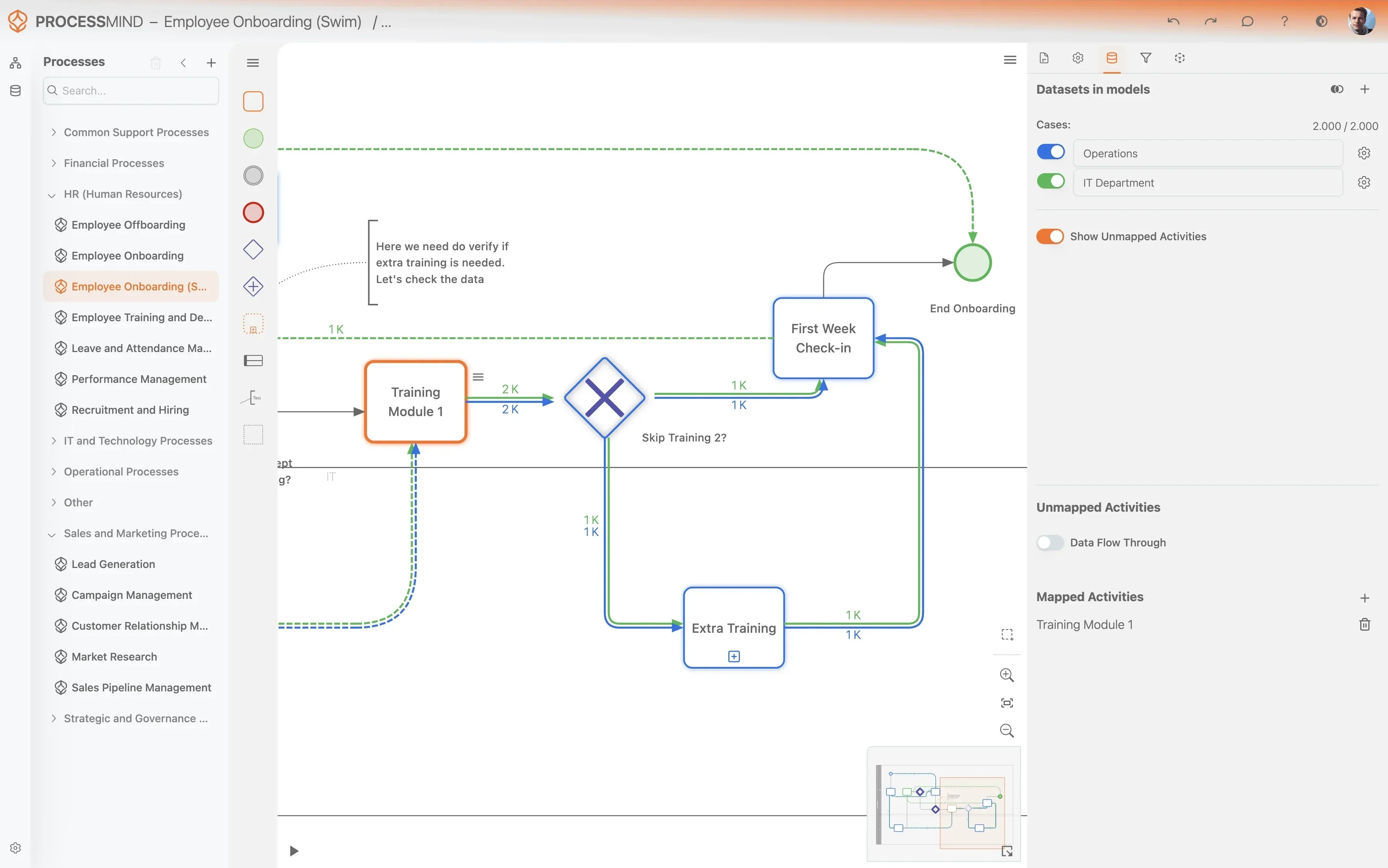
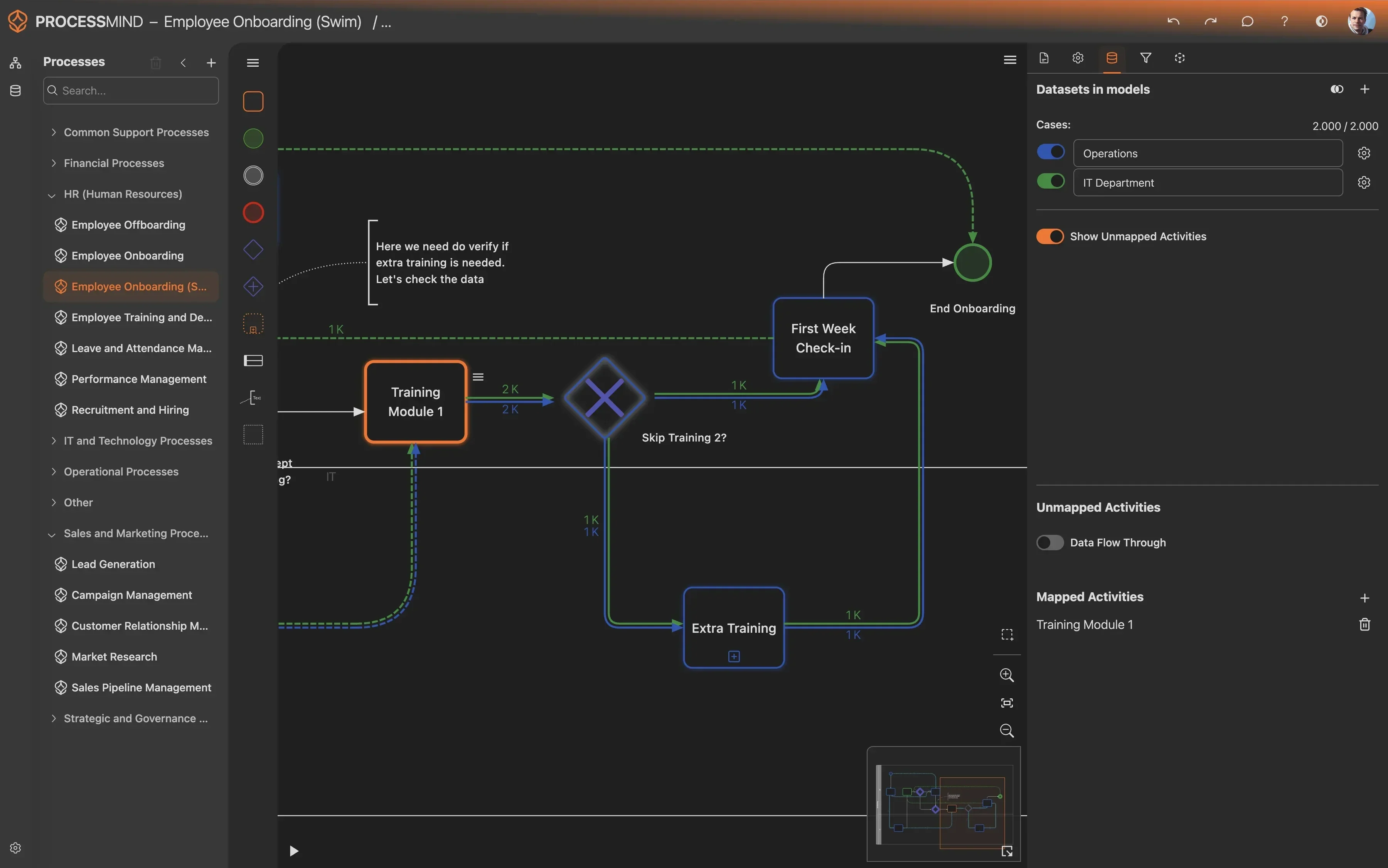
Unlock Complete Visibility Into Your AP Payment Workflow
- Visualize every step of your payment lifecycle
- Identify the root causes of late payment fees
- Detect deviations from standard compliance rules
- Surface opportunities for touchless processing
PROVEN OUTCOMES
Transforming Accounts Payable Efficiency
Organizations leveraging process mining for invoice management typically identify hidden bottlenecks, reduce payment cycle times, and eliminate manual work through data-driven insights. These outcomes reflect the impact of optimizing workflows from invoice receipt to final settlement.
Reduction in end to end time
Streamlining internal approval workflows and removing processing bottlenecks allows teams to move from invoice receipt to payment execution much faster.
Growth in early payment savings
Improving process visibility helps treasury teams prioritize high value invoices with early payment terms, maximizing available cash discounts and rebates.
Growth in automated processing
Optimizing matching logic and purchase order synchronization increases the number of invoices that flow through the system without manual intervention.
Elimination of duplicate payments
Real time monitoring of invoice attributes such as vendor ID and reference number identifies duplicate entries before execution, safeguarding company assets.
Fewer administrative corrections
Identifying the root causes of data entry errors and matching discrepancies allows for cleaner processing and significantly reduces manual accounts payable effort.
Decrease in status inquiries
Meeting payment deadlines consistently and providing better transparency reduces the volume of manual inquiries and prevents credit holds from critical suppliers.
Actual results vary depending on process complexity and existing data quality. These figures represent the typical performance improvements observed across various accounts payable implementations.
Recommended Data
For customized data recommendations, choose your specific process.
FAQs
Frequently asked questions
Process mining provides a complete view of the payment lifecycle from invoice receipt to settlement by visualizing every step taken. It identifies bottlenecks such as approval delays and manual overrides that slow down the cycle, allowing teams to implement targeted improvements to productivity.
To create an accurate process map, you need a unique case identifier like an invoice number, activity names like invoice received or payment executed, and precise timestamps for each event. Supplemental data such as vendor names and invoice amounts can also be included for deeper filtering and root-cause analysis.
Yes, the technology highlights exactly where invoices are getting stuck in the approval chain before they miss discount deadlines. You can analyze the lead time between invoice entry and final approval to ensure your payment runs are timed optimally and prioritize high-value invoices that offer the best financial returns.
Most organizations can view their first process maps within two to four weeks after the initial data extraction is complete. Once the data from your source system is mapped to the event log format, the software automatically generates visualizations that reveal immediate bottlenecks and compliance issues.
Process mining allows you to track the history of every invoice and flag sequences that appear more than once based on vendor attributes and amounts. By analyzing the data entry and validation steps in your system, you can pinpoint whether duplicates are caused by system errors or manual entry mistakes.
It acts as an automated auditor by monitoring every transaction for deviations from your established business rules. You can quickly identify instances where standard approval paths were bypassed or where manual overrides occurred, which ensures full transparency for regulatory requirements and internal controls.
No, process mining is a diagnostic tool that works alongside your existing automation and financial systems. While your current software handles the execution of tasks, process mining evaluates how well those tasks are being performed and identifies where new automation could be most effective.
Process mining tracks the flow of purchase orders, receipts, and invoices to identify where the matching process breaks down. This allows you to see if failures are caused by price variances, quantity differences, or timing issues, so you can address the root cause with vendors or internal procurement teams.
The platform tracks the application and removal of payment blocks as distinct events in the invoice timeline. This allows you to measure the exact duration of each block and determine if manual interventions are causing late payment penalties or friction with your key vendors.
Optimize Your Accounts Payable Process Today
Gain full visibility into bottlenecks and capture more early payment discounts
No credit card required. Setup in minutes