Improve Your Purchase to Pay - Requisition

Select a process
Choose a process to continue working in your connected workspace.
Optimize Purchase Requisitions in Dynamics 365 for Faster Approvals
Requisition processes can often suffer from frustrating approval delays and compliance issues. Our platform helps you quickly pinpoint where these bottlenecks occur in requisition creation and approval workflows. By identifying these inefficiencies, you can implement practical improvements to boost efficiency and ensure timely procurement actions across your organization.
Download our pre-configured data template and address common challenges to reach your efficiency goals. Follow our six-step improvement plan and consult the Data Template Guide to transform your operations.
Show detailed description
Why Optimizing Your Purchase Requisition Process is Critical
The Purchase to Pay - Requisition process is the crucial first step in your organization's procurement cycle. It’s where business needs transform into formal requests for goods and services. An efficient, compliant, and transparent requisition process is fundamental to effective financial management and operational agility. Within Microsoft Dynamics 365, managing these requisitions efficiently can sometimes be challenging due to intricate workflows, multiple approval stages, and the sheer volume of requests.
Inefficiencies in this stage can cascade throughout the entire Purchase to Pay process, leading to significant business impacts. Delays in requisition approval mean delays in acquiring necessary resources, which can disrupt projects, hinder production, or even impact customer satisfaction. Furthermore, a lack of visibility can result in non-compliant spending, missed cost-saving opportunities, and unnecessary administrative overhead. Understanding and improving your Purchase to Pay - Requisition process directly translates to faster operations, reduced costs, and stronger financial control.
How Process Mining Transforms Requisition Analysis
Traditional methods of analyzing process performance often rely on assumptions or manual data gathering, providing an incomplete picture. Process mining offers a revolutionary approach by leveraging actual event log data from your Microsoft Dynamics 365 system. Instead of merely guessing, you gain an objective, data-driven view of how your Purchase to Pay - Requisition process truly operates.
Our solution extracts key activities and attributes related to each purchase requisition, from its creation to its final disposition, providing a comprehensive visual map of every journey. This deep dive into your Dynamics 365 data allows you to precisely identify variations in approval paths, uncover hidden bottlenecks that slow down progress, and detect rework loops or unauthorized changes that might be occurring unnoticed. By showing the real-world flow, process mining empowers you to move beyond anecdotal evidence and pinpoint the exact moments and reasons for delays, rejections, or deviations from your standard operating procedures.
Key Areas for Improvement in Your Requisition Workflow
Process mining reveals actionable insights across several critical dimensions of your Purchase to Pay - Requisition process:
- Approval Cycle Time Reduction: Pinpoint the exact stages and individuals causing delays in the approval chain. Identify requisitions that spend an excessive amount of time awaiting approval, whether due to complex multi-level workflows or specific approvers. This understanding enables targeted interventions to streamline your approval process.
- Compliance Assurance: Automatically detect instances where requisitions deviate from established purchasing policies, such as bypassing required approval steps, exceeding spending limits without proper authorization, or incorrect data entry. Ensure all requisitions adhere to your organization's internal controls and regulatory requirements within Microsoft Dynamics 365.
- Streamlining Requisition Creation: Understand why some requisitions require multiple amendments or are frequently rejected early in the process. This insight helps identify training gaps, clarify submission guidelines, or simplify form fields to reduce errors and rework at the very beginning of the P2P cycle.
- Optimizing Resource Allocation: By visualizing the flow, you can see where human resources are being inefficiently utilized, whether through unnecessary manual interventions, repetitive tasks, or constant follow-ups. Optimizing these areas frees up valuable time for strategic tasks.
Realizing Measurable Outcomes and Benefits
By applying the insights gained from process mining to your Purchase to Pay - Requisition process, you can achieve significant, measurable improvements:
- Reduced Requisition-to-Purchase Order Cycle Time: Accelerate the overall procurement process, leading to faster acquisition of goods and services.
- Lower Operational Costs: Minimize administrative overhead, reduce rework, and eliminate inefficiencies that drain resources, leading to direct cost savings.
- Enhanced Compliance Rates: Proactively ensure that all requisitions adhere to company policies and regulatory requirements, reducing audit risks and improving governance.
- Improved Stakeholder Satisfaction: Faster approvals and a more transparent process lead to greater satisfaction for requesters, approvers, and procurement teams alike.
- Better Strategic Decisions: Gain reliable, data-driven insights that support informed decision-making for future process design and technology investments within Microsoft Dynamics 365.
Begin Your Requisition Optimization Journey Today
Stop guessing about the root causes of requisition delays and compliance issues. Our process mining approach provides the clarity and actionable intelligence you need to transform your Purchase to Pay - Requisition process within Microsoft Dynamics 365. Take the first step towards a more efficient, compliant, and cost-effective procurement operation by leveraging the power of data. Unlock hidden value and drive continuous improvement across your entire organization.
The 6-Step Improvement Path for Purchase to Pay - Requisition
Download the Data Template
What to do
Access and download the pre-configured Excel data extraction template designed specifically for Purchase to Pay Requisition processes in Microsoft Dynamics 365.
Why it matters
This ensures you collect all necessary data points with the correct structure from Microsoft Dynamics 365, streamlining your analysis setup.
Expected outcome
A structured data template ready to guide your data extraction from Microsoft Dynamics 365.
Export Your P2P Data
What to do
Extract 3-6 months of historical Purchase Requisition data from Microsoft Dynamics 365, mapping it precisely to the downloaded template fields.
Why it matters
Comprehensive historical data provides a robust foundation for identifying recurring bottlenecks and inefficiencies within your requisition process.
Expected outcome
A complete, accurate dataset reflecting your Purchase to Pay Requisition history, ready for upload.
Upload Your Requisition Data
What to do
Securely upload your filled data template to ProcessMind. Our platform automatically processes and prepares your requisition data for analysis.
Why it matters
Seamless data ingestion is crucial for quickly transforming raw data into actionable insights, minimizing manual effort and potential errors.
Expected outcome
Your Purchase Requisition data is processed and visualized within ProcessMind, awaiting deeper analysis.
Analyze Your P2P Process
What to do
Explore ProcessMind's auto-generated dashboards, process maps, and AI-driven recommendations to uncover inefficiencies and compliance gaps in your requisition flow.
Why it matters
Gain deep visibility into your requisition lifecycle, identify root causes of delays, and pinpoint areas for significant efficiency gains and policy adherence.
Expected outcome
Clear insights into requisition bottlenecks, non-compliant paths, and prioritized opportunities for improvement.
Implement P2P Optimizations
What to do
Based on ProcessMind's findings, prioritize and implement changes within Microsoft Dynamics 365 to optimize your Purchase to Pay Requisition process.
Why it matters
Translating insights into action directly improves process efficiency, reduces requisition approval times, and enhances overall operational performance.
Expected outcome
Measurable improvements in requisition processing, reduced lead times, and better compliance outcomes.
Monitor Your P2P Progress
What to do
Periodically re-upload updated Purchase to Pay Requisition data to ProcessMind to track the impact of your implemented improvements over time.
Why it matters
Continuous monitoring ensures sustained improvements, validates the effectiveness of changes, and identifies new areas for ongoing optimization.
Expected outcome
Ongoing performance tracking of your requisition process and quantified KPI improvements for sustained efficiency.
WHAT YOU GET
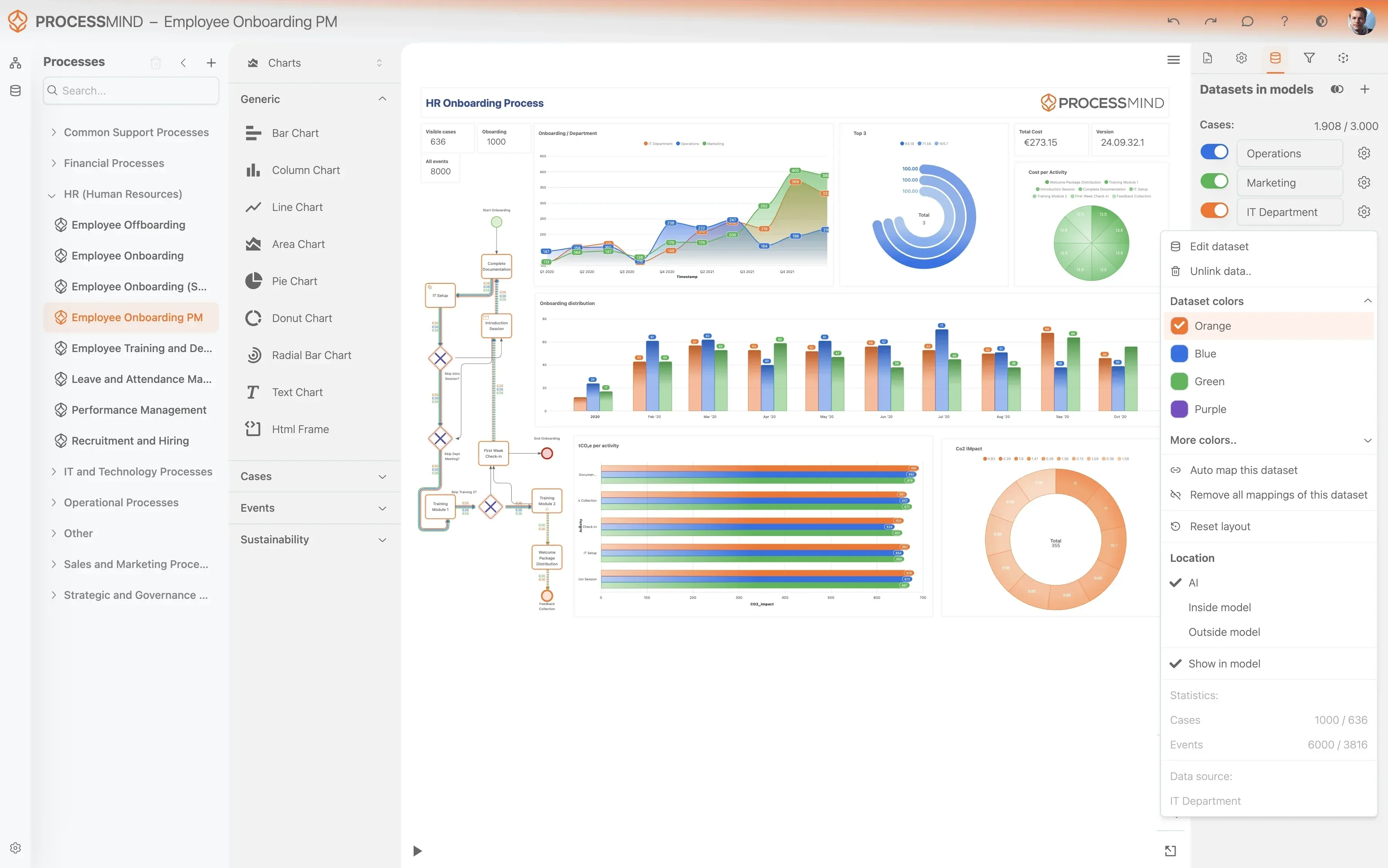
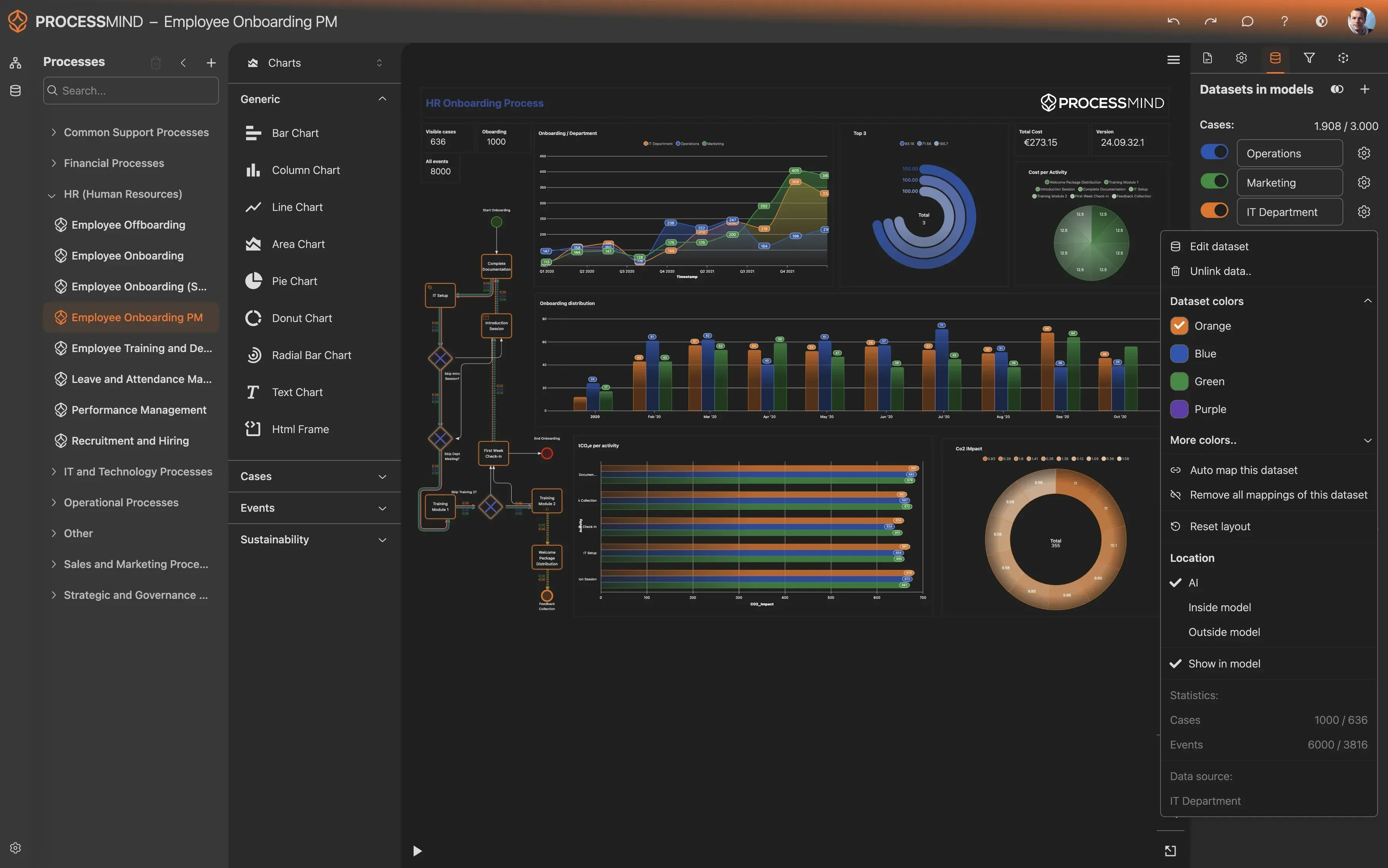
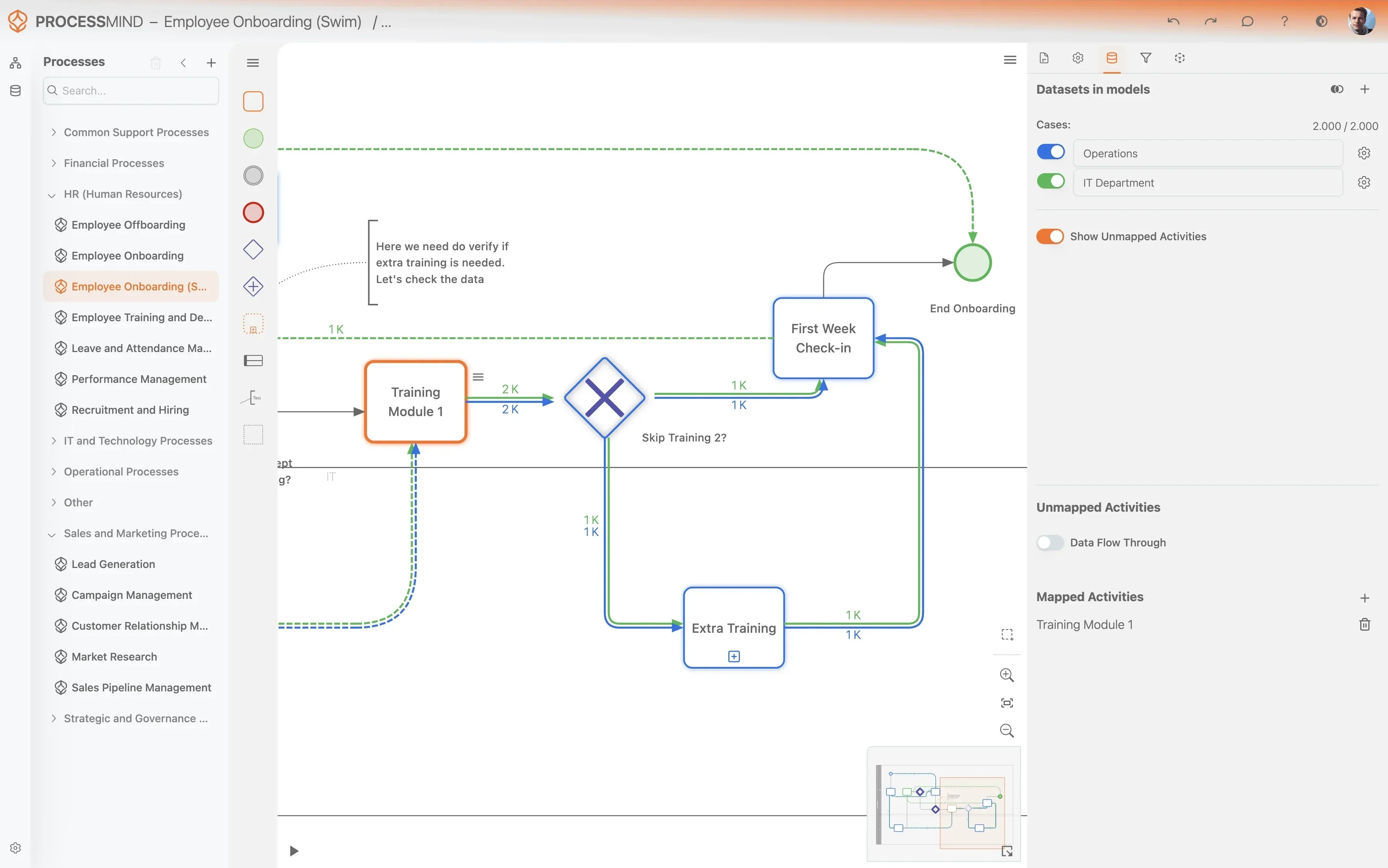
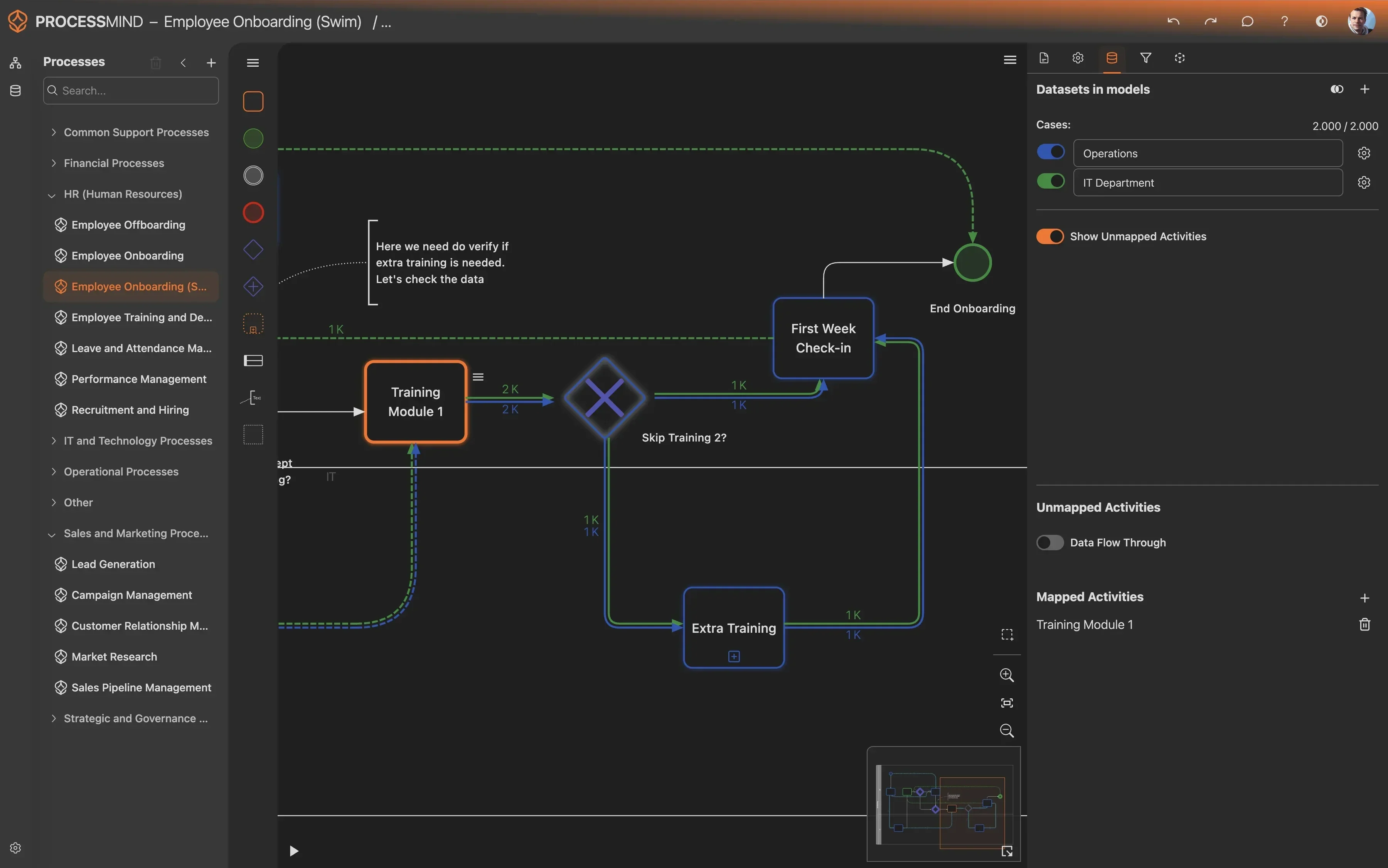
Uncover Dynamics 365 Requisition Bottlenecks
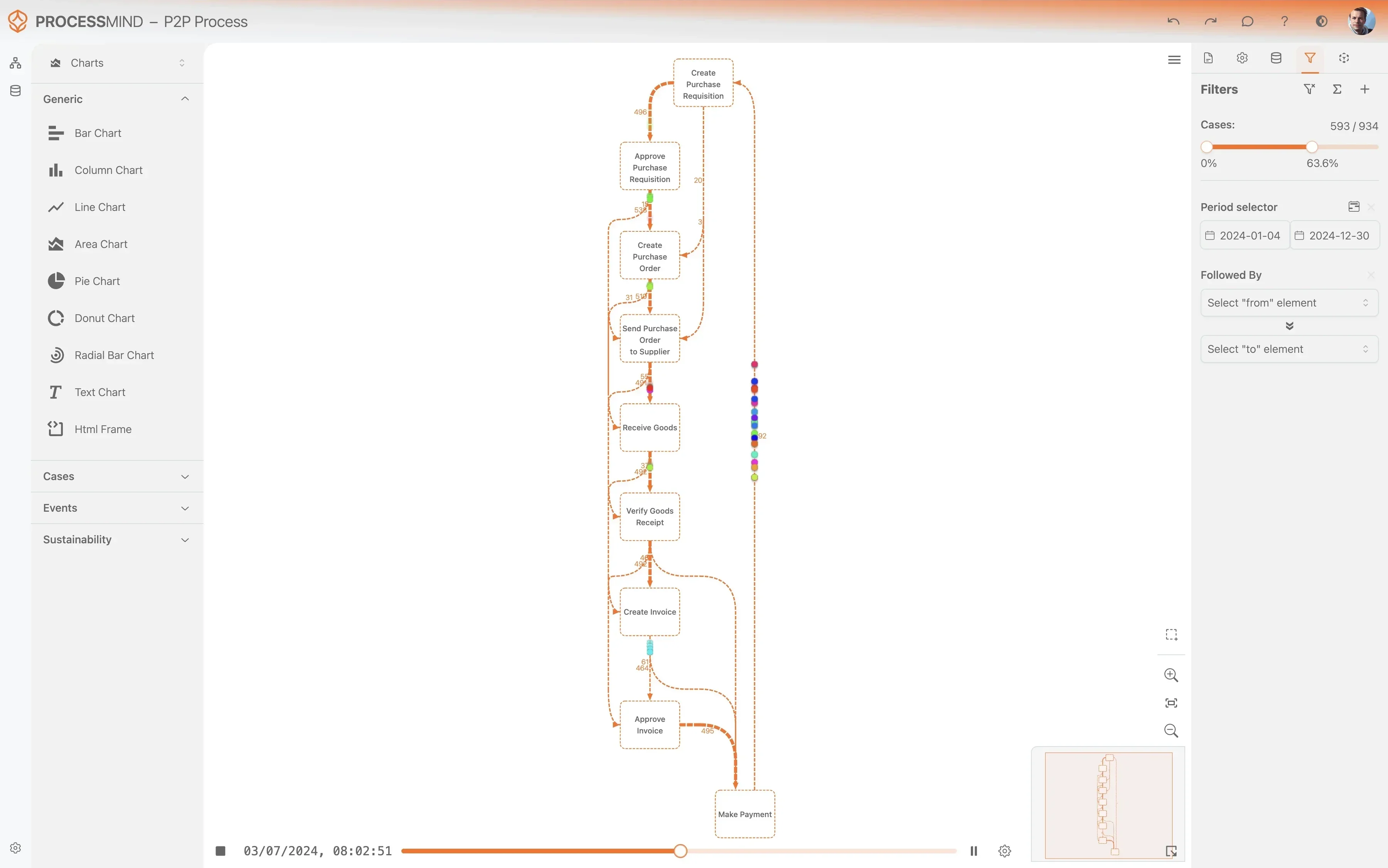
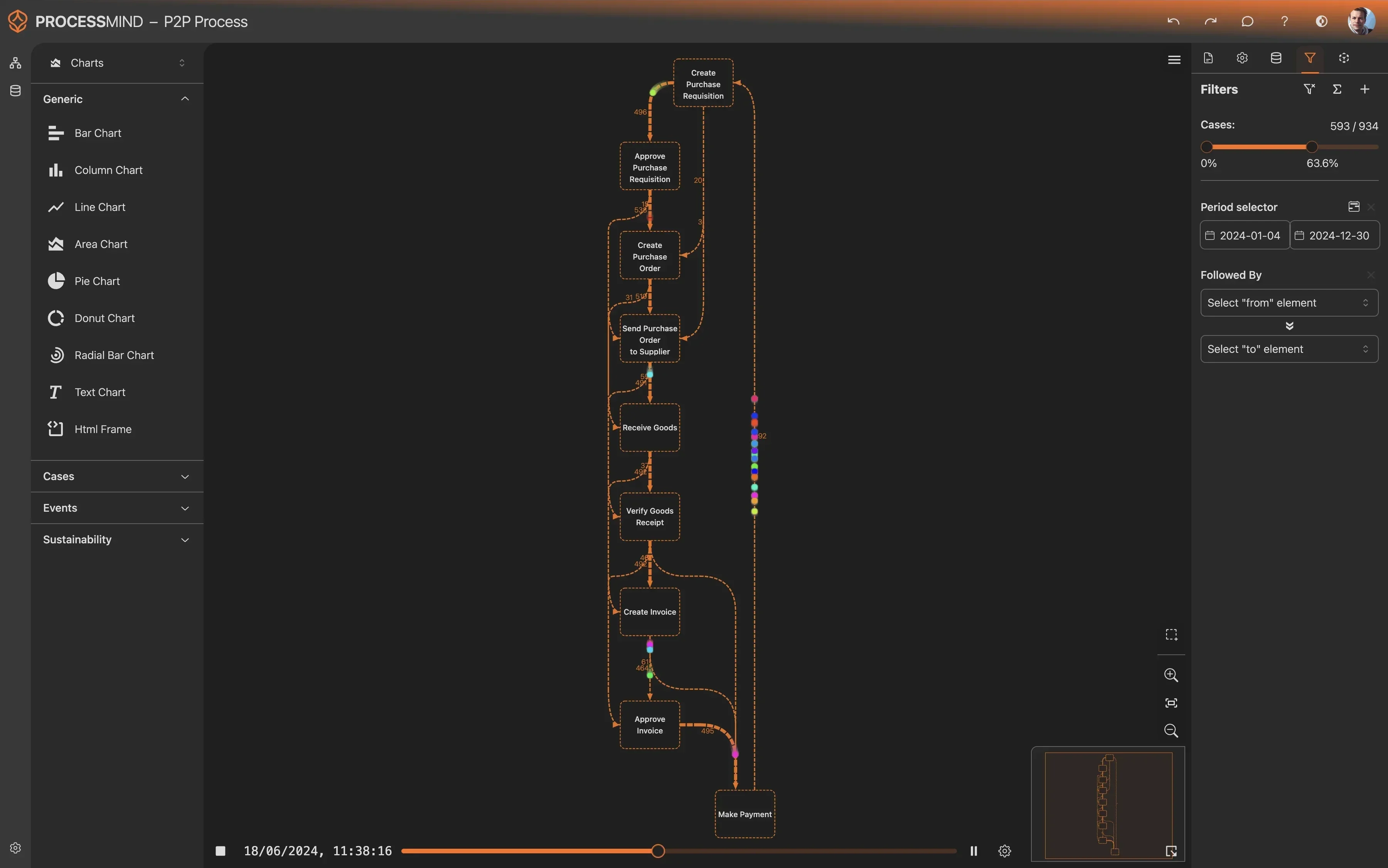
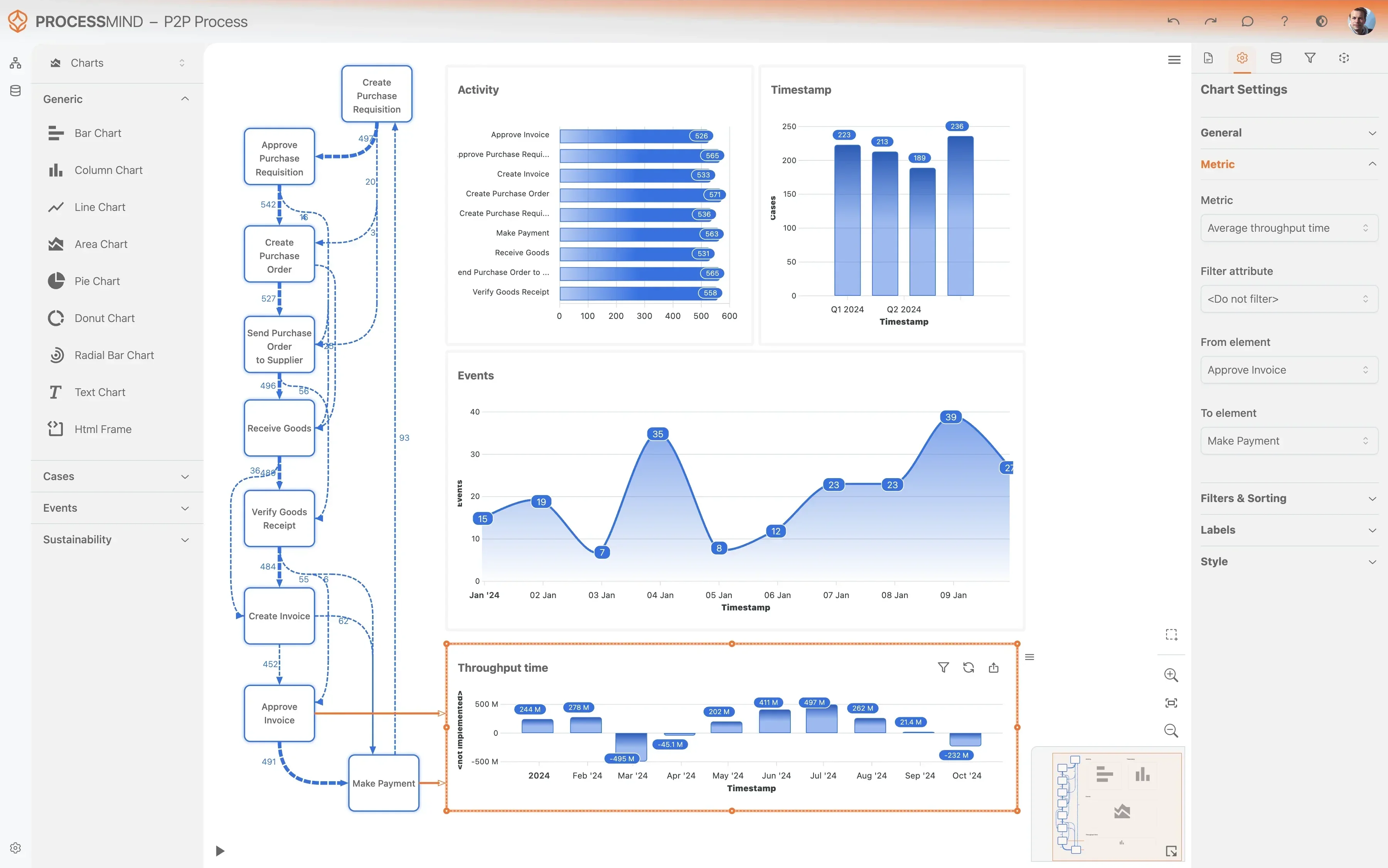
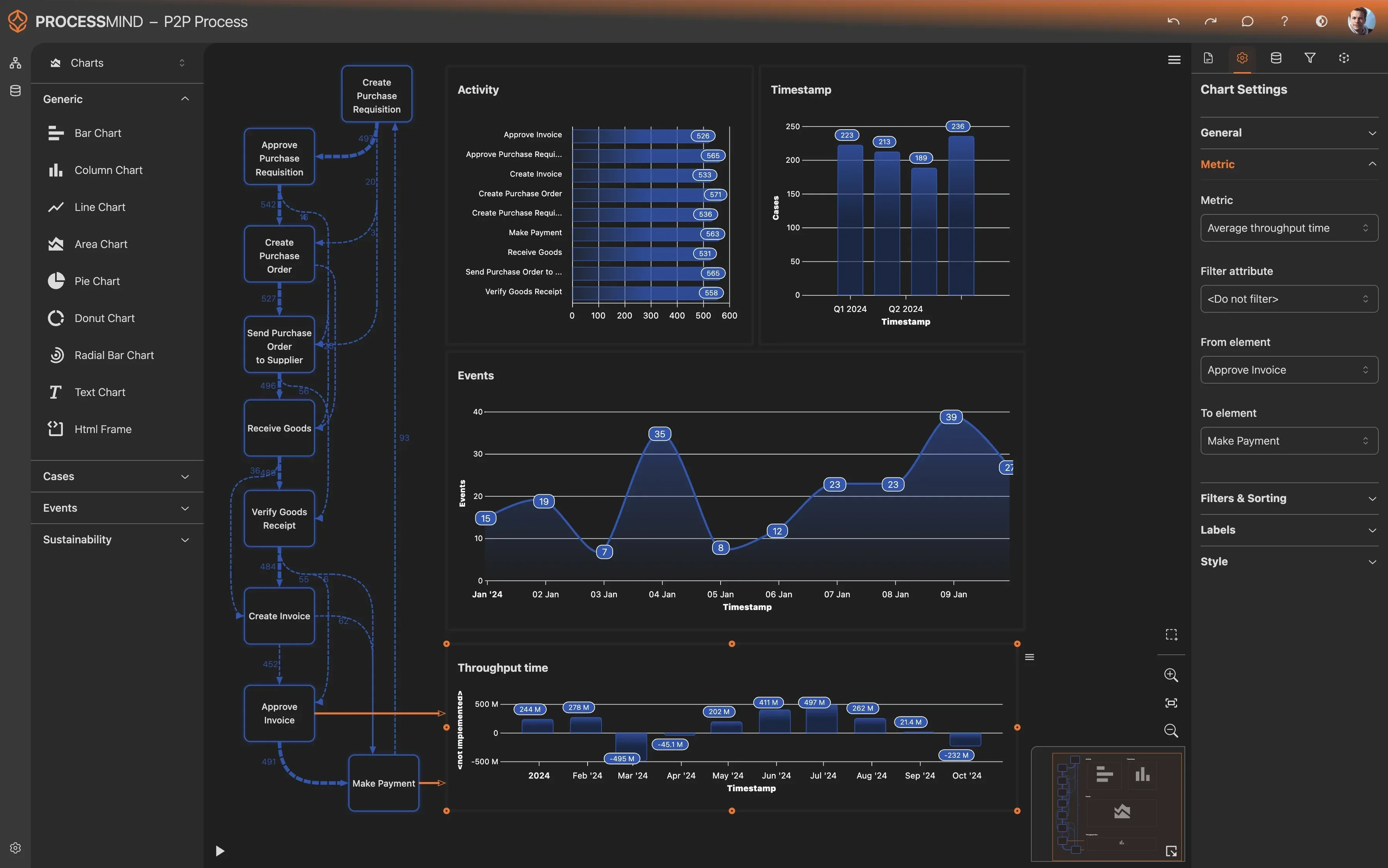
- Visualize actual requisition process flow
- Pinpoint approval delays and bottlenecks
- Identify compliance gaps in requisitions
- Accelerate Purchase to Pay cycle times
TYPICAL OUTCOMES
Transforming Purchase Requisition Efficiency
These outcomes highlight the significant improvements organizations typically realize by leveraging process mining to analyze and optimize their Purchase to Pay - Requisition workflows within Microsoft Dynamics 365. By identifying and eliminating bottlenecks, businesses can streamline their requisition-to-order cycle.
Average reduction in approval time
Streamline your requisition approval process by identifying and eliminating bottlenecks, leading to quicker approvals and faster initiation of purchasing activities.
Increase in requisitions approved initially
Improve the quality of initial requisition submissions by understanding common rejection reasons, reducing rework for both requesters and approvers. This boosts efficiency and employee satisfaction.
Reduction in non-standard paths
Ensure requisitions follow established purchasing policies and standard workflows. Process mining uncovers deviations, allowing for targeted training and control enhancements.
Reduction in Requisition to PO time
Shorten the critical path from an approved requisition to a generated purchase order. This ensures faster procurement, supporting timely delivery of goods and services.
Decrease in amendment rates
Minimize the number of times requisitions are amended or rejected, which significantly reduces manual effort, saves time, and lowers operational costs associated with rework.
Results vary based on process complexity, data quality, and specific implementation efforts. These figures represent typical improvements observed across various Purchase to Pay - Requisition implementations.
Recommended Data
FAQs
Frequently asked questions
Process mining analyzes your Purchase Requisition ID data from Dynamics 365 to visualize the actual flow of your requisition process. It identifies bottlenecks, non-compliant steps, and rework, such as lengthy approval cycles or frequent amendments. This allows you to understand root causes and target specific areas for efficiency gains and cost reduction.
To effectively analyze the Purchase to Pay Requisition process, we primarily need event logs related to the Purchase Requisition ID. Key data includes event ID, activity name, timestamp, and the responsible user or system. This allows us to reconstruct the precise sequence of steps for each requisition.
Data extraction can typically be done using standard reporting tools, custom queries, or direct database access within your Dynamics 365 environment. We focus on tables containing requisition creation, status changes, approval events, and conversion to purchase orders. Our experts can guide your IT team through this process to ensure data integrity.
You can expect to see a significant reduction in requisition approval cycle times and an increase in first-pass approval rates. Process mining helps standardize process flows, accelerate requisition to PO conversion, and enhance purchasing policy compliance. These improvements lead to greater operational efficiency and cost savings.
The initial data extraction and setup phase usually takes a few weeks, depending on data availability and your system configuration. The analysis itself can provide actionable insights within days once the data is loaded and modeled. Continuous monitoring can then deliver ongoing optimization opportunities.
Yes, process mining excels at identifying specific approval bottlenecks by visualizing the actual time spent at each approval step and the paths requisitions take. It can highlight where requisitions are frequently delayed or rerouted, such as specific approval steps or individuals. This insight enables targeted interventions to streamline your approval cycles.
Process mining is beneficial for organizations of all sizes that handle repeatable, data-rich processes like Purchase to Pay Requisition. While large enterprises may have more complex processes, even smaller organizations can gain significant efficiencies and cost savings by optimizing their core operations. The key is having sufficient event data to analyze.
The primary technical requirement is access to your Dynamics 365 event logs for the Purchase Requisition ID, typically in a structured format like CSV or SQL tables. Beyond data, you will need a process mining tool, which can be cloud-based or on-premises, and basic data integration capabilities. No complex coding is typically required.
Optimize Purchase to Pay - Requisition for Faster Approvals Now
Eliminate delays and achieve 30% faster cycle times in Dynamics 365.
No credit card required. Setup in minutes.