Improve Your Record to Report - Period Close & Reconciliation

Select a process
Choose a process to continue working in your connected workspace.
Optimize the Record to Report Period Close in SAP S/4HANA
Our platform precisely identifies inefficiencies and bottlenecks within your processes. It reveals hidden delays, rework loops, and non-standard activities that impact your financial reporting. By uncovering these areas, you can streamline operations, enhance compliance, and significantly transform your closing cycle.
Download our pre-configured data template and address common challenges to reach your efficiency goals. Follow our six-step improvement plan and consult the Data Template Guide to transform your operations.
Show detailed description
Why Optimize Your Record to Report - Period Close & Reconciliation?
The Record to Report, R2R, Period Close and Reconciliation process is the backbone of financial reporting for any organization. In complex environments, especially those leveraging SAP S/4HANA, this critical process can become a source of significant challenges. Delays, manual errors, and a lack of transparency not only strain your finance teams but also impact the accuracy of your financial statements, leading to potential compliance risks and delayed business decisions. Even with a robust ERP system like SAP S/4HANA, intricate configurations, a high volume of transactions, and diverse user behaviors can introduce inefficiencies that remain hidden from traditional analytical tools. The cost of an inefficient close process extends beyond direct labor, encompassing missed opportunities due to delayed insights, penalties for non-compliance, and the opportunity cost of finance professionals spending time on manual tasks rather than strategic analysis.
How Process Mining Illuminates Your R2R Period Close
Process mining offers an unparalleled approach to understanding and improving your Record to Report, Period Close and Reconciliation process. By leveraging event log data directly from your SAP S/4HANA system, including key tables such as BKPF, BSEG, ACDOCA, FAGLFLEXA, and GLT0, process mining reconstructs the exact journey of every financial period close. This provides an objective, data-driven X-ray view into the true process execution. You can visually map the end-to-end flow, uncovering deviations from the ideal process, identifying where and why delays occur, and pinpointing critical bottlenecks. For example, you might discover extended cycle times in specific intercompany reconciliation steps, repeated adjustments for certain GL accounts, or prolonged approval processes for financial statements.
This capability allows you to perform detailed cycle time analysis, measuring the duration of each activity, from Period Close Initiated to Period Close Completed. It highlights activities that consume excessive time or resources, enabling you to target them for optimization. Beyond efficiency, process mining helps ensure compliance by detecting non-standard activities, late postings, or unauthorized adjustments, which are crucial for maintaining reporting integrity and reducing audit risk. You gain a clear understanding of resource allocation, identifying areas where teams are overburdened or where capacity could be better utilized within your financial close process.
Key Improvement Areas for Your Financial Close
Through process mining, several critical areas within your Record to Report - Period Close & Reconciliation process in SAP S/4HANA can be significantly improved:
- Optimizing Reconciliation Workflows: Identify specific balance sheet or profit and loss accounts that frequently require multiple reconciliation steps or significant adjustments. Analyze the root causes of these complexities to streamline the process and reduce manual effort.
- Streamlining Intercompany Transactions: Pinpoint particular intercompany pairs or types of transactions that consistently cause delays in reconciliation, enabling targeted interventions to accelerate their resolution.
- Enhancing Journal Entry Management: Discover patterns in late journal entries, such as those posted after the initial trial balance, and investigate their underlying causes, like documentation delays or manual approval bottlenecks.
- Accelerating Review and Approval Cycles: Analyze the duration and sequence of review and approval activities for reconciliations and financial statements. Identify opportunities to automate approvals or restructure workflows to expedite the final sign-off.
- Identifying Automation Potential: Uncover repetitive, high-volume manual tasks within the close process that are prime candidates for robotic process automation, RPA, or enhanced automation within SAP S/4HANA itself.
Expected Outcomes: Measurable Benefits for Your Finance Function
By applying process mining to your Record to Report - Period Close & Reconciliation process, you can expect transformative results:
- Reduced Cycle Time: Achieve a significantly shorter financial close, enabling faster financial reporting and more timely insights for strategic decision-making. You will learn how to reduce Record to Report - Period Close & Reconciliation cycle time effectively.
- Increased Operational Efficiency: Minimize manual effort, reduce re-work, and free up your finance professionals to focus on higher-value, analytical tasks.
- Enhanced Compliance and Risk Management: Strengthen adherence to internal controls and external reporting standards, reducing the risk of audit findings and non-compliance penalties.
- Improved Accuracy of Financial Reports: Fewer errors and a reduction in post-close adjustments lead to more reliable and trustworthy financial statements.
- Cost Savings: Lower operational costs associated with the financial close due to reduced manual labor and optimized resource utilization.
Getting Started with R2R Process Optimization
Embarking on the journey to optimize your Record to Report - Period Close & Reconciliation in SAP S/4HANA with process mining is a strategic move that delivers tangible benefits. By embracing a data-driven approach, you gain the clarity needed to transform what is often a stressful and time-consuming process into an efficient, reliable, and compliant operation. This guide provides the framework to begin your analysis, empowering you to identify bottlenecks and implement effective solutions for a faster, more accurate financial close.
The 6-Step Path for R2R Period Close & Reconciliation
Download the Template
What to do
Access the pre-configured Excel template designed for your Record to Report data from SAP S/4HANA. This template ensures your data is structured correctly for analysis.
Why it matters
Using the right data structure from the start is crucial for accurate process analysis, preventing common data import issues and accelerating your journey.
Expected outcome
A ready-to-use Excel template specifically formatted for your SAP S/4HANA R2R Period Close data.
Export Your Data
What to do
Extract 3-6 months of historical Record to Report Period Close data from your SAP S/4HANA system. Populate the downloaded template with this actual process data.
Why it matters
Real historical data provides an authentic view of your current process, enabling identification of actual bottlenecks and compliance gaps in Period Close.
Expected outcome
A complete dataset, filled into the template, reflecting your R2R Period Close activities over several months.
Upload Your Dataset
What to do
Securely upload your completed data template to ProcessMind. The platform will automatically process and validate your Period Close and Reconciliation data.
Why it matters
Effortless and secure data ingestion means you can quickly move to analysis, leveraging automatic data quality checks for reliable insights.
Expected outcome
Your R2R Period Close data successfully uploaded and ready for in-depth process analysis within ProcessMind.
Analyze Your Process
What to do
Explore the auto-generated dashboards and deep-dive into your Record to Report process flow. Utilize AI-driven recommendations to uncover inefficiencies.
Why it matters
Visualizing your end-to-end Period Close process helps pinpoint deviations, reconciliation delays, and non-compliant activities, driving targeted improvements.
Expected outcome
Clear understanding of your R2R Period Close bottlenecks, deviations, and data-backed optimization recommendations.
Implement Improvements
What to do
Prioritize the identified improvement opportunities, such as standardizing reconciliation steps or automating repetitive tasks within SAP S/4HANA.
Why it matters
Acting on insights directly leads to tangible benefits, including faster Period Close cycles, reduced manual effort, and enhanced data accuracy.
Expected outcome
A roadmap of actionable changes initiated to optimize your Record to Report Period Close and Reconciliation process.
Monitor Your Process
What to do
Periodically re-upload fresh data to track the impact of your implemented changes. Continuously measure key performance indicators over time.
Why it matters
Ongoing monitoring ensures sustained process health, allowing for continuous optimization and adaptation to changing business requirements in R2R.
Expected outcome
Measurable improvements in R2R Period Close cycle times, compliance, and efficiency, visible through ongoing process analysis.
WHAT YOU WILL GET
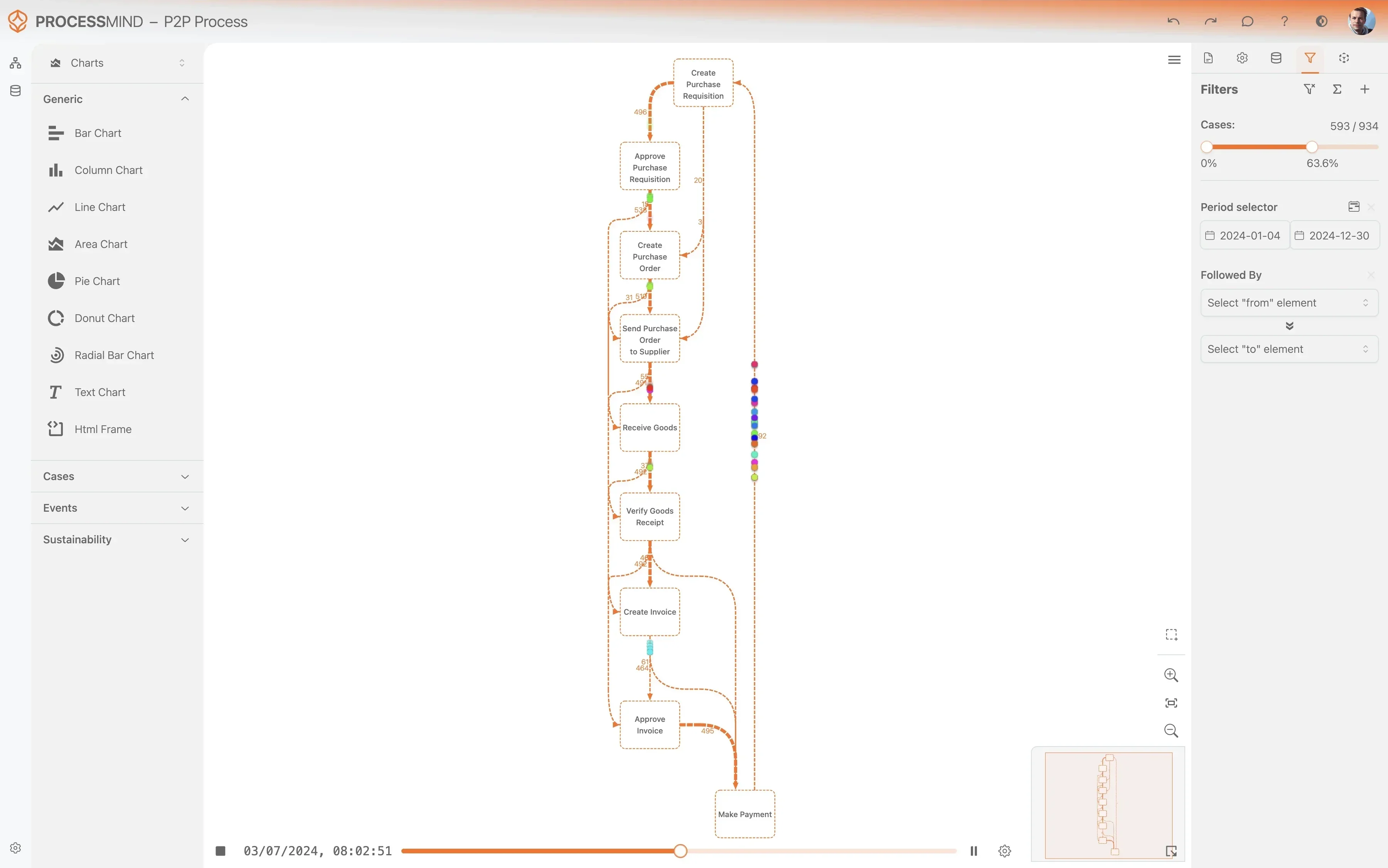
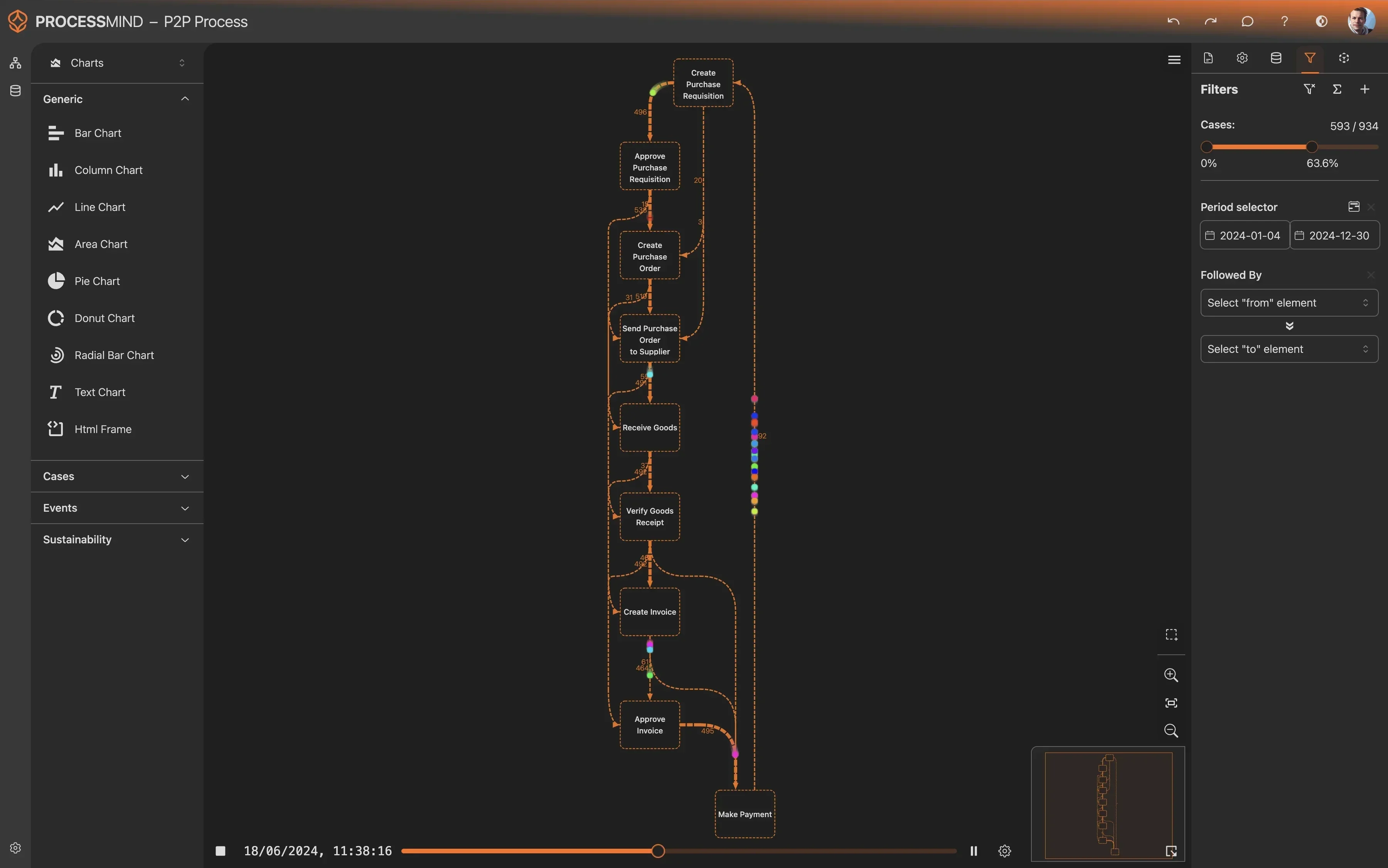
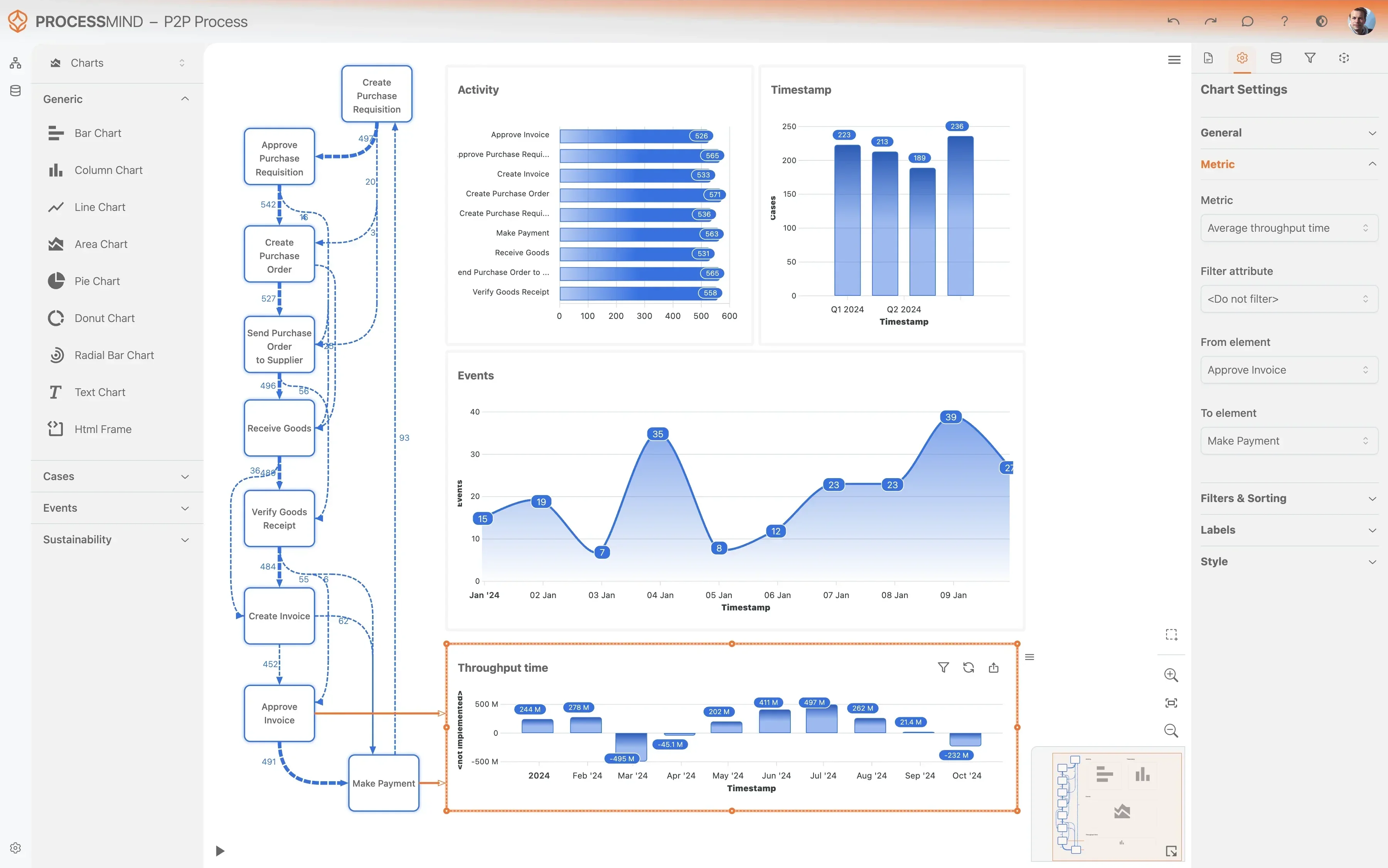
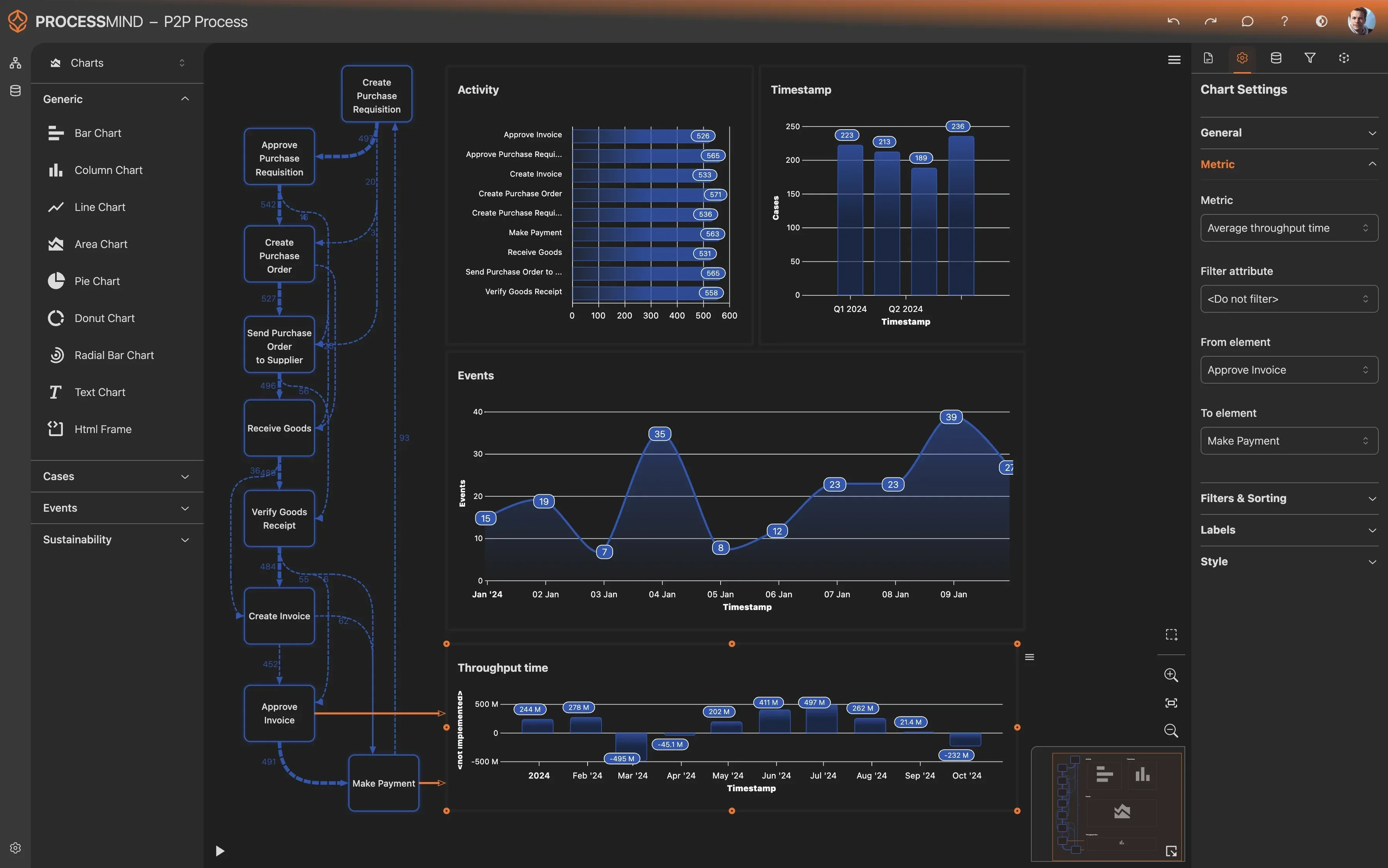
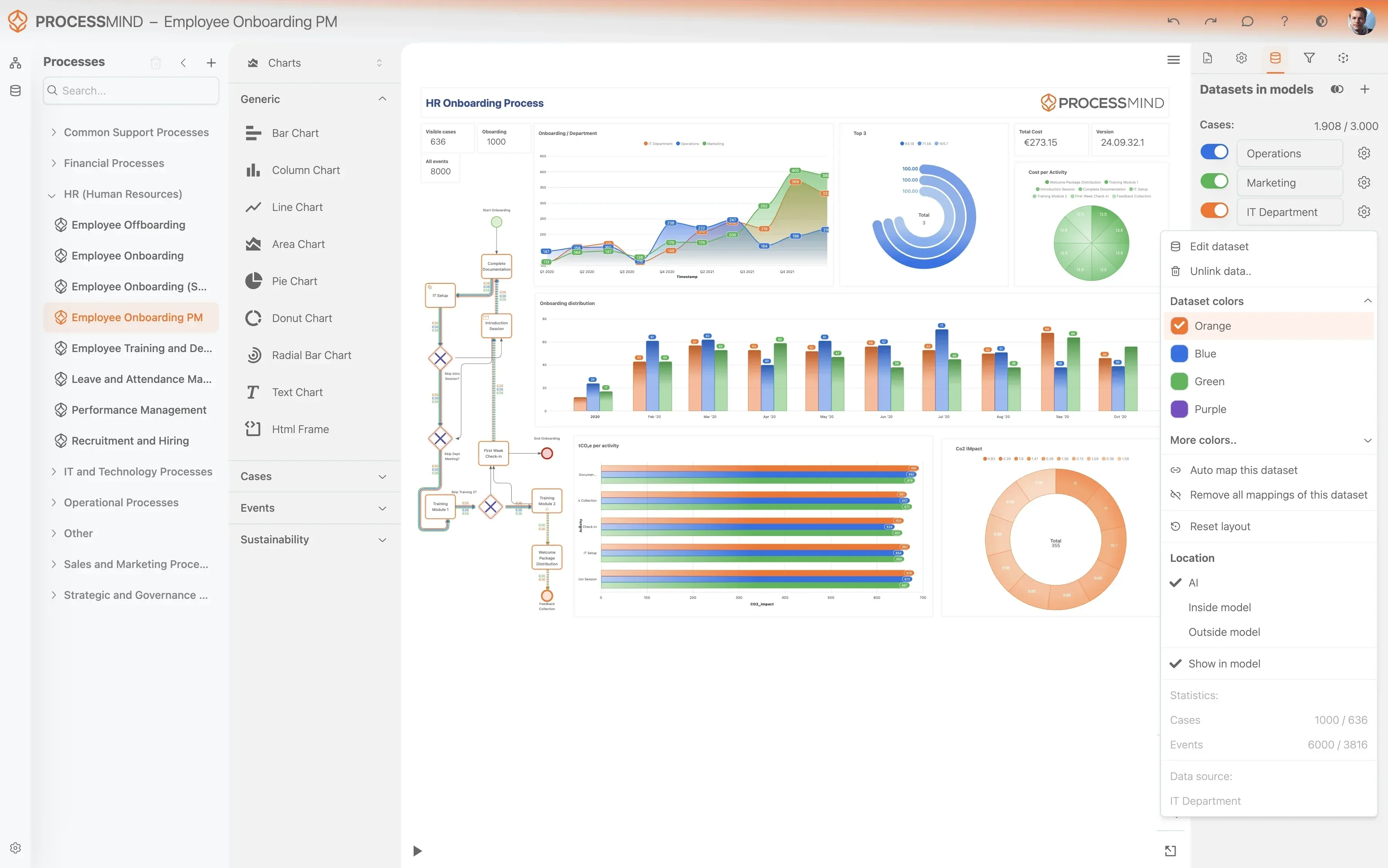
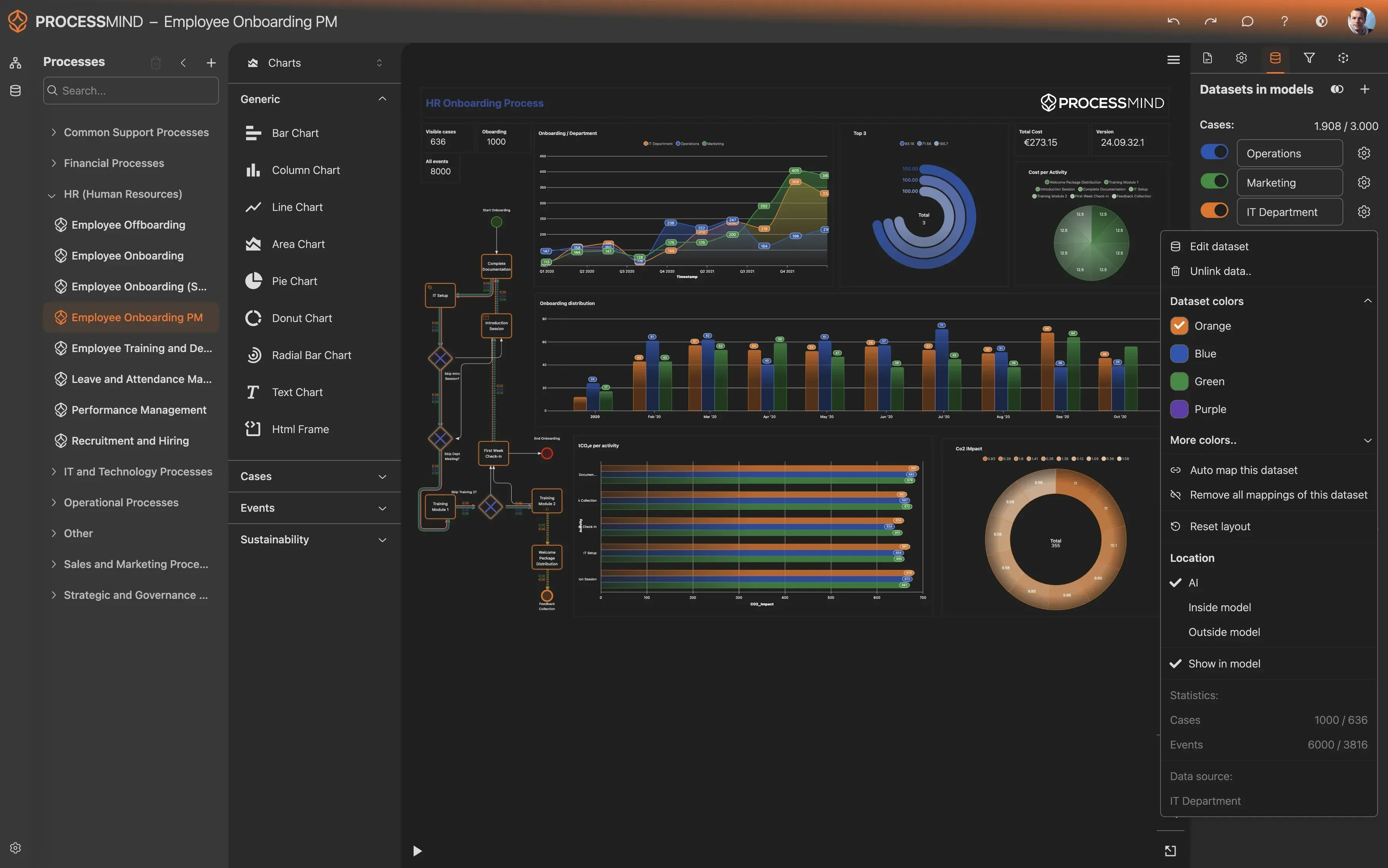
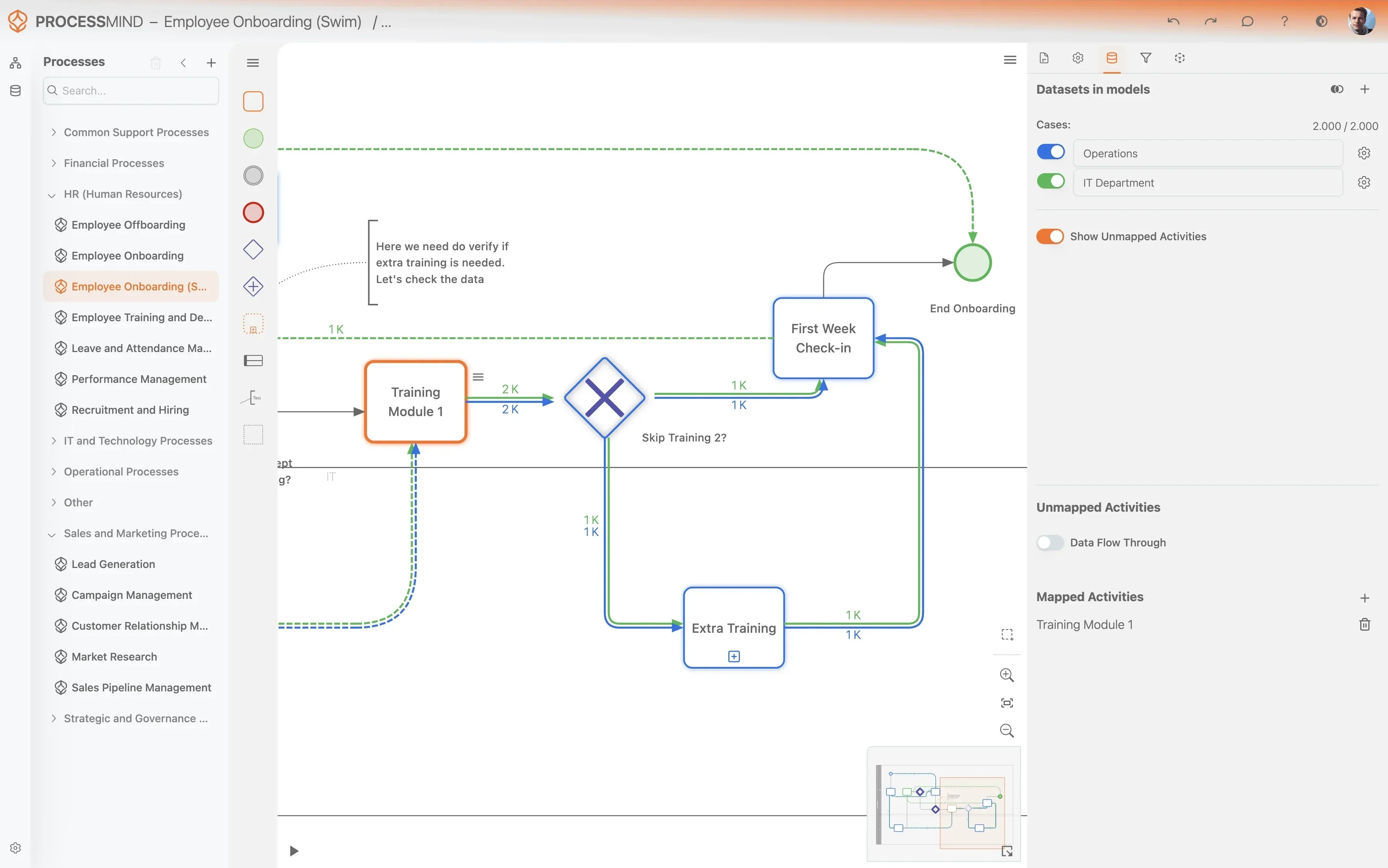
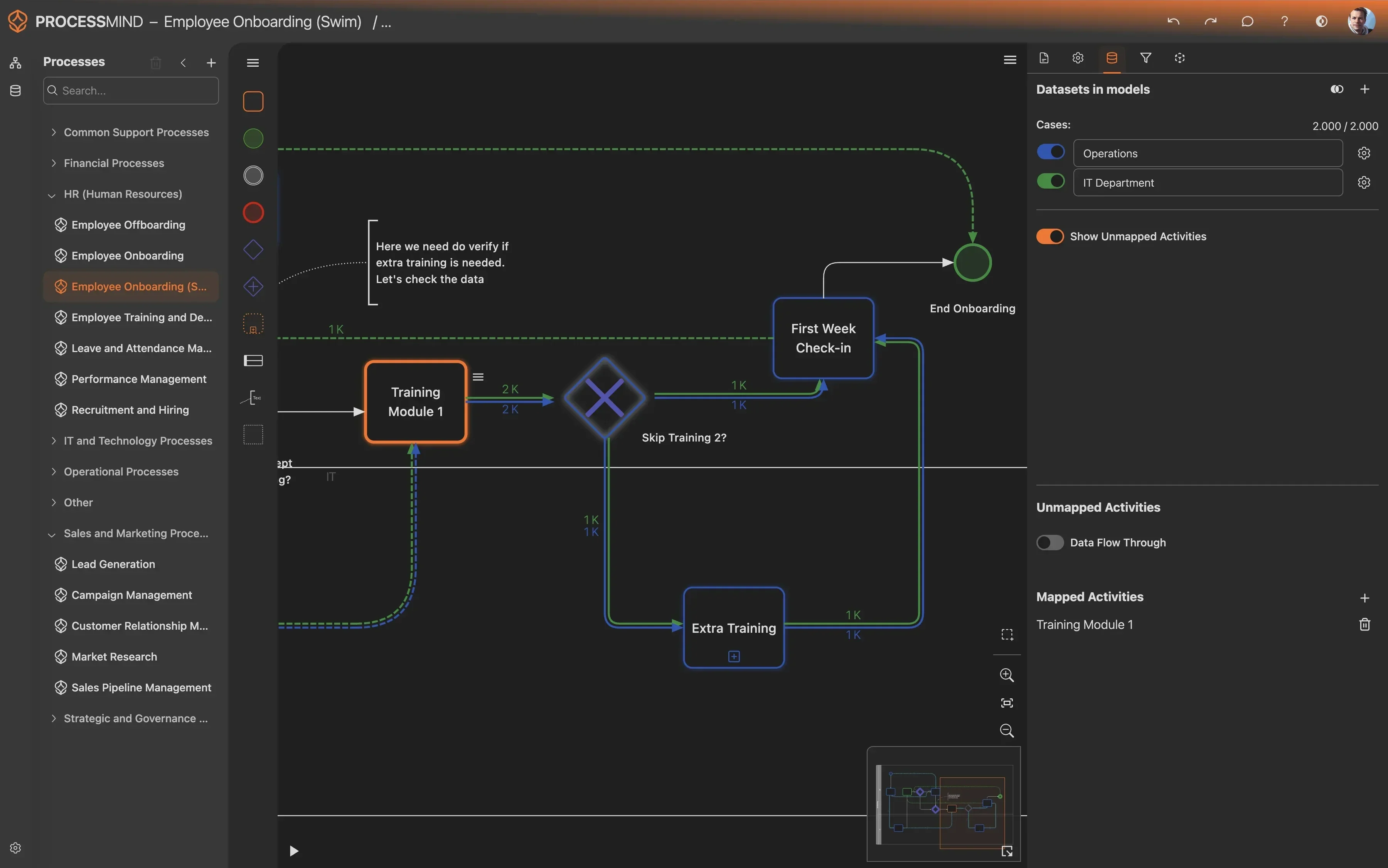
Uncover Period Close Bottlenecks in SAP S/4HANA
- Visualize actual R2R close process flows
- Pinpoint inefficiencies in reconciliation tasks
- Identify compliance risks and process deviations
- Reduce cycle times for faster financial reports
TYPICAL OUTCOMES
What Organizations Achieve in Record to Report
These outcomes represent the tangible improvements in efficiency, compliance, and speed that organizations typically achieve by applying process mining to their financial period data. We uncover bottlenecks and optimize reconciliation and close processes within SAP S/4HANA to drive these results.
Average reduction in period close time
Streamline your Record to Report process to significantly cut down the overall time it takes to complete financial period closes, improving operational efficiency.
Decrease in reconciliation rework activities
Identify and eliminate root causes of reconciliation errors, reducing the number of times reconciliations need to be re-initiated or adjusted, saving valuable time and resources.
Reduction in adjusting journal entries
By uncovering process inefficiencies that lead to errors, organizations can significantly lower the volume of manual adjusting journal entries, enhancing data quality and auditability.
Faster reconciliation approval cycles
Pinpoint bottlenecks in the approval workflow for reconciliations, leading to a substantial acceleration in the time required for review and final approval, speeding up the entire close process.
Improved adherence to standard procedures
Gain insight into process deviations and ensure your period close activities consistently follow established, optimized standard operating procedures, reducing risk and improving predictability.
Results vary based on process complexity and data quality. These figures represent typical improvements observed across implementations.
Recommended Data
FAQs
Frequently asked questions
Process mining uses actual event log data from your SAP S/4HANA system to reconstruct and visualize the entire Record to Report, Period Close, and Reconciliation process. This allows you to see exactly how your processes are executed in reality, revealing hidden inefficiencies, bottlenecks, and deviations from standard procedures.
Process mining helps tackle common challenges such as long financial close cycles, excessive reconciliation rework, and a lack of clear close progress visibility. It identifies root causes for bottlenecks in approvals, reduces adjusting journal entries, and helps standardize closing procedures across entities.
To start, we typically need event log data related to financial postings, reconciliations, journal entries, and approval workflows within SAP S/4HANA. Key data points include activity descriptions, timestamps, and case identifiers like the financial period.
After data extraction and initial setup, you can often see the first insights and process visualizations within a few weeks. The speed depends on data availability and complexity, but a pilot project can quickly highlight major areas for improvement.
The primary technical requirement involves secure access to your SAP S/4HANA system for data extraction, usually through standard connectors or APIs. No direct modifications to your SAP system are needed, as process mining tools operate on extracted historical data.
Yes, by visualizing the actual execution of closing activities across various entities, process mining can highlight inconsistencies and deviations. This objective insight enables you to identify best practices and enforce standardized procedures, reducing variations and improving compliance.
Process mining traces every step of the reconciliation approval workflow, recording timestamps for each activity. It then visualizes the paths and identifies where approvals are consistently delayed, highlighting specific users, teams, or system steps that cause bottlenecks.
The first step is usually a discovery workshop to understand your current R2R process, key challenges, and available data sources in SAP S/4HANA. This helps define the scope of the analysis and identify the most impactful areas to begin.
Optimize Your Record to Report Close & Reconciliation Today
Uncover inefficiencies and reduce your close cycle time by up to 30%.
No credit card required. Get started in minutes.