Improve Your Lead to Cash

Select a process
Choose a process to continue working in your connected workspace.
Optimize Lead to Cash in HubSpot CRM
Processes often contain hidden inefficiencies that lead to lost revenue and delayed payments. Our platform helps you meticulously track every step, pinpointing bottlenecks and areas for improvement. Discover how to streamline operations, enhance compliance, and unlock new levels of profitability.
Download our pre-configured data template and address common challenges to reach your efficiency goals. Follow our six-step improvement plan and consult the Data Template Guide to transform your operations.
Show detailed description
Why Optimize Your Lead to Cash Process?
The Lead to Cash process is the heartbeat of any revenue-generating organization, encompassing every step from initial customer interest to final payment collection. A streamlined Lead to Cash cycle is not just about efficiency, it is directly linked to improved cash flow, greater profitability, and enhanced customer satisfaction. However, in complex environments like HubSpot CRM, this critical process often harbors hidden inefficiencies. Siloed teams, manual handoffs, neglected leads, and delayed invoicing can lead to lost revenue opportunities, extended payment terms, and a suboptimal customer experience.
Failing to optimize your Lead to Cash process incurs significant costs. Slow sales cycles mean longer waits for revenue. Inefficient order fulfillment can damage customer relationships. Delayed invoicing and payment collection impact working capital. Without a clear, data-driven understanding of how leads actually convert into cash, organizations are left making decisions based on assumptions, missing crucial opportunities for improvement. Understanding how to improve Lead to Cash performance is therefore paramount for sustainable business growth.
How Process Mining Unlocks Lead to Cash Insights in HubSpot CRM
Process mining offers a revolutionary approach to understanding and optimizing your Lead to Cash journey within HubSpot CRM. Unlike traditional business intelligence or manual audits, process mining uses the event logs generated by your HubSpot activities, such as changes in deal stages, quote creations, contact updates, and payment status registrations, to reconstruct the actual end-to-end process flow. This provides an unbiased, objective visualization of every customer journey, highlighting every step, deviation, and delay.
By applying process mining to your HubSpot CRM data, you can move beyond anecdotal evidence and gain a precise, fact-based understanding of your sales and billing operations. You can accurately measure cycle times for each stage, identify common process variants, detect rework loops, and pinpoint specific bottlenecks that impede progress. This data-driven perspective empowers you to answer critical questions: Where do sales opportunities get stuck? Which handoffs cause delays? Are we adhering to our defined sales and billing procedures? This powerful analytical capability is key for how to reduce Lead to Cash cycle time and boost overall efficiency.
Key Areas for Lead to Cash Improvement
Process mining for Lead to Cash in HubSpot CRM typically uncovers several critical areas ripe for optimization:
- Sales Cycle Efficiency: Identify prolonged stages in your sales pipeline, excessive back-and-forth communication, or bottlenecks between initial customer contact and a signed contract. For example, discover why proposals take longer to be accepted for certain product categories or sales representatives.
- Lead Conversion and Qualification: Pinpoint where leads drop out of the process or spend too much time in qualification. Understand if your lead scoring and routing within HubSpot CRM are effectively preparing sales opportunities for conversion.
- Order-to-Invoice Handoff: Analyze the transition from a closed deal to order fulfillment and invoice generation. Delays here can significantly impact revenue realization. Process mining can reveal if delays stem from data entry errors, approval processes, or integration issues between HubSpot and other systems.
- Payment Collection Speed: Examine the time taken from invoice issuance to payment receipt. This insight helps identify factors contributing to slow payments and enables proactive measures to improve cash flow.
- Process Compliance and Rework: Detect deviations from your ideal Lead to Cash flow, such as skipped steps or unauthorized shortcuts. Identify instances of rework, like re-issuing quotes, which indicate underlying inefficiencies or quality issues.
Measurable Outcomes of Process Optimization
Optimizing your Lead to Cash process with process mining in HubSpot CRM delivers tangible, measurable benefits:
- Reduced Lead to Cash Cycle Time: Accelerate the entire customer journey, from lead capture to payment, leading to faster revenue realization and improved cash flow.
- Increased Sales Conversion Rates: Identify and eliminate friction points that cause leads or opportunities to stall, leading to more successful deal closures.
- Lower Operational Costs: Streamline workflows, reduce manual effort, and minimize rework, allowing your teams to operate more efficiently.
- Enhanced Customer Experience: Provide a smoother, more predictable customer journey, fostering greater satisfaction and loyalty.
- Improved Process Compliance: Ensure adherence to internal policies and regulatory requirements, mitigating risks and increasing operational integrity.
These improvements translate directly into a healthier bottom line and a stronger competitive position, showcasing the true power of data-driven process optimization.
Getting Started with Your Lead to Cash Improvement Journey
Embarking on a journey to optimize your Lead to Cash process in HubSpot CRM doesn't require extensive technical knowledge. By leveraging a dedicated process mining approach, you gain the clarity and insights needed to make informed, data-driven decisions. This empowers you to transform your sales and finance operations, turning potential into realized revenue faster and more consistently. Explore how process mining can illuminate your path to peak Lead to Cash efficiency and unlock new levels of profitability.
The 6-Step Improvement Path for Lead to Cash
Download the Template
What to do
Access the pre-built Excel data extraction template designed specifically for Lead to Cash processes. This template provides the structure for your HubSpot CRM data.
Why it matters
Using the correct data structure from the start ensures accurate and complete process analysis, preventing issues later in your improvement journey.
Expected outcome
A ready-to-use data template tailored for Lead to Cash insights from HubSpot CRM.
Export Your Data
What to do
Extract 3-6 months of historical data for Contacts, Companies, Deals, and Quotes directly from your HubSpot CRM. Populate the downloaded template with this real data.
Why it matters
Comprehensive historical data is crucial for identifying recurring bottlenecks and understanding the true performance of your Lead to Cash cycle.
Expected outcome
A populated data template with actual HubSpot CRM Lead to Cash event logs, ready for upload.
Upload Your Dataset
What to do
Securely upload your completed data template to the ProcessMind platform. The system will automatically process and prepare your Lead to Cash data for analysis.
Why it matters
Effortless data ingestion ensures you spend less time on preparation and more time on gaining insights, accelerating your improvement efforts.
Expected outcome
Your HubSpot CRM Lead to Cash data securely processed and ready for automated process discovery.
Analyze Your Process
What to do
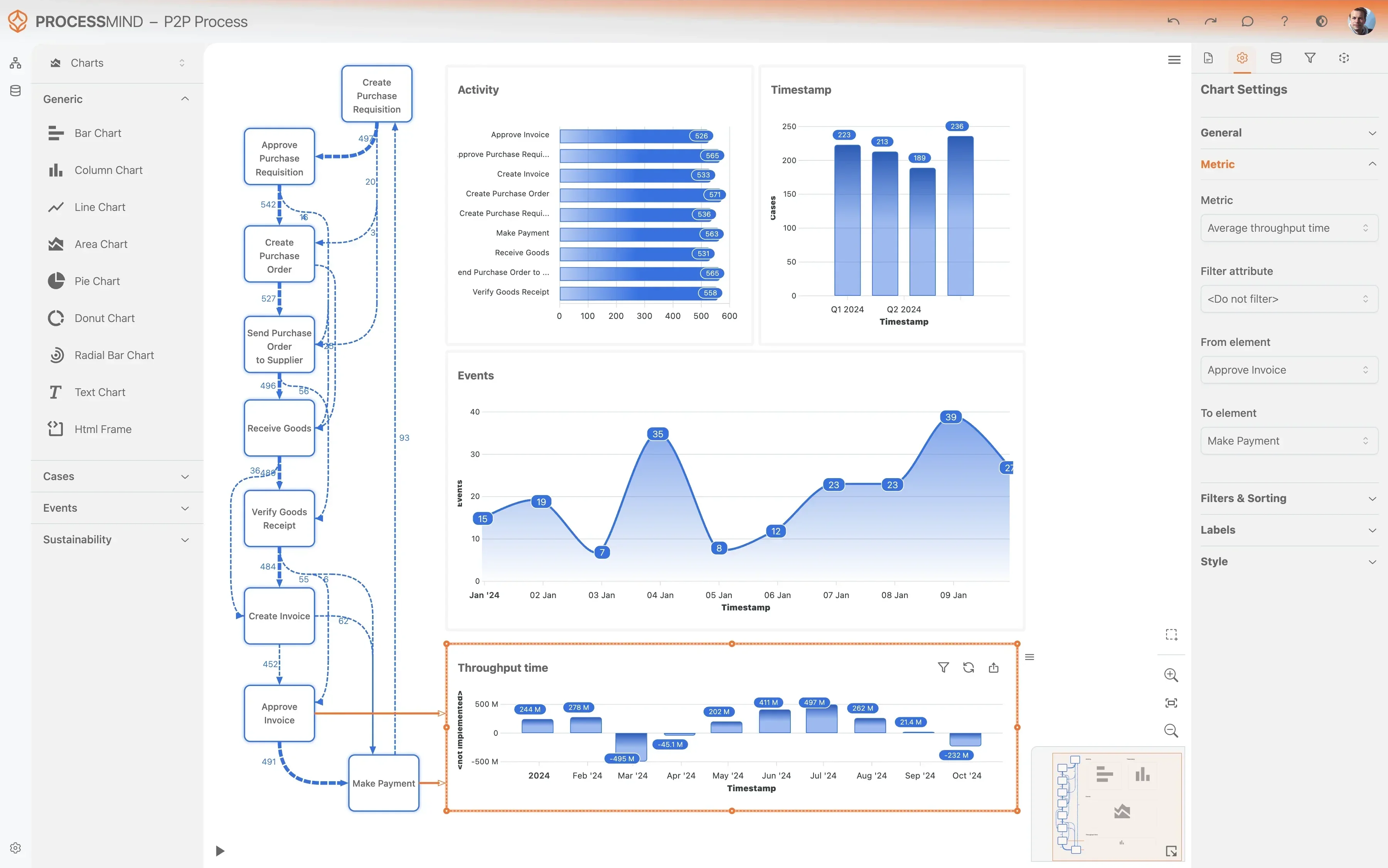
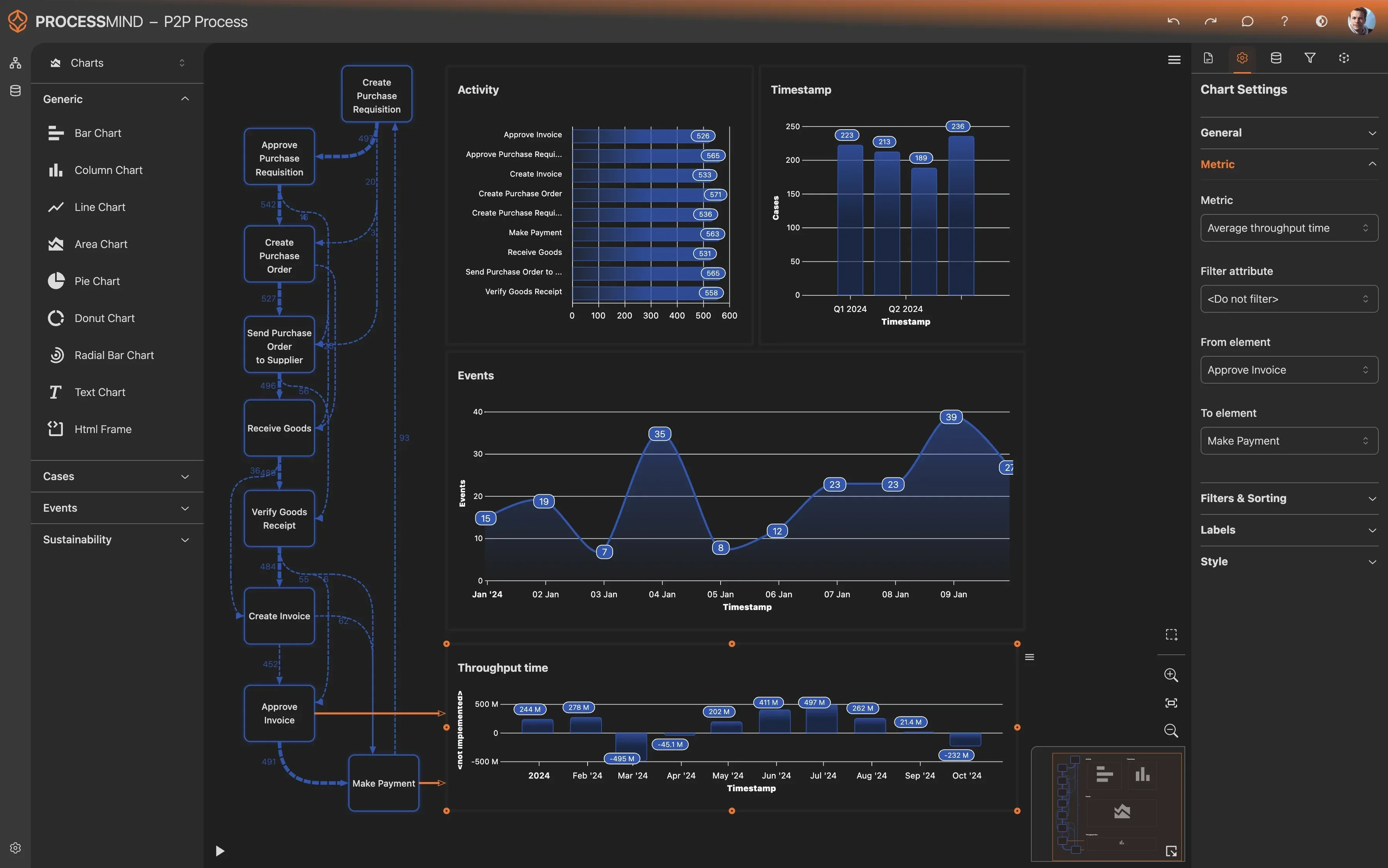
Explore the auto-generated process maps and performance dashboards to visualize your Lead to Cash flow. Review AI-driven recommendations for optimization.
Why it matters
Uncover hidden inefficiencies, compliance gaps, and automation opportunities within your HubSpot CRM-driven Lead to Cash process. Gain actionable insights.
Expected outcome
A clear understanding of Lead to Cash bottlenecks, variations, and AI-powered recommendations for improvements.
Implement Improvements
What to do
Prioritize the identified optimization opportunities and implement changes within your HubSpot CRM workflows, sales stages, and team procedures.
Why it matters
Translating insights into action directly improves sales cycle efficiency, customer satisfaction, and overall revenue realization from your leads.
Expected outcome
Optimized Lead to Cash processes with specific changes deployed in HubSpot CRM and team operations.
Monitor Your Process
What to do
Periodically re-upload fresh Lead to Cash data from HubSpot CRM to track the impact of your changes. Continuously measure KPI improvements over time.
Why it matters
Sustained monitoring ensures long-term process health and allows for continuous adaptation, maintaining optimal Lead to Cash performance and compliance.
Expected outcome
Ongoing visibility into Lead to Cash performance, ensuring sustained efficiency and a data-driven approach to process evolution.
WHAT YOU WILL GET
Uncover Your HubSpot Lead to Cash Secrets
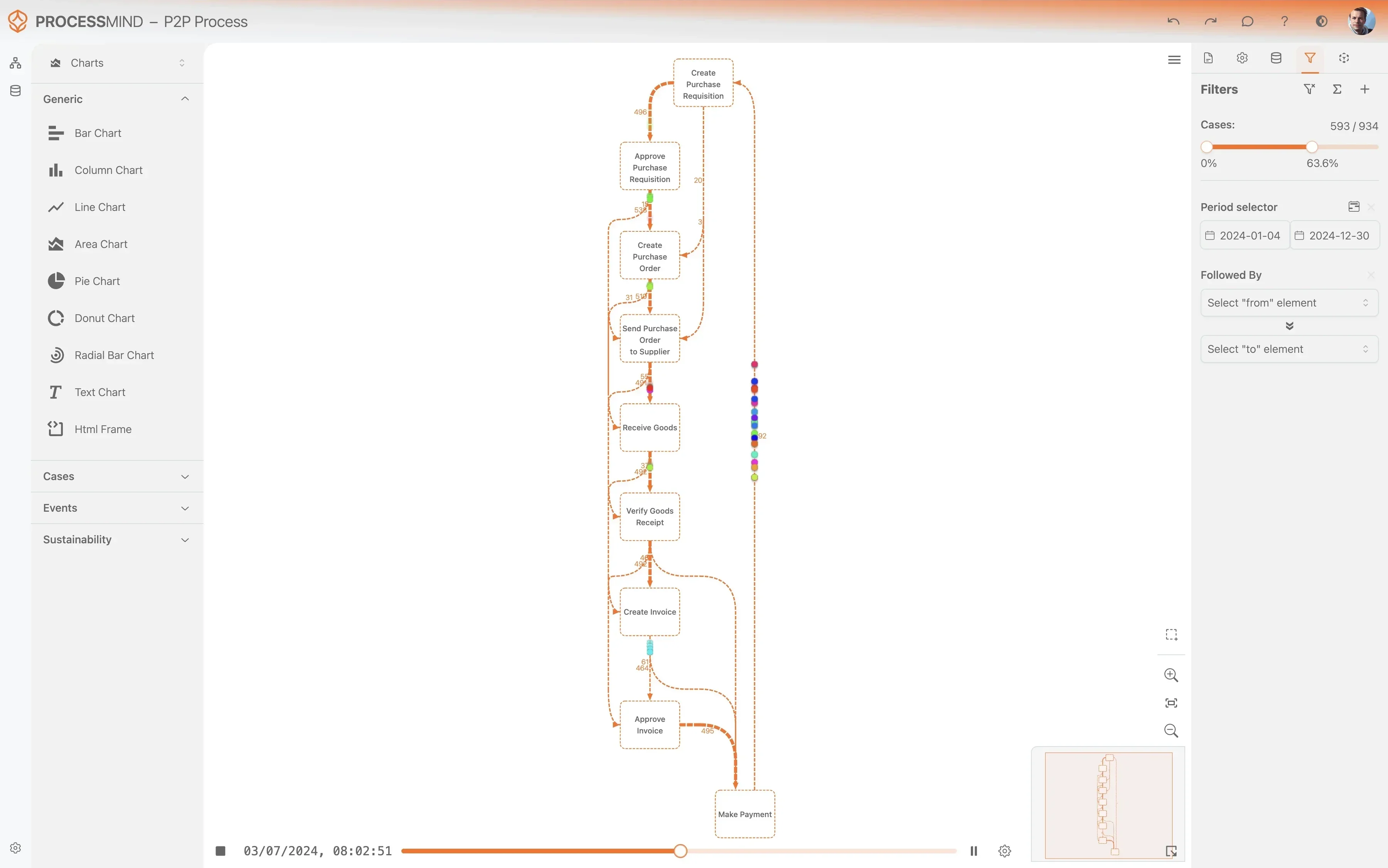
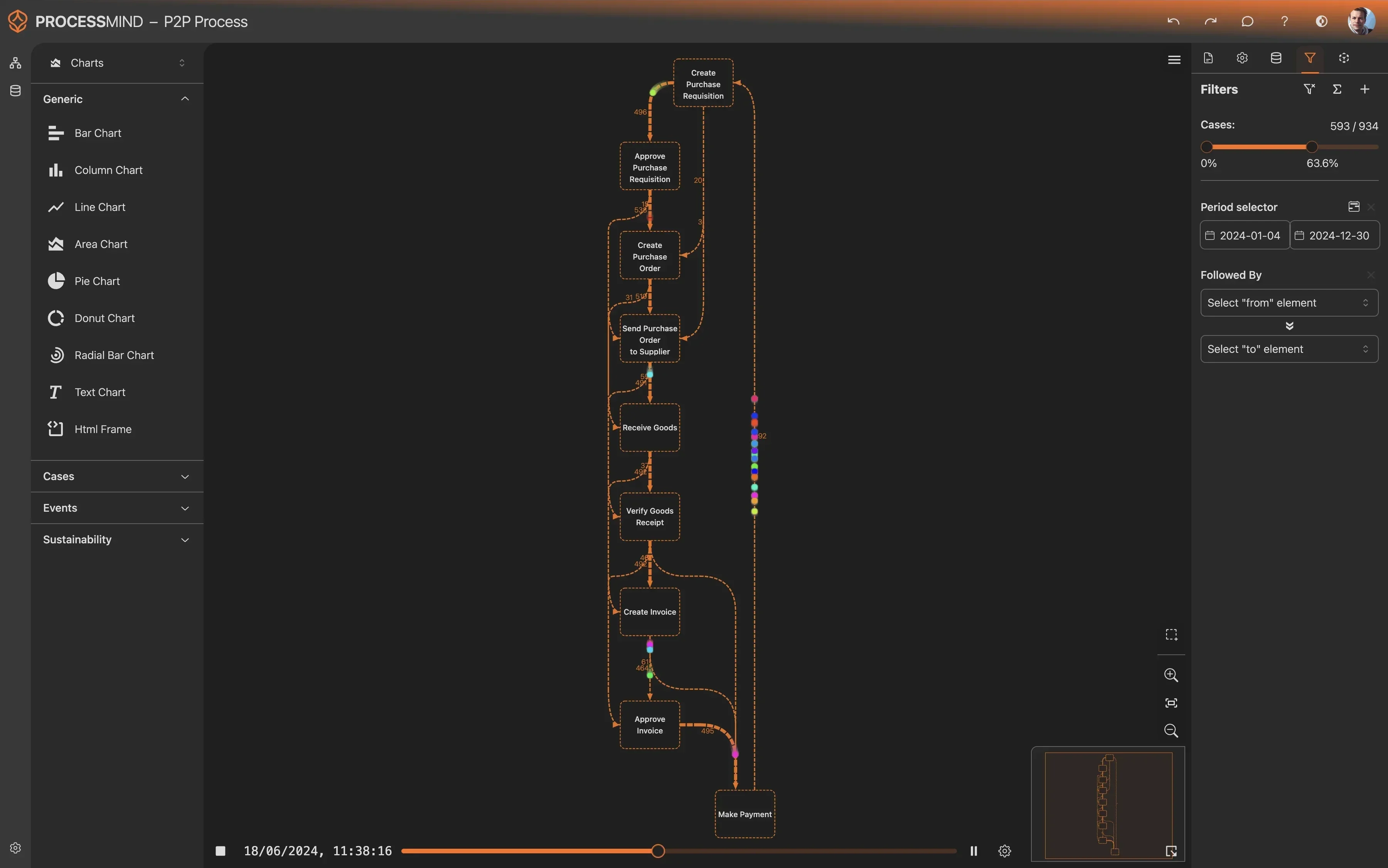
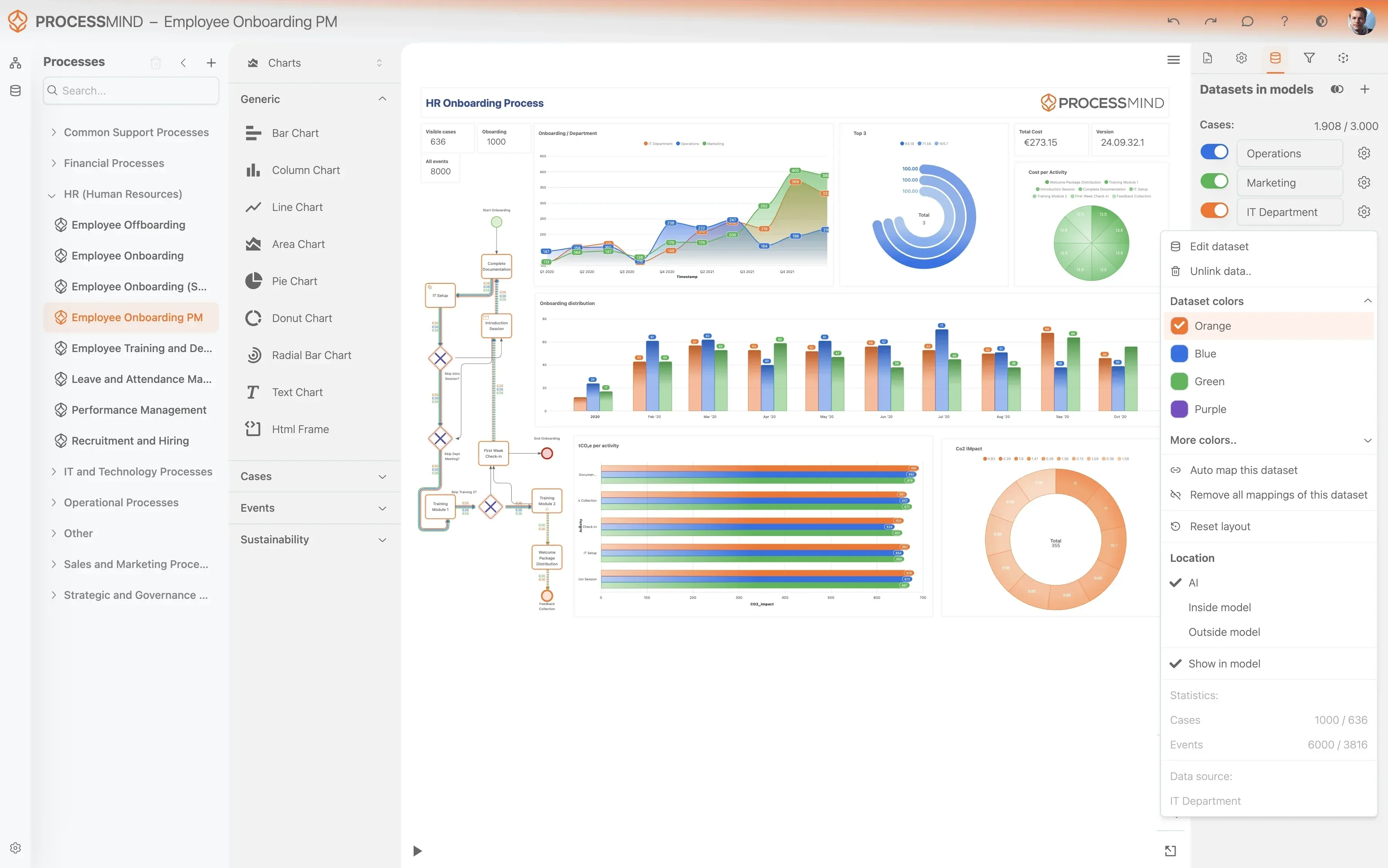
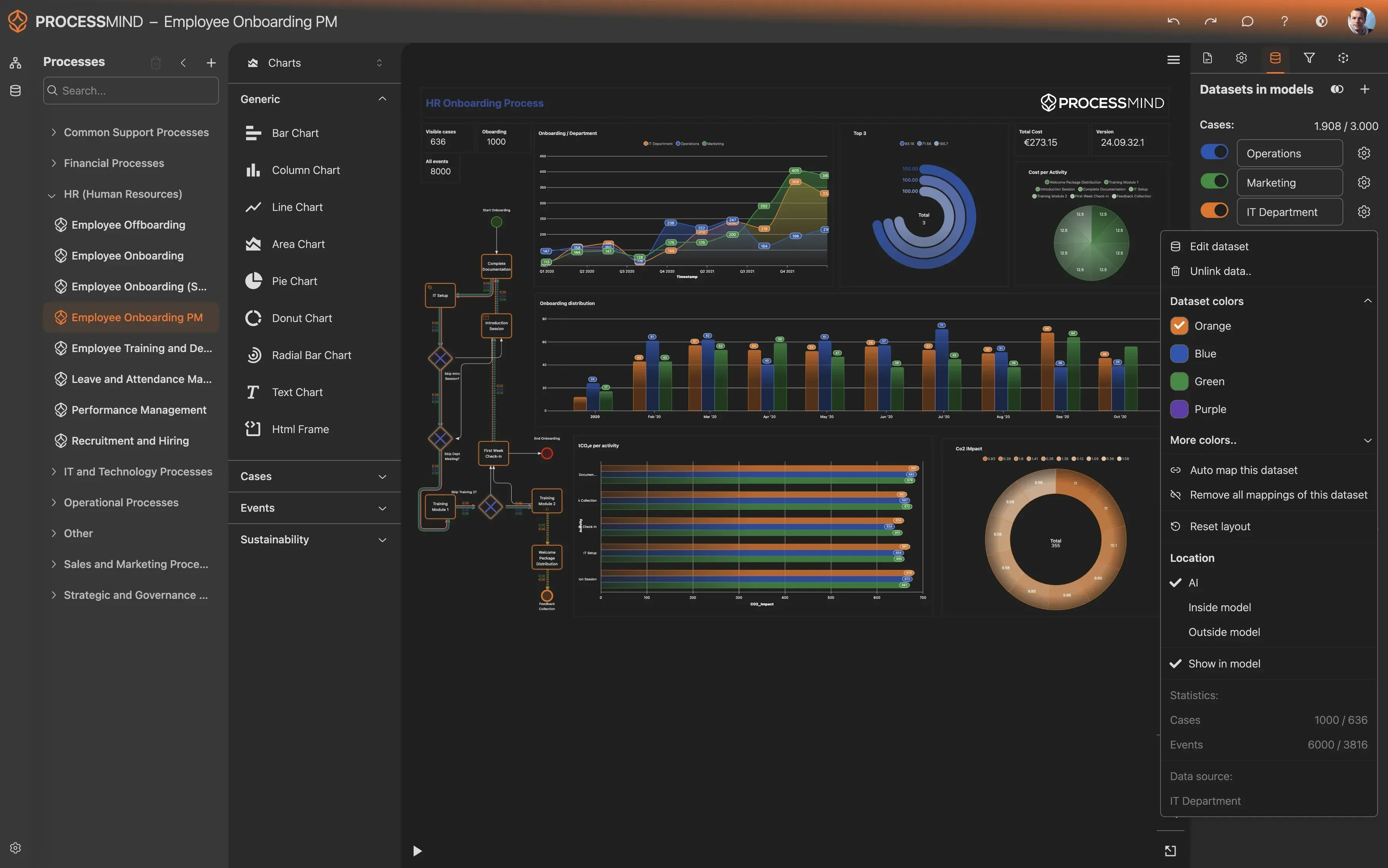
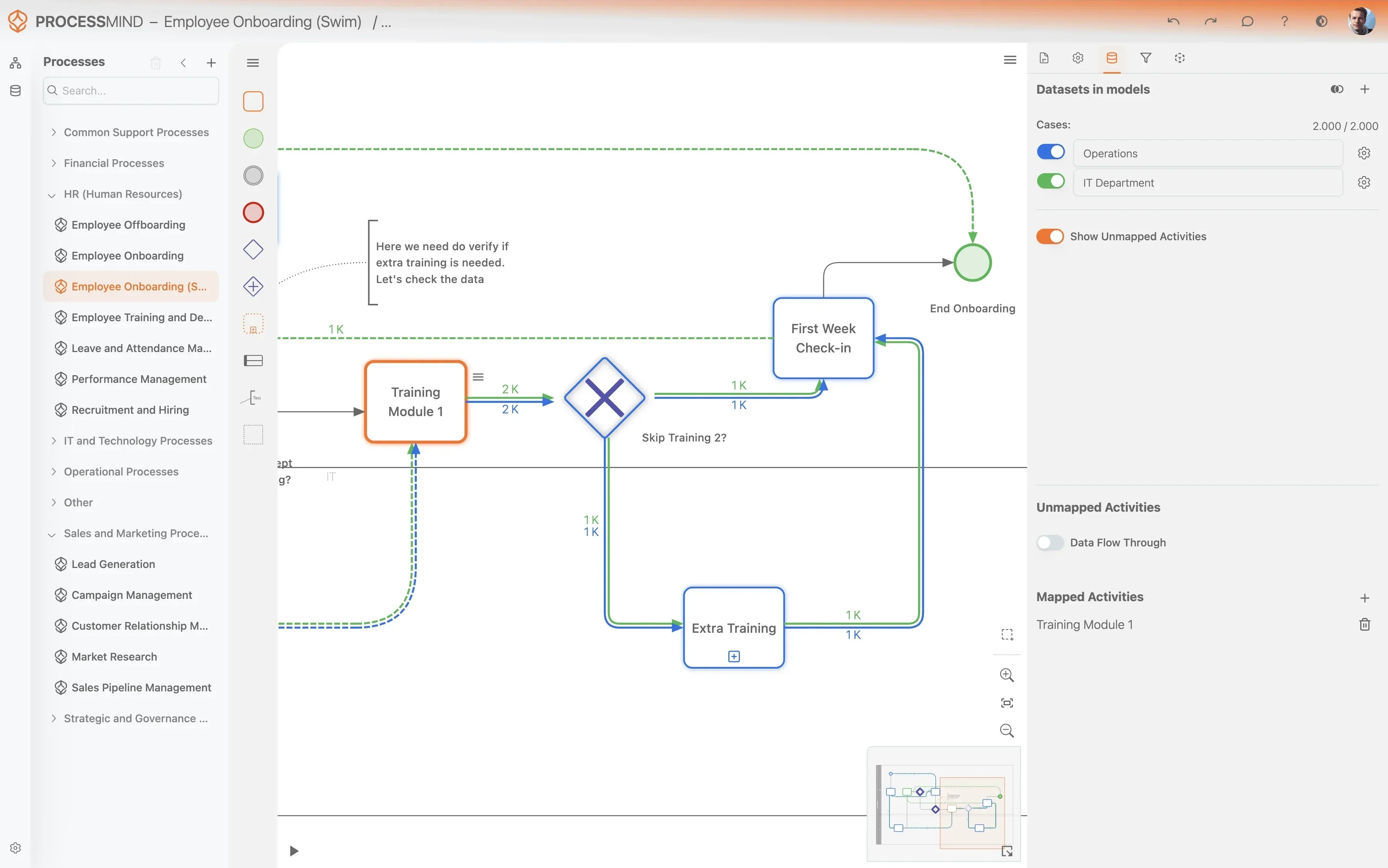
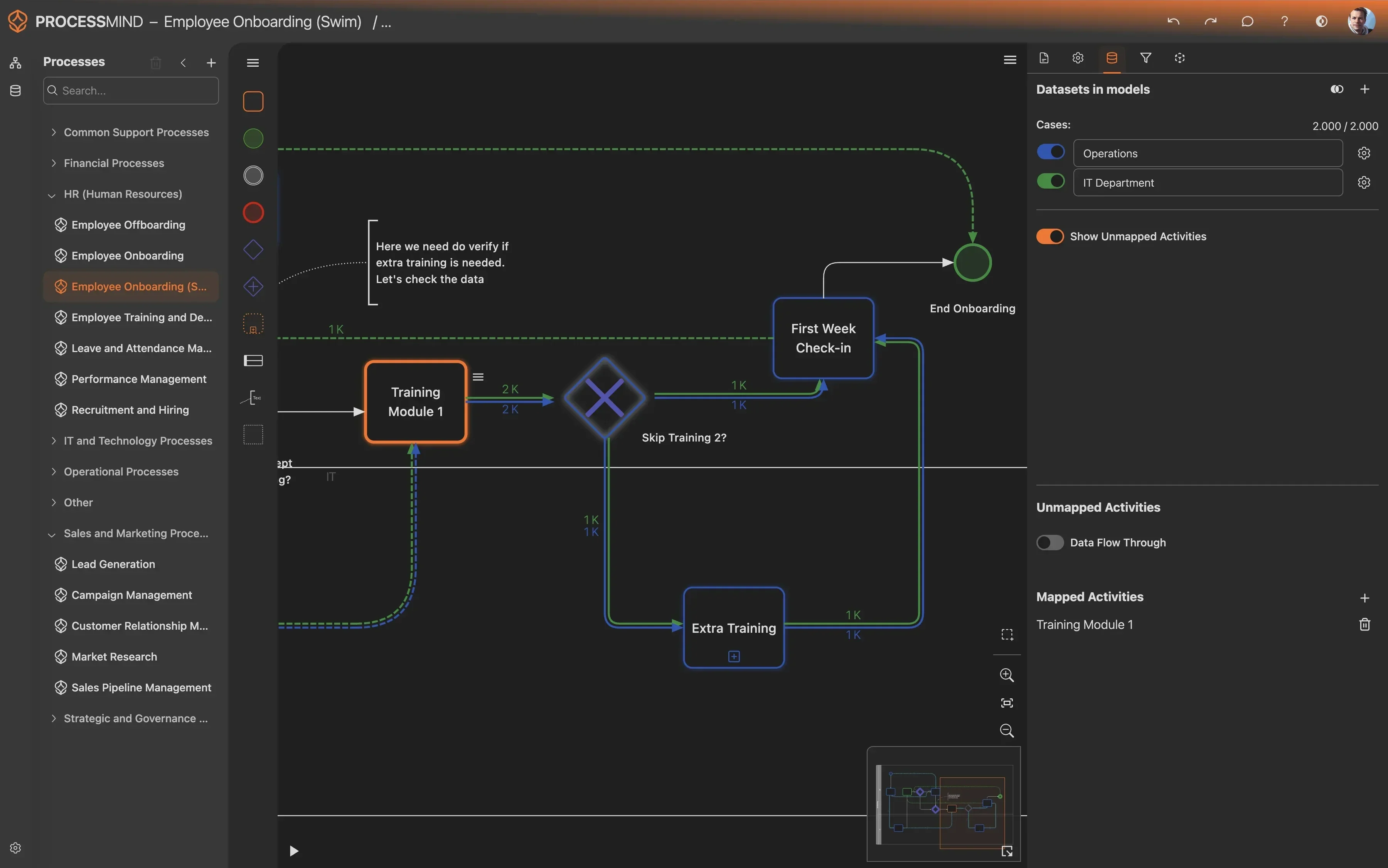
- Visualize real Lead to Cash flow in HubSpot
- Pinpoint bottlenecks from lead to payment
- Identify process deviations and rework
- Optimize revenue cycle and compliance
TYPICAL OUTCOMES
Elevating Your Lead to Cash Process
Organizations leveraging process mining for their Lead to Cash cycle in HubSpot CRM often see significant improvements by identifying and eliminating bottlenecks in sales opportunity progression, order fulfillment, and invoicing. These results highlight the impact of data-driven insights on operational efficiency and revenue acceleration.
Average reduction in end-to-end time
Identify and eliminate bottlenecks in the Lead to Cash process, leading to a significant reduction in the average time it takes to close a sale. This accelerates revenue generation and improves overall efficiency.
Increase in qualified opportunities
Pinpoint where leads drop off or get stuck in the qualification process, allowing for targeted improvements that convert more leads into genuine sales opportunities.
Reduction in invoice payment time
Streamline the invoicing and payment collection process by identifying delays and inefficiencies, ensuring faster receipt of payments and improved working capital.
Increase in standard process adherence
Gain full visibility into sales process deviations, enabling enforcement of standard operating procedures and reducing risks associated with non-compliant sales activities.
Decrease in operational costs
Eliminate redundant steps, manual efforts, and rework within the sales process, leading to significant cost savings in sales operations.
Shorter quote-to-contract cycle time
Optimize the negotiation and contracting phases by identifying bottlenecks and eliminating delays, leading to quicker contract signing and revenue recognition.
Results vary based on the specific complexities of your Lead to Cash process, data quality within HubSpot CRM, and the scope of implementation. The figures presented illustrate typical improvements observed across various deployments.
Recommended Data
FAQs
Frequently asked questions
Process mining visualizes the actual flow of your Lead to Cash journey, revealing bottlenecks, deviations, and inefficiencies within HubSpot. It can pinpoint exactly where sales cycles stall, identify root causes for low conversion rates, and highlight non-compliant process steps. This visibility helps you understand the true operational reality, not just what is documented.
You primarily need event logs detailing activities and their timestamps related to sales opportunities, contacts, and deals. Key fields include a case identifier, typically the sales opportunity ID, an activity name, such as "Opportunity Stage Change" or "Quote Sent," and a precise timestamp for each activity. Additional attributes like sales rep, region, or deal value can enrich the analysis.
Data can typically be extracted from HubSpot using its reporting tools, APIs, or integration platforms. You'll need to identify relevant objects like Deals, Companies, and Contacts, and their associated activities and properties. The goal is to create a structured event log, which can often be exported as a CSV or accessed directly via an API for automated ingestion.
Expected outcomes include accelerating sales cycle completion, boosting lead-to-opportunity conversion rates, and reducing payment collection times. You can also achieve greater sales process compliance, optimize discounting strategies, and standardize regional sales workflows. Ultimately, process mining aims to lower sales operations costs and improve revenue recognition timelines.
The initial data extraction and model setup can range from a few days to a couple of weeks, depending on data complexity and availability. Once the data is prepared, initial insights, like a visualized process map and immediate bottleneck identification, can often be generated within a few hours. Comprehensive analysis and actionable recommendations typically follow within a few weeks.
Process mining is primarily an analytical tool and operates by consuming data from your HubSpot CRM, not by interacting with it live. Therefore, it does not disrupt daily operations or require changes to your existing HubSpot setup. The impact is minimal, mainly limited to the initial data extraction process which can often be automated.
Yes, absolutely. Process mining can trace the exact paths leads take and identify common points where they drop off before converting to opportunities. For payment delays, it can highlight stages in the cash collection process that consistently experience longer durations or deviations from the standard path. This granular visibility helps pinpoint specific inefficiencies.
You will need some understanding of your HubSpot CRM data structure and how to access its data. Familiarity with data extraction methods, like using APIs or reporting tools, is beneficial. While process mining software often provides user-friendly interfaces, basic data manipulation skills, for example, in SQL or a scripting language, can be helpful for data preparation.
While cleaner data yields more accurate insights, process mining can still be effective even with imperfect data. The initial analysis often highlights data quality issues themselves, acting as an additional benefit. Tools exist to cleanse and transform data during the ingestion phase, and starting with a clear case ID, activity, and timestamp is often sufficient to begin discovering process flows.
Unlock 20% More Wins: Master Lead to Cash Now
Eliminate long sales cycles and boost your win rate by 20% with our platform.
No credit card required. Setup in 5 minutes.