Improve Your Revenue Cycle Management

Select a process
Choose a process to continue working in your connected workspace.
Optimize Optum360 Revenue Cycle Management for Better Performance
Effectively managing complex processes often leads to hidden inefficiencies and missed opportunities. Our platform helps you uncover bottlenecks, identify compliance risks, and streamline operations. This ensures faster payments, improved cash flow, and overall financial health.
Download our pre-configured data template and address common challenges to reach your efficiency goals. Follow our six-step improvement plan and consult the Data Template Guide to transform your operations.
Show detailed description
Why Optimize Your Revenue Cycle Management?
Revenue Cycle Management, or RCM, stands as the lifeblood of any healthcare organization, directly impacting its financial health and ability to deliver quality patient care. In an increasingly complex healthcare landscape, effective RCM ensures timely and accurate reimbursement for services rendered, manages cash flow, and maintains compliance with evolving regulations. However, even with robust systems like Optum360, inherent process inefficiencies can silently erode profits and operational efficiency. The cost of an inefficient RCM process is substantial, manifesting as delayed payments, increased claim denials, extensive manual rework, higher administrative overhead, and potential compliance risks. These challenges not only strain financial resources but can also detract from the patient experience through billing inaccuracies or protracted dispute resolutions. Optimizing your RCM is not just about financial gain, it is about creating a resilient, compliant, and patient-centric operation.
How Process Mining Transforms Revenue Cycle Management in Optum360
Process mining offers an unparalleled lens into the actual execution of your Revenue Cycle Management within and around Optum360. By extracting event log data, which meticulously records every step and timestamp of a billing event, process mining reconstructs the complete, end-to-end journey. This method moves beyond assumptions or ideal process models, revealing precisely how work flows from initial service delivery and charge capture through final payment and account closure. You gain complete visibility into hidden paths, rework loops, and deviations from standard operating procedures that often remain invisible in traditional reporting.
Specifically, process mining tools can pinpoint exact stages where billing events get stuck, causing significant delays. For instance, you can identify if
The 6-Step Improvement Path for Revenue Cycle Management
Download the Template
What to do
Access the pre-configured Excel template for Optum360 Revenue Cycle Management data. This template defines the structure needed for effective process analysis.
Why it matters
A standardized data structure ensures accurate and consistent data input, laying the foundation for reliable insights and reducing potential errors.
Expected outcome
A ready-to-use Excel template with the correct column headers for your Optum360 RCM data.
Export Your Optum360 Data
What to do
Extract 3-6 months of historical billing event data from your Optum360 system, then populate the downloaded template with this real-world information.
Why it matters
Using recent, comprehensive data provides a true picture of your current RCM process performance, highlighting actual bottlenecks and inefficiencies.
Expected outcome
A completed Excel template populated with your historical Revenue Cycle Management data from Optum360.
Upload Your Dataset
What to do
Securely upload your populated data template to ProcessMind. The system will automatically begin processing your Optum360 RCM data for analysis.
Why it matters
Effortless data ingestion initiates the analytical phase quickly, transforming raw data into actionable process intelligence without manual setup.
Expected outcome
Your Optum360 Revenue Cycle Management data successfully uploaded and undergoing automated analysis.
Analyze Your RCM Process
What to do
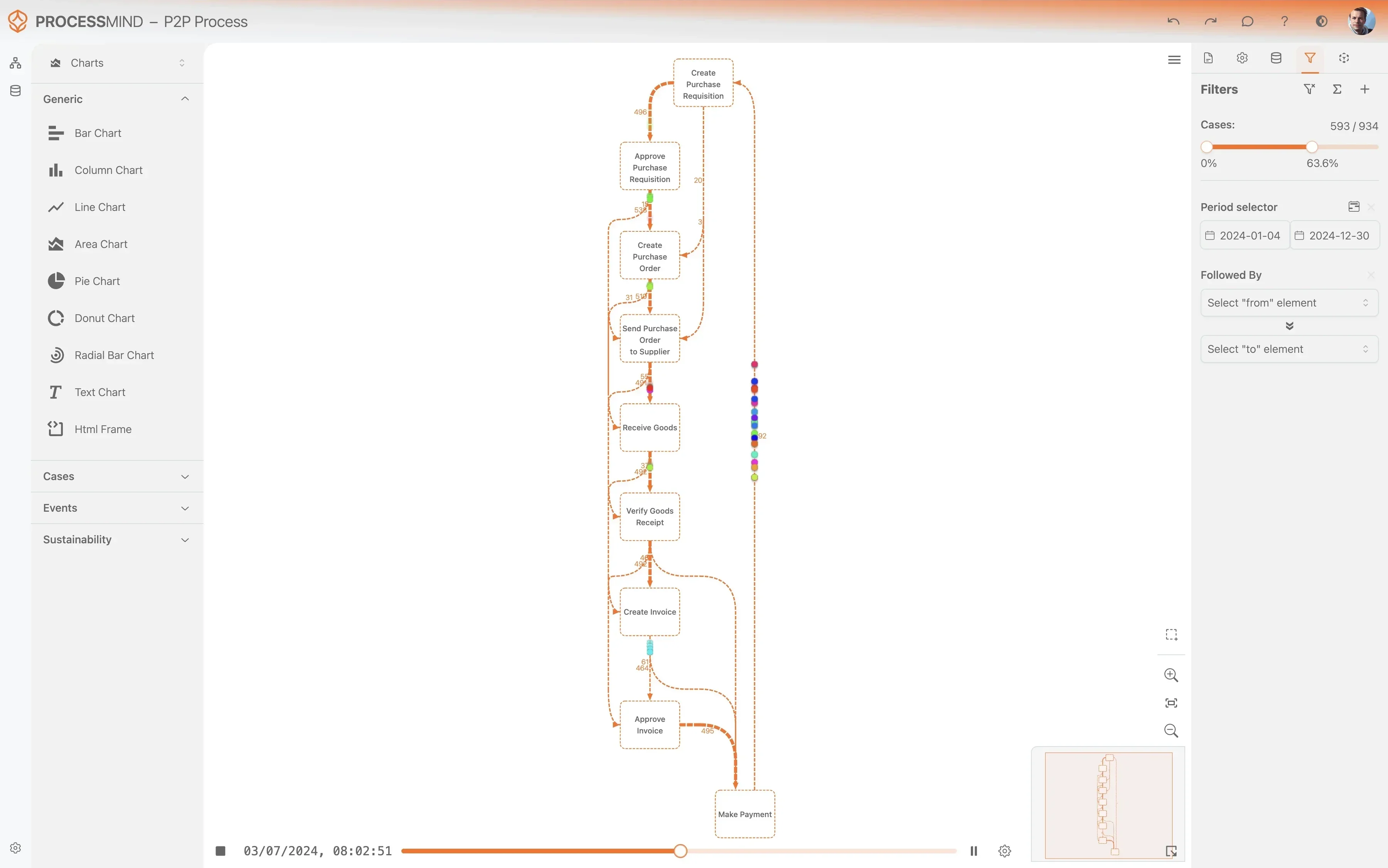
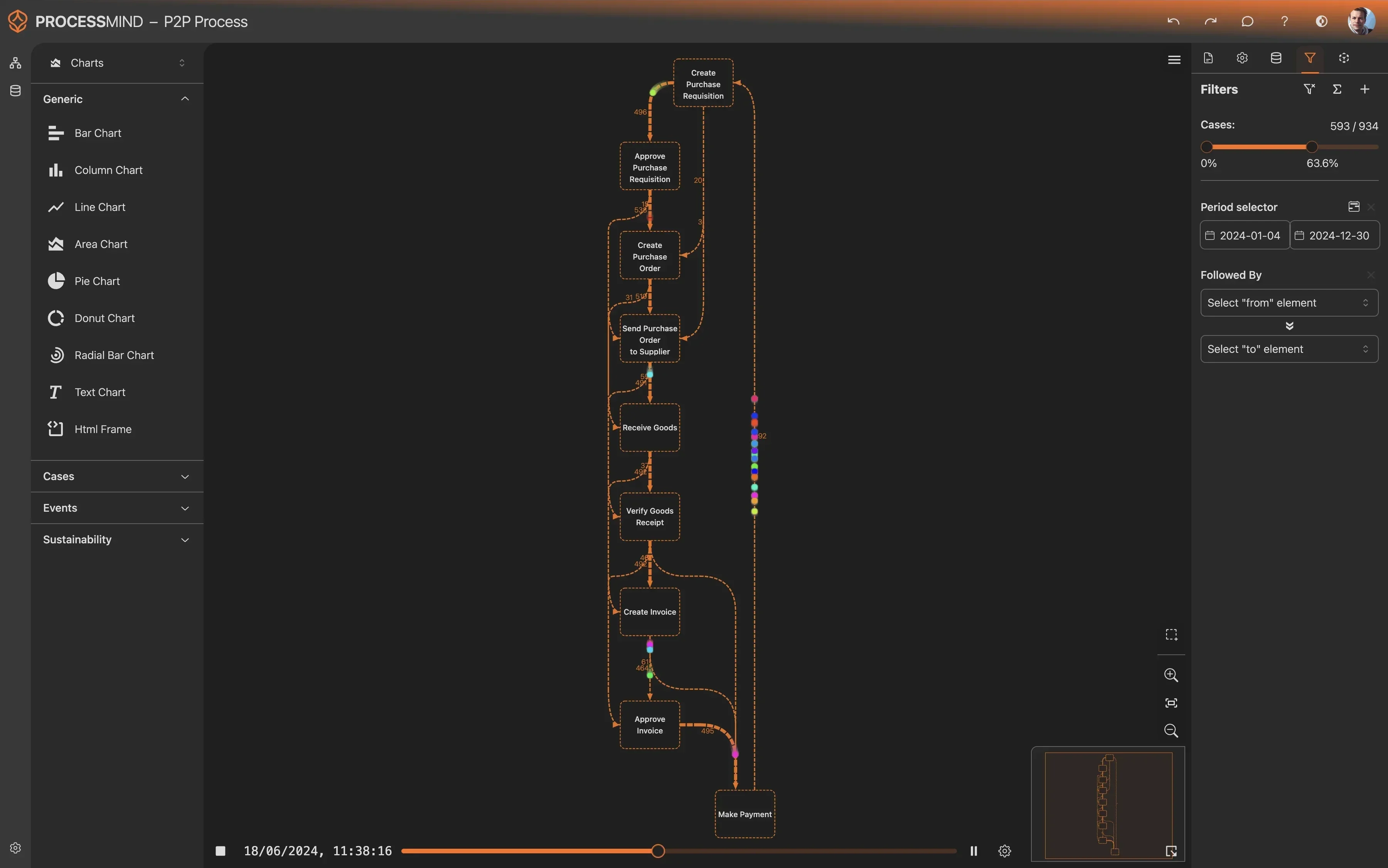
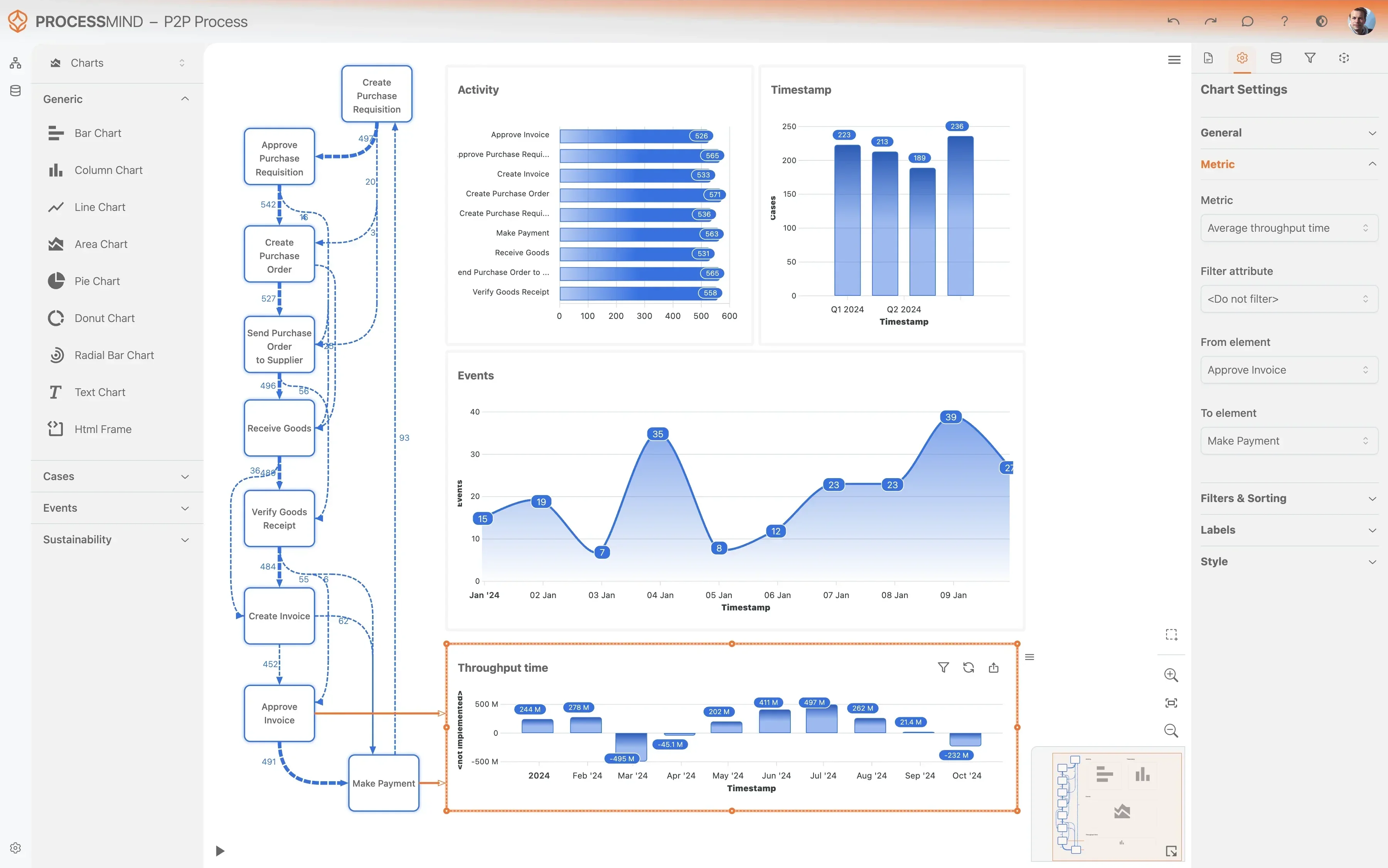
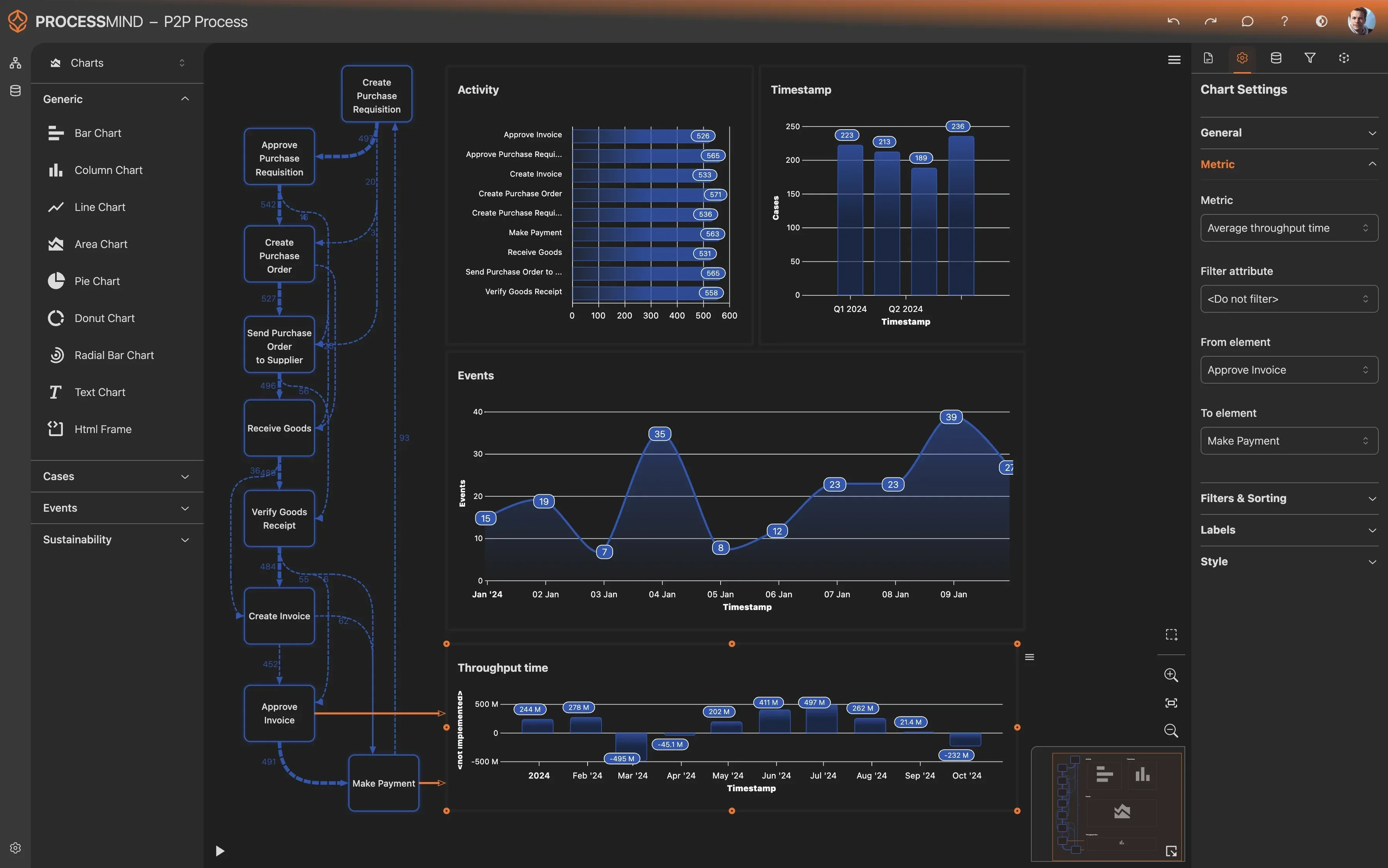
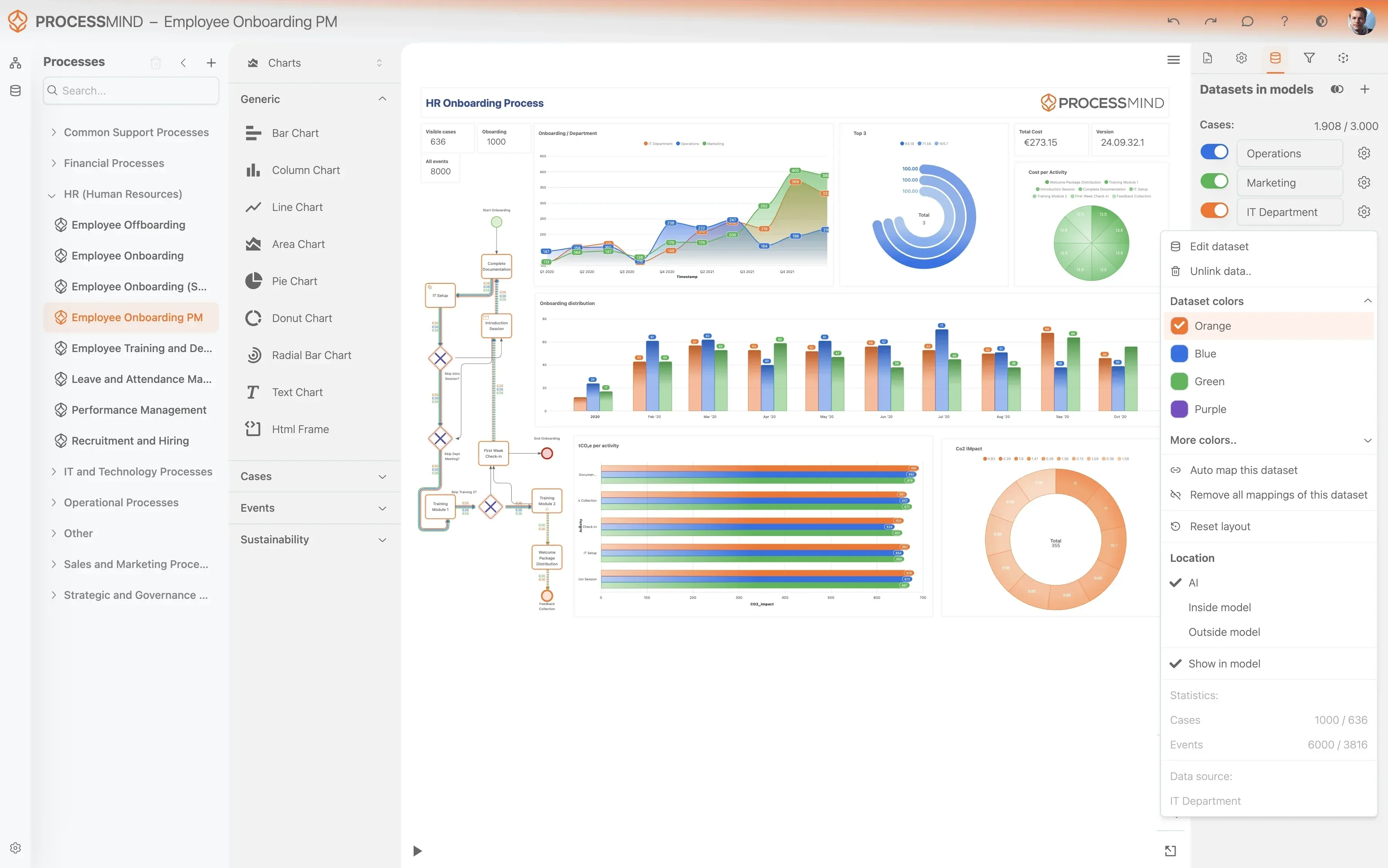
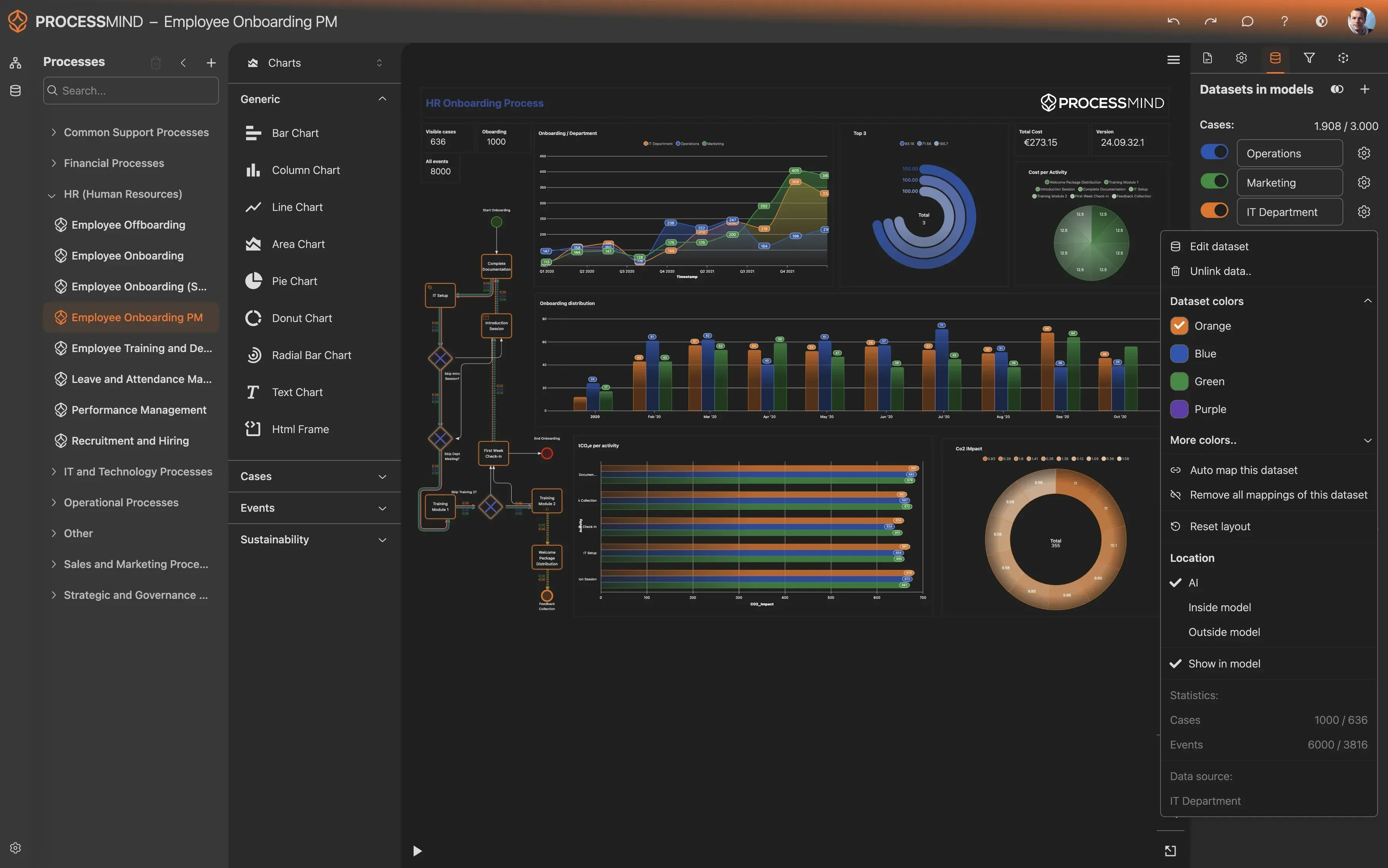
Explore the automatically generated dashboards and insights specific to your Optum360 Revenue Cycle Management, leveraging AI-driven recommendations.
Why it matters
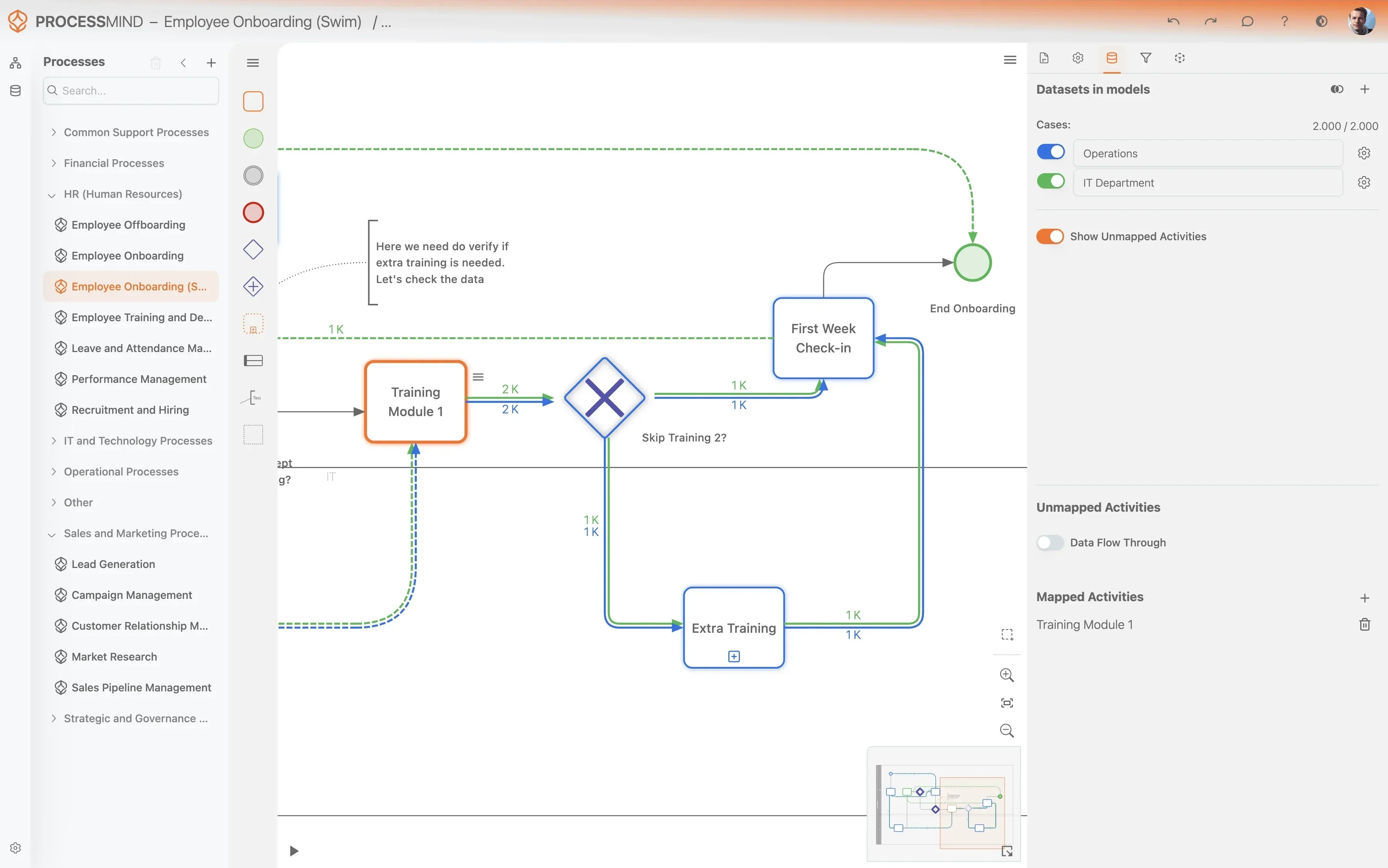
Visualizing your process flow and bottlenecks reveals hidden inefficiencies, allowing for data-backed decisions to optimize cash flow and compliance.
Expected outcome
A clear understanding of your RCM process performance, including key bottlenecks and AI-identified improvement areas.
Implement RCM Improvements
What to do
Prioritize and implement the identified opportunities to enhance your Optum360 Revenue Cycle Management, focusing on streamlining billing and collections.
Why it matters
Taking targeted action based on insights leads to tangible improvements, such as faster payment cycles, reduced denials, and improved financial health.
Expected outcome
Implemented changes within your Optum360 RCM process, targeting efficiency gains and improved financial outcomes.
Monitor RCM Progress
What to do
Periodically re-upload updated Optum360 data to track the impact of your changes and measure improvements in key Revenue Cycle Management KPIs.
Why it matters
Continuous monitoring ensures that improvements are sustained and allows for ongoing optimization, maintaining high performance and compliance.
Expected outcome
Verified improvements in RCM KPIs and a sustained, optimized Revenue Cycle Management process in Optum360.
TYPICAL OUTCOMES
Transforming Revenue Cycle Management
These outcomes represent the measurable improvements organizations achieve by optimizing their Revenue Cycle Management processes. Through data-driven analysis of billing events within systems like Optum360, we pinpoint inefficiencies and bottlenecks.
Accelerate cash flow
Reduce the average time from invoice generation to payment receipt, improving working capital and liquidity.
Minimize administrative burden
Decrease the percentage of invoices that lead to a dispute, reducing administrative load and improving customer satisfaction.
Expedite revenue recovery
Shorten the average time taken to resolve an invoice dispute, mitigating revenue impact and reducing overhead.
Improve billing accuracy
Reduce the proportion of billed amounts that are subsequently adjusted downwards, enhancing profitability and charge capture accuracy.
Enhance process compliance
Decrease the frequency of cases requiring rework due to billing errors, leading to significant cost savings and improved compliance.
Results vary based on the specific operational environment, process complexity, and data quality. The figures presented illustrate typical improvements observed across various implementations.
Recommended Data
FAQs
Frequently asked questions
Process mining analyzes your Optum360 billing event data to visualize the actual flow of your revenue cycle. It identifies deviations from the ideal process, pinpoints bottlenecks causing slow payments, and highlights areas contributing to high dispute rates or revenue adjustments. This helps in understanding the true operational landscape and improving efficiency.
To get started, you'll need to extract event logs related to your billing events, case identifiers, and timestamps from Optum360. This involves identifying relevant tables or views that store information on charge capture, claims submission, payment posting, and dispute resolution. Often, this requires working with your IT team or Optum360 administrators to generate appropriate reports or direct database queries for the necessary data.
For RCM process mining, the core data points are the Case ID, Activity Name, and Timestamp for each step in the revenue cycle. Additional attributes like charge amount, payer details, patient demographics, and the user responsible can enrich the analysis. This allows for detailed tracing of individual billing events through their entire process lifecycle.
Initial insights can often be gained within a few weeks once the data extraction and preparation are complete. A comprehensive analysis, including identification of root causes and actionable recommendations, usually takes 4-8 weeks. The overall timeline depends on data availability and the complexity of your specific RCM process.
Process mining can lead to measurable improvements such as faster payment collection, reduced invoice dispute rates, and shorter dispute resolution times. You can also expect a decrease in revenue adjustments, better RCM process compliance, and the elimination of hidden bottlenecks. Ultimately, it helps standardize departmental performance and reduce costly billing error rework.
Yes, dedicated process mining software is required to ingest and analyze the event log data effectively. While the software automates much of the discovery, having an analyst with an understanding of both process mining principles and RCM operations is highly beneficial. Many organizations start with a pilot project, often leveraging external expertise, before building in-house capabilities.
Process mining benefits organizations of all sizes, as long as they generate sufficient transactional data through systems like Optum360. Even smaller healthcare providers can gain significant insights into their RCM inefficiencies and compliance risks. The value lies in understanding and optimizing processes, regardless of the scale of operations.
Process mining automatically compares your actual RCM process flows against predefined compliance models and business rules. It highlights every deviation, whether it is an out-of-order step, a missed approval, or an unauthorized activity. This allows you to quickly identify and address compliance risks before they become major issues, ensuring a robust control environment.
Absolutely. By tracing individual billing events, process mining can pinpoint exactly where delays occur, such as extended wait times between specific activities or repeated rework loops. It can correlate these delays with specific departments, user roles, or types of cases, helping you understand the underlying reasons for slow payment collection. This targeted insight enables effective problem-solving.
In Optum360, a "billing event" acts as the case identifier, representing a single instance of a revenue cycle process. This could be the journey of a specific patient charge, a claim, or an entire encounter. Each billing event has a unique identifier and a sequence of activities with timestamps, allowing its complete lifecycle to be tracked and analyzed from start to finish.
Optimize Revenue Cycle Management, Reduce Delays Today
Join leaders who reduced cycle time by 30% and boost financial health.
No credit card required. Setup in minutes.