Improve Your Warehouse Management

Select a process
Choose a process to continue working in your connected workspace.
Optimize Warehouse Management in Oracle WMS Cloud
Discover how to pinpoint bottlenecks in your warehouse operations, from goods receipt to shipment. Our platform helps you precisely identify process slowdowns and compliance gaps that impact efficiency and delivery times. Uncover clear optimization opportunities to streamline your material flow and enhance accuracy.
Download our pre-configured data template and address common challenges to reach your efficiency goals. Follow our six-step improvement plan and consult the Data Template Guide to transform your operations.
Show detailed description
Why Optimizing Warehouse Management in Oracle WMS Cloud is Critical
Efficient warehouse management is the backbone of any successful supply chain, directly impacting customer satisfaction, operational costs, and overall business profitability. In today's fast-paced environment, organizations leveraging sophisticated systems like Oracle WMS Cloud face constant pressure to deliver faster, more accurately, and at a lower cost. However, even with advanced technology, hidden bottlenecks and inefficiencies can emerge within complex processes like goods receipt, putaway, picking, packing, and shipment. These slowdowns not only increase operational expenses but also lead to extended order fulfillment cycle times, potential stockouts, and ultimately, dissatisfied customers. Understanding the actual flow of your Warehouse Order cases is paramount to maintaining a competitive edge and ensuring your Oracle WMS Cloud investment yields its maximum potential.
How Process Mining Unlocks Deeper Insights for Oracle WMS Cloud
Process mining offers an unparalleled approach to transforming your understanding of how Warehouse Order processes actually execute within Oracle WMS Cloud. Rather than relying on assumptions or anecdotal evidence, process mining analyzes event log data directly from your system, reconstructing the complete, end-to-end journey of every Warehouse Order. This data-driven analysis reveals the true process flows, identifying deviations from ideal paths, uncovering hidden delays, and pinpointing the exact activities causing bottlenecks. You gain clear, objective evidence of where time and resources are being misallocated, from slow Goods Arrived at Dock to Goods Received and Counted transitions, to inefficient Picking Task Created to Goods Picked from Storage durations. By visualizing every step, you can precisely see where your Warehouse Order fulfillment cycle time is being extended, providing the factual basis needed for effective process optimization.
Key Improvement Areas Identified Through Process Mining
Applying process mining to your Oracle WMS Cloud data illuminates specific areas ripe for process optimization:
- Inbound Operations Efficiency: Discover delays between
Inbound Delivery Notification Received,Goods Arrived at Dock, andGoods Received and Counted. Identify ifQuality Inspection Performedis causing undue delays beforePutaway Task Created, and optimize theGoods Put Away in Storagephase to reduce lead times and improve storage utilization. - Picking and Packing Optimization: Pinpoint inefficiencies in the
Picking Task CreatedtoGoods Picked from Storagesequence. Analyze the time taken forPacking InitiatedandGoods Packed, identifying opportunities to streamline these labor-intensive activities and reduce picking errors. - Outbound Logistics Acceleration: Examine the flow from
Goods PackedthroughStaging for ShipmentandLoading onto CarriertoShipment Dispatched. Uncover delays in these critical last-mile activities that impact customer delivery commitments and increaseWarehouse Ordercycle time. - Resource and Equipment Utilization: Understand how different
User/Operator IDs andEquipment Usedinfluence process duration. Identify underutilized resources or training gaps that contribute to bottlenecks. - Compliance and Adherence: Verify if
Warehouse Order TypeorPriority Levelorders are processed according to defined service level agreements (SLAs). Detect deviations from standard operating procedures that could lead to non-compliance or increased risk.
Measurable Outcomes of Process Optimization
By leveraging process mining for your Oracle WMS Cloud Warehouse Management operations, you can expect significant, measurable improvements:
- Reduced Operational Costs: Identify and eliminate redundant steps, optimize resource allocation, and minimize overtime, leading to substantial cost savings.
- Faster Order Fulfillment Cycle Time: Streamline material flow, reduce waiting times, and accelerate key activities like picking and packing, significantly improving the overall
Warehouse Ordercycle time. - Enhanced Inventory Accuracy: Improve the efficiency of goods receipt and putaway processes, leading to better inventory visibility and fewer discrepancies.
- Increased Customer Satisfaction: Faster, more accurate order fulfillment directly translates to happier customers and stronger brand loyalty.
- Proactive Bottleneck Resolution: Continuously monitor
Warehouse Managementperformance to identify emergingbottlenecksbefore they impact operations, ensuring sustained efficiency.
Getting Started with Smarter Warehouse Management
Embrace the power of process mining to move beyond guesswork and achieve true process optimization in your Oracle WMS Cloud environment. By understanding the intricate details of your Warehouse Order journeys, you gain the actionable insights needed to implement targeted improvements, reduce bottlenecks, and significantly cut your Warehouse Order cycle time. Unlock the full potential of your Warehouse Management operations and drive continuous improvement across your supply chain. Start your journey towards a more efficient, accurate, and cost-effective warehouse today.
The 6-Step Improvement Path for Warehouse Management
Download the Template
What to do
Access and download the pre-configured Excel data extraction template tailored for Warehouse Management data from Oracle WMS Cloud. This template provides the correct structure for your process data.
Why it matters
Using the right template ensures your data is correctly formatted, streamlining the upload process and enabling accurate analysis without rework.
Expected outcome
A ready-to-fill data template specifically designed for your Oracle WMS Cloud warehouse operations.
Export Your Data
What to do
Extract 3-6 months of historical Warehouse Order data from Oracle WMS Cloud. Populate the downloaded template with your actual process events and case attributes.
Why it matters
Comprehensive historical data is crucial for ProcessMind to accurately map your warehouse process, identify patterns, and uncover hidden inefficiencies.
Expected outcome
A complete dataset, filled with your Oracle WMS Cloud historical warehouse operations data, ready for analysis.
Upload Your Dataset
What to do
Upload your filled data template securely to the ProcessMind platform. The system will automatically ingest and prepare your Oracle WMS Cloud data for analysis.
Why it matters
This secure and automated upload initiates the process mining analysis, quickly transforming raw data into actionable insights for your warehouse.
Expected outcome
Your Oracle WMS Cloud warehouse data successfully processed and visualized within the ProcessMind environment.
Analyze Your Process
What to do
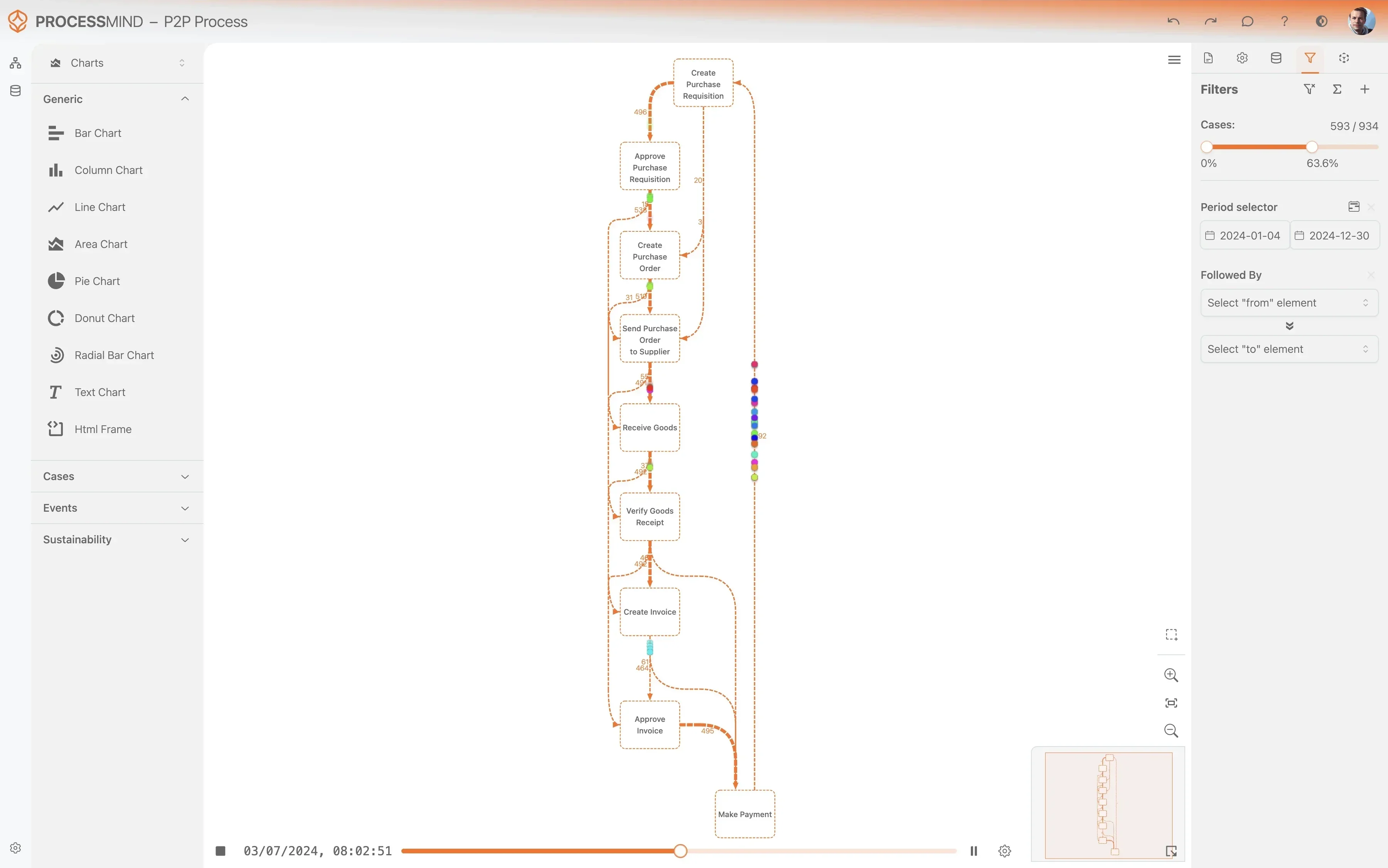
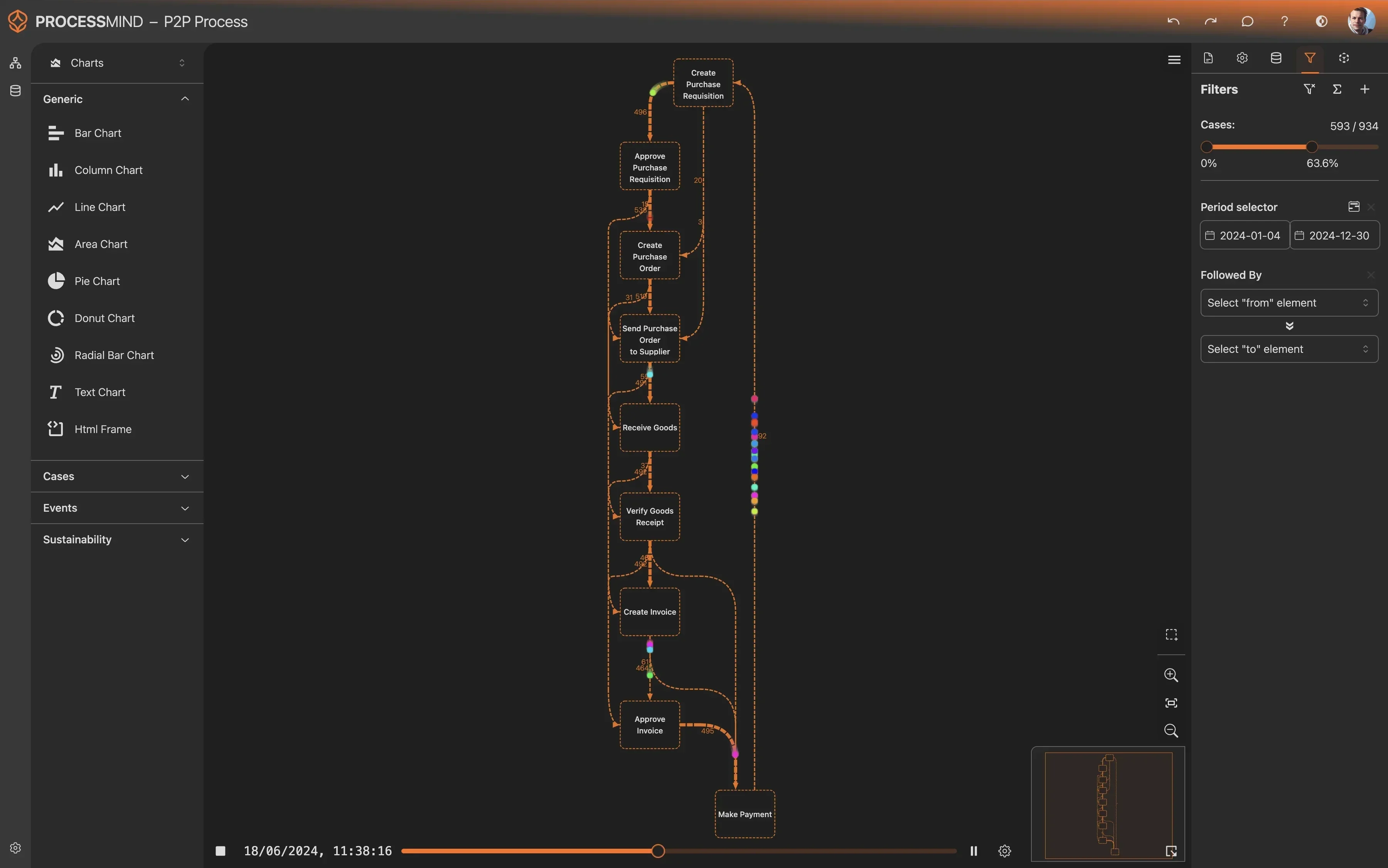
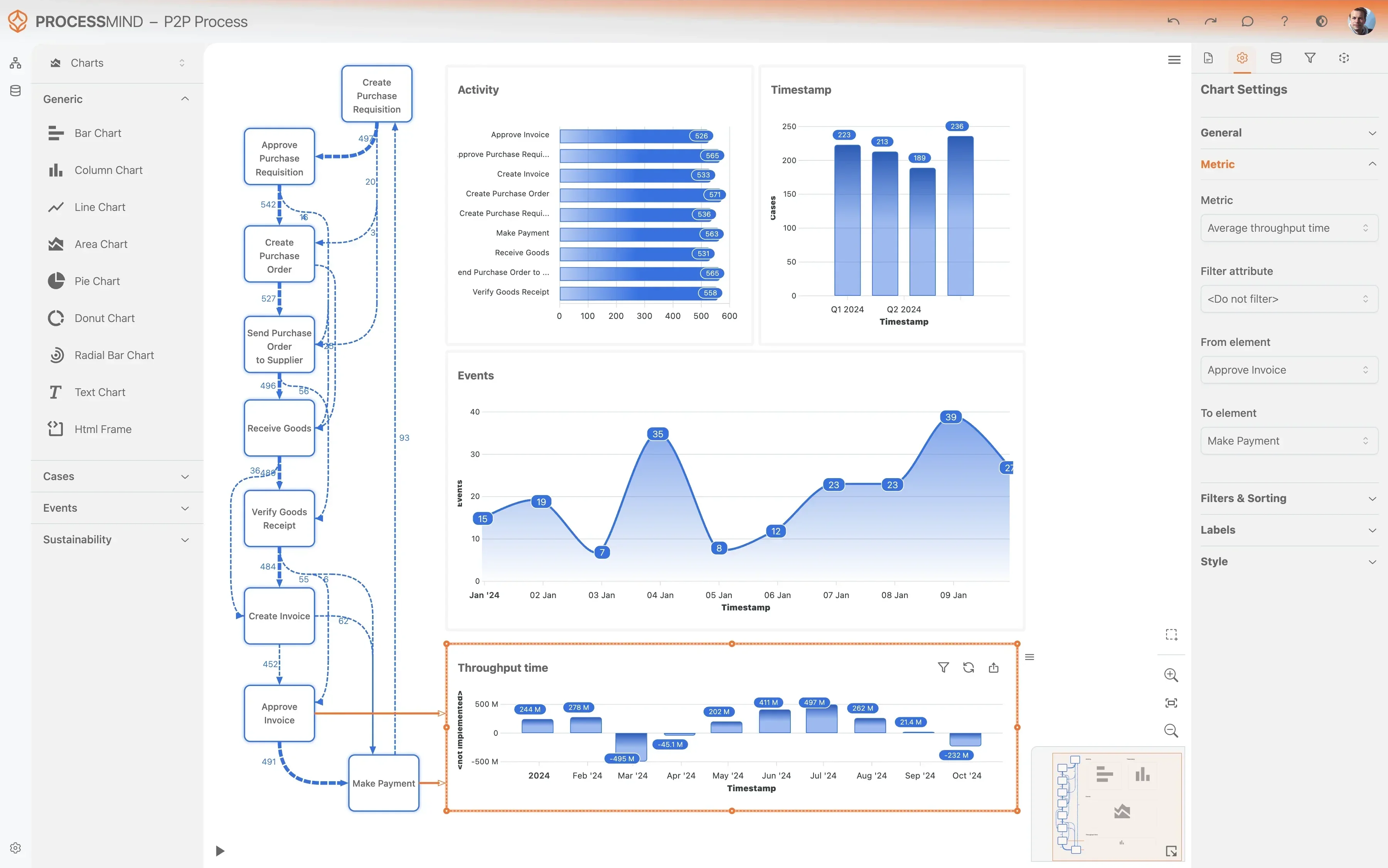
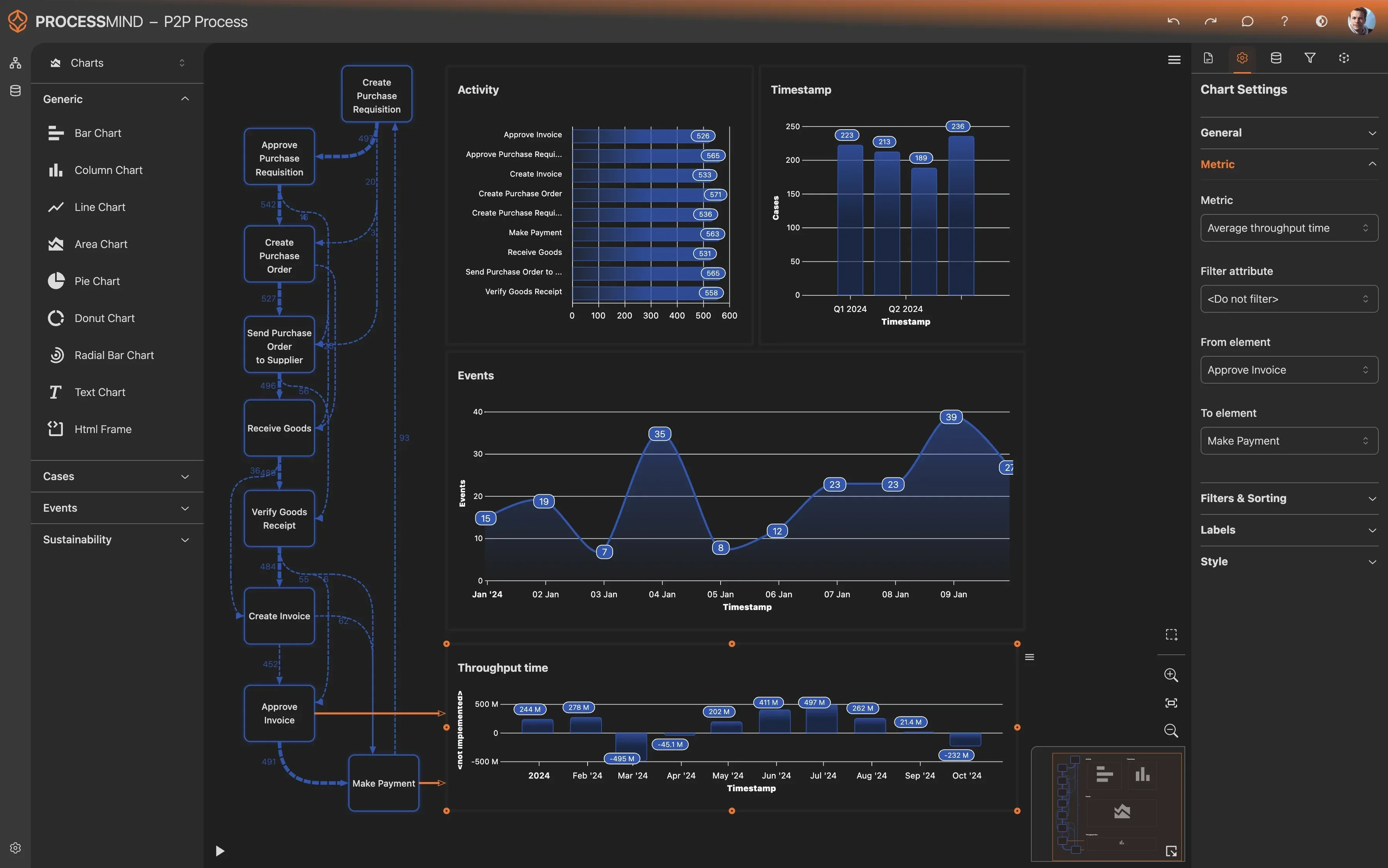
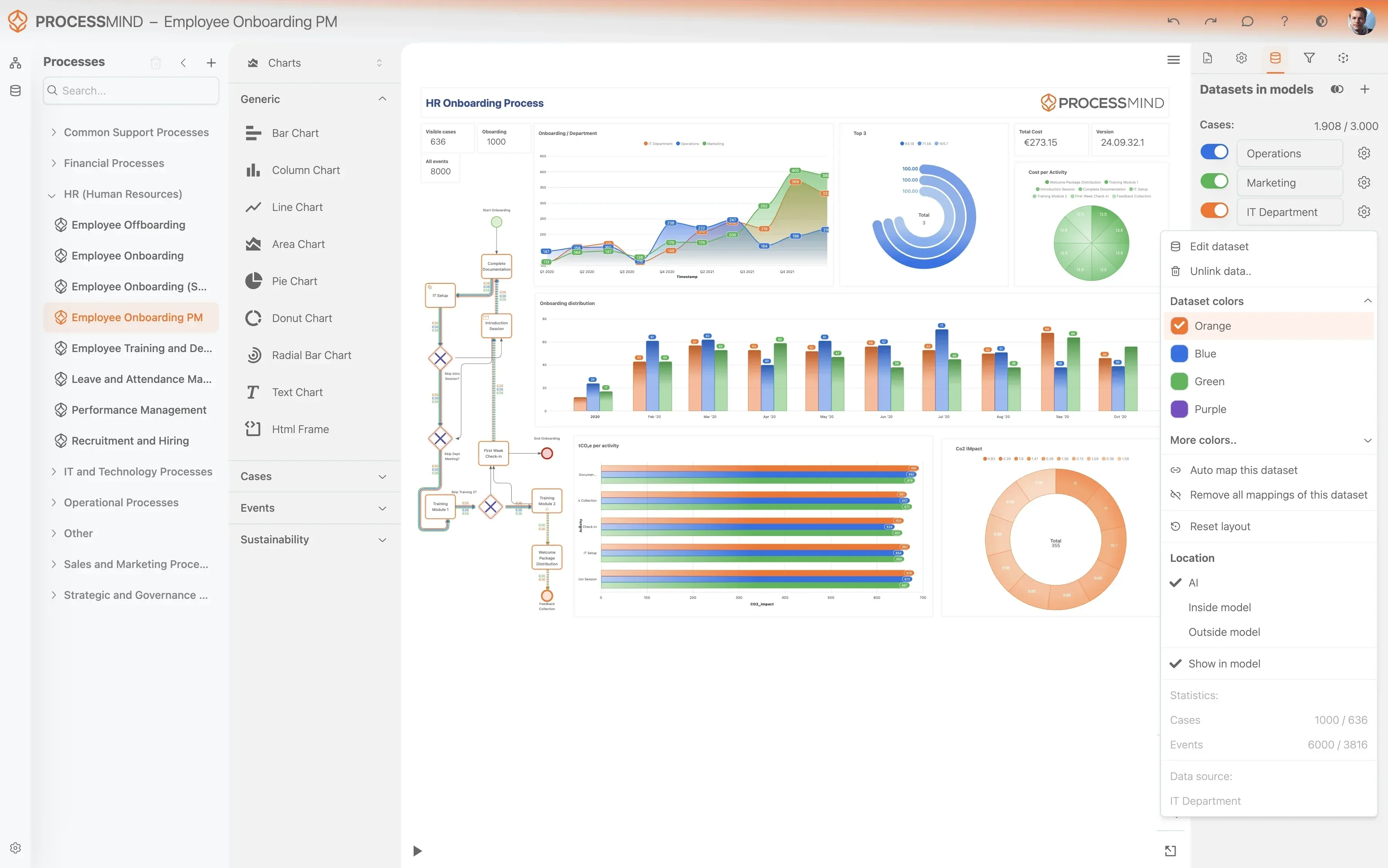
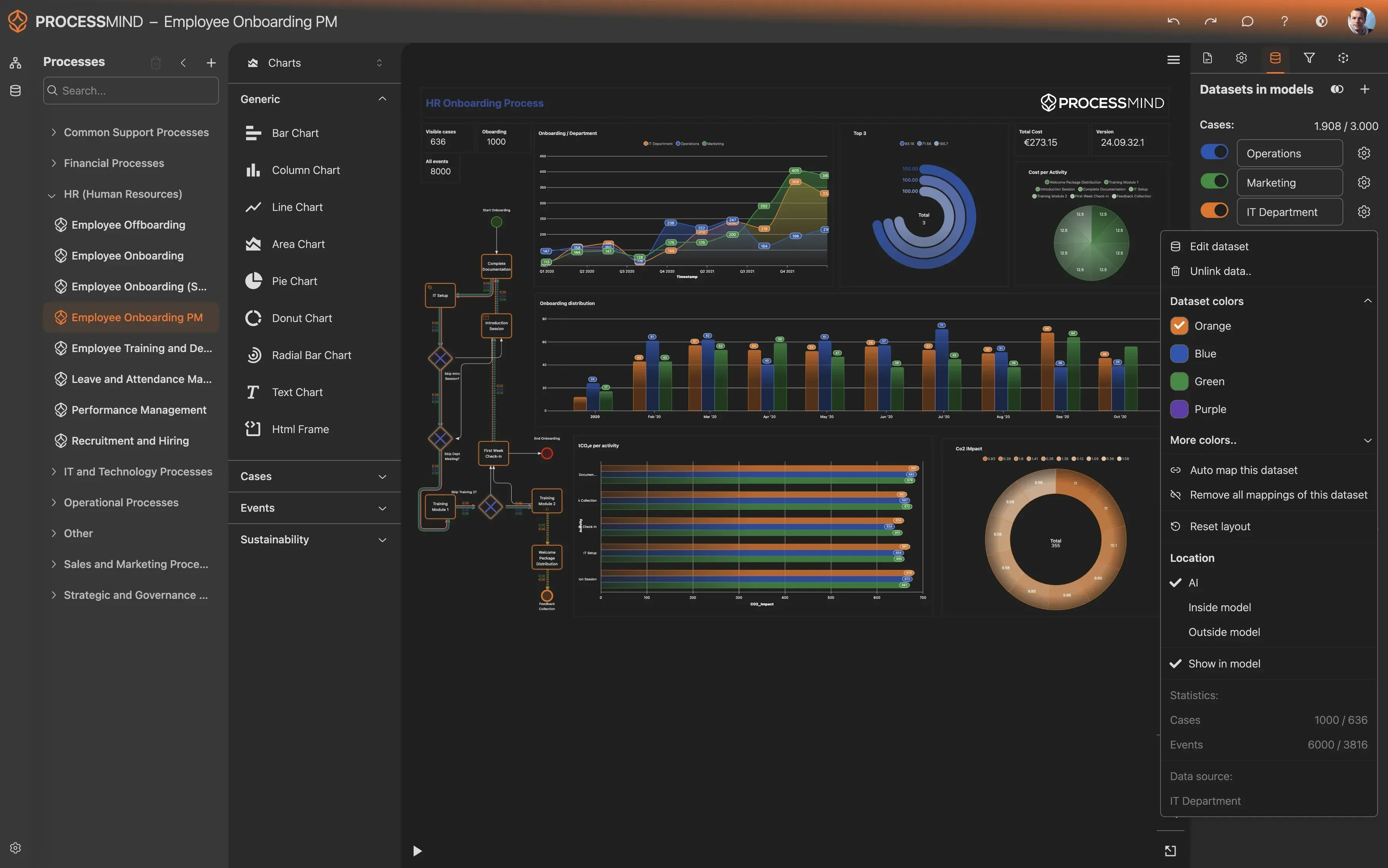
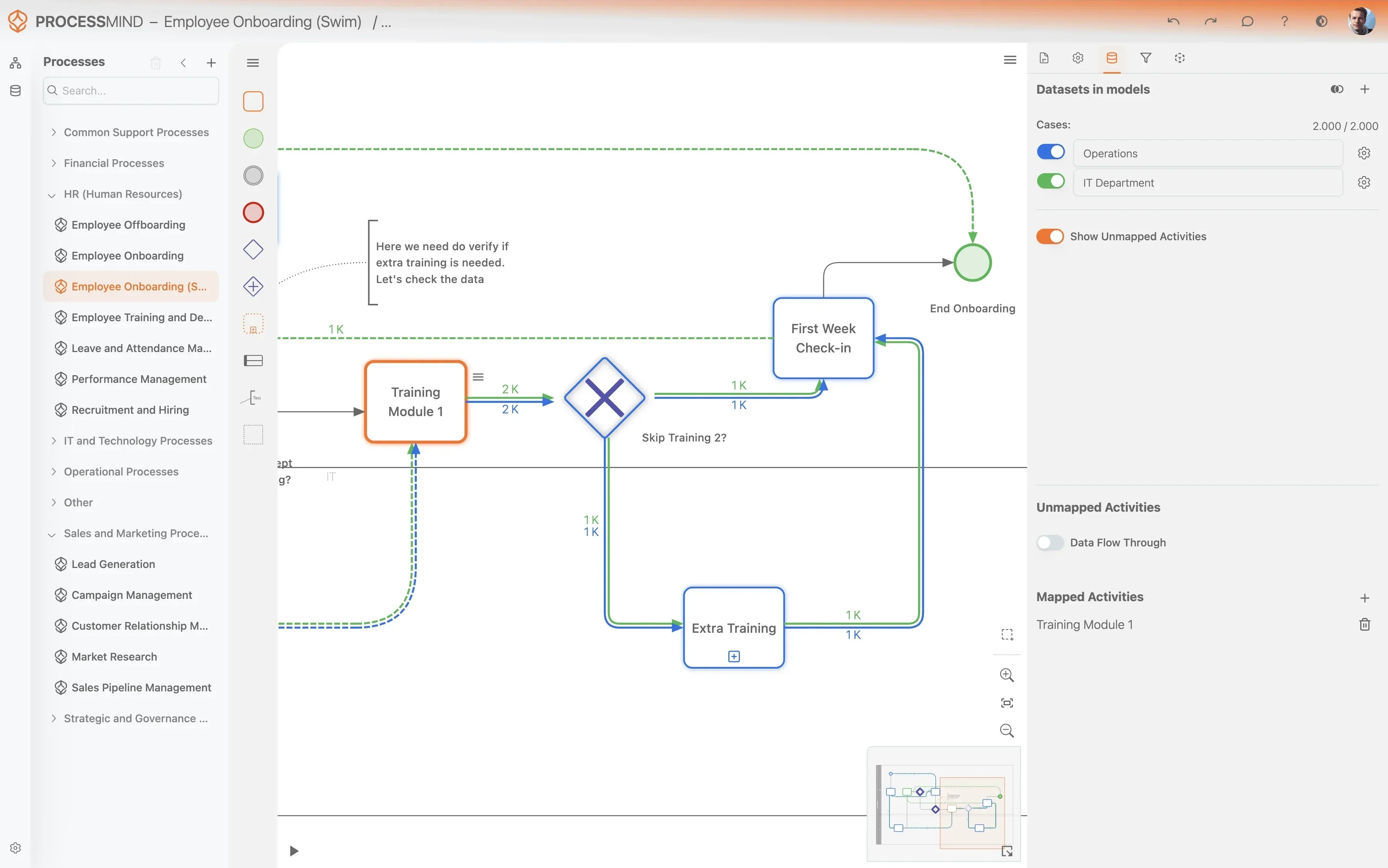
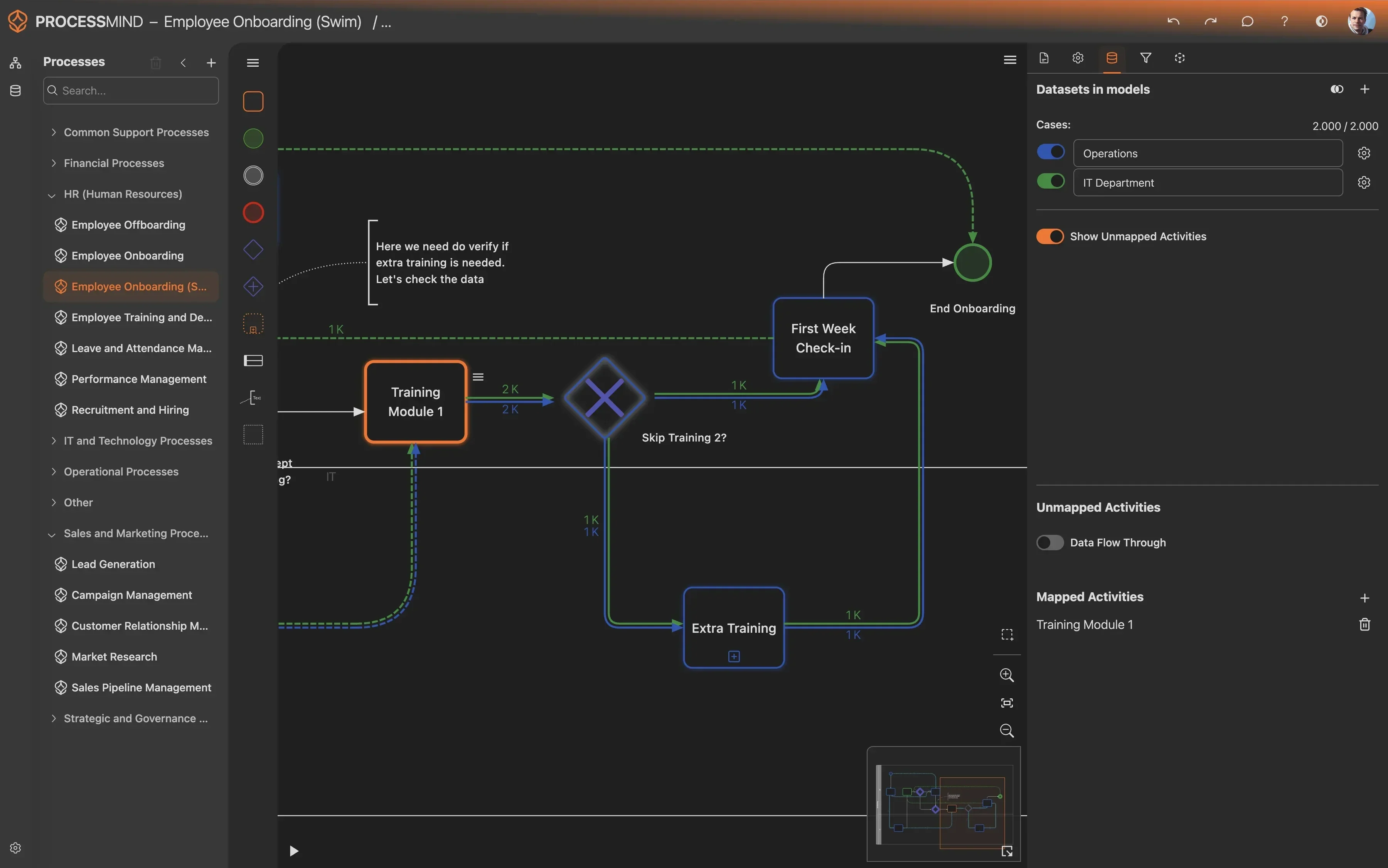
Explore the auto-generated interactive dashboards and visual process maps of your Oracle WMS Cloud operations. Leverage AI-driven insights to pinpoint bottlenecks and deviations.
Why it matters
Gain a deep, objective understanding of your actual warehouse processes, revealing where inefficiencies lie and how they impact performance and costs.
Expected outcome
A clear understanding of your warehouse process flow, key bottlenecks, and potential areas for improvement within Oracle WMS Cloud.
Implement Improvements
What to do
Prioritize the identified improvement opportunities, such as optimizing picking routes or putaway strategies, and implement changes directly within Oracle WMS Cloud.
Why it matters
Translating insights into action drives tangible operational improvements, enhancing efficiency, reducing errors, and improving order fulfillment in your warehouse.
Expected outcome
Strategic changes deployed in your Oracle WMS Cloud setup, directly addressing identified inefficiencies and process deviations.
Monitor Your Process
What to do
Periodically re-upload fresh data from Oracle WMS Cloud to ProcessMind. Continuously track the impact of your implemented improvements and measure key performance indicators.
Why it matters
Ongoing monitoring ensures sustained process health, allowing you to validate improvements and quickly adapt to new challenges or opportunities in your warehouse.
Expected outcome
Continuous visibility into your warehouse performance, validating improvements and supporting ongoing optimization efforts in Oracle WMS Cloud.
TYPICAL OUTCOMES
Measurable Improvements in Warehouse Operations
These outcomes highlight the significant efficiencies and cost savings organizations typically realize by optimizing their Warehouse Management processes through process mining. By identifying bottlenecks and inefficiencies within Oracle WMS Cloud data, businesses can make data-driven decisions to enhance their overall performance and operational excellence.
Average time reduction for goods receipt to storage
Accelerate inventory availability by identifying and resolving bottlenecks in inbound processes, from dock arrival to putaway. This reduces stockout risks.
Decrease in repeated or corrective warehouse activities
Minimize costly rework loops like re-picking or re-packing by uncovering root causes of quality issues and process deviations. This directly lowers operational expenses.
Increase in on-time shipment compliance
Ensure more orders meet their delivery deadlines by streamlining outbound logistics and identifying delays in staging and dispatch. This enhances customer satisfaction and trust.
Better utilization of workforce and equipment
Maximize the productive time of warehouse staff and equipment by identifying idle periods and inefficient allocation. This boosts throughput and reduces operational costs.
Reduction in inventory data discrepancies
Decrease discrepancies between planned and actual quantities during goods receipt and putaway. This leads to more reliable stock levels, preventing stockouts and overstocking.
Results vary based on process complexity, data quality, and specific organizational goals. The figures presented illustrate typical improvements observed across various warehouse management implementations.
Recommended Data
FAQs
Frequently asked questions
Process mining helps visualize and analyze your entire warehouse operations using data from Oracle WMS Cloud. It identifies bottlenecks in goods receipt, putaway, picking, and shipping, revealing deviations from standard processes and areas for efficiency gains. This detailed insight allows for targeted improvements across your warehouse. Ultimately, it drives better performance and cost savings.
By analyzing event logs from Oracle WMS Cloud, process mining reconstructs actual process paths end-to-end. It highlights delays in specific steps, common rework loops, and instances of resource underutilization. This visual representation allows you to pinpoint exactly where your processes are slowing down and why. You gain clear evidence for improvement actions.
You will primarily need event log data, which typically includes a case identifier like Warehouse Order ID, activity names, and timestamps for each process step. Additional attributes, such as resource ID, location, or item details, can significantly enrich the analysis. Ensuring consistent and complete data is key to accurate insights.
Initial data extraction and setup can typically take a few days to a week, depending on data availability and system access. The first actionable insights can often be generated within two to four weeks. This rapid time-to-value allows for quick understanding and initial optimization efforts.
You can expect significant improvements in key areas like accelerated goods receipt to storage and optimized putaway strategies. Process mining also leads to reduced picking errors, streamlined shipment staging, and faster fulfillment times. These enhancements collectively improve service level agreement adherence and reduce overall operational costs, boosting efficiency and customer satisfaction.
Yes, data security is a top priority. Process mining solutions typically use secure connectors and adhere to stringent data governance policies and industry standards. Often, data is anonymized or aggregated during the analysis phase to protect sensitive business information and ensure compliance.
Absolutely, process mining provides clear visibility into all deviations from your defined standard operating procedures and regulatory requirements. This capability allows you to identify non-compliant activities, understand their root causes, and enforce adherence to compliance standards effectively. It helps create a more standardized and compliant operational environment.
While some technical understanding of data structures is beneficial for initial data extraction, most modern process mining tools offer user-friendly interfaces. Business users can quickly learn to interpret the visual process insights and findings without extensive programming knowledge. Training is typically provided to ensure successful adoption.
For continuous improvement, it is highly beneficial to perform process mining analysis regularly, perhaps monthly or quarterly, depending on your operational tempo. This frequent analysis allows you to track the impact of implemented changes and identify new deviations or emerging bottlenecks. Regular insights ensure sustained optimization efforts and agility.
Optimize Warehouse Management, Boost Oracle WMS Cloud Efficiency
Identify bottlenecks and achieve 99.5% inventory accuracy in your Oracle WMS Cloud.
No credit card required, start optimizing today.