Improve Your Credit Management & Collections

Select a process
Choose a process to continue working in your connected workspace.
Optimize Credit Management and Collections in Oracle Fusion Financials
Effectively managing credit and collections can be complex, often resulting in overdue payments and extended days sales outstanding. Our platform helps you identify hidden inefficiencies throughout your credit-to-cash process, from initial assessment to final payment. Gain a clear understanding of bottlenecks to streamline operations and enhance your financial health.
Download our pre-configured data template and address common challenges to reach your efficiency goals. Follow our six-step improvement plan and consult the Data Template Guide to transform your operations.
Show detailed description
Why Optimize Credit Management & Collections in Oracle Fusion Financials
Your organization's financial health heavily relies on efficient Credit Management & Collections. In the intricate environment of Oracle Fusion Financials, managing customer credit, timely invoicing, and payment collection can be fraught with hidden inefficiencies. Delays in credit approval, missed dunning opportunities, or slow dispute resolution directly impact your cash flow, inflate Days Sales Outstanding (DSO), and increase the risk of bad debt. The complexities within Oracle Fusion Financials, while powerful, can also obscure the true path an invoice takes, making it challenging to identify where valuable time and money are being lost. Understanding the real-world flow of your credit-to-cash process is essential not just for financial stability, but also for maintaining positive customer relationships and ensuring compliance with financial regulations. Without clear visibility, pinpointing the root causes of payment delays and optimizing your collection strategies remains a significant challenge for any organization using Oracle Fusion Financials.
How Process Mining Enhances Credit Management & Collections
Process mining provides an unparalleled level of transparency into your Credit Management & Collections operations within Oracle Fusion Financials. By focusing on the "Invoice Number" as the central case identifier, this approach allows you to reconstruct the complete, end-to-end journey of every single invoice. From the initial credit assessment and sales order placement to invoice generation, payment processing, and any subsequent collection activities, you can visualize the exact sequence of events. This capability is vital for uncovering bottlenecks that extend the credit cycle time, evaluating the real effectiveness of your dunning procedures, and fine-tuning collection strategies. You can see precisely when reminders are sent, when collection calls are made, and how disputes are handled. This holistic, data-driven perspective empowers you to move beyond assumptions, providing concrete evidence of where process optimization can yield the most significant benefits in reducing Days Sales Outstanding and improving overall cash flow management.
Key Improvement Areas Discovered Through Process Mining
Through the detailed analysis offered by process mining, several critical areas within your Oracle Fusion Financials Credit Management & Collections process become ripe for improvement. You can identify significant delays in Credit Limit Approvals, understanding why some approvals take longer than others and impacting downstream sales. Analysis can reveal inefficiencies in Invoice Delivery and Processing, pinpointing gaps between an invoice being generated in Oracle and its actual receipt by the customer, or internal holds that prolong the process. Furthermore, process mining illuminates the true effectiveness of your Dunning Procedures, showing whether reminders are timely, whether customers respond to specific dunning levels, and if the overall strategy is leading to prompt payments. You can optimize your Collections Workflow, ensuring that collection calls are made at the opportune moment and that dispute resolution processes are swift and effective. Ultimately, this leads to a reduction in the overall Credit Management & Collections cycle time and enhances process optimization efforts.
Expected Outcomes and Measurable Benefits
Implementing process optimization for Credit Management & Collections, powered by insights from process mining, delivers tangible and measurable benefits for your organization. You can expect a significant reduction in Days Sales Outstanding (DSO), directly translating into improved cash flow and liquidity. By streamlining processes and identifying inefficiencies, you will achieve lower operational costs associated with manual collection efforts and reduced bad debt write-offs. The enhanced transparency and control also lead to better compliance with internal policies and external regulations, mitigating financial risks. Furthermore, by making your collection processes more efficient and customer-centric, you can improve customer satisfaction, as disputes are resolved faster and dunning processes become more effective and less intrusive. These outcomes contribute to a stronger financial position and a more efficient finance operation within your Oracle Fusion Financials environment.
Getting Started with Credit Management & Collections Optimization
Embarking on the journey to improve Credit Management & Collections in Oracle Fusion Financials does not require a deep technical background in process mining. With solutions designed for business users, you can quickly connect to your Oracle data and begin uncovering the true performance of your credit-to-cash processes. This approach empowers you to gain deep insights into your current state, identify the most impactful areas for change, and implement data-driven improvements. Start visualizing your invoice lifecycles, understanding the effectiveness of your collection strategies, and taking proactive steps to enhance your financial operations. The path to reduced DSO, improved cash flow, and streamlined Credit Management & Collections begins with understanding your processes as they truly are.
The 6-Step Improvement Path for Credit Management & Collections
Download Data Template
What to do
Obtain the specialized Excel template designed for Credit Management & Collections. This template outlines the required data structure for effective process analysis.
Why it matters
Starting with the correct data structure ensures your analysis is accurate and comprehensive, preventing rework and accelerating your journey to insights.
Expected outcome
A structured Excel template ready to be populated with your Oracle Fusion Financials data.
Extract Your Data
What to do
Export 3-6 months of historical transaction data from Oracle Fusion Financials, focusing on accounts receivable and credit management modules. Populate the downloaded template with this data.
Why it matters
Comprehensive historical data provides a robust foundation for identifying trends, bottlenecks, and areas for improvement in your collections process.
Expected outcome
Your Credit Management & Collections data from Oracle Fusion Financials accurately filled into the provided template.
Upload Your Dataset
What to do
Upload your completed data template to the ProcessMind platform. The system will automatically ingest and prepare your Credit Management & Collections data for analysis.
Why it matters
A secure and automated upload ensures your data is quickly processed, minimizing manual effort and initiating immediate value generation from your insights.
Expected outcome
Your Credit Management & Collections dataset successfully processed and ready for detailed analysis within ProcessMind.
Analyze Your Process
What to do
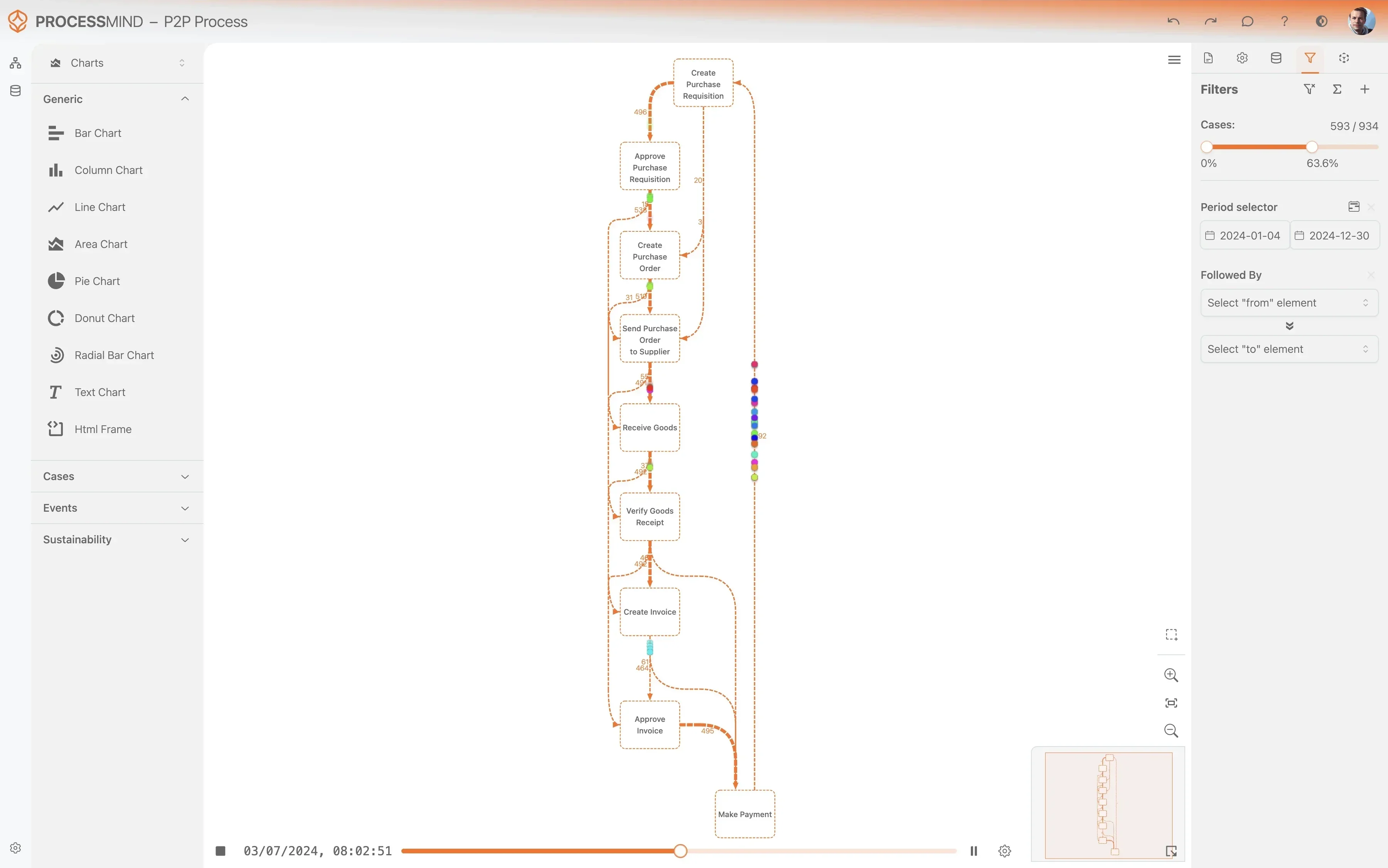
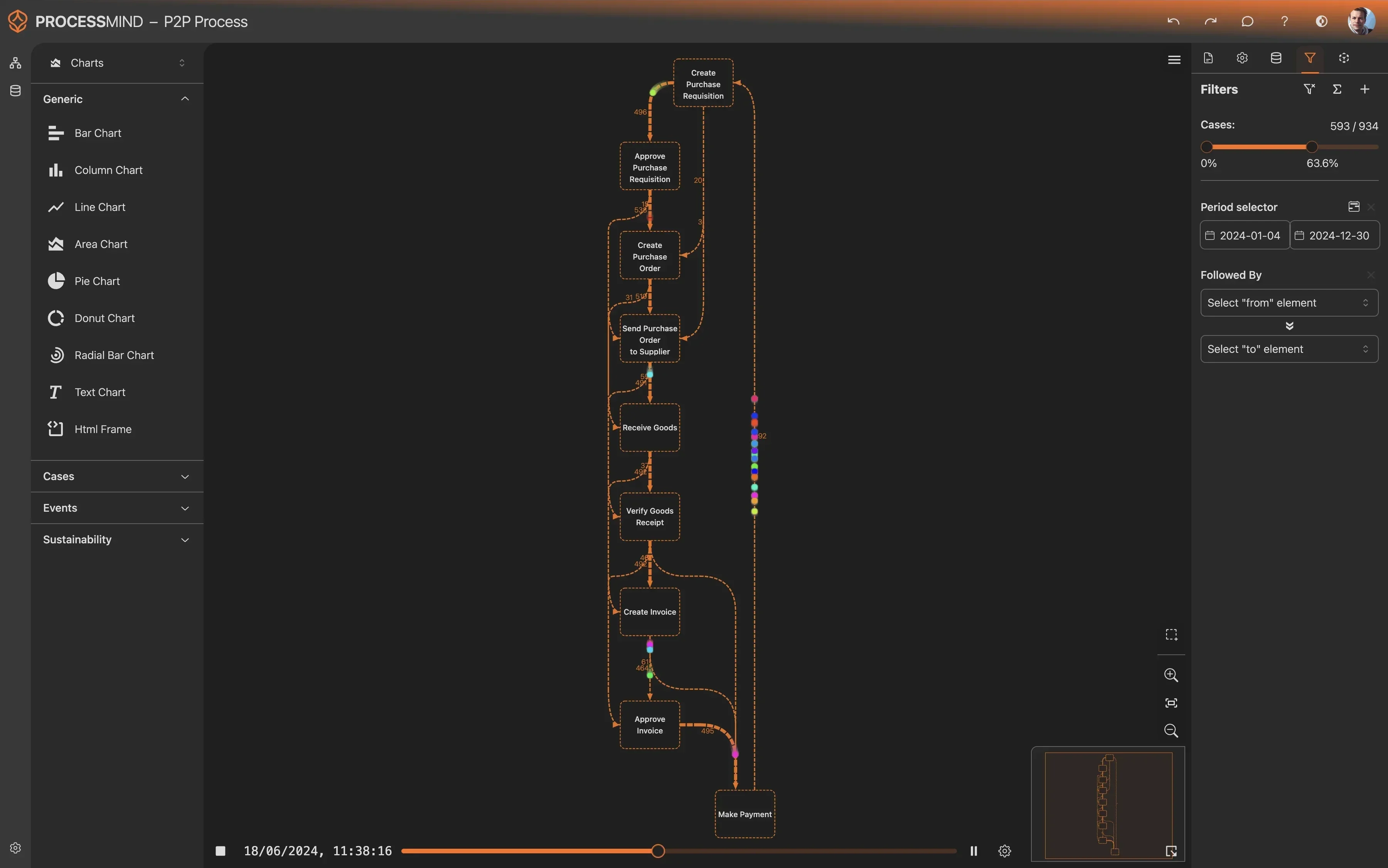
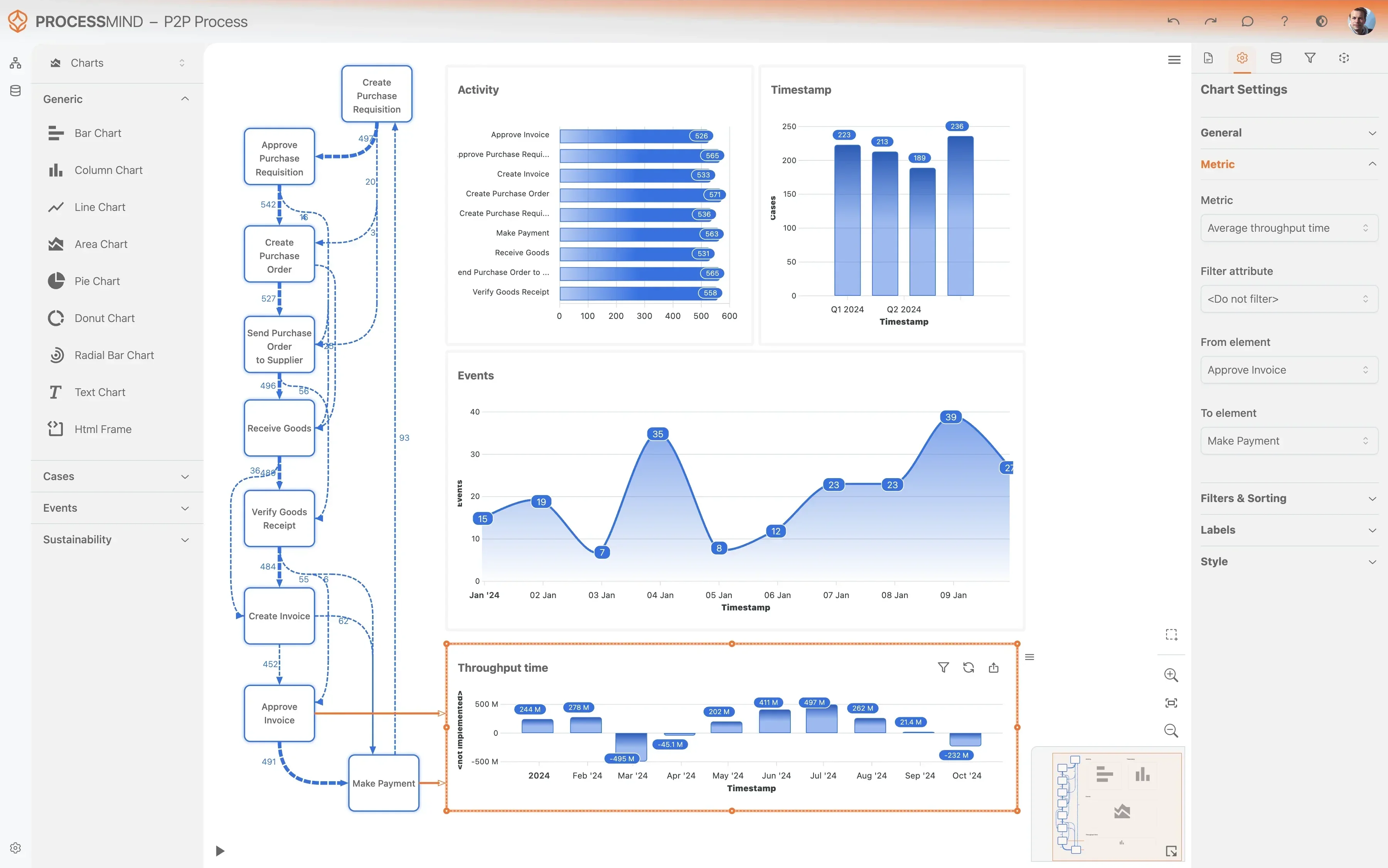
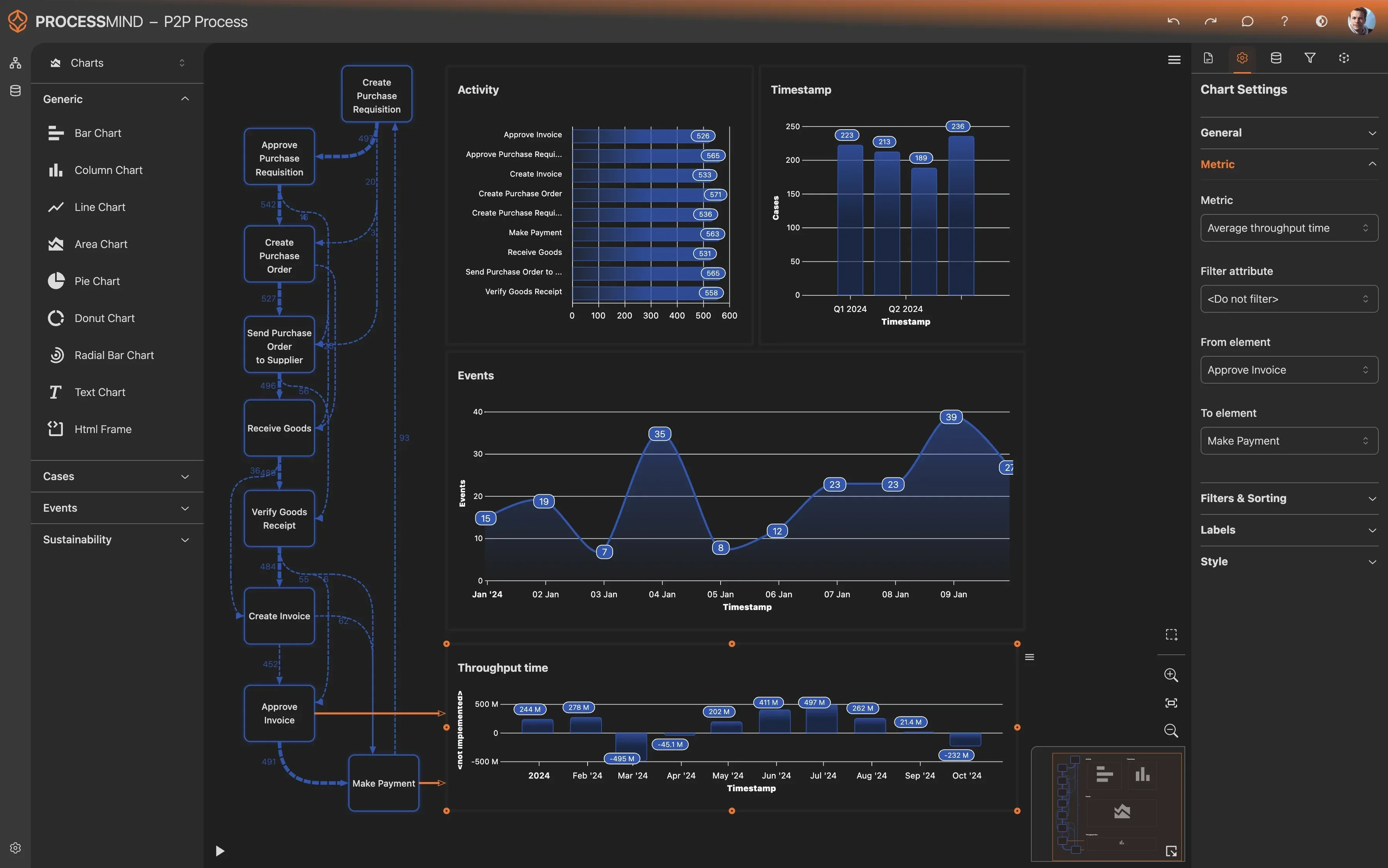
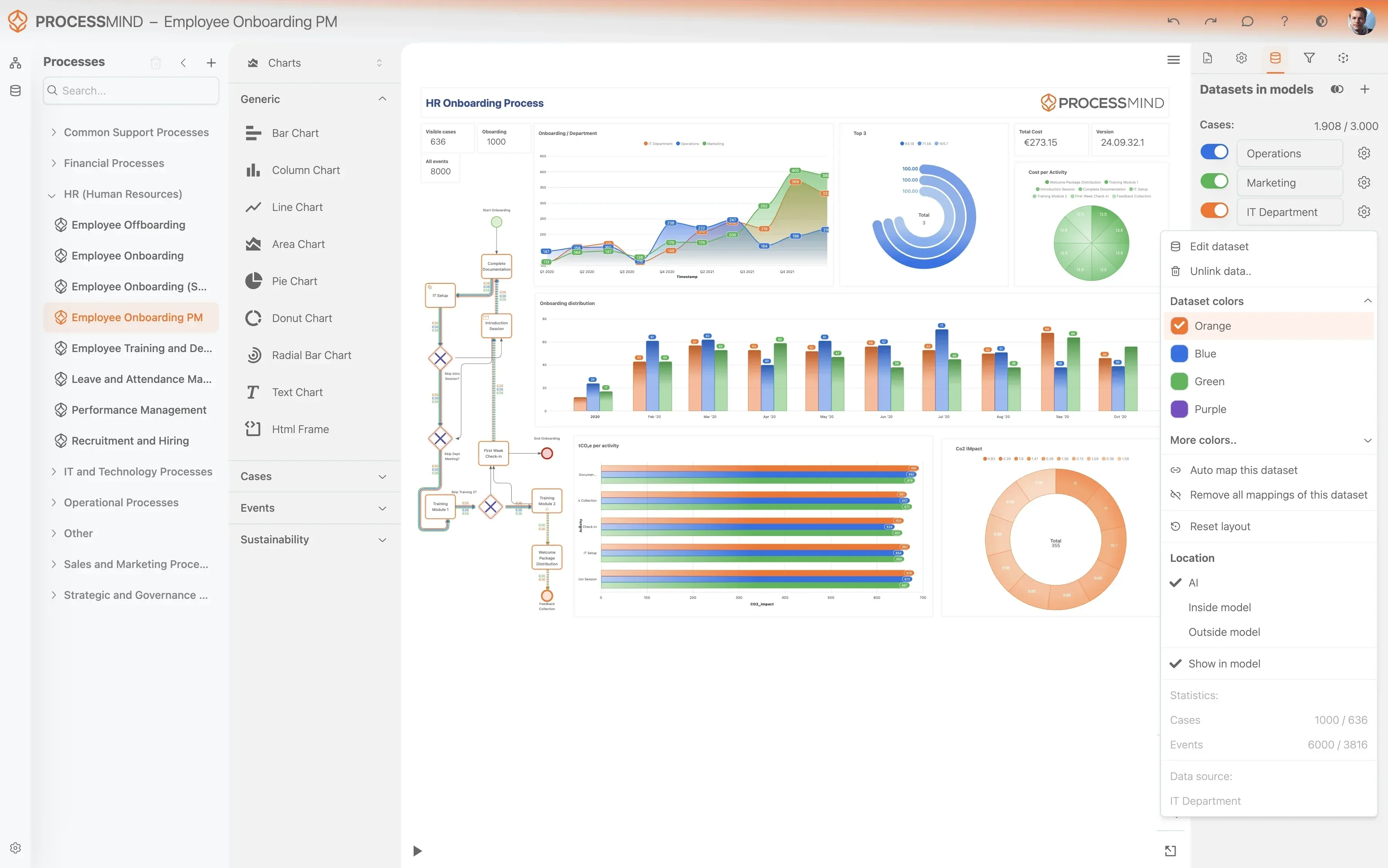
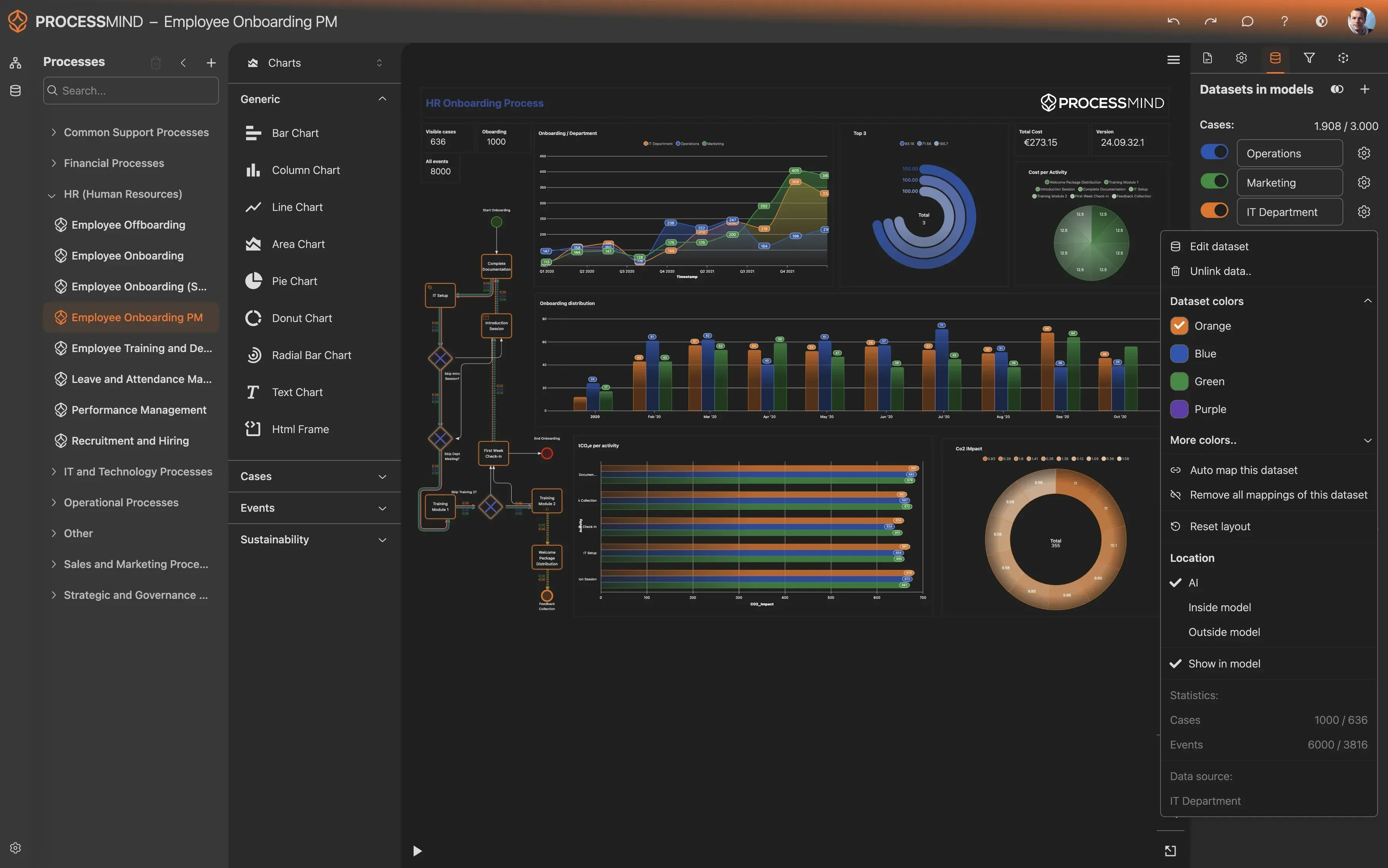
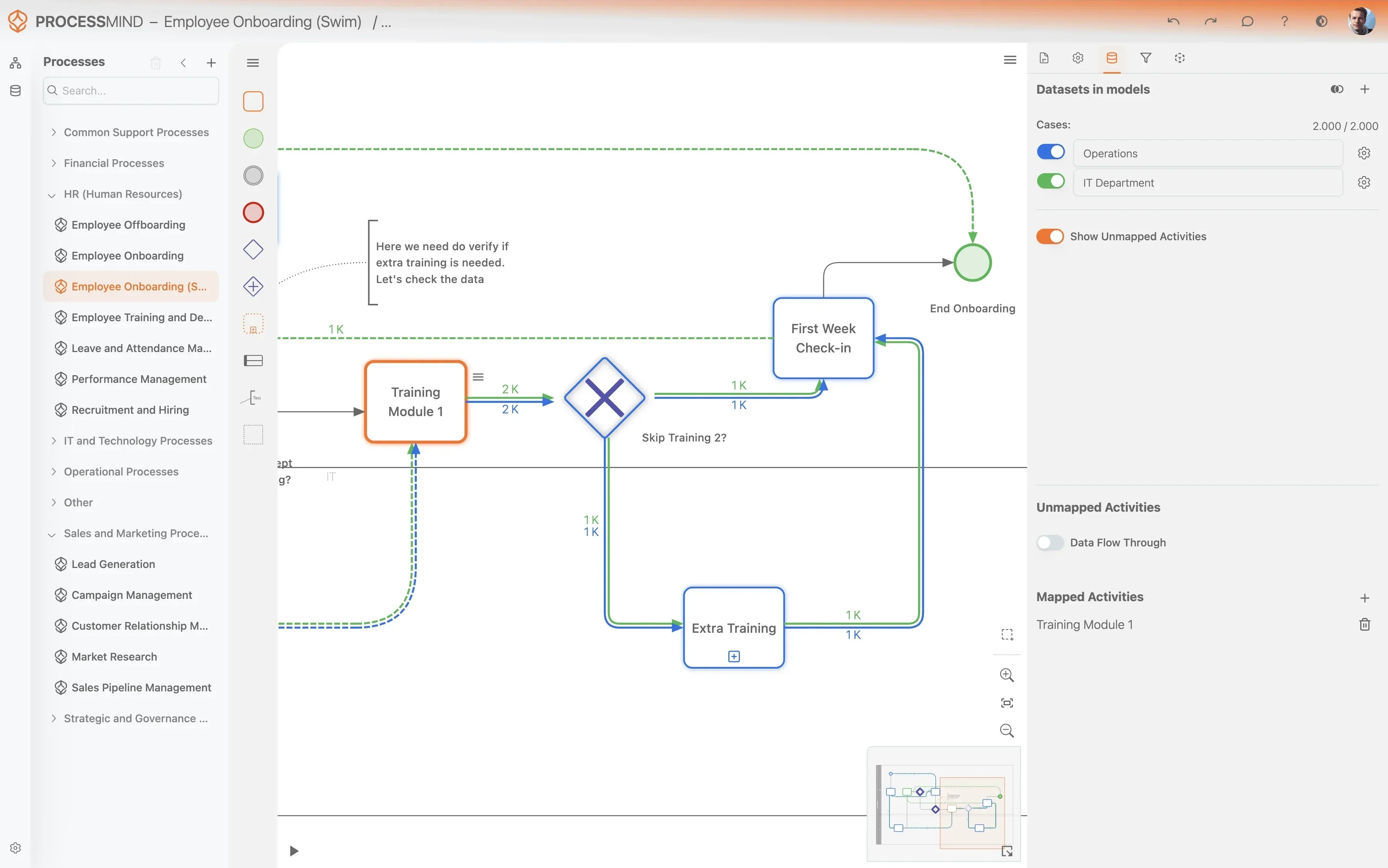
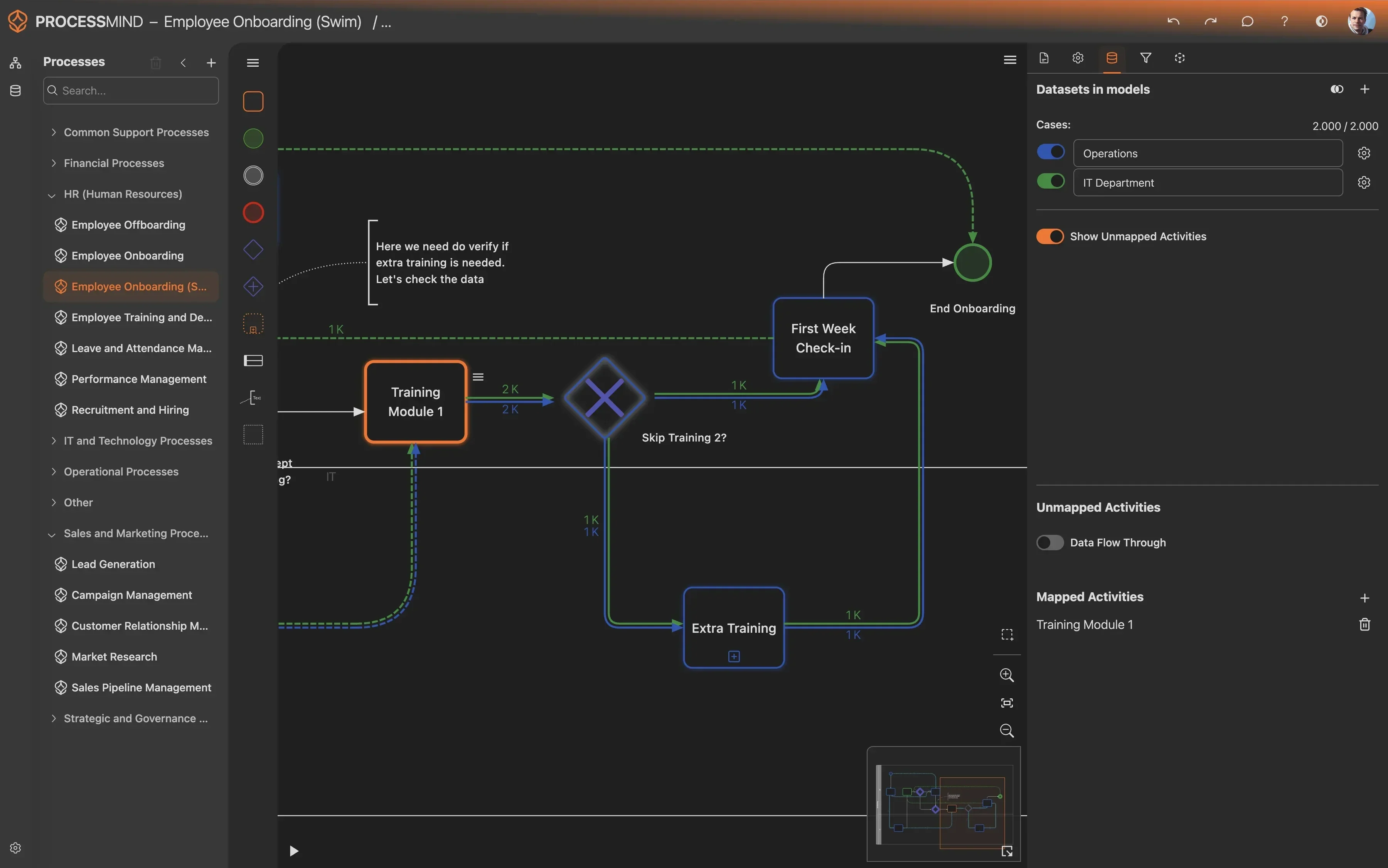
Explore the auto-generated dashboards in ProcessMind, visualizing your credit management and collections process flow. Review AI-driven recommendations for specific improvement areas.
Why it matters
Gain deep insights into bottlenecks, deviations, and root causes affecting cash flow and DSO. Pinpoint exact inefficiencies without manual data crunching.
Expected outcome
A clear understanding of your current Credit Management & Collections process performance and prioritized areas for improvement.
Implement Improvements
What to do
Prioritize the identified improvement opportunities, such as optimizing dunning strategies or refining credit limit reviews. Take action on the insights gained from your analysis.
Why it matters
Translating insights into action is crucial for realizing tangible benefits, like reduced bad debt and faster invoice payment cycles, directly impacting your bottom line.
Expected outcome
Concrete actions initiated to optimize your Credit Management & Collections process in Oracle Fusion Financials.
Monitor Progress
What to do
Periodically re-upload updated Credit Management & Collections data from Oracle Fusion Financials to ProcessMind to track the impact of your implemented changes.
Why it matters
Continuous monitoring allows you to measure the effectiveness of your improvements, ensuring sustained efficiency gains and ongoing optimization of your processes.
Expected outcome
Regular tracking of key performance indicators and measurable improvements in your Credit Management & Collections efficiency over time.
TYPICAL OUTCOMES
Unlock Enhanced Financial Performance
Process mining uncovers inefficiencies within your Credit Management & Collections processes, identifying critical areas for improvement. These outcomes represent the quantifiable benefits achieved by optimizing your financial operations within Oracle Fusion Financials.
Reduction in approval cycle time
Streamline the credit limit approval process, reducing delays and enabling sales teams to onboard new customers or expand existing credit lines more quickly.
Improvement in overdue payment collection
Enhance the success rate of dunning procedures, leading to more overdue invoices being paid after collection efforts are initiated.
Reduction in unrecoverable debt
Minimize financial losses by identifying and addressing root causes of uncollectible invoices, leading to a significant decrease in write-offs.
Reduced time to resolve invoice disputes
Accelerate the handling and resolution of invoice disputes, improving customer satisfaction and speeding up cash conversion.
Increase in dunning policy compliance
Achieve greater consistency in dunning processes, ensuring all overdue invoices are managed according to established internal policies and regulations.
Decrease in average days outstanding
Shorten the average time it takes to collect payments from customers after an invoice has been issued, significantly improving cash flow and working capital.
Results vary based on process complexity, data quality, and specific organizational goals. These figures represent typical improvements observed across various implementations.
Recommended Data
FAQs
Frequently asked questions
Process mining helps you visualize the actual flow of your credit management and collections process, identifying bottlenecks like slow credit approvals or inefficient dunning. It uncovers deviations from your standard procedures and highlights areas for efficiency gains. This allows for data-driven decisions to optimize workflows and reduce DSO.
You'll typically need event logs related to invoice creation, credit approvals, payment applications, dunning activities, and dispute resolutions. Key data fields include invoice number as the case identifier, activity names, timestamps for each activity, and the performer of each step. This data is usually extracted from relevant Oracle tables.
Absolutely. By analyzing the complete invoice journey, process mining can pinpoint exact causes of high DSO, such as delays in credit approval, inefficient dunning cycles, or slow payment application. It visualizes where invoices get stuck and which process variations lead to longer payment times, guiding targeted improvements.
You can expect significant improvements such as reduced Days Sales Outstanding, faster credit approval times, and a decrease in invoice write-off rates. Process mining also helps standardize dunning policy adherence, optimize collector assignment, and shorten dispute resolution cycles, leading to greater operational efficiency and compliance.
Initial insights can often be generated within a few weeks of successful data extraction and ingestion. The time to realize full benefits, like a 30% acceleration in credit approval or a 20% boost in dunning effectiveness, depends on the complexity of your process and the speed of implementing suggested changes. Process mining provides continuous monitoring for ongoing improvement.
The primary technical requirement is access to your Oracle Fusion Financials data, specifically the ability to extract transaction logs from relevant tables. You will also need a process mining software platform, either on-premise or cloud-based, and resources for initial data modeling and ongoing analysis. No custom coding is typically required for the analysis itself.
While BI provides dashboards and reports on historical metrics, process mining focuses on reconstructing the actual end-to-end process flow from event logs. It reveals how activities are truly executed, identifies root causes of delays and deviations, and visualizes the complete journey of each invoice. This offers a deeper, diagnostic understanding beyond aggregated KPIs.
No, process mining is scalable and beneficial for organizations of various sizes. While initial data extraction requires some technical understanding, modern tools offer user-friendly interfaces to analyze and interpret process insights. The focus is on leveraging existing data to uncover inefficiencies, regardless of company scale.
Data privacy and security are paramount. It's crucial to follow your organization's data governance policies, often involving anonymization or pseudonymization of sensitive personal data before it enters the process mining tool. Ensure your chosen process mining solution complies with relevant data protection regulations and has robust security measures in place.
Start Optimizing Your Credit Management & Collections Today
Reduce cycle time by 30% and boost financial health in Oracle Fusion.
No credit card required. Get started in minutes.