Improve Your Asset Maintenance

Select a process
Choose a process to continue working in your connected workspace.
Optimize Asset Maintenance in IBM Maximo to Reduce Downtime
Our platform highlights hidden delays and workflow gaps that cause equipment downtime. By mapping your maintenance activities, you can easily spot where manual handovers or resource shortages slow down your team. This clarity allows you to eliminate waste and focus on high-priority repairs.
Download our pre-configured data template and address common challenges to reach your efficiency goals. Follow our six-step improvement plan and consult the Data Template Guide to transform your operations.
Show detailed description
The Strategic Importance of Maintenance Performance
Asset maintenance is the operational heartbeat of any organization that relies on heavy machinery, infrastructure, or complex technical systems. When these assets fail, the costs ripple through the entire business, leading to lost production, expensive emergency repairs, and potential safety risks. While IBM Maximo provides a robust framework for managing these assets, the complexity of the maintenance lifecycle often masks underlying inefficiencies. Process optimization in this domain is not just about fixing things faster, it is about creating a predictable and reliable environment where maintenance is a strategic advantage rather than a reactive necessity. By focusing on the flow of work orders, organizations can transition from a state of constant firefighting to a streamlined, proactive maintenance model that preserves capital and ensures operational continuity.
Bridging the Gap Between Maximo Data and Operational Reality
Every time a technician updates a status or a planner assigns a resource in IBM Maximo, a digital footprint is created. Process mining acts as a bridge, taking these fragmented data points and reconstructing them into a visual map of the actual maintenance process. This goes far beyond standard reporting, which typically only shows snapshot metrics like the number of open work orders or total labor hours. Instead, process mining reveals the journey of a work order through every department and approval gate. This transparency allows you to see the deviations from the standard operating procedure, such as work that is started before it is fully planned or tasks that bypass critical quality checks. Understanding the reality of how work is performed is the first step in learning how to improve Asset Maintenance across the entire enterprise.
Identifying and Resolving Execution Bottlenecks
One of the most significant challenges in maintenance is the hidden delay between process steps. For example, a work order might be generated quickly, but it may sit in a pending materials status for days or even weeks. Process mining highlights these specific friction points, allowing managers to ask targeted questions about why certain stages take longer than expected. Common bottlenecks discovered in IBM Maximo often include lengthy approval cycles, delays in spare parts procurement, and resource scheduling conflicts. When you can visualize the exact point where the process stalls, you can implement specific fixes, such as automating certain approvals or optimizing inventory levels for high-priority parts. This data driven approach is essential for anyone looking for how to reduce Asset Maintenance cycle time and improve the overall throughput of the maintenance department.
Measurable Gains in Reliability and Compliance
The impact of optimizing your maintenance process extends beyond just speed. It directly affects the reliability of your assets and your ability to meet regulatory requirements. By streamlining the maintenance lifecycle, you ensure that preventative maintenance is performed on time, which significantly reduces the likelihood of catastrophic equipment failure. Furthermore, process mining provides an indisputable audit trail. In industries where safety and compliance are paramount, being able to prove that every work order followed the required inspection and sign off steps is invaluable. You can easily identify any work orders that skipped safety protocols or were closed without proper documentation, allowing for immediate corrective action. This level of oversight ensures that efficiency never comes at the cost of safety or compliance.
Taking the First Step Toward Maintenance Excellence
Improving your maintenance operations is a continuous journey of refinement. By starting with the data already available in your IBM Maximo system, you can gain immediate insights into your current performance and identify the most impactful areas for improvement. Whether your goal is to reduce costs, improve asset uptime, or ensure better resource utilization, process mining provides the clarity needed to make informed decisions. As you begin to eliminate bottlenecks and standardize your workflows, you will see a measurable transformation in your maintenance culture. The move from subjective guesswork to objective, data-backed strategy allows your team to focus on what they do best, keeping your assets running at peak performance while driving long term value for the organization.
The 6-Step Improvement Path for Asset Maintenance
Download the Template
What to do
Obtain the pre-formatted Excel template designed specifically for IBM Maximo work order lifecycle data.
Why it matters
Starting with a standard structure ensures your maintenance data aligns perfectly with process mining requirements without manual mapping.
Expected outcome
A ready to use Excel framework for your maintenance records.
Export IBM Maximo Data
What to do
Extract three to six months of historical maintenance records from IBM Maximo, focusing on work order status changes and resource assignments.
Why it matters
This historical view provides the necessary volume to identify recurring bottlenecks and patterns in your technical execution.
Expected outcome
A comprehensive file containing your actual maintenance history.
Upload Your Dataset
What to do
Securely upload your completed maintenance dataset to ProcessMind for automatic mapping and analysis of your work order flows.
Why it matters
Automated processing transforms raw work order tables into a visual process map, revealing the reality of your maintenance operations.
Expected outcome
A processed maintenance model ready for deep dive analysis.
Analyze Maintenance Flows
What to do
Explore interactive dashboards and AI insights to identify delays in parts procurement, technician scheduling, and work order closure.
Why it matters
Understanding the gap between planned and actual maintenance timelines helps you pinpoint the root causes of equipment downtime.
Expected outcome
Clear visibility into bottlenecks and process deviations.
Implement Improvements
What to do
Prioritize findings such as streamlining material requisition or optimizing technician routes, and apply these changes within your Maximo workflows.
Why it matters
Taking targeted action based on data ensures that process changes directly contribute to higher asset reliability and lower operational costs.
Expected outcome
Executed changes to your maintenance strategy and resource allocation.
Monitor Progress
What to do
Periodically upload fresh Maximo data to track how your improvements affect KPIs like Mean Time to Repair and work order cycle times.
Why it matters
Continuous monitoring ensures that efficiency gains are sustained over time and allows you to adapt to new maintenance challenges.
Expected outcome
Up to date performance metrics and sustained process excellence.
YOUR MAINTENANCE INSIGHTS
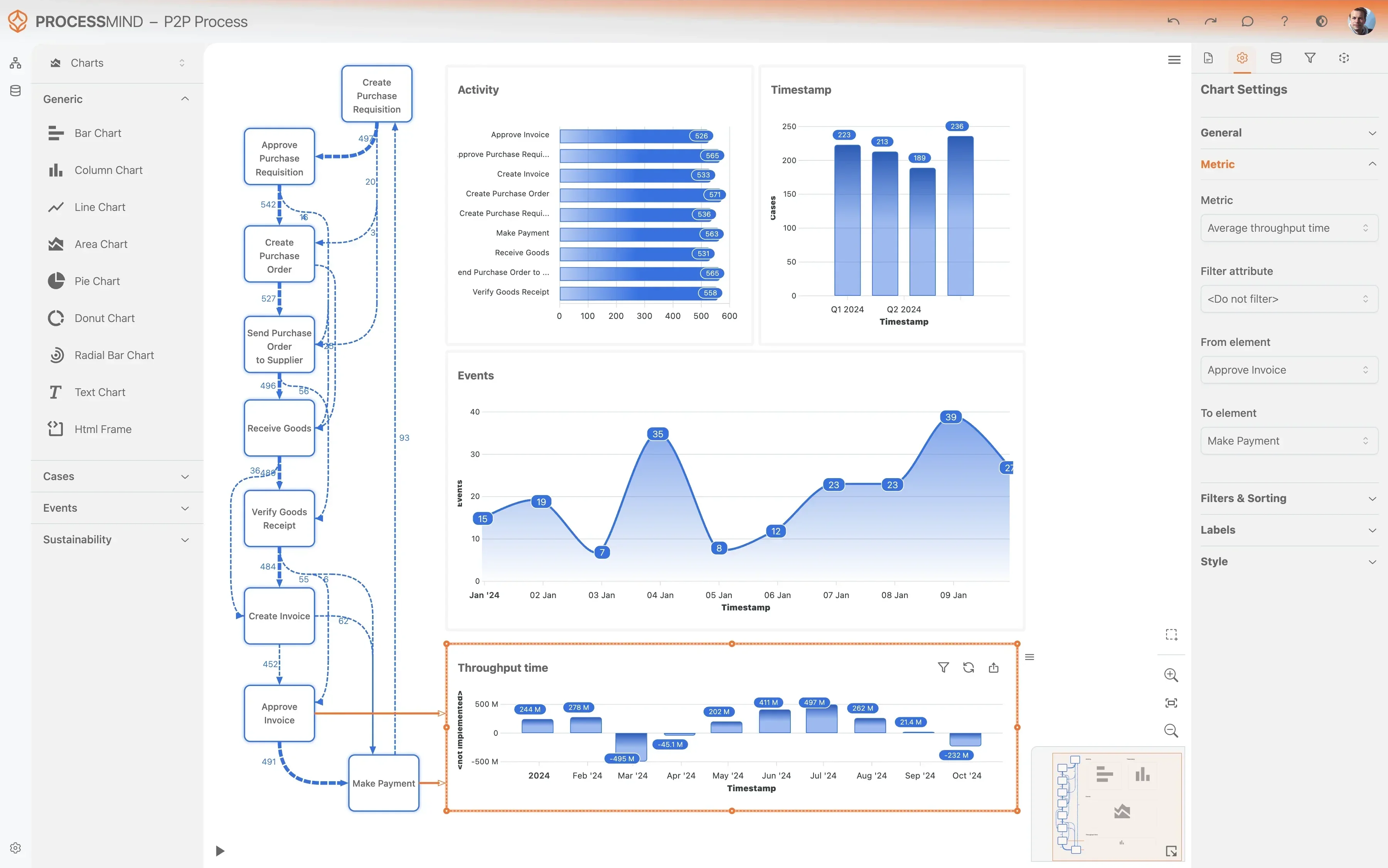
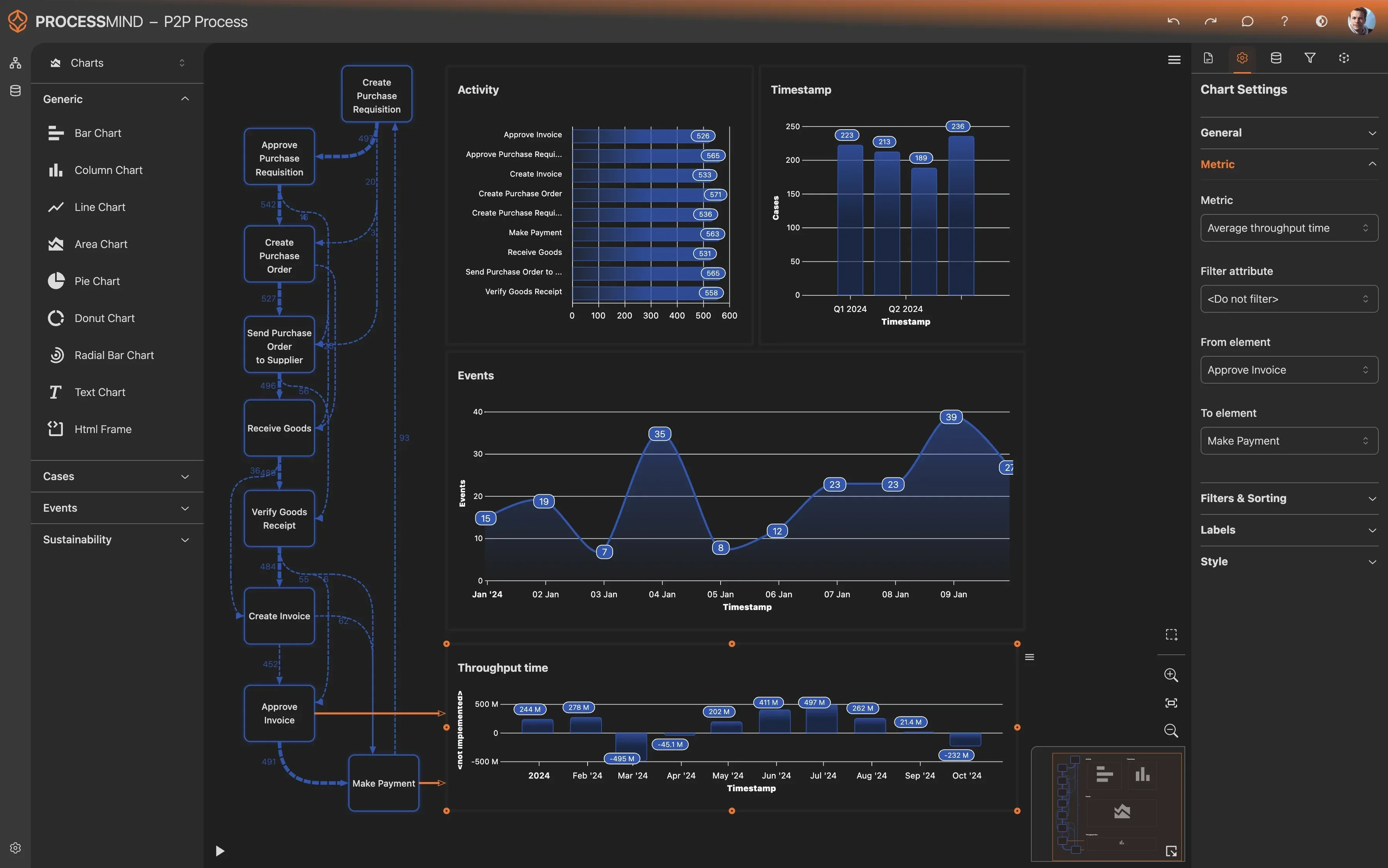
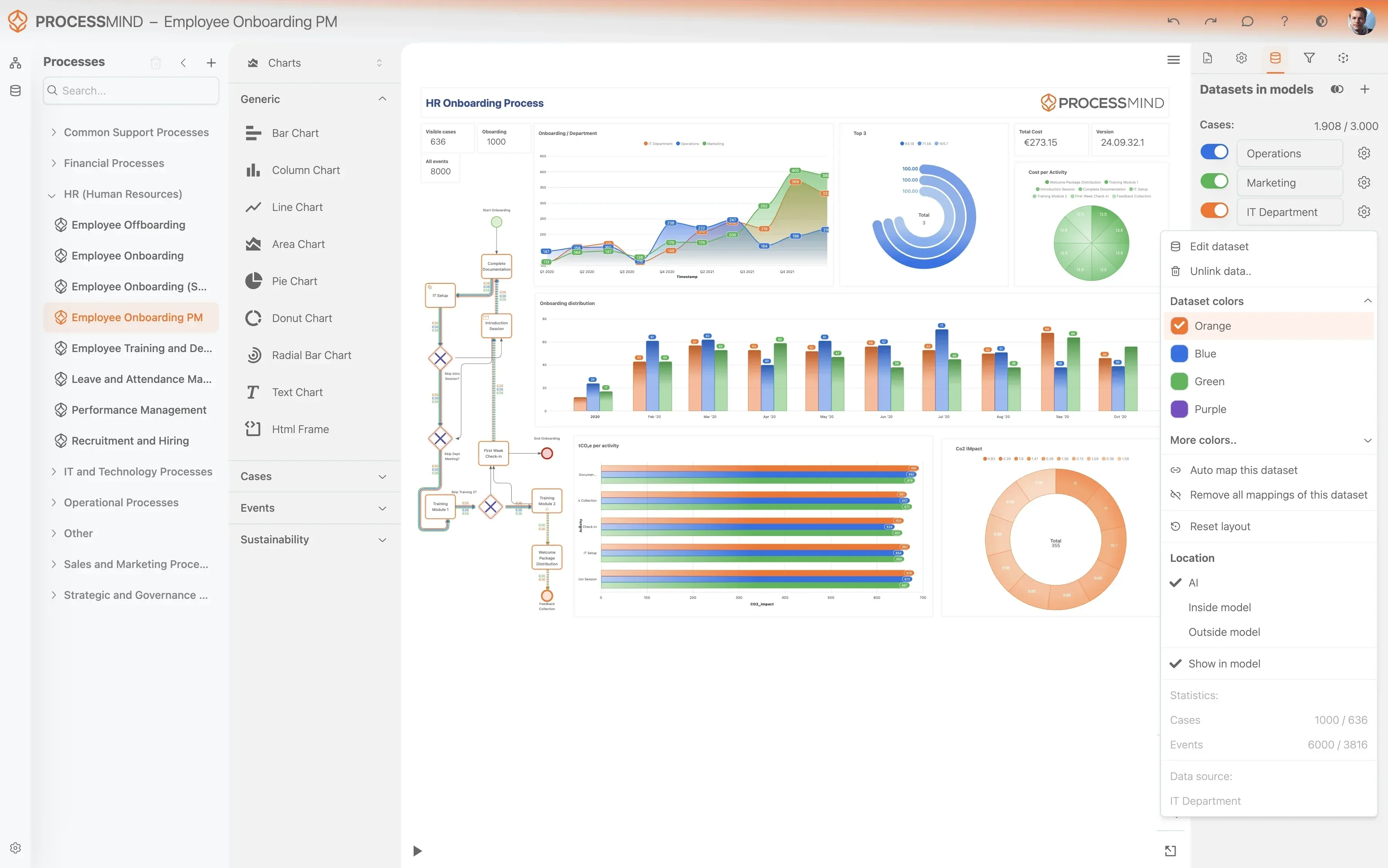
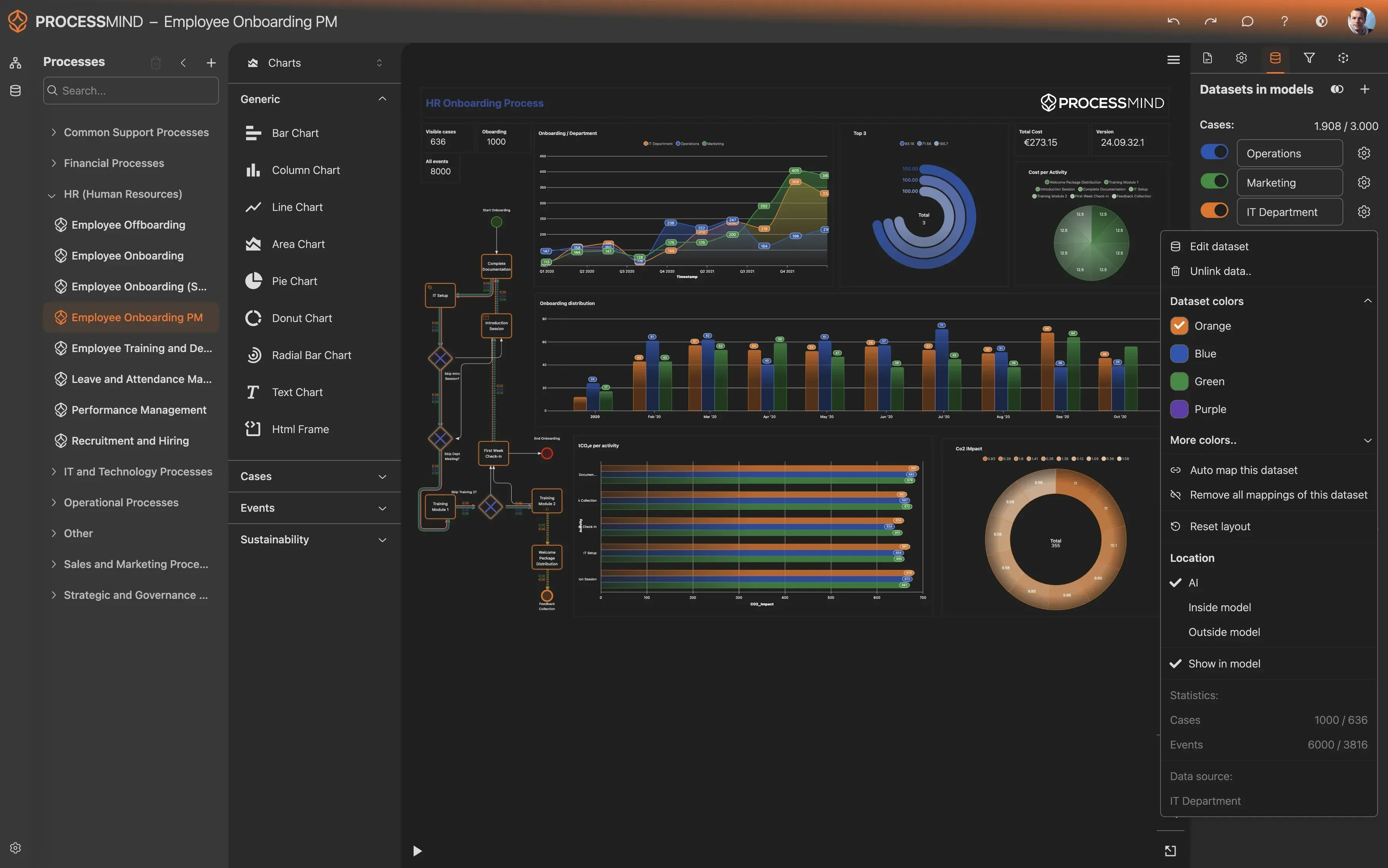
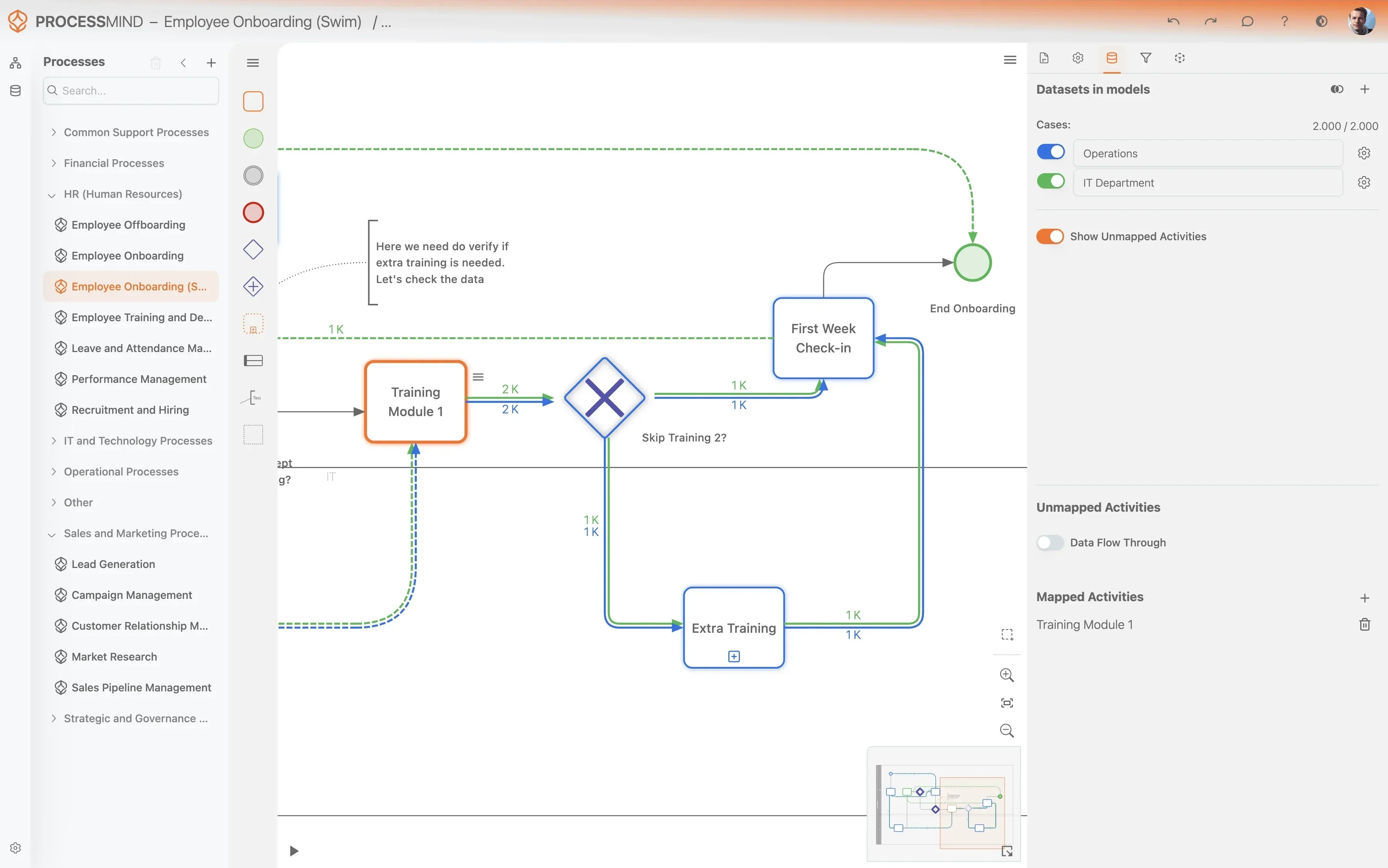
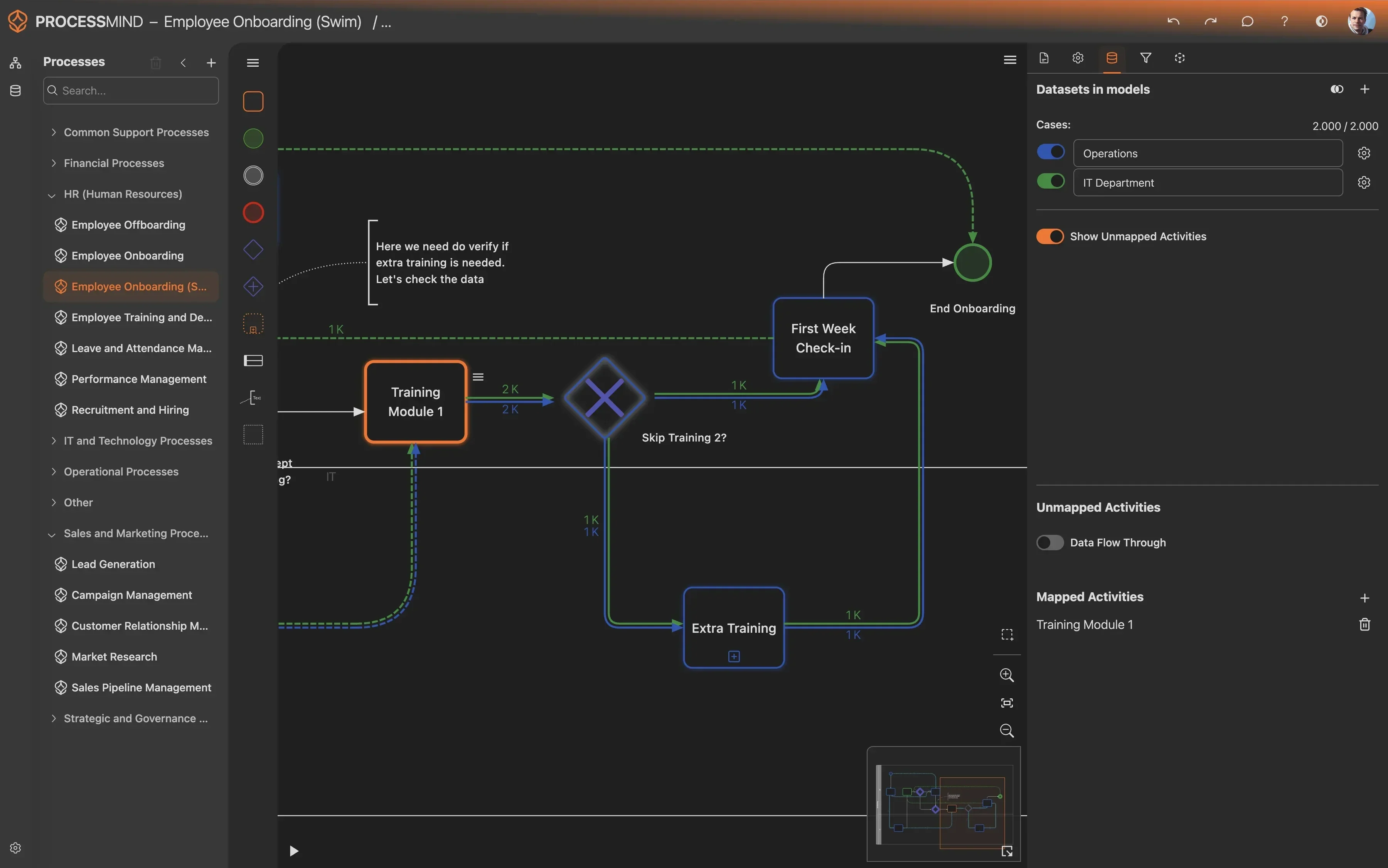
Unlock Complete Visibility into Your Maintenance Lifecycle
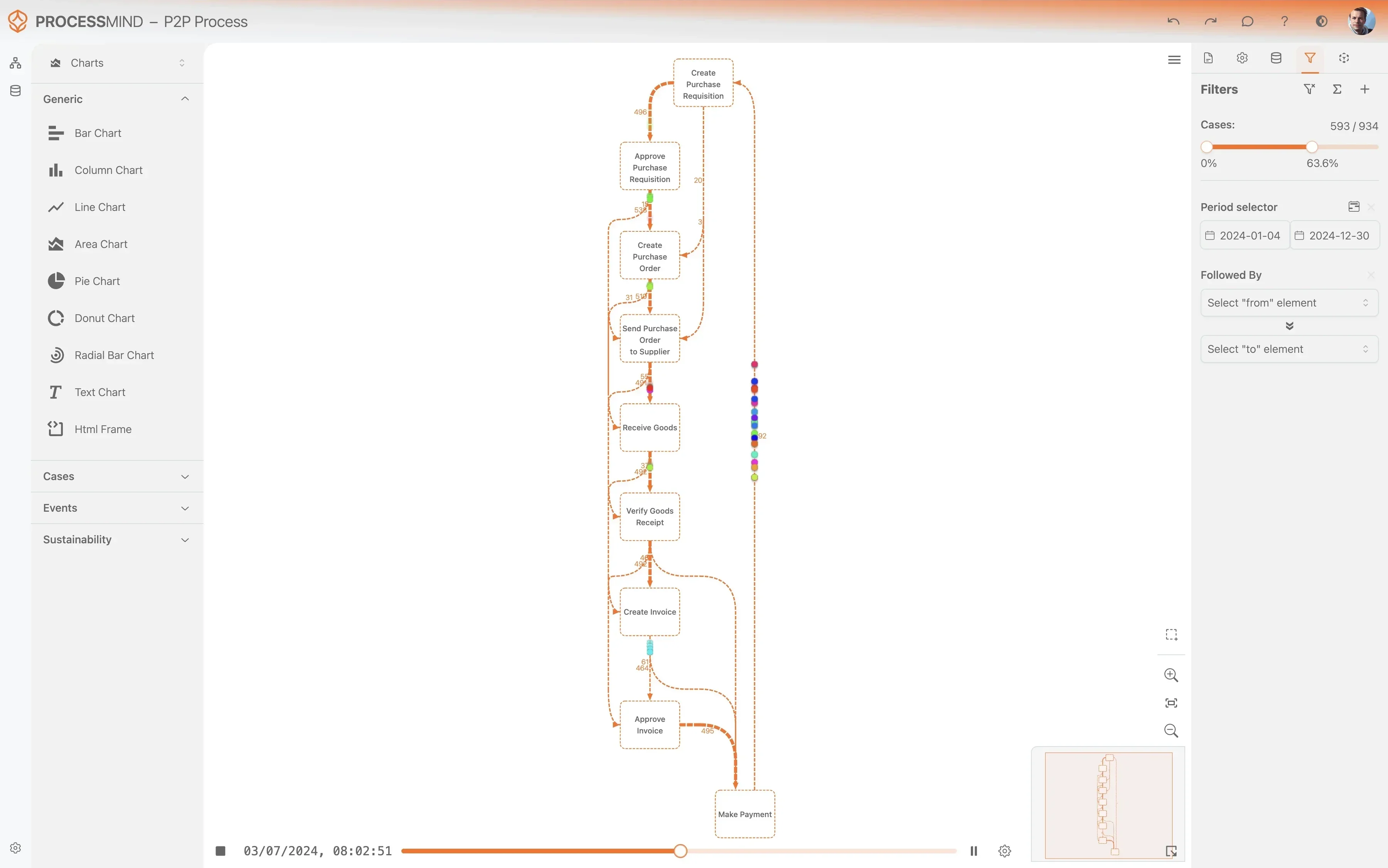
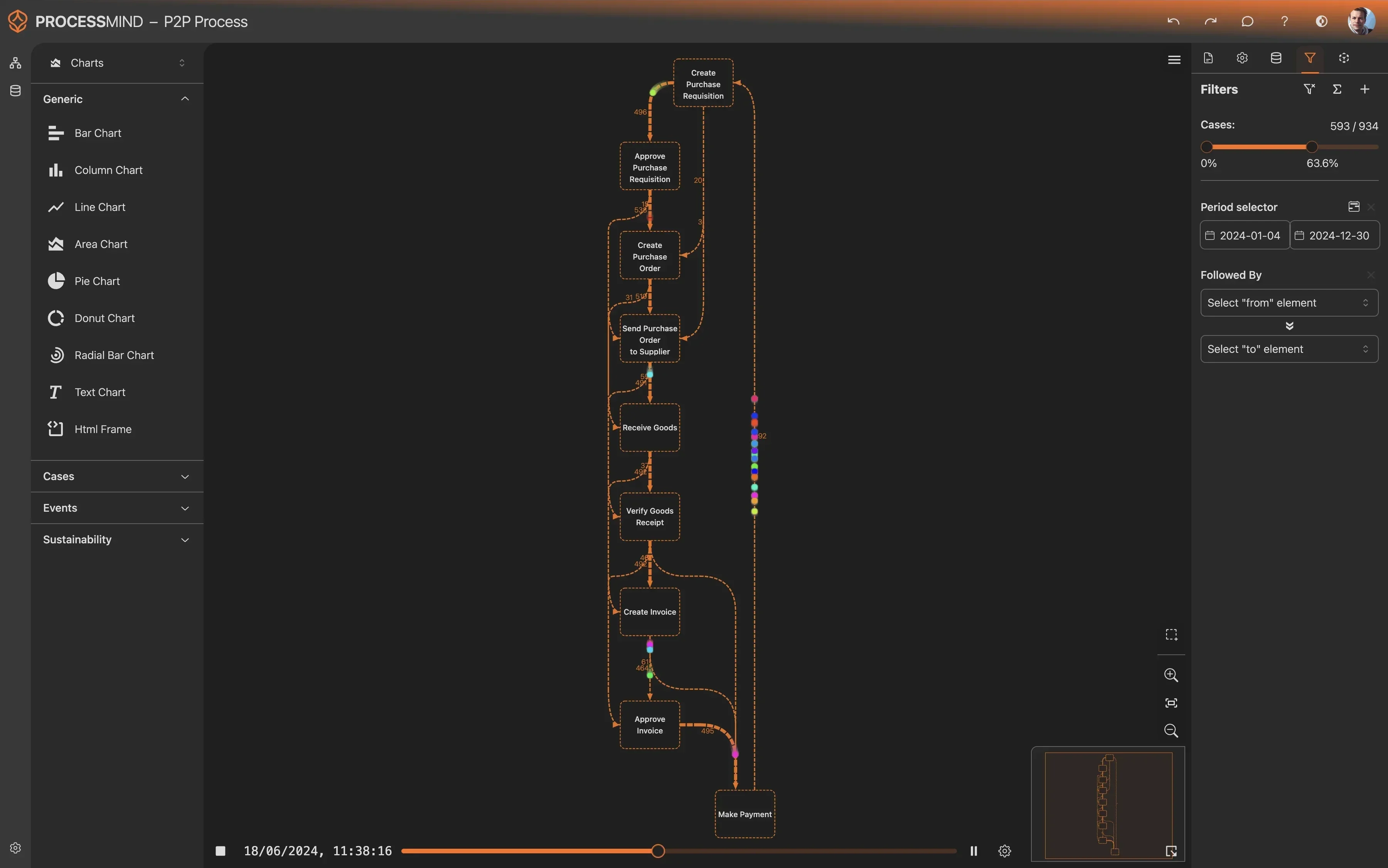
- Visualize the end to end work order lifecycle
- Pinpoint hidden delays in resource scheduling
- Identify root causes of unplanned downtime
- Measure performance against target KPIs
TYPICAL OUTCOMES
Quantifiable Gains in Maintenance Efficiency
By applying process mining to Maintenance Work Orders within IBM Maximo, organizations identify hidden bottlenecks and streamline their asset lifecycle. These improvements stem from an analytical approach to reducing cycle times and optimizing resource allocation.
Reduction in planning lead time
Streamlining the administrative approval chain reduces the time from work order generation to commencement, ensuring repairs start faster.
Increase in preventive tasks
Optimizing the maintenance mix reduces emergency work orders and unplanned downtime by identifying failure patterns before they occur.
Accuracy in hour estimations
Improved labor hour estimation accuracy allows for better resource allocation and reduces variances between planned and actual maintenance costs.
Target date achievement rate
Enhanced monitoring of critical asset work orders ensures that high priority infrastructure meets its SLA target dates, minimizing operational risk.
Decrease in recurring failures
Identifying recurring failures within a short window helps engineering teams address root causes and decreases the frequency of redundant repair visits.
Reduction in sign-off delays
Accelerating the final status change from technical sign off to closed ensures financial settlements and reporting cycles are completed without delay.
Actual outcomes vary based on organizational complexity, data quality, and the specific maturity of your maintenance operations. These metrics reflect common benchmarks observed during implementation.
Recommended Data
FAQs
Frequently asked questions
Process mining for asset maintenance involves extracting event logs from systems like IBM Maximo to visualize the actual flow of work orders. It helps teams identify hidden bottlenecks in approval cycles and pinpoint where actual execution deviates from the planned maintenance schedule.
Data extraction typically focuses on the WORKORDER and WOSTATUS tables in IBM Maximo to capture the history of status changes. By connecting to the Maximo database or using integrated APIs, you can pull transaction logs that show when each work order was created, approved, and completed.
Yes, process mining reveals the root causes of high costs by analyzing rework loops and material delays. By comparing estimated versus actual hours across different locations, you can see exactly where labor utilization is inefficient or where recurring failures drive up expenses.
The core requirements include the unique work order identifier, a timestamp for each status change, and the specific activity name. Additional attributes such as asset type, location, and site ID are also essential to filter the data and provide meaningful context for the analysis.
You can typically expect to see an initial visualization of your maintenance process within two to four weeks of data extraction. This timeframe allows for data cleaning and mapping, providing early insights into major delays in the planning or administrative closure phases.
Process mining ensures compliance by tracking whether all necessary safety documentation and inspections were completed before a work order was closed. It highlights instances where mandatory steps were bypassed or performed out of sequence, which helps maintain high safety standards.
By analyzing the work type and lead times associated with each order, process mining can clearly separate planned preventive maintenance from emergency reactive repairs. This visibility allows managers to measure the ratio of proactive work and identify assets that trigger frequent unplanned outages.
Contractor performance is monitored by tracking the handover points between internal teams and external vendors within the work order lifecycle. You can measure the speed and quality of contractor execution against your service level agreements to hold third parties accountable and optimize your maintenance spend.
Transform Asset Maintenance and Reduce Downtime Today
Cut maintenance cycle time by 30% and eliminate bottlenecks
Free 14-day trial, no credit card required