Improve Your Recruitment & Talent Acquisition

Select a process
Choose a process to continue working in your connected workspace.
Optimize Workday Recruiting for Efficient Talent Acquisition
Recruitment and talent acquisition often face hidden bottlenecks and prolonged hiring cycles. Our platform helps you pinpoint exact inefficiencies, from initial application submission to candidate onboarding. Discover how to transform your hiring process and achieve your talent goals faster, ensuring a smoother candidate journey.
Download our pre-configured data template and address common challenges to reach your efficiency goals. Follow our six-step improvement plan and consult the Data Template Guide to transform your operations.
Show detailed description
Unlocking Efficiency in Recruitment & Talent Acquisition
Efficient Recruitment & Talent Acquisition is a cornerstone of any successful organization, directly impacting growth, innovation, and competitive advantage. Within the robust framework of Workday Recruiting, managing the intricate dance of attracting, assessing, and hiring top talent can be complex. Hidden bottlenecks, inconsistent process flows, and unexpected delays are common challenges that can lead to prolonged time-to-hire, increased operational costs, and a suboptimal candidate experience. The cost of inefficiency is not just financial, it also means losing out on critical talent to competitors and delaying strategic initiatives. This detailed analysis focuses on transforming your Recruitment & Talent Acquisition process, leveraging the power of process mining to bring unparalleled clarity to your Workday Recruiting data.
How Process Mining Transforms Your Workday Recruiting Data
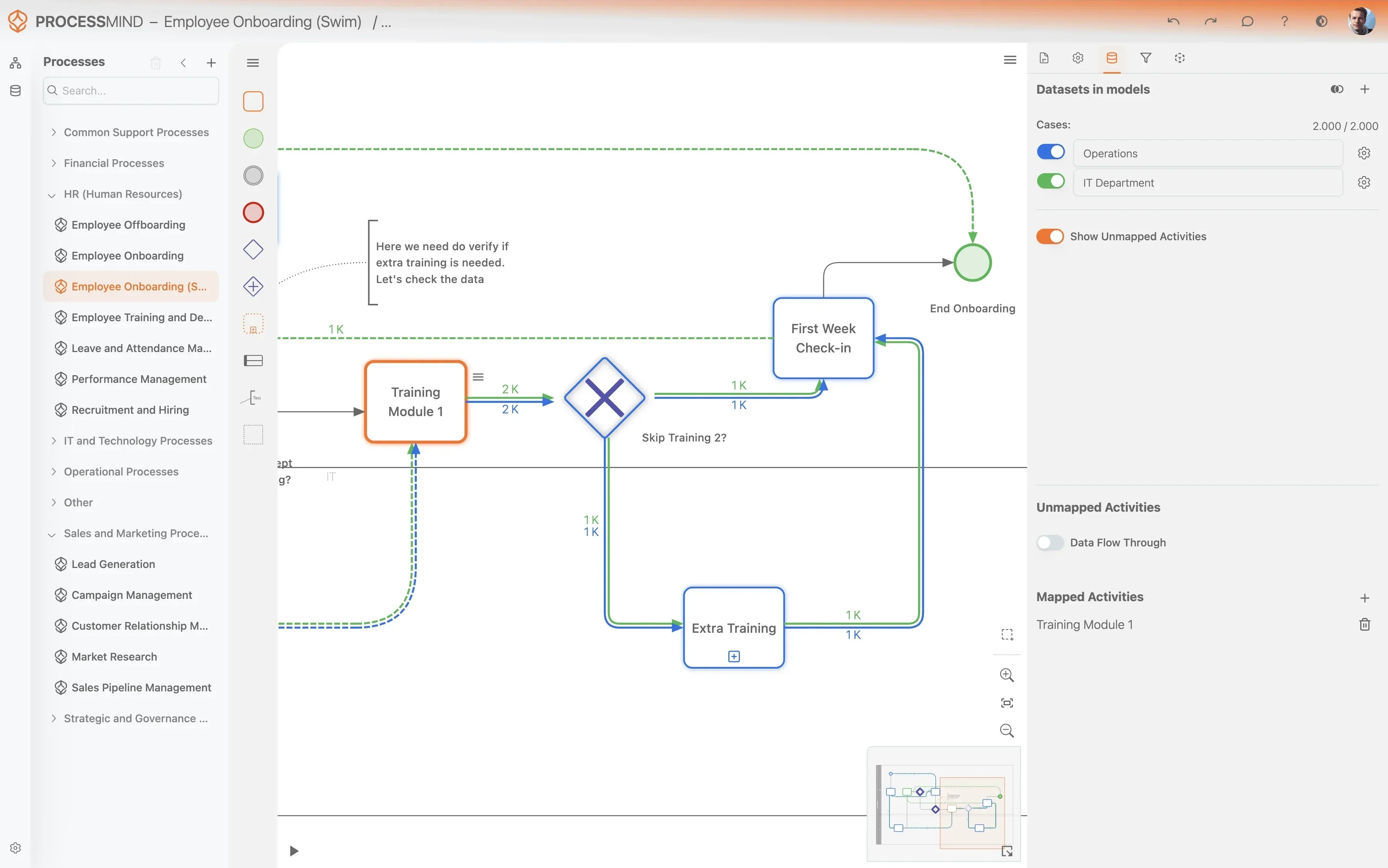
Process mining offers a revolutionary approach to understanding and optimizing your end-to-end Recruitment & Talent Acquisition process, going far beyond traditional dashboards and reports. By analyzing event logs directly from your Workday Recruiting module, we reconstruct the actual journey of every single job application, from its initial "Job Requisition Created" to the final "Candidate Hired" or "Application Rejected." This granular, data-driven view allows you to:
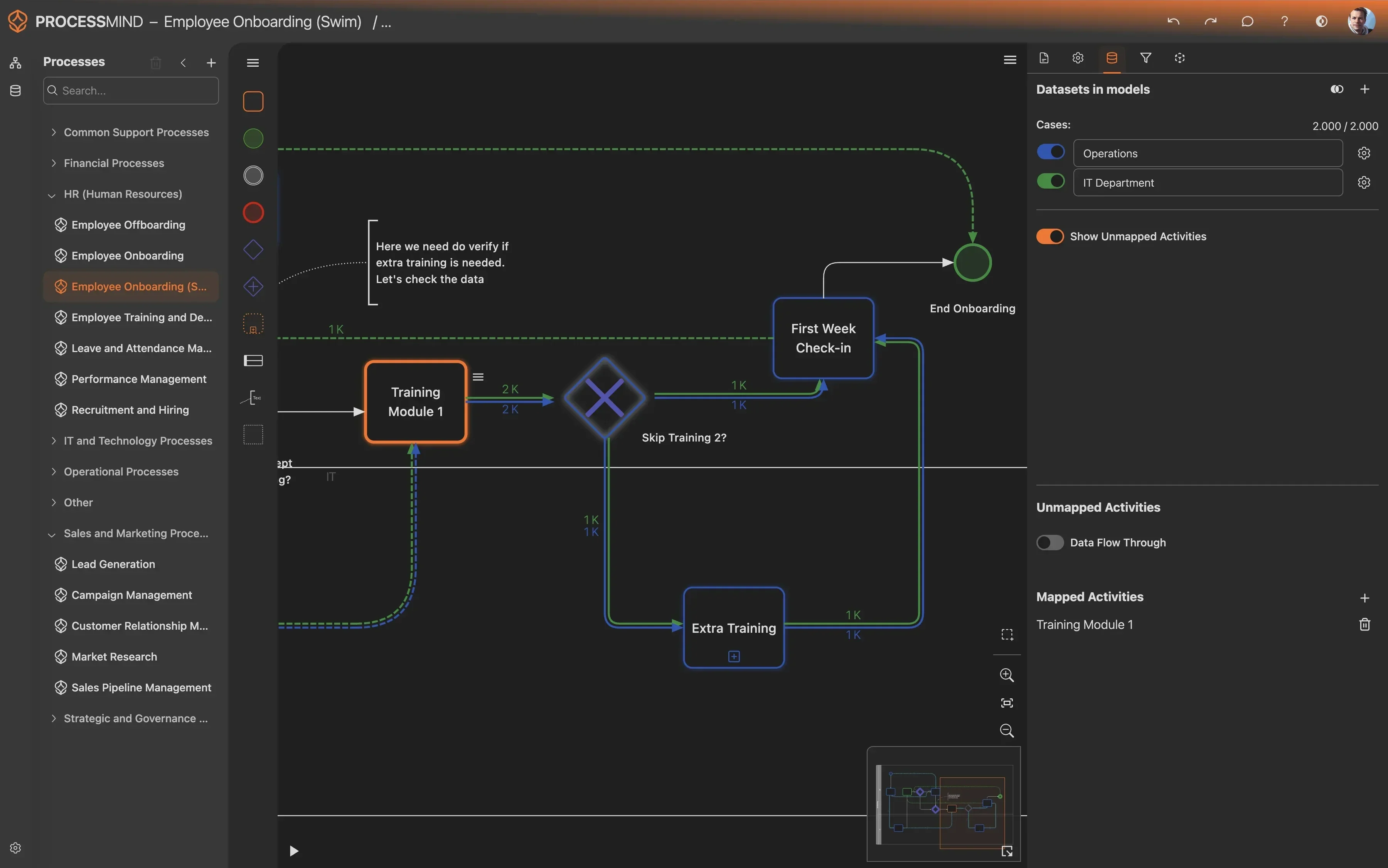
- Discover the Real Process Flow: Uncover the exact sequence of activities for each job application, identifying common paths and revealing unexpected deviations or rework loops that slow down hiring.
- Pinpoint Bottlenecks: Precisely locate where delays occur in your Workday Recruiting process. Is it in "Application Screening"? "First Interview Scheduling"? Or perhaps "Feedback Submission"? Process mining identifies the exact activities causing slowdowns, allowing for targeted interventions.
- Analyze Time-to-Hire: Accurately measure the cycle time for the entire recruitment process and its individual stages, allowing you to benchmark performance and identify opportunities to reduce recruitment cycle time.
- Evaluate Performance: Assess the efficiency of recruiters, hiring managers, and specific departments by analyzing their average cycle times and adherence to process standards.
- Understand Process Variations: Identify different recruitment paths taken for various job titles or departments, helping to standardize best practices or tailor processes where necessary.
Key Areas for Recruitment Process Optimization
Applying process mining to your Workday Recruiting data illuminates specific areas ripe for improvement, helping you to achieve a more agile and effective talent acquisition function:
- Streamlining Initial Screening: Reduce the duration between "Application Received" and "Application Screened" by optimizing workload distribution or automating initial filtering criteria.
- Accelerating Interview Cycles: Identify why some candidates experience long gaps between "First Interview Conducted" and "Second Interview Scheduled," allowing you to improve coordination and scheduling efficiency.
- Optimizing Offer Management: Analyze the steps from "Offer Extended" to "Offer Accepted" to understand negotiation times and identify factors influencing candidate acceptance rates.
- Enhancing Handover Efficiency: Ensure seamless transitions from "Offer Accepted" to "Background Check Initiated" and then to "Onboarding Initiated," minimizing delays that can impact candidate experience and start dates.
- Improving Compliance Adherence: Monitor process execution to ensure that all mandatory steps, such as specific approvals or compliance checks within Workday, are consistently followed, reducing risk and ensuring fair hiring practices.
Tangible Outcomes of Process Improvement
By leveraging process mining for your Workday Recruiting operations, you can expect to achieve significant, measurable benefits:
- Reduced Time-to-Hire: Drastically shorten recruitment cycles, enabling your organization to fill critical roles faster and maintain a competitive edge in the talent market.
- Lower Recruitment Costs: Minimize expenses associated with prolonged hiring, including recruiter overtime, extended advertising, and lost productivity due to open positions.
- Improved Candidate Experience: Provide a more efficient, transparent, and positive journey for applicants, enhancing your employer brand and increasing offer acceptance rates.
- Higher Quality Hires: By optimizing the process, recruiters and hiring managers can focus more on candidate quality and less on administrative delays, leading to better talent acquisition outcomes.
- Enhanced Operational Transparency: Gain a crystal-clear, data-driven understanding of your entire Recruitment & Talent Acquisition process, enabling proactive management and continuous improvement.
Start Optimizing Your Talent Acquisition Today
Dive into the intricacies of your Workday Recruiting data and discover the hidden potential for improvement within your Recruitment & Talent Acquisition process. This solution provides the framework to not only identify inefficiencies but also to implement data-driven strategies that lead to faster, more cost-effective, and compliant hiring.
The 6-Step Improvement Path for Recruitment & Talent Acquisition
Download the Template
What to do
Access and download the pre-configured Excel template for Recruitment & Talent Acquisition processes, designed to structure your Workday Recruiting data correctly.
Why it matters
A standardized template ensures your data is uniformly prepared, streamlining the upload process and enabling accurate analysis of your recruitment workflows.
Expected outcome
A ready-to-use Excel template tailored for Workday Recruiting data, ensuring data consistency.
Export Your Workday Data
What to do
Extract 3-6 months of historical recruitment data from Workday Recruiting, including job applications, interview schedules, and offer statuses, and populate the downloaded template.
Why it matters
Analyzing a substantial period of real data reveals recurring patterns and true bottlenecks in your hiring process, allowing for data-driven improvement.
Expected outcome
Your historical recruitment data from Workday accurately organized within the provided Excel template, ready for analysis.
Upload Your Dataset
What to do
Securely upload your filled Excel template to the ProcessMind platform. The system will automatically begin processing your recruitment data.
Why it matters
A swift and secure upload initiates the automated analysis, allowing you to quickly move from data collection to insight generation without manual delays.
Expected outcome
Your recruitment data securely uploaded to ProcessMind, with automatic processing initiated to generate initial insights.
Analyze Your Recruitment Flow
What to do
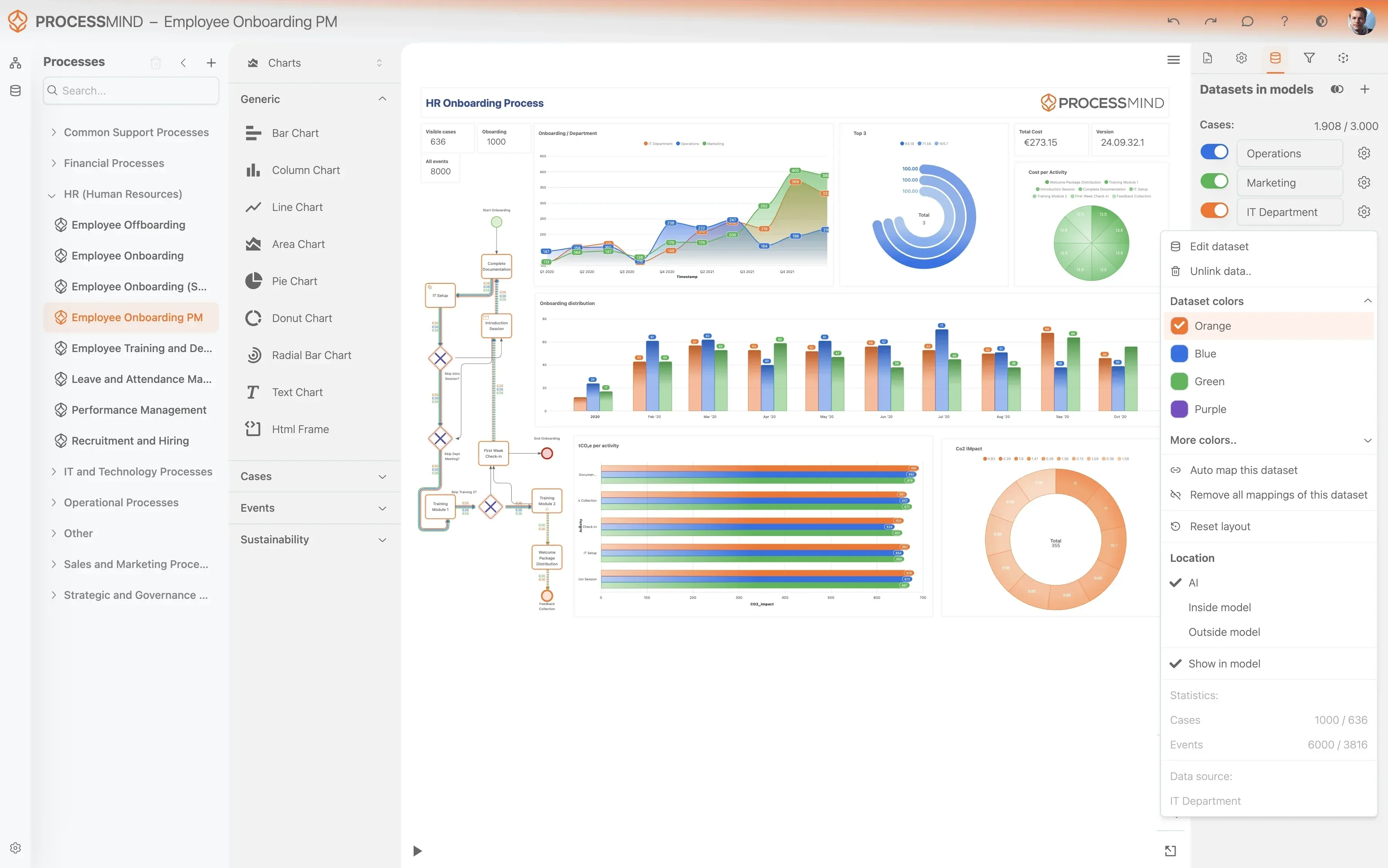
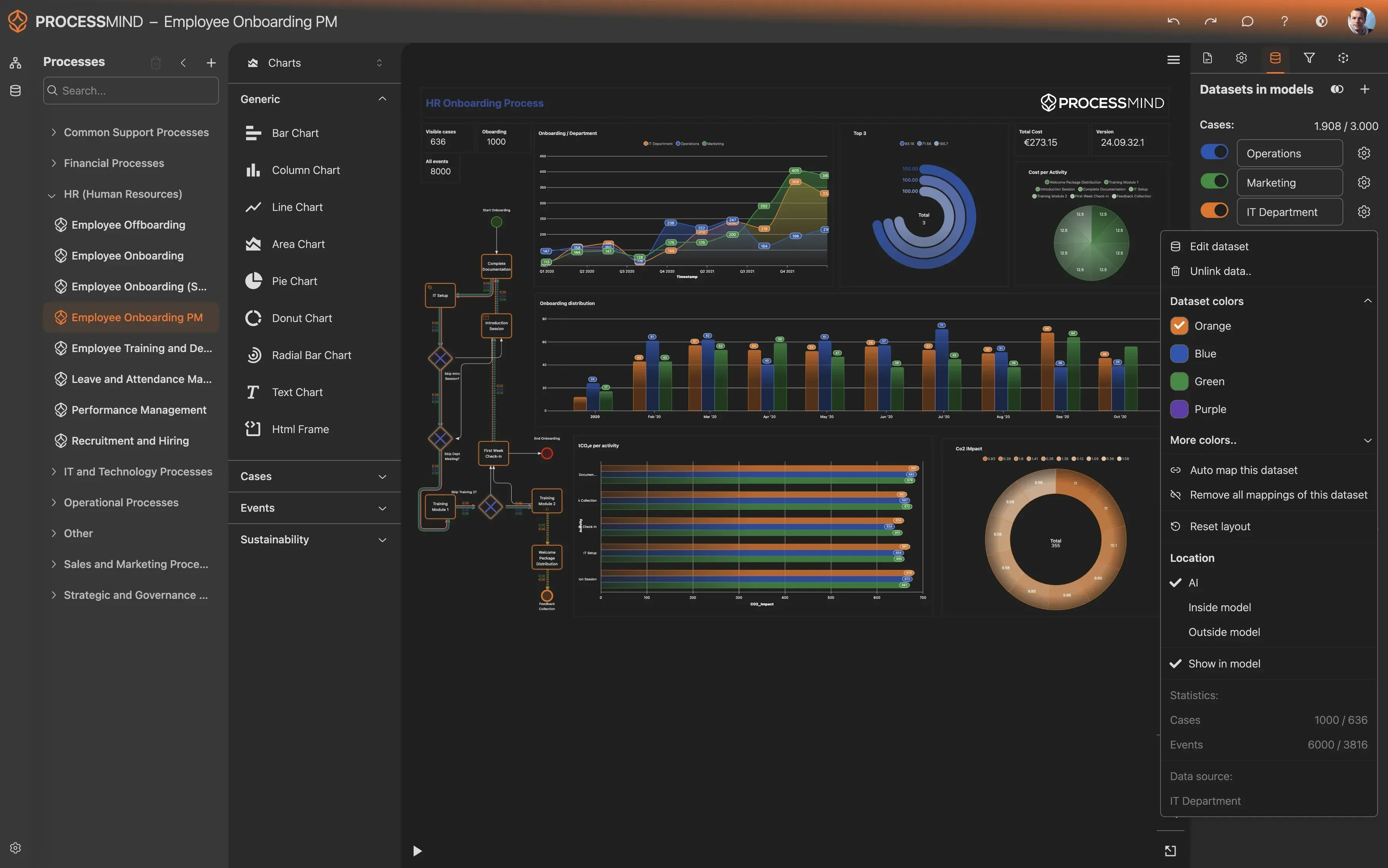
Explore the auto-generated dashboards and insights within ProcessMind, leveraging AI-driven recommendations to identify inefficiencies in your Workday Recruiting process.
Why it matters
Visualizing your end-to-end recruitment journey helps pinpoint specific delays, deviations, and compliance risks, uncovering hidden opportunities for optimization.
Expected outcome
A comprehensive understanding of your recruitment process bottlenecks, cycle times, and performance areas through interactive dashboards and AI insights.
Implement Actionable Changes
What to do
Prioritize and implement the identified improvement opportunities, focusing on areas like reducing time-to-hire or enhancing candidate experience in Workday.
Why it matters
Translating insights into action directly improves process efficiency, reduces operational costs, and leads to better quality hires and a stronger employer brand.
Expected outcome
Targeted process improvements, such as streamlined candidate screening or faster offer approvals, actively implemented within your Workday Recruiting setup.
Monitor Your Progress
What to do
Periodically re-upload updated recruitment data from Workday Recruiting to ProcessMind to continuously track the impact of your implemented changes.
Why it matters
Ongoing monitoring ensures that improvements are sustained and allows for agile adjustments, guaranteeing long-term optimization and a continuously improving hiring process.
Expected outcome
Measurable improvements in key recruitment KPIs like time-to-hire, cost-per-hire, and candidate satisfaction, sustained over time.
TYPICAL OUTCOMES
Achieving Excellence in Talent Acquisition
These outcomes demonstrate how organizations use process intelligence to optimize their recruitment and talent acquisition processes, from job application to offer acceptance. By uncovering and resolving bottlenecks within Workday Recruiting workflows, companies achieve faster hiring cycles, enhanced candidate experiences, and more efficient resource allocation.
Overall recruitment cycle
Significantly cut the duration from application receipt to candidate hire, ensuring critical roles are filled more quickly and efficiently.
Time between stages
Streamline the coordination of interviews, reducing delays between screening, initial, and subsequent interviews to improve candidate experience.
Before offer extended
Identify and resolve pain points in the recruitment process that cause candidates to withdraw, leading to a stronger talent pipeline and reduced re-recruiting efforts.
Applications processed per day
Enhance the volume and speed of application screening, ensuring qualified candidates are identified faster and move through the pipeline without unnecessary delays.
Background check adherence
Guarantee that all necessary background checks are initiated and completed successfully, mitigating risks and ensuring regulatory and internal policy adherence for new hires.
Post-interview response
Accelerate the turnaround time for hiring manager feedback after interviews, preventing candidate disengagement and speeding up decision-making in the hiring process.
Results vary based on process complexity and data quality. These figures represent typical improvements observed across implementations.
Recommended Data
FAQs
Frequently asked questions
Process mining visualizes the actual flow of your recruitment process, identifying hidden bottlenecks like excessive time to hire or interview scheduling delays. It provides data-driven insights to optimize application screening, standardize recruiter performance, and enhance candidate experience, leading to more efficient talent acquisition.
You will need event log data that includes a case identifier, typically the job application ID, an activity name, such as "Application Submitted" or "Interview Scheduled," and a timestamp for each activity. Additional attributes like recruiter ID, job requisition details, or candidate status can enrich the analysis.
Workday Recruiting typically allows data extraction through custom reports or integrations, often using its Report Writer tool or APIs. The goal is to obtain a flat file or stream of data containing the required case ID, activity, and timestamp information for each step of the recruitment journey.
Initial insights can often be generated within weeks, once data extraction and initial modeling are complete. The speed depends on data quality and the complexity of your recruitment process. Continuous monitoring provides ongoing insights for sustained improvement.
Yes, process mining can highlight deviations from standard operating procedures in sensitive areas like background checks and offer management. It visualizes actual process paths, making it easy to spot potential compliance gaps or inconsistencies, allowing for timely corrective actions and process standardization.
Implementing process mining primarily involves data extraction and analysis, not reconfiguring Workday Recruiting itself. While initial data mapping requires some effort, modern process mining tools are designed to connect with various data sources and provide user-friendly interfaces for analysis.
Key technical requirements include access to Workday Recruiting for data extraction, a suitable process mining software platform, and sufficient computing resources for data processing. Expertise in data analysis and basic understanding of your Workday data model are also beneficial.
No, process mining complements existing HR analytics and reporting tools by providing a deeper, end-to-end view of process execution. While reporting tools tell you "what" happened, process mining explains "how" and "why" it happened, offering diagnostic and prescriptive insights.
By analyzing process execution, process mining identifies stages where candidates frequently abandon applications or decline offers. It highlights delays, unexpected process steps, or inconsistencies that contribute to drop-off, enabling targeted improvements to candidate experience and communication.
End Hiring Bottlenecks: Optimize Your Talent Acquisition Today
Pinpoint inefficiencies, reduce hiring cycle time by 30%, and achieve talent goals faster.
No credit card required. Free 14-day trial.