Improve Your Customer Service

Select a process
Choose a process to continue working in your connected workspace.
Optimize Customer Service in Zendesk Support
Customer service processes often contain hidden inefficiencies that lead to frustrated customers and increased operational costs. This platform helps you precisely identify bottlenecks, understand their root causes, and uncover opportunities for improvement. You can then implement practical changes to reduce resolution times and elevate customer satisfaction.
Download our pre-configured data template and address common challenges to reach your efficiency goals. Follow our six-step improvement plan and consult the Data Template Guide to transform your operations.
Show detailed description
Why Optimizing Customer Service in Zendesk Support is Crucial
Customer service is the backbone of any successful business, directly impacting customer loyalty, brand reputation, and ultimately, revenue. In today's competitive landscape, simply meeting expectations isn't enough; customers expect prompt, efficient, and personalized support. For organizations relying on Zendesk Support, the challenge lies in ensuring that every ticket, from initial contact to final resolution, follows the most efficient path. Inefficiencies in your Customer Service process, often hidden within the complexities of daily operations, can lead to extended resolution times, increased operational costs, agent burnout, and, most critically, dissatisfied customers who may seek alternatives.
Without clear visibility into the end-to-end journey of a service request, identifying the root causes of delays and deviations becomes a guessing game. Are certain agents overwhelmed? Are specific request types consistently getting stuck? Is your SLA compliance suffering due to unnecessary reworks or excessive handoffs? Understanding the answers to these questions is vital for strategic decision-making and continuous improvement. Optimizing your Customer Service process isn't just about cutting costs, it's about building a robust, customer-centric operation that fosters long-term relationships and drives business growth.
How Process Mining Unlocks Customer Service Efficiency
Process mining offers a revolutionary approach to understanding and improving your Customer Service operations within Zendesk Support. By extracting event logs from your Zendesk data, process mining tools reconstruct the actual, as-is process flow, revealing every step a service request takes. This isn't about what you think happens, but what actually happens, providing an objective, data-driven view of your operations.
Through this powerful analysis, you can visualize the complete customer service cycle time, identify frequent deviations from your standard operating procedures, and pinpoint exact bottlenecks that hinder efficiency. For instance, you can observe where tickets are repeatedly reassigned, highlighting training needs or workflow design issues. You can identify specific categories of service requests that consistently exceed their target resolution times, allowing for targeted process re-engineering. Process mining helps you move beyond assumptions, providing concrete evidence to support your optimization efforts, ensuring that changes are impactful and data-driven. This precise identification of inefficiencies empowers you to make informed decisions that directly reduce Customer Service cycle time and improve overall performance.
Key Improvement Areas Identified Through Process Mining
Applying process mining to your Zendesk Support data typically uncovers several critical areas for improvement:
- Bottleneck Identification and Resolution: Pinpoint specific queues, agent groups, or even individual activities where service requests accumulate, causing delays. This allows for targeted resource allocation or process redesign.
- Rework and Handoff Optimization: Visualize instances of rework, where tickets are reopened or repeatedly passed between teams. Reducing unnecessary handoffs streamlines the process, cutting down on wasted effort and reducing average handling time.
- SLA Compliance and Deviation Analysis: Monitor how well your Customer Service process adheres to Service Level Agreements. Identify common reasons for SLA breaches, whether it's specific process steps, agent availability, or internal dependencies.
- Root Cause Analysis for Delays: Delve into the factors contributing to long cycle times, such as requests for additional information from customers, internal escalations, or external dependencies, allowing you to address these systematically.
- Agent Performance and Training Needs: While respecting privacy, aggregated data can highlight variations in agent efficiency or adherence to best practices, informing targeted training programs or workload balancing.
Expected Outcomes of Zendesk Customer Service Optimization
The strategic application of process mining for your Zendesk Support Customer Service process yields significant, measurable benefits:
- Reduced Customer Service Cycle Time: Streamline processes by eliminating unnecessary steps and bottlenecks, leading to faster resolution of customer issues.
- Enhanced Customer Satisfaction: Quicker, more efficient service directly translates to happier customers and improved customer retention rates.
- Lower Operational Costs: Optimize resource allocation, reduce rework, and minimize manual efforts, resulting in substantial cost savings.
- Improved SLA Compliance: Consistently meet and exceed your Service Level Agreements, bolstering customer trust and avoiding penalties.
- Greater Process Transparency: Gain a comprehensive, objective understanding of your Customer Service operations, enabling continuous improvement and proactive problem-solving.
By leveraging process mining, you transform your Customer Service in Zendesk Support from a reactive cost center into a proactive, efficient, and customer-centric operation, ready to meet future demands.
Getting Started with Your Optimization Journey
Ready to transform your Customer Service operations and unlock peak efficiency in Zendesk Support? Embrace the power of process optimization to meticulously analyze your existing workflows. Discover precisely where your process bottlenecks lie and learn how to reduce Customer Service cycle time effectively. This approach empowers you to implement targeted improvements, ensuring your team delivers exceptional service with unparalleled efficiency. Begin your journey toward a more optimized, customer-focused Zendesk Support experience today.
The 6-Step Improvement Path for Customer Service
Download the Template
What to do
Access and download the pre-configured Excel data template, designed specifically for analyzing customer service processes in Zendesk Support.
Why it matters
A standardized data structure ensures that all critical information from your Zendesk Support tickets is captured correctly for accurate process analysis.
Expected outcome
A ready-to-use Excel template tailored for Zendesk Support customer service data.
Export Your Zendesk Data
What to do
Extract 3-6 months of historical customer service data from your Zendesk Support instance, then carefully populate the downloaded Excel template.
Why it matters
Comprehensive historical data provides a robust foundation for identifying recurring patterns, bottlenecks, and areas for improvement in your service delivery.
Expected outcome
Your Zendesk Support data organized and prepared within the standardized template, ready for upload.
Upload Your Dataset
What to do
Upload your completed data template to the ProcessMind platform. The system will automatically process and prepare your customer service data for analysis.
Why it matters
Secure and efficient data upload kickstarts the analysis process, transforming raw data into actionable insights without complex manual configuration.
Expected outcome
Your customer service dataset securely uploaded and undergoing automatic initial analysis within ProcessMind.
Analyze Your Service Flow
What to do
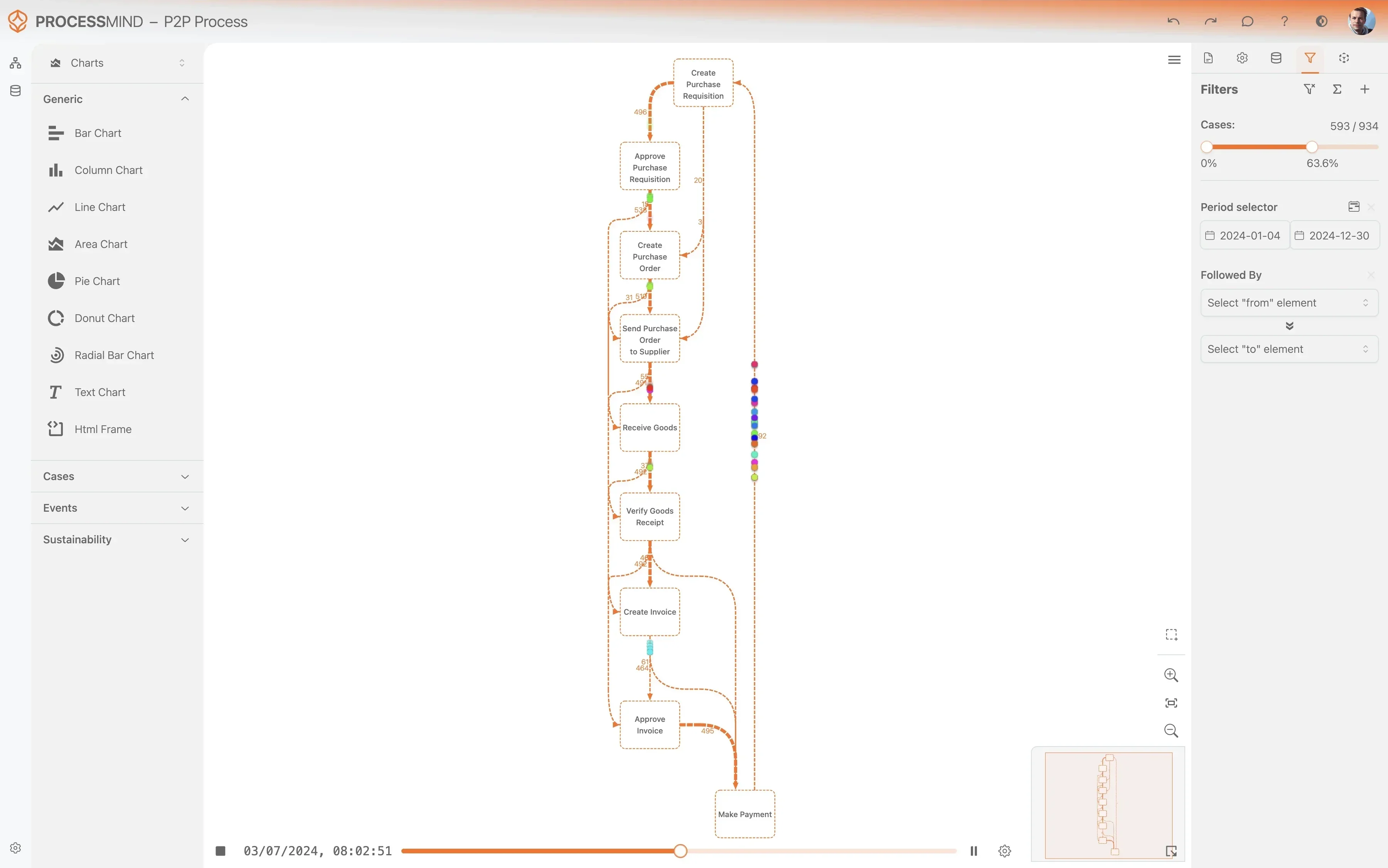
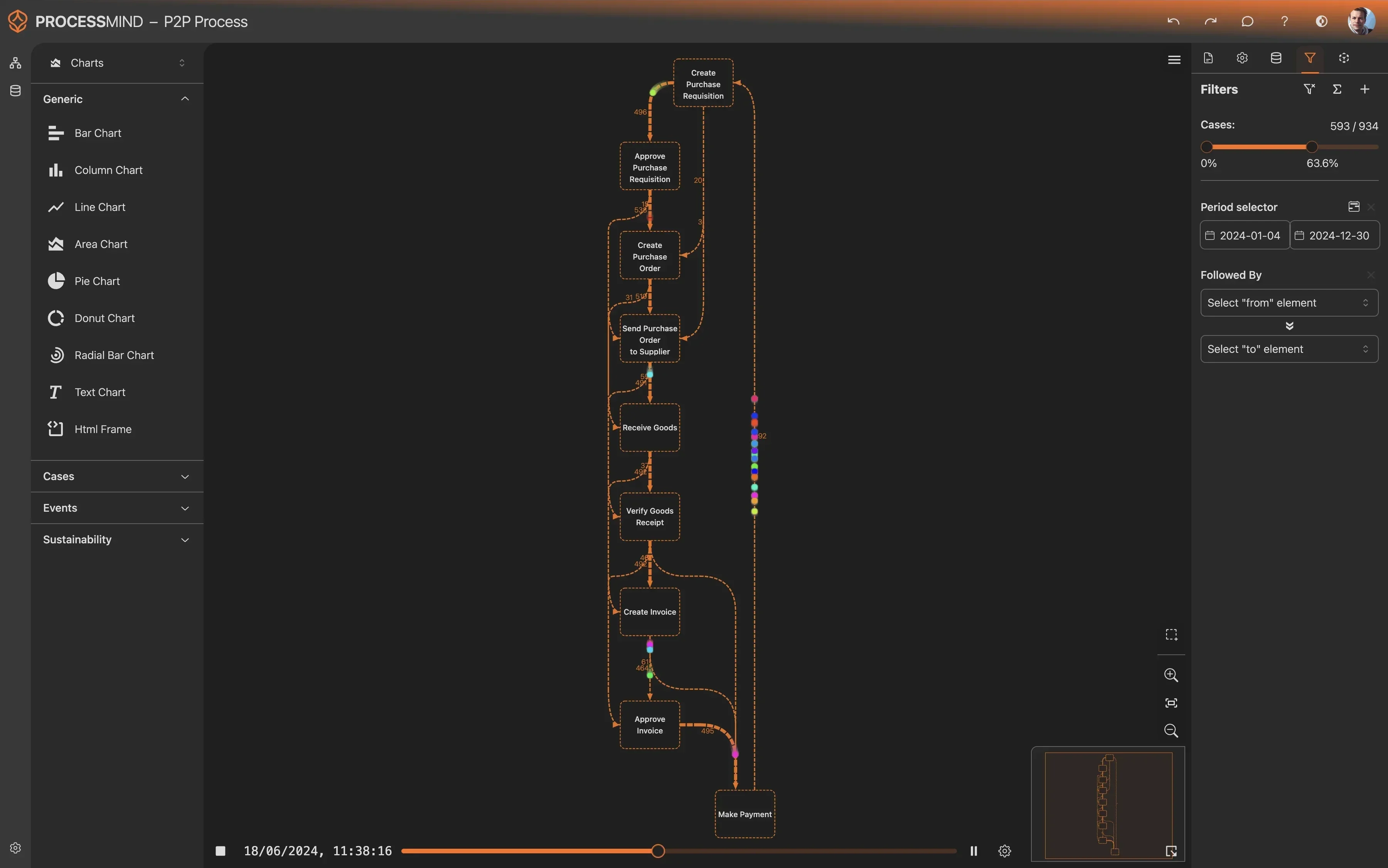
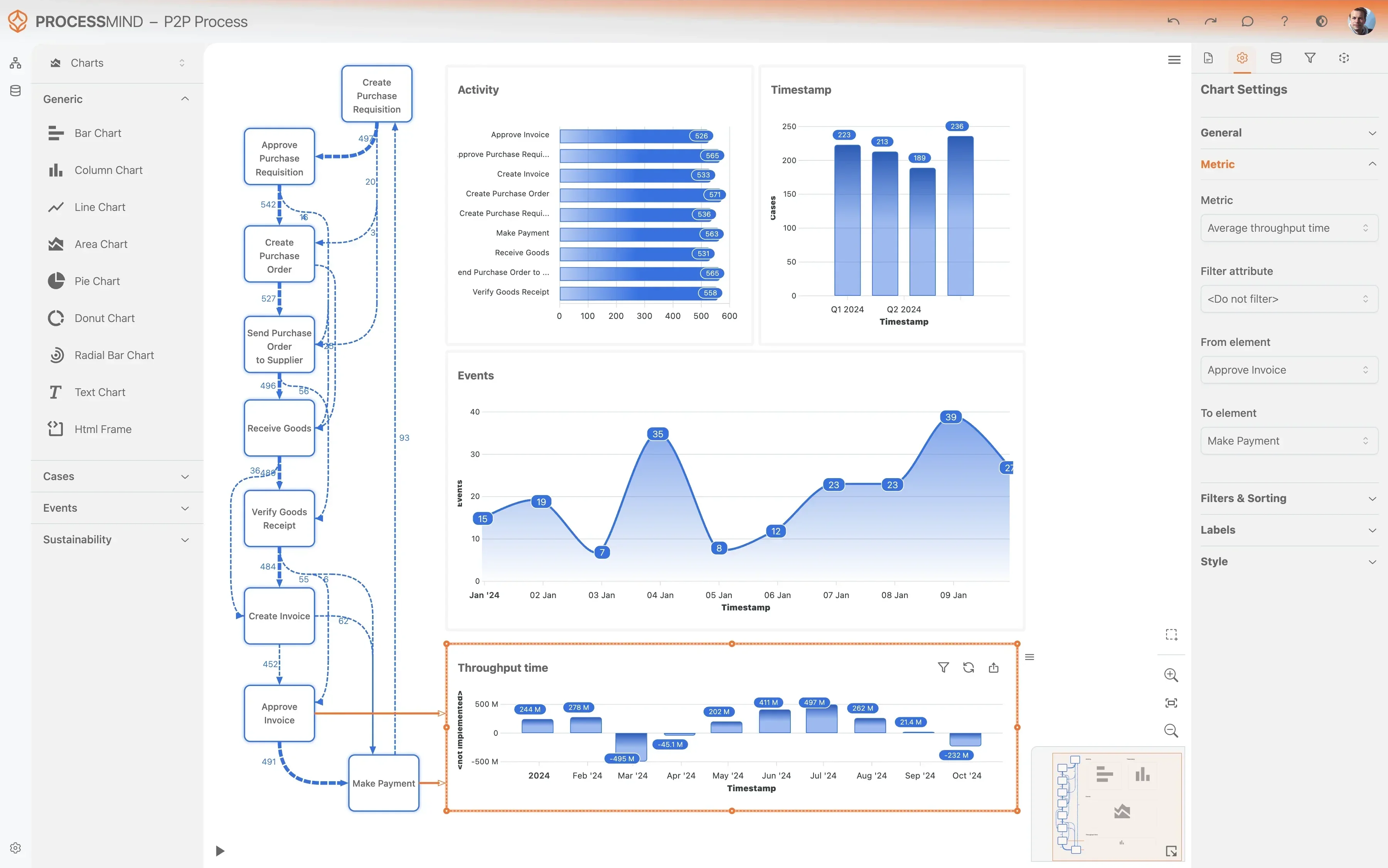
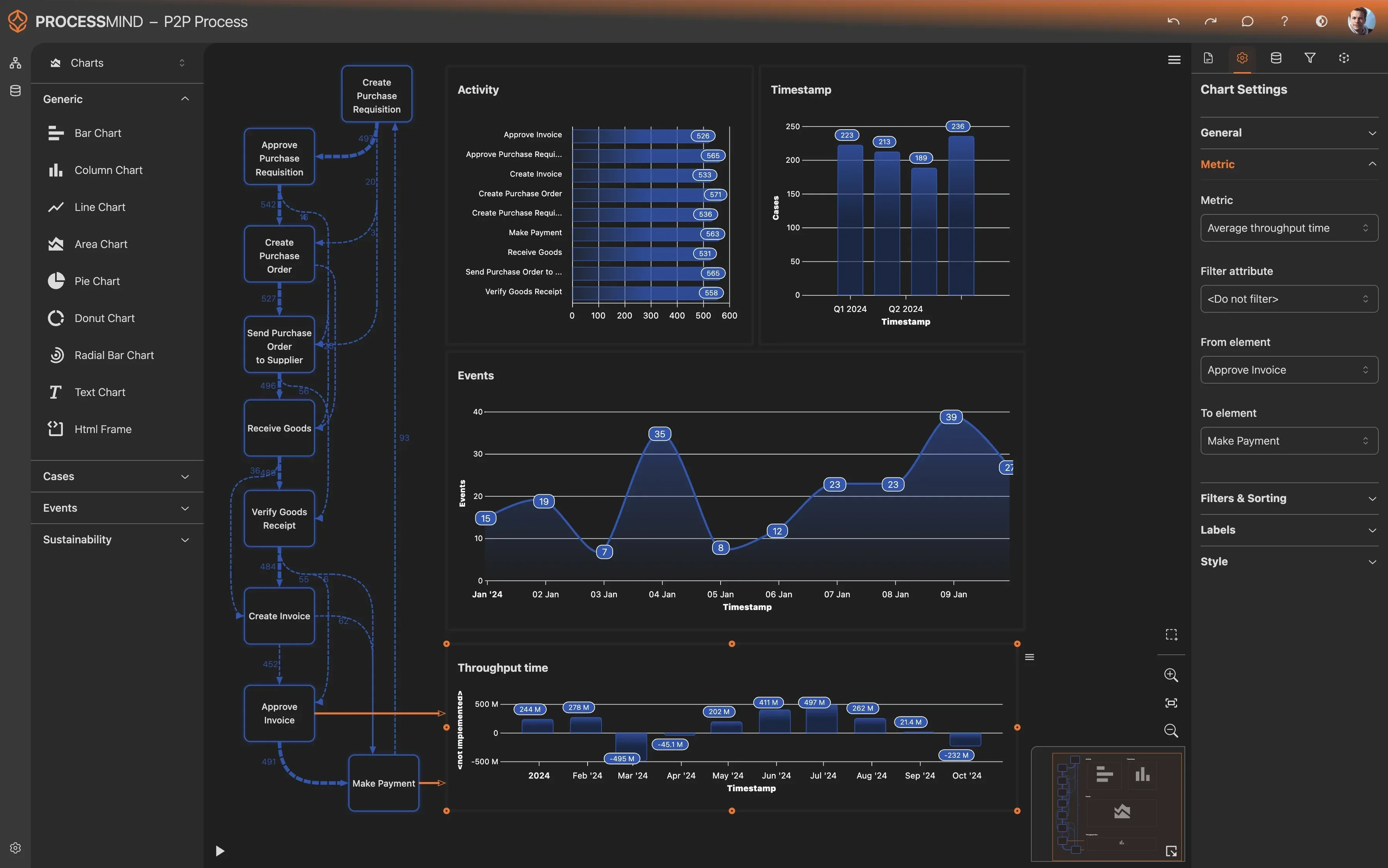
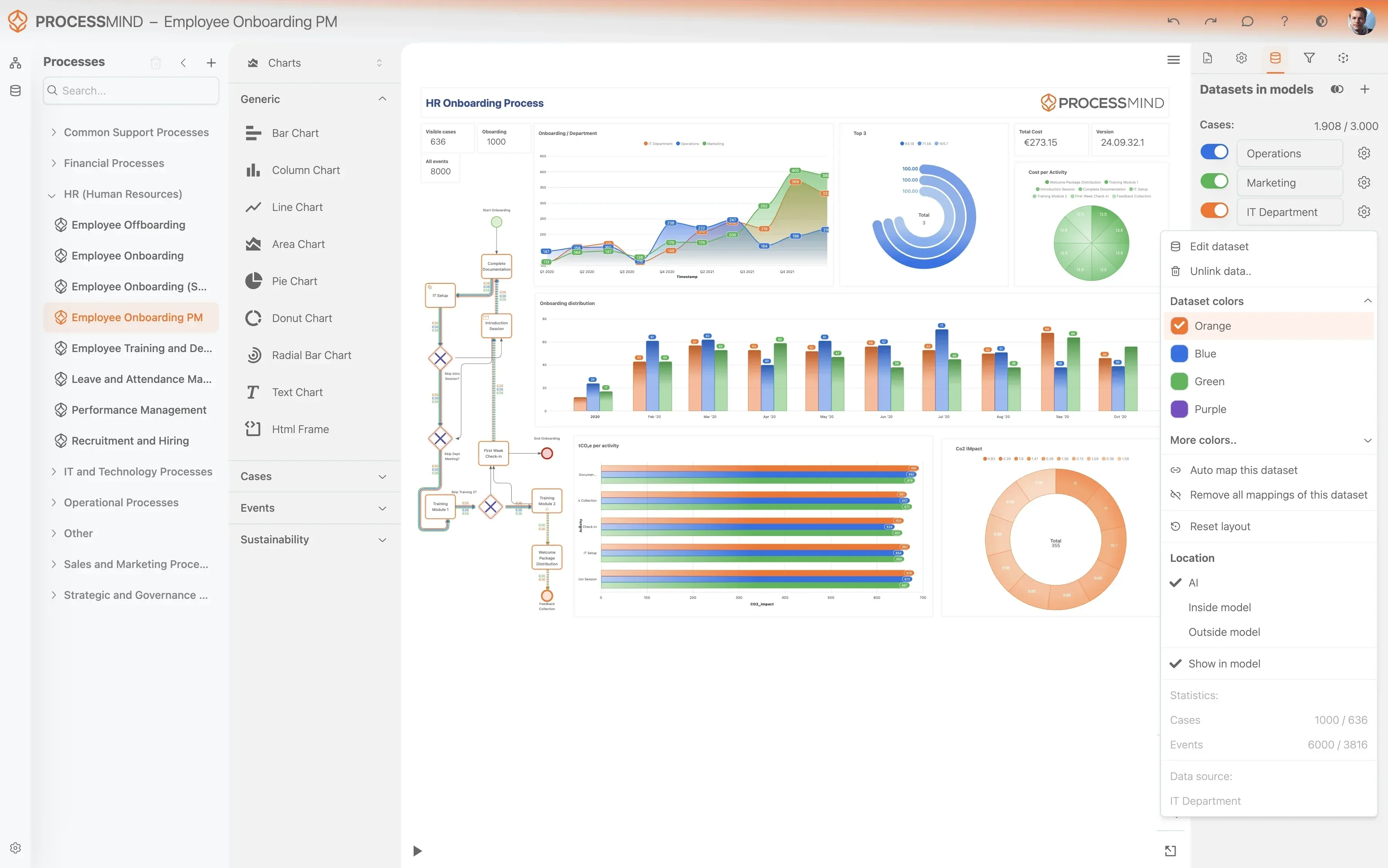
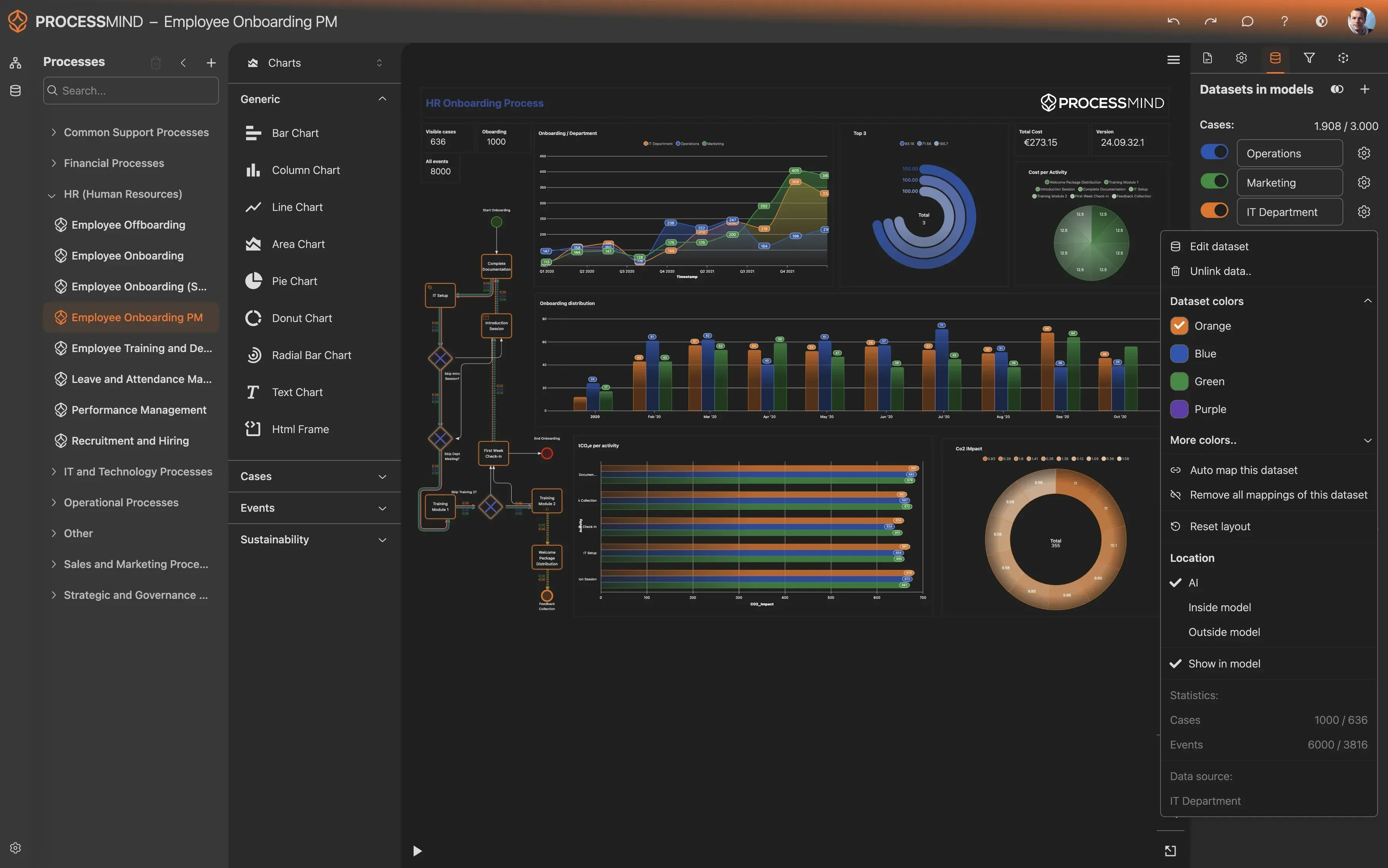
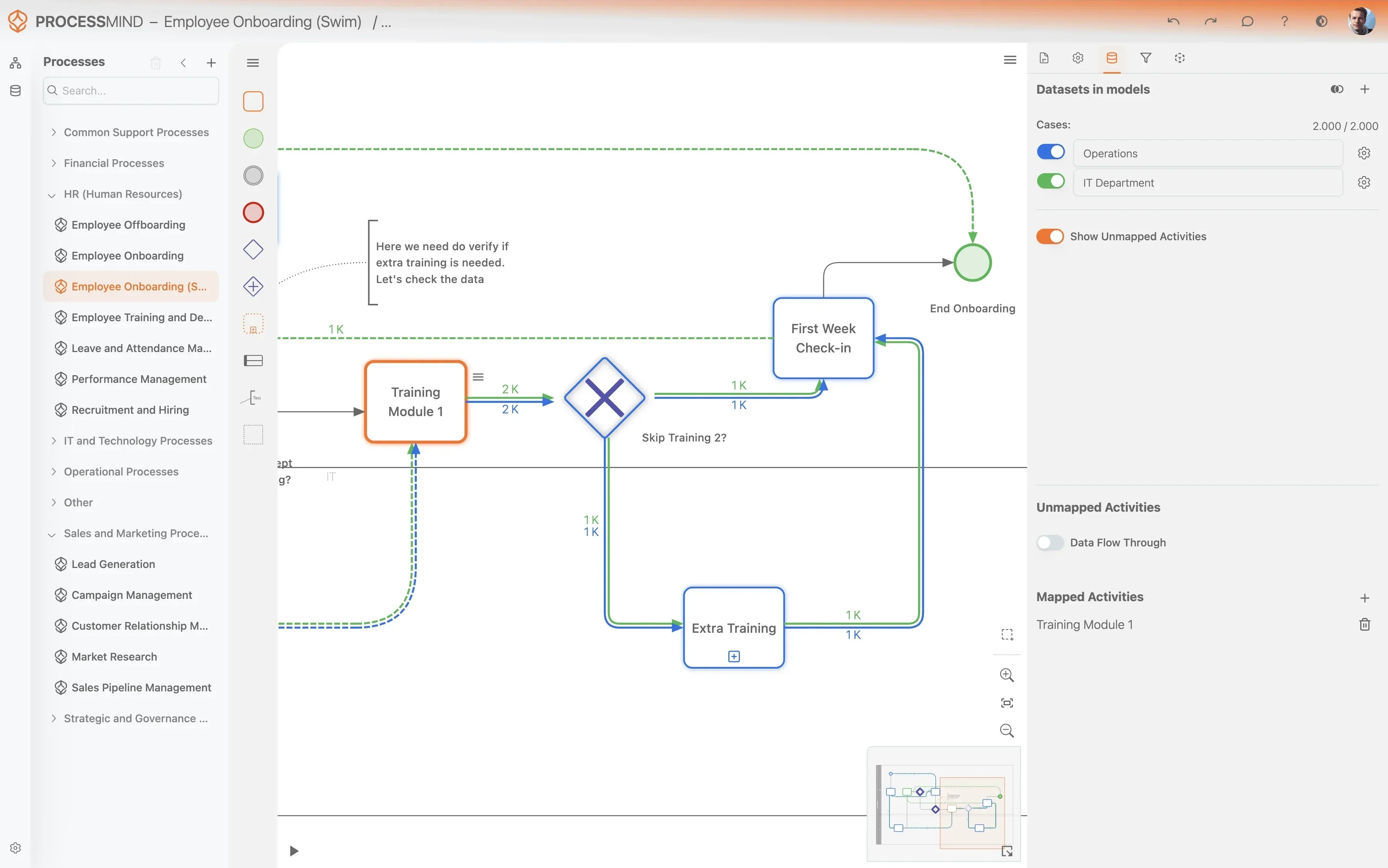
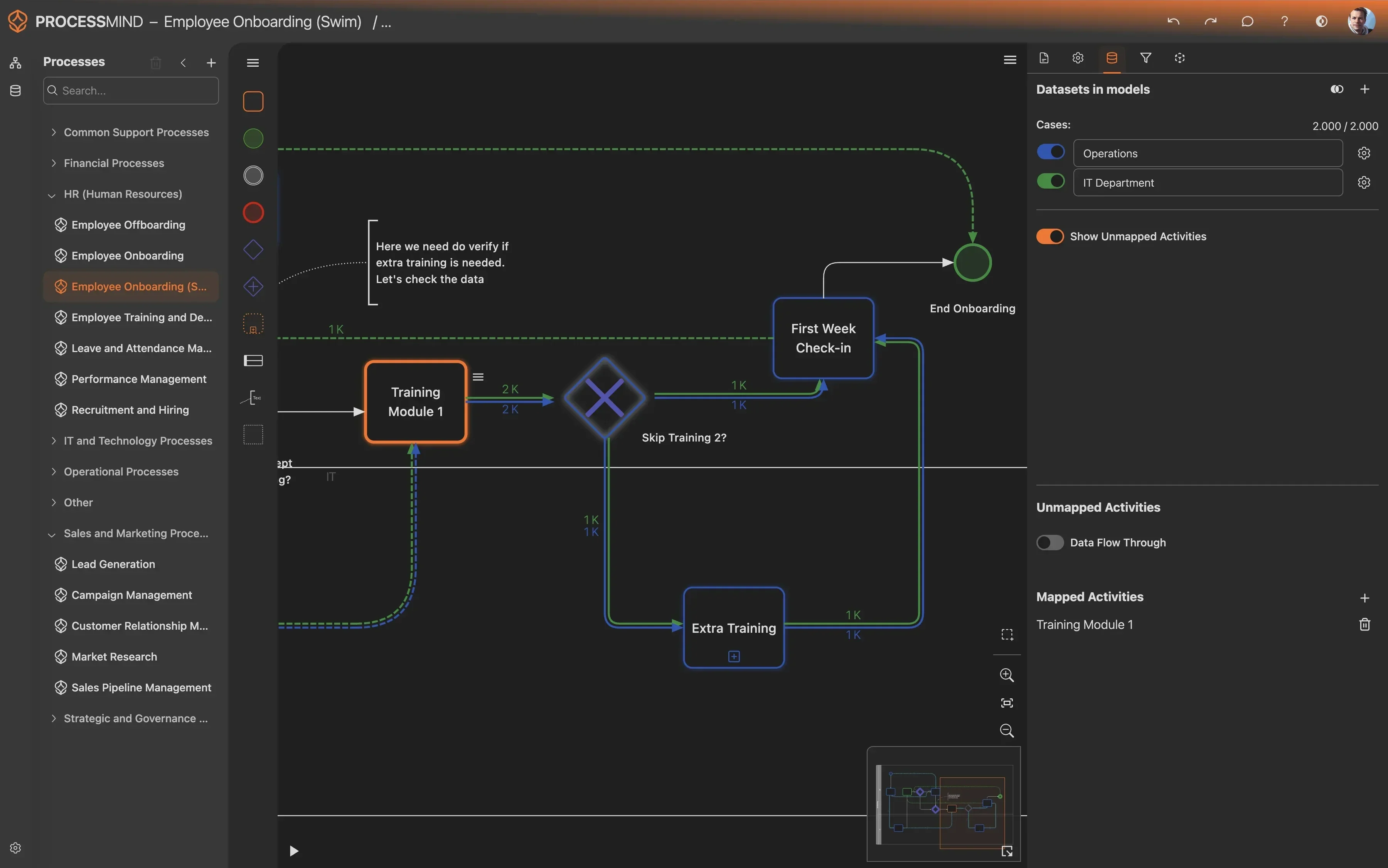
Explore the auto-generated dashboards and interactive process maps. Leverage AI-driven recommendations to uncover inefficiencies and compliance issues in your Zendesk Support process.
Why it matters
Gaining deep visibility into your customer service process allows you to quickly pinpoint where delays occur, agents struggle, or customers face friction.
Expected outcome
A clear understanding of your customer service process bottlenecks, compliance deviations, and improvement opportunities.
Implement Key Improvements
What to do
Prioritize the identified improvement opportunities based on their potential impact on customer satisfaction and operational efficiency, then implement targeted changes.
Why it matters
Translating insights into action directly leads to tangible improvements, such as faster resolution times, reduced agent workload, and enhanced customer experience.
Expected outcome
Targeted process changes implemented in your Zendesk Support workflow, addressing identified inefficiencies.
Monitor Performance Gains
What to do
Periodically re-export and upload updated Zendesk Support data to ProcessMind. Continuously track the impact of your implemented changes on key KPIs.
Why it matters
Ongoing monitoring ensures that improvements are sustained, new issues are promptly identified, and your customer service operations achieve continuous optimization.
Expected outcome
Sustained process improvements, measurable KPI gains, and a proactive approach to maintaining high-performing customer service.
TYPICAL OUTCOMES
Real-World Improvements in Customer Service
These outcomes illustrate the tangible benefits organizations realize by applying process mining to their Zendesk Support data. By analyzing Service Request lifecycles, companies can identify inefficiencies and bottlenecks, leading to significant operational enhancements.
Reduction in average service request resolution
Process mining identifies bottlenecks and inefficiencies, helping optimize workflows to significantly cut down the time it takes to resolve customer issues.
Improvement in meeting service level agreements
By pinpointing non-compliant process paths and their root causes, organizations can proactively address issues to ensure more requests meet their SLA targets.
Decrease in requests requiring internal escalation
Understanding the triggers for internal escalations allows for better agent training and process adjustments, reducing the need for higher-tier involvement.
Decrease in customer service request reopenings
Analyzing why cases are reopened helps improve initial resolution quality and completeness, reducing repeat customer contacts and increasing satisfaction.
Reduction in average initial customer acknowledgment time
Identifying delays in first contact helps streamline the initial touchpoint, setting better customer expectations and improving early satisfaction.
The specific results achieved can vary depending on process complexity, data quality, and the scope of implementation. These examples reflect common improvements observed by organizations leveraging process mining for customer service processes.
Recommended Data
FAQs
Frequently asked questions
Process mining helps you visualize the actual flow of service requests within Zendesk, identifying bottlenecks, deviations, and inefficiencies. It reveals where customer service requests get stuck or take too long, allowing you to optimize workflows and reduce resolution times. You can pinpoint the root causes of issues like high re-open rates or critical SLA breaches.
For process mining, you primarily need event logs from Zendesk Support. This includes case identifiers, such as Service Request ID, activity names, like "Ticket Created" or "Agent Assigned", and timestamps for each activity. Agent IDs and status changes, for example, "Open", "Pending", "Solved", are also crucial.
You can expect to see significant reductions in average resolution times and internal escalation rates. Process mining helps improve critical SLA compliance and reduces the number of re-opened service requests. Ultimately, this leads to higher customer satisfaction and more efficient agent utilization.
Zendesk Support offers various ways to extract data, including its API, reporting features, and data export functionalities. Many process mining tools also provide direct connectors or can import data from standard formats like CSV or Excel. We can guide you on the most efficient method for your specific Zendesk setup.
While some technical understanding of data structures is beneficial, many modern process mining platforms are designed for business users. Basic SQL knowledge might be helpful for data preparation, but dedicated data engineers are not always required. The process mining tool handles the complex analytical work.
Yes, process mining is excellent at highlighting process steps that cause delays, such as slow initial acknowledgment. By analyzing event logs, it can also identify patterns where customers are repeatedly asked for the same information, indicating inefficient investigation processes or poor request categorization. This allows for targeted improvements.
The initial data extraction and model creation can typically be completed within a few weeks, depending on data volume and complexity. You can often gain actionable insights within the first 4-8 weeks. Continuous monitoring allows for ongoing improvements and ensures the benefits are sustained.
End Customer Service Bottlenecks, Boost CSAT Now
Stop repeat contacts. Achieve 80% FCR and elevate customer satisfaction.
No credit card required