Improve Your Software Development Lifecycle

Select a process
Choose a process to continue working in your connected workspace.
Optimize Your Software Development Lifecycle in Azure DevOps
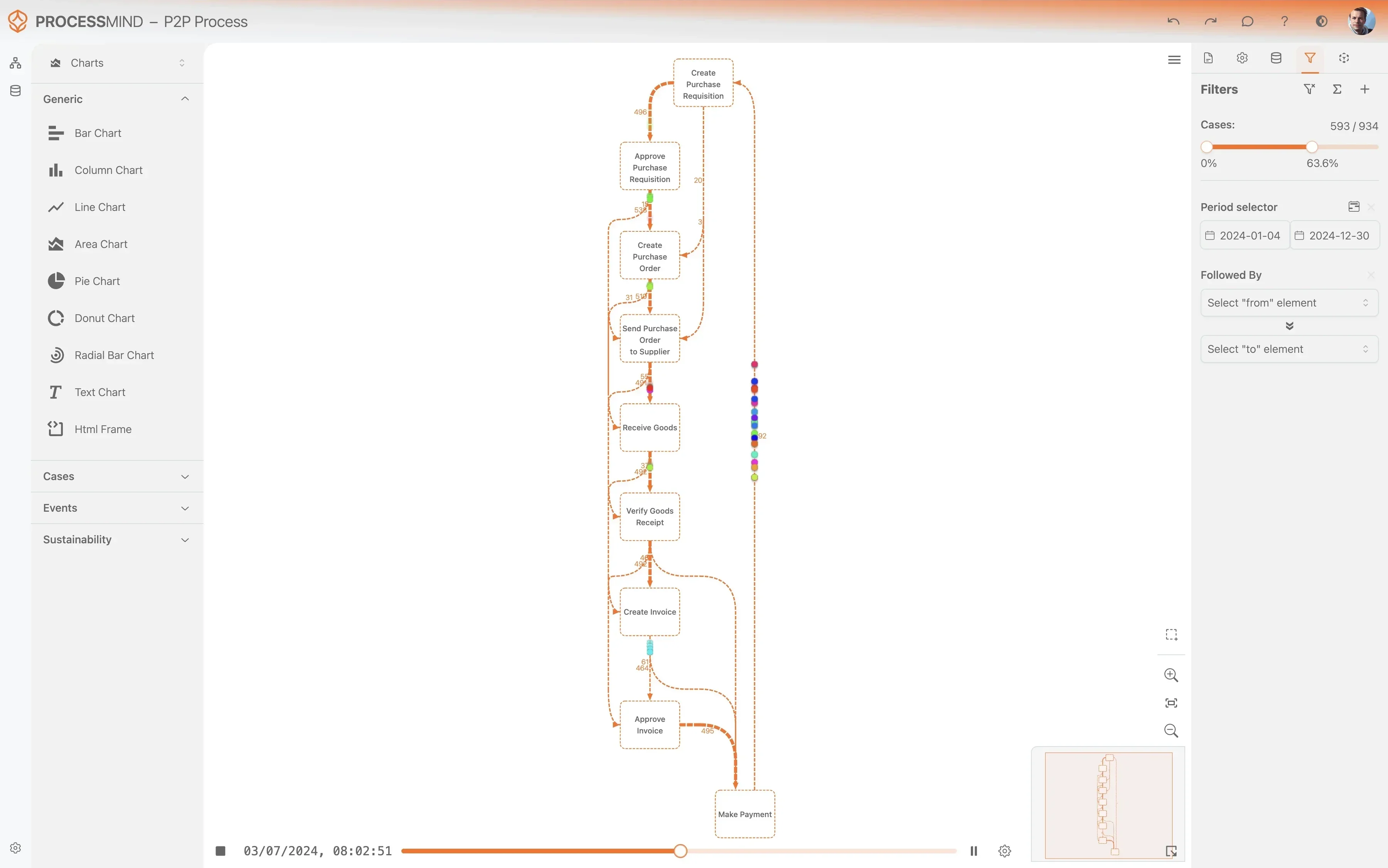
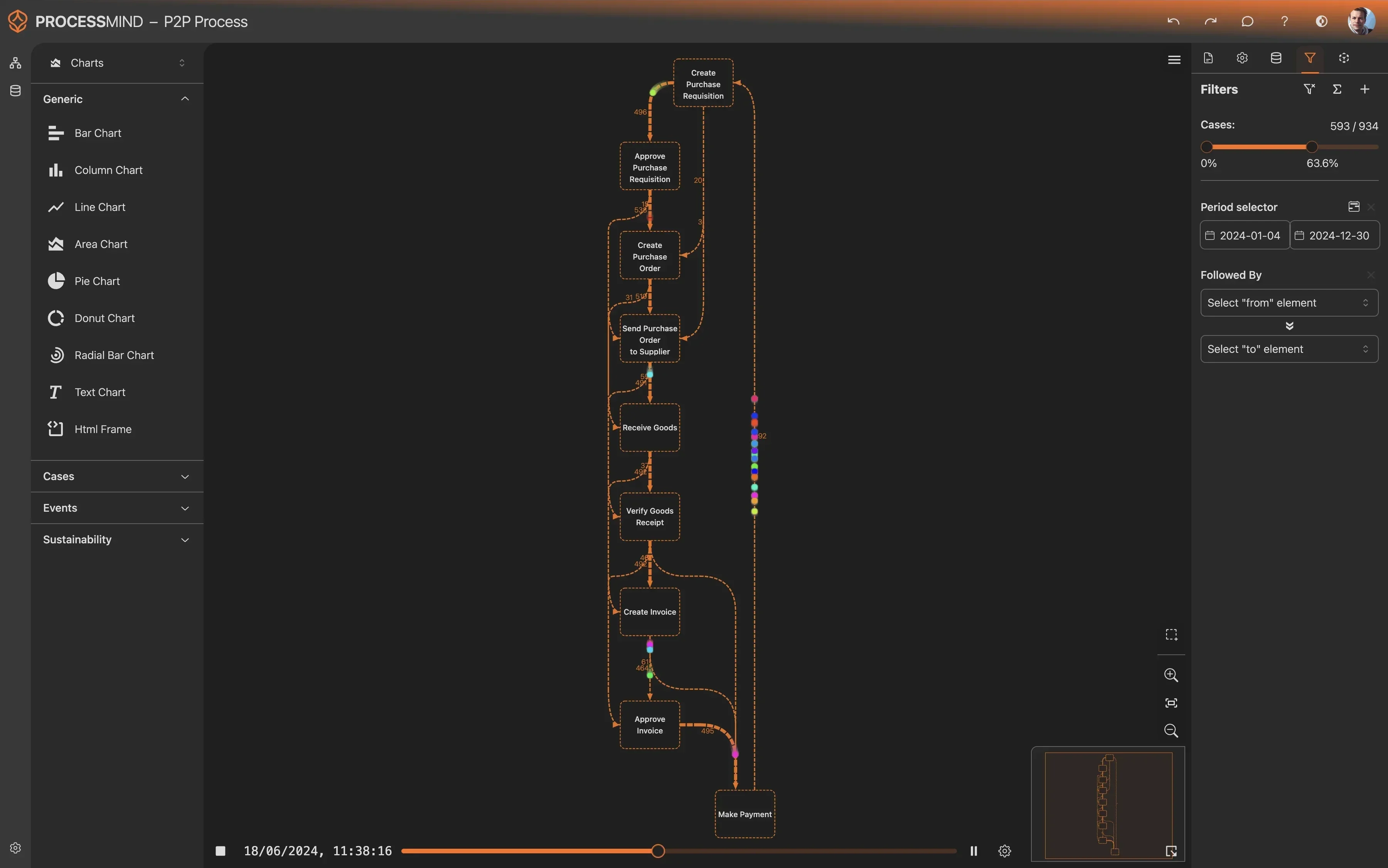
Our platform helps you uncover hidden delays and bottlenecks within your workflows. By precisely identifying inefficiencies, you can pinpoint areas for improvement. This leads to smoother operations, faster releases, and enhanced quality across your entire process.
Download our pre-configured data template and address common challenges to reach your efficiency goals. Follow our six-step improvement plan and consult the Data Template Guide to transform your operations.
Show detailed description
Why Optimize Your Software Development Lifecycle?
Your Software Development Lifecycle, SDLC, is the heartbeat of your organization's innovation. Yet, many businesses struggle with an SDLC that feels more like a bottleneck than a streamlined pathway to progress. Delays in feature delivery, unexpected cost overruns, and compromised software quality are common symptoms of an inefficient development process. These issues don't just impact project timelines, they directly affect your market competitiveness, customer satisfaction, and overall revenue.
In a fast-paced digital landscape, the ability to rapidly and reliably deliver high-quality software is paramount. When your development teams in Azure DevOps face friction, whether it is in planning, coding, testing, or deployment, the cumulative effect can be substantial. Each slow approval, overlooked task, or unforeseen rework loop adds time and expense, diminishing the return on your significant investments in development talent and tools like Azure DevOps. Understanding and addressing these deep-seated inefficiencies within your SDLC is no longer a luxury, it is a strategic imperative to drive business value and maintain a competitive edge.
How Process Mining Transforms SDLC Analysis in Azure DevOps
Traditional project management tools and dashboards in Azure DevOps provide valuable metrics, but they often present a fragmented view of your SDLC. This is where process mining offers a revolutionary approach. Instead of relying on reported progress or manual analysis, process mining leverages the event data already captured within your Azure DevOps system, from work item creation to deployment, to construct an objective, end-to-end visualization of your actual development processes.
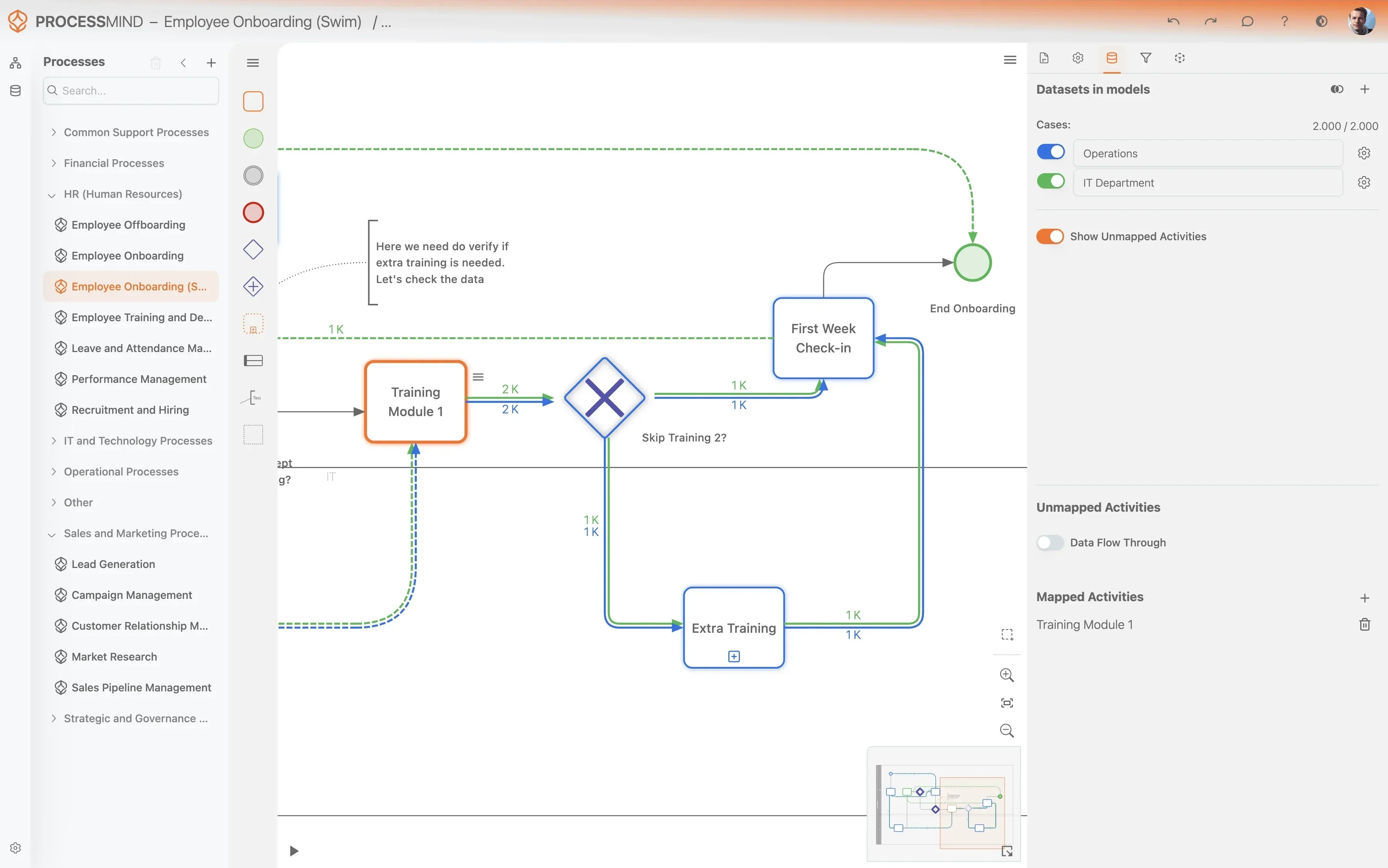
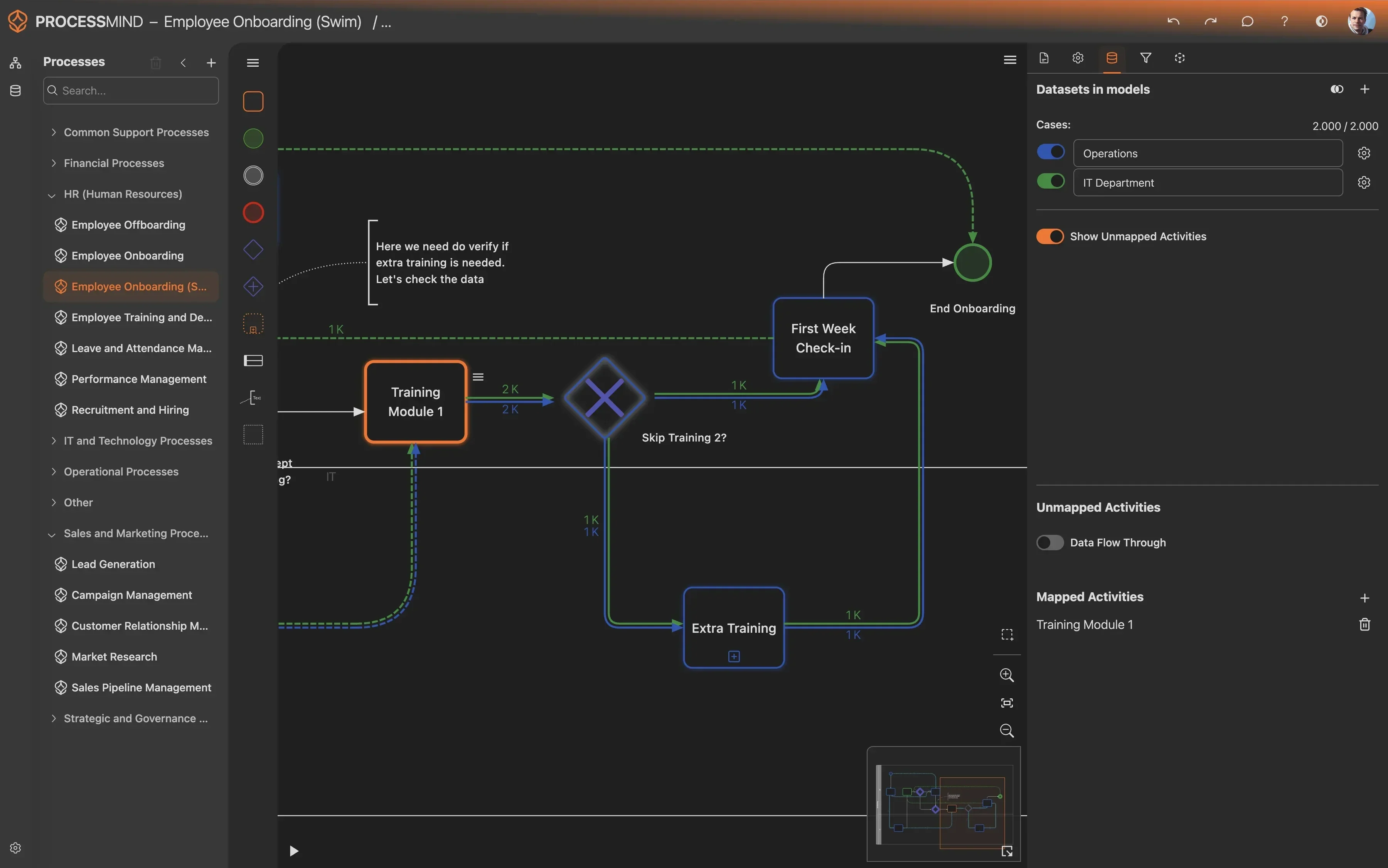
By treating each Development Item as a unique case, process mining meticulously reconstructs every step and transition it undergoes. This allows you to visually identify the true path a feature takes, uncovering hidden delays, unexpected rework loops, and compliance deviations that are invisible in standard reports. You gain unprecedented transparency into cycle times for specific stages, the duration of handoffs between teams, and the precise points where a development item frequently gets stuck. With this granular insight, you can move beyond assumptions and make data-driven decisions to optimize your Software Development Lifecycle.
Key Improvement Areas Revealed by SDLC Process Mining
Applying process mining to your Azure DevOps data highlights critical areas for improvement across your Software Development Lifecycle:
- Pinpoint Bottlenecks: Easily identify specific activities or approval steps, such as "Code Review Performed" or "QA Testing Started", that consistently cause delays. Discover where development items queue up unnecessarily, preventing efficient flow.
- Reduce Cycle Time: Understand the actual time spent in each phase, from "Requirements Gathered" to "Deployed to Production". Analyze variations in cycle time across different project types, teams, or development item types, then implement targeted interventions to accelerate delivery.
- Enhance Quality Gates: Verify adherence to critical quality checks like "Unit Testing Performed" or "User Acceptance Testing Approved". Identify instances where steps are skipped, rushed, or performed out of sequence, which can lead to quality issues down the line.
- Streamline Handoffs: Examine the time elapsed between activities performed by different teams or individuals. For example, the delay between "Development Started" and "Code Review Performed" or "QA Testing Completed" and "Prepared for Release". Optimizing these handoffs can drastically improve flow.
- Identify Rework and Deviations: Visualize common paths for rework, such as development items frequently returning to a previous stage after "QA Testing Started". Uncover root causes for these deviations, like incomplete requirements or insufficient initial testing, to prevent their recurrence.
- Improve Resource Allocation: By understanding where work piles up and where teams are idle, you can better allocate your development and testing resources to eliminate waiting times and maximize productivity.
Expected Outcomes: Tangible Benefits of an Optimized SDLC
The insights gained from process mining your Azure DevOps data translate into significant, measurable benefits for your organization. By systematically identifying and resolving inefficiencies in your Software Development Lifecycle, you can achieve:
- Faster Time-to-Market: Accelerate the delivery of new features and products, allowing you to respond more quickly to market demands and gain a competitive advantage.
- Reduced Development Costs: Minimize rework, optimize resource utilization, and eliminate unnecessary delays, leading to substantial cost savings across your development projects.
- Improved Software Quality: Ensure consistent adherence to quality gates and best practices, resulting in fewer defects, more stable releases, and a better end-user experience.
- Enhanced Team Productivity and Morale: Remove frustrating bottlenecks and streamline workflows, empowering your development teams to work more efficiently and with greater satisfaction.
- Stronger Compliance and Audit Readiness: Gain an undeniable, data-driven audit trail of your development processes, demonstrating adherence to regulatory requirements and internal standards.
- Greater Predictability: Develop a more accurate understanding of your SDLC's true capacity and performance, leading to more reliable project planning and realistic release schedules.
Getting Started with SDLC Optimization
Optimizing your Software Development Lifecycle in Azure DevOps with process mining is a powerful step towards operational excellence. By leveraging the data you already have, you can unlock a new level of understanding about your development processes. This approach moves beyond subjective opinions to provide clear, actionable insights that drive real improvements, making your SDLC more agile, efficient, and reliable. Explore how you can transform your development workflows and achieve superior software delivery outcomes.
The 6-Step Improvement Path for Software Development Lifecycle
Download the Template
What to do
Obtain the Excel template designed for analyzing the Software Development Lifecycle. This template ensures your data is structured correctly for optimal process mining.
Why it matters
A standardized template ensures data consistency and prepares your Azure DevOps data for accurate analysis, enabling you to uncover hidden inefficiencies effectively.
Expected outcome
A clear, structured Excel template ready to receive your Azure DevOps Software Development Lifecycle data.
Export Your Data
What to do
Extract 3-6 months of historical work item data from Azure DevOps, focusing on states, transitions, and relevant attributes. Populate the downloaded template with this information.
Why it matters
Comprehensive historical data provides a realistic view of your development process, allowing the identification of recurring patterns and critical bottlenecks.
Expected outcome
A populated Excel template containing detailed historical data of your Software Development Lifecycle.
Upload Your Dataset
What to do
Upload the completed data template to ProcessMind securely. The system will automatically process and prepare your Azure DevOps data for analysis.
Why it matters
Seamless data ingestion quickly transforms raw data into an actionable process model, minimizing setup time and accelerating your journey to insights.
Expected outcome
Your Software Development Lifecycle data successfully uploaded and ready for in-depth process analysis.
Analyze Your Process
What to do
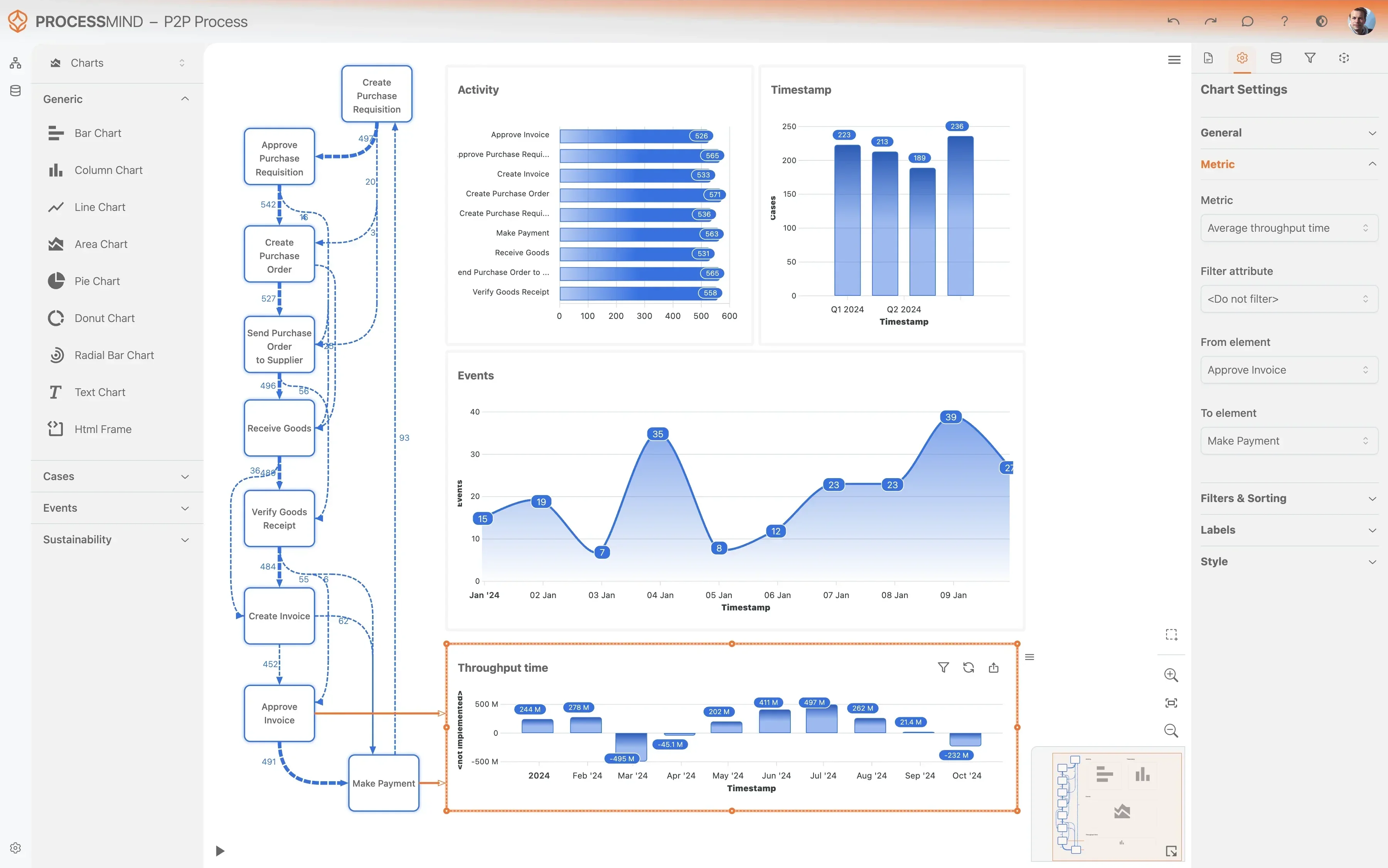
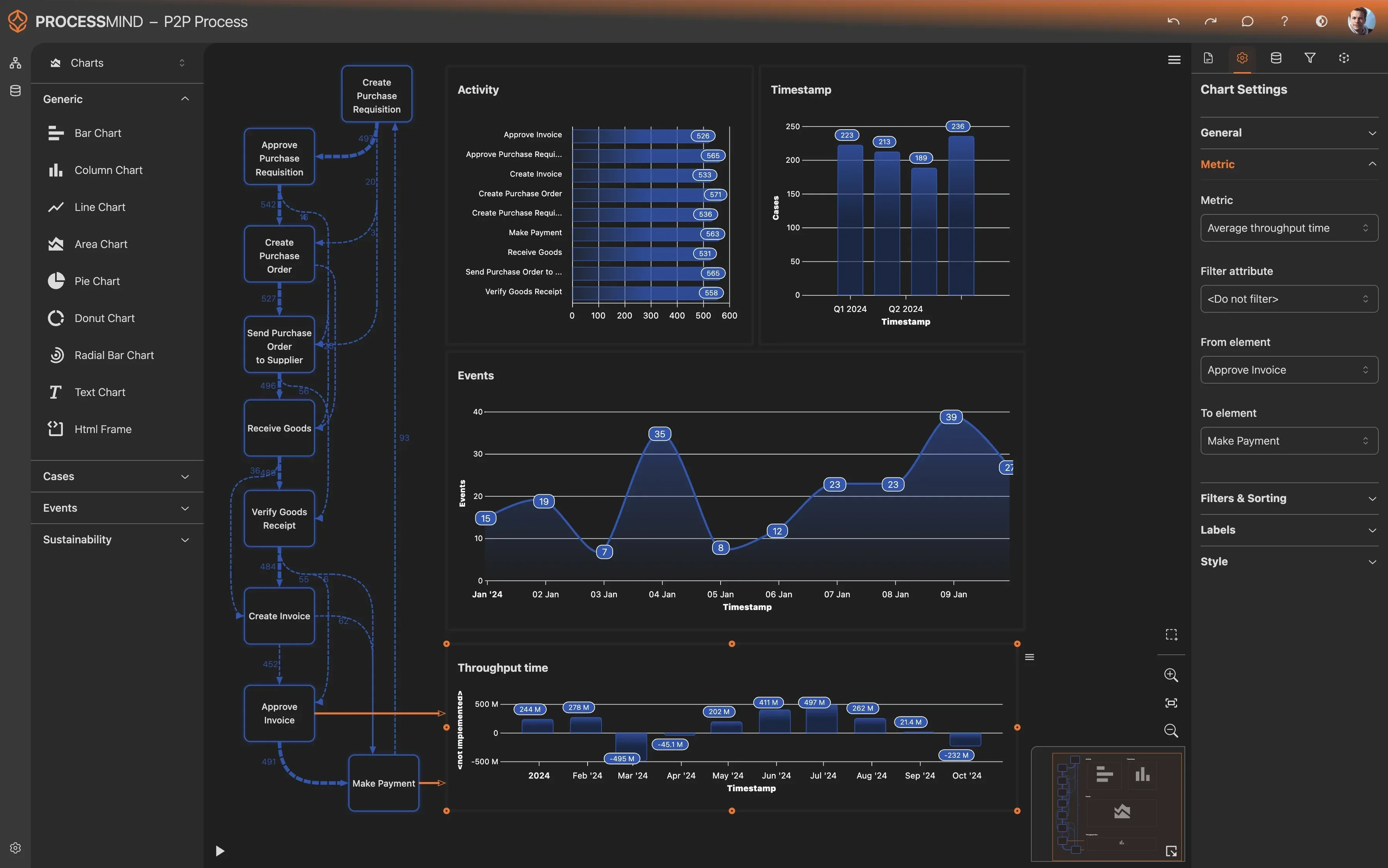
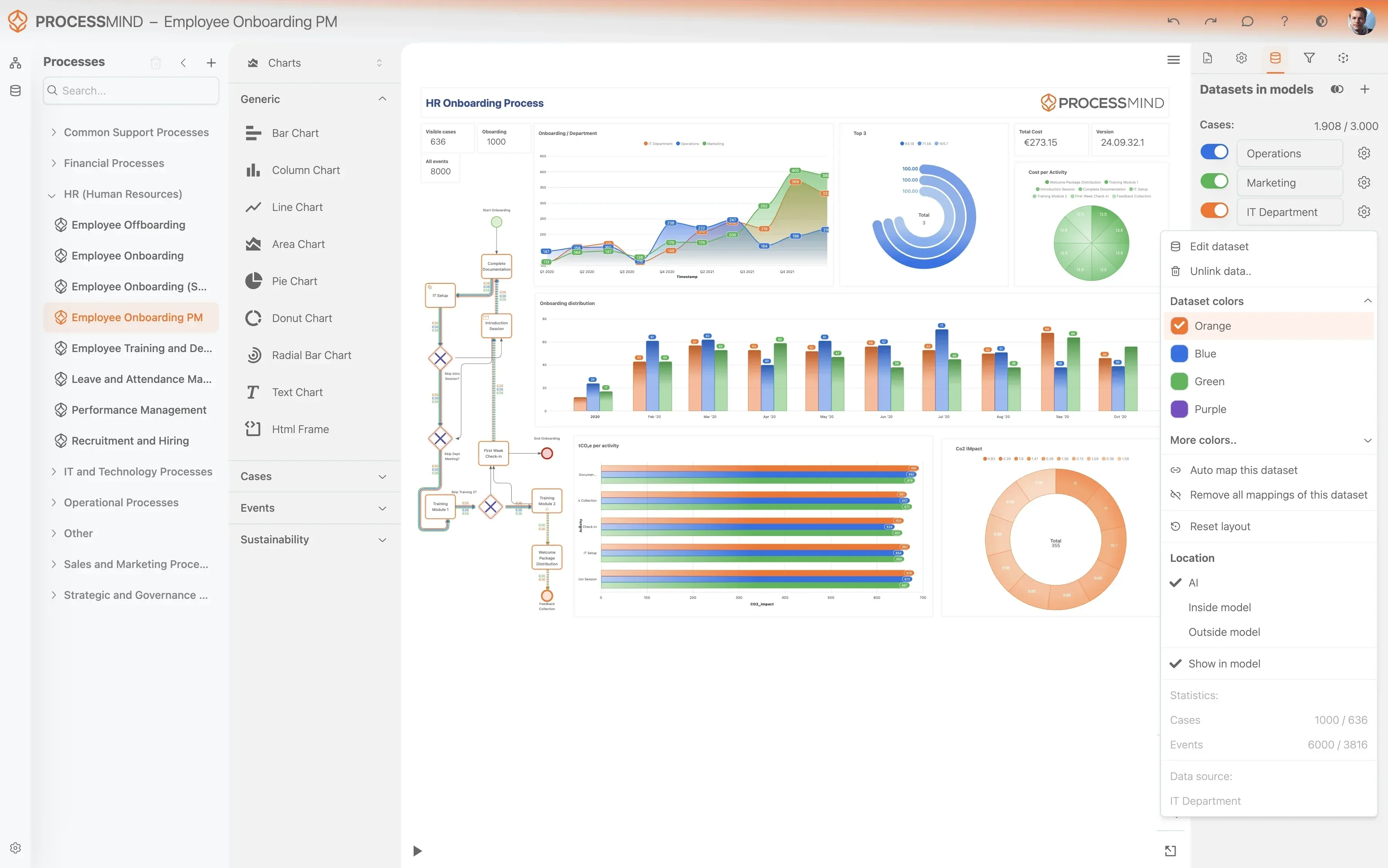
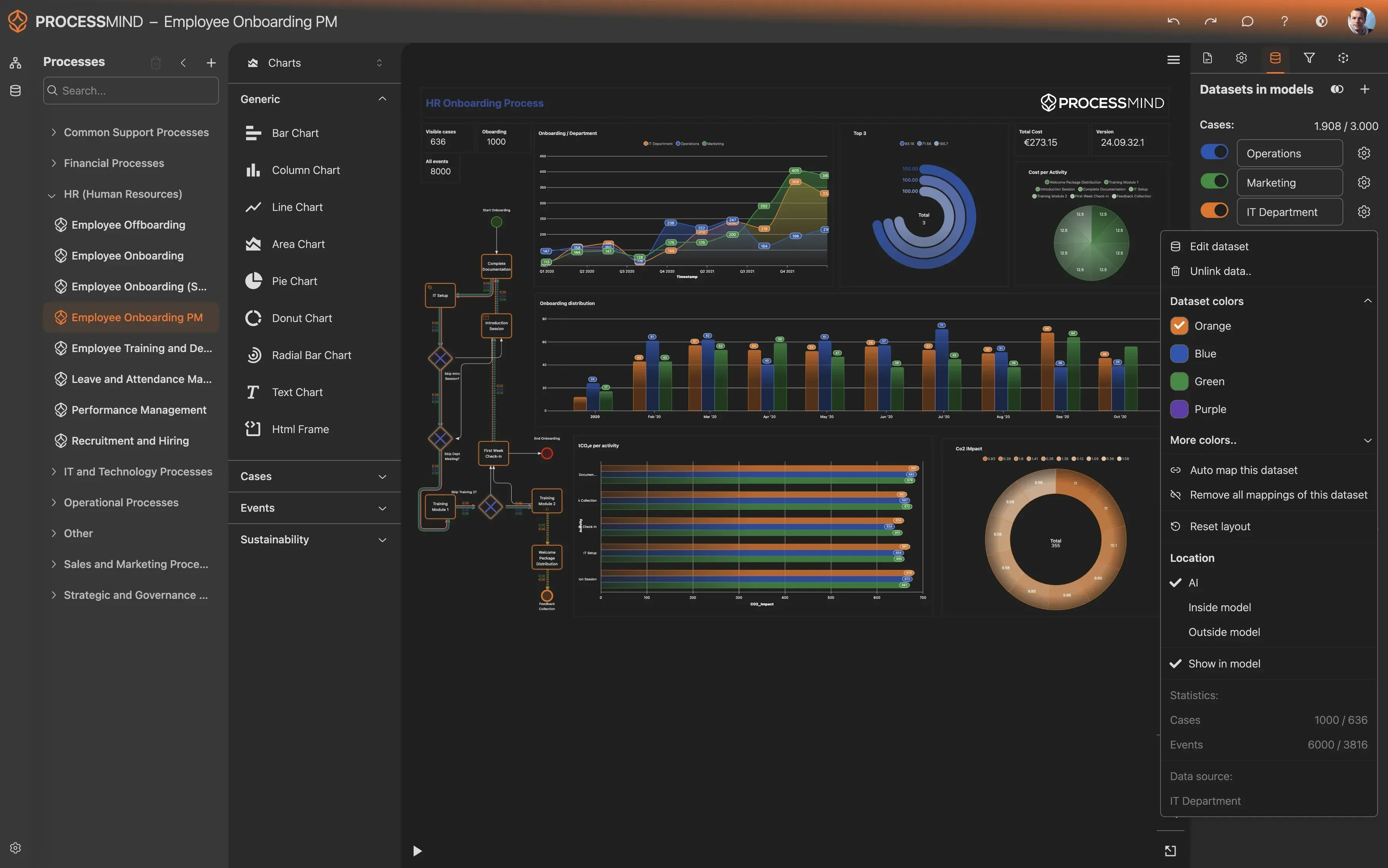
Explore auto-generated dashboards and visual representations of your Software Development Lifecycle. Utilize AI-driven recommendations to pinpoint bottlenecks and deviations.
Why it matters
Gaining a transparent, end-to-end view of your development process reveals hidden inefficiencies, compliance gaps, and areas for improvement.
Expected outcome
A clear understanding of your Software Development Lifecycle process, including key performance indicators and problem areas.
Implement Improvements
What to do
Prioritize and implement identified opportunities, such as optimizing work item transitions or refining sprint planning, based on your analysis.
Why it matters
Translating insights into action directly addresses inefficiencies, leading to faster development cycles, improved code quality, and reduced costs.
Expected outcome
Concrete changes implemented in your Azure DevOps workflow, targeting identified inefficiencies and performance gaps.
Monitor Your Process
What to do
Periodically re-upload updated Azure DevOps data to track the impact of your implemented changes and measure improvements in your Software Development Lifecycle KPIs.
Why it matters
Continuous monitoring ensures sustained process optimization, allowing you to adapt to new challenges and maintain peak operational efficiency over time.
Expected outcome
Measurable improvements in Software Development Lifecycle KPIs and a sustained optimized process.
TYPICAL OUTCOMES
What Organizations Achieve in the SDLC
Our analysis of your Software Development Lifecycle, using Azure DevOps data, reveals key insights into bottlenecks and inefficiencies. These insights lead to measurable improvements in development velocity, quality, and team collaboration.
Average reduction in end-to-end time
By pinpointing and eliminating delays from creation to deployment, organizations can significantly accelerate software delivery.
Decrease in re-entering completed stages
Process mining identifies root causes of rework, such as incomplete requirements or insufficient testing, leading to higher quality releases.
Adherence to mandatory quality gates
Gain clear visibility into bypassed quality checks and approvals, ensuring all development items meet required standards before release.
Reduction in idle time between stages
Identify and eliminate delays between development, testing, and deployment stages, significantly speeding up the overall release process.
Specific activity time reduction
Pinpoint and optimize specific activities that frequently cause delays, improving resource utilization and throughput across the SDLC.
Improved consistency of deployment times
By understanding variations in the release process, organizations can forecast deployment timelines more accurately, improving stakeholder confidence.
Results vary based on process complexity, team dynamics, and data quality. These figures represent typical improvements observed across implementations focusing on the Software Development Lifecycle.
Recommended Data
FAQs
Frequently asked questions
Process mining analyzes event logs from Azure DevOps to visualize the actual flow of your SDLC. It helps identify bottlenecks, rework loops, and deviations from planned processes, providing data-driven insights to optimize efficiency and reduce cycle times.
You typically need event data related to your work items, such as creation dates, state changes, assigned users, and timestamps for each transition. The case identifier will be the Development Item, which helps track each item's complete journey through the SDLC.
Data can be extracted using Azure DevOps APIs, queries, or built-in reporting features, often exported to a flat file format like CSV or Excel. This raw data is then transformed into an event log format suitable for process mining tools.
You can expect a clearer understanding of your actual development workflows, leading to reduced development cycle times, fewer reworks, and improved quality gate compliance. It also helps in optimizing resource allocation and enhancing release readiness predictability.
No, process mining is largely non-invasive. It primarily uses historical data from your Azure DevOps system without interfering with live operations or requiring changes to development processes during the analysis phase.
A basic understanding of Azure DevOps data structures and APIs is helpful for data extraction. Familiarity with data preparation and the fundamentals of process mining tools will be beneficial for successful analysis and interpretation.
Initial insights can often be generated within a few weeks, depending on data availability and complexity of the SDLC. A complete analysis and development of improvement strategies may take longer, typically 4-8 weeks.
Absolutely. Process mining visualizes the actual paths and durations of work items, making it very effective at pinpointing where delays occur and identifying critical bottlenecks. This allows for targeted interventions to streamline handoffs and reduce waiting times.
Optimize Your SDLC in Azure DevOps, Start Today!
Reduce cycle time by 30% and eliminate bottlenecks in your SDLC workflow.
No credit card required. Get started in minutes.