Improve Your Record to Report - Period Close & Reconciliation

Select a process
Choose a process to continue working in your connected workspace.
Optimize Record-to-Report Close in Oracle Fusion Financials
This platform helps you uncover hidden bottlenecks and inefficiencies within your financial close and reconciliation processes. It identifies areas where delays occur and resources are underutilized. By visualizing your current state, you can pinpoint opportunities to enhance accuracy and accelerate your reporting cycle, ensuring timely and compliant financial statements.
Download our pre-configured data template and address common challenges to reach your efficiency goals. Follow our six-step improvement plan and consult the Data Template Guide to transform your operations.
Show detailed description
Why Optimizing Record to Report Period Close is Crucial
The Record to Report, R2R, Period Close and Reconciliation process is a critical foundation for any organization's financial health and strategic decision-making. Within Oracle Fusion Financials, this intricate process encompasses numerous activities, from source data collection and transaction posting to intercompany reconciliation, balance sheet account reconciliation, and the final generation of financial statements. An inefficient or extended period close not only delays vital financial insights, impacting business strategy and investor relations, but also drains valuable resources, increases operational costs, and heightens the risk of non-compliance with regulatory requirements. Delays can lead to rushed adjustments, increased errors, and a constant cycle of reactive problem-solving, preventing your finance team from focusing on more strategic value-added tasks.
How Process Mining Uncovers R2R Bottlenecks
Process mining offers a powerful, data-driven approach to truly understand and improve your Record to Report Period Close and Reconciliation process in Oracle Fusion Financials. Instead of relying on assumptions or anecdotal evidence, process mining extracts event log data directly from your Oracle Fusion Financials system. This data is then used to automatically reconstruct an objective, end-to-end visual map of your actual period close process. You can see the real sequence of activities, uncover hidden dependencies, and visualize the actual paths transactions take, revealing deviations from the ideal process model.
Specifically for the R2R Period Close, process mining allows you to:
- Visualize End-to-End Cycle Time: Accurately measure the total duration of each financial period close, identifying specific activities or stages that contribute most to extended cycle times. This directly addresses "how to reduce Record to Report - Period Close & Reconciliation cycle time".
- Pinpoint Bottlenecks: Easily spot where work piles up, identifying which reconciliation steps, adjustment processes, or review cycles cause the most significant delays within Oracle Fusion Financials.
- Analyze Process Variations: Discover common deviations from the standard close procedure, understanding why certain tasks are re-worked, skipped, or executed out of sequence.
- Identify Root Causes of Delays: Drill down into specific instances to understand the underlying reasons for inefficiencies, whether it is a particular GL account reconciliation, an intercompany mismatch, or a specific user or department.
- Detect Automation Opportunities: Highlight manual, repetitive tasks that are prime candidates for automation, freeing up your finance team.
Key Improvement Areas in Period Close & Reconciliation
By leveraging process mining, organizations can focus their improvement efforts on areas that yield the greatest impact on their Record to Report process:
- Streamlining Reconciliation Processes: Identify specific balance sheet or profit and loss accounts that consistently delay reconciliation, allowing you to investigate underlying data quality issues or inefficient manual steps. This can include targeted improvements in how intercompany reconciliations are handled, a common pain point in complex organizations.
- Optimizing Adjusting Journal Entries: Understand why certain adjusting entries are required, if they are reactive, or if they point to issues earlier in the transaction processing cycle. Reducing the volume and complexity of last-minute adjustments significantly speeds up the close.
- Enhancing Approval Workflows: Analyze approval times and identify bottlenecks in review and approval processes for reconciliations and financial statements. This helps ensure timely sign-offs without compromising diligence.
- Reducing Manual Interventions: Pinpoint activities that are excessively manual, prone to human error, and good candidates for automation or process standardization within Oracle Fusion Financials.
- Ensuring Compliance and Audit Readiness: Identify non-compliant process paths or missing approval steps, ensuring that every period close adheres strictly to internal controls and external regulations, improving audit readiness.
Realizing Tangible Benefits and Outcomes
Implementing process mining for your Record to Report Period Close and Reconciliation in Oracle Fusion Financials leads to a multitude of measurable benefits:
- Faster Financial Close Cycle: Significantly reduce the time required to complete your financial close, allowing for quicker reporting and more agile decision-making. This directly answers "how to improve Record to Report - Period Close & Reconciliation".
- Increased Accuracy and Reliability: Minimize errors, reduce rework, and enhance the overall accuracy of your financial statements, fostering greater trust in your financial data.
- Enhanced Compliance and Risk Mitigation: Ensure consistent adherence to financial reporting standards and internal controls, proactively identifying and mitigating compliance risks.
- Optimized Resource Allocation: Free up your finance professionals from tedious, manual tasks, allowing them to focus on higher-value analytical work and strategic initiatives.
- Cost Reduction: Decrease operational costs associated with extended close cycles, overtime, and repeated manual interventions.
- Improved Transparency: Gain a clear, data-driven understanding of your entire period close process, fostering continuous improvement and accountability across the finance function.
Getting Started with R2R Period Close Optimization
Optimizing your Record to Report Period Close and Reconciliation in Oracle Fusion Financials is an achievable goal that starts with a clear understanding of your current process reality. By leveraging process mining, you gain the powerful, objective insights needed to identify inefficiencies, implement targeted improvements, and achieve a faster, more accurate, and compliant financial close. Begin your journey toward data-driven finance operations and unlock the full potential of your Oracle Fusion Financials investment.
The 6-Step Improvement Path for Record to Report - Period Close & Reconciliation
Download the Template
What to do
Obtain the pre-configured Excel data template designed for Record to Report Period Close & Reconciliation from your ProcessMind account. This template ensures you capture all necessary activities and attributes.
Why it matters
Using the correct template is crucial for standardizing your data input, ensuring consistency, and preparing it for accurate analysis without manual reformatting.
Expected outcome
A structured Excel template, ready to be populated with your Oracle Fusion Financials period close and reconciliation data.
Export Your Data
What to do
Extract 3-6 months of historical period close and reconciliation data from Oracle Fusion Financials. Populate the downloaded template with relevant journal entries, reconciliation statuses, and closing activities.
Why it matters
Historical data provides a comprehensive baseline, revealing recurring patterns, identifying process variations, and establishing the foundation for insightful process analysis.
Expected outcome
Your ProcessMind data template accurately filled with historical Record to Report period close and reconciliation event logs.
Upload Your Dataset
What to do
Securely upload your completed data template to the ProcessMind platform. The system will automatically process and validate your period close and reconciliation data.
Why it matters
A seamless upload ensures your data is quickly available for analysis, minimizing delays and allowing you to move swiftly towards gaining actionable insights into your process.
Expected outcome
Your Record to Report process data is successfully loaded into ProcessMind, ready for automated mapping and initial visualization.
Analyze Your Process
What to do
Explore the auto-generated process maps and dashboards within ProcessMind, focusing on cycle times for reconciliation and adjustment, compliance, and efficiency in Oracle Fusion Financials.
Why it matters
This step illuminates bottlenecks, rework loops, and compliance risks in your period close, providing a clear visual understanding of where inefficiencies lie.
Expected outcome
Deep insights into the actual flow of your Record to Report period close, identifying key areas for optimization and improvement.
Implement Improvements
What to do
Prioritize the AI-driven recommendations and insights from your analysis. Apply changes to your Oracle Fusion Financials workflows, reconciliation procedures, or team responsibilities.
Why it matters
Translating insights into action directly addresses inefficiencies, reduces manual effort, and enhances the accuracy and timeliness of your financial reporting processes.
Expected outcome
Strategic changes are made to your Record to Report process, aiming to resolve identified bottlenecks and improve overall operational flow.
Monitor Your Process
What to do
Regularly re-upload fresh data from Oracle Fusion Financials to ProcessMind to track the impact of your implemented changes and observe ongoing process performance.
Why it matters
Continuous monitoring ensures that improvements are sustained, new issues are quickly identified, and your Record to Report process consistently operates at peak efficiency.
Expected outcome
Tangible evidence of KPI improvements, such as reduced period close cycle times, fewer adjustments, and increased compliance over time.
WHAT YOU WILL GET
Discover Oracle R2R Process Bottlenecks Instantly
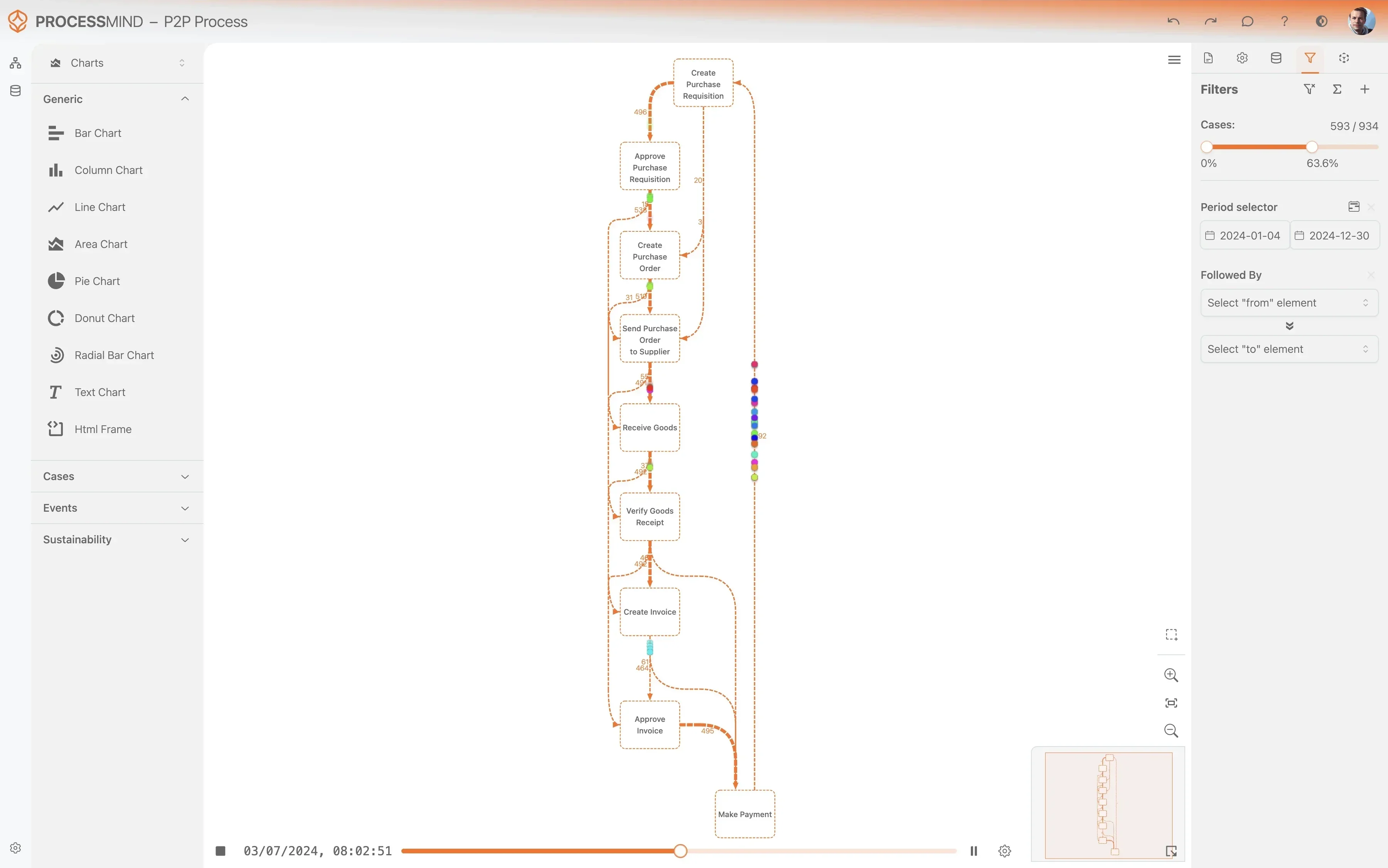
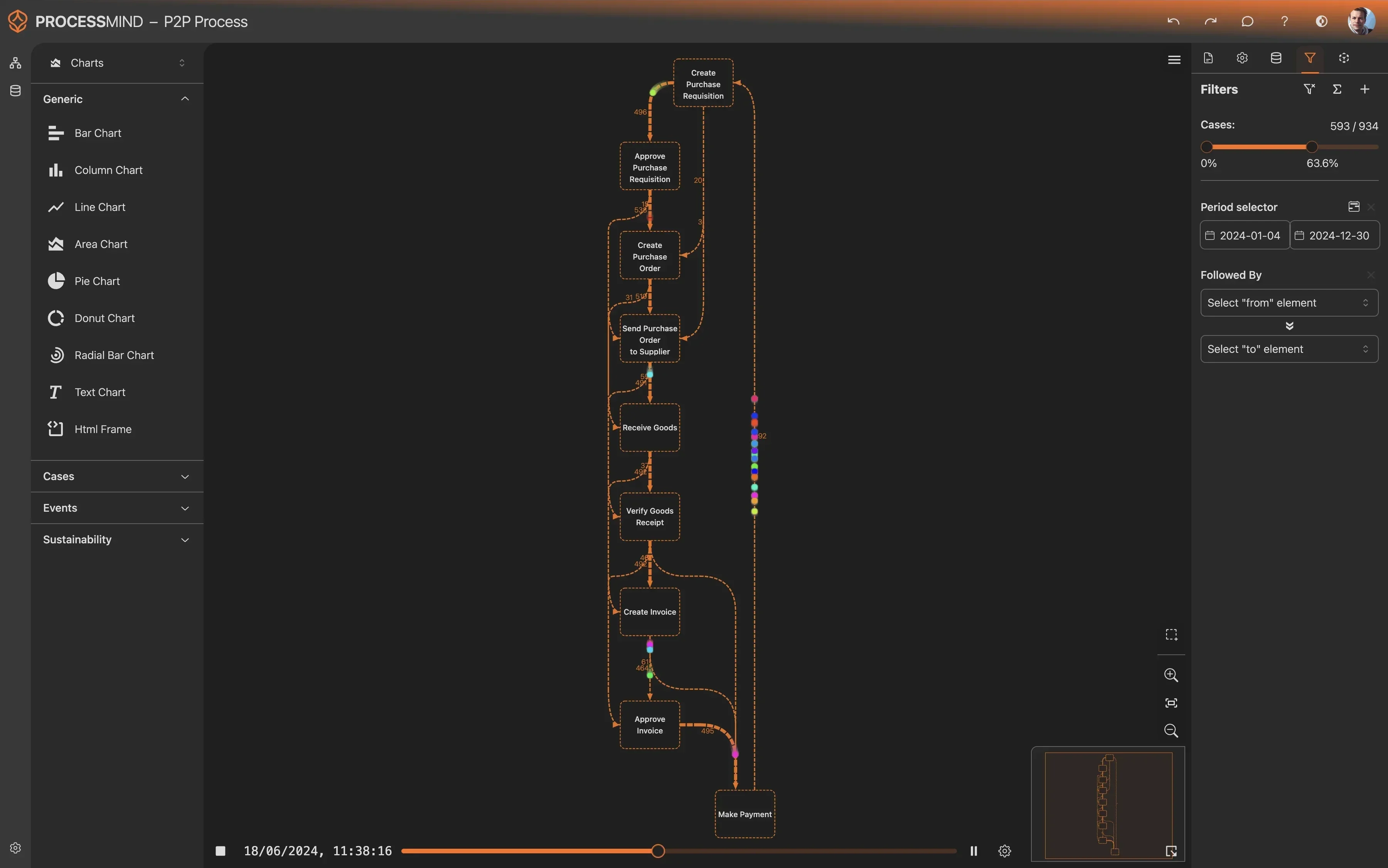
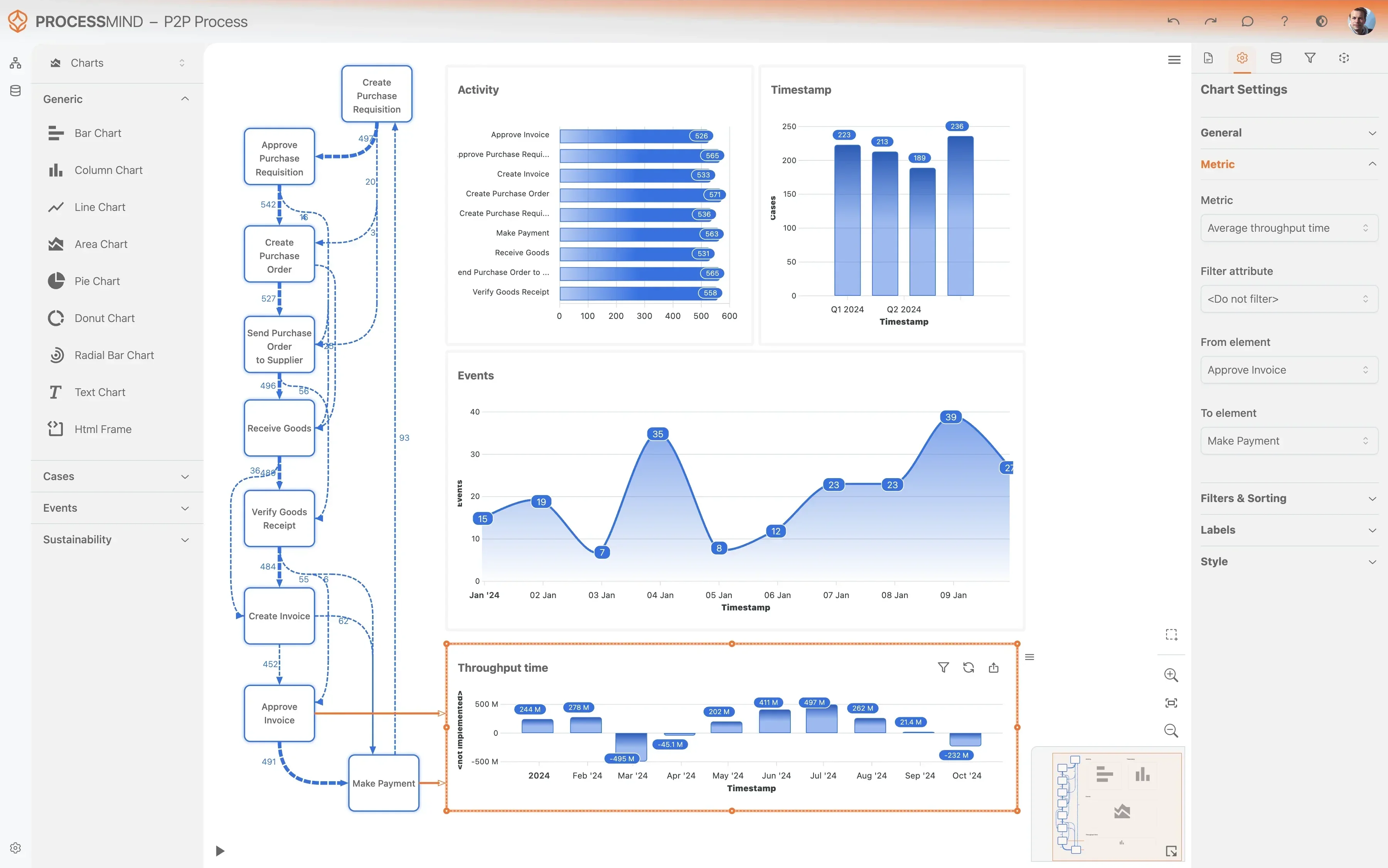
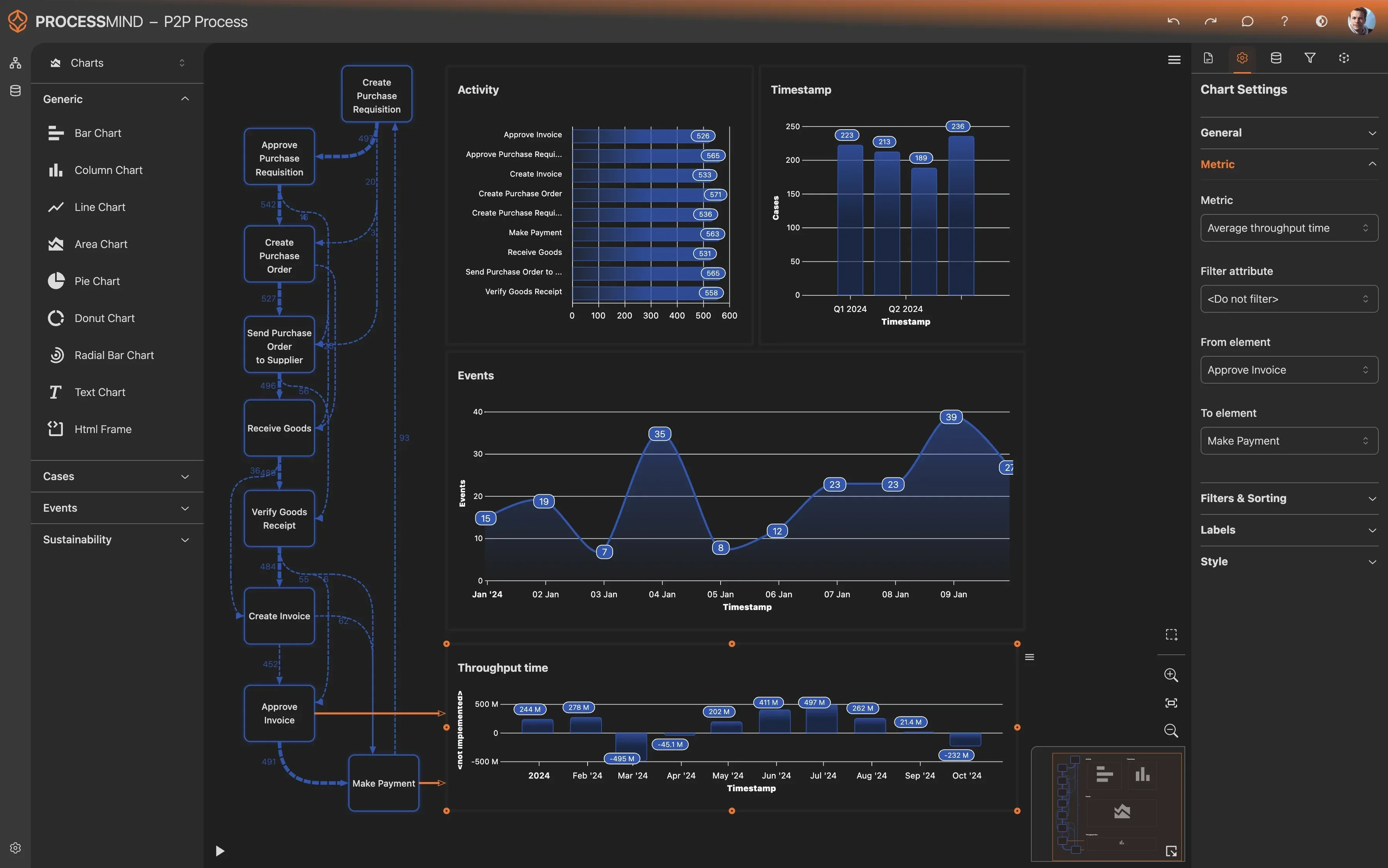
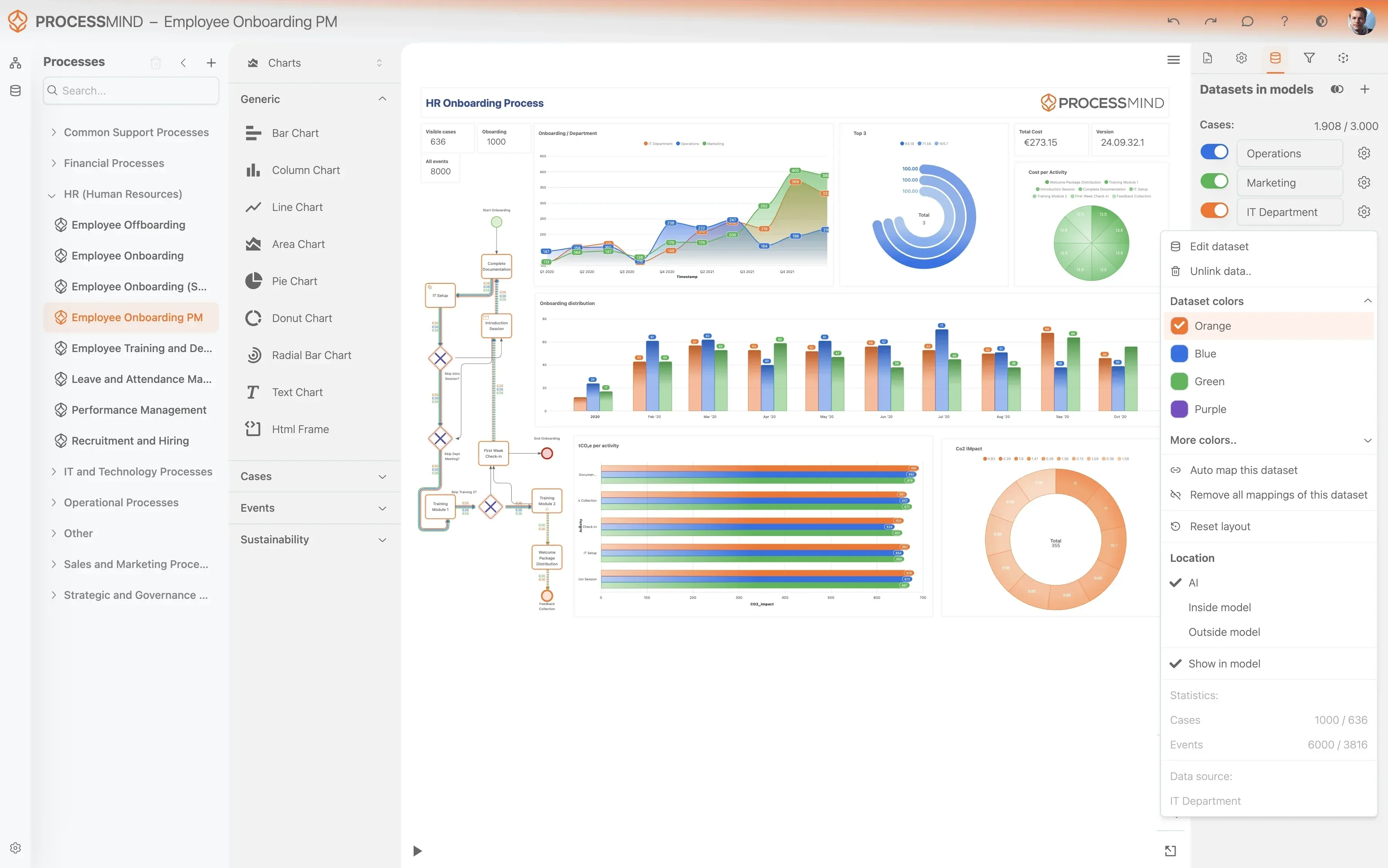
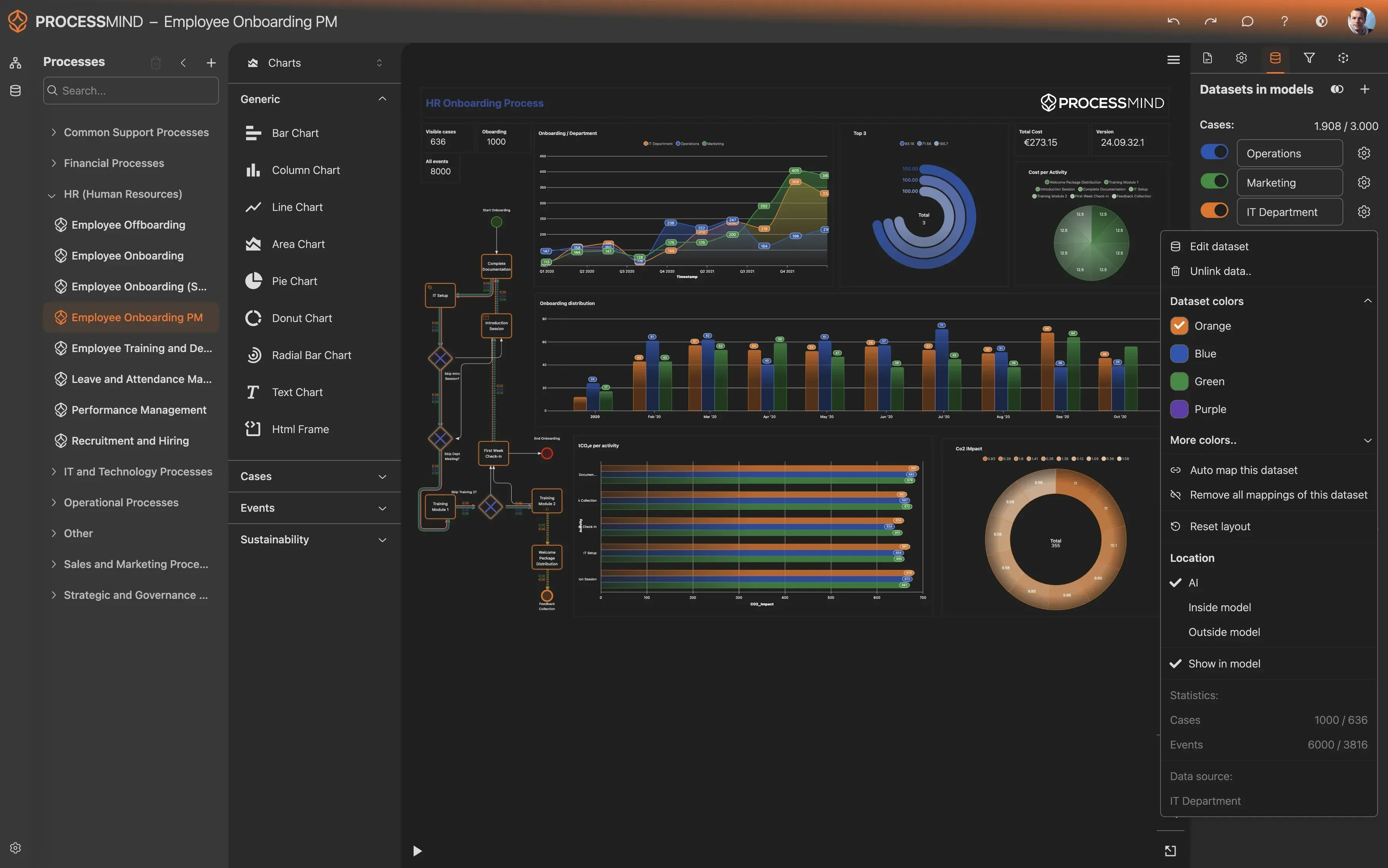
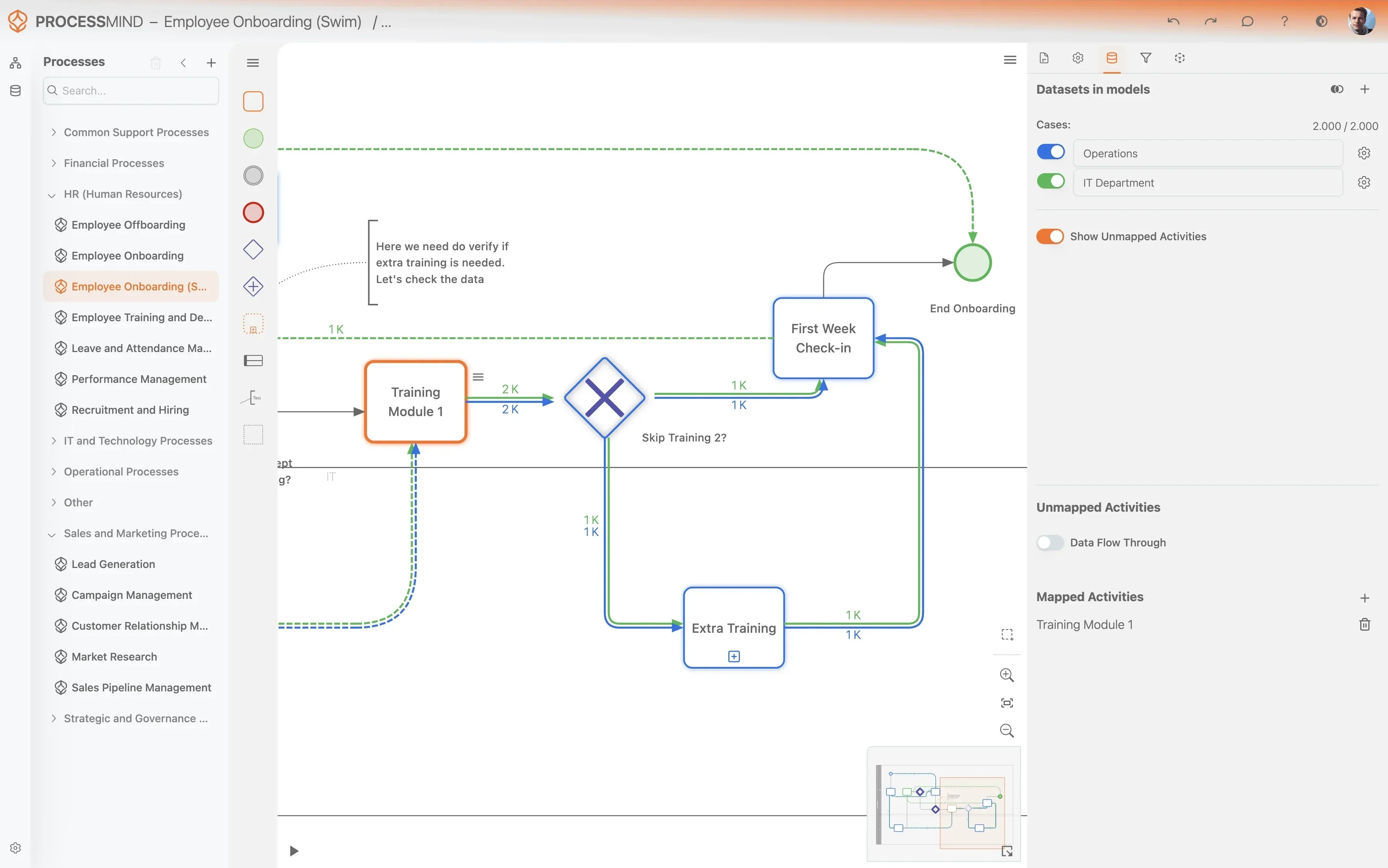
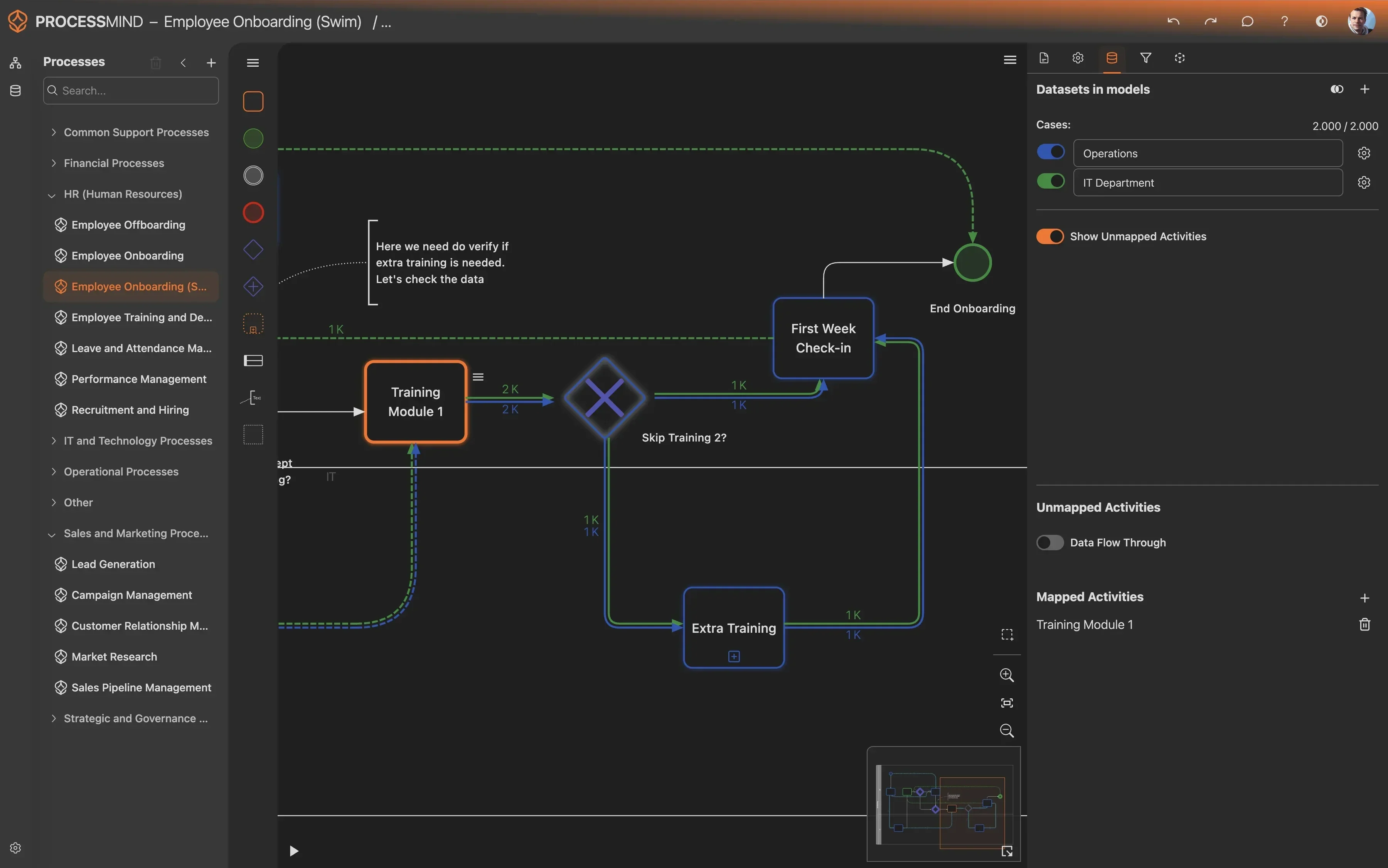
- Visualize end-to-end R2R process flows
- Identify hidden delays in period close
- Uncover reconciliation bottlenecks in Oracle
- Boost compliance and reporting accuracy
TYPICAL OUTCOMES
Elevating Your Record to Report Process
Our process mining solution reveals critical insights into your Record to Report - Period Close & Reconciliation processes within Oracle Fusion Financials. These outcomes represent the tangible improvements organizations typically achieve by identifying bottlenecks, automating manual steps, and optimizing workflows.
Average reduction in end-to-end time
Identify and remove bottlenecks, reducing the overall time required to complete the financial period close process.
Decrease in post-close adjustments
Process mining identifies root causes of errors leading to adjusting entries, reducing manual effort and improving financial data accuracy.
Decrease in unreconciled accounts
Pinpoint recurring bottlenecks and resource imbalances in reconciliation, enabling faster clearance of backlogs and ensuring timely account closure.
Reduction in process deviations
Identify and eliminate variances in close activities across entities, ensuring consistent application of global procedures and strengthening compliance.
Real-time close progress insights
Gain comprehensive, real-time insights into the close process, enabling faster identification and resolution of issues to meet deadlines confidently.
Results vary based on process complexity, existing system configurations, and data quality. These figures represent typical improvements observed across implementations.
Recommended Data
FAQs
Frequently asked questions
Process mining visualizes the actual steps and variations within your Record to Report Period Close process. It identifies hidden bottlenecks, rework loops, and non-standard activities impacting efficiency and compliance. This allows you to understand precisely where delays occur and why.
Process mining extracts event logs directly from your Oracle Fusion Financials system. These logs capture every action, timestamp, and user involved in your R2R processes. By analyzing this data, it reconstructs the complete journey of each financial period, from transaction recording to final reconciliation and reporting.
Key data includes transaction logs, journal entry details, reconciliation statuses, and approval workflows. Specifically, tables related to General Ledger, Accounts Payable, Accounts Receivable, Fixed Assets, and Cash Management provide essential event data. A case ID, activity name, and timestamp are the minimum requirements for each event.
Initial insights can often be generated within a few weeks after data extraction and model configuration. Significant findings regarding bottlenecks and inefficiencies are typically identified during the first discovery phase. Full optimization recommendations usually follow within 1-2 months.
You can expect a reduction in period close cycle times, elimination of reconciliation backlogs, and minimized rework from errors. Process mining also enhances real-time visibility into close progress and helps standardize global close procedures. Ultimately, this leads to faster financial statement approvals and stronger compliance.
Data extraction is typically performed using standard Oracle tools, such as reports, API calls, or database queries, which are generally non-disruptive. The initial setup requires collaboration with IT teams to ensure secure and efficient data access. Once configured, data flows can be automated.
Process mining pinpoints the exact stages and reasons behind reconciliation delays and backlogs. It reveals inconsistent practices, identifies accounts that frequently cause issues, and highlights specific users or teams experiencing excessive workload. This data enables targeted interventions to streamline the reconciliation process.
Generally, you need access to your Oracle Fusion Financials database or API endpoints for data extraction. The process mining software itself can be cloud-based or installed on-premises, requiring appropriate server resources and network connectivity. Minimal IT involvement is needed for ongoing operations.
Yes, by visualizing the actual execution of tasks, process mining can highlight deviations from standard operating procedures and regulatory requirements. It can detect unauthorized adjustments, unapproved process steps, or inconsistencies in data handling, which helps proactively mitigate compliance risks.
Boost Your Record to Report - Period Close Today
Reduce R2R cycle time by 30%, eliminate bottlenecks, and boost accuracy.
No credit card required, set up in minutes.