Improve Your Record to Report - Journal Entry

Select a process
Choose a process to continue working in your connected workspace.
Optimize Workiva Journal Entries for Faster Record to Report
This platform helps you pinpoint common inefficiencies that delay your financial close process. You can identify bottlenecks from the start of an activity through its completion, ensuring accuracy and speeding up reporting. Discover how to streamline operations and enhance overall efficiency across your workflows.
Download our pre-configured data template and address common challenges to reach your efficiency goals. Follow our six-step improvement plan and consult the Data Template Guide to transform your operations.
Show detailed description
Why Optimizing Record to Report - Journal Entry is Crucial
The Record to Report, R2R, cycle is fundamental to a company's financial health and regulatory compliance. At its core, the Journal Entry process, especially when managed within a robust platform like Workiva, demands precision and efficiency. Inefficient journal entry processes can lead to significant bottlenecks, delaying month-end and year-end closes, increasing the risk of errors, and potentially impacting financial statement accuracy. These inefficiencies translate directly into higher operational costs, increased audit scrutiny, and a reduced ability to make timely, informed business decisions. For organizations leveraging Workiva for their financial reporting and compliance, understanding and optimizing the complete lifecycle of each journal entry is not just an advantage, it is a necessity to maintain competitive edge and meet stringent reporting deadlines.
How Process Mining Transforms Workiva Journal Entry Analysis
Process mining offers a powerful, data-driven approach to demystifying the complexities of your Record to Report - Journal Entry process in Workiva. Instead of relying on assumptions or anecdotal evidence, process mining uses actual event logs, with the Journal Entry ID serving as a unique case identifier, to reconstruct and visualize the entire process flow as it truly happens. This perspective tracks each journal entry from its initial creation through all subsequent activities, including supporting documentation attachment, submission for review, approval or rejection cycles, corrections, posting, verification, and eventual reconciliation. By mapping this complete lifecycle, process mining capabilities allow you to pinpoint exact process deviations, identify where manual interventions cause delays, and measure the precise duration of each step, providing objective insights into how to improve Record to Report - Journal Entry cycle time. It reveals hidden bottlenecks in your Workiva workflow, whether they are in specific review stages or during reconciliation, ensuring you have a clear picture of operational performance.
Pinpointing and Resolving Journal Entry Bottlenecks
With process mining, you can specifically identify critical areas for improvement within your Workiva Journal Entry process. For instance, the analysis might reveal that certain types of journal entries consistently take longer to approve, or that specific approvers are frequently overloaded, creating delays. You can uncover instances where journal entries are repeatedly rejected and resubmitted, indicating a need for clearer guidelines or better training for initial entry creation. Furthermore, process mining helps to identify non-compliant process paths, such as entries being posted without proper approval, which poses significant financial and regulatory risks. Typical improvements include standardizing journal entry submission procedures, optimizing approval hierarchies, reducing rework by improving initial data quality, and automating verification steps. This targeted approach enables effective process optimization, ensuring your Workiva usage for journal entries is streamlined and efficient.
Tangible Benefits of Optimized Journal Entry Processes
Implementing process mining for your Record to Report - Journal Entry in Workiva yields a multitude of measurable benefits. Expect a significant reduction in your financial close cycle time, allowing your finance teams to allocate more resources to strategic analysis rather than manual reconciliation and error correction. By precisely identifying and addressing bottlenecks, you will achieve greater operational efficiency, leading to lower processing costs per journal entry. Enhanced compliance and audit readiness are also key outcomes, as process mining provides transparent, data-backed evidence of adherence to internal controls and regulatory requirements. Ultimately, improving your Journal Entry process through data-driven insights from process mining strengthens financial accuracy, reduces compliance risk, and fosters a more agile and responsive finance function, maximizing your investment in the Workiva platform.
Embarking on Your Journal Entry Optimization Journey
Understanding the actual flow of your Record to Report - Journal Entry process within Workiva is the first step towards achieving superior financial operations. By leveraging process mining, you gain the clarity needed to make informed decisions and implement targeted improvements. This approach empowers you to go beyond guesswork, allowing you to proactively tackle inefficiencies and achieve a faster, more accurate, and more compliant financial close. Discover how easily you can apply these insights to your own Workiva data and start your journey towards significant process optimization today, even without extensive technical expertise. It's about transforming challenges into opportunities for growth and efficiency.
The 6-Step Improvement Path for Journal Entry in Workiva
Download the Template
What to do
Get the Excel template specifically designed for Journal Entry processes. This template provides the correct structure for your Workiva data.
Why it matters
Using the correct data structure from the start ensures accurate analysis and saves time in data preparation for ProcessMind.
Expected outcome
A ready-to-fill Excel template for your Workiva Journal Entry data.
Export Your Data
What to do
Extract 3-6 months of historical Journal Entry data from Workiva. Populate the downloaded template with your real process data.
Why it matters
Comprehensive historical data provides a robust foundation for identifying recurring patterns, bottlenecks, and compliance gaps within your Workiva JE process.
Expected outcome
A completed Excel template populated with your Workiva Journal Entry process data.
Upload Your Dataset
What to do
Upload your prepared Journal Entry dataset, the filled template, to the ProcessMind platform. The platform will automatically begin analyzing your data.
Why it matters
A secure and automated upload process initiates the analysis phase quickly, minimizing manual effort and ensuring data integrity.
Expected outcome
Your Workiva Journal Entry data securely uploaded and undergoing automatic analysis in ProcessMind.
Analyze Your Process
What to do
Explore the auto-generated dashboards and insights provided by ProcessMind. Review AI-driven recommendations specific to your Journal Entry flows.
Why it matters
Understanding the actual flow, variations, and bottlenecks in your Journal Entry process is crucial for making data-driven decisions and pinpointing areas for improvement.
Expected outcome
A clear understanding of your Workiva Journal Entry process performance, key bottlenecks, and potential optimization areas.
Implement Improvements
What to do
Prioritize and implement the identified opportunities from ProcessMind's analysis. Focus on streamlining approval workflows or data entry in Workiva.
Why it matters
Taking action on insights directly translates into tangible benefits like reduced cycle times, improved compliance, and higher efficiency in your R2R cycle.
Expected outcome
Actionable changes deployed within your Workiva Journal Entry process, targeting specific inefficiencies.
Monitor Your Process
What to do
Periodically re-upload updated Journal Entry data to ProcessMind. Continuously track the impact of your changes and measure KPI improvements over time.
Why it matters
Continuous monitoring ensures sustained performance gains and identifies any new deviations or emerging bottlenecks in your evolving Journal Entry process.
Expected outcome
Ongoing visibility into your Workiva Journal Entry process performance and measurable improvements in key metrics.
WHAT YOU WILL GET
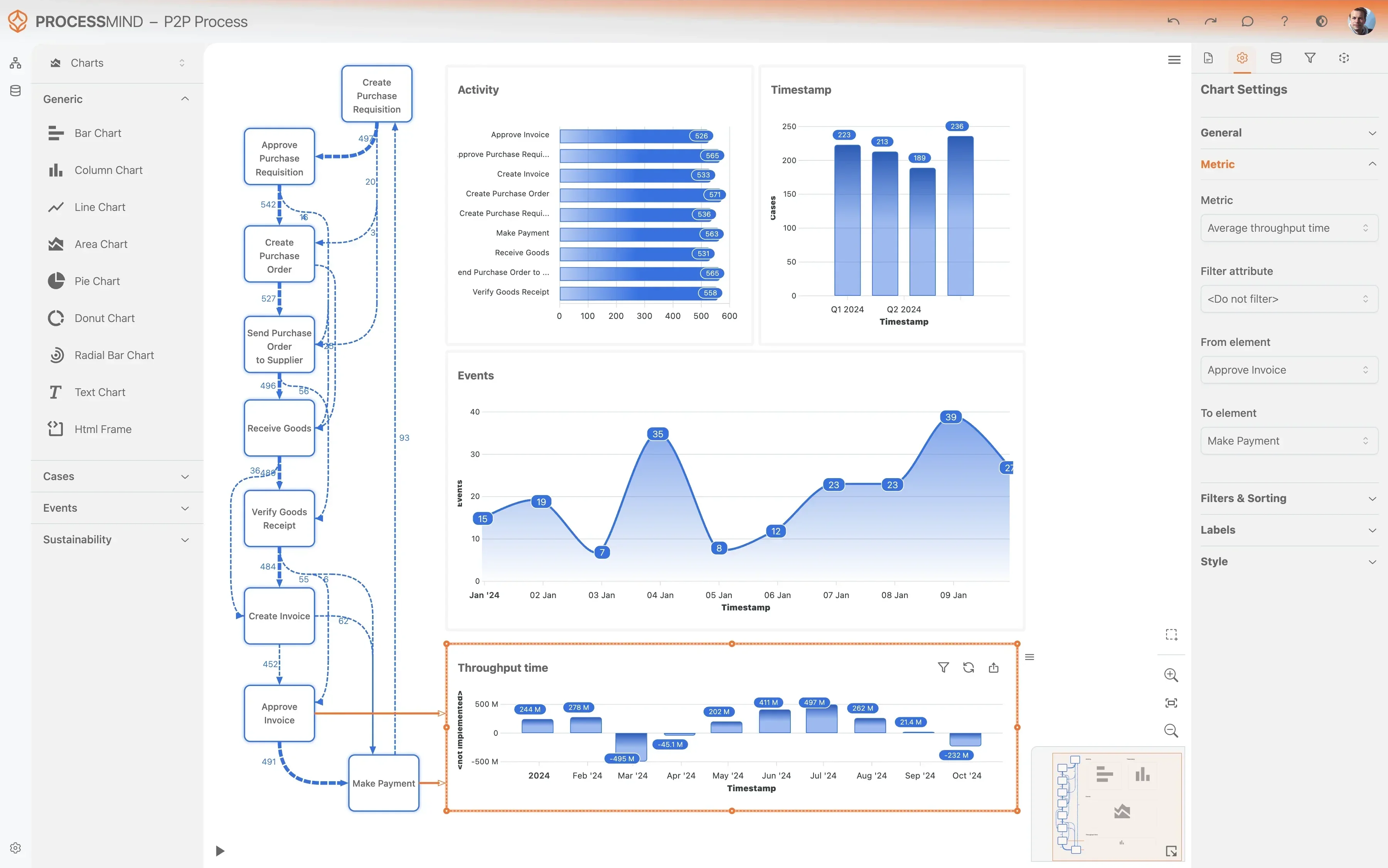
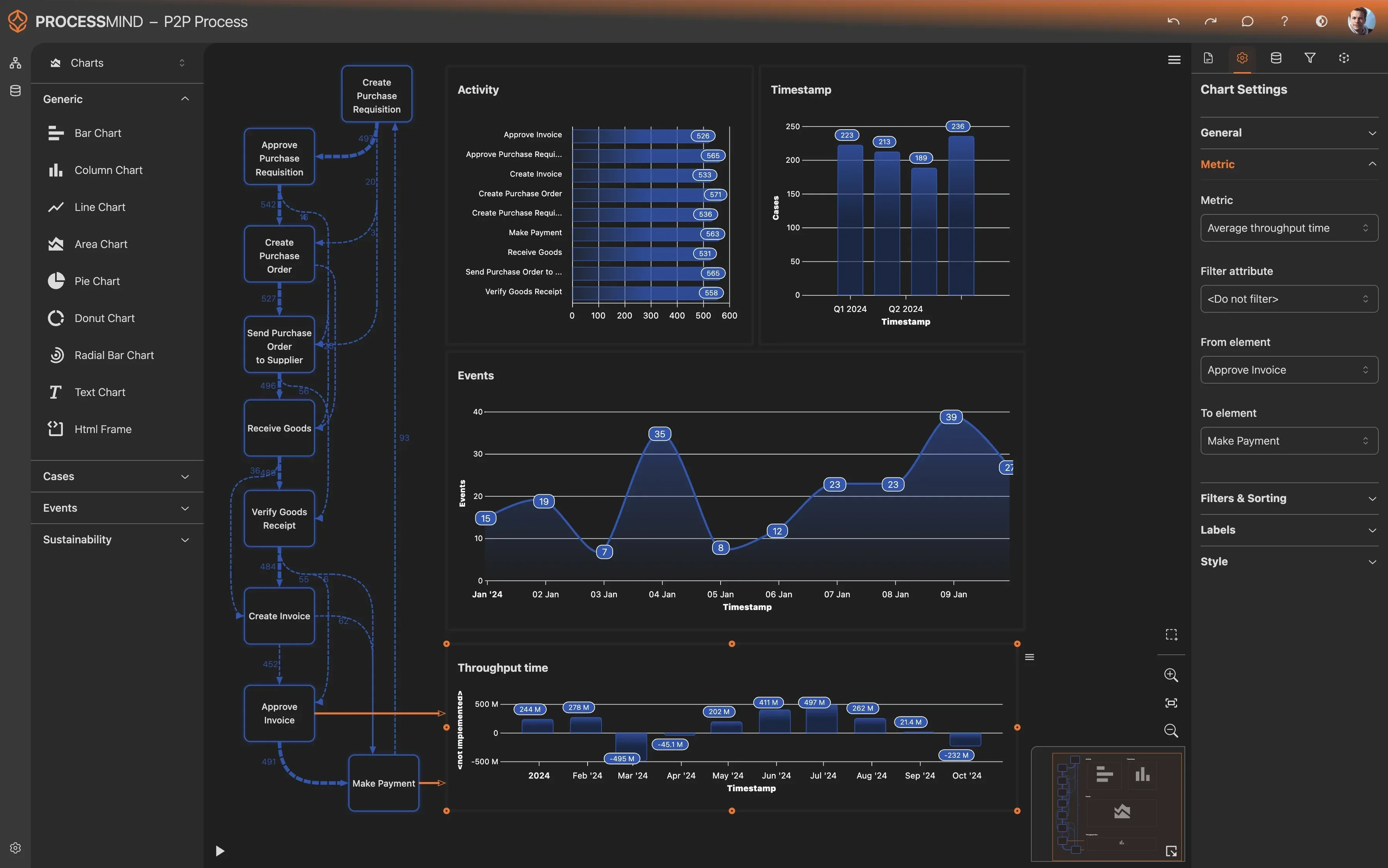
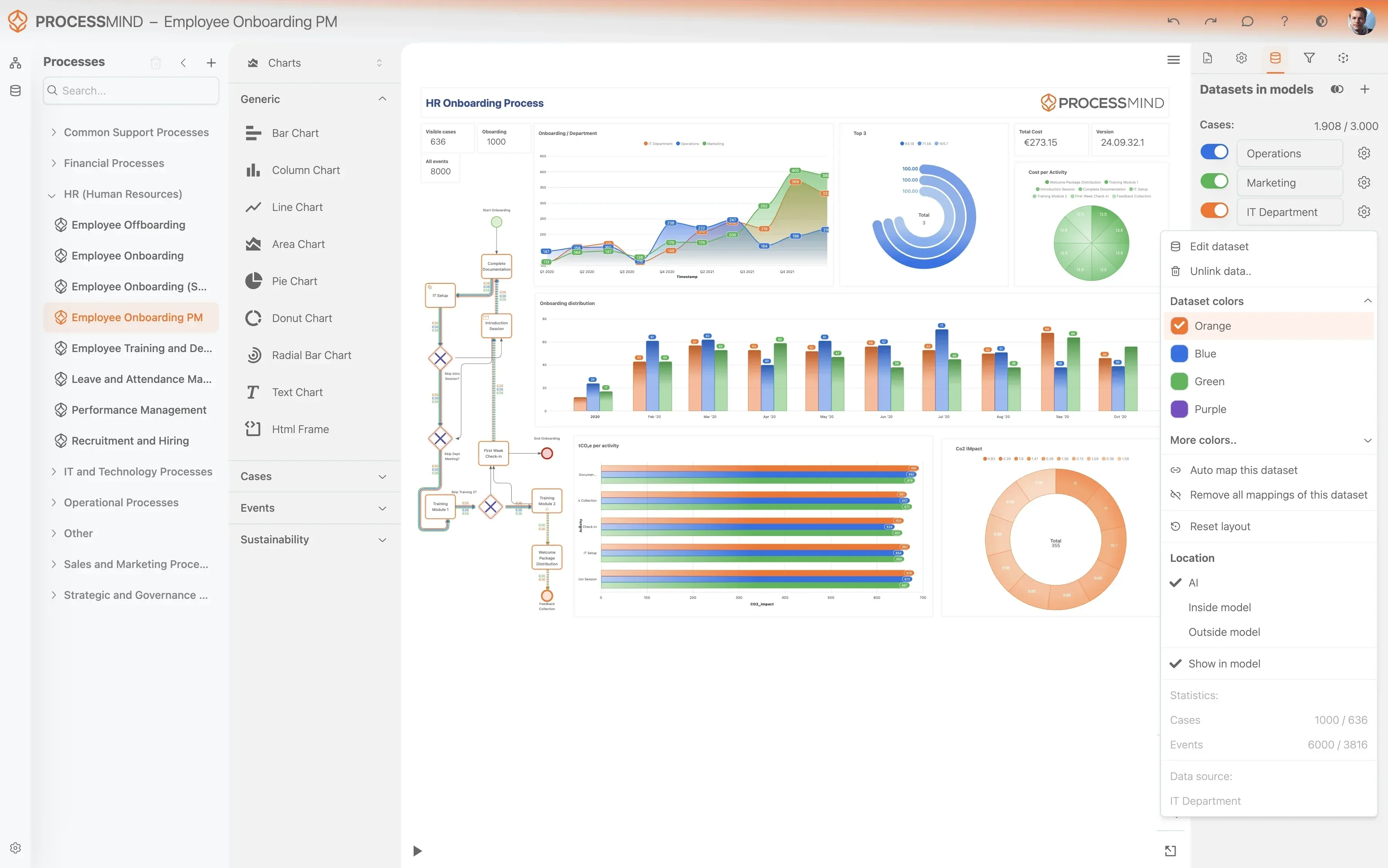
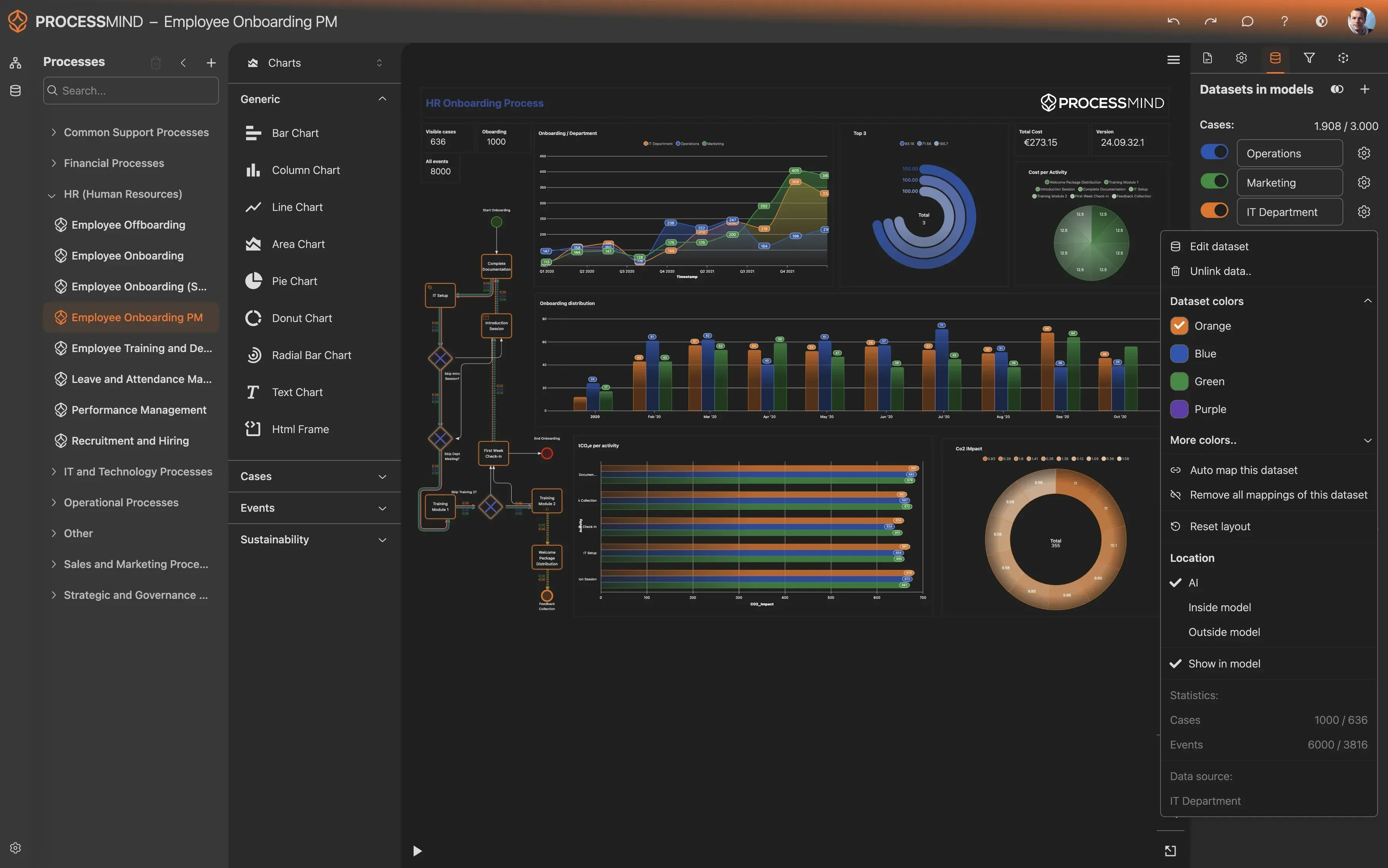
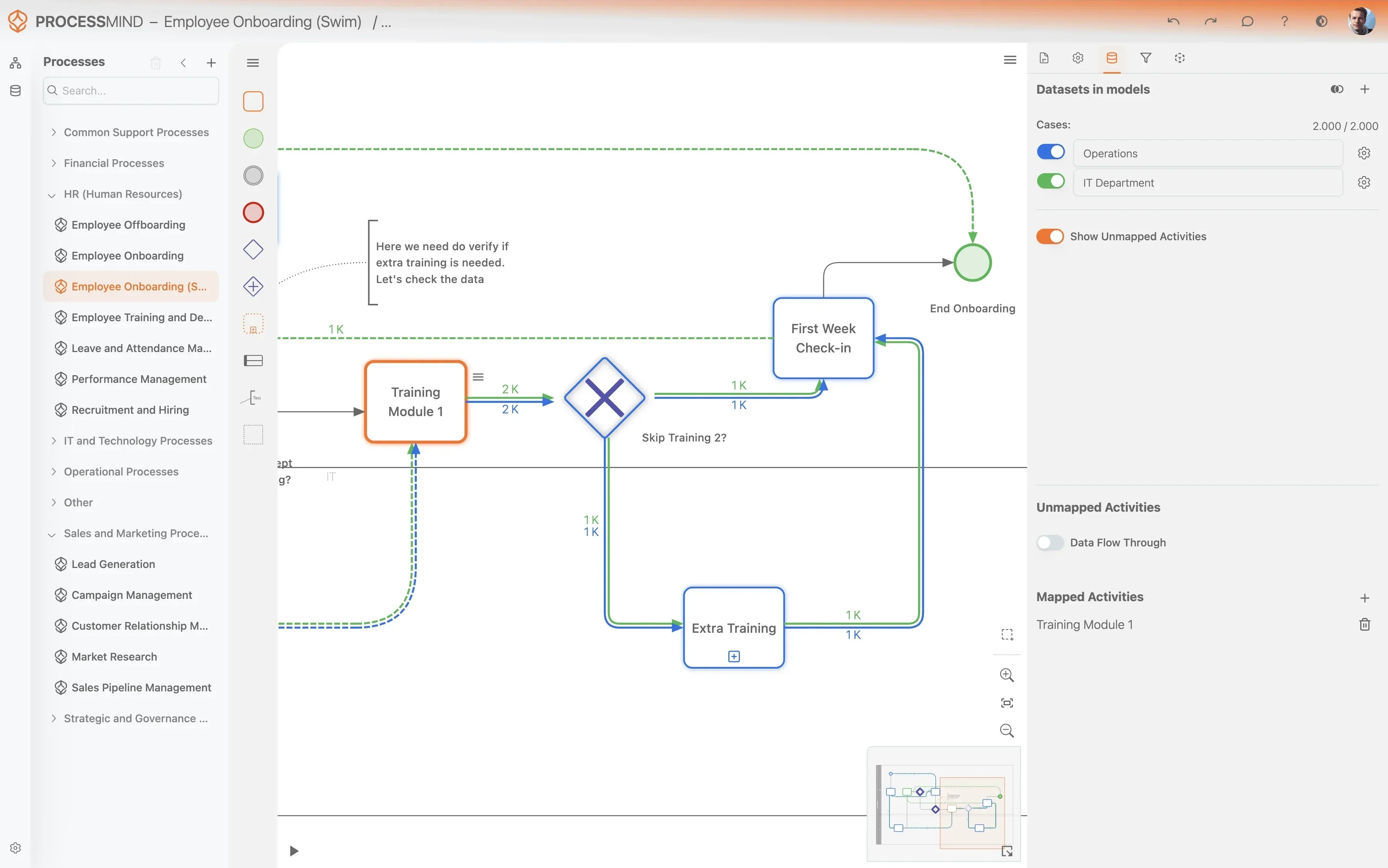
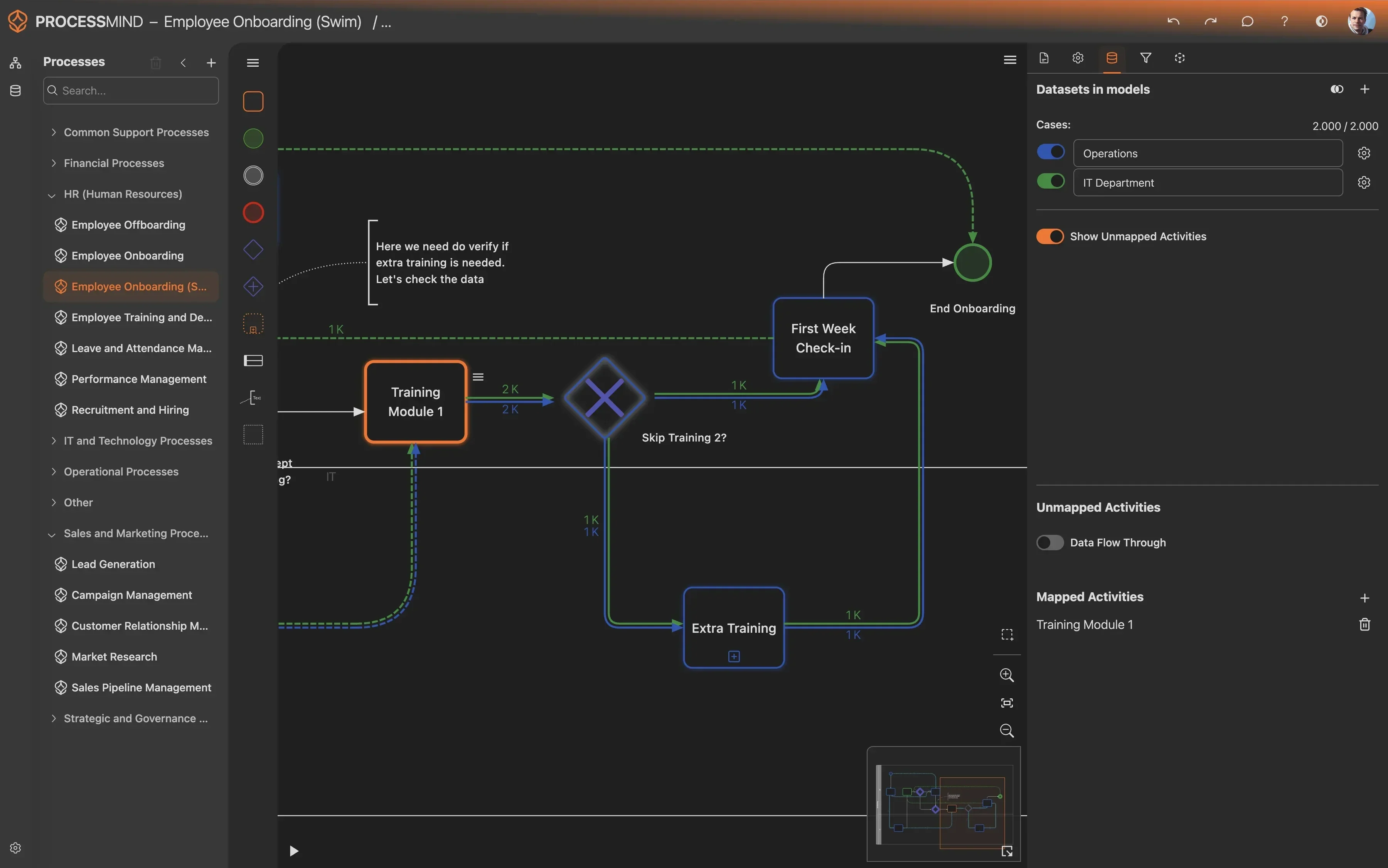
Visualize Workiva Journal Entry for Faster Close
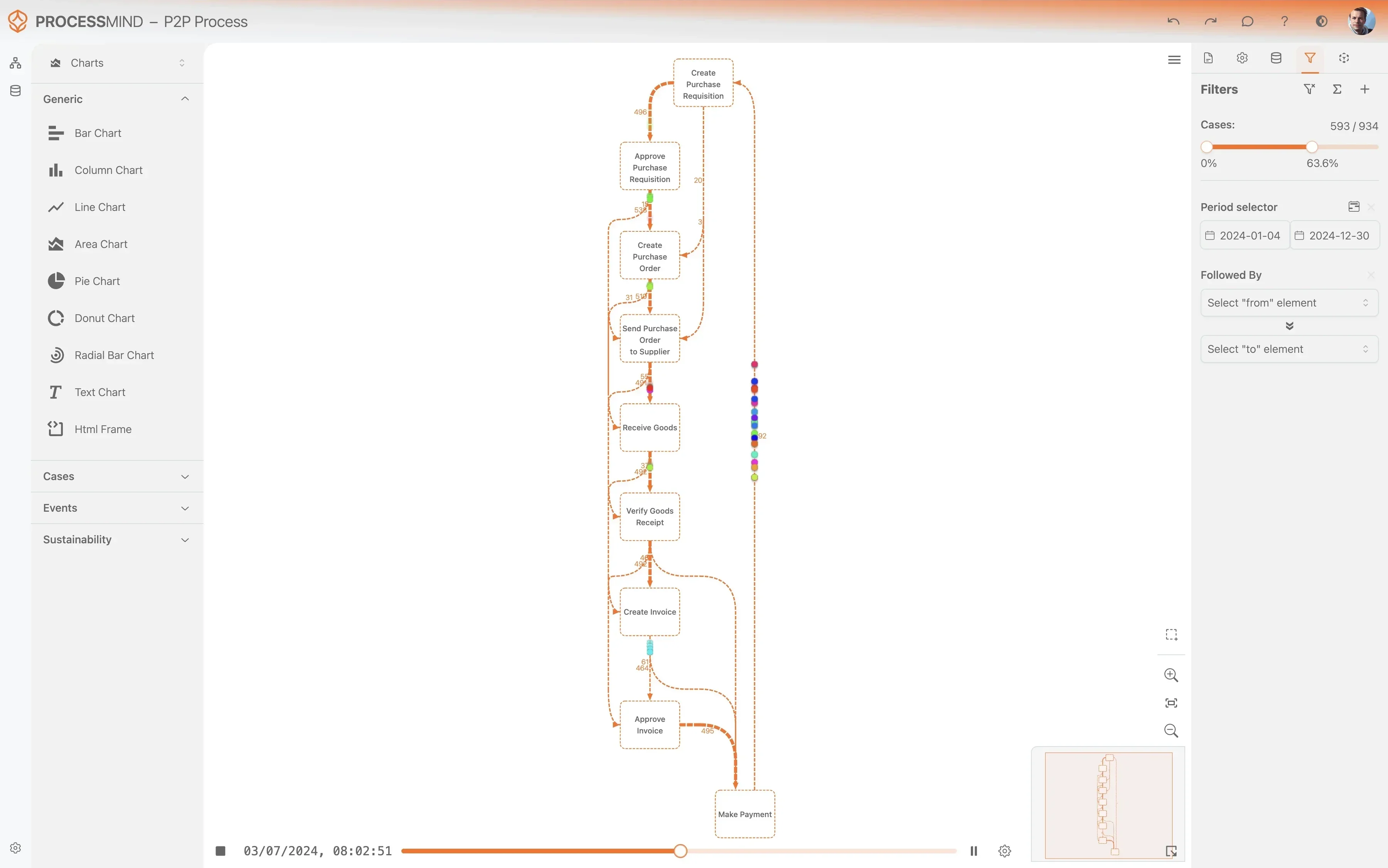
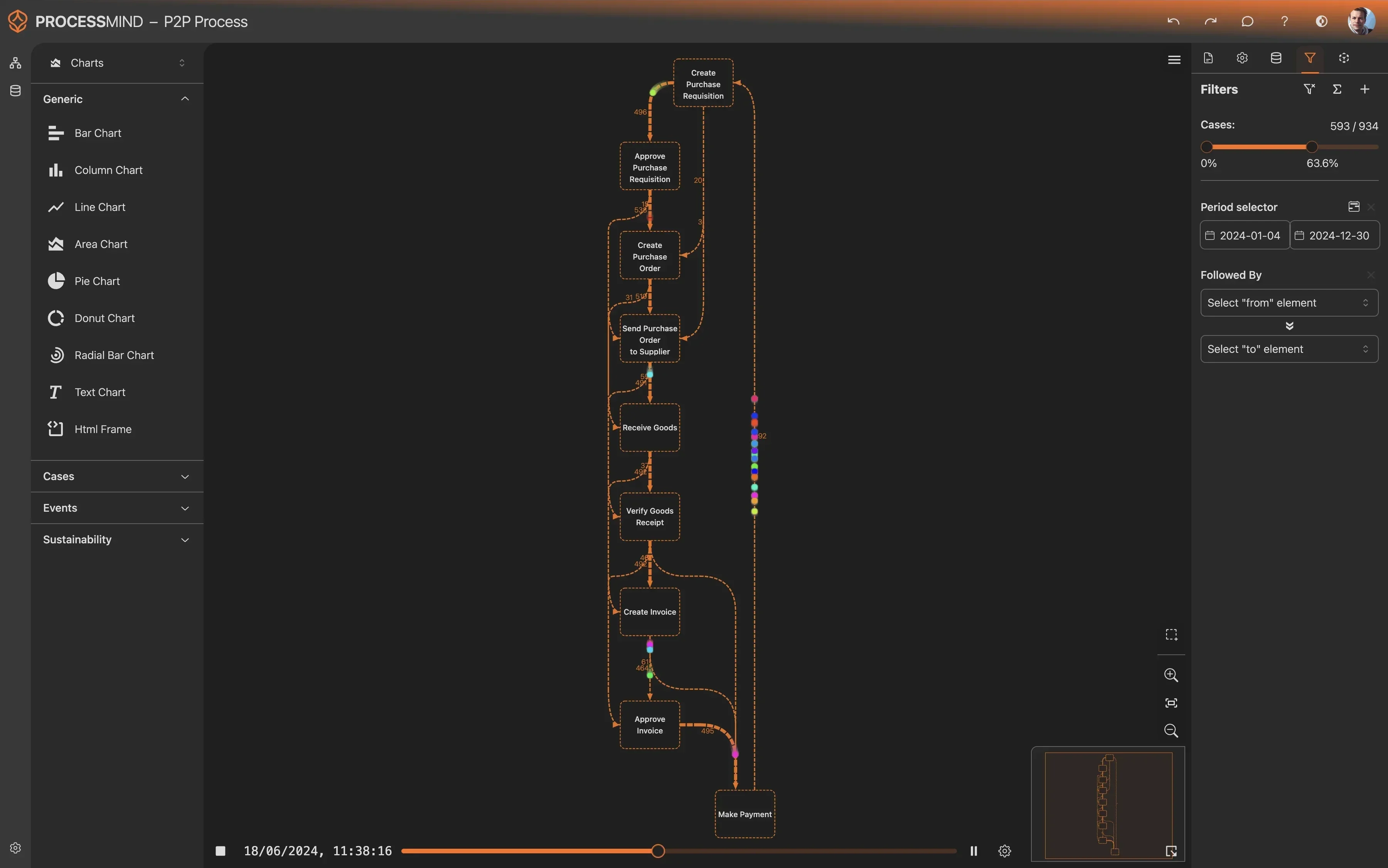
- Visualize journal entry end-to-end flow
- Identify exact delays in Workiva workflow
- Spot compliance risks and errors early
- Accelerate Record to Report cycle time
TYPICAL OUTCOMES
Measurable Improvements in Journal Entry Processes
These outcomes illustrate the tangible benefits organizations achieve by applying process mining to their Journal Entry workflows. By identifying bottlenecks and inefficiencies in Workiva, our solutions drive significant operational improvements across the Record to Report process.
Average reduction in approval time
Streamline the journal entry approval process by identifying bottlenecks, leading to quicker sign-offs and less waiting time.
Decrease in rejected or corrected entries
Reduce the percentage of journal entries requiring corrections or re-submissions, improving accuracy and saving significant processing time.
Increase in process conformance
Ensure a higher percentage of journal entries adhere to standard operating procedures and regulatory requirements, strengthening audit readiness and control.
Reduction in end-to-end cycle time
Accelerate the overall Record to Report process by optimizing journal entry creation to reconciliation, contributing to a faster financial close.
Increase in entries approved without rework
Improve the quality of initial journal entry submissions, leading to a higher rate of approvals on the first attempt and fewer delays.
Results vary based on process complexity and data quality. These figures represent typical improvements observed across implementations.
Recommended Data
FAQs
Frequently asked questions
Process mining provides an objective, data-driven view of your actual Journal Entry workflows. It uncovers bottlenecks, rework loops, and non-standard procedures that hinder efficiency and compliance, allowing for targeted improvements.
You will need an event log dataset from Workiva, which includes a case identifier, activity name, and timestamp for each step of a journal entry. The Journal Entry ID typically serves as the case identifier. Workiva's robust reporting and API capabilities usually facilitate this extraction.
Initial high-level process visualizations and immediate bottleneck identification can often be achieved within a few weeks of successful data ingestion. Deeper root cause analysis and specific optimization recommendations typically follow within one to three months.
You can expect significant improvements such as accelerated journal entry approvals, reduced manual error rates, and lower rework percentages. Additionally, it helps standardize processes, strengthen compliance adherence, and ultimately improve the timeliness of your financial close.
Extracting data from Workiva is generally straightforward using its built-in reporting features or API access. While some initial setup may be required, Workiva is designed to allow users to pull detailed transactional histories, which are ideal for process mining.
No, process mining is a non-intrusive analytical technique. It operates on historical data extracted from Workiva, so it does not interfere with or require changes to your live Journal Entry systems or ongoing financial processes.
Traditional reporting typically shows aggregated metrics, like average processing times or volumes, while process mining visualizes the actual end-to-end flow of every journal entry. This reveals all deviations, rework loops, and hidden inefficiencies that standard reports often miss.
Start Optimizing Your Record to Report - Journal Entry Today
Reduce Journal Entry cycle time by 30%, ensuring faster financial closes.
No credit card required. Cancel anytime.