Improve Your Asset Maintenance

Select a process
Choose a process to continue working in your connected workspace.
Optimize Asset Maintenance in SAP Plant Maintenance
Our platform uncovers hidden bottlenecks and workflow delays that lead to increased operational costs and equipment downtime. By visualizing your entire maintenance lifecycle, you can pinpoint exactly where resources are underutilized or where processes stall. This transparency allows your team to make informed decisions that enhance reliability and streamline day-to-day operations.
Download our pre-configured data template and address common challenges to reach your efficiency goals. Follow our six-step improvement plan and consult the Data Template Guide to transform your operations.
Show detailed description
The Strategic Impact of Refined Maintenance Workflows
Asset maintenance is the backbone of any asset-intensive organization, directly influencing production capacity, safety, and the bottom line. When your maintenance process is inefficient, the consequences extend far beyond simple repair costs. Unplanned downtime can halt entire production lines, while poor resource allocation leads to inflated labor expenses and wasted materials. In an environment powered by SAP Plant Maintenance, the volume of data generated is immense, but visibility into the actual flow of work is often obscured by complexity. By focusing on process optimization, you can transition from a reactive posture to a proactive strategy, ensuring that every technician, spare part, and tool is utilized at its highest potential. Improving asset maintenance is not just about fixing machines faster, it is about aligning operational execution with corporate financial goals and safety standards.
Gaining Transparency within SAP Plant Maintenance
Process mining provides a transparent lens into the intricate life of a maintenance work order. By extracting and analyzing data from core SAP tables such as AUFK for order headers, AFIH for maintenance specific data, and JEST for status changes, you can reconstruct the digital footprint of every maintenance activity. This technology allows you to see the process as it truly happens, not just as it was designed on paper. You can identify exactly where a work order stalls, whether it is waiting for a technical inspection or sitting in a queue for financial settlement. This level of detail is crucial for understanding the delta between planned and actual execution, helping you bridge the gap between maintenance strategy and operational reality. By visualizing the sequence of status updates, you can uncover hidden loops where work is sent back for further clarification or missing parts, adding unnecessary days to the total cycle time.
Identifying and Removing Process Barriers
The journey toward improvement often reveals systemic bottlenecks that are hidden within standard operating procedures. In many SAP PM environments, the most significant delays occur during the transition phases, such as moving from planning to scheduling or from technical completion to final closure. For instance, if material requisitions are consistently submitted late, the entire maintenance schedule shifts, causing ripple effects across the facility. Process mining helps you pinpoint these friction points by analyzing the time elapsed between key milestones. You might discover that certain asset categories require more rework than others, or that specific departments struggle with the administrative requirements of technical completion. By addressing these root causes, you can streamline the flow of information and resources, reducing the overall cycle time of maintenance interventions and improving the reliability of your planning.
Realizing Measurable Performance Gains
Optimizing your maintenance process leads to a variety of measurable benefits that impact both operational efficiency and financial health. One of the primary advantages is the reduction of the Mean Time to Repair (MTTR), which directly translates to increased asset availability and higher production yields. Furthermore, by improving the accuracy of your planning and estimating phases, you can better manage your spare parts inventory and reduce emergency procurement costs. Compliance is another critical area where process mining delivers value. By tracking the sequence of activities, you can ensure that safety protocols and regulatory inspections are followed every single time, creating a reliable audit trail within SAP. Ultimately, these improvements contribute to a lower total cost of ownership for your entire equipment portfolio, as better-maintained assets have longer lifecycles and fewer catastrophic failures.
Building a Foundation for Continuous Improvement
The path to maintenance excellence is not a one-time project but a continuous cycle of monitoring and refinement. Starting with a clear view of your current state in SAP S/4HANA, you can begin to implement incremental changes that yield significant long-term results. As you become more comfortable with data-driven insights, you can expand your focus to include more complex scenarios, such as predictive maintenance integration or sophisticated resource leveling. The key is to begin with the work order lifecycle, using the rich data already available in your system to drive meaningful change. By embracing this approach, you empower your maintenance team to work smarter, keep your assets running longer, and contribute more effectively to the organization success. Encouraging a culture of data-backed decision-making will ensure that your maintenance operations remain agile and cost-effective in an increasingly demanding industrial landscape.
The 6-Step Improvement Path for Asset Maintenance
Download the Template
What to do
Obtain the specialized Excel template designed for SAP Plant Maintenance work order data and technical object structures.
Why it matters
Using a standardized format ensures that your maintenance order logs and status changes align perfectly with the analysis engine.
Expected outcome
A ready-to-fill data template mapped to SAP PM tables
Export Your Data
What to do
Extract three to six months of historical maintenance data from SAP tables like AUFK and AFIH into the provided template.
Why it matters
Real historical data reveals hidden patterns in technician scheduling, material delays, and actual repair durations.
Expected outcome
A completed dataset reflecting your actual maintenance operations
Upload Your Dataset
What to do
Securely upload your populated Excel file to the ProcessMind platform for automated processing and data validation.
Why it matters
Instant processing converts complex SAP transaction logs into a visual end-to-end flow of your maintenance lifecycle.
Expected outcome
A fully processed digital twin of your maintenance process
Analyze Your Process
What to do
Explore generated dashboards to identify bottlenecks in technical inspections and delays in material requisitioning.
Why it matters
AI-driven insights highlight compliance gaps and resource underutilization that are often missed in standard SAP reports.
Expected outcome
Clear identification of process bottlenecks and optimization areas
Implement Improvements
What to do
Prioritize maintenance workflow changes, such as streamlining parts procurement or optimizing resource scheduling, based on your findings.
Why it matters
Taking targeted action directly reduces unplanned downtime and lowers the total cost of asset ownership.
Expected outcome
Actionable plan to improve maintenance efficiency and asset uptime
Monitor Your Process
What to do
Regularly upload new data to track the impact of your changes on key performance indicators like mean time to repair.
Why it matters
Continuous monitoring ensures that maintenance process improvements are sustained and that new bottlenecks are caught early.
Expected outcome
Real-time visibility into process performance trends and gains
YOUR MAINTENANCE INSIGHTS
Discover the Full Potential of Your SAP Maintenance Flow
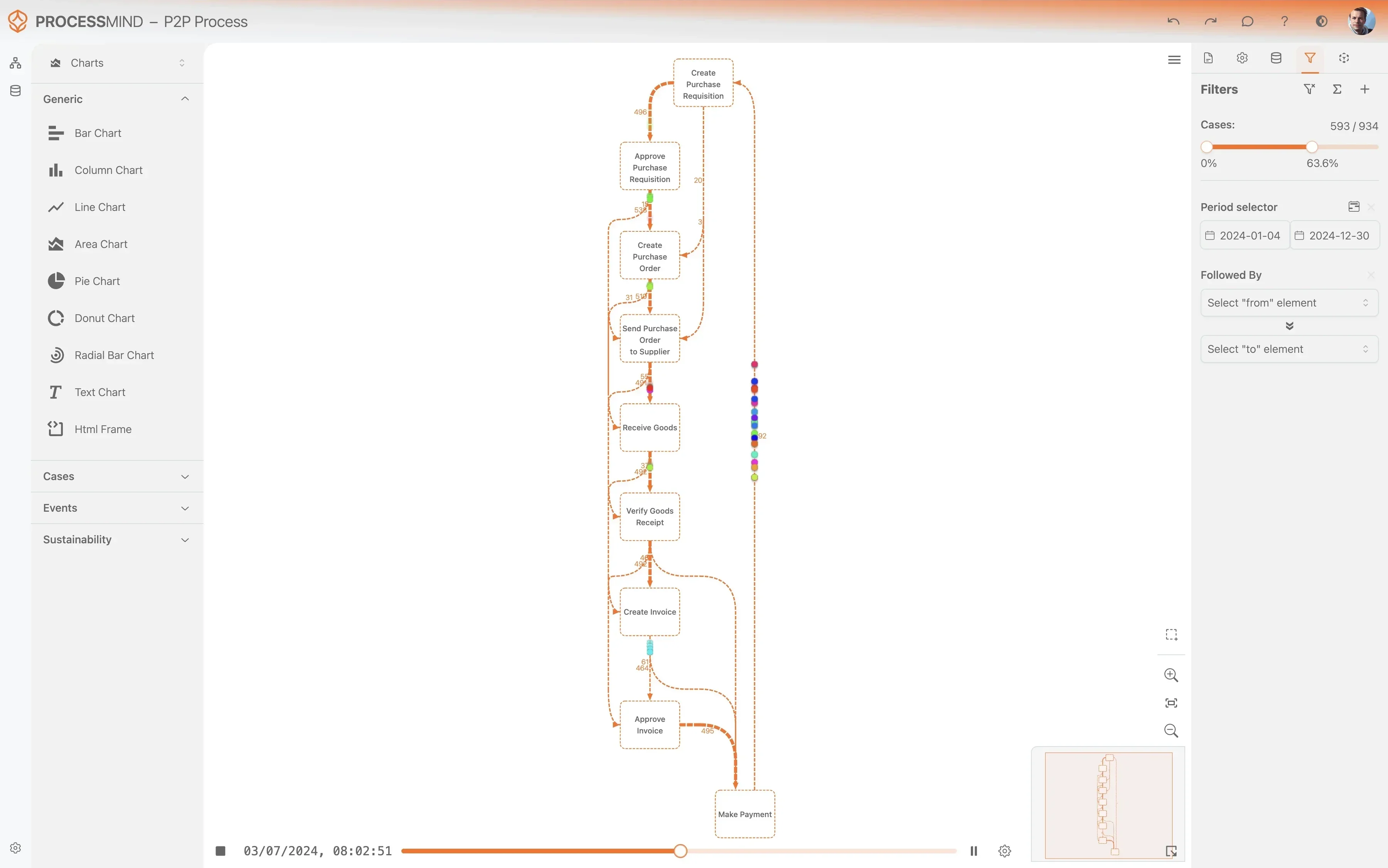
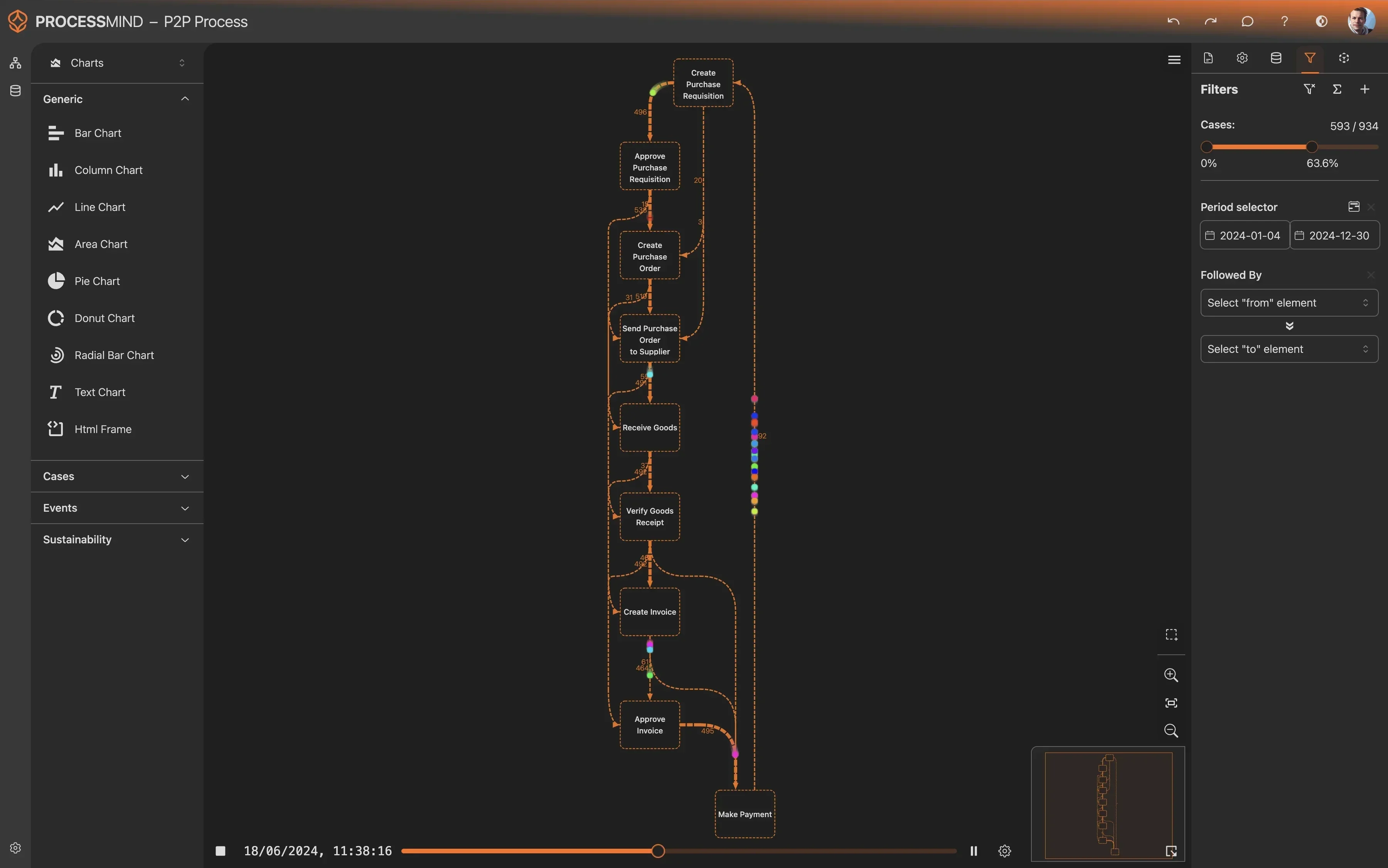
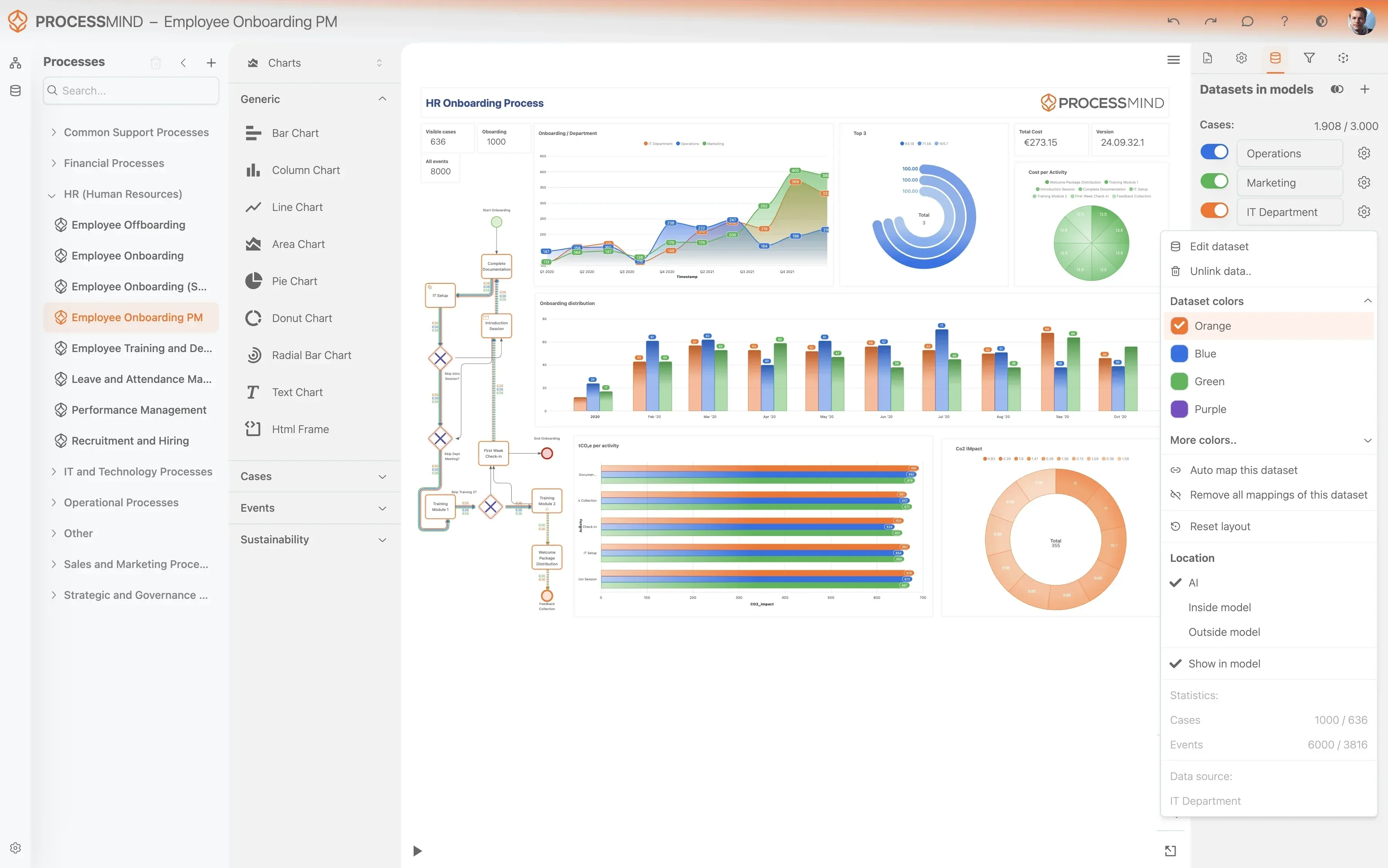
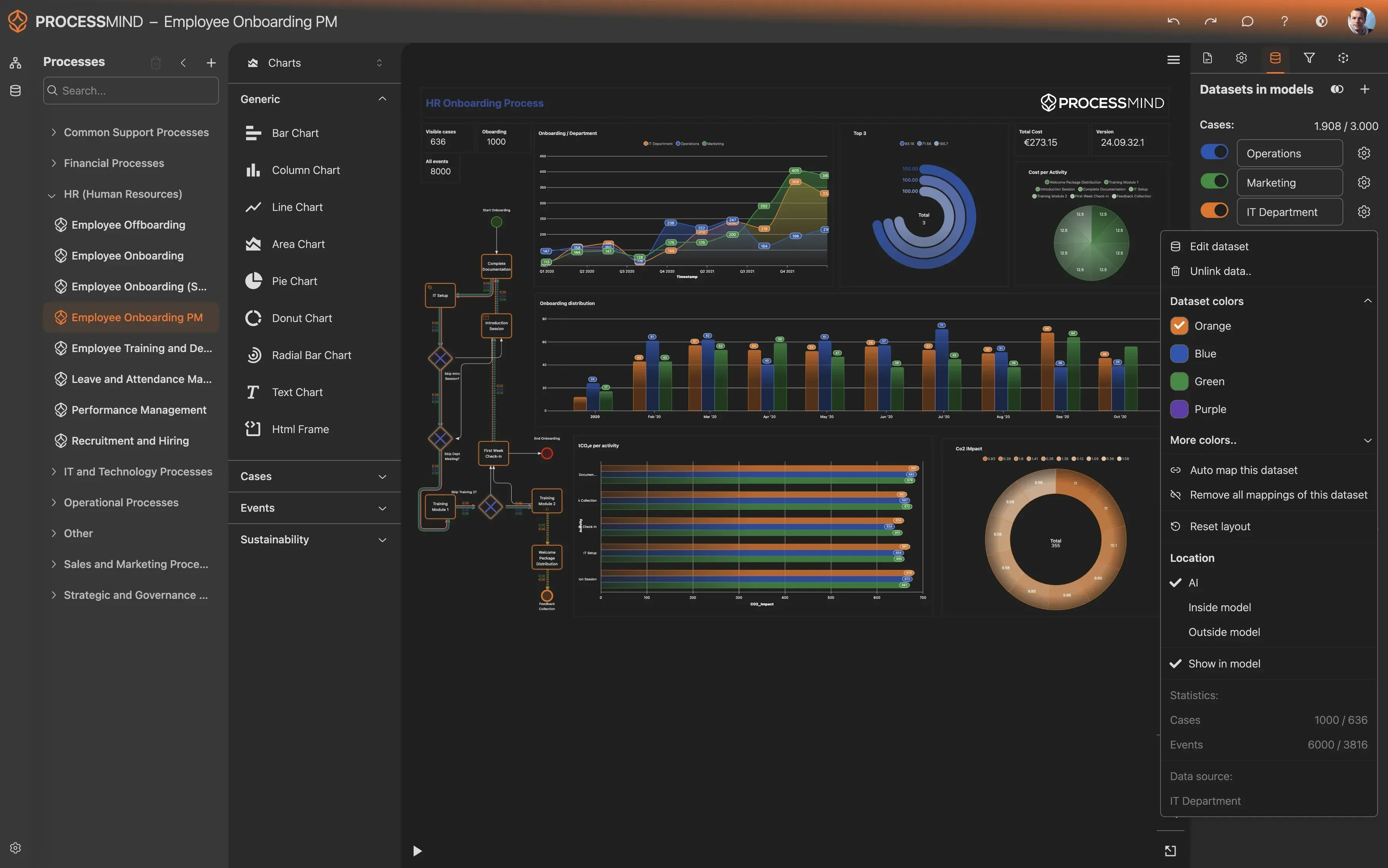
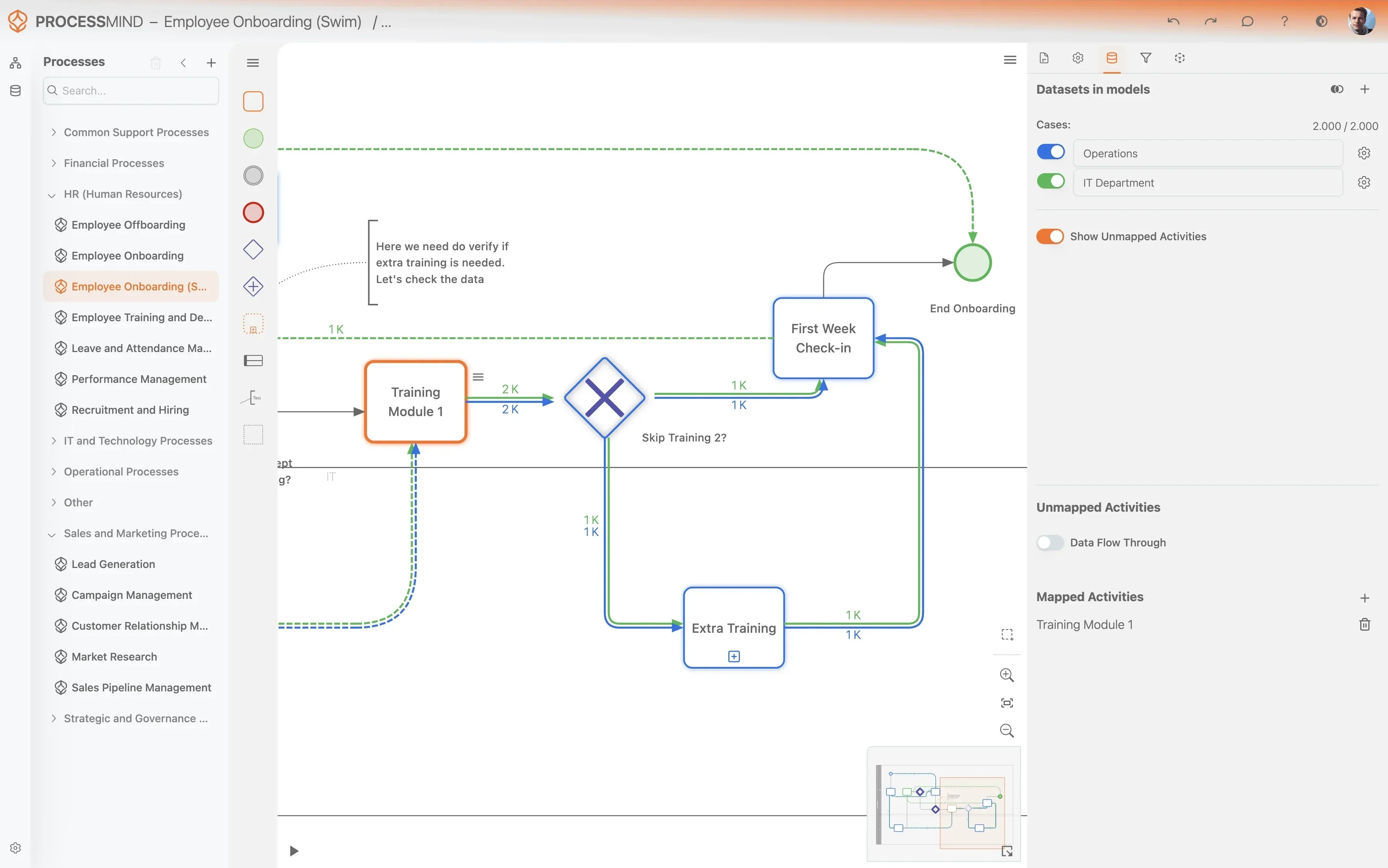
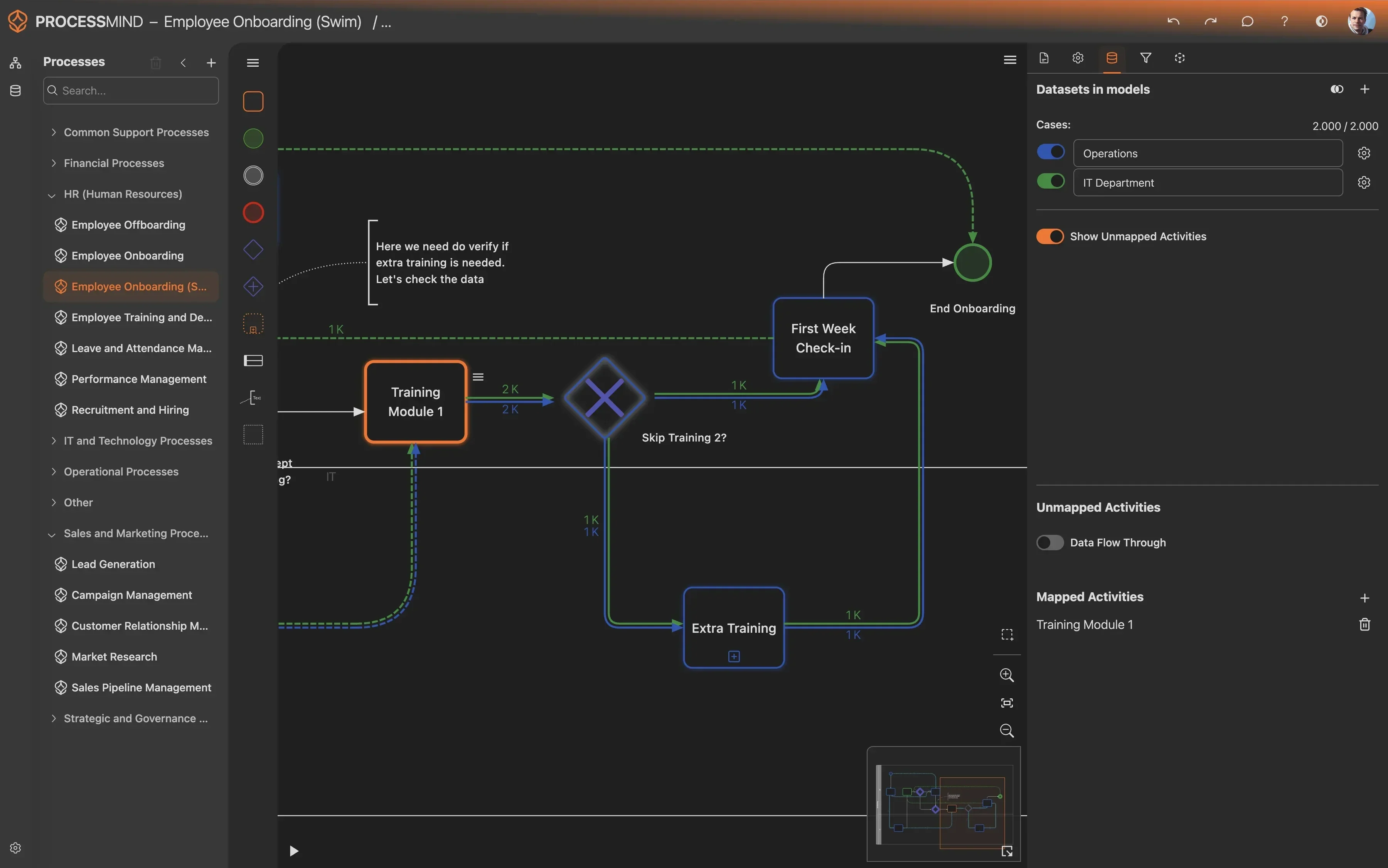
- Visualize the complete maintenance lifecycle
- Detect hidden delays in work order approvals
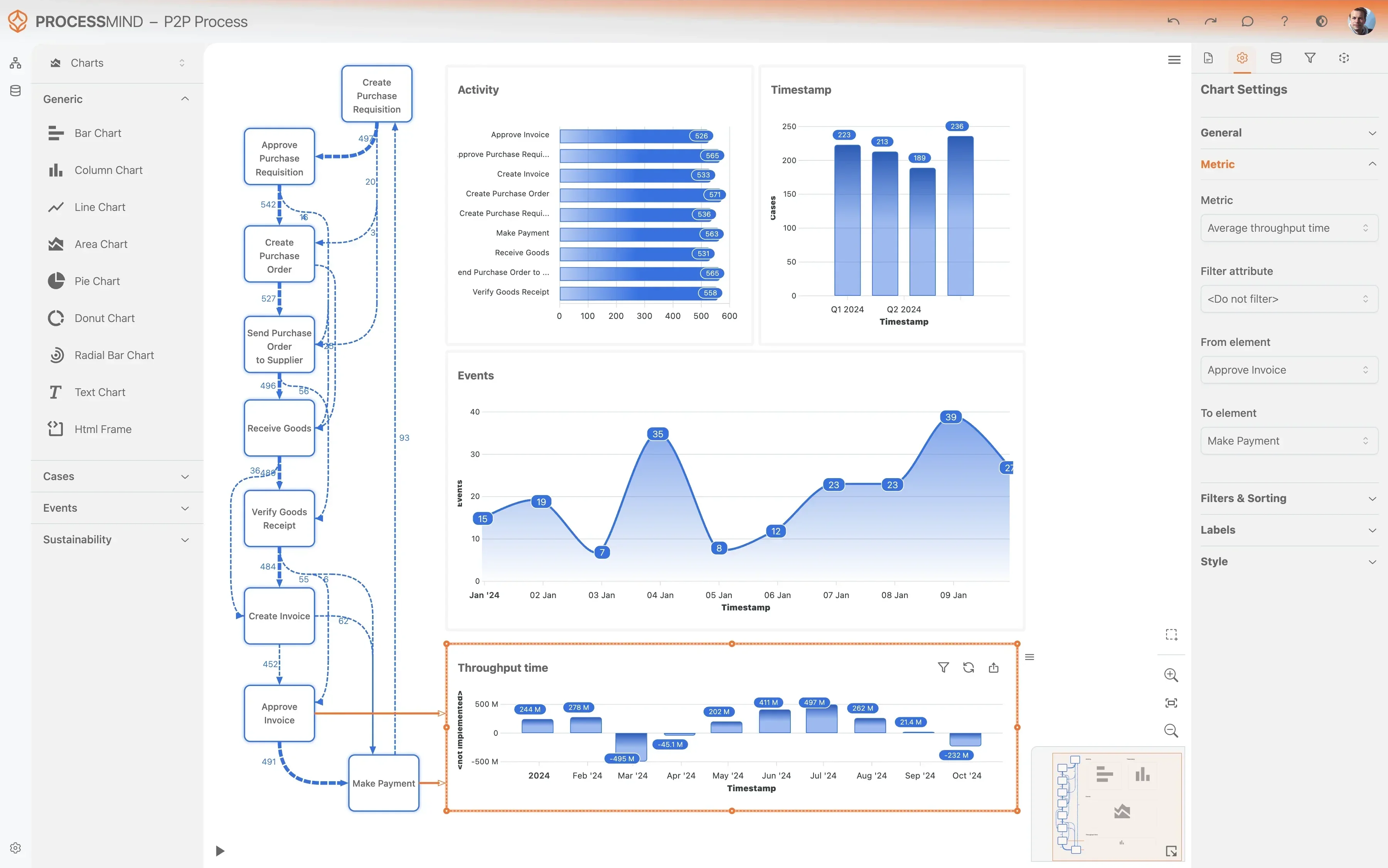
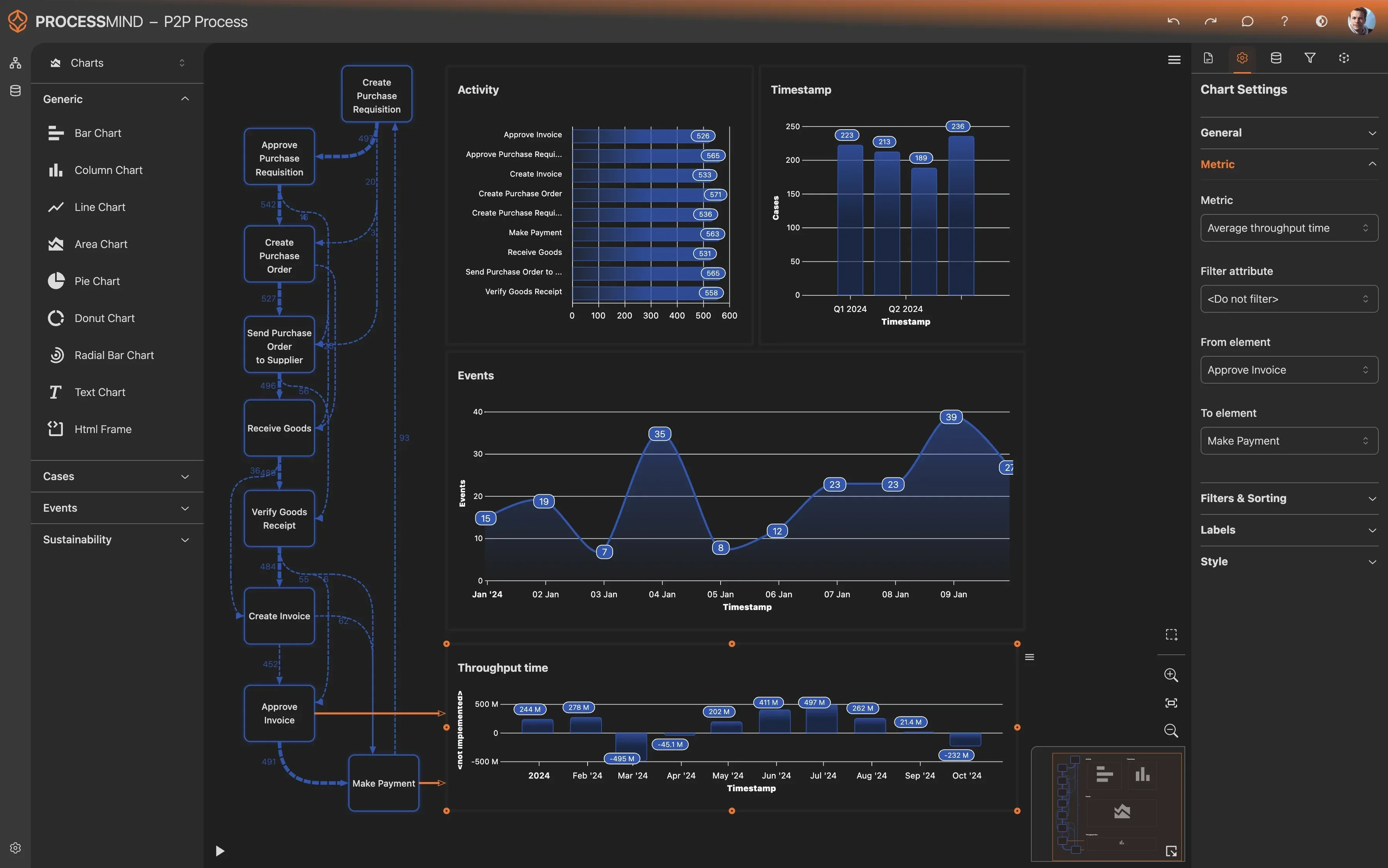
- Compare performance across different asset types
- Monitor key metrics for operational reliability
PROVEN OUTCOMES
Optimizing Asset Lifecycle Performance
Organizations gain clear visibility into the Maintenance Work Order cycle, which enables them to streamline resource allocation and reduce unplanned equipment downtime. By analyzing historical performance within SAP Plant Maintenance, teams can systematically eliminate process inefficiencies.
Reduction in technical downtime
Streamlining the transition from work commencement to task execution minimizes asset downtime and improves overall technician efficiency.
Shift to preventive maintenance
Reducing the volume of high priority emergency orders lowers total maintenance costs and stabilizes the scheduling process for the workforce.
Safety and compliance targets
Continuous monitoring of work order progress against target dates ensures that the department meets its critical safety and regulatory commitments.
Faster estimation cycles
Accelerating the scoping and costing phase ensures that maintenance teams can move from request to execution without administrative delays.
Quality control improvements
Identifying and eliminating rework loops during the inspection phase improves the first-time fix rate and maximizes the impact of skilled labor.
Individual results vary based on specific process complexity and data quality. These figures represent typical improvements observed across diverse enterprise implementations.
Recommended Data
FAQs
Frequently asked questions
Process mining provides full visibility into the end to end maintenance lifecycle, from work order creation to final settlement. It helps teams identify hidden bottlenecks in the planning phase and see exactly where delays in spare parts procurement occur. By visualizing the actual process flow, you can pinpoint deviations from standard operating procedures and prioritize high impact optimizations.
To analyze asset maintenance, you typically need data from several core SAP tables such as AUFK for order headers and AFKO for order details. Status changes are pulled from JEST and JSTO, while technical object data comes from EQUI and IFLOT. These tables provide the necessary timestamps and attributes to reconstruct the complete history of every maintenance work order.
The Maintenance Work Order number is the primary case identifier for this analysis. Every activity, from the initial notification to technical completion and financial settlement, is linked to this specific ID. This allows the system to track every stage of the lifecycle and calculate the exact duration of each process step.
Yes, the tool can quantify how often emergency or reactive work disrupts your scheduled maintenance plans. By mapping these unplanned events against your resource capacity, you can identify patterns that lead to schedule instability. This visibility allows managers to adjust buffer times and improve the ratio of planned versus unplanned maintenance.
Most organizations see initial process maps within four to six weeks once the data connection to SAP is established. The first phase focuses on data extraction and basic process discovery, while subsequent weeks are spent refining the model and building custom dashboards for specific KPIs. This iterative approach ensures that users get actionable insights early in the project.
Process mining integrates maintenance logs with procurement timestamps to show exactly how material availability affects work order completion. You can see when a technician was ready to start but was blocked because a required part was still in transit or awaiting customs clearance. This data helps synchronize procurement cycles with your maintenance schedule to reduce idle time.
The software detects rework by looking for repeating patterns in the status history, such as a work order moving from Technical Completion back to In Progress. If an inspection fails and triggers a new round of repairs, the system flags these loops as quality issues. Analyzing these patterns helps you understand whether the rework is caused by specific asset types, technician skill gaps, or poor quality parts.
By setting specific alerts and benchmarks within the tool, you can monitor every work order for compliance with safety protocols and legal requirements. If a mandatory inspection is missed or a technical closure is delayed beyond the regulated timeframe, the system highlights these violations immediately. This provides a clear audit trail and helps teams maintain a high compliance rate.
Fix Asset Maintenance Bottlenecks in SAP Today
Reduce your maintenance cycle time by 30 percent starting now
No credit card required... Setup in 5 minutes