Improve Your Returns & Refund Processing

Select a process
Choose a process to continue working in your connected workspace.
Optimize Returns and Refunds in Salesforce Commerce Cloud
Returns and refund processing can often hide inefficiencies that lead to customer dissatisfaction and operational bottlenecks. Our platform precisely identifies these pain points, from initial request submission to final resolution. This allows you to streamline operations, enhance customer experience, and ensure compliance effectively.
Download our pre-configured data template and address common challenges to reach your efficiency goals. Follow our six-step improvement plan and consult the Data Template Guide to transform your operations.
Show detailed description
Why Optimize Returns & Refund Processing?
Returns and refund processing are critical components of the customer experience, directly impacting satisfaction and your bottom line. In an environment like Salesforce Commerce Cloud, where customer interactions are paramount, an inefficient returns process can quickly negate positive purchasing experiences. High volumes of returns, coupled with slow processing times, lead to increased operational costs, disgruntled customers, and potential revenue loss from delayed re-stocking and re-selling of returned items. Each day an item sits uninspected in a warehouse, or a refund remains unprocessed, represents lost capital and a missed opportunity to build lasting customer loyalty. Optimizing your Returns & Refund Processing is not just about cost reduction, it is about enhancing the entire post-purchase journey and ensuring your business operates with maximum efficiency and compliance.
How Process Mining Unlocks Efficiency in Salesforce Commerce Cloud
Process mining offers an unparalleled, data-driven approach to understanding the true flow of your Returns & Refund Processing within Salesforce Commerce Cloud. Instead of relying on assumptions or anecdotal evidence, process mining visualizes the actual journey of every return case, from the moment a "Return Request Initiated" to the "Return Case Closed". By analyzing event logs from your Salesforce Commerce Cloud Order Management System (OMS) and other integrated systems, you can precisely identify where bottlenecks occur. For instance, you might discover significant delays between "Item Received at Warehouse" and "Item Inspected", or that "Refund Initiated" often takes much longer than the target "Refund SLA Target Date". This end-to-end perspective helps you uncover hidden inefficiencies, identify compliance deviations, and understand the impact of various return channels or product types on overall processing time. Process mining provides the clarity needed to answer questions like, "How to reduce Returns & Refund Processing cycle time?" by showing you the exact steps and variations that lead to extended delays.
Key Areas for Improvement Identified by Process Mining
Through the lens of process mining, several key areas for improving your Returns & Refund Processing typically emerge:
- Bottleneck Identification: Pinpoint specific activities or handoffs that consistently cause delays, such as prolonged approval times for return requests or long queues for item inspection.
- Policy Compliance: Detect instances where the actual process deviates from established return policies or service level agreements, for example, refunds being processed without proper item inspection or exceeding a "Refund SLA Target Date".
- Process Variations: Understand different paths return cases take and identify which variations lead to faster, more efficient outcomes versus those that cause delays and higher costs.
- Resource Allocation: Analyze the workload and efficiency of processing agents or departments, revealing opportunities to optimize staffing or training.
- System Integration Gaps: Uncover delays caused by poor integration between Salesforce Commerce Cloud, your OMS, warehouse management, and financial systems, impacting the seamless flow from "Return Request Approved" to "Refund Processed".
Expected Measurable Outcomes
Implementing process optimization based on process mining insights for your Returns & Refund Processing in Salesforce Commerce Cloud can lead to significant, measurable benefits:
- Reduced Cycle Time: Drastically decrease the average time from "Return Request Initiated" to "Return Case Closed", improving customer satisfaction and freeing up capital faster. This directly addresses "how to reduce Returns & Refund Processing cycle time".
- Lower Operational Costs: Streamline workflows, reduce manual effort, and minimize the costs associated with extended processing, such as storage fees or customer service inquiries.
- Enhanced Customer Satisfaction: Expedite refunds and exchanges, leading to a more positive post-purchase experience and increased customer loyalty.
- Improved Compliance: Ensure consistent adherence to return policies, regulatory requirements, and internal SLAs, mitigating risks and maintaining brand trust.
- Better Inventory Management: Accelerate the inspection and re-stocking of returned goods, optimizing inventory levels and reducing write-offs.
Getting Started with Your Optimization Journey
Improving your Returns & Refund Processing with Salesforce Commerce Cloud is an ongoing journey that begins with a clear understanding of your current state. Leveraging process mining tools and templates specifically designed for this purpose empowers you to quickly gain insights into your operations. By visualizing every step and identifying the root causes of inefficiency, you can make informed decisions that drive meaningful improvements, leading to a more efficient, compliant, and customer-centric returns process.
The 6-Step Improvement Path for Returns & Refund Processing
Download the Template
What to do
Obtain the pre-built Excel template tailored for Returns & Refund Processing, designed for Salesforce Commerce Cloud data. This ensures your data aligns with ProcessMind's analysis structure.
Why it matters
Using the correct template prevents data mapping issues and streamlines the preparation phase, allowing for accurate and efficient process analysis from the start.
Expected outcome
A structured Excel template, ready to be populated with your Salesforce Commerce Cloud return data.
Export Your Data
What to do
Extract 3-6 months of historical returns and refunds data from Salesforce Commerce Cloud Order Management. Populate the downloaded template with this relevant transaction history.
Why it matters
A sufficient historical data range provides a comprehensive view of process variations and trends, essential for identifying recurring bottlenecks and inefficiencies.
Expected outcome
Your returns and refunds data, organized and prepared in the ProcessMind template.
Upload Your Dataset
What to do
Securely upload the completed Excel template containing your Salesforce Commerce Cloud returns data to ProcessMind. The system will automatically begin its analysis.
Why it matters
This step initiates the powerful analytical engine, transforming raw data into actionable insights without manual effort, saving time and ensuring data integrity.
Expected outcome
Your Salesforce Commerce Cloud returns dataset successfully uploaded and undergoing automated analysis.
Analyze Your Process
What to do
Explore the automatically generated dashboards and process maps for your Returns & Refund Processing. Review AI-driven recommendations for specific improvement opportunities.
Why it matters
Visualize the true end-to-end flow to quickly spot compliance deviations, delays, and rework loops. This clarity empowers data-driven decision-making for impactful changes.
Expected outcome
A clear understanding of your current returns process, identifying key bottlenecks and areas for improvement.
Implement Improvements
What to do
Prioritize the identified improvement opportunities, focusing on high-impact areas within your Salesforce Commerce Cloud Returns & Refund workflow. Develop and apply targeted solutions.
Why it matters
Translating insights into action directly addresses root causes of inefficiency, reduces processing times, and enhances customer satisfaction with faster resolutions.
Expected outcome
Specific actions implemented to streamline your Returns & Refund Processing, improving efficiency and customer experience.
Monitor Your Process
What to do
Periodically re-upload updated Salesforce Commerce Cloud returns data to ProcessMind. Continuously track key performance indicators to measure the impact of your implemented changes.
Why it matters
Ongoing monitoring ensures sustained process health, allowing you to validate improvements and adapt quickly to new challenges, fostering a culture of continuous optimization.
Expected outcome
A mechanism for continuous process optimization, ensuring long-term efficiency and sustained performance improvements.
WHAT YOU WILL GET
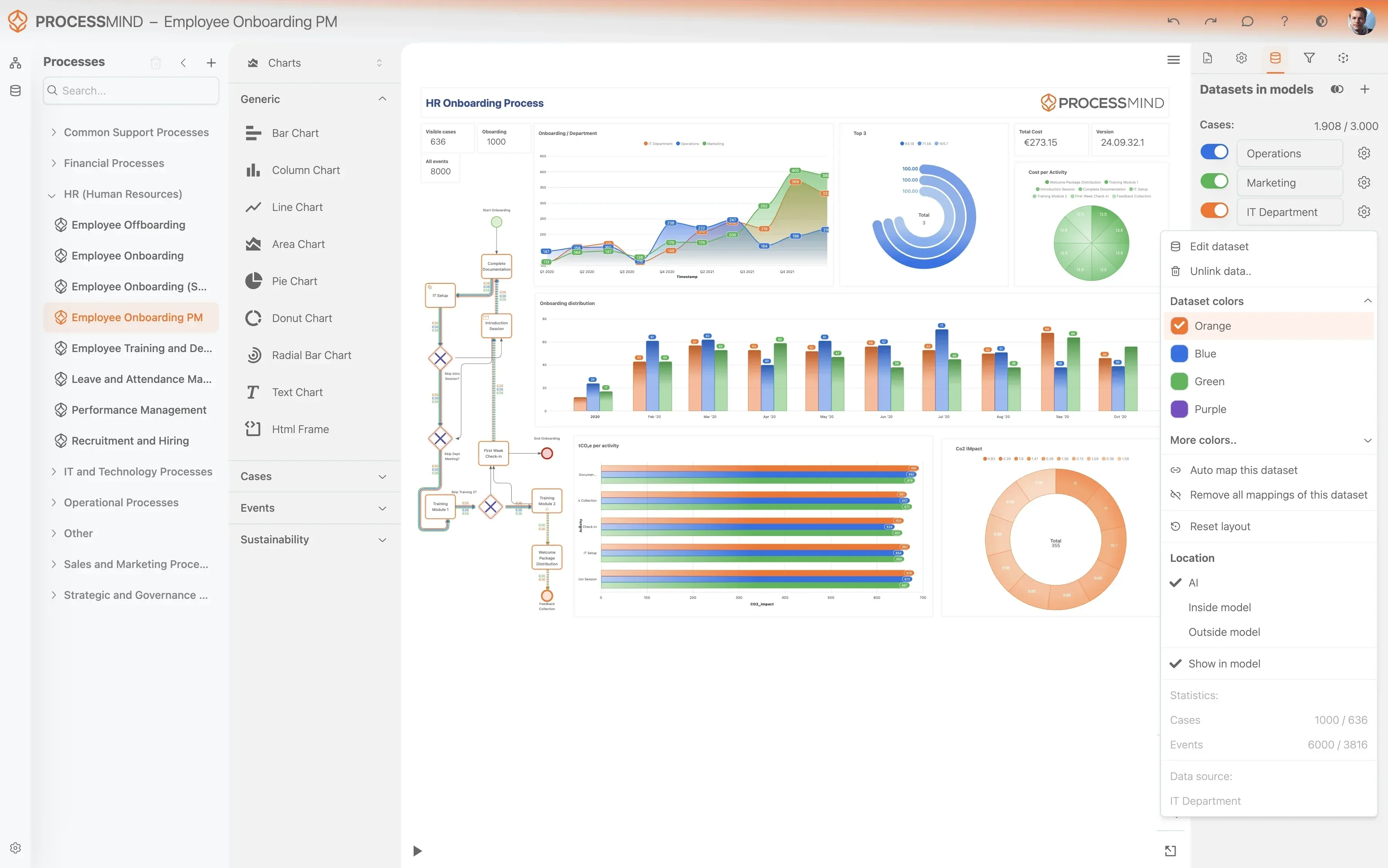
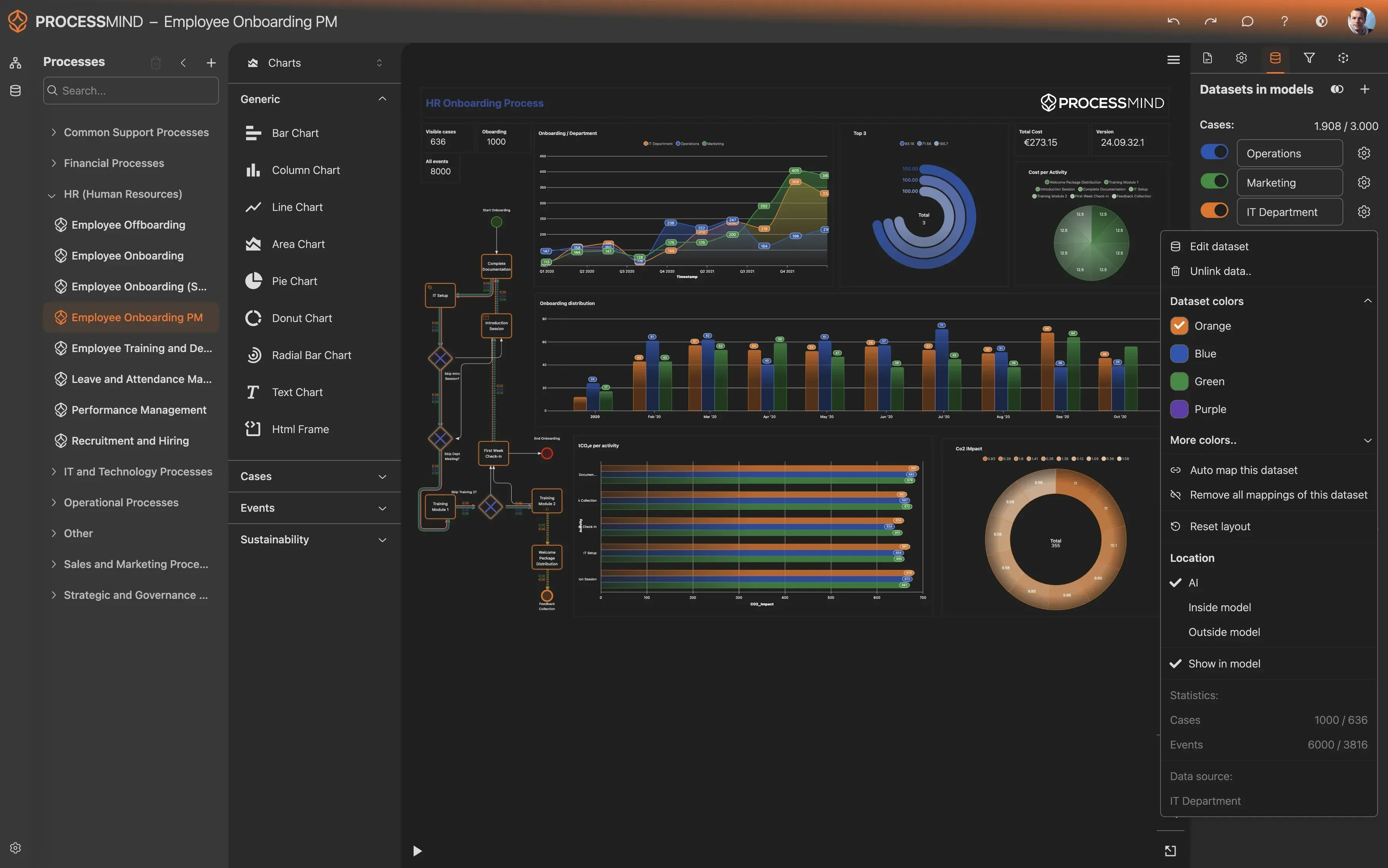
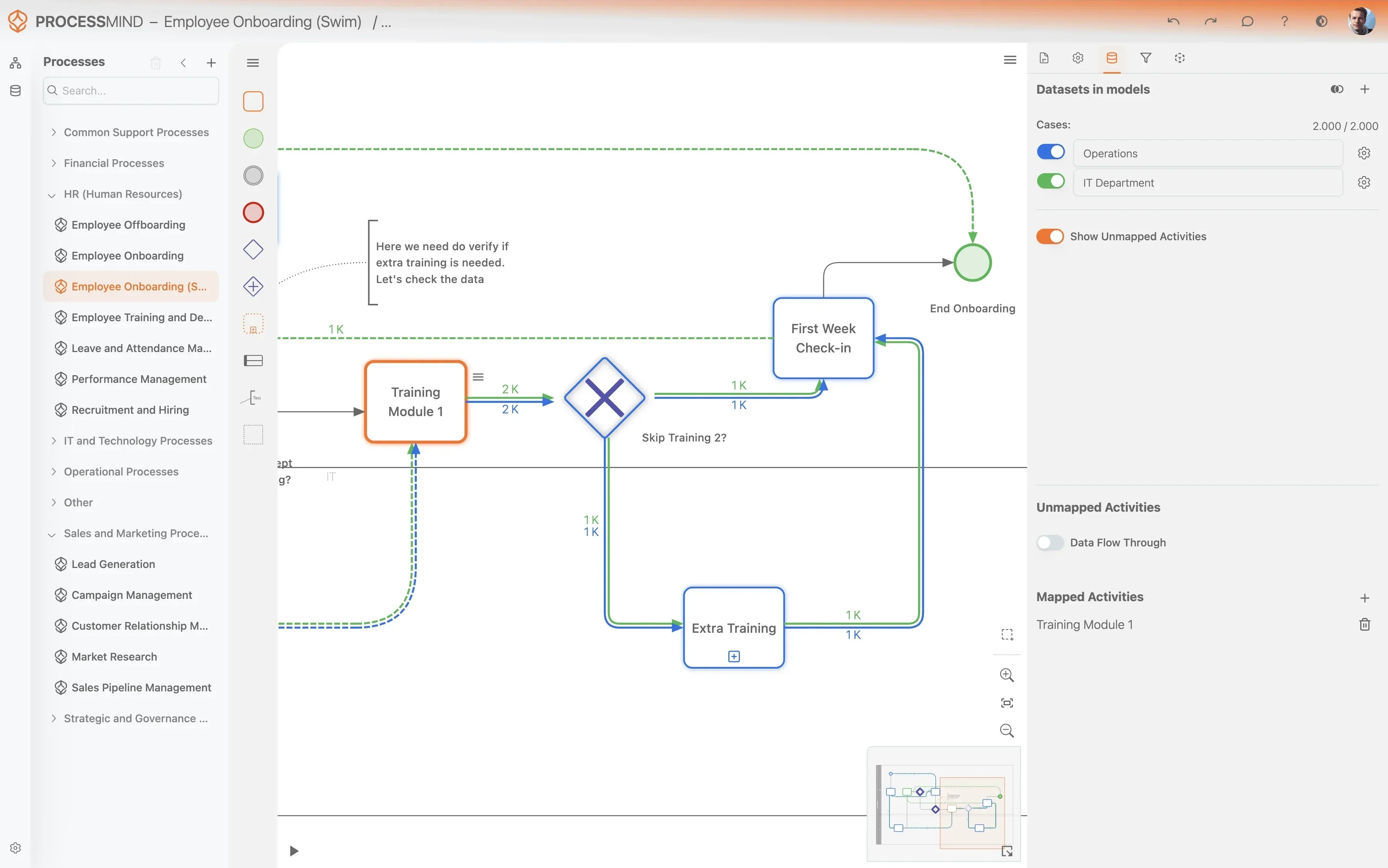
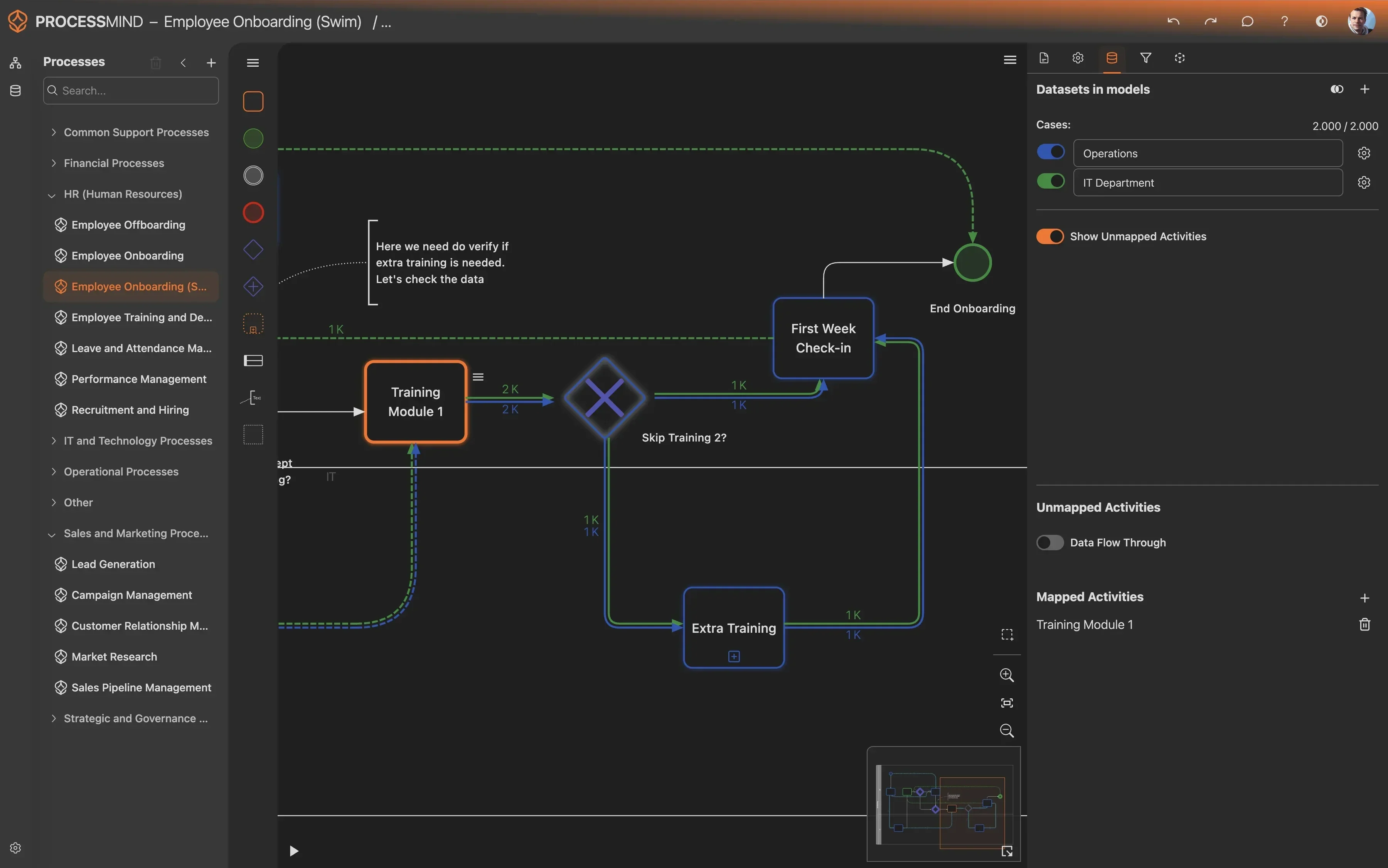
See Your Salesforce Returns Flow Like Never Before
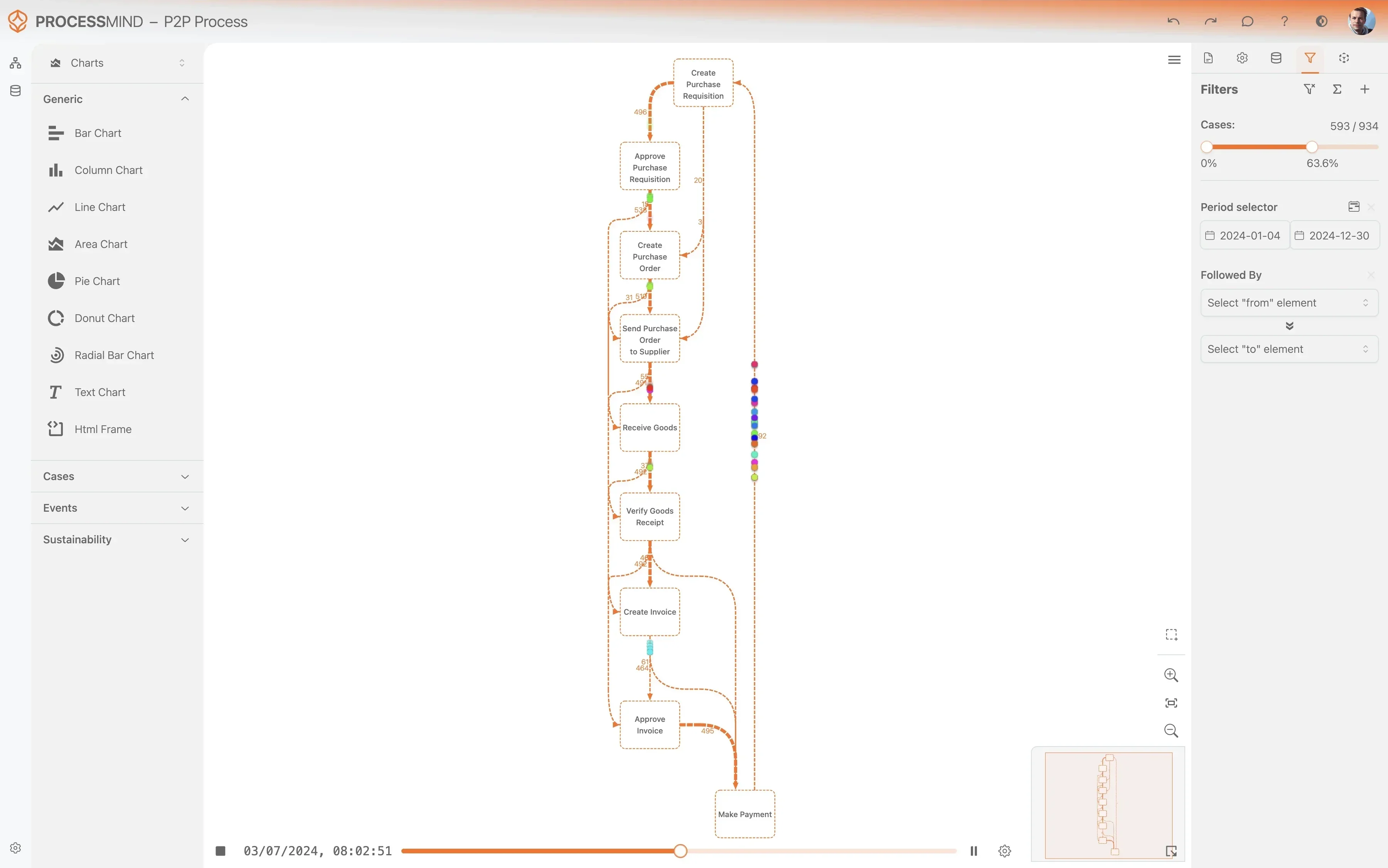
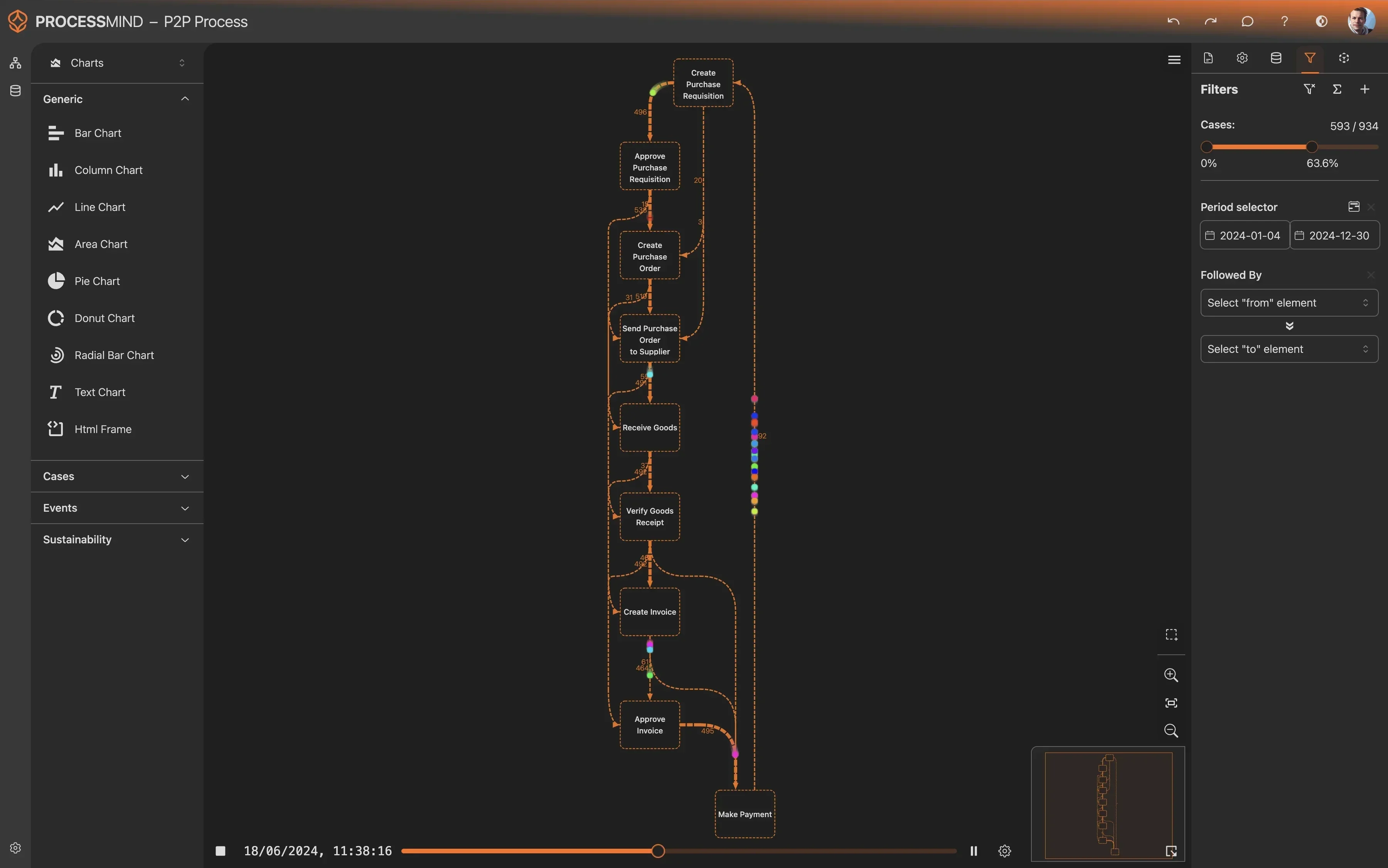
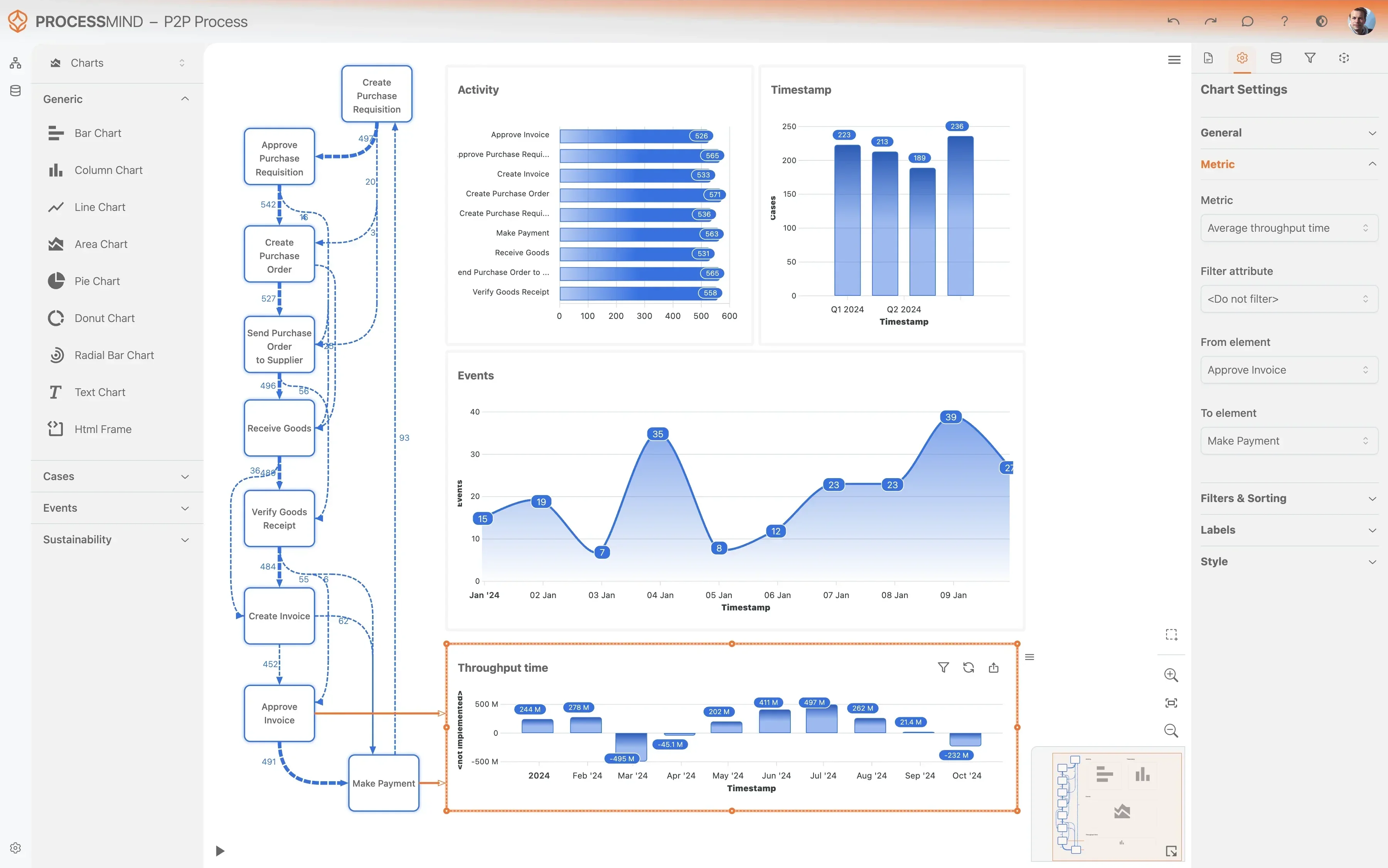
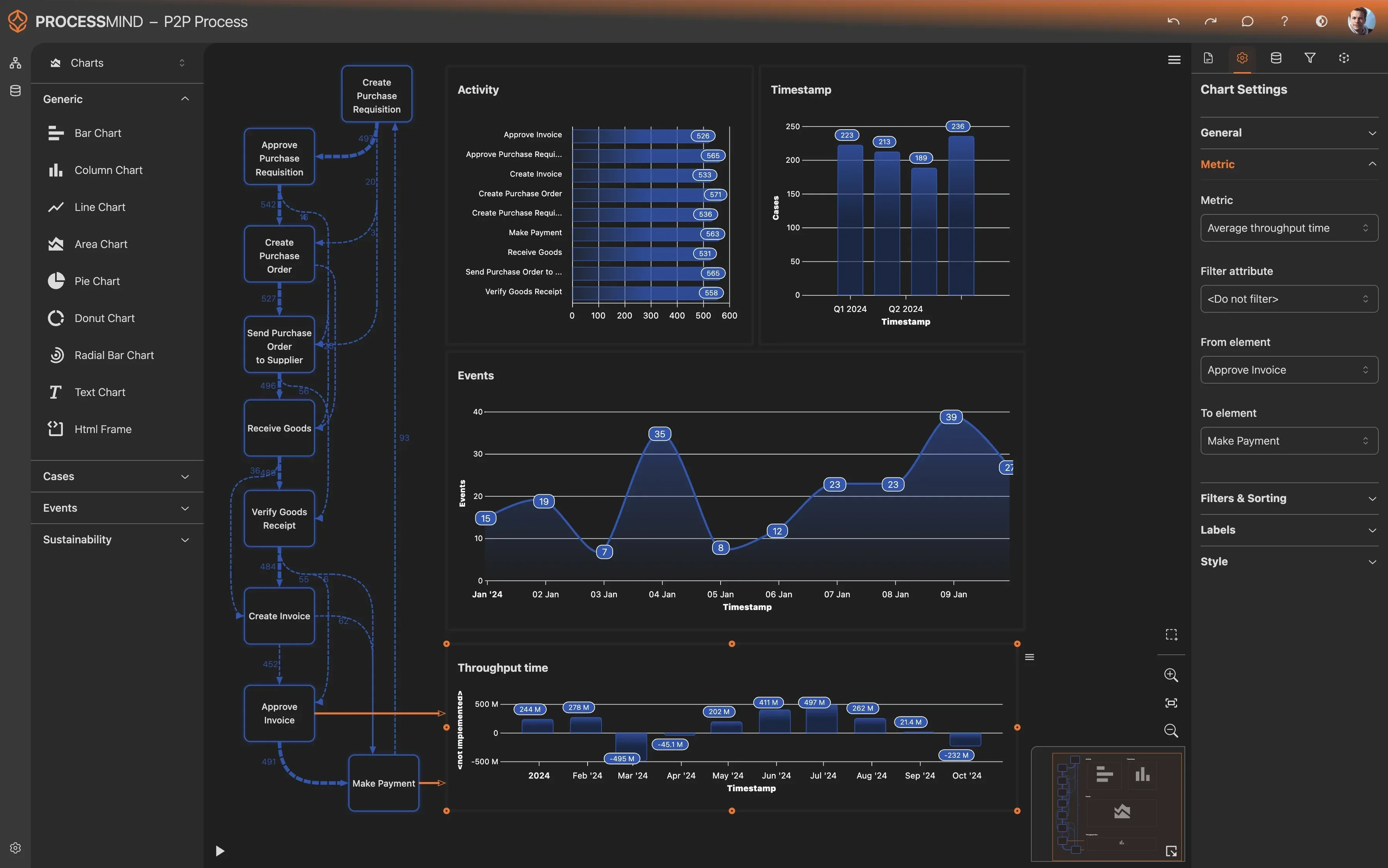
- Visualize complete return process flow
- Pinpoint delays in refund approval
- Uncover non-compliant process deviations
- Optimize Salesforce Commerce Cloud steps
TYPICAL OUTCOMES
Tangible Improvements in Returns Processing
These outcomes represent significant improvements in efficiency, cost reduction, and customer satisfaction within Returns & Refund Processing. They are achieved by leveraging process mining to uncover bottlenecks, identify automation opportunities, and optimize the end-to-end return journey.
Average reduction in cycle time
Streamline the entire returns and refund process, identifying bottlenecks and eliminating delays to significantly reduce the time it takes to resolve each return case. This leads to happier customers and more efficient operations.
Decrease in refund rework rate
Pinpoint and eliminate inefficient rework loops in your refund workflow, preventing agents from repeatedly handling the same cases. This directly translates to lower operational costs and increased agent productivity.
Reduction in policy violations
Identify and rectify deviations from defined return and refund policies, ensuring every case is processed according to internal rules and regulatory requirements. This minimizes risks and improves audit readiness.
Reduced receipt-to-inspection time
Accelerate the critical phase from item receipt at the warehouse to its final inspection, ensuring quicker assessment and faster progression towards refund or exchange. This directly impacts overall resolution speed.
Fewer process variants for agents
Uncover and reduce the number of inconsistent process paths agents follow for similar return types, leading to more predictable, efficient, and higher-quality processing. This boosts training effectiveness and operational consistency.
Results vary based on process complexity and data quality. These figures represent typical improvements observed across various implementations of process mining for Returns & Refund Processing.
Recommended Data
FAQs
Frequently asked questions
Process mining provides a data-driven X-ray of your entire returns and refund journey, revealing bottlenecks, rework loops, and non-compliant steps. It visualizes the actual process flow from item receipt to refund completion, helping you understand where delays occur and why. This clarity enables targeted interventions to streamline operations, reduce costs, and enhance customer satisfaction.
Process mining can pinpoint excessive processing durations, unnecessary rework, and deviations from policy or service level agreements. It highlights bottlenecks at approval and inspection stages, identifies inconsistent agent processing, and uncovers reasons for high operational costs. You'll gain visibility into delays, such as item receipt at the warehouse, and discrepancies in refund calculations.
To conduct process mining, you primarily need event logs detailing each step of the returns and refund process. This includes Return Case ID, activity names, timestamps for each activity, and the resource or agent involved. Additional attributes like return reason, item details, and refund amount can enrich the analysis.
Once the data is extracted, cleansed, and loaded into a process mining tool, initial insights can often be generated within days or a few weeks, depending on data quality and complexity. The real value comes from iterative analysis and collaboration with process owners to interpret findings and identify root causes. Continuous monitoring provides ongoing insights for sustained improvement.
You can expect a significant acceleration in overall return resolution time and a reduction in operational costs per return. Process mining helps eliminate unnecessary rework loops, ensures 100% refund policy compliance, and standardizes agent processing workflows. This leads to improved end-to-end process visibility and a decrease in return rejection and escalation rates.
Data extraction typically involves using Salesforce reporting tools, custom queries, or API integrations to pull relevant event log data. This data needs to be consolidated into a format suitable for process mining, usually a flat table with case IDs, activity names, and timestamps. Consulting with your Salesforce administrator or a data engineer can help streamline this process.
While initial data extraction may require some technical knowledge of Salesforce Commerce Cloud, modern process mining tools are designed for business users. Many platforms offer intuitive interfaces for analysis, allowing process owners to explore insights without deep technical skills. Support from data engineers might be beneficial for complex data integration.
Process mining tools typically do not directly "integrate" in the sense of a live, bidirectional connection for process execution. Instead, they extract historical event data from Salesforce Commerce Cloud to reconstruct and analyze past processes. This data can be periodically refreshed, ensuring your analysis always reflects the most current process state.
Data privacy and security are paramount. Process mining primarily uses aggregated and anonymized event data, focusing on process flows rather than individual customer details. Before analysis, sensitive personal information can be masked or pseudonymized. Reputable process mining solutions adhere to strict data governance and compliance standards, ensuring data protection throughout the analysis lifecycle.
Unlock Efficiency in Returns & Refund Processing Today
Pinpoint inefficiencies and cut returns cycle time by 30% or more.
No credit card needed. Set up in just minutes.