Improve Your Inventory Management

Select a process
Choose a process to continue working in your connected workspace.
Optimize Inventory Management in Oracle Fusion SCM
Inventory operations often contain hidden inefficiencies and accuracy issues that hinder performance. Our platform helps you precisely identify bottlenecks in key processes like put-away, transfers, and picking. By revealing these inefficiencies, you can implement practical improvements that reduce carrying costs and enhance order fulfillment. Discover how to transform your operations.
Download our pre-configured data template and address common challenges to reach your efficiency goals. Follow our six-step improvement plan and consult the Data Template Guide to transform your operations.
Show detailed description
Unlocking Efficiency in Oracle Fusion SCM Inventory Management
Inventory management is the backbone of any supply chain, directly impacting customer satisfaction, operational costs, and overall profitability. In complex environments powered by robust systems like Oracle Fusion Cloud Inventory Management, achieving peak efficiency can be challenging. While Oracle Fusion SCM provides comprehensive tools for material transactions, cycle counts, and replenishment, the processes executed within the system often harbor hidden inefficiencies. These inefficiencies can lead to inflated carrying costs, stockouts, delayed order fulfillment, and compliance risks.
Optimizing your inventory processes within Oracle Fusion SCM is not merely about managing stock, it is about transforming your entire supply chain. When inventory processes are optimized, you ensure that the right products are in the right place at the right time, minimizing waste and maximizing throughput. Understanding the true flow of inventory, from initial receipt through various internal movements and eventual issue, is critical for identifying specific areas for improvement. This deep dive into your operational reality is precisely where process mining offers unparalleled value.
How Process Mining Illuminates Your Inventory Processes
Process mining acts as an X-ray for your inventory operations, providing an objective, data-driven view of how inventory batches or lots actually move through your Oracle Fusion SCM system. Instead of relying on assumptions or anecdotal evidence, process mining uses event logs from Oracle Fusion SCM to reconstruct the complete, end-to-end journey of every inventory item. By tracking each Inventory Batch/Lot as a case identifier, you gain a comprehensive understanding of its lifecycle.
This perspective allows you to visualize critical process steps, such as Goods Receipt Recorded, Quality Inspection Performed, Put-away Initiated, Put-away Completed, Stock Moved Internally, Picking Initiated, Picking Completed, and Goods Issue Recorded. You can observe the exact sequences, identify frequently occurring deviations from standard operating procedures, and precisely pinpoint where bottlenecks are causing delays. For instance, you can analyze the lead time between Put-away Initiated and Put-away Completed, or uncover why certain stock movements take longer than expected, impacting your ability to reduce Inventory Management cycle time.
Key Areas for Inventory Process Improvement
Through process mining, you can target specific areas for significant improvement within your Oracle Fusion SCM inventory operations:
- Streamlining Goods Receipt and Put-away: Identify delays in receiving and put-away processes, which can tie up dock space and delay product availability. Uncover reasons for inefficient storage bin assignments and optimize material flow to reduce lead times.
- Optimizing Internal Stock Movements: Analyze the frequency and reasons for internal stock movements. Excess transfers can indicate poor initial put-away strategies or inefficient warehouse layouts, increasing handling costs and potential for errors.
- Enhancing Picking and Packing Efficiency: Pinpoint bottlenecks in the picking and packing stages, which directly affect order fulfillment speed. Discover patterns in picking routes or delays that can be resolved through better workforce management or process adjustments.
- Improving Inventory Accuracy and Cycle Counting: Investigate the root causes of inventory discrepancies and analyze the effectiveness of your cycle counting processes. Understand why adjustments are frequently made after Inventory Count Performed, leading to better stock visibility and reduced shrink.
- Reducing Goods Issue Delays: Identify factors contributing to late goods issues, ensuring products are shipped on time and customer service levels are maintained.
Measurable Outcomes of Inventory Process Optimization
By leveraging process mining to improve Inventory Management, you can expect tangible, measurable benefits across your organization:
- Reduced Carrying Costs: By optimizing put-away, reducing lead times, and improving inventory turnover, you can significantly lower the costs associated with holding excess stock.
- Enhanced Stock Accuracy: Better understanding of discrepancy causes and improved cycle count processes lead to more reliable inventory data, minimizing stockouts and overstock situations.
- Faster Order Fulfillment: Streamlined picking, packing, and goods issue processes directly translate to quicker order processing and improved on-time delivery rates, boosting customer satisfaction.
- Optimized Storage Utilization: Identifying inefficient put-away strategies and excessive internal movements helps you make better use of your warehouse space, reducing the need for costly expansions.
- Improved Compliance and Audit Readiness: Gaining a clear, data-backed view of your processes helps ensure adherence to internal policies and external regulations, making audits smoother and reducing risks.
Embark on Your Inventory Optimization Journey
Improving Inventory Management with Oracle Fusion SCM through process optimization is a strategic imperative. By understanding the
The 6-Step Improvement Path for Inventory Management
Download the Template
What to do
Access the pre-built Excel template designed for Oracle Fusion SCM Inventory Management data. This template provides the required structure for your inventory process data.
Why it matters
Using the correct data structure from the start ensures accurate and efficient analysis, preventing rework and speeding up your improvement journey.
Expected outcome
A structured Excel template, ready to be populated with your Oracle Fusion SCM inventory data.
Export Your Inventory Data
What to do
Extract 3-6 months of historical inventory transaction data from Oracle Fusion SCM, focusing on material transactions, cycle counts, and replenishment activities. Populate the downloaded template with this data.
Why it matters
Comprehensive historical data provides a robust foundation for identifying patterns, bottlenecks, and areas for efficiency gains in your inventory operations.
Expected outcome
A complete dataset reflecting 3-6 months of your Oracle Fusion SCM inventory activities, formatted in the provided template.
Upload Your Inventory Dataset
What to do
Securely upload your filled Excel template to ProcessMind. Our system will automatically process and prepare your inventory data for detailed analysis.
Why it matters
A swift and secure data upload initiates the powerful process mining analysis, turning raw data into actionable insights without manual effort.
Expected outcome
Your Oracle Fusion SCM inventory data is securely uploaded and ready for automated analysis in ProcessMind.
Analyze Your Inventory Process
What to do
Explore the auto-generated dashboards and visual representations of your Inventory Management process flow. Leverage AI-driven recommendations to pinpoint inefficiencies and compliance issues.
Why it matters
Gaining deep insights into inventory movement, put-away efficiency, and adjustment processes reveals critical areas for cost reduction and operational improvement.
Expected outcome
A clear understanding of your inventory process, including bottlenecks, deviations, and AI-powered recommendations for optimization.
Implement Inventory Improvements
What to do
Prioritize and implement the identified optimization opportunities. This could involve adjusting replenishment rules, refining put-away strategies, or streamlining cycle count procedures in Oracle Fusion SCM.
Why it matters
Translating insights into action directly improves inventory accuracy, reduces carrying costs, and enhances overall supply chain efficiency.
Expected outcome
Tangible changes implemented within your Oracle Fusion SCM inventory operations, targeting key areas for improvement.
Monitor Inventory Performance
What to do
Periodically re-upload updated inventory data from Oracle Fusion SCM to ProcessMind. Continuously track key performance indicators to measure the impact of your implemented changes.
Why it matters
Ongoing monitoring ensures sustained improvements, allowing you to adapt to new challenges and maintain an optimized, compliant inventory management system.
Expected outcome
Continuous measurement of inventory KPIs, confirming positive impacts of changes and ensuring long-term process excellence.
YOUR KEY INSIGHTS
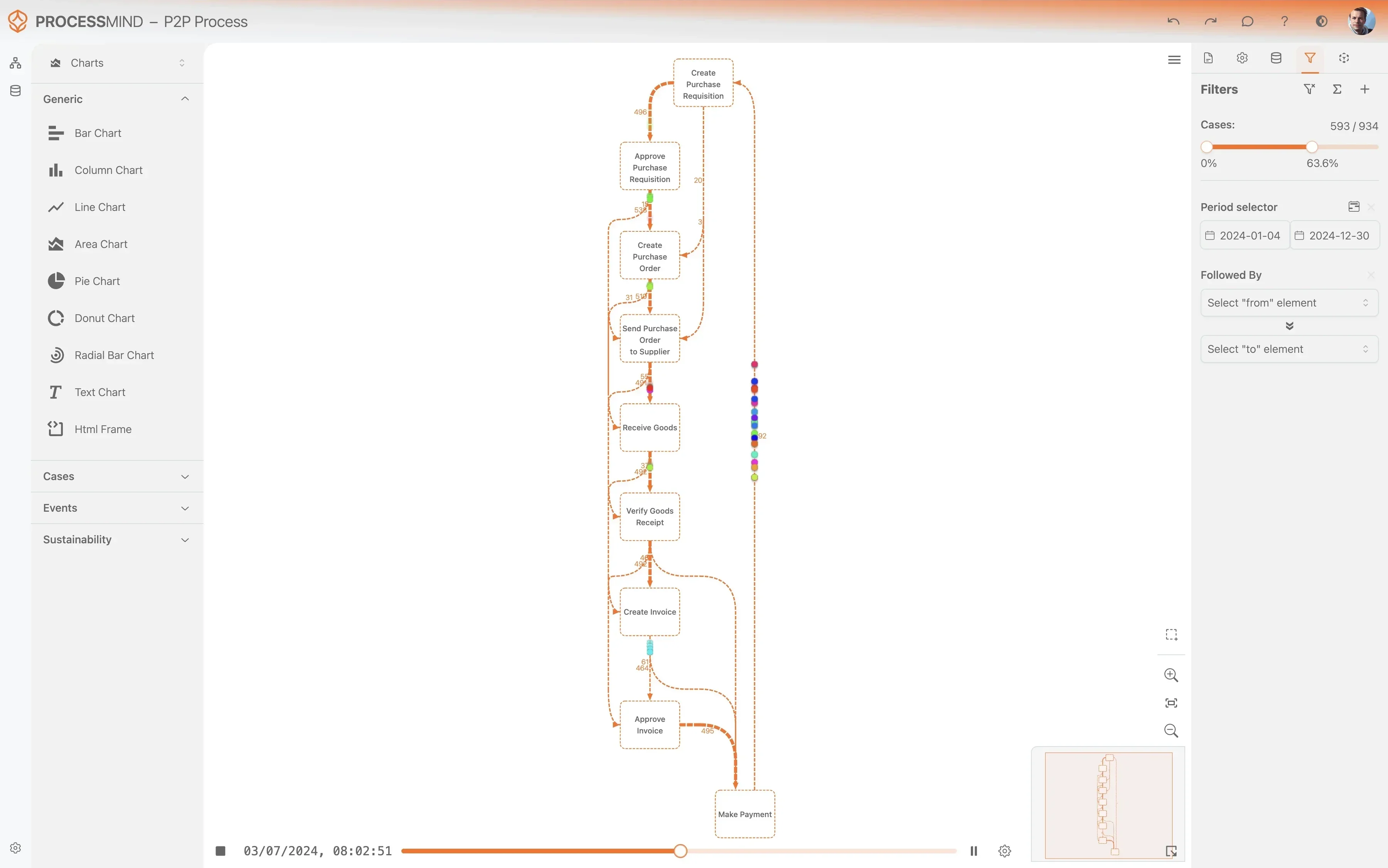
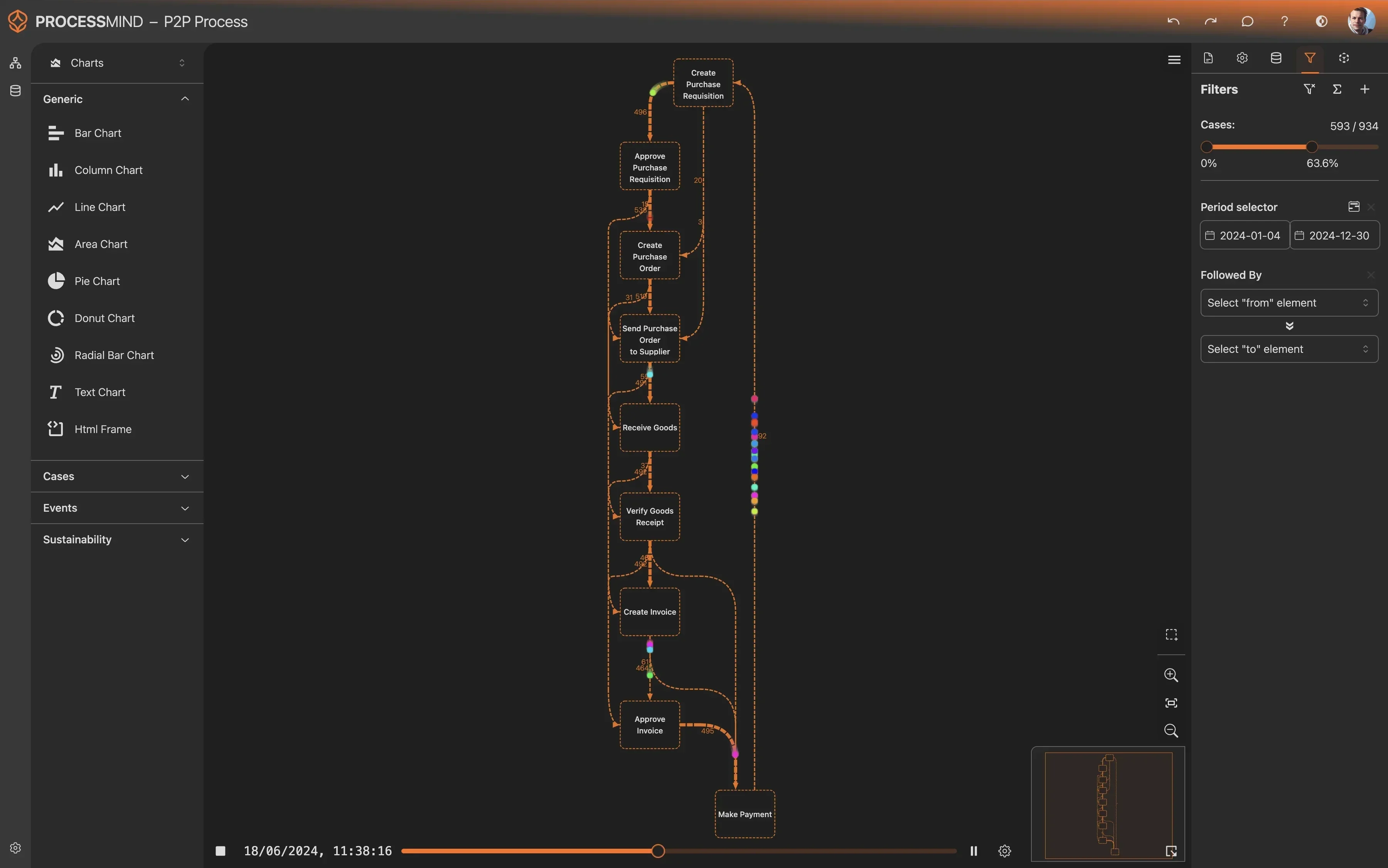
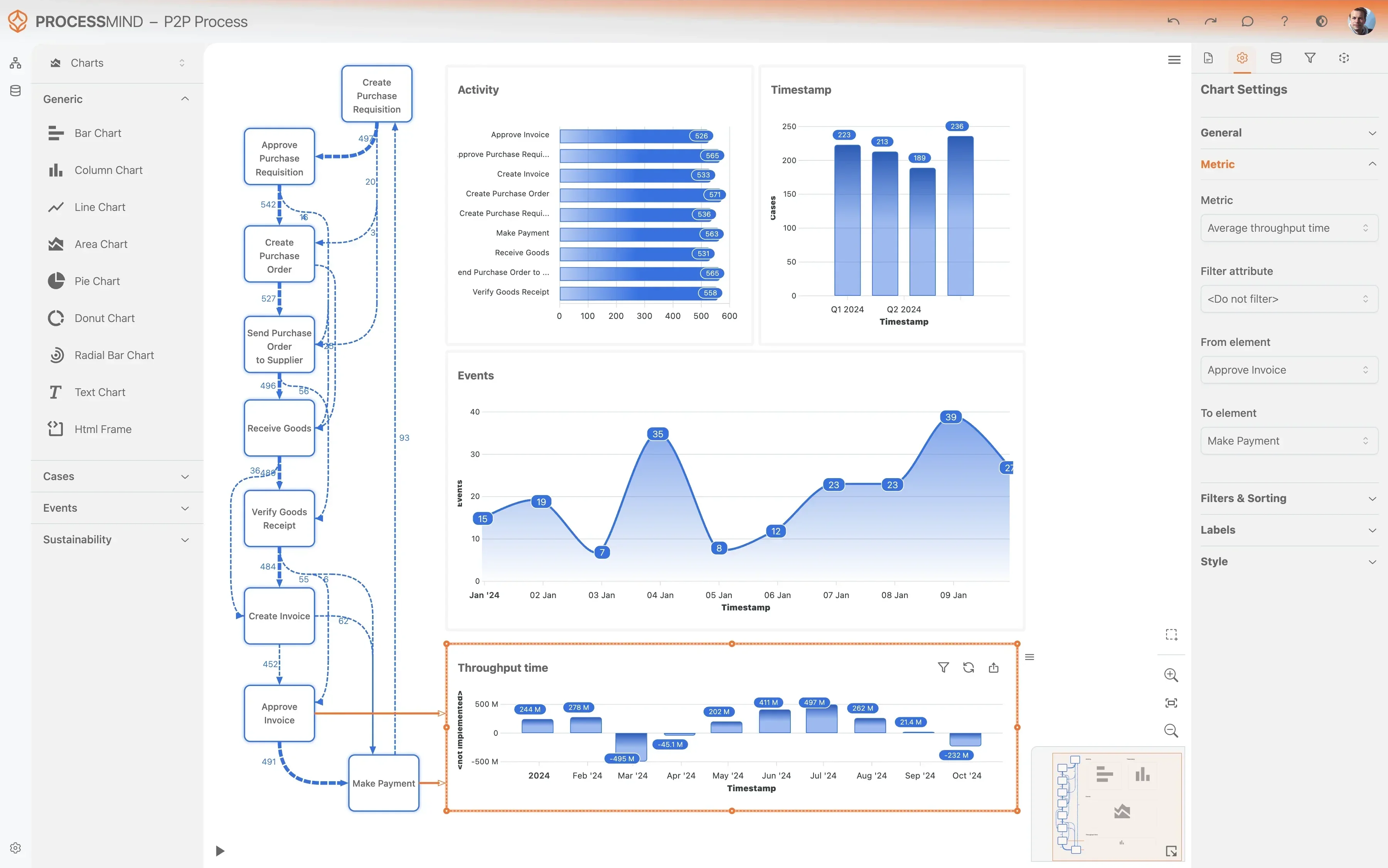
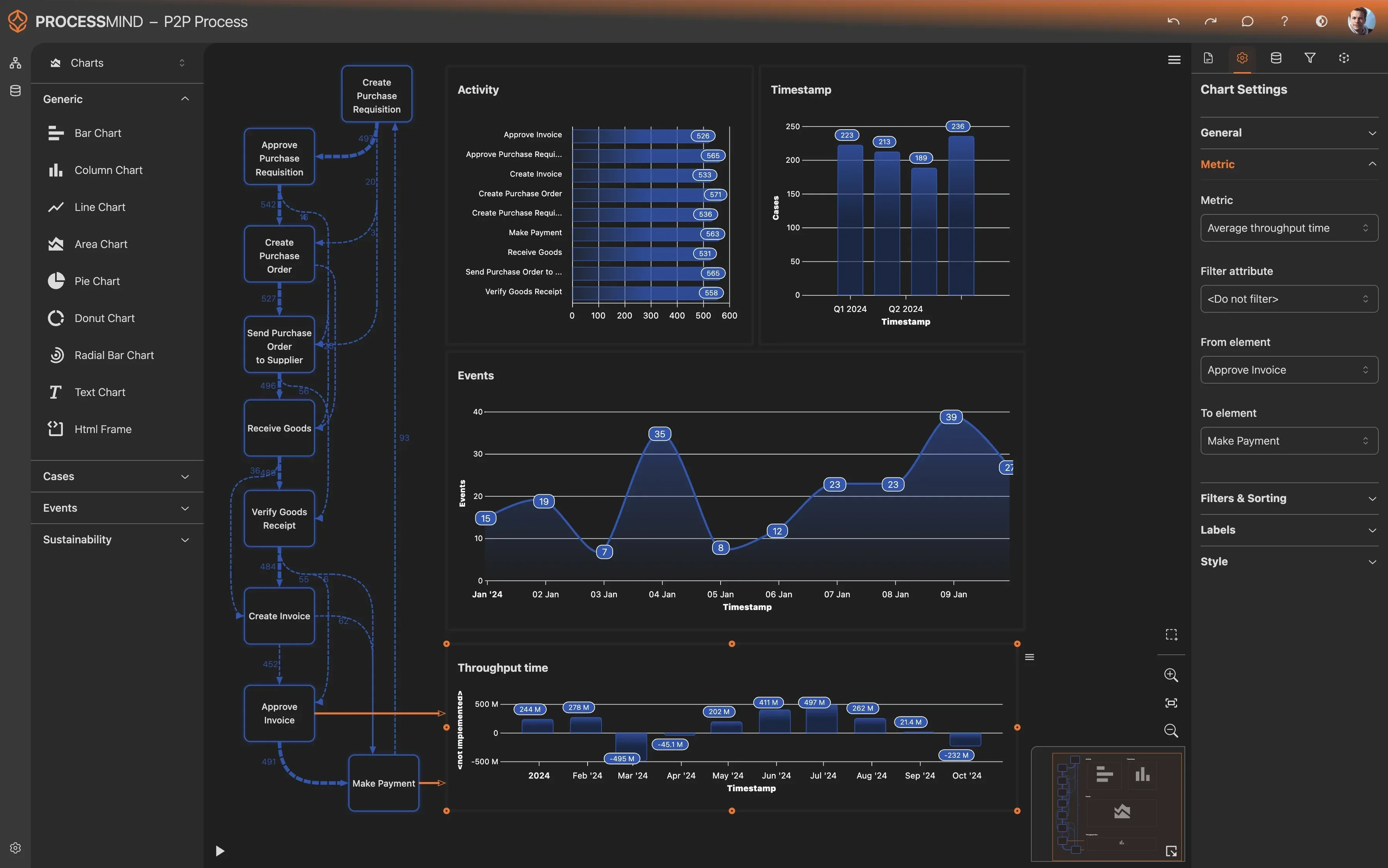
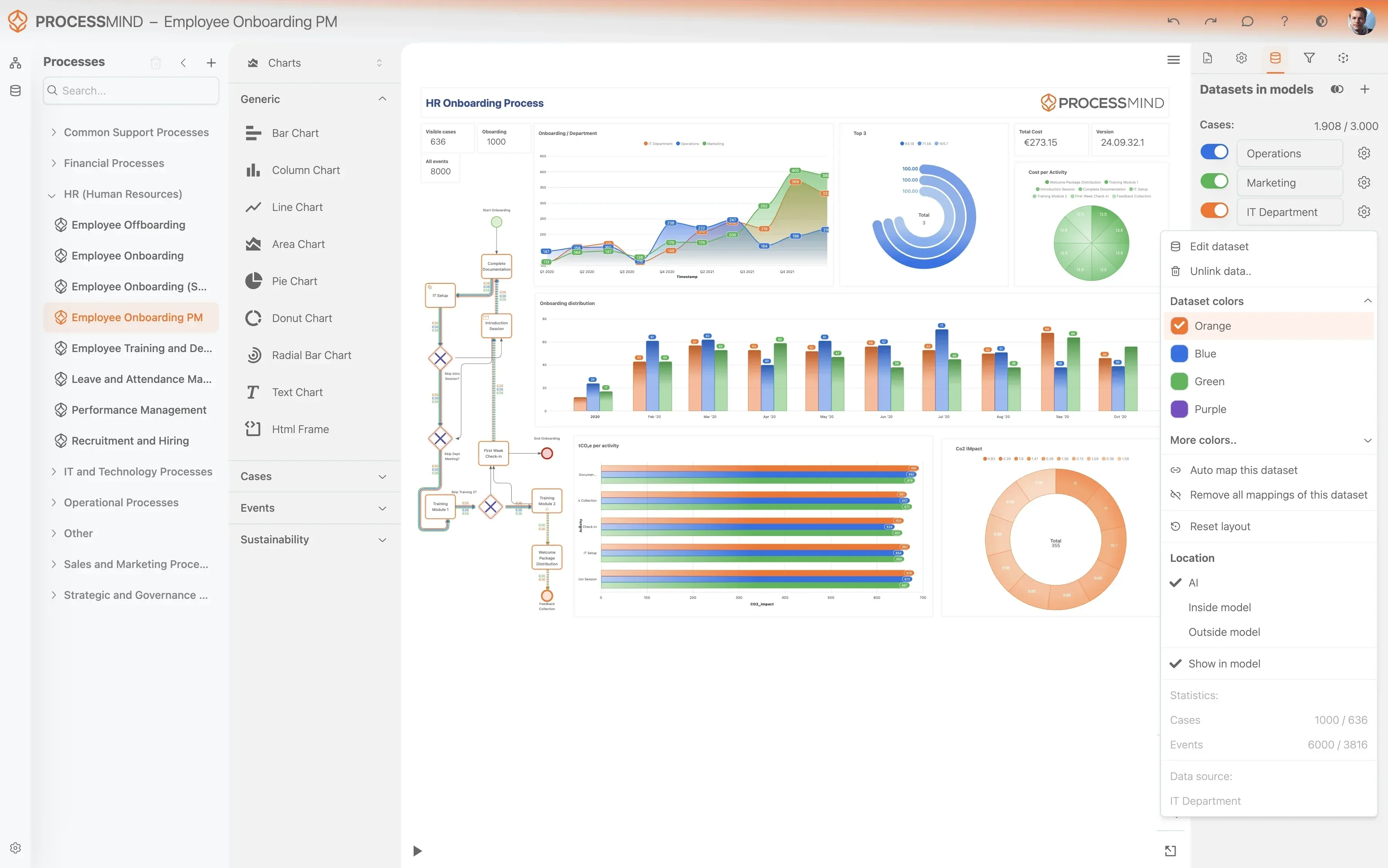
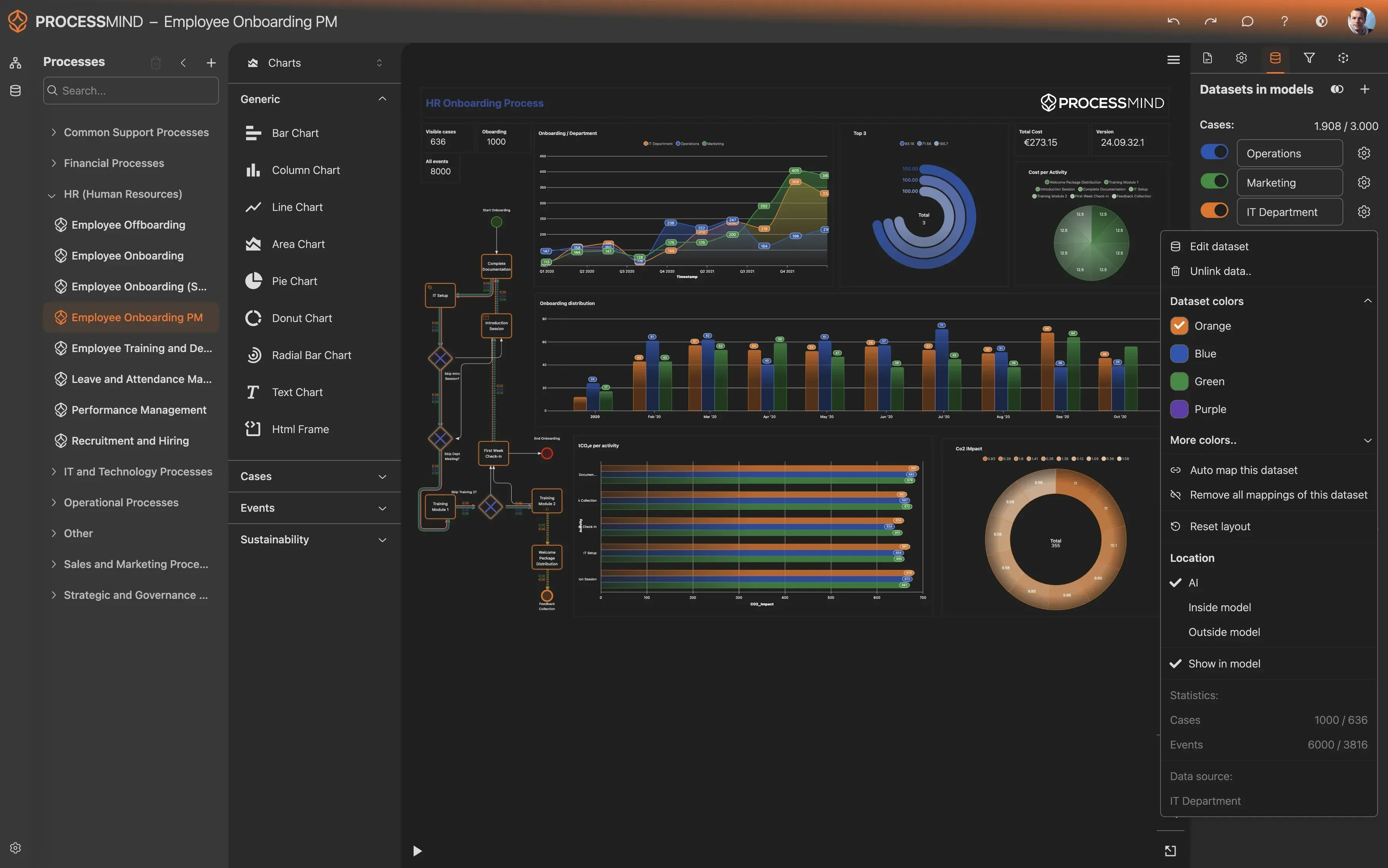
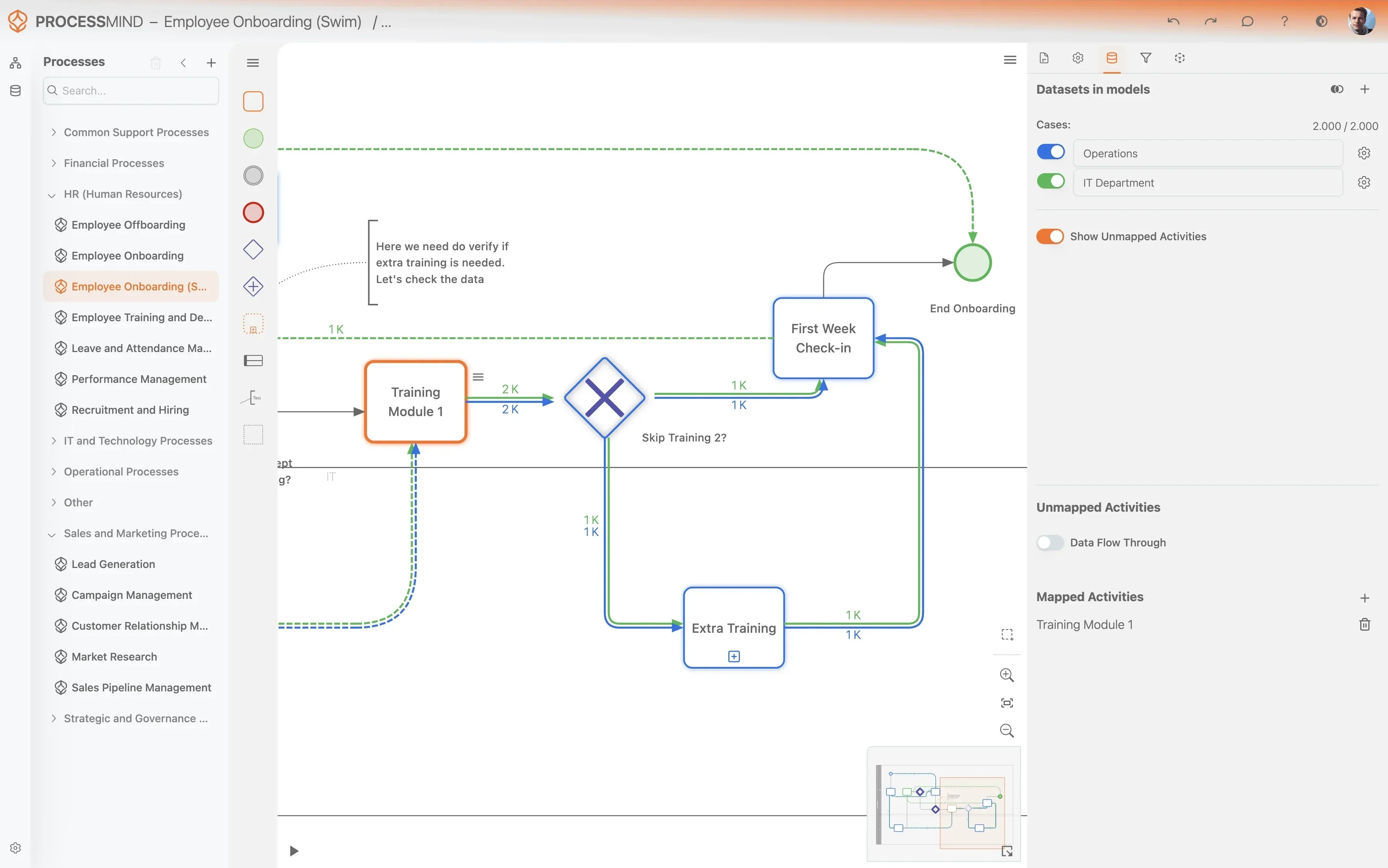
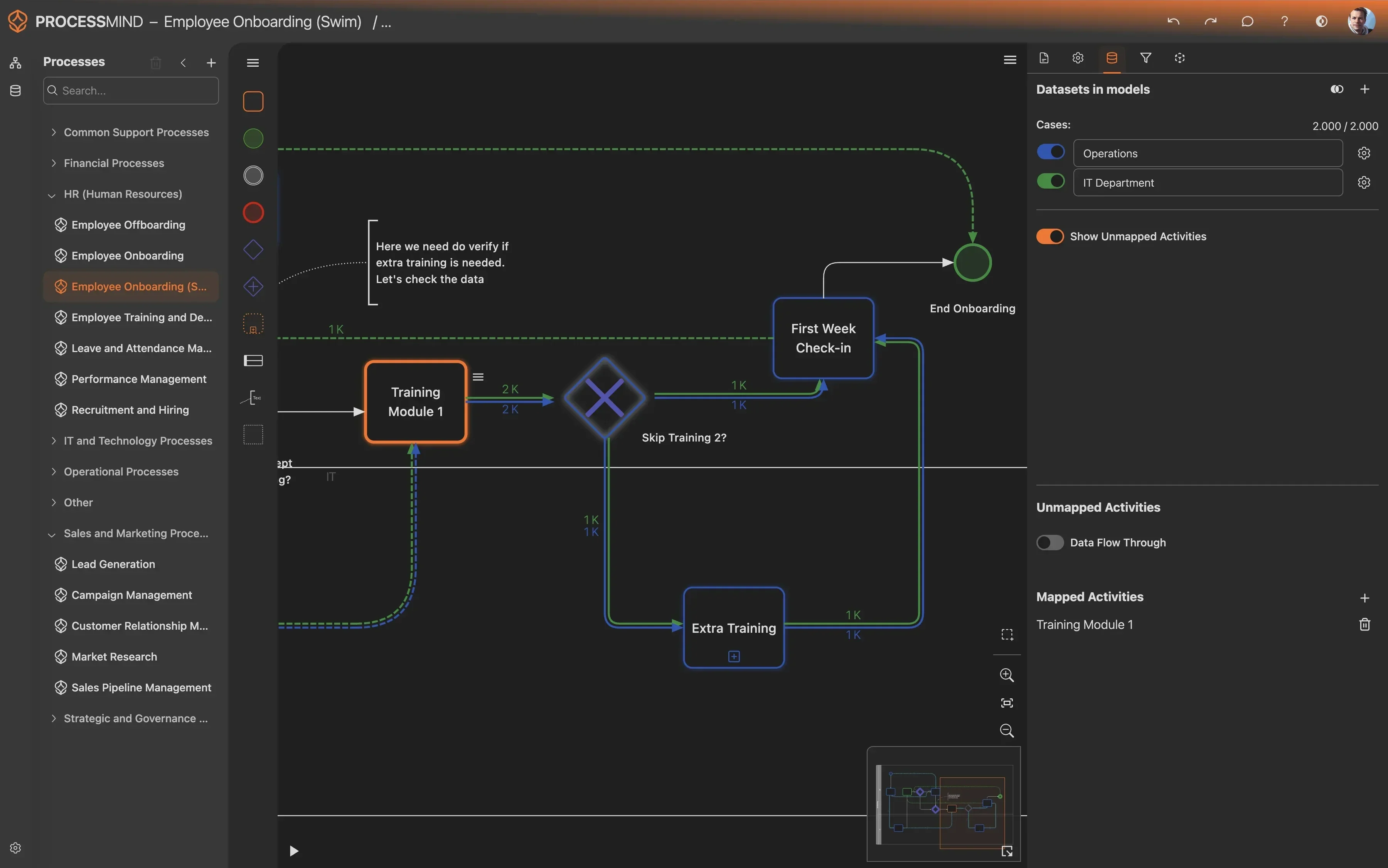
Uncover Inventory Management Insights in Oracle SCM
- Visualize inventory flow end-to-end
- Pinpoint put-away and picking bottlenecks
- Identify causes of stock accuracy issues
- Optimize fulfillment, reduce carrying costs
TYPICAL OUTCOMES
Tangible Improvements in Inventory Management
These outcomes represent the measurable benefits organizations typically achieve by optimizing their Inventory Management processes. Leveraging data from systems like Oracle Fusion SCM, process mining reveals inefficiencies, enabling targeted improvements and significant operational enhancements.
Average reduction in put-away time
Identify and remove bottlenecks in your put-away process, ensuring stock is available quicker. This directly improves stock visibility and operational flow.
Reduction in inventory discrepancies
Pinpoint the root causes of inventory discrepancies and frequent adjustments. Achieve more reliable stock counts and reduce costly manual interventions.
Decrease in excess stock holding days
Optimize inventory turnover by identifying slow-moving stock and inefficient storage practices. This significantly reduces capital tied up in excess inventory.
Faster picking and packing cycles
Streamline your picking and packing operations by eliminating unnecessary steps and delays. This accelerates order processing and enhances customer satisfaction.
Improvement in process adherence
Automatically monitor adherence to defined inventory management procedures and regulations. Reduce risks associated with non-compliant stock handling and reporting.
Results vary based on factors such as process complexity, existing system configurations, and data quality. These figures illustrate typical improvements observed across diverse implementations of process mining in Inventory Management.
Recommended Data
FAQs
Frequently asked questions
Process mining analyzes event logs from your Oracle Fusion SCM system to visualize the actual flow of your inventory processes. It helps identify bottlenecks, inefficiencies, and compliance gaps that may be hidden in your data. By revealing these issues, it enables data-driven decisions to optimize put-away times, internal transfers, and overall stock levels.
You will need event logs that include an activity name, a timestamp for each activity, and a case identifier. For Inventory Management, the "Inventory Batch/Lot" serves as the primary case identifier, allowing tracking of individual inventory units. Relevant data can typically be extracted from tables recording inventory transactions, movements, and status changes.
The initial setup, including data extraction and generating the first process model, can often be completed within a few weeks, depending on data accessibility and complexity. The real value comes from continuous analysis and iterative improvements, making it an ongoing process. This allows for sustained optimization and adaptation to changing business needs.
You can expect tangible improvements such as a significant reduction in put-away completion time and enhanced inventory accuracy. Process mining also helps optimize internal transfer lead times, accelerate picking and packing cycles, and minimize excess stock holding costs. These insights lead to a more efficient and cost-effective inventory operation.
The main technical requirement is secure access to your Oracle Fusion SCM database to extract the necessary event log data. This typically involves using SQL queries, APIs, or existing reporting tools to pull information from relevant tables. A dedicated process mining tool is then used to ingest and analyze this extracted data.
Absolutely. Process mining excels at uncovering the root causes of problems like delayed put-away, inaccurate stock levels, and inefficient internal transfers. By visualizing every step and its timing, it highlights where delays occur, why adjustments are frequent, or where quality inspections become bottlenecks, providing actionable insights for resolution.
The Inventory Batch/Lot serves as the crucial case identifier because it allows the process mining tool to group all related events belonging to a specific batch or lot. This enables a complete, end-to-end view of that inventory unit's journey through the entire process. Without a consistent case identifier, events cannot be accurately linked to form a coherent process flow.
Process mining goes beyond simply identifying problems; it provides the granular, data-driven evidence needed to understand why issues occur. These insights directly inform and validate potential solutions and process redesign efforts. While the tool itself doesn't implement solutions, it equips your team with the intelligence to make informed decisions and measure the impact of changes.
Transform Inventory Management: Start Optimizing Today
Pinpoint inefficiencies to reduce inventory cycle time by 30%.
No credit card required. Get started in minutes.