Improve Your Revenue Cycle Management

Your 6-step guide to optimize Oracle Health Revenue Cycle
Improve Your Revenue Cycle Management

Optimize Your Oracle Health Revenue Cycle for Faster Payments

Revenue Cycle Management involves complex patient accounting, claims, and collections. Delays and inefficiencies can impact your bottom line. Our platform pinpoints exactly where issues occur, guiding you through practical steps to streamline operations, reduce errors, and accelerate cash flow.

Download our pre-configured data template and address common challenges to reach your efficiency goals. Follow our six-step improvement plan and consult the Data Template Guide to transform your operations.

Show detailed description

Unlocking Efficiency in Oracle Health Revenue Cycle Management

The financial health of any healthcare organization hinges on effective Revenue Cycle Management, RCM. Within the intricate ecosystem of Oracle Health Revenue Cycle, managing patient accounting, claims, and collections efficiently is paramount. Inefficiencies here can lead to significant revenue leakage, increased operational costs, and compliance risks. Understanding the end-to-end journey of a billing event, from service initiation to final payment, is crucial for maintaining a healthy cash flow and ensuring timely reimbursement. Process optimization in this critical area isn't just about cutting costs, it's about safeguarding your organization's financial stability and enhancing overall patient satisfaction through seamless administrative processes.

How Process Mining Illuminates Your RCM Journey

Process mining offers an unparalleled approach to dissecting the complexities of your Oracle Health Revenue Cycle. Instead of relying on assumptions or aggregated reports, this methodology provides a data-driven, X-ray view into the actual path each billing event takes. By leveraging event logs from your Oracle Health system, process mining reconstructs the complete process flow, visualizing every step from service delivery and charge capture to payment posting and account closure. This end-to-end visibility allows you to pinpoint exact bottlenecks, understand the root causes of delays, and identify deviations from your ideal process. You can see precisely where claims get stuck, why payments are delayed, or which disputes prolong the revenue cycle, enabling you to reduce Revenue Cycle Management cycle time effectively. For instance, you might discover that a specific billing department consistently takes longer to generate invoices, or that certain service types frequently lead to payment disputes.

Key Areas for Oracle Health RCM Improvement

With process mining, you gain the actionable insights needed to drive targeted improvements across your Revenue Cycle Management process. Typical areas for optimization include:

  • Accelerating Claims Processing: Identify delays in claim submission, tracking, and resubmission, leading to faster reimbursement.
  • Optimizing Payment Velocity: Uncover inefficiencies in payment posting and reconciliation, ensuring funds are applied accurately and promptly.
  • Enhancing Denials Management: Analyze the root causes of claim denials, allowing you to implement proactive strategies to reduce future rejections and improve first-pass resolution rates.
  • Streamlining Charge Capture: Detect gaps or errors in charge entry, ensuring all services provided are accurately billed and minimizing lost revenue.
  • Improving Collections Strategies: Evaluate the effectiveness of different collection activities, identifying patterns that lead to quicker resolution of outstanding balances.
  • Reducing Manual Interventions: Pinpoint activities that require excessive manual rework or approvals, indicating opportunities for automation or process redesign within Oracle Health.

By focusing on these areas, you move beyond reactive problem-solving to proactive process optimization.

Measurable Outcomes of RCM Process Optimization

Implementing process mining insights in your Oracle Health Revenue Cycle is not just about making processes smoother, it's about achieving tangible, measurable results that directly impact your bottom line. You can expect:

  • Increased Cash Flow: By reducing billing errors and accelerating payment cycles, you improve the speed and predictability of your revenue.
  • Reduced Operational Costs: Streamlining workflows, automating manual tasks, and minimizing rework directly lowers administrative expenses.
  • Decreased Denials and Write-offs: Proactive identification and resolution of issues lead to higher claim acceptance rates and less uncollected revenue.
  • Enhanced Compliance: A clearer understanding of process adherence helps ensure your operations meet regulatory requirements and internal policies, mitigating risks.
  • Faster Revenue Cycle Cycle Time: Overall reduction in the time it takes for a service to convert into cash, leading to greater financial agility.
  • Improved Patient Satisfaction: A smoother, more transparent billing experience contributes positively to the patient journey.

These outcomes empower your organization to achieve a healthier financial standing and dedicate more resources to patient care.

Taking Control of Your Revenue Cycle Management

Improving Revenue Cycle Management in Oracle Health Revenue Cycle doesn't require an army of consultants. This guide provides a structured approach to leverage process mining for powerful insights and actionable steps. By focusing on your actual process data, you gain the clarity needed to make informed decisions, drive efficiency, and transform your financial operations. Start your journey towards a more agile, compliant, and profitable Revenue Cycle Management process today, building a foundation for sustained financial success.

Revenue Cycle Management Patient Accounting Claims Processing Medical Billing Collections Management Cash Flow Optimization Compliance Management RCM Efficiency Billing Operations Financial Performance

Common Problems & Challenges

Identify which challenges are impacting you

Charges are not recorded promptly after service delivery, creating a backlog and delaying invoice generation. This directly impacts the speed of cash flow and can lead to missed payment deadlines, increasing accounts receivable days. ProcessMind analyzes the gap between "Service Provided/Completed" and "Charges Captured/Recorded" activities. It identifies departments or service types consistently causing delays, providing actionable insights to streamline the Oracle Health Revenue Cycle and accelerate billing.

A significant number of invoices are disputed by customers or payers, often due to billing errors or unclear service descriptions. Each dispute requires manual investigation and resolution, extending the payment cycle and consuming valuable staff resources. ProcessMind maps the paths of disputed invoices, identifying common "Dispute Reason Code" attributes and the activities leading to them. This helps in understanding root causes within Oracle Health Revenue Cycle processes, reducing rework and improving invoice accuracy.

Payments received are not posted to patient accounts in a timely manner, leading to discrepancies in outstanding balances and delayed account closure. This can complicate follow-up actions and misrepresent financial standings within Oracle Health Revenue Cycle. ProcessMind analyzes the time between "Payment Received" and "Payment Posted" activities. It pinpoints bottlenecks in the reconciliation process, revealing opportunities for automation or process adjustments to accelerate payment application and improve data accuracy.

Once an invoice is disputed, the resolution process takes an extended period, tying up revenue and increasing the risk of non-payment. This slow turnaround impacts cash flow and requires additional resources for follow-up and management. ProcessMind visualizes the complete lifecycle of disputed invoices, from "Invoice Disputed" to "Dispute Resolved/Invoice Re-issued". It highlights which departments or types of disputes contribute most to extended cycle times in Oracle Health Revenue Cycle, enabling targeted improvements.

It is often difficult to track the effectiveness of different collection strategies or identify which accounts require more aggressive follow-up. This lack of visibility can lead to inefficient resource allocation and lower collection rates, impacting Oracle Health Revenue Cycle financial performance. ProcessMind provides an end-to-end view of accounts entering "Collection Activity Started". It analyzes paths taken, activities performed, and subsequent "Payment Received" or "Account Adjusted" events, allowing for data-driven optimization of collection strategies.

A large number of accounts require adjustments after initial billing, often due to incorrect coding, missing information, or contractual write-offs. Each adjustment represents lost revenue or additional administrative effort, impacting the profitability of Oracle Health Revenue Cycle operations. ProcessMind identifies the specific activities and attributes, like "Adjusted Amount" and "Account Adjusted" events, that frequently lead to adjustments. It uncovers the root causes, such as front-end data entry errors or policy misinterpretations, to minimize revenue leakage.

Even after charges are captured, there can be a significant delay before the actual invoice is generated and sent to the customer or payer. This extended waiting period postpones the start of the payment clock, delaying revenue realization in Oracle Health Revenue Cycle. ProcessMind precisely measures the time elapsed between "Charges Captured/Recorded" and "Invoice Generated". It reveals where these delays occur, whether due to system bottlenecks or manual review steps, enabling process optimization for quicker billing.

The time it takes for payments to be received after an invoice is sent varies significantly, making cash flow forecasting challenging and impacting financial planning. Unpredictable payment cycles hinder efficient resource management for Oracle Health Revenue Cycle. ProcessMind analyzes the duration from "Invoice Sent to Customer/Payer" to "Payment Received" for various invoice types or payers. It identifies patterns and outliers, helping to predict and stabilize cash flow by uncovering factors contributing to payment variability.

Processes within Oracle Health Revenue Cycle may not always follow established compliance guidelines, such as timely filing limits or specific documentation requirements. Deviations can lead to denied claims, audits, and significant regulatory fines, posing substantial financial and reputational risks. ProcessMind reconstructs the actual process flow of "Billing Event" cases, comparing it against designed compliance models. It highlights every instance where a required activity is missed or an unauthorized step is taken, ensuring robust adherence to regulations.

Billing departments may experience uneven workloads or redundant tasks, leading to overworked staff in some areas and underutilized resources in others. This inefficiency inflates operational costs and can cause burnout within the Oracle Health Revenue Cycle team. ProcessMind analyzes activity volumes and durations across different "Billing Department" attributes. It identifies where workload imbalances occur and suggests process re-engineering or automation opportunities to optimize resource allocation and reduce operational overhead.

Regularly re-issuing invoices, often after disputes or adjustments, indicates underlying issues in the initial billing process. Each re-issuance means additional administrative work and further delays in obtaining payment, impacting the efficiency of Oracle Health Revenue Cycle. ProcessMind tracks the occurrences of "Invoice Re-issued" activities and correlates them with prior events or specific "Dispute Reason Code" values. This helps uncover the root causes of re-issuance, allowing for targeted improvements to initial invoice accuracy.

After all payments are received and disputes resolved, accounts may remain open for an extended period before final "Account Closed" activity. This ties up administrative resources and prevents a complete, real-time financial picture within Oracle Health Revenue Cycle. ProcessMind measures the duration from the final "Payment Posted" or "Dispute Resolved/Invoice Re-issued" event to "Account Closed". It highlights where delays occur in the finalization process, enabling quicker reconciliation and improved financial reporting.

Typical Goals

Define what success looks like

This goal aims to significantly reduce the time lag between when services are provided and when those charges are successfully captured and an invoice is generated within Oracle Health Revenue Cycle. Faster charge capture directly translates to quicker invoice generation, accelerating the entire revenue cycle and improving cash flow. Delays in this crucial initial phase can cause payment delays and negatively impact financial performance.ProcessMind helps by precisely mapping the "Service Provided" to "Invoice Generated" path, identifying bottlenecks, and quantifying delays across different departments or service types. It can highlight specific instances of lag, allowing for targeted interventions to shorten this critical time, potentially by 15-25%.

Aiming to shorten the time it takes to resolve disputed invoices, this goal is vital for maintaining healthy cash flow and improving customer satisfaction in Revenue Cycle Management. Prolonged disputes tie up financial resources and can lead to uncollectible debt. Expediting this process ensures that payments are received promptly after resolution.ProcessMind provides end-to-end visibility into the "Invoice Disputed" to "Dispute Resolved/Invoice Re-issued" process, identifying common dispute reasons and the steps that prolong resolution. By analyzing process variations and resource allocation within Oracle Health Revenue Cycle, it enables the optimization of workflows to decrease resolution times by 20% or more.

This goal focuses on minimizing the time taken from receiving a payment to its accurate posting and reconciliation within the Oracle Health Revenue Cycle. Efficient payment posting is critical for accurate financial reporting, reducing outstanding balances, and ensuring funds are readily available. Delays can lead to incorrect financial statements and administrative burdens.ProcessMind can trace the path from "Payment Received" to "Payment Posted," uncovering inefficiencies and delays in the reconciliation process. It helps identify manual interventions or system issues that slow down this critical step, enabling process improvements that can accelerate posting by up to 30% and free up staff.

The objective here is to significantly decrease the number and value of account adjustments that erode billed revenue within Revenue Cycle Management. Frequent or unjustified adjustments often point to issues in initial charge capture, coding, or billing accuracy, directly impacting the profitability of services. Reducing these adjustments preserves the integrity of billed amounts.ProcessMind analyzes the journey leading to "Account Adjusted" events, identifying root causes such as errors in "Charges Captured" or "Invoice Generated" activities within Oracle Health Revenue Cycle. By exposing patterns and common triggers, it supports targeted training and system enhancements to reduce adjustments by 10-15%, thereby improving net revenue.

This goal aims to optimize the processes and activities involved in collecting outstanding balances, leading to higher collection rates and reduced days in accounts receivable. An effective collection strategy is paramount for a healthy Revenue Cycle Management, ensuring that services provided are adequately compensated. Inefficient collections can lead to significant write-offs and financial strain.ProcessMind maps the "Collection Activity Started" events, analyzing the sequence and timing of subsequent activities, and correlating them with successful "Payment Received" or "Account Closed" outcomes. It can reveal which collection approaches are most efficient within Oracle Health Revenue Cycle, identifying opportunities to boost collection rates by 5-10% through data-driven strategy adjustments.

The aim is to achieve greater predictability and consistency in the timing and speed of payment receipts within Revenue Cycle Management. Inconsistent payment velocity makes cash flow forecasting difficult and can strain operational liquidity. By understanding the factors influencing payment timeliness, organizations can work towards more reliable financial planning.ProcessMind meticulously tracks the duration from "Invoice Sent to Customer/Payer" to "Payment Received," highlighting variations across different payers, service types, or billing departments within Oracle Health Revenue Cycle. This analysis allows for identification of best practices and areas requiring intervention to ensure more consistent and faster payment cycles, improving overall cash flow predictability.

This goal focuses on identifying and mitigating deviations from established regulatory and internal compliance standards across the entire Revenue Cycle Management process. Non-compliant actions, whether intentional or accidental, can lead to significant fines, reputational damage, and legal repercussions. Maintaining strict adherence to rules is critical for operational integrity.ProcessMind visualizes the actual process flow against the ideal compliant model within Oracle Health Revenue Cycle, pinpointing exactly where "non-compliant process deviations occur." It exposes unauthorized shortcuts, missing steps, or incorrect sequences, enabling proactive measures to enforce compliance and reduce risk by detecting deviations automatically.

This objective is to enhance the efficiency and allocation of personnel and other resources within the billing department to improve overall throughput and reduce operational costs. Inefficient resource use can lead to backlogs, extended processing times, and increased labor expenses, directly impacting the cost-effectiveness of Revenue Cycle Management. By optimizing resource deployment, services can be processed more smoothly.ProcessMind analyzes activity durations and resource assignments for tasks like "Invoice Generated," "Invoice Sent," and "Collection Activity Started," identifying resource bottlenecks or underutilization within Oracle Health Revenue Cycle. This insight enables better workload balancing and staffing adjustments, leading to potential cost savings of 10-15% and improved staff productivity.

This goal aims to reduce the frequency with which invoices need to be re-issued due to errors, disputes, or changes, thereby streamlining the Revenue Cycle Management process and reducing administrative overhead. Frequent re-issuance is a clear indicator of upstream problems in billing accuracy or communication, leading to delays and increased processing costs. Minimizing this enhances efficiency.ProcessMind maps the pathways leading to "Invoice Re-issued" activities, identifying the common triggers and the root causes, such as inaccuracies in "Charges Captured" or prior "Invoice Disputed" events in Oracle Health Revenue Cycle. By pinpointing these issues, it enables targeted corrections that can cut re-issuance rates by 20% or more.

This goal seeks to accelerate the final steps required to close patient or payer accounts after all payments are received and adjustments are made within the Revenue Cycle Management. Prolonged account closure times can tie up administrative resources and delay the reconciliation of financial records, impacting the clarity of outstanding balances. Efficient closure ensures timely financial reconciliation.ProcessMind tracks the duration from "Payment Posted" or "Account Adjusted" to the final "Account Closed" activity, identifying any unwarranted delays or complex handoffs within Oracle Health Revenue Cycle. It highlights inefficiencies in the final stages of the process, allowing for improvements that can shorten account closure times by 10-20%.

The primary aim here is to significantly enhance the overall speed at which payments are received from customers and payers, directly improving an organization's liquidity and financial health. A faster cash conversion cycle is a hallmark of efficient Revenue Cycle Management and allows for better resource allocation and investment opportunities. Delays in receiving payments can impact operational capacity.ProcessMind provides a holistic view of the entire "Billing Event" lifecycle, from service initiation to payment receipt, identifying cumulative delays across all stages of Oracle Health Revenue Cycle. By targeting the longest-running paths and critical bottlenecks, it enables strategic interventions to reduce the average payment cycle time, potentially increasing cash flow velocity by 10-20%.

The 6-Step Improvement Path for Revenue Cycle Management

1

Download Your Template

What to do

Obtain the Excel template designed for Revenue Cycle Management process data. This template provides the correct structure for your Oracle Health Revenue Cycle data.

Why it matters

A structured template ensures data consistency, simplifies mapping, and prepares your information for accurate process analysis, setting a strong foundation.

Expected outcome

An Excel template specific to RCM, ready for your Oracle Health Revenue Cycle data.

WHAT YOU WILL GET

Discover Hidden Efficiencies in Oracle Health RCM

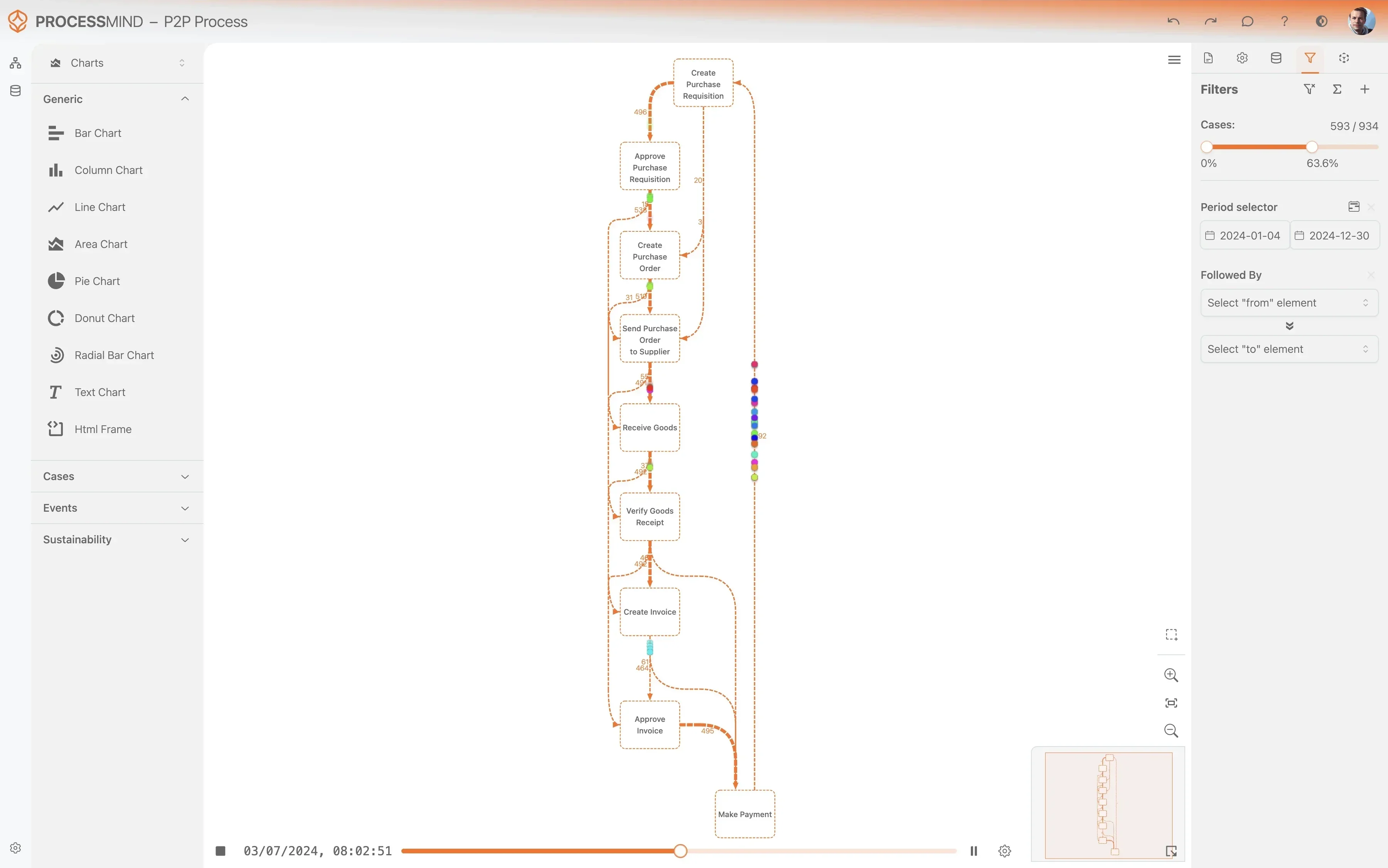
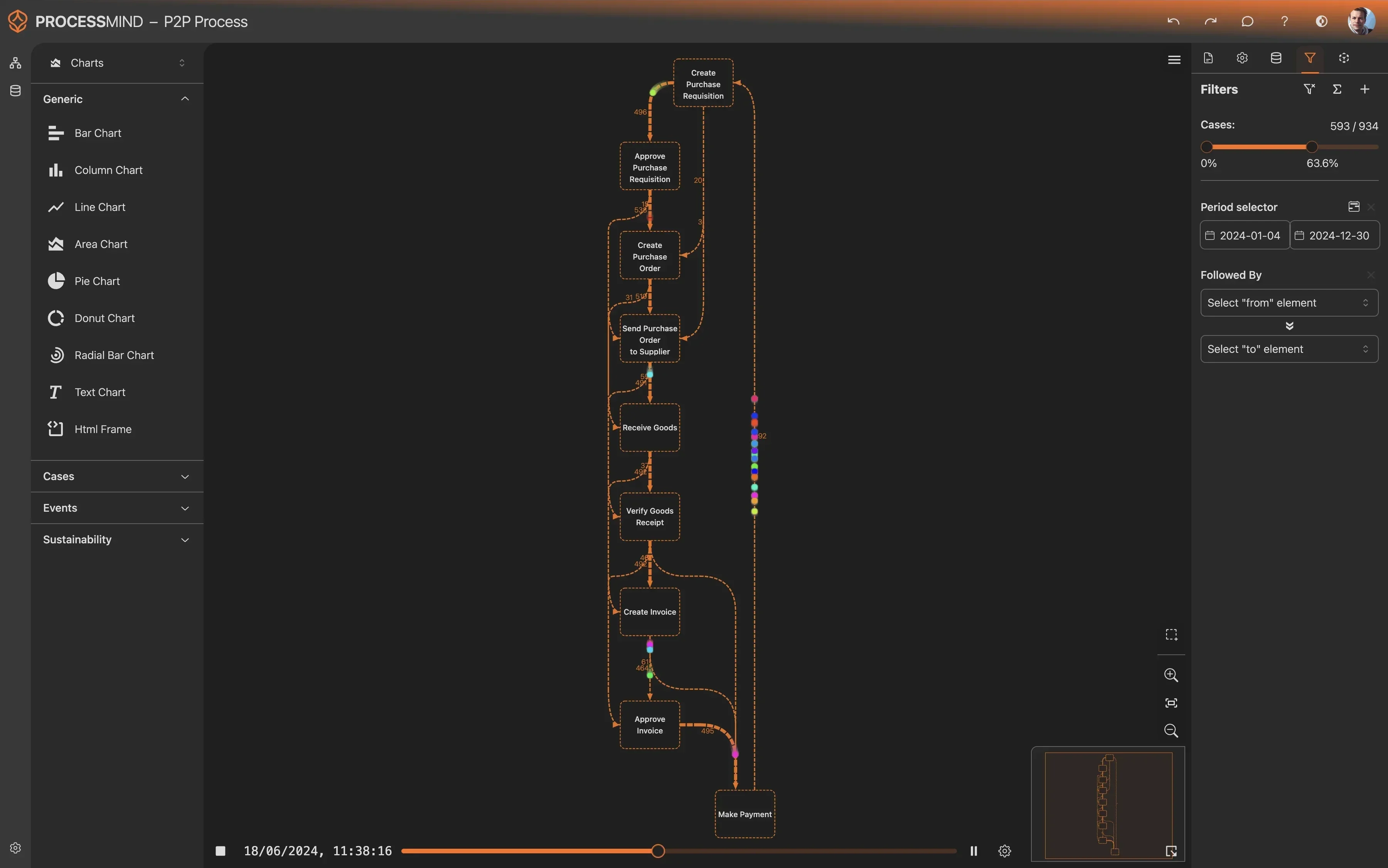
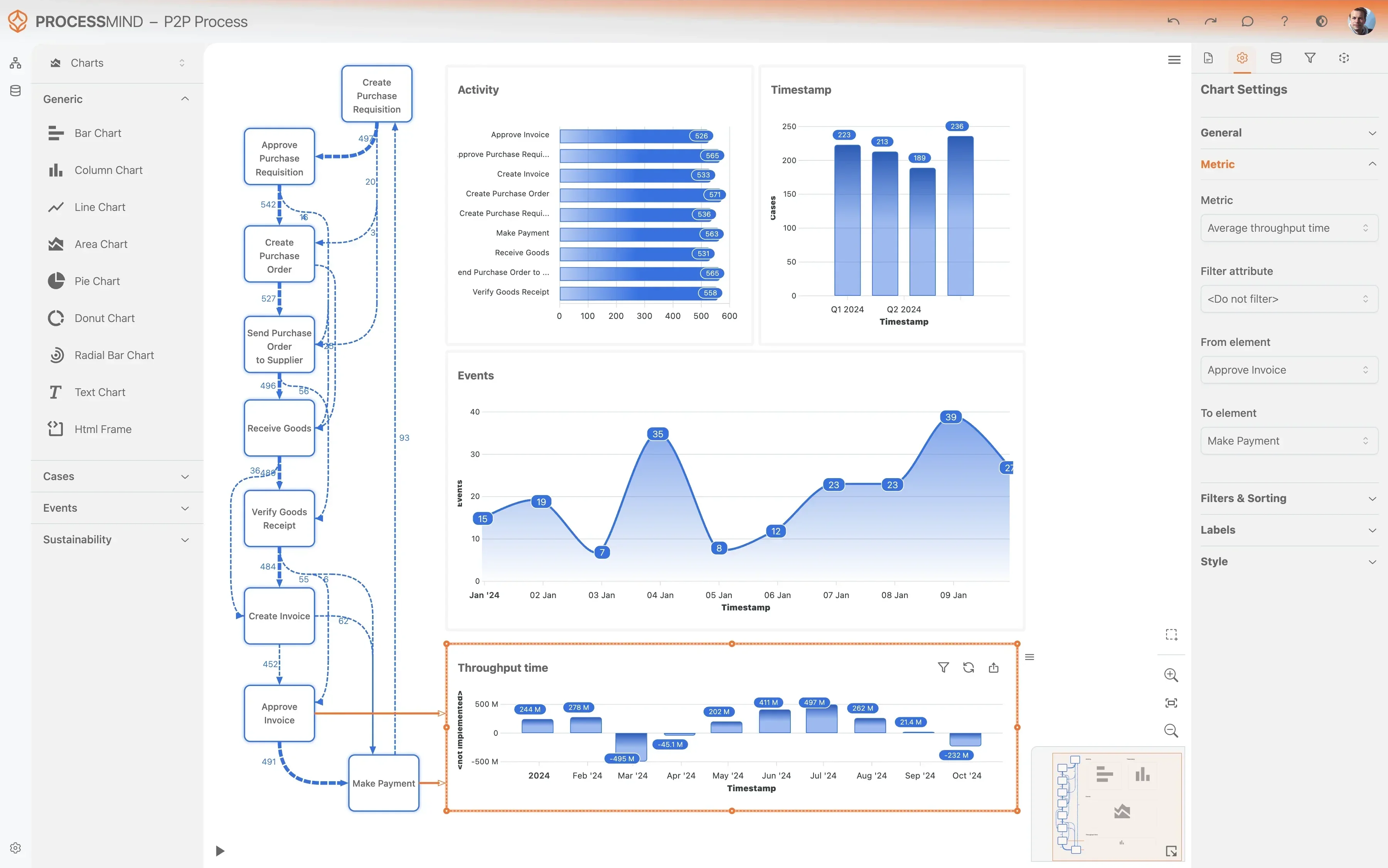
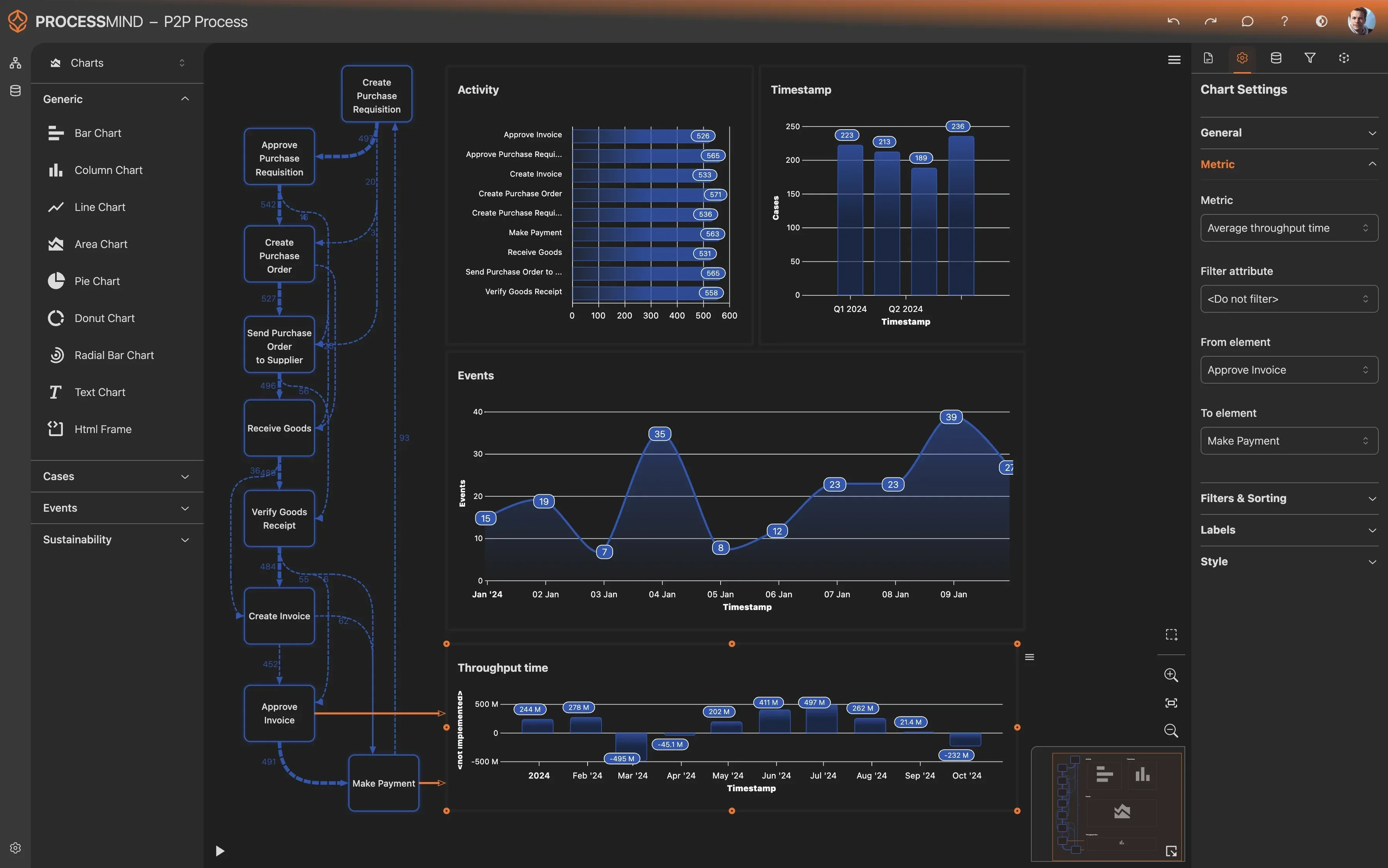
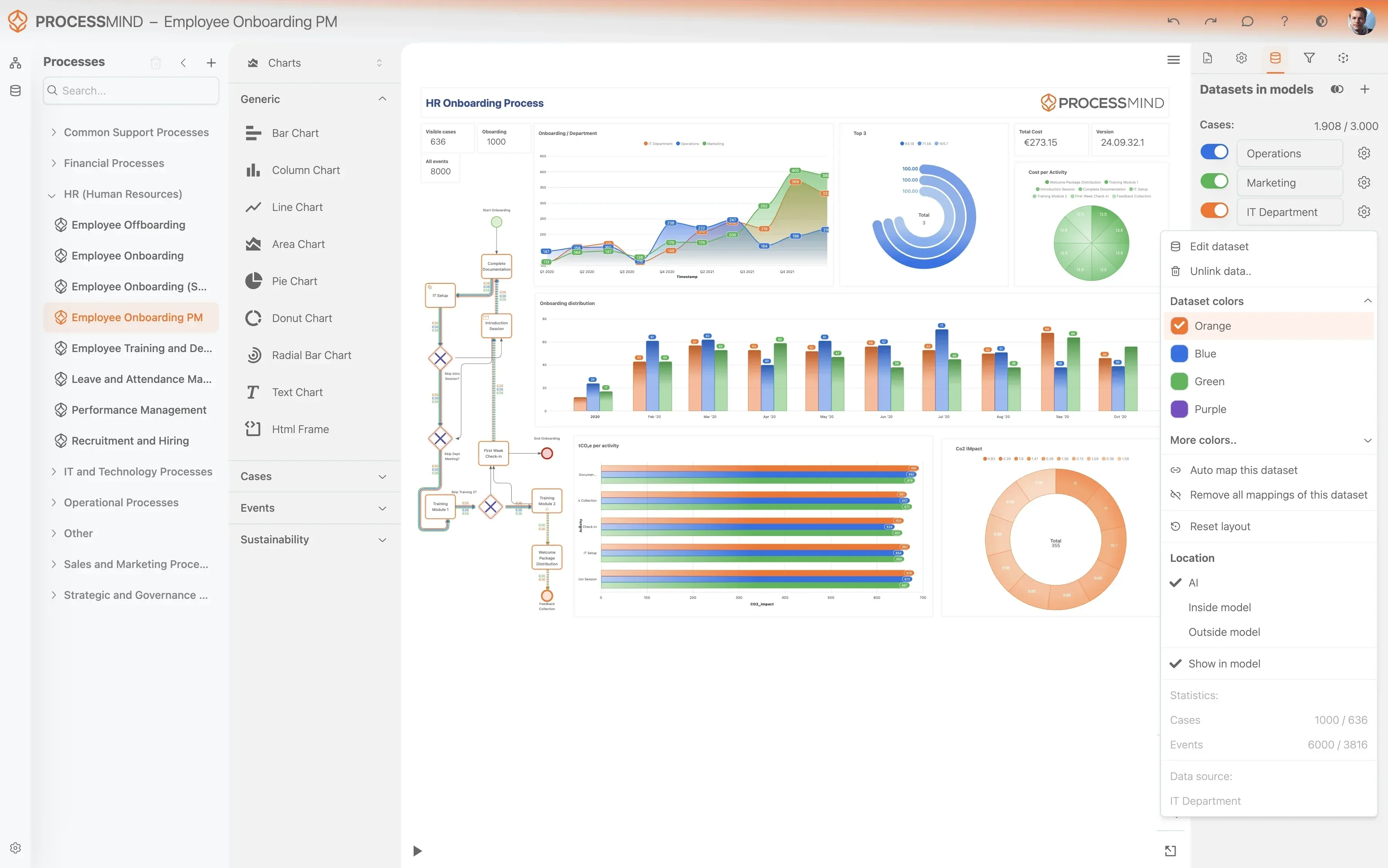
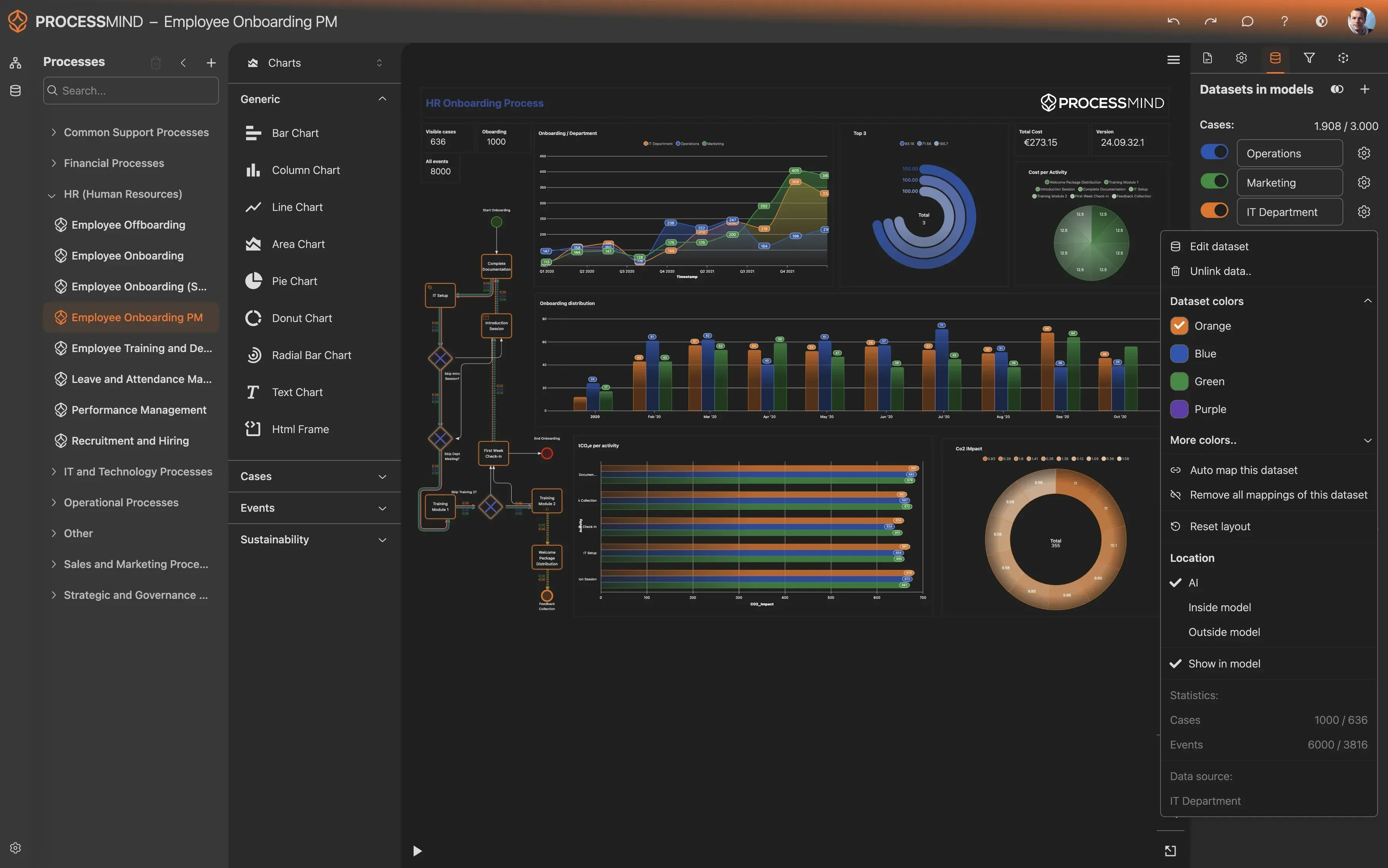
ProcessMind visualizes your entire Oracle Health Revenue Cycle, exposing every step and interaction. Gain deep insights into where delays and inefficiencies impede your cash flow.
  • Visualize your actual RCM process flows.
  • Identify precise bottlenecks in patient accounting.
  • Pinpoint root causes of claim denials.
  • Accelerate cash flow through optimized collections.
Discover your actual process flow
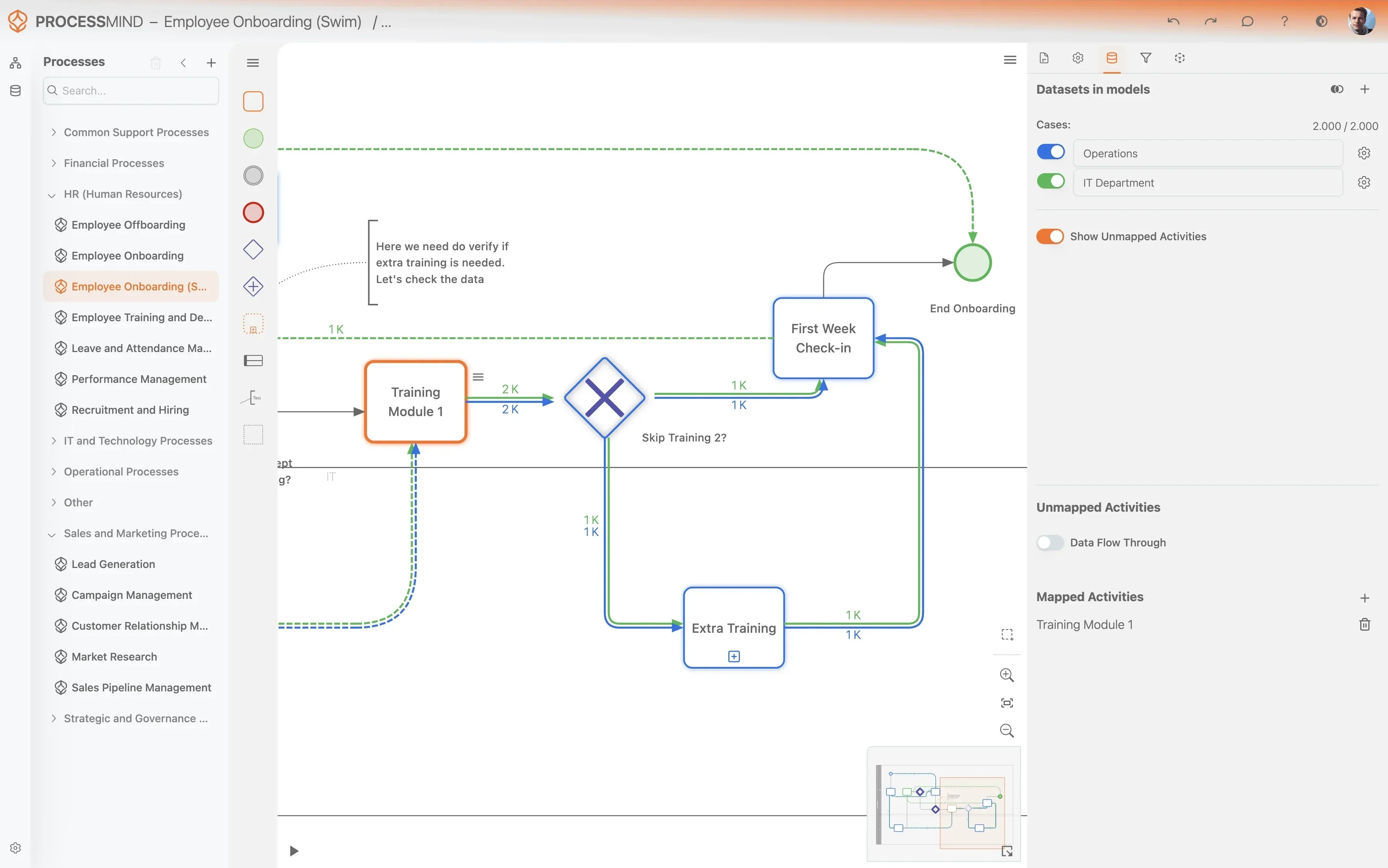
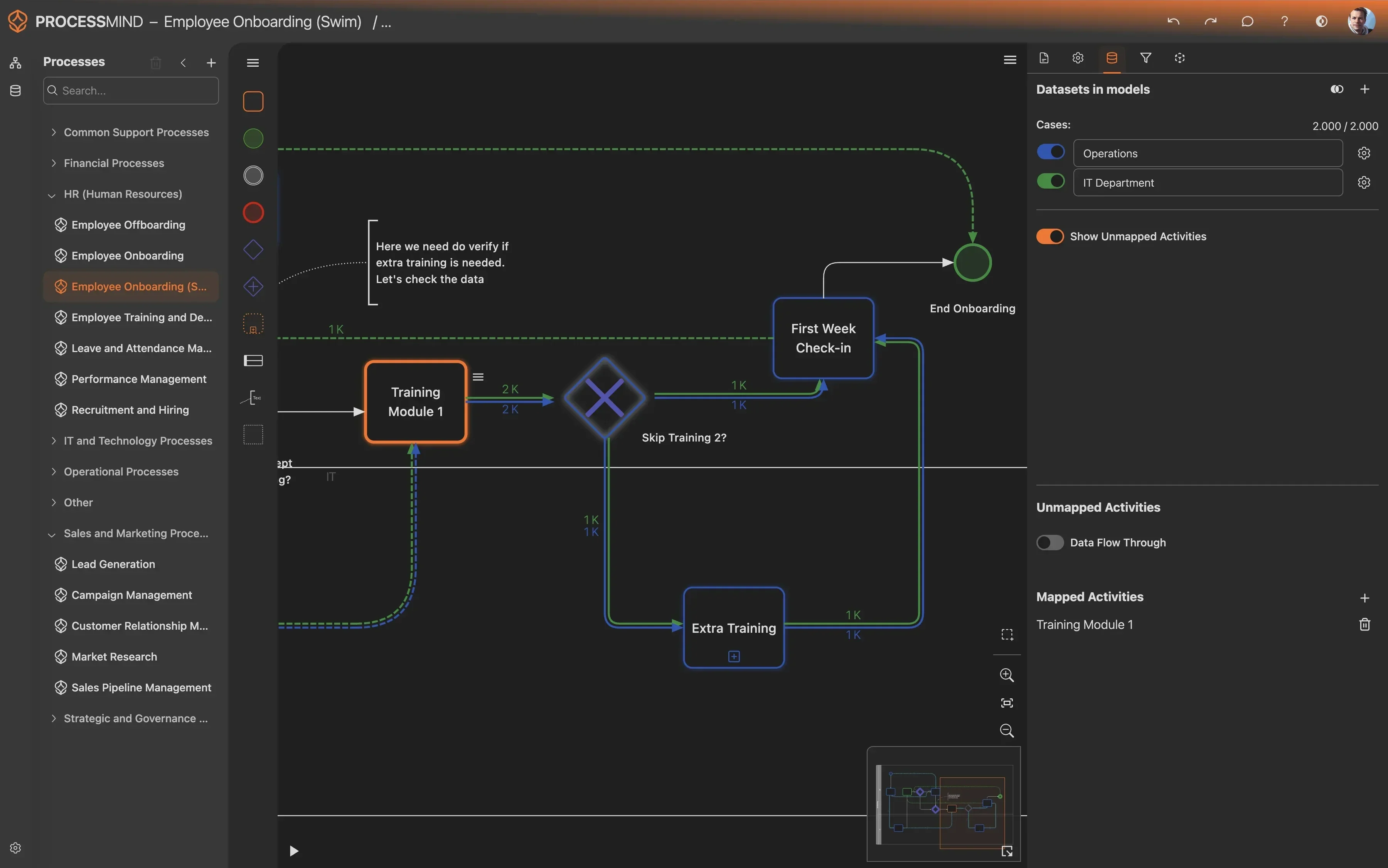
Identify bottlenecks and delays
Analyze process variants
Design your optimized process

TYPICAL OUTCOMES

Achieving Revenue Cycle Excellence

These outcomes illustrate the tangible benefits organizations commonly achieve by applying process mining to their Revenue Cycle Management. By analyzing Oracle Health Revenue Cycle data, particularly around Billing Events, we identify critical inefficiencies, bottlenecks, and opportunities for automation, leading to improved financial performance.

0 %
Faster Billing Cycle

Average reduction in charge capture to invoice time

Process mining reveals bottlenecks in charge capture and invoice generation, enabling organizations to significantly shorten the time from service delivery to billing, improving cash velocity.

0 %
Fewer Invoice Disputes

Decrease in the overall invoice dispute rate

By pinpointing root causes of disputes, such as incorrect coding or missing documentation, process mining helps reduce the percentage of invoices that lead to costly and time-consuming disputes.

0 days
Expedited Payment Posting

Reduction in average payment posting cycle time

Streamlining the payment posting process through process mining ensures that received payments are quickly and accurately applied to accounts, improving reconciliation and financial reporting.

0 %
Higher Compliance Rates

Increase in end-to-end process conformance

Process mining provides full visibility into process deviations, helping organizations enforce standard operating procedures and regulatory requirements, minimizing compliance risks.

0 %
Lower Days Sales Outstanding

Average reduction in DSO

Optimizing collection strategies and accelerating billing cycles directly translates to a lower Average Days Sales Outstanding, significantly boosting an organization's cash flow.

Results are indicative and may vary based on the unique characteristics of your organization's Revenue Cycle Management processes, the specific configuration of Oracle Health Revenue Cycle, and data completeness. These figures represent typical improvements observed across a range of implementations.

FAQs

Frequently asked questions

Process mining visualizes your complete RCM process flow, from charge capture to account closure. It helps identify bottlenecks, like slow invoicing or frequent payment disputes, enabling targeted improvements to accelerate cash flow and reduce revenue erosion.

You will primarily need event logs detailing your billing events. This includes a case identifier, typically a Billing Event ID, along with activity names, and corresponding timestamps for each step. This data allows the process mining tool to reconstruct the actual process flow.

Data extraction typically involves querying relevant tables in your Oracle Health database or utilizing existing reporting tools. The goal is to collect event logs in a structured format, usually CSV or a database connection, which can then be fed into the process mining software.

Initial setup, including data extraction and model creation, can range from a few weeks to a couple of months, depending on data complexity and availability. You can often see the main process flows and obvious bottlenecks within the first month after data ingestion.

You can expect to uncover hidden inefficiencies, reduce cycle times for activities like dispute resolution, and identify root causes for issues such as frequent adjustments or re-issuance. This leads to faster payments, improved compliance, and optimized resource allocation in your billing department.

Yes, process mining utilizes dedicated software platforms designed to analyze event logs. While Oracle Health provides the source data, you will need a process mining tool and someone with analytical skills to interpret the results and translate them into actionable insights.

Absolutely. Process mining allows you to visualize every actual process path, comparing them against defined compliance rules and standard operating procedures. This helps quickly identify deviations and non-compliant process instances, enabling proactive correction and risk mitigation.

Process mining is a non-invasive analytical technique. It works by analyzing historical data, so it does not directly interfere with your live RCM operations. The primary effort involves initial data extraction and ongoing data refreshes, which can be automated.

Optimize Your Revenue Cycle for Faster Payments

Eliminate bottlenecks, reduce cycle time by 30%, and boost cash flow.

Start Your Free Trial

No credit card required. Set up in minutes.