Improve Your Purchase to Pay - Purchase Order

Select a process
Choose a process to continue working in your connected workspace.
Optimize the Purchase Order Lifecycle in SAP S/4HANA
Complex purchase order processes often lead to significant delays and compliance issues. Our platform helps you uncover hidden bottlenecks and inefficiencies within your purchase order lifecycle. You can accurately evaluate supplier lead times and identify areas to streamline operations, transforming your procurement efficiency.
Download our pre-configured data template and address common challenges to reach your efficiency goals. Follow our six-step improvement plan and consult the Data Template Guide to transform your operations.
Show detailed description
Why Optimize Your Purchase to Pay - Purchase Order Process?
An efficient Purchase to Pay, P2P, process is critical for any organization, and at its heart lies the Purchase Order, PO, lifecycle. In SAP S/4HANA, managing these Purchase Orders can become a complex endeavor. Even with a robust, integrated system, hidden inefficiencies can lead to significant financial leakage, operational delays, and compliance risks. Untimely Purchase Order approvals, extended supplier lead times, or errors in goods receipt can ripple through the entire supply chain, affecting production schedules, inventory levels, and ultimately, customer satisfaction. Understanding the true flow of your Purchase Orders, from creation to completion, is paramount for maintaining healthy cash flow and operational agility. Optimizing this core process directly translates into cost savings, improved vendor relationships, and a more responsive business.
How Process Mining Streamlines Your Purchase Order Lifecycle in SAP S/4HANA
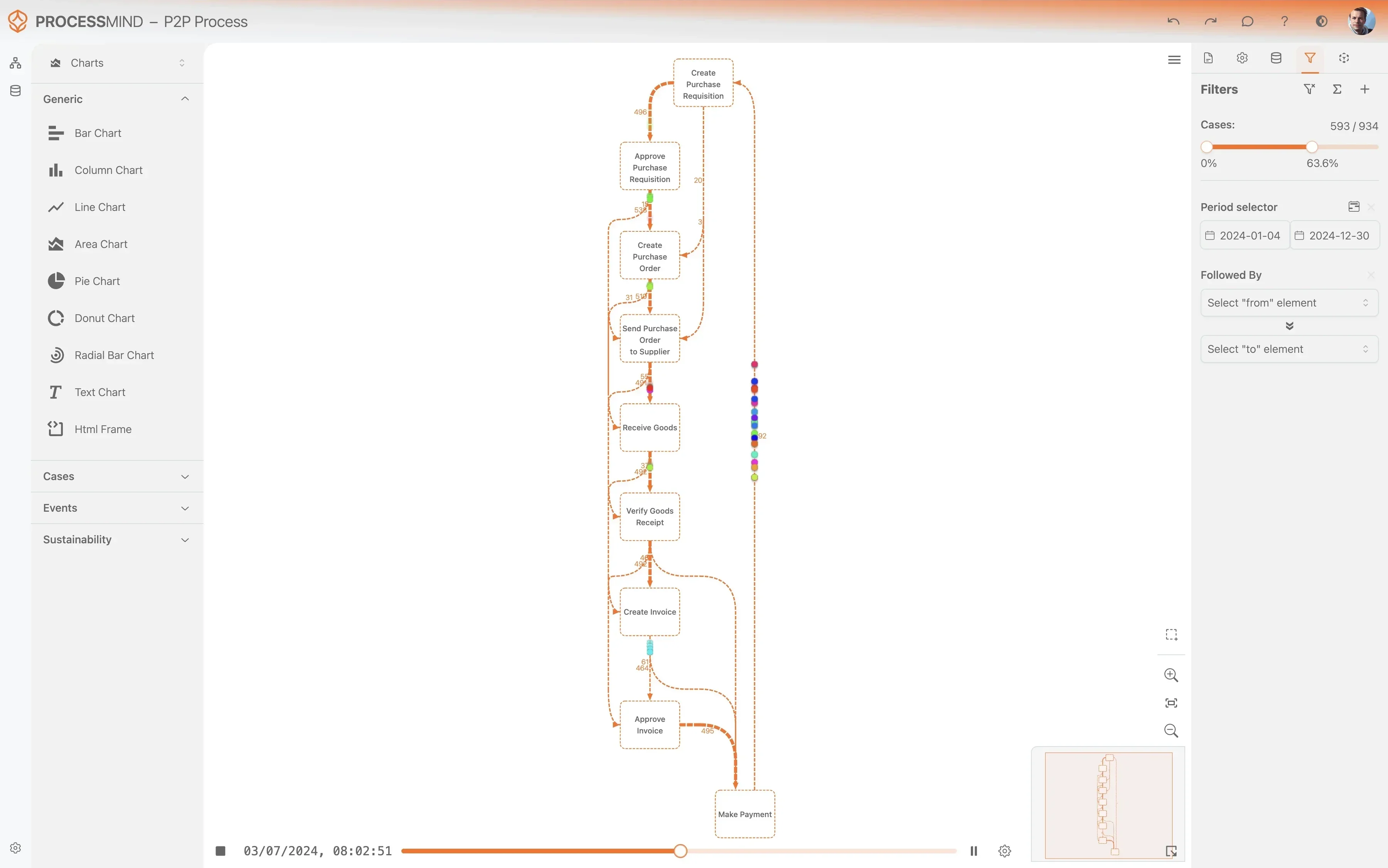
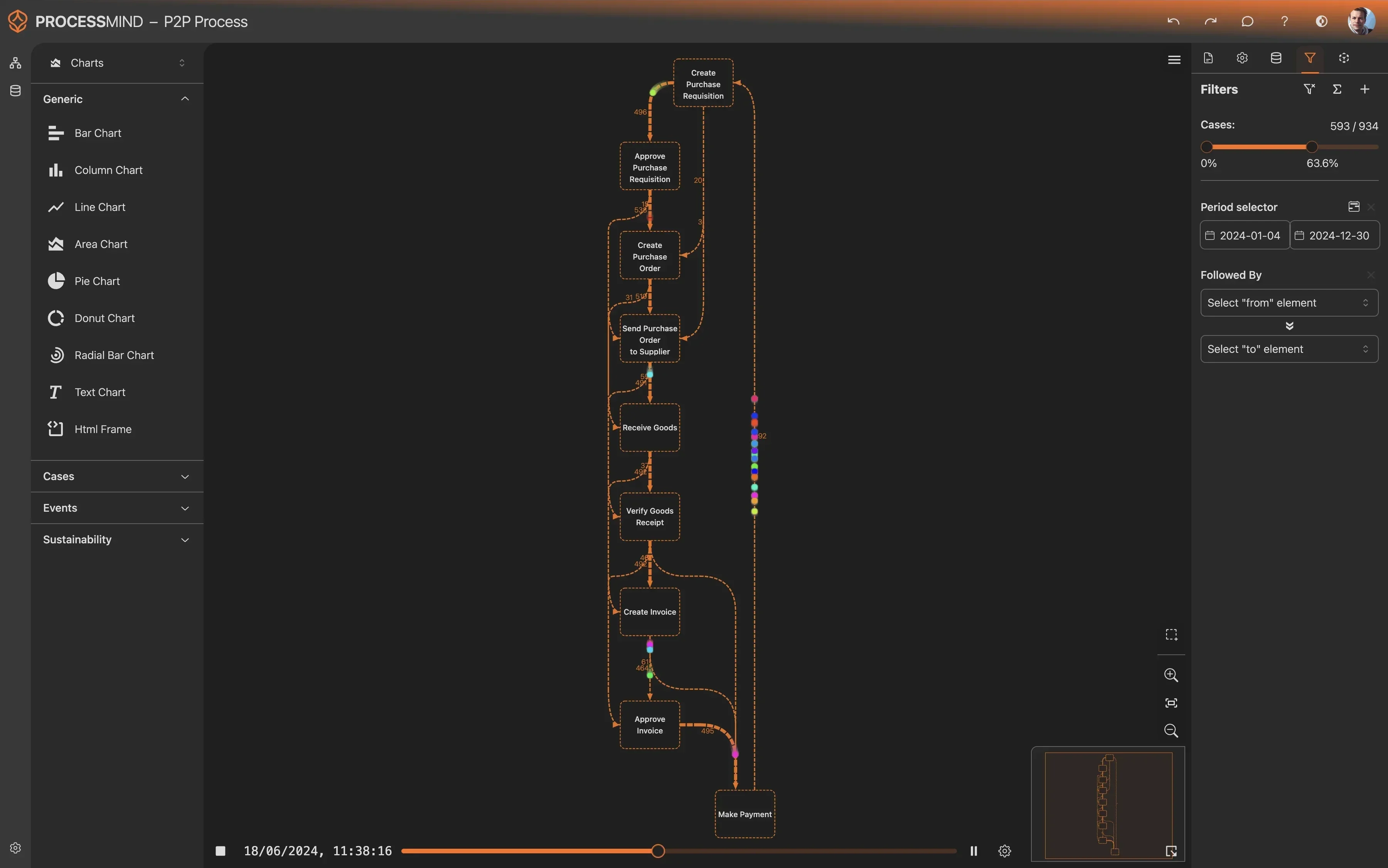
Process mining provides an unparalleled capability to visualize and analyze the actual execution of your Purchase to Pay - Purchase Order process within SAP S/4HANA. Instead of relying on assumptions or aggregated reports, process mining reconstructs every step of each Purchase Order's journey using event data from your system, such as tables like BKPF, BSEG, and ACDOCA. This unique perspective allows you to see the real process flow, identifying all variants, deviations, and rework loops that hinder efficiency. For instance, you can pinpoint exactly where Purchase Requisitions get stuck in the approval queue, or which specific Purchase Orders undergo multiple changes after being sent to the vendor. By precisely tracking events like "Purchase Requisition Created," "Purchase Order Approved," and "Goods Receipt Posted," process mining helps you uncover the root causes of bottlenecks and prolonged cycle times, providing factual, data-driven insights into your procurement operations.
Key Areas for Purchase Order Process Improvement and Bottleneck Reduction
With process mining, several critical areas within your Purchase to Pay - Purchase Order process become clear targets for improvement. You can identify specific vendors whose lead times consistently exceed agreements, leading to delays in goods receipt. Analysis often reveals inefficiencies in the approval workflows, highlighting where Purchase Orders languish awaiting authorization, or where multiple, redundant approvals occur. Furthermore, process mining can expose high rates of Purchase Order changes, indicating potential issues with initial requisition accuracy, incomplete master data, or miscommunication with suppliers. Understanding the frequency and impact of "Goods Returned" events can also point to quality control issues or incorrect deliveries. By focusing on these concrete findings, you gain actionable intelligence to refine your purchasing policies, optimize supplier selection, enhance master data quality, and streamline internal approval processes. This detailed analysis helps you reduce Purchase to Pay - Purchase Order cycle time significantly.
Achieving Measurable Outcomes and Enhanced Compliance
The insights gained from process mining your SAP S/4HANA Purchase to Pay - Purchase Order process translate into tangible benefits. You can expect a notable reduction in Purchase Order cycle time, from requisition to goods receipt, leading to faster fulfillment and improved operational responsiveness. This optimization contributes directly to lower procurement costs by reducing manual effort, minimizing expediting fees, and improving cash discount utilization. Enhanced compliance becomes achievable by identifying and eliminating process deviations, ensuring all Purchase Orders adhere to established policies and regulatory requirements. Furthermore, a clearer understanding of your process allows for more effective supplier management, fostering stronger relationships and better service levels. Ultimately, process optimization of your Purchase Order lifecycle bolsters your organization's financial health and strategic procurement capabilities.
Begin Your Purchase to Pay - Purchase Order Optimization Journey Today
Embarking on the path to optimizing your Purchase to Pay - Purchase Order process in SAP S/4HANA does not require a deep technical dive or extensive custom development. This guide and its accompanying tools are designed to empower you with the knowledge and methodology to start uncovering hidden inefficiencies today. By leveraging the power of process mining, you can move beyond anecdotal evidence and make informed, data-driven decisions that lead to sustainable improvements. Start transforming your procurement operations by gaining unprecedented transparency into every Purchase Order, ensuring efficiency, compliance, and cost-effectiveness across your organization.
The 6-Step Improvement Path for Purchase to Pay - Purchase Order
Download the Template
What to do
Obtain the specialized Excel template designed for Purchase to Pay - Purchase Order data. This template ensures your SAP S/4HANA data is correctly structured for analysis.
Why it matters
Using the correct template streamlines data preparation, preventing common errors and accelerating your journey to insights. It ensures data compatibility for immediate use.
Expected outcome
A pre-formatted Excel template, ready for populating with your SAP S/4HANA Purchase Order process data.
Export Your Data
What to do
Extract 3-6 months of historical Purchase Order data from your SAP S/4HANA system. Populate the downloaded template with relevant event logs and attributes from key tables.
Why it matters
A robust dataset provides a comprehensive view of your P2P PO process, enabling accurate discovery of inefficiencies and compliance gaps over time.
Expected outcome
A completed Excel template filled with 3-6 months of your real Purchase Order process data from SAP S/4HANA.
Upload Your Dataset
What to do
Securely upload your populated Excel template containing your SAP S/4HANA Purchase Order data. The platform automatically processes your dataset for immediate analysis.
Why it matters
Rapid data ingestion means you spend less time on preparation and more time on analysis, quickly transforming raw data into actionable process insights.
Expected outcome
Your Purchase Order process data successfully loaded into ProcessMind, with automatic initial analysis initiated.
Analyze Your Process
What to do
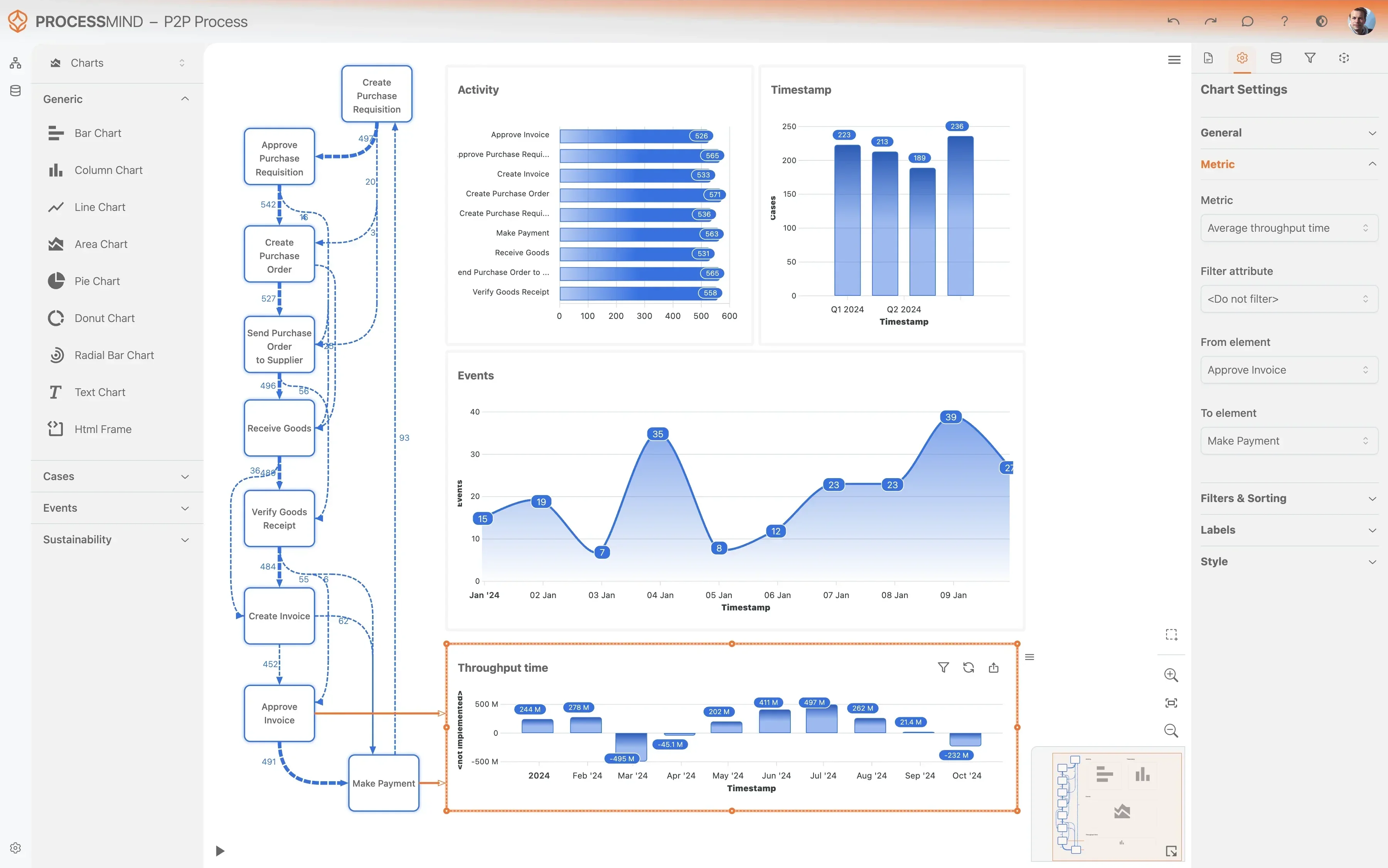
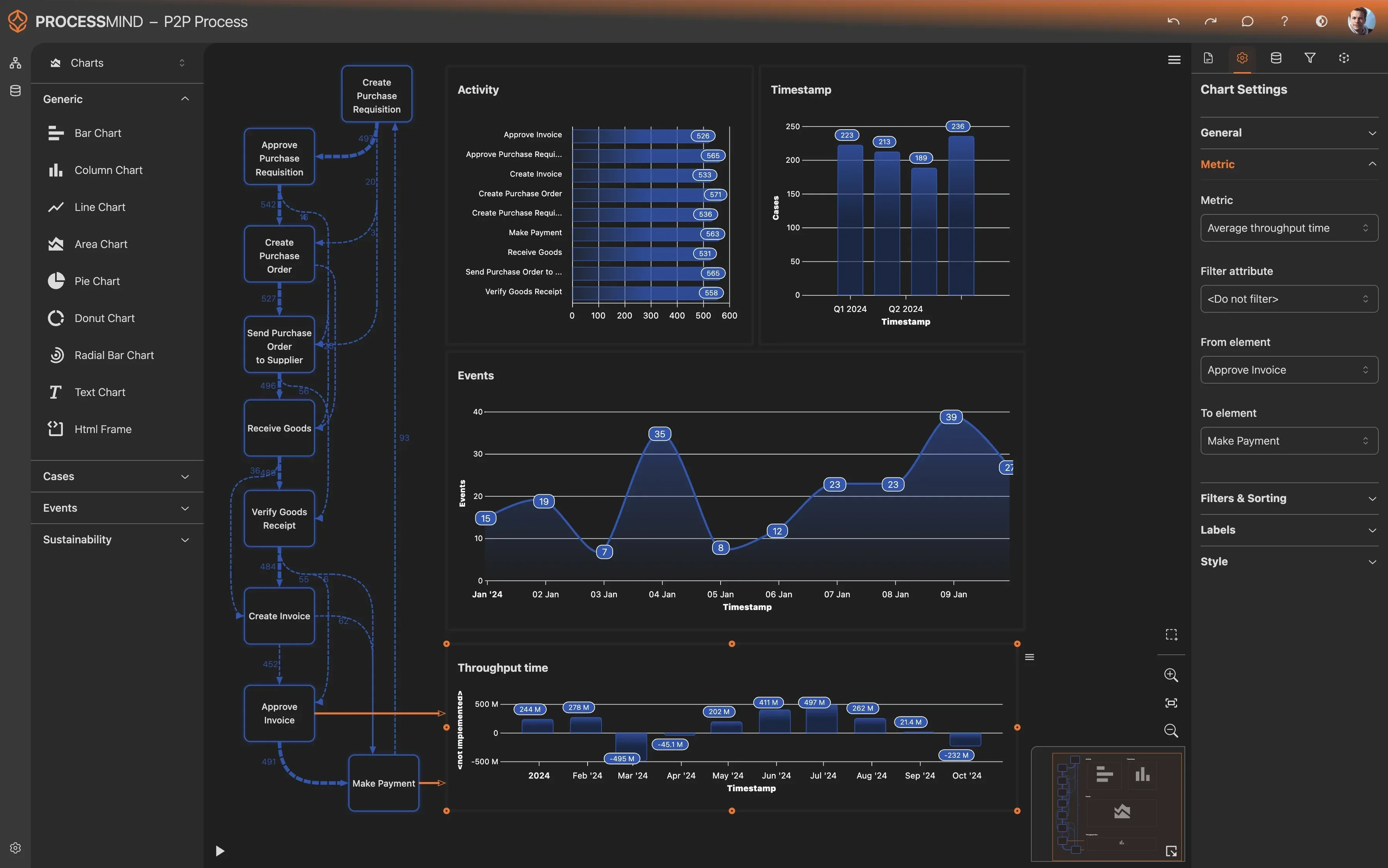
Explore the auto-generated process maps, dashboards, and KPIs specific to your P2P Purchase Order flow. Leverage AI-driven recommendations to pinpoint bottlenecks and deviations.
Why it matters
Gain deep visibility into your Purchase Order lifecycle, quickly identifying where delays occur, compliance issues arise, or resources are misallocated.
Expected outcome
Clear understanding of your P2P Purchase Order process performance, its inefficiencies, and optimization opportunities.
Implement Improvements
What to do
Prioritize the identified improvement opportunities based on their potential impact on your P2P Purchase Order process. Develop and execute concrete action plans to address them.
Why it matters
Translate insights into tangible results, enhancing operational efficiency, reducing costs, and improving the overall speed and compliance of your procurement cycle.
Expected outcome
Initiated changes to optimize your P2P Purchase Order process, addressing key bottlenecks and non-compliant paths.
Monitor Your Process
What to do
Periodically re-export and re-upload updated Purchase Order data from SAP S/4HANA. Continuously track key performance indicators to measure the impact of your implemented changes.
Why it matters
Ensure sustained process excellence by verifying that improvements deliver expected outcomes and by proactively identifying any new deviations or performance degradation.
Expected outcome
Ongoing visibility into P2P Purchase Order process performance, demonstrating measurable improvements and sustained optimization.
WHAT YOU WILL GET
Uncover P2P Purchase Order Efficiency in SAP S/4HANA
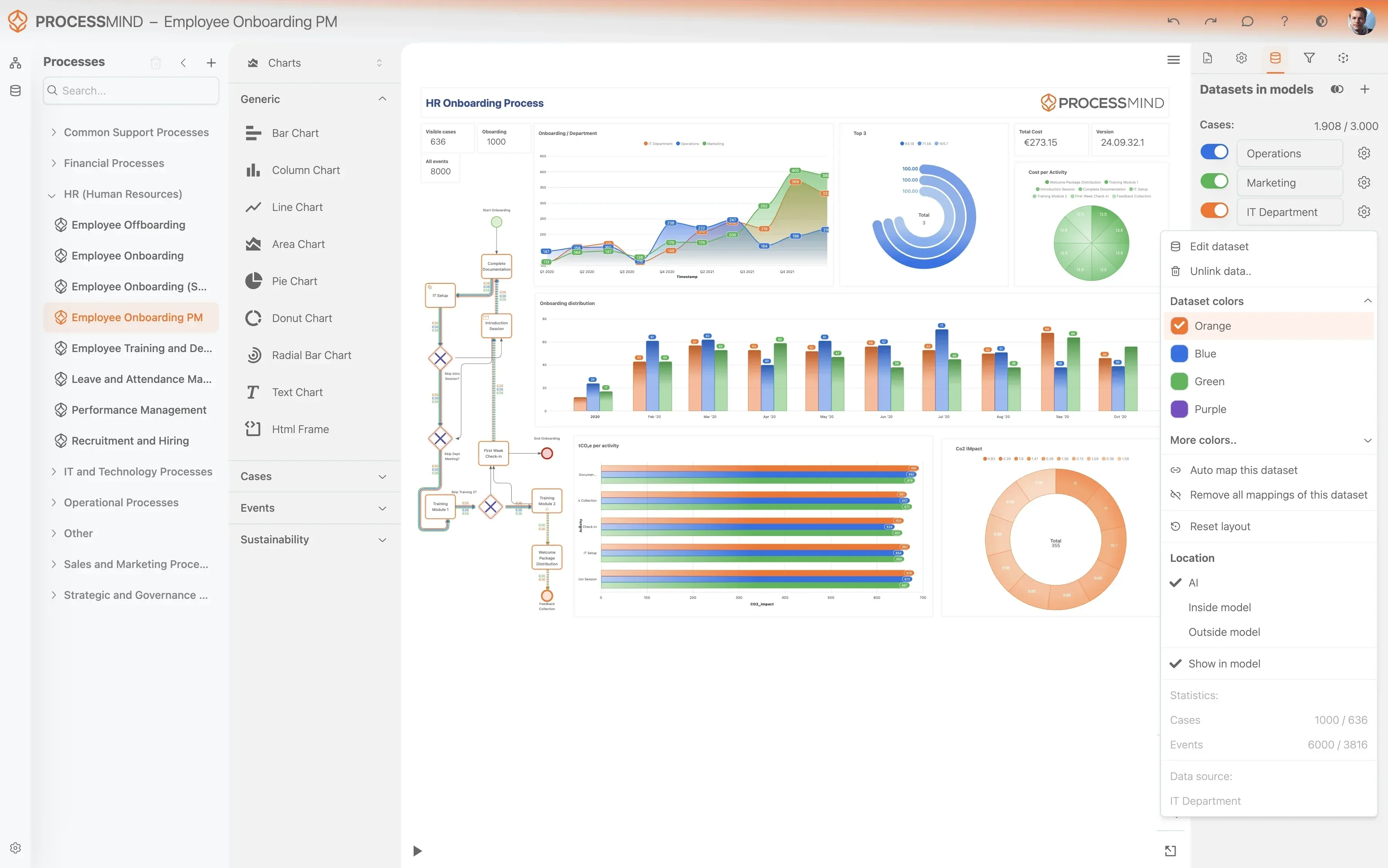
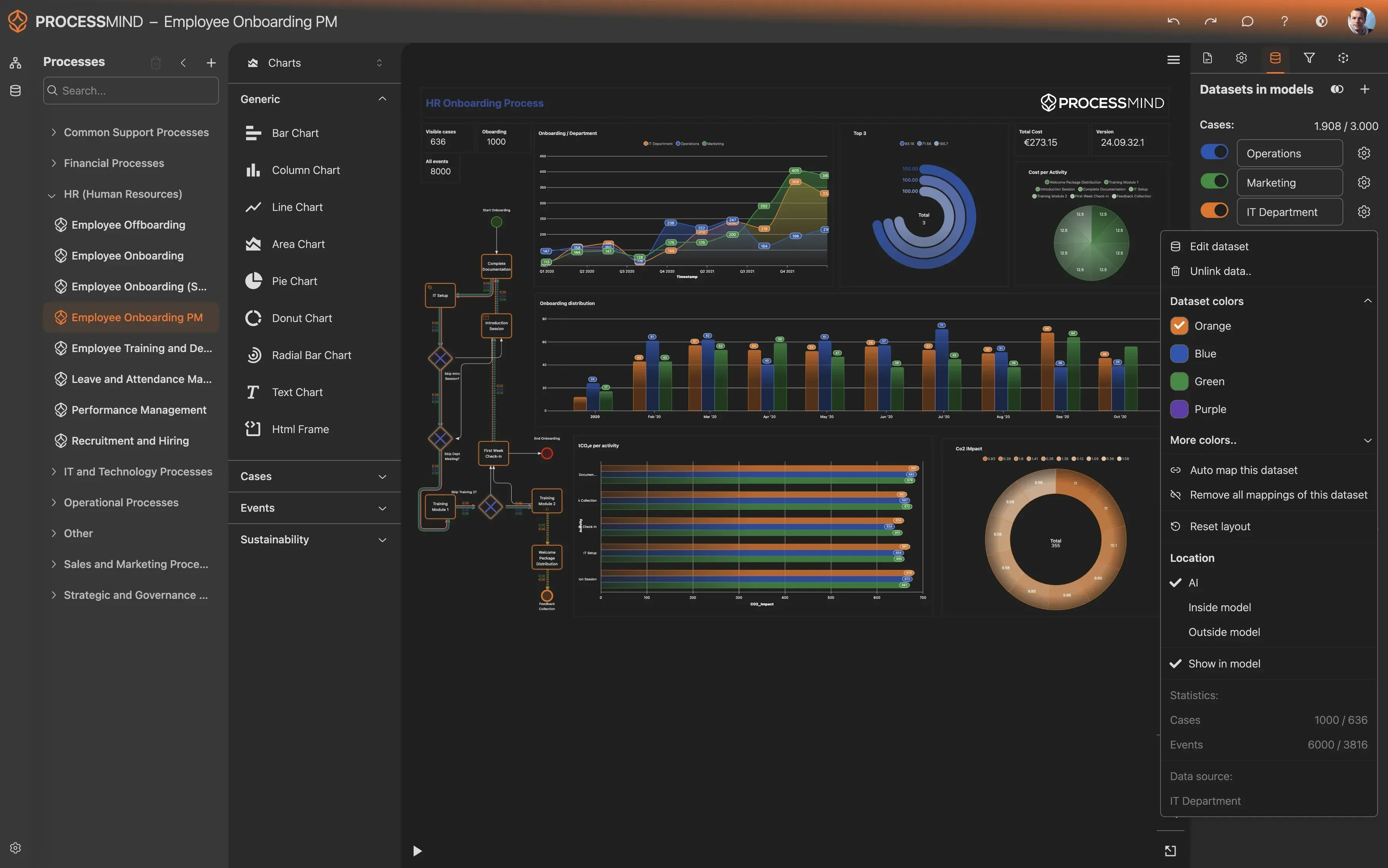
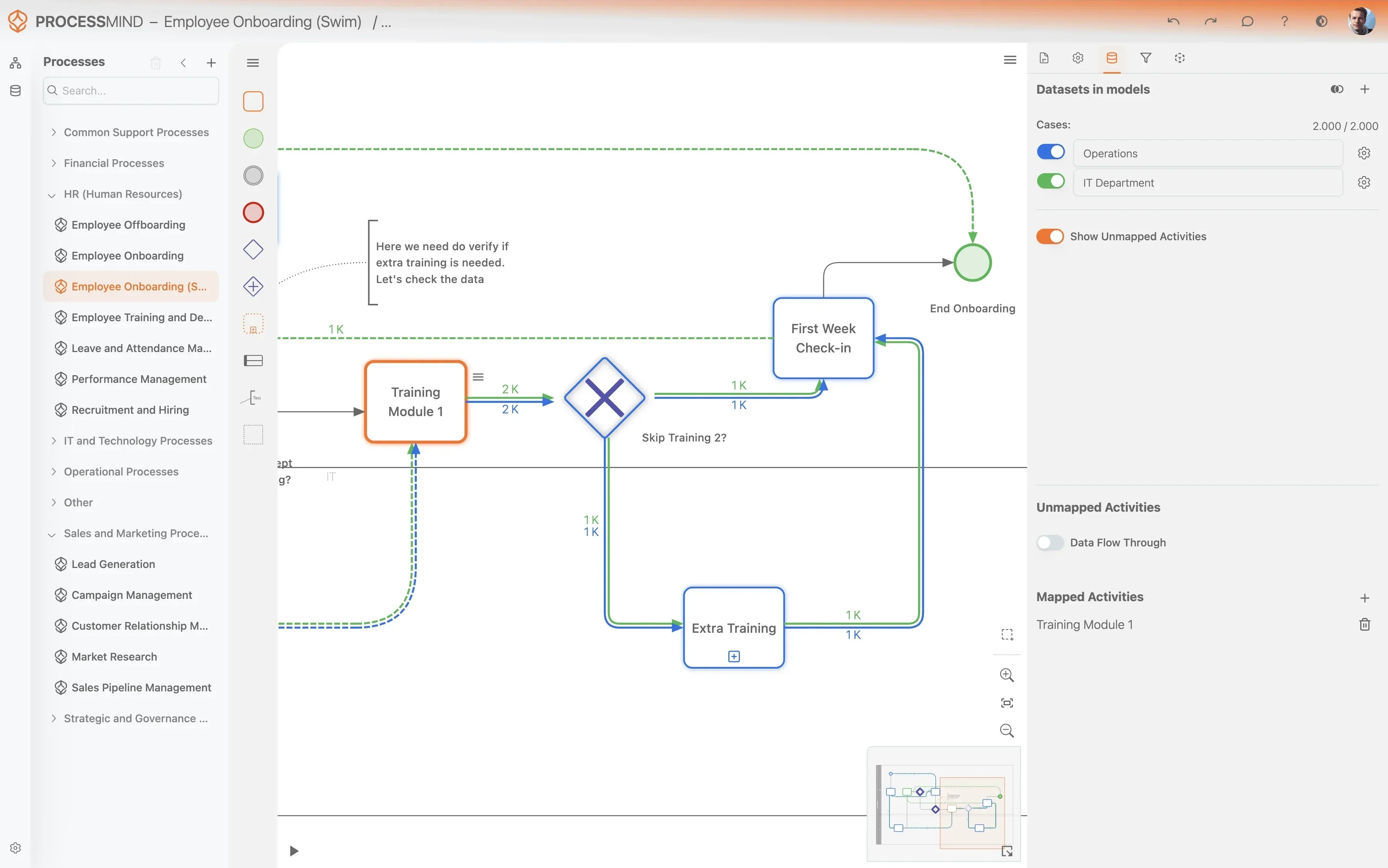
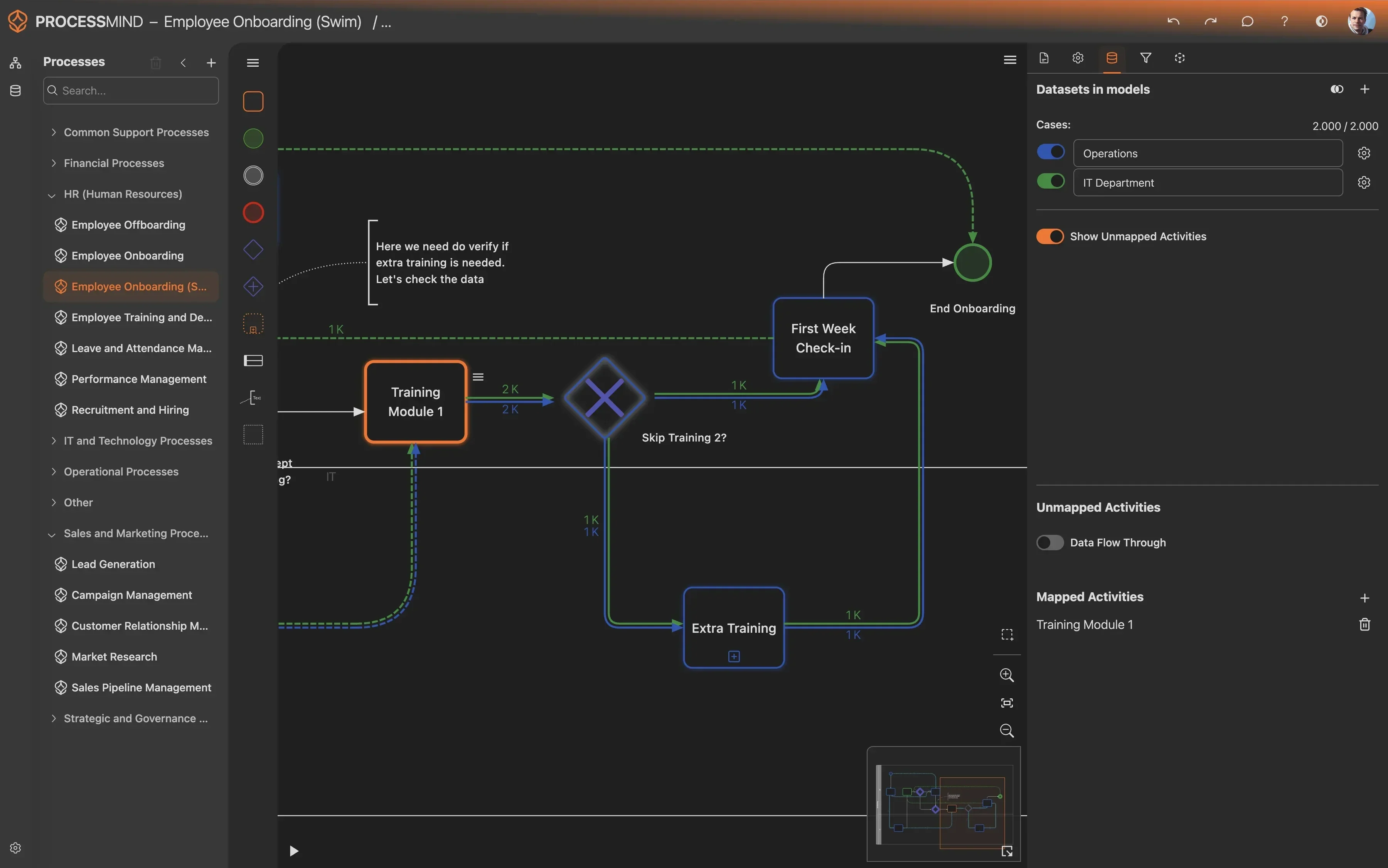
- Visualize your Purchase Order process flow
- Identify hidden bottlenecks and rework loops
- Evaluate supplier lead times and compliance
- Streamline operations for faster PO cycle
TYPICAL OUTCOMES
Realizing Tangible Value in Purchase Order Management
By leveraging process mining on your SAP S/4HANA Purchase Order data, organizations uncover hidden inefficiencies and bottlenecks, leading to significant operational improvements and cost savings.
Average reduction in approval time
Streamline workflows and remove bottlenecks to significantly reduce the time taken for purchase orders to get approved, speeding up the procurement cycle.
Decrease in non-compliant spending
Identify and eliminate purchases made outside of approved channels, ensuring all spending adheres to company policies and improves financial control.
Increase in automated processing
Boost the percentage of purchase orders that flow from start to finish without manual intervention or rework, enhancing efficiency and reducing operational costs.
Decrease in PO modifications
Pinpoint root causes of changes made after purchase orders are approved, leading to more accurate initial orders and less administrative rework.
Better supplier performance
Gain insights into supplier delivery reliability by analyzing actual delivery dates against requested dates, enabling better supplier management and predictability.
Results vary based on your specific process complexity and data quality. These figures represent typical improvements observed across various Purchase to Pay implementations.
Recommended Data
FAQs
Frequently asked questions
Process mining visualizes the actual flow of your P2P - PO process, revealing bottlenecks like long approval cycles and rework from repeated PO changes. It highlights deviations from standard paths, helping you understand where inefficiencies and non-compliance occur. This data-driven insight enables targeted improvements to reduce costs and accelerate cycle times.
To perform process mining for Purchase Orders, you primarily need event logs detailing each step of the PO process. Key data includes PO creation, approval steps, changes, goods receipts, and invoices. Essential fields are activity name, timestamp, case ID, usually the Purchase Order number, and possibly resources or users involved.
The initial setup, including data extraction and model configuration, typically takes a few weeks, depending on data availability and complexity. Once configured, you can often see initial insights and identify major bottlenecks within days. Continuous monitoring then provides ongoing performance and compliance visibility.
Process mining frequently uncovers opportunities to reduce purchase order approval times and standardize process flows. It helps eliminate maverick spend incidents and minimize post-approval PO changes, which often cause significant rework. Furthermore, it aids in enhancing end-to-end order visibility and synchronizing goods receipt with PO closure.
While a basic understanding of your SAP S/4HANA data model is beneficial for data extraction, modern process mining tools are user-friendly. They often provide pre-built connectors and templates for SAP S/4HANA, minimizing the need for deep technical expertise. No specific, additional SAP modules are typically required beyond your existing P2P functionality.
Data privacy and security are paramount. It is crucial to implement robust access controls and anonymization techniques, especially for sensitive user or supplier information. Ensure compliance with relevant data protection regulations, and utilize secure data transfer protocols and storage solutions provided by your process mining vendor.
Yes, process mining is highly effective at identifying unapproved purchases and deviations from established procurement policies. By visualizing actual process execution, it highlights instances where controls are bypassed, enabling you to pinpoint the root causes. This insight is critical for reinforcing compliance and reducing maverick spend incidents.
You can expect significantly reduced purchase order approval times and more standardized process flows. Other common outcomes include a decrease in maverick spend, fewer post-approval PO changes, and improved supplier delivery predictability. This leads to greater operational efficiency and cost savings across your procurement cycle.
Optimize Your P2P Purchase Order: Reduce Cycle Time Now
Eliminate inefficiencies and reduce your P2P Purchase Order cycle time by 30%.
No credit card required. Set up in minutes.