Improve Your Purchase to Pay - Requisition

Select a process
Choose a process to continue working in your connected workspace.
Streamline Your Purchase-to-Pay Requisition Process
ProcessMind helps you uncover hidden inefficiencies and bottlenecks within your Purchase to Pay Requisition process. Identify delays, deviations, and non-compliance by analyzing your existing system data. Gain actionable insights to optimize workflows and reduce operational costs. This platform provides a clear view of how your process truly operates, enabling data-driven improvements.
Download our pre-configured data template and address common challenges to reach your efficiency goals. Follow our six-step improvement plan and consult the Data Template Guide to transform your operations.
Show detailed description
Optimizing your Purchase to Pay, P2P, Requisition process is fundamental to efficient procurement and financial health. ProcessMind's dedicated Purchase to Pay - Requisition analysis module empowers you to visualize the complete flow of activities, from the initial request creation to the final purchase order generation. Regardless of your underlying ERP or source system, we enable you to uncover the true journey of your requisitions, identifying every step, deviation, and delay. You will gain clarity on where your process deviates from the ideal path, pinpointing hidden inefficiencies, prolonged approval cycles, and instances of non-compliance that are unique to your organization's operational reality. This deep dive provides actionable insights to transform your procurement efficiency.
Organizations commonly grapple with a myriad of challenges in their requisition processes. These often include extensive manual effort leading to errors, delays in receiving necessary approvals, lack of visibility into requisition status, budget overruns due to inefficient spending, and difficulties in enforcing procurement policies across different departments. These issues are not specific to any particular software; they are process-level problems that can plague any enterprise. ProcessMind helps you cut through this complexity, providing a transparent view of where bottlenecks occur, why requisitions might be rejected or rerouted, and how long each stage truly takes. By analyzing the actual execution data from your system, we reveal the root causes of slow cycle times and identify opportunities for significant cost savings and improved operational agility.
With ProcessMind, the benefits of analyzing your Purchase to Pay - Requisition process are profound and far-reaching. You can achieve substantial improvements in efficiency by streamlining approval workflows, reducing manual intervention, and eliminating redundant steps. Enhanced compliance ensures that all procurement activities adhere strictly to internal policies and external regulations, mitigating risks and fostering greater accountability. Faster cycle times mean that goods and services are procured more quickly, supporting business continuity and productivity. Moreover, a data-driven understanding of your process empowers better decision-making, allowing you to allocate resources more effectively and optimize supplier relationships. Our platform offers a welcoming, system-agnostic approach, focusing purely on your process data to deliver impactful, measurable results.
Getting started with ProcessMind is straightforward. To unlock these powerful insights, you will need to provide historical transaction data from your existing ERP or source system. This data typically includes event logs detailing each step a requisition undergoes, along with relevant timestamps and user information. To guide you through this initial phase, we offer comprehensive data ingestion guidelines and a dedicated data template. This ensures you can easily extract and prepare the necessary information, enabling ProcessMind to quickly reconstruct and analyze your Purchase to Pay - Requisition process. Let us help you transform your procurement process into a lean, efficient, and compliant operation.
The 6-Step Improvement Path for P2P Requisition
Connect Your Requisition Data
What to do
Extract data from your ERP, CRM, or other systems that record requisition activities. Ensure you capture the case identifier, activity, and timestamp for each event.
Why it matters
Seamless data integration is crucial for accurate process visualization. Connecting your data reveals the true process flow, bypassing assumptions.
Expected outcome
A complete, accurate dataset imported into your process mining tool, ready for analysis.
Visualize Current Requisition Flow
What to do
Use your process mining tool to automatically generate a visual map of all requisition activities, from creation to approval or rejection.
Why it matters
Understanding the actual paths requisitions take, including all variations, is fundamental to identifying compliance gaps and process deviations.
Expected outcome
A clear, interactive process map showing all executed variants and their frequencies.
Pinpoint Delays & Rework
What to do
Analyze the process map for areas with high lead times, frequent rework loops, or excessive manual touchpoints. Look for long queues or approval delays.
Why it matters
Bottlenecks cause delays, increase costs, and frustrate users. Identifying them helps you target specific areas for immediate improvement.
Expected outcome
A prioritized list of problem areas in the requisition process, quantified by their impact on time or cost.
Uncover Why Issues Occur
What to do
Drill down into identified bottlenecks using filtering and variant analysis. Investigate attributes like requester, department, or requisition type to find causal factors.
Why it matters
Addressing symptoms without understanding root causes leads to temporary fixes. This step ensures sustainable improvements by tackling underlying problems.
Expected outcome
A clear understanding of the specific reasons behind delays, rework, or non-compliance in the requisition process.
Plan Process Optimizations
What to do
Based on root cause analysis, design targeted improvements such as automating approval steps, streamlining form fields, or standardizing workflows.
Why it matters
Well-designed improvements lead to faster processing, reduced errors, and better resource utilization, driving efficiency and user satisfaction.
Expected outcome
A concrete action plan with proposed changes, estimated impact, and responsible parties for implementing improvements.
Track Progress & Adjust
What to do
Implement continuous monitoring to track key performance indicators, such as approval times or rejection rates, and regularly compare against benchmarks.
Why it matters
Processes are dynamic. Continuous monitoring ensures improvements are sustained and allows for agile adjustments to maintain peak performance.
Expected outcome
Ongoing optimization of the requisition process, with measurable gains in efficiency, compliance, and user experience.
WHAT YOU WILL GET
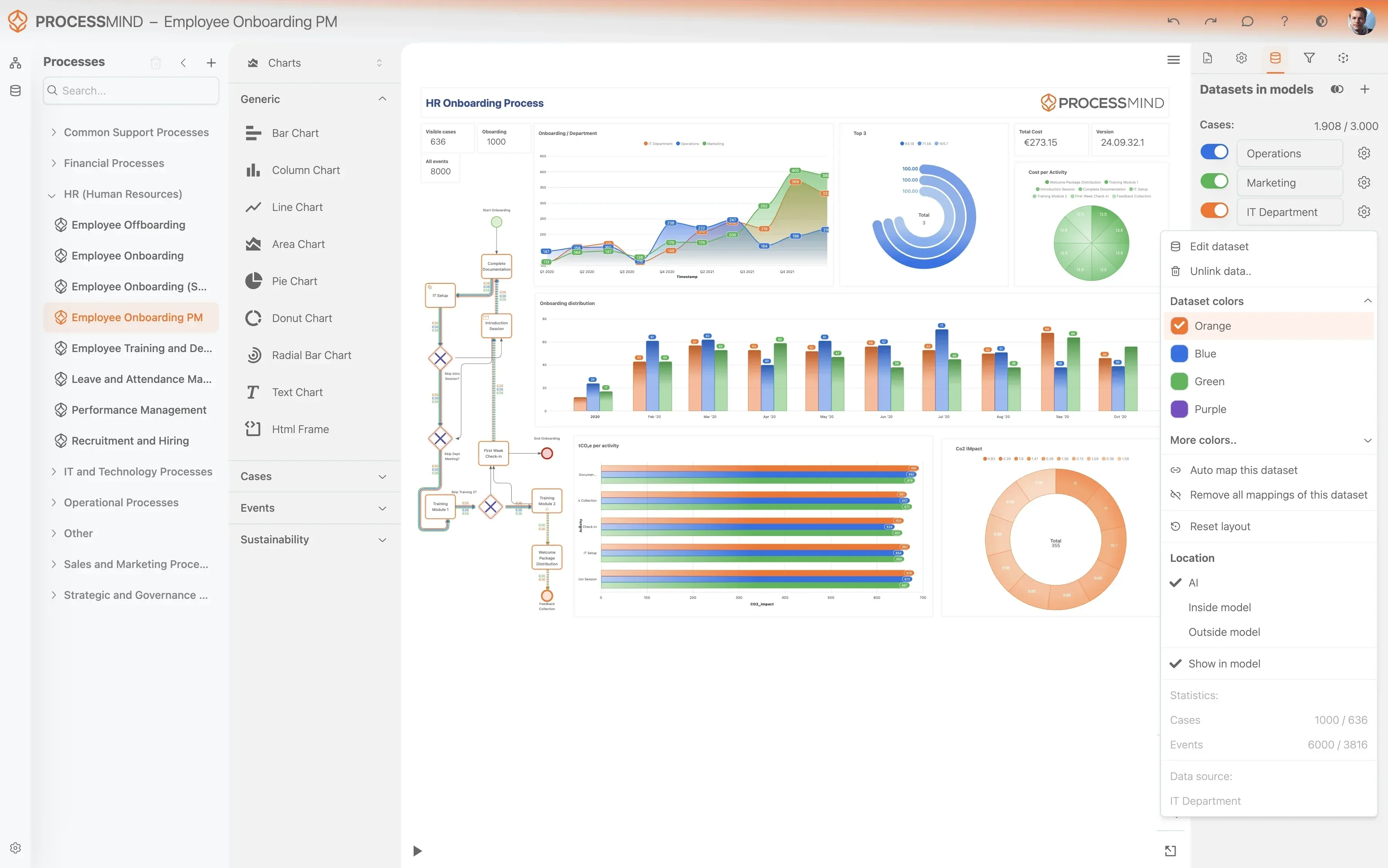
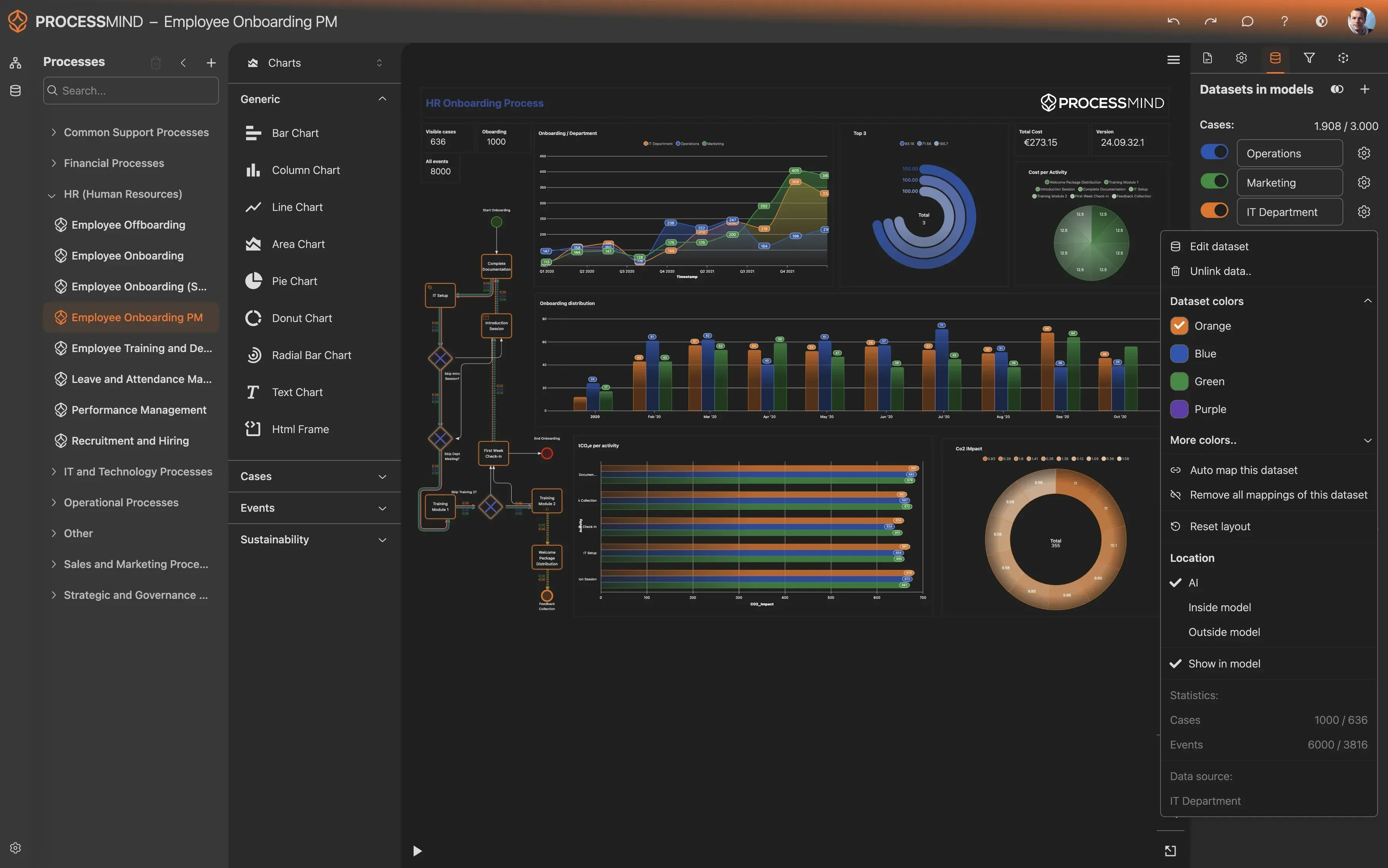
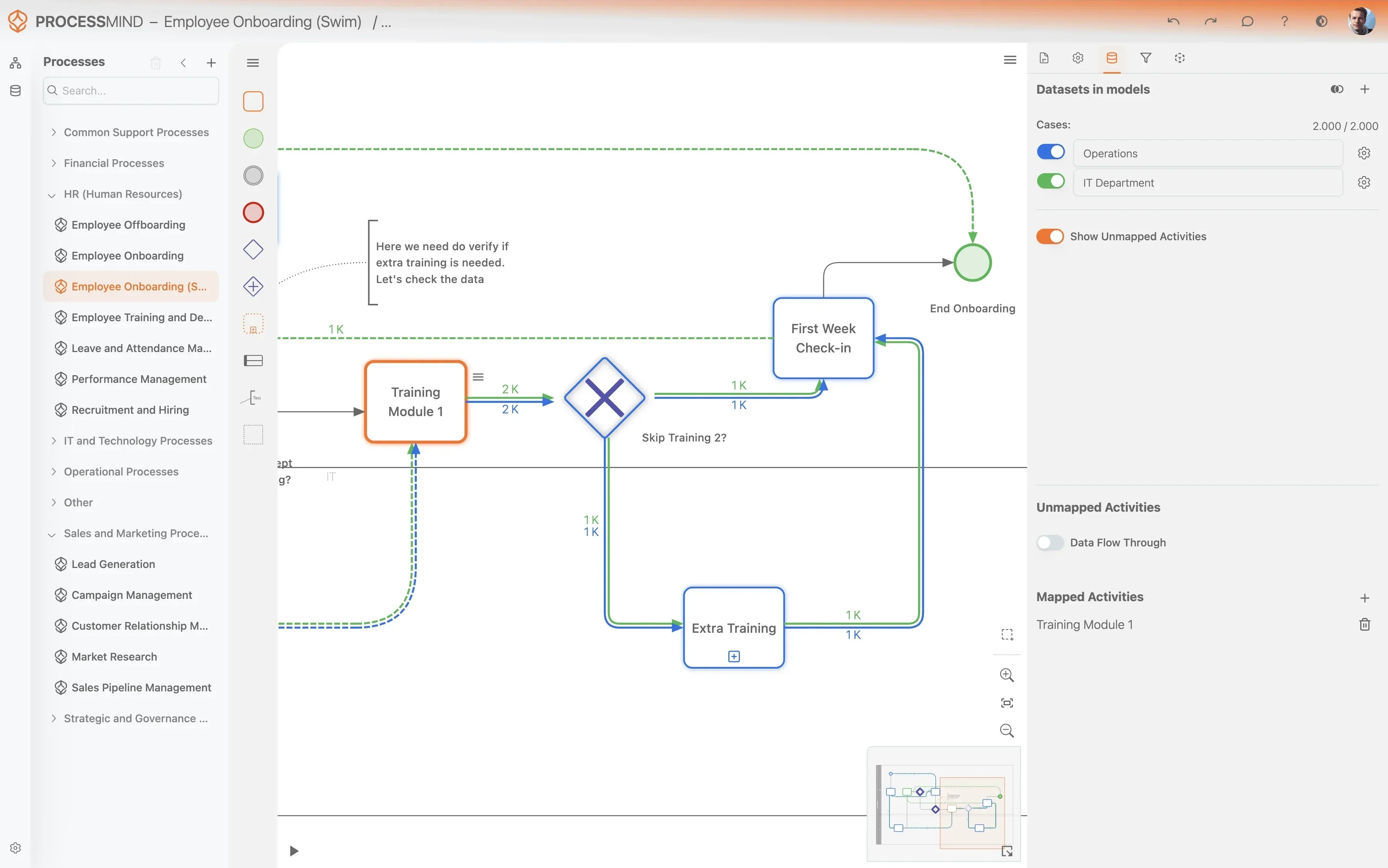
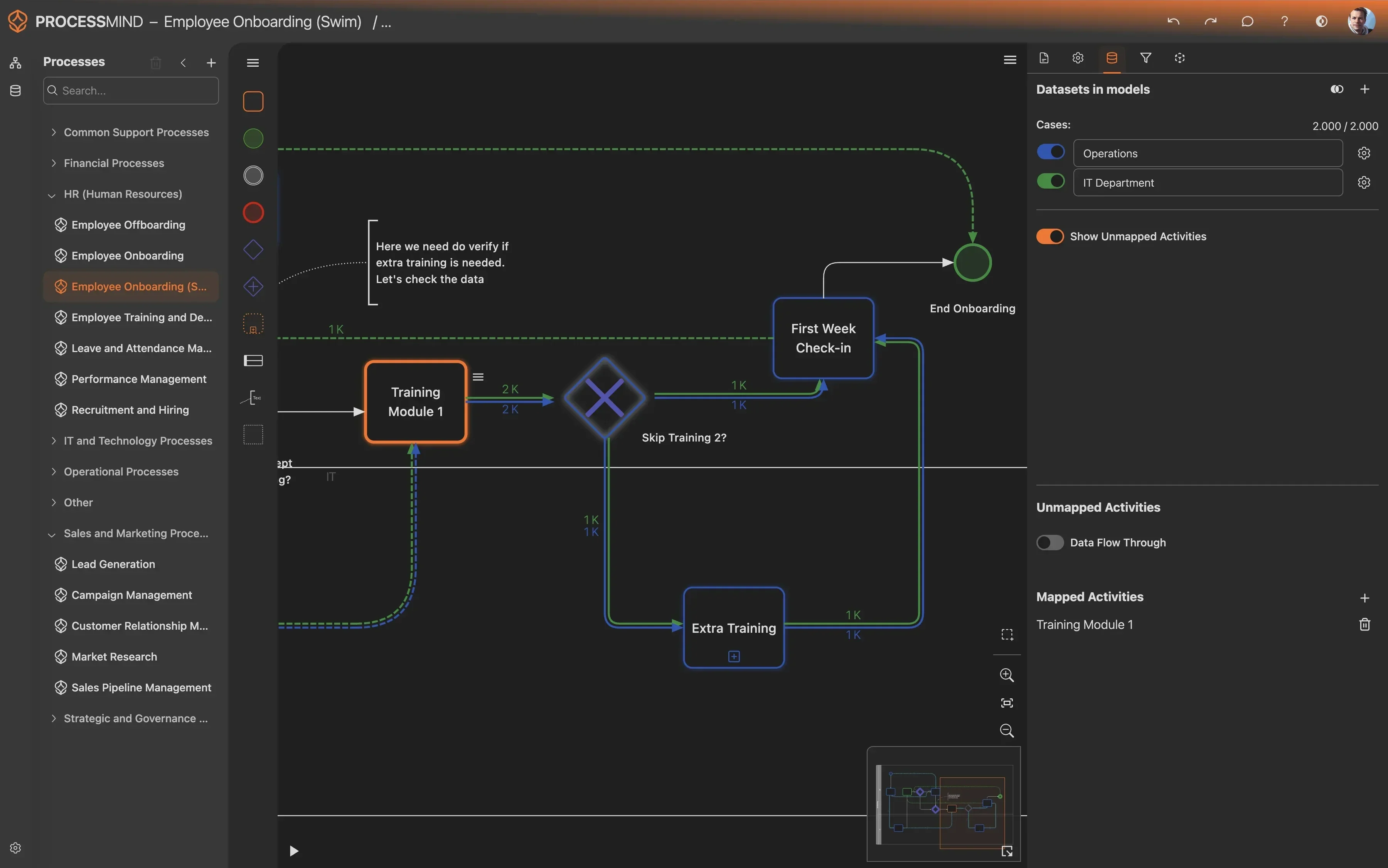
Discover the True Path of Your P2P Requisition Process
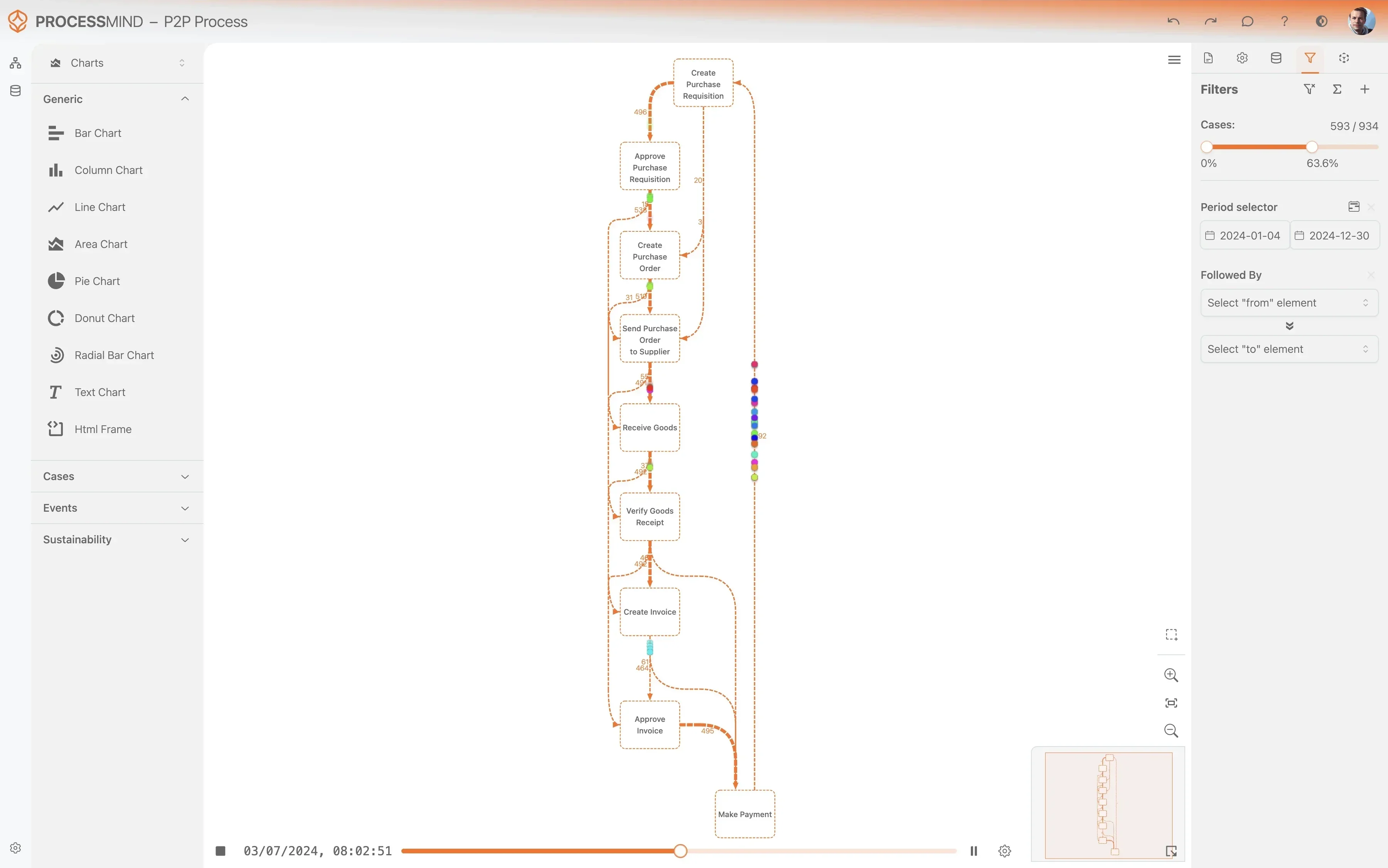
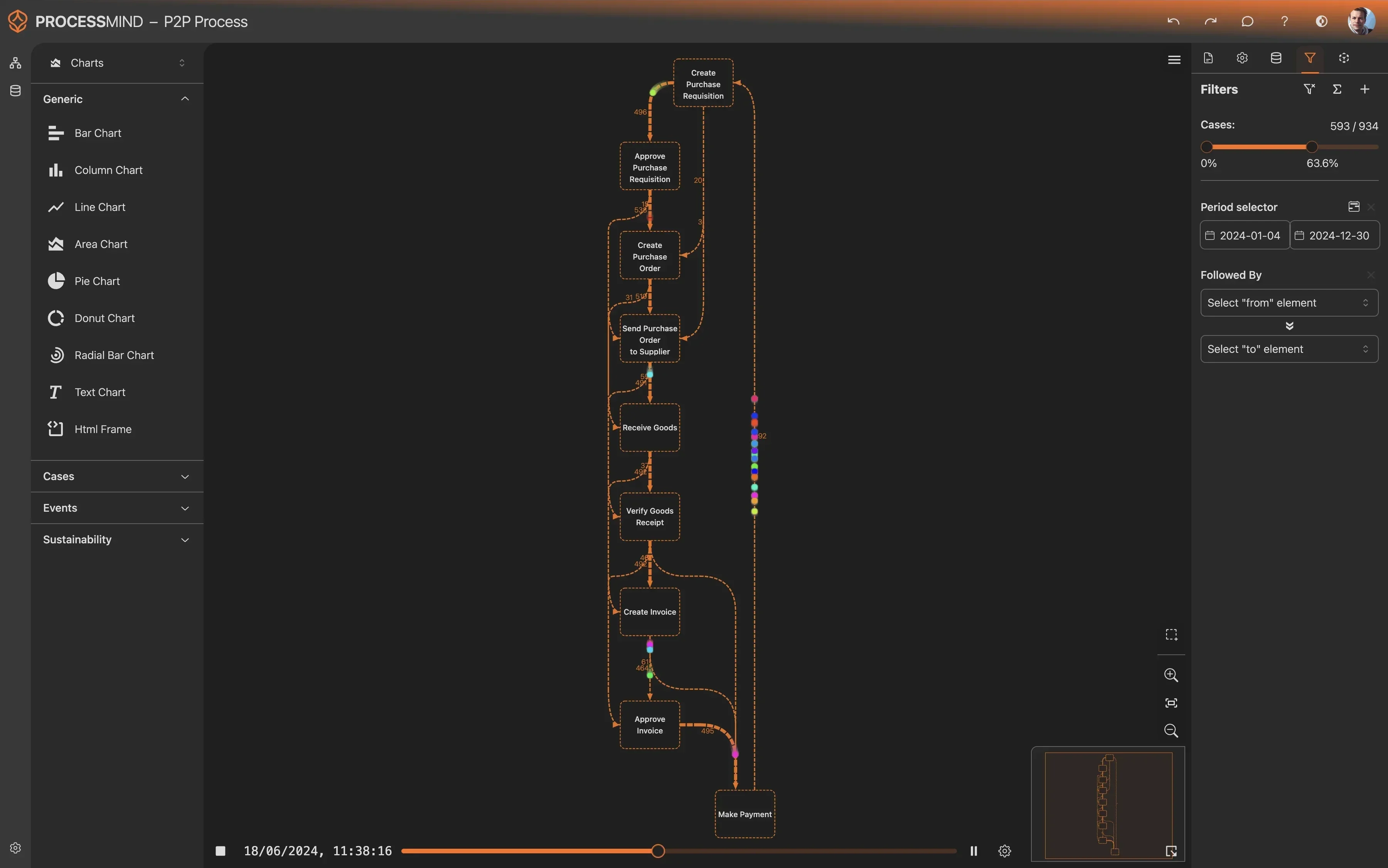
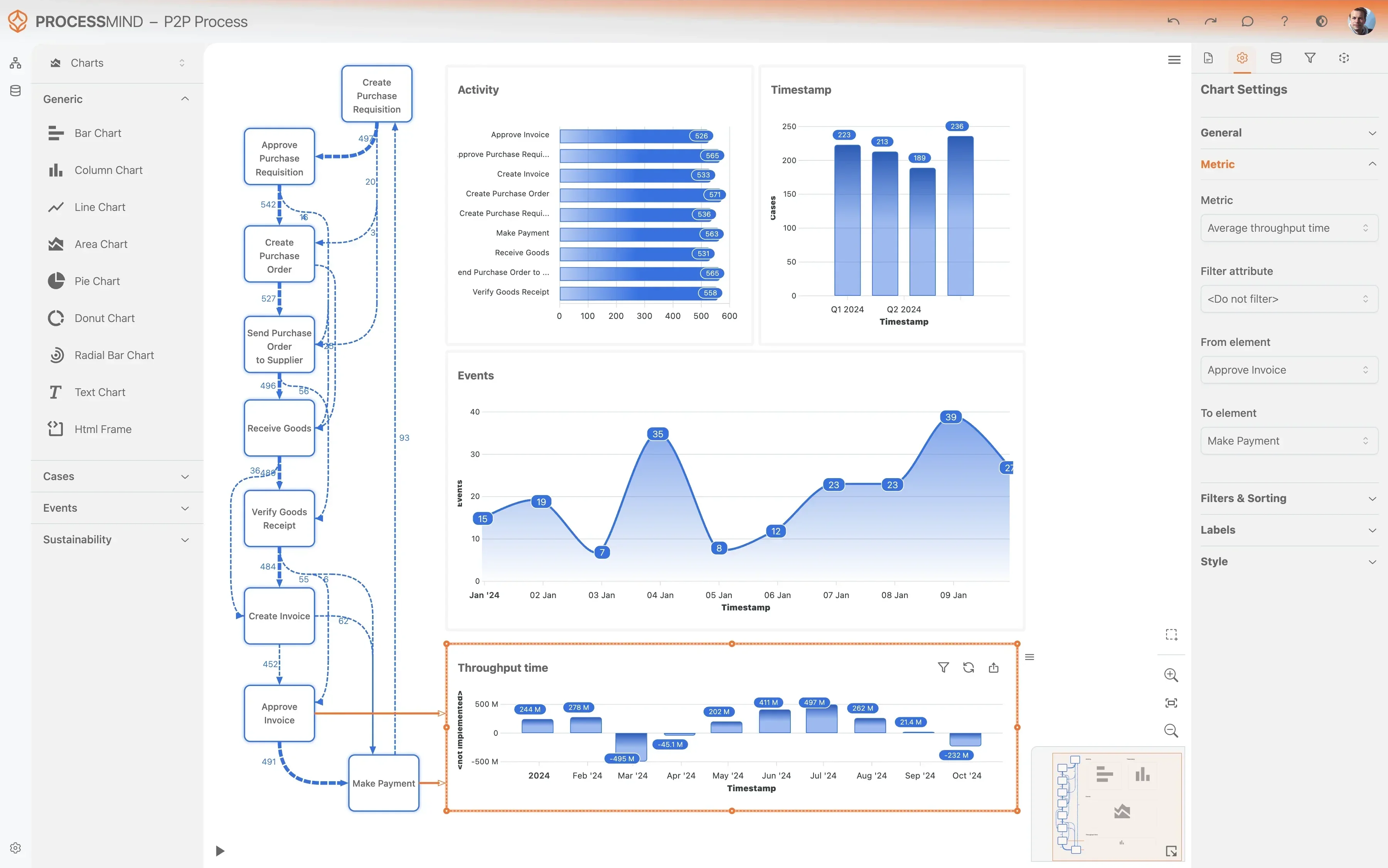
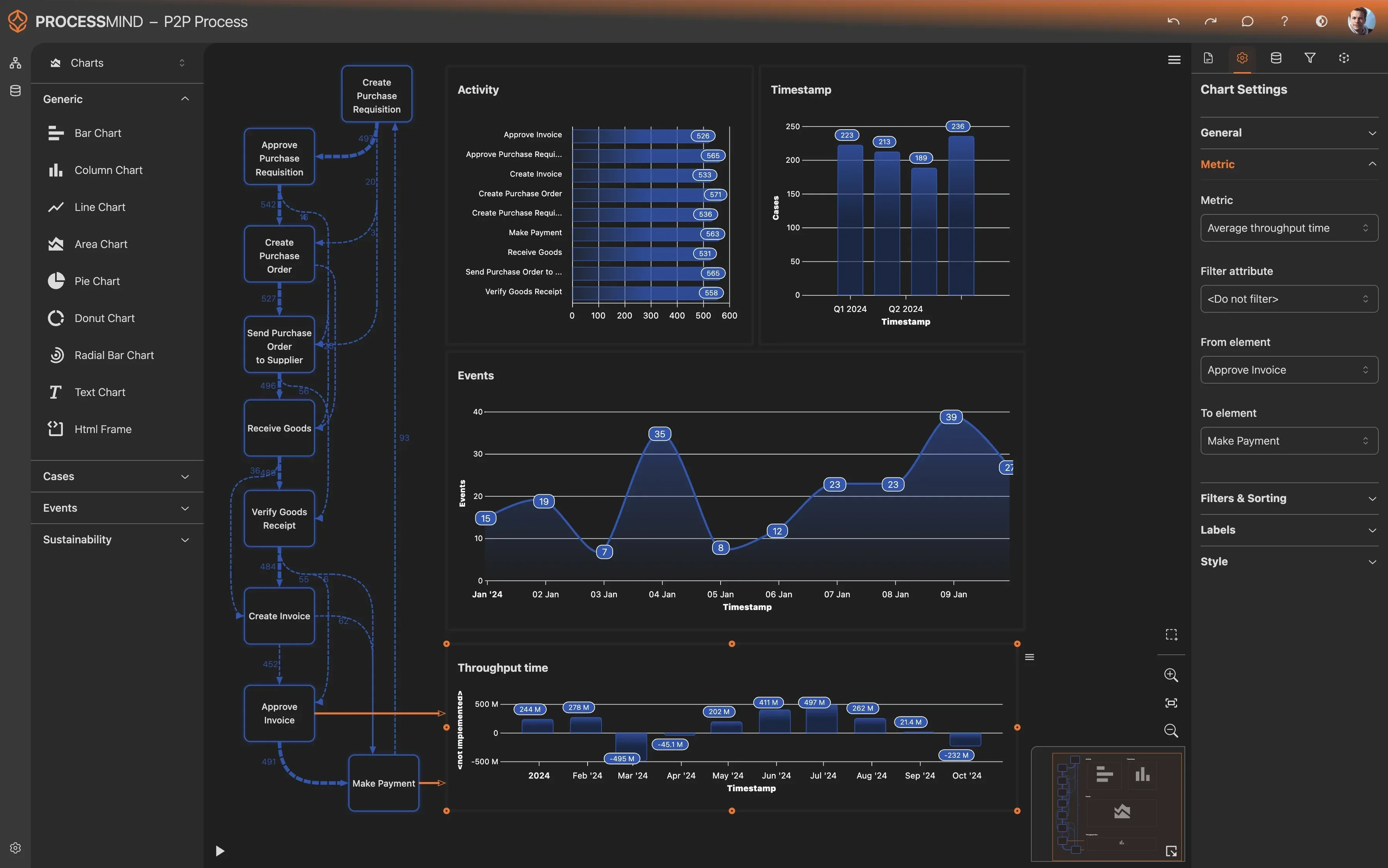
- Visualize your actual process flow
- Identify bottlenecks and delays
- Pinpoint process deviations
- Optimize for efficiency and compliance
TYPICAL OUTCOMES
Achieving Tangible Results in Purchase Requisition
These outcomes represent the measurable improvements organizations typically achieve by optimizing their Purchase to Pay requisition processes. By leveraging data-driven insights, organizations identify bottlenecks and streamline workflows, leading to substantial operational gains.
Average reduction in approval cycle time
By identifying and removing process bottlenecks, organizations can significantly cut the time it takes for a requisition to gain final approval, accelerating the entire procurement process.
Decrease in amended or rejected requisitions
Improving initial requisition quality and clarifying requirements leads to a noticeable drop in rejected or amended requisitions, saving considerable time and effort in the Purchase to Pay process.
Improvement in adherence to purchasing policies
Process mining uncovers hidden deviations from predefined approval workflows, enabling organizations to better enforce policies and significantly reduce compliance risks within requisition handling.
Quicker transition from requisition to purchase order
Streamlining the critical path from an approved requisition to a generated purchase order ensures faster procurement, supporting timely delivery of goods and services.
Growth in automated requisition processing steps
Automating routine approval steps and manual checks, identified as ripe for optimization, significantly reduces human effort and administrative overhead in requisition processing.
Results vary based on process complexity and data quality. These figures represent typical improvements observed across implementations, providing an indication of potential value in Purchase Requisition optimization.
Recommended Data
For customized data recommendations, choose your specific process.
FAQs
Frequently asked questions
Process mining maps the actual flow of your requisition process, identifying all variations, deviations, and bottlenecks. It highlights compliance issues and areas with excessive manual work, providing an objective view of how requisitions are handled in your system. This enables data-driven decisions to streamline operations and reduce inefficiencies.
By visualizing every step and its duration, process mining precisely pinpoints where delays occur in the approval cycle. It can identify specific approvers, departments, or routing complexities that prolong approval times. This insight enables targeted interventions to optimize workflows and accelerate requisition processing.
To begin, you typically need event logs from your source system containing a unique case identifier, such as the Purchase Requisition ID, activity names or statuses, and corresponding timestamps. Additional attributes like approver, requisition value, or department can enrich the analysis. This core data set allows us to reconstruct the complete process flow.
Process mining can lead to significant improvements, such as reduced requisition approval cycle times, lower amendment and rejection rates, and increased compliance with purchasing policies. You can also expect more streamlined approval routing and better visibility into real-time requisition status. These benefits translate into cost savings and operational efficiency.
Initial insights can often be generated within a few weeks of successful data extraction and ingestion. Comprehensive analysis and actionable recommendations usually follow within 4-8 weeks. The speed depends on data quality, the complexity of your system setup, and the specific goals of the analysis.
Yes, process mining allows you to define desired process models or compliance rules, then compares every actual requisition path against these standards. It automatically flags any deviation, such as requisitions bypassing required approvals or unauthorized creations, ensuring complete policy adherence. This helps in enforcing policies more effectively.
No, process mining typically does not require any additional software installation within your source system environment. It operates by analyzing historical event log data extracted from your system. The analysis is performed on a separate process mining platform, ensuring no disruption to your existing operations.
Process mining is scalable and can benefit organizations of all sizes. While larger companies may have more complex processes, smaller operations can also gain significant value by identifying inefficiencies and optimizing their core processes. The key is having sufficient event data to analyze, regardless of company size.
Your system typically offers various methods for data extraction, including standard reports, APIs, or direct database access, depending on your setup and access permissions. The complexity varies, but it is generally manageable for IT teams or with vendor support. We can guide you on the specific data points required for effective analysis.
Standard system reporting typically provides predefined metrics and aggregates based on anticipated data structures. Process mining, conversely, discovers the actual, 'as-is' process flows directly from event data, revealing all variations and deviations, not just the expected ones. This allows it to uncover hidden inefficiencies and non-compliance that traditional reports might miss.
Optimize Your P2P Requisition, Unlock Efficiency Now
Identify bottlenecks, improve compliance, and boost savings across your P2P.
No credit card required, set up in just minutes.