Improve Your Purchase to Pay - Requisition

Select a process
Choose a process to continue working in your connected workspace.
Optimize Purchase Requisition in SAP S/4HANA
Delays and compliance gaps often hinder requisition processes. Our platform helps you precisely identify bottlenecks in creation and approval stages. We guide you toward practical improvements, streamlining your procurement and reducing lead times.
Download our pre-configured data template and address common challenges to reach your efficiency goals. Follow our six-step improvement plan and consult the Data Template Guide to transform your operations.
Show detailed description
Why Optimize Your Purchase Requisition Process?
Optimizing the Purchase to Pay, specifically the Requisition phase, within your SAP S/4HANA environment is critical for overall procurement efficiency and financial health. Inefficient requisition processes lead to substantial costs, often hidden in prolonged cycle times, manual rework, and compliance gaps. Imagine a scenario where a critical business need is delayed because a purchase requisition is stuck in an approval queue for days, or even weeks. This not only impacts project timelines and operational continuity but also results in missed savings opportunities, increased expedited shipping costs, and frustrated internal stakeholders.
The requisition process is the foundational step where business needs translate into formal requests. Any friction here cascades through the entire Purchase to Pay lifecycle, affecting purchase order creation, goods receipt, and invoice processing. Addressing these inefficiencies directly enhances your organization's ability to procure goods and services effectively, ensuring that your SAP S/4HANA investment delivers maximum strategic value.
How Process Mining Illuminates Requisition Workflows
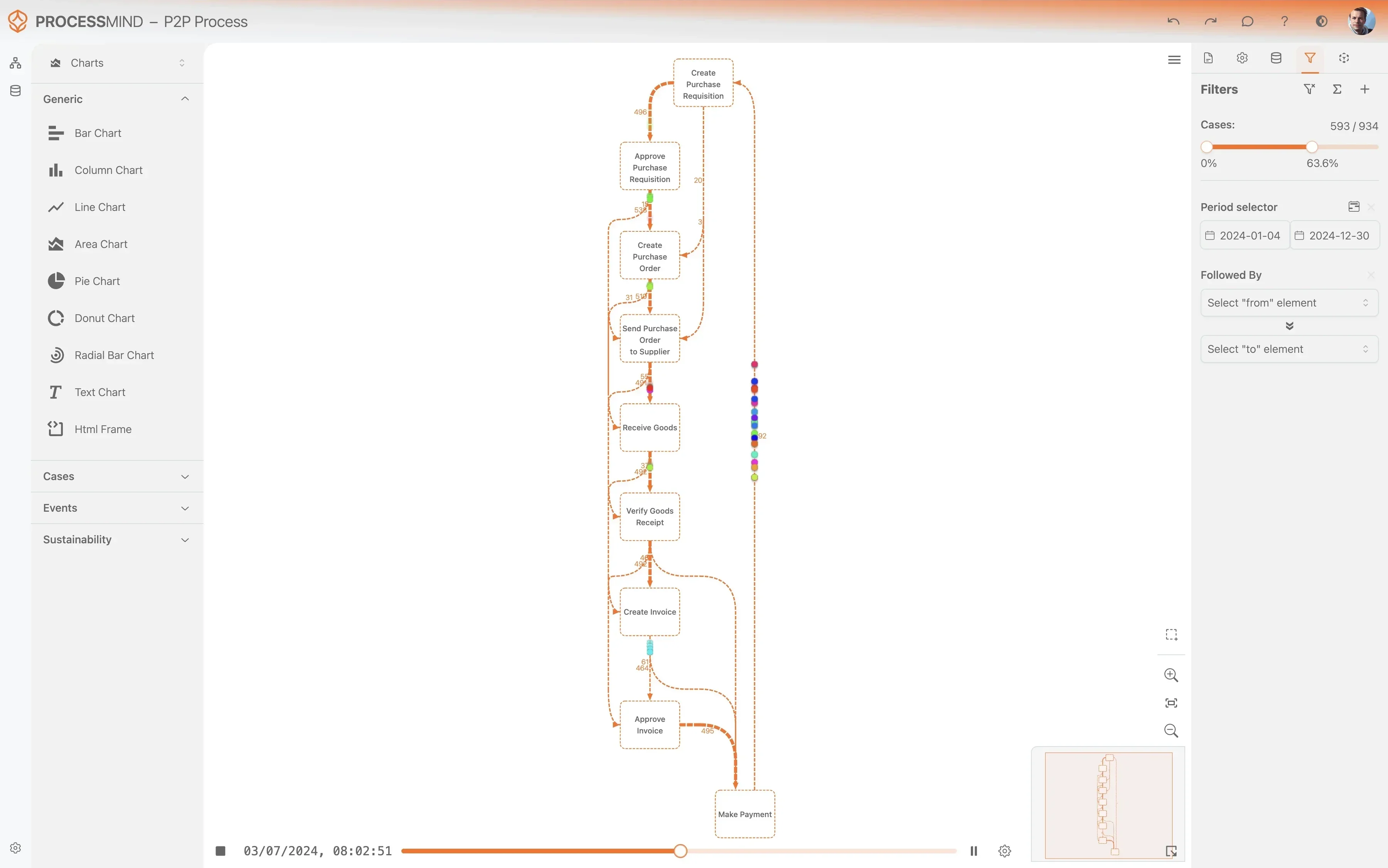
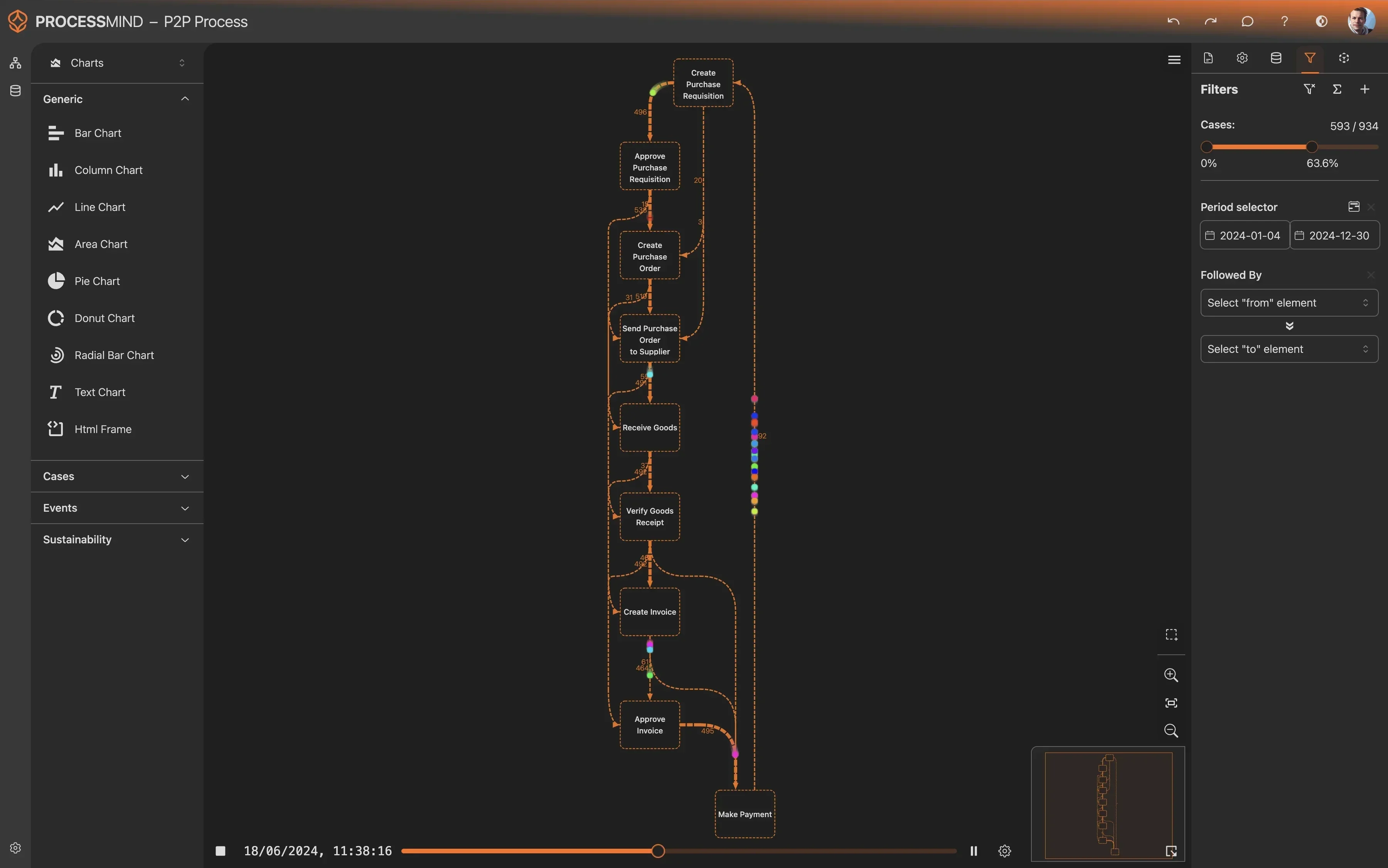
Process mining offers an unparalleled approach to understanding and improving your Purchase to Pay - Requisition process in SAP S/4HANA. Instead of relying on assumptions or anecdotal evidence, process mining uses event logs from your SAP system, specifically data from tables like EBAN (Purchase Requisition) and EBKN (Purchase Requisition Account Assignment), to reconstruct the actual end-to-end journey of every purchase requisition. This creates a visual, data-driven map of your process, revealing how requisitions genuinely flow, which steps are taken, and where delays occur.
This technology allows you to precisely analyze key performance indicators such as requisition cycle time, from creation to final approval or conversion to a purchase order. You can identify variants, discover hidden bottlenecks, and pinpoint deviations from your intended process flow. For instance, process mining can highlight if certain departments or requisition types consistently experience longer approval times, or if a significant number of requisitions are repeatedly rejected and resubmitted, indicating issues with initial submission quality or approval criteria.
Uncovering Key Improvement Areas
Through detailed process mining analysis of your Purchase to Pay - Requisition data, several critical improvement areas typically emerge:
- Bottleneck Identification: Pinpoint specific approval steps or individuals that consistently cause delays. Is it a particular manager, a specific value threshold, or a complex approval workflow path that slows down requisitions? Understanding these points allows for targeted interventions, such as adjusting approval matrices or providing additional training.
- Rework and Rerouting: Discover instances where requisitions are frequently rejected, amended, and resubmitted. This rework often indicates unclear requirements, insufficient initial data, or a confusing approval hierarchy. Reducing rework directly shortens the overall requisition cycle time and improves efficiency.
- Compliance Gaps: Verify adherence to internal purchasing policies and regulatory requirements. Process mining can detect unauthorized changes to requisitions, approvals bypassing standard procedures, or deviations in urgent requisition handling, ensuring your process is compliant and auditable.
- Automation Opportunities: Identify manual steps or repetitive tasks within the requisition lifecycle that could be automated, especially within the SAP Fiori apps for requisition management. This reduces human error, frees up resources, and accelerates processing.
- Process Variant Optimization: Analyze different process paths for similar requisitions. By comparing efficient paths with less efficient ones, you can identify best practices and standardize the most effective workflow across your organization, leveraging SAP S/4HANA's flexible configuration options.
Realizing Tangible Outcomes for Your Organization
Implementing improvements based on process mining insights for your Purchase to Pay - Requisition process yields significant, measurable benefits:
- Reduced Cycle Time: Accelerate the time from requisition creation to approval and subsequent purchase order creation, ensuring faster fulfillment of business needs. This directly contributes to a lower overall Purchase to Pay cycle time.
- Cost Savings: Minimize expedited shipping fees, reduce manual processing costs, and optimize inventory levels by ensuring timely procurement actions. Efficient requisition processing also helps in capturing early payment discounts.
- Enhanced Compliance: Strengthen adherence to internal controls and external regulations, reducing audit risks and improving governance within your SAP S/4HANA environment.
- Improved Efficiency: Streamline operations, reduce administrative burden, and free up procurement teams to focus on strategic sourcing rather than chasing approvals or correcting errors. This translates to higher productivity and better resource allocation.
- Better Strategic Decisions: Gain deeper insights into procurement patterns, demand forecasting, and supplier performance, enabling more informed purchasing strategies.
Getting Started with Purchase Requisition Optimization
Unlocking these benefits for your Purchase to Pay - Requisition process in SAP S/4HANA starts with understanding your current state. By applying process mining, you move beyond guesswork, gaining an objective, data-driven view of your operations. This empowers you to make targeted, effective changes that truly transform your procurement landscape. Explore how our template and guidance can help you quickly set up your analysis, identify critical insights, and embark on your journey toward a highly optimized and compliant requisition process. Embrace process optimization to reduce cycle time and enhance the effectiveness of your SAP S/4HANA investment.
The 6-Step Improvement Path for Purchase to Pay - Requisition
Download the Template
What to do
Access and download the pre-built Excel template specifically designed for Purchase to Pay Requisition data from SAP S/4HANA to ensure correct data structure.
Why it matters
Using the correct template ensures your data is properly formatted for analysis, saving time and preventing errors during the upload process.
Expected outcome
A ready-to-fill Excel template for Purchase Requisition data, aligned with ProcessMind's requirements.
Export Your Data
What to do
Extract 3-6 months of historical Purchase Requisition data from your SAP S/4HANA system, including tables like EBAN and EBKN, and populate the downloaded template.
Why it matters
Comprehensive historical data provides a robust foundation for identifying recurring patterns, process variations, and critical bottlenecks in your requisition process.
Expected outcome
A completed Excel template containing relevant Purchase Requisition event and attribute data from your SAP S/4HANA system.
Upload Your Dataset
What to do
Securely upload your populated Purchase Requisition data template to the ProcessMind platform. The system will automatically prepare your data for analysis.
Why it matters
A smooth and secure upload ensures your sensitive process data is handled with care, quickly moving you from data collection to insightful analysis without manual intervention.
Expected outcome
Your SAP S/4HANA Purchase Requisition data successfully ingested and processed, ready for immediate visualization and analysis.
Analyze Your Process
What to do
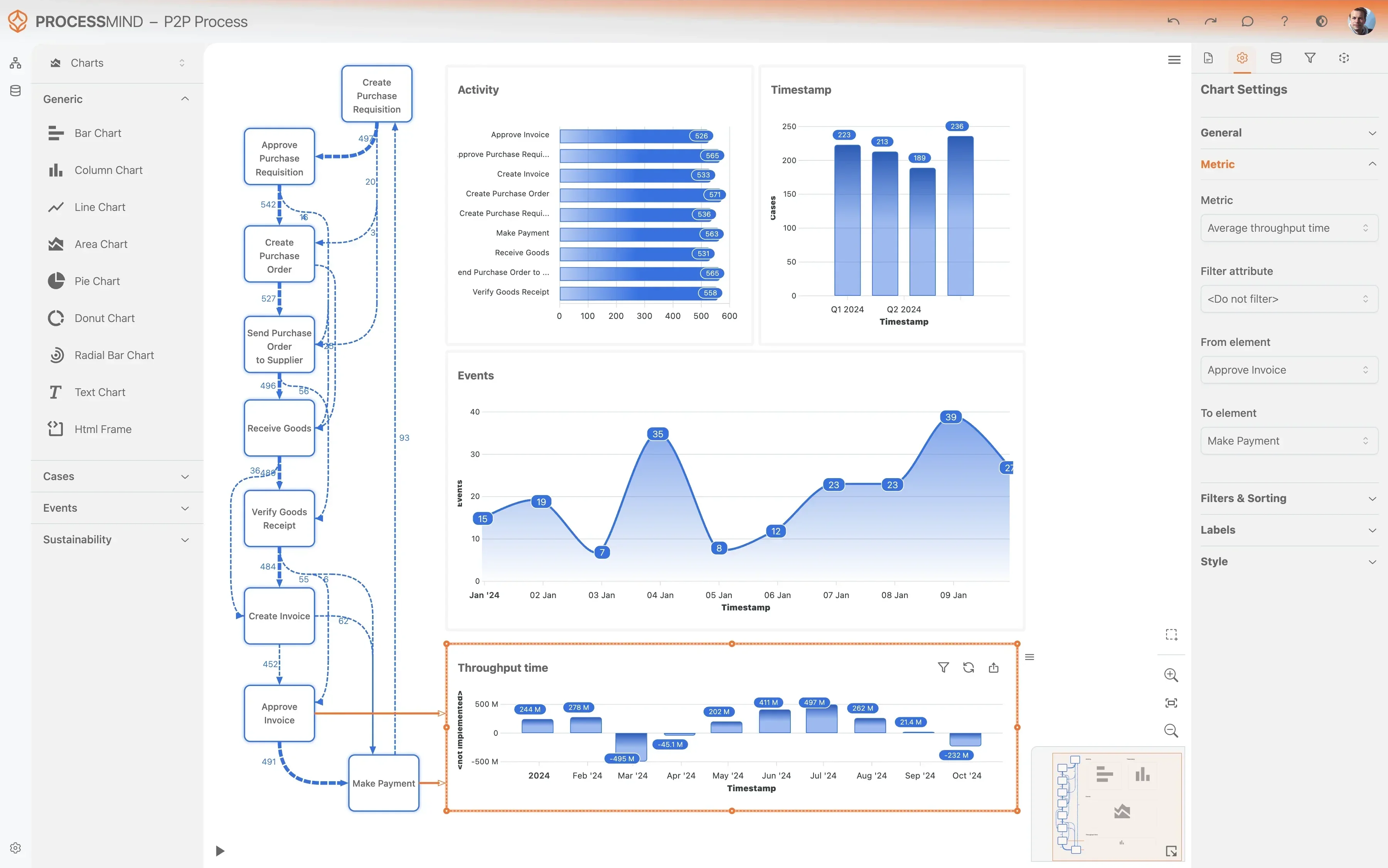
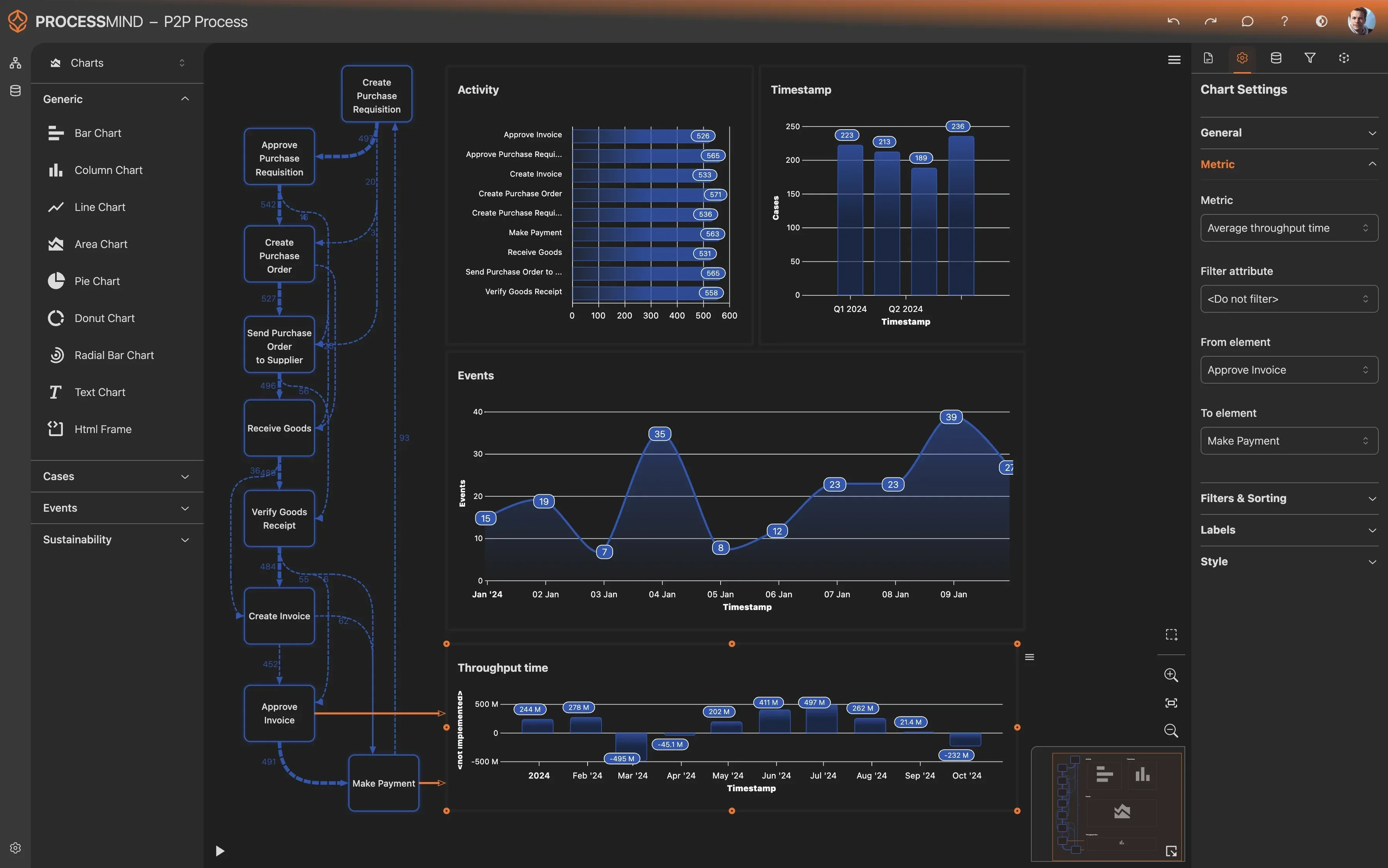
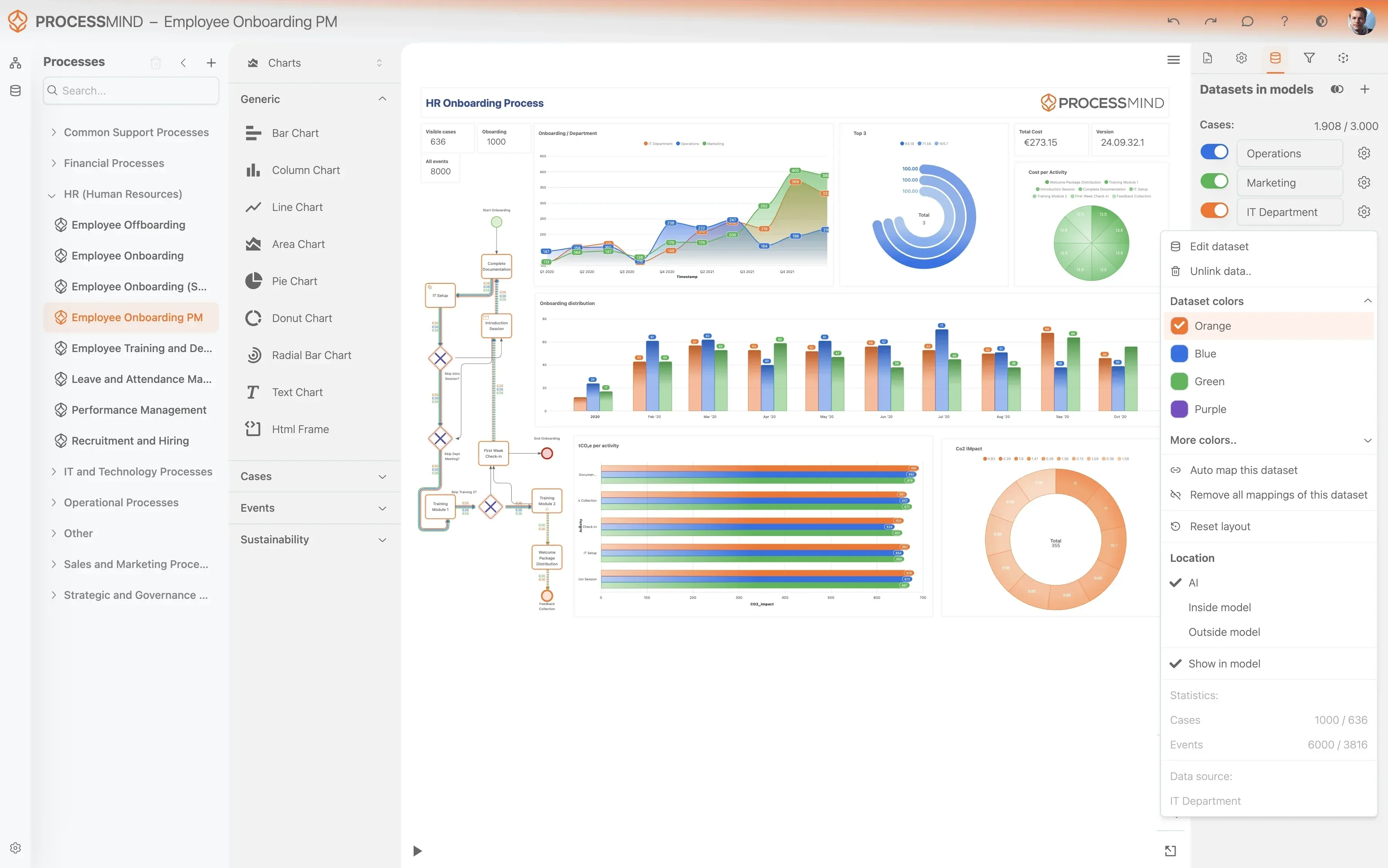
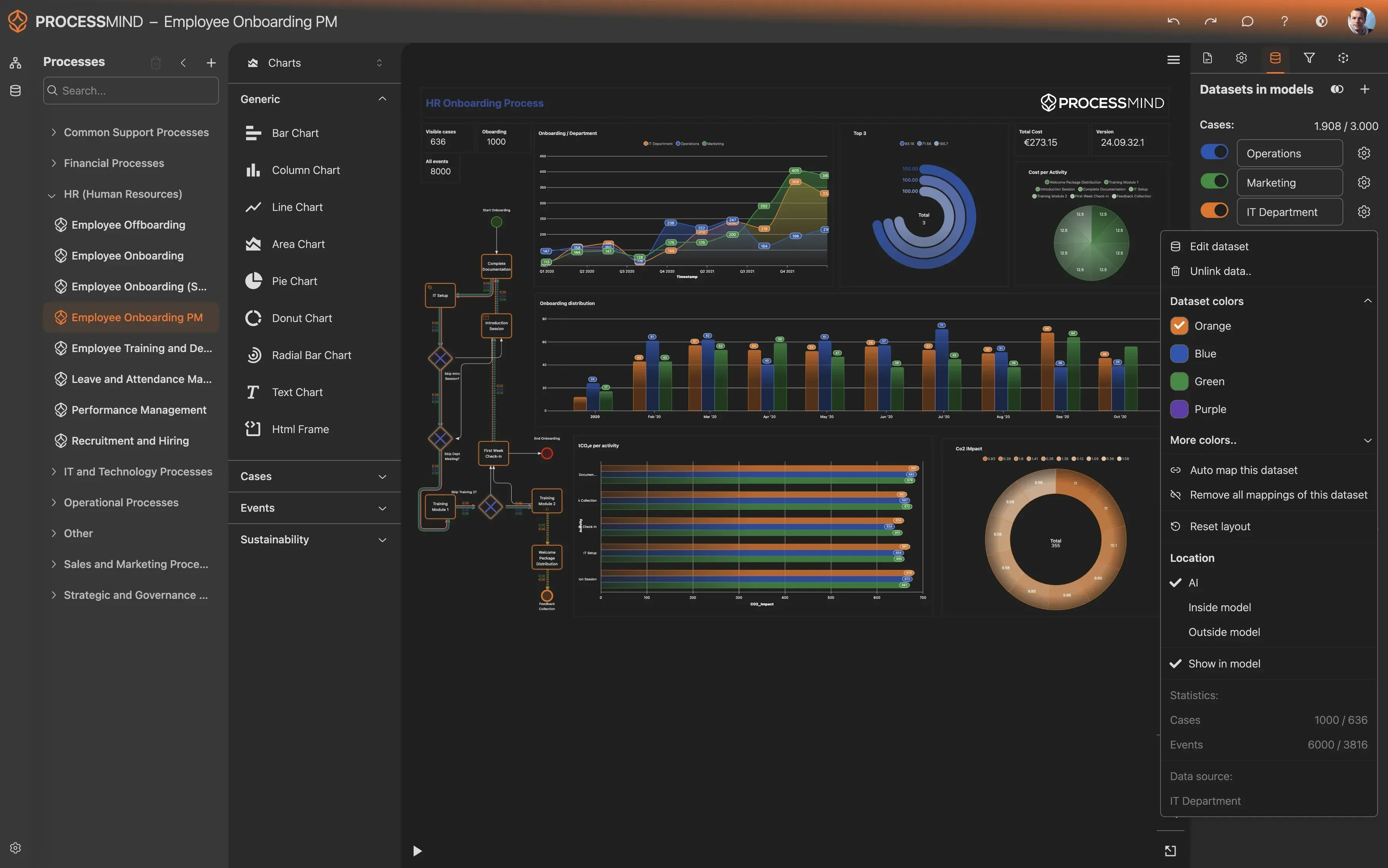
Explore the automatically generated dashboards and process maps for your Purchase Requisition process, leveraging AI-driven insights to uncover inefficiencies and compliance gaps.
Why it matters
Gaining clear visibility into your process execution helps you understand where delays occur, where compliance risks exist, and how resources are truly utilized.
Expected outcome
Identified bottlenecks, deviations, and optimization opportunities within your SAP S/4HANA Purchase Requisition workflow, supported by concrete data.
Implement Improvements
What to do
Prioritize and implement the identified improvement opportunities in your SAP S/4HANA Purchase Requisition process, such as optimizing approval workflows or Fiori app usage.
Why it matters
Translating insights into action leads directly to tangible benefits, improving process efficiency, reducing cycle times, and enhancing user satisfaction for requesters.
Expected outcome
Strategic changes deployed to your Purchase Requisition process, directly addressing previously identified inefficiencies and compliance issues.
Monitor Your Process
What to do
Periodically re-upload updated Purchase Requisition data to ProcessMind to track the impact of your implemented changes and ensure sustained improvement.
Why it matters
Continuous monitoring provides ongoing visibility into process performance, allowing for rapid detection of new issues and verification that improvements deliver expected value.
Expected outcome
Sustained optimization and measurable improvements in key performance indicators for your Purchase to Pay - Requisition process in SAP S/4HANA.
TYPICAL OUTCOMES
Achieve Efficiency and Cost Savings in Purchase Requisition
These outcomes represent the tangible improvements organizations typically experience by rigorously analyzing and optimizing their Purchase to Pay, Requisition process within SAP S/4HANA. By pinpointing bottlenecks and streamlining workflows, businesses can realize substantial operational benefits.
Average reduction in approval time
Streamline the requisition approval process, removing bottlenecks and reducing manual interventions. This leads to quicker approvals and faster initiation of purchasing activities.
Decrease in rework due to errors
Identify root causes of requisition changes, such as incomplete data or unclear requirements. Reducing amendments saves significant rework time and accelerates the overall P2P cycle.
Reduction in non-standard paths
Gain clear visibility into deviations from standard approval policies and workflows. This ensures requisitions adhere to internal rules, minimizing audit risks and rejection rates.
Lead time from req to PO creation
Optimize the end-to-end journey from requisition creation to purchase order generation. Expedite the procurement process to meet demand faster and improve supplier relationships.
More requisitions automated
Pinpoint opportunities to automate routine approval steps, reducing manual effort and processing costs. This frees up staff for more strategic tasks and accelerates throughput.
Results vary based on existing process maturity, data quality, and specific organizational context. The figures mentioned reflect common improvements observed across various implementations.
Recommended Data
FAQs
Frequently asked questions
Process mining visualizes your actual requisition workflows in SAP S/4HANA, revealing bottlenecks like slow approvals or constant rework. It identifies deviations from standard paths and areas where requisitions get stuck. This deep insight helps you understand the true performance and pain points of your procurement process.
By identifying inefficient routes and delays, process mining helps accelerate requisition approval cycles and shorten request to purchase order lead times. It highlights opportunities to reduce manual effort, minimize amendment rates, and decrease requisition rejection rates. This leads to a more streamlined and responsive procurement process.
You primarily need event log data from your SAP S/4HANA system, including the Purchase Requisition ID as the case identifier. Key fields typically include activity name, timestamp, and a unique identifier for each event. This data is extracted from relevant tables to reconstruct the complete process flow.
Initial data extraction and connection to a process mining tool can often be achieved within a few weeks, depending on system access and data readiness. The first insights and visualizations can usually be generated shortly after data ingestion. Subsequent analysis is iterative, building on the initial discoveries.
While basic understanding of your SAP S/4HANA data structure is helpful, modern process mining tools are designed for business users. They offer intuitive interfaces for visualizing and analyzing processes without requiring extensive coding skills. Some technical expertise may be beneficial for initial data connector setup.
Yes, process mining is excellent for ensuring adherence to purchasing policies. It can automatically detect instances where approvals bypass standard rules or where non-compliant routes are taken, providing clear evidence of deviations. This allows you to enforce policies more effectively and mitigate risks.
You can expect significant improvements in process speed, compliance, and cost efficiency. This includes faster requisition approvals, reduced rework, and enhanced adherence to policies. Ultimately, it leads to a better experience for requesters and more predictable procurement outcomes.
Process mining tools are adept at mapping all executed process variations, regardless of how many different approval workflows exist. It consolidates all event data, allowing you to see which paths are most common, which are slowest, and where variations occur. This helps in standardizing pathways or optimizing specific routes.
Stop P2P Requisition Delays: Optimize Your Workflow Now!
Streamline processes, cut lead times, and reduce cycle time by 30%.
No credit card required, setup in 5 minutes.