Improve Your Customer Service

Your 6-step guide to optimize Customer Service in ServiceNow CSM
Improve Your Customer Service

Optimize Customer Service in ServiceNow CSM for Peak Efficiency

Customer service processes often contain hidden inefficiencies, leading to service delays and lower customer satisfaction. Our platform helps you pinpoint exactly where requests get stuck, from initial contact to final resolution. Discover actionable insights to streamline workflows and deliver exceptional customer experiences, increasing overall efficiency and compliance.

Download our pre-configured data template and address common challenges to reach your efficiency goals. Follow our six-step improvement plan and consult the Data Template Guide to transform your operations.

Show detailed description

Why Optimizing Customer Service is Critical

In today's competitive landscape, your customer service operations are at the heart of customer satisfaction, loyalty, and ultimately, your brand's reputation. While ServiceNow CSM provides robust tools for managing customer interactions, hidden inefficiencies can significantly impact service quality, agent productivity, and your bottom line. Long resolution times, frequent escalations, and inconsistent service delivery not only frustrate customers but also inflate operational costs and strain agent resources. Understanding the true flow of a service request, from its initial contact to final closure, is paramount to identifying where valuable time and resources are being lost. Without deep insights into the actual process execution, efforts to improve Customer Service often lead to superficial changes rather than addressing the root causes of performance issues. The cost of these inefficiencies, including missed Service Level Agreements, increased customer churn, and agent burnout, can be substantial.

How Process Mining Unlocks Customer Service Efficiency

Process mining offers an unprecedented level of transparency into your Customer Service operations within ServiceNow CSM. By analyzing the event logs from tables like sn_customerservice_case, interaction, and task_sla, process mining reconstructs the complete, end-to-end journey of every service request. This allows you to visualize the actual process flow, not just the idealized one, revealing bottlenecks, deviations, and rework that often go unnoticed in standard reporting. You can trace each "Service Request" as a case, observing every activity from "Customer Contact Initiated" to "Service Request Closed." This detailed perspective helps you identify exactly why service requests get stuck, pinpointing activities like "Request Assigned to Agent" or "Agent Investigates Issue" that might be experiencing unexpected delays or leading to frequent reassignments. Process mining provides data-driven answers to questions like, "Why are some service requests frequently escalated internally?" or "What are the common patterns leading to repeated requests for information from customers?" It provides the factual basis for process optimization, highlighting areas where human intervention or system configurations create unnecessary friction in the customer journey.

Key Areas for Improvement Identified by Process Mining

Applying process mining to your ServiceNow CSM data will illuminate several critical areas ripe for optimization. You will gain clarity on the actual time spent in each stage of the customer service lifecycle, such as the duration between "Service Request Created" and "Request Categorized and Prioritized," or the handover time from "Agent Investigates Issue" to "Solution Proposed to Customer." This analysis often reveals:

  • Bottlenecks in resource allocation: Identifying where agents are overloaded or where specific types of requests consistently face delays in assignment or resolution.
  • Rework and re-keying: Discovering instances where service requests are repeatedly transferred between departments or agents, or where multiple
Customer Service Service Request Management Support Desk Client Relations SLA Optimization Resolution Time Agent Efficiency Customer Satisfaction

Common Problems & Challenges

Identify which challenges are impacting you

Customer service cases linger too long in the system, impacting customer satisfaction and potentially violating service level agreements. This leads to frustrated customers, increased operational costs due to prolonged agent engagement, and a backlog of unresolved issues.
ProcessMind uncovers bottlenecks in your ServiceNow CSM process, identifying exactly where service requests get stuck, whether during investigation, while awaiting customer information, or during internal handoffs. It provides data-driven insights to streamline workflows and accelerate resolution.

Service requests are frequently reassigned between agents or departments, increasing resolution time and frustrating customers who often have to repeat information. This inefficiency drives up operational costs, creates inconsistent service, and lowers customer trust.
ProcessMind visualizes all reassignments and internal escalations within ServiceNow CSM, revealing the true paths cases take. It pinpoints where inefficient handoffs occur and why, enabling optimized routing rules, improved knowledge sharing, and better agent training.

Key Service Level Agreements (SLAs) for response and resolution are consistently missed, leading to potential penalties, customer dissatisfaction, and damage to your brand reputation. Without clear insights, identifying the true root causes of these breaches is a significant challenge.
ProcessMind provides real-time visibility into SLA performance across your ServiceNow CSM processes, highlighting specific activities, stages, or agents that frequently cause breaches. It allows you to proactively address issues and ensure compliance with service commitments.

Cases are frequently escalated internally without clear justification, leading to increased resource utilization, higher costs, and delayed resolution for customers. This often indicates a lack of initial agent empowerment, insufficient training, or unclear process guidelines.
ProcessMind maps the full escalation journey within ServiceNow CSM, identifying patterns and triggers for unnecessary internal escalations. It helps optimize knowledge bases, refine initial triage processes, and enhance agent training to reduce these costly occurrences.

Agents often perform redundant tasks, re-request information already provided, or backtrack in the process, leading to wasted effort and increased handling time per case. This directly impacts operational efficiency and creates a poor customer experience.
ProcessMind reveals deviations from the ideal process flow in ServiceNow CSM, pinpointing exactly where rework, looping activities, or duplicate actions occur. It helps in standardizing procedures, improving initial data capture, and enhancing agent training to eliminate these inefficiencies.

Agents follow varying paths to resolve similar service requests, leading to unpredictable outcomes, compliance risks, and an inability to scale efficient practices across your customer service team. This makes performance benchmarking and continuous improvement efforts challenging.
ProcessMind automatically discovers all process variants in ServiceNow CSM, from the most common to infrequent deviations. It highlights where and why inconsistencies arise, enabling better training, targeted automation opportunities, and adherence to best practices for consistent service delivery.

Service requests are frequently stalled while agents wait for customers to provide necessary information, significantly extending resolution times and lowering customer satisfaction. The management of these 'waiting for customer' states often proves to be inefficient.
ProcessMind identifies the stages and activities where cases frequently pause, specifically highlighting delays attributed to 'Information Requested from Customer' in ServiceNow CSM. It helps optimize communication strategies and proactive information gathering to minimize these frustrating waits.

Service requests are often miscategorized or incorrectly prioritized at the initial intake stage, leading to misrouting, delays for critical cases, and inefficient resource allocation. This impacts overall service quality and resource utilization.
ProcessMind analyzes the initial categorization and prioritization activities in ServiceNow CSM against actual resolution paths and outcomes. It uncovers patterns of misclassification, enabling improvements in intake forms, automated routing, and agent training for more effective initial triage.

Many customer contacts require multiple interactions or follow-ups to resolve, indicating that issues are not being fully addressed during the initial interaction. This increases operational costs, frustrates customers, and ties up agent resources.
ProcessMind tracks the entire journey of a service request in ServiceNow CSM, revealing cases that involve multiple 'Customer Contact Initiated' or 'Information Requested from Customer' activities before final resolution. It helps identify root causes for non-First Contact Resolution.

Even after a service request is marked as 'Resolved,' it often takes an unnecessarily long time for the case to be formally 'Closed,' leaving resources tied up and skewing performance metrics. This can significantly impact reporting accuracy and resource planning.
ProcessMind precisely measures the time elapsed between 'Service Request Resolved' and 'Service Request Closed' activities in ServiceNow CSM. It identifies the reasons for these post-resolution delays, allowing for faster cleanup processes and more accurate performance reporting.

Certain communication channels consistently lead to longer resolution times, more reworks, or lower customer satisfaction, yet their specific impact on the overall process isn't clearly understood. This affects resource planning and channel strategy effectiveness.
ProcessMind correlates 'Communication Channel' attributes with key process outcomes, such as resolution time, reassignment frequency, and customer sentiment, within ServiceNow CSM. It highlights which channels are most efficient and where improvements are needed for others to enhance service delivery.

Certain types of service requests or product categories consistently lead to longer resolution times, higher escalation rates, or lower customer satisfaction, pointing to underlying gaps in agent knowledge or training effectiveness. This impacts service quality and cost.
ProcessMind links specific 'Service Request Type' or 'Product/Service Category' with process inefficiencies, agent performance, and escalation rates in ServiceNow CSM. This data reveals areas where targeted training, knowledge base enhancements, and skill development are most needed for your support team.

Typical Goals

Define what success looks like

This goal aims to significantly decrease the time it takes for customer service requests to be resolved in ServiceNow CSM. Shorter resolution times directly lead to higher customer satisfaction, improved operational efficiency, and a stronger brand reputation. Businesses can expect reduced customer churn and lower support costs.
ProcessMind maps the complete end-to-end journey of every service request, identifying specific activities or stages that cause delays. By analyzing cycle times for each step, including agent investigation and customer responses, ProcessMind pinpoints bottlenecks and recommends process changes to cut resolution times, potentially by 15-25%.

Frequent transfers between agents or departments for a single service request create frustration for customers and inflate operational costs. Achieving this goal means a more streamlined customer experience, reduced redundant information gathering, and increased agent productivity within ServiceNow CSM.
ProcessMind visualizes all agent reassignments and escalations within the service request lifecycle. It identifies common patterns of handoffs, revealing root causes such as insufficient initial agent training or unclear routing rules. By exposing these inefficiencies, ProcessMind helps streamline assignment logic, aiming to cut handoffs by 10-20%.

Meeting Service Level Agreement, SLA, targets is crucial for customer trust and avoiding penalties. This goal focuses on ensuring that customer service requests in ServiceNow CSM are resolved within agreed-upon timeframes, thereby enhancing customer satisfaction and reinforcing service quality.
ProcessMind precisely tracks the duration of each activity against defined SLA targets, highlighting every instance of non-compliance. It uncovers the specific steps or deviations that lead to SLA breaches, such as delays in approvals or information requests. This visibility allows organizations to implement targeted interventions, boosting SLA adherence by up to 30%.

Excessive internal escalations indicate process breakdowns, often resulting from a lack of clear procedures, agent knowledge gaps, or inefficient routing. Reducing these escalations translates to faster issue resolution, lower operational overhead, and a more efficient customer service operation in ServiceNow CSM.
ProcessMind provides a clear view of all escalation paths and their triggers within the service request process. It helps identify common scenarios leading to escalations, whether they are specific request types, agent performance issues, or bottlenecks in dependent departments. ProcessMind's insights enable organizations to refine processes and agent training, reducing escalations significantly.

Rework and redundant activities consume valuable time and resources, directly impacting the efficiency and cost-effectiveness of customer service operations in ServiceNow CSM. Achieving this goal means agents can focus on productive work, leading to faster resolutions and higher job satisfaction.
ProcessMind precisely identifies and quantifies instances of repeated activities or loops within service request processes. By visualizing actual process flows, it highlights where information is re-entered or tasks are unnecessarily duplicated, often revealing underlying system issues or process design flaws. ProcessMind helps streamline workflows to remove these inefficiencies, saving substantial operational costs.

Inconsistent execution of customer service processes can lead to varied service quality, unpredictable resolution times, and compliance risks within ServiceNow CSM. This goal aims to establish and enforce a consistent, optimal pathway for handling all service requests, ensuring predictable outcomes and high-quality service delivery.
ProcessMind automatically discovers the true process variations that exist in real-world execution, contrasting them against ideal or prescribed paths. It highlights deviations, skipped steps, or unauthorized workarounds. By providing this objective view, ProcessMind enables organizations to identify where standardization is breaking down and enforce best practices across all customer interactions.

Delays in customer service often stem from agents waiting for information from the customer, causing frustrating back-and-forth communication. Expediting this information retrieval process in ServiceNow CSM will significantly reduce overall resolution times and improve the efficiency of the entire support workflow.
ProcessMind visualizes the specific points in the customer service journey where information is requested from the customer and how long agents wait for responses. It can highlight patterns where certain types of requests or agents experience longer wait times, helping identify opportunities for proactive information gathering or improved communication strategies. ProcessMind helps cut these waiting periods, accelerating the entire process.

Accurate and consistent categorization of service requests is foundational for efficient routing, resource allocation, and reporting in ServiceNow CSM. This goal focuses on improving the precision of how requests are classified, ensuring they reach the right agent or department swiftly and are handled appropriately from the start.
ProcessMind analyzes the journey of service requests post-categorization, revealing instances where initial categorization leads to frequent reassignments or escalations, indicating inaccuracies. It can identify patterns between initial categories and subsequent rework or delays. By correlating categorization with downstream efficiency, ProcessMind helps refine categorization rules and agent training, improving first-pass accuracy.

Resolving a customer's issue during their initial contact is a key driver of customer satisfaction and operational cost savings in ServiceNow CSM. This goal aims to empower agents to address and close requests promptly without further interactions, significantly enhancing the customer experience and agent efficiency.
ProcessMind identifies service requests that require multiple interactions versus those resolved on first contact, and explores the process paths associated with each. It reveals factors contributing to non-first contact resolution, such as missing agent knowledge or inefficient access to information. ProcessMind's insights enable targeted improvements to agent tools and training, boosting FCR rates by 5-10%.

Delays in formally closing service requests even after they are functionally resolved can skew performance metrics, tie up resources, and prevent accurate reporting in ServiceNow CSM. This goal focuses on streamlining the final steps of the process, ensuring timely and efficient administrative closure.
ProcessMind precisely measures the time elapsed between a service request being marked as 'resolved' and its ultimate 'closure'. It highlights bottlenecks in the post-resolution workflow, such as pending surveys or administrative tasks that cause unnecessary delays. ProcessMind helps identify opportunities for automation or process adjustments to accelerate this crucial final step, improving data accuracy and efficiency.

Inefficient communication, whether internal or external, can significantly extend the time it takes to resolve customer service requests in ServiceNow CSM. This goal focuses on streamlining communication flows to minimize unnecessary waiting periods and ensure timely information exchange, leading to faster service delivery.
ProcessMind maps out all communication touchpoints within the service request lifecycle, from initial customer contact to agent-to-agent interactions. It identifies specific delays caused by waiting for internal responses or external customer feedback. By visualizing communication patterns and their impact on cycle times, ProcessMind helps optimize channels and processes to significantly reduce these communication-induced delays.

The 6-Step Improvement Path for Customer Service

1

Download the Template

What to do

Obtain the pre-built Excel template specifically designed for Customer Service in ServiceNow CSM to ensure your data is structured correctly.

Why it matters

Using the correct template streamlines data preparation, ensuring accurate and consistent inputs for a reliable process analysis.

Expected outcome

A ready-to-fill Excel template for Customer Service data from ServiceNow CSM.

WHAT YOU WILL GET

Uncover True Customer Service Paths in ServiceNow

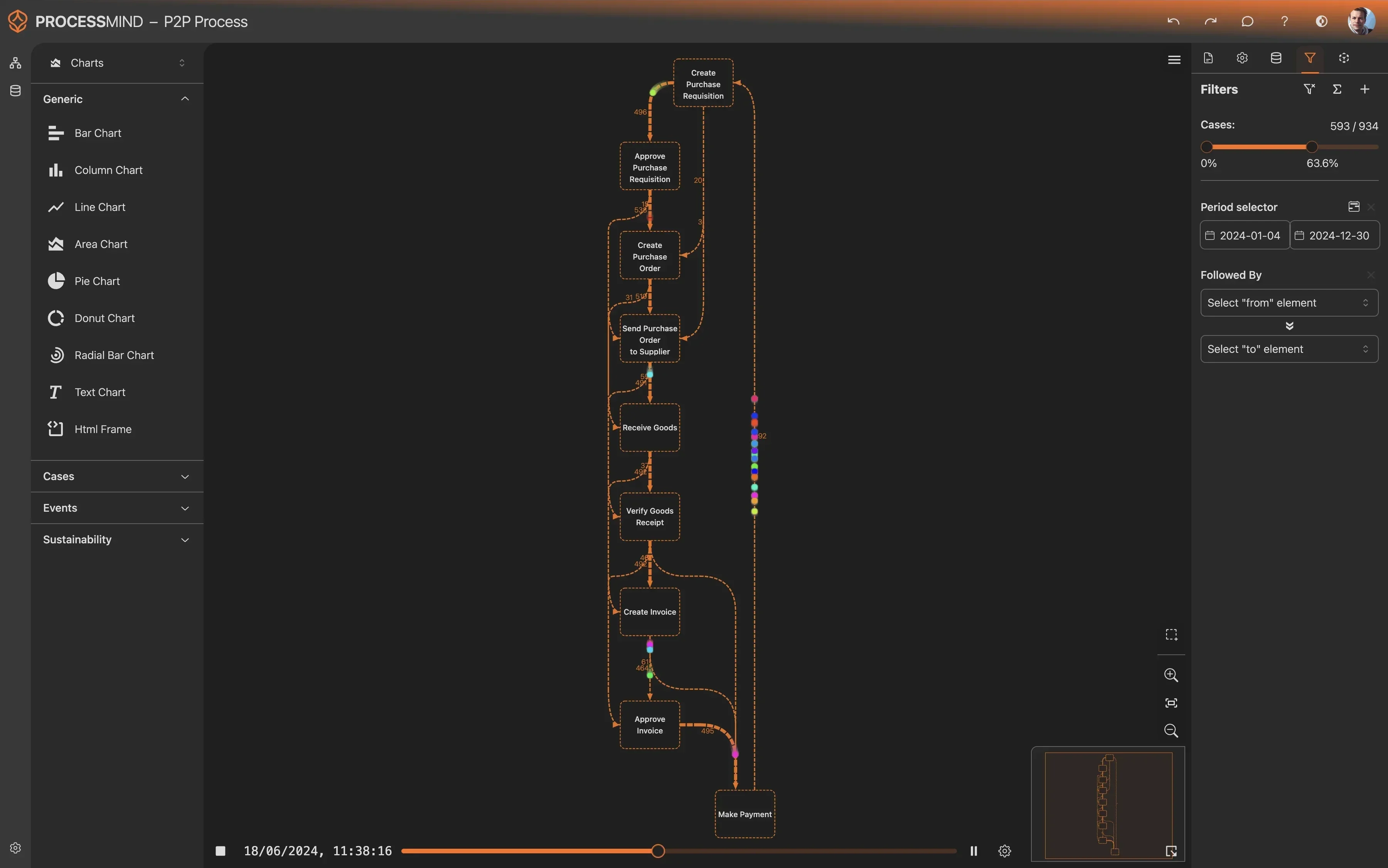
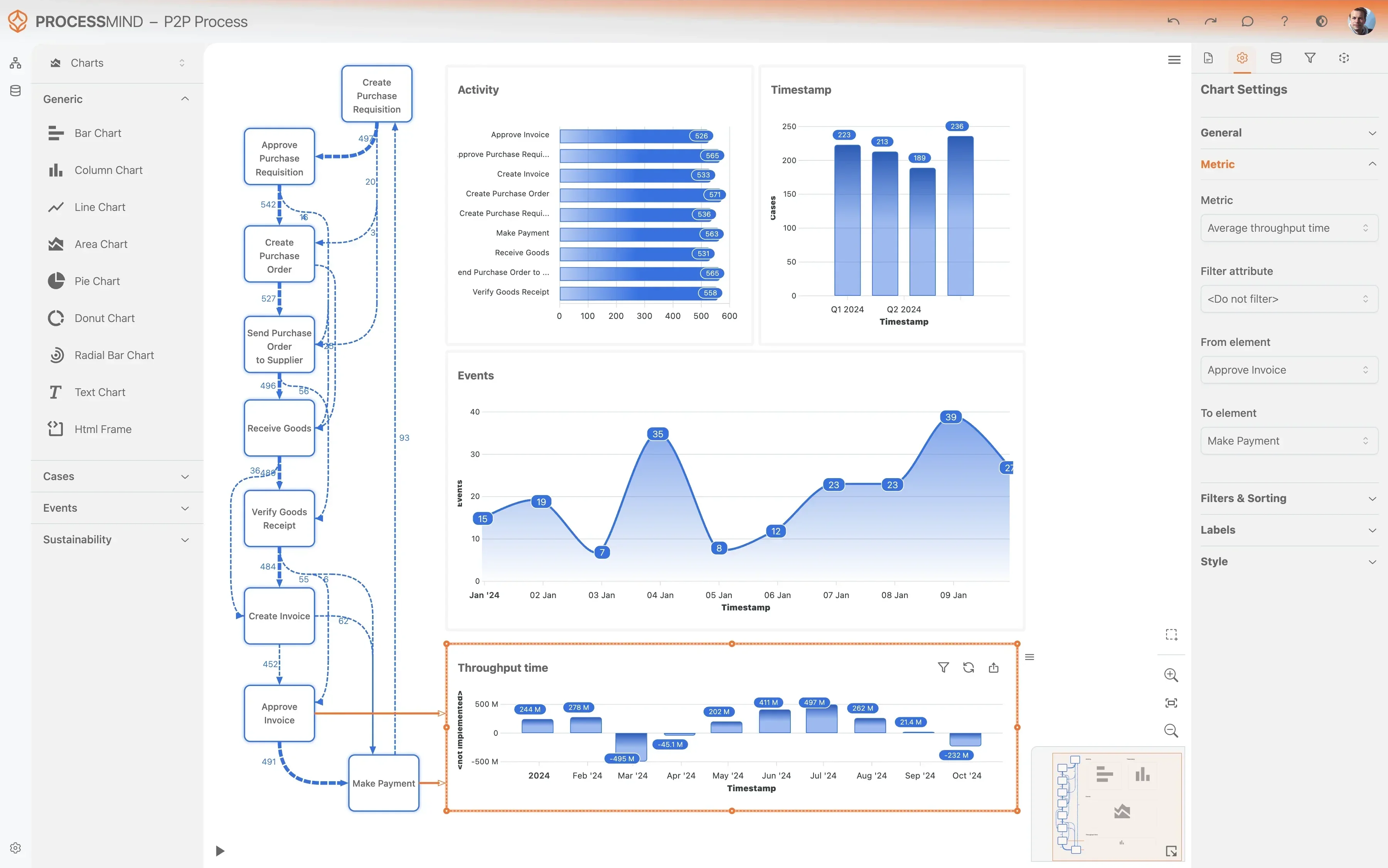
ProcessMind visualizes every step of your customer service journey in ServiceNow CSM. Gain deep insights into how requests flow, identifying precisely where delays occur and service quality falters.
  • Visualize end-to-end customer service flow
  • Pinpoint service request bottlenecks fast
  • Uncover root causes of delays and escalations
  • Optimize ServiceNow CSM for better efficiency
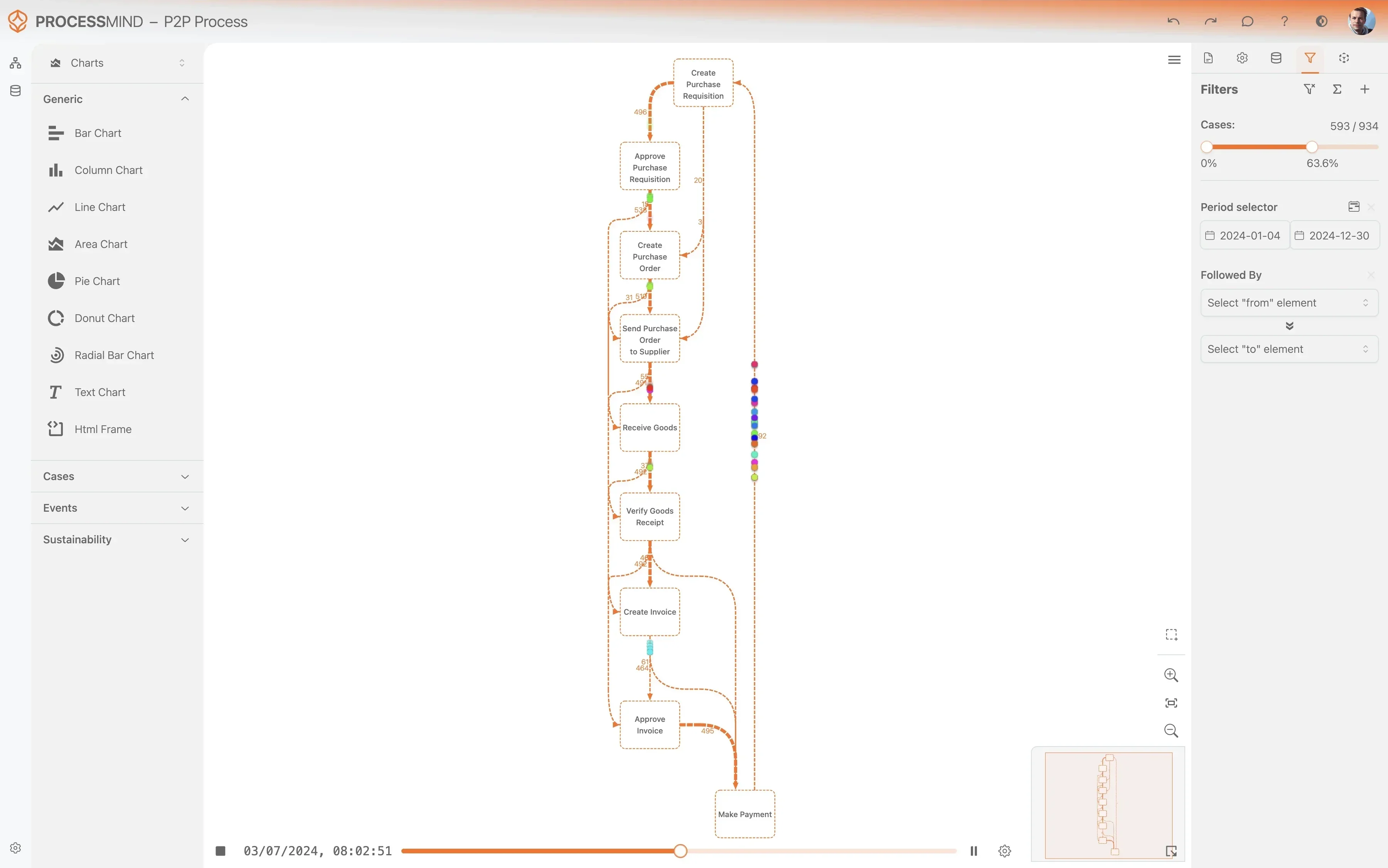
Discover your actual process flow
Identify bottlenecks and delays
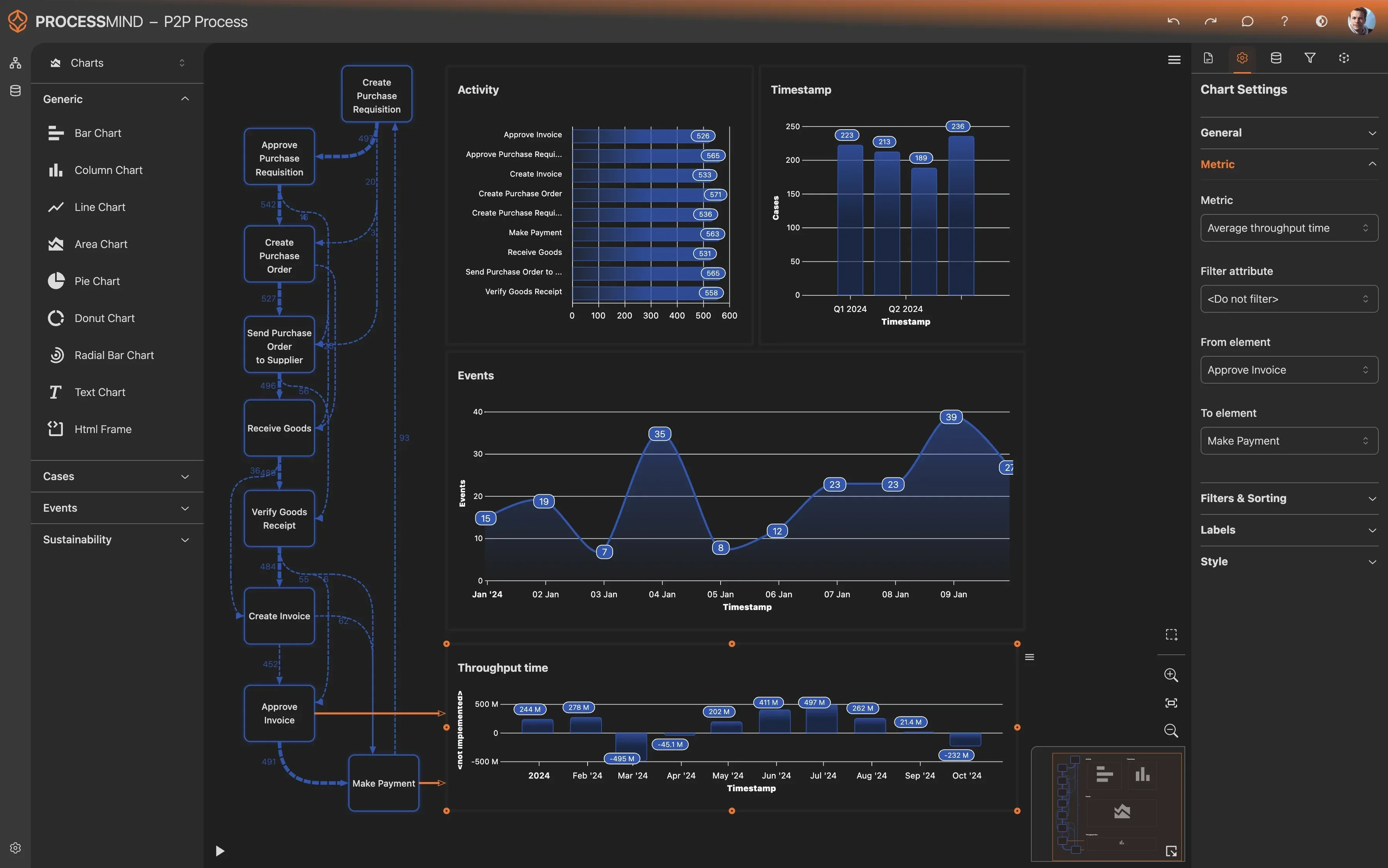
Analyze process variants
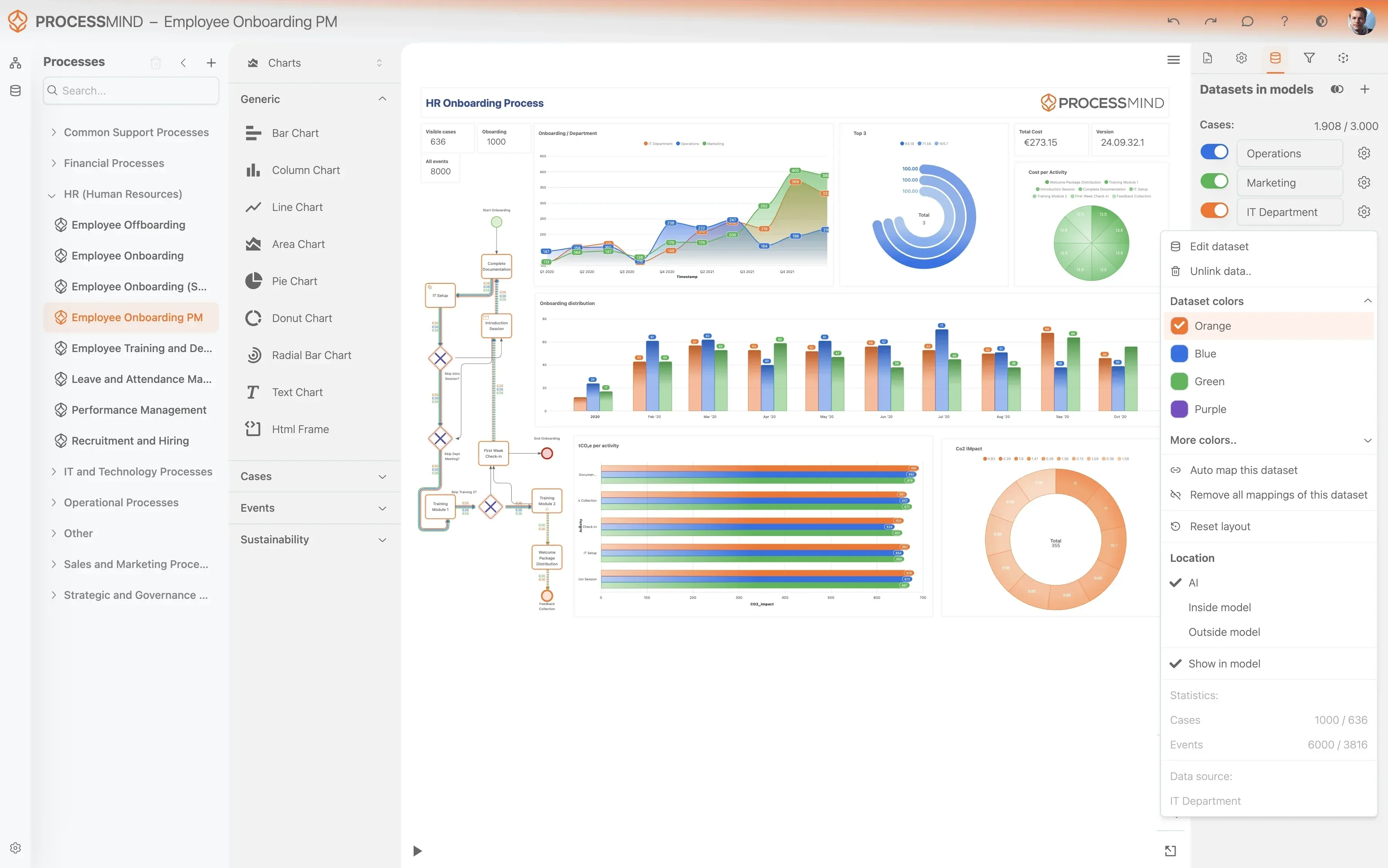
Design your optimized process

TYPICAL OUTCOMES

Realize Enhanced Customer Service Efficiency

These outcomes illustrate the tangible improvements organizations typically achieve by optimizing their Customer Service processes using process mining with ServiceNow CSM data, focusing on service request workflows.

0 %
Faster Resolution Times

Reduction in average service request cycle time

Streamline the end-to-end service request process, identifying and eliminating bottlenecks to significantly reduce the time it takes to resolve customer issues.

0 %
Higher SLA Adherence

Increase in meeting critical service targets

Ensure more service requests are resolved within their defined Service Level Agreement targets, leading to improved customer satisfaction and regulatory compliance.

0 %
Fewer Agent Handoffs

Decrease in unnecessary transfers

Reduce the number of times a service request changes hands between agents, improving efficiency and ensuring customers get a quicker, more consistent experience.

0 %
Increased FCR Rate

More issues resolved on first contact

Identify and address root causes preventing first contact resolution, empowering agents to solve more issues during the initial interaction and reducing customer effort.

0 %
Fewer Internal Escalations

Reduction in case transfers to specialists

Uncover why and when internal escalations occur, enabling targeted training or process changes to resolve issues at lower tiers and reduce operational costs.

0 days
Faster Case Closure

Accelerated post-resolution administrative time

Shorten the time between a service request being resolved and officially closed, optimizing administrative tasks and improving data accuracy and system hygiene.

Results vary based on process complexity and data quality. These figures represent typical improvements observed across implementations.

FAQs

Frequently asked questions

Process mining identifies bottlenecks in service request resolution, pinpoints frequent agent handoffs, and uncovers root causes for SLA breaches. It visualizes the actual process flow, revealing hidden inefficiencies and compliance gaps within your customer service operations. This clarity allows you to make data-driven decisions for improvement.

By analyzing event logs, process mining identifies specific steps or activities that cause delays, such as excessive internal escalations or waiting for customer information. It quantifies the impact of these bottlenecks across different service request types. This enables focused efforts to streamline workflows and reduce overall resolution times.

You primarily need event logs from your ServiceNow CSM module. This includes a case identifier, an activity name, and a timestamp for each event. Optionally, you can include attributes like agent ID, case category, or resolution status for deeper analysis and enriched insights.

Initial data extraction and model setup can typically be completed within a few weeks, depending on data availability and complexity. The first actionable insights can often be gained shortly after the initial model is built and validated. Continuous monitoring then provides ongoing optimization opportunities.

You can expect significant reductions in average service request resolution times, fewer agent handoffs, and a higher critical SLA adherence rate. Specific improvements often include decreasing internal escalations, increasing first contact resolution rates, and standardizing service process execution. These lead to enhanced customer satisfaction and operational efficiency.

Yes, process mining can highlight deviations from your predefined process paths and standard operating procedures. It helps identify inconsistencies in service process execution and flags instances where critical steps might be skipped or executed out of order. This ensures greater adherence to internal policies and regulatory requirements.

While an understanding of your ServiceNow CSM data structure is beneficial for data extraction, many process mining tools offer user-friendly interfaces. Business users can interpret the visual process maps and insights once the initial data connection and model are configured. Specialized process mining consultants can also assist with the initial setup.

Process mining can reveal common paths agents take for specific request types, highlighting both best practices and deviations. By identifying where agents struggle, take inefficient routes, or deviate from standard procedures, it can inform targeted training programs and improvements to your knowledge base. This helps standardize agent performance and elevate service quality.

Unlock Peak Customer Service Efficiency Today

Boost customer satisfaction and achieve 80% first-contact resolution.

Start Your Free Trial

No credit card required. Get started in minutes.