Improve Your Warehouse Management

Select a process
Choose a process to continue working in your connected workspace.
Optimize Körber WMS Warehouse Management
Effectively managing warehouse operations can be complex, often leading to hidden inefficiencies and missed compliance targets. Our platform helps you pinpoint exact bottlenecks and optimize resource utilization. It ensures smooth material flow, transforming your operations into a highly efficient and accurate process.
Download our pre-configured data template and address common challenges to reach your efficiency goals. Follow our six-step improvement plan and consult the Data Template Guide to transform your operations.
Show detailed description
Why Optimize Warehouse Management in Körber WMS?
Efficient warehouse management is the backbone of successful supply chain operations. In today's fast-paced market, any inefficiency within your warehouse can ripple through the entire business, leading to increased operational costs, missed delivery deadlines, and ultimately, dissatisfied customers. Even with a powerful system like Körber WMS, complexities arise from managing vast inventories, diverse product types, and intricate material flows. Manual reporting and traditional analytics often provide only a static snapshot, failing to reveal the true, dynamic behavior of your warehouse processes. This lack of transparency can hide critical bottlenecks, leading to suboptimal resource allocation, extended cycle times, and a constant struggle to meet service level agreements.
Optimizing your Warehouse Management, especially within the Körber WMS environment, is not just about cutting costs, it is about enhancing agility, accuracy, and overall customer satisfaction. Understanding the complete journey of every warehouse order, from its creation to its final shipment, is paramount. Without this end-to-end visibility, efforts to improve efficiency can be misdirected, potentially solving symptoms rather than root causes.
How Process Mining Transforms Körber WMS Analysis
Process mining offers a revolutionary approach to understanding and improving your Warehouse Management operations by providing an X-ray view into your Körber WMS data. Instead of relying on assumptions or aggregated reports, process mining reconstructs every single process instance based on your system's event logs. For each Warehouse Order, it meticulously traces activities like "Warehouse Order Created," "Inbound Delivery Notification Received," "Goods Arrived at Dock," "Goods Received and Counted," "Quality Inspection Performed," "Putaway Task Created," "Goods Put Away in Storage," "Picking Task Created," "Goods Picked from Storage," "Packing Initiated," "Goods Packed," "Staging for Shipment," "Loading onto Carrier," and "Shipment Dispatched," all the way to "Warehouse Order Completed." This granular view allows you to see the actual paths taken by your orders, rather than just the planned ones.
This powerful analytical capability helps you visualize bottlenecks in material flow, identify deviations from standard operating procedures, and quantify the impact of specific activities on your overall cycle time. By leveraging your Körber WMS data, process mining moves beyond mere reporting, offering actionable insights into complex process patterns and variations that are invisible to the naked eye. This is crucial for how to improve Warehouse Management effectiveness.
Key Improvement Areas and Insights
With process mining, you can pinpoint exactly where your Körber WMS processes are underperforming. You might discover:
- Putaway Bottlenecks: Uncover delays between "Goods Received and Counted" and "Goods Put Away in Storage," indicating issues with resource availability, storage location allocation, or task prioritization.
- Picking Inefficiencies: Identify suboptimal picking routes or excessive travel times, suggesting opportunities to optimize warehouse layout or picking strategies. You can also analyze variations in "Goods Picked from Storage" based on different operator IDs or equipment used.
- Packing and Staging Delays: Detect prolonged waiting times between "Goods Packed" and "Staging for Shipment," highlighting capacity constraints or coordination issues in the packing and staging areas.
- Rework and Non-Compliance: Visualize instances where orders deviate from the ideal path, such as additional quality checks or re-packaging, indicating potential issues in previous steps or a lack of compliance.
By focusing on these areas, you gain clear, data-driven insights into how to reduce Warehouse Management cycle time, optimize resource utilization, and eliminate non-value-added activities within your Körber WMS environment.
Expected Outcomes and Measurable Benefits
Implementing process optimization strategies informed by process mining in your Körber WMS can yield significant and measurable benefits:
- Reduced Operational Costs: By eliminating waste, optimizing resource allocation, and streamlining processes, you can achieve substantial cost savings in labor, equipment, and inventory management.
- Faster Order Fulfillment: Identify and remove bottlenecks, shortening the end-to-end cycle time for warehouse orders, leading to quicker deliveries and improved customer satisfaction.
- Enhanced Accuracy and Compliance: Gain insights into process deviations and ensure adherence to standard operating procedures and service level agreements, minimizing errors and improving overall data quality.
- Optimized Resource Utilization: Better understand how your human resources and equipment are being used, allowing for more effective scheduling and deployment.
- Improved Decision-Making: Move beyond anecdotal evidence to make data-driven decisions that lead to sustainable process improvements and a more agile supply chain.
Getting Started with Warehouse Optimization
Unlock the full potential of your Körber WMS operations. By applying process mining, you can transform your Warehouse Management from a reactive system to a proactive, highly efficient, and accurate operation. Empower your team with the insights needed to continuously optimize processes, reduce costs, and deliver exceptional service, making your warehouse a true competitive advantage.
The 6-Step Improvement Path for Warehouse Management
Download the Template
What to do
Get the specialized Excel template designed for Warehouse Management data extraction from Körber WMS. This template ensures your data is correctly structured for analysis.
Why it matters
A standardized template simplifies data preparation, reducing errors and ensuring that all necessary process information is captured accurately from your WMS.
Expected outcome
A ready-to-use data template tailored for Körber WMS warehouse operations.
Export Your Data
What to do
Extract 3-6 months of historical Warehouse Order data from your Körber WMS. Populate the downloaded template with actual process events, activities, and relevant attributes.
Why it matters
Comprehensive historical data provides a robust foundation for identifying recurring issues and understanding process variations within your warehouse operations.
Expected outcome
A populated data template containing a detailed history of your warehouse orders and activities.
Upload Your Dataset
What to do
Upload your filled data template to ProcessMind. The system securely ingests your Körber WMS data and automatically begins the analysis, preparing it for visualization.
Why it matters
Seamless data upload and automated processing minimize manual effort and expedite the time to insight, letting you focus on improvement, not data wrangling.
Expected outcome
Your Körber WMS data securely uploaded and ready for analysis in ProcessMind.
Analyze Your Process
What to do
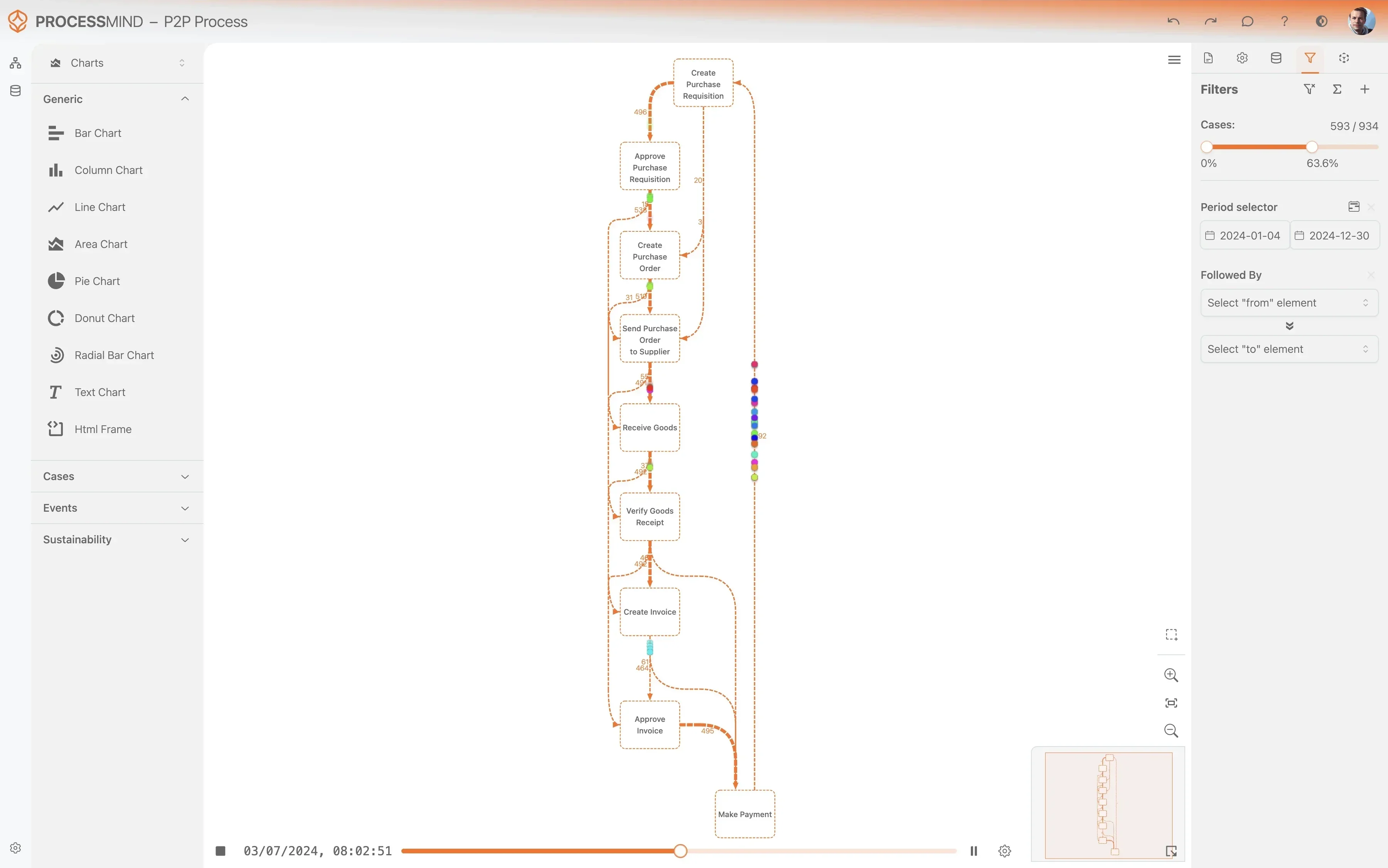
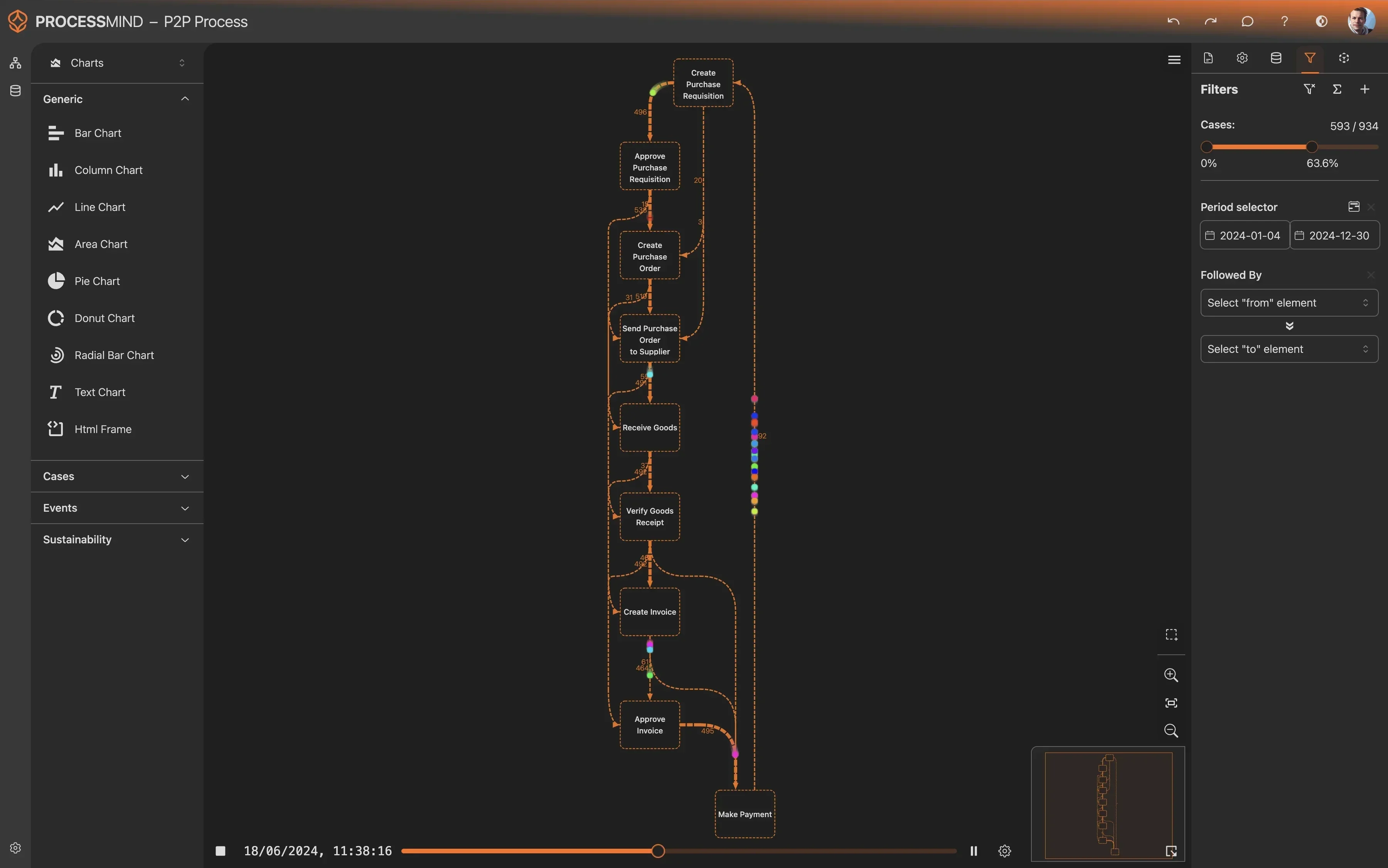
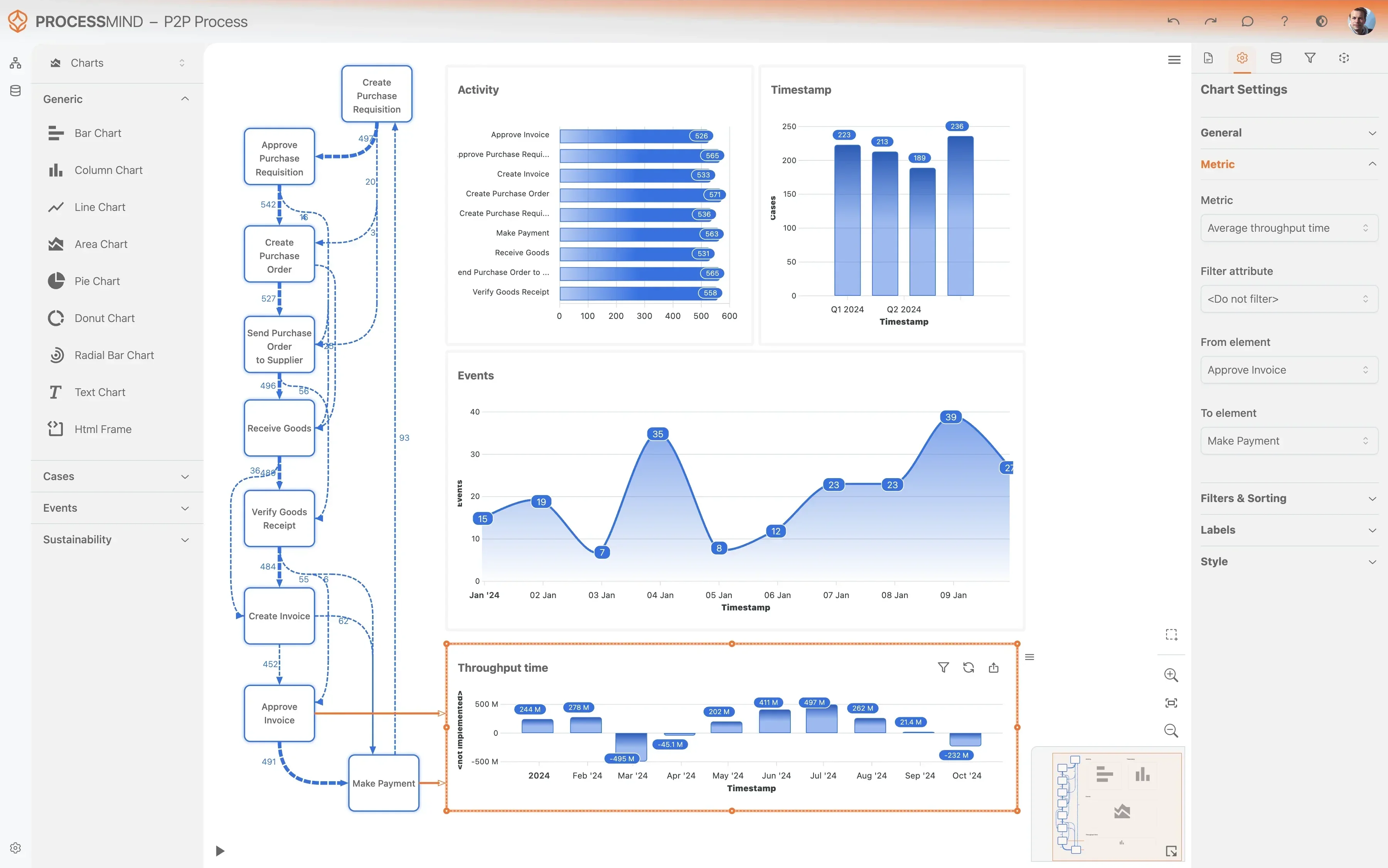
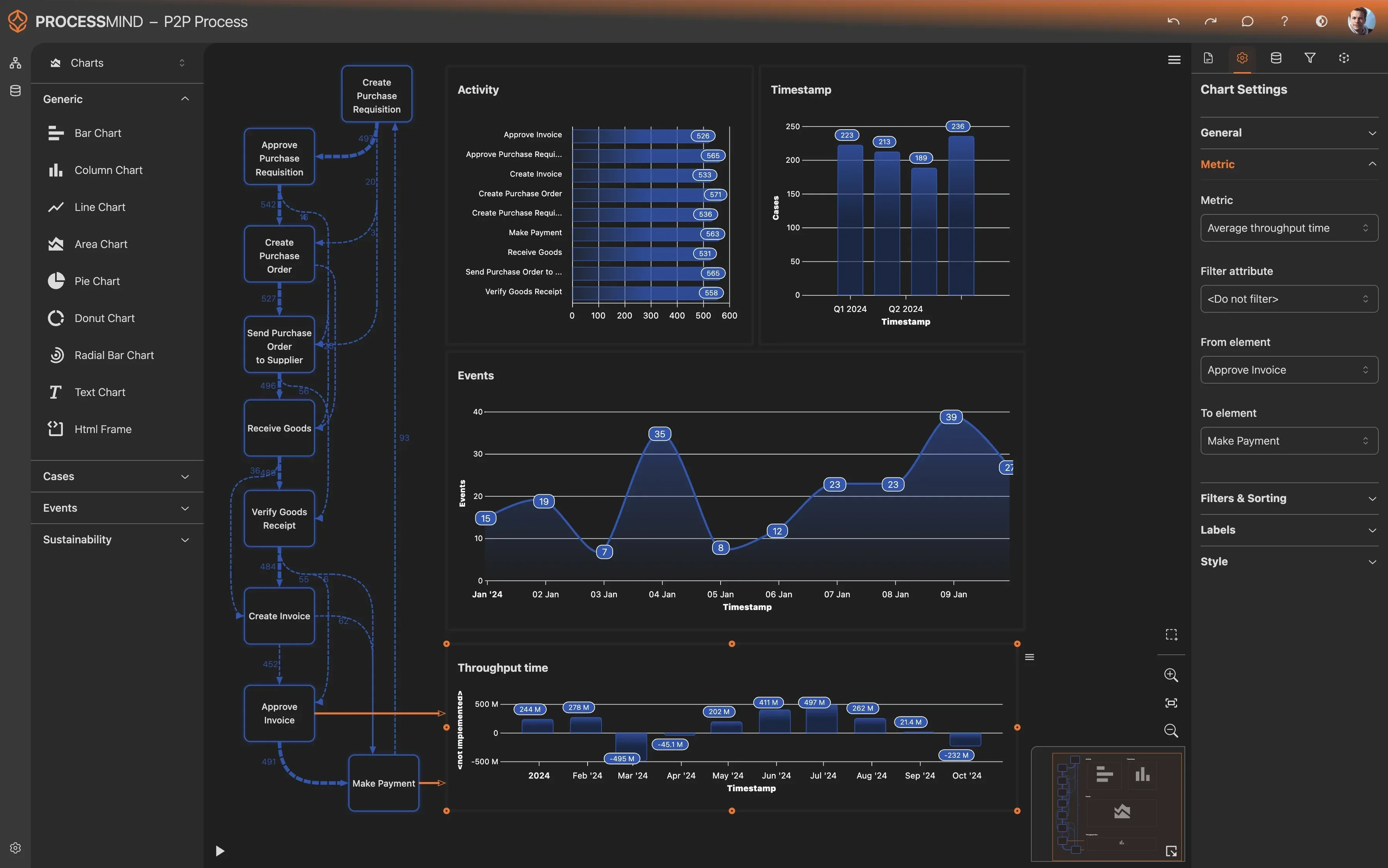
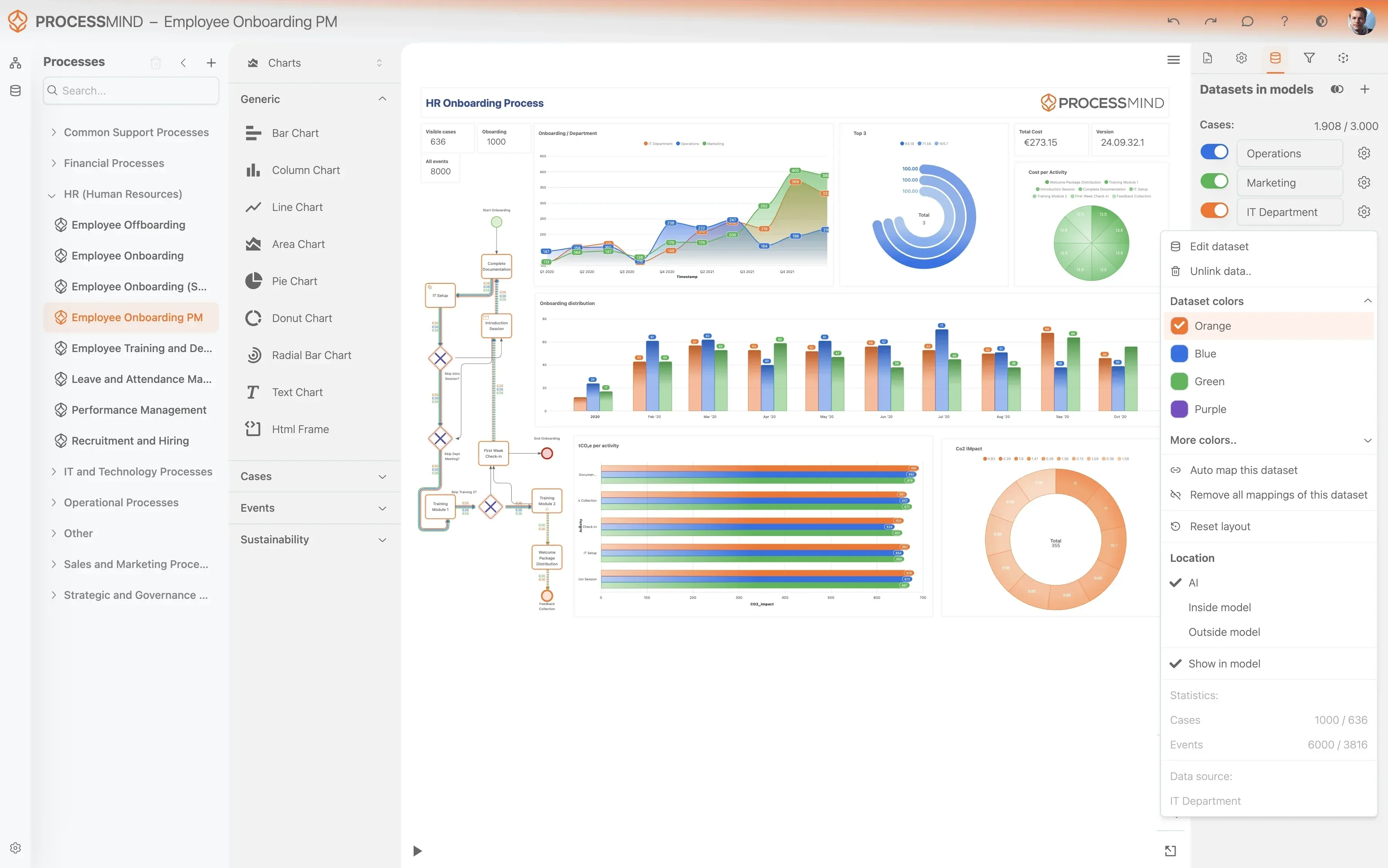
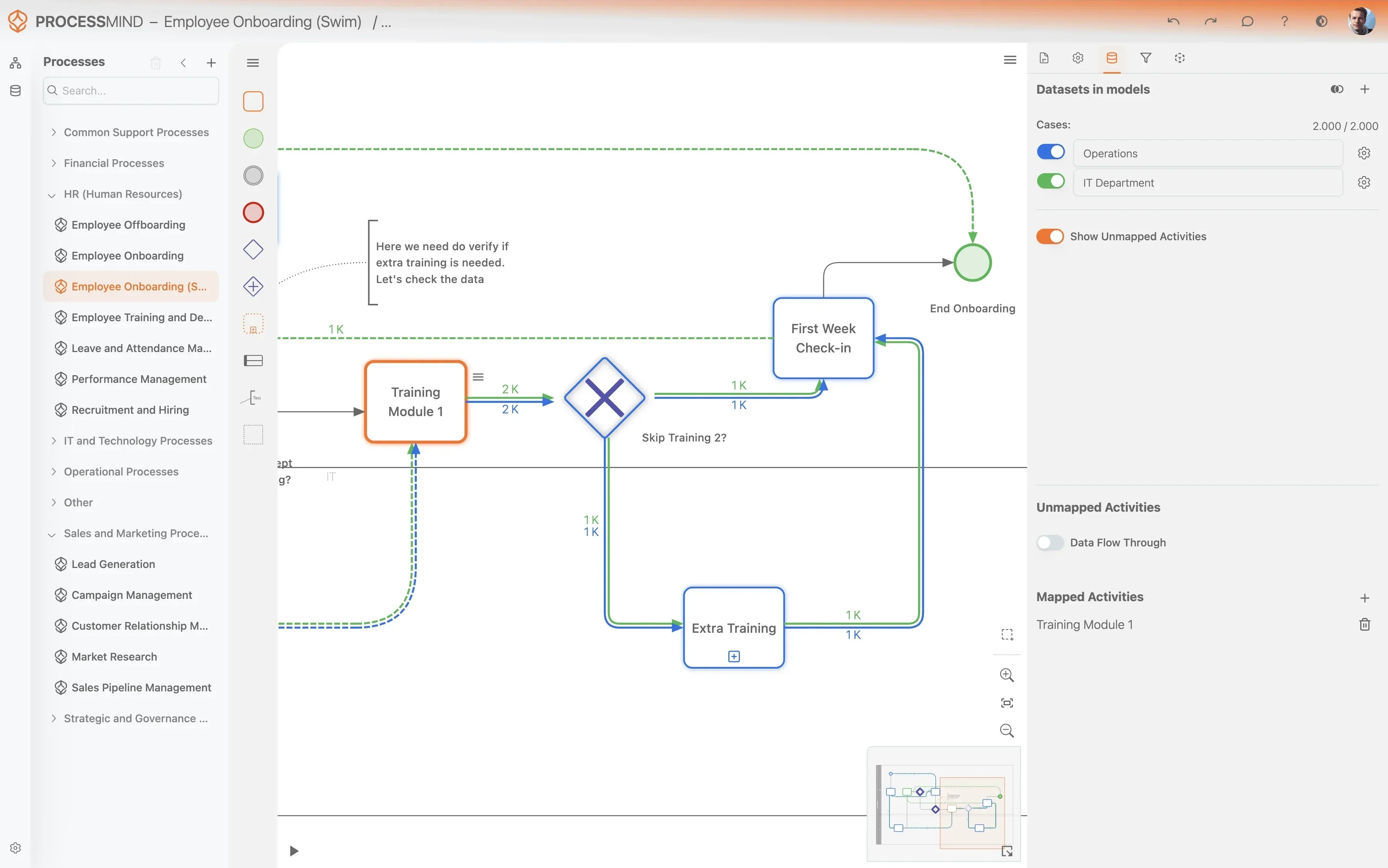
Explore the auto-generated process maps, performance dashboards, and key performance indicators specific to your Körber WMS warehouse operations. Utilize AI-driven recommendations.
Why it matters
Visualizing the actual process flow reveals hidden bottlenecks, deviations, and compliance gaps, providing clear insights into areas for improvement.
Expected outcome
A clear understanding of your warehouse process performance and data-driven insights into inefficiencies.
Implement Improvements
What to do
Prioritize the identified optimization opportunities, such as improving putaway strategies or reducing picking errors, and apply these changes within your Körber WMS setup.
Why it matters
Acting on precise insights leads to measurable improvements in warehouse efficiency, resource utilization, and overall operational costs.
Expected outcome
Concrete actions taken to optimize specific parts of your Körber WMS processes, targeting identified bottlenecks.
Monitor Your Process
What to do
Periodically re-upload updated data from Körber WMS to ProcessMind to track the impact of your implemented changes and monitor ongoing process health.
Why it matters
Continuous monitoring ensures that improvements are sustained and allows for proactive identification of new issues, maintaining peak operational efficiency.
Expected outcome
Ongoing visibility into your warehouse process performance and measurable KPI improvements over time.
TYPICAL OUTCOMES
Tangible Outcomes from Optimized Warehouse Management
These outcomes showcase the substantial operational improvements realized by organizations that apply process mining to their Warehouse Management operations, particularly when analyzing "Warehouse Order" cases within Körber WMS data.
Reduction in end-to-end processing
Process mining identifies bottlenecks across the entire warehouse order flow, leading to significant reductions in the time from order creation to completion. This enhances customer satisfaction and operational efficiency.
Lowered discrepancy rate
By analyzing picking patterns and discrepancies, organizations can pinpoint root causes of errors, leading to a substantial decrease in incorrect picks. This improves inventory accuracy and reduces return costs.
Accelerated inbound processing
Identifying delays in receiving and putaway processes allows for streamlining operations, ensuring goods are available for picking and shipping sooner. This optimizes stock levels and improves supply chain flow.
Fewer non-standard activities
By identifying and eliminating non-compliant process steps and rework loops, organizations significantly reduce deviations from standard warehouse operations. This improves efficiency and ensures regulatory adherence.
Enhanced operator productivity
Process mining provides insights into operator workload and idle times, allowing for better allocation of staff and equipment. This maximizes throughput per operator and reduces operational costs.
Reduced high-cost deliveries
By understanding the root causes of expedited shipping, businesses can proactively address bottlenecks and improve planning, leading to a significant reduction in costly last-minute shipments.
Results vary based on initial process maturity, data quality, and specific operational contexts. The figures presented here reflect common improvements observed in similar Warehouse Management implementations using Körber WMS.
Recommended Data
FAQs
Frequently asked questions
Process mining analyzes event logs from Körber WMS to visualize the actual flow of warehouse operations. It identifies bottlenecks, deviations from standard processes, and areas of inefficiency, such as slow goods receipt or inefficient putaway strategies. This visibility allows for data-driven decisions to optimize the entire order cycle and improve overall efficiency.
To perform process mining, you primarily need event logs from your Körber WMS. These logs should include a Case Identifier, like Warehouse Order, an Activity Name, describing each step, and a Timestamp for when each activity occurred. Additional attributes, such as resource information or material details, can enrich the analysis.
Process mining can lead to significant improvements, such as accelerating goods receipt cycle time by 20%, optimizing putaway location utilization by 15%, and reducing picking errors by 50%. It also helps streamline packing, reduce overall order cycle times, and ensure higher compliance with standard processes. These improvements are driven by clear, data-backed insights into process inefficiencies.
Initial insights can often be generated within a few weeks after data extraction and ingestion are complete. More in-depth analysis and the implementation of improvements will naturally take longer. The speed of results depends on the complexity of the identified issues and organizational readiness for change.
Yes, process mining is highly effective at identifying deviations from your defined standard operating procedures. It visually compares the actual process flow, derived from event logs, against your ideal model. This allows you to quickly spot non-compliant activities or unauthorized shortcuts, helping you ensure a high level of compliance.
Implementing process mining primarily involves extracting the right data from your existing Körber WMS. The process mining tool then ingests and analyzes this data, requiring minimal changes to your live WMS environment. Most effort focuses on initial data identification and extraction, not system modification.
The primary technical requirement is access to your Körber WMS database or log files to extract event data. This data is then typically loaded into a specialized process mining platform, which can be cloud-based or on-premise. No direct modifications to the WMS system itself are usually required for the analysis phase.
Process mining precisely maps out the time spent on each step, highlighting where delays occur in the goods receipt process. It can pinpoint specific resource constraints, sequencing issues, or data entry errors that contribute to these delays. This allows you to target the root causes with specific corrective actions.
Data security is paramount. When performing process mining, data is typically extracted and then anonymized or pseudonymized before being loaded into the process mining tool. Most reputable process mining platforms adhere to strict data security and privacy standards, ensuring your sensitive WMS information remains protected.
Process mining complements, rather than replaces, traditional BI and reporting tools. While BI shows "what happened", process mining explains "why it happened" by focusing on the actual flow and sequence of events. It provides deeper, actionable insights into process inefficiencies that standard reports might miss.
Optimize Warehouse Management: Boost Efficiency Today
Eliminate picking errors and achieve 99.5% inventory accuracy quickly.
No credit card required. Cancel anytime.