Improve Your Supply Chain Management

Select a process
Choose a process to continue working in your connected workspace.
Transform Your Supply Chain with Process Mining
ProcessMind helps you uncover hidden inefficiencies and bottlenecks within your supply chain. Our platform identifies areas of unnecessary rework, compliance gaps, and delays that impact your operational costs and delivery times. By analyzing your data, we provide actionable insights to streamline your processes and improve overall performance.
Download our pre-configured data template and address common challenges to reach your efficiency goals. Follow our six-step improvement plan and consult the Data Template Guide to transform your operations.
Show detailed description
In today's fast-paced global economy, an optimized Supply Chain Management process is crucial for business success: Yet, the intricate web of activities, from initial demand generation through procurement, manufacturing, warehousing, and final delivery, often conceals a multitude of inefficiencies. Many organizations struggle with a lack of comprehensive visibility across disparate systems, leading to fragmented insights and reactive decision-making. ProcessMind provides an unparalleled lens into your entire logistics order flow, transcending the limitations of any single system. By analyzing event data from your various operational tools, we reveal the true execution path of your supply chain operations, uncovering hidden bottlenecks, unauthorized deviations from established procedures, and areas of unnecessary rework. This deep analysis helps you pinpoint precisely where delays occur, resources are misallocated, and costs escalate, regardless of whether the data originates from your ERP, your warehouse management system, or any other source system. We identify the root causes of compliance issues, late deliveries, and customer dissatisfaction, providing the clarity needed to transform your supply chain from a cost center into a strategic advantage.
Unlocking the full potential of your Supply Chain Management demands more than just reporting on outcomes; it requires a profound understanding of process execution. With ProcessMind, you gain the power to visualize every step of your logistics order process as it truly unfolds, identifying process variations that impact lead times, inventory levels, and operational costs. Our platform highlights opportunities to streamline workflows, eliminate redundant steps, and automate manual tasks that currently consume valuable resources and introduce errors. By understanding the most frequent paths and their corresponding performance metrics, you can standardize best practices, reduce cycle times, and improve on-time delivery rates significantly. The insights derived from analyzing your process data enable you to make data-driven decisions, leading to optimized inventory management, stronger supplier relationships, and ultimately, a superior customer experience. This holistic view ensures that improvements are targeted and effective, driving tangible benefits across your entire value chain, irrespective of the specific technological ecosystem you employ.
Beyond identifying problems, ProcessMind empowers you to explore the 'why' behind process performance. You can drill down into specific case variants, compare actual process execution against target models, and quantify the financial impact of process deviations. This granular understanding allows you to forecast potential disruptions, proactively address compliance risks, and continuously adapt your supply chain strategy to market changes. The platform reveals the true utilization of your resources and identifies idle times or overloads, guiding smarter resource allocation decisions. Ready to move beyond assumptions and transform your supply chain with actionable, data-backed insights? Getting started is straightforward. Our intuitive platform is designed to integrate seamlessly with your existing data sources, and you can begin your journey to a more efficient, resilient, and customer-centric supply chain by utilizing our comprehensive data template. This template simplifies the extraction of event logs from your source system, enabling a rapid setup and quick realization of value, regardless of the complexity of your current IT landscape.
The 6-Step Path to Optimize Supply Chain Management
Connect Your Data
What to do
Integrate relevant data from your supply chain systems, such as your ERP, WMS, and TMS, to create a comprehensive event log. Ensure activities, cases, and timestamps are included.
Why it matters
A complete and accurate data foundation is crucial for meaningful process analysis. Partial or misleading insights hinder effective improvement efforts.
Expected outcome
A consolidated, reliable dataset ready for process mining.
Map Your Supply Chain Process
What to do
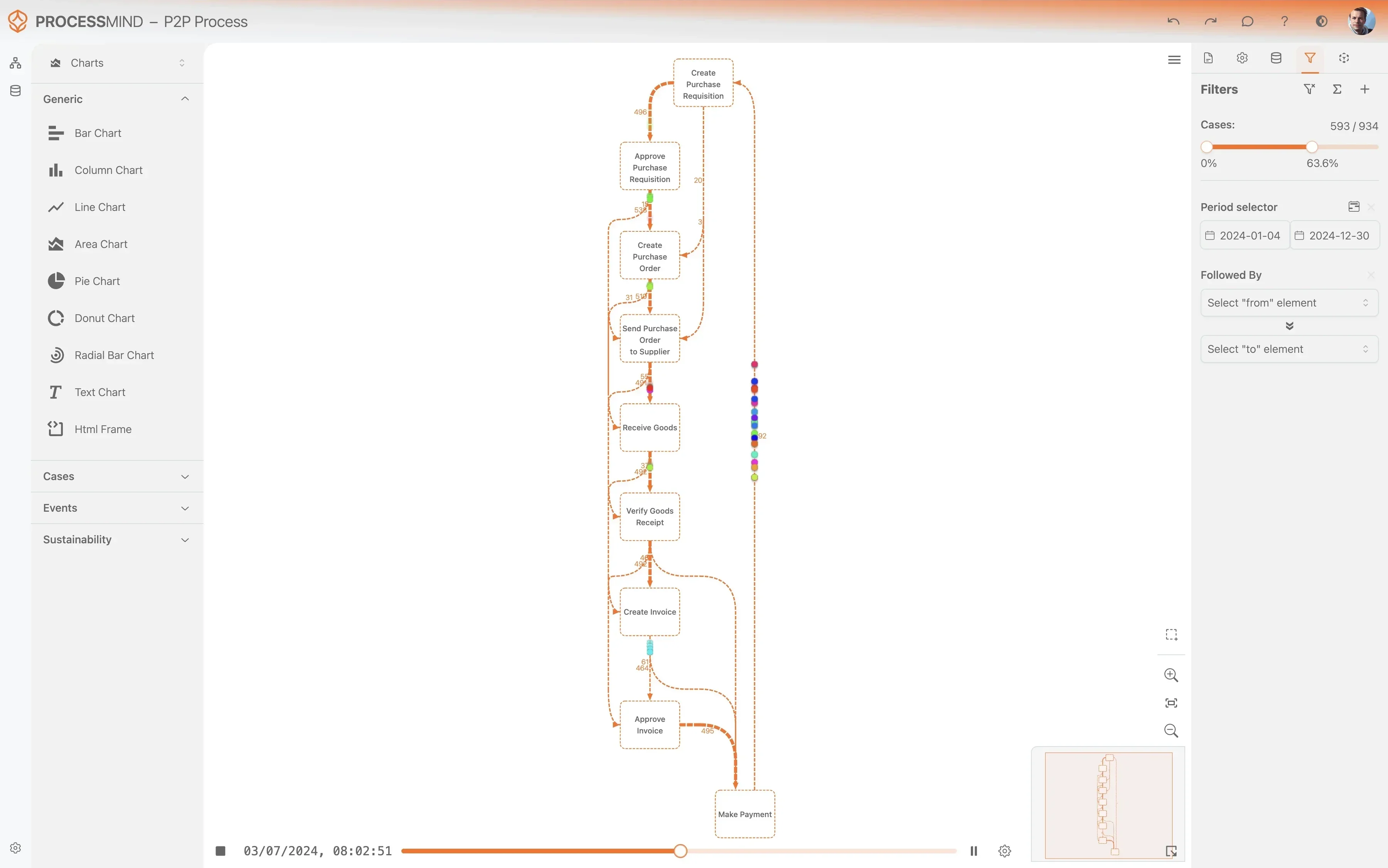
Visualize the end-to-end supply chain process from your collected data. Identify all actual paths, common variants, and deviations from the expected flow.
Why it matters
Understanding how your process truly operates, not just how it's documented, reveals hidden complexities and real-world execution challenges.
Expected outcome
A clear, data-driven visual map of your supply chain process.
Pinpoint Bottlenecks
What to do
Analyze the process map to identify activities or handoffs that cause significant delays, rework, or resource contention within your supply chain.
Why it matters
Bottlenecks slow your supply chain, increasing lead times, inventory costs, and impacting customer satisfaction. Identifying them is the first step to resolution.
Expected outcome
A prioritized list of specific process steps or transitions with prevalent inefficiencies.
Uncover Root Causes
What to do
Deep-dive into identified bottlenecks and deviations to determine their underlying reasons. Use filtering and drill-down techniques on your data source.
Why it matters
Addressing symptoms without understanding root causes leads to temporary fixes. A thorough analysis ensures improvement efforts target fundamental issues for lasting change.
Expected outcome
A clear understanding of specific factors contributing to each identified bottleneck.
Design Process Optimizations
What to do
Based on root cause analysis, design concrete process changes, automation opportunities, or system enhancements to eliminate identified inefficiencies.
Why it matters
Translating insights into actionable plans is crucial for achieving tangible business value. Well-designed improvements lead to more efficient, resilient operations.
Expected outcome
A set of clearly defined, data-backed improvement initiatives with estimated impact.
Monitor & Sustain Gains
What to do
Implement continuous monitoring of the improved process. Track key performance indicators and re-evaluate regularly to ensure sustained gains and identify new areas.
Why it matters
Processes are dynamic. Continuous monitoring ensures improvements hold, allows for agile adaptation to new challenges, and fosters ongoing optimization.
Expected outcome
A sustainably optimized supply chain with consistently improving KPIs.
WHAT YOU WILL GET
Uncover Your Supply Chain's True Path to Efficiency
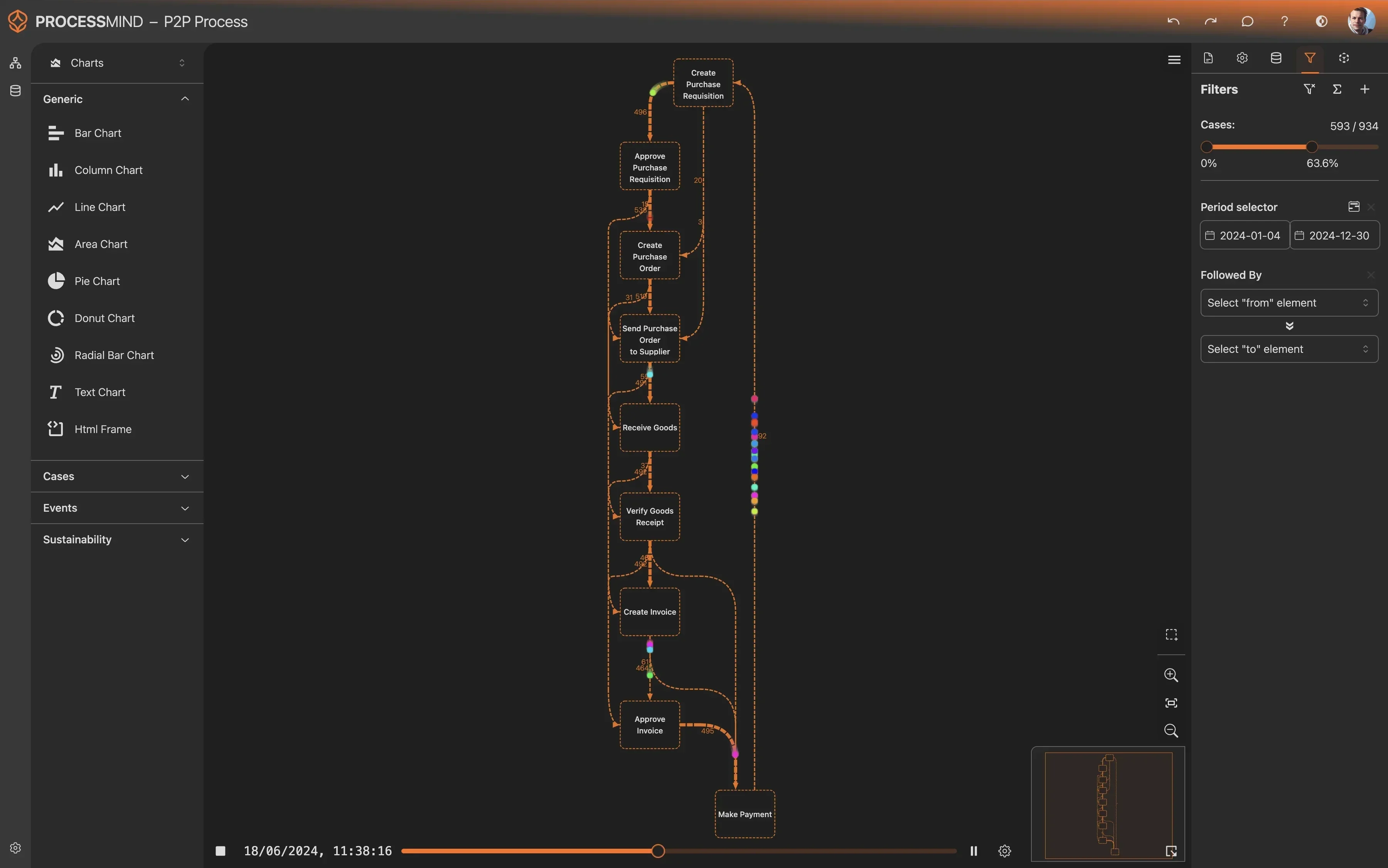
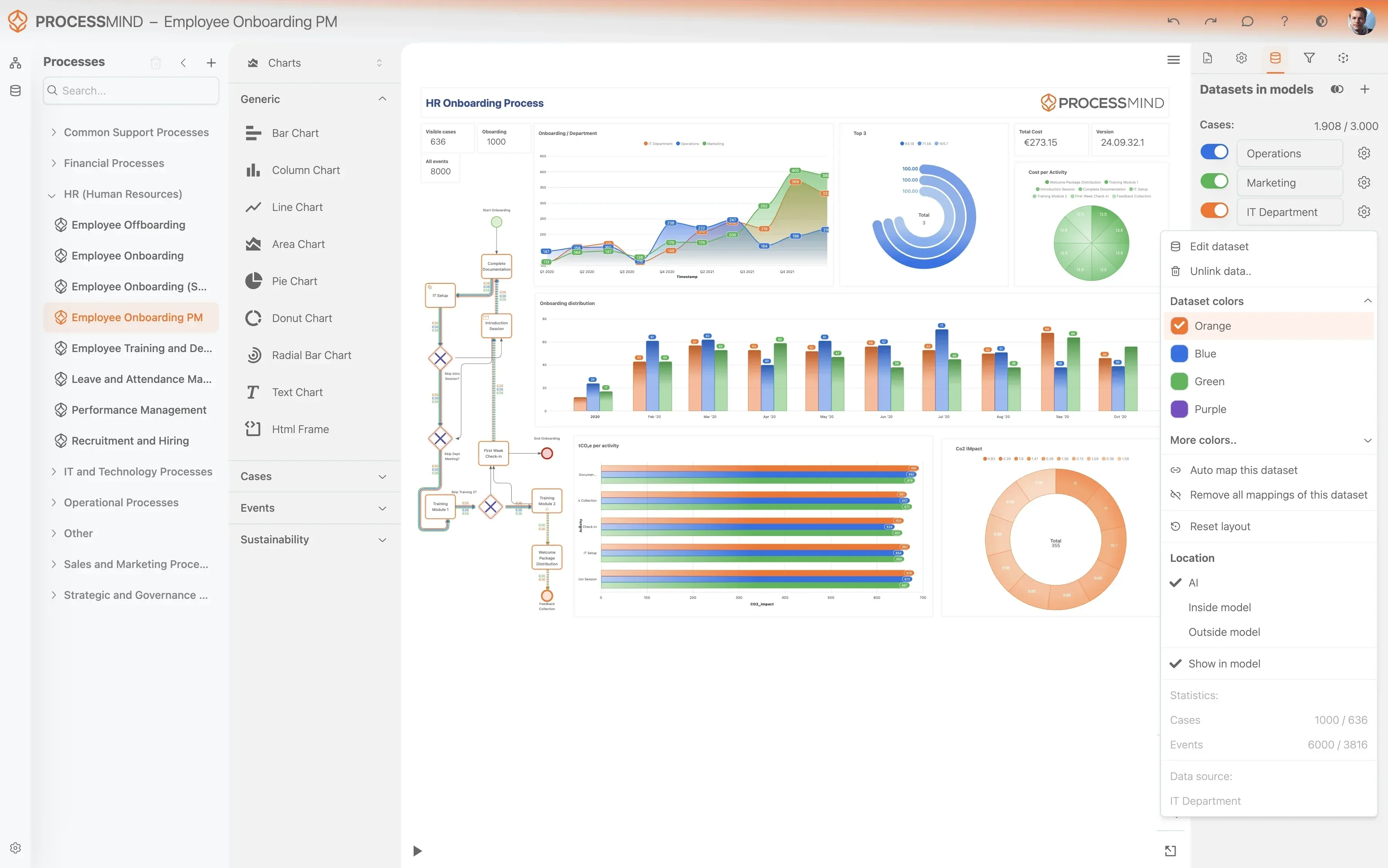
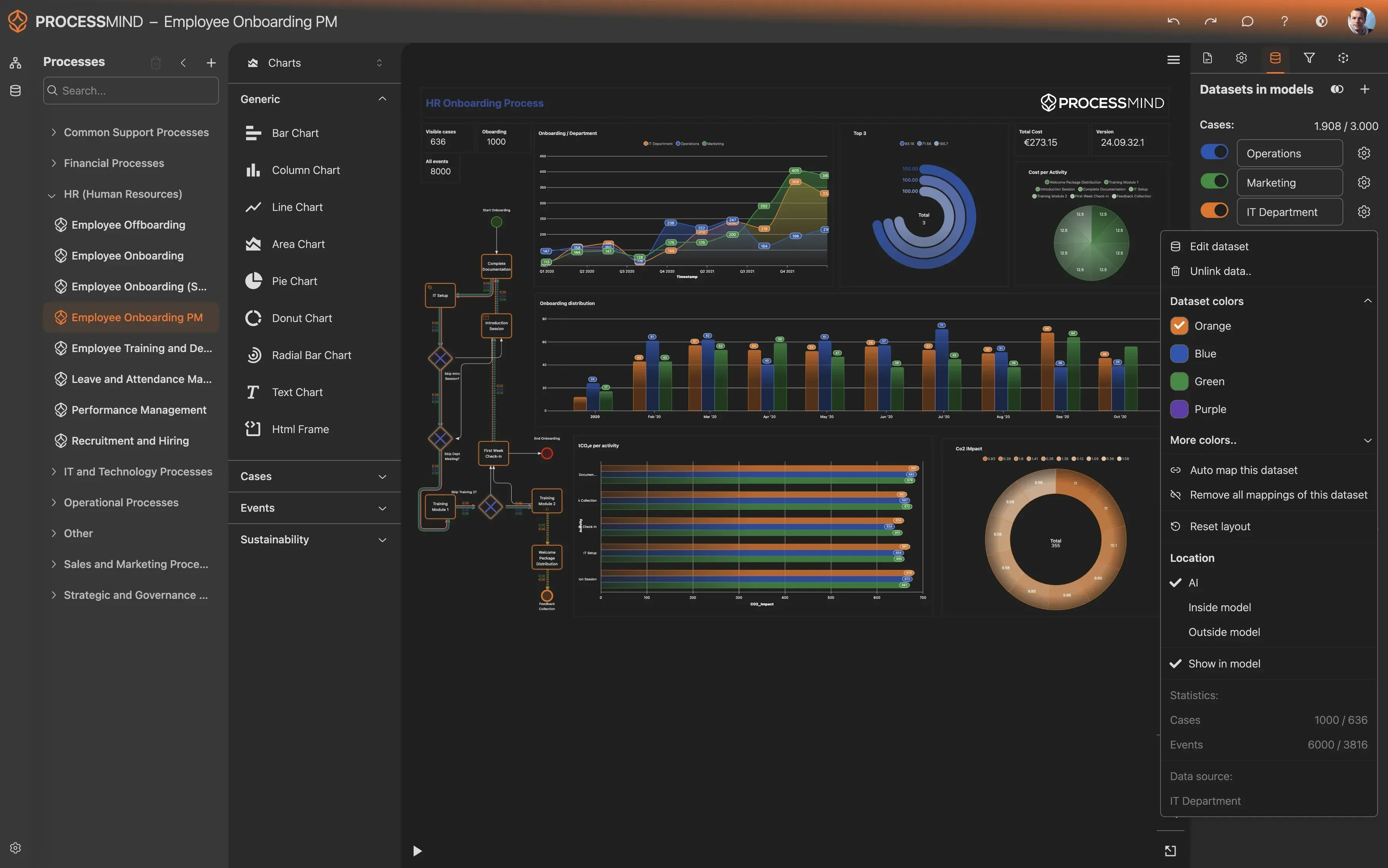
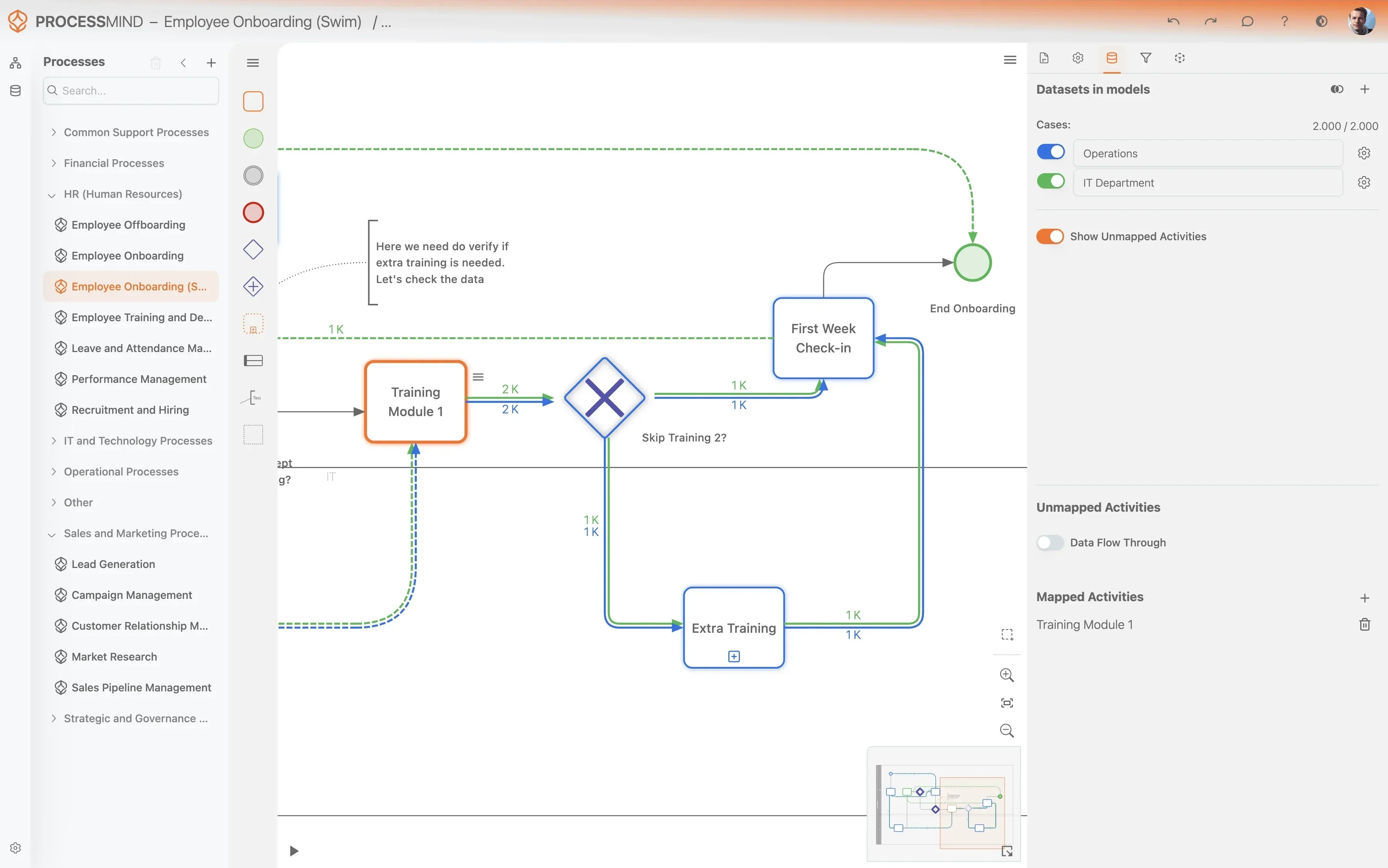
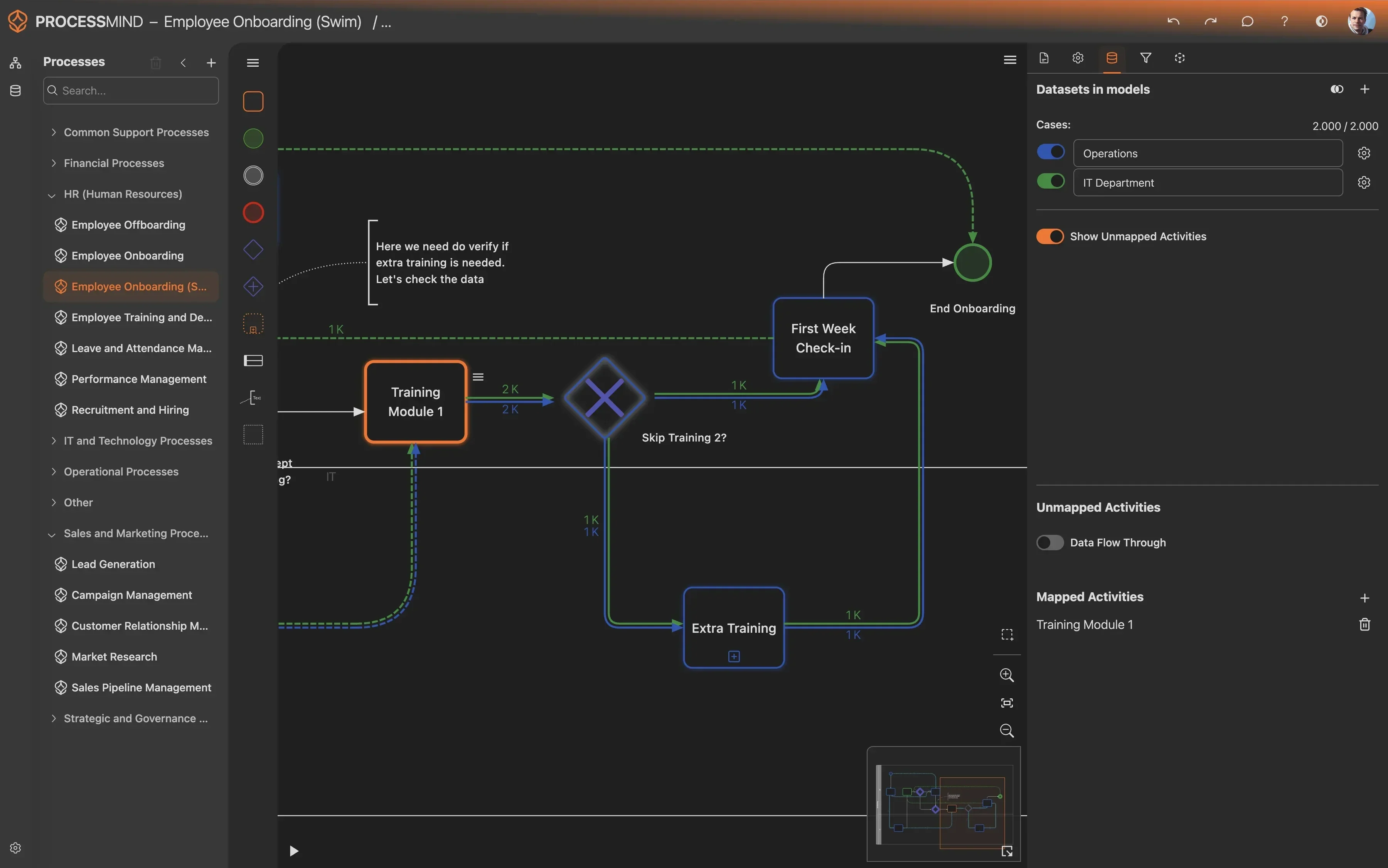
- Visualize end-to-end supply chain flows
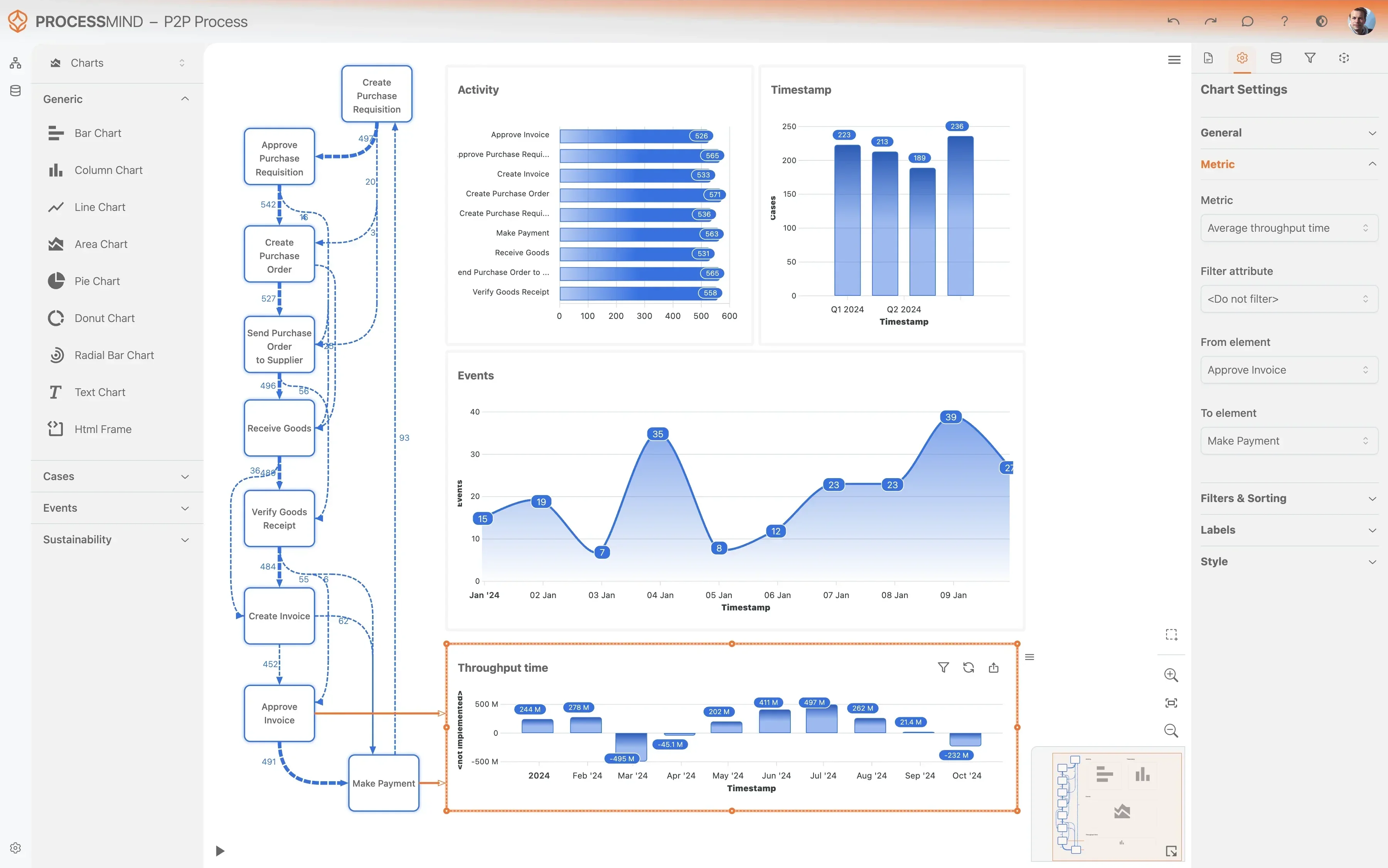
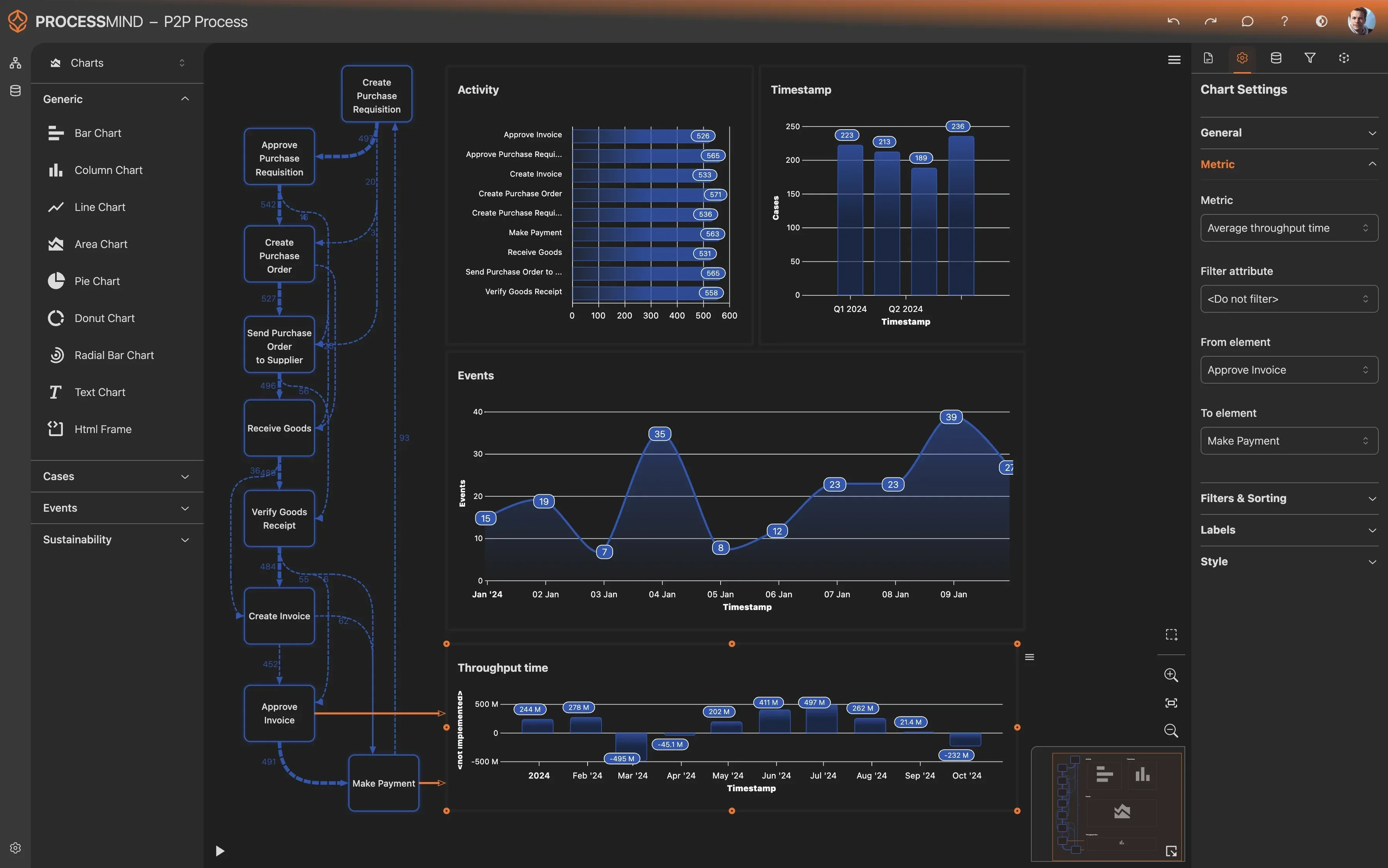
- Identify process bottlenecks and rework loops
- Optimize inventory levels and lead times
- Enhance on-time delivery performance
TYPICAL OUTCOMES
Real-World Impact on Supply Chain Management
These outcomes illustrate the significant improvements organizations achieve by applying process mining to their supply chain. By revealing inefficiencies and bottlenecks within logistics order processing, companies optimize operations, reduce costs, and enhance overall efficiency.
Average reduction in end-to-end cycle time
By identifying and eliminating bottlenecks, organizations can significantly shorten the entire order-to-delivery cycle, leading to quicker customer service and improved operational fluidity.
Reduction in capital tied up in stock
Gain better insights into inventory flow and demand patterns to reduce capital tied up in excess stock and minimize costly stockouts, leading to more agile inventory management.
Decrease in fulfillment errors
Pinpoint and eliminate the root causes of errors in order processing and fulfillment, leading to fewer returns, reduced material waste, and improved customer trust.
Improvement in delivery success rate
Process mining identifies and resolves bottlenecks impacting delivery schedules, leading to a higher percentage of orders delivered on time, which directly enhances customer satisfaction.
Better adherence to internal and external rules
Automatically monitor and ensure that all logistics order processes adhere to predefined standards and regulatory requirements, reducing audit risks and potential penalties.
Reduction in logistics and shipping expenses
Uncover root causes of expedited shipping and inefficiencies in goods transit, enabling proactive adjustments to logistics and routes, significantly lowering unnecessary transportation expenses.
Results vary based on process complexity, data quality, and organizational context. The figures presented reflect typical improvements observed across various supply chain implementations.
Recommended Data
For customized data recommendations, choose your specific process.
FAQs
Frequently asked questions
Process mining analyzes event logs from your operational systems to visualize the actual flow of your supply chain operations. It identifies bottlenecks, deviations from standard processes, and inefficiencies like extended lead times or rework loops. This helps pinpoint areas for optimization, cost reduction, and compliance improvements across your supply chain.
You need event logs that include a case identifier, for example, a Logistics Order ID, an activity name for each step performed, and a timestamp for when each activity occurred. Additional attributes like resources, costs, or locations can enrich the analysis. This core data allows the reconstruction of complete process instances.
Process mining can lead to significant improvements such as reduced order-to-delivery cycle times, optimized inventory levels, and increased on-time delivery rates. By identifying root causes of inefficiencies, you can also eliminate order fulfillment errors, cut logistics expenses, and enhance end-to-end supply chain visibility. This translates to operational efficiency and cost savings.
Initial insights can often be gained within a few weeks of successful data extraction and ingestion into a process mining tool. Comprehensive analysis and the identification of actionable improvement opportunities may take several weeks to a few months, depending on data quality and the complexity of your supply chain processes. Continuous monitoring provides ongoing value.
By visualizing the actual paths and timings of your logistics orders, process mining clearly identifies where delays occur and where resources are strained. It can pinpoint specific activities or stages, such as warehouse picking or transportation hubs, that cause significant slowdowns. This objective view allows you to target specific areas for improvement, like optimizing resource allocation or standardizing inconsistent steps.
Yes, process mining is highly effective at identifying deviations from prescribed process paths and compliance rules. By comparing the actual process execution against predefined models, it can automatically flag instances where specific steps were skipped, performed out of sequence, or exceeded certain time limits. This provides clear evidence of non-compliance and allows for proactive mitigation.
Key requirements include access to your source system for data extraction, familiarity with data querying or reporting, and a process mining software platform. While some technical understanding is beneficial, many modern process mining tools offer user-friendly interfaces. Business process knowledge is crucial for interpreting findings effectively.
No, process mining is a non-invasive analytical technique. It operates by analyzing historical data copied from your operational system, meaning it does not interact with or modify your live transactional environment. Your daily supply chain operations remain unaffected during the analysis phase.
Optimize Your Supply Chain Now, Boost Efficiency Today
Gain immediate insights into your supply chain processes and reduce costs.
No credit card required, get started in minutes.