Improve Your Lead to Cash

Select a process
Choose a process to continue working in your connected workspace.
Optimize Your Lead to Cash Process
Are you struggling with delays, bottlenecks, or hidden rework in your Lead to Cash process? Our platform helps you uncover these inefficiencies by analyzing your operational data. Gain clear insights into how your process truly operates, identifying areas for significant improvement and automation potential.
Download our pre-configured data template and address common challenges to reach your efficiency goals. Follow our six-step improvement plan and consult the Data Template Guide to transform your operations.
Show detailed description
Unlock Efficiency: Optimize Your Lead to Cash Process with ProcessMind. This end-to-end business process, spanning from the initial capture of a prospective lead through to the final collection of payment, is the lifeblood of revenue generation. ProcessMind meticulously analyzes every single activity and event recorded within your system, providing a comprehensive, data-driven view of your operations. By tracking the exact sequence, timing, and resources involved in each step, our platform helps you uncover hidden bottlenecks, identify deviations from standard operating procedures, and ensure robust compliance across your entire revenue generation cycle. You will gain unparalleled clarity on where your process is performing optimally and, crucially, where it requires urgent attention and strategic intervention, irrespective of the underlying technology or software supporting your operations.
The Lead to Cash process, while absolutely fundamental to any business, often grapples with a myriad of intricate challenges that significantly hinder efficiency, impact profitability, and ultimately affect customer satisfaction. Common pain points frequently observed across various industries include lengthy lead qualification times, inefficient handoffs between sales and order fulfillment, delays in quote generation, errors during order processing, extended service delivery or product fulfillment cycles, and persistently slow payment collections. These operational friction points can lead to missed revenue targets, reduced customer loyalty, and substantially increased operational costs due to rework or expediting. Whether your daily operations rely on a custom-built solution, a widely adopted enterprise resource planning, ERP, system, or a complex combination of various specialized tools, these challenges are pervasive. ProcessMind cuts through this complexity, offering objective, data-driven insights that precisely pinpoint the root causes of these inefficiencies, transforming vague assumptions into clear, actionable intelligence and opportunities for improvement.
Analyzing and optimizing your Lead to Cash process with ProcessMind delivers profound and tangible benefits that directly impact your business's financial health and competitive standing. By systematically identifying and eliminating inefficiencies and bottlenecks, you can dramatically reduce overall cycle times, thereby accelerating revenue recognition and significantly improving your organization's cash flow. Enhanced process transparency and a clear audit trail ensure better adherence to internal policies, industry regulations, and legal compliance requirements, effectively mitigating risks associated with revenue operations. Furthermore, you will gain an in-depth understanding of the complete customer journey, from initial interest to post-purchase support, enabling you to optimize every touchpoint and substantially boost overall customer satisfaction and retention. ProcessMind empowers your operational and executive teams to make informed, data-driven decisions for continuous improvement, fostering a proactive culture of operational excellence and agility. Our platform is uniquely designed to focus on the process itself, using the Sales Opportunity as its primary case identifier, ensuring you always analyze the most relevant scope of your revenue generation activities.
Getting started with ProcessMind to analyze your Lead to Cash process is designed to be straightforward and universally compatible with all your existing infrastructure, no matter how complex. We fully understand that your critical business data often resides in a diverse array of systems, from customer relationship management, CRM, to ERP, and our primary goal is to make data extraction and subsequent analysis as seamless and non-disruptive as possible. To significantly facilitate this initial step, we provide a comprehensive data template that clearly guides you through identifying and preparing the necessary data fields, such as activity names, precise timestamps, and essential case identifiers like the Sales Opportunity. This user-friendly template ensures that regardless of the specifics or version of your ERP or other source system, you can easily prepare and ingest your data for insightful process mining. Our platform is robustly built to work flexibly and effectively with any system you currently utilize, ensuring that you can quickly unlock the transformative power of process mining without the need for extensive, costly integration efforts or disruptive system overhauls. Your path to optimized Lead to Cash begins with your data, and we make it easy to get started.
The 6-Step Improvement Path for Lead to Cash
Connect & Discover Data
What to do
Gather all relevant event data from your various systems, such as your ERP or CRM, focusing on Lead to Cash activities. Extract event logs including case IDs, activity names, and timestamps. Ensure data quality by cleaning and standardizing information.
Why it matters
A complete and accurate dataset is the foundation for any meaningful process analysis. It ensures you have a holistic view of your Lead to Cash journey, preventing skewed insights and enabling reliable discovery.
Expected outcome
A consolidated, clean, and complete event log for your Lead to Cash process, ready for detailed mapping and analysis.
Map Your Process Flow
What to do
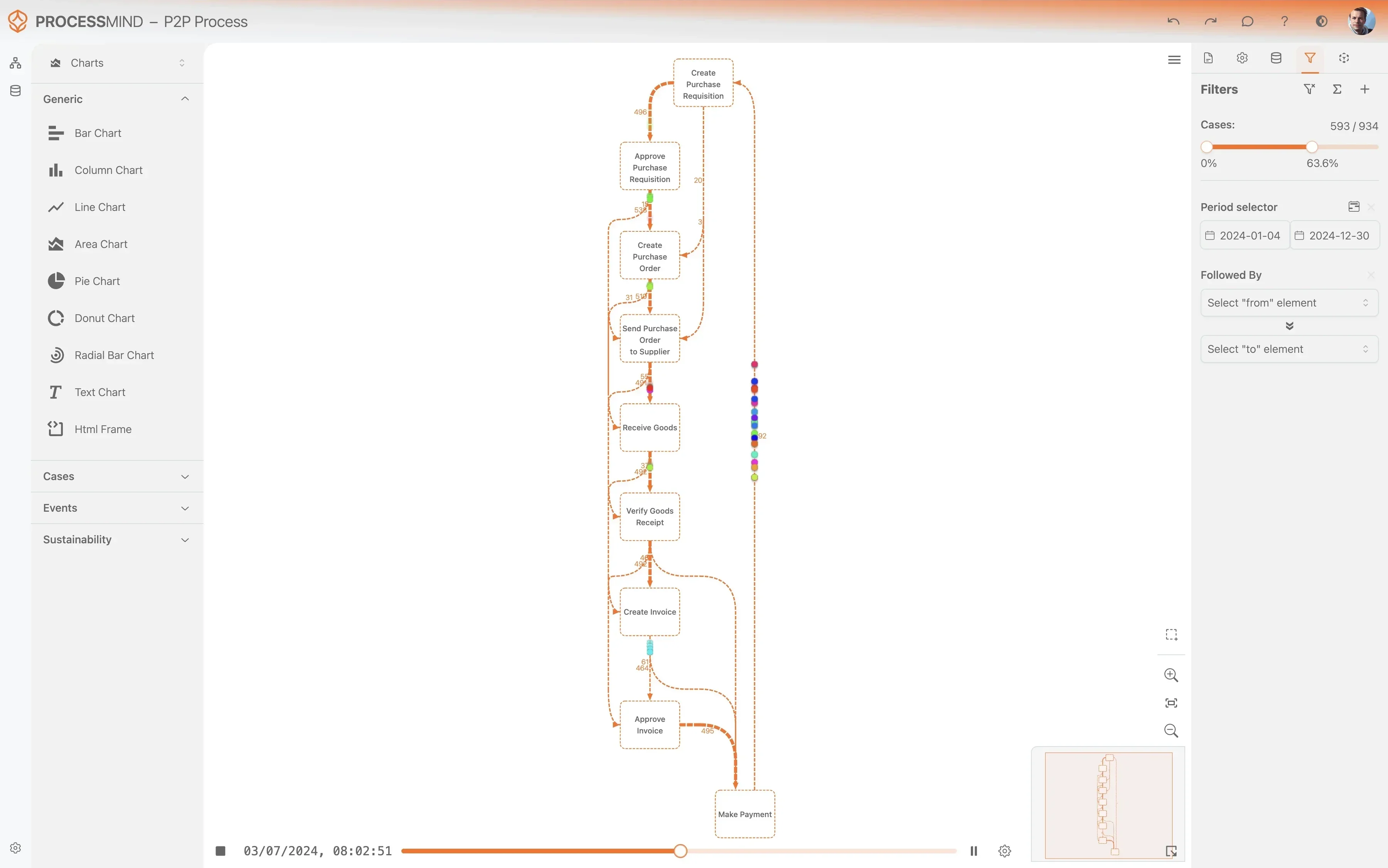
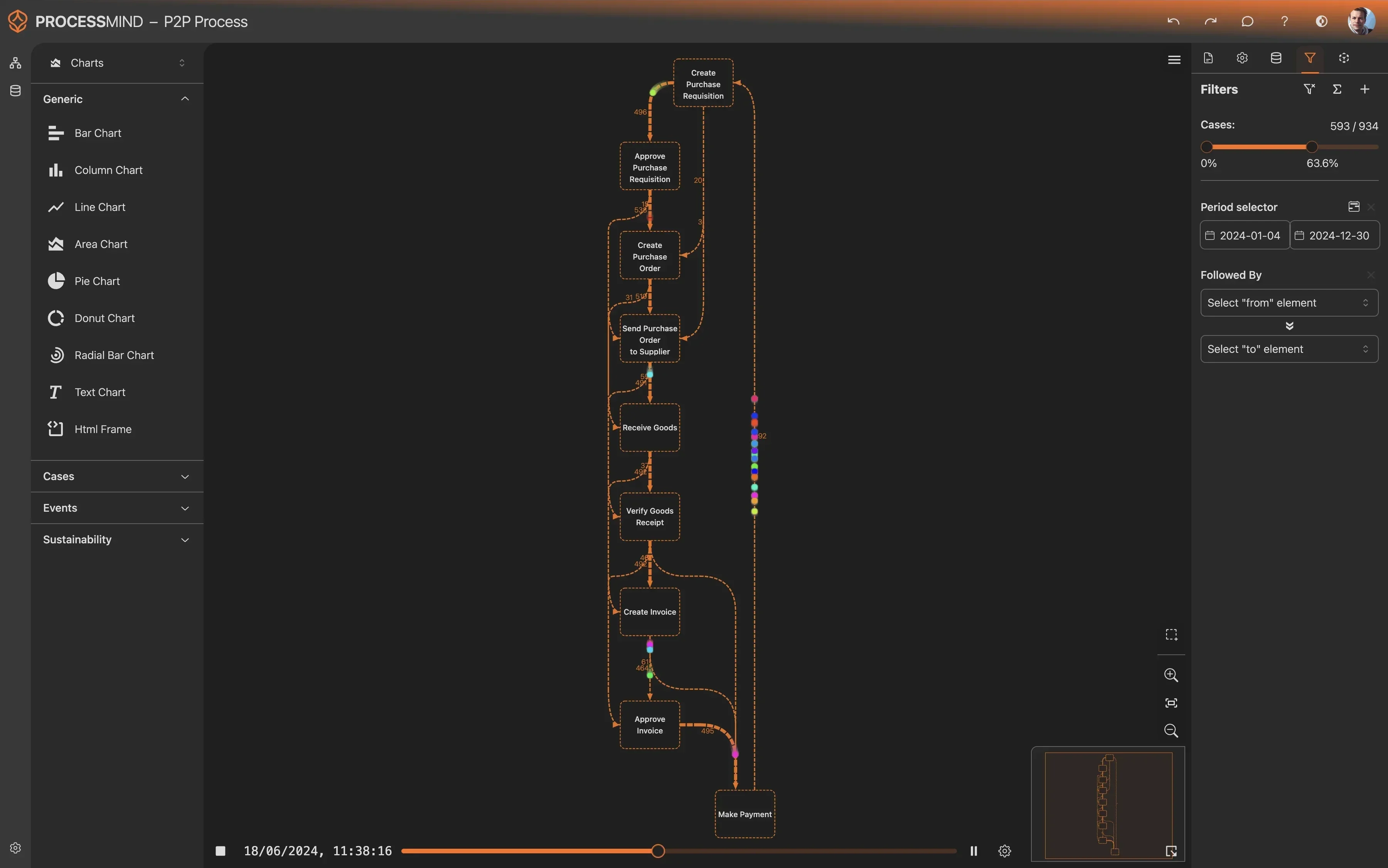
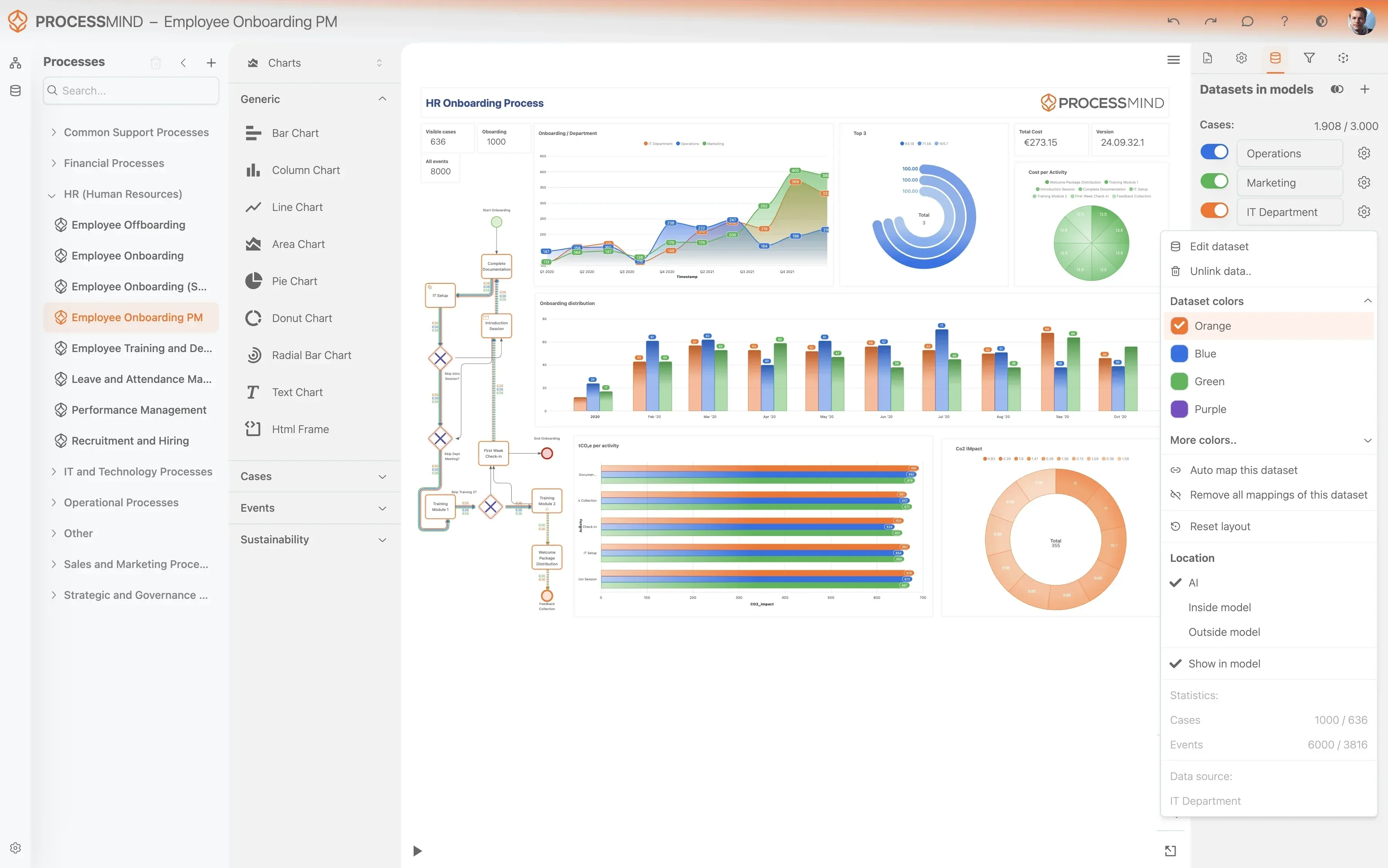
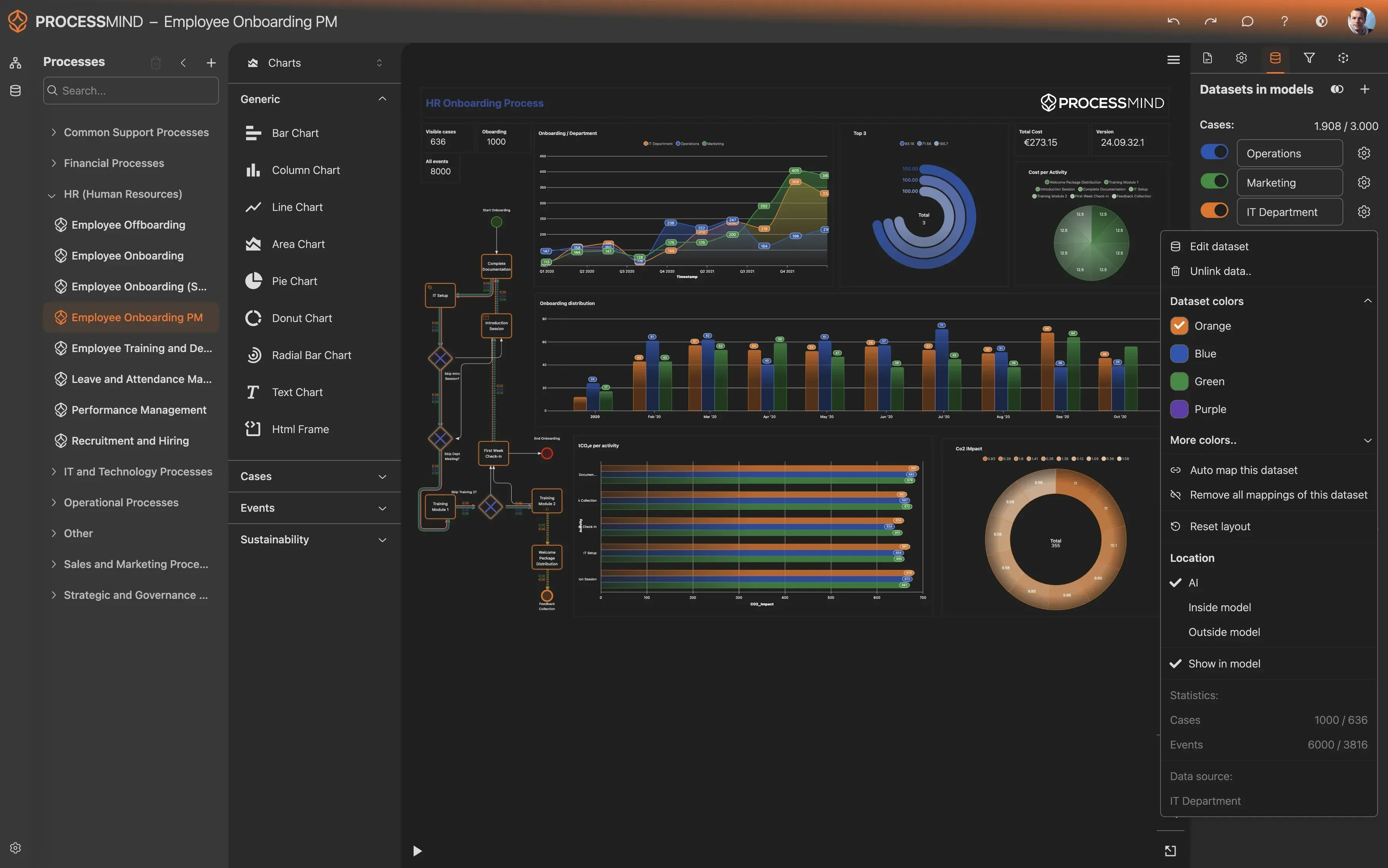
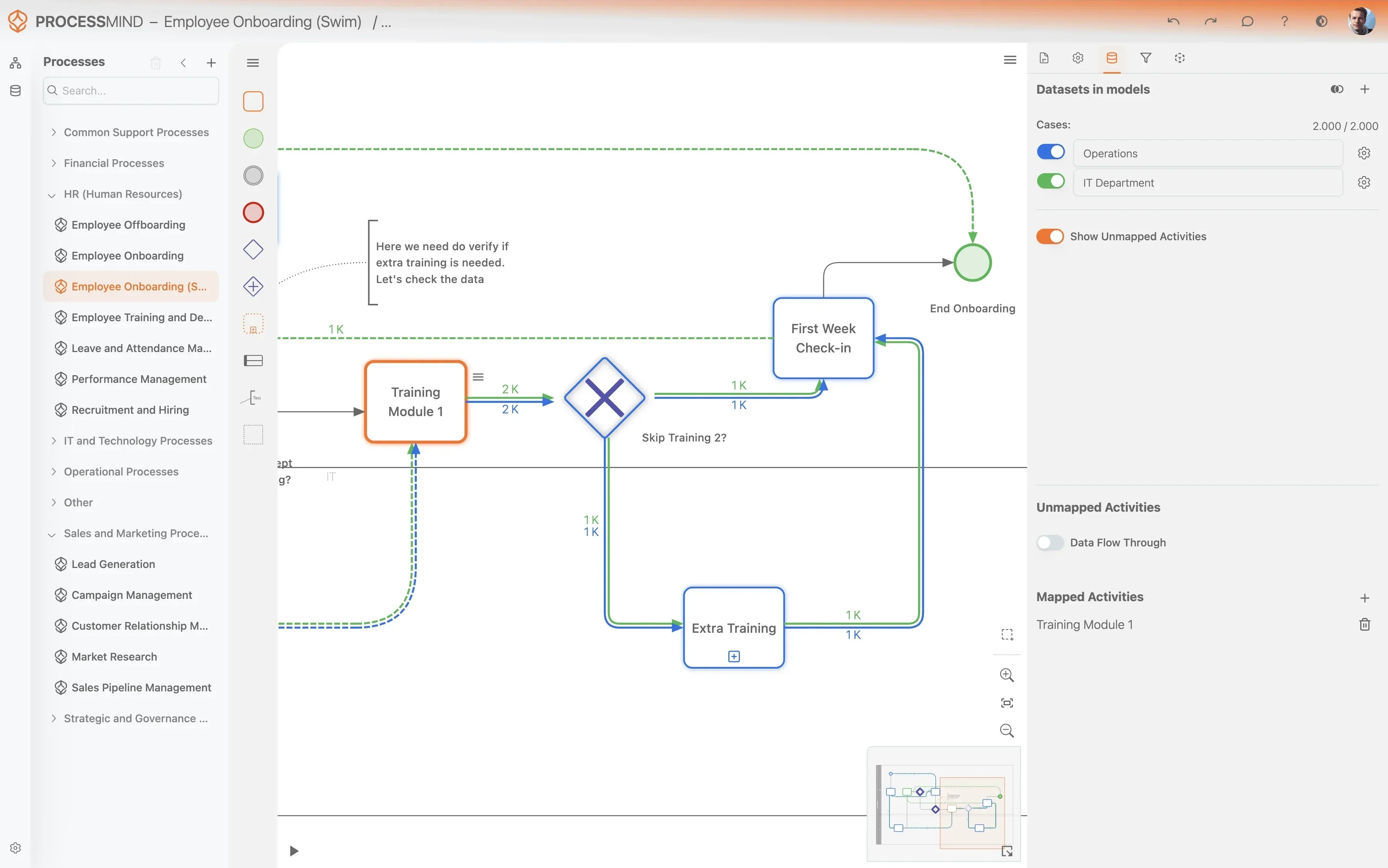
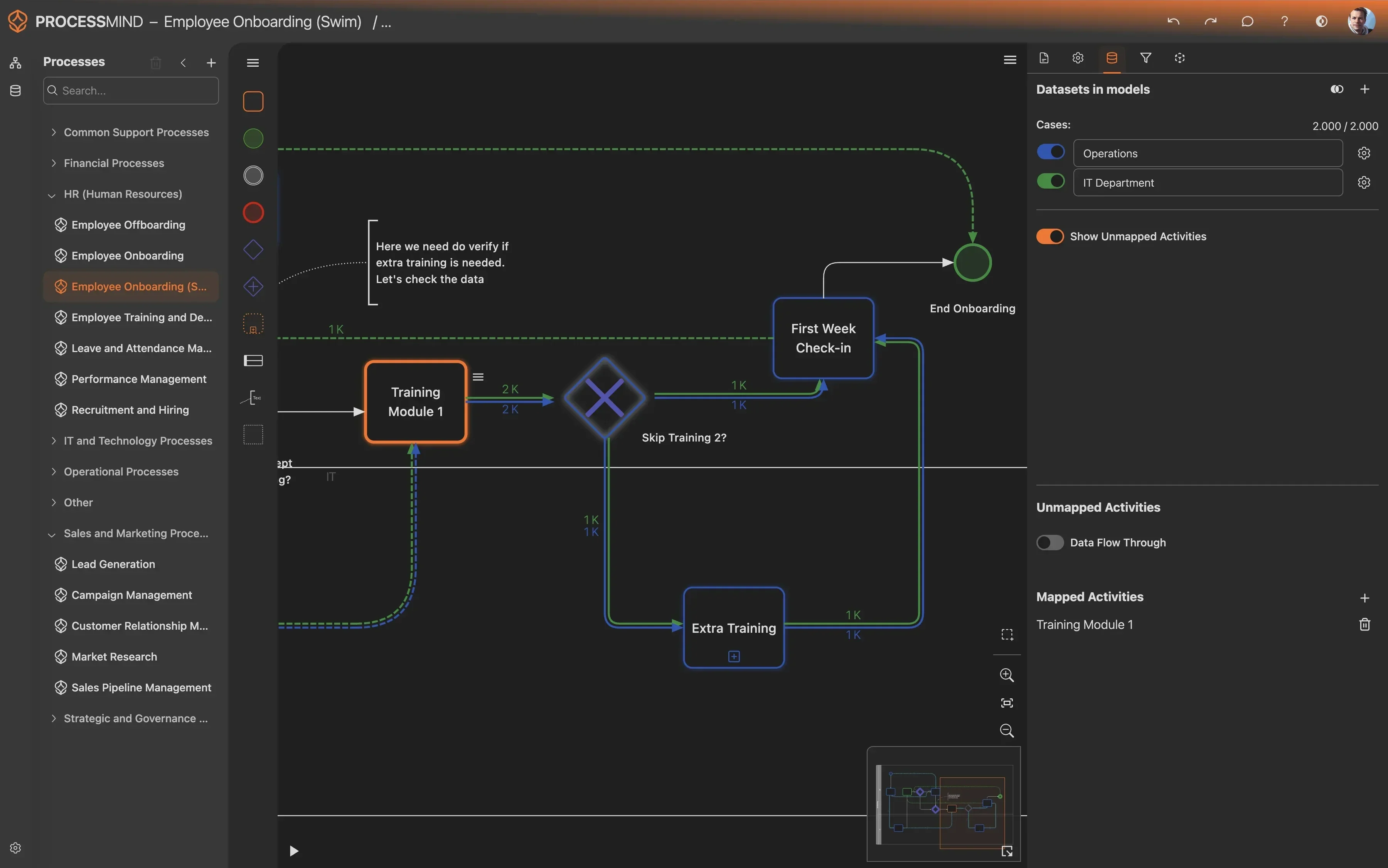
Generate an end-to-end visual map of your Lead to Cash process directly from your event data. Explore and understand the various process variants, common rework loops, and deviations from the intended path.
Why it matters
Visualizing the actual process flow helps uncover hidden complexities, unofficial steps, and deviations that impact efficiency. It provides an objective view of how work is truly executed.
Expected outcome
A clear, data-driven visualization of your Lead to Cash process, showing all variants, rework, and actual execution paths.
Pinpoint Bottlenecks
What to do
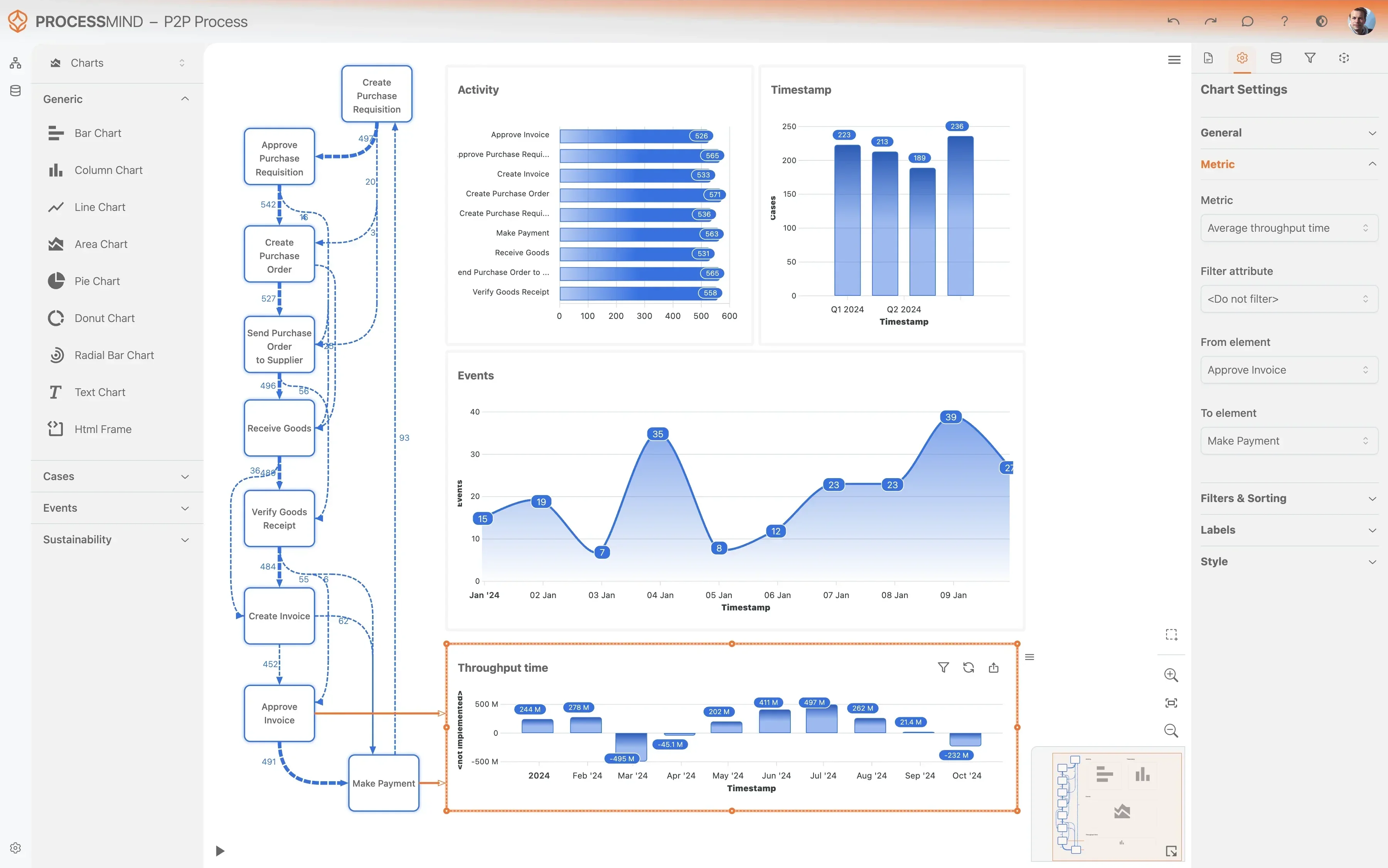
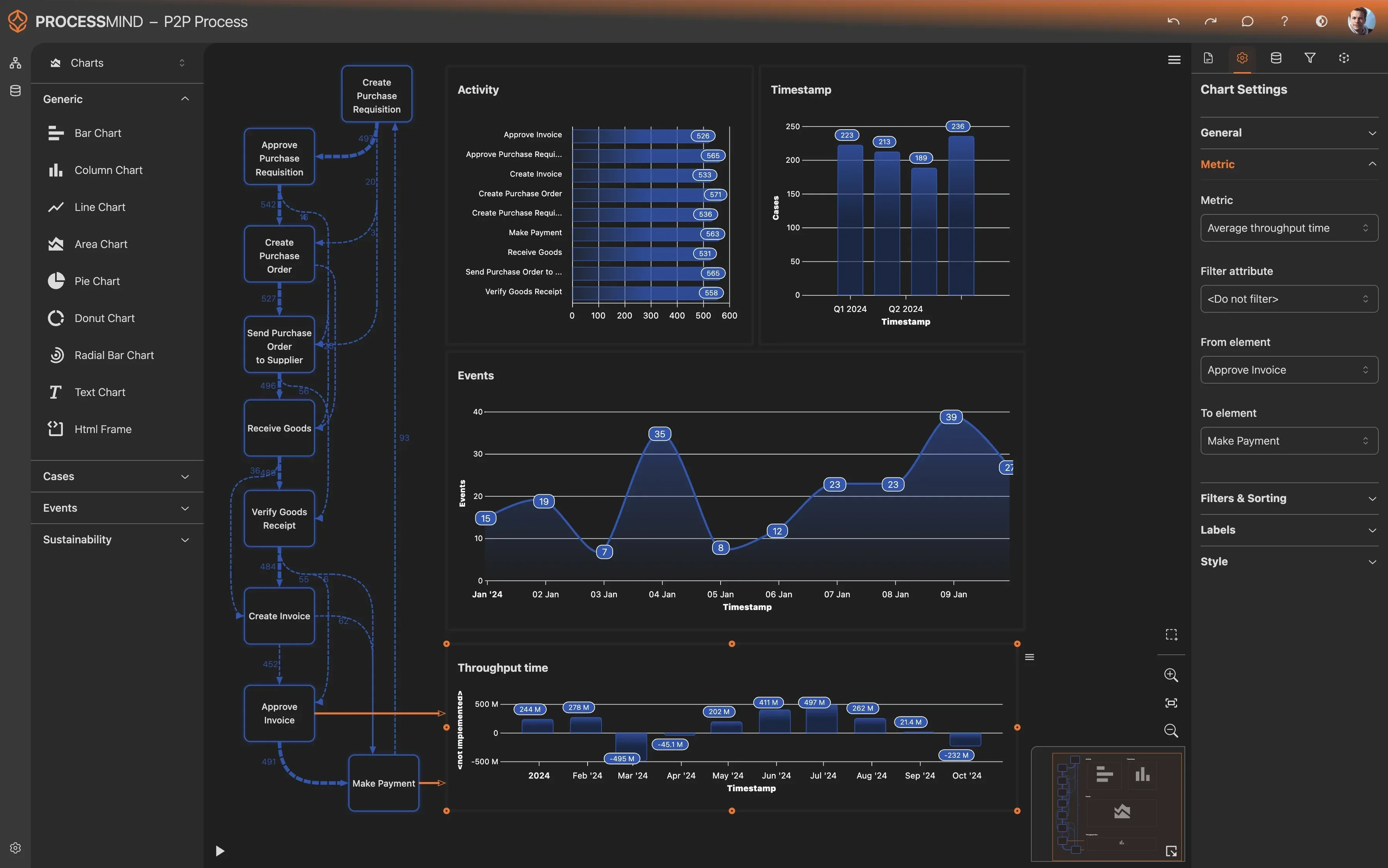
Analyze activity durations and waiting times between each step in your Lead to Cash process to highlight areas of delay. Identify specific activities or resources that consistently cause slowdowns.
Why it matters
Understanding where your process slows down is crucial for targeted improvements. Pinpointing bottlenecks allows you to focus efforts on areas that yield the greatest reduction in cycle time and cost.
Expected outcome
A prioritized list of bottlenecks within your Lead to Cash process, quantified by their impact on cycle time and efficiency.
Analyze Root Causes
What to do
Investigate process attributes, such as customer segment or product type, to find correlations with poor performance. Examine resource allocation and workload distribution to uncover underlying inefficiencies causing delays.
Why it matters
Addressing symptoms without understanding root causes leads to temporary fixes. This step ensures you tackle the fundamental issues, leading to sustainable improvements and preventing recurrence of problems.
Expected outcome
A clear understanding of the factors contributing to identified bottlenecks and deviations, providing insights for effective solutions.
Design & Plan Improvements
What to do
Formulate specific process changes, such as automation opportunities, role adjustments, or system integrations, based on your root cause analysis. Prioritize improvement initiatives based on their potential impact and feasibility.
Why it matters
Translating analysis into actionable strategies ensures that insights lead to tangible improvements. This step guides the implementation of changes that will deliver the most significant business value.
Expected outcome
A detailed, prioritized improvement roadmap with clear actions, responsibilities, and expected outcomes for your Lead to Cash process.
Monitor & Iterate Progress
What to do
Establish key performance indicators to track the success of your implemented changes. Continuously monitor process performance against your baseline and improvement targets, using new data for ongoing optimization.
Why it matters
Process improvement is not a one-time event. Continuous monitoring ensures that changes deliver expected results and allows for agile adaptation to new challenges, sustaining long-term efficiency gains.
Expected outcome
Ongoing process optimization, sustained improvements, and the ability to adapt to new challenges and opportunities over time.
TYPICAL OUTCOMES
Achieving Transformative Results in Lead to Cash
These outcomes demonstrate the substantial improvements organizations typically achieve by applying process mining to their Lead to Cash process. By meticulously analyzing sales opportunities, organizations uncover critical bottlenecks and inefficiencies, driving measurable enhancements.
Average reduction in end-to-end time
Identify and eliminate bottlenecks in the entire sales journey, significantly shortening the time from initial lead to cash collection. This accelerates revenue generation.
Increase in qualified opportunities
Pinpoint where leads drop off or get stuck in the qualification process, enabling targeted improvements that convert more leads into genuine sales opportunities.
Faster payment collection
Streamline the invoicing and payment collection process by identifying delays and inefficiencies, ensuring faster receipt of payments and improved working capital.
Higher adherence to standard procedures
Gain full visibility into sales process deviations, enabling enforcement of standard operating procedures and reducing risks associated with non-compliant sales activities.
Decrease in operational expenses
Eliminate redundant steps, manual efforts, and costly rework within the sales process, leading to significant cost savings in sales operations and freeing up resources.
Quicker quote and contract finalization
Optimize negotiation and contracting phases by identifying bottlenecks and eliminating delays, leading to quicker contract signing and faster revenue recognition.
Results vary based on the unique complexity of your process and the quality of your data. The figures presented illustrate typical improvements observed across various implementations.
Recommended Data
For customized data recommendations, choose your specific process.
FAQs
Frequently asked questions
Process mining visualizes the actual flow of your Lead to Cash process, identifying hidden bottlenecks, deviations from the ideal path, and areas of inefficiency. It highlights where sales cycles stall, lead conversions drop, or contract approvals get delayed within your operational system. This provides an objective, data-driven view of your operations.
You primarily need an event log, which includes a case identifier, an activity, and a timestamp for each event. For Lead to Cash, the sales opportunity ID typically serves as the case identifier. Key activities like "Lead Created", "Opportunity Stage Changed", "Quote Issued", "Contract Signed", and "Payment Received", along with their precise timestamps, are crucial.
Data can typically be extracted using the system's reporting tools, APIs, or data integration platforms. The goal is to obtain a raw event log, listing every relevant action or "event" for each sales opportunity, along with who performed it and when. This data is then prepared into a format suitable for process mining tools.
Expected outcomes include accelerating sales cycle completion, boosting lead-to-opportunity conversion rates, and reducing payment collection times. You can also achieve greater sales process compliance, optimize discounting strategies, and improve overall order fulfillment speed. Ultimately, process mining aims to lower operational costs and improve revenue recognition timelines.
The initial data extraction and model setup can range from a few days to a couple of weeks, depending on data complexity and availability. Once the data is prepared, initial insights, like a visualized process map and immediate bottleneck identification, can often be generated within a few hours. Comprehensive analysis and actionable recommendations typically follow within a few weeks.
Yes, absolutely. Process mining can trace the exact paths leads take and identify common points where they drop off before converting to opportunities. For payment delays, it can highlight stages in the cash collection process that consistently experience longer durations or deviations from the standard path. This granular visibility helps pinpoint specific inefficiencies and their root causes.
While process mining involves data analysis, modern tools are designed for business users and process experts. Some understanding of your source system's data structure and extraction methods is beneficial. Basic data manipulation skills can be helpful for data preparation, but deep technical expertise is not typically required.
Process mining is primarily an analytical tool that consumes data from your operational system; it does not interact with it live or require changes to your existing setup. Therefore, it does not disrupt daily operations. The impact is minimal, mainly limited to the initial data extraction process, which can often be automated.
By mapping and analyzing every executed step, process mining can highlight deviations from standard operating procedures and identify potential compliance risks in various stages, such as contract and billing. This allows for proactive measures to ensure adherence to internal policies and external regulations, enhancing overall process integrity.
While cleaner data yields more accurate insights, process mining can still be effective even with imperfect data. The initial analysis often highlights data quality issues themselves, acting as an additional benefit. Tools exist to cleanse and transform data during the ingestion phase, and starting with a clear case ID, activity, and timestamp is often sufficient to begin discovering process flows.
Start Optimizing Your Lead to Cash Today
Works with your existing systems. See measurable improvements in days.
No credit card required. Set up in 5 minutes.