Improve Your Quality Management

Select a process
Choose a process to continue working in your connected workspace.
Improve Your Quality Management Process
Our platform helps you identify hidden bottlenecks, unnecessary rework, and process deviations within your quality management workflows. By visualizing the true flow of your operations, you can uncover inefficiencies that impact compliance and customer satisfaction. This enables you to pinpoint root causes and implement targeted improvements to enhance overall performance.
Download our pre-configured data template and address common challenges to reach your efficiency goals. Follow our six-step improvement plan and consult the Data Template Guide to transform your operations.
Show detailed description
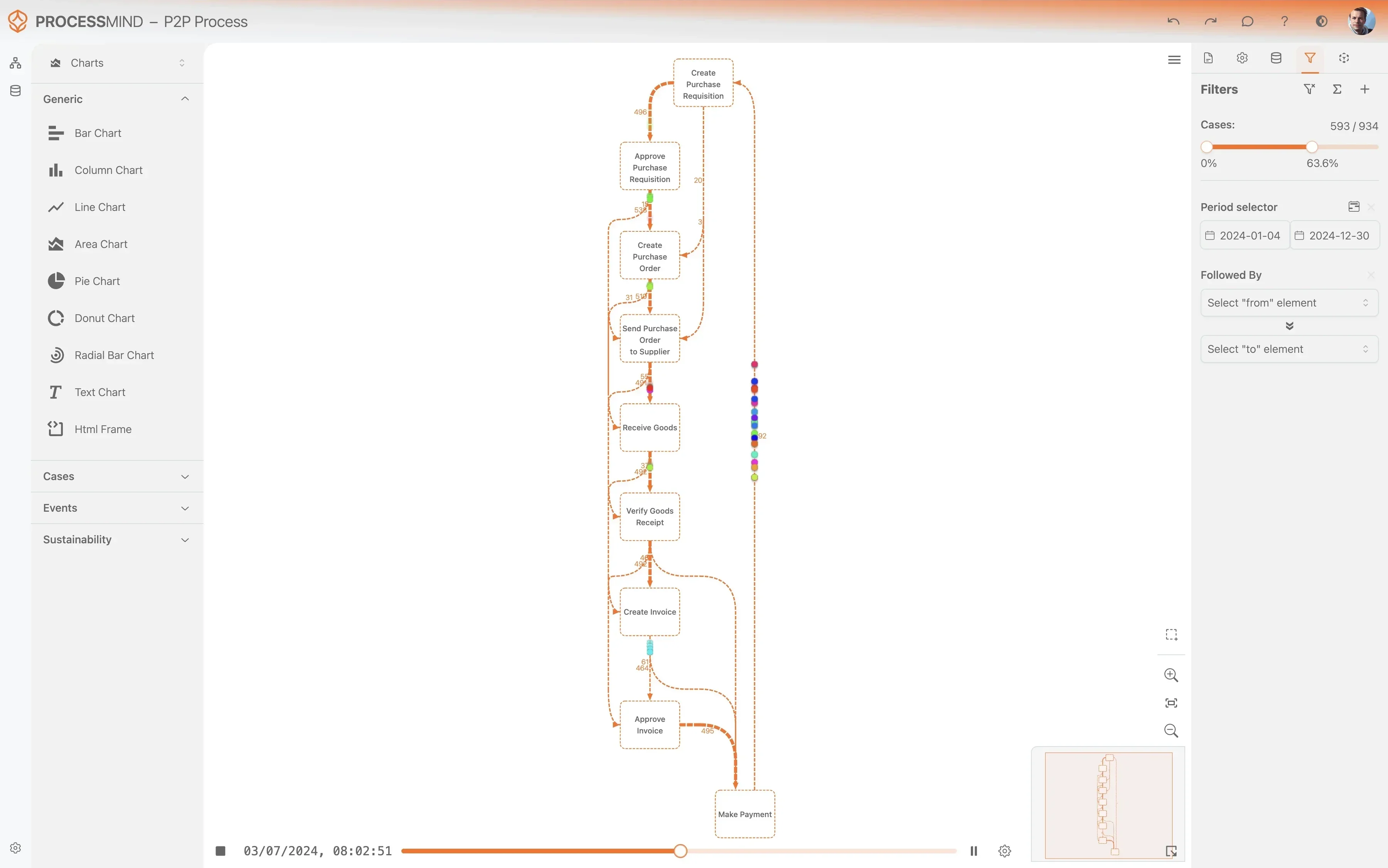
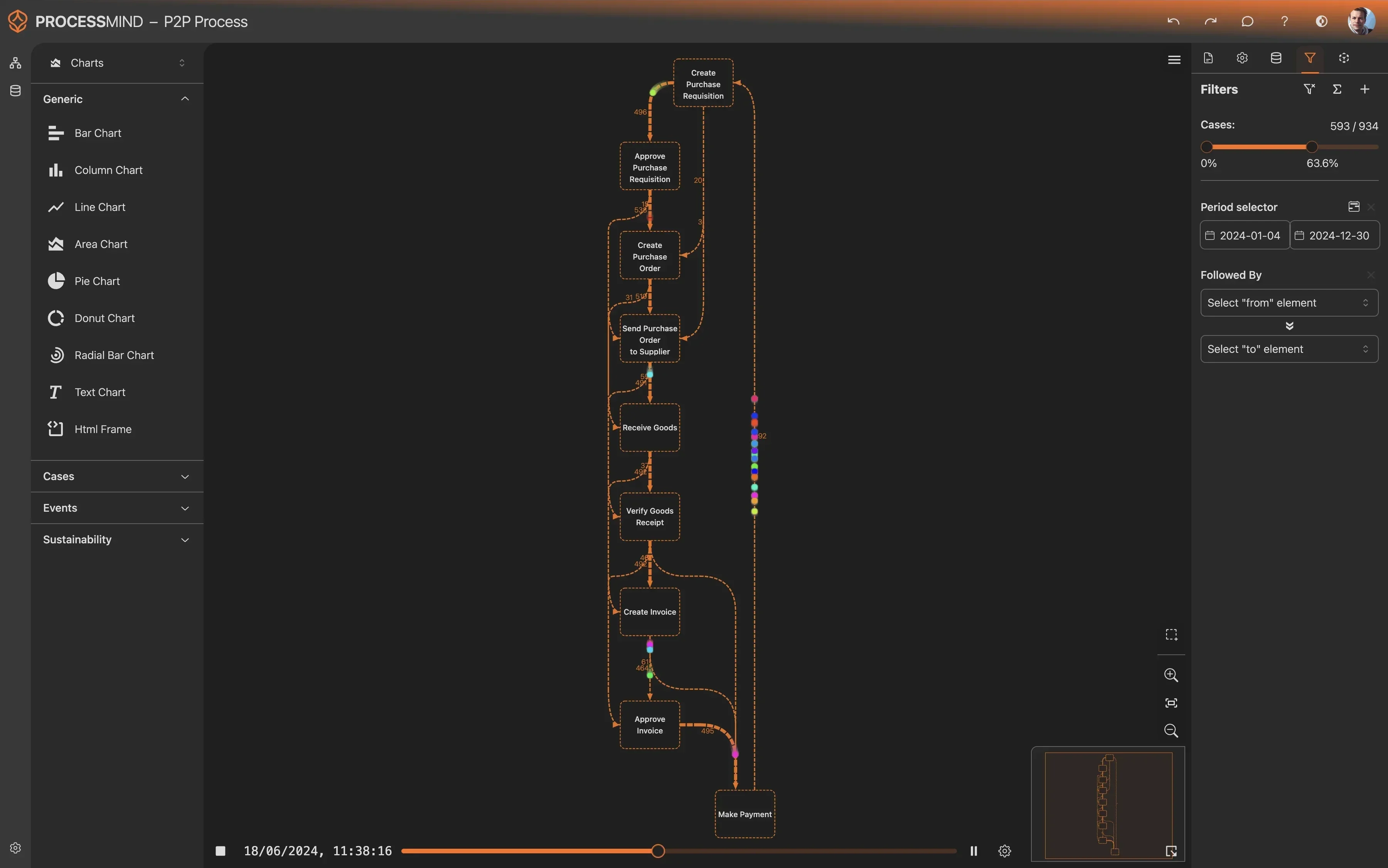
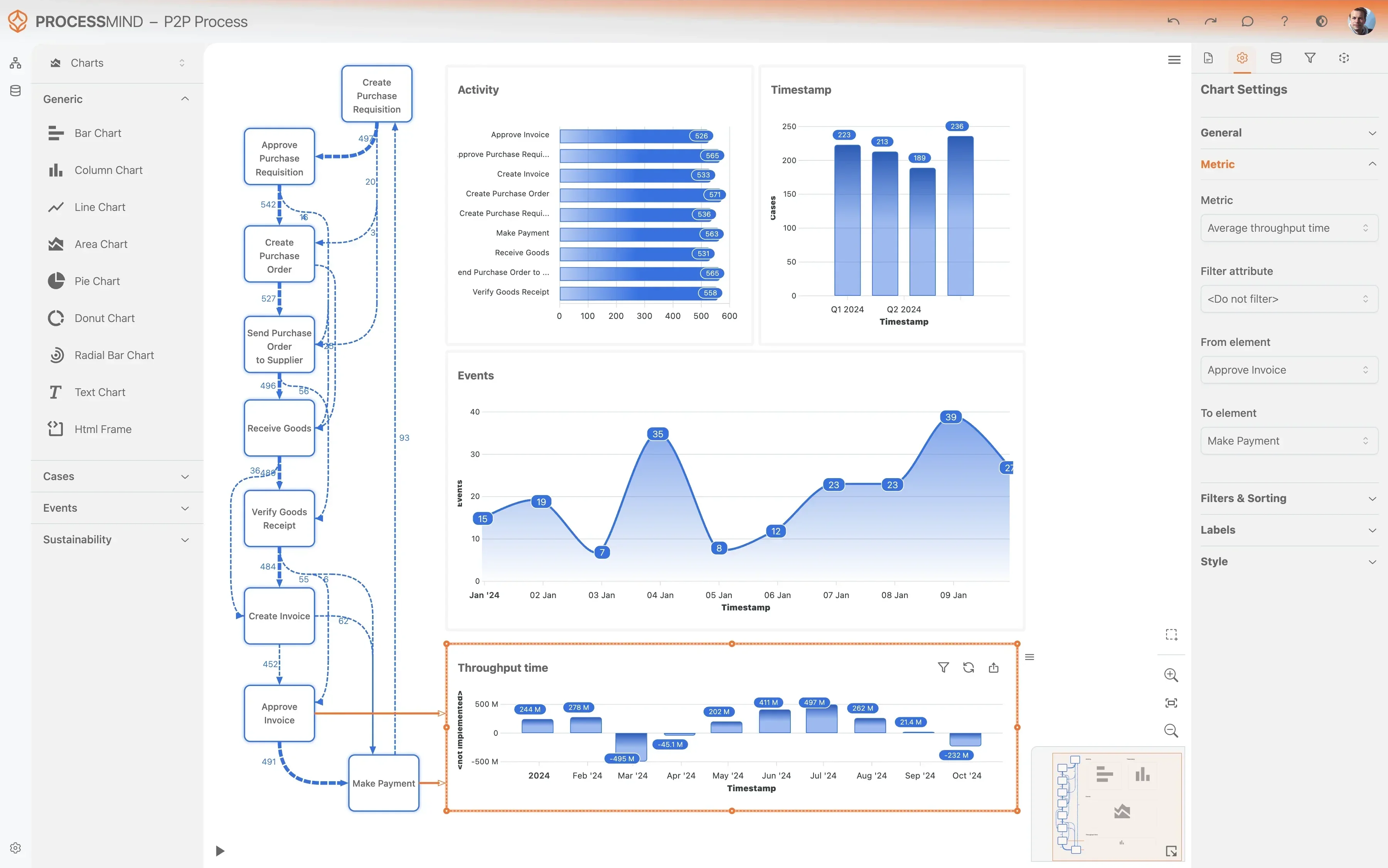
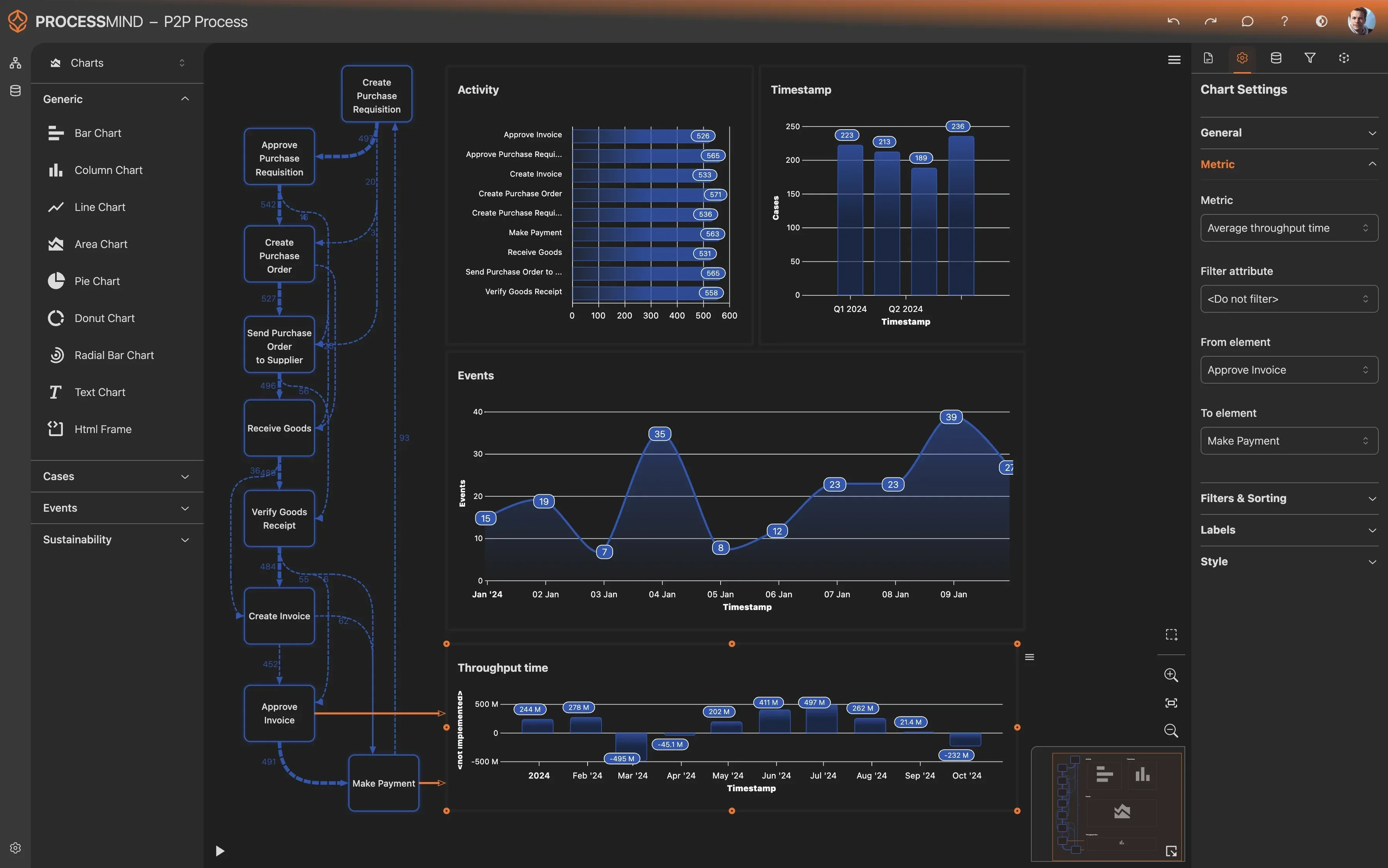
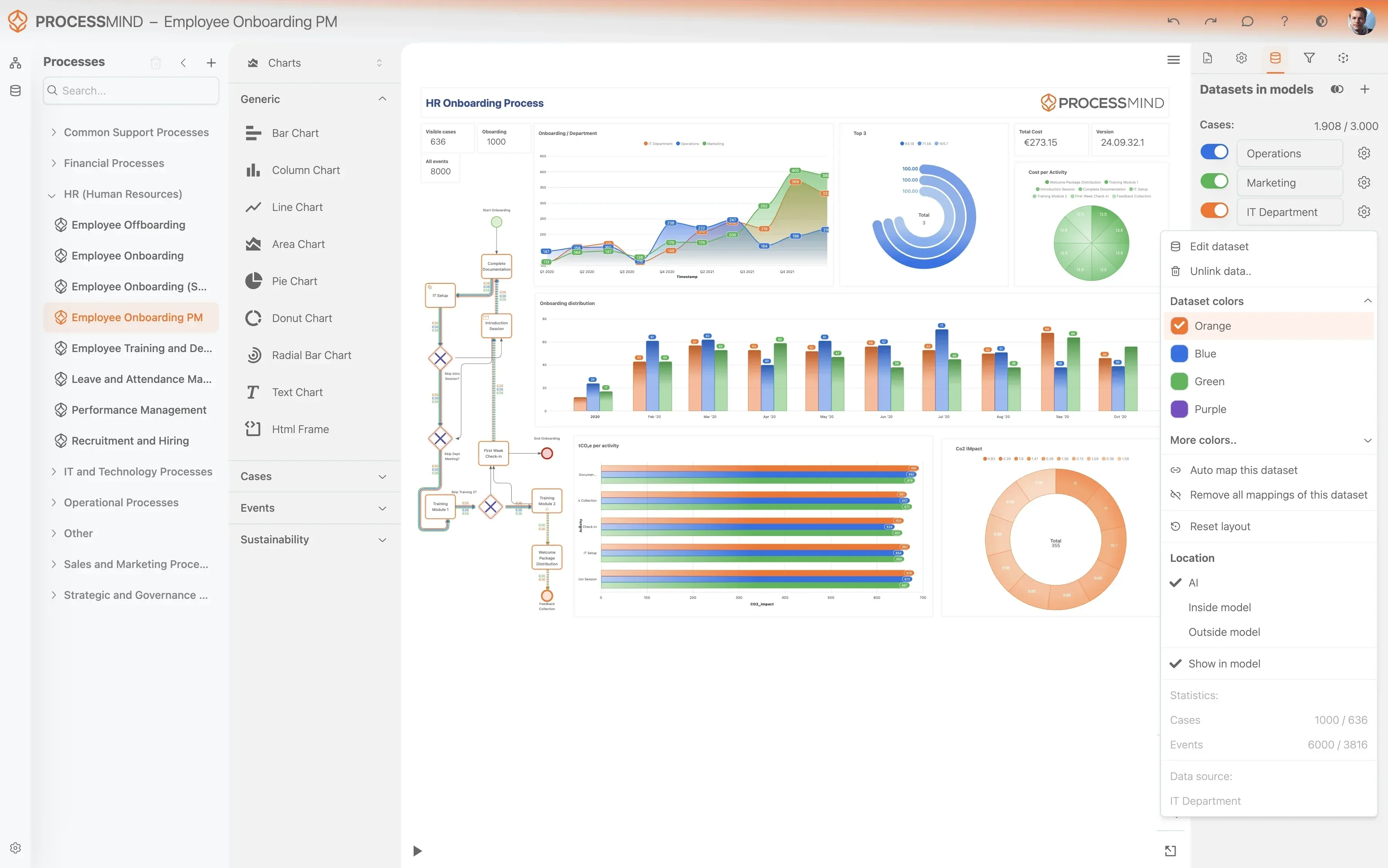
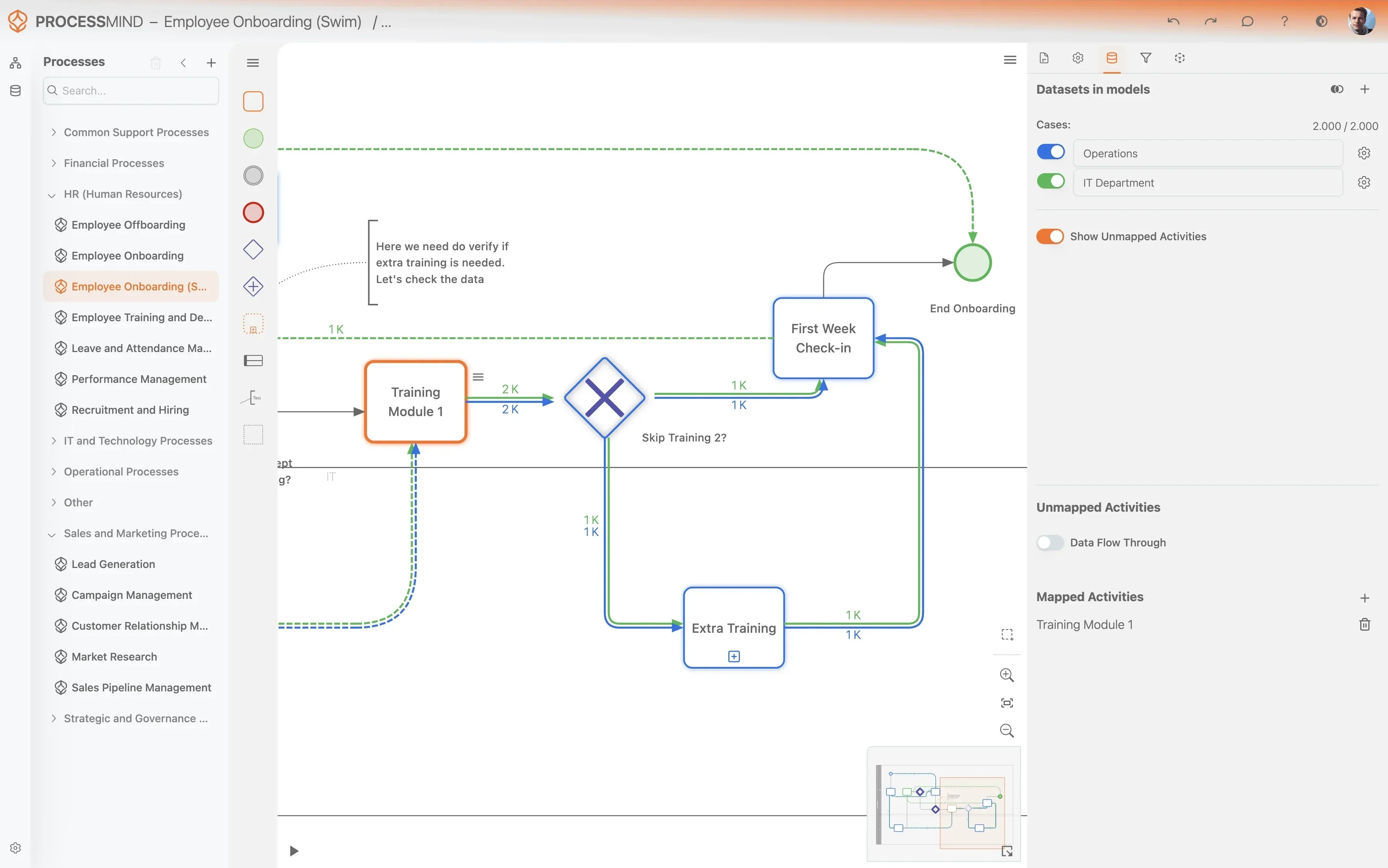
Process mining for Quality Management offers an unprecedented view into the actual execution of your quality events, from their initial identification to final closure. Unlike traditional reporting, which often shows aggregated data, process mining meticulously reconstructs every single path a quality event takes within your operations. It visualizes the end-to-end flow, highlighting precisely how tasks are performed, the sequence of activities, and the resources involved. This granular perspective instantly exposes all process variations, deviations from standard operating procedures, and hidden rework loops that impact your quality metrics. You can clearly see where bottlenecks occur, why certain events take longer than expected, and which steps lead to non-conformances, providing a foundation for truly data-driven improvements in your quality processes, regardless of your current system or how complex your data infrastructure is.
Quality Management processes often struggle with common challenges, such as ensuring consistent adherence to regulations, managing a high volume of quality events efficiently, and preventing recurrence of issues. Many organizations face difficulties in identifying the root causes of quality deviations, tracking corrective and preventive actions (CAPAs) effectively, and demonstrating compliance across their entire operational landscape. Without clear visibility into the real process, it becomes challenging to pinpoint where training gaps exist, why approvals are delayed, or which manual interventions introduce errors. Process mining cuts through this complexity by providing an objective, evidence-based map of your actual operations. It helps you understand the 'as-is' process, revealing where compliance risks hide, identifying redundant steps, and showing you the true cycle times for critical quality activities like investigations, impact assessments, and resolutions. This empowers you to address inefficiencies and compliance gaps with precision.
By analyzing your Quality Management process with ProcessMind, you gain critical insights that drive tangible benefits. You can elevate your quality standards by enforcing stricter process adherence and reducing the frequency of non-conformances. Discover opportunities for automation by identifying repetitive, manual tasks that can be streamlined, freeing up your quality professionals to focus on higher-value activities. ProcessMind helps you shorten investigation times, accelerate CAPA completion rates, and improve overall operational efficiency. It enables you to quickly identify critical paths and resource allocation issues, allowing you to optimize your quality control efforts and achieve faster resolution of quality events. Furthermore, by providing a transparent, auditable trail of every process step, ProcessMind significantly strengthens your compliance posture and prepares you for regulatory audits, giving you complete confidence in your quality operations.
Getting started with ProcessMind for Quality Management is straightforward and designed to integrate seamlessly with your existing data landscape. Our platform is system-agnostic, meaning it works effectively with data from any of your source systems, whether it's your ERP, a dedicated quality management system, or a custom application. You simply need to provide event logs of your quality events, which typically include a case identifier, activity name, and timestamp. To help you prepare your data efficiently, we offer a comprehensive data template that outlines the required fields and format. This ensures a quick and accurate setup, allowing you to unlock the power of process mining and begin transforming your quality management processes in a matter of days. Start your journey towards optimized quality today.
The 6-Step Path to Optimize Your Quality Management
Connect Quality Data
What to do
Extract event logs from your quality management system, ERP, or other relevant data sources. Ensure case IDs, activity names, and timestamps are accurately captured for analysis.
Why it matters
A comprehensive and accurate dataset forms the foundation for any meaningful process analysis, revealing the true execution of your quality events.
Expected outcome
A robust event log dataset ready for visual process discovery and initial insights.
Map Your Quality Process
What to do
Visualize the actual end-to-end flow of your quality management process. Identify all activities, their sequence, and how often each path is taken.
Why it matters
Seeing the process as it truly operates, not just how it's documented, is essential for uncovering hidden rework loops and deviations from the ideal path.
Expected outcome
A comprehensive visual map of your quality management process, highlighting primary and variant paths.
Pinpoint Process Bottlenecks
What to do
Analyze the process map to locate activities or handoffs that cause significant delays, rework, or resource contention within your quality events.
Why it matters
Identifying bottlenecks allows you to focus improvement efforts on the areas that have the greatest negative impact on resolution time and resource utilization.
Expected outcome
Clearly identified steps or transitions causing the most significant delays or inefficiencies.
Analyze Root Causes of Delays
What to do
Drill down into identified bottlenecks and deviations using case attributes to understand the underlying reasons for inefficiencies, such as specific product types or teams.
Why it matters
Understanding the "why" behind process issues enables the development of targeted, effective solutions rather than superficial fixes that don't address core problems.
Expected outcome
Data-driven insights explaining the causes of delays, rework, or non-compliance in your quality process.
Design Targeted Improvements
What to do
Based on your root cause analysis, propose concrete changes to your quality management process, such as automating tasks or re-sequencing activities.
Why it matters
Translating insights into actionable plans ensures that the identified problems are systematically addressed, leading to measurable improvements in efficiency and quality.
Expected outcome
A strategic plan outlining specific process changes and their expected impact on quality outcomes.
Monitor & Iterate for Gains
What to do
Implement your designed improvements and continuously monitor process performance using live dashboards. Identify new deviations and further opportunities for optimization.
Why it matters
Continuous monitoring ensures that improvements are sustained, new issues are promptly detected, and the quality management process adapts to changing business needs.
Expected outcome
A continuously optimized quality management process with sustained performance gains and proactive issue detection.
TYPICAL OUTCOMES
Realizing Measurable Quality Improvements
These outcomes illustrate how organizations leverage process mining to gain deep insights into their Quality Management processes, identifying inefficiencies and areas for improvement. By analyzing actual Quality Event data, companies can pinpoint root causes and implement targeted interventions.
Average reduction in resolution time
Streamline quality event workflows and eliminate bottlenecks to significantly reduce the time from issue identification to final closure, enhancing overall responsiveness.
Increase in successful CAPA outcomes
Identify the true causes of ineffective corrective and preventive actions, enabling more targeted and successful interventions that prevent issue recurrence.
Increase in process conformance rate
Ensure consistent adherence to regulatory and internal quality standards by identifying and eliminating process deviations, strengthening audit readiness and reducing risk.
Decrease in rework and associated costs
Pinpoint and eliminate wasteful activities and repeated efforts in quality processes, leading to significant operational cost savings and more efficient resource utilization.
Average reduction in RCA cycle time
Expedite the investigation phase by identifying and resolving delays in root cause analysis, allowing for quicker understanding and prevention of future quality issues.
Results vary based on process complexity, organizational maturity, and data quality. These figures represent typical improvements observed across various quality management implementations.
Recommended Data
For customized data recommendations, choose your specific process.
FAQs
Frequently asked questions
Process mining identifies bottlenecks, streamlines workflows, and ensures compliance by visualizing your actual quality event processes. It highlights deviations and areas for efficiency gains, leading to faster resolutions and enhanced corrective action effectiveness.
You typically need event logs that include a case identifier, an activity name, and a timestamp for each step in your quality events. This data allows the process mining tool to reconstruct the complete journey of each quality case. Additional attributes, like resource or cost information, can enrich your analysis.
You can expect reduced quality event resolution times, improved corrective and preventive action, CAPA effectiveness, and a significant decrease in compliance gaps. Process mining reveals actionable insights to streamline workflows, optimize resource utilization, and accelerate issue prioritization.
Initial setup and data extraction can take a few weeks, depending on data availability and the complexity of your system. The first actionable insights often emerge within 4-6 weeks, providing a quick path to value realization. Continuous analysis builds upon this foundation for ongoing optimization.
Yes, process mining is highly effective at identifying the root causes of slow analysis and extended CAPA cycle times. It visually maps the actual flow, revealing where delays occur, common rework loops, and bottlenecks in the process. This enables targeted improvements for faster resolution and reduced backlogs.
By mapping the actual execution of your quality processes, process mining clearly highlights any deviations from standard operating procedures or regulatory requirements. This increased visibility allows you to proactively identify and address compliance gaps, strengthening adherence and minimizing uncontrolled process deviations.
The primary technical requirement is secure access to your system's database or API for data extraction. Depending on your chosen process mining tool, an ODBC connection, direct database access, or the ability to export structured files, such as CSV, might be needed. Your experts can guide you through the specific integration steps.
While initial data extraction requires some IT involvement, process mining aims to reduce long-term workload by automating analysis and providing clear, actionable insights. It empowers Quality teams to make data-driven decisions more efficiently, reducing manual investigation time and optimizing resource utilization.
No, process mining is beneficial for quality processes of any scale and for organizations of any size. While it excels at untangling complex, high-volume processes, it also provides valuable insights into smaller, more focused areas. The value comes from understanding and improving your unique processes, not just the scale of your operations.
In process mining for Quality Management, a case identifier uniquely represents a single instance of a quality event, such as a specific quality event record in your system. All activities related to that particular event, from its creation to resolution, are grouped under this identifier. It allows the tool to track the complete journey of each individual quality case.
Start Optimizing Quality Management Today
Identify bottlenecks and improve compliance with data-driven insights.
No credit card required, setup in 5 minutes.